

EEBC reports air quality milestone and revised carbon emissions figures


Epsom & Ewell Borough Council’s Environment Committee has noted a series of climate and air quality updates, including the formal revocation of the Ewell High Street Air Quality Management Area (AQMA) and revised figures showing a reduction in the council’s own operational carbon emissions since 2019/20.
The update was presented to councillors on 20 January as part of the council’s second Climate Change Action Plan, which runs from 2025 to 2029 and sets out measures intended to support the council’s stated aim of reaching carbon neutrality by 2035.
According to the report, the AQMA covering Ewell High Street has now been revoked following sustained improvements in nitrogen dioxide levels. The zone was originally designated in 2007 after pollution levels linked largely to road traffic exceeded national limits. The council acknowledged that while local measures played a role, wider national and regional factors, including vehicle fleet modernisation, also contributed to the improvement.
Alongside the air quality decision, the council reported a revision to its historical carbon emissions baseline after receiving more accurate electricity consumption data for Epsom Town Hall, Bourne Hall and Epsom Playhouse. Full-year data for 2019/20 and 2020/21 had previously been unavailable and earlier figures were based on estimates.
The revised baseline places council operational emissions in 2019/20 at 1,487 tonnes of CO₂ equivalent. For 2024/25, emissions are reported as 1,201 tonnes, representing a reduction of around 19 per cent over the period. Most subsequent years were unchanged by the revision, with the adjustments largely confined to the two earliest years.
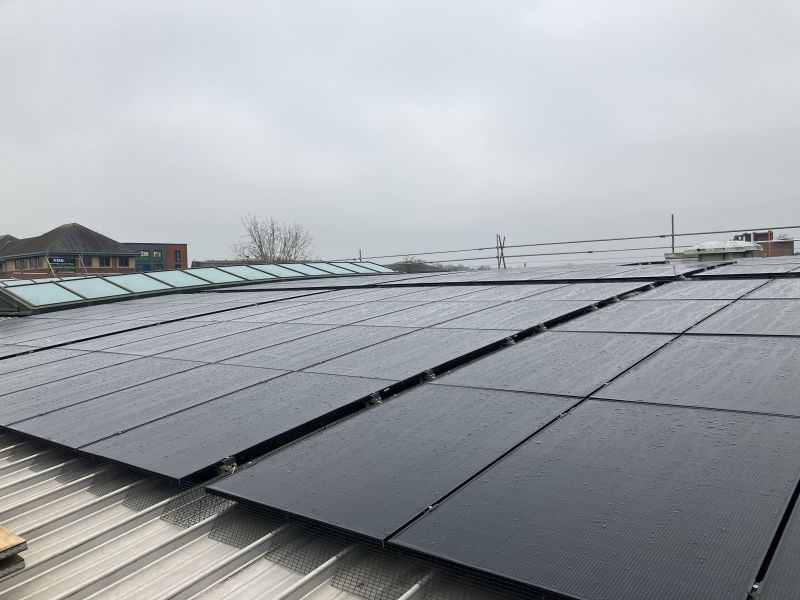
The report also listed a number of property and energy efficiency measures undertaken in recent years, including replacement of windows at Bourne Hall, LED lighting upgrades at Epsom Playhouse, and the installation of a 177kWp solar photovoltaic system at the council’s leisure centre. The council estimates that the leisure centre installation alone could save more than 30 tonnes of carbon emissions annually, based on partial-year data.
In addition, councillors were reminded of partnership schemes intended to support residents in reducing household emissions, including advice programmes and grant schemes for heating and energy upgrades.
Chair of the Environment Committee Councillor Liz Frost (RA Woodcote and Langley) said the Climate Change Action Plan was intended to guide long-term changes in how the council operates and delivers services, and highlighted the AQMA revocation as an example of sustained action producing measurable results.
The updated emissions data and air quality decisions form part of the council’s annual monitoring of climate-related activity, which is reported back to councillors each year.

Related reports:
The Mayor of Epsom and Ewell meets local climate volunteers
Surrey County Council’s Climate Change Progress: Successes, Setbacks, and the Road Ahead
Epsom and Ewell adopts new Climate Action Plan
.
.
.
.
.
.
.
.
.