Epsom and Ewell Times

Current Front Page

ISSN, LDRS and IMPRESS logos

All change! Epsom and Ewell Borough Council approaching its final stop?

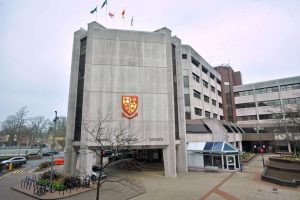
Surrey and Epsom Council buildings

Surrey is changing “whether we like it” or not and county council leader Tim Oliver says it’s better to be at the forefront of that change.

The Government wants to introduce new mayoral authorities across the country in a bid to streamline councils and shift power away from Westminster.

For Surrey, that means scrapping the 11 boroughs and districts as well as the county council, and replacing them with either a single, or what seems more likely, two authorities with a Strategic Mayor.

The question is how will it be done? The answer; it will either be imposed on Surrey, or the councils can create their own plans to merge under devolved powers.

County Council leader, Councillor Tim Oliver, favours playing a central role, arguing that change is inevitable, and it’s best to be part of the conversation in order to shape the future, rather than sit on the sidelines waiting to be told what to do.

The Government wrote to the county council in December outlining how it planned to “transfer power out of Westminster through devolution and to fix the foundations of local government.” It wants a simpler structure that is “clearer for residents” and said it would even pass new laws to postpone the May 2025 elections “to help manage” the once in a lifetime opportunity to restructure.

Writing to Surrey, Jim McMahon, minister of state for local government and English devolution, said: “We are under no illusion about the scale of issues facing local government. It is in all our interests to make sure we are avoiding unnecessary spend at a time when budgets are already tight.”

He added: “I have heard from some areas that the timing of elections affects their planning for devolution, particularly alongside reorganisation. To help manage these demands, alongside our objectives on devolution, and subject to meeting the timetable outlined in this letter, I am minded-to lay secondary legislation to postpone local council elections from May 2025 to May 2026. However, I will only do this where this will help the area to deliver both reorganisation and devolution to the most ambitious timeframe – either through the Devolution Priority Programme or where reorganisation is necessary to unlock devolution or open up new devolution options.”

Cllr Tim Oliver is already minded to take up the offer of pushing back the elections for a year to get devolution done. Holding the elections this year would cost about £1million, he says, and would take time away from officers already working to a tight five-month deadline to get devolution over the line.

“The Labour Government has set up their agenda in the white paper and that is to create Mayoral Strategic Authority (MSA) across England. They have a strong majority and we can assume they will pass the legislation,” Cllr Oliver said. “If you don’t reach an agreement locally, then they will legislate. It’s going to happen. It’s better that we try to control or have some influence over what happens rather than have it imposed on us down the line.”

“The primary focus should be ‘what is in the best interests of the residents of Surrey?’ Whether we like the model or not it is going to happen in Surrey and the reason for getting in early as we are, is that we are slightly unique here in that there are councils in Surrey that have significant debt levels.”

This, he says, gives the Government a huge stick, to push councils to get on board. Councils such as Woking are bankrupt and need Government intervention. Merging the councils would pile its £2billion debt on to others.

Similarly, though not bankrupt, Spelthorne Borough Council has debts of more than a billion and Runnymede has debts of more than £600m. Surrey County Council, albeit with significantly larger spending power as a top tier authority, is also heavily indebted.

Cllr Oliver said: “The longer we leave it, the less likely we will get any support from the Government. That’s what’s driving me.”

Historically, Surrey councils have not benefited as greatly as other local authorities from Government funding reviews and have to raise more money locally. Areas that can raise taxes will continue to be required to. Removing tiers of local government will be an efficiency driver and help stave off service cuts, or lead to more investment.

He said: “We have to divide up the county to create a minimum of two strategic authorities, and then we get a mayor. If we don’t get on with that reorganisation, we will be years away from the benefits of a mayor, compounded with almost certainly reduced funding to Surrey councils.”

Papers published ahead of the January 10 deadline to respond suggest the council leader will take up the Government’s offer to hold off on this year’s elections “to give time to consult.”

Cllr Oliver said: “If we go ahead with elections in May, and I’m fine with that, I wasn’t going to run again. But, ignoring who wins, you end up with an election in May that will cost over a million pounds, which they do, and then you will have a bunch of new councillors who have to find their feet, only to be out in two years when the council disappears. The next five months should be about the negotiation with the Government about what the future looks like.”

“Every political party, and all the existing councillors who know the county better, will have the opportunity to input. I can’t see what the Liberals, if they got a majority, would do differently? This way, we will get a bit of goodwill from the Labour Government by engaging with them now.”

“Hampshire, Essex, and Hertfordshire are already getting on with their own plans for devolution, and if Surrey County Council just puts its head in the sand and gets on with the elections we will miss the opportunity to have the conversation with the Government about the debt levels.”

“We’ve got five months to consider it, the key thing is to do an intensive piece of work now. We’re not at the point where we’ve had the conversation about how it’s split, but we’ve got five months to do this either the Government’s way or our way. Yes, the timetable is much shorter than anybody would want particularly putting a letter in by January 10 but we have to respect the fact that this Government has an agenda and it can deliver because it has the mandate.”

Later this month the Government will set out which areas will be included in its Devolution Priority Programme with a view to inaugural mayoral elections in May 2026. They are looking at creating new unitary councils with populations of 500,000 or more. Surrey has a population of about 1.2 million. Exceptions will be made to ensure new structures make sense for an area.

An extraordinary meeting of Surrey County Council is set to go ahead on Wednesday January 8 where the council will be “asked to note” that the leader intends to express interest in pursuing devolution and local government reorganisation.

Related reports:

Surrey’s Conservative leader wants to postpone May’s poll reckoning

Tiers to be shed if Epsom and Ewell loses its Borough Council?

Tim Oliver Surrey County Council leader – Surrey Live


Surrey’s Conservative leader wants to postpone May’s poll reckoning

Tim Oliver Surrey County Council leader - Surrey Live

The leader of Surrey County Council is set to write to the Government calling for the 2025 elections to be postponed in order to allow authorities to focus on merging under devolution plans. In December last year the Government announced its vision to merge councils in Surrey and get rid of its 11 boroughs and districts. There would also be a directly elected mayor.

Councillor Tim Oliver plans to formally ask the government to postpone county elections until May 2026 to give the councils time to “put together proposals for local government reform necessary to unlock further devolution for Surrey.”

Not everyone has welcomed the delay with Surrey Heath Borough Council set to discuss a motion rejecting the county council leader’s proposals and allow the May 2025 poll to go ahead “in the interest of democracy and hearing the resident’s voice.”

Devolution plans are part of sweeping changes to how services are run as Downing Street looks to reshape local government.

Surrey currently operates under a two tier system with the county council overseeing things such as education, transport and fire with the boroughs and districts focused local planning matters, refuse collection and housing.

Devolution would do away with this system and instead create single unitary authorities, arguing it is more cost-effective.

In a draft letter set to be approved at an extraordinary meeting next week, Cllr Oliver writes that he shares the ambitions for boosting the country’s economic prospects and reforms to strengthen the efficiency and effectiveness of public services.

He said it was clear that reforming local government would unlock the full benefits of further devolution for the county.

The letter reads: “The current two-tier structure of local government in Surrey, comprising 12 sovereign local authorities, is fragmented and in a number of areas inefficient which inevitably diverts resources away from delivering the services that residents rightly expect.

“I believe reorganisation would provide more streamlined and cost-effective services for Surrey, enabling us to achieve further efficiencies and deliver better outcomes for our residents and communities.

“Local government reorganisation is a crucial stepping stone to further devolution for Surrey, to enable our communities to take more control of their own destinies.”

Cllr Oliver said the county already delivered more than £50 billion in gross value added every year, but further and deeper devolution could lead to even better returns.

It adds: “I am therefore writing to ask you to exercise your ministerial powers to lay the necessary legislation to postpone the county council elections in Surrey, which are due to take place in May 2025.

This will give us the time to work with the leaders of Surrey’s district and borough councils to put together proposals for local government reform that are necessary to unlock further devolution for Surrey.”

New unitary elections could then take place in 2026, and a mayoral election in 2027.

He argues that the delay would also allow time to determine how to deal with the “significant financial risk of the level of debt currently held across the Surrey local government footprint.”

Woking Borough Council is currently bankrupt with deficit of more than £1billion and debts of about £2billion, while Surrey County Council and Spelthorne Borough Council both have debts of more than £1billion.

Any proposals, Cllr Oliver adds, will need to adequately consider how to ensure the sustainable operation of any authority in the absence of exceptional financial support from the Government or a level of write-off.

Timetable for Devolution 

10 January 2025 Letter submitted to Minister of State requesting election postponement 
Before March 2025  Minister’s response to letter received 
March 2025  Interim Local Government Reorganisation (LGR) proposal submitted to government 
May 2025  Full LGR proposal submitted to government 
May – June 2025  Government evaluates proposal(s) received for LGR and makes a decision on whether to proceed on  single proposal, or to consult further on one or more proposals
July 2025  Government consultation with affected bodies on LGR proposal(s) 
Autumn 2025  Government decision on LGR anticipated, which begins statutory process to establish new council(s) 
January 2026  Parliamentary process begins to lay Statutory Instruments 
May 2026  Elections to shadow unitary authority/ies 
Spring 2027 New unitary/ies ‘go live’ 
Spring 2027 or 2028 Mayoral elections and mayoral strategic authority ‘go live’, with the preparations for the establishment of the Mayoral Strategic Authority (MSA) taking place throughout 2026/27, or Surrey joins MSA with neighbours

Related reports:

Tiers to be shed if Epsom and Ewell loses its Borough Council?

Image: Tim Oliver – Leader of Surrey County Council, Woodhatch Place, Cockshot Hill, Reigate. GL


River Mole to attract visitors to Leatherhead?

Claire House and James House Watercolour (image McCarthy Stone)

Mole Valley District Council’s dream of “improving” and “enhancing” Leatherhead has taken a step forward after plans to regenerate Claire House and James House were submitted.

The site is part of the council’s vision for a new riverside area to attract visitors to spend time in the town centre.

The plans, submitted by McCarthy Stone the council’s preferred partner for regeneration, is for 37 one and two-bed retirement homes, a ground floor café and community space.

Developers McCarthy Stone said: “While the development is built around people in their later years this is not a development that offers care as you would find in extra care developments or care homes. 

“Retirement living creates safe and secure environments for homeowners to continue to live an active, independent life and caters for downsizers who are typically selling or vacating their former family home and moving to a smaller apartment. 

“Homeowners are generally the more active elderly rather than those who are in need of care or have more significant issues around mobility.”

McCarthy Stone also plans to improve the car park and landscaping the area to the front of the building. The work is part of the wider Transform Leatherhead project.

Councillor Keira Vyvyan-Robinson, Mole Valley District Council cabinet member for property and projects, said: “The Claire House and James House project aims to create a landmark mixed-use riverside development that will improve the western gateway to the town and enhance the area around the River Mole.

“The application marks the next step towards the regeneration of the area and enhancement of the riverside area, a key project of Transform Leatherhead.

 According to Mole Valley District Council, Leatherhead town centre is being re-invented, expanded and transformed.

It says the overall project, which also includes work on the retail and leisure quarter and Bull Hill, will “fully realise its potential as a distinctive, enterprising and highly regarded market town” adding that the “town’s character, history and environmental setting will be celebrated and complemented by new and revitalised uses.”

Not every aspect of the council’s vision has proven popular however. A petition calling on the authority to reconsider plans to build hundreds of homes in high rise blocks on the popular Bull Hill park gained 1500 signatures.

Some fear the plans will destroy the green gateway into the town, potentially turning it into another Croydon or Woking and causing people to leave.

Relared report:

Leatherhead town on the way up?


Tiers to be shed if Epsom and Ewell loses its Borough Council?

Surrey and Epsom Council buildings

Surrey could be split in two as part of sweeping changes to how services are run. Downing Street is looking to reshape local government and has set out a white paper outlining its vision. It wants to do away with two-tier systems of boroughs and counties and instead create single unitary councils. It argues this would not only be more cost-effective but also shift power away from Westminster. If devolution plans for the county go through, Surrey and its 11 boroughs and districts would be no more. The big question is: what replaces it? The most likely answer at the moment appears to be two councils with a directly elected mayor overseeing county-wide issues – these could include policing, fire and rescue, and transport.

The English Devolution White Paper says that new unitary councils “must be the right size to achieve efficiencies, improve capacity and withstand financial shocks. For most areas, this will mean creating councils with a population of 500,000 or more, but there may be exceptions to ensure new structures make sense for an area, including for devolution, and decisions will be on a case-by-case basis.” Surrey has a population of 1.2 million, and a single “mega-council” stretching from Farnham to Oxted, an area larger than Greater London, would simply be too vast, some have argued. This leaves the most likely option of merging the current boroughs of Tandridge, Mole Valley, Reigate & Banstead, and Epsom & Ewell into East Surrey Council, with Woking, Guildford, Spelthorne, Runnymede, Surrey Heath, Waverley, and Elmbridge forming West Surrey Council.

The white paper also argues: “Unitary councils can lead to better outcomes for residents, save significant money which can be reinvested in public services, and improve accountability with fewer politicians who are more able to focus on delivering for residents.” However, opponents argue devolution could push residents further from the decision-making process and only delay funding reforms for local government.

Will Forster, newly elected MP for Woking, expressed his concerns: “I don’t think that having a single mega council is a good idea. Camberley to Oxted is far too large, there are huge differences east to west. It’s too large and remote. A single council would be too vast. That’s not devolution, that’s not empowering people.” Even the idea of a West Surrey Council would create a single area stretching from Haslemere to Staines. He added: “It also ignores the elephant in the room, social care – this seems to be the Government’s way of ignoring that. They want authorities of 500,000 or more. You look at a map, you do the sums. That’s clearly an east and west split. They’ve never divided up a borough or district and you can’t do north or south.”

Other questions would need to be answered as well, such as how the directly elected mayors are held to account. At the county level, the council holds regular meetings to vote on decisions, with scrutiny committees playing a further role. How this would be replicated for a single mayor is yet to be made clear. Councils have been invited to submit proposals to the government in January.

Tim Oliver, leader of Surrey County Council, welcomed the devolution paper and its “bold ambition to empower local communities and councils.” He said: “The government has set out an agenda for change, including potential reorganisation of local government, particularly in two-tier county areas like Surrey. I believe there is general consensus that the current structure – here and elsewhere in the country – is not the most effective. Therefore, we welcome a real examination and review of how local government is organised to make it more efficient and more effective for residents. We intend to work alongside government, and other partners locally, and ensure any change ultimately benefits the people of Surrey.”

Announcing the paper’s publication, Deputy Prime Minister Angela Rayner stated: “Our manifesto pledged to give everyone access to devolved power. So I will legislate for a new power of ministerial directive – which will allow central government to knock heads together and create strategic authorities when local leaders cannot agree. If we are going to build an economy that works for everyone, we need nothing less than a completely new way of governing – a generational project of determined devolution. Because the Westminster system is part of the problem. Whitehall is full of layers of governance and bureaucracy, controlled and micromanaged from the centre. To truly get growth in every corner of the country and put more money into people’s pockets, we must rewire England and end the hoarding in Whitehall by devolving power and money from central government to those with skin in the game.”


Epsom and Ewell’s new housing targets in Surrey perspective

New houses in Epsom

Housing targets in Surrey are set to skyrocket, with some areas expected to deliver double the number of homes under new Government plans. On December 12, the long-awaited update to the National Planning Policy Framework (NPPF) was published, setting out what councils and developers can and cannot do – leaving boroughs and districts “disappointed” and “deeply concerned.” Across Surrey, the number of new homes expected each year has risen by 4,635 to a total of 10,981, with some areas bearing a significantly heavier load than others.

Worst affected is Elmbridge Borough Council, where housing targets have more than doubled, from 653 to 1,562. This increase comes alongside the prospect of having no local plan, giving developers greater freedom over where and what to build. A spokesperson for Elmbridge Borough Council said they were “reviewing the new NPPF and its implications for Elmbridge’s Local Plan.” The council was told in November that its housing strategy must be withdrawn and restarted or risk being deemed “unsound.” A decision on next steps will be made in February 2025.

Other boroughs facing substantial increases include Waverley, where targets have risen from 710 to 1,481, and Reigate and Banstead, which sees an increase from 644 to 1,306. Woking, the only council to see its figure drop, still faces a significant rise from 436 to 794. These adjustments align largely with July consultation targets. However, Woking residents hoping for a break in town-center skyscraper developments and green belt preservation will be disappointed, as the reduction amounted to just one unit from the earlier proposal.

Housing targets for Surrey boroughs under the new NPPF are as follows:

Old housing target New NPPF target % increase
1 Elmbridge 653 1562 139
2 Surrey Heath 320 684 114
3 Waverley 710 1481 109
4 Reigate & Banstead 644 1306 103
5 Woking 436 794 82
6 Mole Valley 460 833 81
7 Guildford 743 1170 57
8 Epsom & Ewell 569 889 56
9 Tandridge 634 843 33
10 Spelthorne 631 793 26
11 Runnymede 546 626 15
SURREY 6346 10981 73

Reigate and Banstead Borough Council’s executive member for planning, Councillor Rich Michalowski, described the Government’s decision not to heed their feedback as “disappointing.” He said, “The borough’s housing target in the new NPPF of 1,306 homes per year is nearly three times higher than our current local plan target of 460 and more than double the previous NPPF target of 644 homes. These changes will have severe implications for Reigate and Banstead’s green belt and the character of our towns and villages. The standard methodology for calculating housing is flawed, as it doesn’t account for environmental and infrastructure constraints.” He emphasized the council’s commitment to exploring all urban development options but acknowledged that a Green Belt Review might be unavoidable.

Waverley Borough Council echoed these concerns, particularly regarding the methodology and its impact on green belt. Cllr Liz Townsend, Waverley’s portfolio holder for planning, called the more than two-fold increase “unrealistic and uncalled for.” She noted that the requirement for 1,481 new homes annually is two and a half times the current target and could increase the borough’s population by 50% over 20 years. “There is simply no evidence of this level of demand, nor that building this many homes would make them more affordable,” she said. Cllr Townsend highlighted the borough’s existing issues, including water supply disruptions, sewage overspills, a crumbling rural road network, overstretched health services, and power shortages stalling new developments.

All councils must now face the new reality as their starting points for planning new homes. Each borough will need to demonstrate to Independent Planning Inspectors that they have explored all possible avenues for delivering these targets. This challenge will require balancing housing needs with environmental, infrastructure, and community considerations.

Related reports:

Can Epsom and Ewell get more dense?

The Local Plan plot thickens after revised NPPF

Can the green light to Epsom’s Green Belt housing turn red?

Campaigners have set up a petition against the new targets:

https://www.change.org/p/excessive-targets-for-new-homes-in-surrey


Surrey: Free school buses withdrawn

Surrey County Council\'s recommended safe route to Esher High School (image Palamena Naydenova)

Free school buses are being axed after a cross-country route was judged safe by Surrey County Council. Parents say the letter outlining the new walkable route explicitly states that the “personal safety issues of children travelling alone” were not considered. About 81 children from Esher High School are said to be affected. Compounding the problem, the council has stated that further funding to increase capacity on regular bus services is not available.

The Local Democracy Reporting Service understands parents are appealing the decision and have been in touch with Surrey Police. This comes just weeks after parents in South Nutfield were told children could walk across open rail tracks and flood-prone cow fields as the county council looks to make further service cuts.

Children who live more than three miles from their nearest school are eligible for free buses. The new route across the heath reduces the distance to just under that mark, meaning the children no longer qualify for the service. The council says the move will save about £180,000 per year and create space on “stretched coach resources to provide travel assistance to those eligible.”

One of the affected parents, Plamena Naydenova, received a letter that included directions on how her children could get to school, with 30 separate steps to follow. Among the instructions were phrases like “take the alleyway,” “follow the footpaths through Molesey Heath Nature Reserve,” and “turn right through the squeeze stile.” Later, children are told to “cross the River Mole Viaduct Sluice.”

Mrs. Naydenova said: “How can you call an 83-minute walk through dark heaths and unlit river paths a safe route? It’s just honestly outrageous, the whole thing. It isn’t about one child, it’s a principle. It will affect many families, not just my two children. I walked it with my sister as I was afraid to walk it on my own. It goes through narrow alleyways, fields, mud along the embankment of the River Mole, with no fencing.”

She added: “The bit that annoys me the most is the word safe—or safe for an accompanied child. Parents must accompany them, but the council doesn’t see that other parents have other children to drop off or work commitments. I would need to leave the house at 7 a.m. to get to Esher. How would I get the other children to school, never mind my work commitments? It’s very, very shocking. We all know it’s about the money and cost-cutting. But be honest and transparent—say ‘we can’t afford to pay anymore,’ not that there’s a new safe route.”

Since the shock email, parents have banded together. They understand about 81 other students have been impacted. Very few are expected to take on the route and, if their appeal fails, will instead use the standard bus network—although these services, she said, are often full, leaving school children at stops.

Mrs. Naydenova said: “It will put a lot of pressure on the existing paid buses. We aren’t going to let them walk across the heath. We only have one car, so the only other option is cycling, but how safe is that?”

Travel assistance will run until the end of the school year, but from September 2025, children will need to find alternative routes unless there is a change.

Surrey County Council’s cabinet member for children, families, and lifelong learning, Councillor Clare Curran, said the route to Esher High School was established following “individual safe walking route assessments” applied in line with national guidelines. She explained: “It is important to note that the guidelines consider the relationship between pedestrians and traffic, and assessments are undertaken on the assumption that the child will be accompanied by an appropriate adult if necessary. The Department for Education‘s own school transport guidance also supports this position. It is suggested that suitable footwear and a torch are used where needed.”

She added: “The council provides contracted coaches to those eligible for travel assistance to Esher High School. By limiting the services only to those eligible in line with statutory guidance, the council expects a cost saving of approximately £180k per year, as well as the benefit of utilizing the stretched coach resources to provide travel assistance to those eligible. The national picture is of increased demand on transport services and therefore council budgets. We spent £64.9m in 2023/24 on home-to-school travel costs for around 10.7k children and young people.

“We take our responsibilities regarding home-to-school transport very seriously; however, we must balance this with our duty to ensure we are only using public funds for those who meet statutory guidelines for free transport or who are most in need of assistance. Amidst a set of challenging financial circumstances, the council is not in a position to continue to pay for transport for families where they are no longer eligible for assistance due to a safe route being established.”

Related report:

Surrey school kids’ country walk saving money

Image: Surrey County Council\’s recommended safe route to Esher High School (Palamena Naydenova)


Examination of a Surrey Borough’s 2nd highest UK debt

Spelthorne Borough Council offices in Knowle Green, Staines. Credit: Emily Coady-Stemp

The review into Spelthorne Borough Council’s £1 billion debt and whether it is upholding its duty to provide best value to residents has been extended. In May, the government wrote to the heavily leveraged local authority, the second most indebted borough council in the country, over concerns surrounding its debt conditions and financial management arrangements. It has now written again to say it is extending its deadline until January 31, 2025, with the scope of the inspection remaining unchanged. The Government first began engaging with Spelthorne Borough Council in May 2022 over its capital risk, and the review covers concerns over how the council is governed, the strength of its audits, scrutiny and risk arrangements, and in particular its finances. Its debt is second only to bankrupt Woking among borough councils.

A Spelthorne Borough Council spokesperson said of the delay: “The snap general election earlier this year interrupted the appointment of the Best Value Inspection team. The delayed appointments have had a knock-on impact on the original timeline, which has resulted in this extension.” The council’s extremely high levels of debt and borrowing, as of March 2023, stood at £1.1 billion, which is 87.1 times the borough’s core spending power (CSE) and 52.4 times its total service expenditure. By comparison, the average CSE for councils such as Spelthorne is 5.6. Spelthorne has followed a similar path to other Surrey authorities such as Woking, Runnymede, and Surrey Heath, borrowing vast amounts to fund regeneration projects in the hope of creating long-term revenues. Many councils have used this to stave off real-term cuts to their spending power and maintain services residents value. The problem arises, as in Woking’s case, when local authorities can no longer afford to pay back their loans, or if income from the investments is too low. While Spelthorne Borough Council has not yet reached that stage, the Government is seeking assurances that its long-term position is secure.

Between December 2016 and August 2018, Spelthorne Borough Council bought eight investment properties for a cost of about £1 billion. It borrowed largely from the Public Works Loans Board to generate income that supports its revenue budget, enabling it to maintain a wide range of discretionary services. As of December 31, 2022, the council’s total borrowing stood at some £1.1 billion, with £1.08 billion from the Public Works Loans Board—the same body that lent to Woking Borough Council and numerous others. The council plans to borrow a further £332 million between 2023 and 2027, with most of this spread across the next two financial years, and has set its authorised borrowing limit at £1.45 billion for the next four years. The Government has also highlighted a KPMG Public Interest Report on the council’s 2017/18 accounts, published in November 2022, which raised concerns about Spelthorne’s investments and stated the auditor’s view that the authority acted unlawfully in borrowing to purchase three properties in 2017/18.

The vast majority of Spelthorne’s property portfolio, 95 percent, consists of office buildings, with just ten tenants accounting for 75 percent of its lettings income, and one tenant—BP—providing £18 million in rental income annually. About half of its leases end within 10 years and 94 percent within 15 years, creating pressure to retain key tenants. This reliance was highlighted when the loss of a previous tenant resulted in a £4 million loss, including £2.4 million linked to a Russian-owned tenant affected by Russia’s invasion of Ukraine. A July 2023 report noted: “Although Spelthorne Borough Council has effective mitigations in place, this cannot provide complete protection. The loss of a major tenant can impair commercial income.” The council is projected to face an income shortfall of £10 million over the next two years due to these challenges. Additionally, the devaluation of its assets adds to its risks. Spelthorne spent £952 million on eight major purchases that collectively were worth £882 million as of 2022, with only the Sunbury Business Park increasing in value, rising from £384 million to £387 million. However, this gain is overshadowed by losses, such as the Charter Building in Uxbridge, purchased for £135.98 million but valued at £99 million. These devaluations mean that if the council needs to sell assets, it could face a significant deficit.

Despite these challenges, the council insists that the rental income from its commercial property portfolio exceeds financing costs and contributes significantly to discretionary services. “Annually these contribute approximately £10 million net to the council’s revenue budget, enabling the council to continue delivering services that would otherwise have to be cut, including valued services such as Meals on Wheels or community centres,” stated a Chartered Institute of Public Finance and Accountancy report. The same report, titled the Spelthorne Borough Council Review of Debt/Investment Risk Profile July 2023, also warned of a significant budget deficit of £9.306 million projected over the next three financial years. Responding to the original best value review, a council spokesperson said: “We welcome the independent review and will work with the inspector and her team. This administration has taken many decisive and positive steps since the May 2023 election, including instigating a full external independent review of our commercial property portfolio. Additionally, we have reduced future borrowing requirements by nearly £200 million and are pursuing alternative ways to deliver more affordable housing. We will continue to work with (the government) in an open and transparent way and look forward to receiving the findings of the report. The rental income received from our commercial property portfolio more than covers the financing costs and provides a significant contribution to support council services, additionally, there is a reserve to cover possible income variation in future years.”

Related Reports:

Spelthorne in financial trouble

Spelthorne’s neediest lose out on housing

Spelthorne’s thorny property problems spelt out

Spelthorne Borough Council offices in Knowle Green, Staines. Credit: Emily Coady-Stemp


Surrey schools not out for so long in summer?

Children leaving school

Surrey County Council is looking at possible changes to school holidays. 

A consultation has been launched on whether the county council should switch to a two-week half term break in the autumn – and is asking for families to give their feedback before making a decision.

About one in ten state-funded schools have already made the switch, including some in Surrey.

It has led some families facing added challenges when term times at different schools are not aligned.

If the switch to a two-week autumn half term break goes ahead, the added five days would be clawed back from the summer break, although the council said it would look to minimise this reduction “where there are opportunities to recover days through the natural positioning of bank holidays during the Christmas and Easter breaks”.

The consultation letter sent to parents read: “We are seeking to understand the views of all stakeholders in determining our future approach to term dates and if there is any appetite for change. 

“This will enable the council, schools and multi-academy trusts to work in partnership to set term dates with an aim for more consistency for schools, school staff, and families.

“We acknowledge that there may be strong views on either side of this question, but we feel it is right and responsible to seek those opinions at a time when we are seeing movement towards a longer October half term by some schools. 

“The combined responses from education settings, families and partners will help inform our approach to term dates for the 2026/27 academic year onwards.

“If it is determined that there is significant appetite for change, the council will adopt a two-week autumn half term break from the 2026/2027 academic year at the earliest.”

The survey runs until the end of the year, and closes at 5pm on Tuesday December 31 2024.

The school year would still be 195 days, including the five inset training days for staff.


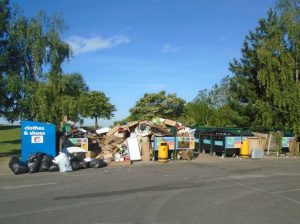
Fly-tipping bags and BB gun shots close Bagshot recycle centre

Bagshot Recycling Centre (Image Surrey CC)

Bagshot community recycling centre will close in an effort to protect  staff from being threatened with violence, Surrey County Council has said.

The depot has been plagued with issues for years with people “dodging bb bullets”, catapults fired,  angle grinders used in break ins, and staff put in danger by those dumping hazardous waste, senior councillors said.

The closure would not save the authority money, they said, as alternate sites will have to their hours extended to deal with the knock on.

Waste contractors Suez has recorded 801 instances of fly tipping across all Surrey recycling sites between January 2019 and August 2024. Of these, 531 (66 per cent) were at Bagshot.

A nuisance report listed examples of flytipping at the site as well as details of break ins such as when an “angle grinder was taken to the office shutter” and “oil thrown around site”.

Other times vandals broke in and left fluorescent tubes “smashed over the site”.

Some of the break ins forced the recycling centre to close, while on June 17 “Someone fired a bb gun towards members of the public” which was later reported to the police.

Campaigners had argued that the centre was valued by the community and rather than give up on Bagshot, money should be spent on modernising and making it safer.

They argued that closing the Bagshot centre would make it harder, longer, and more expensive for many people to recycle their waste.

Councillor Natalie Bramhall, cabinet member for property, waste and infrastructure, told the Tuesday, November 26.  meeting at Surrey County Council: “ Suez keeps the site safe, but it has inherent problems which are not present at other community recycling centres. 

“For many many years the site has suffered from overnight vandalism and unlawful ingress.

“Containers, particularly those used for electricals, are regularly forced open and plundered and the site office has been vandalised.

“The perimeter fence has been driven into and fly tipping left outside the gates and tipped over the fences.

“Prevention measures, whatever we do, things get broken, they use catapults to knock out all the lights, they used angle grinders to get the fence and into the office and vandalise.

“Suez staff receive threats and have to deal with materials delivered to the site that are hazardous and not allowed on the site but they have to turn a blind eye to this because they are threatened with violence.”

The report described the Swift Lane site as small, unmodernised and not fit for purpose. 

It serves around 7,000 people in the Bagshot area who will be redirected to Camberley. Those who came from further afield, such as Windsor and Maidenhead, will be directed to the recycling centre in Lyne, Runnymede.

Subject to Surrey Heath Borough Council approval, it is anticipated that Bagshot tip will close immediately prior to the new tenant moving onto the site. This is likely to take place in December 2024.

Photo: Bagshot Recycling Centre (Image Surrey CC)


Dorking Halls to reopen after upgrade

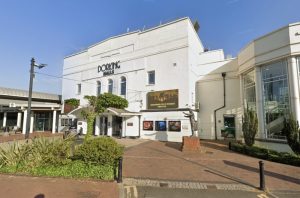
Dorking Halls (image Google)

The official reopening date for Dorking Halls is days away and a special ceremony has been announced to mark the occasion.

Mole Valley District Council was forced to close its veritable old venue in June so it could undergo a £11million facelift, to take place over two phases, to replace the 1930s plaster ceiling in the grand hall together with much needed mechanical and electrical work to its stage and internal workings.

Now, the first stage of that work, which has so far cost £4m, is done and Dorking Halls will reopen its doors on Monday, December 9 with screenings of Paddington in Peru, Wicked and Gladiator 2.

Then, from December 20 the big winter panto Sleeping Beauty takes to the stage, complete with 3D laser projections.

Ahead of the big day the council is also hosting a special reopening celebration the Friday before to show off the upgraded site, which will also feature newly enlarged toilet provision, and a draft lobby.

Speaking about the soon to be reopened Dorking Halls, leader of the council, Councillor Stephen Cooksey said: “I wanted to update you of an ‘early Christmas present’. 

“The work to replace the Grand Hall ceiling at Dorking Halls has gone brilliantly well and our entertainment venue will be re-opening as planned on Monday December 9, with the panto, ‘Sleeping Beauty’ beginning not long after on the 20 December and running until the end of the month.

“Whilst Dorking Halls has been closed, the opportunity has been taken to upgrade our film projectors meaning that they will not only present even better-quality visuals, but also run in a greener, more energy efficient, manner. 

“So, be prepared for an invigorated cinema experience when the Halls reopens with a comprehensive events screening and film listing.”

The second phase of the project’s £11m refurbishment will take place in 2025 and will focus on replacing “critical mechanical and electrical systems” – said to be its heating and cooling plant – that are near the end of their useful lives.

Related reports:

Dorking refurb: “it’s behind you”!

Dorking Halls to get refit