
Epsom and Ewell Times

Current Front Page

ISSN, LDRS and IMPRESS logos

Sorry Surrey Borough for “shameful” past

Woking Council

Woking Borough Council has apologised for the “shameful” behaviour of its past.

The bankrupt council met last night to hear from the authors of the long-awaited review into how the authority went bust.

The council saddled itself with debts of about £2billion – borrowed to fund failed investments and regeneration that has left residents facing years of huge tax hikes and cuts to services.

The Grant Thornton Report found ‘potentially unlawful’ lending, failures of leadership, borrowing to lend to third parties, a £3m “opportunities fund” overseen by the former chief executive Ray Morgan, potential scope for conflicts of interest, and poor decision making such as borrowing £700m to buy an asset now worth approximately £205m.

The council held the extraordinary meeting to consider the report’s findings where, as expected, it accepted the findings and recommendations in full.

Surrey Police has been contacted by the borough’s chief executive to make clear that any evidence of criminality or misfeasance in public office will be referred to them for investigation.

Although it is unclear, given the state of record keeping during the period in question, what the outcomes of this may be, the meeting heard.

A separate legal challenge pursued through the courts could be explored, but would require new instructions from the council.

Not on the original papers, but added during the debate, was the formal apology.

Cllr Leslie Rice (Liberal Democrats; Heathlands) said: “Humility does not belong to the political class generally.

A humble politician is an oxymoron or a paradox I’m not sure which. But I think in this situation…we should be showing collective humility this evening as Woking Borough Council.

“While we are different members of the council, the council itself is responsible for these legacy problems, these historical problems.

“We should apologise to the people of Woking. The situation we have is shameful.

“It’s shameful (too) on our government, our historic governments going way back, that we completely lack proper regulation and oversight of the local government sector.

“We should apologise to the people of Woking.”

The two and a half hour meeting began with leader of the opposition Cllr Amanda Boote (Independent; Byfleet and West Byfleet) paying tribute to former member John Bond, a long-standing critic of the council’s financial handling, but who died earlier this year.

Her words were echoed by many of those who spoke.

Addressing the council, she called the report cathartic, shocking and sad “especially for all of the residents of Woking who we have collectively let down.

She said: “Residents will continue to feel the impact of this for many many years to come.

“I think the most important thing is we have to learn lessons now, hard lessons so that history can never repeat itself.”

She added: “I want to pay tribute to my predecessor and founder of our independent group the late councillor John Bond.

“Since first becoming a councillor in 2014 and until he retired in 2021 Cllr Bond fought constantly to highlight the wrongdoings of the previous corporate management group and of the previous administration.

“Highlighting the wholly inadequate governance, poor investment decisions, poor accounting lack of transparency.

“And it’s sad that he was belittled and laughed at. He even resorted to writing many newspaper articles to try to get his voice heard.

“This is not about political point scoring but I couldn’t let tonight go by without paying tribute to Councillor Bond and all of his hard work and scrutiny in trying to stop this disaster from ever happening.”

In a statement released after the meeting, Cllr Ann-Marie Barker, leader of Woking Borough Council, said that the Grant Thornton public interest report confirmed what many residents already felt; that their council had let them down.

She said: “Years of mismanagement, poor governance and a disregard for the risks have left our community burdened with unsustainable debt. These systemic failings betrayed the trust residents placed in the council and have had far-reaching consequences.

“On behalf of Woking Borough Council I want to apologise for these unacceptable failings of the past.

She added: “By implementing the auditor’s recommendations, we are taking decisive action to secure a better future for Woking and the residents we serve.”


Another solar power story – Leatherhead

Leatherhead Leisure Centre (Image Google)

A four-year fight to install solar panels in a Leatherhead car park has left those behind the green project both “disappointed and very exited”.

Mole Valley District Council declared a climate emergency in 2019 and has been trying to decrease its carbon emissions ever since, with the goal of reaching net zero by 2030.

Now, a pilot scheme set to be approved could to be a step in the right direction – but has left some wishing for a “far more expansive” roll out, after funding was approved to cover just 20 bays in Leatherhead with the new tech, the size of about two tennis courts.

Bays in the centre’s car park will have new coverings with solar panelling installed on top. Electricity from the panels will be used to help power Leatherhead Leisure Centre although it will fall well short of delivering its full need.

It is anticipated that the electricity generated annually by the solar panels will be 37,498 kWh or about 2.7 per cent of what the centre uses – although it would still be enough to reduce the council’s carbon footprint by about 9.7 tonnes a year.

Hope is not lost for those wishing to see greater role out of the panels as the council has said that, should key milestones and performance targets be hit, “the intention is that further role out of solar carports across other Mole Valley District Council carparks including Pippbrook Offices and Reigate Road will be implemented”.

Cabinet Member Councillor Claire Malcomson said: “It’s taken four years to get this far.

“I’m disappointed and very excited about this because at long last we’re going to be doing it, I would love it to be far more expansive but it is only a pilot therefore hopefully it’s going to open some really good doors for us.”

The £175,000 project is expected to take about 16 years to cover its costs and the levels of energy produced too low to require battery storage units.

Regardless, the system will be plugged into the national grid with any spare capacity sold into the network – the most likely scenario here being on days the centre is closed.

She said: “It would take 16 years to pay itself back and I just hope we will consider it as its a very good step in the right direction because other councils are taking over but it was actually Mole Valley that initiated this in the first place.”

A similar project is already in place in the Elmbridge Civic Centre car park in Esher.

Cllr Andy Smith (Independent; Ashtead Lanes and Common) said: “This is a very good scheme indeed.

“I share the disappointment that its taken so long to get off the ground but I’m very keen that we seize the opportunities for this type of solar project rather than using up productive agricultural land with solar arrays.”

Final sign off on the plans are dependent on cabinet approval.

Leatherhead Leisure Centre (Image Google)


Mole Valley Bankruptcy warning

Mole Valley District Council offices

Mole Valley District Council is facing bankruptcy and must make “very difficult decisions” over the future of its services.

The bleak warning came during the Tuesday, November 12 scrutiny committee when the grim outlook was laid bare to councillors.

Unless the council makes significant savings then “in all scenarios” reserves would fall significantly below minimum levels required in 2026/27 and be exhausted between 2027 and 2029, officers said.

Councils must balance their budgets and failure to do so can lead to section 114 bankruptcy notices being issued. When this happens all new spending must stop.

Anything other than drastic cuts would put Mole Valley “at such significant financial risk” that the council’s chief financial officer would  likely be legally bound to consider using statutory powers  – with commissioners brought in and the council losing day-to-day control of how it is run.

Mole Valley District Council’s executive head of service (finance and strategy) Claire Morris said: “Essentially every local authority is facing very challenging savings targets. 

“It is difficult. I think I need to be really honest and quite blunt with councillors, all the low hanging fruit, the easy wins, have been taken. We are now into making some very difficult decisions potentially. To achieve that savings target you will be asked to make some very difficult decisions.

“The alternative is equally less palatable. What we see by authorities that  got into trouble and issued notices… is that they get taken over by commissioners and you lose control of your council. “So I can not give you any confidence that we will definitely achieve those savings targets. “What I can say is that we will all, councillors included, work very very hard to achieve those savings and identify them.

“We should be honest with our staff and what this might impact on our services. “It’s the honesty we will now have to face up to.”

The most high profile example of a council going effectively bankrupt locally is Woking Borough Council with debts approaching £2billion, with other Surrey councils also facing their own issues.

Mole Valley District Council must find £1.8m savings this year but has only managed to achieve £493,000 so far and is expected to fall short by about £1.2million.

Future years look even more challenging with costs expected to increase, and revenues fall.

The council currently makes enough money from its commercial investments to cover the annual interest rates and debt repayment costs, the meeting heard, but “is facing increased tenancy risks and additional costs as commercial leases are approaching break points or end dates and tenants are vacating the properties”, council documents said.

The council also expects any new tenancy agreements to be at lower values than at present.

Additionally there is “the risk of the council needing to incur significant capital costs of refurbishing investment properties but without a commensurate increase in income”.

Short term cash flows have been hit by a double whammy of the council failing to sell assets, and the being unable to find anyone willing to rent office space in its civic centre.

Claire Morris, the council’s chief financial officer, said: “A key area was around the letting of vacant office space within this building 

“We have not yet found a tenant. We are still marketing the property, so that is ongoing, but we are continuing to market and hopeful that we will get a tenant.”

As it stands, the council then must find a further £760,000 of savings or income for the 2026/27 financial year. 

“It is also recommended that the council starts to develop plans to deliver at least £1.3million of further transformation savings for 2027/28 and 2028/29.”

During that time the council is forecasting its return on assets for decrease, while budgets had inflation forecasts at 2 per cent –  adding pressure. 

Councillor Gerry Sevenoaks, committee chair, added: “What is in front of us is undoubtedly some very high savings targets.”


Surrey school kids’ country walk saving money

Pictures taken by Joe Massey as he walked the route Surrey County Council recommended his children take to school after cancelling their free bus access (image Joe Massey)

Children have been told they can walk 4.9km through fields and over an unguarded railway line by Surrey County Council bureaucrats who cancelled their free bus passes.

The decision has left their family feeling “let down” and “frustrated” after the vital service relied upon for years was cut because a 10 kilometre hike was found by county hall officials.

Joe Massey was sent the letter informing him of the council’s decision after a “review” found the route was considered a safe walking route for children travelling from South Nutfield to Carrington School in Redhill.

The free bus service historically served the area but the so-called discovery of the new route means notice has been served on those who depended on the county council’s travel assistance.

Normally, free bus access is only provided to those who live more than three miles from their chosen school.

South Nutfield is within that distance but the narrow lanes linking the village to the school are unsafe for young people to walk along.

Now the council has written to parents telling them that a new 4.95 kilometre route – across muddy fields and unprotected railway lines is a suitable alternative – but as a precaution children should wear suitable footwear as the farmer’s field is prone to flooding.

The instructions, seen by the LDRS, on how the children should get to school read: “Follow the public right of way until you reach Mid Street.

“In places it is narrow, and it can be muddy with surface water, occasionally liable to flooding so appropriate footwear would be advisable after inclement weather. 

“There are two stiles to climb over; these are easily scaled.

“The train track is an open crossing with no gates, barriers, attendant or traffic lights. The sightlines in both directions are long, straight and clear. It is a rural line, Redhill to Tonbridge,  on average there are two trains per hour and occasionally a freight train making it safe to cross.”

Adding: “The public right of way continues across a farmer’s field which it can be muddy with surface water, occasionally liable to flooding.”

The decision was taken by the Surrey Travel & Assessment team alongside the Safer Travel team who had reviewed a number of routes across the county previously been deemed unsafe. 

They team wrote: “We understand that this may be disappointing news, however we have undertaken a thorough investigation into your child’s current eligibility, applying the travel assistance  policy robustly, and this is the resulting outcome. “

Joe Massey, said they have two boys who will be impacted, one in year 10 the other in year 7.

He said: “We qualify for the council’s assisted travel scheme because the nearest school to us is over three miles away but we’ve received a letter f saying that as of September next year they’re going to be cancelling both passes – because they’ve found an alternative route that’s less than three miles.

“A big chunk of it is cross country through cow fields and rail roads with no bridge. It’s just open tracks.

“It’s a public right of way. We did the walk, there’s a cow field, you’re wading through mud. 

“The council says it’s fine because its only 2.96 miles but the app says 3.06.”

“Some of the roads are really uncomfortable to walk along and to expect anyone to do it, especially in winter, is just unsuitable.

“And the fields are not lit at all; it’s just plain dangerous.”

Mr Massey said: “I’m extremely frustrated by the situation. Obviously the money is a big thing but it’s the principle.

“It took us an hour to do it, there’s no way in hell you’d send your child on that route.

“To then expect your child to walk for an hour ,they’re going to be exhausted.

“My wellies were caked in mud – they said in the letter to wear suitable footwear.

“It’s traumatic enough at secondary school but to have to carry muddy wellies around all day….

“We just feel let down and the option they’ve  given us is just unbelievable. 

“If any normal human being would have looked at that route, I can’t believe they would have sent the letter.”

Clare Curran, SCC cabinet member for children, families and lifelong learning said: “This route has been established between South Nutfield and Carrington School following individual Safe Walking Route assessments that were carried out by the council.

“Safety of route assessments are carried out in line with Road Safety GB Guidelines. It is important to note that this is an assessment of the road safety of a walked route by an accompanied child – national guidance advises that the child should be “accompanied as necessary”. It is the expectation that the child, and the accompanying adult, will wear appropriate clothing and footwear for the conditions underfoot.

“The current travel assistance provided by the council is an annual bus pass on a public bus service. This costs the Council £881 per year for each pupil. In line with statutory guidance, these pupils are no longer eligible to receive a free bus pass through the council. Amidst a set of challenging financial circumstances, the council is not in the position to continue to pay for transport for families where they are no longer eligible for assistance, due to a safe route being established.

“The council is not prescribing that children should walk to school via the safe route that has been established; the option is still available to use the bus service. Families will be able to purchase a bus pass directly from the operator to continue to use the bus. Families can appeal against the decision to withdraw travel assistance via the stage one safety of route appeal form, and a link to this was included in the initial correspondence with the family.”

Image Joe Massey – on the new school walk


Another Surrey borough’s Local Plan agony

Spelthorne Borough Council offices in Knowle Green, Staines. Credit: Emily Coady-Stemp

More than 800 homes will be built on Surrey green belt land as part of a 15 year plan for 9,270 new properties in the north of the county.

It comes after Spelthorne Borough Council agreed, last week, to reinstate 13 green belt sites it had removed from its local plan in February.

Opponents have said delays to the borough’s planning bible, which sets out where and the types of development that can go ahead for the next 15 years, has turned Spelthorne into “clarion” to be picked off by “vultures”.

The council said it changed its position in order to get its housing plan approved under lower targets of 618 a year versus potentially the 700 plus that could come in under national changes to planning law.

Councillor Darren Clarke (Conservative, Laleham and Shepperton Green) spoke out against the hold ups saying residents were “sold a pup” and councillors unable to stop unwanted development.

He said: “The lack of a local plan means that we don’t have a five year housing supply.

“This tilts decisions in favour of development, and away from not developing so when we are lobbied by residents to oppose builds we are told by officers that we have no reasons to object.

“We can reject  it as the committee and do because we know what good looks like, however the planners can and do apply  those with the most money know they will win and we need to pay their expensive legal costs as well

“So we not only end up with buildings which we do not want, lived in by people from potentially outside the borough, hindering, not helping the borough but also a legal bill for us and them, and who pays this, yes the residents.

“We are in a time of planning approval by appeal with developer vultures circling looking at us like carrion.

“What this short sighted administration has done is harm the borough make us look like a laughing stock and cost the residents in hard pounds.

‘It’s been almost fingers in ears and la la la”

His speech was rebutted by borough leader, Cllr Joanne Sexton who said the so called “pathetic excuse” to delay the local plan had been to protect residents from flooding rather than any quarrels over green belt.

She told the meeting that she was proud and delighted with the work that had gone in to ensure “that  now have a statement of common ground with the Environment Agency, who is a key stakeholder, and knows exactly what it is that they needed from us, and I am extremely proud today to be here to be able to take this forward.”

Officially the council paused the inspector’s examination of its local plan in December 2023 “to allow for training of newly elected councillors” and to consider potential changes to national planning policy.

In February 2024, the council asked the inspector to remove all green belt allocations, with the exception of the two sites for Gypsy, Traveller and Travelling Showpeople. 

The council has now decided to return the 13 protected green belt sites back into the plan so they can be used for housing – before going back to the planning inspector with any proposed changes. 

The saga dates back even further with the Secretary of State ordering the council to not pause its plan in September 2023 after councillors asked for a hiatus in June – just a month after examination hearings had started at the end of May.

In all, there will be 855 new homes built on Spelthorne’s green belt, of which  438 will be affordable.

Spelthorne Borough Council offices in Knowle Green, Staines. Credit: Emily Coady-Stemp


No wonder Woking went bankrupt. Scandal of private school loans

Greenfield School Woking (image Google)

A private school was loaned millions of pounds at favourable rates by Woking Borough Council before it went bankrupt. Now questions are being asked as to whether an independent inquiry will be launched into the “extraordinary use of taxpayer’s money”.

Greenfield School in Old Woking has loans of £13,257,756 according to full accounts published in September on Companies House.

Interest is just one percentage point above the Public Works Loans Board rate. The cash was originally borrowed by Woking Borough Council for “capital projects” before being passed on to the school.

Since then the council’s finances have collapsed under the weight of its unprecedented multi-billion debt from all the money it can not afford to repay – and its investment decisions have come under close scrutiny.

The matter of its role as effectively a bank was raised during the October 17 full meeting of Woking Borough Council.

The local authority was asked directly if it would set-up an independent inquiry into the extraordinary use of taxpayers’ money into the 2019 loan to Greenfield preparatory school, reportedly topping £11m.

According to the school’s set of accounts, its fees, which brought in more than £5m last year, are very carefully controlled and exceptional value for money.

Greenfield, the accounts said,  is highly competitive when compared to other independent educational establishments within the wider Woking area.

In January 2021, Greenfield opened Little School,  a 50.4 week a year day-care for children aged from six months to four years. In April 2022 the school opened its new buildings and took on extra staff.

The council’s loan was challenged on the grounds that the money was not used  for regeneration and education is not in the remit of a borough council.

Woking Borough Council was asked: “Will the council set-up an independent inquiry into the extraordinary use of taxpayers’ money into the loan to the single entity, Greenfield preparatory school?”

Councillor Ann-Marie Barker, who took over as leader of Woking Borough Council after the loans had been agreed. 

She said:  “In July 2023, the council asked Grant Thornton, its newly appointed external auditors, to undertake a ‘Value for Money’ review, looking into the governance arrangements that relate to the council’s historic investment strategy.

“This is an independent report which is reviewing how past decisions (such as those related to Greenfield School) were made and the financial impact of these decisions on the Council’s financial sustainability. 

“Grant Thornton have indicated that the Value for Money report will likely be published in October 2024. 

“The council will make the Value for Money review report, alongside our response to its recommendations, available on our website at the earliest opportunity.

“It is important to wait for the findings of the independent review before coming to any conclusions regarding individual decisions.”

The school is a registered charity in Old Woking and has the benefit of extensive playing fields. In addition it takes advantage of Woking’s Pool in the Park to offer swimming lessons.

The school hosts community events including annual maths and English challenges, anti-bullying training, and football tournaments.

Pupil numbers are growing at a rapid rate and income from charitable activities increased by £582,037 to £5.3m- of which £5.2m was through school fees.

Overall the school made a loss of £502,562 last year according to its accounts and it has loans totalling £13,316,871,  of which £13,257,756 is listed as “other loans”.

Its annual set of accounts read: “The loans were obtained to purchase a new site for the school. The loans are secured on property owned by the school and are for a total period of up to 50 years. 

“During the first three years, no repayments will be made but interest will accrue and then it will be repaid over the next 47 years. 

“The interest rate applicable will be one  per cent point above the 47 year Public Works Loan Board Annuity Rate.”

The Public Works Loan Board  provides loans to local authorities for capital projects – usually in the form of regeneration projects such as Victoria Square or Sheerwater.

The UK Debt Management website reads: “Decisions over which capital projects to pursue and whether to borrow for these investments are the responsibility of the elected council of each local authority, who are accountable to their electorates.

“Local authorities are free to borrow so long as the finance director is satisfied that they are acting in line with statute and can afford to repay the loan. 

“The PWLB is a non-discretionary lender: it does not ask the purpose of a loan, as this would duplicate the decision-making structures of the individual local authorities.”

The Grant Thornton report could be ready for release by the end of this month.

Greenfield School Woking (image Google)


Epsom’s neighbour cracks on with its Local Plan

Artistic Impression Of The Arrival Square from North Street, south east corner. (Credit: Mole Valley District Council and Keir Property)

More than 6,000 new homes will be built in the Surrey borough of Mole Valley, with Leatherhead taking on the largest share after the district council approved its long-term planning bible.

Mole Valley District Council has agreed to build an average of 336 homes a year between 2020 and 2039 with town centre sites in Leatherhead, such as Bull Hill, and Dorking being set aside for large scale housing-led redevelopment.

Office complexes in Ashstead and Dorking have also been earmarked for regeneration, and green belt land in Ashstead, Bookham, Dorking and Leatherhead released so developers can build homes.

The council has also agreed to hand over green belt land for housing within and around Hookwood to “complement” economic growth near Gatwick.

Villages within the green belt, namely Beare Green, Brockham, Capel, Charlwood, and Westcott will have their boundaries amended to allow “appropriate development” after Mole Valley District Council formally adopted its local plan last week (October 15).

In all, Leatherhead is expected to take on 30 per cent of the new homes (1,914), followed by the areas around  Dorking 23 per cent (1,467) , Hookwood, 15 per cent (957) , Ashtead, 11 per cent (701)  and Bookham, seven per cent (446).

The remaining 14 per cent (893) will be spread across the rest of the district.

In Leatherhead the council wants to create what it calls, a Riverside Quarter, at Claire House and James House in Bridge Street. This would go alongside an Urban Quarter at the redevelopment of the Bull Hill.

For Dorking, the Pippbrook House refurbishment remains its flagship development as well as plans to redevelop the Foundry Museum and Church Street workshops.

More locally, housing requirements for neighbourhood areas are as follows:

  • Ashtead – 652 net new dwellings
  • Bookham – 513 net new dwellings
  • Capel Parish – 198 net new dwellings
  • Ockley Parish – 135 net new dwellings
  • Westcott – 123 net new dwellings

Mole Valley District Council, which passed its local plan by  28 votes to five with one abstention, said that 40 per cent of all new units would be affordable, and all come with at least one EV charging point.

The meeting heard that about 76 per cent of Mole Valley land was designated as Metropolitan Green Belt and  protected from most forms of development. 

Under its new plan, it said it has been able to deliver sites for housing while relinquishing less than one per cent of that.

Had the local plan not been agreed, developers would have had carte blanche to build without restrictions.

Cllr Margaret Cooksey, portfolio holder for planning on the Liberal Democrat run council, said: “It gives me enormous pleasure to be able to bring the local plan to this council for adoption at last.

“The local plan is about much more than a document about meeting housing need but a good deal of time and effort is taken up by worrying about specific development sites, particularly green belt sites,

“It’s worth noting again that only 0.65 per cent of the existing green belt in the district has been identified to be released for future development.

“There are sites in most of our wards that we wish were not there however I did say, that I felt that it was a fair plan in as much as what could be seen as pain was spread as evenly as possible across the district.”

Local plans go through long drawn-out processes before they are formally adopted, requiring sign off from planning inspectors. 

Councils need to identify land for development and demonstrate it can meet housing targets. Often there is a trade off between town centre intensification or protecting green belt.

As well as the housing, the Mole Valley plan creates 230 new locally listed buildings and grants 27 parks and open spaces extra protection.

Dissenting voices in the chamber felt the council could have gone further to limit the impact on green belt while Cllr Chris Hunt (Independent, ​​Ashtead Lanes and Common) said more could be done to curb building heights to stop town’s from becoming the next Woking.

He told the meeting: “This is not a sugar coated pill for us to take, it’s got some very good things, affordable housing, the commitment for better health and education facilities, those are very positive things.

“But it’s also got some really hard to agree things.

He added: “There is still quite a lot of uncertainty about whether a key site in our key town of Leatherhead can actually be developed or not.”

Adding: “It’s effectively saying that the plan’s foundations are uncertain in that regard and unfortunately it does echo something else, that there are no clearly defined density agreements.

“It has lots of good things but if I was on Strictly [Come Dancing] it would not be 10 out of 10, it would be a seven.”

Cllr Cooksey said: “We’re not Woking, Mole Valley is not Woking and we don’t want to look like Woking but there’s the dilemma between do we build in the green belt (or in the towns?)”

Cllr Leah Mursaleen-Plank (Liberal Democrat, Mickleham, Westcott and Okewood) said her ward  has been hit by uncontrolled development  “again and again” and called out at those asking to delay the plan’s adoption in order to protect more green belt.

She said: “There is no alternative here.

“We have been in a position in my ward where we haven’t had a local plan and we’ve had uncontrolled developments going through over and over again.

“We’re losing green belt by delaying further.

“To say that we need more time just means more development on green belt sites, the opposite of what you would like to achieve.”

Summing up Cllr Cooksey said: “I’m disappointed that we can’t say that it’s the overwhelming view of the whole council, it would have been very much stronger if we could have had support from the whole chamber. 

‘However we have an excellent plan here, I truly believe it and really think it’s probably the best we could probably have come up with under all the circumstances that we’ve had to deal with over the years.”

Mole Valley covers 25,832 hectares, 16 per cent  of Surrey as a whole and is the third largest borough in the county.

Its population of 87,245 accounts for seven per cent of Surrey’s total, while the average house price of £505,000 makes it second most expensive district in the county.

The ratio of house prices to residents’ salaries was 14:1 in March 2020,  the fifth most unaffordable district in Surrey.

Between 2014 and 2019, 1,265 new homes were completed in Mole Valley –  230 of which were affordable.

Related reports:

Mole Valley  ‘won’t bend’ to petitioners

Mole Valley Plan Paused

Artistic Impression Of The Arrival Square from North Street, south east corner. (Credit: Mole Valley District Council and Keir Property)


Only the cashless will be “on the Hook” Road car park Epsom

Hook Rd Car Park

A town centre car par centre is set to go cashless after plans to upgrade its ticket machines were approved.

Pay metres at the Hook Road multi-storey car park in Epsom are nearing the end of their functioning life-span and need to be replaced.

The problem facing Epsom and Ewell Borough Council is that any new pay-and-display machines at the site only have a limited lifespan as the car park is earmarked for redevelopment – which could begin as soon as September 2025.

Redeveloping the car park will not be a straightforward job however as it was built directly on a historic coal and gas manufacturing site, dating from the 1870s.

A report presented to the council’s environment committee in July read: “Gas works are some of the most contaminated sites in the UK with the council’s car park situated above a concrete capped former tar pit.

“Tar pits have a very high level of contamination, and it is possible that the car park caps are the most contaminated part of the wider gas works site.

“The car park was built in the mid-1980s when it was environmentally acceptable to concrete over former contaminated land uses.”

Earlier this year the council announced it had entered into an agreement with the developers of the SGN Gas Works next door as part of its long-standing ambition to build a new town centre.

The combined sites are part the council’s masterplan for Epsom, and features in its draft Local Plan -which sets out where, and the type, of development that will take place in the borough.

Until then, however, the car park will remain in use – and moves to replace its worn out machines are now underway.

Those who are unwilling to go cashless, or cannot, have been advised to park elsewhere, with Depot Road and the high street named as the most likely alternatives.

Councillor Liz Frost, (RA Woodcote and Langley) chair of the Environment Committee, said: “The current barrier control payment scheme for the car park is at the end of their life and needs to be replaced and the life of this car park is limited.”

The committee had at one stage planned to spend £20,000 on a like-for-like replacement but this was thrown out and the new cheaper alternative agreed.

In 2023/24 the council made £60,000 from the car park – far below the £137,000 it had budgeted for and less than the £65,000 it costs to run and maintain.

The council’s October environment committee heard that many of those using the car park were season ticket holders and would not need the new system. Of those who do , 81 per cent already pay by card.

Ringo, which was selected to replace the pay-and-display machines, adds a 20p ‘convenience charge’ to each transaction. The committee said it would look at parking charges, and whether to pass the full increase on to motorists, at a later date.

Related report:

Epsom and Ewell Council answers parking complaint immediately

Hook Road Car Park, Epsom (Image Google)


Mole Valley  ‘won’t bend’ to petitioners

Aerial view of Bull Park Leatherhead

The fight to protect the green gateway into a Leatherhead goes on after campaigners seeking to stop a popular park from being turned into high rises were told the council would not “bend the knee” to their petition.

Mole Valley District Council heard from residents representing the 1,500 people who joined the call to stop the “unnecessary” development at Leatherhead ’s Red House Park by Bull Hill.

They argued the open space could be saved if the council instead redeveloped the raft of empty offices or unused industrial estates in the town.

The petition, discussed at the Tuesday, October 15 full meeting of Mole Valley District Council read: “This park is used by many people and also home to lots of wildlife and historical trees.

“The plans are to build high rise flats and apartments which would look unsightly. The town has barely enough space in schools, and doctors and dentists have waiting lists so understandably very concerning for local residents.”

The plan, part of Transform Leatherhead, seeks to redevelop the land within the existing one-way system known as Bull Hill, including the Red House Gardens.

The council and its development partner Kier say this is to complement the retail and leisure quarters of the town.

Bull Hill is currently made up of office space, public car parks and open space.

It was originally earmarked for retail but after work to the Swan Centre and transport studies, as well as the trend away from high street shopping, the decision was made to go for a mixed development.

In October 2023 the council and Kier Property signed the legal agreements and the joint venture is now working to develop the project.

Presenting the petition, the speaker said: “If we destroy everything that makes Leathehead a destination in favour of becoming a carbon copy of London then people will leave.”

Campaigners pressed for the use of alternative sites and said there was 140,000 square metres of empty office space in Leatherhead – enough for 190 two-bed family homes.

However this was quickly shot down as they were told the council was powerless to force private landowners to hand over vacant properties -and were restricted to sites identified in its local plan.

Instead they want the campaigners to work with the council to make the site the best it can be for the town – while understanding the council needs to build on the land to hit its housing targets.

Cabinet member Councillor Keira Vyvyan-Robinson (Liberal Democrat; Leatherhead North) praised the strength of feeling but said the council can only put forward sites their owners put forward for development.

She said the new local plan has put in restrictions and that developments with high rise buildings have to prove their worth, and that play and open spaces must be provided.

The council also expected the redevelopment to increase biodiversity in the town by at least 20 per cent.

Cllr Vyvyan-Robinson told the meeting she hoped residents would continue to be involved in the process as the plans continued to be revised.

Cllr Ben Wall ( Liberal Democrat; Leatherhead North) dismissed fears the project would turn the town into the next Woking or Croydon. He said: “The tallest building in Croydon is 150metres tall, you can see that for miles, we’re suggestion a building that’s maximum 20m, you are not going to see it from Leatherhead North.

He added: “We’ve been talking about this for the best part of a decade, we’ve had countless opportunities for residents to talk to us. We are listening. Listening is not the same things as bending the knee entirely to a petition. We will listen to a petition, it doesn’t mean we have to come to the same conclusion as a petition.

“Leatherhead has suffered from a chronic lack of investment for decades it’s not the time to start throwing out multimillion investment and investment opportunities without fully assessing their potential benefits.

“I’m cautiously optimistic that these proposals incorporating public feedback can be successful.

“I’m not saying that we will come to a perfect solution but we can not let perfect be the enemy of good.”

Cabinet member Cllr Claire Malcolmson (Liberal Democrat; Holmwoods and Beare Green) added: “ We are listening these are not the final designs.”


Some Surrey boroughs get brownfield funding

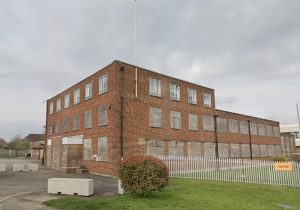
The Allders building in Camberley will have asbestos cleared to make it suitable for housing (image Google)

Surrey councils will get nearly £2m to release disused brownfield sites to unlock desperately needed land for house building including cash to clear asbestos and transform the “heart of Camberley”.

Boroughs and districts are bracing themselves for tough new Government housing targets that could see the demands to deliver new homes skyrocket.

In an effort to alleviate some of the pressures the Government has announced £68m of funding is to go directly to 54 local authorities to turn what it describes as neglected land into housing.

Two of those councils are in Surrey; Surrey Heath Borough Council is set to receive £1,480,300, with Tandridge District Council in line for £250,159.

The funding is to be used clearing empty buildings, former car parks or industrial land in order to make way for homes.

Historically it is expensive to get such sites ready for housebuilding and can sit as empty eyesores for years.

Surrey Heath Borough Council has said in a statement the funding will support its new housing development in London Road site, “near the A30 in the heart of Camberley”.

It added: “The grant will be used to demolish derelict buildings on the site and safely remove asbestos from the former Allders building, clearing the way for future development. “

The money is part of a three-year £180 million Brownfield Land Release Fund 2 launched in July 2022 to allow local authorities in England to build on blocked brownfield land.

Prime Minister Keir Starmer said: “From the outset we promised to get this country building again to deliver 1.5 million homes over this parliament and help tackle the housing crisis we have inherited. That is the essence of fixing the foundations and driving growth.

“I said this government is on the side of the builders, not the blockers. And I meant it. This funding for councils will see disused sites and industrial wastelands transformed into thousands of new homes in places that people want to live and work. Our brownfield-first approach will not only ramp up housebuilding but also create more jobs, deliver much-needed infrastructure, and boost economic growth across the country.

“This government is rolling up its sleeves and delivering the change the British people deserve.”

Housing and planning minister Matthew Pennycook said: “The government is committed to a brownfield-first approach to housebuilding, and we have already taken steps to prioritise and fast-track building on previously used urban land through our proposals for a ‘brownfield passport’.

“The funding announced today will support the delivery of thousands of new homes and boost economic growth by unlocking development on scores of abandoned, disused and neglected urban sites across the country.”

Releasing brownfield land is one step in meeting the needs for housing but some councils are calling on the government to do more.

Waverley Borough Council has written to the deputy prime minister Angela Rayner over the government’s wider planning reforms, which currently would require the council to deliver 1,379 homes a year –  a figure that borough leader Councillor Paul Follows called “unrealistic” and “unachievable”.

He added: “The proposed standard method is fundamentally detached from the realities of local constraints, including national designations such as the Surrey Hills National Landscape. It risks undermining both the environment and community cohesion, and we urgently need a more credible, locally tailored approach.”

Further concerns were raised over the role of developers in housing delivery.

Planning authorities such as Waverley have no control over the rate of housing completions.

The Allders building in Camberley will have asbestos cleared to make it suitable for housing (image Google)