Epsom and Ewell Times

2nd April 2026 weekly

ISSN, LDRS and IMPRESS logos

Surrey Police funding: not a fair cop

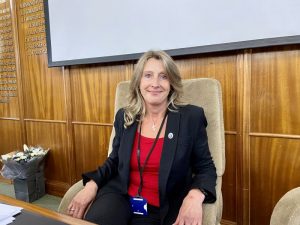
Lisa Townsend Surrey Police commissioner

The “outdated” underfunding of Surrey’s police is “unfair” to residents  according to the May 2021 elected Conservative Surrey Police and Crime Commissioner Lisa Townsend

The Government announced its funding for police forces in England and Wales in December saying they would receive £18.4 billion – up  £922 million on the previous year. But the way that money is divided has meant some areas received significantly larger shares than others, prompting Surrey Police and Crime Commissioner Lisa Townsend to write to the Government.

Surrey’s funding will be £308.7m in 2024/25, an increase of up to £17.3m when compared to 2023/24. Her letter, to the minister of state for crime, policing, and fire, Chris Philp, was seen by the Local Democracy Reporting Service. It read: “Whilst being thankful for the additional resources that have been made available to policing, I am concerned about the way these have been allocated. 

“Once again rather than being allocated in proportion to costs incurred i.e., for pay linked to headcount or payroll costs, these grants have been allocated using the outdated formula grant model. This is a particular issue for Surrey where only 45 per cent of our total budget is covered by grant compared with over 80 per cent  in Northumbria. This means that Northumbria gets 77 per cent  more of the additional pay grant for the same level of cost compared to Surrey.

“I did write to you about this when the pay grant was originally announced, and you assured me that the allocation method would be changed but so far this has not happened.”

In Autumn 2021, the Government announced it was to review how funding was distributed. It has since been engaging with the police sector to determine policing demand and the impact of local factors on forces. Two and a half years later that work remains ongoing with the Government saying the existing model remains the fairest way to allocate core funding to  maintain officer numbers and avoid financial uncertainty.

A Home Office spokesperson said:  “Our priority is to deliver a robust formula that allocates funding in a fair and transparent manner, ensuring that police have the resources they need. So far, a total police funding settlement of up to £18.4 billion in 2024-25 has been proposed and Surrey Police is receiving up to £308.7m. “We have engaged closely with the policing sector on an evidence-based assessment of policing demand, and the impact of local factors on forces. This work remains ongoing.”

Lisa Townsend said: “In December last year, I wrote to the policing minister in response to the settlement for policing which included the recent pay award for officers funded by the government. Our policing teams go above and beyond on a daily basis to keep our communities in Surrey safe and this pay award was richly deserved. I believe it will help in Surrey Police’s efforts in a tough employment market to recruit and retain police officers against a background of rising costs and better paid jobs in the local area.

“However, in my letter I did raise concerns about how these additional resources have been allocated using the current funding formula. This model is outdated and remains unfair to the residents of Surrey. We receive proportionately the lowest level of formula grant in the country meaning we will receive a smaller grant to cover the pay costs compared to other forces.

“Throughout my term as Police and Crime Commissioner, I have been committed to fighting for fair police funding on behalf of our residents and I will continue to lobby government for a change in the current formula.”

Related reports:

Surrey County chief talks to the BBC

Met poaches Surrey police claims Commissioner


Surrey’s debts match Woking’s but its position is secure?

surrey bankrupt

Surrey County Council expects to add a further billion pounds in “additional” debt to its balance sheets but experts have praised its financial sustainability and suggested it is better placed to cope with any potential issues.

The council currently has about £1.3 billion in capital financing requirements and has forecast this to surge to £2.4bn by 2028/29. It expects to fund much of this through borrowing.

According to its own figures the council has an estimated borrowing limit of  £1.06 billion  which it forecasts will grow to £2 billion by 2028/29. It will do this, it says by borrowing an additional £1.24 billion over that time frame.

The finances were presented to Surrey County Council’s Audit and Governance committee on Wednesday January 17 and comes as data found Surrey councils were racking up some of the biggest debts in the UK.

Analysis from the Shared Data Unit shows Woking Borough Council topped the charts owing £1.95bn as of September 2023 – working out at about £19,000 for every resident, the highest in the country. Spelthorne was second with average debts of £10,415, per person and Runnymede fifth, on £7,270 with the Public Accounts Committee warning that these massive debts posed a risk to local services.

Addressing the meeting was council officer Nicola O’Connor. She said: “The table does demonstrate an ongoing commitment to capital expenditure by the council. Our capital program, to be approved in the coming weeks, remains ambitious and remains significant in terms of our capital investment over the next five years. That does result in an anticipated increase in our borrowing. We will manage that and review actual spend compared to forecast before we undertake borrowing.”

She added: “There is an expectation that the borrowing of the council will increase in the coming years in order to support and finance that ambition in the capital program.”

Surrey County Council lost £27 million from the value of  its capital investments in 2023. The finance model continues the same line the council has managed in the past with no significant changes. It sees the continuation of its plan to “maximise our internal borrowing and to balance the long and the short term debt portfolio in order to manage that cost of carry”.

Surrey County Council borrowed an additional £79m in 2023. This is forecast to rise by a further £156m this financial year, with further sums of £372m, £360m, £193m, £129m and £131m added in debt in each of the following years until 2029 – bringing the total additional borrowing for £1,18 billion.

If the plan is followed through the council’s capital funding requirement would grow from £1,3bn to £2,4bn – bringing it almost in line with bankrupt Woking Borough Council which declared itself effectively bust last year.

It would also mean the council would be spending £59m a year to service the debt through minimum revenue protection payments. Overall the council’s financial health remains bullish, considering the serious risks other local authorities were in.

Paul Dossett of accountancy firm Grant Thornton told the meeting that, although the council was not immune to financial challenges hitting local authorities across the country, it had the  support in place to better navigate them. He said: “It’s a very very strong position and you have the right mechanisms in place”. He added: “Your strong governance is linked to the fact that your financial sustainability is in a better place than some other councils. Your strong arrangements for aching value for money  is linked to the reasons of your financial sustainability.

“I’m not downplaying the challenges you face. because you face some… but overall it’s a very strong report it will be absolutely in our top quartile at least for these types of reports this year.”

Related reports:

Relative relief about Epsom and Ewell’s debt?

Surrey Borough running up big debts

Underinvestment hits most vulnerable

Tory leader pleads with Tory Government

Surrey County chief talks to the BBC


Surrey’s £1/4 m fines for failing children

Surrey fines

The failings of Surrey County Council’s children services has meant the under-fire authority paid more than £250,000 in fines, compensation, and redress payments to families it let down last year. The settlements are published by the social care ombudsman and last week it upheld three more complaints.
The education watchdog found Surrey County Council continues to miss deadlines, and create needless delays for children waiting for psychological assessments and GP advice.

The latest rulings meant the authority had to payout a further £1,700 to families  with an ongoing £100 a month to one – as an acknowledgement of the “ongoing uncertainty and distress” until a final care plan is issued.

The total paid to families for 2023/24 will likely be published from April but the most recent full year figures showed the county council could have saved itself thousands of pounds  –  had it got things right.
The council sets itself a target of responding to 80 per cent of initial complaints within 10 working days – though this can be extended to 20 days with its children’s, families and lifelong learning department.
In children’s services only 59.4 per cent were within timescale. 

The figures are even worse for education and home-to-school transport at just 44 per cent and 56 per cent respectively.

The Annual Complaints Performance report read: “Where fault is found following a complaints investigation, financial redress can be recommended where appropriate. All financial awards are approved by the relevant head of service and, if greater than £1,000, in consultation with the relevant cabinet member.

“The Ombudsman can also recommend financial redress if they find fault following an investigation. 
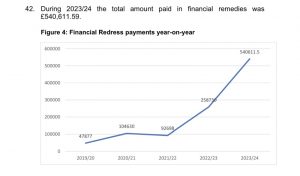
“During 2022/23 there has been a significant increase in both the number of complaints attracting a financial remedy and the total amount paid of £258,730.53. This equates to an increase of £166,032.51 when compared to 2021/22.”

Of the payments, the council said, £87,445.65 was paid in symbolic financial remedies to recognise the impact of the fault identified, for example distress and anxiety and time and trouble taken in pursuing the complaint. The balance of £171,284.88 was primarily reimbursed costs to address missed provision which it says were “essentially funds that the council would have needed to spend to meet assessed needs irrespective of a complaint being made.”

Councillor Clare Curran, Surrey County Council cabinet member for children, families and lifelong Learning: “We are not able to comment on any individual children specifically, however we take the findings from the Ombudsman very seriously and apologise for the distress these families experienced. 
“I am aware that the Council has not always got things right and that the support and service that some children with additional needs and disabilities and their families receive is not always of the standard that we would expect, and I am sorry about that. We are working hard to improve services, and a recent Local Area SEND Inspection noted progress is underway.   

“Despite national pressures we regret all delays and are working hard to reduce any backlogs, and ultimately to reduce spend on fines, which we know is higher than it should be. We have taken several actions to address this including securing an additional £15m of funding to increase the capacity of key teams, extending the use of locum and associate educational psychologists, commissioning external providers for support, and increasing advertising to fill positions. 

“A multi-agency recovery plan is also in place with short-term and long-term goals, which Ofsted and Care Quality Commission (CQC) inspectors noted had identified areas that need improving and that actions by the local area partnership to address these are starting to make a difference. We know that communication with parents and carers is an area in need of focus and plans are being developed to address this as a standalone priority workstream within the refreshed Surrey inclusion and additional needs -partnership strategy.  

“We are constantly reviewing how we support young people who are unable to attend school, and are implementing our £180million capital programme that is increasing the availability of, and access to specialist provision.  We also recognise the significant issues that confront the SEND system nationally. We have seen a 64 per cent increase in education, health and care needs assessment requests across Surrey since 2020, at a time of a national shortage of Educational Psychologists (EPs).

“We are doing our utmost to recruit more to meet this demand, and we are filling this gap as best we can. We have already been able to halve the backlog of EP advices through the steps we’ve taken locally, but we hope to see the national shortage in trained EPs and other issues addressed soon through the government’s improvement plan.  

 “We remain committed to improving our services and outcomes for children and young people with additional needs and disabilities so that they are happy, healthy, safe and confident about their future.”


Drills in the Hills lawful

Drill in Hills

Oil drilling near the Surrey Hills can proceed after the  Court of Appeal dismissed a legal challenge to stop fossil fuel extraction from Dunsfold.

Climate emergency campaigners are still hopeful that the fight is not over – despite running out of road as far as court challenges are concerned.

UK Oil and Gas (UKOG) originally applied for planning permission to sink exploratory wells into land next to the Surrey Hills Area of Outstanding Natural Beauty (AONB) in 2020. The plans were refused by Surrey County Council but overturned by the Secretary of State the following year.

The legal labyrinth continued when a further appeal, launched by Waverley Borough Council and Protect Dunsfold, won the right to a Judicial Review in March 2023.

When this failed to overturn the decision, Protect Dunsfold applied for permission to appeal the findings. On  Tuesday, January 9, a judge found they had no chance of the decision being changed and refused them the right to carry on appealing through the courts.

Oil firm UKOG hailed the decision as being “fully in keeping with the government’s hydrogen, energy security and net zero strategies”.

Its chief executive Stephen Sanderson said: “We are pleased that Lord Justice Stuart-Smith has once again dismissed the legal challenge to our Loxley project and has confirmed that its planning consent is entirely lawful, as the company and its counsel has maintained. We believe that a successful project will be beneficial to local and national level energy and economic interests and is fully in keeping with the government’s Hydrogen, Energy Security and Net Zero strategies.”

Law firm Leigh Day represented the campaign group. Their solicitor Ricardo Gama, said: “Protect Dunsfold are extremely disappointed by the Court of Appeal’s decision not to allow their appeal to go ahead. Their appeal would have tested whether a government minister was right to grant planning permission for gas exploration in Dunsfold when on the very same day he refused planning permission for gas exploration in Ellesmere Port because of the amount of greenhouse gas that would be emitted. 

They say that that decision makes a mockery of the planning system because Ellesmere Port would involve less greenhouse gas emissions than Dunsfold.

Though defeated in court, if may not be the end of the battle as the some of the access land surrounding the site is owned by Waverley Borough Council and any moves to make it wider – in order to accommodate large vehicles needed to drill and transport oil could need council permission. 

Waverley Borough Council has consistently expressed opposition to plans for oil and gas exploration at Loxley Well – which is home to Red Listed birds and other protected species.

The council has also said drilling at the site would have “disastrous consequences for the community, local wildlife and the wider landscape”.

Councillor Steve Williams, Waverley Borough Council portfolio holder for environment and sustainability, said: “At every stage in the long and tortured history of this planning application, local people have demonstrated their overwhelming opposition to any exploration for hydrocarbons at Dunsfold. If drilling goes ahead there will be damaging impacts on the landscape, wildlife, local businesses and residents, while nothing to the local economy.

“More importantly, it simply kicks the can of the climate emergency further down the road. We are living through a time of unprecedented climate impacts and need an immediate shift in national policy away from fossil fuels. We are either serious about addressing global heating, or we’re not.”

Councillor Paul Follows, Leader of Waverley Borough Council, said: “Onshore extraction of fossil fuels is totally incompatible with the Climate Emergency declared by Waverley Borough Council, Surrey County Council, and our national government. The UK needs to rapidly increase our investment in renewables, where we are in danger of losing our position as genuine world leaders. 

“We should focus on energy generation by cost effective and sustainable methods such as solar and offshore wind, and stop ripping up the Surrey Hills in pursuit of oil and gas. The judgement today is bad for local communities, bad for the local environment, very bad for the planet and sends a message to future generations that we simply don’t care about them.”

Image – illustration only

Related reports:

Oiling the wheels of justice on Surrey Hills

Surrey MPs oppose each other on drills in the hills

Future of the Planet in Surrey hands?

A Surrey Borough funds legal fight to stop oil drilling

The Hills Are Alive With the Sound of Drilling… ?


Dorking Halls to get refit

Dorking Halls Surrey

The “jewel in Mole Valley’s crown” is set to shut over the summer as it undergoes a £3.24million safety refit. Dorking Halls has been recommended for the “minimal” amount of work needed to fix its most immediate problems. A decision on an £8m modernisation of the venue with improved seating, bars, toilets, and sound proofing will be taken next year.

Councillor Nick Wright, cabinet member for leisure and tourism, told overview and select committee at Mole Valley District Council: “The halls are a very important part of Mole Valley’s cultural infrastructure, with over 114,000 tickets sold in 2023. They are used by residents from across the district and beyond.
“The halls are sorely in need of repair and refurbishment and the particular concern is over the state of the 90-year-old fibrous plaster ceiling in the great hall itself.

“This has to be dealt with urgently as a health-and-safety issue and it also costs us a lot in inspections and remedial patches. We absolutely have to avoid any chance of a forced unscheduled closure of the halls for safety reasons.”

Initial studies into the work began in 2022 with three ideas put forward. The first is the minimal safety work, the second an enhanced program to upgrade stages, access and bar areas. The final, which was ultimately not considered, was an aspirational complete remodelling.

The halls would need to close in summer 2025 as well; if the council agrees to go ahead with the second phase of works. The primary focus of the first phase will be to make the ceiling safe. Critical ceiling failure has been identified as a risk. If no work is done, there is the potential that the fibrous plaster in the Grand Hall becomes so unstable that the halls are forced to close at short or no notice.

Any collapse, regardless of whether the public were in attendance, would likely lead to a fine. The report read: “The priority is to address the ceiling at the earliest opportunity, to avoid the risk of being forced to close the Grand Halls to the public at short or no notice, with the associated reputational damage, and financial consequences of cancelling events, refunding ticket sales, and compensating for loss of profit.”
It has been about 30 years since the halls last underwent a large-scale refurbishment, when the building was extended and the current layout created.

The cinema was made digital in 2010 with other minor works also carried out. Cllr David Draper described the work as well deserved and necessary.

Officers told the meeting the site is compliant but that it “struggles to accommodate some shows” with adjustments and limitations enforced which often means performances are restricted, or not the full versions performed in other venues.

The meeting on Wednesday, January 3, heard: “We have to cut things to make it safe and workable so it’s not presenting a danger, it’s just a bit limiting and we’re only just managing.” Cllr Wright said: “Dorking Halls is the jewel in the crown of Mole Valley but its getting a bit tired, it needs a polish, and it needs to look much better than it does at the moment.”

The plans were then signed off later that night during a brief, 30 minute long, extraordinary cabinet meeting.


Homeless child will have his day in court

The High Court has granted a judicial review into Surrey County Council’s decision not to house a “child in need”. In 2019, a 17-year-old who was known to Surrey’s social services team was on the verge of being made homeless.

Surrey County Council caseworkers, who the judge praised, said the teen required the highest level of intervention together with a co-ordinated multi-agency approach. These are reserved for cases where children are in serious need. However, when he applied for emergency accommodation, the council’s housing team said they were forced into a “snap judgement”  – something the judge dismissed.

Mr Justice Calver rejected the county council’s claim that their decision was made against the clock and found they had a “duty to provide him with accommodation”. The judge said he was “well known to Surrey County Council with his history of children’s services involvement”, and that the council had already made considerable enquiries about his needs and welfare.

He added it was “clearly the case that… suitable emergency accommodation…was required, whilst his full needs, including his need for continuing accommodation and support, were further assessed.”
Following the county council’s decision the teenager, now 22, began to “sofa surf” between friends and family until he eventually ended up homeless and living on the streets.

Justice Calver’s judgement read: “Despite this, Surrey County Council inexplicably failed to provide (him) with any accommodation and indeed failed to take any steps to assess his case at all until September 18, 2019, being five days later, which is highly regrettable.” He wrote: “It is plain in my judgement that as at September, 18, 2019 it was or ought to have been clear to Surrey County Council on the facts as known to them that he could not return home, and did not otherwise have stable, suitable accommodation. Instead it merely recommended a referral to its targeted youth support.”

Justice Calver also said that, given the background of the young man’s situation, and how well known he was to Surrey County Council it was “extraordinary that on October 28, 2019, Surrey County Council nonetheless closed his case.”

The judge said that while there was “no doubt” he had a “caring and diligent social support worker” it was “clear that Surrey County Council as an organisation seriously failed” him. He said: “I do not accept the submission of Surrey County Council that no purpose would be served now in granting the relief sought by this claim,” adding “the support he receives from his supported accommodation key worker is being stepped down over time, and is accommodation-based.

“He still requires but cannot access support to return to college, access vocational training, plan his future and manage his social anxiety, all practical challenges which he struggles with owing to the lasting effects of his childhood.”

The judgement, handed-down on Friday December 15th granted the man permission to bring his claim forward for review.

A spokesperson for Surrey County Council said it does not comment on active court proceedings.


Surrey social landlord downgraded by regulator

A2dominion Home (image A2D)

Problems with repairs, service charges, complaints, damp and mould, contributed to one of Surrey’s largest social housing landlords being downgraded by regulators for failing its tenants.

The Regulator of Social Housing (RSH) found that issues at A2Dominion had “crystalised over a breadth of areas” which “resulted in poor outcomes for its tenants”.

The report, published on Wednesday January 3 said A2Dominion had been working to make improvements but had not yet been able to deliver the changes required. This led to poor quality data, poor reporting, and the board not having effective oversight.

Harold Brown, senior assistant director for investigations and enforcement at RSH, said: “We found significant issues with A2Dominion’s data and its business planning, risk and control framework, leading to a failure by the provider to manage key risks effectively. A2Dominion is working with us to address these issues and we will continue to monitor the provider as it works to return to compliance.”

The group owns and manages more than 38,000 homes across 79 local authority areas in London, the South East and Wiltshire. The majority of its housing stock is for general needs. It also has significant levels of shared ownership housing as well as supported or sheltered accommodation. A2Dominion, as a charitable housing association, must meet certain regulatory standards over how it is run.

Its new board took over in September 2022 and referred itself to RSH following concerns over the quality of some services, as well as its financial position. A2Dominion was then under review for three months while it was investigated for potential non-compliance.

n a letter to stakeholders, CEO Ian Wardle said: “We know that outcomes for some customers have been poor. Earlier this year, we issued an apology to customers who had been adversely affected. While we have made some improvements, work is still underway to fully resolve issues with repairs, service charges, complaints, damp and mould, latent defects and the roles and responsibilities with managing agents. We also know that our services aren’t as responsive as they could be. In some of these areas, we aren’t always delivering the high standards we set ourselves and customers expect.”

The regulator downgraded A2Dominion from G1, which means a provider meets governance requirements, to G3 where there are issues of serious regulatory concern which the provider is working to improve. It’s financial position is unchanged. The new grading does not affect services and it will continue to deliver its day-to-day operations as normal.

Mr Wardle said: “Over the past few months, we’ve been in positive and constructive discussions with the regulator following our self-referrals. We’ve welcomed the opportunity to identify further steps that we can take to make improvements for our customers and the communities we serve. “The regulator has confirmed that it has assurance that we have an adequately funded business plan in the short term, sufficient security in place, and is forecast to continue to meet its financial covenants.

“Since I joined in September 2022, we’ve had a new chair of the board appointed, many new board members, and changes to our management team. All our colleagues are passionate about what we do. However, in far too many instances, colleagues haven’t had the resources and processes to fully deliver outstanding customer service. It is my job to fix this, and we’ve made improvements throughout 2023, with more planned in 2024.

“At the same time historic decisions on development schemes, tougher trading conditions and rising costs have affected our finances, but we will weather the storm. We’ve already made a number of significant improvements in relation to customer complaints and have prioritised our commitment to social housing as the core of our business, including our exit from care services and fine tuning our development strategy so we can focus on getting things right first time for our customers. We also remain financially strong, with an A credit rating from Fitch, £3.6 billion of assets, and over £300 million of undrawn available facilities.

“I look forward to continuing to work closely with the regulator following their decision, and will collaborate on the steps we need to take to return to our previous rating.”

Image: A2dominion Home


Surrey braces for doctors’ strike

Stressed doctor

Hospitals and health services across Surrey are bracing themselves for the longest “and most difficult” strike in NHS history. Junior doctors, who make up about half of the medical workforce,  will walk out for six consecutive days starting Wednesday, January 3, after negotiations broke down following the Government’s offer.

Health chiefs are warning people to expect significant disruption as urgent, emergency, trauma, maternity and critical care are prioritised during the work stoppages over routine and scheduled appointments.

It comes as hospital services are already stretched with the NHS experiencing one of its busiest periods.
In December, Royal Surrey County Hospital issued a plea to only attend in cases of life-threatening situations or serious injury after its accident and emergency department reported its busiest ever day.
Matt Jarratt, chief operating officer at Royal Surrey NHS Foundation Trust said: “Our junior doctors have our full support, whether they choose to participate in industrial action or not. But we know this strike action will put more pressure on frontline services and our staff, who are already working incredibly hard.

“We are again asking members of the public for their support in using services responsibly and appropriately, thereby helping us keep our emergency departments and 999 for those who need them most. We are also asking people to be patient, particularly if services are busier and waits are longer than usual or if outpatient or planned procedures need to be rearranged, as our frontline teams prioritise critical services and work hard to make sure people get the care they need.”

The long-running dispute has meant hospital trusts have developed emergency plans to cover disruption but the timing has made this walkout even more challenging.

Dr Charlotte Canniff, joint chief medical officer for Surrey Heartlands Health and Care Partnership and Surrey GP said: “We have well-rehearsed plans in place to manage these periods of disruption, working together across health and care organisations. However, due to the timing, and with this being the longest period of planned industrial action the NHS has ever seen – taking place over six consecutive days – we expect this to be the most difficult period of action yet.

“During the last period of strike action, just before Christmas, at its peak, on December 21 we saw 497 junior doctors from Surrey Heartlands taking part in planned action. With junior doctors making up around half of all doctors, a reduction of this scale has a significant impact on the services our frontline teams can continue to provide – so we do expect significant disruption to routine appointments and planned procedures as we prioritise urgent, emergency, trauma, maternity and critical care for those who need us most.:”

Dr Rob Laurenson and Dr Vivek Trivedi, are the co-chairs of the British Medical Association’s junior doctors committee. In a joint statement, they said: “It’s incredibly disappointing that we’ve had to call this strike – no doctor ever wants to have to take industrial action. Junior doctors face the brunt of the decade of underinvestment that has undermined the NHS frontline. 

“The record-high waiting list and chronic lack of resource are pushing many talented doctors to the brink; as a profession we are exhausted, disenchanted, and questioning whether we want to stay in the health service at all. Add to this years of pay erosion, and it’s no wonder that morale on the frontline has never been lower.

“Patient safety is our top priority at all times, including during strike action, which is why we not only give trusts adequate notice to arrange appropriate cover, but also have an established process with NHS England, which we have successfully used over the previous eight rounds of strike action, to constantly review staffing levels and act appropriately, including derogating staff back to work when absolutely necessary.

“Of course, these strikes don’t have to happen. We’ve been clear that it is the government that cancelled talks and we would still at this late hour encourage Government to put forward a credible offer so that we can stop this strike and get back to doing what we really want to do – care for patients.”

Junior doctors in England will be taking strike action from 7am on Wednesday January 3 until 7am on Tuesday January 9.

The NHS will prioritise urgent and emergency care as consultants cover for junior doctors, but has said people should continue using urgent medical services as normal.

For minor problems, general practices, community pharmacies, and dentists are not expected to be affected.

Dr Timothy Ho, chief medical officer, Frimley Health NHS Foundation Trust, said: “These strikes come at a time that will cause huge disruption to the NHS, with services already feeling the strain of winter pressure. All health and care partners are working together, and we have drawn up contingency plans but we are concerned as this round of industrial action will see junior doctors on strike for six days. 

“We are working closely with partners to ensure we prioritise urgent and emergency care for patients, but we do need the public to continue to support us and use the right health service to meet their needs.

“Routine appointments may be rescheduled. If you have not been contacted by the Trust, we would advise that you attend your appointment as planned, but please continue to check for updates.”

Related reports:

Local NHS Doctors and Consultants striking

Plea ahead of doctors’ strikes round 5

Doctors’ strike: advice

Junior doctor strikes to be ‘monthly’ in Surrey?

Surrey doctors to go on strike?


Underinvestment hits most vulnerable

Brockhill care home Woking

The “most vulnerable” people in Woking will be made to find new homes after their extra care facility failed vital fire safety checks and was “all but condemned”. Brockhill Extra Care Housing, in Clifton Way, has space for 48 apartments over two floors with a waiting list to get in.

In February this year Surrey Fire and Rescue conducted a review of the home prompting Woking Borough Council to introduce a Waking Watch – where trained people continually patrol a building and its perimeter to detect fires and raise alarms.

The facility changed its emergency procedures from Stay Put to Evacuate. The council also upgraded its fire detection systems. Many still can’t evacuate the building fast enough, leaving the bankrupt council with the decision of spending £5.8 million on a complete refit, or closing the fire trap.

A meeting of its executive committee, on Thursday, December 14, concluded the home open was no longer viable, regardless of the council’s finances, and residents, families and other stakeholders would be consulted over the closure of the Brockhill Extra Care Housing scheme. According to papers presented to councillors, the building appears to have had limited investment with only minor works carried – meaning it now requires “major capital works over the next two years and beyond”.

Its’ boiler failed a year ago causing “considerable inconvenience and discomfort to residents and staff” and is beyond repair. 

Residents currently rely on a temporary heating but the entire system is “aged and in poor condition and requires upgrading and renewing. Since then, no new people have been allowed to move to the home, occupancy has dropped to 68 per cent and, where possible, the council has tried to moved residents to the ground floor to aid evacuation.

The anticipated total capital expenditure required on Brockhill over the next 10 years is forecast to be about £5.8 million, according to the report.

Deputy leader of the council, Cllr Will Forster, said: “The fire risk assessment has all but condemned that building. Particularly with the clients that we have in there. They are just so vulnerable, they have to leave the building so quickly in the event of a fire, because of the type of building it is. And that’s just not humanly possible for them.”

Any decision around Brockhill will have implications and put additional cost pressures on adult social care budgets with the council admitting that this will be difficult and upsetting for people living and working Brockhill, as well as the families of residents living there.

Leader of the Council, Cllr Ann-Marie Barker said: “Its obviously heartbreaking for me to see this.
“I know what a well loved and valued facility it is.” She added: “But we have had a significant fire risk arising from a fire brigade assessment. We’ve known some of this work was needed we’ve been working in the last year we’ve done work on fire doors fire alarms, having a waking watching  place to protect residents but the fire services have now determined that its just not safe for the most vulnerable and it’s so urgent that those most vulnerable people do need to move as soon as possible.”

Cllr Ellen Nicholson (LD, Mount Hermon) said: “The residents there are some of the most vulnerable in Woking and I find it incredibly sad that the chronic underprovision and the legacy of mismanagement has led to these fire risks and these safety risks for these incredibly vulnerable people.”

Image Brockhill care home – Google


Surrey Borough running up big debts

Cllr Thomas Gracey (image Runnymede Borough Council)

Runnymede Borough Council has been served formal notice over its “significant debt” and an over reliance on commercial income to support its services. The Department for Levelling up, Housing and Communities (DLUHC) has written to the council after the borough borrowed 71 times its core spending power to fund an “investment strategy that produces a less than 1 per cent return”.

DLUHC’s  Best Value Notice was issued after the Chartered Institute for Public Finance and Accountancy raised concerns in July. The council can still receive, and be awarded, government funding while under the 12 month notice.

Writing to the Runnymede Borough Council (RBC) was Suzanne Clarke,  DLUHC’s deputy director of finance. She said: “Ministers remain concerned as to Runnymede Borough Council’s capacity to comply with its Best Value Duty under the Local Government Act 1999.”

Mrs Clarke added: “The authority has significant debt relative to its size, as of March 31, 2023, it had borrowing 71 times their core spending power, which has been used predominantly to invest in the authority’s property portfolio. This level of debt poses the authority with capacity challenges, particularly in asset management, commercial and regeneration activity. 

“Commercial income represents a substantial revenue source for RBC and is used to support both core and discretionary services, which exposes the authority to significant financial risks should anticipated income fail.”

She said the borough has engaged constructively and openly with the accountants and indicated it was taking steps to address the concerns raised in the review. 

Responding to the notice, Councillor Tom Gracey, Leader of Runnymede Borough Council said: “It is right that effective scrutiny must be in place around investment and spending decisions to ensure value for money. I am proud of the track record we have delivered in Runnymede in not only providing investment in our social housing, regeneration across communities, and funding services valued by our residents, but also in our sound risk and financial management.”

Andrew Pritchard, chief executive of Runnymede Borough Council said the notice reflected the next step in their ongoing and positive dialogue with DLUHC and that most borrowing had been locked in while interest rates were at an historic low. He added: “This borrowing enabled us to fund a mix of commercial investment, improvements to our social housing stock, and complete the regeneration of Addlestone and Egham – all of which now benefits residents.”

Councillor Don Whyte, group leader of the Liberal Democrats told the Local Democracy Reporting Service that the council had been waiting a considerable time for DLUHC’s decision. He said: “The decision removes a degree of uncertainty and provides some clarity of what it needs to do.  The areas that Runnymede are specifically charged with improving are justified, most notably decision making and scrutiny processes, and capacity and capability. 

“An example of this is that the Conservative administration have always ensured that the chair of the Overview and Scrutiny Committee is a Conservative, marking their own homework, and not one of the opposition which is deemed best practice in local government.”

He added that the Government needed to “take a significant amount of responsibility for the position” local authorities are in “given that loans amounting to billions of pounds were provided by the Public Works Loans Board with minimal due diligence”.

Cllr Robert King, Labour group leader, said: “Runnymede can not go on throwing good money after bad at underperforming investments”. 

He added that questions had been raised about “the investment strategy which produces a less than 1 per cent return” with only “partial plans” for “paying back the debts principle, not just the interest. Something which should have been reviewed long ago, and not just now or with a future peer review from the Local Government Association”.

Image: Cllr Thomas Gracey (image Runnymede Borough Council) and Runnymede Borough Council (Grahame Larter)


Tory leader pleads with Tory Government

Tim Oliver Surrey County Council leader - Surrey Live

Taxpayers in Surrey are likely to be hit with a 5 per cent rate rise because the one-year Government funding package won’t cover the county council’s £13.5 million budget gap, its leader said.

Surrey County Council will need to make tough decisions on services as it tries to protect money for children, adults and roads, because they “matter most to residents”.

In November the county council passed its draft budget which showed the huge gap between income and the cost of providing services. Leader of the Council, Councillor Tim Oliver had hoped to convince government officials of the need to increase funding to local authorities that suffered a decade of austerity.  The Government’s decision means the county council must now “see how it gets to a point where its budget is balanced”.

Cllr Oliver, speaking at the Tuesday, December 19 executive committee, said: “It had been my hope and expectation that money would have come from the Government in the form of new money. That would have enabled us to have delivered the services that we want to deliver. The improved service.”

He said the Government’s offer of a 6.5 per cent increase would normally have been “very welcome” but that it had been an “unusual year”. He told the meeting “I’m afraid for the foreseeable future things are going to be considerably more difficult than they have been.”

Much of that was due to the double-digit inflation figures, huge increases in demand for services, and wage growth which have seen council costs surge. He said: “We are now faced with the situation where we have the £13.5m gap and I’m afraid the consequence of that is we will no longer be able to restrict council tax increase by 3.99 per cent which was the proposal in our budget last month.

“We will now have to raise council tax by the maximum we are allowed to do which is 5 per cent, 3 per cent on the base and 2 per cent for social care precept. There needs to be recognition from this Government, and indeed any future Government,  that the services we provide are the services that are the most in demand.”

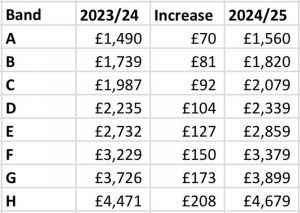
Council tax in Surrey is made up of three parts, the largest goes to the county council, with an additional amount paying for policing. About 12 per cent of the overall bill goes to the borough or district councils. If the county council were to raise its share by 4.99 per cent it, a Band D property would jump from £1,675.08 to £1,758.67.

That would mean residents in Woking, who are facing a potential 10 per cent increase in their local share would have to pay about £2,338.65 – before any increase from the Police and Crime Commissioner.

Cllr Oliver said there simply needed to be more money going into the system, adding: “We are talking about services for the most vulnerable in our communities. I would implore this government to recognise the issues we have raised. I would implore them to sit down with us and re-evaluate exactly what our needs are. These are issues that are outside of our control and we can not go on with this hand to mouth approach.” Further investment, he said, simply won’t be possible.

Related reports:

Surrey County chief talks to the BBC

County CEO’s pay rise triggering strikes?


Catalogue of errors – death inquest

Jake Baker and dog

A Woking family has spoken of their “incredibly difficult time” after losing their son saying “there is nothing that can take away the pain”. Their comments came after an inquest concluded a catalogue of failures by Surrey County Council and other bodies contributed to the death of 18-year-old diabetic Jake Baker.

Jake, who also had learning disabilities, died on December 31, 2019, while visiting his family home.
It was the first time he had stayed away from his care facilities for more than two nights in a row, since being placed in the care of the Surrey County Council when eight years old, his family lawyers said.

The teenager arrived home on Christmas Eve, became unwell on December 28 and was found unresponsive on New Year’s Eve by his mother and stepfather, neither of whom had been trained to recognise or seek medical advice for a deterioration in Jake’s diabetes. 

According to the family’s lawyers, Coroner Carolyn Topping said Jake’s death was avoidable and, if he had been admitted to hospital any time before 5pm on December 29, he would have been successfully treated. 

They added that the coroner said there had been “a systemic failing on the part of Surrey County Council to adequately train and oversee personal advisers about their legal obligations in preparing pathway plans for children leaving care”.

In a statement, the family said: “Losing Jake has been incredibly difficult for our family, especially as he died in our home at what should have been a happy time. We trusted Ruskin Mill Trust with Jake’s care, and we have been let down by them in the worst possible way. Jake was an enthusiastic and determined young man who always put his mind to things. He was happy to help out in the garden or with DIY.

“He had a kind soul and would get very excited when meeting new people. He loved dogs and playing pranks on his brothers and sisters. Jake wanted to be more independent and was keen to learn but to anyone who met him it was clear that he needed help, particularly in handling his diabetes.

“Before Jake turned 18, he had a key worker that we trusted and who he had a great relationship with. We were able to spend time together as a family safely, knowing that Jake was well supported by the staff at Burbank children’s home. This changed when Jake moved from Burbank to Ruskin Mill College. We were told it would be his road to independence and from this point on we didn’t have much contact with the people who were supposed to be supporting Jake. We were never made fully aware of how severely his diabetes could affect him, or how he should be managing it. 

“As a family we did all we could to make sure that Jake was looking after himself and was well taken care of, but those that were put in charge of his care didn’t give us the information necessary to ensure Jake’s safety. There is nothing that can take away the pain of losing Jake, but it is our hope that lessons will be learned from his death so that another tragedy is prevented.” 

The cause of death was given as diabetic ketoacidosis.

Jake had been living at a residential college run by Ruskin Mill Trust in Stroud, for 15 months.
The trust is a charity that provides specialist education for young people with learning difficulties and special educational needs.

The coroner also said the trust failed to ensure Jake’s safety when he went home for contact with his family. Following his death Transform Residential Limited, the body responsible for providing care services to Ruskin Mill Trust, was ordered  to pay a total of £22,721.04 at Staines Magistrates’ Court, after pleading guilty to causing a resident avoidable harm, the  Care Quality Commission said.

Jake had been a resident at Glasshouse College since November 18 2019. Previously he lived at Ruskin Mill College, run by the same provider.

According to the family’s lawyers, the coroner said Jake lacked the ability to be wholly independent in managing his diabetes and  was not given any information about the dangers for him to have unsupported contact if his blood sugars became imbalanced.

They added that Ms Topping said those involved in making decisions for Jake, from the Surrey Care Leavers team and Children’s Services, failed to ensure Jake’s safety when he went home for overnight contact from March 2019 and that Ruskin Mill Trust failed to ensure Jake’s safety.

Anna Moore, who represented Jake’s family, said: “The coroner’s detailed investigation and critical findings illustrate a catalogue of failings that led to Jake’s death. Jake’s family welcome these conclusions and hope that lessons will be learned from his death. What is particularly important is that those authorities entrusted to look after children and support them through their transition to adulthood are doing so properly.

“The evidence heard at the inquest showed that no one with current responsibility for Jake had a clear picture of needs and what support he required. Very worryingly, those at Surrey County Council who were meant to be supporting Jake into his transition to adulthood were not aware of the scope and extent of this important role. This needs to be urgently addressed so that children and young adults, and particularly people like Jake with additional needs, are given the support they need when they turn 18 and beyond.”

Clare Curran, Cabinet Member for Children, Families and Lifelong Learning at Surrey County Council, said: “Our deepest sympathies remain with Jake’s family and friends at this difficult time. The services provided to Jake fell short of what he and his family needed to keep him safe, and we are very sorry for our part in that. We have taken a number of actions over the past four years to improve our support for young adults leaving care. While we have already made changes, we know there is still further to go and we will carefully consider the coroner’s findings as we take our next steps.”

Ruskin Mill Trust took over responsibility for residential care from Transform Residential Limited in August 2020. A spokesperson said: “Jake’s death was heart-breaking and our thoughts remain with his family. He was well known to our staff and his loss came as a profound shock to everyone here. We deeply regret that in this instance some key measures that should have been in place for his visit home were overlooked. We aim to provide the highest standards of care.

“Since this tragedy occurred, the overnight risk assessment protocol has been fully reviewed and we have taken steps to strengthen practice, policies and procedures to ensure this kind of incident never happens again.”


Gatwick 2nd runway sneaking in?

Gatwick expansion plans

Protesters against the expansion of Gatwick airport have said a new consultation on planning changes is an attempt to “sneak” a second runway through the back door.

Gatwick Airport is polling residents about changes it wants to its multi-billion pound expansion plans.
The operator wants to double capacity and create the equivalent of a second Heathrow Airport in the south east by creating a fully functioning two-runway airport capable of handling 75 million passengers a year and space for an extra 100,000 flights.

The bid is due to be examined by planning inspectors during a six-month hearing, expected to conclude in June 2024. These last minute tweaks by the airport will be submitted it says after the public has its say.
Critics however argue the changes are anything but minor and the timing of the changes could result in people who have already had taken part thinking they have played their role.

The Campaign Against Gatwick Noise Emissions (CAGNE) said: “These are not minor changes to the application for a new runway and Sussex Gatwick.  CAGNE feel they should consult all who have already registered an interest with the Planning Inspectorate. This added consultation would appear to be a way for the airport to implement changes that could be sneaked through due to people believing that they have already passed judgement on the plans for a new runway.   

“What is proposed could see a vast increase in lorry movements by replacing an incinerator with a waste sorting plant, not included in the Development Consent Order, traffic modelling or air quality, an incinerator that at the time of obtaining planning permission was meant to heat the north terminal. 

“We do not accept that a reed bed will deal with the flooding issues that a new runway will create with significant increases in new construction field side and with a new highway and the ever-increasing heavier rainfall predictions by the Met office.”

“CAGNE, the umbrella aviation community and environment group for Sussex, Surrey and Kent, has requested that they be permitted to be party to this consultation but as yet Sussex Gatwick management have not responded favourably.”

The airport is proposing three separate changes.

The first is to increase the North Terminal International Departure Lounge southern extension; the second to reduce the height, and change the purpose, of the replacement Central Area Recycling Enclosure; and the third is to revise Surface Water Treatment Works.

It will be for the Planning Inspectorate to decide if the changes can be made to the application and included in the examination. The consultation will close at 11:59pm on January 21 2024.

Airport operators say expansion  would create around 14,000 new jobs and inject £1 billion into the regional economy every year.

Tim Norwood, Chief Planning Officer, London Gatwick, said: “Our engagement with the public and stakeholders to date has been invaluable in helping us shape our Northern Runway plans. However, since the submission of our DCO application we have identified a number of small improvements we would like to make to our proposal. “We are therefore asking for views on three discrete changes to our plans and would welcome any feedback people may want to make.”

Related reports:

Gatwick expansion plans revealed

Gatwick to get 2nd runway?

Classic growth versus environment dilemma

Report against airport expansion

Image: Gatwick Plans (Image PINS / Gatwick)


Top salary for bottom borough

Woking Council

Woking Borough Council’s new managing director will be tasked with navigating its “grave” and  “extremely vulnerable position” – and be paid more than any other council CEO’s salary while they do so.
The latest government report into the state of the council’s debt recovery was published this week when it was also confirmed who would succeed Julie Fisher as Chief Executive.


Epsom and Ewell Times receives frequent reports on the appalling financial plight of Woking Borough Council. Its debt is £2.6 billion. We seek to select those that may be of greatest interest.


Mrs Fisher announced in November her decision to quit, less than two years after stepping into the top job in April 2021. Her replacement has been announced as Richard Carr who will take on the role as Managing  Director Commissioner on an interim basis. 

According to the letter sent to Woking Borough Council, Mr Carr will be “entitled to a fee” of £1,100 for each day he is there, up to 260 days, as well as expenses. This is more than any other council CEO’s salary, not including pention contributions. Other CEOs once pension packets are included – would receive a higher total package.

This works out as £286,000 if he stayed for the period, and  it “is the council’s responsibility to meet these costs”, the report reads.  Anything above this needs prior approval of the Secretary of State. 

Surrey County Council’s CEO Joanna Killian receives a salary of £234,600 and oversees a larger budget. Comparable Surrey borough councils Runnymede, Spelthorne and Elmbridge pocket £138,000, £142,000, and £145,220 respectively. [The UK Prime Minister’s salary is £164,951.]

In a letter to outgoing CEO Julie Fisher, the commissioners said: “Your authority has worked collaboratively and cooperatively with the commissioners. That being said, the situation remains grave. 
“The first report, published on October 19, made it clear that the scale of the challenge at your Authority ‘should not be underestimated’.

“In their second report the commissioners continue to paint a stark picture of the challenges, noting that the authority remains in an extremely vulnerable position due to its overhanging debt and historical lack of rigour in its commercial activity. In the short-term, tough decisions need to be made, requiring clear leadership across the authority, and a steady hand at the wheel. In the longer term, innovative solutions need to be developed to tackle Woking’s financial position and organisational model. 

“With this in mind, coupled with your resignation as chief executive, the Secretary of State deems that any corporate leadership gap in Woking poses too great a risk to the integrity of the authority. The Secretary of State has therefore made the decision to increase the capacity of the commissioner team to enable focus on the long-term challenges the authority faces and has appointed a managing director commissioner to join.”

Once his appointment begins, Mr Carr will be responsible for day-to-day operations of the council, provide strategic direction, and implement “efficiencies” .

The letter continued: “It remains clear that, although progress has been made, the most difficult phases of the authority’s recovery are still yet to begin, and there is still much work to be done to ensure Woking Borough Council can again meet its best value duty independently.”
 
Cllr Ann-Marie Barker, leader of Woking Borough Council, said: “I’m pleased that the Commissioners have recognised the council’s hard work and the progress we have made in their second report, while setting out clearly the very significant challenges the council continues to face.” She added: “I’m delighted that Julie Fisher has kindly agreed to stay on as chief executive until April to ensure that the council has the senior leadership it needs over that period and to enable an effective handover to Richard.”


Doctor struck off where police found insufficient evidence

Medical Practitioners Tribunal Service (image Google)

A Surrey doctor who used his position to gain the trust of a woman before choking and sexually assaulting her has been struck off. Former Royal Surrey County Hospital doctor Adnan Sadiq texted the woman saying “I’m a doctor, I save lives”, “You can trust me”, “I’m a nice guy” and “you don’t have to worry” before meeting with the woman during lockdown and assaulting her.

The Medical Practitioners Tribunal Service found that he  placed both hands on the woman’s neck,  anonymised as Ms A, and applied pressure.  He also pushed Ms A’s head towards his exposed penis, before asking if he could ‘put it in’ or words to that effect during the November 2020 predatory attack.
When questioned Ms A told the tribunal: “I genuinely feared for my life and was glad to escape… it took me a while to realise that what had happened was not ok.”

Dr Sadiq initially denied choking was his  kink, but later accepted he liked it in a sexual context, according to the tribunal report. Allegations he sent explicit images over snapchat were not proven but overall his behaviour was so egregious that he was struck off as a doctor.

The report read: “Dr Sadiq’s actions would undermine public trust and confidence in him, as well as in the medical profession.” Dr Sadiq qualified in 2020 from University of Szeged, Hungary, and moved to Britain to take up his first medical post in October 2020. A month later he began texting the woman before going on to sexually assault her. During evidence he gave answers that were “too implausible to be truthful”.
He also contradicted himself in relation to his predilections and other topics. For example, when asked about kissing Ms A, he said: “‘We both kissed at the same time… because her face was coming towards me and I didn’t want her to feel awkward.’’

The report added: “The tribunal considered Dr Sadiq’s actions to amount to sexual assault, with an element of violence. The tribunal was concerned as to his apparent continued lack of insight into the seriousness of his actions and their consequences for (the woman)  and public confidence in doctors.
“Erasure is the only appropriate and proportionate sanction sufficient to maintain public confidence in the medical profession and to uphold standards of conduct for doctors.”

The tribunal determined that Dr Sadiq’s name should be erased from the medical register.

The General Medical Council suspended Dr Sadiq in September 2023 and he was immediately stopped from working at Royal Surrey. The full tribunal process concluded in November and he was erased from the medical register.

A spokesperson for the hospital trust said: “In May 2021 the General Medical Council informed the Royal Surrey County Hospital that an allegation had been made against Dr Sadiq regarding inappropriate sexual conduct outside of the trust. Since then we have followed clear and robust processes in a timely way, appropriately reflecting the investigations and decisions taken by the GMC and Surrey Police at each stage. While this incident occurred outside of our work place, we expect anyone employed by our trust to uphold the highest moral standards and would like to express sympathy for the distress caused to the complainant in this case.”

A spokesperson for Surrey Police said they received a sexual assault report in February 2021 and later arrested a 30-year-old man. The spokesperson said:  “Following our investigation, officers concluded there was not sufficient evidence to proceed with the case. The victim was kept informed throughout and supported by officers. The man arrested was a medical professional at Royal Surrey NHS Foundation Trust and Surrey Police provided information to the General Medical Council about the investigation.”

Medical Practitioners Tribunal Service (image Google)


Smoke safety lessons for Surrey services

A smoke filled room

A 63-year-old bedridden man was killed in a house fire after smoking in bed, shortly after an “inexperienced” officer carried out an “unscrutinised” safety visit of his independent living flat.

In February 2023, Kevin O’Hara died from smoke inhalation and burns after falling asleep while smoking, an inquest found. Mr O’Hara had been visited in his Frimley home by Surrey Fire and Rescue on November 17, 2022,  for a ‘safe and well visit’ which failed to identify the correct position for the smoke detector or his careline monitor.

A later visit by Surrey’s Adult Social Care team, on January 23, 2023, also failed to include a risk assessment – despite concerns for his health and the dangers of smoking in bed. 

This was all the more urgent as it was known that would not be able to get himself out of the house independently in the event of a fire. According to the Prevention of Death report, Mr O’Hara died in a fire that started from a lit cigarette “igniting debris” on a crash mat next to his bed. His smoke detectors and the intercom box, however, were in the hallway and the door shut.

The alarm was only triggered when enough smoke had built up to seep through the top of the living room door. Mr O’Hara died before emergency teams could reach him.

Both Surrey Fire and Rescue, as well as Surrey Adult Social Care, say they have since undertaken work to mitigate the risks of a recurrence, including serious incident reports, increased training and greater coordination across teams. They say they have also adopted an improved ‘person at risk’ referral system to better identify fire dangers to individuals.

The coroner, Susan Ridge,  however said more needs to be done to ensure a review system is in place to give more oversight to experienced staff. The report reads: “Evidence was given that the Safe and Well Visit in November 2022 was conducted by an inexperienced officer. The results of that visit did not seem to be subject to any scrutiny. Surrey Fire and Rescue does not appear to have in place a system of review or audit by line managers or more experienced staff of completed Safe and Well Visits, with the risk, as in this case, that errors or issues requiring action are not identified.”

Tim Oliver, Leader of Surrey County Council: “We would like to express our deepest condolences to Mr O’Hara’s family and anyone else affected by his tragic death. We recognise the importance of learning from serious incidents and carried out a review of what happened in this case which led to our fire and rescue service and adult social care service working together to introduce a new process for identifying people at risk. Surrey Fire and Rescue Service has also enhanced its training for officers involved in Safe and Well Visits and is in the process of developing a quality assurance system to identify and address potential risks more effectively.

“We will continue to embed an understanding of prevention activity across the service. Within adult social care, we have taken steps to strengthen management oversight over risk assessments and have brought in further training for staff.

“While we have taken a number of actions in the months since this case, we are carefully considering the coroner’s findings and are committed to doing all we can to improve the way we support vulnerable people and manage any fire risks they face.”

Image: illustration purposes only.

Credit:Vadym Plysiuk