
Epsom and Ewell Times

2nd April 2026 weekly

ISSN, LDRS and IMPRESS logos

Epsom and Ewell planning improving after Government threat?

Michael Gove

Three Surrey councils have been warned that their planning departments are “not good enough” and threatened with having their decision-making powers stripped.

Guildford, Waverley, and Epsom and Ewell Borough Councils have each been written to by the Housing Secretary Michael Gove over their “very poor” quality of service that fell “far below” expected thresholds.

Councils must determine at least 70 per cent of non-major planning applications within eight weeks – or agree to an extension. The three Surrey councils have fallen well below that figure, the department said.
Mr Gove was therefore “minded” to designate the councils, meaning developers could bypass them completely and submit planning applications directly to the Planning Inspectorate. The impact effectively strips a local authority’s say over planning matters.

The letter to all three councils, part of a group of 10 nationally to be given final warning, read: 

“The Government is clear that having an efficient and effective planning service at local authority level is essential to delivering the homes, building and investment the country needs. 
“The planning performance regime was introduced to ensure that all local planning authorities contribute to this objective. I have significant concerns about the performance of a handful of local authorities including your council.”

For Guildford, its performance of 50.1 per cent between October 2020 and September 2022 was far below the expected threshold of 70 per cent. In Epsom and Ewell that level was 52.5 percent, and in Waverley it was 61.7 per cent.

The letter continued: “That is indicative of a very poor quality service to local residents and a significant deterrent to investment in your local housing market and wider economy. That is not good enough, and despite some more encouraging recent data, I am therefore minded to designate [the council]. “

Mr Gove has now asked the Planning Inspectorate to prepare for designations over the summer period but said they had until June to make the required improvement to their planning service and “to exceed our performance thresholds and stay above it consistently”. 

If levels were to drop again, he said, he would “ not hesitate” to use his “powers to designate your council later this year”.

Waverley Conservatives have since called on the council’s ruling coalition to “get a grip” on planning.
Councillor Carole Cockburn, acting leader of Waverley Conservatives, said: “Communities and local businesses have had the threat of the planning department being taken into special measures hanging over them for months because of the Lib Dem-Labour-Green-Farnham Residents Party coalition administration’s inability to deal with the problem. They need to get a grip, and fast, to save our local voice in planning matters. Otherwise, people and businesses across Waverley will continue to suffer.”

A spokesperson for Waverley Borough Council said that planning performance suffered in 2021 and early 2022, was a result of the pandemic, “teething issues” with a new planning IT system, an increase in applications following lockdown and a nationwide shortage of planning officers.

Since then, they said there had been a “significant uplift in planning performance, and we are making headway in reducing the backlog of planning applications, but caseloads for our officers remain high” . Staffing remains a “significant challenge”.

They added: “Mr Gove has acknowledged the improvement in our performance and rather than moving to formally designate the council, has given us the opportunity to demonstrate this improvement over a longer period of time.”

Waverley Borough Council portfolio holder for planning and economic development, Councillor Liz Townsend, said: “We have been working closely with the Planning Advisory Service to improve our performance, and during the three most recent quarters 83 per cent, 92 per cent and 96 per cent of non-major applications respectively, were determined within the allotted time – significantly above the Government’s 70 per cent target. Our view is that designation is not appropriate and would be counterproductive to sustaining and improving on the gains in planning performance we have achieved over the last year.”

A Guildford Borough Council spokesperson said that it have been working to reduce backlog since June but that caseloads remain high. They said: “To supplement our internal planning team and improve performance, we have employed external planning consultants and temporary planning officers. 
“With housing and the cost of living so high in Surrey, recruiting and retaining talent in the South-East remains a significant challenge. However, we are actively recruiting new permanent planners to help build a resilient planning function. Our new executive head of planning development, Claire Upton-Brown, took up post on March 20, 2023. She has a strong history of turning services around and is well qualified to address the challenges we are facing, with the support of the senior management and councillor team.”

Jackie King, chief executive of Epsom and Ewell Borough Council said the authority was hopeful the secretary of state would recognise the “significant” improvements it had made in recent months.  She said: “The council has been fully aware of this historic issue relating to performance over that period, which was a result of Covid and capacity-related issues. “Having acknowledged the issues, the council took swift decisive action to address issues, resulting in the recruitment of a new management team in early 2022, the securing of additional staffing resourcing within the department as well as investing in IT and improved ways of working. Additional process reviews and follow on improvements were identified and implemented.  All actions and process improvements have the full support of members. As a result of the council’s actions, performance on planning applications has improved rapidly and significantly. Since early 2022, the council has continued to determine well over 90 per cent of planning applications within the statutory timescale target.”

She added: “Epsom and Ewell Borough Council has demonstrated a sustained improvement in service and performance and have been in regular contact with officials at DLUHC over the past year to keep them up to date with the progress which the council has made. When the Minister reviews Epsom and Ewell’s performance again in June, the council will be able show five successive quarters of performance well above the 70 per cent target: 

 APR/MAY/JUN 2022 – 95 per cent
JUL/AUG/SEP 2022 – 92 per cent
OCT/NOV/DEC 2022 – 94 per cent
JAN/FEB/MAR 2023 – 96 per cent
APR/MAY/JUN 2023 – 97 per cent (to date)

“Once reviewed we are hopeful that the minister will acknowledge and recognise that the issues the council faced were historic and temporary in nature and this council has taken significant proactive steps to address and improve.”

The full list of councils written to by Michal Gove were:

Calderdale, Cotswold, Epsom and Ewell, Guildford, Hinckley and Bosworth, Pendle, Portsmouth, Vale of White Horse and Waverley councils, as well as the Peak District National Park Authority.


A Surrey Borough funds legal fight to stop oil drilling

London's High Court

The June 8th judicial review against the Government’s decision to allow fossil fuel drilling near an Area of Outstanding Natural Beauty will go ahead. Waverley Borough Council held a special meeting of its executive committee to approve the £82,500 in funding to proceed – £32,500 for legal costs with a further £50,000 set aside in case it is liable for the oil driller’s costs.

According to the published papers, the executive considered “it a moral imperative to continue its legal challenge”. The money was approved on Thursday, May 11, as the council continues its four-year battle to stop UK Oil and Gas from drilling at Loxeley Well in Dunsfold  – and means the judicial review into the exploratory drilling of £123 million of oil by UK Oil and Gas (UKOG) can proceed.

Addressing the meeting was Councillor Steve Williams, Green Party member and portfolio holder for environment and sustainability. He said: “In July 2019, we held a listening panel where we could listen to the views of residents on this proposal that was in the air to undertake on-shore drilling in Waverley, in Dunsfold. We listened and we listened to the concern after concern in terms of the local environment as well as to the planet and the people of Dunsfold. The impact was absolutely clear and from that point on Waverley Borough Council saw it as its mission to do exactly that, to protect Dunsfold and to stop the drilling. It was consistent in terms of our position in declaring a climate emergency and committing ourselves to carbon neutrality.”

The original planning applications were rejected by Surrey County Council’s planning committee members in 2020. UKCOG then mounted an appeal which was eventually called in for review by the Secretary of State, Michael Gove. Mr Gove recused himself due to possible conflicts of interest, but former Housing Minister, Stuart Andrew ruled in favour of the plans.

Cllr Williams added: “Now is the opportunity for Waverley executive to follow this through.We would, if we did not do so, be inconsistent with our previous clear commitment on this issue. We would be neglecting our duty to the people of Dunsfold, we would be flying in the face of our climate emergency. It is imperative, for if we are to be successful in this, and I very much hope we shall be, but we should be putting our money where our mouth is, for the people of Dunsfold, for the natural environment, and for the planet.” He said the council must “take the next step and secure that judicial review in the anticipation of the outcome we’ve been working for four years”.

Cllr Liz Townsend, Lib Dem member and portfolio holder for planning and economic development, said the application had “wide implications”, not just for the borough, but the country as a whole. She said: “It’s difficult to believe that the UK already has 509 fossil fuel sites specifically in protected areas. More than any other country in the world. South Downs national park already holds nine oil and gas sites. If the Loxley well site is successful how many other sites will be allowed?”

She added, while some may view this as a David versus Goliath battle we “should remember who was the winner of that conflict”.

The committee heard that the cost to residents would work out to about 65p per person but had the potential to set a national precedent.

The committee also called on Dunsfold and Alfold Parish Councils to offer their “substantive” and vocal support.

Related Reports:

The Hills Are Alive With the Sound of Drilling… ?

Oiling the wheels of justice on Surrey Hills

Surrey MPs oppose each other on drills in the hills

Fractious Court case anticipated


Don’t forget your ID when you vote

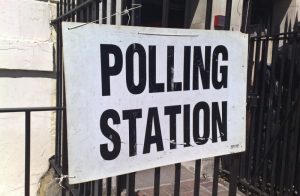
Polling station

Thursday, May 4th, is election day in all of Surrey’s 11 boroughs and districts. This means voters in Elmbridge, Epsom and Ewell, Guildford, Mole Valley, Reigate and Banstead, Runnymede, Spelthorne, Surrey Heath, Tandridge, Waverley, and Woking will be going to the polls.

These are the councils that decide planning matters, housing, and bin collections. With a year to go until the next general election this could serve as an indication of the national mood towards the current government.

As ever, voters will have plenty of questions about the rules and what needs to be taken to polling stations – even more so in the light of recent changes to voter ID requirements.

The Local Democracy Reporting Service  answers some of the most common questions so voters can be are armed with everything they need to know as they head to their polling stations between 7am and 10pm.

Changes to voter ID rules – Bring ID

These local elections will be the first where all voters need photo ID in order to cast their ballot. Forms of ID accepted at polling stations will include a driving licence, passport, Blue Badge, Oyster 60+ Card, Older Person’s Bus Pass and more. Equivalent travel cards for young people, such as the Oyster 18+ card, will not be accepted forms of ID.

Expired ID, for example an out-of-date passport, is allowed so long as the photograph still bears a strong resemblance. 

The full list is HERE

Where do I go to vote?

Vote at the polling station listed on your polling card. Your poll card is for information only, you do not need to bring it with you to vote. If you do not know where your card is, you can always check your polling station location by entering your postcode here.

Ballot papers

Your ballot paper will list out all the candidates and parties you can vote for.  You may be given more than one ballot paper, particularly if there is a parish council election happening in your area on the same day. Take your ballot into a polling booth, so no one can see how you vote. Read it carefully as it will tell you how to cast your vote. Mark your paper according to your own wishes,  fold it in half and put it in the ballot box.

What time do polling stations shut?

Polling stations always open at 7am and close at 10pm. If you want to avoid a queue it’s best to head down during the workday or in the evening as it tends to be the busiest first thing in the morning, before school run, and around 5pm-6pm after work. People who are in the queue before closing time are still allowed to vote, regardless of whether you are inside or outside the building.

Can I take my own pen to vote in the 2023 Local Elections?

There is nothing in the legislation that says ballot papers must be marked with a pencil. Pencils are provided in polling stations but you can choose to take a pen with you. There is a risk ink may transfer onto the other side of the ballot paper when folded, and if it looks like the voter has chosen more than one candidate, it could potentially lead to their vote being rejected. Some people prefer to use a pen in case someone erases their cross and adds one elsewhere.

Can I take a selfie when I vote?

Although not against the law to take a selfie at a polling station, it is strongly discouraged in or near a voting booth. Anyone who reveals  how someone else voted, even without meaning to, could be fined £5,000 or get sent to prison for six months. Voting is supposed to be secret and it’s illegal to share a photo of a ballot paper – including your own – under Section 66 of the Representation of the People Act 1983.

Can I bring my dog?

Please do! Pictures of dogs at polling stations are one of the highlights of any election.


Many Surrey motorists will be paying the ULEZ charge.

Polluting motor vehicle. Fumes spewing from exhaust

There could be more than 250,000 cars on Surrey’s roads that do not meet ULEZ complaint standards. That figure climbs to 335,584 cars when counting those with Statutory Off Road Notifications (SORN), according to a Freedom of Information request by the LDRS.

The figures are based on collective postcode data supplied by the DVLA and include some crossover, for example with Chipstead and Coulsden in London, and on the border with East Grimstead in West Sussex.

According to Transport for London “petrol cars that meet the ULEZ standards are generally those first registered with the DVLA after 2005, although cars that meet the standards have been available since 2001. Diesel cars that meet the standards are generally those first registered with the DVLA after September 2015.”

In Surrey postcodes, recorded information held by the DVLA shows there were 71,892 petrol engine cars first registered before January 1 2005, with a further 50,655 classed as SORN. The figures are worse for non-compliant diesel cars, with 190,026 licensed and 23,011 SORN first registered before September 1 2015. Combined that means there are 261,918 non ULEZ  compliant taxed cars registered to Surrey postcodes and a further 73,666 off road.

The figures were from a snapshot census of the DVLA vehicle record which is taken quarterly and is up to date to February 2023.

The ULEZ boundary is expected to be expanded to the Surrey border in August and would mean that those driving with petrol vehicles registered before 2005 or diesels users before 2015 will need to pay a £12.50 daily charge.

In February, ​​Surrey County Council joined forces with four London boroughs to launch a High Court legal challenge against Transport for London (TfL) and the Mayor of London’s decision to expand the zone.

In April a judge ruled there was a case to be heard on two grounds – the legal basis for the scheme and the rollout of the scrappage scheme. It is expected to be heard in July.

Among the things Surrey County Council is calling on the Mayor of London provide are more data on the impact to residents, extend car scrappage and the Zone 6 Oyster Card scheme and to provide corridors to NHS facilities that are on the border,

Key workers, who regularly have to travel to London, should also be exempt, the county argues.

The Local Democracy Service has also requested that these figures be broken down by individual postcode.

The full list of postcodes included in the data is: CR3, CR5, CR6, GU1, GU10, GU12, GU15, GU16, GU18, GU19, GU2, GU20, GU21, GU22, GU23, GU24, GU25, GU26, GU27, GU3, GU4, GU5, GU6, GU7, GU8, GU9, KT10, KT11, KT12, KT13, KT14, KT15, KT16, KT17, KT18, KT20, KT21, KT22, KT23, KT24, KT7, KT8, RH1, RH10, RH12, RH19, RH2, RH3, RH4, RH5, RH6, RH7, RH8, RH9, SM7, TN16, TN8, TW15, TW16, TW17, TW18, TW19, TW20

Related reports:

ULEZ Court battle looming

Surrey Council’s ULEZ talks ongoing with TfL

Can you beat the ULEZ charge?

Will Me’lud halt ULEZ expansion to Epsom borders?

A sign of no signs to come on ULEZ?

ULEZ will come to Epsom and Ewell borders


Voter ID deadline warning

Polling station

Epsom and Ewell Times has reported before about anxieties around the new requirement for photo ID for voters at the upcoming local elections 4th May. LDRS reports on anxieties in the Surrey Borough of Runnymede which are no doubt shared in Epsom and Ewell:


Don’t leave getting your voter ID for the May local elections sorted until the last minute. That is the message from Runnymede Borough Council’s election manager as the deadline to secure proof approaches.

Local elections are taking place this year on Thursday May 4 and this year, for the first time, every voter heading to a polling station in England must show a photo ID in order to cast their ballot.

Councils across Surrey have been rolling out communication pushes as the “last thing they want” is to be turning people away at the polls. Kath Richards is the election manager for Runnymede Borough Council. She said: “The deadline to apply for voter id is April 25 at 5pm. After the 25th there is nothing they can do. My concern is people will leave it until the last minute. The nearer the election day they’ve got to rely on the post. If they leave it they might have to collect it themselves. We don’t know if there is going to be a rush.”

There are a host of valid IDs that will be accepted on the day, including expired official documents such as passports, so long as there is still a strong resemblance to the photograph.

Those who do not own an accepted ID can apply for what is known as the free Voter Authority Certificate – a fast track card that will allow people to vote.

However, the deadline to apply is fast approaching leading to fears some may leave it too late. Applying for the voter card can be done online. Residents upload a photo of themselves and it lands with the council where it is then checked to ensure the person is who they say they are.

After that it is sent to a printing company in Sunderland before being posted back to people’s homes.

So far Runnymede has received about 60 applications – which have come through ‘in dribs and drabs’ despite the communications push that saw notices go up on bins, banners and through people’s doors.

She said: “We don’t want people to turn up on the day and not be able to vote because they’ve not got the right information. The ID needs to be an original document. I’ve got a picture of my passport on my phone but I can’t use it. I can be an out of date passport as long as the picture bears a resemblance. If you still look like the picture in your passport it will still be accepted. I don’t want to be in a position where somebody says they don’t know about it. The last thing we want to do is turn people away.”

She estimates that there are between two and eight per cent of the voting population who do not have a valid photo ID.

Not a massive figure in a population of about 60,000 voters but enough to potentially swing the balance in wards where there is a small majority.

Accepted forms of photo ID:

You can use any of the following accepted forms of photo ID when voting at a polling station.

International travel
Passport issued by the UK, any of the Channel Islands, the Isle of Man, a British Overseas Territory, an EEA state or a Commonwealth country

Driving and Parking
Driving licence issued by the UK, any of the Channel Islands, the Isle of Man, or an EEA state (this includes a provisional driving licence)
A Blue Badge

Local travel
Older Person’s Bus Pass funded by the Government of the United Kingdom
Disabled Person’s Bus Pass funded by the Government of the United Kingdom
Oyster 60+ Card funded by the Government of the United Kingdom
Freedom Pass
Scottish National Entitlement Card
60 and Over Welsh Concessionary Travel Card
Disabled Person’s Welsh Concessionary Travel Card
Senior SmartPass issued in Northern Ireland
Registered Blind SmartPass or Blind Person’s SmartPass issued in Northern Ireland
War Disablement SmartPass issued in Northern Ireland
60+ SmartPass issued in Northern Ireland
Half Fare SmartPass issued in Northern Ireland

Proof of age
Identity card bearing the Proof of Age Standards Scheme hologram (a PASS card)
Other government issued documents
Biometric immigration document
Ministry of Defence Form 90 (Defence Identity Card)
National identity card issued by an EEA state
Electoral Identity Card issued in Northern Ireland
Voter Authority Certificate
Anonymous Elector’s Document

The name on your ID should be the same name you used to register to vote.

Those who have registered to vote anonymously and want to vote in person, need to apply for an Anonymous Elector’s Document.

Voter ID cards can be applied for via the Government’s website

Related reports:

Register to vote deadline for elections

Worrying about voter ID law

No photo – no vote!

(Image: SecretLondon Creative Commons)


Oiling the wheels of justice on Surrey Hills

Residents strongly campaigned against an exploratory well (Image: Surrey Advertiser)

The High Court legal challenge into oil drilling at Dunsfold has been confirmed for June 8. The case will examine planning permission granted for exploratory drilling of £123million of oil near the Surrey Hills Area of Outstanding Natural Beauty.

The UK Oil and Gas (UKOG) was originally refused planning permission to search for fossil fuels at Loxley Well in Dunsfold in December 2020 by Surrey County Council’s planning committee.

UKOG appealed in June 2022 after a public inquiry and was given the green light by the Department of Levelling Up, Housing and Communities, led by Surrey Heath MP Michael Gove.

Almost immediately, Waverley Borough Council challenged the appeal decision in the High Court with £13,000 set aside for the legal challenge.

In March this year anti-fracking campaigners celebrated the news that the case would be heard in the High Court after being granted a judicial review.

The June 8 date was pencilled in for the hearing, and this week it was set in stone after some discussion over potentially moving the date.

The case has been picked up by the Good Law Project and is being challenged on two fronts. The first, they argue, relates to the “inconsistency in decision-making by the Secretary of State” who approved Dunsfold drilling the same day he refused a comparable site in Ellesmere Port over greenhouse gas emissions. The second argument relates to the drilling site being on the edge of an Area of Outstanding Natural Beauty (AONB) and national policy requires planning decisions to give great weight to “conserving and enhancing landscape and scenic beauty” in AONBs.

Good Law Project legal manager, Jennine Walker said: “Let’s be clear: exploiting our natural landscape for fossil fuels should be a thing of the past and is completely at odds with our crucial efforts to reach net-zero. This is why we are delighted to be supporting the next stage of Protect Dunsfold’s legal challenge which seeks to overturn the Government’s scandalous decision to overrule the local council and give the green light to a gas exploration scheme in the Surrey Hills.

“The High Court recently confirmed Protect Dunsfold’s case is arguable and we now look forward to the hearing in June at which we hope the Judge will overturn the Government’s scandalous decision”.

MP Jeremy Hunt said the plans should be “formally shelved” altogether.

A crowdfunding page has also been launched for those looking to support the legal challenge.

Related reports:

Surrey MPs oppose each other on drills in the hills

The Hills Are Alive With the Sound of Drilling… ?

Fractious Court case anticipated

Image: Residents strongly campaigned against an exploratory well (Image: Surrey Advertiser)


ULEZ Court battle looming

ULEZ sign

Sadiq Khan’s proposed ULEZ expansion to the Surrey border will be challenged in the High Court after a judge ruled there were valid legal arguments to be heard.

Five councils, including Surrey County Council, launched a joint legal bid against Transport for London (TfL) and the Mayor of London’s decision to expand the Ultra Low Emission Zone (ULEZ) on a series of grounds including that it failed to comply with statutory requirements, that it unlawfully failed to consider compliance rates. and did not consult on scrappage schemes.

Other matters raised by lawyers in February 2023 were the lack of cost benefit analysis, inadequate consultation and apparent predetermination.

Now a judge has said there is “an arguable case” that the Mayor of London, Sadiq Khan, has improperly handled the expansion decision.

Councillor Tim Oliver, Leader of Surrey County Council, said: “This is good news and I’m pleased that our challenge to the Mayor of London regarding ULEZ is proceeding. The impact on Surrey’s residents and businesses has been ignored by the Mayor and it’s frankly disgraceful that it’s taken legal proceedings to have our voices heard.

“Our consultation response in July 2022 clearly highlighted that the Mayor’s decision failing to include Surrey residents in any scrappage scheme was unacceptable, and proposed a number of other recommendations to help mitigate both the financial and potential environmental impacts of the expansion. Our concerns have not been addressed by The Mayor.

“We remain committed to delivering a greener future, but it must be done in a practical and sustainable way. We will now await the findings of the Judicial Review.”

Taking to twitter was Gareth Bacon, Orpington MP and one of the London boroughs that joined forces with Surrey. He said: “I am delighted that the five local authorities, including Bromley, challenging ULEZ in the courts, have won the first stage in their legal battle against Sadiq Khan’s decision. While the full legal case is still to be fought, today’s decision is a significant step forward. 

“The Court has decided that there is an arguable case that Sadiq Khan has improperly handled his decision to expand ULEZ across outer London. The Judicial Review will now proceed to a full hearing in the High Court. 2/5
“This means the Court believes there is an arguable case that the Mayor improperly handled the ULEZ consultation and failed to consult affected residents in neighbouring Home Counties properly.

“Sadiq Khan arrogantly dismissed this legal challenge like he ignored outer Londoners’ concerns during the consultation. He was wrong to do so, and this should be a wake-up call. He still has time to cancel ULEZ expansion and spare residents his £12.50 daily road tax.

“Congratulations on today’s success to Bromley, Bexley, Hillingdon, Harrow and Surrey councils, who brought this legal action. Like my constituents, I am pleased they have legally challenged ULEZ expansion, and I wish them every success in the upcoming hearing.”

The court case follows TfL’s November 2022 announcement that it would push on with proposals to expand the ULEZ scheme in August. It is understood that the High Court will sit to hear the matter in July. Should the court rule against the Mayor of London it has the potential to delay the August 29 expansion.

A spokesperson for the Mayor said: “The Mayor is pleased to see the court has refused permission for the majority of the grounds. We will continue to robustly defend his life-saving decision to expand the ULEZ and continue with preparations without delay. It is a shame that some local authorities have chosen to attempt this costly and misguided legal challenge instead of focusing on the health of those they represent.

“Around 4,000 Londoners die prematurely every year due to air pollution. This is a health emergency and the Mayor is not prepared to stand by and do nothing while Londoners are growing up with stunted lungs and are more at risk of heart disease, cancer and dementia due to our toxic air.”

Related Reports:

Surrey Council’s ULEZ talks ongoing with TfL

Can you beat the ULEZ charge?

Will Me’lud halt ULEZ expansion to Epsom borders?

A sign of no signs to come on ULEZ?

ULEZ will come to Epsom and Ewell borders

Yet more on ULEZ….


Chance for Epsom and Ewell’s say on Heathrow flights

Flight over a town

Epsom and Ewell residents see and hear planes flying to and from Heathrow Airport. They are usually at a height of 6,000 to 7,000 feet. A new consultation is out for everyone effected by flight noise and pollution from the main London Airports of Heathrow, Gatwick and Stansted. Chris Caulfield of LDRS reports generally on the topic and with reference to Gatwick in particular:


Communities living under the Gatwick flight path face trading off quieter modern aircraft for an increase in night flights. Current restrictions on night flights are due to expire in 2025 and the government is seeking views as part of its next night flight abatement policy. 

It says it is aiming to balance the impact of sleep deprivation with the benefits to the wider economy.

Aviation minister Baroness Vere of Norbiton said: “There’s no doubt night flights have an effect on local residents underneath busy flight paths, but as aircraft become quieter, we have an opportunity to strike a balance to make sure we can support the aviation industry without having a debilitating impact on people’s lives. This consultation will help us to shape policy and create a flightpath towards a more sustainable approach to night-time aviation noise.”

Currently about 16 aircraft, about 80 per cent of Heathrow’s night flights, land at the airport between 4.30am and 6am. At Gatwick and Stansted, which are in more rural areas, the figures are higher.

Overall Heathrow can have 3,250 total night flight “movements” during seven summer months and 2,550 during winter. At Gatwick that figure is far higher at 11,200 in summer and 5,150 in winter, with Stansted taking 8,100 and 5,600 respectively.

Paul Beckford, chairperson of HACAN group which acts as a voice for those under Heathrow flight paths, said: “We welcome the recognition of the health impact of night flights which is a shift in the right direction, but we are worried about the change in wording in the economic benefits.”

He said the 16 flights currently arriving before 6am were “the most disturbing” and had a cumulative effect on people. Any one flight could wake a person up “but the real problem is when there are more and more flights coming. You wait for the next one. You are woken up at 4.30am and then you know another one is coming.”

Most night flights, he said, were long-haul trips in demand for their cargo haulage but Mr Beckford suggested these could be reorganised into the normal flight schedule which would both preserve people’s restful nights as well as bring economic benefits.

He cited the drop in aviation traffic post pandemic and the increase in online meetings as reasons for there being greater flexibility in runway slots.

Mr Beckford also questioned the consultation being carried out before the results of the Dr Charlotte Clark report into the health impacts of night noise was published – due out in 2024/25.

Sally Pavey, chairperson of the Community Against Gatwick Noise Emissions, said the group was pleased to see the “long-awaited” consultation but that night flight, and the subsequent noise, was “much hated by residents and well documented to cause health issues”. 

She said: “We would like to see a ban on night flights at Gatwick Airport but we know that the airlines are far too powerful for this to ever happen no matter how many reports are produced by medical officials to the health impacts they have on those seeking sleep.

“The government needs to change its attitude towards aviation and seek to address this health risk that they are subjecting residents to every night in Surrey, Sussex, and Kent all the time they continue to allow holiday makers flying during the night. We can’t believe that bucket and spade travellers seeking all year round sun and leisure overseas really want to travel at night, so we can only keep up pressure on government and the airline to have night flights banned on health grounds.”

The six-week consultation is taking input and evidence from the aviation industry and communities before forming the backbone of to manage aviation noise from October 2025.

Once decided upon, the government said it will pursue the “most cost-effective measures for achieving the desired outcomes”.

Night noise at airports was last consulted on in December 2020 which resulted in rolling over existing restrictions from October 2022 to October 2025.

The consultation closes on May 9 and is available here.


Worrying about voter ID law

Photo identity documents UK passport and driving licence

Voter disenfranchisement and how to overcome it was discussed at Reigate and Banstead Borough Council Thursday 30th March as the authority wound up its business ahead of the May 4 elections.

The country goes to the polls in a little over a month amid the “biggest change to the electoral process in decades” as people will be required to present valid photo identification before casting their ballot.

Councillor Ruth Ritter, during questions from members at the March 30 full council meeting, asked what measures were in place to feed back on its impact on turnout.

She said: “At a time when voter turnout for local elections in Reigate and Banstead Borough Council was as low as 29 per cent in one ward last year and voters need to be encouraged to partake in democracy. Voter ID is the biggest change to the electoral process in decades, and it will affect voters in polling stations at the upcoming elections on May 4. It is therefore important that we have assurances that voters aren’t being disenfranchised by this significant change. 

“With that in mind, will the returning officer be gathering data on how many people are unable to vote at polling stations due to not having appropriate ID so that this data can be fed back to national government?”

Last time the average  turnout for the borough was 35 percent two power cent higher than the national leverage last year.

Responding was Mari Roberts-Wood, managing director at Reigate Borough Council whose responsibilities include increasing participation in elections.

She spoke of the “extensive communications about the massive changes to electoral law” and how the council had been targeting hard-to-reach groups such as younger voters and the elderly.

Ms Roberts-Wood said: “We can always do more and should do more and with the introduction of voter ID we need to do more than ever.”

Councils, she said, would also be collecting data from polling stations about the impact of the legislation and sending that to the electoral commission  –  who will be collecting the data centrally.

A report on its impact is expected to be published in November this year.

She said: “This data will include the number of voters who are essentially refused a ballot paper due to suspected forgery or impersonation, or they failed to answer the statutory required questions, they showed the wrong ID – there are 23 different types of ID that you can show on May 4. For those who don’t have one of those or don’t have any ID at all we will be collecting that data. Also recording those asked to show their ID in private and those who are refused a ballot paper but returned with a valid ID. We’re trying to capture as much as possible.”

She added that it was an “opportunity to collect a lot of data to understand the impact of these changes and hopefully increase our reach coming forward”.

Reigate and Banstead Council has a voter ID section on its website that people can use to ensure they can vote on May 4.

Related reports:

No photo – no vote!

Image credit: Crown Copyright fair use and DVLA CC BY-SA 3.0


A different kind of cutting in Surrey’s NHS?

Robotic surgeon

Robots will be performing more operations, including general surgery and gynaecology at a Surrey NHS hospital trust seeking to introduce “significant savings”, a board meeting heard.

The Surrey and Sussex NHS trust held its much delayed annual general meeting on Thursday, March 30, where attendees heard from its chairperson, chief executive, and head of finance.

The afternoon meeting, which board members suggested may have led to its lower than usual attendance, was broken into three sections: a review of the year, a run through of its financial health, and questions from the floor.
Chairperson Richard Shaw led off proceedings explaining the AGM should have taken place in autumn last year but was delayed because of the late filing of its 2021/22 audited accounts.

Chief executive Angela Stevenson told the meeting that the 2021/22 year was heavily influenced by the “significant impact” of covid with “very tired”  staff “having to work under pressure”. This created a backlog the trust was only beginning to get back under control.

She said: “Staff were working with a disease that we didn’t know how to treat. We had high staff absences due to covid or due to family members having covid. Since then we’ve really got to grips with the backlog. We started to work through but at the start of 2022 these numbers were at their peak.”

Post pandemic, she said,  there was a huge increase in patients seeking primary care  compounded by the increase in “baseline complexity” as cases were left untreated during the pandemic.”

Ms Stevenson praised the trust for delivering robotic surgery for the first time and that it would be rolled out further to include general surgery and gynaecology services. They will also be investing in services with a new MRI department on the horizon – including new CT scanners at East Surrey and Crawley hospitals.

The trust also plans to work in partnership with other groups to better manage the health of the population rather than solely focus on its role as an acute hospital.

On finances, the meeting heard how its deficit continues to grow – even  not including the covid years.  It expects to run at a £26.5m deficit  for 2022/23.  This will be the first time the trust has run at a deficit since at least 2013/14 as spending pushes towards £400m a year.

Chief finance officer Paul Simpson said this could be partly attributed to an increase in staff costs. The hospital expects to take on an extra 130 new nurses. He said: “Now we have to recover the growth in costs that has happened and now we are (looking at) a significant savings plan.”

They were, however, quick to say “there should be no reason why we accept any reductions in quality of (care) for patients  and that before any cuts were made there would be full impact assessments on cost improvement plans.”

Image: Nimur at the English-language Wikipedia CC BY-SA 3.0


Pothole payouts and repairs penalise Councillor projects?

Pothole

Surrey County Council has spent more than £800,000 in pothole compensation payouts in the last five years but it hopes front-loading the road maintenance budget will help end the broken-road scourge.

In that time it repaired about 221,456 potholes along its rundown road network, at an average of 121 per day. It was also announced that the Government was to give the county £3million to tackle the problem but some say this is “just a drop in the ocean” compared with how much the road budget falls in future years.

County hall’s finances this year include a capital fund of £69.8million for highways maintenance as part of a front-loaded £188m that was announced in February. 

That is set to fall back to £29.5m a year – for the next four years – much more in line with the spending under its previous highways strategy which has led to the roads we have today.

It was also announced that individual councillor allowances of £100,000 to spend in their divisions would go, meaning any individual projects earmarked by members can not go ahead.

If highway’s can not be maintained, the opposition leader at Surrey County Council warned, then the roads will fall into further disrepair and the number of potholes, and motorists insurance claims, will rocket.

Councillor Will Forster said: “The cut to is to the road maintenance budget, this will mean the road surfaces will get worse. The cut is notable in the next financial year 24/25 and makes the £3m to repair the potholes from the Government look like a drop in the ocean.”

In 2018, Surrey County Council paid out £399,189 in compensation payments for claims relating to potholes – on both carriage and footway.

This declined to £135,949 in 2019 and was followed by two years where people were off the roads during the pandemic £83,415 and £79,364 in 2020 and 2021 – before climbing again as roads got busier in 2022 to £118,553.

These figures, the council said, relate to both property damage and personal injury with the “best endeavours” made to only include  compensation payouts, however, “some figures may also include elements of legal costs and disbursements.”

A spokesperson for Surrey County Council said the road maintenance, capital, budget agreed by council in February totalled £188m for the next five years. 

They added that the budget was front loaded, because work had been accelerated in order to realise the benefits sooner. 

Image: Potholes in Surrey (Surrey Ad)

Related reports:

On the Hunt for pothole repairs

Don’t blame us for potholes say Surrey’s highway authority.

Going potty about pot-holes?


The Hills Are Alive With the Sound of Drilling… ?

Drill in Hills

The owners of a Surrey oil field have signed an agreement to “deliver increased production and revenues” that will allow it to focus on its Dunsfold site.

Environmental campaigners, however, are still holding out hope the Supreme Court stops the drilling.

Uk Oil & Gas (UKOG) announced to shareholders that it was to “farm out” production at Horse Hill to the US-based Pennpetro Energy.

The Texas firm is to takeover 12 kilometres at the site, just north of Gatwick Airport, at a maximum cost of £4.6m.
Announcing the tie up Stephen Sanderson UKOG’s chief executive said: “This mutually advantageous transaction will inject new activity into Horse Hill, aiming squarely to deliver increased production and revenues from the oil field. 

“The farmout enables UKOG to move this asset forwards without the need to raise capital, enabling our resources to be firmly focussed upon the appraisal and development of the Loxley gas discovery, our most material petroleum asset.  We look forward to a close working relationship with Pennpetro and a mutually successful future at Horse Hill.”

UKOG refers to its holdings at Dunsfold as its Loxley site and hopes to drill for £123 million of oil near the  Surrey Hills Area of Outstanding Natural Beauty – pending its own High Court review.

Environmental campaigners who have been fighting against oil drilling at Horse Hill are still confident that the new company’s involvement will not change things materially.

In June the Supreme Court will sit for a legal challenge against Surrey County Council’s 2019 decision to grant planning for the four extra wells at Horse Hill. The same year the county also declared a climate emergency.

The application will go before the UK’s highest court after three judges were split in their findings –   that the county council’s decision to grant permission for 25 years of oil drilling and production was lawful.

According to UKOG the Horse Hill site has so far produced about 185,000 barrels of with approximately 1.362 million barrels still available.

Redhill climate campaigner Sarah Finch at Horse Hill rally 5 Nov 2021. Credit Denise Laura Baker.

Campaigner Sarah Finch of Redhill argues that the permission is out of touch amid the global climate crisis, 
Sarah Finch said: “We are taking legal action that is going through the Supreme Court in June.

“Currently the planning is subject to a legal challenge. There is still a possibility that the Supreme Court will not give it the go ahead. There has been low level production for a while there even though they got permission for expansion in 2019. I don’t think this new company’s involvement will change anything.”

Sarah started the campaign against the drill site on climate impact grounds -not just from the impact the drilling would have in the immediate area but the wider overall effect from burning the collected oil.

She added: “It will take us away from keeping climate change within limits. Horse Hill will just make hitting those targets more difficult. I’ve been concerned about climate change for a very long time and when a new oil well was proposed near my home I was horrified and we really needed to stop it going ahead. And it’s not just me, lots of residents have been involved. There have been a series of planning applications for the site but these four new wells were agreed in 2019, such a huge ramp up. That is why I decided it needed a legal campaign.”

The Supreme Court is due to sit on June 21 after the Court of Appeal reached a split decision.


Surrey County’s Cathedral citadel conserved…

Guildford Cathedral setting aerial.

The “fundamental specialness” of Guildford and its cathedral have been preserved after plans to build 124 homes next to the historic site were refused.

Guildford Borough Council’s planning committee met on Wednesday, March 29, and heard a “really definitive” 25 minute officer’s report that outlined the scheme.

The cathedral, along with developer Vivid Homes, wanted to demolish the existing staff housing and create 124 homes in a mix of flats and housing  – 54 of which would be affordable properties – on undeveloped woodland.
The cathedral said it was selling land surrounding its Grade II listed site to create an endowment fund to pay for maintenance costs but during the presentation, the public heard that cash from this sale would only last five years. When combined with a separate sale, planners said, this would only raise 23 per cent of the budgeted maintenance costs.

Top image: The 124 new homes would be built in the area surrounding the cathedral (Image: Grahame Larter)

Officers at the council recommended refusing the plans of a host of reasons including its harm to the the setting of heritage assets, “visual prominence of the apartment blocks” and the impact on the “green collar” forming part of the “landmark silhouette”.

The plans attracted 286 letters of objection raising issues such as over development, a lack of details on a wider masterplan, and harm to the heritage assets.

Indicative Cgi Of Planning Application For Homes Near Guildford Cathedral. (Image: VIVID Homes)

Councillor Will Salmon said: “We’ve been looking at it this for a number of years and there’s definitely been some improvements made in the application over those years particularly on issues like sustainability. The percentage of affordable housing  is also admirable here. My overall feeling is it would have to be somewhere else.

Fundamentally this is not the location for this scheme.  My concern is the scale, the whole setting, it’s the openness and semi-wild spaces that you can really appreciate as part of the community, that’s the green collar that we see from all sorts of distances. That is the sense that I can certainly feel coming from the many representations.

“The parkland provides very special setting with different short and long views of the cathedral and it provides a sense of proportion which is really essential for a building as big as the cathedral and I think a lot of that would be lost with the high density scheme. Overall my feeling is very much that this is a heritage asset that must be protected. I do worry that the over development here would actually risk the fundamental specialness of the cathedral.”

His concerns were echoed by both Cllrs Chris Blow and Angela Gunning  among others as the chamber united almost unanimously in its opposition to the plans.

The only exception was Cllr Marsha Moseley who did not speak on the application but abstained from voting.

A spokesperson for the Friends of Stag Hill group which has been campaigning against the application, said: “We would like to thank the Guildford Borough Council planning officer for her care and attention to what must at times have been a difficult task, and the committee for looking out for the interests of Guildford. 

“Friends of Stag Hill will wait to see the cathedral’s reaction to this second refusal, but would hope that the cathedral now pauses and realises the damaging nature of their proposals, both for the cathedral and the community.  The community has now been fighting with the cathedral over the development plans for over seven years, and it is time to accept that developing the land is not an appropriate way to raise funds for the cathedral. 

“They have put the local community through significant distress over the last 7.5 years.”

The Grade II-listed cathedral was designed by Sir Edward Maufe and work began at the site 1936. This  was interrupted by the Second World War and eventually finished through a fund-raising campaign.

The cathedral was consecrated on May 17, 1961.

Related reports:

Will Cathedral repairs threaten Canadian WW1 memorial?


How to cut the County’s cake?

Ben Spencer MP cuts a cake

A Surrey MP challenges the cuts the County makes to supporting children with special educational and disability needs (SEND), in a classic how to cut the County Council’s cake dilemma. Chris Caulfield LDRS reports.


Surrey County Council “may be in breach” of statutory duties over its decision to cut respite breaks for parents of children with special educational needs. The county council redesigned its short breaks services and  has been able to maintain its provision of overnight care but, with the budget frozen at 2017 levels, cuts had to be made elsewhere.

It wrote to care providers saying it was freezing payments from April this year and issued a statement saying it was only “able to fund two-thirds of the current capacity in community-based play and youth schemes for children with disabilities”.

Parents left furious and on the brink as they struggled to find ways to balance full-time care needs and work have been given a glimmer of hope by Runnymede and Weybridge MP Ben Spencer.

Dr Ben Spencer, MP for Runnymede and Weybridge, has written to Surrey County Council. Credit SurreyLive/Grahame Larter.

In a letter to a constituent, he said: “I have now written to Surrey County Council regarding their new policy on short breaks. I share your concerns about the impact the new policy will have on families. I understand the importance of short breaks and am grateful for you taking the time to raise these issues with me. 

“Since receiving the response from Surrey CC and doing some research I am concerned that Surrey CC’s new policy may be in breach of their statutory duties. “These duties are set out in the Children Act of 1989 include specific references to breaks for carers.”

A spokesperson for Surrey County Council said the decision to freeze – rather than cut-  funding was an “important decision” given the “real challenge for public finances” and that the authority understood the importance of these services for children, young people and their families.

They said: “We have a statutory duty to deliver a balanced budget and this means we have not been able to increase the budget for short breaks services at this time, in line with inflation.

“We understand the concern this may cause families and we are pleased to announce that we have been successful in securing £907k of Short Breaks Innovation funding for 2023/24 from the Department for Education.

“This will enable us to deliver some enhanced short breaks services for children and families with more complex needs in 2023/24, which we believe will make a real difference. Whilst there will still be changes to services, we hope this additional funding will be welcome news to families.

“This funding will be allocated to services that meet the highest level of need. In particular, we are committed to maintaining current capacity of overnight respite services for children who have been assessed as needing them, so that we fulfil statutory commitments in children’s care plans.”


Waking to Woking’s woeful debt

Woking Council

Epsom and Ewell Times has followed the finances at this sister Surrey borough. We all should perhaps be concerned and learn lessons from a County borough that can get in such a mess. In contrast Epsom and Ewell Borough Council has been balancing its books for years. At the end of the day where will the money come from to save Woking? Local Democracy Reporter Chris Caulfield reports:


The dire financial future of Woking Borough Council was laid bare with senior figures warning of the “significant risk” of it effectively going bankrupt as its cash reserves run dry.

The council’s executive committee met on Thursday March 23 to hear an update on its financial strategy. It was told of the budgeted shortfall of £9.5m for the next financial year and the swingeing cuts coming as it moved to provide only the minimum levels of services – those it must provide by law.

Woking Borough Council’s financial disaster is the product of years of heavy borrowing to pay for a failing investment portfolio. The previous administration had hoped this would generate income but instead it has saddled the local authority with annual interest repayments of more than £60m a year while only generating £38.5m. 

Councillor Dale Roberts is now the portfolio holder for finance on the council. He said it had gone to the government seeking to lower the minimum amount it can set aside to repay its loans and has been searching for further  “restrictions on expenditure necessary to address the budgeted shortfall of £9.5m for 24/25. He added: “Both of which relate to the ongoing and significant risk of issuing a section 114 notice.”

Councils can not go bankrupt. Instead, they enter what is known as being under section 114 notice and means they cannot make new spending commitments.

He also said the council would seek to try to fund “transformational projects” through any capital receipts.  Cllr Ian Johnson (Lib Dem, Mount Hermon) said: “It shows a stark issue, the deficit next year is £9.5million based on current numbers,  and yet our services expenditure is just under £45m. So that’s a 20 per cent difference. So we need either cost savings or revenue generation to be able to cover that gap of 20  per cent.Because the £62million interest payments we are making at the minute could well go up given today’s interest rate rises.

“Its unaffordable at the present level. We know that DLUHC (the Department for Levelling up, Housing and Communities) have been in the office talking to us for the last couple of months. Until we get their report as well we won’t be able to be definitive in where we’re progressing with any of the business we’ve got including talking to the government  about our debt levels and how we might be assisted in reducing the interest payments we make.”

DLUHC was not expected to return any decision until the start of the new political year in May. Cllr Dale Roberts said:  “The enormity of the task ahead of us for next year, the affordability of the borrowing, the degree that we have to find savings are deeply concerning.”

Cllr Stephen Dorsett (Con. Pyrford)  asked about the possibility of future savings if council was already operating at “statutory spend only” – that is for services the council is legally obligated to provide. Cllr Roberts said: “Even costs savings cost”.

Leader of the council Anne Marie Barker said: “We’re having to put controls on day to day spend and just keep a very tight rein on everything. We’ve got our balanced budget for the year by using reserves but going forward that £9.5m next year, and more than that the following year, we do need to do a fundamental review of what were doing and how were doing it. It’s the only way we can make those budgets balance, the reserves aren’t going to last forever.”

Related reports:

Would you want to live in Woking?

Woking up to a very big debt problem


Breaking the mould for Ukrainian refugees

Councillor Paul Potter. Image credit: Surrey Live - Grahame Larter

Families fleeing war-torn countries such as Ukraine should not be placed in “derelict” and “mouldy” homes run by a Surrey council’s housing association partner, a councillor has claimed.

Mole Valley District Council’s scrutiny committee met to discuss the Department for Levelling Up, Housing and Communities £500million funding for local authorities to provide homes to Ukrainian and Afghan families via the resettlement and relocation schemes. 

Councillor Paul Potter. Image credit: Surrey Live – Grahame Larter

If fully progressed, the council would receive about £1.5m to help deliver up to nine properties for families seeking refuge. These would then become part of the area’s long-term affordable housing stock  – available on a rental basis of 80 per cent market value.

The move was widely supported by members at the March 7 meeting but the council’s main social housing provider, Clarion was criticised by councillors.

The housing association said it was investing £5m and  “hiring 100 new staff” to tackle the problem.

Councillor Paul Potter (LD, Brockham, Betchworth and Buckland) said: “Great that we are helping people less fortunate than ourselves but I did have a couple of concerns, the first was that affordable rent was not actually affordable. My bigger concern is Clarion, if you are going to pick someone to do houses we should be doing it ourselves because my dealings with Clarion over the last God knows how many years has been a nightmare. It has got better, the chap they got now he’s done more in seven days than they have in 10 years – so something is happening there. But to put someone in the houses I’ve seen, in the state they’re in.

“I had a family actually move into Tanners Meadow from a house that was quite frankly derelict, mouldy, the kids area all on inhalers. These people have come from a war zone. They really don’t want to be going into a damp house, like that young kid last year. So I do have a big concern that Clarion is taking over.”

Cllr Potter was referencing the decision reached at Rochdale Coroner’s Court which said two-year-old boy Awaab Ishak died following prolonged exposure to mould –  three years after his parents first complained about damp in their one-bed Rochdale Boroughwide Housing association flat.

It also follows a statement issued in December 2022 when district leader, Cllr Stephen Cooksey, said he would write to Clarion Housing to address “widespread issues of mould and damp problems” and urged the association to give the problem “higher priority”.

He said he was “fully supportive” of the Housing Ombudsman’s report – where Clarion Housing was one of the six housing associations highlighted for multiple failings of damp and mould, complaint handling and record-keeping.

Cllr Caroline Salmon who presented the local authority housing fund report to the committee agreed that there has been an issue with damp and that efforts were underway to remedy the situation in Mole Valley.

The Lib Dem member for Beare Green said: “Clarion have been trying to improve damp, and we’ve been working with them too. There have been some really good changes.”

The meeting was wound up with the select committee chairperson, Cllr Joanna Slater, recommending that cabinet moves forward with the proposals with a preference for freehold housing and a discussion over the choice of partners.

A Clarion Housing spokesperson said: “Members of our senior management team recently met with cabinet members of Mole Valley District Council to outline Clarion’s strategy to address the conditions of a small number of our properties in the region, including issues with leaks, damp, condensation, and mould.  Housing for refugees was part of the discussion and we look forward to working closely with the council to provide essential housing for those in need.  We at Clarion are determined to resolve condensation, damp and mould in our homes promptly and effectively. 

“As part of this effort, we have increased the ways residents can get in touch with us to report it and are investing an additional £5 million annually to tackle the issue, including hiring 100 new staff – which will include specialist surveyors and new Resident Liaison Officers to deal specifically with leaks, condensation, damp and mould cases.”