Epsom and Ewell Times

Current Front Page

ISSN, LDRS and IMPRESS logos

Will sale of Dorking offices compromise housing plans?

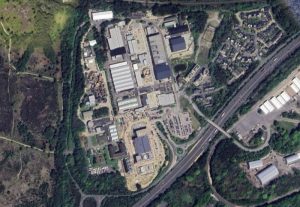
Former Aviva site in Pixham Lane, near Dorking (image Google)

Dorking’s former Aviva building has been put up for sale. The offices in Pixham Lane are being marketed by Savills – with the asking price only available on application. Currently owned by Stonegate Homes, it was set to play a key role in Mole Valley District Council’s housing targets, having sat empty for years following the decision of insurance company Aviva to leave the Pixham Lane site in the town at the end of 2016. Failure to meet its targets can have a lasting impact and leave boroughs open to unwanted development.

Owners Stonegate Homes were contacted but did not respond, and calls have been going straight to answer machine. Planning permission was granted for the site – often referred to as the former Aviva Building – for 369 homes in a mixture of flats and townhouses. Savills describes the land as “a substantial former office building”. Built in 1957, it was eventually bought by Dorking-based developers Stonegate with a view to converting it into homes, but its future is now shrouded with uncertainty.

Savill’s marketing brochure reads: “The site is considered to be an excellent opportunity to acquire one of the most prominent development sites in Dorking to deliver a mix of flats and houses that are in close proximity to Dorking Station. The location enjoys views of the Surrey Hills and is within close proximity of open countryside. The site has potential for some additional planning gain for further additional houses to be delivered, subject to planning and any technical constraints. There is the option to acquire the whole or to purchase phases with offers invited on an unconditional and subject to planning basis.”

Senior Mole Valley District councillors have said they are keeping a close eye on the sale and how it will affect housing delivery. Councillor Margaret Cooksey, portfolio holder for planning, said: “We need the homes to be built; they were supposed to be affordable homes on the site plus other community facilities. We need those to happen. We will be watching closely.”

Image: Former Aviva site in Pixham Lane, near Dorking (image Google)


Expanding London airports “not an environmental trade off” – Minister claims

Heathrow Airport. Credit Heathrow Airports Limited.

Expanding Heathrow and Gatwick is “crucial” for this government after years of people sticking “their heads in the sand” over plans for new runways at south east airports, the Secretary of State for Transport said.

Heidi Alexander made the remarks as she outlined its vision to “modernise” the aviation sector at the annual AirportsUK dinner at a time when passenger levels at the country’s airports had grown by 7 per cent – and signs indicating 2025 would be a record breaking year.

She said: “It’s clear this is a trend, not an unusual year. In fact, everything points to a record-breaking 2025 – and it’s easy to see why.

“The world has never been more interconnected. The desire for travel never stronger. Global forecasts show a near doubling of passengers and cargo in the next 20 years. So the demand is there. It’s growing. And if we don’t seize it, we not only risk being outpaced by European competitors, but we will be on the wrong side of public aspirations.”

The Government has already announced its support for a third runway at Heathrow Airport – which has put in £2.3billion to overhaul its infrastructure – and more recently said it was ‘minded to approve” a second at Gatwick.

She added: “We see airports as a crucial pillar of our plan for change. And it’s why we’ve acted, and acted quickly, across three areas – starting with expansion. It’s no secret that long ignored capacity issues in the south-east, has meant some of our major airports are now bursting at the seams.

“And yet – when it came to expansion – too many people stuck their heads in the sand. It left the industry in a perpetual holding pattern, with decisions circling around Whitehall for years, waiting for a clear signal.”

Expansion at Heathrow would be the first new full-length runway in the country for quarter of a century with the transport secretary saying her job was now to balance “economic benefits of expansion with social and environmental commitments.”

She said this was reflected in her caveated support for Gatwick – with a “clear path for expansion” set out if certain conditions are met.

A final decision on whether to approve Gatwick’s expansion is expected to be made on October 27.

The transport secretary finished: “I will never accept the false trade off that pits growing aviation against protecting our environment. I honestly believe we can, and must, do both. And how we do that is already being answered…

“Firstly, we cannot hope for quieter, cleaner and greener flights if our most critical piece of infrastructure is stuck in the past. We must ramp up work on reducing emissions. Green flight isn’t only essential for the industry, it’s existential.”

Related reports:

“Blocks away” from airport expansions

Gatwick Airport Expansion

Report against airport expansion

Heathrow expansion reaction

Heathrow Airport. Credit Heathrow Airports Limited. 


Drowning in Debt: Epsom MP Demands Thames Water Takeover

Thames By NegativeSpace in Travel

Thames Water should be put into “special administration” rather than given a £3billion bailout, Epsom and Ewell’s MP said after the utility company won a major court battle to stave off nationalisation.

In February, the embattled water firm won the right to go ahead with the huge loan despite some of Thames Water’s creditors opposing the costly 9.75 per cent interest rate. The decision was then challenged on appeal with the courts this week again finding in favour of Thames Water.

The company, which has overseen record sewage spills amid rising prices for customers – while paying out hundreds of millions of pounds in dividends to shareholders – says the £3billion loan puts them on a “more stable financial foundation”. From April, bills will increase by 31 per cent.

Thames Water CEO Chris Weston said they were pleased with the court’s decision “decisively refused” the appeal and allowed the loan to go through. He said: “We remain focused on putting Thames Water onto a more stable financial foundation as we seek a long-term solution to our financial resilience.

“Today’s news demonstrates further progress. We continue to work closely with our creditors, enabling us to access liquidity to continue to implement our turnaround plan so we can deliver better results for our customers and the environment while seeking to attract new capital into the business.

“As we have previously stated, the Company Plan will not affect customer bills but will provide continued investment in our network to fix pipes, upgrade our sewage treatment works, and maintain high-quality drinking water. We remain of the view that a market led solution is in the best interest of customers, UK taxpayers and the wider economy.”

The decision to reject Charlie Maynard, the Liberal Democrat MP for Whitney’s appeal has not pleased everyone.

Helen Maguire, the Lib Dem MP for Epsom and Ewell, described the bail out as “terrible news” for people “who have been paying the price for a company that is not fit for purpose.”

She said: “Thames Water is spending almost a third of my constituents’ bills on servicing their mountain of debt, instead of investing in vital infrastructure and stopping gallons of sewage from being pumped into our rivers.

“It is in the Government’s power to end this now. Thames Water must be put into special administration and we cannot allow failing water bosses to keep throwing good money after bad, while our regulators sit on their hands and customers’ bills go through the roof.”

Thames Water’s cash flow was set to run dry in March before the loan deal was agreed with speculation growing that it could come under government control. The network is also in need of major repair and modernisation expected to cost in the billions.

Related reports:

Surrey’s LibDem MP majority take on Thames Water

Thames Water’s reputation going down the drain

Thames Water rebate

Epsom & Ewell households drowning as water bills rise?

Image credit: By NegativeSpace in Travel (logo added).


Parliament motion to reinstate Surrey County May elections

Cars driving under election delay sign

Surrey elections could still go ahead if a “fatal motion” (*see below) to overturn the decision to cancel the May 2025 ballot wins out. This year’s local elections were postponed until at least May 2026 after the Government passed legislation to delay the vote in order to allow councils to focus on devolution.

Its argument, backed by Surrey County Council, was that it would free officer time to focus on merging the lower layers of government while being overseen by more experienced politicians. It would also save millions of pounds as any newly created councils would need to hold their own polls soon after. Opponents to the delay argue that cancelling elections robs people of their right to vote and that elected officials only have authority by virtue of being backed by residents – and nobody voted for them to be in power this long.

Leader of the Conservative Party Kemi Badenoch had previously tried to stop the order passing in February, and now the fight has been picked up in the House of Lords with a debate set for March 24 to annul the government’s decision to cancel the election. Devolution would result in Surrey and its 11 boroughs and districts merging into either two or three mega councils overseen by a single mayor.

Two fatal motions put by Green Party Baroness Jenny Jones and the Liberal Democrats’ Baroness Pinnock will be debated, along with a Conservative Regret Motion. It calls on the order to be annulled as it “denies timely democratic representation to a substantial portion of the electorate; undermines local democratic accountability; disrupts established electoral cycles; lacks sufficient consultation; and erodes the democratic mandate for major restructuring of local government.”

Baroness Jones said: “I believe that a majority of peers are against the Government cancelling elections in May.” She added: “The government can’t guarantee that some areas won’t have a second year of cancelled elections as they try to impose mayors that will spend more time talking to ministers than local people. There has been no attempt to gather consensus within two-tier areas or to consult local residents about what they want. The government know that the elections in May would become a referendum of their plans to sideline local communities, and they might not like the answer that voters give.”


Related reports:

Elections Delayed as Surrey Faces Uncertain Future of Local Government Shake-Up

Political furies over Surrey election postponement

Surrey County Council election delay stirring up a storm

Surrey County elections must go ahead clamour


Surrey ratches up record fines for education failures

New Surrey County Council HQ, Woodhatch Place on Cockshot Hill, Reigate. Credit Surrey County Council

Surrey County Council is on pace to be hit with more than £1 million in fines and redress payments due to its repeated failures within its education service over the last two years. The council says the system doesn’t work for families, schools, or local authorities – and has lobbied the government for changes, additional funding, and urgent reform.

The “record-breaking” fines, which have climbed from £47,000 in 2020 to more than half a million pounds last year and almost double its previous high of £258,730 in 2023, show the council has “lost control and continues to put vulnerable people at risk,” according to opposition leaders. Now, Surrey County Council has paid £239,510.75 in financial remedies in the first six months of this financial year – putting it on track to hit £470,000 for the full 12 months and a million pounds in the past two years. The majority, £220,965.00, relates to its education services, with the largest individual payments arising from complaints about missed education or missed provision, reports show. These are made when a child is unable to attend school because appropriate or alternative support has not been provided, or where the provision agreed in an Educational Health Care Plan (EHCP) has not been put in place.

The three largest individual remedies paid out so far this year are about £11,000, £8,900, and £8,353 – primarily in recognition of time missed. The largest fine or payment in its Children’s Social Care services so far is £8,325.12, in relation to “errors.”

Clare Curran, Surrey County Council cabinet member for children, families, and lifelong learning, said: “We are working hard to reduce spend on fines, which we know is higher than it should be. Provision and support for children with SEND is a systemic issue that councils up and down the country are grappling with. The national system is not working for families, schools, or councils, and we and other bodies are consistently lobbying the government for wider system changes, additional funding, and urgent reform.”

She said the council had also been working to improve the service with £15m put into a “three-year multi-agency recovery plan” in 2023, which was “now showing clear performance improvements.” Cllr Curran added: “The volume of stage one complaints received in the first six months of this year has decreased compared to the same period in the last two financial years, reflecting the efforts made by services across the council to resolve complaints early on and in the timeliness of responses. We also recognise that delays in issuing Education, Health and Care Plans (EHCP) have historically contributed to missed provision and subsequent fines, however progress is being made in this area too.

“Our average EHCP timeliness levels in Surrey over the six months from September 2024 – February 2025 is 72 per cent, well over the national average of 50.3 per cent. We have also caught up on the backlog of Education, Health and Care needs assessments, and over 75 per cent of overdue annual reviews have now been brought up to date. We expect these improvements to start having an impact on the number of Local Government Ombudsman cases in the near future.

“We are resolute in our ambition to continue to improve services and outcomes for children and young people with additional needs and disabilities so that they are happy, healthy, safe, and confident about their future.”

Councillor Paul Follows, Liberal Democrat group leader at Surrey County Council, said the authority had been promising to fix children’s services for years but has had little to show for it so far. He added: “Surrey County Council have for years been promising families that they would get a grip of children’s services and SEND provision, and as these record-breaking fines indicate, they have lost control and continue to put vulnerable people at risk.”

New Surrey County Council HQ, Woodhatch Place on Cockshot Hill, Reigate. Credit Surrey County Council


Who will be saddled with Spelthorne’s and Woking’s £3 billion debts?

Spelthorne Borough Council offices in Knowle Green, Staines. Credit: Emily Coady-Stemp

The Surrey Borough of Spelthorne’s financial crisis is “even more critical”, with millions in cuts needed to avoid catastrophic bankruptcy, says new report.

Best value inspectors were called in to review the council’s finances in May 2024 in light of extremely high levels of debt and borrowing. Spelthorne’s debt reached £1.096 billion in March 2023 – the second highest level of debt for a district council in England at the time.

The findings of the inspection have been published today (March 17). The report highlights that the council “is in a critical financial position, burdened by unsustainable debt levels, significant investment risks, and systemic governance weaknesses”.

Between 2016 and 2018, Spelthorne Borough Council borrowed around £1 billion to invest in a commercial portfolio of Grade A office buildings and residential land in and around the borough. But slow progress on regeneration and housing projects highlights a limited understanding of regeneration delivery as well as finance and risk, the inspectors said.

Best Value Inspectors concluded: “The council’s use of its resources is inadequate”. In the damning report, they said Spelthorne’s approach to property acquisitions “lacked due regard to long-term planning and risk management” and had an “overly-optimistic reliance on consistency” of the market that the Council first entered. 

The report said: “The combination of voids, expiring leases, and falling income streams from the investment portfolio threatens the stability of its budget. Adding to the strain are the ongoing revenue costs of housing and regeneration projects, which were suspended in late 2023. Despite these mounting financial pressures, no clear path forward has been outlined to address them.”

The recovery process will be overseen by government-appointed commissioners. Minister of State for Local Government and English Devolution, Jim McMahon, wrote to leader Cllr Joanne Sexton to say the local authority is failing in its ‘best value’ duty to residents, essentially meaning the authority is defecting on its ability to make decisions that are economic, efficient and effective and work towards continuous improvement. 

Inspectors said the council has a “poor record” of fully and effectively implementing recommendations from external reviews. The report read: “Senior officers display an optimism bias and a lack of awareness of the true situation facing the council. We do not believe the council has the capacity and capability to make the urgent changes needed without significant external support.”

Both the inspection and the recent external audit found errors in the council’s financial practices including the miscalculating the minimum amount Spelthorne needs to keep paying back its debt, incorrectly classifying expenses as assets, further undermining the revenue budget. 

“The outline budget report for 2025/26 to 2028/29 presented to members on December 9, 2024 shows the need to deliver £8.6 million in savings by 2028/29, equating to 64 per cent of the council’s core spending power for 2024/25, or 33 per cent of the net budget, assuming contributions from commercial income. In our view, even these projections are understated. Despite this, we have seen no credible strategy in place to achieve savings of this level,” said the report.

Leader of Spelthorne Borough Council, Cllr Joanne Sexton, said, “This Group Administration has faced a challenging time and has been actively pursuing the right solution to manage the historical debt that it has inherited. We have met with the Local Government Minister from central government, and we have agreed to work in partnership to take decisive action in the remaining time we have before local government reorganisation is implemented. Our pledge remains that we will always put residents at the heart of everything we do.”

The council’s senior management team also came in for criticism in the report. Inspectors said the team seemed “overly confident” and “appear to underestimate the scale of the financial risks”. Member challenges remain “limited” according to the report, with many councillors not fully understanding the risks at hand. Inspectors highlighted there was a “wider breakdown” of relationships between senior management and the political leadership.

The findings of the inspection highlight the council is failing to meet best value standards in five critical areas:

  • Use of Resources;
  • Continuous Improvement;
  • Governance;
  • Leadership;
  • Culture. 

Inspectors have published thirteen recommendations for Spelthorne: 

  1. Commissioner-led intervention
  2. Comprehensive commercial strategy
  3.  Review and strengthen asset management
  4. Review of the Council’s Minimum Revenue Provision
  5. Revised Medium-Term Financial strategy
  6. Debt reduction strategy
  7. Transformation strategy development
  8. Review and strengthen finance function
  9. Improvement and recovery plan
  10. Revised Corporate Plan
  11. Audit Committee structure
  12. Culture and relationship building
  13. Housing delivery

Emily Dalton

Spelthorne Borough Council offices in Knowle Green, Staines. Credit: Emily Coady-Stemp


Chris Caulfield compares Woking and Spelthorne:

The “critical” state of Spelthorne Borough Council’s finances means it must cut at least £8.6 million from its budget by 2028. To put that into perspective, bankrupt Woking Borough Council made £8.4  million in cuts last year in an effort to right its own mess. It managed it by cutting 20 per cent of its workforce, scrapping all grant funding to community groups, and shutting services such as public toilets.

Spelthorne Borough Council’s finances  are “unsustainable”, with a £1 billion pound debt  and a falling income stream. It means the authority must also cut millions in services to avoid the catastrophe of bankruptcy. The damning critique of the north Surrey council’s sitation was published today, Monday, March 17, on the back of a best value review into the way the borough has been managed.

Spelthorne Borough Council, like Woking, borrowed heavily to invest in property and used the income to pay for services above and beyond what it could have otherwise afforded. And, again like Woking,  it failed to put enough money aside to cover the cost of debt interest repayments.

“In essence, the council’s revenue budget is under far greater pressure than recognised by the council. Inherent risks are beginning to materialise, and could accelerate rapidly”, the Spelthorne Borough Council: Best Value Inspection report read.

It comes as the government confirmed it was proposing an intervention package, including appointing commissioners to oversee changes in how Spelthorne Borough Council is run because the borough lacks experience needed to make the cuts and had “no credible strategy in place to achieve savings of this level.”

Spelthorne has to shed £8.6 million from 2028/29 budget. Last year Woking Borough Council  – the only local authority with a higher per capita debt than Spelthorne – achieved £8.4 million in savings. 

This is how residents and commuinty groups in Woking were affected. It is being used to paint a picture of what cuts at that scale look and feel like

How Woking achieved its savings.

  • Centres for the community and day care facilities closed and merged
  • Sports pavilions transferred to sports clubs to take over and “ensure as many of these facilities can remain open”.
  • Grants to voluntary and community groups stopped
  • Woking Community Transport reduced but reviewed annually as part of the council’s Medium-Term Financial Strategy.
  • Grounds maintenance and street cleaning services scaled back to statutory levels. 
  • Independent living and family services transferred to Surrey County Council or other boroughs, which means they will continue to operate as normal with no impact to services users.
  • Business liaison and support services will be scaled back
  • All public toilets closed, except those located in Victoria Place and Wolsey Walk in Woking Town Centre.
  • Fees and charges increased
  • Loss of up to 60 council staff
  • Council tax was also increased that year by 10 per cent. Since then it has risen by a further 2.99 per cent.

Related reports:

Who will be saddled with Spelthorne’s and Woking’s £3 billion debts?

Could Woking’s debt be shared by you after reorganisation?

What Epsom could do with Woking’s £75 million bail out?

Ex-Council Officers under investigation for Woking’s £2 billion debt

Will Epsom and Ewell be bailing out Woking?

No wonder Woking went bankrupt. Scandal of private school loans

PM confident of success in Woking

Woking’s whopping bail out and tax rise


Epsom & Ewell ranks in the middle of Surrey Councils’ tax charges

Epsom and Ewell Town Hall with black and red UK pound signs

Residents will face another jump in council tax bills from April 1 as local authorities have announced their budgets for the coming year. Surrey County Council, the Police and Crime Commissioner, and each of the county’s 11 districts and boroughs, confirmed their increases separately last month, with council tax bills and collection being the responsibility of the districts and boroughs.

Police and Crime Commissioner Lisa Townsend confirmed a rise of £14 per year for residents amid an increase in national insurance contributions and officer pay rises. While Surrey County Council, responsible for adult social care as well as services including road repairs and schools, increased its tax by 4.99 per cent on Band D homes.

Meanwhile, many local authorities have had to make tough decisions to balance the books. Councils slammed the government for giving an ‘unkind’ or ‘difficult’ financial settlement, meaning they have had no increase in spending power. Inflation, wage rises and rocketing costs for employer’s national insurance contributions have all pulled at the seams of councils’ pockets.

Table created by Epsom and Ewell Times


Where the thousands of new homes will be built in Surrey’s smallest borough – Epsom and Ewell

Horton Farm with lots of houses on it.

“Critical” details on nearly 5,000 homes across 35 sites in Epsom and Ewell have been laid out after the borough council submitted its planning masterplan.

The local plan will shape the future of the borough’s jobs, environmental protections, and leisure development – as well as allocating land for new homes and much-needed infrastructure improvements, the council said.

The single largest development will be in Horton Farm, between Horton Lane and Hook Road, where more than 1,250 homes are earmarked to be built alongside business spaces, a community building and park.

The plan will go before public examination by an independent inspector later this year for sign off.

Councillor Peter O’Donovan, chair of the licensing and planning policy committee, at Epsom and Ewell Council said “I am very grateful to officers who have worked diligently to reach this milestone, ensuring that the local plan is assessed against the framework to which it was developed.

“Overall, it has been a huge undertaking.”

The council has been set housing targets of about 4,700 homes with the local plan identifying a supply of 4,914.

He added: “I know that the plan will not please everyone. 

“However, I believe it is a huge step forward for our borough and our communities, and if adopted it will help ensure that all Epsom and Ewell residents can enjoy the benefits that this strategic plan aims to deliver – whether their focus is on access to affordable homes, leisure facilities and green space, to jobs and economic growth.”

Included in the target are 456 homes that have already been built. Green belt land will be used to provide 1,580 homes.

The council says its planning bible will create “new vibrant communities” centred on currently underdeveloped transport hubs or development of larger sites.

It hopes these new developments will “form new communities and grow to be distinct places with their own identities.”

To support this, they will need to be “supported by appropriate investments in community and transport infrastructure to ensure existing and new residents are supported in terms of movement, health, education and other services.”

Epsom town centre will also be redeveloped to create improved retail space. 

“It is important that the town centre continues to diversify and attract uses other than retail to the town centre to reflect the social and economic changes that have affected demand for retail and office space and investment. 

“Developing the night-time economy is a key opportunity, with recent investment in a new cinema and the Playhouse Theatre”, the submitted plan read.

So far 35 sites have been allocated for redevelopment. Some, such as the 455 homes and a bespoke performing arts centre for the Laine Theatre Arts at the Southern Gas Network Site have already begun working through the planning system.

The 35 site allocations the council hopes will  deliver a significant proportion of the Local Plan’s housing requirement.

  • Southern Gas Network Site Allocated for: Approximately 455 dwellings  and a bespoke performing arts centre for the Laine Theatre Arts
  • Hook Road Car Park Allocated for: Approximately 150 dwellings
  • Solis House, 20 Hook Road Allocated for: Approximately 20 dwellings 
  • Bunzl, Hook Road Allocated for: Approximately 20 dwellings
  • Epsom Town Hall Allocated for: Approximately 90 dwellings
  • Hope Lodge Car Park Allocated for: Approximately 30 dwellings 
  • Former Police and Ambulance Station Sites Allocated for: Erection of a new 85 bedroom residential, nursing and dementia care home for the frail elderly 
  • Epsom Clinic Allocated for: Approximately 30 dwellings
  • Depot Road and Upper High Street Car Park Allocated for: Approximately 100 dwellings and a decked public car park
  • 79-85 East Street Allocated for: Approximately 35 dwellings
  •  Finachem House, 2 – 4 Ashley Road Allocated for: Approximately 20 dwellings 
  • Global House Allocated for: Approximately 75 dwellings 
  • Swail House Allocated for: Refurbishment of Swail House for residential use and the provision of replacement purpose-built specialist accommodation for the RNIB consisting of approximately 45 dwellings (net) located to the rear of Swail House
  • 60 East Street Allocated for: Approximately 30 dwellings 
  • Corner of Kiln Lane and East Street (101b East Street) Allocated for: Approximately 5 dwellings
  • Land at Kiln Lane Allocated for: Approximately 40 dwellings
  • Hatch Furlong Nursery Allocated for: Approximately 30 dwellings 
  • Land to the Rear of Rowe Hall Allocated for: Extra Care Accommodation comprising 96 self-contained apartments, staff and communal facilities
  • 7 Station Approach Allocated for: Approximately 5 dwellings 
  • Esso Express, 26 Reigate Road Allocated for: Approximately 10 dwellings
  • Richards Field Car Park Allocated for: Approximately 7 dwellings
  • Etwelle House, Station Road Allocated for: Approximately 20 dwellings 
  • 140-142 Ruxley Lane Allocated for: Approximately 12 dwellings
  • Garages at Somerset Close & Westmorland Close Allocated for: Approximately 6 dwellings
  • 64 South Street Epsom Allocated for: Approximately 6 dwellings
  • 35 Alexandra Road Allocated for: Approximately 8 dwellings
  • 22-24 Dorking Road Allocated for: Approximately 18 dwellings
  • 63 Dorking Road Allocated for: Specialist Care Home with ancillary nurses accommodation (equivalent to 6 dwellings)
  • 65 London Road Allocated for: Care home up to 81 bedrooms
  • Epsom General Hospital Allocated for: Approximately 305 units older people’s accommodation (Use Class C2), 24 key worker dwellings and a children’s nursery 
  • Land at West Park Hospital (South) Allocated for: Approximately 50 dwellings 
  • Land at West Park Hospital (North) Allocated for: Approximately 150 dwellings 
  • Land at Chantilly Way Allocated for: Approximately 30 dwellings
  • Hook Road Arena Allocated for: New Sports Hub for the borough to include playing pitches (grass and artificial), a new pavilion and changing facilities. The provision of approximately 100 dwellings on the eastern part of the site
  • Land at Horton Farm Allocated for: Approximately 1,250 dwellings including some specialist housing and self-build plots, 10 gypsy and traveller pitches, business incubation space, community building and a public park of approximately 7ha in addition to other green and blue infrastructure.

Related reports:

Epsom and Ewell Local Plan Submitted for Examination

The Local Plan plot thickens after revised NPPF

Council minority vote Local Plan to next stage with Green Belt in

Epsom and Ewell’s Draft Local Plan goes to Full Council

and many more….. search “Local Pan”


Leatherhead to get new cinema and bowling alley?

Swan Centre Proposal from the Leret Partnership (image MVDC)

A new cinema or bowling alley could “breathe new life” into Leatherhead as part of major regeneration plans aimed at “reversing the trend of brands leaving the town”. Plans for the high street, Swan Centre and Bull Hill will be put on display this week with people invited to have their say on the proposals that will be among the biggest changes to the town in years. Mole Valley District Council and Kier Property are working together on the project and have said they were “excited to share” the new layouts that feature “significant updates” based on feedback from 2024.

A spokesperson for the project said: “The proposals… aim to breathe new life into the Swan Centre and Leatherhead High Street. This will be through investment in upgrades to the look and feel of the centre. We are also proposing to open up the main entrance to provide specific units to bring exciting and quality chains and independent restaurants and operators to Leatherhead.” The new layout will also include what is being described as a ‘cultural building’ on the first floor ‘to potentially include a cinema, bowling, activity centre to provide a great new entertainment offering in the town centre.

They added: “This investment will be a catalyst to improve the quality and variety of offer in both the Swan Centre and Leatherhead High Street, reversing the trend of brands leaving the town and shop closures.” To take the development further, the council and Kier Property – working together as a joint venture called The Leret Partnership, is calling on residents to give their views on the updated proposals.

Among the updates and refinements are an increase in public green space and new building layout in Bull Hill with two drop-in sessions being held this week to give people the opportunity to take a closer look. Both sessions will take place in the former Clinton Cards site within the Swan Centre. The first will run from 2pm to 8pm on Thursday, March 13, with the second taking place on Saturday, March 15 from 10am to 4pm. They are also being hosted on the Leret Partnership’s website.

Image: Swan Centre Proposal from the Leret Partnership (MVDC)

Related reports:

River Mole to attract visitors to Leatherhead?

Leatherhead town on the way up?


Dorking’s Green Gap narrowing

Taylor Wimpey plans for 144 homes outside Dorking (image Taylor Wimpey/ Mole Valley Planning Portal)

Homes will be built on the former green belt gateway into Dorking – forever changing the character of the picturesque town.

Plans to turn more than eight hectares on the edge of the Surrey Hills into housing were approved on appeal in 2023 but details of what it would look like were only given the go-ahead last week. The decision was made despite many at the Wednesday, March 5, meeting airing concerns over traffic on the “poor” A25 and the impact of school coaches being pushed into the town’s one-way system. Councillors were hamstrung in their efforts to mitigate against the impact of the added traffic following the appeal ruling and could only vote on the plan’s layout.

Developers Taylor Wimpey, however, said the scheme, which would include 72 affordable homes, was an “exciting scheme for Dorking.” Speaking on behalf of the application was James Newton. He said the proposals bring “much-needed homes for the district” with “77 per cent of the mix being one to three-bedroom properties.” He added: “The affordable tenures include social and affordable rent, shared ownership and first homes and the mix has been agreed with the housing services team. The design has been amended over time with input from heritage officers… and takes cues from the Dorking vernacular and the wider area.” Homes, he said, will be sustainable with air source pumps and solar panels while the project as a whole would bring in more than £3million into Mole Valley District Council through community infrastructure payments. He finished: “This will be an exciting scheme for Dorking.”

The L-shaped site will take up two fields west of Dorking. The land was originally in the green belt when the decision to allow the homes was granted on appeal. Since then, it has been put into Mole Valley District Council’s local plan as a site designated for development. As well as the 144 homes, there will also be parking for ​​The Priory Secondary School, including staff and coaches. Officers told the meeting they were happy with the project and that it would not harm the character of the area – with red tiling used to help it blend in with existing homes in the town.

Speaking against the plan was Nicholas Tinker, who highlighted the 60 letters of objection. He said: “144 dwellings will create, at least, 144 additional vehicles. More realistically, double that figure, most people leave for work at the same time every morning. The congestion on the Westcott Road and around town will be totally unacceptable.” Air quality, he said, would degenerate and reach dangerous levels for schoolchildren, with the coach drop-off point creating a particular problem and forcing them to use the one-way system. He said: “It’s going to be absolute chaos.”

Cllr Abhiram Magesh (Liberal Democrat; Mickleham, Westcott and Okewood) said: “I’m generally pro-affordable housing. Housing means more people, more people means more council tax for front-line services, more customers for local business, however, I’m quite torn on this particular development because I do feel it’s lacking in a number of ways. We’ve discussed quite adequately in the past that the highways assessment is quite lacking. We all know the trouble on the A25 – especially at peak time. I’m frankly torn about this because its layout is effectively a cul-de-sac which I think is generally quite poor planning strategy. So while I laud the affordable housing commitment, I’m extremely worried for a lot of my constituents in Westcott and Abinger who have to essentially travel every single day to get any form of amenity in Dorking. The A25 is of a poor quality as it is right now, so I’m not sure how at minimum 144 extra cars – how the road is going to be able to handle that.”

The designs and layout were approved by eight votes in favour, with two against and three abstentions.

Taylor Wimpey plans for 144 homes outside Dorking (image Taylor Wimpey/ Mole Valley Planning Portal)