
Epsom and Ewell Times

Current

ISSN, LDRS and IMPRESS logos

High price of Surrey police officer’s false report

An ex-police officer has been banned from the profession after she “maliciously” made a “false” complaint about child sexual abuse to the NSPCC, a misconduct hearing has ruled. The former Surrey officer, PC Tina Anscombe was found culpable of providing false and very misleading information to the NSPCC about a family.

Ms Anscombe has maintained she genuinely believed her concerns were valid and has denied any wrongdoing. The police misconduct hearing panel, held on November 5 and 6, found Ms Anscombe breached professional standards of behaviour as she acted dishonestly and with the purpose of causing harm to a mother and her family.

Recognising the potentially “devastating impact” the false claim could have had on the individual and the family, the panel found Ms Anscombe to have undermined public confidence and trust in the police.

Ms Anscombe was found to have made a referral to the National Society for the Prevention of Cruelty to Children (NSPCC) about child sexual abuse “in bad faith” on April 30, 2020. Representing Surrey Police, Robert Talalay claimed that former PC Anscombe had “abused her powers” as a police officer to potentially act as “revenge”.

The panel heard Ms Anscombe had stated in the referral form that Mrs XY was aware of the potential abuse and was not addressing her responsibilities as a mother. Mr Talalay told the panel the former PC had given the impression she was close to the family, suggesting she had seen them ‘one month ago’, when she had never laid eyes on the family. She also indicated she witnessed behaviour she had referred to on the form.

Children’s Services visited the family in direct response to the NSPCC report and found the allegations were “baseless and unsound”, according to Surrey Police’s legal representative.

Speaking on behalf of Ms Anscombe, Tom Arthur said at the misconduct meeting, that the former PC felt “duty bound” to share the information about alleged child abuse. He said her only concern was to safeguard the children.

The former officer, who did not attend the hearing, appealed to the panel to consider her state of mind and the “shame” she felt at work as her colleagues knew her then-husband, a Detective Constable with the force, was going through misconduct proceedings. He was sacked in December 2020, following allegations of a sexual relationship with someone he met during the course of his duties. Ms Anscombe resigned from Surrey Police after 21 years of service in October 2021.

At the hearing this week, Ms Anscombe was found to have breached her responsibilities in failing to identify herself as a police officer to the NSPCC or raising her safeguarding concerns with a sergeant within Surrey Police. Mr Talalay argued Ms Anscombe had submitted “false and misleading information” to the NSPCC as she did not identify herself as a ‘professional’ but as ‘other relative’ without explaining further detail in the form.

The misconduct panel heard the ex-officer did not go through the usual channels to report potential child abuse, which she could have done through her sergeant at work. Ms Anscombe said she feared if she reported her concerns to the sergeant, her actions would be labelled as malicious. Instead, she chose to anonymously refer the family via the NSPCC.

The misconduct panel found that Ms Anscombe’s behaviour had amounted to gross misconduct and, if she was still a serving officer, she would have been dismissed without notice. Ms Anscombe will be placed on the barred list from other police forces and the Fire and Rescue Service.

Chief Superintendent Andy Rundle, Head of Professional Standards Department, said: “The public rightly expects officers to behave in a professional manner, with the highest standards of honesty, integrity, and respect. Former officer Anscombe showed a clear disregard for these expected behaviours when she made a false allegation to the NSPCC, identifying herself as the relative of a family with whom she had no previous contact.

“Within this allegation, she made an inaccurate claim, which further subjected a family to unnecessary investigation and intrusion. Anscombe’s behaviours demonstrated a lack of respect for the family and was a clear breach of the standards of behaviour expected of a police officer.”

Chief SI Rundle said he was supportive of the panel’s findings, adding the department’s investigation into the case demonstrate the force’s commitment to robustly dealing with misconduct. “Thankfully, the majority of our officers and act with integrity and work tirelessly to serve the public,” he said.


Case for dog-walker regulation after death-mauling

HM Coroners Court Woking Surrey

A coroner has raised concerns about the “lack of regulation”, both locally and nationally, after a professional dog walker was mauled to death in a Surrey park. Natasha Johnston, 28, had been walking eight dogs in Gravelly, Caterham, when she was fatally attacked on January 12, 2023. 

Senior Surrey coroner Richard Travers found that Ms Johnston died of shock and haemorrhage to her neck from a “vicious dog attack”. She also had multiple penetrating dog bites to the neck, arms and torso which would have also resulted in her death, the coroner said. 

Mr Travers said the “lack of regulation” on controlled dog walking was a “matter of concern” on a national level and there is a risk of other deaths in the future. He addressed his Prevention of Future Deaths report to the Home Secretary, as well as the CEO of Surrey County Council. 

Ms Johnston had walked a large number of dogs before, and had walked some of the same dogs previously without difficulty, the inquest heard. In his conclusion of the inquest, on October 21, Mr Travers said Ms Johnston “appeared to have some control” over the eight dogs she was walking. 

But, he added, “it was readily apparent that as time went by that any such control was lost, eventually with a tragic result.” Taking account of the number and size of the dogs, the coroner said Ms Johnston’s “inability to control and to hold [the dogs] was not surprising.”

Evidence was presented at the inquest that there is some guidance available as to the maximum number of dogs a person should walk on their own in a public place. However, Mr Travers expressed concern there is “no actual restriction” on the number or size of dogs that a person can walk on their own in a public place, either locally or nationally.  

Mr Johnston passed numerous dog walkers, pedestrians and a couple of horse riders on her walk. At first in control, the coroner described how the dogs became “increasingly excited” and disorderly. 

Two of the dogs reportedly ran towards two horses, frightening them, and causing one to bolt, with the rider thrown to the ground. After this, one of the larger dogs began scaring a smaller dog that was being walked by its owner. On picking up her dog, the owner was then bitten in her left buttock by the larger dog, “causing severe pain and injury”, the inquest heard. 

By the time of the last two incidents, the dogs were no longer in Ms Johnston’s control. She was discovered by a walker, lying at the bottom of a steep slope “covered in blood and with a large number of puncture wounds”, according to the report. 

Some Surrey councils have adopted new dog walking rules in 2024. Reigate and Banstead council is the latest local authority to have mandated a new four dog limit for dog walkers or face a fine. Surrey County Council has also introduced a new code of conduct for walkers which asks walkers to only take six pets at a time. 

Image: Surrey Coroner\’s Court, Woking. Taken by LDR


Epsom’s homelessness crisis

Homeless couple on street

Finding temporary accommodation for families at risk of homelessness is the “biggest financial pressure” facing Epsom and Ewell. 


Following Epsom and Ewell Times report 13th October 2023 on Epsom and Ewell Council’s 10th October 2023 meeting of the Community and Well-being Committee: “Council Grapples with Rising Cost of Homelessness“, Emily Dalton probes further after this year’s meeting 8th October 2024.


Our local Council (EEBC) provides around temporary units to 250 households, according to data from July 2024. Of those, 90 are nightly accommodations.

The council spent £1,665,493 on nightly emergency accommodation in 12 months to April – an overspend of £395,000. EEBC had originally budgeted for 70 families in nightly paid accommodation but throughout the first five months of 2024, the Council was regularly supporting in excess of 90.

“The situation remains significantly serious and will be for some time to come,” said Councillor Clive Woodbridge, speaking at a Community and Wellbeing meeting on October 8. Despite hard-working officers behind the scenes, council documents stated that it is unlikely the number of homeless families will decrease over the next 12 months. 

EEBC is absorbing the costs through its original budget, a homelessness grant reserve and the council’s general fund balance and contingency. Nearly £650k has been awarded to EEBC as part of a Homelessness Prevention Grant for this financial year 2024/25. But, officers warned that if demand remains exceptionally high, the local authority may have to dip into its reserves. 

Homelessness “affects all households of all sizes”, a EEBC officer told the committee. He added: “But particularly for us, the higher expenditure is around family-sized households.” Overcrowded and multi-generation families, rather than rough sleeping was presented as the most prominent issue coming before the council, the officer said.  

Due to demand for accommodation, officers are on occasion having to use economy hotel rooms when no other accommodation is available. The total cost for this can be around £140 per night. 

Officers explained the council has a legal “duty” to help people at risk of homelessness and so will continue to foot the bill for temporary accommodation despite the budget pressures.

Landlords were encouraged to take on more council tenants at a landlord forum run by EEBC on September 26. The council is looking for landlords of three, four and five-bedroom houses to sign up to its private sector leasing scheme, so it can reduce the amount it spends on the nightly units. EEBC also highlighted the ‘Rent Deposit Scheme’ as a preventative homeless measures where councils support tenants with deposits and guarantees. 

Looking for new ways to solve the problem, EEBC has asked landlords to help provide emergency housing for families and individuals at risk of homelessness. Although the event was reportedly “well attended”, council officers said it may be “slow burn” for landlords to come forward for the scheme. Officers said there were a couple of approaches but “nothing concrete yet”. 

Related reports:

Epsom and Ewell Press Release on Homelessness

Council Grapples with Rising Cost of Homelessness

Image: Evelyn Simak cc-by-sa/2.0


Epsom Pantry has a sister in Banstead

Project Manager Bex and Pantry Manager Ashley outside Banstead Pantry. (Credit: Emily Dalton/LDRS)

Sat bang in the middle between M&S and Waitrose on Banstead high street, a new community food store has opened to help people struggling to buy affordable groceries in Surrey. 

Surrey’s second pantry officially opened October 7, stocked with donations and surplus food from supermarkets which would otherwise be thrown away. For just £5 a week, members of the pantry can receive £30-35 worth of food and household items. 

“We want shopping to be a dignified experience,” said Project Manager Bex. She explained that everyone can access good quality food and members have the choice of what they want to buy, like in any shop. 

After a soft launch in mid-September, the pantry already has about 75 members despite no advertising. “There is a really nice buzz when it opens up,” Bex said. “People sometimes shop at the same times to meet people every week, or share recipes if buying the same ingredients.”

Located on Banstead’s high street, Pantry Manager Ashley said it was important for there “not to be any shame associated” with coming to the food store. “Living in Surrey is can be really difficult when you don’t have a disposable income.”

Although Banstead features low on the level of deprivation in Surrey, Ashley explained that there are pockets of hidden food poverty. “Sometimes where there is obvious need, there is obvious help,” Ashley said. Banstead’s pantry aims to address this issue in providing support for people who may be missed in areas more affluent. 

Epsom Pantry first opened in July 2022, as the cost-of-living crisis was beginning to pinch. The typically leafy market town has been ranked in the top 10% of least deprived areas in the UK. Now, with around 400 members to the pantry, Epsom is now oversubscribed. 

Bex, who used to work at Epsom Pantry, said there was a real community feel. “People used to come in at similar times, rely on each other and check-in how people were doing,” Bex said. 

The mission of the Pantry is to bridge the gap between food banks and commercial grocery stores. Some people may not be eligible for crisis support from Food banks but are still struggling to make ends meet in their weekly shop.

Fresh fruit and veg is free, with high value items like Kellogg’s Crunchy Nut and Yorkshire Tea more restricted. Standard cupboard essential like pasta, tinned beans, herbs and biscuits are also on offer. 

Customers can sign up to the Pantry and answer a few questions about their financial situation. Then, they will be invited in for an assessment to see if the Pantry is the right support for them or whether they need any other help. 

Beyond the food store operations, the pantry is also looking at putting on cooking classes, sewing workshops, energy saving guides to help members save money and develop community. 

The initiative is led by a partnership between Raven Housing Trust (RHT), Good Company Surrey, as well as Reigate and Banstead Borough Council. RHT’s housing association and the council can point people in the direction of the service who may be eligible for support.

Link: https://www.yourlocalpantry.co.uk/pantry-listings/banstead-pantry-surrey/

Food bank locations: https://epsomewell.foodbank.org.uk/locations/

Image: Project Manager Bex and Pantry Manager Ashley outside Banstead Pantry. (Credit: Emily Dalton/LDRS)


Surrey sorry for SEND shortcomings

Council Leader Tim Oliver speaking at full council meeting October 8. (Credit: Surrey County Council live stream)

The leader of Surrey County Council (SCC) has apologised to families who have been ‘failed’ over the provision of special educational needs and disabilities (SEND) services. 

Parents have previously told the local democracy reporting service (LDRS) that they feel SCC is “blocking the process at every single stage” to get EHCPs and SEND provision. Families say that communication  has often been confusing and panic-inducing, including adding new dates for parents to select school places.

Council Leader Tim Oliver said he does not, and will not, “defend the indefensible”, before quickly adding an independent review found good, but inconsistent progress in Surrey’s SEND provision. He also added that the Department of Education (DoE) and Ofsted endorsed the council’s improvement plan. 

The Council leader said the local authority should recognise that “other partners need to step up” to deliver an Education, Health and Care Plan (EHCP). Cllr Oliver said he “recognises that not all parents agree with the assessments”, but the council cannot get away from the fact that qualified professionals decide the most appropriate support for children. 

In a full council meeting on October 8, Cllr Oliver said Surrey was investing £240m in SEND, creating 6,000 specialist school places across the county in mainstream schools and in building new special schools. He said 260 places in specialist schools have also been added for the start of the 2024 new academic year.   

“This is far from the first time we have heard things along these lines,” said Cllr George Potter, one of the many council members who responded to the leader’s statement with anecdotes of poor SEND provision in their ward. 

Cllr Fiona Davidson, who chairs the council’s children, families, lifelong learning and culture select committee, agreed with the leader that the council is making progress, but “extraordinarily slow progress”. She said this meant the local authority is not addressing quickly enough the needs of parents and carers of children with additional needs and disabilities. 

SCC currently has around 15,000 children with EHCPs compared to about 10,000 in 2017, according to the council leader. Although Mr Oliver said the “huge rise in demand” has made it difficult for the council to manage SEND provision, he accepted there are some “local Surrey issues” such as communication problems.

Cllr Davidson said she “cannot believe” the SCC is still having communication issues with parents that it had two years ago. She added there has been “little improvement in the quality of communication” with parents, impacting the trust and relationship families have with the council. 

Recommendations looking at ways SCC could improve its communication with parents found the workforce needs to be bigger to cope with the demand, more personable to parents and easier to access as well as making the EHCP process less complicated. Cllr Jonathan Essex amongst other members appealed for Cllr Oliver to implement the recommendations immediately, with Cllr Oliver responding not all of the suggestions would be pragmatic to do so.

Cllr Oliver appealed to members of the council to “not politicise” the issue of SEND provision. He argued that it is the responsibility of all members, officers, MPs and the government to help the council “deliver the best service” possible.

Image: Council Leader Tim Oliver speaking at full council meeting October 8. (Credit: Surrey County Council live stream)

Related reports:

Give back OBE for SEND failures parents demand

King’s Gongs for Surrey leaders

Council pays £3,900 to mother of SEND child

Surrey County failed SEND boy


There’s always Buckland Park for winter swimmers

SHAC swimmers

Guildford Lido, in Stoke Park, used to be open 12 months a year from 2014, but that ended during the pandemic. This year’s summer season ended on September 15.


Nestled between Dorking and Reigate within the picturesque Surrey Hills, the Surrey Hills Activity Centre’s (SHAC) private lagoon at Buckland Park offers a 400m loop and is the perfect setting for your open water swimming and cold water training needs.


Outdoor swimming enthusiasts have called on Guildford Borough Council (GBC) and operator Freedom Leisure to reinstate all-year-round swimming in the contract when it is renewed in November.

Reaching over 1,600 signatures, a petition has said restoring the lido’s ‘off-season’ (autumn to spring) will promote health, well-being, and athletic achievement throughout the year.

“Not a financially viable model”

Councillors quizzed the Lead for Commercial Services about the lido at GBC Overview and Scrutiny Committee on September 30. Cllr James Walsh, referencing the petition, asked if a viable compromise could be made where winter swimmers can enjoy the pool without a financial loss.

“I don’t know how many of those 1,600 people would like to swim in the winter,” said Cllr Catherine Houston, Lead for Commercial Services at GBC. She told the Overview and Scrutiny Committee, on September 30, that she went down to the lido a week before it closed and there were only 12 people in the pool. “That is not a financially viable model,” Cllr Houston added.

Run at £140k loss in the summer, the lido is still able to operate because it is paired with the Spectrum centre, according to Cllr Houston. She described it as a ‘loss leader’ model: where the lido is sold at a loss to attract customers to the Spectrum.

Cllr Houston said the lido is “already not a profitable operation in the summer” but the council chooses to run it because “we all love it”. She added: “It’s such a wonderful facility and it provides a really valuable asset to the residents, visitors and beyond.”

Questions were raised about where the money is coming from for the council to invest to keep the pool open. Although there are some super keen winter swimmers, there are not the other leisure swimmers that may spend the whole day in the lido.

Cllr Walsh asked whether letting the pool out to clubs would subsidise the running costs. Officers explained that once the pool is open, the filtration and heating will be on so it is “tough” to see how many clubs and extracurricular sports groups will be needed to offset the costs. GBC would have to pay extra for the staff, heating, energy and catering arrangements.

The “grand old lady” needs upkeep

Around 91 years old, the 50m lido is a “grand old lady” in need of “tender loving care”, according to Cllr Houston. The off-season closure allows operators to have a safe area to operate the annual works without people in the pool.

Six new boilers will be installed this winter, as part of the lido’s annual maintenance season. Three pool blankets, with an accompanying structure, will also be fitted on the lido to maintain the water’s temperature.

GBC invested £2.1m into refurbishing the lido last year, including new changing rooms, improved drainage systems, environmental technologies to reduce energy and water usage, and updated poolside catering. Freedom Leisure also put in £1m towards the upgrade.

Contractual obligations

The contract renewal in November creates a new opportunity for the operator and the council to see if a new out of season activity can be put on offer.

Cllr Houston speculated Freedom Leisure might be asked to extend its opening hours by Friends of Guildford Lido. But the operator would have to look at a financial model to see if it is worth it without the extra cash input.

Operators of the lido are contracted to keep it open for 20 weeks, so the council cannot force it to stay open unless there is a big investment. “We’re in financially challenging times so we have to make tough decisions,” the Lead for Commercial Services said.

NOTE: Friends of Guildford Lido and the petitioners were contacted for comment. Neither have got back in touch.

Image courtesy SHAC


More or less Surrey Police challenge to Commissioner

Police and Crime Commissioner Lisa Townsend at PCC panel 26 September. (Credit: Surrey County Council live stream)

Staffing cuts at Surrey Police could be in the pipeline as the force attempts to fill a potential £23.4 million financial hole. 

Surrey Police has to make the savings in the next four years and both government-agreed pay increases for police officers and staff and inflation have added to the difficult financial position. 

Recognising the financial pressures on forces, the government has awarded a special grant of £175m in 2024/25 to fund the 4.75% officer pay award. Out of money set aside to cover the pay increases, Surrey has been awarded just £2.1m to cover the costs. 

As Surrey gets a smaller slice of government funding, calculated by a formula, there is less money to go around. The police allocation formula (PAF) is worked out through various data sources, including population density and the relative need for policing in areas. The nature of the formula grant system means the annual money allocated to Surrey covers just 45% of the total budget whereas other areas such as Northumbria get 80%.

In a Police and Crime Panel meeting on September 26, Surrey Police’s Chief Financial Officer (CFO), Kelvin Menon, said “it is too early to say” exactly the savings that will need to be made and where.

The CFO said it is likely the government’s funding will only cover pay increases for Surrey’s police officers so the force will have to bridge the £2.4m gap to cover the costs of police staff itself. Police staff may be cut as the force has to keep a base number of 2,253 police officers in place. 

Speaking after the meeting, Cllr Richard Wilson (Bagshot and North Windlesham/ Liberal Democrat) said: Due to the government’s penalty regime in place to ensure officer numbers are maintained, any reduction can only come from police staff. This means the people helping front-line officers in investigations and forensics.”

The CFO told the panel that work was also being done into making savings by changing shift patterns, reducing overtime and forensics, looking at the benefits of upgrading administrative and data systems, potentially reducing vehicle numbers and a detailed budget review by area.

Modelling different scenarios, the CFO said Surrey Police might have to make up to £27.6m gap as a worst-case scenario, or £21.5m on an optimistic basis. Mr Menon added: “The Chief and the PCC are both committed to try and minimise any impact on residents.”

If the savings cannot be reduced by the time the budget is set in February 2025, the CFO said Surrey Police will have to use some of its reserves. 

Uncertain future for officer numbers

In a national drive to increase police officers, the previous government set Surrey Police an ‘uplift’ target of 2,253 officers and awarded £48k for every officer recruited above the baseline. Although the force recruited an additional 22 officers it now remains uncertain whether the £48k bonus will be received every year, accounting for the extra officers. 

Surrey’s Police and Crime Commissioner, Lisa Townsend, said: “If [the bonus] ceases to be the case then officer numbers will have to be reduced.” She added the reduction would happen through “natural wastage”, meaning officers leaving the force for a new job or change in career. 

Surrey currently loses an average of 17 officers a month, creating overall a 10% vacancy in the force.

A gloomy atmosphere took over the meeting as the PCC repeated there was a lot of “uncertainty” in the new government’s policy going forward so the force is unable to forecast officer numbers beyond 24/25. She said that constables have been told not to expect any more funding. 

Cllr Wilson criticised Mrs Townsend during the meeting, stating the PCC ballot paper for her re-election had the description. More police, safer streets’. He asked: “Shouldn’t voters take that as a commitment that the number of officers is going to increase?”

Mrs Townsend said the number of officers has increased and is still increasing, and argued it was for the Chief Constable to decide where officers and staff are best deployed. She added: Both the Chief Constable and I have both made commitments to ensure that we have more officers out and about on the streets.”


Surrey Coroner’s bed safety concerns

The Red House Care Home, Ashtead. (Credit: Google Street View)

A frail, elderly man “cried for help for over an hour” before tragically dying after getting stuck in a gap between his care home bed extension, a Surrey coroner has found.

Paul Batchelor was found dead at The Red House, Ashtead, on 27 June 2023, after a mattress extension fell through his bed’s extension frame.

Assistant Coroner, Susan Ridge, raised concerns that Mr Bachelor’s “numerous cries for help” were not responded to and there is a “lack of awareness” about bed extensions which could put other lives at risk.

A spokesperson for the care home said the circumstances around Mr Batchelor’s death was “deeply distressing” and they “fully accept and respect” the assistant coroner’s findings.

Ms Ridge found that despite one carer hearing Mr Batchelor’s cries for help, she “did not open the door or go into his room as it was said she was frightened of him”. Even as he called out for help for over an hour, between 10:05pm-11:15pm, much of the staff were doing their night-time routine.

Mr Batchelor, who was under respite care, was put into bed around 9pm by care home staff. Later that night he had manoeuvred himself to the foot of the bed and was lying on the mattress extension.

But because there was no deck in place supporting the extension, Mr Batchelor fell through the bed extension frame and became wedged in the gap.

Ms Ridge also addressed her report to the governmental Medicines and Healthcare Products Regulatory Agency (MHRA) regarding a possible “lack of awareness” of the support needed for a mattress extension or bolster on extended beds.

She said: “Without adequate support there is a risk of death in that the mattress extension can fall through the bed frame creating a sufficient gap for a person to become wedged or stuck.”

A Red House spokesperson said: “We strive to provide the highest level of personal care and support to all our residents.” They added the company had addressed the concerns raised with equipment and staff protocols as a “matter of priority”.

The member of staff no longer works for the company, the spokesperson said, stating the care home has “ensured that the wider team understands how best to manage challenging or stressful situations”. They added: “We have underlined the importance of seeking support from others to sustain responsive and appropriate care, which is our highest priority.”

Dr Danielle Middleton, Deputy Director in Benefit/Risk Evaluation at MHRA, said she is reviewing the report carefully. The government agency has 56 days to respond to the coroner’s concerns.

Dr Middleton said the MHRA issued a National Patient Safety Alert, after reports of “adverse incidents” involving bed rails, medical beds, trolleys, bed rails, bed grab handles and lateral turning devices, warning of the risk of entrapment.”

The Alert requires staff receive device training suitable to their roles. Organisations are also required to have an up-to-date medical device management system in place, with regular servicing and maintenance of medical devices in line with the manufacturer’s instructions.

She added: “It also requires regular risk assessments for patients using bed rails or handles, including entrapment risks.”

The prevention of future deaths report, issued on September 13, has also been sent to the interim chief executive of the Care Quality Commission and chairman of The Red House (Ashtead) Limited.

The Red House Care Home, Ashtead. (Credit: Google Street View)


Surrey child misses two years of education

Surrey County Council HQ

A child missed out on two years of education due to shortages in SEND school places. Surrey County Council (SCC) has been forced to pay a mum almost £11,000 after the social ombudsman ruled there had been “excessive delay” in providing full-time suitable academic tuition.

Even as the decision was issued on 24 June, the child – who is also disabled – was still without a specialist educational placement. The local authority was found to have made a “service failure” as the child has received no academic tuition since Autumn 2022. SCC said they accept the ombudsman’s findings and sincerely apologise for any distress caused.

The ombudsman’s damning statement said: “As well as the failure to provide a school place and special educational provision, the Council failed to provide the usual education that all children expect to receive.” The report added: “The fault has caused significant injustice to the whole family and loss of education to the child.”

The mum, named Ms X in the report, complained the child’s special educational needs and disability (SEND) requirements were not being met at school. Banned from school in autumn 2022 due to their behaviour, the child received 1.5 days of alternative provision for months. The education was centred on holistic development like building confidence and creativity rather than formal academic education, according to the report.

Ms X complained to the Council in Spring 2023 that her child was not receiving any academic tuition during this period. SCC responded in Summer 2023 that a full time school place was being funded but the Council recognised Ms X’s child was not attending. SCC recognised its education offer was inadequate and agreed to increase it, offering £2400 payment to acknowledge the loss of education from Autumn 2022 to June 2023.

Despite recognising the provision was unsuitable, the ombudsman said the council had “allowed the same fault and injustice to continue from June 2023 to date”. The ombudsman judged it should not have been necessary for Ms X to come to the Ombudsman as the council “should have fixed the problems upstream”.

Legal duty remained with the council so SCC should not have relied on sourcing alternative education to the specialist school. According to the report, SCC “failed” to provide the child with special education support during their time out of school. SCC was also found wanting in showing how it tried to eliminate discrimination and advance opportunities to support the disabled child.

SCC argued that the school staff knew Ms X’s child best, but accepted it should have monitored this more closely and the provision has a ‘lack of academic focus’. SCC will pay £8,800 to Ms X, on behalf of her child, to acknowledge the impact of the lost education, calculated at £1600 per term for 5.5 terms. If SCC’s previous compensation offer of £2,400 has been paid this will be deducted.

In Autumn 2022, SCC held an annual review of the child’s educational, health and care plan (EHCP) in autumn 2022. The final review was completed in Autumn 2023, a whole year after the annual review meeting. The legal timeline for the plan to be completed is 12 weeks, yet SCC delivered the plan in 12 months. The ombudsman found the delay “excessive” and a service failure from SCC. Ms X initially received £300 to compensate for the EHCP delay in 2023, and was granted a further £200 by the ombudsman.

Despite having a year to find a specialist school place, SCC did not name a school in its new EHCP and only listed the type of school as ‘specialist’. SCC was criticised for an “excessive delay” and “service failure” in failing its legal duty to find a school placement, as only five schools were contacted in fifteen months. According to the report, there were long gaps when no consultations were sent.

SCC tried to get a specialist school placement for the next academic year (2024/25), consulting four schools last winter and during spring 2024. But Ms X said there was “no expectation” for her child to return to school for the 2024 summer term. During this time the child was still only receiving 1.5hrs of education a week.

The ombudsman said it would “expect councils to make a sustained effort to find a place for a child”, expanding its search to a wider area and independent schools if no place could be found. Although it was appreciated the number of specialist places was a national problem, the ombudsman said SCC had failed in its service.

Ms X told the ombudsman that she tries to teach her child with academic workbooks, but she does not feel equipped to do so, and that sometimes it is difficult to get her child to cooperate. Due to the time her child has now been out of school and becoming “socially isolated”, the mum said there would need to be a gradual introduction of academic work with tutors taking time to build up her child’s trust.

Ms X added the situation has impacted her other child as they cannot attend clubs or activities due to caring demands of their sibling. Ms X said she had been unable to return to work as her child has been out of school for 5.5 terms and now her income is half what it was when both her children were in school.

The ombudsman ruled “the fault has caused significant injustice to the whole family and loss of education to the child.” The report said Ms X provided additional hours of unpaid care every week to her child, which she might have been eligible for support. SCC will pay Ms X £1500 for the impact of her being unable to work, the additional caring demands, the uncertainty and frustration for the period her child has been without education.

SCC is unable to comment on any individual children specifically, but said it is “working hard to improve services”. The Leader of SCC, Tim Oliver highlighted that the most recent Local Area SEND Inspection noted progress is underway at the council.

Tim Oliver said: “We accept the findings from the Ombudsman report and sincerely apologise for any distress caused. I am aware that the Council has not always got things right for all families, that the support and service that some children with additional needs and disabilities and their families receive is not always of the standard that we would expect, and that our communication with parents and carers needs some improvement, and I am sorry about that.”

He added: “We know how important access to full time education is for all children to support their development and wellbeing, including when this must be provided outside of school”. Mr Oliver said SCC has been reviewing its arrangements for Alternative Provision in situations where young people are unable to attend school. SCC is also pursuing a multi-million capital programme to increase the availability of, and access to high quality specialist school provision across the county.

SCC said it is treating timeliness of EHCPs as a priority and has committed to spending £15m over three years to increase the capacity for key teams for EHCP. Mr Oliver said: “In line with our multi-agency EHCP Recovery Plan, we have been working hard to complete all delayed assessments and annual reviews alongside managing new applications.”

He added: “We are working closely with partners to ensure any support agreed in these plans is provided as quickly as possible, and we are committed to listening to the views of families in the completion of annual reviews and key transitions to improve outcomes for children and young people with additional needs and disabilities so that they are happy, healthy, safe and confident about their future.”

Image: Surrey County Council headquarters. Credit: Emily Coady-Stemp


Gatwick expansion update

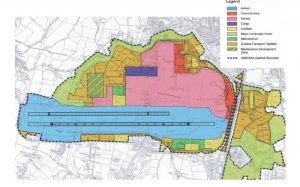
Gatwick expansion plans

Local authorities have said they will not support Gatwick Airport’s plans to expand unless its growth is dependent on meeting environmental and noise targets. 

According to legal documents, the impacted councils are concerned that there is currently a “lack of sanction” against Gatwick if the growth of the airport exceeds expected environmental guidelines without clear accountability. 

Airport chiefs at Gatwick, the country’s second busiest airport, want to modify its northern runway so that it can increase passenger numbers to about 75 million a year on 386,000 flights. It says this will help minimise delays, bring in about £1 billion into the region’s economy every year, and create 14,000 jobs – all while staying within agreed noise levels. It also has a carbon action plan for how the airport will be net zero for its own emissions by 2030, with aviation emissions excluded.

Gatwick Airport has applied for a Development Consent Order (DCO), a legal document that allows the construction of major infrastructure projects. Part of the process requires the applicant to show the planning inspector how it will mitigate the impact of the development. 

The airport’s current position is that the impact from the growth of the runways will be controlled by an air noise envelope (a way to limit sound) an annual cap of 386,000 commercial air transport movements, surface access commitments/SACs (55 per cent people accessing the airport by public transport by 2040) and a carbon action plan (to reduce carbon footprint).

Councils such as Crawley Borough, West Sussex County, Surrey County, Reigate and Banstead Borough, Mole Valley District and Tandridge (together the JLA) have been consulted on the proposals and have written to both Gatwick Airport and the planning inspector with recommendations.

The JLA say they are “concerned” that the current project “will impose unjustified adverse impacts on local communities, local businesses, and the receiving environment”. The group disagree with the Planning Inspectorate’s recommendations for the major development and believes it does not go far enough to address their concerns. 

Instead, the JLA has put forward an approach where any increase in passenger numbers would be dependent on Gatwick Airport’s achievement of specific targets which would avoid, limit and reduce impacts of the project. The group said that if all their recommended measures were adopted, including the Environmentally Managed Growth framework (EMG), they would “not object”. 

Under the JLAs’ proposed approach, Gatwick Airport would be required to continually monitor and regularly report on the extent of the environmental effects associated with the airport in the four areas: noise, air quality, greenhouse gases and surface access. In each of the cases, the JLAs say they want to ensure Gatwick meet their specific targets and are held accountable, to prevent the airport expanding at any cost. 

The group has proposed a tier system in which to monitor potential breaches in environmental commitments. For instance, if air quality or green gas emissions go above a certain point (level 1), Gatwick will review the current measures and work on mitigation. Then, if air quality gets increasingly poorer (level 2), Gatwick will review its pollutant contributions and introduce mitigation measures, perhaps preventing further capacity. If the limit for air pollution is breached, further mitigation would be required to solve the problem and no more aeroplane flight slots will be allocated. 

The JLAs also want further clarity on the impacted areas exposed to higher levels of aircraft noise, especially areas where noise could wake people up. Measures should also be applied to give Gatwick Airport an incentive to transition to quieter aircraft and noise insulation as soon as possible, according to the JLA’s statement. The JLAs also want to secure night time controls for flying.

The examination of the proposed DCO closed on August 27. The Planning Inspectorate will make a recommendation to the Secretary of State for Transport, who will then make a final decision on or before February 27.

A London Gatwick spokesperson said: “We are fully committed to making sure the airport’s growth is sustainable. London Gatwick has thoroughly assessed the environmental impacts of its growth plans, which include environmental mitigations related to noise, carbon emissions and surface access improvements.

“As part of our sustainability policy we are committed to reaching net zero for our own scope one and two admissions by 2030, as well as continuing to reduce overall energy use, invest in on-site renewable energy, and continuing to source 100% renewable electricity.

“London Gatwick is delighted with the strong support shown by many local people and businesses during the recent hearings, who all voiced their desire to see the airport grow for the economic benefit of the area. We thank them for their ongoing support.”

Related reports:

Gatwick Airport Expansion

Gatwick 2nd runway sneaking in?

Gatwick expansion plans revealed

Gatwick to get 2nd runway?

Gatwick Plans (Image PINS / Gatwick)