Epsom and Ewell Times

ISSN, LDRS and IMPRESS logos

Surrey inequality report challenges ‘leafy county’ myth

Aerial view of Tattenham and Preston Ward

The idea that Surrey is all leafy lanes, golf courses and big houses is a myth, according to a new report. Despite being a prosperous area of the country, the county still has thousands of residents struggling with inequality, isolation and poverty.

The report, Understanding Inequality in Surrey, lays bare the scale of the challenge. It found that residents from Bangladeshi, Pakistani, Black African, Roma and Gypsy/Traveller communities are far more likely to live in poverty, overcrowded housing and poor health. Gypsy and Irish Traveller residents experience the worst health among working-age people, and Bangladeshi-origin residents experience the worst health among over-65s.

The study also found that, while unemployment is rising more generally, racial minority groups are more than twice as likely to be unemployed compared to White British residents. Even degree-holders from minority backgrounds are still less likely to get into senior jobs or management positions than their white counterparts.

Cllr Mark Nuti, Cabinet Member for Health and Wellbeing, said: “We’re in a very changing world at the moment. There is a lot going on politically in our society and people are feeling quite fragile in places. Especially when we’re looking at equality, diversity and inclusion, there are people out there who are feeling very alone at the moment. We do have people that are living on the poverty line, we do have from different races [and] different ethnicities that aren’t feeling part of these communities who are feeling alone – as everywhere else in the country. The most urgent action we need to do as a council, and as individuals, is to make sure that we identify where those people are and we have wraparound support for people to make sure they aren’t feeling alone or feeling scared in their own home. And they do know the majority of us respect and love them, and want them to be part of our community and our county.”

The fresh report comes after a 2023 peer review which praised Surrey County Council for improving its culture but also found it lacked a real understanding of how inequality shows up in local communities, prompting this study.

Cllr Robert Hughes added: “I think the image of Surrey being a county of golf courses, wealthy people and pretty villages are a small part of what Surrey is in reality.”

The county boasts around 120 golf clubs – many of which are world class – alongside million-pound mansions, outstanding private schools and leafy green countryside. Yet the report exposed how 20,000 children are growing up in poverty, disabled residents are far less likely to find work, and young people with additional needs and disabilities are four times as likely to have experienced mental ill health compared to the wider population. Women are also hit harder by the cost of living, with the gender pay gap in Surrey reaching a staggering 21 per cent, well above the national average, according to the study.

Officers told a Resources and Performance Select Committee on October 2 that the study will help to alert council departments to how these disadvantages are often linked to an exacerbated socio-economic disadvantage. The new Equality, Diversity and Inclusion framework aims to bring councils, charities and communities together to make sure support actually reaches the people who need it. It looks at everything from jobs and housing to health, education and digital access.

Local groups have already started using the data to apply for funding and shape projects – a sign, councillors say, that the work is already making a difference. The data will be used to make services easier to access, tackle inequality in schools and workplaces, and build stronger communities.

Council officers admit the financial squeeze is real, but argue investing now will save money long-term. The idea is that better support means fewer people reaching crisis point and more residents able to thrive. The next stage is running focus groups with young people, disabled residents and minority communities to make sure the priorities match lived experience.

Emily Dalton LDRS

Aerial view of one of Surrey’s less well of wards – Tattenham and Preston Hawe


Ewell East underpass transformed by new community mural

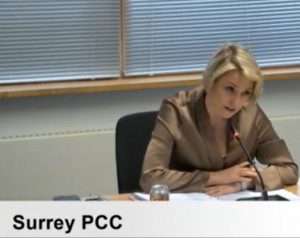
Surrey Police And Crime Commissioner Reveal mural near Ewell East train station. (Credit: Emily Dalton/ LDRS)

A once grim and intimidating underpass in Ewell East has been given a striking new look thanks to a community mural designed to tackle anti-social behaviour and instil pride in the area.

The tunnel, connecting Nescot College with Ewell East railway station, has long been identified as a hotspot for crime and intimidation. Following reports from residents and students, the Epsom & Ewell Community Safety Partnership’s Joint Action Group coordinated a project to reclaim the space.

Work began in September after Epsom & Ewell Borough Council successfully applied for funding from the Office of the Police and Crime Commissioner’s Community Safety Fund. The mural was unveiled on 9 October by Surrey’s Police and Crime Commissioner, Lisa Townsend.

The artwork was created by the street art organisation Positive Arts in collaboration with Level 1 and 2 Art & Design students from Nescot. It draws inspiration from the college’s 70-year history, incorporating elements from old prospectus covers, the Spirit of the Wind motif from a former college logo, a frieze from the original entrance, and images of local flora and fauna.

Lisa Townsend said: “It’s really important to me that residents in Surrey are safe in their communities, and that they feel safe too. The footpath between Nescot and Ewell East Station was highlighted by residents as a location of concern, and I have discussed this issue with partners including Surrey Police, college leaders and the British Transport Police.

“The beautiful mural aims to reclaim this public space, which is used by both students and residents. Improvements to lighting, police patrols and additional private security will also bolster community safety and crime prevention in the area. There are seven murals within Epsom and Ewell, each of which helps to foster pride in our communities.”

Councillor Shanice Goldman, Chair of the Crime and Disorder Committee, said: “This community mural is a fantastic example of how multiple partners can work together for the betterment of the community. It is also a valuable step forward in combating anti-social behaviour by rejuvenating an unloved, run down part of the borough and instilling a sense of pride and ownership of the area in the students.”

Sarah Jane Morgan, Art & Design Lecturer at Nescot, said: “It’s been an incredible learning opportunity for our talented students to work alongside renowned artists from Positive Arts to create and bring to life a professional street art mural. They have enjoyed painting a design that celebrates Nescot’s history and curriculum areas, and we are grateful to the council for commissioning our students to work on this transformative project.”

Positive Arts’ director Julian Phethean added: “All of the students participated with passion and pride, eagerly embracing new spray painting techniques and applying them effectively while working collaboratively. They demonstrated a high level of creativity, motivation and focus throughout.”

The Epsom & Ewell Community Safety Partnership includes representatives from Epsom & Ewell Borough Council, Surrey Police, Surrey County Council, the Office of the Police and Crime Commissioner, Nescot, National Rail and other community partners. The council’s recent programme of murals across the borough has already shown success in reducing graffiti and improving the look and feel of public spaces.

Emily Dalton LDRS

Surrey Police And Crime Commissioner Reveal mural near Ewell East train station. (Credit: Emily Dalton/ LDRS)


Not MPs’ expenses again!?

clockwise from top left): Zöe Franklin (Guildford, Liberal Democrat); Dr Al Pinkerton (Surrey Heath, Liberal Democrat); Greg Stafford (Farnham and Bordon, Conservative); Will Forster (Woking, Liberal Democrat).

Some Surrey MPs have racked up thousands of pounds in hotel stays or London rent, despite their constituencies being within commuting distance of Westminster.

The rules allow MPs who live outside London to rent a property or book hotels if late-night votes or early starts make the journey “unreasonable”. Hotel bills are capped at £230 a night in London. But many Surrey residents might see the distances involved as a “normal” daily commute.

According to the Independent Parliamentary Standards Authority (IPSA), Zöe Franklin (Liberal Democrat), MP for Guildford, has claimed £3,919.42 for 18 nights in London hotels between September 2024 and April 2025 – roughly two stays a month. Dr Al Pinkerton (Liberal Democrat), MP for Surrey Heath, has claimed £4,543 for 22 hotel stays in the same period, including a four-night stint last October costing £780 and five separate nights this April. Will Forster (Liberal Democrat), MP for Woking, spent £367.84 on a two-night stay in February after returning from a parliamentary trip to Ukraine.

Meanwhile, some of their Conservative colleagues have other arrangements. Greg Stafford (Conservative), MP for Farnham and Bordon, has reportedly spent £9,592.52 on accommodation over five months, including nearly £8,000 to rent a London property between November 2024 and March 2025, excluding council tax and utility bills. Travelling from Mr Stafford’s constituency office in Farnham and Bordon takes on average 1 hour 25 minutes by car or 1 hour 50 minutes by train. Mr Stafford has been approached for comment.

Under IPSA rules, MPs can claim expenses for renting or staying in London when parliamentary business requires it. Up to £31,800 a year is available for MPs’ accommodation budgets in such cases.

Other Surrey MPs take a different approach. Jeremy Hunt (Conservative), MP for Godalming and Ash, owns a London property, while Claire Coutinho (Conservative), MP for East Surrey (Tandridge area), has her own London flat. Neither claims rent or hotel expenses.

A spokesperson for Zöe Franklin said: “Zöe has stayed in overnight accommodation in London after late night sittings in Parliament. This is in line with IPSA guidance. Zöe will continue to focus on working hard and delivering for the people of Guildford constituency.”

A spokesperson for Will Forster said: “Will stayed in a London hotel for two nights in February 2025 following his return from Ukraine as part of a parliamentary delegation to mark the third anniversary of the Russian invasion. Debate in the Commons on the following day extended late into the evening.”

A spokesperson for Dr Al Pinkerton said: “As Surrey Heath is classed as an out-of-London constituency, Dr Pinkerton is entitled under IPSA rules to claim accommodation costs in London when parliamentary duties require it. Rather than renting a permanent flat, he has chosen to use hotel accommodation on an occasional basis – for example, when late-night votes or early morning meetings make commuting impractical. This approach provides flexibility and ensures costs remain within IPSA’s set limits. It also enables Dr Pinkerton to maximise his effectiveness as Surrey Heath’s representative by being present and fully engaged in parliamentary business while avoiding unnecessary expenditure.”

Emily Dalton LDRS

From top left going clockwise:

  1. Zöe Franklin (Liberal Democrat, Guildford)
  2. Dr Al Pinkerton (Liberal Democrat, Surrey Heath)
  3. Greg Stafford (Conservative, Farnham and Bordon)
  4. Will Forster (Liberal Democrat, Woking)

Photos from UK Parliament


Surrey gets a sinking feeling over cost of its holes

Lloyd Allen, Infrastructure Team Manager for Surrey County Council, on Godstone high street. (Credit: Surrey County Council).

Has Surrey become Britain’s sinkhole capital? Well, the figures certainly point in that direction.

Surrey County Council is on track to spend a staggering £1.6m fixing the collapsed 65ft hole in a section of Godstone High Street – a bill that dwarfs what most local authorities spend on sinkholes.

Figures obtained through Freedom of Information (FOI) requests show councils across the UK have spent more than £6.2m tackling over 7,000 sinkholes since 2020. But Surrey alone accounts for almost half of that total, shelling out over £3.1m making it by far the country’s biggest spender.

The Godstone collapse, which first appeared in February, has left the part of the High Street shut for months and businesses struggling.

Surrey County Council has already spent £850,000 on emergency responses, surveys, roadworks and consultancy fees, including £360,000 on just site establishment.

Another £800,000 is forecast for stabilisation work, filling in the mine tunnels, and further repairs – taking the final bill to £1.65m. This will amount to just over a quarter of the total UK bill on sinkholes for the last five years.

What is driving the cost?

The British Geological Society has stated that Surrey is particularly prone to sinkholes due to the underlying sands in the county, which are weakly cemented.

According to council documents, the ground beneath Godstone sits on the Folkestone Sandstone Formation – a weak, sandy foundation that made the area vulnerable to collapse. CCTV images provided under FOI request confirm the collapse was worsened by an old sand mine tunnel running beneath the High Street.

While the council insists the road should reopen by December 16, locals are not holding their breath. Residents have been struggling for months with the road closure, diversions, fall in trade and general feel of chaos. That being said, an official report shown to SurreyLive by the council does state that the project is tracking towards a final inspection date of December 16th.

A Surrey County Council spokesperson said: “This continues to be a highly complex incident involving a number of investigations led by our Highways Officers and other agencies, including specialist teams and utility companies.

“Work is underway to reconstruct the final footpath affected by the collapse and we’re now planning how we stabilise the collapsed area and fill in the tunnel network.

“We are updating local residents and businesses as we progress through each stage of the process and expect the final two residents to be back in their properties by the end of September.

“Once our stabilisation work and the SES works to reconnect and relay the mains through the collapse area are completed, the area will be refilled and repaired permanently. We are currently planning to complete our repairs and reopen the High Street during December.”

A nationwide problem

The Godstone collapse may be dramatic, but it’s part of a wider and growing problem. Since 2020, sinkholes have been recorded everywhere from Reading to Scotland, with councils spending millions to patch them up.

The top spenders after Surrey include Reading (£976,500), East Sussex (£767,238) and Transport Scotland (£602,000). If you take away the Godstone sinkhole expenditure, Surrey still comes up top with over £2.2m being put towards sinkholes.

Lloyd Allen, Infrastructure Team Manager for Surrey County Council, on Godstone high street. (Credit: Surrey County Council).

Emily Dalton LDRS

Additional reporting from Sam McEvans

Related reports:

Godstone’s gasworks fury while sinkhole not fixed

Godstone “Sink-hole” residents to return

Surrey sink-hole major incident


Redhill care home put under special measures

copyright-free adult social care stock image. Credit Eduardo Barrios on Unsplash

A supported living service in Redhill has been rated “inadequate” and put into special measures after inspectors said they uncovered six legal breaches.

The health watchdog slammed the service as putting “unnecessary stress” on people by only giving 28 days’ notice when required to move out.

Threeways Dom Care, on Brighton Road, which supports adults with learning disabilities, was inspected by the Care Quality Commission (CQC) in July 2025.

The watchdog found “serious leadership failings” which it said left people without dignity, independence or self care.

Roger James, CQC’s deputy director for Surrey, said: “Our inspection of Threeways Dom Care exposed serious leadership failings that were denying people dignity, respect, and independence in their care.”

Inspectors flagged problems across the board, including poor record-keeping, lack of staff training, and a failure to manage basic health needs like nutrition and epilepsy.

Some staff were found to be unkind, while others ignored health and safety basics. One care staff member was found wearing flip flops which could bring in dirt, and others were discovered to raise their voice at people or ask them to be quiet in what is meant to be their home.

The CQC report also criticised leaders for mishandling the closure of the home. Just one day after the inspection, residents and their families were told the service was shutting and given 28 days to move out.

Mr James, CQC’s deputy director for Surrey, added: “Threeways ignored people’s voices, failed to inform them or their relatives of their rights as tenants, and put an enormous amount of unnecessary stress on people as well as making the transfer to a new care service for them more difficult.”

He added the service did not promote an open or honest culture, with safeguarding concerns often missed or ignored, leaving people at risk of harm.

But Threeways management has hit back, accusing the regulator of ignoring their side of the story. A spokesperson for the service said: “Families have always been happy with the service and we’ve had positive feedback from professionals. The service will close once commissioners confirm a move date, and in the meantime, we’re doing our best to ensure a smooth transition.”

Despite those reassurances, the CQC has placed the service into special measures, meaning it will be closely monitored and expected to make urgent improvements if it wishes to continue operating.

Emily Dalton LDRS

Adult social care stock image. Credit Eduardo Barrios on Unsplash


Epsom reserves vs investment

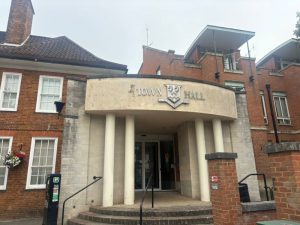
Epsom and Ewell Borough Council town hall. (Credit: Emily Dalton/ LDRS)

A bid to raid a Epsom and Ewell council’s multi-million pound property reserves to pay for crumbling public buildings has been thrown out by councillors.

Epsom and Ewell Borough councillors blocked a move to dip into a £7m ‘rainy day’ fund to pay for important repairs to community venues.

Opposition councillors argued that money locked away in the ‘property income equalisation’ (PIE) reserve could be better spent fixing leaky roofs, broken boilers and delayed upgrades at places like Bourne Hall, the playhouse and the Harrier Centre.

Cllr Alex Coley (Independent Ruxley) told a Strategy and Resources Committee meeting on September 25: “Why prioritise handing over a well- financed property empire to a new unitary at the cost of the huge burden of deferred works on our crumbling public buildings? Do we want to see our venues sold off or handed over to charitable trusts and then closed soon after because they can’t afford much needed repairs?”

Cllr James Lawrence (LibDem College) backed the call, saying the council’s property income was now more secure and that modestly trimming the reserve could free up £1.5m to plug the gap in the capital budget: “We’ve come out of COVID uncertainty and we’ve got secure rental income.” He argued the council can safely reduce reserves and use the money to fund the projects residents actually need.

But senior councillors and officers pushed back hard, warning that the reserve was vital to protect the council from sudden losses if tenants went bust or properties stood empty. They said cutting it down to £1m would be “reckless” given the risks tied to £64m of commercial property borrowing.

Council leader, Hannah Dalton, (RA SAtoneleigh) said: “You kind of need to take a whole system to view and not just pick bits out.” She explained the council is working through the assets and reserves and will continue to work, keeping members updated.

Cllr Dalton said: “We’re also waiting to see what the fair funding review could mean for Surrey alone. They’re thinking there could be a deficit of 45 million pounds in the county so we’re having to look at everything.”

Cllr Neil Dallen (RA Town) said: “We’re in the unusual position of not staring at bankruptcy like other councils — and that’s because we’ve been prudent. We’ve got reserves to cover things that have gone wrong and things have gone wrong and the reserves have actually been used to satisfy that.”

Council finance chiefs also reminded members that a full review of reserves and council-owned assets is already under way, with results due in November.

The Section 151 officer confirmed that if reserves are found to be “over-prudent”, some money could be released for other priorities, and that selling off struggling assets remained an option.

An attempt to water down the proposal — including disposing of 70 East Street and using the cash to top up building repairs — was also rejected. In the end, councillors voted to “note but take no action” on the motion.

Epsom and Ewell Borough Council town hall. (Credit: Emily Dalton/ LDRS)

Emily Dalton LDRS


Caterham’s parochial battle…. a sign of things to come?

View down Station Avenue, Caterham. (Credit: Google Street View)

Caterham could soon be governed by a single town council after a majority of residents backed the idea – but the proposal has split opinion among councillors and locals.

At the moment, Caterham is split between Caterham on the Hill parish council and Caterham Valley parish council. Parish councils are the ground level tier of government in England which look after parks, community centres, funding events, lobbying on planning and making local voices are heard.

A summer consultation found 77 per cent of 237 respondents supported merging Caterham on the Hill Parish Council and Caterham Valley Parish Council. But councillors pointed out that hardly one per cent of Caterham’s population responded to the consultation, at a Strategy and Resources Committee on September 25.

Cllr Michael Cooper said: “We haven’t had a consultation at all – less than one per cent took part […]We need to involve the public properly.”

Others urged looking at the bigger picture. Cllr Jeremy Pursehouse said: “I know the people in the valley and people on the hill look at themselves as completely different species. I hate to disappoint you but everyone else looks at it as Caterham.”

The push for the merger comes as Surrey prepares for a major shakeup with new unitary authorities due in 2026 which will replace district and borough councils. Supporters of the town council plan say Caterham needs a stronger, unified voice to stop it being overshadowed in the new system.

Supporters say the merger would give the town a stronger voice, reduce duplication and save resources. Critics argue the consultation was poorly promoted and that fewer than one per cent of residents responded.

Caterham Valley Parish Council chair Tony Pierce, who is also standing in a by-election, said: “One single council representing the residents of Caterham is the optimum way to represent people. Caterham is not two towns but one – residents don’t confine their activities to either the Valley or the Hill. A larger council representing all residents will have a strong voice.”

Local resident Robin Franklin, from Caterham on the Hill, backed the move but urged councillors to think about younger generations. He said: “A town council gives Caterham a single negotiating voice and a clear chance to prioritise the things young people keep asking for: safer routes to school, better street lighting and cycle parking.”

Not everyone is on board. Caterham on the Hill Parish Council said it opposed a merger at this stage, arguing the process was rushed, that residents had not been given enough pros and cons, and that Valley households could face a massive hike in their local council tax bill. It also raised concerns that merging could dilute attention to local issues.

Speaking personally, Cllr Ben Horne said a merger could still bring benefits: “At the moment we’ve got two sets of meetings and duplication. A town council would carry more weight in seeking funding, modernise our governance and give Caterham the leadership it deserves.

The review panel has recommended pressing ahead with draft proposals. A second consultation – including details of council tax costs – will take place in the future.

If approved, Caterham Town Council would have 15 councillors across five wards, with the first elections due in May 2026.

View down Station Avenue, Caterham. (Credit: Google Street View)

Emily Dalton LDRS


Bookham to get new community centre

Bookham Community Centre on 164 Lower Road. (Credit: Google Street View)

After six years of waiting and false starts, Bookham is finally getting a new community centre.

The old Bookham Youth Centre on Lower Road shut its doors in 2019 after falling into disrepair, leaving the area without a dedicated youth and community hub. 

Members agreed to spend £2.8m of existing capital funds to knock down the old building and replace it at a Surrey cabinet meeting on September 24. Councillors said they hope the new multi-purpose building will be ready by March 2027.

Cllr Clare Curran, Conservative member for Bookham and Fetcham West said: “There is real excitement in Bookham that a new centre is going to be delivered.

“This is not just a youth facility […] The former centre was used by a huge range of community users from everything from the University of the Third Age to challenges with disabled children and an early years provider.”

The new centre is set to take the place of three lost facilities – the former youth centre, The Bridge in Leatherhead (closed after RAAC was found in the roof) and the Bookham Family Centre. Day-to-day running of the centre is expected to be handed to a third-party provider, meaning no additional ongoing costs to the council or future unitary authority. 

“It has taken some time to get to this point,” said Cllr Clare Curran who represents Bookham. “We’ve had a few false dawns on the journey.”

In 2021, councillors promised a shiny new building on the Lower Road Reception Ground, at the cost of £2.5m, with homes alongside to help pay for it. But that plan was scrapped after tougher planning rules on the Green Belt and new biodiversity requirements meant the recreation ground scheme was no longer possible.

Instead, Surrey County Council has shifted its focus back to the old youth centre site. But housing that was meant to come alongside the scheme has been kicked into the long grass, with any decision on new homes delayed until after 2027.

Public consultation and planning approvals are still to come so residents still have an opportunity to have their say.

Emily Dalton LDRS

Bookham Community Centre on 164 Lower Road. (Credit: Google Street View)


Surrey’s “suffer the little children…” tested

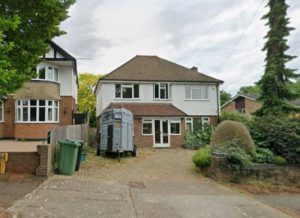
View outside 18 Crosby Hill Drive, in Camberley. (Credit: Surrey County Council documents)

Plans to turn a family house into a home for vulnerable children on a Surrey street have been given the green light despite strong opposition from its future neighbours.

A five-bed detached home on Crosby Hill Drive in Camberley will be transformed into a children’s home for up to three kids aged 10-17. Staff would live in with them around the clock, with no changes made to the building itself. 

Council officers state the home is sorely needed, with rising demand for secure, regulated accommodation for children in care. 

But of 28 locals who wrote in about the scheme, 27 objected. Concerns ranged from traffic and road safety to fears the change could alter the “character” of the street. But councillors said many of the concerns were based on myths and misunderstandings about children’s homes. 

Members of a Surrey County Council planning committee approved the scheme at a meeting on September 24. 

One resident, however, wrote in support, arguing the location is exactly the kind of quiet and supportive environment vulnerable children should be given: “Everyone deserves a safe place to live,” they said. 

Despite traffic concerns, highway officers said there will not be a material change in the use of the road or car parking spaces down the street.

Rebecca Hanifan, responsible for looking after children’s homes within Surrey, told the committee: “Children’s homes are heavily regulated. The children who live in them are risk assessed and those with higher needs are placed in secure settings, not in the community.

“These are children who can live in a family setting- they go to school, they sleep well at night, and do normal activities over the weekend. Our homes blend into communities, property values do not drop and our children are well-behaved.”

Cllr Ernest Mallett MBE dismissed the claims the children’s home would damage the character of Crosby Hill Drive. He said: “How is that any different to children living in other houses? This is a perfectly viable use for the property. It won’t be any trouble to anyone and won’t be any different to any other house on the street. 

“We are a first-class western society and we take care of people.”

Others noted practical issues- like the lack of a bus shelter nearby and concerns about parking during staff changeovers – but backed the need for more children’s homes, given the national shortage of foster carers. 

The thorny issue of restrictive covenants on the property was raised by Nigel James, speaking on behalf of one of the neighbours, who said the council risked “wasting tax payers’ money” if due diligence was not done. But officers and councillors stressed covenants were not a planning matter for the committee, and Cllr Mallett said they were “virtually unenforceable”.

Cllr Jeremy Webster expressed unease about “parachuting” a children’s home into a quiet residential area and cited apparent estate agent warnings of a 10 per cent dip in house values. Meanwhile, Cllr Trefor Hogg said he sympathised with residents’ concerns but stressed: “We need both foster homes and children’s homes in Surrey.”

Emily Dalton LDRS

View outside 18 Crosby Hill Drive, in Camberley. (Credit: Surrey County Council documents)


Epsom’s potholes. We’re not alone…

Pothole stock image. Credit Kathryn Anderson

‘Sink holes happen’ was the blunt message from a Surrey highways officer when asked if the council had the budget to repair five crumbling suburban roads.

In fairness, council budgets are often in flux with authorities never knowing how much funding they will receive from the central government and whether they will get any extra pennies from grants.

But that has not softened the blow for Walton residents who say they are “disappointed” after finding out five battered neighbourhood roads might not be resurfaced until 2028.

Almost 300 people signed a petition calling for urgent repairs to Cottimore Avenue, Cromwell Close, Fairfax Crescent, Monks Close and Stuart Avenue. Residents claim the roads in Walton are riddled with cracks, potholes and uneven pavements that pose a danger to pedestrians, cyclists and drivers. 

Residents say the situation has gone on for decades – with complaints about the roads dating back to the 1990s. But people say their calls for Surrey County Council to act have been repeatedly put aside and pushed back despite rat run traffic and speeding issues. One resident even claimed that it has been at least 40 years since the roads were last resurfaced. 

Residents said they are worried the delays will only get worse once Surrey is broken into unitary councils in Local Government Reorganisation. “It seems the problem is simply being passed on to the next authority,” said Paolo Orezzi, lead petitioner. “The road will simply deteriorate and it will increase the cost liability.”

But highway bosses have said the streets will not be resurfaced any time soon at a Highways, Transport and Economic Growth meeting on September 23. Instead, they have been given a flatteringly modest ‘medium priority’ rating in the county’s road maintenance list meaning it is unlikely the work will be complete before 2028/29. 

Even then, the plan is not to fully resurface the roads but to ‘fine mill’ the concrete beneath the tarmac. This is a cheaper process but residents fear this will not go far enough. 

Highway officers defended the decision pointing to the sheer scale of the challenge. “We manage 5,000km of roads across Surrey,” an officer said. “There is no doubt the roads would benefit from work but we have to prioritise based on budgets, emergencies and needs. Unfortunately, we can’t give firm timescales beyond next year- things change, sinkholes happen.”

Cllr Rachael Lake, who said she has been backing the residents’ calls for years, recalled: “I was standing next to a crack where the tarmac had totally worn away. You could actually get a child’s foot stuck down it. It was dangerous.”

The Conservative member for Walton said she was prepared to use her entire £120,000 allocated budget to fix the roads following residents accusing her of not looking after them. But Cllr Lake claimed highway officers would not even let her put the five worn out roads on a waiting list to be resurfaced. 

Lead for Highways, Transport and Economic Growth, Cllr Matt Furniss relented and asked officers to reassess the five roads in question, speak to residents and see if anything can be done with Cllr Lake’s allocated budget to get the roads on the list. Cllr Furniss added: “We can potentially do it next year but I am not promising anything.”

Residents said they are worried the delays will only get worse once Surrey is broken into unitary councils in Local Government Reorganisation. “It seems the problem is simply being passed on to the next authority,” said Paolo Orezzi, lead petitioner. “The road will simply deteriorate and it will increase the cost liability.”

Highway officers defended the decision pointing to the sheer scale of the challenge. “We manage 5,000km of roads across Surrey,” an officer said. “There is no doubt the roads would benefit from work but we have to prioritise based on budgets, emergencies and needs. Unfortunately, we can’t give firm timescales beyond next year- things change, sinkholes happen.”

Pothole stock image. Credit Kathryn Anderson

Emily Dalton LDRS

Related reports:

Will Surrey potholes outwit AI?

Pothole payouts and repairs penalise Councillor projects?

On the Hunt for pothole repairs

Don’t blame us for potholes say Surrey’s highway authority.