The process of appointing the new local government chiefs begins
22 January 2026
Councillors from across Surrey met this week for the very first time as part of two new committees set up to manage the county’s biggest council shake-up in decades.
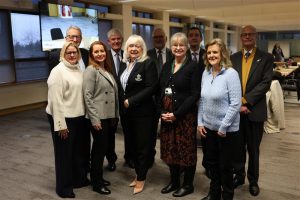
The East Surrey Voluntary Joint Committee met yesterday (Thursday, January 15) at Woodhatch Place in Reigate, while the West Surrey Voluntary Joint Committee met today (Friday, January 16) at Woking Borough Council.
It marks a major milestone in plans to scrap Surrey’s current council system and replace it with two brand-new authorities: West Surrey Council and East Surrey Council.
What is changing?
Last year, the Government announced that Surrey County Council and the county’s 11 district and borough councils will be merged into just two big councils.
In May, residents will vote for councillors who will sit on these new authorities. At first, they’ll act as ‘shadow councils’ which means they will be basically planning everything behind the scenes. From April 2027, the new councils will officially take over all local services. Until then, the current councils will keep running things as normal.
Why these meetings matter
Since there is a lot of work to do and not much time to merge all the responsibilities of the local authorities and split them in half, councillors have volunteered to get started early.
The two new joint committees are made up of existing councillors from county, district and borough councils. Their job is to start laying the groundwork for the big transition.
At their first meetings, both committees agreed to:
Create a single implementation plan to manage the change safely and legally
Set up an implementation team made up of senior council officers
Decide how key interim leadership roles will be filled
This includes recommending temporary appointments for three crucial posts:
Head of Paid Service (the council’s top boss)
Chief Finance Officer (in charge of the council’s financial health)
Monitoring Officer (who keeps everything legal)
These roles are required by law and will support the new shadow councils until permanent staff are recruited.
‘An important milestone’
Terence Herbert, Chief Executive of Surrey County Council and senior officer in charge of the reorganisation, said: “This is an important milestone and I’m grateful that councillors have agreed to come together on a voluntary basis to get this vital work underway.
“At the heart of this is making sure residents continue to get the services they expect – both now and under the new councils.”
He added that councils are “well prepared for change” and committed to making the transition as smooth as possible for residents and staff.
What happens next?
Both committees will now meet monthly, rotating locations around their areas. They will keep meeting this way until the shadow councils are formally created after the May elections.
Each committee will have 10 members: five from Surrey County Council and five from district and borough councils. Their work programmes will be published online so residents can see what is being discussed.
Bigger plans for Surrey
The Government has also said simplifying councils will help pave the way for more devolution, meaning more powers could be handed down to Surrey in future.
Talks are already under way about setting up a new strategic authority, like a metro mayor, for the county. For now, councillors say the focus is on getting the basics right which means making sure the new councils are ready to hit the ground running in 2027.
Councillors for the East Surrey Voluntary Joint Committee. (Credit: Surrey County Council). Epsom and Ewell Borough Coucil leader Cllr Hannah Dalton (RA Stoneleigh far left)
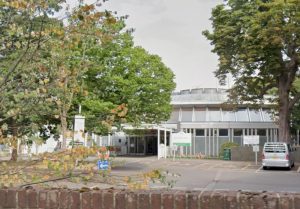
Ewell’s “UFO” shaped Bourne Hall to take off anew
22 January 2026
A Surrey museum is set to get a long-awaited boost to make the tired building come to life again. Epsom and Ewell Borough council unanimously backed plans to invest in improving the Bourne Hall Museum rather than close it down or let it stay as it is.
The decision means the museum will get more funding and support it needs to become more engaging, relevant and sustainable for the local community. If the funding is not approved by the council’s Strategy & Resources Committee in March, the museum will continue as it is for now, costing the council around £236k a year. Up to £396k could be thrown at regenerating the museum. But it could be cheaper to run in the long-term, according to the report.
Councillors at agreed the museum needs a fresh identity and a clear vision for the future at a Community and Wellbeing Committee meeting on January 13. Cllr Clive Woodbridge said the museum “needs to reflect and be relevant to local communities now and the future” . He said the council needs to be more forward-thinking in this area.
Plans for the investment include:
Updating displays to make them shorter and easier to read
Creating interactive exhibits and themed trails connecting the museum with the library and other parts of Bourne Hall.
Reaching out to local schools, community groups and universities with workshops, tours and loan boxes.
Launching a modern marketing push, including social media, better signage to raise awareness of what the museum has to offer.
The investment is also seen as a chance to future-proof the museum ahead of local government changes in 2027, ensuring it can continue to serve the community under whichever new governance model comes into place.
Councillors highlighted the museum’s untapped potential, from local history and famous residents to unique collections that could inspire events and projects for all ages.
The council emphasised that closing the museum would be costly (approximately £280k), slow, and damaging to the community, while doing nothing would let the museum slowly lose its relevance. Instead, the investment approach is designed to make the museum vibrant, interactive, and a real community hub.
A former Surrey Police officer has been banned from policing for life after she smoked cannabis and then lied about it, a misconduct panel ruled.
Zara Ali was dismissed following a hearing at Surrey Police Headquarters on December 15. Although she had already quit the force and did not attend, the panel said she would have been sacked if she were still serving. She has now been added to the national barred list, meaning she can never work as a police officer again.
The panel found Ms Ali had smoked cannabis while off duty during a trip to the New Forest in May 2024. Ms Ali said she did not knowingly participate in taking any controlled drug substance and denied her conduct breached the Standards of Professional Behaviour identified.
Days later she was ordered to take a “with cause” drugs test, meaning a manager believed she could be under the influence of drugs. Before giving a urine sample, she was asked directly if she had taken any drugs but she did not admit to smoking cannabis.
The panel said this was a deliberate lie and criticised her for trying to dodge responsibility. Members said the public would be “appalled” that a police officer failed to answer honestly when questioned during a drug test.
Afterwards, Ms Ali told her supervisor, Sergeant Scott Legge, that she had taken “one puff” of a cannabis joint while camping with her boyfriend and his friends. She later told the same story to colleague PC Annalise Ware.
In the oral and written evidence of the incident, PC Ware said: “At this point, I did not think Zara had any involvement with controlled substances, her behaviour is erratic, she is loud and she struggles with focusing on one task at a time, but I was aware she has a formal diagnosis of ADHD and these are traits of her diagnosis.”
Members rejected claims that colleagues had misunderstood her because of her ADHD, saying there was no medical evidence and it was unlikely two officers would make the same mistake independently.
But when she spoke to senior officers, she changed her version of events. Instead, she claimed she had asked a stranger for a cigarette, taken one drag, thought it tasted odd and threw it away, suggesting she did not realise it might contain drugs.
The panel ruled this second version was untrue and was an attempt to make herself look less guilty. They said she had changed her story to avoid the consequences of her actions.
While the panel said it was right that she initially told colleagues about the cannabis use, they ruled she seriously damaged public trust by lying during the testing process. They said her behaviour was criminal, deliberate and dishonest, and posed a serious risk to public confidence in policing.
The panel concluded her actions amounted to gross misconduct, the most serious category, and said she could not have stayed in the job. They ruled that anything less than dismissal would not have been strong enough to protect the reputation of Surrey Police.
As a result, Ms Ali has been placed on the national barred list, preventing her from ever working in policing again. She has the right to appeal within 10 working days.
Surrey Police ethics print on wall at Mount Browne HQ. (Credit: Emily Dalton/LDRS)
Council’s refusal leaves Esher’s Marquis of Granby derelict
22 January 2026
The owners of the Marquis of Granby in Esher have hit back at Elmbridge Borough Council after it refused to recognise the venue as a restaurant. They said the decision they say is “wrong” and “based on a misunderstanding”.
Greene King, which owns the site on Portsmouth Road, has now submitted a fresh planning application asking for a Certificate of Lawful Existing Use. They want official confirmation that the Marquis of Granby should be classed as a restaurant, not a pub.
They argue the council made a “fundamentally flawed” decision last year when it rejected their original application in November 2023.
According to Greene King, the venue has operated primarily as a restaurant since 1994, with alcohol sales playing a secondary role. In simple terms: most people went there to eat, not just to drink.
Elmbridge council, however, ruled that the premises looked more like a “drinking establishment with expanded food”, a specific planning category used for pubs that also serve meals. The classification puts it outside the normal restaurant category and limits what the building can be used for in future.
Although 77.8 per cent of its sales come from food, officers said in their 2023 report, this is typical for modern pubs, which commonly serve meals, and pointed to industry data showing similar patterns nationwide. They also highlighted pub-style features including a large bar area, self-seating, multiple beer taps, a cellar stocked with kegs, gambling machines, event nights with DJs, and the venue’s own website branding itself as a “local pub”. The council found these characteristics outweighed the presence of a restaurant area and concluded the premises more closely resembles a pub, not a restaurant, leading them to refuse the certificate.
But Greene King strongly disagrees. They say the council has misunderstood the planning rules and how they apply to the site. Their planning consultants argue:
The Marquis of Granby has never been a drinking-led pub, so it cannot suddenly be classed as one.
Planning rules do not allow a restaurant to automatically change into a “drinking establishment with expanded food” without permission.
The business was still food-led even after its carvery deck was removed in 2020.
Features like a bar, beer taps and a garden do not automatically make somewhere a pub and many restaurants have these too.
They also say the council relied too heavily on a trade magazine article about pub food and drink sales, which they describe as “meaningless” evidence.
Greene King points out that it successfully secured the same certificate for six similar venues elsewhere, with no objections from councils. The Marquis of Granby is the only one that has been refused.
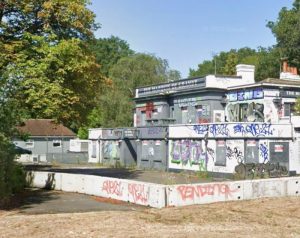
Since closing, the building has become run down, with heavy graffiti, vandalism and anti-social behaviour. Greene King says the lack of a certificate is “sterilising” the site and stopping it from being reused and that it is now a potential fire risk.
A spokesperson said the evidence clearly shows the venue was laid out for dining, with large kitchen facilities, menus focused on meals, tables set with cutlery and condiments and most of the space is dedicated to seated customers. They argued this proves food was the main attraction.
Greene King is now asking the council to reconsider and approve the certificate without delay. If granted, it would officially confirm the Marquis of Granby as a restaurant, making it easier to bring the site back into use.
The council has not yet commented on the new application.
Marquis of Granby pub on Portsmouth Road, Esher. (Credit: Google Street View)
.
What to do with an old Town Hall – lessons for Epsom?
22 January 2026
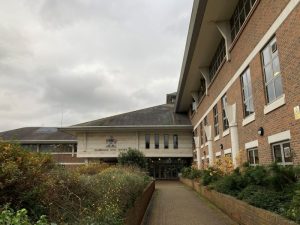
Hundreds of thousands of pounds have been spent on consultants – yet Elmbridge Borough Council still does not know what to do with its offices, say opposition councillors.
They have now criticised the council claiming it has “little to show for it after years of delay”.
Changing ideas, multiple funding injections, fresh consultant commissions and repeated delays have left people uncertain about what will actually happen to the council’s headquarters and the wider town centre vision.
Around £402,000 has been paid to external consultants across four years as the local authority pursued what it described as a “flagship” regeneration project in Esher town centre. The scheme includes council offices, a library, car parking, a bowling club, tennis courts and temporary accommodation units.
But the council has accepted that earlier business cases are no longer valid due to Local Government Reorganisation (LGR), which will see Surrey split into two mega unitary authorities. Under the plans, Elmbridge will be absorbed into East Surrey.
Two consultancy firms received payments, of around £200k each, linked to the Civic Centre project between 2022 and 2025, according to a Freedom Of Information (FOI) request:
Urban Vision
2022: £97,200
2023: £116,400
31ten Consulting Limited
2023: £28,587.60
2024: £143,886
2025: £16,200
These figures do not include a further £50,000 approved by Cabinet and Council in November and December 2025 for additional consultancy work. FOI officers confirmed that this allocation has not yet been spent.
Despite the scale of consultancy spending, the council confirmed it has not carried out any surveys, tests or marketing of the Civic Centre building as part of the scheme. In its FOI response, the authority said it does not hold any information on costs for such work “as no such surveys, tests or marketing have been undertaken”.
Cllr John Cope, Leader of the Conservatives and Opposition, Elmbridge Borough Council: “Spending over £400,000 of residents’ money on consultants, with little to show for it after years of delay, sums up how the Liberal Democrat-led council has operated in Elmbridge for the past eight years.
“This comes on top of millions wasted on a failed Local Plan that was rejected by the planning inspector, and £50,000 spent on a climate change citizens’ panel PR stunt that has delivered no clear benefit for local taxpayers.
“At a time when Elmbridge has one of the highest council tax bills in the country, residents are right to expect far better. The council should be cutting waste, especially at a time it is ending support for things that residents value, like Meals on Wheels and the local community centres. Their approach is wrong, and local Conservative councillors will continue to fight for residents’ interests.”
Before the government announced devolution in Surrey, the council had prepared a full 40-year business case. This work recommended entering into a joint venture with a developer to deliver housing on the Civic Centre site, while relocating council offices by purchasing an existing office building in Esher.
Consultancy firm 31ten was appointed in August 2023 to develop a detailed financial model setting out the implications of redevelopment over a 40-year lifespan.
But, as a result of LGR, the entire business case is now defunct, making it necessary to seek new advice on a potential disposal of the site. Despite this, the council has said that redevelopment remains “integral” to Esher placemaking ambitions and could still “significantly enhance the vitality of the town centre”.
Cllr Simon Waugh, Leisure, Portfolio Holder for Culture & Commercial Strategy
“Our Esher vision, supported by local businesses and residents, as well as Councillors, sets out aspirations for Esher to be a vibrant town centre, providing residents and visitors with the opportunity to come together and take part in shared activities.
“At the December 2025 Elmbridge Council meeting it was agreed that limited funding was needed for a property consultant to assess the Civic Centre site for housing development within the context of the Esher vision.”
Portfolio holder said the civic centre is “no longer suitable as a modern workplace” as it is costly to maintain and environmentally unsustainable. He said Elmbridge council has continued to review options to ensure value for money, act in the best interest of residents and deliver a smooth as well as effective transition to the new unitary authority.
The council has cited several reasons for continuing work on the site, including government housing targets requiring councils to help deliver 1.5m new homes nationally.
Cllr Waugh said: “The demand for new homes remains strong across the country, including in Elmbridge. The government continues to set ambitious targets to address the housing crisis and Elmbridge Borough Council is firmly committed to supporting the delivery of housing within the borough.
“The Civic Centre site presents this Council with an opportunity to provide extra homes in Esher and to deliver on improved connectivity to the town – providing a community meeting point for markets and events currently lacking in the town. For residents and businesses, we foresee economic benefits for the high street, and improved connectivity around Esher town centre, as well as much needed housing. We will bring an update to Elmbridge Cabinet and Council in the coming months.”
The council is now seeking fresh advice on disposal options, even as responsibility for the site is expected to transfer to the new East Surrey authority by April 2027.
Cllr Dallen accused of £1/2 m Epsom & Ewell Council cover-up
22 January 2026
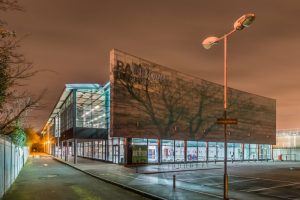
BBC LDRS reports: A Surrey council [Epsom and Ewell] must pay out up to £500,000 after failing to properly check the condition of a major leisure centre before handing it over to a new operator. Poor ventilation, damp and ‘possible roof cracks’ were cited as some of the problems related to the “fabric” of the building.
Epsom and Ewell Borough Council has agreed to cover the costs of urgent repairs at Rainbow Leisure Centre after the new contractors took over the site and uncovered a long list of issues, some relating to the structure and fabric of the building. Places Leisure took over the contract on October 1, 2025, but has not yet signed on the dotted line, the LDRS understands.
The pay out was approved via a confidential urgent decision, seen by the Local Democracy Reporting Service (LDRS), after Places Leisure said it should not be responsible for fixing the issues.
An urgent decision is when a council cannot wait until the usual decision-making committee process as it could harm the public or council interests.
Some of the problems relate to the fabric of the building, for which the council is responsible, the LDRS understands. This is despite the council previously insisting it had carried out such checks.
In a public report dated June 2025, Epsom and Ewell Borough Council said it had commissioned a stock condition report to make sure the building was handed over in good nick.
As the LDRS understands, council officers believed the centre would be handed back in good condition. An external consultant was used, but their inspection was not invasive, meaning hidden problems may not have been picked up. But just six months later, the authority is now facing a bill of up to £500k to fix problems that either were missed or not properly dealt with because the council did not know about them.
When Places took over, it found issues it believed the previous operator should have fixed. Some of the problems raised include:
Fire alarm faults
Lift issues
Broken seating
Damaged glazing
Faulty toilets
Poor ventilation
Damp
Possible roof cracks
Machinery at “end of life”
Some were flagged as health and safety risks, meaning urgent action was needed to keep the centre safe and open.
The council has now agreed to let Places carry out the repairs and reclaim the costs by reducing the management fee it pays back to the council. Officers said this is the “most cost-effective” option, but it effectively means residents are picking up the tab.
Why is the council paying? Under the contract, some repairs fall to the council as landlord responsibilities. Others may be recoverable from former operator GLL, but legal experts warn the council is unlikely to claw back the full amount. GLL has been contacted for comment. [See below for additional reporting.]
The authority plans to dip into its ‘dilapidation’ reserve, a pot of money set aside for building repairs, to cover the shortfall. Officers admit the final cost is still being worked out, but estimate it could reach up to £500,000.
Opposition fury Councillors have slammed the council for not knowing the state of its own properties.
Cllr Alex Coley, member of the Independent group (Ruxley), said: “I’d have hoped that the council as landlord would understand the condition of the leisure centre to establish its potential liability.”
Labour group leader, Cllr Kate Chinn, (Court) hit out at the ruling Residents’ Association (RA), calling the situation a “shocking scandal”.
She said: “This secrecy wasn’t about keeping the costs involved from the parties to the negotiations as they already know them. It was about preventing the public from learning how incompetent the RA are.”
She added: “Cllr Neil Dallen (RA Town) has rightly owned this fiasco, but without realising that his ‘nothing to see’ attitude that council tax payers should expect to be routinely stuck with bills on this scale shows how complacent he is with their money.”
She accused the ruling group of being distracted: “The RA have clearly taken their eye off the ball as they focus on a self-serving attempt to create new parish councils and new roles for themselves.”
Cllr James Lawrence, leader of the Liberal Democrat group (College), said the situation shows “the importance of maintaining key properties so they are in good working condition and ensuring the status of our properties is communicated to both councillors and residents in good time.”
Council response Council leaders defended the decision, saying negotiations are normal during handovers. Councillors Neil Dallen and Clive Woodbridge (RA Ewell Village) said: “Rainbow Leisure Centre transferred to a new operator, Places Leisure, on 1 October 2025. Since then, we’ve been pleased to see a number of improvements at the centre.
“This marks the beginning of an exciting new chapter for the leisure centre… including significant investment to upgrade the gym, studios, swimming changing rooms and more, which are already underway.”
They added: “With any handover, it is normal practice for there to be negotiations around works to be carried out which form part of the contract finalisation.”
However, they refused to release further information, saying: “Details relating to terms and financial arrangements are commercially sensitive and therefore not in the public domain.”
Places Leisure A spokesperson said: “Places Leisure took over the operation and management of Rainbow Leisure Centre in partnership with Epsom and Ewell Borough Council on 1st October 2025. We are excited to work closely with the Council to implement changes and significant investment at the centre to make a positive impact for the local community.”
In a further twist GLL has supplied Epsom and Ewell Times a response to the issues: ““GLL was proud to partner with Epsom and Ewell Council on the design and opening of Rainbow Leisure Centre over 20 years ago. This innovative and award-winning centre has been extremely successful over the 20 years of GLL’s tenure, engaging millions of local residents in activity, improving their health and wellbeing.
“GLL is unaware of any legal claim that the Council is looking to bring in relation to the standard of the building on handover, especially as there are set protocols to deal with building handovers prior to any instigation of legal action. As background, the Council undertook, via specialist contractors, a full survey of the building prior to GLL exiting. As is normal in all leisure transfers, items that were identified for [repair or rectification] in that survey for GLL were all completed prior to handover and signed off by the specialist contractors on behalf of the Council. GLL handed the building over to the standard required by the Council and under the contract.”
It is normal practice for Councils as landlords to have rights of periodic entry and inspection of premises it engages contractors to manage. Either the Council was negligent in failing to insert such rights in the contract with GLL or the Council has been negligent over an extended period of years in failing to carry out inspections or to carry out inspections properly.
The Council has made fully public announcements that Places commenced its contract on 1st October 2025. See Epsom and Ewell Times report: Epsom’s Rainbow Leisure Centre Places new operators. The Information Commissioner has made plain that Council’s cannot evade accountability by claims of ongoing contractual negotiations. The tender process having ended for both GLL and Places means there is little if any financially sensitive information to protect justifying a confidential label on information that exposes probable Council incompetence.
Epsom and Ewell Times asked Epsom and Ewell Borough Council a series of questions about these issues and received the same “nothing to see here” response from Cllr Dallen as obtained by the BBC’s Local Democracy Reporting Service (LDRS) reporter Emily Dalton, as above. The Epsom and Ewell Times has thus submitted to Epsom and Ewell Borough Council formal Freedom of Information Act demands for relevant information.
Cllr Hannah Dalton (RA Stoneleigh) has outlined Epsom and Ewell Borough Council’s goals for 2026 in a New Year message to residents. The leader has promised a smooth transition to the new mega council, East Surrey, and services will still be there for residents.
It has been a busy year for Cllr Dalton with growing financial pressures amid housing demand for those facing homelessness, planning applications on green belt sites and, of course, local government reorganisation and heated debates around parish councils.
The leader wrote:
“2026 will mark the final full year of Epsom & Ewell Borough Council (EEBC) as a local authority. As the one of the longest, independently led councils in England and Wales, that is quite a legacy and landmark.
“As Chair of the Surrey Leaders Group, I have been heavily involved in local government reorganisation (LGR) process since it was announced in December last year. The focus for me in the next 12 months will be around establishing the new East Surrey Unitary Council. As part of this I will be a member of the Joint Committee for LGR in Surrey, and I want to ensure the safe and legal transition of services to the new authority. My focus will also be on EEBC continuing to deliver for our residents and our legacy.
“Elections for the East Surrey Unitary Council in May 2026 will be pivotal, and I urge all Surrey residents to vote when the time comes. It’s vital that everyone in our communities is represented, as these elections will decide the make-up of the new Unitary Council that will set the strategy for the next five years.
“EEBC is also currently carrying out its second and final consultation asking residents them whether they want to create two new community councils, Epsom Community Council and Ewell Community Council. Epsom & Ewell is unparished which means that when EEBC is dissolved, there will be no lower tier of local government, and we are asking if residents want new community councils to represent local voices, be a statutory consultee on planning matters, and more.
“Finally, next year I will look to reflect and recognise what EEBC has achieved during the 90 years since it was formed and the vast changes it has seen. It’s an honour to lead the council in its final year of Residents’ Association administration, and I’m proud to serve our community during this landmark time.”
Hannah Dalton, leader of Epsom and Ewell Borough Council. (Credit: Epsom and Ewell Borough Council)
Christmas trains and buses in Surrey
22 January 2026
Heading out over Christmas? Here is what Surrey buses and trains are actually doing this festive season.
If you are planning to get around Surrey over Christmas and New Year – whether that is popping into town for Boxing Day sales, visiting family or braving a London trip – it is worth knowing now that services will be patchy, quieter and sometimes non-existent.
Here is the lowdown:
Christmas Eve – Wednesday, December 24
Most buses will run as normal, but:
No night buses
Some evening services will finish earlier than usual
A few operators (including Stagecoach and First Berkshire) will switch to a Saturday timetable, so buses may be less frequent later in the day. Essentially it will be fine to take a bus during the day, do not rely on late buses coming home from the Christmas Eve pub crawl.
Trains on Christmas Eve will also wrap up quickly:
Trains finish early – around 10pm
Island Line services finish even earlier
⸻
Christmas Day – Thursday, December 25
The only services running are a handful of special routes, mainly:
Carlone’s 442/X442
A couple of First Berkshire and Metrobus routes
For most of Surrey, there will be no buses.
South Western Railway has also confirmed there will be no trains running.
⸻
Boxing Day – Friday, December 26
Still very quiet.
Many areas will again have no bus service
Some operators will run a Sunday-style timetable
If you do need to travel, check your route carefully as services vary wildly by operator.
South Western Railway has also confirmed there will be no trains running.
⸻
Saturday & Sunday, December 27-28
The good news is this is when things feel more normal again as standard weekend bus services return.
The bad news is this is when there are major train disruptions.
No trains between London Waterloo and Clapham Junction
Trains from Surrey will start and finish at Clapham Junction
If you’re heading into central London, you’ll need to:
Change onto the Tube (District Line from Wimbledon or Richmond)
Or use other rail operators via Reading, Portsmouth or Epsom
⸻
Monday 29 to Wednesday 31 December
Most buses switch to a Saturday timetable, meaning:
Fewer buses
Longer gaps between services
On New Year’s Eve, there will again be:
No night buses
Early finishes on some routes
For trains
Services via Barnes still stop at Clapham Junction
Reduced services elsewhere
Some central London stations closed
⸻
New Year’s Day – Thursday, January 1
Much like Boxing Day:
Very limited services
Mostly Sunday timetables where anything is running at all
Trains:
Reduced services
Many trains still start and finish at Clapham Junction
⸻
From Friday, January 2
Services mostly return to normal, though some operators will ease back in with Saturday-style timetables.
When does it go back to normal? Monday, January 5, 2026. When most people are back at work.
⸻
The simple advice is to check before you travel, even if you ‘know’ your route. If you are heading into London, Clapham Junction (rather than Waterloo) will be your point of entry. Travel early when possible – late services are the first to disappear – unless you want an expensive taxi back home.
Engineers say the disruption will lead to more reliable journeys long-term, but for now, Surrey residents should expect a festive period that’s a little more stop-start than usual.
Photo: Engineering work at London Waterloo. (Credit: South Western Railway)
‘I don’t believe I am a political person’: Surrey leader reflects
22 January 2026
As Surrey heads into the new year, the mood at Woodhatch Place, the county council’s head quarters, is one of reflection and quiet apprehension for the year ahead. For Tim Oliver, leader of Surrey County Council, the festive period comes at the end of what he described as a “busy” year. One that began with the announcement of the biggest shake up in local government for decades and will end with the council preparing for even more change in 2026.
“It’s been quite a journey,” he said, reflecting on the year since local government reorganisation was announced. “But we’ve ended it in a pretty good place in terms of setting ourselves up for the heavy lifting over the next 12 months.”
While Christmas brings a lull in council business and many work places, Cllr Oliver joked that residents “with a bit of time on their hands” are still keen to get in touch about local issues. But there is no resentment in his voice, just a familiar sense of public service never stops.
Sat in an office of some description, a blurred bookshelf marked a hazy backdrop, the council leader seemed slightly weary but ready for a half-hour interview. Reflecting back on his time at the local authority, at the last full year in power, he said: “I just marked seven years as the leader of this council. I feel proud of what the council has done over that period in terms of financial stability, we’ve invested a lot into communities like ‘Your Fund Surrey’.”
“I don’t believe that I am a political person,” said Mr Oliver, the Conservative leader of the council, speaking to the local democracy reporting service. “Or that I run this council in an overtly political way.”
It is a claim some of his colleagues and opponents may find laughable. Particularly when the councillors might claim the council is concerned about financial resilience despite all the criticism over its SEND service, asset-based funding and ambitions to empower communities and charities with funding rather than expand the council’s services. But Mr Oliver confirmed the council should not be swayed by ideology and national movements. “There shouldn’t be party politics in local government,” he said. “We have one job here and we are elected to improve the lives of our residents.”
Yet the past year has shown how difficult that principle can be to maintain. Debates over reorganisation, he said, have exposed what he described as a rise in “tribal politics” within the council’s HQ. “One of the things that has been slightly disappointing over this last year is that there has been a bit of tribal politics around the reorganisation,” he said. Mr Oliver added: “
However, this criticism has been robustly rejected by opposition councillors. Paul Follows, leader of the Liberal Democrats, said that while the Conservative leader was “disappointed” by the tone of the debate, the response from other parties reflected what they described as the reality that only the Conservatives supported pursuing local government reorganisation in its current form.
He said Lib Dems across Surrey had supported reform only where it was rooted in “genuine localism” and underpinned a proper assessment of the county’s financial challenges. Cllr Follows said: “It is difficult to see what, if any, benefit this rushed process of local government reorganisation brings to Surrey – particularly to boroughs that are largely self-sufficient and solvent, such as Waverley, Guildford, and Reigate & Banstead.”
Cllr Oliver acknowledged that local election results often reflect national sentiment, regardless of how councils perform. “You could be the most outstanding council,” he said, “but if you’re standing through a political party, it reflects the national position.”
While he said he was proud of the council’s record on financial stability and service improvement, he admitted he did not know how voters would respond in an election likely to be shaped by national politics, council tax pressures and public frustration. “I genuinely don’t know what will happen here locally,” he said. Mr Oliver said he saw no evidence that Reform-run councils were doing anything fundamentally different from authorities already under financial pressure.
Despite his concerns, Mr Oliver said residents ultimately judge councils on outcomes rather than ideology, on results rather than rhetoric. As he prepares to take a step away from leadership, Mr Oliver said whoever takes over must remain true to acting in the best interest of residents.
Epsom waste site plans refused after years of noise and disruption complaints
22 January 2026
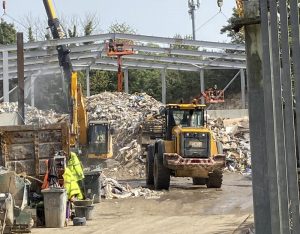
Plans to retrospectively approve changes at a controversial waste and recycling site near Epsom have been refused, following years of complaints from residents about noise, dust and early-morning lorry movements.
Surrey County Council’s planning committee voted to reject the application for land at the Chalk Pit on College Road, where skip hire firm Skip It Epsom Ltd operates, at a meeting on December 17.
Residents speaking at the meeting and objecting to the scheme online slammed the plans. They described how the site had been “destroying their lives” and making it a misery with constant noise, intruding on their home life and impacting nearby schools. Locals complained that site has not been built according to its planning permission.
The application was not for a brand-new site, but to regularise changes that had already been made to buildings and operations at the former waste transfer station, which was granted permission in 2023 to become a materials recycling facility.
However, councillors were told the development had not been built as approved and crucially, a required drainage system was never installed.
The operator wanted permission to change several conditions attached to the original approval, including:
Buildings being built on a different footprint and with altered materials
A new entrance and staircase
Moving noisy waste-sorting machinery into a different building
Changes to HGV parking and electric vehicle charging points
Officers described most of these changes as relatively minor and, on their own, acceptable even though the site sits in the Green Belt.
So why was it rejected? The refusal came down to one major issue: drainage. Councillors heard that the surface water drainage scheme approved in 2023 had never been installed, and that new assessments now showed a much larger soakaway was needed.
But part of the required drainage system would sit outside the application site, meaning it could not legally be approved or enforced through this planning application.
As a result, officers said an essential planning condition could no longer be met or reimposed, leaving the council with no option but to recommend refusal.
Local residents spoke passionately against the application at the meeting, describing years of disruption since operations ramped up in 2020.
Bernie Muir, local councillor for Epsom, told the committee that the site had been “destroying lives for five years”. She said: “People can’t use their gardens, open windows or work from home […] There are serious mental health impacts from the constant noise.”
More than 170 objections were submitted overall. Residents complained of:
Banging, clanging and crashing from skips being dropped
Heavy lorries arriving as early as 5.30am
Dust, light pollution and breaches of operating hours
Noise carrying across the landscape due to the bowl-shaped chalk pit
Fiona, who lives around 350 metres from the site, said she had no problems for years after moving to the area until operations changed. “On some days the noise I experience in my garden is banging, clanging and repetitive crashing,” she said.
She also raised concerns about drainage, saying the site sits near a protected groundwater zone and the chalk geology is highly porous. “This is an unfixable flaw,” said John Beckett, an Epsom and Ewell borough council member.
Residents’ groups also argued that moving noisy machinery and changing the building entrance had directed sound towards homes that were never properly assessed in earlier reports.
Speaking for the applicant, a representative said she was aware of concerns but claimed the developer had not been invited to some of the multi-agency meetings.
Cllr Tim Hall said he was “surprised” by the claim, given the number of meetings held with residents, agencies and council officers over five years.
The applicant’s agent defended the criticism by describing the chalk pit as a “very busy site” and it is difficult to keep all the workers across the procedures to keep the doors closed and noise down. She also said the early starts referred to residents were “alleged breaches on the site” and the noise could be coming from elsewhere nearby.
Some councillors acknowledged residents’ frustrations, while others pointed out the site has long been industrial. Cllr Ernest Mallett MBE said: “At the end of the day, people bought houses next to an industrial site.” But others felt the problems went beyond normal industrial impact.
The refusal does not shut the site down but it does mean the unauthorised changes cannot be approved. To move forward, the operator would need to submit a new full planning application, including a drainage solution that can be properly assessed and enforced.
Surrey will get a mayor despite months of uncertainty and a lack of solid confirmation from the government, the county council leader has insisted. Tim Oliver said he is “confident” a mayor of Surrey would go ahead, even though the central government has yet to formally sign off and has delayed mayoral elections in other parts of the country.
“I can assure you, it will happen,” Cllr Oliver said, speaking to the local democracy reporting service (LDRS), on December 17. Surrey was placed on the government’s first wave of local government reorganisation specifically to unlock devolution and create a mayor. The leader added that ministers were fully aware of the county’s position.
The delay, he suggested, was more about shifting national priorities and new ministers rather than any change of heart over Surrey itself. “It’s slightly frustrating,” he said. “We didn’t get a confirmation date of the mayoral election when we thought we would.”
Since reorganisation was announced last year, there has been a change of secretary of state and a rethink over how quickly devolution should roll out. Mayoral elections have already been pushed back to 2028, something Cllr Oliver believes Surrey is now being caught up in. “They haven’t said no,” he said. “But equally they didn’t say yes at the same time as the announcement, which is what we had expected.”
The county leader said he has already met with the minister responsible and is due to have another meeting in early January, saying discussions with the government were “active”. Despite the uncertainty surrounding a mayor, Cllr Oliver said Surrey’s positioning has remained strong and that the county would likely follow whatever timetable the government agrees with other mayoral areas: potentially bringing elections forward to 2027 rather than waiting until 2028.
While residents may find the process confusing, he said the end goal was clearer leadership and more powers devolved from Westminster. The LDRS reported in October there was “no promise” that Surrey could have a directly-elected mayor as part of the government’s devolution despite this being described locally by councillors as the entire main purpose of reorganisation.
The Ministry of Housing, Communities and Local Government has previously said that the references to Surrey getting a directly elected mayor were “not quite accurate” as the decision “has not been confirmed” and that they were only “committed to working with partners to establish a strategic authority for the area”.
20mph speed limits could soon be introduced across three Surrey neighbourhoods, with residents now invited to give their views.
Surrey County Council is consulting on new slower-speed zones in Barnsbury and Bonsey Lane in Woking, the Goodwyns estate in Dorking, and the Parsonage Road area of Cranleigh. The aim, the council says, is to make streets safer and more pleasant for people travelling on foot, bike and especially children heading to and from school.
Speed surveys carried out by the council show drivers in all three areas are already mostly respecting limits, meaning the new rules could be brought in without speed bumps or chicanes. In Woking, some “light-touch” measures such as vehicle-activated signs or painted roundels could be added on Bonsey Lane as an extra reminder to keep speeds down.
If approved, the schemes would each cost around £20,000 from a budget specifically set aside for 20mph zones. Details on the council’s website highlight that money cannot be spent on potholes or other road maintenance, which is funded separately.
Residents may spot a few extra road signs, though council officers say they will only install what’s needed and will make use of existing posts wherever possible to avoid cluttering pavements.
Currently, there are no plans for police to step up enforcement. Instead Surrey said the new limits must “self-enforce” and remain credible to drivers. Information online stressed that action should not wait for someone to be hurt: slower traffic means fewer crashes, and those that do happen are much less severe.
The consultation website read: “Research suggests 20 mph schemes do not increase air pollution. Slower vehicle speeds support a shift to more walking, scooting and cycling and then fewer polluting vehicles on the roads. 20 mph schemes can also encourage a smoother driving style with less acceleration and deceleration between junctions and pedestrian crossings.
“The amount of fuel a vehicle uses is mainly influenced by the way we drive – driving at a consistent speed is better than stopping and starting. Accelerating up to 30 mph can take twice as much energy as speeding up to 20 mph.
“Some people are concerned that 20 mph may lead to increased journey times. However, most of the delays that occur for motor vehicles in built up areas are at junctions, rather than the roads between junctions.”
Plans and maps for each scheme are now available online, and residents living in or near the affected roads are being encouraged to take part in the consultation and share their feedback.