
Epsom and Ewell Times
15th October 2026

ISSN, LDRS and IMPRESS logos

Tiers not shed for local government in Surrey after all….?

East and West Surrye Councils being capped by new Mayor authority.

Surrey’s shadow authority leaders have insisted that devolution in the county must be “done right” after the government proposed beefed up new planning powers for mayors.

Proposals due to be published in the coming week would see mayors across England granted the authority to override councils on certain planning applications – giving them the same powers already held by the Mayor of London.

These “call in” powers would only apply to developments of more than 150 homes, more than 15,000 square metres of commercial space, or of buildings 30 metres or taller, the BBC has reported.

It comes amid widespread change to local government in Surrey, with two new unitary councils in East and West Surrey set to take over from the county council and 11 district councils next year.

But many figures in local government are calling for additional changes that would see the county get an overarching elected mayor covering the whole of Surrey.

East Surrey Shadow Authority leader Councillor Steve Wotton told the Local Democracy Reporting Service (LDRS) he supports the creation of a mayor and welcomes the prospect of additional powers handed over from Westminster.

He said: “We have a national housing crisis, public transport leaves behind rural communities and is wholly centred around London, and there is great potential in the county’s own local economies. 

“More power out of Westminster and closer to Surrey, with a mayor, can help tackle these issues if done right.”

Prime Minister Andy Burnham, who assumed office last month, has made regionalism one of his core missions in government.

Mr Burnham previously unveiled proposals to give regional mayors a share of income tax revenue as part of a broader devolution drive.

The upcoming planning changes could also see mayors given the power to grant “up front” development permission, although a government spokesperson said councils will still decide most planning applications.

Under current proposals, Surrey could see a foundation strategic authority (FSA) set up from April 2027, which would allow the two new unitary councils to pool resources on certain service areas.

An FSA serves as a stepping stone towards the creation of a mayoral combined authority, which would involve the creation of a directly elected mayor of Surrey.

Councillor Wotton added: “It will be important that a future mayor works very closely with the two new councils in Surrey. 

“We look forward to seeing further detail from government, so that we can help shape what is right for Surrey’s residents and businesses.”

West Surrey Shadow Authority leader Councillor Paul Follows told the LDRS he is “very keen” to see more powers devolved to the county, but that “those powers need to come with the funding to make them meaningful”. 

He added: “Local government at every level cannot absorb more un-funded mandates. 

“Mayors make sense in some parts of the UK but not all, and I hope that the government will be open to working with local government to develop the most appropriate plans for each area rather than a one-size-fits-all option.”

James Moules Local Democracy Reporter

Related reports

The young have their place in new Surrey governing

Councillor Bradley Nelson (Credit: East Surrey Liberal Democrats)

Surrey’s youngest councillors want to see more young people get involved in local government – and not let growing hostility towards elected representatives deter them from standing.

Elections to Surrey’s two new unitary authorities in May saw several councillors under the age of 30 elected to the shadow council.

These new councils will formally assume all local government responsibilities from next April, at which point Surrey County Council and all 11 district councils will be abolished.

However, many younger councillors across the country face heightened online threats and abuse due to their age – with a 2024 Local Government Association (LGA) survey finding that seven in 10 councillors had received abuse or intimidation in the past 12 months.

The LGA’s findings added that younger councillors will often report heightened abuse “suggesting they were too inexperienced” due to their age.

But several of the new shadow councillors told the Local Democracy Reporting Service (LDRS) they are determined not to let this stand in the way of doing their jobs – or deter them from standing for office.

Councillor Harleen Boparai (Liberal Democrats: Staines South and Ashford West) said: “Yes, we are faced with online abuse but young people are more aware than any other generation. 

“We know how to ignore comments from bad faith actors and stay focused on getting things done for our communities.”

In a July meeting of the East Surrey Shadow Authority, councillors of all ages shared examples of the threats and intimidation they had received from residents and voters – which included threats of violence and inappropriate messages.

“This behaviour discourages good people from standing for public office,” Councillor Kirsty Hewens (Liberal Democrats: Walton South & Oatlands) told councillors at the meeting.

Despite the online abuse and intimidation faced by younger councillors, many of those elected have said they want to use their office to address the issues facing young people in Surrey.

Councillor Bradley Nelson (Liberal Democrats: Dorking) said “As councillors in our twenties, we also know how difficult it is to afford a home, get around without a car or find thriving town centres that offer opportunities for younger people. 

“Rather than complain about those challenges, we’ve chosen to try do something about it.”

He pointed to the startlingly high cost of housing in Surrey, which is among the highest in the country outside of London, as a key issue affecting younger people in the county. 

He added that balancing his council duties alongside his early career helps bring a useful perspective to the council.

Councillor Josh Lambert (Liberal Democrats: Walton North) added: “Being a councillor shouldn’t be restricted to those with surplus time or money. It’s vital that young working people are represented in local government.

James Moules Local Democracy Reporter


Patient injuries quadruple in Surrey’s largest mental health trust area

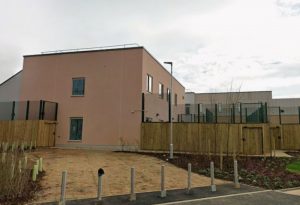
Sabp Silverwood (Credit: Google Maps)

This article has been amended to include statistics relating to the total number of patient restraint incidents across the trust in the relevant timeframes, and to clarify this number is what the trust’s quote (par 7) refers to.

The number of patient injuries at Surrey’s largest mental health trust have risen since the opening of its new inpatient facility last year.

Data obtained through a freedom of information (FOI) request to Surrey and Borders Partnership NHS Foundation Trust (SABP) found that the number of patient injuries across the county had more than quadrupled in the space of two years.

In the 2023/24 financial year, 92 service user injuries were reported across the trust, which shot up to 365 incidents in 2024/25 and 431 in 2025/26 – meaning more than one incident per day on average was reported in the most recent complete financial year.

A total of 141 incidents had been reported in the ongoing 2026/27 financial year at the time of the FOI response. 

In addition, the number of incidents in which patients were restrained also leapt to a five year high in the 2025/26 year. A total 1,287 incidents were recorded, up from 826 the previous year.

An SABP spokesperson stressed that not all patient injuries reported were related to restraint incidents. “The use of restrictive practice is a very complex area and reducing restrictive practices is a trust priority,” they said.

The spokesperson told the Local Democracy Reporting Service (LDRS) that the sharp rise in reported restraint incidents was “due to the opening of Silverwood’s inpatient services last year”.

Silverwood, located in Chertsey, began admitting patients in February 2025 and was designed to help Surrey and Borders Partnership NHS Foundation Trust’s work to care for acutely mentally ill people.

The facility boasts 64 ensuite bedrooms across four wards, and was established to replace the old Abraham Cowley Unit (ACU).

However, the trust’s FOI response did not declare the number of staff injuries in this same time period, as it would have exceeded the cost limit on requests as each record would have to be reviewed manually.

The FOI response also revealed major changes in the trust’s use of restraint against acutely ill patients, with the reported number of “prone” restraints – where a patient is forced face down on the ground – dropping to zero in compliance with recent laws.

The Mental Health Units (Use of Force) Act 2018 was brought in to improve transparency in the use of such force in restraining patients, and contains guidance against the use of prone restraints.

Better known as Seni’s Law, it was implemented following the death of Olaseni “Seni” Lewis, who died in 2010 after being restrained at Bethlem Royal Hospital in Bromley.

While 20 prone restraint incidents were reported at the trust in the 2021/22 financial year, that number dropped into single figures for the following few years before reaching zero in 2025/26.

At the same time, the reported use of chemical restraints has risen substantially, with this jumping from 11 in 2022/23 to 830 in 2025/26 – and a further 333 in 2026/27 so far.

The SABP spokesperson added: “We record all cases when restrictive interventions are used in line with Seni’s Law, officially the Mental Health Units (Use of Force) Act –  which was fully introduced in 2022.  

“It is also important to note that the number of recorded injuries may be caused by many reasons, the majority of which are not related to restraints.”

James Moules Local Democracy Reporter

.

Sabp Silverwood (Credit: Google Maps)


Reigate and Banstead goes a bit greener

Nick With Partner And Green Councillors (Credit: Joel Gabriel)

The Green Party has won a crucial by-election in Reigate and Banstead that could impact the balance of power on the council.

Nick Abear, who also serves on East Surrey Shadow Council, won the ward of Hooley, Merstham and Netherne following yesterday’s election.

This by-election was called following the death of Councillor Mus Tary, who sadly passed away in June.

Councillor Abear told the Local Democracy Reporting Service (LDRS): “I’m absolutely thrilled and delighted to have been elected in the Merstham, Hooley and Netherne by-election. 

“Thank you to everyone who put their trust in me, and to the many volunteers who gave up their time to help us. 

“I look forward to building on the excellent work that Shasha Khan and Joel Gabriel have been doing in the ward, and to working hard for all our residents over the coming months.” 

The result represents a Green gain from the Conservative Party at a time when the Tories have held a slender balance of power in Reigate and Banstead. 

The Greens will now have a total of 15 seats on the council against the Conservatives 16, while the Green and Redhill Independent group combined matches the Tories’ total.

In 2022, the full council election saw the Conservatives lose five seats, with the council remaining under no overall control.

However, this council will cease to exist in April, when the current district councils are abolished along with Surrey County Council to make way for the new West and East Surrey Councils.

Fellow Green ward councillor Shasha Khan told the LDRS: “I’m thrilled for Nick to be joining Joel and me to serve everyone in our ward. 

“In 2023, I got 37.4 per cent. In 2024 Joel got 38.4 per cent, and in 2026 Nick has won with 41.8 per cent. 

“This shows that where Greens get elected, they work hard for the community, resulting in voters wanting more.”

The full results are as follows:

  • Nick Abear (Green Party) 42%
  • Johnny Wolf (Reform UK) 24%
  • Jon Mears (Conservative) 20%
  • Tina Siobhan Cohen (Liberal Democrats) 7%
  • Catherine Mary Drapans (Labour) 6%

James Moules Local Democracy Reporter

Nick With Partner And Green Councillors (Credit: Joel Gabriel)


Water shortage risk drives Surrey farm plan for irrigation pond

Wheat stock image (Credit: Pixabay)

An east Surrey farm is seeking permission to build a new irrigation pond, as climate change has made water supply a “major operational risk”.

Reid Manor Farm Limited has put forward a prior notification application to Tandridge District Council for excavation works to install the pond in a field to the west of Lingfield.

The applicant noted that “mixed farming activities” are currently undertaken in the area, with hay production being the largest operation.

“There are a number of other farming activities the business is currently exploring and in the process of setting up to support the farming business,” the planning documents say.

Blackberry harvesting and jam making are expected to be included among these activities, the applicant states.

But they added that the proposals for a new irrigation pond represent a “critical business asset” in the cultivation of aquatic plants.

“While south east England is historically the driest part of the UK, climate change has worsened summer droughts and unpredictable rainfall patterns, making reliable water access a major operational risk,” the documents say.

They add: “A farm irrigation pond allows a farm to capture and store abundant winter rainfall, securing an independent, year-round water supply that protects the crop from summer water restrictions and heat stress.”

The applicant also pointed to a government statement published in its ‘Farming Roadmap 2050’, which states: “The scientific consensus is clear that the UK should expect wilder, stormier weather with significantly increased flooding as well as summer droughts. 

“With 70 per cent of our land currently used for agricultural purposes, it will become increasingly important to hold more water on farmlands to help reduce the impact of flooding downriver and support farmers during drought periods.”

Access to the farm via Brickhouse Lane would not be changed as a result of this development, the documents claim.

They add: “The site currently has no mains water connection, and no water bore holes exist on site meaning the only current water source option is harvesting rainwater.”

James Moules Local Democracy Reporter

Image: Wheat stock image (Credit: Pixabay)


Staines Ali G fans hope for Massiv support for statue

Ali G Indahouse (Universal Pictures)

A petition has been launched calling for a statue celebrating Ali G to be installed in Staines – tying in with the release of his new film.

The petitioners want Spelthorne Borough Council to explore a “temporary” Ali G attraction in the town linked to the upcoming release of ‘Ali G: Who Iz I?’, while also looking at options to fund a permanent landmark.

Nearly 15 years have now passed since Staines voted to change its name to Staines-upon-Thames – partially in response to negative associations with the character.

But the new petition wants the town to “embrace the attention with humour and pride” – and even asks the council to reach out to actor Sacha Baron Cohen himself to get involved.

It reads: “Ali G and the Staines Massiv have given Staines a distinctive place in British popular culture. 

“The release of a new film provides an opportunity to celebrate that connection, promote the town centre and create a lasting community benefit.”

While the petitioners want the council to invest in a permanent statue or landmark to celebrate Ali G, it adds that this should only happen “if external funding is secured for its design, installation and maintenance”.

The petitioners explicitly state they do not want a statue to be bought and upkept using council tax receipts, and want the project to “include a secure donation facility supporting affordable sport, arts, leisure and community activities for children and young people in Staines”.

They add: “We believe Staines should embrace the attention with humour and pride, while using it to support the next generation of the Staines Massiv.”

Just ten people have signed the petition at time of writing, which will run on Spelthorne Borough Council’s website until August 24.

Played by Sacha Baron Cohen, Ali G rocketed to global notoriety following the release of ‘Ali G Indahouse’ in 2002.

While the film was broadly well received with critics and audiences, many people felt the spoof character left viewers with an undeservedly bad impression of Staines.

Staines’ name was officially changed to Staines-upon-Thames in 2012, in a move that was widely seen as being a reaction to Ali G’s depiction of the town.

However, then Spelthorne Borough Councillor Colin Davis told the BBC at the time: “Ali G may have had a role, but I think it goes back further than that.

“I regard Ali G as someone who put Staines on the map, we’re just telling people where it is.”

The character’s new film ‘Ali G: Who Iz I?’ is due to be released on October 23, 2026.

Chris Caulfield Local Democracy Reporter

.

Photo: Ali G Indahouse (Universal Pictures)


Debate not hate says East Surrey shadow authority

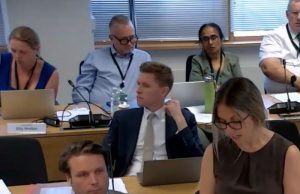
Councillors debate the motion (Credit: East Surrey Shadow Authority)

East Surrey councillors shared their experience of facing intimidation and harassment from voters as they debated a motion calling for civility in political discourse.

At a meeting of the full shadow authority, several members recalled facing extreme vitriol from members of the public and implored councillors and voters to engage respectfully.

It came as councillors debated a motion supporting the Local Government Association’s (LGA) ‘Debate Not Hate’ campaign, which aims to tackle growing abuse against local politicians.

Introducing the motion, Councillor Kirsty Hewens (Liberal Democrats: Walton South & Oatlands) said: “This motion is not about stifling or sanitising debate. We all know there is a fundamental difference between robust political disagreement and personal abuse.

“What matters is how we conduct those debates.”

She added: “As councillors, we expect to be challenged. And we should be. Residents have every right to question our decisions, disagree with us and hold us to account.”

However, she said there is a line between this and growing volumes of abuse directed towards councillors and officers from the public.

“This behaviour discourages good people from standing for public office,” Councillor Hewens said.

Other shadow authority councillors shared their own first hand accounts of receiving intimidation and harassment from voters.

Councillor Shelly Newton (Conservative: Tadworth, Walton & Kingswood) told councillors the authority’s Conservative group would support the motion, saying: “Politics is about ideas. We should challenge each other’s policies, question decisions, and hold one another to account.

“That’s what our residents expect us to do. That’s why they elected us. But there is a clear line between challenging someone’s views and attacking the person behind them.”

She added that in her two years as a councillor, she had received inappropriate messages and experienced harassment that resulted in police involvement.

“While canvassing I was grabbed, pulled into a resident’s home, and had my way blocked out by the resident who then shouted at me about national politics,” she added.

An LGA survey found that seven in 10 councillors across the country have reported experiencing abuse or intimidation in the past year.

The East Surrey motion threw the shadow council’s support behind the LGA’s campaign and called for the authority to commit to “fostering a culture where political debate is encouraged, but personal abuse, intimidation, discrimination and harassment are never tolerated”.

Councillor Andrew Matthews (Liberal Democrats: Bookham & Fetcham West) added: “As I’m sure many of us have experienced, we’ve had threats of violence. I’ve been threatened with being punched in the face. I’ve had people stalk me. I’m not alone.”

Seconding the motion, Councillor Elly Heaton (Green Party: Redhill West & Meadvale) thanked the councillors for sharing their stories, calling them a “disappointingly relatable experience”.

The LGA’s campaign also noted that more than half of councillors have reported being victims of misinformation.

The organisation’s website says: “The increasing level of abuse and intimidation aimed at local politicians is preventing elected members from representing the communities they serve, deterring individuals from standing for election and undermining local democracy.”

James Moules Local Democracy Reporter

.

Image: Councillors debate the motion (Credit: East Surrey Shadow Authority)


Burnham ‘commitment’ to Surrey devolution

Councillor Steve Wotton

East Surrey’s shadow council leader has welcomed Andy Burnham’s “strong commitment” to devolution as Surrey continues to take steps that could see the county get its own elected mayor.

Speaking at a meeting of the full shadow council, Councillor Steve Wotton (Liberal Democrats: Horley West, Salfords & Sidlow) congratulated the new Prime Minister and wished him “every success”.

“I plan to write to him in due course to set out our plans for East Surrey Council, and update him on the progress we’re making,” he added.

Councillor Wotton told councillors the government has confirmed its intention to bring forward a Foundation Strategic Authority (FSA) for Surrey from April 2027 – pending local consultations and ministerial approval.

This would mean that the new West Surrey and East Surrey councils could pool resources and work together on certain key strategic issues, such as transport and economic development.

“We continue to see a strong commitment from government for the devolution agenda,” Councillor Wotton said.

“Following the recent appointment of Andy Burnham as prime minister, the government has reiterated its ambition to transfer more power and responsibilities and funding away from Whitehall and into local areas.”

An FSA would also serve as a stepping stone towards the potential creation of a mayoral authority – which would create a directly elected mayor for all of Surrey.

Councillor Wotton said an FSA would give Surrey a “clear route” into that next phase of devolution, adding that failure to embrace it would “risk leaving Surrey outside the main direction of travel”.

East Surrey and West Surrey shadow authorities are currently tasked with setting up their respective councils ahead of assuming full responsibility of local government services in April 2027.

At that point, Surrey County Council and the county’s 11 district councils will all be abolished. Elections to the shadow authorities took place in May 2026.

Councillor David Lewis (Conservative: Cobham & Oxshott South) welcomed the move towards an FSA and said the shadow authority’s Conservative group supports its foundation.

“We believe that the additional devolved powers and funding that would come with a mayoral strategic authority would be beneficial for the residents of Surrey,” he said.

“Directly elected mayors have brought an additional focus to their areas, which has resulted in higher levels of economic growth.”

Councillor Jonathan Essex (Green Party: Redhill East & North Earlswood) said the authority’s Green group supported the FSA creation “in principle”, but questioned why mayoral devolution had not been fast-tracked to Surrey.

“We were told by Surrey County Council in very early 2025 we would be fast-tracked to be new unitaries in Surrey on the basis this would enable a mayoral authority to be created,” he said.

Addressing these concerns, Councillor Wotton said he is “more confident now” of the government’s commitment to Surrey’s devolution under Andy Burnham’s premiership.

“But fundamentally this is about moving us forward on a journey towards devolution”, he added. “It does not guarantee a mayor, but it the first step necessary to achieve a mayor.”

James Moules Local Democracy Reporter

.

Image: Councillor Steve Wotton


East Surrey appointing its Chief Executive

Adam Chalmers (Credit: East Surrey Shadow Authority)

The new East Surrey council is poised to confirm its first permanent chief executive in the latest step towards the authority’s creation next spring.

East Surrey Shadow Authority, the body overseeing the new council’s setup, has selected  Interim Head of Paid Service Adam Chalmers as its preferred candidate for the role.

Mr Chalmers currently serves as Elmbridge Borough Council’s chief executive, the council’s most senior salaried officer. He is also recommended for appointment as Returning Officer for East Surrey Council. 

He comes with more than 20 years of experience in local government, having previously held senior roles at Horsham District Council and Tunbridge Wells Borough Council.

East Surrey Shadow Authority leader Steve Wotton said: “I am pleased to announce that Adam Chalmers is being recommended as our preferred candidate for chief executive of East Surrey Council, subject to formal agreement by full council.

“He combines a strong track record of delivering results with a genuine commitment to public service, and I believe he is the right person to lead East Surrey Council as we prepare for this exciting new chapter and beyond.”

Councillor David Lewis, Conservative group leader on the Shadow Authority, said: “The creation of East Surrey Council is one of the most significant changes to local government in a generation, and it is important that we have experienced leadership in place. 

“Adam brings a wealth of knowledge and a strong understanding of local government, and I am pleased to support his appointment as we work together to deliver the best outcomes for residents and communities.”  

Mr Chalmers’ appointment will be subject to approval by East Surrey’s full council at a meeting on July 29. 

East Surrey Shadow Authority is tasked with forming the new East Surrey Council before it takes over management of the area’s local government services in April 2027.

Surrey County Council and the county’s 11 district councils will all be abolished at that point, with services transferred to the new West and East Surrey councils.

East Surrey Council will cover the areas that currently fall under Elmbridge, Epsom & Ewell, Mole Valley, Reigate & Banstead, and Tandridge district councils.

James Moules Local Democracy Reporter

Adam Chalmers (Credit: East Surrey Shadow Authority)

.

.

.


Epsom Council delivers shock rejection to defibrillator kiosk

Defibrillator Hub (Credit: JCDecaux)

Plans to install a communications kiosk including an advertising screen and defibrillator on Epsom High Street have been refused over concerns it would harm the character of the area.

The proposals would have seen the 2.63 metre tall structure placed on the high street pavement, for which the applicant was seeking both planning permission and advertising consent.

As well as holding a publicly available defibrillator in case of emergencies, the unit also would have offered free calls to landlines, free Wi-Fi and interactive wayfinding.

One side of the unit would have featured an LED advertising display, which planning documents describe as “equivalent to the size of display found on bus shelters”.

But the design was met with pushback from a number of residents, with several complaining about its potential impact on the high street conservation area.

One “frequent visitor” to the town wrote an objection to the advertising consent, calling it “ugly, obstructive and unnecessary advertisement hoarding with several cursory additions”.

In their refusal, Epsom and Ewell Borough Council planning officers wrote that kiosk “would create additional street clutter” and “would be excessive and out of character within the street scene”.

They also noted in their report that the council has received 14 similar applications in the past 18 months.

“If each proposal were to be granted approval, the council would have an excess of public payphones and defibrillators, notwithstanding facilities already in existence in the surrounding area,” officers wrote.

“These applications have been submitted over time by different companies, some of which are in very similar locations, which if all were to be granted would result in several similar structures being built within proximity of each other; resulting in over dominance and harm to the street character and visual amenity.” 

They added: “As a result of its unsatisfactory siting, design, scale and appearance, the proposed communication hub structure would create significant clutter on the street causing unacceptable visual harm to the wider character of the area.”

“The Planning Inspectorate has dismissed appeals at Epsom Gateway and Capital Square, agreeing with the council that the harm from the advertising screens outweighs the public benefits of including a defibrillator.

 “The health and wellbeing of residents is central to the council’s work.”

Defibrillators are currently placed at the following sites across Epsom & Ewell:

  • Market Place, Epsom.
  • Ebbisham Centre, Epsom Square, Epsom.
  • Town Hall (rear entrance).
  • Harold Bell Solicitors, 174 Kingston Road, Ewell.
  • St John’s Parish Centre, Station Approach, Stoneleigh.
  • Auriol Park Café, Salisbury Road, Worcester Park.
  • The Parade Dental Practice, 177 Kingston Road, Ewell.
  • Ruxley Chemist, Ruxley Lane, Ewell Court.
  • Horton Pharmacy, Pelman Way, Epsom.
  • Horton Country Park, Horton Lane, Epsom.
  • Londis Convenience Store, Hollymoor Lane, Epsom.
  • NISA Convenience Store, Ruxley Lane.

James Moules Local Democracy Reporter

Image: Epsom High Street site of intended Defibrillator Hub (Credit: JCDecaux)


NHS in Surrey prescribe AI solutions to diagnoses

Cartoon tells computer "About three times a night" computer states "Advise a prostate check"

Surrey NHS trusts are investing tens of thousands of pounds into artificial intelligence tools across clinical and administrative settings, the Local Democracy Reporting Service (LDRS) can reveal.

AI is being deployed across some of Surrey’s largest health trusts amid a worldwide scramble to harness the burgeoning new tech.

Freedom of Information responses to the LDRS have shown that AI-backed diagnostic tools, transcription softwares and phone systems are in use at hospitals across the county.

Chief Clinical Information Officer Dr Andrew Carne from Royal Surrey and Ashford and St Peter’s Hospitals NHS Foundation Trusts – which are among the trusts rolling out AI – told the LDRS: “We are proud to be at the forefront of implementing AI to benefit our patients, supporting our clinicians in the diagnosis of serious medical conditions such as cancer.”

Among the tools used at Royal Surrey County Hospital is Annalise AI, a diagnostic software designed to help with analysis of chest X-rays. The trust is spending £21,120 per year on this technology, which has passed a “robust” evaluation process. 

The trust has credited this tool with helping speed up lung cancer diagnoses, giving clinicians the chance to catch more cases as early as possible. It is used across several trusts that are part of the Surrey, Sussex and Frimley Imaging Network.

“These tools are designed to enhance, not replace, the expertise of our clinicians and are rigorously tested before being introduced into clinical practice,” Dr Carne explained.

“The use of AI in any of our processes is subject to robust internal governance and oversight and is implemented in accordance with NHS England guidance and processes.”

An evaluation at Royal Surrey is also ongoing for the use of OlySense, an AI tool engineered to help with gastrointestinal examinations. The trust has so far spent £93,432.96 for two OlySense.

Supplied by healthcare tech company Olympus Medical, it is intended to assist with polyp detection during colonoscopies. 

But the use of AI in healthcare goes beyond clinical settings, with trusts across Surrey also using the technology for administrative purposes.

Surrey and Borders Partnership NHS Foundation Trust – the county’s main mental health provider – spends an estimated £65,000 per year on Limbic AI Chat Bot, which is designed to assist with the patient referral process. 

A spokesperson for the trust said: “Like other NHS organisations, we are exploring the use of AI as part of the NHS’s ’digital first’ policy. We are not using any patient-facing AI at the moment, but we expect to in the coming months. 

“Before deploying any new AI or other technology, we will have strong governance in place and be aligned with all national guidelines.”

Several trusts also use less medically-specific AI tools, such as Microsoft CoPilot – which was found to be used in all trusts that responded to the LDRS’ FOI requests.

Surrey and Sussex Healthcare NHS Trust said it is using CoPilot for “clinical uses including meeting summarisation, document preparation” in its FOI response – with a pilot beginning in September 2025 and evaluation still ongoing.

Dr Deblina Bhattacharjee of the University of Bath’s computer science department told the LDRS that the use of AI in healthcare comes with a balance of pros and cons, with the easing of administrative tasks being the “obvious one”.

Assistance in diagnostics, such as the software used across the Surrey, Sussex and Frimley Imaging Network, is also another crucial area where AI use “has its positives”, Dr Bhattacharjee added.

However, she said that “the risks come from pace outrunning governance”, adding: “Clinical AI should remain a support for human decision making, with clear accountability in place before deployment rather than after.”

Surrey NHS Trusts approached by the LDRS insisted that stringent evaluation criteria are in place before any AI technology is rolled out.

“From my own experience, the projects that succeed are the ones where clinicians, patients and information governance teams are involved together,” Dr Bhattacharjee said.

James Moules Local Democracy Reporter


Surrey’s prettiest railway station litter blight

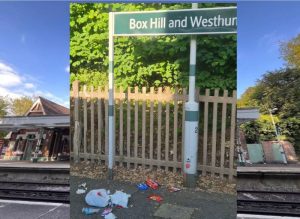
Boxhill and Westhumble railway station and litter insert on platform

A Surrey train station that was once voted the county’s prettiest station by Surrey Live readers is now stewing in litter after the rail operator took away all the bins on its platforms.

Box Hill & Westhumble station, serving a popular spot for visitors looking to enjoy picturesque country walks, had its bins removed by Southern rail to bring it into compliance with new recycling regulations.

A Southern rail spokesperson told the Local Democracy Reporting Service (LDRS) this is because the small station does not have “secure space for the large wheelie bins we would need to store rubbish from the bins ready for collection”.

They are encouraging passengers to use bins on board their trains or taking their litter home to dispose of appropriately – while increasing the number of staff picking up rubbish from platforms.

But residents are furious at the changes, with several writing to MP Chris Coghlan to voice their anger at the growing mountains of rubbish accruing on their local station’s platforms.

Pictures shared with the LDRS show piles of litter building up on the platforms, including plastic wrappers, coffee cups and beer bottles. These photos were taken on July 5, 2026.

Westhumble resident David Farmery told the LDRS he thinks Southern Rail is “abrogating its responsibility” to ensure the station is clean and tidy.

“They seem to think that Boxhill and Westhumble is a small station but we receive an incredible amount of visitors over the weekend.

“So I really do wonder if they did a proper assessment of our situation rather than imposing a company wide no bins policy to their unstaffed stations,” he said.

In a post on Facebook, Chris Coughlan said he had jointly raised concerns to Southern rail along with residents, imploring the rail operator to fix the problem.

While he said Southern had subsequently deployed more staff to carry out cleaning at the station, he added: “I’m glad they’ve listened, but I will be asking them to provide a more permanent solution.”

Box Hill & Westhumble station was last year voted the prettiest railway station in Surrey by our readers, narrowly beating out Godalming for the top spot. 

A Southern spokesperson said: “We take concerns about litter at Box Hill & Westhumble station seriously and have increased the frequency of staff attending the station to carry out cleaning. The changes were introduced to comply with new Simpler Recycling regulations. 

“We are keeping the change under review, as well as listening to feedback from our communities.”  

The LDRS understands that the rail operator recently installed segregated bins at its staffed stations to bring them in line with up to date regulations and encourage recycling, while a trial of removing bins from unstaffed stations on the Wimbledon loop did not see an increase in littering.

James Moules Local Democracy Reporter

.

Image: Google map capture Boxhill and Westhumble station and insert of platform litter  (Credit: David Farmery)