Epsom and Ewell Times
22nd October 2026

ISSN, LDRS and IMPRESS logos

Start-up loans heat up as sauna entrepreneur takes ambassador role

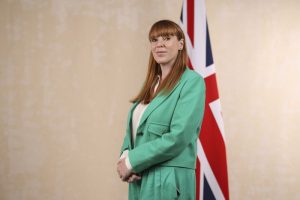
Amelia Sweeney, founder of Ojas Sauna

A Government-backed loan scheme which has already helped more than 100 businesses in Epsom and Ewell has chosen a sauna entrepreneur as its new ambassador for the South East.

Amelia Sweeney, founder of Ojas Sauna, has been named the 2026/27 South East Ambassador for the British Business Bank’s Start Up Loans programme.

Sweeney left an 11-year career in construction project management after turning what began as a weekend interest in saunas and cold-water swimming into a growing business.

She launched Ojas Sauna in 2024 after obtaining a £13,000 Start Up Loan, supplemented by her own savings. She initially continued working full-time while establishing the business before leaving her previous career as demand increased.

A second Start Up Loan, together with profits reinvested from the business, subsequently helped finance another venue. The company now offers communal and private sauna and cold-plunge sessions as well as a portable operation used for home hire, retreats and festivals. It employs eight flexible sauna hosts, while its established Buckinghamshire site can accommodate up to 50 customers a day at weekends.

The ambassador scheme is intended to put successful recipients of Start Up Loans in front of prospective entrepreneurs so they can pass on some of what they learned while establishing their businesses.

Sweeney said perseverance had been particularly important. Before securing a site she approached around 450 possible venues looking for somewhere from which to operate.

Her advice to would-be entrepreneurs was essentially not to be discouraged by rejection: eventually, she said, “one person will say yes”.

£20 million lent in Surrey

The announcement has a more local relevance than the sauna business itself.

Figures published by Start Up Loans in July showed that more than £20 million had been lent to Surrey entrepreneurs since the programme began in 2012, through more than 1,500 loans.

Epsom and Ewell borough accounted for 116 loans, equivalent to 126 loans for every 100,000 residents. Elmbridge topped the Surrey table with 241 loans.

Separate British Business Bank figures, calculated by parliamentary constituency rather than borough boundaries, record 145 Start Up Loans worth £1,702,161 in the Epsom and Ewell constituency up to June 2026.

Across the South East as a whole, more than £150 million had already been lent to almost 14,000 entrepreneurs by March this year. Surrey was then among the three counties with the largest numbers of recipients, alongside Kent and Hampshire.

The latest ambassador announcement says the regional total has since passed £170 million.

Nationally the Start Up Loans programme has provided more than £1.4 billion in finance since its creation in 2012, according to the latest figures supplied with the announcement.

What is a Start Up Loan?

Despite its name, the scheme does not simply distribute Government grants.

It provides personal loans for business purposes, together with business-planning assistance and mentoring. First and second loans can be worth up to £25,000, and eligibility for a first loan has been extended to businesses which have already been trading for up to five years.

The programme is operated by the Start-Up Loans Company, a subsidiary of the Government-owned British Business Bank.

The Bank says repayments and interest received through the programme are recycled to help finance further businesses.

Sweeney is one of 14 entrepreneurs selected as ambassadors for 2026. They are expected to spend the coming year sharing their experiences with people considering starting or developing their own businesses.

Lionel Blackman

.

Related Reports

Photo: Amelia Sweeney, founder of Ojas Sauna


Surrey seeks more families to open their homes to children in care

Foster parents welcoming a new charge. Idealised.

Surrey residents are being urged not to rule themselves out as potential foster carers as the county seeks more local homes for children and young people who cannot live with their birth families.

Surrey Fostering Service says misconceptions about age, employment, income, home ownership and family circumstances can deter people who might otherwise make excellent foster carers.

The appeal comes as the Government launches a national drive intended to create 10,000 additional foster care places in England by the end of this Parliament. The campaign, launched at Downing Street on 13 October, is particularly seeking to reach adults in their 30s and 40s who may have the capacity to foster but have never seriously considered doing so.

Surrey County Council approached the Epsom and Ewell Times saying there was a “growing need for foster carers across Surrey”. It said many people who believe they might make good carers nevertheless eliminate themselves because of mistaken assumptions about who is eligible.

The council says fostering families can come from many different backgrounds and that what children most need is “stability, encouragement and care”.

Fewer fostering households

The need is borne out by Surrey’s own figures.

The number of fostering households in the county stood at 393 in March 2020. By March 2024 it had fallen to 331, before recovering only slightly to 335 in March 2025. The corresponding number of fostering places fell from 656 in 2020 to 574 in 2025.

Surrey’s 2025-28 sufficiency strategy acknowledges that the council has experienced a loss of its own foster carers, reflecting a national problem. In March 2024, 644 Surrey children in care – 66 per cent – were living in general or kinship fostering arrangements. But 43 per cent of those in foster care were living with independent fostering agencies rather than Surrey’s own service.

The consequences of a shortage can extend beyond administrative inconvenience.

In January this year Surrey reported that 38 per cent of its 350 looked-after children were living more than 20 miles from their home address and outside the county. The council said it could not always find placements locally which met children’s needs.

Being able to remain near school, friends, relatives and established support networks can be particularly important for children whose lives have already been disrupted.

From respite care to a permanent place in the family

Surrey has sought to put human stories behind those figures.

One of the foster carers highlighted to EET is Ben. He originally offered respite care – providing a child with somewhere to stay for shorter periods – but that relationship eventually developed into a long-term placement.

The young person remained part of Ben’s household into adulthood and has recently passed their driving test. Surrey says Ben’s story demonstrates how fostering can begin with a comparatively modest commitment to help and develop into a lasting relationship. Surrey Needs More Foster Carers Surrey Needs More Foster Carers

The council’s current collection of fostering stories also includes foster carers from markedly different backgrounds and people offering different kinds of care. Its online material ranges from carers looking after teenagers and young refugees to short-break carers, kinship carers and households supporting neurodivergent young people. Linktree

One care-experienced young person, writing under the name “Thomas”, described moving between four placements in six years and the importance of finally feeling that a foster home offered belonging as well as simply somewhere to live.

For Thomas, “home” was not merely a physical address but somewhere a young person felt safe, wanted and cared for. His account also describes the fear that can remain after repeated placement changes – even when a later placement is going well.

Another Surrey foster carer, Fatima, and her husband have spent almost a decade fostering young asylum seekers.

Their foster sons have included young people from Iran, Eritrea, Sudan and Somalia. One stayed with the family for nearly five years before moving into his own accommodation at 21; another is now married and remains in contact with the family.

Fatima describes the experience as enriching their own wider family as well as providing sanctuary for young people who have fled persecution and war.

Surrey’s fostering service has also recently published the experience of a neurodivergent foster carer who describes using unconventional approaches to help young people overcome barriers. In one case, a child disengaged from conventional schooling but interested in carpentry was helped into a combination of school and practical carpentry training, with maths and English incorporated into the work.

You do not have to fit a traditional mould

Government guidance confirms that potential carers do not have to own their home and may be able to continue working.

Applicants must be at least 18, although most fostering services require carers to be at least 21. They must be able to care for a child or young person and normally need a spare bedroom. Applicants undergo assessment and checks before approval.

The Department for Education says the number of approved foster carers in England has fallen by almost 12 per cent over the past decade while the number of children in care has increased.

It is specifically trying to dispel the assumption that foster carers must be married, own their homes or give up employment.

Surrey’s recruitment performance has shown some improvement. During 2025/26 it received hundreds of initial enquiries and reported increased numbers progressing to home visits. Thirty fostering households had already been approved at the point of a council report earlier this year, with further applicants due before fostering panels.

But that recruitment has to compensate not only for additional demand but also for experienced foster carers retiring or leaving the service.

Surrey Fostering Service is therefore asking residents who have wondered whether they could foster to speak to the team rather than assuming that their circumstances exclude them.

As its message to potential carers puts it: “What if you are exactly what a Surrey child needs?” Surrey Needs More Foster Carers

More information about fostering and making an enquiry is available through Surrey County Council’s fostering service. The recruitment team can also be contacted on 01372 832929.

Surrey seeks more families to open their homes to children in care

Surrey residents are being urged not to rule themselves out as potential foster carers as the county seeks more local homes for children and young people who cannot live with their birth families.

Surrey Fostering Service says misconceptions about age, employment, income, home ownership and family circumstances can deter people who might otherwise make excellent foster carers.

The appeal comes as the Government launches a national drive intended to create 10,000 additional foster care places in England by the end of this Parliament. The campaign, launched at Downing Street on 13 October, is particularly seeking to reach adults in their 30s and 40s who may have the capacity to foster but have never seriously considered doing so.

Surrey County Council approached the Epsom and Ewell Times saying there was a “growing need for foster carers across Surrey”. It said many people who believe they might make good carers nevertheless eliminate themselves because of mistaken assumptions about who is eligible. Surrey Needs More Foster Carers

The council says fostering families can come from many different backgrounds and that what children most need is “stability, encouragement and care”. Surrey Needs More Foster Carers

Fewer fostering households

The need is borne out by Surrey’s own figures.

The number of fostering households in the county stood at 393 in March 2020. By March 2024 it had fallen to 331, before recovering only slightly to 335 in March 2025. The corresponding number of fostering places fell from 656 in 2020 to 574 in 2025.

Surrey’s 2025-28 sufficiency strategy acknowledges that the council has experienced a loss of its own foster carers, reflecting a national problem. In March 2024, 644 Surrey children in care – 66 per cent – were living in general or kinship fostering arrangements. But 43 per cent of those in foster care were living with independent fostering agencies rather than Surrey’s own service.

The consequences of a shortage can extend beyond administrative inconvenience.

In January this year Surrey reported that 38 per cent of its 350 looked-after children were living more than 20 miles from their home address and outside the county. The council said it could not always find placements locally which met children’s needs.

Being able to remain near school, friends, relatives and established support networks can be particularly important for children whose lives have already been disrupted.

From respite care to a permanent place in the family

Surrey has sought to put human stories behind those figures.

One of the foster carers highlighted to EET is Ben. He originally offered respite care – providing a child with somewhere to stay for shorter periods – but that relationship eventually developed into a long-term placement.

The young person remained part of Ben’s household into adulthood and has recently passed their driving test. Surrey says Ben’s story demonstrates how fostering can begin with a comparatively modest commitment to help and develop into a lasting relationship.

The council’s current collection of fostering stories also includes foster carers from markedly different backgrounds and people offering different kinds of care. Its online material ranges from carers looking after teenagers and young refugees to short-break carers, kinship carers and households supporting neurodivergent young people.

One care-experienced young person, writing under the name “Thomas”, described moving between four placements in six years and the importance of finally feeling that a foster home offered belonging as well as simply somewhere to live.

For Thomas, “home” was not merely a physical address but somewhere a young person felt safe, wanted and cared for. His account also describes the fear that can remain after repeated placement changes – even when a later placement is going well.

Another Surrey foster carer, Fatima, and her husband have spent almost a decade fostering young asylum seekers.

Their foster sons have included young people from Iran, Eritrea, Sudan and Somalia. One stayed with the family for nearly five years before moving into his own accommodation at 21; another is now married and remains in contact with the family.

Fatima describes the experience as enriching their own wider family as well as providing sanctuary for young people who have fled persecution and war.

Surrey’s fostering service has also recently published the experience of a neurodivergent foster carer who describes using unconventional approaches to help young people overcome barriers. In one case, a child disengaged from conventional schooling but interested in carpentry was helped into a combination of school and practical carpentry training, with maths and English incorporated into the work.

You do not have to fit a traditional mould

Government guidance confirms that potential carers do not have to own their home and may be able to continue working.

Applicants must be at least 18, although most fostering services require carers to be at least 21. They must be able to care for a child or young person and normally need a spare bedroom. Applicants undergo assessment and checks before approval.

The Department for Education says the number of approved foster carers in England has fallen by almost 12 per cent over the past decade while the number of children in care has increased.

It is specifically trying to dispel the assumption that foster carers must be married, own their homes or give up employment.

Surrey’s recruitment performance has shown some improvement. During 2025/26 it received hundreds of initial enquiries and reported increased numbers progressing to home visits. Thirty fostering households had already been approved at the point of a council report earlier this year, with further applicants due before fostering panels.

But that recruitment has to compensate not only for additional demand but also for experienced foster carers retiring or leaving the service.

Surrey Fostering Service is therefore asking residents who have wondered whether they could foster to speak to the team rather than assuming that their circumstances exclude them.

As its message to potential carers puts it: “What if you are exactly what a Surrey child needs?” Surrey Needs More Foster Carers

More information about fostering and making an enquiry is available through Surrey County Council’s fostering service. The recruitment team can also be contacted on 01372 832929.

Lionel Blackman

.

Related reports:


Lots of Lieutenants light upon Epsom’s NESCOT

Delegation of Surrey's Lieutenants at NESCOT

His Majesty’s Lord-Lieutenant of Surrey visited Nescot in Epsom with a large delegation of Deputy Lieutenants and community leaders to hear directly from students about their experiences, concerns and ambitions.

Mrs Neelam Dharni Devesher MBE toured the college yesterday, meeting students across subjects ranging from hair and beauty and bricklaying to robotics, motorsport, performing arts and catering.

The visit also gave students the opportunity to raise issues affecting young people in Surrey, including the cost of living and difficulties travelling around the county by public transport.

A panel discussion entitled “Being a Youth in Surrey” formed a central part of the visit. Students spoke about their experiences and aspirations, with their views intended to help inform the Lord-Lieutenant’s work during her term of office.

One student told the delegation: “It’s really important for young people to have opportunities to speak up like this about the things that affect us.

“Transport is a big issue for me. Getting to college can be expensive and it isn’t always easy to get around Surrey using public transport.

“The cost of living is another concern, because when you’re studying, everyday things like travelling to college and getting a good meal can really add up.”

Mrs Devesher said one of the most rewarding parts of her role was meeting young people and hearing about their lives and ambitions.

She said: “I was hugely impressed by the students at Nescot, whose enthusiasm, talent and aspiration was evident throughout.

“The visit gave us the chance to listen to what matters to young people today and to understand how we can help reflect that in the work we do across Surrey.”

The Lord-Lieutenant and her delegation also toured Nescot’s teaching facilities, including its immersive classroom and Institute of Technology.

Visitors were greeted by “Nes bot”, the college robot, which presented them with their visitor lanyards.

Performing arts students provided entertainment, Nescot’s motorsport team displayed its vehicle and catering students prepared food for the visitors. Public services students also took part in a parade and flag-raising ceremony.

The delegation was hosted by Nescot Principal and CEO Julie Kapsalis MBE and members of the college’s leadership team.

Ms Kapsalis said: “It was an honour to welcome the Lord-Lieutenant and her delegation to Nescot.

“With such a large group, we got to showcase the extraordinary breadth of learning that takes place across our campus, from advanced technology and construction trades to performing arts, hospitality and childcare.

“Most importantly, it gave our students the chance to share their views and experiences directly with civic leaders.”

The Lord-Lieutenant is the King’s personal representative in Surrey. The unpaid and politically neutral role includes supporting community organisations, arranging and attending Royal visits, presenting honours and promoting voluntary, business and military organisations across the county.

Nescot, the North East Surrey College of Technology, offers vocational and technical courses for school leavers and adults from its campus in Ewell.

Courses include motor vehicle studies, animal care, hair and beauty, computing and IT, performing arts, childcare, health and social care and construction.

Further information is available at www.nescot.ac.uk.

Lionel Blackman


Guests accompanying the Lord-Lieutenant included:

Emma O’Donnell, Deputy Clerk to the Surrey Lieutenancy

Jacqui Archer, PA to His Majesty’s Lord-Lieutenant of Surrey

Andrew Canale MVO, Deputy Lieutenant

Dr Beccy Bowden, Chief Executive, Community Foundation for Surrey

Bridget Biddell MBE, Co-Director, Hampton Estate and former High Sheriff of Surrey

Carol Magras, Magistrate

Sir Denis O’Connor CBE QPM, former Chief Constable of Surrey and lecturer at Cambridge University

Giles Verity, Deputy Lieutenant

James Babbington OBE, Deputy Lieutenant

John Machin, Deputy Lieutenant

Jonathan Freeman MBE, CEO, Charity for Civil Servants

Joosje Hamilton, High Sheriff of Surrey

Kristina Murrin, Deputy Lieutenant

Lady Louise O’Connor, Deputy Lieutenant

Mark Carter, Deputy Lieutenant

Mark Tantam, Deputy Lieutenant

Mary Zoeller, Deputy Lieutenant

Dr Michael Kelly JP, Under Sheriff of Surrey

Nick Brooks, Deputy Lieutenant

Shaded Azeem, Deputy Lieutenant

Timothy Wates, Deputy Lieutenant

Peter Lee, Vice-President, Surrey Clubs for Young People

Michael Hayman MBE, Lieutenancy Business Group and Lieutenancy Communications Group

Reverend Clare Marren, Chaplain to the Lord-Lieutenant of Surrey

Dr Vanessa Lawrence CB, Location International


Ewell coach builds free tool to give young footballers a fair go

Davide Domenghini with his app

An Ewell football coach has combined his experience on the touchline with his skills as a web developer to create a free tool designed to make matchdays easier for grassroots managers.

Davide Domenghini, who manages Ayat FC’s under-15s in the Tandridge League, has developed Gafferboard to help coaches select their teams, manage substitutions and keep track of each player’s time on the pitch.

He says the idea grew from the familiar weekend challenge of working out who is available, who is injured, who missed training and who has had the fewest minutes — before typing the team out for the parents’ WhatsApp group, often in the rain.

Gafferboard allows a coach to select available players, choose a formation and manage substitutions during the game. According to its creator, it also records every player’s minutes, helping coaches give younger players a fair share of the action.

“At the younger ages that matters, because the aim is that everyone gets a fair go,” Davide told the Epsom & Ewell Times.

The tool is free, with no advertisements or sign-up required. It currently works through a web browser on a phone, tablet or laptop, with nothing to install. Davide says an installable app will follow.

“I’ve kept it free because the people running these teams are volunteers already giving up their weekends,” he said.

Davide has coached grassroots football for more than seven years. He began when his son was playing for the under-nines at Cheam Sports FC. His son is now in the under-15 age group, and Davide currently coaches in the Mitcham and Croydon area.

A longstanding web developer, he describes Gafferboard as a practical response to needs he has experienced as both a parent and a coach.

“I’m a parent as well as a coach, so I know what a manager needs on matchday, what a parent wants to hear before kick-off, and what the players need on the pitch: clear feedback, a fair go, and a bit of discipline sometimes,” he said.

“I’m a practical person, so I built the thing I wanted on the touchline.”

Ayat Fútbol Club was founded about five years ago by two local coaches and took its name from a local restaurant. It has since grown from one team to seven. Davide stressed that Gafferboard is his own project, rather than a club initiative.

He has also contacted youth leagues across Surrey and Kent to offer the tool to their managers.

While other software focuses on running a club, Davide says his priority is the job facing the volunteer coach during a match.

“Most tools out there are built for running the club. This one is built for the 90 minutes on the touchline.”

Gafferboard can be accessed at https://gafferboard.com.

Lionel Blackman

Davide Domenghini with his app. Credit Gafferboard

.

.

.

.

.

.


Leatherhead boy’s circus dream takes him onto European stage

Olivier flying in circus

A 13-year-old Leatherhead boy who once strapped balloons to himself in an attempt to fly has been selected as the only UK performer at this month’s European Youth Circus in Germany.

Olivier Wehbe will perform his award-winning pirate-themed aerial silks act in Wiesbaden from 22 to 25 October. He is also the youngest artist selected for the festival.

The international audition process attracted 152 applications from 23 European countries, with 25 acts from 11 nations chosen to appear. The festival brings together circus artists aged 12 to 25, performing before an international audience and a professional jury.

For Olivier, who dreams of joining Cirque du Soleil, the invitation marks another step in a journey that began with gymnastics classes at Leatherhead & Dorking Gymnastics Club when he was five.

He later discovered aerial and circus arts at Acrosphere Circus Studio in Brockham, where he trains with Katherine and Igor Karpovich, both former Cirque du Soleil performers.

Under their guidance, he has developed skills in aerial silks, straps and hoop, combining demanding physical routines with characters ranging from a French mime to a sinister clown and a pirate.

Olivier is now homeschooled, allowing him to balance his education with intensive training and performance commitments.

His international achievements include gold on straps and bronze in aerial silks at the Madrid Aerial Art International Competition in 2025. His gold-winning routine featured a French mime character, while his bronze medal came with a creepy clown performance. He was seven years younger than the next youngest competitor in his straps category.

Earlier this year, he won gold, the Overall Best title and the Best Tricks award at the International Pole & Aerial Art Tournament with an aerial hoop act.

He also performed at Zirkusfest in Hückelhoven, Germany, in October 2025, where his silks routine earned him a place in the festival’s final gala. His pirate-themed act has won several UK competitions.

Alongside his regular training, Olivier has attended workshops with a current Cirque du Soleil artist performing in KURIOS, giving him an insight into the professional circus world he hopes to join.

His coaches said: “Olivier has worked incredibly hard to get to this point. His dedication, perseverance and commitment to his art have really paid off.”

They added: “We’ve watched him progress from local competitions, shows and in-house events to national and international stages, and we couldn’t be prouder of him.

“This is such an exciting next step in his journey. He has a bright future ahead of him, and we are all incredibly proud to see him representing the UK on such an important international stage.”

For Olivier, the appeal lies as much in storytelling as in the aerial skills themselves.

“I feel so excited and so proud to be representing the UK. Performing is all I want to do. I train really hard and I’m always thinking of ways to develop and create new ways to express myself and bring characters to life without saying a single word,” he said.

“I feel incredibly lucky to have such amazing coaches who have believed in me and supported me from the very beginning. Their hard work, creative guidance and encouragement have helped me develop not only as a performer, but also as an artist.”

His fascination with flight began long before his first circus lesson.

“When I was three, I strapped balloons to myself because I wanted to fly. I really believed I could, and I was always trying to find a way to make it happen. Now I actually can!

“I get to soar high above audiences and bring my characters to life, and it makes me so happy to be able to share that with people.

“My dream is to work for Cirque du Soleil.”

Lionel Blackman


Pride and Prejudice takes a Wild West turn in Epsom

The photos are by Simon Vail Photographer and were taken at an advertising shoot where the people featured are friends of Best Life Productions and the show's creative team.

Epsom audiences will be the first to see a new immersive adaptation of Jane Austen’s Pride and Prejudice when an Ashtead-based theatre company launches the show at Labyrinth on Saturday 17 October.

Best Life Productions will present a preview of Pride & Prejudice – The Hoedown Edition at 2pm, ahead of a planned tour of venues across Surrey, London and Kent.

The production transports Lizzie Bennet, Mr Darcy and the Bennet family to a 1930s frontier saloon, combining Austen’s romance with line dancing, audience participation and a wedding disco finale.

Rather than watching from rows of seats facing a stage, audiences will find the story unfolding around them. Guests can enjoy a drink, learn some simple line-dancing steps and become part of the action.

Producer Claire Zuurbier said choosing Epsom for the first public performance reflected the company’s local roots.

“As a local company, it felt right that our home audience should be the first to experience this new show. Before we take Pride & Prejudice – The Hoedown Edition further afield, we wanted to share it with the community that has supported our work from the beginning.”

The company hopes the combination of Austen’s characters and country dancing will offer audiences a different kind of theatre experience, with opportunities to meet and interact with fellow guests.

“Most theatre is face-forward,” said Zuurbier. “You sit in your seat, watch the action and go home. We wanted to create something more visceral. Something that surrounds you, includes you and helps people connect with each other.”

She added: “In a world where so much of life happens through screens, we think there is huge value in gathering people together in the same room to laugh, dance and experience something collectively. This show is designed to leave your worries at the door. For a few hours, it’s simply about joy, connection and having unapologetically good fun.”

Charlotte Farrer will play Lizzie Bennet alongside Filippo Brozzo as Mr Darcy. Amaya Clarke takes the roles of Lydia Bennet and Mr Collins, while Ata Dirilgen plays Wickham and Mrs Bennet. Eleanor Bayford appears as Annie Penrose and Joseph Burdge as Fitzwilliam Allen, with both also serving as swings.

Friends, couples, book clubs and family groups are encouraged to attend, and solo visitors are also welcome. The performance ends with a wedding disco, inviting the audience to join the celebrations.

“We aren’t just retelling Pride & Prejudice,” said Zuurbier. “We’re creating an occasion. The aim is for audiences to walk out smiling, having met new people, danced a little, laughed a lot and remembered how much fun live experiences can be.”

Pride & Prejudice – The Hoedown Edition previews at Labyrinth, Epsom, at 2pm on Saturday 17 October 2026.

Tickets and further information are available from Best Life Productions.

Lionel Blackman

.

The photo is by Simon Vail Photographer and were taken at an advertising shoot where the people featured are friends of Best Life Productions and the show’s creative team.

.

.

.

.

.


Epsom’s Nigel Price celebrates a sold-out home-town jazz night

Nige Price Organ Trio at the Epsom Jazz Club 24.09.2026

Epsom guitarist Nigel Price returned to a sold-out Epsom Jazz Club on Thursday (24 September) with his organ trio, just a week after the same line-up sold out Ronnie Scott’s in London.

For Price, who has lived in Epsom for 48 years, the concert at the Comrades Club in The Parade was a home-town celebration as well as the opening night of the club’s autumn season. He was joined by Ross Stanley on Hammond organ and Joel Barford on drums.

Price has built a national reputation through decades of performing, recording and touring. His career has taken him from the acid jazz band the Filthy Six to the James Taylor Quartet, while his appearances at Ronnie Scott’s number more than 600. His organ trio won a Parliamentary Jazz Award for Best Ensemble in 2010 and a British Jazz Award for Best Small Group in 2016.

The musicians alongside him have substantial careers of their own. Stanley is an acclaimed jazz pianist as well as an organist who has played with artists including Jim Mullen and Jacqui Dankworth. Barford began playing drums at six, joined the National Youth Jazz Orchestra as a teenager and has since toured and recorded with Price’s trio.

Their London appearance took place on Thursday 17 September. A review of the sold-out Ronnie Scott’s concert praised the close understanding between the three musicians, built through extensive touring together. Seven days later, Epsom audiences had the chance to hear Price and his trio on their own doorstep.

Epsom Jazz Club’s next concert is on 22 October, featuring vocalist Riketté Genesis. Venue Comrades Club, The Parade in the centre of Epsom

Lionel Blackman

(A director of Epsom and Ewell Times and founder of the Epsom Jazz Club. The Club operates under the charity Epsom Music – 1197449. The charity’s next event is the Ukraine Music Evening 3rd October Epsom Methodist Church.)

Image – L to R – Nige Price, Joel Barford and Ross Stanley. Credit Steven McCormick Photography


Epsom Mental Health Week marks 20 years of local charity

Flyer for week

Epsom Mental Health Week will bring talks, exercise classes, creative activities and opportunities to meet others to venues across the town from Saturday 3 to Sunday 11 October.

The programme celebrates 20 years of Epsom charity Love Me Love My Mind. Working with the White House Wellness and Health Centre and other local organisations, it aims to make conversations about mental health welcoming and accessible to people of different ages and interests.

Events include a free children’s art club, men’s social walks on Epsom Downs, mindful colouring and tea, yoga and fitness classes, and talks on anxiety, burnout and domestic abuse. St Barnabas Church will host peer support sessions, an advice café and a performance by Epsom Male Voice Choir.

On Wednesday 7 October, Epsom Picturehouse will screen Aftersun, followed by a discussion of the film’s themes of grief, memory and mental health. Tickets must be booked through the Picturehouse website.

The week’s main gathering falls on World Mental Health Day, Saturday 10 October. A Wellness Day at Metropolis Epsom, 1 Derby Square, will run from 11am to 4pm, bringing together local support organisations and offering taster sessions. A free children’s art and craft club will run there from 11am to 3pm.

Activities also take place at the White House Wellness and Health Centre in Waterloo Road, the Rainbow Leisure Centre in East Street and St Barnabas Church in Temple Road. The programme says events are free unless a listing states otherwise. Visitors should check individual booking details and contact the organiser about any accessibility requirements.

A further creative session for children aged seven and over is listed for Wednesday 28 October at Epsom and Ewell Family Centre, Riverview Road, West Ewell. Families can ask about that session on 01372 571178 or at epsomewellfamilycentre@barnardos.org.uk.

For the full programme and enquiries about Epsom Mental Health Week, contact Love Me Love My Mind at info@lovemelovemymind.org.uk or visit lovemelovemymind.org.uk.

Lionel Blackman

.

Related reports


The shake up of Epsom and Ewell’s local government: was it all a waste of time as Rayner puts pause on LGR elsewhere?

Angela Rayner Official Cabinet Portrait, July 2024

Surrey’s political leaders insist the replacement of the county’s 12 councils by two large unitary authorities remains on schedule. But a government review of local government reorganisation elsewhere in England has reopened questions about whether Surrey was right to proceed so quickly with its own costly transformation.

A major retreat by the Government over the restructuring of English local government has inevitably reopened the argument over whether Surrey was right to rush ahead with its own reorganisation.

Housing, Communities and Local Government Secretary Angela Rayner has announced a national review following what her department described as “updated and privileged legal advice”.

Decisions affecting Essex, Hampshire, Norfolk and Suffolk have been withdrawn. Plans for a further 14 areas have been paused, along with reorganisation proposals for Cambridgeshire and Peterborough and West Sussex which had not yet been settled.

Existing councils in those areas will now hold elections in May 2027 on their current boundaries.

The change is highly significant. Only months ago ministers were presenting the abolition of county and district councils across England as an essential part of creating simpler and more economical local government.

Ms Rayner said she wanted to be satisfied that the correct process was in place, that it complied with the law and that the proposals remained consistent with the priorities of a new Prime Minister and administration.

The precise legal advice has not been disclosed because the Government says it is privileged. It follows a succession of threatened or commenced judicial reviews challenging ministers’ selection of boundaries for the new councils.

In Essex, the county council began legal proceedings after former Communities Secretary Steve Reed selected a five-unitary arrangement rather than an option for fewer and larger authorities which was reportedly preferred by departmental officials. Challenges were also launched or contemplated in Hampshire, Norfolk, Suffolk, Portsmouth and Kent.

The Government’s wider retreat has been described by the Local Government Information Unit as threatening to turn the programme into a “colossal white elephant”, consuming thousands of hours of council officers’ and councillors’ time.

Surrey says it remains on course

Surrey’s councils responded quickly to the national announcement by reaffirming their commitment to creating East Surrey Council and West Surrey Council on 1 April 2027.

In a joint release issued through Surrey County Council, they said the Ministry of Housing, Communities and Local Government had confirmed that Surrey would not be affected by the review.

The councils said significant work had already been undertaken to develop the proposals, consult partners and communities and prepare for the transfer of services. They maintained that the new structure would simplify local government, strengthen accountability and improve services.

Councillor Steve Wotton, Leader of the shadow East Surrey Council, which includes Epsom and Ewell, said: “Government has been clear that Surrey’s local government reorganisation programme remains on track.

“Councils across Surrey have worked at pace to develop robust proposals that will deliver long-term benefits for residents, businesses and communities. We remain confident that reorganisation will create stronger, more sustainable local government and help us deliver better outcomes for local people.”

Councillor Paul Follows, Leader of West Surrey Council, said significant progress had already been made and that partners were continuing to work constructively together.

“We remain committed to delivering reorganisation successfully and ensuring that residents, colleagues and partners are supported throughout the transition,” he said.

Residents have been assured that existing councils will continue delivering services normally until the transfer takes place.

The Surrey statement addresses the immediate practical question: the national review will not delay Surrey’s changeover. It does not, however, resolve the wider question raised by the Government’s change of course: whether the original national programme, including the accelerated Surrey process, was soundly conceived.

Why Surrey is different

Surrey has progressed considerably further than the areas placed under review.

The Government decided in October 2025 that Surrey County Council and the county’s 11 district and borough councils should be replaced by two authorities.

East Surrey will encompass Epsom and Ewell, Elmbridge, Mole Valley, Reigate and Banstead and Tandridge. West Surrey will cover Guildford, Runnymede, Spelthorne, Surrey Heath, Waverley and Woking.

The Surrey (Structural Changes) Order 2026 was approved by Parliament, made on 9 March and brought into force on 10 March. Elections for both new councils took place in May.

East and West Surrey now exist as shadow authorities. They are preparing budgets, staffing structures, constitutions and service arrangements before assuming full responsibility on 1 April 2027.

On that date Surrey County Council, Epsom and Ewell Borough Council and the other ten borough and district councils will be abolished.

Surrey therefore cannot simply be added to the list of paused areas through an administrative announcement. Reversing course would require ministers and Parliament to undo an order already in force, deal with two elected shadow authorities and decide whether the councils marked for abolition should instead be preserved.

The existence of that legal and democratic machinery probably explains why ministers have chosen to let Surrey continue. It does not necessarily amount to a fresh examination or endorsement of the merits of the two-unitary model.

Nor does it establish that the legal difficulties identified elsewhere could never have affected the earlier Surrey process. Ministers have not published the new advice or explained in detail why it applies to later decisions but not to Surrey.

The cost before the savings

Surrey’s own published figures show that reorganisation is not a cost-free exercise.

The May 2026 implementation plan estimates that setting up the two new councils before April 2027 will cost £35.3 million.

Surrey County Council is expected to provide £28.24 million. The remaining 20 per cent is being divided among the borough and district councils according to their council tax bases.

Epsom and Ewell Borough Council’s allocated contribution is £454,094.

That £35.3 million covers work before the new councils take over. The implementation plan expressly states that costs incurred after April 2027 will have to be funded by East and West Surrey themselves. The eventual total may therefore be higher.

There are also costs which are harder to place on a balance sheet: senior officers and specialist staff diverted from ordinary council work, consultants and legal advisers, harmonising computer systems and employment terms, splitting Surrey County Council’s budget and assets, rewriting contracts and policies and deciding what happens to hundreds of council-owned properties.

Council tax levels and services which currently differ between boroughs must also eventually be reconciled.

Supporters argue that these are one-off investments which will produce larger recurring savings. The Surrey business case forecast that savings could begin in the first year and increase substantially from year three. Later financial papers quoted a projected saving of about £23 million a year by year five, after allowing for continuing implementation costs.

If those savings are achieved and sustained, a £35.3 million initial expenditure would not by itself prove waste. It could be recovered within a comparatively short period once the full annual savings materialise.

The more difficult question is whether the promised savings will survive the practical complexities of combining 12 councils.

Two councils, but very different financial inheritances

The two new authorities will begin with markedly different financial problems.

Every existing Surrey council is forecasting a medium-term budget gap. West Surrey must also absorb the consequences of Woking Borough Council’s financial collapse and Spelthorne Borough Council’s debt and investment difficulties.

The Government has announced exceptional assistance for Woking, but reorganising boundaries does not make underlying borrowing disappear. Debt, assets, liabilities and interest costs still have to be allocated or supported.

East Surrey avoids Woking’s particular difficulties but will inherit its share of Surrey County Council’s pressures in adult social care, children’s services, special educational needs and school transport. These are among the most expensive and rapidly growing areas of council expenditure.

Unitary status may make it easier to coordinate housing, social care, roads, waste, planning and public health. It does not remove the demographic and financial pressures driving those services.

The Government’s original case for the Surrey changes promised fewer senior managers and councillors, reduced duplication, clearer accountability and more joined-up services.

It suggested, for example, that families needing help with education, social care and housing would no longer have to navigate separate county and borough organisations.

Those are plausible benefits, but they remain promises rather than demonstrated results.

What Epsom and Ewell loses

For Epsom and Ewell, the question is not only financial.

The borough, with its own civic identity and relatively small geographical area, will become one part of an authority stretching from Elmbridge in the west to Tandridge in the east. Decisions presently taken at Epsom Town Hall will ultimately be made by a much larger council serving around half of Surrey.

The number of councils may be reduced, but the distance between residents and the principal decision-making body will increase. Planning, licensing, parks, refuse collection, homelessness and other distinctly local services will be transferred to East Surrey.

That sits uneasily with the claim in the councils’ latest statement that reorganisation will strengthen local accountability.

Area committees, community boards or similar arrangements may be established to maintain a connection with individual towns and communities. Epsom and Ewell’s proposed Charter Trustees could preserve the mayoralty and some civic traditions, but would not replace the borough council’s service-delivery or decision-making powers.

If funded through an additional local precept, the Charter Trustees would also create a modest new layer of cost beneath the new unitary authority.

The tension is clear: reorganisation seeks savings through scale while simultaneously having to devise new structures to restore some of the local connection which that scale removes.

Was it all a waste?

The Government’s pause does not, by itself, prove that Surrey’s reorganisation has been a waste of time and money.

Surrey’s two councils have been established in law, their councillors have been elected and implementation is well under way. Stopping now could waste more of the work and expenditure already committed while creating legal and administrative confusion.

Surrey leaders are also entitled to point to the amount of preparation already undertaken and the need to give certainty to residents, council employees, contractors and voluntary organisations.

Nevertheless, the national reversal seriously weakens the confidence with which the programme was sold.

The policy was announced in the December 2024 English Devolution White Paper and was not contained in Labour’s 2024 general election manifesto, as recorded in the House of Commons Library’s July 2026 briefing.

Surrey was placed on an accelerated timetable, submitting proposals in May 2025 while most other areas were given until the autumn.

Residents were asked to accept postponed elections, hurried consultation and a fundamental alteration of local democracy on the basis that the national direction was settled and the financial case compelling.

Less than two years later, ministers are checking whether much of that programme was lawful, procedurally robust or even consistent with the new administration’s priorities.

Surrey appears to have crossed the bridge just before the Government closed it for a structural inspection.

Whether that makes Surrey fortunate or merely the first county irrevocably committed to a questionable experiment will not be answered by ministerial assurances or council press releases.

It will depend on measurable results after April 2027: the final transition bill, actual rather than forecast savings, council tax levels, the quality of services and whether residents still feel that local decisions are being made locally.

For now, the fairest conclusion is that Surrey’s reorganisation is too advanced to be treated as abandoned expenditure, but nowhere near advanced enough to be declared money well spent.

Lionel Blackman

.

Image: Angela Rayner Official Cabinet Portrait, July 2024

Related reports


Progress at Banstead’s High Down prison – but drugs and poor conditions remain

HMP High Down from Google maps

A prison near Epsom and Ewell has made encouraging progress in safety and the time prisoners spend out of their cells – but illicit drugs, poor living conditions and delays in rehabilitation remain serious concerns.

HM Chief Inspector of Prisons visited HMP High Down, at Banstead, during an unannounced inspection from 1st to 11th June. The Category C training and resettlement prison held 1,085 men, close to its operational capacity of 1,113.

The inspection report, published on 7th September, described the findings as “generally positive” and praised an experienced governor and strong leadership team.

Safety was upgraded from “not sufficiently good” at the previous full inspection in 2023 to “reasonably good”. Purposeful activity improved from “poor” to “not sufficiently good”.

Respect remained “reasonably good”, while preparation for release was again judged “not sufficiently good”.

Drugs remain biggest threat

The prison had developed a more robust response to illicit drugs, including improved gate security, more extensive testing and a comprehensive programme for prisoners seeking to overcome addiction.

Positive results from random drug tests fell from 31 per cent before the previous inspection to 19 per cent. Although an improvement – and better than at many other prisons – inspectors said the figure remained too high.

Criminal gangs were regularly using drones to deliver drugs and other prohibited items. Window cages had reduced the risk, but some were damaged and weaknesses in windows, grilles and netting continued to provide access.

Inspectors concluded that the illicit economy remained the greatest threat to High Down’s stability, contributing to debt, bullying, fear and violence.

Reported violence had nevertheless fallen by 14 per cent and was broadly in line with other Category C prisons. Self-harm was 22 per cent lower than at the last inspection and there had been no self-inflicted death at the prison since then.

Despite these improvements, 56 per cent of prisoners questioned said they had felt unsafe at High Down, while 31 per cent said they felt unsafe at the time of the survey – both higher proportions than at comparable prisons.

Stark difference in time outside cells

Prisoners in full-time work or on the enhanced regime could spend as much as 10.5 hours a day outside their cells.

For unemployed prisoners, who represented about 10 per cent of the population, the average was only around three-and-a-half hours.

Roll checks found almost a quarter of prisoners locked in their cells during the working day. Inconsistent operation of the regime meant that some were locked up as early as 4.30pm and, in a small number of cases, were not released until 11am the following morning.

There were some popular employment-focused programmes, including railway courses and XO Bikes, which trains prisoners to refurbish bicycles. Construction courses taught bricklaying, plastering, painting and decorating, while other prisoners could qualify as baristas and learn to repair coffee machines.

Most prisoners completing courses achieved their qualifications and inspectors found that teaching standards had improved.

However, attendance at education, training and work remained too low. Some prisoners were not unlocked for scheduled classes, while staff did not always challenge those who refused to attend. Ofsted judged every aspect of the prison’s education and skills provision as “requires improvement”.

Dirty cells and damaged showers

Conditions varied considerably across the prison.

Communal areas were generally clean and some specialist units were well cared for, with gardens, plants and other improvements. Inspectors also welcomed a reduction in the number of prisoners sharing cells.

Elsewhere, cells were dirty and toilets and sinks were described as particularly unhygienic. Few cells had curtains, forcing prisoners to use sheets or towels to block the light, and some reported shortages of basic supplies such as toilet paper.

Many showers were grimy, damaged or lacked screens providing sufficient privacy. At the time of the inspection, 183 cells intended for one person were being shared by two.

The prison library was also too small for the population, with inadequate materials, limited seating and some broken furniture.

Rehabilitation delays

High Down became a Category C training and resettlement prison in 2022, with an emphasis on preparing men for release. Inspectors found that it was still not achieving its full potential in that role.

The offender management unit was understaffed and officers carried high caseloads. Contact was often concentrated on prisoners approaching an important sentence milestone, leaving many others without meaningful help.

This delayed risk assessments, transfers to open prisons and access to offending behaviour courses. There was a particular bottleneck for the Building Choices programme, with insufficient places and what inspectors described as at times chaotic allocation arrangements.

Of the approximately 800 prisoners released during the preceding year whose outcomes were known, around 30 per cent went into sustainable accommodation. About eight per cent were released homeless – still too many, inspectors said, although a lower proportion than at most London prisons.

Only 41 former prisoners were known to be in employment six weeks after release, rising to 58 after six months.

There were positives in resettlement support, including well-coordinated housing advice, help with benefits and debt, and efficient arrangements on the day of release. Family support delivered by the charity Pact and parenting programmes run with Sutton Council were singled out as examples of good practice.

Health-record concerns

Inspectors also identified shortcomings in health services. Records did not always contain complete details of appointment requests, triage decisions or “do not attempt resuscitation” instructions.

For at least three years, nurses had routinely poured and labelled individual doses of methadone before transporting them to prison wings, a practice which inspectors said was not consistent with professional nursing standards.

The Care Quality Commission requested action plans from the prison’s health providers over record-keeping, complaints handling, clinical governance and the monitoring of risks.

Concluding the report, Chief Inspector Charlie Taylor said further improvement depended partly on the Prison Service providing resources for building refurbishment and security upgrades.

He added that High Down also required renewed attention to offender management staffing and prisoners’ attendance at education.

Seven of the report’s 15 principal concerns were classified as priorities requiring immediate attention.

Lionel Blackman

.

Related reports:

Surrey County Council Prison Social Care Team awarded CQC ‘good’ rating – 9th July 2026

Surrey jail addresses prison population crisis – 15th June 2025

Surrey prison failed IPP prisoner – 23rd December 2024

Damning report on local prison – 16th November 2023

You could re-train to reform offenders – 13th April 2023

Image: HMP High Down from Google maps


New vicar returns to his Epsom roots

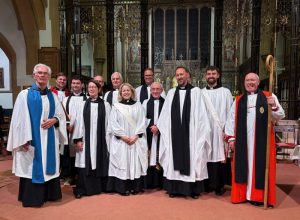
Tom second from right

The Revd Tom Hill has returned to the church where he came to faith more than 25 years ago, following his institution as Vicar of Christ Church Epsom Common.

The service took place on Thursday 27th August and was led by the acting Bishop of Guildford, the Rt Revd Paul Davies, who instituted Mr Hill. He was subsequently inducted and installed by the Archdeacon of Dorking, the Ven Martin Breadmore.

Ordinarily, the appointment of a new vicar would involve a service of collation conducted by the diocesan bishop. However, the Diocese of Guildford currently has what is formally known as a “vacancy in see”, meaning that there is no serving diocesan bishop. As acting bishop, Bishop Paul institutes rather than collates a new incumbent.

The congregation included the Very Revd Bob Cooper, Dean of Guildford Cathedral, local clergy and representatives of Epsom and Ewell Borough Council, schools, uniformed organisations and Churches Together in Epsom.

Official welcomes were offered by Dean Bob Cooper on behalf of Guildford Cathedral and the Revd John Marrow, Area Dean.

Others welcoming the new vicar included Louise Druce, headteacher of Stamford Green Primary School; Karl Nicholas, District Lead Volunteer for Epsom and Ewell Scout District, representing local uniformed organisations; churchwardens David Blacoe and Gill Glasspool; and Christ Church’s children and youth worker, Sofia Welsby. Young members of the Christ Church congregation also took part.

The service had particular personal significance for Mr Hill, who grew up in Epsom and first came to faith at Christ Church more than 25 years ago.

Before entering the ministry, he served for 13 years as an officer with the Metropolitan Police. He began training for ordination in 2016 and subsequently served as a curate at Holy Trinity Claygate and as Associate Minister at Leatherhead Parish Church.

Members of Christ Church were joined at the service by many of Mr Hill’s family and friends, as well as visitors from his former parish in Leatherhead. Mr Hill is married to Megan and the couple have four children.

The occasion also provided an opportunity for Christ Church to welcome two new curates, the Revd Patrick Corley and the Revd Rebecca Catterall.

A reception followed in the parish hall, where former churchwarden Fay Wedlake presented the new vicar with a cross carrying a long association with Christ Church. The cross has traditionally occupied a place in the vicarage study and has been passed down from one vicar to the next over many years.

Mr Hill said he was looking forward to a new season of growth at Christ Church, sharing the Christian message and getting to know more people throughout the local community.

His first Sunday service as Vicar of Christ Church Epsom Common will take place at 10am on Sunday 6th September. All are welcome.

Christ Church Epsom Common is in Christ Church Road, Epsom, KT19 8NE.

Lionel Blackman

Photo: From left to right:

Berwick Curtis Licensed Lay Minister at Christ Church

Revd Nico Ohlsson St Paul’s Howell Hill

Revd Harry Lamaison St Barnabus

Revd Sue Ayling, St Mary’s Ewell

Archdeacon The Ven. Martin Breadmore

Revd James Wakefield, St Mark’s Tattenham Corner

Revd Rebecca Catterall curate Christ Church

Revd John Marrow All Saints West Ewell

Revd David Senior St Pauls Howell Hill

Revd Tom Hill vicar Christ Church

Revd Patrick Corley curate Christ Church

Acting Bishop of Guildford The Rt Revd Paul Davies.


Back Epsom’s Horton Cemetery history heroes in national vote

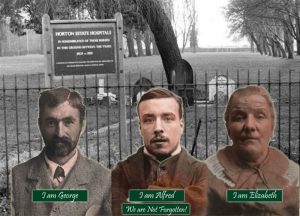
Horton Cemetery with former patients photos

Epsom and Ewell (and beyond) residents are being urged to get behind the local Friends of Horton Cemetery after the charity was shortlisted for a national award celebrating the volunteers who rescue the stories of ordinary people from obscurity.

The Friends are among 24 organisations selected from across England for Findmypast and Heritage Open Days’ first “Everyday History Heroes” awards, with its place in the regional South-East final short-list of three.

Historian and broadcaster David Olusoga is supporting the campaign, which recognises historic and cultural organisations that preserve the stories of people frequently overlooked by conventional history.

A national winner and seven regional winners will be chosen by public vote. Regional winners will receive £1,000 to support their work.

Olusoga is quoted in a BBC news article as saying: “Horton Cemetery was a remarkable example of everyday history.” Adding “More than 9,000 people who died as patients in Epsom’s psychiatric hospitals were buried there, many in unmarked graves, and for decades their stories were largely forgotten.”

He said: “The Friends of Horton Cemetery have been restoring dignity and remembrance to thousands of people who were too often overlooked in their own lifetimes”.

The Epsom & Ewell Times makes no pretence of neutrality in this contest: our vote belongs to the Friends of Horton Cemetery—and we hope our readers will add theirs.

Between 1899 and 1955, about 9,000 people were buried at Horton Cemetery. Each had been a patient at one of the five mental health hospitals forming the Epsom Cluster.

Their graves are now unmarked. The privately owned cemetery has been neglected for decades and remains inaccessible to the public.

Against that unpromising background, the Friends’ volunteer researchers have painstakingly rebuilt the lives of those buried there from hospital, census, military, family and other historical records. More than 500 individual life stories have already been researched, written and published.

The result is much more than a list of names and dates. The research restores identities to people whose lives were often obscured by the stigma once attached to mental illness and institutional care.

Those remembered include war veterans, mothers, labourers, domestic servants and children. Many experienced poverty, bereavement, illness or family separation before entering one of Epsom’s hospitals. Their stories collectively illuminate a neglected chapter of the borough’s history—and of Britain’s changing treatment of mental ill-health.

Explaining its nomination, charity trustee Theresa Keneflick said: “We’re proud that this nomination recognises the work of our researchers and volunteers for all that they do to ensure the lives of the 9,000 are remembered.”

The award was created by family-history website Findmypast in partnership with Heritage Open Days. Its purpose is to honour grassroots organisations telling the histories of the ordinary people and communities who worked, struggled, campaigned and helped to build modern Britain.

David Olusoga said history was not confined to the famous figures taught about in schools, but included the millions of ordinary people whose actions shaped today’s world. He encouraged the public to explore the shortlisted organisations and vote for a local “hidden gem”.

Few candidates can fit that description more literally than Horton Cemetery: an important part of Epsom’s heritage hidden behind locked boundaries, its thousands of occupants deprived of individual grave markers but no longer without voices.

Voting remains open until 31 August, with the winners due to be announced on 10 September.

Vote for the Friends of Horton Cemetery on the Findmypast South East voting page.

The Friends’ research and the stories already recovered can be explored at the Horton Cemetery website.

The Friends of Horton Cemetery host an Heritage Open Day alongside the Cemetery on Saturday 12th September.

Lionel Blackman

Hon. Sec. of The Friends of Horton Cemetery and a director Epsom and Ewell Times

Image – photo of the Cemetery from 1971

Note: The FindMyPast voting page suggests the charity has “transformed the cemetery”. This is an error we are seeking to correct. The Cemetery remains neglected in private hands with Epsom and Ewell Borough Council declining to purchase it for its restoration as a community asset.

Related reports:

500 patients buried in Epsom’s asylum cemetery no longer forgotten

Friends of Horton Cemetery influence law reform

Epsom and Ewell’s MP champions Friends of Horton Cemetery mission on “Time to Talk Day”

Epsom’s Horton Cemetery gets attention of two kinds

Epsom Council dead set against the dead?

Petition to reclaim Horton Cemetery from property speculator

Local community gathered at Horton Cemetery