Epsom and Ewell Times
26th November 2026

ISSN, LDRS and IMPRESS logos

What cuts to Surrey County Council services are you prepared for?

Montage of Surrey County council services.

Surrey County Council has unveiled its draft budget for the upcoming financial year and is calling on residents to share their views through a public consultation.

As councils nationwide grapple with severe financial pressures, Surrey remains confident in its ability to set a balanced budget. However, making difficult decisions will be essential to ensure long-term sustainability of vital services.

The proposed budget outlines crucial investments in areas such as specialist care services, special education provision, road maintenance, and transport improvements. Public feedback will help shape these priorities.

Tim Oliver, Leader of Surrey County Council, stated:

“Councils across the UK are facing unprecedented financial challenges, and while Surrey benefits from a stable budget position, we are not immune to these pressures. “Our key services – including social care, children’s services, and highways maintenance – are experiencing rising demand, escalating costs, and reduced funding. The demand on services in Surrey is particularly high, and it’s critical that the government addresses this by providing sufficient funding in the upcoming finance settlement.

“We are committed to supporting the residents who need us most and delivering essential services that people rely on every day. Achieving this requires cost reduction where feasible, alongside transforming how we operate and exploring innovative ways to deliver services effectively. “We need your input to guide these decisions. Please participate in this consultation – understanding your priorities is essential.”

The draft budget, approved at a recent Cabinet meeting, aligns with the four priority objectives set out in the council’s Organisation Strategy 2023-2028. To balance the books while delivering essential services, the council has identified £57 million in efficiencies. Public feedback will help refine how these savings are implemented.

Residents are encouraged to share their thoughts through the consultation survey, which takes no more than 10 minutes to complete and can be submitted anonymously.

The survey is open until 11:59 PM on Tuesday, 31 December 2024. Feedback from this phase will contribute to the final budget report, which is set to be published in January 2025.

To participate, visit Surrey County Council’s website.

HOW YOUR COUNCIL TAX IS SPENT:

In Epsom and Ewell, Council Tax contributions are distributed among three authorities: Surrey County Council, Surrey Police, and Epsom & Ewell Borough Council. For every £1 of Council Tax paid:

Surrey County Council receives 76p.
Surrey Police receives 14p.
Epsom & Ewell Borough Council receives 10p.

For the fiscal year 2024/25, the total Council Tax for a Band D property in Epsom and Ewell is £2,308.34, allocated as follows:

Surrey County Council: £1,758.60
Surrey Police: £323.57
Epsom & Ewell Borough Council: £226.17

Allocation of Funds:

Surrey County Council utilizes its share to fund services such as:

Education
Social services
Highways and transportation
Libraries
Public health
Waste disposal

Surrey Police allocates its portion to:

Maintain law and order
Crime prevention
Community policing
Emergency response services

Epsom & Ewell Borough Council uses its share to provide services including:

Waste and recycling collection
Maintenance of parks and open spaces
Housing services
Planning and development control
Environmental health
Leisure and cultural services, such as the Epsom Playhouse and Bourne Hall


Epsom SEND case highlights a national problem

Joshua Mayle

A shocking case of systemic failure by Surrey County Council (SCC) has brought renewed attention to the challenges faced by families of children with Special Educational Needs and Disabilities (SEND). After nearly two years of delays and inadequate support, the Mayle family from Epsom has finally secured a suitable school placement for their 7-year-old son, Joshua. However, the damage caused by SCC’s inaction is undeniable—and emblematic of a national crisis.

A National Struggle for SEND Support

Joshua’s case, while devastating, is far from unique. Across England, families are grappling with a SEND system under unprecedented strain. The number of children with EHCPs has surged by 77% since 2015, a rise that local authorities nationwide are struggling to accommodate. Against this backdrop, funding for SEND services has not kept pace, creating a perfect storm of unmet needs, prolonged delays, and rising parental frustration.

The Local Government Association (LGA) reported earlier this year that councils are grappling with a national SEND funding gap of over £1.9 billion. Without urgent intervention, local authorities warn that they will be unable to meet their statutory duties under the Children and Families Act 2014.

Surrey’s Struggles in Context

Surrey County Council has seen a sharp rise in demand, with the number of children requiring EHCPs rising from 10,000 in 2017 to around 15,000 today. In response, the council has committed £240 million to SEND provision, promising 6,000 new specialist school places and additional support within mainstream schools. Yet, progress has been slow, and communication failures continue to erode parental trust.

Helen Maguire, MP for Epsom and Ewell, who intervened in Joshua’s case, said:

“It is a sad day when a family in such dire straits has to approach their MP on an issue that should have been addressed much earlier by the local County Council. No family should have to escalate matters this far, especially when their child’s needs are at stake. The voice of parents MUST be listened to, and while I am relieved that Joshua has finally received the education and support he deserves, it is deeply troubling that it took this long for the Council to act.”

“This case highlights systemic failures within Surrey County Council’s SEND services. Urgent reform is needed to prevent other children from suffering in the same way.”

Surrey’s challenges are reflected across the country. In some areas, families report waiting months—sometimes years—for EHCPs to be approved, with many forced to take local authorities to tribunal to secure adequate support. Nationally, tribunals have increased by 80% since 2016, with parents overwhelmingly winning cases against councils, further highlighting systemic issues.

The Role of Central Government

Local authorities are not solely to blame. Reductions in central government funding have left councils stretched thin, with many struggling to recruit and retain qualified staff to meet rising demand. The LGA has called for an urgent review of SEND funding, warning that councils are increasingly using general education budgets to plug the gaps, putting additional strain on mainstream schools.

The Department for Education (DfE) recently announced a SEND and Alternative Provision Improvement Plan, promising £2.6 billion in capital funding to create new school places and improve existing facilities. However, critics argue that the funding is insufficient to address the scale of the problem.

Paul Whiteman, General Secretary of the National Association of Head Teachers, warned earlier this year:

“The government’s SEND review is a missed opportunity to address the systemic underfunding of support for children with additional needs. Families and schools need real solutions, not sticking plasters.”

The Human Cost of Delays

For families like the Mayles, the impact of these systemic failings is profound. Joshua, once a bright and independent child, has regressed significantly due to delays in accessing the support outlined in his EHCP. His father, Alex, said:

“Surrey County Council’s failure to meet its statutory obligations is shocking. All children are entitled to an education, and they are being failed by a broken system that is underfunded and under-resourced.”

The strain on families is echoed across the country, with parents often feeling forced to navigate a labyrinthine system to secure their children’s rights. A recent survey by the charity Contact found that 65% of families with disabled children believe the SEND system is “not fit for purpose,” and 48% say their child’s mental health has suffered due to delays in accessing support.

A Call for Urgent Reform

Joshua’s story underscores the urgent need for reform—not just in Surrey, but across England. While councils like SCC grapple with rising demand, the root cause lies in a system underfunded at every level. Families should not have to fight this hard for their children’s education and wellbeing.

As the government prepares to roll out its SEND improvement plan, experts warn that without significant investment and a more collaborative approach between councils, schools, and families, the crisis will only deepen. For Joshua and thousands like him, the question remains: how many more children will be failed before meaningful change is delivered?


Is a Isa the answer to Epsom’s high house prices?

Middle class house

With the five-year anniversary of the Help to Buy ISA closure approaching, a fresh analysis has revealed how Epsom and Ewell compares to other Surrey boroughs in benefiting from this government initiative. Launched in 2015, the Help to Buy ISA offered first-time buyers a 25% bonus on their savings, helping them onto the property ladder before its closure to new applicants in November 2019.

According to research by UK conveyancing specialists Bird & Co, only 0.15% of property sales in Epsom and Ewell since 2015 involved the Help to Buy ISA. This ranks our borough 10th among Surrey’s local authorities. However, a significant spike occurred in late 2021, with ISA-backed property purchases rising to 0.73% of sales in Epsom and Ewell during the final quarter of the year.

Experts attribute this spike to several factors: delays caused by the COVID-19 pandemic, which pushed completions into 2021, a rush to secure mortgage rates amid fears of rising interest rates, and confusion over the scheme’s eligibility deadline. Across Surrey, such spikes were common, reflecting national trends.

Daniel Chard, a partner at Bird & Co, commented:
“The Help to Buy ISA has undoubtedly provided vital support for first-time buyers, particularly in areas with lower house prices or greater awareness of the scheme. Epsom and Ewell’s figures highlight the role of regional affordability and access to information in shaping how these schemes are utilised.”

How Does Epsom and Ewell Compare?
While our borough’s 0.15% average use of the scheme lags behind Surrey’s leader, Reigate and Banstead (0.47%), the data tells a broader story of affordability challenges. House prices in Epsom and Ewell may exceed the limits of the Help to Buy ISA, reducing its appeal for local buyers.

The borough also saw a notable drop in ISA usage following the 2019 deadline for new accounts, with property sales using the scheme falling from 0.19% before the cut-off to 0.12% after—a 0.07% decline. This trend is consistent with other Surrey boroughs, where the closure of the scheme saw reductions in usage.

What Are the Alternatives?
For first-time buyers who missed the Help to Buy ISA window, the Lifetime ISA offers similar support, with a 25% government bonus on savings and higher annual limits. However, it’s worth noting that eligibility criteria differ.

Bird & Co, who conducted the analysis, specialise in conveyancing law and offer guidance to buyers navigating government schemes. They highlight the value of understanding regional differences and tailoring advice to individual needs.

As Epsom continues to grow as a desirable place to live, schemes like these underline the importance of affordability in ensuring that first-time buyers can achieve their homeownership dreams.


Epsom & Ewell’s local history museum to be born again?

Kids running into Bourne Hall Ewell

Bourne Hall Museum in Ewell, a cherished repository of local history, faces an uncertain future as its esteemed curator, Jeremy Harte, prepares for retirement in March 2025 after 35 years of dedicated service. Harte’s tenure has been marked by significant contributions, including the curation of approximately 17,000 artefacts and 45,000 photographs that represent the lives of tens of thousands of people who’ve lived in the area since the Ice Age.

Concerns have arisen within the heritage community regarding the museum’s continuity post-Harte’s departure. Jon Cotton, President of the Epsom and Ewell History and Archaeology Society, expressed apprehension over the Council’s succession planning, stating, “We fear that no such planning has been put in hand, and there is a growing belief that the Council intends to wind down its commitment to the Museum, its staff, premises and collections.”

Epsom and Ewell Times asked the Council: “Does EEBC intend to keep the museum open after Jeremy Harte’s retirement and is the Council actively recruiting a new curator?”

In response, Councillor Clive Woodbridge, Chair of the Community and Wellbeing Committee (RA Ewell Village), affirmed the council’s commitment to the museum’s future, stating, “We are putting plans in place to determine how we will continue to run the museum into the future. There are currently no plans to close Bourne Hall Museum.”

Bourne Hall Museum has been instrumental in community engagement, recently participating in the national Kids in Museums ‘Takeover Day’ by collaborating with Ewell Grove Primary and Nursery School. This initiative, part of the council’s Arts, Culture and Heritage Strategy, aims to inspire local youth by providing hands-on museum experience.

As the museum approaches this transitional period, many remain hopeful that Bourne Hall Museum will continue to serve as a vital educational and cultural resource for future generations.

Related reports:

Bourne Hall’s Christmas Supremacy

Kids takeover Ewell’s Bourne Hall

Ewell History Day returns to Bourne Hall


Epsom and Ewell’s Draft Local Plan goes to Full Council

Town Hall and Local Plan

The Licensing and Planning Policy Committee (LPPC) of Epsom and Ewell Borough Council met on 20th November 2024 to consider the draft Regulation 19 Local Plan amid a storm of public opposition and internal division. The meeting, attended by residents and a significant complement of councillors, highlighted the deep tensions over the inclusion of Green Belt sites for development.

After nearly seven years of delays, the draft Local Plan was endorsed by the LPPC, sending it to the Full Council for final approval in December. However, the debate exposed significant disagreement among councillors about the cost of achieving housing targets and the risk of sacrificing valued green spaces.


Public Pleas to Save the Green Belt

Three public speakers opened the meeting, delivering impassioned critiques of the draft Local Plan. Janice Baker accused councillors of abdicating their responsibility by deferring to officers’ recommendations. Quoting directly from the meeting papers, she said, “Paragraph 3.46 states that removing Green Belt sites would significantly increase the risk of the plan being found unsound. In other words, you’re being told not to think about changes. But I ask: where is democracy in this process? Stand up for residents, stand up for your duties.”

Tim Murphy, a member of the Council for the Protection of Rural England, highlighted Horton Farm’s ecological and strategic importance, labelling it “one of the highest-performing Green Belt sites in the borough.” He challenged the committee directly: “The decision lies with you, not officers, not inspectors. You will be held responsible by residents for either protecting or destroying our Green Belt.”

Finally, Yvonne Grunwald reminded councillors of the 11,000-signature petition submitted during the Regulation 18 consultation. “Eighty-seven percent of residents opposed building on the Green Belt,” she said. “What happened to their voices? This plan will forever change the borough’s character.”


Councillor Perspectives: Frustration, Reluctance, and Division

The councillors’ deliberations revealed starkly contrasting views, with many expressing unease about the Local Plan but accepting its necessity. Chair Cllr Peter O’Donovan (RA Ewell Court) opened by praising the officers’ efforts, describing the plan as a delicate balance. “Our task,” he said, “is to tread carefully between safeguarding the borough’s unique character and ensuring future generations can thrive.”

However, dissenting voices were prominent. Cllr Christine Howells (RA Nonsuch) passionately opposed the inclusion of Horton Farm and Hook Road Arena. “This is our Green Belt,” she argued. “Once it’s lost, there’s no going back. Horton Farm is a critical environmental buffer and a floodplain. Its removal would set a precedent for the destruction of every other Green Belt site.”

Cllr Robert Leach (RA Nonsuch) expressed broader discontent with the central government’s housing targets. “Epsom has a population density five times the national average,” he said. “Why must all the burden fall on us? We’re being treated as a branch office for Westminster, not as an independent council.”

In contrast, Cllr Clive Woodbridge (RA Ewell Village) reluctantly supported the plan, acknowledging the compromises it entailed. “I wrestled with this decision,” he admitted. “Horton Farm is high-performing Green Belt, but without it, the plan will almost certainly be found unsound. If we exclude it, speculative developments could wreak havoc across the borough.”


Motions and Proposals: Protecting the Green Belt

Cllr Neil Dallen (RA Town) questioned the land allocated for Gypsy and Traveller sites, suggesting higher densities to reduce the footprint. “If we increase the density from 16.5 to 25 or 30 per hectare, could we not meet the full need on a smaller site?” he asked. Planning Policy Manager Ian Mawer responded, explaining that the lower density reflects cultural and practical requirements for Gypsy and Traveller communities, including space for caravans, vehicles, and utility blocks.

Cllr Julie Morris (LibDem College) called for stronger environmental commitments, particularly around climate change and biodiversity. “Why are climate and biodiversity issues always buried at the end?” she asked. “These should be front and centre of the plan.”

Meanwhile, Cllr Kieran Persand (Conservative Horton) vehemently opposed the inclusion of Horton Farm. “This is not a balanced plan,” he declared. “Including Horton Farm doesn’t protect other Green Belt sites—it puts them at greater risk. The planning inspector will see this as justification to include more Green Belt land.”

Despite these objections, motions to remove Horton Farm and other Green Belt sites were defeated, with officers warning that such changes would undermine the plan’s soundness. “Without Horton Farm, we simply cannot meet housing needs or provide Gypsy and Traveller pitches, which are legal requirements,” said Ian Mawer.


Difficult Decisions: Reluctant Support for the Plan

As the debate continued, councillors wrestled with the plan’s broader implications. Cllr Phil Neale (RA Cuddington), reflecting the prevailing mood, said, “None of us like this plan, but what’s the alternative? Without an up-to-date Local Plan, we’re at the mercy of speculative developments. We cannot afford to start from scratch.”

Cllr Woodbridge echoed this sentiment, emphasizing the risks of delay. “This plan is far from perfect, but it’s the best chance we have to protect the majority of our Green Belt while meeting our obligations. If we fail, the consequences could be far worse.”

However, not all councillors were resigned to compromise. Cllr Persand insisted that rejecting the plan would force the council to find alternative solutions. “We don’t have to accept this bad plan,” he argued. “There is still time to come up with something better.”


Press Release and Public Reaction

Following the vote, EEBC issued a press release reiterating the importance of adopting the Local Plan. “The Proposed Submission Local Plan strikes the optimal balance between development and preservation,” said Cllr O’Donovan. “It will deliver affordable housing, protect biodiversity, and secure infrastructure improvements while safeguarding the majority of the borough’s Green Belt.”

The press release also emphasized the risks of not adopting a plan, including unplanned and speculative developments. Residents were encouraged to participate in the upcoming Regulation 19 consultation, set to begin in early 2025.

Public reaction, however, remains overwhelmingly critical. Campaigners accused the council of ignoring residents’ views and bowing to government pressure. “This is not a balanced plan,” said Janice Baker. “It’s a capitulation.”


Looking Ahead: Full Council Debate

The draft Local Plan now moves to the Full Council for debate on 10th December 2024. With opposition among councillors and residents showing no signs of abating, the future of Epsom’s Green Belt hangs in the balance.

While some see the plan as a necessary compromise, others view it as a betrayal of the borough’s character and environmental heritage. The upcoming Full Council meeting promises to be as contentious as the LPPC debate, as Epsom grapples with the challenge of balancing growth and preservation.


Conflict on Epsom’s Green Belt plans of another kind?

Tug of war over green belt land

On the eve of an important meeting of the Licensing, Planning and Policy Committee on the future of the Borough’s Local Plan, housing and Green Belt development, Epsom & Ewell Borough Council (EEBC) is under fire following allegations of inadequate handling of a perceived conflict of interest involving its planning consultant, Mr. Derek Stebbing, and his employer, Strutt & Parker (S&P). The controversy centres on Mr. Stebbings’ advice to permit housing development on Green Belt land in the borough while S&P maintains a business relationship with the Church Commissioners (CC), significant landowners of Green Belt land in the area.

EEBC has also been accused of silencing public concerns. Campaigner Sam Bentall was barred from addressing a key council meeting after being accused of making defamatory claims about the alleged conflict. Emails exchanged between Ms. Bentall and the council reveal a contentious and somewhat opaque process.

Ms. Bentall attempted to raise her concerns at a meeting of the council’s Licensing, Planning, and Policy Committee (LPPC). However, she was refused the opportunity to speak. The council justified its decision by claiming her assertions of a conflict of interest were defamatory. In an email exchange seen by the Epsom and Ewell Times, Ms. Bentall expressed frustration, stating, “I am being silenced for highlighting genuine concerns about transparency in the planning process.”

The crux of the controversy lies in Mr. Stebbing’s dual roles:

As a consultant to EEBC, Mr. Stebbing has advised on the Local Plan, including housing developments on Green Belt land such as Horton Farm. Strutt & Parker’s website states it “has appointed Derek Stebbing as planning policy consultant to advise its national development and planning team in assisting clients in navigating the planning process.”

S&P have the Church Commissioners, owners of Horton Farm, as one of its clients. During a telephone interview with Epsom and Ewell Times, Mr. Stebbings denied any direct advisory role to CC, stating: “I do not advise the Church Commissioners at all, whether in Epsom & Ewell or elsewhere.” He acknowledged, however, that CC is a major client of S&P and asserted that “Chinese walls” within the company prevented any conflict of interest.

One Councillor, who asked not to be named, confirmed that the consultant advised Councillors of the need to allow Horton Farm to be developed for housing. “I accept that he may not have known the owner of the land was a client of his employer but the perception of a risk of a conflict of interest cannot be ignored.”

The Council was invited to comment and replied it had no comment.

Some local groups have sharply criticized the council’s draft Local Plan, which includes proposals to develop nearly 60 hectares of Green Belt land. In a letter to the Epsom and Ewell Times, the Epsom Green Belt Group challenged the council’s justification for building on high-quality Green Belt areas like Horton Farm.

“The draft plan proposes the loss of almost 60 hectares of Green Belt land, of which 87% is ranked as High Quality. Horton Farm is one of the highest-ranked areas and unsuitable for development due to flooding risks, traffic impacts, and lack of infrastructure,” the group wrote. They argue that the plan unnecessarily sacrifices pristine Green Belt land when alternative solutions exist.

The council has faced widespread criticism for delays in finalizing the Local Plan, now eight years overdue. While the Epsom Civic Society has urged swift adoption to prevent speculative development, other voices, including the Green Belt Group, caution against rushing a flawed plan.

“Submitting a bad plan, unnecessarily and inappropriately destroying huge areas of Green Belt, would be unforgivable,” the Green Belt Group warned. They advocate revising the plan to remove high-quality Green Belt sites like Horton Farm before submission.

Related reports:

Epsom Civic Society say Local Plan should be agreed on Wednesday

Epsom and Ewell Green Belt battle lines drawing near

Call to Epsom and Ewell Council to speed plan denied

Epsom Local Plan controversy heats up

Time to press the gas on Epsom’s Local Plan?

Epsom and Ewell Brace for Government Housing Targets


Epsom Civic Society say Local Plan should be agreed on Wednesday

Town Hall and Local Plan

The Epsom Civic Society (ECS) (motto being “Shaping the future, safeguarding the past”) has urged councillors to support the borough’s draft Local Plan, warning of the risks associated with further delays. In a press release issued yesterday, ECS Chair Margaret Hollins emphasised the importance of progressing the Plan to protect Epsom from speculative and inappropriate development.

“For the past eight years, our newsletters have chronicled the ongoing saga of Epsom’s efforts to adopt a new Local Plan,” Ms Hollins stated. “Without an up-to-date Plan, the Borough remains vulnerable to developments that may not align with the character and needs of our community.”

The Society acknowledges the challenges posed by central government planning reforms, which have increased housing targets and tightened timescales for Local Plan updates. While the draft Plan falls short of fully meeting housing targets, ECS believes it represents the borough’s best chance of success in the face of these constraints.

In a letter to members of the council’s Licensing and Planning Policy Committee, ECS highlighted the consequences of rejecting the draft. “Having no meaningful Plan to take forward to the next stage is significantly more threatening,” the letter warns. “Without an up-to-date Plan, the Borough faces prolonged vulnerability to speculative development, which could lead to inappropriate urban projects and greater threats to the Green Belt.”

The letter acknowledges the difficult compromises required in the draft Plan, including limited encroachments on less strategically important Green Belt land. However, ECS views this as a necessary trade-off to protect higher-value areas and secure much-needed housing. The Society is urging councillors to act swiftly, particularly given anticipated changes to the National Planning Policy Framework (NPPF), which may increase housing pressures further in the new year.

“Some compromise now is the best way to defend the rest [of the Green Belt],” the press release concluded. ECS is advocating for the adoption of the Plan as recommended in the council’s report, emphasising the risks and costs of restarting the process.

The Licensing and Planning Policy Committee will meet tomorrow to consider the draft Local Plan. The decision could shape the future of development in Epsom for years to come.

Councillors now face the challenging task of balancing housing needs with the preservation of the borough’s character and natural assets, while navigating increasingly stringent national planning policies. All eyes are on Wednesday’s meeting to see how they respond to the Civic Society’s call for decisive action.

Related reports:

Numerous. Search “Local Plan”


Proposed Battery Energy Storage System Near Ashtead Common Faces Objections

BESS plan

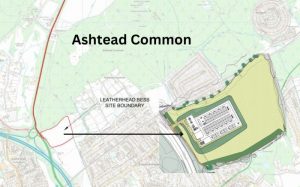
Plans to install a Battery Energy Storage System (BESS) near Ashtead Common have sparked significant opposition from local conservation groups and residents. The proposed facility, intended to support renewable energy integration and grid stability, has raised environmental and safety concerns, particularly given its proximity to a Site of Special Scientific Interest (SSSI) and Ashtead Common National Nature Reserve.

The Proposal

Bluestone Energy Ltd has submitted plans to Mole Valley District Council for the installation of a BESS facility near Barnett Wood Lane, Ashtead. The project includes underground cabling, access roads, security fencing, and biodiversity enhancements. Proponents argue that the facility is vital for managing energy supply fluctuations, particularly with the increasing reliance on renewable energy sources.

Benefits of BESS Technology

Battery Energy Storage Systems play a crucial role in modern energy infrastructure:

  • Renewable Energy Support: BESS allows for the storage of solar and wind energy for use during periods of low generation, helping to stabilise energy supply.
  • Grid Stability: These systems can manage fluctuations in electricity demand, reducing the strain on power grids.
  • Emergency Power: They provide backup electricity during outages, making them indispensable for critical infrastructure.
  • Environmental Gains: By reducing reliance on fossil fuel-powered plants, BESS supports the UK’s transition to a low-carbon energy system.

Potential Hazards

Despite their advantages, BESS technology carries significant risks:

  • Fire Hazards: Lithium-ion batteries, commonly used in these systems, are susceptible to thermal runaway, leading to fires that are difficult to extinguish and can reignite.
  • Environmental Impacts: Manufacturing and disposal of batteries contribute to pollution if not carefully managed. Additionally, construction can disrupt local ecosystems.
  • Noise and Light Pollution: Ongoing operations may disturb nearby wildlife and residents.
  • Land Use Concerns: Large-scale facilities can lead to habitat fragmentation and loss of natural landscapes.

Objections Raised

1. Environmental Concerns

The City of London Corporation, which manages Ashtead Common, highlights the potential harm to local wildlife, including bat species protected under national and international law. Their letter of objection emphasises the detrimental impact of light, noise, and habitat fragmentation on these species. Ashtead Common is home to ancient oak pollards and biodiversity of national significance, further underscoring the ecological risks​.

2. Fire Risks

Ashtead Common has a history of significant biodiversity loss due to wildfires. Objectors express concerns over the fire hazards posed by lithium-ion batteries, particularly given the facility’s location and prevailing winds. The proposed water tank is deemed insufficient to address thermal runaway events effectively.

3. Green Belt and Landscape Impact

Councillor Andy Smith notes the intrusion on Green Belt land, citing concerns about coalescence, encroachment, and loss of openness. He argues that such developments undermine the distinct landscape qualities of the countryside and suggests that the facility’s location does not align with local conservation goals​.

4. Questionable Site Selection

Critics question the necessity of placing the facility adjacent to Ashtead Common when closer alternatives to the Chessington substation could reduce environmental impact and energy loss. They argue that the benefits outlined by the developer are generic to any BESS project and fail to justify the chosen location​.

5. Opportunity Cost

The City of London Corporation suggests that the land, currently transitioning to a natural habitat, offers better long-term biodiversity potential if left undisturbed. They challenge the proposed biodiversity net gain enhancements, arguing that natural succession would achieve similar, if not superior, outcomes without artificial intervention​.

Public Sentiment

While there is broad acknowledgment of the need for renewable energy infrastructure, local stakeholders believe this project’s costs outweigh its benefits. “We need to modernise our energy systems, but not at the expense of our precious natural habitats,” commented one resident.

Next Steps

The planning application is under review by Mole Valley District Council. Public and expert feedback will weigh heavily on the decision, particularly given the sensitive location and environmental stakes.

Balancing Progress and Preservation

The debate over the proposed BESS facility near Ashtead Common encapsulates a broader challenge: balancing the urgent need for renewable energy infrastructure with the equally critical imperative to protect natural ecosystems. As local authorities deliberate, the outcome may set a precedent for future developments in similar areas.


Epsom Schools Unite for Children in Need

Danetree school children

Schools across Epsom and Ewell, along with Banstead, joined forces to support this year’s Children in Need appeal, raising impressive amounts through creative and engaging activities.

Danetree Primary School – Guess the Bear’s Name

At Danetree Primary School in West Ewell, children participated in a range of activities designed to both entertain and educate. Younger pupils in Early Years and Key Stage 1 enjoyed a “guess the name of the teddy” competition, while Key Stage 2 students took on the challenge of guessing the number of objects in a jar, with winners taking home the prize-filled jar.

The school also held a non-uniform day, contributing to a fundraising total expected to exceed £800. Reflecting on the event, Reception Class Teacher Tracy Willemse highlighted its broader significance:
“Events like this support teaching children about the importance of charities – how they help people in need and promote community values such as diversity, equality, and inclusion.”

The Vale Primary School – Spotty Fun and Coin Trails

Staff and pupils at The Vale Primary School embraced a spotty theme, donning polka-dotted outfits for their fundraising efforts. The school organised a variety of activities, including a coin trail created from donations brought in by pupils, and a raffle for Pudsey Bear toys donated by the PTA.

Year 6 pupils enthusiastically sold raffle tickets ahead of the event, with winners announced during a celebratory assembly. Classroom activities also helped pupils learn more about the work of Children in Need. The Vale aimed to raise over £500, a testament to the community’s generosity.
“Preparing children as active and empathic citizens is central to our ethos,” said Co-Headteacher Cathy Browne.

Warren Mead School, Banstead – Make Life Lighter

At Warren Mead School in Banstead, the theme “Make Life Lighter” inspired a vibrant day of fun-filled activities. Pupils and staff came dressed in costumes ranging from disco outfits to Pudsey Bear-inspired ensembles. The day began with an energetic assembly featuring a “fizzy drinking challenge,” setting the tone for the festivities.

Children participated in a Pudsey Maths Challenge, treasure hunts, and group art projects, with a focus on mental health and emotional resilience. Younger pupils enjoyed learning the Piggle-Wiggle dance and taking part in a school disco. An after-school fun run brought together staff, parents, and the local community, rounding off a memorable day.

Assistant Headteacher Jess Moylan expressed pride in the school’s efforts:
“The smiles and camaraderie displayed throughout the day reflected our commitment to fostering compassion, unity, and resilience.” Warren Mead aimed to raise £500, building on the success of previous years.

A Collective Effort

All three schools are part of the GLF Schools Multi-Academy Trust, which collectively raised thousands for the cause. The enthusiastic participation and creative approaches from Danetree, The Vale, and Warren Mead highlight the local commitment to supporting those in need, while also instilling important values in the next generation.

Community Spirit Shines

Across Epsom and Ewell, these Children in Need events have shown the power of community spirit, creativity, and compassion, making a real difference for children and families in need.


Epsom Council Delivers Spinning Back Kick to Nam Yang Martial Arts Centre

Nam Yang Martial Arts Epsom figure

In a contentious meeting on 12th November, Epsom and Ewell Borough Council’s Strategy and Resources (S&R) Committee rejected a £161,250 funding bid for the Nam Yang Martial Arts Centre, reversing an earlier recommendation from the Licensing and Planning Policy Committee (LPPC). The decision has drawn sharp criticism, particularly as it highlights inconsistencies in the Council’s handling of Community Infrastructure Levy (CIL) allocations.

The Debate: A Promised Replacement Deferred

Nam Yang’s facility, once a vibrant community hub in Alexandra Recreation Ground, was demolished by the Council three years ago after being deemed unsafe. The Council had promised a replacement, yet rising costs and funding delays have left the organisation without a home.

Councillor Kate Chinn (Labour Court) spoke passionately at the meeting, sharing her personal connection to the project. “My son was a member of Nam Yang and thoroughly enjoyed it,” she stated. “It’s more than just a martial arts centre. It reduced antisocial behaviour in the park and made the area feel safer for the whole community.”

Chinn added, “That building has been down for a long time, leaving a gap in what the park offers. The absence is felt by the community.”

A Moral Obligation?

The debate underscored tensions between financial prudence and moral responsibility. Councillor Phil Neale (RA Cuddington), who had seconded the motion to support Nam Yang at the LPPC meeting, expressed his continued belief in the project’s value. “I felt a moral obligation for us to help,” he said. “The existing building was condemned and taken down with the promise that it would be rebuilt. I believed it was the right thing to do to bring it forward for consideration at S&R.”

However, Neale ultimately voted against the funding, explaining, “It’s a difficult position. While I supported its inclusion for debate, the project didn’t score high enough under the CIL spending protocol. I hope it will return for consideration in the next round.”

Criticism of the Process

Councillor Julie Morris, (LibDem College) who had originally proposed Nam Yang’s inclusion at the LPPC, has criticised the Council’s approach. “The procedures for bidding for and spending CIL monies are unclear,” she said. “The scoring process needs reviewing, as does the information required from applicants.”

Morris has highlighted systemic issues, such as the fact that no CIL funding was allocated last year due to a protocol rewrite. “One scoring question asked if applicants had received CIL funding last year. Given none was awarded, the question was pointless.”

A Divided Vote

Despite passionate arguments from some councillors, the vote to fund Nam Yang failed by a margin of 4 to 3. Chair Neil Dallen (RA Town) emphasised the importance of respecting the CIL Member Working Group’s recommendations, stating, “The group spent a long time assessing bids. We should honour their decision.”

Community Impact

The rejection leaves Nam Yang’s future uncertain, and many in the community feel let down. “This isn’t just about martial arts—it’s about providing a safe and inclusive space for children, people with special educational needs, and older residents,” said a local supporter.

Other strategic and community projects were approved as recommended previously. See Epsom and Ewell Times report below.

Related reports:

Epsom & Ewell Council Greenlights Local Projects


Epsom and Ewell Green Belt battle lines drawing near

Imagined housing etsate on Horton Farm Epsom

The latest draft of the Local Plan has just been revealed. The headline news is that the housing target has been significantly reduced by omitting the Ewell East Station Green Belt site but the Horton Farm and Hook Road Arena Green Belt sites have been retained.

Decision time is coming with the key Council committee meeting to deliberate on the Local Plan on 20th November and Full Council due to meet on 10th December.

The campaigning group Epsom Green Belt has sent to the Epsom and Ewell Times a detailed analysis criticising delays, costs, and lack of transparency in the ongoing development of Epsom and Ewell Borough Council’s Local Plan. The findings highlight that a six-month “pause” in 2023, frequently cited by the ruling Residents’ Association councillors as the reason for the current tight schedule, didn’t halt progress entirely. During this period, some work continued, including transport assessments, suggesting that time lost was minimal and that the pause alone doesn’t fully explain the prolonged delays in the Local Plan’s timeline.

The study notes that, after work resumed in December 2023, the Council extended the Local Plan timetable by 11 months, meaning there was effectively a five-month gain rather than a loss. Statements made by Councillors Peter O’Donovan (Chair of the Licensing Planning and Policy Committee) and Hannah Dalton (Leader of the RA Group) that the pause led to delays which prevent the Council from accelerating the current timetable to avoid higher housing targets are challenged.

The review shows that delays have, in fact, compounded over years: since 2017, the Local Plan timeline has stretched by an additional seven and a half years, while budget overruns now exceed £1.7 million. A portion of this funding, nearly £742,000, was reallocated from the New Homes Bonus Grant—intended to reflect community priorities—without consulting residents.

Meanwhile, Epsom and Ewell Borough Council has issued a press release reaffirming its commitment to a comprehensive and balanced Local Plan, which will be discussed at the Licensing and Planning Policy Committee (LPPC) meeting on 20 November. At this meeting, the LPPC will make its recommendation to Full Council, which is scheduled to vote in December. Councillor O’Donovan, Chair of the LPPC, described the Local Plan as a “vital and cross-cutting document” that will influence all areas of local development, from supporting the economy and creating affordable housing to protecting the environment and enhancing biodiversity.

Acknowledging that residents may have mixed reactions, Councillor O’Donovan stated, “There is now a full suite of Evidence Base reports to support the Proposed Submission Local Plan, including feedback from last year’s Regulation 18 consultation.” He encouraged residents to review these reports and attend the LPPC meeting, highlighting the council’s aim to create a Local Plan that secures a “thriving future” for the borough.

The Epsom Green Belt analysis further reveals that reporting on Local Plan progress largely ceased after 2019, raising questions about accountability. A 2018 agreement to regularly update councillors on the Local Plan’s status appears to have lapsed, leaving minimal scrutiny over the plan’s extended timeline and growing costs. The Group urges the council to enhance transparency and engage more actively with the public, particularly on spending decisions like the New Homes Bonus Grant, which it is contended was reallocated without community input.

With the next public consultation (Regulation 19) anticipated to open following Full Council’s approval, residents have another chance to voice their opinions. Councillor O’Donovan encourages those interested to register for updates on the Council’s website.

The coming weeks will be critical in determining the future development and preservation of Epsom and Ewell.

Related reports:

Call to Epsom and Ewell Council to speed plan denied

Epsom Local Plan controversy heats up

Time to press the gas on Epsom’s Local Plan?

Epsom and Ewell Brace for Government Housing Targets


Did a fair view prevail on Epsom’s modular homes for the homeless?

Aerial iew Fairview Road Epsom

The decision by Epsom & Ewell Borough Council 7th November to approve three modular homes for temporary accommodation on Fairview Road has ignited a fierce debate. The council framed this decision as a compassionate and financially prudent response to an acute housing crisis, while residents, local leaders, and some council members aired strong concerns about road safety, infrastructure, and the integrity of the planning process.

A Much-Needed Solution, According to the Council

The council has justified the development as a crucial step in addressing homelessness in the borough, where families are often displaced to temporary accommodations outside Epsom, causing significant disruptions to their lives. With over 160 households in temporary housing and 90 more in costly nightly-paid accommodation outside the borough, the need for local temporary housing solutions is undeniable.

Councillor Clive Woodbridge, (RA Ewell Village) Chair of the Community and Wellbeing Committee, remarked in the council’s press release, “Epsom & Ewell has proportionately one of the highest numbers of homeless households living in temporary accommodation in England. Increasing temporary accommodation provision for local families will not only be life-changing for those being housed now and in the future but will also have a positive impact on the borough as a whole.”

The council also highlighted the economic benefits of the modular homes. According to their press release, the development could reduce the need for expensive nightly-paid accommodation, generating long-term savings. Funding for the project includes £75,000 from the Department for Levelling Up, Housing and Communities’ Brownfield Land Relief Fund. “This project is a decent thing to do,” Councillor Humphrey Reynolds (RA West Ewell) noted during the meeting. “We need to find somewhere for families to live.”

Road Safety and Infrastructure Concerns Dominate the Meeting

The Planning Committee meeting, was chaired by Councillor Steven McCormick, (RA Woodcote and Langley) and the meeting revealed divisions on the issue. Many residents and councillors raised significant concerns about the state of Fairview Road, a narrow, privately maintained road with limited pedestrian pathways, which is already busy with schoolchildren and local traffic.

The Principal Planning Officer, introduced the application, clarifying that the site has existing access from Fairview Road and is currently overgrown, having previously served as a builder’s storage yard. She explained that the modular buildings would “meet a significantly higher standard of temporary accommodation” than current options in the borough.

However, Fairview Road residents, represented by Debbie Ransom, voiced fears about the impact of the development on local traffic and safety. “The road is already hazardous, narrow, and below minimum width standards,” Ransom asserted. “With this development, traffic on Fairview Road could increase by 50%, and the road simply cannot sustain that increase. It is already dangerous for pedestrians and cyclists due to insufficient lighting and narrow paths.”

This sentiment was echoed by Jo Garrod, Headteacher of nearby Glyn School. “Fairview Road is extremely narrow, with no dedicated pavement and poor lighting, which makes it difficult for our students to walk safely,” Garrod said in a formal objection. “Any increase in traffic will heighten the risk of accidents.”

Legal Challenges and Community Impact

The legal right of the council to use Fairview Road as an access point was also questioned. Residents claim that the council lost its legal right to access the site via Fairview Road when it sold an easement to Sainsbury’s for access through an adjacent car park. “The council no longer has the right of access through Fairview Road, and we as residents have refused to grant such an easement,” Ransom stated on behalf of residents. She argued that any additional wear and tear on the road, already funded by resident contributions, would be unacceptable.

Councillor Alison Kelly (Liberal Democrat Stamford) queried whether alternative access routes had been considered, such as Kiln Lane, but the officer responded that the council could only assess the application as submitted. “It’s up to the applicant to propose alternative access, not the council,” she said, adding that Surrey County Council had raised no objections based on road safety.

The discussion revealed frustrations among councillors who felt limited by what they saw as procedural obstacles. “If this was an adopted road, we’d be looking at solutions like yellow lines or even street lighting to improve safety,” Councillor Jan Mason (RA Ruxley) said. “But with this private road, we’re stymied. Surrey County Council has done nothing to mitigate these issues, and I find it difficult to believe that they wouldn’t see a problem here.”

Balancing Homelessness Needs and Community Safety

While the safety issues were widely acknowledged, some councillors, including Kate Chinn (Labour Court), stressed the need to consider the positive impact of the development on the borough’s homeless families. “For many families facing eviction through no fault of their own, the option to stay within the borough is critical,” said Chinn. “These modular homes could offer stability and security, allowing children to stay in their schools and families to keep local support systems.”

Councillor Lucy McIntyre (RA West Ewell) also voiced support, stating, “I understand the residents’ objections, but I believe these units represent a positive step for the borough overall, especially with the council’s focus on homelessness.”

However, other councillors, such as Jan Mason, remained sceptical. “It’s all very well to support homelessness initiatives, but this road simply isn’t suitable for further development,” Mason argued. “Adding three units to this unsuitable road will only make matters worse, and we’ve got no way to improve the infrastructure to make it safer.”

Conditions and Approval Amid Ongoing Concerns

The committee approved the development on a temporary five-year basis, subject to several conditions, including amendments to conditions to reflect a review of the scheme’s necessity and to ensure parking spaces were allocated to individual units. The council stipulated that after five years, a review would assess if there remained a need for such temporary accommodation.

During the discussion, Councillor Phil Neale (RA Cuddington) queried the proposed red colour of the modular units in the CAD drawings, expressing concerns that it might clash with the neighbourhood’s character. Planning officer clarified that the colour was a default setting in the drawings, not the intended final appearance, and that materials and finishes would be selected to harmonise as much as possible with the area.

In the end, the vote carried with seven members supporting the application, zero opposing, and one abstention. Councillor Phil Neale, reflecting on the vote, stated, “We know this is a tough decision, but as councillors, we live in the borough, we know the people, and we understand the difficulties of homelessness. We have to be both compassionate and professional in our decisions, and I believe this project warrants support.”

A Divisive Outcome

The approval of these modular homes highlights a difficult balancing act in Epsom & Ewell, where urgent social needs clash with established community concerns and limited local infrastructure. While the council aims to address a pressing homelessness crisis, residents worry that Fairview Road lacks the capacity and infrastructure to absorb additional traffic and maintain safety.

As this project proceeds, the council will need to navigate ongoing concerns about road access, safety improvements, and potential legal challenges from residents. For now, the decision stands as a testament to the challenges councils face in balancing local development with the needs of vulnerable populations.

Related reports:

Epsom’s homelessness crisis

What are the solutions to Epsom’s homeless crisis?


Attic find fills gap in Epsom local asylum history

Manor Hospital

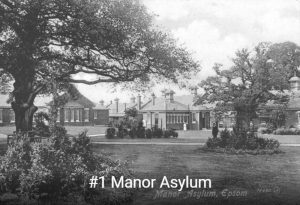
Last Friday saw the return of a singular missing hospital record book. The book contains the medical case book of women admitted to The Manor Hospital between 19 May 1900 and 11 July 1901. This was one of five psychiatric hospitals established by the London County Council at Horton near Epsom at the start of the twentieth century. A treasure trove for family and social historians, the volume records the names, family details and medical notes of 250 London women living with a range of mental illness, with their photographic portraits fixed to its fragile pages. These poignant records allow a precious glimpse of the lives and experiences of women admitted to these vast Victorian pauper asylums. Julian Pooley of the Surrey History Centre rescued many of The Manor’s records after its closure in 1995, case book number 4 was not among them. It’s discovery in an attic in the London Borough of Kingston gives hope that other missing records from Surrey’s former mental and learning disability hospitals may yet come to light. 

The couple who found the book in their attic realised its significance when watching Gemma Collins discover her family’s mental health history in a recent episode of ‘Who Do You Think You Are’. Having read the case histories and been fascinated by the patient photographs, they got in touch with Epsom based charity The Friends of Horton Cemetery.

Lead researcher for the charity, Kevin McDonnell said: “”This discovery of Manor Asylum – Case Book No. 4 is of immense historical value, especially for our project. I’m grateful to you for preserving it. It will now find a home at the Surrey History Centre in Woking, where it will be accessible to our team of volunteer genealogical researchers. This document is critical to our mission to protect Horton Cemetery in Epsom, where nearly 9,000 unclaimed mental health patients were laid to rest between 1899 and 1955. These graves, left unmarked and forgotten, tell stories that we’re working to bring back to life. The cemetery, sadly, has been neglected and mistreated since it was sold to a property speculator in 1983. It’s a disgraceful situation for such a sacred resting place, now overgrown and scattered with rubble, and this important find helps highlight the significance of the lives laid to rest there.”

Surrey History Centre was delighted to find that it filled such an important gap in the surviving records. Now preserved in the History Centre’s strong rooms, it can be made publicly available for research and a range of community engagement projects.  


Call to Epsom and Ewell Council to speed plan denied

Town Hall and Local Plan

Nine opposition councillors on Epsom and Ewell Borough Council are calling for an Emergency Full Council Meeting to fast-track the final stages of the borough’s Local Plan amid looming concerns over potential new housing targets set by the central government. The councillors—comprising members of the Liberal Democrats, Labour, and Conservative parties—are urging swift action, fearing that delays could lead to increased housing quotas that would place significant pressure on the borough’s cherished green spaces.

The councillors’ proposal, initially set out in a formal request dated 24th October, has stirred considerable debate across the council. They propose that the emergency meeting be held immediately following the Licensing and Planning Policy Committee (LPPC) meeting on 20th November or, failing that, on the evening of the 21st November. In doing so, they hope to expedite the draft Local Plan’s approval, enabling the next public consultation phase to commence before the year’s end.

The Case for Urgency: New Housing Targets and Local Development

At the heart of the opposition councillors’ concerns are potential changes to the National Planning Policy Framework (NPPF), which could soon enforce a higher housing target of 817 new homes annually—over double the borough’s existing requirement. One opposition councillor highlighted the urgency, warning, “If the Local Plan fails or is found unsound, we will be subject to the Labour government’s new targets, which are 817 dwellings per annum.”

These new targets, if implemented, could lead to development encroaching on the borough’s green spaces, a possibility that has mobilised both councillors and local residents. This anxiety is reflected in the recent appeals from local groups, including the Epsom Green Belt Group, which advocates for focusing on brownfield sites rather than encroaching on protected land.

Council’s Response: A Call for Procedural Compliance

In response, council leaders from the Residents’ Association majority group have expressed concerns about rushing the Local Plan process, citing the necessity of adhering to legal and procedural requirements. Chair of the LPPC, Councillor Peter O’Donovan, (RA Ewell Court) emphasised the importance of a comprehensive review process to ensure that any amendments to the draft Local Plan comply with regulations before it proceeds to public consultation. He stated, “The documents which will form the Regulation 19 consultation must be prepared in accordance with the regulations, including the legally required Sustainability Appraisal and Habitats Regulations Assessment.”

O’Donovan added that should any changes be proposed during the LPPC’s 20th November meeting, additional time would be necessary for council officers to update the documentation. Failure to address these requirements, he warned, could result in the plan being deemed “unsound” by government inspectors.

Residents’ Association View: Balancing Timeliness and Quality

Residents’ Association Leader Councillor Hannah Dalton (Stoneleigh), in her response to the opposition’s proposal, reiterated the council’s commitment to both transparency and quality in the Local Plan’s development. Dalton acknowledged the delay caused by a temporary halt in 2023 but argued that accelerating the current schedule could compromise the quality and legal robustness of the plan. “We can’t simply ‘speed up’ to replace six months of lost time,” she remarked, noting that the council remains committed to commencing the Regulation 19 public consultation “at the earliest possible opportunity after the November meeting of the LPPC.”

In a letter addressing a recent call from the Epsom Green Party, Dalton also noted that bypassing the LPPC’s role could undermine the Local Plan’s overall integrity. She explained, “Circumventing the LPP meeting… bypasses LPP, which has been tasked with the development of the Local Plan.” Any changes agreed upon by Full Council would still require further work to comply with legally mandated procedures, she added.

Epsom Green Party’s Intervention: Legal Pathways to Expedite Consultation

Meanwhile, Janice Baker, Chair of the Epsom Green Party, recently suggested an alternative approach. In a letter to Dalton, Baker proposed a legally permissible pathway for Full Council to assume the LPPC’s role, potentially scheduling a Full Council meeting in place of the LPPC’s 20th November session. This approach, she argued, could save several weeks and allow the Regulation 19 consultation to conclude by early January 2025, ahead of the potential NPPF changes.

“Many residents have been frustrated by the lack of open discussion,” Baker stated, adding that the proposed approach “provides a chance to avoid this disaster.” She further urged that any potential legal impediments to this plan be swiftly addressed by the council’s legal team, emphasising that delays could lead to increased housing requirements that would place “extremely significant environmental, financial, and social costs” on the borough.

Residents and Environmental Campaigners Express Growing Concern

The debate has galvanised local community groups and residents who are deeply invested in the borough’s planning future. The Epsom Green Belt Group has argued for prioritising brownfield sites to protect greenfield areas and prevent the urban sprawl that they fear could follow under new NPPF guidelines. Their concerns were echoed during the LPPC’s October meeting, where residents spoke passionately against any development that could jeopardise the area’s green spaces.

Adding further weight to the opposition’s argument, local Liberal Democrat leader Councillor Julie Morris (College) criticised Mayor Steven Bridger’s (RA Stamford) refusal to consider an Emergency Council Meeting (ECM) for 21st November. Bridger had stated that an ECM would not allow sufficient time for officers to finalise the necessary documentation and for councillors to adequately review it. However, Morris rebutted that the ECM was intended “to allow Council as a whole to sign off the draft Local Plan AND any amendments agreed on 20th November,” thus expediting the consultation’s start before the end of the year.

The opposition councillors are now considering other procedural avenues to press forward with the Local Plan, underscoring their commitment to avoid the looming 817-unit target.

What’s Next? A Community on Edge

The path forward for Epsom and Ewell’s Local Plan remains uncertain, as councillors and community members await the LPPC’s 20th November meeting. The stakes are high for the borough, with questions about housing supply, environmental conservation, and procedural integrity all coming to the fore. The decisions made in the coming weeks will not only determine the scale of future developments but will also shape the borough’s character for years to come.

In the words of Councillor Dalton, “Balancing development with the preservation of our borough’s character is challenging but essential.” With the pressure mounting from opposition members and concerned residents alike, Epsom and Ewell Borough Council faces critical choices as it navigates the complex and often conflicting demands of local governance and sustainable growth.

Related reports:

Opposition Calls for Emergency Council Meeting Over Epsom and Ewell Local Plan

Epsom Local Plan controversy heats up

Time to press the gas on Epsom’s Local Plan?

Epsom and Ewell Brace for Government Housing Targets


The Horton Hid Hiring From Regulator

Controversy surrounded the appointment of the salaried Centre Manager of Epsom and Ewell’s new arts and exhibition venue, The Horton Arts Centre.

Documents obtained by the Epsom and Ewell Times under Freedom of Information Act requests reveal that the Charity Commission found that the trustees of the Horton Chapel Arts and Heritage Society did not seek its prior permission to employ the wife of a trustee.

A recently retired trustee, a trustee or a person connected to a trustee through marriage may not be given paid employment by their charity without prior Charity Commission approval.

The Commission found that Maria Reeves, the wife of founding chairman of the Charity, Ian Reeves, who was herself previously a trustee, was appointed to the manager role without its permission.

In these circumstances the Commission would normally order the trustees to pay the Charity the salary of the employee in question. However, in this case the Commission determined that the appointment had been hidden from the Commission for so long that such an order would be “disproportionate”.

The Commission also determined that the eventual appointment was “made in good faith”, but refused to answer how that finding was compatible with the failure to seek its permission. It has also refused to disclose the justification submitted to it by the trustees for the retrospective Commission approval.

Other documents obtained by the Epsom and Ewell Times show that an earlier recruitment exercise, described by an expert as “exemplary”,  was reversed on the intervention of trustees, including the then Chair Ian Reeves and his next door neighbour and trustee, Rupert Salmon.

That process had not short-listed the Chair’s wife Maria Reeves.

One former short-listed candidate who asked not to be named said: “I was of course disappointed that the recruitment process for The Horton Centre Director role was aborted as I had been shortlisted to the second round and was expecting to attend a second interview.

With regards to the Charity Commission’s role – it is disappointing that the Charity Commission’s own guidelines were difficult to enforce in this instance.”

None of the short-listed candidates from the aborted recruitment process were invited to re-apply and it appears that the recruitment process that led to the appointment of Maria Reeves was from a candidate list of one.

Ian Reeves and Rupert Salmon have been requested on a number of occasions to provide their response. Our press regulator confirmed that they had been provided with a reasonable opportunity to do so.

One former trustee stated: “Mr and Mrs Reeves deserved a reward for all the unpaid effort they had put into converting this disused chapel into a beautiful arts centre”.

Lionel Blackman, a former trustee and chair of the initial 6 strong recruitment committee, that consisted of three independent trustees and three independent external experts, said “I only wish to make a general observation that trustees of charities should comply with the rules. That expectation is somewhat heightened when a charity has been given £3 million of public money.”