
Epsom & Ewell MP presses government on firearm licensing safeguards
29 January 2026
Epsom & Ewell’s MP Helen Maguire led a Westminster Hall debate on 28 January calling for tighter safeguards in the firearms licensing system, with a particular focus on making medical markers on GP records mandatory for gun licence holders.
Opening the debate, Ms Maguire set out the case for reform by referencing a series of fatal incidents where legally held firearms were used, including cases with direct relevance to Epsom & Ewell. She told MPs that the issue was not about restricting lawful gun ownership, but about closing gaps in safeguarding where warning signs were missed.
“This is a missed opportunity to save lives,” she said. “A missed opportunity to safeguard vulnerable adults with access to firearms and protect public safety.”
Local tragedy cited in Parliament
In a powerful and emotional passage, Ms Maguire referred to the double murder and suicide connected to Epsom College, a case that attracted national attention in 2023. She told the House:
“Gemma and her daughter Letty Patterson, who lived in my constituency, were shot and killed by Gemma’s husband almost three years ago, before he turned the gun on himself… If they had [been able to intervene], maybe Gemma would still be working at Epsom College and Letty might have celebrated her 10th birthday this year.”
Ms Maguire argued that the perpetrator’s use of online medical services meant that neither his GP nor the police were aware of changes in his mental health when his shotgun licence was renewed.
Case for mandatory medical markers
Medical markers are digital flags on GP systems indicating that a patient holds a firearm or shotgun licence. They are intended to prompt doctors to consider whether changes in a patient’s mental or physical health should be shared with police firearms units.
Although such markers are now available, their use by GPs remains voluntary. Ms Maguire said that this undermined their effectiveness:
“There is currently no obligation on GPs to use this marker. Their use is left to best endeavours… This cannot be allowed to happen again.”
She cited support for mandatory markers from a wide range of bodies, including the British Medical Association, the Royal College of GPs, shooting organisations and police representatives. Quoting survey evidence, she added that “87% of existing certificate holders believe GPs should inform the police if they become aware of a change of health which could impact a certificate holder’s ability to safely own a gun.”
Balancing safety and rural life
Anticipating concerns from rural MPs, Ms Maguire stressed that her proposals were not an attack on shooting sports or countryside livelihoods.
“Our country is home to proud rural communities and individuals who rely on gun ownership for their work,” she said. “This debate is in no way about firearm ownership… Today’s discussion is on how we can ensure medical professionals have the information required to best support the individuals they serve.”
She pointed to other licensing regimes, such as driving licences, where medical fitness is routinely monitored in the public interest.
Government response
Responding for the government, the Minister acknowledged the tragedy at Epsom College and confirmed that thousands of digital medical markers are already being applied each year. However, he stopped short of committing to make them mandatory, arguing that existing data suggested most GPs were using the system appropriately.
Ms Maguire challenged that position directly in the debate, asking: “If we’re saying there’s no additional cost to it, then I’m struggling to understand why it’s difficult to change the position.”
In her closing remarks, she expressed disappointment at the government’s stance and warned against complacency: “I do not want to be here again talking about another incident. And I truly hope the Minister will go away and really consider this.”
The debate concluded with broad cross-party support for the principle of stronger safeguards, even as ministers resisted calls for immediate legislative change.
Surrey declares experiment in community engagement a success
29 January 2026
Surrey County Council has endorsed the continuation of its pilot Neighbourhood Area Committees (NACs), hailing them as a successful new way of ensuring that “community voices are heard” during the transition to new unitary authorities.
At its Cabinet meeting on 27 January, the Council agreed that the four existing pilot NACs – in Dorking and the Villages, East Elmbridge, Farnham and North Tandridge – should continue operating until the pre-election period in 2026. Cabinet members also backed proposals to share learning from the pilots with the new shadow unitary authorities from May 2026, and to consider expanding the model to one or two further areas.
In a strongly positive Cabinet report, Surrey said the pilots had demonstrated “strong stakeholder engagement and consensus on evidence-based local priorities”. All 24 NAC members who responded to the final evaluation survey supported continuation, with 83 per cent reporting a positive impact on their work.
Council Leader Tim Oliver (Conservative) described the pilots as proof of what could be achieved “when communities, councils, and partners work even closer together”, adding that the NACs had delivered “stronger neighbourhoods” and could be scaled up across Surrey.
Senior figures from health bodies, the voluntary sector and district councils also welcomed the model, with supporters arguing that NACs provide a forum for aligning priorities across councils, the NHS, police, education providers and community organisations at a neighbourhood level.
If you have not already done so we do urge you to take part in the Epsom and Ewell Borough Council consultation on creating new Parish or Community Councils and also the Epsom and Ewell Times reader survey designed to offer wider options for you to express your views on.
However, the Cabinet paper and accompanying statements also underline a key limitation: NACs are advisory and collaborative bodies, not democratically elected councils.
Membership varies by area and includes appointed representatives from public bodies and voluntary organisations alongside councillors from existing authorities. While Surrey says this flexibility allows NACs to reflect local circumstances, critics argue it also raises questions about accountability, transparency and duplication – particularly as Surrey moves towards unitary local government.
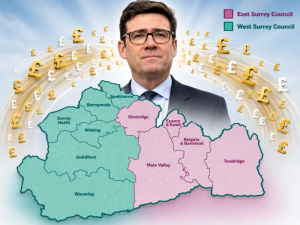
In Epsom & Ewell no NAC pilot currently operates. Under current proposals, the borough will be represented by 10 elected councillors on the new East Surrey Unitary Authority, covering a population of more than 80,000 residents. Decisions about neighbourhood-level governance will therefore have to sit alongside – or potentially compete with – a smaller number of unitary councillors holding formal democratic mandates.
Parish councils versus NACs
The NAC model also sits uneasily alongside longer-established forms of local democracy, such as parish and town councils, which are directly elected and have statutory standing.
Several Surrey districts, including parts of Epsom & Ewell, have debated whether the creation of new parish or community councils would provide a clearer, more accountable way of preserving local voice following local government reorganisation. NACs, by contrast, have no independent legal status, no direct electoral mandate and no guaranteed budgetary powers.
Supporters of NACs argue that they are intended to complement, not replace, existing councils and that they are particularly useful during a period of structural change. The Cabinet report stresses their value in identifying shared priorities, coordinating preventative work and encouraging partnership working ahead of the 2026 unitary elections.
Yet the report stops short of explaining how NACs would interact with elected parish councils where these exist – or whether they risk becoming a parallel governance layer once the new unitaries are fully operational.
A transitional solution?
For now, Surrey’s Cabinet appears to see NACs primarily as atransitional mechanism, helping to bridge the gap between the current two-tier system and the new unitary arrangements.
The four pilots ran between July and December 2025, and the decision to extend them only until the pre-election period in 2026 suggests that their long-term role remains unresolved. Expansion to further areas is framed as something to be “considered”, rather than guaranteed.
As Surrey moves closer to the creation of East and West Surrey unitary authorities, the key question for places like Epsom & Ewell will be whether neighbourhood engagement is best delivered through appointed partnership forums – or through elected local councils with clearer lines of accountability to residents.
For now, Surrey County Council is celebrating what it describes as a successful experiment. Whether NACs evolve into a permanent feature of local governance, or give way to more traditional democratic structures, is a debate that is only just beginning.
Bit of monkey business in Epsom’s Town Hall Chamber
29 January 2026
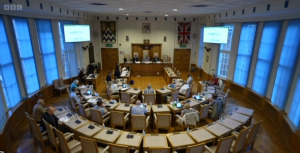
A meeting of the Licensing and Planning Policy Committee of Epsom and Ewell Borough Council on 22nd January saw councillors approve a new schedule of planning fees and charges for 2026/27, despite repeated concerns being raised during the meeting about the absence of planning officers, gaps in supporting information, and the committee’s ability to scrutinise what it was being asked to approve.
The committee was considering fees for discretionary planning services, including Planning Performance Agreements and tree-related services, rather than nationally set statutory planning application fees.
Early in the discussion, councillors were told that questions on planning matters would need to be answered after the meeting. Chair Peter O’Donovan (RA Ewell Court) explained this was because no planning officers were present.
One of the first issues raised concerned retrospective planning applications. Cllr Phil Neale (RA Cuddington) recalled that councillors had previously discussed introducing higher charges to discourage developers from building first and seeking permission later.
“We get a lot of developers playing the game… trying to do developments without planning and then getting caught and putting in retrospective applications,” he said, adding that he was disappointed not to see such a charge included.
The officer response was that the matter would need to be taken away and clarified with planning colleagues.
During the same exchange, Cllr Humphrey Reynolds (RA West Ewell) interjected that “the worst culprit is Hobbledown… application after application retrospectively,” referring to the local visitor attraction.
Concerns then turned to the scale and transparency of proposed discretionary fees. Cllr Julian Freeman (LibDem College) questioned why discretionary fees were rising by 4.8 per cent, above the headline inflation rate, and whether councillors had sufficient information to justify approving them.
A officer explained that the increase followed the council’s Medium Term Financial Strategy, which sets fees at CPI plus one per cent, using September inflation figures.
A more sustained exchange followed over officer hourly rates, particularly for tree-related services. Cllr Alex Coley (Independent Ruxley) calculated that the proposed hourly rate for a tree officer – £133 per hour – implied an equivalent daily rate of over £1,000. “That’s an extraordinary amount of money to charge,” he said, adding that residents as well as developers were affected by these fees.
An Officer responded that the hourly rates were not based on salary alone and reflected overheads, travel time and the need to maintain regulatory services alongside discretionary work. “These are the prices that we charge for the services we provide,” she said, adding that councils were effectively competing with the private sector for this type of work.”
However, when pressed on the specific breakdown of what residents receive for certain charges – including a £550 fee to plant a tree – officers acknowledged they could not provide detailed explanations during the meeting and would need to come back with written responses.
At one point, ChairPeter O’Donovan cut short the line of questioning, telling councillors: “That’s our charge. People can take it or not use it.”
Cllr Coley responded that this was not always the case, noting that some services, such as tree-related consents, could only be authorised by the council.
Questions were also raised about whether councillors had been given comparative data showing how Epsom and Ewell’s charges stack up against neighbouring boroughs. Officers said some benchmarking had been carried out but accepted that “it’s difficult to compare like for like” because councils offer services in different ways.
Later in the meeting, Cllr Freeman drew attention to newly introduced charges for primate licences, jokingly asking whether the borough was “expecting an invasion from Planet of the Apes”. Officers were unable to explain the origin of the charge at the meeting and undertook to respond later.
Despite the unresolved questions, the committee voted to approve the fees and charges as presented.
After the meeting Cllr Freeman told the Epsom & Ewell Times his view the debate left councillors and viewers “feeling that relevant evidence was not provided to committee members when making their decision”, particularly given that Epsom and Ewell Borough Council is due to be abolished in 2027 as part of local government reorganisation.
“The implication that issues could be looked at ‘next time’ rather misses the point,” he wrote. “There may not be a next time.”
PS If you wish to keep a monkey or other primate the fee is £450
.
.
.
.
EEBC reports air quality milestone and revised carbon emissions figures
29 January 2026
Epsom & Ewell Borough Council’s Environment Committee has noted a series of climate and air quality updates, including the formal revocation of the Ewell High Street Air Quality Management Area (AQMA) and revised figures showing a reduction in the council’s own operational carbon emissions since 2019/20.
The update was presented to councillors on 20 January as part of the council’s second Climate Change Action Plan, which runs from 2025 to 2029 and sets out measures intended to support the council’s stated aim of reaching carbon neutrality by 2035.
According to the report, the AQMA covering Ewell High Street has now been revoked following sustained improvements in nitrogen dioxide levels. The zone was originally designated in 2007 after pollution levels linked largely to road traffic exceeded national limits. The council acknowledged that while local measures played a role, wider national and regional factors, including vehicle fleet modernisation, also contributed to the improvement.
Alongside the air quality decision, the council reported a revision to its historical carbon emissions baseline after receiving more accurate electricity consumption data for Epsom Town Hall, Bourne Hall and Epsom Playhouse. Full-year data for 2019/20 and 2020/21 had previously been unavailable and earlier figures were based on estimates.
The revised baseline places council operational emissions in 2019/20 at 1,487 tonnes of CO₂ equivalent. For 2024/25, emissions are reported as 1,201 tonnes, representing a reduction of around 19 per cent over the period. Most subsequent years were unchanged by the revision, with the adjustments largely confined to the two earliest years.
The report also listed a number of property and energy efficiency measures undertaken in recent years, including replacement of windows at Bourne Hall, LED lighting upgrades at Epsom Playhouse, and the installation of a 177kWp solar photovoltaic system at the council’s leisure centre. The council estimates that the leisure centre installation alone could save more than 30 tonnes of carbon emissions annually, based on partial-year data.
In addition, councillors were reminded of partnership schemes intended to support residents in reducing household emissions, including advice programmes and grant schemes for heating and energy upgrades.
Chair of the Environment Committee Councillor Liz Frost (RA Woodcote and Langley) said the Climate Change Action Plan was intended to guide long-term changes in how the council operates and delivers services, and highlighted the AQMA revocation as an example of sustained action producing measurable results.
The updated emissions data and air quality decisions form part of the council’s annual monitoring of climate-related activity, which is reported back to councillors each year.
Ex-Gendarme launches Epsom safety awareness programme for children
29 January 2026
A new safety awareness programme for children has been launched in Epsom by former French armed police officer Xavier Vollin, who now works in the UK as a close protection officer for foreign diplomats and a behavioural detection instructor. Mr Vollin, who was awarded a Medal for Bravery during his police service, has more than 25 years’ frontline experience in law enforcement, personal protection and behavioural analysis. He also trains colleagues in recognising early warning signs and behavioural anomalies in everyday environments. The initiative, developed under his training company XavSafety, is currently being piloted with children aged 9 to 13, with plans to expand to older teenagers and adults.
Seeing what others miss
Mr Vollin said that much traditional safety advice focuses on what to do once a situation has already gone wrong, whereas his approach concentrates on what happens before that point, helping participants notice changes in behaviour, inconsistencies in surroundings and subtle cues that may signal emerging risk. The programme emphasises calm awareness, observation and environmental understanding rather than confrontation or fear-based thinking. It is described as helping children “see what others miss”, while remaining age-appropriate, engaging and accessible. Mr Vollin said the aim is not to turn children into “mini security officers”, but to help them become more present, confident and aware of how people and environments can change around them.
Pilot programme underway in Epsom
The initial six-week programme began in early January 2026 and has deliberately been kept small to allow the format to be refined and adapted before wider rollout. Sessions combine practical exercises with elements of behavioural observation and pattern recognition, presented in a way intended to remain playful rather than intimidating. Early feedback from parents and children has been positive, although images and evaluation material are currently limited while the pilot phase continues. Future developments are expected to include programmes for older teenagers and adults, exploring the same core skills in greater depth, and Mr Vollin intends to formalise the framework and pursue CPD accreditation.
Focus on awareness in a digital age
Mr Vollin said the wider purpose of the project is to help young people reconnect with their surroundings at a time when attention is increasingly absorbed by screens. He described the underlying idea as being less about strength or reaction, and more about presence, understanding people and recognising risk early, before reaction becomes the only option. The programme is currently launching locally in Epsom, with potential for expansion depending on demand and community interest. Further details about the initiative can be found on the XavSafety website.
Goldman sacks the Epsom and Ewell Residents Association
29 January 2026
A councillor representing Nonsuch ward has become the latest member of Epsom and Ewell Borough Council to change political alignment mid-term, with Shanice Goldman joining the Conservative group.
Cllr Goldman, first elected in May 2023, said her decision was based on where she believed she could be “most effective” in achieving practical outcomes for residents, rather than on ideology or internal party politics. She cited concerns about governance, the Local Plan and the council’s approach to parish councils as key factors influencing her move.
Her defection comes amid a period of visible political flux at Epsom and Ewell Borough Council, which is currently controlled by the Residents’ Associations (RAs). In recent months, College ward councillor Julie Morris left the Liberal Democrats to sit as an Independent, while Alex Coley departed the RA group, also choosing to continue as an Independent councillor.
In a statement explaining her decision, Cllr Goldman said she had found it increasingly difficult to support an administration she felt was not sufficiently focused on delivery or long-term outcomes. She said her priorities were better aligned with the Conservatives’ approach to accountability, governance and service delivery, adding that any local government reform should be “resident-focused, evidence-led, and driven by improved service delivery rather than structural change for its own sake”.
She also pointed to Conservative positions on safety, the Green Belt and scrutiny of council decision-making as factors in her decision, while stressing that her core priorities for residents had not changed.
The move was welcomed by local Conservative officers, who used the announcement to criticise the Residents’ Association-led administration’s record on council management, the Local Plan and parish council proposals. They said Cllr Goldman’s arrival strengthened their group’s capacity to challenge the council on behalf of residents.
Cllr Goldman said she would continue to focus on improving safety, quality of life and transparency in decision-making for residents of Nonsuch ward.
Her change of affiliation does not alter the overall control of the council, but it adds to a growing pattern of councillors stepping away from their original party groupings during the current term, raising wider questions about cohesion, governance and political direction at the borough council.
Though Conservative controlled Reigate and Banstead Borough Council has the lowest per capita debt of the 11 Surrey districts councils the three super-league mass indebted Councils were or are run by Conservatives at the relevant period of debt accumulation. See today’s Epsom and Ewell Times editorial: Process matters — but so does the balance sheet.
Epsom and Ewell’s MP in the running for …. running
29 January 2026
A hardy team of Epsom & Ewell Harriers women braved freezing conditions for the third fixture of the Surrey Cross Country League season at Oxshott Woods on 10th January, hosted by Elmbridge Road Runners. The demanding woodland course, featuring slippery roots, undulating ground and the infamous hill, tested runners throughout.
Epsom & Ewell fielded two full women’s teams and enjoyed an outstanding day in Division Two. The A team produced a commanding performance to take first place, finishing 35 points clear of Reigate Priory, while the B team secured an excellent second place, just behind Wimbledon Windmilers.
Individually, Sophie Glencross (U20) led the Harriers home with a superb third-place finish overall, drawing on her recent Varsity Cross Country experience to handle the tough conditions with confidence. Close behind, Sophie Lomas continued her strong winter form by finishing fourth, following her eighth-place result at the Surrey Cross Country Championships the previous weekend.
Completing the A team scoring positions were Annie Snowball (U20) in 19th, Nicky Stevenson (V45) in 21st and Lily Brown (U20) in 28th. Stevenson also recorded a notable age-group performance, finishing fifth in the V45–54 category with a time of 34:40.
Further strong runs came from Lauren Johnson in 32nd, Amber Brough-Nuesink in 43rd and Helen Maguire in 44th place — the Liberal Democrat MP for Epsom and Ewell — competing alongside her local club on a challenging winter course. Also finishing were Sandra Newbury in 86th and Julie Houghton in 98th.
After three of the four league fixtures, Epsom & Ewell sit third in Division Two, with Annie Snowball currently leading the U20 individual standings. With Reigate Priory and Vets AC contesting the top positions and E&E holding a narrow advantage over both Clapham Pioneers and Wimbledon Windmilers for the final promotion place, the concluding fixture at Lloyd Park promises to be keenly fought.
Another Epsom and Ewell Borough Council cover-up of criticism?
29 January 2026
Following closely behind the storm over the secrecy around the apparent failure of Epsom and Ewell Borough Council to maintain over 20 years an adequate landlord’s oversight of The Rainbow Leisure Centre [see Epsom and Ewell Times and the BBC’s LDRS report: Cllr Dallen accused of £1/2 m Epsom & Ewell Council cover-up], Independent Councillor for Ruxley Ward (former RA representative) Mr. Alex Coley has written to the Epsom and Ewell Times about the non-disclosure of a report concerning another Council asset: Bourne Hall in Ewell Village.
In view of the technicalities and jargon involved Epsom and Ewell Times provides this explainer:
When Epsom & Ewell Borough Council’s Community & Wellbeing Committee met on 13th January, it voted unanimously for greater investment (“Option 2”) for the future of Bourne Hall Museum. On the surface, this appeared to be a clear decision to invest in the museum rather than let it drift or close it. See Epsom and Ewell Times report here: Ewell’s “UFO” shaped Bourne Hall to take off anew
However, Cllr Coley explains in his letter to the Epsom & Ewell Times, the decision sits on top of a missing report, an unresolved funding question, and wider concerns about transparency in the decision-making process.
The three options – in plain English
The committee report presented councillors with three choices for the museum.
Option 1 was to do nothing. This would mean keeping the museum running as it is, within existing budgets, with no major changes or new investment. Officers warned that this approach would slowly reduce visitor numbers, weaken the wider Bourne Hall business plan, and leave the museum vulnerable as local government is reorganised.
Option 2, which the committee chose, was to invest in improvement. This would involve spending money in the short term to modernise displays, improve accessibility, strengthen community engagement, collect better visitor data, and develop a long-term plan. The report presents this option as a stepping stone towards a future where the museum could eventually move to a trust or community-based model.
Option 3 was to close the museum. This would involve shutting it to the public and beginning the lengthy and costly process of disposing of or transferring the collection, a process expected to take many years and carry significant reputational risk.
What “Option 2” actually commits the council to
This is where the language becomes technical, and where misunderstanding can easily arise.
By choosing Option 2, the committee did not approve spending the money. Instead, it agreed that officers should submit a funding request to the Strategy & Resources Committee in March 2026.
The report estimates that Option 2 would cost around £359,000 per year in the first two years, compared with around £236,000 for simply carrying on as now. The difference reflects a proposed investment phase intended to “turn the museum around”.
Crucially, the committee resolution includes a fallback position. If Strategy & Resources does not approve the funding, the council will revert to doing nothing and carry on with business as usual.
In other words, the January vote was not the final decision. The key financial decision still lies ahead.
Why Cllr Coley says the process matters
Cllr Coley’s concern is not about whether the museum should improve, but about how the decision was framed and what information councillors and the public were not shown.
He refers to an LGA Cultural Peer Challenge carried out in August 2025. This is a standard Local Government Association review process intended to provide independent scrutiny and learning, and such reports are normally published in full.
In this case, the full peer challenge report was not included in the committee papers. Instead, only a high-level executive summary was incorporated into the options report.
Cllr Coley says he repeatedly asked when the full report would be published and was told it would appear with the January committee papers. It did not. After the committee vote, he was informed that a decision had been taken to rely on a summary instead.
At the meeting itself, the committee chair accepted that, in hindsight, the full report should have been included after this was challenged by opposition councillors. As of now, it has still not been published.
What the missing report is said to contain
Cllr Coley states that, internally, the peer challenge report is understood to contain findings that are critical of the council’s handling of the museum. These are said to include confusion and mixed messaging about the museum’s closure, the exclusion of stewardship and governance questions from scope, failure to act on recommendations made in a 2023 review, recharge costs that may not reflect the true cost of running the museum, difficulty accessing detailed financial information, and fragmented staffing structures affecting communication and opportunity.
These issues matter because Option 2 is explicitly justified as being based on the service review and peer challenge findings. Without access to the full peer challenge report, councillors and the public cannot independently assess whether the proposed investment properly addresses those criticisms.
Why this matters before March
The Strategy & Resources Committee will be asked in March to approve, or refuse, the additional funding required for Option 2.
Cllr Coley’s central question is whether councillors should be asked to commit hundreds of thousands of pounds without having seen the full independent review that underpins the case for spending it. That is why he has submitted a Freedom of Information request and is pressing for the report’s publication before the funding decision is taken.
In short
The January vote did not approve spending. It authorised a future funding request. A key independent report cited as evidence has not been published. One councillor argues this undermines informed decision-making. The decisive moment will come in March, when councillors decide whether to fund the plan, potentially without seeing the full peer challenge findings unless they are released.
Epsom Councillor claims he is being silenced for his transparency concerns
29 January 2026
A meeting of Epsom and Ewell Borough Council’s Standards and Constitution Committee on 15th January exposed sharp tensions over councillors’ scrutiny rights and the handling of Code of Conduct complaints, following an unusually fraught exchange between a senior councillor and the committee chair.
Cllr Chris Ames (Labour Court) claims that his raising of concerns about Council transparency has stimulated official complaints against him inhibiting him further from holding the Council to account.
Councillor declares interest — and raises alarm
Early in the meeting, Councillor Chris Ames (Labour Court) declared a personal interest in the final agenda item reviewing Code of Conduct complaints, confirming he was the subject of two live complaints and would withdraw when the item was reached.
In an extended statement, Councillor Ames told the committee that he had chosen to be transparent because the complaints were already referenced in the report and likely to give rise to “public speculation”.
He said: “Both complaints are effectively that I raised concerns about transparency failings at the council… I don’t believe it’s appropriate to use a code of conduct complaint to censor councillors’ concerns”.
Councillor Ames also argued that there appeared to be no clear written procedure for councillors who are the subject of complaints, beyond guidance aimed at complainants. He said this lack of clarity was itself a governance issue the committee should be concerned about.
The Chair, Councillor John Beckett (RA Auriol) intervened to halt the statement, telling him: “This is not really the time and place to discuss the actual complaints against you.”
Councillor Ames responded that being required to recuse himself before any complaint was resolved was already preventing him from fulfilling his role: “On the basis of a complaint, this essentially has the effect of censoring me as a councillor.”
Constitution update prompts wider scrutiny debate
The committee later considered an update to the Council’s Constitution, including changes to the Scheme of Delegation that governs what decisions officers can take without councillor approval.
Officers introduced a late addendum, explaining that an internal audit had identified an error in the Constitution. A requirement for an annual report to Audit and Scrutiny on “significant delegated decisions” was being corrected to refer instead to “urgent decisions”, a defined category already used in practice.
The Monitoring Officer stressed the change was technical: “We’re literally just recognising a defined term of decisions that don’t exist for one that does. There will be no changes to the process.”
However, Councillor Ames used the discussion to raise broader concerns about scrutiny being weakened in practice. He argued that councillors’ existing rights to request scrutiny of delegated decisions were routinely ignored. Referring to the Constitution, he said: “There is a right for a councillor here to request that decisions taken by officers under delegated powers are scrutinised… but it doesn’t appear to express a right for that scrutiny then to take place.” He also mentioned: “Councillor Chinn (Labour Court) and I have been warned to be circumspect about what we can and can’t say in public about the scheme of delegation. It’s been declared to be an exempt issue.”
He proposed amending the wording to make clear that such requests must be heard by the Audit and Scrutiny Committee, warning that without this, councillors’ rights existed “for no effect”. Councillor Ames went further, accusing the administration of blocking scrutiny: “All of the attempts at calling in are being blocked… The main object of the administration seems to be to stop the public finding out quite how bad they are by preventing things being aired in public.”
Proposal deferred, constitution changes approved
Officers advised that the proposal should be referred to the Constitution Working Group, made up of political group leaders, rather than debated fully on the night. Councillor Ames’s amendment failed to attract a seconder but was formally referred to the working group at his request.
The committee then unanimously agreed to recommend the constitutional updates — including the late correction — to Full Council.
Code of Conduct complaints: eight cases, two ongoing
After Councillor Ames left the meeting, the committee considered the report on Code of Conduct complaints.
Officers confirmed that eight complaints were assessed as valid between December 2023 and December 2025. Six had been resolved, with two still ongoing. No councillors were named, with officers citing the need for fairness and natural justice.
The report was noted without debate.
Why this matters
While much of the meeting dealt with technical governance changes, the exchanges revealed deep unease about transparency, scrutiny and the use of conduct complaints, particularly as the Council approaches local government reorganisation.
Whether Councillor Ames’s concerns lead to stronger scrutiny powers — or remain unresolved — now rests with the Constitution Working Group.
Students from University for the Creative Arts (UCA) in Epsom are set to return to Epsom Picturehouse later this month with another imaginative cinema takeover – this time built around the release of Marty Supreme.
The one-night event takes place on Tuesday 20th January, with activities beginning at 6.30pm, and forms part of UCA Epsom’s Experience Economy module. Rather than focusing on conventional event mana
The January screening will again see students working directly with the Picturehouse team to create an enhanced, interactive evening that goes beyond simply watching a film. While full details are being kept under wraps, organisers promise live elements and audience interaction designed to complement the themes and setting of the film.
The collaboration builds on last year’s well-received student takeover, which re-imagined Be Kind Rewind as a playful, hands-on cinema experience. That event featured live performances, green-screen activities and interactive installations that transformed the building into a temporary creative hub and demonstrated how cinema can function as a shared social space rather than a purely passive one.
This year’s focus is Marty Supreme, a new film set in 1950s New York and starring Timothée Chalamet as Marty Mauser, a driven outsider determined to become a champion table-tennis player and turn the sport into a nationwide phenomenon. The story’s emphasis on confidence, ambition and refusing to be overlooked has provided fertile ground for students developing ideas around performance, identity and audience participation.
Epsom Picturehouse, which opened in 2018, has become a central part of the town’s cultural life, combining six screens showing independent cinema and mainstream releases with a café-bar that is used for talks, community events and special screenings. The venue is part of the Picturehouse chain, known nationally for its focus on curated programming and local partnerships.
UCA’s Epsom campus, located at the former Epsom School of Art, specialises in creative business, marketing and performance-related courses, with an emphasis on practical collaboration with external organisations. Projects such as the Picturehouse takeover form part of the university’s wider approach to linking students with real-world audiences and venues.
Joe Stroud, Marketing Manager at Epsom Picturehouse, said the partnership reflects a shared commitment to creativity and community, adding that working with students brings fresh perspectives into the cinema and helps re-imagine how audiences experience film.
The Marty Supreme cinema takeover is a one-night-only event, with tickets available via the Picturehouse website.
An Epsom-based dance competition team is preparing to take to the international stage after being selected to represent Team England at the Dance World Cup 2026 in Dublin next summer.
CMDC (Charmille Dance Collective) received the news just before Christmas that one of its groups and two solo dancers had been chosen for the prestigious world finals, following national qualifying rounds.
Founder Charlotte Liddle said: “We are thrilled that one of our groups and two solo dancers have been selected to represent Team England at the Dance World Cup in Dublin next year.”
The Dance World Cup is an annual, large-scale international competition focused on children and young adults, typically aged between five and 25. Dancers qualify through national competitions or video selection before reaching the world finals, making selection highly competitive.
The 2026 finals will take place at the Convention Centre Dublin from Wednesday 8 to Saturday 18 July 2026. Organisers expect more than 120,000 competitors from over 70 countries, competing across a wide range of styles including classical, contemporary, street, hip hop and theatrical dance. The event is widely regarded as one of the largest all-genre youth dance competitions in the world and a major milestone for young dancers.
Charmille Dance Collective was founded by sisters Charlotte and Millie Liddle, both graduates of the Laine Theatre of Arts. Despite being a relatively new team, CMDC has already built a strong competitive record, including a second-place finish at the All England finals in 2024.
Co-founder Millie Liddle said: “We are so proud of the girls and how far they have come in such a short time. Their dedication and hard work have been incredible, and they truly deserve this opportunity.”
Before heading to Dublin, the team will be balancing intensive training with fund-raising activities to help cover travel and competition costs, as they look to give themselves the best chance of building on Team England’s previous successes at the event.
Charmille Dance Collective is a community dance team based in Epsom. Founded by sisters Charlotte and Millie Liddle, former students atr Epsom’s Laine Theatre Arts, the group competes at regional and national dance competitions across the UK.
Charlotte and Millie welcome help to fund the trip:
Cllr Dallen accused of £1/2 m Epsom & Ewell Council cover-up
29 January 2026
BBC LDRS reports: A Surrey council [Epsom and Ewell] must pay out up to £500,000 after failing to properly check the condition of a major leisure centre before handing it over to a new operator. Poor ventilation, damp and ‘possible roof cracks’ were cited as some of the problems related to the “fabric” of the building.
Epsom and Ewell Borough Council has agreed to cover the costs of urgent repairs at Rainbow Leisure Centre after the new contractors took over the site and uncovered a long list of issues, some relating to the structure and fabric of the building. Places Leisure took over the contract on October 1, 2025, but has not yet signed on the dotted line, the LDRS understands.
The pay out was approved via a confidential urgent decision, seen by the Local Democracy Reporting Service (LDRS), after Places Leisure said it should not be responsible for fixing the issues.
An urgent decision is when a council cannot wait until the usual decision-making committee process as it could harm the public or council interests.
Some of the problems relate to the fabric of the building, for which the council is responsible, the LDRS understands. This is despite the council previously insisting it had carried out such checks.
In a public report dated June 2025, Epsom and Ewell Borough Council said it had commissioned a stock condition report to make sure the building was handed over in good nick.
As the LDRS understands, council officers believed the centre would be handed back in good condition. An external consultant was used, but their inspection was not invasive, meaning hidden problems may not have been picked up. But just six months later, the authority is now facing a bill of up to £500k to fix problems that either were missed or not properly dealt with because the council did not know about them.
When Places took over, it found issues it believed the previous operator should have fixed. Some of the problems raised include:
Fire alarm faults
Lift issues
Broken seating
Damaged glazing
Faulty toilets
Poor ventilation
Damp
Possible roof cracks
Machinery at “end of life”
Some were flagged as health and safety risks, meaning urgent action was needed to keep the centre safe and open.
The council has now agreed to let Places carry out the repairs and reclaim the costs by reducing the management fee it pays back to the council. Officers said this is the “most cost-effective” option, but it effectively means residents are picking up the tab.
Why is the council paying? Under the contract, some repairs fall to the council as landlord responsibilities. Others may be recoverable from former operator GLL, but legal experts warn the council is unlikely to claw back the full amount. GLL has been contacted for comment. [See below for additional reporting.]
The authority plans to dip into its ‘dilapidation’ reserve, a pot of money set aside for building repairs, to cover the shortfall. Officers admit the final cost is still being worked out, but estimate it could reach up to £500,000.
Opposition fury Councillors have slammed the council for not knowing the state of its own properties.
Cllr Alex Coley, member of the Independent group (Ruxley), said: “I’d have hoped that the council as landlord would understand the condition of the leisure centre to establish its potential liability.”
Labour group leader, Cllr Kate Chinn, (Court) hit out at the ruling Residents’ Association (RA), calling the situation a “shocking scandal”.
She said: “This secrecy wasn’t about keeping the costs involved from the parties to the negotiations as they already know them. It was about preventing the public from learning how incompetent the RA are.”
She added: “Cllr Neil Dallen (RA Town) has rightly owned this fiasco, but without realising that his ‘nothing to see’ attitude that council tax payers should expect to be routinely stuck with bills on this scale shows how complacent he is with their money.”
She accused the ruling group of being distracted: “The RA have clearly taken their eye off the ball as they focus on a self-serving attempt to create new parish councils and new roles for themselves.”
Cllr James Lawrence, leader of the Liberal Democrat group (College), said the situation shows “the importance of maintaining key properties so they are in good working condition and ensuring the status of our properties is communicated to both councillors and residents in good time.”
Council response Council leaders defended the decision, saying negotiations are normal during handovers. Councillors Neil Dallen and Clive Woodbridge (RA Ewell Village) said: “Rainbow Leisure Centre transferred to a new operator, Places Leisure, on 1 October 2025. Since then, we’ve been pleased to see a number of improvements at the centre.
“This marks the beginning of an exciting new chapter for the leisure centre… including significant investment to upgrade the gym, studios, swimming changing rooms and more, which are already underway.”
They added: “With any handover, it is normal practice for there to be negotiations around works to be carried out which form part of the contract finalisation.”
However, they refused to release further information, saying: “Details relating to terms and financial arrangements are commercially sensitive and therefore not in the public domain.”
Places Leisure A spokesperson said: “Places Leisure took over the operation and management of Rainbow Leisure Centre in partnership with Epsom and Ewell Borough Council on 1st October 2025. We are excited to work closely with the Council to implement changes and significant investment at the centre to make a positive impact for the local community.”
In a further twist GLL has supplied Epsom and Ewell Times a response to the issues: ““GLL was proud to partner with Epsom and Ewell Council on the design and opening of Rainbow Leisure Centre over 20 years ago. This innovative and award-winning centre has been extremely successful over the 20 years of GLL’s tenure, engaging millions of local residents in activity, improving their health and wellbeing.
“GLL is unaware of any legal claim that the Council is looking to bring in relation to the standard of the building on handover, especially as there are set protocols to deal with building handovers prior to any instigation of legal action. As background, the Council undertook, via specialist contractors, a full survey of the building prior to GLL exiting. As is normal in all leisure transfers, items that were identified for [repair or rectification] in that survey for GLL were all completed prior to handover and signed off by the specialist contractors on behalf of the Council. GLL handed the building over to the standard required by the Council and under the contract.”
It is normal practice for Councils as landlords to have rights of periodic entry and inspection of premises it engages contractors to manage. Either the Council was negligent in failing to insert such rights in the contract with GLL or the Council has been negligent over an extended period of years in failing to carry out inspections or to carry out inspections properly.
The Council has made fully public announcements that Places commenced its contract on 1st October 2025. See Epsom and Ewell Times report: Epsom’s Rainbow Leisure Centre Places new operators. The Information Commissioner has made plain that Council’s cannot evade accountability by claims of ongoing contractual negotiations. The tender process having ended for both GLL and Places means there is little if any financially sensitive information to protect justifying a confidential label on information that exposes probable Council incompetence.
Epsom and Ewell Times asked Epsom and Ewell Borough Council a series of questions about these issues and received the same “nothing to see here” response from Cllr Dallen as obtained by the BBC’s Local Democracy Reporting Service (LDRS) reporter Emily Dalton, as above. The Epsom and Ewell Times has thus submitted to Epsom and Ewell Borough Council formal Freedom of Information Act demands for relevant information.
From the Cosmos to Commerce: University of Surrey Leads the Way
29 January 2026
The University of Surrey has been showcasing a remarkable breadth of achievement in recent weeks, with major advances announced across fundamental science, international collaboration, digital trade policy and lifetime academic excellence.
From unlocking the origins of the universe’s rarest elements, to shaping the future of UK trade infrastructure and celebrating world-leading research careers, the University’s latest announcements underline its growing national and international impact.
Unlocking the universe’s rarest elements
Surrey scientists are leading a new £215,100 international research project that aims to transform understanding of how chemical elements are formed during extreme cosmic events such as supernovae, neutron-star collisions and X-ray bursts.
Funded by the Royal Society’s International Science Partnership Fund, the three-year project brings together researchers from Surrey, Kyushu University and Japan’s world-leading RIKEN laboratory. The team will develop and deploy cutting-edge instruments capable of measuring some of the rarest and most unstable atomic nuclei ever studied.
These exotic isotopes do not exist naturally on Earth and can only be created briefly in advanced physics laboratories. By measuring their mass and decay rates for the first time, researchers hope to refine theoretical models of nuclear structure and gain new insight into how the heaviest elements in the universe are formed.
Experiments will take place at RIKEN’s Rare-Radioactive Isotope Ring, a unique facility that allows repeated observation of these short-lived nuclei. Surrey researchers will play a central role, leading the design and testing of advanced detector and data-acquisition systems in the UK ahead of the experimental programme in Japan.
The collaboration is also expected to strengthen scientific ties between the UK and Japan and reinforce the UK’s position at the forefront of nuclear physics research.
Warning over UK digital trade and border fragmentation
In a very different field, new research from Surrey Business School and the Centre for the Decentralised Digital Economy has issued a stark warning that the UK risks falling behind global competitors in digital trade unless urgent action is taken.
The study argues that the UK’s digital border initiatives are fragmented, with no single organisation responsible for coordinating legislation, technology platforms and end-to-end border processes. As a result, businesses face repeated data requests, delays and uncertainty, increasing costs rather than reducing friction.
Researchers examined UK trade and border policies since 2017, including the 2025 UK Border Strategy, recent digital trade legislation and multiple government pilot projects. Drawing on international case studies and academic research, the team proposes a collaborative governance framework to guide reform.
The report calls for the government to give one body a clear mandate to orchestrate policy, digital platforms and data standards across departments. It argues that, with the right leadership, the UK has a window of opportunity to create a new digital “silk road” for trade, enabling trusted data sharing that benefits smaller firms as well as multinationals.
Lifetime achievement recognised in materials science
Surrey’s excellence in research was further highlighted by the announcement that Professor Joseph Keddie, Professor of Soft Matter Physics, has been awarded the 2026 Sir Eric Rideal Award for lifetime achievement in colloid and interface science.
Jointly awarded by the Royal Society of Chemistry and the Society of Chemical Industry, the prestigious honour recognises sustained and distinguished contributions to the field. Professor Keddie is internationally known for pioneering work on polymer colloids, sustainable materials and so-called “living materials”, with applications ranging from coatings and adhesives to wastewater treatment and bioremediation.
Over a career spanning more than three decades, he has authored more than 150 academic publications, holds multiple patents and co-authored the influential book Fundamentals of Latex Film Formation. His work at Surrey has previously been recognised by major awards from both the Institute of Physics and the Royal Society of Chemistry.
Professor Keddie will deliver the Rideal Lecture, titled More than Watching Paint Dry, on 8 April 2026, presenting highlights from his research including self-layering coatings and carbon-storing “living paints”.
A university with global reach
Taken together, the announcements paint a picture of a university operating at the cutting edge across disciplines: advancing fundamental science on a global stage, influencing national policy debates, and nurturing research careers with lasting international impact.
For Surrey residents, the achievements reinforce the University of Surrey’s role not only as a local institution, but as a centre of innovation and expertise with reach far beyond Guildford.
Epsom and Ewell lags Surrey’s recycling front-runners, new tracker shows
29 January 2026
Surrey’s self-assessment – and what sits behind it
A new “Surrey Waste Tracker” published by the Surrey Environment Partnership (SEP) claims Surrey is one of the best performing areas in England for recycling and low landfill. The tracker uses data for the 2023–24 year and compares Surrey County Council with 28 “similar” waste authorities across England.
SEP reports that 54.5% of Surrey’s total household waste is recycled, reused or composted, placing Surrey joint second out of 29 comparable authorities. Surrey households produced around 445kg of rubbish per home, said to be eighth out of 29 and better than an England average of around 511kg. Just 0.2% of Surrey’s household waste went to landfill, compared with an England average of 5.5%, and 85% of Surrey’s waste is processed in the UK rather than exported.
The tracker does not spell out which 28 other authorities Surrey is being measured against, nor does it cite the exact national datasets used for those comparisons.
How independent national data stacks up
Provisional government waste statistics for 2023–24 show that, across England as a whole, the household recycling rate is around 44%. The same official release reports that 5.5% of local authority-collected waste in England was sent to landfill.
Taken together, these independent figures broadly support SEP’s central message: Surrey’s recycling rate is around ten percentage points higher than the England average, Surrey sends a much smaller share of its waste to landfill than the country as a whole, and Surrey households appear to be producing less residual rubbish than the average English household.
However, the 42.3% “England average” recycling figure quoted on the Surrey Waste Tracker is slightly lower than the 44% national rate reported by government, suggesting SEP may be using a different measure or earlier cut of the same data.
Where Epsom and Ewell sits in the Surrey league
The tracker also breaks down performance by each of Surrey’s 11 district and borough councils, including Epsom and Ewell. For each area it publishes annual rubbish per household (in kg), the proportion of household waste recycled, reused or composted, and the proportion of recycling processed within the UK.
On those measures, Epsom and Ewell is a low performer within Surrey, but well behind the best-performing districts.
Recycling rate: Epsom and Ewell recycles, reuses or composts 52.1% of its household waste. This places it ninth out of the 11 Surrey districts and boroughs on the recycling measure, while Surrey Heath leads the county on 58.9%, with Guildford and Tandridge close behind.
Rubbish per household: Epsom and Ewell households produce 402.3kg of rubbish per year. That is better than Elmbridge and Spelthorne, but still ninth out of 11 when ranked from lowest to highest residual waste. Surrey Heath again tops this table with 341.2kg per household.
How much recycling stays in the UK: Only 63.7% of Epsom and Ewell’s collected recycling is processed within the UK, the lowest share in Surrey. Several councils send a much higher proportion of recyclables to UK facilities, including Reigate and Banstead, Guildford and Tandridge.
Surrey district and borough waste league table, 2023–24
Based on the Surrey Waste Tracker’s published data, the picture across the 11 local areas is as follows, ranked by recycling rate from highest to lowest:
Rank (recycling)
District / Borough
Rubbish per household (kg)
Proportion recycled / reused / composted (%)
Proportion of recycling processed in UK (%)
1
Surrey Heath
341.2
58.9
76.8
2
Guildford
347.5
57.9
84.6
3
Tandridge
361.5
57.8
84.2
4
Waverley
350.0
57.0
75.3
5
Mole Valley
362.1
56.4
72.2
6
Woking
348.1
56.4
73.1
7
Elmbridge
407.5
54.2
72.6
8
Reigate and Banstead
381.2
54.2
96.2
9
Epsom and Ewell
402.3
52.1
63.7
10
Runnymede
386.4
46.8
71.5
11
Spelthorne
439.3
44.5
70.7
On this reading, Epsom and Ewell recycles a larger share of its waste than the national average, but less than eight of its ten Surrey neighbours, produces more rubbish per household than most Surrey areas, and sends the smallest proportion of its recycling to UK plants.
Who owns the Surrey Environment Partnership?
The Surrey Waste Tracker is published by the Surrey Environment Partnership, which is a partnership between Surrey County Council and the 11 district and borough councils. SEP is therefore not an external watchdog but a joint project of the councils whose performance it reports on.
The tracker draws on data that councils are legally required to report to central government through the WasteDataFlow system, which the government then uses to produce national statistics. However, it does not identify the 28 “similar areas” Surrey is compared with, nor the criteria for including them, and it does not explicitly reference the government publications from which national averages appear to be taken.
For residents in Epsom and Ewell, the Surrey Waste Tracker offers a useful snapshot of local performance within a strong-performing county, while also raising questions of transparency and comparability. The extent to which the borough can close the gap with Surrey’s recycling leaders, and keep more of its recycling treatment within the UK, is likely to remain a live policy issue for years ahead.
Image: Landfill site in UK by M J Richardson CC BY-SA 2.0
Since publication of the above report the Surrey Environmental Partnership has issued the following helpful clarification:
Unfortunately, there was an error in the number of authorities that we compared Surrey with. The report originally listed that there were 29 similar authorities, when in fact it was 27. This has now been amended on our website – Surrey Environment Partnership – Surrey Waste Tracker. The authorities that Surrey compares to are the other waste disposal authorities in England.
The article also mentions a discrepancy between the figure of 42.3% that we used for England’s recycling rate compared to the figure of 44.0%. Just to clarify that 44.0% is England’s recycling rate for the calendar year of 2023 whereas 42.3% is England’s recycling rate for 2023-24, which is the period that our report covers.
We have made a note to include the above level of detail in Surrey Waste Tracker reports from hereon.
Epsom Hospital faces flu challenge
29 January 2026
Hospitals serving Epsom and Ewell are facing one of their toughest starts to a year in recent memory, with dozens of beds taken up by flu patients and others closed because of infection control, as winter illnesses surge across the country.
As of Sunday, 45 beds across St George’s, Epsom and St Helier hospitals were occupied by patients with influenza, according to the St George’s, Epsom and St Helier University Hospitals and Health Group. At the same time, further beds have had to be taken out of use due to flu and norovirus outbreaks, reducing the system’s overall capacity just as demand is rising.
The combination of cold weather, widespread winter viruses and a growing number of patients needing specialist treatment has created what NHS leaders locally describe as a “bleak” start to the new year.
Elaine Clancy, Group Chief Nurse for St George’s, Epsom and St Helier, said hospitals across the group were seeing “some very sick patients” as winter illnesses and low temperatures take their toll. “Don’t make the mistake of thinking flu is just a bad cold,” she said. “These figures show the infection can make people seriously ill, and I’d urge people to take steps to ensure they and their loved ones don’t suffer.”
A national problem, not just local
The pressure on Epsom and St Helier reflects a wider national trend. NHS England has warned that socialising over Christmas and New Year is likely to have fuelled a rebound in flu, Covid-19 and other winter viruses, with senior figures cautioning that the worst of the season is “far from over”.
Across England, hospitals are again reporting high numbers of admissions for respiratory illness, alongside continued demand from people with complex medical needs who are more vulnerable in cold weather. The knock-on effect is felt most sharply in accident and emergency departments, where delays grow when wards are full and patients cannot be moved on.
Public health experts have long warned that flu remains a serious illness, particularly for older people, pregnant women and those with underlying conditions. In bad seasons, it contributes to thousands of excess deaths nationally, even though it is often dismissed as minor.
Norovirus, meanwhile, spreads rapidly in hospitals and care settings, forcing wards or bays to close for deep cleaning, further reducing available beds at precisely the moment they are most needed.
What people can do
Local NHS leaders are urging residents to take simple but effective steps to reduce the spread of infection and help protect the health service. These include getting vaccinated against flu if eligible, washing hands regularly, staying at home if unwell, and avoiding contact with vulnerable people when displaying symptoms. Keeping homes warm – ideally at 18°C or above in key rooms – and wrapping up when going outdoors also helps reduce the risk of illness.
People are also being asked to use health services appropriately, so that emergency departments remain available for those in urgent need. NHS 111, which is available online and by phone 24 hours a day, can direct people to the right service, while community pharmacists can advise on many minor illnesses and treatments.
Residents are encouraged to check on neighbours, friends and family who may be vulnerable, to make sure they have food, medication and adequate heating during the cold snap.
With flu and winter viruses still circulating widely, health leaders say the coming weeks will be critical — both for hospitals trying to manage demand, and for communities doing their part to keep themselves and others safe.
Epsom lamppost flags: symbol of pride — or cause of anxiety?
29 January 2026
Across parts of Epsom and Ewell, the appearance of Union Jack flags tied to lampposts has prompted sharply differing reactions. For some residents, the flag remains a symbol of shared identity and national belonging. For others, the manner of their sudden arrival — often without permission and fixed to public infrastructure — has caused unease, sparking wider anxieties about division, ownership of public space, and the meaning of patriotism in modern Britain.
In September 2025 Surrey County Council restated its position on flags and attachments to street furniture, reminding residents that anything fixed to a lamppost or painted on a public highway requires formal consent. The council emphasised safety considerations for drivers, pedestrians and maintenance crews, and said unauthorised attachments may be removed during inspections. Residents wishing to display flags on public land are advised to apply in advance through established procedures. The council was clear, however, that anyone may fly a flag from their own property if they wish to do so.
The debate has not only been technical or regulatory. One local resident, writing to the Epsom and Ewell Times, described attempting to remove some of the flags in their neighbourhood and being confronted in the process. Their concern was less about flags as symbols, and more about how — and by whom — they were placed, and whether they were being used to signal exclusion rather than unity. The writer reflected on the way social and political polarisation in recent years has shaped how national imagery is read, and expressed frustration at what they saw as a lack of clarity over which authority is responsible for removing unauthorised items from street furniture.
Others in the borough have reacted very differently, seeing the flags as benign expressions of pride, or as gestures intended to lift spirits at a time of economic and social uncertainty. Some residents have argued that the Union Jack should not be regarded as belonging to any one political tradition, recalling moments when people across the country — including at national sporting events and during major civic occasions — have gathered beneath it without controversy.
That broader question — who “owns” the flag — has recurred throughout modern political history. When crowds waved the Union Jack outside Downing Street on the night of Labour’s 1997 election victory, commentators spoke of the centre-left “reclaiming” national symbolism from the political right, attempting to make it inclusive rather than exclusive. Others have suggested that opportunities were later missed to develop a more layered sense of identity, for example by flying the European Union flag alongside the Union Jack on public buildings, as was commonplace in many EU member states. For some, that dual display might have normalised a shared British and European identity; for others it would itself have been contentious. The difficulty of striking a balance illustrates how strongly flags can be read in different ways.
In Epsom and Ewell, the present concerns appear to rest less on the flag itself than on process, tone and consent. The sudden appearance of flags on lampposts — without clear identification of who has installed them and without permission from the asset-owning authority — has left some residents feeling unsettled or excluded, while leaving councils fielding questions about responsibility and enforcement. The practicalities are not trivial: removing items at height may require equipment, contractor time and public money.
One constructive suggestion arising from local discussions is that the right of individuals to fly a flag from their own homes could be matched by a more open and confident approach from civic bodies, schools, churches, voluntary groups and local businesses — flying the Union Jack from their own buildings in clearly identifiable and lawful ways, and on agreed occasions. In that model, the flag becomes visible as a symbol belonging to all, rather than as an anonymous street-level intervention that some interpret as a political statement.
Another proposal is for clearer published guidance from the relevant authorities — setting out who owns which assets, how permission can be sought, what safety standards apply, and how residents may raise concerns or objections. Transparency about due process may help reduce tension, even where views differ about meaning and symbolism.
What the current debate in Epsom and Ewell perhaps most clearly reveals is that flags still carry emotional weight — capable of reassuring some while unsettling others. Between those positions lies a space for thoughtful discussion about how shared symbols are used in public places, and how a sense of belonging can be fostered without causing anxiety to neighbours who may read them differently.