Epsom’s empty and second homes face local tax increases
17 March 2026
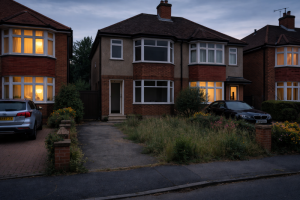
Epsom & Ewell Borough Council has approved a 2.98% increase in its share of Council Tax for 2026/27, alongside new measures to penalise empty properties and second homes, but not without some questioning from councillors over the purpose and clarity of the changes. (Strategy and Resources Committee 27th January.) The increase equates to £6.93 a year for a Band D household, keeping within the government’s referendum limit and adding around 58p per month to bills. While modest in isolation, the rise sits within a wider package aimed at strengthening council finances and aligning local policy with other Surrey authorities ahead of the planned move to unitary government.
The more contentious element of the decision was the tightening of rules on empty homes and second properties. From April 2026, owners of empty and unfurnished properties will no longer receive a one-month exemption and will face a 100% Council Tax premium after one year, effectively doubling their bill. From April 2027, the same 100% premium will apply to second homes. Introducing the policy, Committee Chair Cllr Neil Dallen (RA Town) said: “It’s something that the rest of the boroughs and districts in Surrey are already doing… coming up to unitary it’s now proposed that we do do it and align ourselves ready for the unity proposal.”
Although the measures were approved unanimously, several councillors probed the reasoning and operation of the policy. Cllr Chris Ames (Labour Court) questioned whether the changes were primarily about raising income or achieving social outcomes such as reducing homelessness and increasing housing supply, asking whether the Council was “trying to achieve any of those things, or is it simply about… increasing the income that we get.” In response, Cllr Dallen indicated the policy served both purposes, noting that while the number of empty homes locally is limited, “every property is another family home,” and officers confirmed that bringing homes back into use remains an objective.
Cllr James Lawrence (LibDem College) also raised detailed questions about how the policy would work in practice, particularly the rules around when a property is considered occupied and how time limits on empty status are reset. He highlighted potential ambiguity in the wording of the policy documents, suggesting that the distinction between a property being “substantially furnished” and actually occupied could lead to confusion. While confirming his support for the policy in principle, he sought reassurance that the expected income—estimated at around £29,000—would exceed the administrative cost of implementing the scheme.
The discussion reflected a broader concern among some members about balancing financial necessity with fairness and clarity. While there was no outright opposition to the proposals, the debate revealed differing emphases: some councillors focused on revenue generation and alignment with Surrey-wide practice, while others stressed the importance of ensuring the policy delivers genuine housing benefits and is clearly understood by residents.
In the end, the committee approved the recommendations without dissent, confirming both the Council Tax increase and the new premiums on empty and second homes as part of the authority’s budget-setting process for the coming financial year.
Sun sets on Residents’ Associations’ cherished Parishes for Epsom and Ewell
17 March 2026
Epsom & Ewell Borough Council has formally abandoned plans to create parish-style community councils after a public consultation produced overwhelming opposition, bringing to an end a controversial review that has cost about £70,000.
The decision was taken at a full council meeting on 12th March following a debate that exposed sharp political divisions and prompted renewed criticism of the Residents’ Association administration that initiated the review.
Councillors ultimately accepted a report concluding that the consultation “does not demonstrate sufficient public support for the proposals”, after residents rejected the idea of creating two community councils covering Epsom and Ewell.
But the debate revealed tensions over the purpose of the consultation itself, the cost of the process, and the future of local representation in Surrey after local government reorganisation.
Beckett: residents “have spoken” but warns of democratic deficit
Introducing the report, Councillor John Beckett (Auriol), who led the Community Governance Review (CGR), said the council had carried out extensive engagement with residents and should be proud of the exercise.
He told councillors that more than 2,200 responses had been received, making it one of the council’s most widely responded-to consultations in recent years.
Beckett said the consultation was justified because residents across Surrey had not been properly consulted about the government’s decision to reorganise local government. He argued the borough had taken a different approach by asking residents directly what they wanted.
However, he acknowledged the result left the council with little option but to halt the plan. “Our residents have spoken on this matter, and with 82 per cent opposed to the idea of community councils, the recommendation of this report is not to proceed with CGR,” he said.
Despite accepting the result, Beckett used both his opening speech and his closing remarks to warn that the new local government structure could weaken local representation.
He questioned how the proposed neighbourhood committees expected under the new unitary structure would address local issues. “How the non-funded, non-decision-making neighbourhood committees will miraculously deliver those local issues facing our residents,” he asked, warning they may not resolve the democratic deficit created by large unitary councils.
In his summing-up he said the future system could leave a patchwork across Surrey of areas with and without meaningful local representation.
Opposition: “self-serving” and a “vanity project”
Opposition councillors were sharply critical of the review and its purpose. Labour councillor Chris Ames (Court) said the administration had been warned not to embark on the process. “The Residents’ Association administration was warned not to take the council into this shambolic, costly and self-serving process,” he said.
Ames argued the public had rejected what he described as an RA “vanity project”. “The public saw through it. It’s clear that the residents rejected the RA vanity project,” he said, adding that residents also resented the idea of another layer of taxation.
He criticised the consultation structure, saying residents were effectively offered only one option. “It’s laughable to present giving residents a choice of unwanted parishes or nothing at all as a choice,” he said.
He also asked where accountability lay for the £70,000 cost of the review. “Seventy thousand pounds later, where does the CGR shambles leave us?” he asked.
Claims the review was about creating roles
Councillor Julian Freeman (Liberal Democrat, College) argued there had never been a public demand for parish councils in the borough. “There’s never been any demand for it,” he said. Freeman suggested the proposal had been linked to the approaching abolition of borough councils. “It was a way of trying to carve out some kind of role for soon-to-be former Residents’ Association councillors,” he said.
He added that residents reacted strongly once they realised the potential council tax implications. “People saw that it was going to cost an extra £50 plus on their council tax bill and quite rightly said, what on earth do we want to pay for another layer of government for?”
Criticism of consultation design
Several councillors criticised the structure of the consultation. Councillor Bernie Muir (Conservative Horton) said residents had not been offered alternative governance models. “We were given one option or nothing,” she said.
She added that neighbourhood area committees proposed under Surrey’s local government reorganisation had not been presented as an option. “Those committees should at least have been given a chance to see if they worked,” she said.
Another councillor said the consultation had effectively framed the issue as a choice between parish councils or losing local influence entirely.
Cllr Kieran Persand (Conservative Horton) reminded the Chamber that the proposed Parishes would only manage a handful of allotments that residents grow fruit and vegetables in.
Administration defends consultation
Residents’ Association councillors strongly defended the review as an exercise in democratic engagement.
Councillor Clive Woodbridge (RA Ewell Village) said the borough had done what central government had not done during the reorganisation process. “We had the courage to ask our residents what they wanted,” he said.
He added that the council was respecting the outcome. “They’ve quite clearly said that they don’t want parish councils, and we will act upon that advice.” He claimed, wrongly as it transpired, that Epsom and Ewell would be the only area in the County without any parishes. See Epsom and Ewell Times table below.
Councillor Rachel King (RA, Town) also defended the cost of the consultation. She said the £70,000 spent equated to less than £1 per resident. “We’re talking about less than a pound per person for two full consultations,” she said.
King said the aim had been to explore how residents might retain local representation once the borough council disappears in 2027.
A consultation that defeated its own proposal
The consultation outcome – around 82 per cent opposition – effectively forced the council to abandon the idea it had been exploring.
But the debate highlighted a paradox. While the Residents’ Association leadership defended the consultation as a democratic exercise, several councillors argued the process appeared designed primarily to test support for parish councils rather than explore a range of possible governance models.
Critics pointed to the absence of alternatives such as neighbourhood area committees and the framing of the consultation around the creation of community councils.
At the same time, Beckett’s own speeches emphasised his belief that parish councils would have helped address what he described as the democratic deficit created by large unitary authorities.
End of a £70,000 process
The Community Governance Review had been one of the council’s strategic priorities for 2025–27. It involved two rounds of consultation, public meetings, publicity campaigns and engagement activities.
Despite the extensive engagement programme, the consultation produced a clear rejection of the proposal.
For now, Epsom & Ewell will remain without parish councils even after the borough council disappears under the planned Surrey reorganisation.
Parish councils across Surrey
Although Epsom & Ewell currently has none, several Surrey districts contain parish or town councils. In many cases these cover only parts of the district rather than the entire area.
A Worcester Park resident and former Epsom College music scholar is behind a new national competition celebrating Britain’s thriving amateur choral scene.
Lucy Mitchell, founder of UK Choir of the Year, is launching the initiative with a fundraising concert at Cadogan Hall in London on 18th May, ahead of the competition opening for entries later this year.
Mitchell, who lives in Worcester Park and is a member of the Adam Street Singers, said the project had been in development for more than a year and aims to highlight the strength and diversity of choirs across the country.
The new competition will open applications in June 2026 and culminate in a live final at Milton Court at the Guildhall School of Music & Drama in April 2027.
The launch concert will feature performances from the Adam Street Singers, Citi London Choir and the Lewisham & Greenwich NHS Choir – whose members famously topped the Christmas charts – alongside guest appearances by TV doctor Dr Ranj and The Choir with No Name.
Mitchell said the competition was designed to recognise the many high-quality choirs operating outside the fully professional music sector.
“So many choirs are doing extraordinary work but rarely get the chance to be heard nationally,” she said. “This competition exists to celebrate the standard, diversity, and community behind choral singing across the UK.”
UK Choir of the Year is being run as a not-for-profit initiative rooted in the belief that collective singing plays an important role in wellbeing and community identity.
Some of the proceeds from the competition will support The Choir with No Name, an organisation which runs choirs for people affected by homelessness.
The competition will be judged by leading figures from the UK choral world including composer Will Todd, conductor and vocal specialist Dan Ludford-Thomas and conductor and gospel specialist Karen Gibson MBE.
Funds raised at the Cadogan Hall concert will help develop the competition and create access bursaries to ensure choirs from across the UK are able to take part.
Mitchell said the initiative was intended to celebrate the “richness and diversity” of Britain’s choral tradition while creating a national platform for amateur ensembles of all styles and sizes.
Applications for UK Choir of the Year open at the end of June 2026, with the inaugural final scheduled for 10 April 2027.
A Surrey charity has warned that unpaid carers could be pushed “beyond breaking point” after Surrey County Council ended contracts for two carer support services.
Crossroads Care Surrey said the county council has withdrawn support for its Emergency Care Provision and Carer Emergency Planning services, decisions it claims were made with little notice and without consultation with carers who rely on them.
The charity said the changes follow earlier reductions in respite support for carers and could leave many families struggling at the most critical moments, particularly when dealing with medical emergencies or caring for loved ones at the end of their lives.
Crossroads said it received notification only days ago that Surrey County Council (SCC) would no longer support its end-of-life respite service, which enables unpaid carers to take short breaks while supporting terminally ill relatives at home.
The Carer Emergency Planning service will also end at the close of March, giving what the charity says is only three weeks’ notice. Crossroads says almost 1,500 carers who already have emergency plans in place will lose the safety net those plans were designed to provide.
The charity warned the changes could have “serious and far-reaching consequences” for vulnerable residents and already stretched health and care services.
It suggested that without emergency support, more carers could reach exhaustion and be unable to continue caring at home, potentially leading to avoidable hospital admissions or crisis interventions from social services.
Terry Hawkins, chief executive of Crossroads Care Surrey, said unpaid carers provide care worth an estimated £162 billion a year across the UK, a contribution broadly equivalent to the NHS budget.
He said: “Over the past year we have already seen vital support reduced following the removal of respite services. Now, further contracts are being ended early, leaving carers with fewer and fewer places to turn.
“Unpaid carers are the invisible backbone of our health and care system. Without them, the NHS and social care services would simply not cope.
“These services provide the basic safeguards that allow carers to keep going, knowing that if something happens to them, or when families face the end of life, support is there.
“Removing them risks pushing already exhausted carers beyond breaking point.”
Crossroads also questioned why the decision had not been considered by Surrey County Council’s Cabinet, arguing that services affecting thousands of vulnerable residents should be subject to public scrutiny.
The charity has said it will attempt to launch its own emergency support service to help carers who may now find themselves without practical respite assistance.
Surrey County Council has defended the decision, saying the contracts had not delivered the impact expected and that a new approach to supporting carers will replace them.
Sinead Mooney, Deputy Leader of the council and Cabinet Member for Adult Social Care, said the authority had carried out a review before deciding not to renew the agreements with Crossroads.
She said: “After careful review, we’ve decided to end – or not renew – contracts with Crossroads Care Surrey for carer support services because the contracts have failed to achieve the impact we expected.
“Take-up has been lower than we intended and we can’t justify continuing to fund the arrangements.”
Cllr Mooney said the council would introduce a new model of support, including a flexible £300 wellbeing break payment for carers.
She said the council would also work with NHS partners and other care providers to ensure carers can access help through the wider health and social care system.
“Surrey’s carers do an extraordinary job, often in challenging circumstances,” she said. “We’re absolutely committed to making sure the transition from these contracts for carers is smooth, responsive and supportive.”
The council also rejected suggestions that emergency support would disappear, saying replacement care in crisis situations would continue to be provided by the county council.
Cllr Mooney added that carers currently receiving support through the end-of-life contract would see no reduction in services until that agreement ends in September, after which support could be delivered by a different provider.
She said carers concerned about support should contact the council’s information and advice service.
The dispute highlights the continuing pressure on social care services across Surrey, where unpaid carers play a central role in supporting vulnerable residents at home.
Epsom and Ewell Local Plan tensions surface as committee debate curtailed by chair
17 March 2026
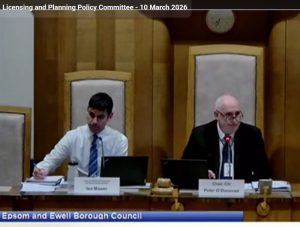
A meeting of Epsom and Ewell Borough Council’s Licensing and Planning Policy Committee (LPPC) on 10th March exposed growing tensions over the borough’s Local Plan after councillors attempted to debate how revised evidence is being submitted to the Government’s Planning Inspector.
The committee ultimately voted seven in favour with two abstentions simply to “note” the Local Plan update report, with the chair not voting.
But the discussion revealed frustration among some councillors over the level of member oversight of changes being made during the examination process.
Inspector requires further work on Local Plan
The meeting began with a detailed briefing from the council’s Head of Planning Policy explaining that the Local Plan, submitted for examination in March 2025, had been judged“unsound”by the Planning Inspector and required further work before it could proceed.
He told councillors that the Inspector had requested additional technical work to determine whether modifications could make the plan sound.
Two pieces of revised evidence had already been submitted earlier this year:
• a revised section of the Green Belt Topic Paper • an updated Land Availability Assessment
Further work has now been requested, including the preparation of potential additional site allocations and updates to the housing trajectory, sustainability appraisal, habitats regulations assessment, transport assessment and infrastructure delivery plan.
All of this work must be submitted to the Inspector by 10th April 2026.
Officers warned councillors that national policy now discourages long pauses in Local Plan examinations and that delays could risk the plan being withdrawn.
Debate centres on councillor oversight
Much of the discussion that followed focused not on housing sites themselves but on whether councillors had sufficient opportunity to scrutinise documents being submitted to the Inspector.
Independent councillor Alex Coley, who had requested the agenda item, raised concerns about the process and argued that wider oversight of the evidence base was necessary.
He told the committee that effective decision-making required proper evaluation of alternatives and meaningful access for councillors and the public to the decision-making process.
Coley also suggested that some of the conclusions contained in recently submitted evidence appeared contradictory and said this demonstrated the need for greater scrutiny.
“I believe that sets out just one example of why wider public oversight is so important,” he said.
Chair maintains procedural limits
However, councillors were advised that the committee could not introduce procedural motions or amendments relating to the Local Plan submissions.
Coley told the meeting that members had received advice from the council’s Monitoring Officer stating that motions from the floor were not permitted under the committee’s procedures.
He questioned that interpretation, suggesting it relied on provisions from an older model constitution that the council had replaced in 2023.
Despite this, the chair, Councillor Peter O’Donovan (RA, Ewell Court), maintained the procedural position and the meeting proceeded without amendments to the report or further debate on altering the process.
The committee therefore confined itself to noting the update report.
Questions raised about future scrutiny
Councillors also asked whether the committee would have further opportunities to review documents before they are submitted to the Inspector.
Officers said the timetable made that unlikely for the next stage of work.
“With the deadline for the evidence base being the 10th of April… there isn’t time for a committee to do that,” councillors were told.
Instead, public consultation on the new material will take place later in the examination process once the evidence has been submitted.
Campaign concerns continue
Outside the council chamber, the Local Plan debate continues to attract strong public interest, particularly over potential Green Belt development.
Campaign group Epsom Green Belt circulated a message to councillors following the meeting expressing concern that revised Local Plan documents could be progressing without full scrutiny by elected members.
The group urged councillors to ensure that any material changes affecting Green Belt land are properly reviewed and debated.
Next steps for the Local Plan
The Local Plan examination will now move into its next stage.
Key steps expected include submission of new evidence to the Inspector by 10 April 2026, followed by consultation on the new documents and potentially further examination hearings.
If the Inspector concludes that the plan can be made sound with modifications, the final decision will return to Full Council, where councillors will vote on whether to adopt the revised Local Plan.
“The Council submitted the Local Plan on the 10th March 2025 for independent Examination.
The Examination process is led by the Planning Inspector who is tasked with examining the Local Plan on behalf of the Secretary of State to determine whether the local plan is sound and legally compliant.
During the Local Plan Examination Hearings, the Inspector requested that the council undertake two discrete pieces of work that required revisiting and updating specific sections of two documents that form part of the Submission Library.
One of these pieces of work was updating Section 4 of the Green Belt Topic Paper in accordance with a revised methodology agreed with the Inspector during the examination hearings. This work was completed and submitted to the Inspector by the agreed deadline under delegated authority.
The Council’s letter to the Inspector dated 11th February 2026 makes it clear that the updated Section of the Green Belt Topic Paper does not consider other constraints to development or conclude whether the sites are suitable for allocation. However, we state that if this information is required to progress the Examination, then the Council can undertake this work.
The Inspector’s letter dated 12th February 2026 confirms that the above work is necessary for the examination to proceed, and has asked the Council to undertake this work along with updates to specific pieces of evidence, notably:
Housing Trajectory / 5 Year Supply
The Sustainability Appraisal
The Habitats Regulations Assessment
The Infrastructure Delivery Plan
The Transport Assessment
The Council is now undertaking this work.
The Local Plan Programme Officer confirmed on the 3 March 2026 that the evidence detailed above in addition to the two pieces of additional work submitted in January 2026, will be subject to public consultation.
There are no timescales for the public consultation at present and it is anticipated that the Inspector will require an additional Examination Hearing(s) to be held following this public consultation.
It is the Local Plan inspector who makes the final decision on the main modifications to be made to the Local Plan. Prior to the Inspector issuing her binding report, there will be a six week statutory public consultation on the main modifications which the inspector considers necessary to make the Regulation 19 version of the plan sound.
Once that process ends, if the Inspector is happy to confirm that the Plan is indeed ‘sound’ subject to main modifications, all Members will be invited to offer a view and make a decision at Full Council, where they will then be asked to vote on whether to approve the modified Local Plan or not.”
The Council’s explanation makes clear that revisions to the Green Belt Topic Paper were carried out following requests from the Planning Inspector and submitted under delegated authority as part of the examination process. It also emphasises that the updated section does not itself determine whether sites should ultimately be allocated for development.
However, the statement does not directly address the central issue raised by Horton ward Conservative Councillor Kieran Persand — namely whether revised evidence, including document COUD_021 and related material, was submitted without prior scrutiny by the Local Plan Policy Committee or Full Council. The Council’s response focuses on the examination process and future public consultation, but does not explicitly confirm whether councillors were given an opportunity to review the revised evidence before it was sent to the Inspector.
As the Local Plan examination moves forward — with further evidence updates, public consultation and potentially additional hearings expected — the question of how and when elected members are involved in reviewing changes to the evidence base may remain a point of political debate within the borough.
Epsom author shares personal epilepsy journey amid town’s historic link to the condition
17 March 2026
An Epsom author has published a deeply personal account of living with epilepsy, adding a modern voice to a local story that stretches back more than a century.
Madeline Bolton-Smith, who lives in Epsom and works as a probate assistant at a family-run accountancy firm in nearby Fetcham, has written Diary of an Epileptic, a book describing her experience of diagnosis, treatment and life with the neurological condition.
Epilepsy affects around one in every hundred people in the UK, yet many newly diagnosed patients still feel isolated when confronting the condition for the first time. Bolton-Smith says her motivation for writing the book was to provide reassurance and solidarity to others navigating similar uncertainty.
“When I was diagnosed with epilepsy, I often felt very alone,” she explains. “Writing the book was my way of saying to others in that position that their feelings are valid and that they are not facing it on their own.”
Her account follows the realities of living with epilepsy from the moment of diagnosis through investigative medical procedures, struggles to secure treatment funding and undergoing Laser Interstitial Thermal Therapy (LITT) surgery. When the surgery did not bring the hoped-for outcome, she had to confront the challenge of adapting to life with epilepsy once again.
The book reflects openly on the emotional impact of the condition – fear, frustration and isolation – but also the resilience required to continue forward. Bolton-Smith hopes the honesty of her story will help readers and families dealing with epilepsy feel less alone.
Epsom’s historical link to epilepsy
Bolton-Smith’s story also resonates with a significant but little-known chapter of local history.
In the early twentieth century Epsom was home to the Ewell Epileptic Colony, later known as St Ebba’s Hospital. Established during a period when epilepsy was poorly understood and widely feared, the colony reflected the prevailing belief that people with the condition should live apart from mainstream society.
Opened in 1903, the colony formed part of the wider Horton Estate of hospitals built by the London County Council to treat mental illness and neurological disorders. Hundreds of patients with epilepsy lived and worked there in what was intended to be a self-contained rural community.
Residents grew food, maintained workshops and followed strict daily routines designed to create stability for those prone to seizures. While some patients experienced relative independence compared with traditional asylum conditions, the colony nevertheless represented an era when epilepsy carried heavy stigma and separation from ordinary life was seen as necessary.
The institution eventually became St Ebba’s Hospital and continued operating for decades before closing in the late twentieth century as attitudes and treatments changed.
Remembering the patients buried in Horton Cemetery
The lives of many former residents of the Horton hospitals, including St Ebba’s, are remembered today through the work of the Friends of Horton Cemetery. The charity seeks to restore this historic Epsom cemetery, the largest asylum cemetery in Europe, to community ownership and researches the lives of those buried there.
More than 9,000 patients from the surrounding hospitals were laid to rest in the cemetery, many with little recognition during their lifetimes. The charity’s website, hortoncemetery.org, shares their stories.
The contrast between that earlier era and the present day illustrates how far attitudes toward epilepsy have progressed. Modern medicine emphasises treatment, independence and inclusion rather than segregation.
Medical knowledge of epilepsy has advanced dramatically over the past century. Once widely misunderstood and surrounded by superstition, epilepsy is now recognised as a neurological condition caused by abnormal electrical activity in the brain.
Treatments today range from anti-seizure medications to specialised surgical procedures such as the LITT therapy Bolton-Smith underwent. Support networks, advocacy groups and greater public awareness have also helped reduce stigma.
Yet challenges remain, particularly for those newly diagnosed. Bolton-Smith believes that sharing lived experiences can play a vital role in helping others understand the realities of the condition.
Through Diary of an Epileptic, she hopes to contribute to that wider conversation while offering practical reassurance to readers facing similar circumstances.
Epsom and Ewell February crime and safety round-up
17 March 2026
Epsom and Ewell Times does not normally report individual crime incidents. However, as part of a trial we are publishing a monthly round-up of crime and community safety developments affecting the borough, drawing on information released by Surrey Police and local authorities.
Police operation in West Ewell results in three arrests
A police operation targeting antisocial behaviour and suspected drug activity in West Ewell led to three arrests during February.
Officers from the Epsom & Ewell Safer Neighbourhood Team, supported by the East Surrey Neighbourhood Enforcement Team and Special Constabulary, carried out patrols around the Watersedge estate. During the evening operation officers conducted 11 stop-searches and two vehicle stops, while gathering intelligence relating to drug use, drug dealing and antisocial behaviour in the area.
Police said the activity formed part of ongoing efforts to disrupt criminal activity in neighbourhood “hotspot” locations.
(Source: Surrey Police neighbourhood updates)
Missing Epsom man located safe and well
Surrey Police issued an appeal during February to help locate Lee, a 63-year-old man reported missing from Epsom.
Police later confirmed that he had been found safe, allowing the appeal to be cancelled.
(Source: Surrey Police)
Prolific thief targeting local businesses identified
Surrey Police also reported action against a prolific offender who targeted businesses across Epsom and neighbouring areas, including Sutton, Wallington, Cheam and Burgh Heath.
Police said the offender entered several premises and stole items including mobile phones during incidents affecting local traders.
(Source: Surrey Police neighbourhood update)
Safer Epsom & Ewell programme continues
The Safer Epsom & Ewell programme — a joint initiative between Surrey Police, Epsom & Ewell Borough Council and partner agencies — continued to develop during February.
The scheme focuses on areas including Epsom town centre, Watersedge and Longmead, using the Home Office “Clear, Hold, Build” approach to tackle organised crime, drug supply, acquisitive crime and antisocial behaviour. (democracy.epsom-ewell.gov.uk)
The programme combines targeted police enforcement with longer-term work involving the council and community partners to address underlying causes of crime.
(Source: Epsom & Ewell Borough Council / Surrey Police)
Crime trends in the borough
Police data for the area indicates that the most commonly reported offences locally include violence and sexual offences, shoplifting, criminal damage and vehicle crime. (surrey.police.uk)
Retail crime and antisocial vehicle use remain key policing priorities, with neighbourhood teams carrying out targeted patrols and working with businesses and community groups to address concerns.
(Source: Surrey Police neighbourhood statistics)
Community engagement and policing events
Neighbourhood officers continued their “Meet the Beat” programme during February, providing opportunities for residents to speak directly with police about local issues.
Sessions were held at locations including Epsom Library at the Ebbisham Centre, where residents were invited to raise concerns about crime, antisocial behaviour and community safety.
(Source: Surrey Police)
How to contact Surrey Police
Emergency (crime in progress or immediate danger): call 999
Epsom & Ewell Borough Council has all but confirmed it will not proceed with plans to create community councils in the borough after consultation responses indicated a lack of public support.
The announcement follows an expensive Residents’ Association led nine-month Community Governance Review (CGR) exploring whether the borough should introduce parish-style local councils – sometimes referred to as community councils – ahead of the planned reorganisation of local government in Surrey.
In a media statement issued on 4th March, the council said responses to the second phase of consultation showed residents did not support the proposals.
Consultation result halts proposal
Councillor John Beckett (RA Auriol) chair of the council’s Standards and Constitution Committee, said the engagement process had asked residents both whether they wanted parish councils and, later, for views on a model dividing the borough into two areas.
The proposal would have created two bodies: Epsom Community Council and Ewell Community Council.
Beckett said: “Responses to the phase two consultation indicate that, at this time, residents do not support the proposals that were consulted upon. The recommendation that will be discussed at full Council is that the Community Governance Review is now concluded and will not be progressed further.”
Councillors are expected to formally confirm the decision at a full council meeting scheduled for 12th March.
Threat of legal challenge
The decision comes after a formal pre-action legal letter warned the council it could face judicial review if it proceeded to create the councils.
Local resident and former senior local government chief executive Nathan Elvery wrote to EEBC chief executive Jackie King on 4th March raising concerns about the consultation process.
In the letter, sent under the judicial review pre-action protocol, Elvery argued the review process was procedurally flawed and warned that if the council made a reorganisation order creating the councils he would seek to have it quashed by the courts.
His challenge raised a number of potential grounds including:
• alleged flaws in the design of the first consultation survey • reliance on a response rate of around 352 replies from roughly 57,000 electors • concerns that residents may not have been given full financial information about possible council tax precepts • failure to present alternative governance models • and consultation timing spanning the Christmas period.
He also submitted a series of Freedom of Information requests seeking internal documents, financial modelling and details of the consultation design.
Elvery requested the Council defer any decision until the issues were addressed and warned that proceeding regardless could lead to legal proceedings.
Experienced public sector leader
Elvery is a long-standing public sector leader with more than three decades of experience in local government transformation and finance.
He has served in senior roles including chief executive, chief operating officer and executive director across a range of councils and national public sector bodies, and now runs a consultancy advising councils and senior leaders.
Long-running debate
The CGR began in 2025 following Surrey’s Local Government Reorganisation (LGR) plans, which will abolish the borough council and replace it with a new East Surrey unitary authority expected to take over services in 2027.
Supporters of community councils argued they could preserve a layer of local representation after the borough council disappears.
Critics, however, warned they would create a new tax-raising tier of government funded through an additional council tax precept.
Early council estimates suggested a precept of around £43–£46 per Band D household, though opponents argued the real cost could rise significantly depending on staffing and responsibilities.
Readers sceptical in Epsom and Ewell Times survey
An Epsom & Ewell Times reader survey on local government reorganisation gathered 112 opinions. The survey showed a big majority against the idea of new parish-style councils. The survey offered an opportunity for residents to express an opinion about alternative neighbourhood area committees. An option the Council had not provided in its consultation.
The survey results suggested readers were more concerned with maintaining effective local representation and protecting services during the transition to the new unitary authority.
Readers also expressed caution about adding an additional tier of governance funded by council tax.
And readers by a clear majority are against maintaining even a ceremonial mayoralty for the Borough.
Fresh Local Plan row as councillor questions Green Belt revisions and governance at Epsom and Ewell
17 March 2026
Concerns are growing over Epsom and Ewell Borough Council’s Local Plan after campaigners and a borough councillor raised questions about revised evidence submitted to the Government Planning Inspector — including whether key changes were made without councillor oversight.
The controversy centres on documents submitted during the independent examination of the borough’s Local Plan, which will determine where housing development can take place for years to come.
A Green Belt campaign group, a planning expert and Conservative councillor Kieran Persand have all raised concerns about revisions to the evidence base — particularly a Green Belt Topic Paper which could influence whether some land currently protected as Green Belt is opened for development.
Campaigners question governance of revisions
The issue first surfaced in a widely circulated email from the Epsom Greenbelt Group to borough councillors warning of “urgent and serious concerns regarding the recently submitted revised Local Plan documents and the process by which they appear to have been approved and issued.”
Campaigners argue that councillors previously authorised officers only to make minor corrections to documents submitted to the Planning Inspector — not material revisions to the evidence.
They say that if significant changes were submitted without member oversight it would raise serious governance concerns and undermine democratic accountability.
The group has called on councillors to clarify what authority officers relied upon when submitting revised documents and whether the Council’s Monitoring Officer has reviewed the matter.
Expert analysis identifies potential Green Belt changes
Planning expert Tim Murphy has reviewed the Council’s January 2026 Green Belt Topic Paper and identified 33 Green Belt sites assessed for their contribution to preventing urban sprawl and protecting countryside.
Mr Murphy said several sites which scored relatively highly under the Council’s own Green Belt rating system were nevertheless recommended for boundary changes that could allow development.
The sites highlighted include:
Land north of College Road at Downs Farm
Land near Ewell East Station
Land west of Burgh Heath Road near South Hatch Stables
Land extending the Noble Park estate within the Hospital Cluster
Mr Murphy said the justification offered was the existence of “exceptional circumstances”, but added that he did not find the arguments convincing.
He noted that these sites have ratings comparable to Horton Farm and the Hook Road Arena — two locations which generated significant public opposition during Local Plan hearings last year.
Other Green Belt sites treated differently
Mr Murphy also pointed out that other Green Belt locations with similar ratings are not recommended for boundary changes, including:
Hollywood Lodge
Drift Bridge Farm
Land off Banstead Road
Land east of Burgh Heath Road
Several smaller sites near Downs Road
The difference in treatment raises questions about consistency in the assessment process.
Meanwhile, a separate planning application for 110 homes at Langley Vale — on land not recommended for Green Belt boundary change — was recently rejected by councillors by six votes to two.
Councillor calls for urgent review
The debate intensified this week when Horton ward Conservative councillor Kieran Persand wrote to the chair of the Council’s Local Plan Policy Committee (LPPC) urging urgent action.
In his email to councillors, Persand said he had become aware that revised evidence had been sent to the Planning Inspector which “materially differs from evidence previously submitted,” including a document known as COUD_021.
He said the document appeared to have been submitted without review or approval by the LPPC, the committee responsible for overseeing the Local Plan.
Persand wrote that he had already identified “important errors and other concerns” in the document which he believed should have been addressed before submission.
He also said he had been unable to find any significant change in circumstances — such as changes in national policy — that would justify altering the conclusions of the borough’s earlier Green Belt assessment.
Further Green Belt additions possible
Persand warned that the situation may be evolving further.
According to correspondence with the Planning Inspector cited in his email, council officers indicated that additional evidence and amendments could be submitted by 6 March, potentially including recommendations for further Green Belt sites to be added to the Local Plan.
Persand noted that there were no Local Plan Policy Committee or full council meetings scheduled before that date.
“This suggests that the officers’ amendments to submission documents, and proposals for changes to the Local Plan they plan to submit on 6 March, will also not be subject to any review or approval by the LPPC or Full Council,” he wrote.
He warned that proceeding without councillor oversight could expose the council to accusations of failing in its duties and even potential judicial review.
Call for documents to return to councillors
Persand has asked the committee chair to arrange for all evidence documents submitted to the Inspector to be brought before the Local Plan Policy Committee before any further submission.
He acknowledged that doing so could delay the council’s proposed timetable but argued this would be preferable to risking more serious problems later in the process.
Questions to the council remain unanswered
The Epsom and Ewell Times contacted the council’s communications department on 28 February seeking clarification on the situation.
The newspaper asked whether a revised paper recommending the removal of some sites from Green Belt protection had been submitted to the Planning Inspector.
At the time of publication, no response had been received.
What happens next
The Planning Inspector will ultimately decide whether the borough’s Local Plan is “sound” and can proceed.
However, the council itself remains responsible for setting the borough’s strategic direction.
If significant changes to the evidence base are confirmed, councillors may face renewed debate over housing numbers, Green Belt protection and how the Local Plan examination is being managed.
The outcome could shape where thousands of new homes are built in the borough — and whether parts of its Green Belt remain protected — for decades to come.
Fly-tipping “running out of control” but major incidents disappear in Epsom and Ewell
17 March 2026
Fly-tipping on an industrial scale is at risk of “running out of control” across England, with organised criminal gangs blamed for dumping tens of thousands of tonnes of rubbish in the countryside and urban areas.
Latest government figures show 52,000 large-scale fly-tipping incidents — involving at least a tipper-lorry load — were recorded by councils in England in 2024-25, up sharply from 31,000 before the pandemic.
Campaigners say the crime has become highly organised, lucrative and relatively low-risk for offenders.
A spokesperson for the Chartered Institute of Waste Management said: “Waste crime is at risk of running out of control across the UK. It is evident that waste crime at all levels continues to cause misery and anxiety for local communities and causes real damage to local environments and local economies. These are crooks and cowboy operators, often organised criminal gangs, deliberately profiting from other’s misery, from polluting our environment and exploiting loopholes in the system.”
The Countryside Alliance said: “Fly-tipping is not just an environmental nuisance — it has become a serious and organised crime issue and rural communities are on the frontline… For them it is low-risk and highly profitable… contributing to a criminal market worth an estimated £1 billion a year.”
Epsom and Ewell large-scale incidents fall to zero
Figures analysed by the Epsom and Ewell Times show a striking local trend.
Epsom and Ewell recorded 30 large fly-tipping incidents in 2019-20, falling to 19 in 2020-21 and 14 in 2021-22. Since then, none have been recorded, with zero incidents reported in 2022-23, 2023-24 and 2024-25.
This suggests large-scale dumping in the borough has been eliminated — at least in the official statistics — contrasting with rising national totals.
However, smaller fly-tipping incidents, which make up the majority of cases, are recorded separately and remain a persistent issue across the country.
Who deals with fly-tipping locally
Responsibility for tackling fly-tipping is shared between councils and national regulators.
Epsom and Ewell Borough Council is responsible for clearing illegally dumped waste on public land in the borough, investigating incidents and prosecuting offenders. The Council can also issue fixed penalty notices.
The Environment Agency deals with larger, organised or hazardous waste crime, including illegal waste sites operated by criminal gangs.
Private landowners are responsible for removing waste dumped on their own land, though authorities may investigate and prosecute those responsible.
Tough penalties available — but few offenders caught
Fly-tipping is a criminal offence carrying severe penalties. Courts can impose unlimited fines and prison sentences of up to five years. Vehicles used in dumping can be seized and destroyed, and offenders receive a criminal record.
Councils can also issue fixed penalty notices of up to £1,000.
However, enforcement remains limited. Nationally, only 663 fines exceeding £1,000 have been issued since 2019.
One recent major case saw a prolific offender ordered to pay more than £1.2 million following an Environment Agency investigation.
Criminal gangs and fake waste firms driving problem
Experts say organised crime is increasingly behind large-scale fly-tipping. Criminals often pose as legitimate waste clearance companies, charging households and businesses before dumping waste illegally to avoid disposal costs.
The illegal waste market is estimated to be worth around £1 billion a year.
Local improvement but national concern remains
The disappearance of major fly-tipping incidents in Epsom and Ewell will be welcome news locally. But nationally the problem remains serious, with experts warning illegal dumping continues to expand and new sites regularly appearing.
Residents are urged to use only licensed waste carriers and report fly-tipping to their local council.
Those caught face potentially severe consequences — though many offenders still escape justice.
EV charger grants increased as thousands of Surrey drivers without driveways could benefit
17 March 2026
Renters, flat-owners and businesses in Surrey will be able to claim up to £500 towards installing electric vehicle (EV) chargers from April, after the Government increased grants by more than 40% in a bid to accelerate the switch away from petrol and diesel cars.
The Department for Transport says the higher payments could cover almost half the cost of installing a home or workplace charge point, potentially allowing motorists to power their car for as little as 2p per mile using domestic electricity tariffs.
The scheme is particularly relevant to areas such as Epsom and Ewell, where many residents live in flats or terraced housing without private driveways, and where on-street parking remains common.
Up to £500 per charger from April
From 1 April 2026, households in rented accommodation, flat owners, landlords, and businesses will be able to receive grants of up to £500 per charge point, increased from the previous £350 limit. Schools will be eligible for up to £2,000 per socket.
The Government says the grants will run until March 2027 and are intended to remove one of the main barriers to EV ownership — access to convenient and affordable charging at home.
A parallel £25 million scheme is also helping councils install pavement cable channels so residents without driveways can safely connect home chargers across the pavement.
Running cost savings of £1,400 a year claimed
The Department for Transport claims drivers can save up to £1,400 a year in running costs compared with petrol cars if they charge at home on cheaper tariffs. Ministers say more than 55,000 motorists have already received discounts of up to £3,750 off the purchase price of new electric cars through a separate grant scheme.
Nationally, the UK public charging network has expanded rapidly to around 88,500 public charge points, with £600 million allocated to help councils install tens of thousands more.
Transport minister Keir Mather said: “We’re taking action to make EV ownership the affordable choice for everyone — not just those with driveways. Bigger grants mean families, flat owners, renters and small businesses can now install a charger for almost half the usual cost.”
Surrey already seeing rapid EV growth
Surrey has one of the highest rates of electric vehicle ownership in the country, reflecting its relatively high average incomes and commuter population. Department for Transport data shows EV registrations nationally now account for around one in five new car sales, compared with fewer than one in 100 just a decade ago.
However, lack of home charging remains a key obstacle. National surveys show more than half of small businesses say improved charging access would encourage them to switch to electric vehicles.
Local authorities, including Surrey County Council and borough councils such as Epsom and Ewell, are expected to receive further funding over the next three years to expand public charging infrastructure.
Landlords and businesses encouraged to act
The National Residential Landlords Association said almost nine in ten landlords would install charge points if tenants requested them, while the Federation of Small Businesses said improving infrastructure was key to helping firms cut fuel costs and emissions.
The Government has also simplified its charging support schemes, reducing eight different grants to five to make them easier to access.
Ministers say the measures are part of wider plans to prepare for the phase-out of new petrol and diesel car sales, currently scheduled for 2035.