Epsom and Ewell Times
16th July 2026

ISSN, LDRS and IMPRESS logos

Surrey County Council Chair opens new Sensory Services Centre in Ashtead

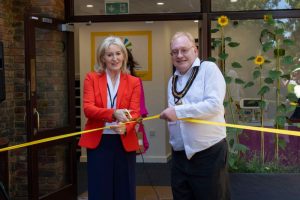
Christine and Tim Hall Cutting Ribbon

A new centre designed to support people with sight and hearing loss across Surrey has officially opened in Ashtead, strengthening services for thousands of residents living with sensory impairments.

The centre, operated by Sensory Services by Sight for Surrey, was officially opened last week by Councillor Tim Hall MBE, Chair of Surrey County Council, alongside Christine Wilmshurst, Chair of Trustees at Sensory Services by Sight for Surrey, during a special event attended by staff, volunteers, supporters and local partners.

Located at Bridgehead House, which is owned and was refurbished by Surrey County Council, the new facility will provide an accessible and welcoming hub where residents who are blind, partially sighted, Deaf, hard of hearing, or deafblind can access information, advice, specialist support and community activities.

The centre has been designed to enhance the charity’s ability to deliver services across the county and meet growing demand, helping people maintain their independence, wellbeing and social connections.

Tim Hall, Chair of Surrey County Council, said: It was a pleasure to officially open this fantastic new facility. Sensory Services by Sight for Surrey provides invaluable support to residents across the county, and this new centre will strengthen the charity’s ability to make a positive difference in the lives of people with sensory impairments and their families.

“We are proud that Surrey County Council has supported this project through the refurbishment of Bridgehead House, creating a modern and accessible space that will benefit residents for many years to come.”

Christine Wilmshurst, Chair of Trustees at Sensory Services by Sight for Surrey, said: “The opening of our new Ashtead centre represents an exciting new chapter for the charity. It is a truly transformational time, and we could not have done it without the leadership, passion, dedication and hard work from everyone involved in the project. We are committed to ensuring that people living with sight and hearing loss have access to the support, resources, and opportunities they need to live independently and confidently.

“This centre will be a place where people can find practical help, social connection, and a strong sense of community.”

The opening reflects a shared commitment between Surrey County Council and Sensory Services by Sight for Surrey to improve accessibility, reduce isolation and empower people to live full and independent lives.

Sinead Mooney, Surrey County Council’s Deputy Leader and Cabinet Member for Adult Social Care, added: “The team at Sensory Services by Sight for Surrey do a fantastic job advocating for and supporting people who have sensory needs.  As a valued partner delivering services, they make a real difference every day, and we were pleased to work with them to refurbish Bridgehead House and turn it into a centre that will meet the needs of the people they support for many years to come.

“This work is another example of how we are making sure Surrey is fit for the future and passing on a strong legacy of support.”

Each year, Sensory Services by Sight for Surrey supports more than 8,500 children and adults through specialist advice, rehabilitation services, assistive technology support, advocacy, social groups and wellbeing programmes.

For more information about Sensory Services by Sight for Surrey and the services available at the new Ashtead centre, visit www.sightforsurrey.org.uk

Surrey County Council

Image: Christine and Tim Hall Cutting Ribbon


Residents invited to help shape New East and West Surrey council brands

Residents from across Surrey are invited to get involved to help shape the brand identities of the new East and West Surrey councils.

These councils will need to create their own distinct brand identities, to help everyone recognise who is delivering local services from April 2027.

The new brands will be created at no cost by designers working in councils across Surrey. To help inform these designs, residents, businesses, council staff, partners and community groups across Surrey to have a say on the future visual identities of the new East Surrey and West Surrey councils.

This is the first phase of a wider programme of engagement to help shape the new councils.

A survey has been created for people to share their views. This will be available to complete in the 52 libraries across the county to ensure a broad range of voices are heard. We are asking residents to share your views on:

*           What makes our area unique?

*           What are you most proud of?

*           What should your future council’s look and feel reflect?

Insights gathered from the survey will be used to help create the new logos and brands for East Surrey and West Surrey Councils.  This means that each brand will reflect the distinct views of the people in each area.

Residents have until 3 August to complete a short survey, more information can be found on https://www.surreylgrhub.gov.uk/your-future-surrey

Councillor Steve Wotton, the Leader of East Surrey Shadow Authority said: “We are committed to making East Surrey a place where people thrive. There is a lot to do, but this is a real opportunity to take a new approach, designing a council that is open, transparent and genuinely focused on delivering outcomes for residents, businesses and communities. Creating a new brand identity for East Surrey is an important step as we move forward. This engagement is about understanding what people like about where they live and what makes their communities unique. I would encourage residents, businesses, partners, colleagues and community groups to take part and help shape a brand that truly reflects East Surrey.”

Councillor Paul Follows, the Leader of West Surrey Shadow Authority added: “Our focus remains on creating a council that delivers high-quality services, provides value for money and meets the needs of residents, businesses and communities across west Surrey. This engagement is an opportunity for people across West Surrey to help define how we present ourselves as a new council. We’re not asking for views on logos or designs, but on what really matters to our communities – the character, feel and identity of the area. By taking part, residents can shape the new West Surrey brand and ensure this is a people’s brand. We are also committed to keeping costs to a minimum, so I am delighted that the new brand will be created in-house, with designers working in all councils.”

Surrey County Council


Surrey County Council Prison Social Care Team awarded CQC ‘good’ rating

Surrey County Council’s Prison Social Care Team has been rated ‘good’ by the Care Quality Commission for the dignified support it provides to people in custody with care needs.

The specialist team provides adult social care across five prisons and an approved premises in Surrey, supporting people with dementia, mental health needs, learning disabilities, autism, and sensory and physical disabilities. The team supports prisoners who struggle with daily living tasks, helping them engage with prison services and prepare for a smoother transition on release.

Following an inspection in May, the CQC rated the team ‘good’ across all areas and identified ‘outstanding’ practice in delivering evidence-based care and treatment.

Inspectors praised staff for treating prisoners with kindness and compassion, respecting their dignity and taking a non-judgmental approach.

“People told us their care needs were met, and they liked the staff who supported them,” the report said. “They said the staff were kind and caring and treated them with respect and dignity. People and their relatives were satisfied with the service. People felt their needs were met and they received personalised care and were able to make choices in the way they were supported.”

The report highlighted positive feedback from people the team supports and their relatives, including praise for a staff member who had “stuck by me through all my growing pains” and was “what you call a good social care worker.” Another comment said: “They are very kind and understand mental health which is good.”

Inspectors also recognised the team’s visible and supportive leadership, their collaborative approach with partner services and the effective systems in place to monitor quality, mitigate risk, ensure safe recruitment and maintain good infection control.

The team’s evidence-based approach to delivering care and treatment was found to be outstanding, with the report noting: “The provider always planned and delivered people’s care and treatment with them, including what was important and mattered to them. They did this in line with legislation.”

The Prison Social Care Team, part of the council’s wider mental health social care service, brings together social workers, occupational therapists and support workers. The team is unusual among councils in that every part of the prison social care service – from assessment and care planning through to the direct delivery of care – is delivered in-house.

The team supports people across Surrey’s five prisons – High Down, Downview, Bronzefield, Send and Coldingley – as well as St Catherine’s Approved Premises in Guildford, which supports people as they move from prison back into the community.

Sinead Mooney, Surrey County Council’s Deputy Leader and Cabinet Member for Adult Social Care, said: “This is a fantastic achievement and really shows the dedication and professionalism of our Prison Social Care Team. They’re a small team working in challenging settings and it’s great to see their compassionate, person‑centred care recognised for the impact it has. Alongside the ‘good’ rating for our wider adult social care service in 2024, this is another example of how the council is making sure services are effective for vulnerable residents.

“As we look ahead, we’re proud to be passing on a strong legacy for adult social care to the new councils. We have a talented and compassionate workforce, and our staff have the expertise to deliver a safe transition and ensure the new councils start well.”

The full report can be found on the CQC website.

To find out about Surrey County Council adult social care jobs, please visit our jobs page.

Surrey University


Surrey County Council launches new home charging option for EV drivers

Charging a car on street

Surrey County Council has launched a new option for residents without off-street parking to be able to charge their EVs from home by having a cable gully installed. The cable gullies allow residents to run an EV charging cable across the pavement, safely, to be able to benefit from cheaper home charging rates.

In partnership with Kerbo Charge, the cable gullies were initially trialled in 2024 and, following the successful application for funding from the Department for Transport Electric Vehicles Pavement Channel Grant, the process is now being offered to all eligible Surrey residents.

When it’s time to charge, residents insert their EV charging cable into the channel and the specially-designed lid closes behind like a zip — keeping pavements trip-free. Kerbo Charge is designed and manufactured in the UK and flexes to fit the shape of our pavements.

Residents who are interested first need to complete an initial assessment with Kerbo Charge, to check the suitability of their property, by visiting the Kerbo Charge website. Once this check is complete, residents can apply through the Surrey County Council website, paying a £499 fee.

The total cost would normally be over £1,000 per household, but funding from central government means the cost to residents is reduced to £499.

Aviation, Maritime and Decarbonisation Minister, Keir Mather said: “Charging availability is one of the biggest barriers to switching. Backed by over £250,000 in Government funding, drivers in Surrey without access to off street parking will now be able to save over 50% on the cost of installing cross-pavement charging solutions. “We’re making it easier and more affordable than ever to make the switch by investing £600 million to speed up the roll out of chargers across the country, and our Electric Car Grant has already helped over 120,000 drivers save up to £3,750 on a new EV.”

Surrey County Council Cabinet Member for Highways, Transport and Economic Growth Cllr Matt Furniss, said: “EV charging needs to be accessible for all Surrey residents, not just those with a driveway. I’m delighted we’ve been able to launch this scheme to help people access home charging for their EVs. Alongside the 500 on-street EV chargepoints we’ve installed across Surrey, we’re making EV ownership a real option for more people – helping to make Surrey a greener, cleaner place.”

Kerbo Charge Co-Founder Michael Goulden, said: “Congratulations to Surrey County Council! We’re delighted to be working closely together – this is simply about offering more choice to residents about how they charge their car and removing barriers to EV adoption. We’re looking forward to seeing lots of residents making the move from petrol/diesel to electric in the months ahead.”

Guildford resident Torkil, pictured, has been using his Kerbo Charge for two years and says: “Given my town centre location, I made the move to electric only after careful evaluation of how I was going to manage charging…. I am happy that Surrey County Council listened to suggestions from those of us who live with on street parking, and now that I can charge at home I feel very confident to stay with electric and help reduce air pollution in Surrey”

For those who are not eligible for the scheme, either because they are unable to park outside their property or they are unable to install a home chargepoint, in partnership with Connect Kerb, Surrey County Council has installed over 500 on-street chargepoints across Surrey.

These are mostly 7kwh chargepoints installed on roads with little to no on-street parking, designed for local residents to be able to charge overnight near their home.  A new initiative to install 3kwh lamp post chargepoints is set to significantly increase accessibility to EV charging across Surrey. With 100 installed already, and 1000 planned in total, these chargepoints will be fitted in suitable lamp columns that are adjacent to a suitable on-street parking space.

If you would like to suggest a chargepoint is installed near you, you can register your suggestion on our EV suggestions map.

A Kerbo Charge cross-pavement channel install in Guildford, Surrey.


£125,000 for Surrey schools to tackle the impact of climate change

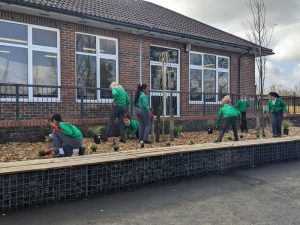
Children planting at a school

Surrey County Council is investing a further £125,000 to help schools across the county adapt to the growing impacts of climate change.

Schools can apply for grants of between £5,000 to £10,000 to install climate resilient measures such as green walls, Sustainable Drainage Systems (SuDS) planters, shading structures and tree planting, supported by expert guidance from the council to ensure value for money.

Last year, £120,000 was awarded to 21 schools, in addition to Guildford Grove Primary School and Town Farm Primary School each receiving around £17,000 to deliver more comprehensive interventions and share best practice.

Surrey continues to lead nationally on environmental education, with more Eco‑Schools Green Flag awards than any other county in England for the third year running. All participating schools will be encouraged to work towards this accreditation and embed sustainability across their curriculum.

Marisa Heath, Surrey County Council Cabinet Member for Environment and Planning said: “We know that our climate is changing and seasons are becoming more extreme, this is something we all witnessed during the recent heatwave. It’s important we support schools to adapt to these changes and make sure children are able to learn and thrive at school. By offering further grant funding to schools, not only are we helping schools be more climate resilient but we are inspiring the next generation of environmental leaders.”

Rona Mackie, Headteacher at Guildford Grove Primary School said: “We needed to respond to the fact the climate is changing and we’ve been really lucky as a school to benefit from working with Surrey County Council. They have worked with us to think about areas around our school that we could develop and it will have such an impact on our school, the current pupils and future generations.”

Helyn Clack, Cabinet Member for Children, Families and Lifelong Learning said: “It’s fantastic that we are offering Surrey schools the opportunity again to apply for this funding to enable them to make adaptations and improvements in light of the impacts of climate change. I’d encourage schools to apply and look at the improvements Guildford Grove Primary School and Town Farm Primary School implemented earlier this year to see the benefits they offer.”

The deadline for applications is 31 July 2026. Schools can find out more and apply on the Together for Surrey website.


Historic 1848 Epsom Racecourse Plan Saved Through Major Conservation Project

The old racecourse map Epsom

A remarkable hand-coloured plan of Epsom Racecourse dating from 1848 has been rescued from severe deterioration following an extensive conservation project.

The historic document, which provides a detailed record of the racecourse in the mid-19th century, had reached a fragile state. Conservators warned that without intervention valuable information about the history and development of the course could have been lost forever.

A Race Against Time

The plan was prioritised for treatment because of its worsening condition and the fact that much of its detail had become obscured beneath a darkened varnish layer.

Conservators found the document had suffered from multiple forms of damage over the years.

The paper itself was made from machine-produced wood pulp, which is naturally acidic and becomes increasingly brittle as the fibres deteriorate. At some point the plan had been mounted on a linen backing using starch paste, but the paper had begun separating from the fabric. In places, fragments had broken away altogether.

Evidence also suggested the document had previously been stored in damp conditions, leaving mould staining across parts of the surface.

Further damage had been caused by the way the map had originally been displayed. Wooden poles had been attached using nails driven through the paper, leaving rust stains and tears, particularly along the upper edge.

Perhaps most significantly, the entire plan had been coated in a thick glossy varnish which had darkened dramatically over time, concealing much of the image beneath.

Delicate Conservation Work

The first stage of treatment involved removing the remaining wooden pole to prevent further damage during handling.

Conservators then carefully detached the mould-stained linen backing before carrying out extensive surface cleaning on both sides of the document. Throughout the process the plan was supported on woven polyester sheeting to ensure that loose fragments remained safely in place.

Attention then turned to the dark varnish coating.

Specialist tests were undertaken using a range of solvents to identify the safest and most effective method of removal. Once a suitable solvent had been selected, conservators worked section by section to lift the varnish without harming the original inks and pigments.

Using a Japanese paper barrier and a solvent gel, the varnish was gradually drawn away from the surface and transferred onto the paper layer.

The process was compared by conservators to waxing, with the Japanese paper peeled away carrying the dissolved varnish with it.

As the treatment progressed, details hidden for decades began to reappear.

Although some staining remained embedded deep within the paper fibres, the plan’s image and written information became visible once again, making the document accessible for the first time in many years.

Washing and Stabilisation

Following varnish removal, the plan underwent a careful washing process designed to remove any remaining residues.

Once the rinse water ran clear, the paper was treated with a mild alkaline solution to neutralise acidity and slow future deterioration.

The document was then lined with a specially selected Japanese paper backing. Favoured by conservators for its purity, flexibility and exceptional strength, Japanese paper provides long-term support while remaining lightweight and unobtrusive.

After several days of drying, missing sections of the original document were filled using handmade paper closely matched in tone and thickness.

Conservators emphasised that the work followed established conservation principles rather than restoration. Repairs remain visible and distinguishable from the original material, ensuring future researchers can identify what is original and what has been added.

All treatments are reversible, with wheat starch paste used as the adhesive. Bleaching treatments, which can brighten paper but may accelerate deterioration over time, were deliberately avoided.

Preserved for Future Generations

Once fully dried, trimmed and stabilised, the restored plan was placed within an archival polyester sleeve and transferred to environmentally controlled strongroom storage.

The conservation team believes that without intervention the plan would have continued to darken, weaken and eventually disintegrate.

Instead, this important piece of Epsom’s racing heritage has been secured for future generations, preserving a unique snapshot of the racecourse as it appeared nearly 180 years ago.

The conservation project not only saved the physical document but also revealed historical information that had been hidden beneath layers of damage and ageing for many decades.

Surrey County Council– History Centre

For more news from Surrey History Centre READ HERE


Saturday 9 May is Surrey Day – and this year, we’re digging deeper

Now in its eighth year, Surrey Day is about bringing communities together to celebrate everything that makes this county so special. In 2026, the theme is Going Underground, and it’s an invitation to see Surrey as you’ve never seen it before. Forget what you think you know about this beautiful county. Beneath the rolling hills and the familiar high streets of its market towns lies a world of hidden treasures just waiting to be unearthed.

Whether you fancy venturing into the literal underground or uncovering something altogether more unexpected, Surrey Day 2026 has something to spark the curiosity of all the family. Enjoy hands-on activities, torchlit tours, guided walks, unseen histories, a disco in a tunnel and stories in caves, re-enactments in shelters, castles to explore, fossils galore – and so much more!

While there will be events and activities countywide, this year, Epsom is taking centre stage as a key host town for the very first time. BBC Radio Surrey will be broadcasting live from Epsom from 12-3pm so keep your ears open – or better still, get down there and join in! The headline act is the extraordinary Ashley Road Deep Level Air Raid Shelter – a grid of brick-lined tunnels constructed 50 feet underground to shelter 1,500 people from the Blitz. Now hidden in woodland on the edge of town, there will be torchlit guided tours, but book early as these will sell out.

Many Surrey museums will also have Going Underground events such as Bourne Hall Museum in Ewell with an exciting full day of discovery, including an archaeological walk-and-talk, coin identification drop-ins and the remarkable story of the Epsom Aurochs which was a 3,500-year-old giant prehistoric animal unearthed locally in 2023. Or nearby in Dorking, there are castle and cave tours, guided history walks, and a chance to get hands-on with fascinating old inventions at Dorking Museum & Heritage Centre. A particular highlight is an impressively large-scale reconstruction of the very first Baronyx fossil discovery. On the other side of the county, Guildford Museum has fun hands-on fossil handling sessions, while Surrey History Centre presents a day of talks celebrating some of Surrey’s lesser-known artists. At Brookwood, you can be taken on a guided tour of the American Military Cemetery or if you head out further towards Tilford, you can get involved in 2 thrilling days of re-enactments at the open-air Rural Life Living Museum, finding out what daily life was like amid rationing and air-raids. If you’ve never visited, this is an experience you won’t forget in a hurry!

Find out more and plan your Surrey Day at visitsurrey.com/surrey-day and if you like a podcast, the BBC Secret Surrey series is a great companion to the day’s events.

Surrey County Council


Ewell school goes safe streets ahead

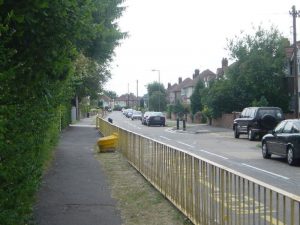
Outside Danetree school in Ewell

Danetree Primary School in Ewell is set to benefit from a School Street from May 2026, aimed at reducing air pollution and improving road safety during the busiest times of the day.

Danetree Road, Danetree Close, Oakhurst Road and a portion of Chessington Road will be open to pedestrians, cyclists and wheelers only between 8:00am and 9:00am and 2.30pm to 3.45pm, Monday to Friday during school term time. Exemptions will apply for residents, carers, school transport and blue badge holders accessing the school.

The move follows the successful rollout of the county’s first School Street at Farnham Heath End School in April 2025, where there has already been a 62 per cent reduction in cars entering and exiting the road. In the week before the scheme was introduced, 1,227 vehicles were recorded turning in or out of Bullers Road at school drop-off and pick-up times, compared to 470 once the scheme was in place.

Potters Gate Church of England Primary School in Farnham was the second school to benefit from the School Streets programme.

Matt Furniss, Cabinet Member for Highways, Transport and Economic Growth, said: “By restricting motor vehicle access during peak times of the day, we can create safer, healthier and more pleasant environments for everyone walking, cycling and scooting to school. I’m delighted with the positive results we have already seen in Farnham and am pleased we are able to roll the scheme out further. School Streets are a key part of our overall programme to improve road safety, promote more sustainable school travel and reduce air pollution around schools. We’re investing £3m to improve road safety and encourage more walking, cycling and wheeling. We’re also continuing to deliver Feet First walking training and Bikeability cycling training to provide lifelong road safety skills for Surrey’s school children.”

For more information about School Streets in Surrey, visit the county council’s website.

Surrey County Council

Photo: Danetree Road. Danetree Road, West Ewell, just outside of Danetree Junior School Tony Grant.  Licence details


Surrey-wide plan aims to get thousands back into work

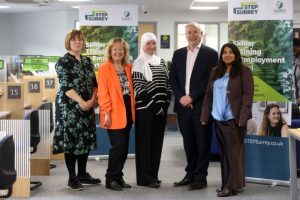
Representatives from the Surrey Growth Board launch the Get Surrey Working Plan

A cross-county plan to bring thousands of people back into employment in Surrey has received backing from Surrey County Council and government ministers.

The Get Surrey Working Plan brings together key partners to support 26,900 economically inactive residents who want to work but currently face barriers to employment.

Although Surrey has a lower-than-average economic inactivity rate of 17.8% compared to the national average of 21.2%, around 131,000 working-age residents are not currently employed.

Government ministers and local leaders from across government, Jobcentre Plus, health services and business have pledged to work together to tackle the issue through a range of interventions. These include multi-million pound schemes such as Connect to Work, Skills Bootcamps and WorkWell.

A new online Skills, Training and Employment Portal, known as STEP Surrey, will provide streamlined access to services, helping residents find support, gain skills, secure employment or access assistance more easily.

The plan was formally launched by representatives from the One Surrey Growth Board at Redhill Jobcentre Plus.

It identifies key reasons why many working-age residents are not in employment, including long-term health conditions and caring responsibilities.

The plan also addresses a mismatch in skills, where many highly skilled professionals commute to London, leaving local employers struggling to fill vacancies. Sectors such as health and social care, automotive and technology are particularly affected.

To address this, the plan will deliver targeted business support and skills development programmes, helping employers fill vacancies while supporting workforce planning and more inclusive employment practices.

The soon-to-be devolved Adult Skills Fund will focus on priority sectors and identified skills gaps, enabling residents to gain qualifications aligned with local employer needs.

Young people without access to skills or further learning will receive early intervention support in schools, reducing the risk of becoming not in education, employment or training (NEET), with clearer vocational pathways and work experience opportunities.

Matt Furniss, Surrey County Council’s Cabinet Member for Highways, Transport and Economic Growth and Chair of the One Surrey Growth Board, said: “While the economic picture in Surrey is largely a positive one, we know that there are thousands of people out there who are currently out of work but not in employment.

“Through the Get Surrey Working, we’re committed to breaking down those barriers and creating a truly inclusive labour market where everyone has the opportunity to access good quality employment and reach their full potential.”

Secretary of State for Work and Pensions, Pat McFadden, said: “The Get Surrey Working Plan is a perfect example of how partners can come together to support people into work and help local businesses find the talent they need.

“Surrey is a county with real strengths – a thriving economy, top-class businesses and talented people – yet we know there are many more people who want to work but face barriers that hold them back.

“By bringing together local employers and support services we can reach people where they are and give them a genuine route into good work. This kind of practical, locally-led support is exactly what we need to get Britain working.”

The plan has been developed through partnership working with public health teams, Jobcentre Plus, Surrey Chambers of Commerce, employment support providers and other stakeholders.

Its aim is to avoid duplication of services and ensure support reaches those who need it most, by coordinating employment and skills provision across Surrey into a clear, joined-up local offer.

Residents can access employment and skills support through the STEP Surrey portal at www.stepsurrey.co.uk

Surrey County Council

Representatives from the Surrey Growth Board launch the Get Surrey Working Plan


Support programme launched to help Surrey’s high streets

Reps from Surrey CC, Smarter Society and Hello Dorking mark the delivery of the High Street Support scheme

Dedicated support for high street businesses across Surrey to attract new customers, boost sales and drive growth is now available as part of wider efforts to strengthen and futureproof town centres.

The Surrey High Street Growth and Innovation Programme is open to a wide range of businesses, including independent retailers, start-ups, market traders, charities and social enterprises.

Funded by Surrey County Council’s Economic Growth Fund and delivered by specialists Smarter Society and The Retail Group, the scheme offers free practical workshops, online resources and one-to-one tailored support.

There is a particular focus on 22 high streets across all 11 district and borough areas in Surrey, with targeted workshops designed to help businesses attract more customers, increase footfall, improve visibility and boost customer spend.

Businesses can register for support directly via the programme’s enrolment form.

Matt Furniss, Cabinet Member for Highways, Transport and Economic Growth at Surrey County Council, said: “High streets are the lifeblood of our communities. They’re integral to the character and vitality of our towns and villages, which is why we’re committed to supporting them alongside our district and borough partners and Business Improvement Districts.

“This programme is a real investment in the people behind Surrey’s independent businesses, giving them the tools and knowledge to thrive – which is good for our economy, our residents and our communities.”

The scheme has been developed in collaboration with economic development teams from district and borough councils, alongside representatives from Business Improvement Districts (BIDs) across Surrey.

Launched last month, the programme includes workshops running through February, March and April at key locations across the county.

The Smarter Society outreach team is already engaging directly with businesses on Surrey’s high streets, meeting hundreds of owners face-to-face and signing retailers up for workshops.

Four free workshops are being held in each district and borough, covering practical topics such as increasing footfall, improving online and in-store visibility, making better use of social media and promotions, and planning for growth.

Workshops are also being streamed live online, with recordings available on demand.

In addition, a range of free toolkits, guides, templates and short videos is available via the Business Surrey website, alongside one-to-one support for businesses with more specific needs.

In the first few weeks of the programme, nearly 140 businesses have registered, with 75 already receiving support across five areas.

Geoff Baxter, Managing Director of Smarter Society, said: “The Surrey High Street Growth & Innovation Programme is gaining real momentum. Businesses across the county are engaging enthusiastically with our on-street support and workshops, and we’re proud to see such strong early signs of growth and innovation on Surrey’s high streets.”

The programme is free and open to any business trading on a Surrey high street. Further information is available via the Business Surrey High Streets page, with direct registration also available through the programme’s enrolment form.

Surrey County Council

Photo: Reps from Surrey CC, Smarter Society and Hello Dorking mark the delivery of the High Street Support scheme

.

.

.


Hope courted in new Surrey school for extra needs

Pupils at school

The official opening of Hopescourt School in Walton-on-Thames marks a new chapter for children with additional needs in Surrey. The Lord Lieutenant of Surrey joined pupils, staff, Bourne Education Trust, project partners and the Leader of Surrey County Council to celebrate the opening of a school designed to give children the support, stability and opportunities they need to thrive.

Hopescourt School will ultimately provide 200 specialist places for autistic pupils and children with communication and interaction needs by 2029. For many families, the new school means shorter journeys and stronger connections to their local community, ensuring children can learn and grow in an environment that feels safe, familiar and supportive.

With the first cohort of pupils already settling into their new learning environment, the school will continue to expand over the coming years, strengthening Surrey’s local specialist education offer. It forms a key part of Surrey County Council’s commitment to increasing high quality specialist provision close to home, helping more children access the right support without needing to travel long distances.

The opening event brought together students, families, Surrey County Council, Bourne Education Trust, construction partners Willmott Dixon and many others whose expertise and dedication have helped bring this new school to life.

The Lord Lieutenant of Surrey, Michael More-Molyneux, said: “I was so pleased to be present to celebrate the opening of Hopescourt School. Never having visited the new building, I was immediately taken with its design. For members of the teaching team, it was obvious that they were very enthusiastic about their new school. The pupils, it should be said, were equally enthusiastic about their new place of learning. It is a facility that is certainly needed in Surrey, and I send my congratulations to all concerned for the building of this most impressive centre of education.”

Surrey County Council’s investment of nearly £30 million to build the school reflects its long-term ambition to give children and young people with additional needs the best possible start. The expansion of specialist provision is a core aim of Surrey’s Inclusion and Additional Needs Partnership Strategy 2023–2026, ensuring children receive the right support where and when they need it.

Tim Oliver, Leader of Surrey County Council, highlighted the life-changing impact this new school will have on children and young people and their families: “Hopescourt School is a symbol of what can be achieved when partners work together with a shared vision, creating a school that is inclusive, sustainable, and truly life-changing for Surrey children and their families.”

Hopescourt is also Surrey’s first Net Zero Carbon in operation specialist free school, combining sustainability with child-centred design. Specially designed spaces support the school’s ethos of ‘pause, breathe, think and flourish’, ensuring a calm and nurturing environment for pupils aged 4 to 19.

Richard Poulter, Managing Director at Willmott Dixon, highlighted the lasting impact of the project: “Delivering Surrey’s first Net Zero in Operation school reflects our joint commitment to sustainability and community impact. This school will provide much needed specialist places and support generations of young people.”

The project is the result of close collaboration between Willmott Dixon, Surrey County Council, the school, Bourne Education Trust, Freemantles School, AtkinsRealis and many other partners. In particular, the dedication and expertise of the council’s Land & Property Capital Projects team and construction partners Willmott Dixon ensured the successful delivery of a school built around the needs of children.

Andy Field, Chair of Bourne Education Trust, reflected on the collective achievement: “Hopescourt stands as a powerful example of partnership in action. This school demonstrates what can be achieved when organisations come together with a shared purpose: to create exceptional, inclusive opportunities for young people. With these fabulous new facilities and excellent staff serving our children, we now have the opportunity to build a thriving school at the heart of the community with the aim of becoming one of the best special schools in the country.”

Acting Headteacher, Nicky Meston, paid tribute to the dedication of the Hopescourt staff and the excitement of the school community: “I am incredibly proud of our team and the way they champion our pupils every single day. Today isn’t just about opening a building, it’s about opening doors to opportunity, belonging, and the very best start in life.”

Hopescourt School embodies the council’s vision for inclusive, high-quality and community-anchored provision, delivering sustainable support and improving outcomes for children and families across Surrey.

Surrey County Council


Surrey wasting education in primary schools

Teacher with children sorting waste

Surrey County Council (SCC) has launched the Surrey Schools Waste Engagement Grant Scheme for primary schools in the county. Through the scheme, SCC will support schools to educate their children and the wider community about waste reduction and recycling.

The funding, which will be spread across the county, can be used to develop and deliver projects that may contribute to educating children and families on:

The impact and importance of recycling.
The impact of putting items that can’t be recycled into recycling bins.
How to dispose of different types of waste correctly, including which items should be recycled, either via home recycling bins, council recycling collections, community recycling centres or non-council recycling schemes, and which items should go in rubbish bins.
Food waste.
Clothing, textile and electrical waste.
The Waste Hierarchy.
Waste reduction, reuse and repair.

Schools that complete waste projects will also be given funding to contribute to or deliver projects that improve the environment of their school for the benefit of pupils.

Natalie Bramhall, SCC’s Cabinet Member for Property, Waste and Infrastructure, said: “I’m pleased to announce the launch of the Surrey Schools Waste Engagement Grant Scheme and look forward to seeing as many primary schools as possible apply for funding. By helping schools educate children about their responsibilities now, Surrey County Council’s scheme aims to create sustainable citizens and recyclers of the future.”

Waste is a key area in which residents can take direct action to help fight climate change. When residents reduce waste and recycle right, there are benefits for the environment. Fewer resources are used up creating new materials and fewer harmful emissions are made during resource production. There are also benefits for other council services as waste disposal is expensive for councils; reducing waste and increasing recycling saves councils money.

The window for schools to apply for a grant opens on Monday 23 February and closes on Wednesday 25 March 2026.

To find out more information and to apply for funding, schools should visit the Together for Surrey website page on the Surrey Schools Waste Engagement Grant Scheme.

Surrey County Council