Epsom and Ewell Times

Current
ISSN 2753-2771

Tragedy of War Hero turned writer who lived in Epsom

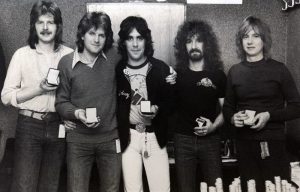
In June 1960, Douglas Baber, 42, was found comatose through drink in the garden of his former home in Woodcote Green, a well-to-do housing estate in Epsom. A court appearance followed, during which the magistrate noted that Baber had been before the Epsom bench seven times on drink-related charges. Baber, for his part, expressed appreciation for the care the Epsom constabulary had shown him while in custody. The Sutton and Epsom Advertiser described him as a “local author”, but there was far more to Douglas Gordon Baber than that.

Born in Belfast in 1918, he was living in middle-class comfort in South Croydon by 1921 in a household that included his mother Isabella, siblings and two servants. His father, Charles Johnstone Baber, was absent, later remarrying in 1929 and fathering a daughter, Hazel. Charles was an entrepreneur in the high-end footwear trade, at one time operating a shop on London’s Regent Street.

The family later moved to Bexhill on the south coast. At 11, Douglas came to public attention when newspapers reported his dramatic rescue after being swept out to sea by Channel currents — perhaps an early sign of the adventurous spirit that would define him. He developed a passion for flight and, in 1935 at just 17 years old, obtained a flying licence in a Gipsy Moth plane. On his certificate, he described himself as a student in boot and shoe manufacturing, likely intending to follow his father’s trade.

In 1937 Douglas travelled to Canada, finding work in factory administration. But the outbreak of the Second World War brought those plans to an end. He returned to England, enlisted in the RAF and, at 21, was flying bomber planes over occupied Europe as a Flight Lieutenant in 77 Squadron.

On 17 August 1941 he bailed out over Belgium and survived. He fled the crash site and was given refuge by the Rigaux family, farmers in Zingem, who risked their lives by sheltering him under German occupation. After nearly three weeks, German soldiers raided the farm following a suspected tip-off. Douglas was captured and the Rigaux family taken away to an uncertain fate. At Gestapo HQ in Brussels, he later said he was first subjected to rough treatment, then friendliness, then threats to shoot him — a deliberate psychological tactic.

Douglas passed through several POW camps: Dulag Luft in Germany, then Oflag XC in Lübeck, followed by Oflag VI-B Warburg, where he was imprisoned at the same time as the celebrated pilot Douglas Bader. The similarity in their names likely caused administrative confusion, and it is improbable the two men were not at least aware of each other.

In 1942 Baber was transferred to Oflag XXI-B Schubin in Poland, where fellow prisoners included future Chancellor Anthony Barber and Eric Williams, author of The Wooden Horse. He was later sent to Stalag Luft III at Sagan — now Zagan, Poland — famous for The Great Escape. Fellow prisoners included Paul Brickhill, who would later write Reach for the Sky, and actors Peter Butterworth and Rupert Davies. In February 1945 Douglas was moved again, to Marlag Nord, where he was soon liberated by Allied forces.

After returning home, Douglas collaborated with two former POWs to write Oflag 3, a play about prison camp life. Directed by Charles Hawtrey and featuring a young Pete Murray, it was staged at the X Theatre in Richmond and well received. Misleading online claims that Hawtrey collaborated with Douglas Bader rather than Douglas Baber have unfortunately muddied the historical record.

Douglas married Phyliss Fox in 1947. Their daughter Vivienne was born in 1950, and the family settled first in Christchurch Mount and later on the Woodcote Estate. His writing career flourished. He first signed with avant-garde publisher Werner Laurie, then with Heinemann, who released his debut crime novel My Death is a Mockery in 1952. The book, involving the murder of a policeman, was an immediate success and was quickly adapted into a film starring Donald Houston, Kathleen Byron and Bill Kerr.

The film became embroiled in the notorious Craig and Bentley case after Christopher Craig, the 16-year-old who shot PC Sidney Miles, revealed he had seen it earlier that day. Tabloid speculation unfairly pointed towards Baber, and he began receiving hate mail. This publicity placed immense strain on him and his family. Douglas had already shown vulnerability: in 1950 he was convicted of assaulting a ticket collector after a POW reunion. He expressed deep remorse in court, admitting to having drunk too much.

Through the 1950s Douglas published prolifically, producing Where Eagles Gather, The Guarded Years, Love on the Verge, A Road to Disaster, The Mortal Triumph and The Slender Thread, alongside short stories and journalism. He also published under the name John Ritson and worked as a publishing editor and executive. In 1956 he became advertising promotion manager at ABC TV, part of the early ITV network. On the surface, life in the stockbroker belt appeared successful.

But privately Douglas was spiralling. He increasingly found himself in Epsom Police Station for drink-related incidents, and once smashed his car into a shop in Bexhill. His marriage appears to have come under great strain. According to his daughter Vivienne, Douglas was devastated when he learned during the 1950s that members of the courageous Rigaux family who had sheltered him had been murdered by the Gestapo or deported to camps, where some later died. She said the guilt haunted him for the rest of his life.

It is easy to imagine how the emotional burden drove him towards alcohol. In 1963 he was still producing work — he published a short story in the Birmingham Evening Mail and took a post as advertisement controller on the Reverend Timothy Beaumont’s magazine Aspect. But on 21 October 1963 Douglas Gordon Baber died at 21 The Hill, Wheathampstead, near St Albans. He was only 45.

One of his later works, God’s Blind Eye (1960), features a businessman battling alcoholism. A line from the book seems to echo Baber’s own torment: “When the effects of the alcohol wore off, the sense of impending disaster and loneliness was far worse, crouched in his mind like an enemy.”

Martin Knight


Epsom’s Young Performers Light Up Picturehouse Showcase

It was an unusually busy Sunday morning at Epsom’s Picturehouse, with the main cinema hall filled to the very last seat. It is rare to see it so full at that time of day. Jamie Bannerman, principal of PQA Epsom, moved around with calm efficiency, directing guests, helping young performers find their places and ensuring the event ran smoothly. The screening was completely sold out, and for good reason.

PQA – the Pauline Quirke Academy of Performing Arts – is a nationwide academy for children and teenagers aged 4 to 18. With more than 200 academies operating across the country on Fridays, Saturdays and Sundays, PQA offers young people a creative and supportive space to learn acting, singing, dancing, filmmaking and more. Around 200 students attend weekly classes in Epsom, developing not only performance skills but also confidence, imagination and teamwork.

The showcase at Picturehouse demonstrated just how transformative these experiences can be. The audience enjoyed an inspiring mix of short films, from musical tributes and Shakespeare recitations by remarkably young performers to socially aware pieces exploring video-game culture, comedy sketches and musical-inspired dance routines. Each film reflected the students’ creativity, commitment and growing self-belief.

The academy plans to stage a musical next season, so families whose children have ever shown an interest in performing may find this the perfect moment to get involved.

PQA’s motto, “Be Yourself, Be Amazing,” captured the atmosphere of the event. It is a safe and creative environment where every child is encouraged to shine at their own pace. As Jamie noted at the close of the showcase, the academy is not just about red carpets or a taste of fame, although students do have those opportunities. It is about belonging, making friends, gaining confidence and discovering one’s own voice through the arts.

The celebration concluded with medals and special achievement awards presented to students who had made notable progress in confidence, speaking, performing and directing. At PQA, every child can become a diamond; sometimes they simply need someone to believe in them.

Romana Sustar
Freelance Journalist


Epsom Choral Society maintains its good standing

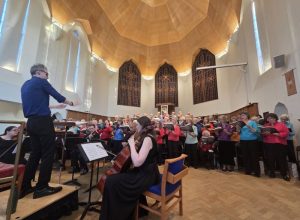
Epsom Choral Society’s performance of Dvořák’s Stabat Mater on 22 November 2025 at St Martin’s Church was an evening defined by emotional depth, musical discipline, and an unwavering sense of communal purpose. Under the assured direction of conductor Julian Collings, the choir and English Sinfonietta delivered a moving and meticulously shaped reading of one of the choral repertoire’s most profound sacred works.

The church’s warm acoustic proved especially well suited to Dvořák’s expansive, reverent writing; the opening lament, “Stabat mater dolorosa,” unfolded with a gentle solemnity that felt both intimate and monumental. The lower voices of the choir set a somber foundation, their tone grounded and resonant, while the sopranos floated above with clarity. Collings shaped the movement with confidence, never allowing the pacing to sag despite the movement’s extended emotional breadth.

The quartet of soloists—Lisa Swayne (soprano), Judy Louie Brown (mezzo-soprano), John Findon  (tenor), and Niall Anderson (bass)—brought a balanced and expressive presence to the performance. Swayne’s soprano was notable for its bright, ringing top notes, which soared effortlessly. Brown’s mezzo offered a warm, velvety counterpoint, particularly effective in the more introspective sections, where her phrasing carried a natural, speech-like flow.

Tenor John Findon delivered a compelling and lyrical performance, bringing both tenderness and urgency to his solos. His projection was clear, even in the church’s generous acoustic. Bass Niall Anderson provided a strong anchor, his tone rich and reassuring—especially striking in moments where Dvořák’s writing descends into darker, more meditative territory. Together, the four voices blended with admirable cohesion, never overshadowing the chorus but instead weaving in and out of the larger texture with sensitivity.

The English Sinfonietta supported the vocal forces with refinement and expressive nuance. The string section, in particular, brought a glowing warmth to the score, highlighting Dvořák’s gift for intertwining grief with deep spiritual hope. The woodwind solos were elegantly shaped. 

Collings maintained clear and communicative direction throughout, guiding transitions with fluid movement and drawing out the work’s emotional arc with thoughtful pacing. By the time the triumphant closing movement, “Quando corpus morietur,” arrived, the ensemble had built a compelling narrative of suffering transformed into hope, making the final “Amen” genuinely uplifting.

What stood out most across the performance, however, was the sense of collective commitment. Epsom Choral Society attracted a sizeable audience despite, the inclement weather, and there was a real sense of community between the choir and the audience. 

Jane Wilkinson


Epsom gets a bit of French polish

Those who were fortunate enough to be in the audience for Epsom Chamber Choir’s concert at St Martin’s Church, Epsom, on Saturday 15 November were treated to a superb recital of French choral music. The first half comprised mainly unaccompanied short pieces by 20th-century French composers, with one work by American composer Eric Whitacre. From the outset the choir’s exceptional quality was evident as their exhilarating sound reverberated around the superb acoustic of St Martin’s. Maurice Duruflé’s Quatre motets, based on plainsong melodies, were beautifully sung, conveying every nuance of this intimate music. Whitacre’s Sainte-Chapelle, inspired by a visit to the medieval Parisian chapel, mirrored in vivid choral writing the stunning stained-glass windows for which the building is famous, its dissonant cluster-chords and wide dynamic range skilfully negotiated under the clear direction of conductor Jack Apperley.

The sopranos and altos were then given a chance to shine with three pieces for upper voices only. The ethereal purity of the sopranos’ tone was especially apparent in Lili Boulanger’s Pie Jesu, accompanied by string quartet, harp and organ. The first half concluded with Pierre Villette’s Attende Domine, composed in 1983 for Worcester Cathedral Choir. Villette’s highly chromatic writing, with hints of Poulenc, Messiaen, Gregorian chant and jazz, presents real challenges even for accomplished choirs, but the confident voices of Epsom Chamber Choir proved more than equal to the task, bringing the opening half to a thrilling close.

After the interval the choir gave a moving account of Fauré’s ever-popular Requiem, accompanied by an excellent ensemble of violin, cello, harp and organ. This reduced instrumentation lent a special intimacy to the performance, well suited to the reflective character of much of the work, though perhaps less so for its more dynamic sections. Jack Apperley directed sensitively throughout, and soloists Caroline Burgess, Roger Miller and Nic Ash all sang with assurance and musicality. It is impossible to be unmoved by the ethereal beauty of Fauré’s masterpiece, nowhere more so than in the transcendent In Paradisum, its soaring melody and murmuring harp bringing the evening to a sublime conclusion.

John Bawden


Nescot students’ artwork brightens Ewell East Station

Artwork by Nescot’s Level 3 Art and Digital Design students is now on display at Ewell East Station as part of Art@theStation, a national initiative bringing young artists’ work into public transport spaces.

Commissioned by The Arts Society Epsom and funded by Govia Thameslink Railway, this is the second collaboration with the college. Their first commission, exhibited in 2024, is still on show at Epsom Station.

“Sense of Place – Ewell”

Students were asked to create portrait-format designs themed around Sense of Place – Ewell, using bold silhouettes and bright colours to reflect local landmarks. Four students – Jess, Emma, Cate and Sarah – were selected for display and each received a certificate and a £25 prize.

Sarah’s design features Bourne Hall Museum. She said working collaboratively “just like in the art industry” had been one of the highlights, adding that the digital skills gained at college had been “invaluable”. Cate’s design, inspired by Bourne Hall Park and the Dog Gate entrance, left her “thrilled” when selected. She said researching the history behind her piece had been fascinating and that seeing her work displayed publicly was “a proud moment”.

Jess and Emma, whose pieces depict well-known Ewell Village landmarks, said the project strengthened their digital design skills and that they enjoyed working as a team.

Building skills and confidence

Tutor Demonstrator Miles Merritt said the project offered “a brilliant opportunity” for students to build confidence and professional experience. He praised the chance for learners to work to a live brief and deadline and to enhance their portfolios ahead of further study.

He added thanks to The Arts Society Epsom for providing a platform to showcase student creativity, saying the college looked forward to future collaborations.

Praise from The Arts Society Epsom

Angie Child, Project Lead for Art@theStation, said she was “delighted” with the students’ graphic designs, noting their use of vibrant colour to bring clarity and impact to familiar Ewell landmarks. She said each student showed a “mature approach to commercial design” and a clear passion for pursuing creative careers. She also commended Miles Merritt for supporting the students throughout the project.

Supporting young artists

Art@theStation is part of a wider national initiative developed by The Arts Society, giving young artists the rare chance to exhibit work in waiting rooms, ticket halls and on platforms across Britain. The scheme aims both to improve the station environment and to give travellers an unexpected cultural experience.

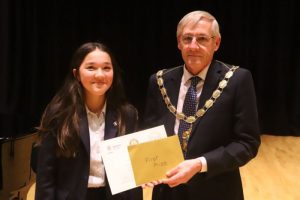
Photo: (left to right): Tudor Evans, Ewell East Station Manager; Alistair McGeachey, Chair of The Arts Society Epsom; Nescot Level 3 students Jess, Emma, Sarah and Cate; and project lead Angie Child.

Sam Jones – Reporter

Related reports:

Ewell’s Nescot student’s work selected for Origins Creatives 2025

Ewell East underpass transformed by new community mural

Young Artists Brighten Up Tattenham Corner Station


From Ukraine to Epsom: How Music and Kindness Struck the Right Note

When the Ukraine National Opera arrived in the UK on tour in early 2022, none of its musicians could have imagined how the world, and their lives, were about to change. Two weeks later, Russia invaded Ukraine. Many members of the orchestra, seeing the escalating conflict at home, made the painful decision to remain in the UK and claim asylum. Among them was clarinettist and saxophonist Vlad Voloshyn.

Now living in Epsom with local resident Nina Kaye, one of the founders of the Epsom & Ewell Refugee Network, Vlad has continued to rebuild his life through music. Together with five of his former orchestra colleagues, he formed a brass ensemble called Freedom Pulse, which performs Ukrainian and classical repertoire across Surrey and beyond.

Alongside his performing career, Vlad is in his final year at the British Institute of Modern Music (BIMM) in Fulham, where he studies music and sound production and hopes to work as a sound designer after he graduates.

Recently, an extraordinary act of local generosity brought his story full circle. Vlad had long hoped to buy a tenor saxophone, an instrument essential for his expanding repertoire but out of reach financially. By chance, his host Nina, who also volunteers for Nucleo, a London-based social action charity that helps children from disadvantaged backgrounds have access to music, received an email offering a donated tenor saxophone. Nina runs Nucleo’s National Instrument Bank, which matches donated instruments with musicians in need.

The offer came from a donor in the Lake District. Determined and hopeful, Vlad took the long train journey north to collect what he thought was a tenor saxophone. Only on the journey home did he discover it was actually an alto sax, an instrument he already owned. Disheartened, he returned to Epsom unsure how to continue his search.

A few days later, Vlad was performing at a Ukrainian Music Evening in Epsom, attended by His Worshipful The Mayor of Epsom & Ewell, Councillor Robert Leach. Sitting beside the Mayor, Nina recounted Vlad’s misadventure with the saxophone. Without hesitation, Councillor Leach said, “I’ve got a tenor sax at home which I haven’t played for 30 years and he would be welcome to have it, if I can find it.”

True to his word, after the concert Vlad was welcomed to the Mayor’s home and given the instrument which left him both astonished and grateful.

What began as a story of loss and exile has become one of connection and kindness. From the national stage in Kyiv to community halls in Surrey, Vlad’s journey shows how music continues to build bridges where politics and geography divide.

When Vlad plays his tenor sax in Freedom Pulse’s performances, he will know that even in times of war and displacement, the power of human generosity, and of music itself, resonates far beyond borders.

Nina Kaye

Related reports:

Music and dance for Ukraine at Epsom Methodist Church


Blackhawk Quintet bring West Coast cool to Epsom

For an increasing number of informed regulars, Epsom Jazz Club has become a nearby haven of quality music attracting national and international talent down to our own corner of Surrey.

For those not yet in the know, it’s worth broaching the growing roster of world-class musicians and singers who’ve walked through the doors at the Comrades Club venue.

It includes Tony Kofi, who blew his sax at Glastonbury this year in the long-running jazz funk outfit Cymande’s latest incarnation, trumpeter Andy Davies who with local guitar star Nigel Price brought along the rest of the amazing Ronnie Scott’s house band (EJC also has jazz lamps on the tables), and Alan Barnes – for whom the cliché ‘luminary’ is, in his case, actually warranted.

Past line-ups of award-winning players also include Hannah Horton, Allison Neale, Emma Rawicz, Karen Sharp and, in a genre that may be said to err sometimes on the side of seniority, the club has carefully promoted some up-and-coming artists, with exciting young vocalists on the bill like Ineza and Annie Majin.

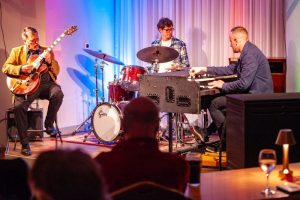
Backdrop set, it is celebrated drummer Matt Skelton breaking new ground in October bringing his Blackhawk Quintet to Epsom – it’s been strictly quartets on the Comrades’ small stage to date – for an evening exploring the work of fellow sticksman Shelly Manne. The show focused on an intense week in the life and career of this West Coast “cool” jazz innovator, band leader, club owner and movie music composer, who in the 1950s and 60s was often pictured nattily dressed at his drums, in jacket and tie, a big smile on his face.

This five-piece is named (deliberately portmanteau, it seems) after a short residency of concerts at San Francisco’s Black Hawk club in the autumn of 1959, recorded with a view to releasing a single live album that became a series of four scintillating records, such was the quantity of quality material, followed by a fifth album in the early 1990s when the whole lot was re-released on CD.

Skelton’s men for the evening were Leon Greening – perhaps my favourite jazz pianist working in the country right now – Mark Crooks, whose tenor sax croons, glides and purrs like Lester Young, Stan Getz or indeed Manne’s tenorman on the Black Hawk records Richie Kamuca; hard-swinging young horn player Jim Davison (once lead trumpet in the National Youth Jazz Orchestra, now leading his own bands and scooping awards); and Jeremy Brown, one of the go-to bassists on the UK scene who’s played at Epsom at least half a dozen times in various line-ups.

It’s a rare treat to hear five musicians on this stage, with two brass-blowing front men. The sound is full and punchy, hitting right to the fore during the energetic thematic heads, and adding that extra bit of variety as the players take their solo turns.

The band took the vocally enthusiastic crowd on a fabulous journey through the recorded sessions, from the mid-tempo bopper Pullin’ Strings to the smoothly striding Eclipse of Spain, via the hard bop of Benny Golson composition Step Lightly.

The night’s focus on the short series of Black Hawk gigs – with occasional forays into other Shelly Manne albums (the grooving, Latin-tinged The Breeze and I from Boss Sounds!) or pieces by his various collaborators including Henry Mancini (the exquisite ballad Dreamsville) – provided a satisfying coherence to the concert you don’t always get.

That satisfaction only deepened with the scholarly asides, stories and nuggets of background about Manne, the gigs and the man’s musical life that Skelton amused us with between numbers.

Oh, and did I mention the drums? Skelton beats them hands down.

Amanda Gregory

Epsom Jazz Club puts on concerts at the Comrades Club, 1 The Parade, Epsom KT18 5BT. The next evening will feature violinist Matt Holborn and his quartet on 27 November, starting 7:30 pm.

Photo by Steven McCormick of Steven McCormick Photography


Music and dance for Ukraine at Epsom Methodist Church

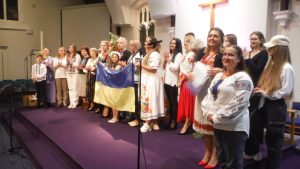
The 13th Ukraine Music Evening took place on Saturday 25th October at Epsom Methodist Church, organised by Lionel Blackman with the support of the Epsom Refugee Network and Surrey Stands With Ukraine. Extra seats were brought in as the Church filled to the brim.

The Worshipful Mayor of Epsom and Ewell, Councillor Robert Leach (RA Nonsuch), opened the event with words of welcome and appreciation for the town’s ongoing solidarity with the people of Ukraine.

For the first time, the programme featured a Ukrainian dance ensemble — Stephania, choreographed and led by Alina Luts — whose performances introduced vibrant movement and colour between the musical sets.

The modern section of the programme offered a change of mood. Epsom-based performers Helin Konyar (vocals), a graduate of Epsom’s Laine Theatre Arts and Vladislav Voloshin (saxophone) presented three songs: Almost There (Anika Noni Rose), Dream a Little Dream (Robbie Williams) and the Ukrainian favourite Stari Fotohrafiyi by Skryabin, combining contemporary and national influences with confident stage presence.

The evening continued with Vadym Perig, an alumnus of the nearby Yehudi Menuhin School, who travelled from his new home in Vienna to perform Robert Schumann’s Violin Sonata No. 1, accompanied by the accomplished Ukrainian pianist Svitlana Kosenko. Their expressive partnership recalled the high standard of the first Ukraine Music Evening in 2022, in which both artists also appeared.

Pianist Maria Zhornikova returned to Epsom with a refined interpretation of Enrique Granados’ Eight Poetic Valses, followed by À Giverny, a short composition by the organiser Lionel Blackman. Projected images of Monet’s gardens accompanied the performance, and the Mayor’s purchase of the sheet music contributed to funds for Surrey Stands With Ukraine.

Further performances by Stephania included traditional Ukrainian dances such as My Kyiv, Polka, and Chycheri, performed by a talented ensemble of soloists.

As is now tradition, the evening concluded with the Renaissance Choir under the direction of Nataliia Zadorizhna and conductor Dana Kuhlyk, singing the Ukrainian National Anthem and a selection of beloved folk songs — Oh, in the Cherry Orchard, Why Didn’t You Come, Why, Why, My Land, and Hey, Falcons.

All proceeds from the concert went to support the professional musicians who continue to share Ukraine’s rich artistic culture with audiences in Epsom.

Nina Kaye


Dorking’s “behemouth” of a “black hole”

The “behemoth” that is Dorking Halls has been labelled a “black hole” that sucks in all resources around it after an additional £3.34million in maintenance work was approved.

The new money comes on top of the originally agreed £11.2m the refurbishment project was expected to cost after delays and lead paint saw the bills spiral.

The work has been labelled as essential by those who see the building as a Dorking icon that must be preserved for future generations. Critics have accused Mole Valley District Council of treating the public purse like ‘Monopoly’ money.

The decision was made at the October full council meeting where the second stage of the project was signed off and confirmed Dorking Halls would again close, this time from April 2026 through until early December.

Councillor Nick Wright, cabinet member for leisure and community assets, said: “Dorking Halls is the largest publicly owned performance venue anywhere in east Surrey.

“Dorking Halls typically gets about 180,000 visitors, there are over 60,000 registered customers of which only about half live in Mole Valley.

“Of the Mole Valley residents, approximately one third have postal codes in Dorking itself, 26 per cent from Leatherhead and the north of the district, and about 40 per cent from rural areas. So the Halls really do serve the entire Mole Valley community.

“But it’s not just Mole Valley, with its 900 seated grand hall plus two other halls, two cafe bars and a conference room, this is the largest performance venue anywhere in Surrey and it’s owned by us, the public. This iconic building should and must be cherished and preserved for future generations.

“It’s old, it’s built in 1931, but it has national significance as a venue for classical and choral music and now embraces everything from rock pop musicals, theatre pantomime, comedy lectures, to cinema and circus.”

The building came into public ownership in 1947 and had its first big upgrade and expansion in the 1990s when much of the current tech was installed.

He added: “But after 30 years of continuous daily use, it was showing its age, breakdowns were occurring and running costs increased.” The council had originally approved £11.2million of spending across the two phases; the first was completed late last year in time for the Christmas panto season.

Costs leapt when lead paint was found in the building and needed to be removed – so the council has had to top up the pot with an additional £3.34m this time around. The phase one work concentrated on replacing the ceiling of the grand hall which was failing but the discovery of the toxic paint made the entire project more complex.

This time the council will upgrade the Halls heating cooling, air-conditioning and electrical systems – as well as the technical infrastructure inside the grand hall – bringing it up to modern standards. Council said the extra costs of phase one, together with three years of inflationary pressures has meant a further £3.34 million is needed to finish the job.

The money also includes a one-off “unavoidable growth” of £584,000 to cover the loss of earnings during the Halls’ closure. Cllr Wright said: “Without phase two this building would run the risk of falling into disrepair”.

Cllr Chris Hunt (Independent: Ashtead Lanes and Common), said was one of the first to speak out against the added costs. He said: “This isn’t fair on council tax payers. Nobody is saying it’s a bad building. I was arguing that the scheme should be built quicker. The administration said ‘no slow it down’, they have got to be responsible to this overspend, this monopoly (money) approach to council tax.”

Cllr Patricia Wiltshire (Independent: Ashtead Lanes and Common) said: “This is a massive, massive, overspend and there are people in Mole Valley who are desperately resentful of all these resources going into this one building. Every time we ask for something, little things we get told ‘there’s no money’, or ‘the budgets are too tight’.

“Yet here we are with this behemoth of a building, like a black hole absorbing the resources going into it. It’s a nice venue, it’s useful, people enjoy themselves, but don’t kid yourself that every single person in Mole Valley enjoys it or uses it. It’s a relatively small number in comparison to the whole population.

She added that the burden should fall on those who use Dorking Halls instead and that, if you want to go to the theatre you should pay without expecting everyone else to cover the cost.

Defending the project however was Cllr Stephen Cooksey (Liberal Democrats : Dorking South). He said: “It’s a big chunk of money but if we don’t spend it we could lose Dorking Halls.”

Chris Caulfield LDRS

Image: Dorking Halls – Google.

Related reports:

Dorking Halls to shut again for restoration?

Dorking Halls to reopen after upgrade

Dorking Halls to get refit

Dorking refurb: “it’s behind you”!


Ewell East underpass transformed by new community mural

A once grim and intimidating underpass in Ewell East has been given a striking new look thanks to a community mural designed to tackle anti-social behaviour and instil pride in the area.

The tunnel, connecting Nescot College with Ewell East railway station, has long been identified as a hotspot for crime and intimidation. Following reports from residents and students, the Epsom & Ewell Community Safety Partnership’s Joint Action Group coordinated a project to reclaim the space.

Work began in September after Epsom & Ewell Borough Council successfully applied for funding from the Office of the Police and Crime Commissioner’s Community Safety Fund. The mural was unveiled on 9 October by Surrey’s Police and Crime Commissioner, Lisa Townsend.

The artwork was created by the street art organisation Positive Arts in collaboration with Level 1 and 2 Art & Design students from Nescot. It draws inspiration from the college’s 70-year history, incorporating elements from old prospectus covers, the Spirit of the Wind motif from a former college logo, a frieze from the original entrance, and images of local flora and fauna.

Lisa Townsend said: “It’s really important to me that residents in Surrey are safe in their communities, and that they feel safe too. The footpath between Nescot and Ewell East Station was highlighted by residents as a location of concern, and I have discussed this issue with partners including Surrey Police, college leaders and the British Transport Police.

“The beautiful mural aims to reclaim this public space, which is used by both students and residents. Improvements to lighting, police patrols and additional private security will also bolster community safety and crime prevention in the area. There are seven murals within Epsom and Ewell, each of which helps to foster pride in our communities.”

Councillor Shanice Goldman, Chair of the Crime and Disorder Committee, said: “This community mural is a fantastic example of how multiple partners can work together for the betterment of the community. It is also a valuable step forward in combating anti-social behaviour by rejuvenating an unloved, run down part of the borough and instilling a sense of pride and ownership of the area in the students.”

Sarah Jane Morgan, Art & Design Lecturer at Nescot, said: “It’s been an incredible learning opportunity for our talented students to work alongside renowned artists from Positive Arts to create and bring to life a professional street art mural. They have enjoyed painting a design that celebrates Nescot’s history and curriculum areas, and we are grateful to the council for commissioning our students to work on this transformative project.”

Positive Arts’ director Julian Phethean added: “All of the students participated with passion and pride, eagerly embracing new spray painting techniques and applying them effectively while working collaboratively. They demonstrated a high level of creativity, motivation and focus throughout.”

The Epsom & Ewell Community Safety Partnership includes representatives from Epsom & Ewell Borough Council, Surrey Police, Surrey County Council, the Office of the Police and Crime Commissioner, Nescot, National Rail and other community partners. The council’s recent programme of murals across the borough has already shown success in reducing graffiti and improving the look and feel of public spaces.

Emily Dalton LDRS

Surrey Police And Crime Commissioner Reveal mural near Ewell East train station. (Credit: Emily Dalton/ LDRS)

Page 1
© 2021-2025. No content may be copied without the permission of Epsom and Ewell Times Ltd.
Registered office: Upper Chambers, 7 Waterloo Road, Epsom KT19 8AY