
Epsom and Ewell Times
24th September 2026

ISSN, LDRS and IMPRESS logos

Caterham will try to force a rental of long empty Post Office

Former Caterham post office. (Credit: Google street view)

A long-empty post office building in the heart of Caterham could finally be brought back into use under new council powers despite concerns over cost, risk and whether it will work.

Tandridge District councillors approved plans on March 26 to use a Government-backed High Street Rental Auction to force the former Station Avenue site to be let after years of vacancy in a prominent town centre location.

Members said the building has become a “significant eyesore” and a source of frustration for residents and businesses. Cllr Rob Spencer said: “You come to Caterham and you’re looking at a dead, old building,” adding the council had reached “the end of our tether” waiting for it to be occupied.

How the scheme works

Under the scheme, the council can designate the town centre for a High Street Rental Auction and formally notify the landlord. If the owner fails to secure a tenant, the council can step in to market and auction the lease, with a tenant potentially in place within around six months.

If successful, the move could bring the building back into use, boosting footfall and improving the high street.

However, officers warned the situation is complex. The property has multiple owners, and high asking rents and sale prices have deterred interest so far. They added it is still possible no suitable offers will come forward, even through an auction process.

Concerns over cost

The project is expected to cost around £15,000, with some money potentially recovered through grants and fees. Officers also noted the council cannot guarantee it will recover costs, with much of the expense tied up in staff time.

However, councillors raised concerns about where the funding would come from. Cllr Jeremy Pursehouse said: “It does sound like we’re rummaging down the side of the sofa.”

Mixed views from councillors

Opinion among members was divided. Cllr Mike Crane backed the proposal, calling it “a no-brainer” and suggesting the committee was “over-thinking” the issue.

But Cllr Perry Chotai warned the move could “set a precedent” and criticised the lack of detailed analysis. “This sounds a bit like a Trumpian style of analysis,” he said, calling for clearer evidence on risks and outcomes.

Despite reservations, councillors agreed to press ahead, viewing the auction as a potential way to revive the town centre even if success is not guaranteed and public money may be at risk.

Emily Dalton LDRS

Former Caterham post office. (Credit: Google street view)


Surrey University designs new long-life battery

Lithium versus VISiCNT battery cars in race with Lithium stuck at charger

A new battery design that could significantly extend the range of electric vehicles and the lifespan of portable electronics has been developed by researchers at the University of Surrey’s Advanced Technology Institute (ATI). 

In a study published in ACS Applied Energy Materials, researchers introduce a novel lithium-ion battery anode that delivers some of the highest energy storage capacities reported for silicon–carbon nanotube systems, while maintaining stability over hundreds of charge cycles. 

Lithium-ion batteries power much of modern technology – from smartphones and wearables to electric vehicles. Graphite, the most commonly used anode material, is stable but limited in the amount of energy it can store. Silicon, on the other hand, offers far greater capacity, but it expands during charging, causing it to crack and degrade over time. 

To overcome this, the research team developed a new “Vertically Integrated Silicon–Carbon Nanotube” (VISiCNT) structure. The design grows dense forests of carbon nanotubes directly onto copper foil and coats them with a thin layer of silicon, creating a flexible, conductive scaffold that can absorb expansion while maintaining performance. 

The resulting anode can store a very large amount of energy for its weight. In laboratory tests, it stored more than 3500 milliampere-hours per gram – close to the maximum possible for silicon and far higher than the graphite (370 mAh/g) used in today’s batteries. It also demonstrated improved stability and performance over repeated charge cycles. 

Dr Muhammad Ahmad, Research Fellow at the University of Surrey’s ATI and lead author of the study, said: 

“There’s been a growing push for battery innovation, as many of today’s technologies are limited by how much energy batteries can store. Our VISiCNT design offers a practical route to harness silicon’s huge storage capability without sacrificing cycle life.  

“This is a much-needed breakthrough, delivering very high capacity, fast charging and long-term durability, while bringing us closer to batteries that can power electric vehicles and everyday devices for much longer on a single charge.” 

A key advantage of the new approach is that the carbon nanotubes are grown directly onto copper – the material already used in commercial batteries – using a scalable manufacturing process. This could make it easier to integrate the technology into existing industrial production lines. 

Professor Ravi Silva, Principal Investigator and Director of the ATI, said: 

“This work is an important step towards bringing CNT-silicon anodes out of the lab and into real-world manufacturing. We can grow carbon nanotube structures directly onto copper foil at speed and tailor the silicon layer for stability, meaning this approach could be integrated into existing battery production lines with minimal disruption. The technology has clear potential not just for electric vehicles, but also for grid storage and smaller batteries used in microelectronics.  

“We are very proud to present yet another CNT technology following our initial research in delivering the world’s darkest material, VANTA-Black via the university spin-out Surrey NanoSystems Ltd., which is showing real-world impact of fundamental research funded by UKRI.” 

As demand for energy storage grows, batteries will need to store more energy, charge faster and last longer to support the UK’s transition to Net Zero. The VISiCNT design offers a promising route to meeting these challenges and could be key to powering next-generation electric vehicles and phones. 

Surrey University

Related reports:

Surrey battery leads

Surrey Uni leads microbe recyling of lithium batteries


Mayor opens Primark in Epsom

Mayor of Epsom opens Primark

Primark has opened a major new store in Epsom’s Ashley Centre, drawing large crowds on its first day and appearing to confirm earlier predictions by the Epsom and Ewell Times 13th May 2022, about the likely direction of the town’s retail future.

More than 1,000 people queued within the first half hour of opening on 25 March, as the fashion retailer launched its 199th UK store. The 31,400 sq ft outlet spans two floors and offers clothing, accessories, beauty products and homeware, alongside a Click & Collect service.

The arrival of Primark follows ongoing speculation about how large retail spaces in the Ashley Centre would be repurposed in the wake of high street changes. In the Epsom and Ewell Times feature examining potential replacements for the former House of Fraser site, Primark was identified as one of the most plausible candidates to anchor the centre’s future retail mix.

That prediction now appears well-founded, with the brand’s scale and footfall potential matching the need for a strong “destination” retailer in the town centre. Independent research cited by the company suggests Primark attracts millions of weekly visits nationwide and can generate additional spending in surrounding shops and restaurants.

Any story about Primark is the most avidly followed story in our publication.

The new store has also brought local employment, with more than 90 staff recruited, including a number returning to work after career breaks and some entering employment for the first time.

Store manager Ewa Klepczuk said the team was “excited to finally open our doors” in Epsom and thanked the community for its early support, while the owners of the Ashley Centre described the opening as a “significant moment” that would boost footfall and strengthen the centre’s position.

For Epsom’s retail landscape, the development may mark more than just a new shop opening. It signals a shift towards high-volume, value-led brands as the backbone of town centre recovery—an outcome the Epsom and Ewell Times had already flagged as the most likely path forward.

Sam Jones – Reporter

Related reports:

5 Shops that could replace House of Fraser in the Ashley Centre

Primark to open in Epsom

Primark finally indicates a season to open in Epsom

On the Primarks Epsom, ready, steady, go 25th March


Fennies Epsom Continues To Support Local Families As Demand For Quality Childcare Grows

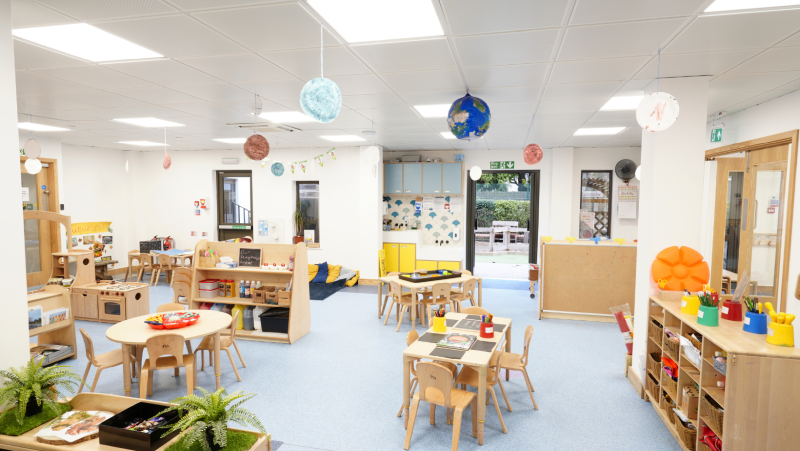
Fennies Nursery in Hook Road Epsom

Established Fennies nursery on 1a Hook Road, Epsom, KT19 8TH, strengthens its role in the community while a new Fennies setting opens nearby in Cheam.

For families across Epsom, access to reliable, high-quality Early Years education remains one of the most important decisions in the early stages of parenthood. At Fennies Epsom, Hook Road, that responsibility is one the team takes seriously. Over recent years, the nursery has become a familiar and trusted presence within the local community, supporting working parents while providing a nurturing environment where children can build confidence and a strong foundation for learning.

Situated on Hook Road, the nursery is designed to nurture every stage of a child’s development. Children aged three months to five years can explore carefully curated rooms, including:

· Two Explorers rooms, with dedicated milk kitchen and nappy change areas
· One Discoverers Room designed to encourage independence
· One Creators room with dedicated reading areas
· One Inventors room with free-flow garden access
· A dedicated studio space for young chefs and budding artists to explore
· A vibrant outdoor space that encourages curiosity and creativity

Fennies Epsom follows a child-led approach, giving children the freedom to explore their interests while building independence and essential life skills. Families are invited to make the most of communal spaces such as the Parent Room, while practical touches like on-site buggy parking make everyday routines easier.

At the heart of the nursery’s approach is a carefully considered curriculum designed to reflect both the needs of modern families and the curiosity of young children. Practitioners at Fennies Epsom, Hook Road focus on creating meaningful learning experiences that feel engaging and relevant, balancing structured opportunities with space for children to explore their own interests. The emphasis is on nurturing adaptable, confident individuals who feel secure in their environment and excited about learning.

“Blending child-led exploration with purposeful guidance, the curriculum celebrates imagination, critical thinking, emotional intelligence, and STEM-inspired discovery,” said Eleanor Richfield, Head of Education at Fennies. “It empowers children to communicate confidently and adapt to change, supporting children to enjoy the now whilst developing the lifelong skills they need to thrive.”

Fennies Nurseries is also proud to announce the opening of its newest setting just 15 minutes down the road in Cheam. Fennies Cheam marks the group’s 25th nursery, continuing more than three decades of delivering outstanding early learning experiences across London, Surrey, Kent, Middlesex and Berkshire.

With its passionate team, inspiring spaces and a focus on each child’s individual journey, Fennies Cheam is ready to help families in the area feel supported and inspired every day. Located at 91 Worcester Road, Sutton, SM2 6QL, the nursery is accessible for busy, commuting parents.

“The garden at Fennies Cheam is amazing, and so much natural light fills the building,” said Emma Carrington, Nursery Manager at Fennies Cheam. “We have lots of new resources, and the dedicated studio space will be a fantastic learning environment for the children.”

To learn more about Fennies Cheam, book a tour, or register your interest by contacting enquiries@fennies.com.

Sponsored article Fennies Nurseries

Photo: Fennies Nursery in Hook Road Epsom


Surrey-wide plan aims to get thousands back into work

Representatives from the Surrey Growth Board launch the Get Surrey Working Plan

A cross-county plan to bring thousands of people back into employment in Surrey has received backing from Surrey County Council and government ministers.

The Get Surrey Working Plan brings together key partners to support 26,900 economically inactive residents who want to work but currently face barriers to employment.

Although Surrey has a lower-than-average economic inactivity rate of 17.8% compared to the national average of 21.2%, around 131,000 working-age residents are not currently employed.

Government ministers and local leaders from across government, Jobcentre Plus, health services and business have pledged to work together to tackle the issue through a range of interventions. These include multi-million pound schemes such as Connect to Work, Skills Bootcamps and WorkWell.

A new online Skills, Training and Employment Portal, known as STEP Surrey, will provide streamlined access to services, helping residents find support, gain skills, secure employment or access assistance more easily.

The plan was formally launched by representatives from the One Surrey Growth Board at Redhill Jobcentre Plus.

It identifies key reasons why many working-age residents are not in employment, including long-term health conditions and caring responsibilities.

The plan also addresses a mismatch in skills, where many highly skilled professionals commute to London, leaving local employers struggling to fill vacancies. Sectors such as health and social care, automotive and technology are particularly affected.

To address this, the plan will deliver targeted business support and skills development programmes, helping employers fill vacancies while supporting workforce planning and more inclusive employment practices.

The soon-to-be devolved Adult Skills Fund will focus on priority sectors and identified skills gaps, enabling residents to gain qualifications aligned with local employer needs.

Young people without access to skills or further learning will receive early intervention support in schools, reducing the risk of becoming not in education, employment or training (NEET), with clearer vocational pathways and work experience opportunities.

Matt Furniss, Surrey County Council’s Cabinet Member for Highways, Transport and Economic Growth and Chair of the One Surrey Growth Board, said: “While the economic picture in Surrey is largely a positive one, we know that there are thousands of people out there who are currently out of work but not in employment.

“Through the Get Surrey Working, we’re committed to breaking down those barriers and creating a truly inclusive labour market where everyone has the opportunity to access good quality employment and reach their full potential.”

Secretary of State for Work and Pensions, Pat McFadden, said: “The Get Surrey Working Plan is a perfect example of how partners can come together to support people into work and help local businesses find the talent they need.

“Surrey is a county with real strengths – a thriving economy, top-class businesses and talented people – yet we know there are many more people who want to work but face barriers that hold them back.

“By bringing together local employers and support services we can reach people where they are and give them a genuine route into good work. This kind of practical, locally-led support is exactly what we need to get Britain working.”

The plan has been developed through partnership working with public health teams, Jobcentre Plus, Surrey Chambers of Commerce, employment support providers and other stakeholders.

Its aim is to avoid duplication of services and ensure support reaches those who need it most, by coordinating employment and skills provision across Surrey into a clear, joined-up local offer.

Residents can access employment and skills support through the STEP Surrey portal at www.stepsurrey.co.uk

Surrey County Council

Representatives from the Surrey Growth Board launch the Get Surrey Working Plan


Support programme launched to help Surrey’s high streets

Reps from Surrey CC, Smarter Society and Hello Dorking mark the delivery of the High Street Support scheme

Dedicated support for high street businesses across Surrey to attract new customers, boost sales and drive growth is now available as part of wider efforts to strengthen and futureproof town centres.

The Surrey High Street Growth and Innovation Programme is open to a wide range of businesses, including independent retailers, start-ups, market traders, charities and social enterprises.

Funded by Surrey County Council’s Economic Growth Fund and delivered by specialists Smarter Society and The Retail Group, the scheme offers free practical workshops, online resources and one-to-one tailored support.

There is a particular focus on 22 high streets across all 11 district and borough areas in Surrey, with targeted workshops designed to help businesses attract more customers, increase footfall, improve visibility and boost customer spend.

Businesses can register for support directly via the programme’s enrolment form.

Matt Furniss, Cabinet Member for Highways, Transport and Economic Growth at Surrey County Council, said: “High streets are the lifeblood of our communities. They’re integral to the character and vitality of our towns and villages, which is why we’re committed to supporting them alongside our district and borough partners and Business Improvement Districts.

“This programme is a real investment in the people behind Surrey’s independent businesses, giving them the tools and knowledge to thrive – which is good for our economy, our residents and our communities.”

The scheme has been developed in collaboration with economic development teams from district and borough councils, alongside representatives from Business Improvement Districts (BIDs) across Surrey.

Launched last month, the programme includes workshops running through February, March and April at key locations across the county.

The Smarter Society outreach team is already engaging directly with businesses on Surrey’s high streets, meeting hundreds of owners face-to-face and signing retailers up for workshops.

Four free workshops are being held in each district and borough, covering practical topics such as increasing footfall, improving online and in-store visibility, making better use of social media and promotions, and planning for growth.

Workshops are also being streamed live online, with recordings available on demand.

In addition, a range of free toolkits, guides, templates and short videos is available via the Business Surrey website, alongside one-to-one support for businesses with more specific needs.

In the first few weeks of the programme, nearly 140 businesses have registered, with 75 already receiving support across five areas.

Geoff Baxter, Managing Director of Smarter Society, said: “The Surrey High Street Growth & Innovation Programme is gaining real momentum. Businesses across the county are engaging enthusiastically with our on-street support and workshops, and we’re proud to see such strong early signs of growth and innovation on Surrey’s high streets.”

The programme is free and open to any business trading on a Surrey high street. Further information is available via the Business Surrey High Streets page, with direct registration also available through the programme’s enrolment form.

Surrey County Council

Photo: Reps from Surrey CC, Smarter Society and Hello Dorking mark the delivery of the High Street Support scheme

.

.

.


Three beers for Dorking

Dorking Halls (image Google)

Beer fans will be pumped to know that Dorking Halls will be able to offer customers a greater variety of booze after planning permission was secured to convert storage units into cellars. Antique hunters may be less than thrilled however. Mole Valley District Council has given itself the green light to convert the units at the northwest of the halls so they can be used by the town’s flagship theatre. The block had been in long-term use by Dorking auctioneers P F Windibank to keep its wares and will force the company, which been based there for over half a century, to move elsewhere. Officers, who recommended the conversion be approved, said it would support the “popular leisure and cultural facility”, Dorking Halls, and help its long-term viability.

They told the March development management committee: “They consider they need more (space), to provide a greater variety of drinks and they need more storage for beer kegs. The proposed change of use would support Dorking Halls and the wider town centre economy. Dorking Halls is an important venue for Mole Valley, it provides opportunities for leisure and recreation both for those living within and outside the district.”

John Collins, speaking on behalf of the application, said the increased storage was needed due to the scale of activities and that revenues generated through bar sales underpinned the venue’s viability. He said the Dorking Halls was cherished by the community and added: “The current cellarage was simply not adequate and more space needed to improve back of house operations and comfort within the facility. Being able to have a comfortable welcoming place with a decent bar is all part of that experience.”

Councillors at the meeting expressed concern over how it would impact the town’s antique scene – although that lies outside the committee’s remit. Cllr Claire Malcomson (Liberal Democrat: Holmwoods and Beare Green) said: “I know Dorking Halls is an extremely precious asset that we have but I do also think this is going to (impact) some of the trade in Dorking. So I am not going to pass judgement or anything but I wanted to make that comment because I think this could be quite a loss for us.” Cllr Kirstie Havard (Liberal Democrat: Capel, Leigh, Newdigate and Charlwood) added: “This application is causing great harm to that business they have been there for 80 years. It’s arisen after the first phase of Dorking Halls (refurbishment) was completed and it was decided that space was needed, and I understand the reasons, but I’m very worried about Windibank and what they are losing, and it is very harmful to their business.”

Chris Caulfield LDRS

Dorking Halls (image Google)


Ewell’s Looe Set for Flush of New Industrial Investment

The Looe, Reigate Road, Ewell. (Credit: Google Street View)

An ageing industrial site in Ewell is set for a major overhaul after councillors backed plans to knock it down and rebuild it with bigger, more modern units.

The scheme at The Looe, off Reigate Road in Nonsuch, will see 17 tired single-storey units demolished and replaced with a new part one, part two-storey building containing nine industrial and business units. Councillors green-lit the plans at an Epsom and Ewell Borough Council planning committee on February 26.

Cllr Phil Neale (RA Cuddington) said: “I think it is going to be a vast improvement. I have had a look at the current site and it’s not one of our most attractive industrial units at the moment.”

There will be fewer units overall (nine instead of 17) but they will be larger, creating more workspace. The total floorspace will jump from 732sqm to just over 1,200sqm.

The new building will mainly cater for industrial and storage businesses. Plans include:

  • One commercial unit (such as a shop or service business)
  • Four general industrial units
  • Four storage and distribution units
  • 16 car parking spaces
  • 18 cycle spaces
  • Solar panels on the roof
  • A small security and plant hut

There will also be a new pedestrian refuge crossing on Reigate Road and a segregated footpath along the access road to improve safety for people walking to and from the site.

Planning officers said the land counted as previously developed ‘grey belt’ land, meaning the redevelopment is not considered inappropriate under national planning rules. The developers have also promised a new planting and habitat improvements to the site, over and above the council’s requirement.

Less office space, more industry

The plans will reduce the amount of office space on the site. But council officers said there is enough office capacity elsewhere in the borough, particularly in Epsom town centre and East Street, to absorb the loss. At the same time, the borough has a shortage of industrial and storage space so the new scheme could help meet demand.

Traffic worries raised

Three neighbours objected, raising concerns about large lorries struggling to access the narrow entrance road, vehicles blocking Reigate Road while waiting to enter, sewage capacity and asbestos removal. Concerns about shared boundary walls were deemed a civil matter, and asbestos removal would be handled under separate legislation.

Highways officers said the development would generate slightly more traffic than the current site, but not enough to cause a “severe” impact on the local road network. The new footpath and crossing were described as public benefits.

Emily Dalton LDRS

The Looe, Reigate Road, Ewell. (Credit: Google Street View)


On the Primarks Epsom, ready, steady, go 25th March

Ashley Centre

Primark will open the doors of its new store at Epsom’s The Ashley Centre on Wednesday 25 March at 10am, taking over the former House of Fraser unit.

To mark the moment, the first customers and loyal Primark fans will be welcomed by a live DJ. The new store will cover 31,400 sq. ft set over two floors and follows the retailer’s recent recruitment of 90 new team members ready for opening day.

Customers will be able to shop the bestselling Primark products they know and love across clothing, kidswear, beauty, lifestyle and home.

In further good news for local shoppers, its popular Click & Collect service will also be coming to Epsom to enable customers to browse and order on the Primark website before picking up their items in store, at a time that best suits them.

Ewa Klepczuk, Primark Epsom’s store manager, said: “After working at Primark for many years, I’m excited to now be part of bringing our exciting new store to Epsom. We know there is a lot of anticipation for our arrival, and with 90 new retail colleagues now in place, we’re all working hard behind the scenes to ensure we’re ready for opening day. I’m really looking forward to seeing the reaction of local shoppers when our doors open, where they’ll find our famous Primark must-haves, all at unbeatable value for the entire family. Everyone is welcome to join in with our celebrations – we can’t wait to see everyone there!”

Louisa Butters, Head of Urban Destinations (Retail & Offices) at CBRE Investment Management, owners of Ashley Centre, said: “The opening of Primark marks a significant milestone for the Ashley Centre and is a strong acknowledgement of the progress we’ve made through our recent refurbishment programme. As one of the UK’s leading retailers, Primark brings both scale and drawing power, playing a key role in strengthening the scheme’s anchor line-up and enhancing its overall proposition. Its arrival will further elevate the quality, accessibility and relevance of the destination, while reinforcing the confidence that major national brands have in our long-term vision for its continued transformation.”

The new Epsom store will be Primark’s 199th store on the UK high street and follows the retailer’s last store opening in December 2025 in Royal Tunbridge Wells, Kent.

As shoppers prepare for the opening day, Primark customers can continue to shop at nearby stores in Sutton, Kingston-Upon-Thames and Guildford — and use Primark’s handy online stock checker tool to track down their favourite styles before heading in-store.

Primark Press Release

Related reports:

Primark finally indicates a season to open in Epsom

Primark to open in Epsom

5 Shops that could replace House of Fraser in the Ashley Centre


Surrey Uni finds energy-saving 5G features could cut carbon emissions

An optimal combination of energy-efficient 5G network features – including AI systems that let mobile mast and antenna base stations go into sleep mode when usage is low, and phones that avoid unnecessary background network checks – could help cut indirect carbon emissions across the UK economy by around 25 million tonnes of CO2, suggests new research from the University of Surrey. 

The study, published in Resources, Conservation and Recycling, challenges the assumption that 5G will inevitably increase the UK’s energy demand. Instead, researchers show that next-generation network technologies have the potential to reduce emissions across many industries that rely on the digital infrastructure that keeps them online – from finance and IT to transport and construction. 

Using UK economic and emissions data, the team established an environmentally extended input–output (EEIO) model tailored specifically to the Information and Communication Technology (ICT) sector. This allowed them to trace how cutting energy use in 5G can send knock-on effects across 33 industries of the UK economy. 

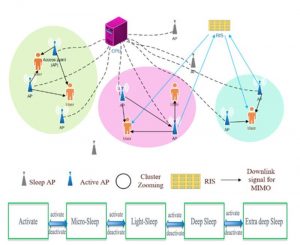
Working in collaboration with Professor Ming Xu from Tsinghua University, researchers looked at 10 emerging technologies – six targeting how base stations operate and four designed to make user devices more energy-efficient. These included AI-driven multi-level sleep modes, which let mobile masts switch off when demand is low, reconfigurable intelligent surfaces (RIS) such as smart panels that redirect radio waves using little power, “cluster-zooming” in cell-free MIMO networks that allow groups of small antennas to expand or shrink coverage so energy is not wasted, and smarter handset signalling.  

They found that AI-powered sleep control for base stations and improved control-channel signalling on user devices delivered the most impactful reductions. 

Dr Lirong Liu, Associate Professor at Surrey’s Centre for Environment and Sustainability, said: 

“Smarter base stations and devices don’t just cut electricity use in telecoms – they reduce indirect emissions in the whole supply chain. The modelling framework allowed us to quantify effects that are usually hidden, especially the indirect emissions linked to electricity use and wider supply chains. It also gave us a clear way to compare different 5G features side by side and identify which combinations deliver the strongest environmental benefits.” 

The analysis shows that sectors such as financial services, IT services and computer programming gain some of the largest indirect benefits, reflecting just how much modern industries depend on digital connectivity. 

Professor Pei Xiao, Professor of Wireless Communications at Surrey’s Institute for Communication Systems, said: 

“Many of these energy-efficient features are already on the engineering roadmap. What this study provides is a clear system-level view of where the biggest carbon wins lie – and why regulators, operators and industry should prioritise them as part of the UK’s net zero transition.” 

The research also suggests that to unlock these benefits, 5G policy must extend beyond coverage and speed targets and encourage the adoption of energy-efficient architectures. Measures could include building energy targets into spectrum licenses that mobile operators need to use 5G frequencies, incentives for low-power network design and making sure 5G research supports the UK’s broader net zero goals.

Surrey University

The full paper can be found here: https://www.sciencedirect.com/science/article/abs/pii/S0921344925005774?via%3Dihub  

Image from Resources, Conservation and Recycling


Surrey Uni on challenging AI decisions

A drone deliverying medical parcel

AI systems already decide how ambulances are routed, how supply chains operate and how autonomous drones plan their missions. Yet when those systems make a risky or counter-intuitive choice, humans are often expected to accept it without challenge, warns a new study from the University of Surrey. 


The research, published in the Annals of Operations Research, looked at the use of optimisation algorithms in relevant areas such as transport, logistics, healthcare and autonomous systems. Optimisation algorithms are systems that decide the best possible action by weighing trade-offs under fixed rules such as time, cost or capacity. Unlike prediction models that estimate what will happen, optimisation algorithms choose what should be done. 

Optimisation algorithms decide what gets prioritised, delayed or excluded under strict limits such as weight, cost, time and capacity. Yet those decisions are mathematically correct but practically opaque. 

The research team’s findings implies that our increasing ‘blind trust’ creates serious safety and accountability risks in the increasing areas of everyday life where optimisation algorithms are used. 

Using a classic optimisation challenge known as the Knapsack problem, the research demonstrates how machine learning models can learn the structure of an optimisation decision and then explain it in plain language. The method shows which constraints mattered most, why certain options were selected and what trade-offs pushed others out. 

The study shows how organisations can challenge optimisation algorithms before their decisions are put into practice. Rather than replacing existing systems, the approach works alongside them, using machine learning to analyse decisions and explainable AI to reveal why one option was chosen over another and which constraints and trade-offs shaped the outcome. 

Dr Wolfgang Garn, author of the study and Associate Professor of Analytics at the University of Surrey, said: 

“People are increasingly asked to trust optimisation systems that quietly shape major decisions. When something looks wrong, they often have no way to challenge it. Our work opens those decisions up so humans can see the logic, question it and intervene before real-world consequences occur.” 

This is particularly important for autonomous systems such as delivery drones. Drones must constantly decide which packages to carry while balancing battery life, payload weight and safety requirements. Without transparency, regulators and operators cannot easily justify or audit those decisions. 

Rather than replacing existing optimisation software, the approach works alongside it. Machine learning is used in this approach to analyse solutions, explain feasibility and identify brittle or high-risk decisions before deployment. 

The research introduces a structured framework that ensures explanations are tailored to real decision makers. Instead of technical outputs, systems can provide human-readable reasoning, such as: “too many heavy items were selected, or battery limits were prioritised over delivery value.” 

Dr Garn continued: 

“Regulators are starting to ask harder questions about automated decisions. If you can’t explain why your system chose one option over another, you’ll struggle to get approval — or defend yourself when something goes wrong. This framework makes that explanation possible.” 

Surrey University

Photo credit www.routexl.com. Llicence https://creativecommons.org/licenses/by/2.0/


Epsom therapist seeks to lift our moods in gloomy weather

It feels like Epsom has hardly seen the sun lately, making winter feel longer and delaying the arrival of spring. This kind of dullness is often described as “typical British weather”, but at the time of writing some parts of the UK have seen rain fall every single day of the year so far.

When daylight is limited and the rain never seems to stop, it is entirely normal to feel low, tired, or less motivated than usual. The good news is that there are some simple, evidence-based steps that can help support your mood, even when the weather is working against you.

Here, Mark from Mind & Meaning Therapy shares three proven mental health tips to help give your mood a boost.

A small social check-in each day

We are social creatures, and even small social connections can improve our mood. These do not need to be big events or require a lot of energy. Simple ways to stay socially connected include sending a text to a friend, scheduling a short phone call, or asking someone to meet for a drink.

These small check-ins can significantly increase feelings of connection. Research shows that regular positive social interactions are linked to better mood, greater life satisfaction, and lower levels of stress.

Get outside and get some natural light

Even on grey days, daylight is far stronger than indoor lighting. Try to dodge the showers and get outside for 10–20 minutes once a day. A walk to the shops or a quick loop around the park is enough to help.

Natural light helps regulate the body clock, which in turn supports both mood and sleep. Studies have found that people who spend more time in daylight during the winter months are less likely to report depressive symptoms than those who remain indoors with low light exposure.

Do one thing to improve your sleep

Sleep and mood are closely linked, and improving sleep can make a noticeable difference to how you feel emotionally. Simple, proven steps include going to bed and waking up at roughly the same time each day, reducing smartphone use before bedtime (for example by leaving your phone in another room), keeping the bedroom cool while ensuring a warm bed, avoiding caffeine late in the afternoon, and leaving an hour or two between your last alcoholic drink and bedtime.

Better sleep helps the brain regulate emotions and reduces stress, making it easier to cope with everyday ups and downs.

What to do if low mood is persistent

If your mental health feels poor over a longer period, or if everyday life feels unusually overwhelming, speaking to a mental health professional can help. Support can make a real difference.

You can contact Mark at Mind & Meaning Therapy in Epsom to explore what may be behind how you are feeling and to find support that suits you.


Mind & Meaning – Therapy in Epsom & Online
mindandmeaning.co.uk
Email: hello@mindandmeaning.co.uk

Sponsored article.

Images: Pink umbrella in the rain, Erik Witsoe and The sun is shining through the clouds in the sky, Alireza Banijani Unsplash License