Epsom and Ewell Times

Current Front Page

ISSN, LDRS and IMPRESS logos

Council wants to prevent suicides

Lonely girl looking suicidal

Tuesday 16th January Epsom and Ewell Borough Council’s Community and Well-Being Committee considered local suicides.

In 2019, the Borough Council launched its Health & Wellbeing Strategy (HWBS), recognizing a concerning suicide rate of 10.4 per 100,000 residents from 2016-2018—higher than the Southeast’s 9.2. A total of 21 lives were tragically lost. To address this, mental and emotional wellbeing became a priority in the borough’s HWBS and subsequent action plan. However, the COVID-19 pandemic significantly impacted the plan’s execution.

Since the HWBS approval in late 2019, the borough has witnessed a spike in suicide rates, reaching 14 per 100,000 residents between 2018-2020—claiming 29 lives, with 19 being male. The Southeast’s rate during this period was 10.1 per 100,000. To counteract this alarming trend, the Council proposes an assertive response in the form of a revised Suicide Prevention Action Plan.

The increase in suicides is reminiscent of a previous increase observed from 2009 to 2013 during a period of significant financial hardship. Recent changes in the standard of proof used by coroners, shifting from ‘beyond reasonable doubt’ to ‘on the balance of probability,’ might impact the recorded number of suicides.

In March 2023,  the Council’s Health Liaisons Panel supported the development of a Suicide Prevention Action Plan (SPAP). This plan aligns with Surrey County Council’s Suicide Prevention Strategy 2023-2026, emphasizing six priorities for suicide prevention.

The Council’s SPAP, rooted in Surrey’s broader strategy, aims to:

– Enhance the response to individuals in crisis with suicidal thoughts.

– Foster collaboration with Public Health Surrey County Council, statutory partners, and the community & voluntary sector.

– Collaborate with Public Health Surrey County Council to utilize real-time surveillance data for meaningful and effective SPAPs.

Specifically referencing the Alison Todd Protocol, an assessment tool identifying areas of practice and growth, the SPAP demonstrates the Council’s commitment to suicide prevention. The plan, to be led by the Council’s Community Development Team, spans from January 2024 to January 2025 before undergoing review.

Cllr Kate Chinn (Labour Court ward) was concerned about Council staff who might not assess the risk of suicide correctly and the effect on them if a resident subsequently died. She was assured that training would be given and support for staff provided in that situation.

The committee adopted the plan unanimously.

Image: Licence details rawpixel.com


Surrey team addicted to changing futures

Surrey Count's bridge team

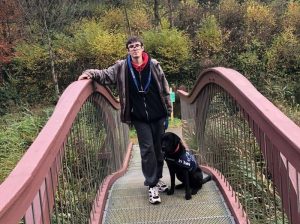
A former aircraft engineer has spoken out about how his alcohol addiction threatened to wreck his life.

Steve Saunders, 66, from Pyrford, Woking says that what started as social drinking turned into an all-consuming addiction, which saw both his marriage and career end.

Now he is using his experience to help others and to send out a clear message, that there is always support in Surrey for those with a drug or alcohol addiction.

Steve works with Surrey County Council’s Changing Futures programme on their Bridge the Gap scheme which supports people facing a range of issues including alcohol and drug addiction, domestic abuse and mental health challenges.

Like most other people I started drinking in my late teens and 20s socially but it was in my 50s when it started to become a big problem,” said Steve, who is a proud father of two grown-up sons.

I now know that I have an addictive personality and that affects how I see alcohol, and one drink is never enough. My behaviour changed and I was awful to those around me – it ended up ruining my second marriage and saw me retire from my job as an aircraft engineer aged just 53-years-old.

At my worst I was drinking a bottle of spirits a day, often in secret. You kid yourself that people don’t know what’s going on, but it was out of control. I kept losing my driving licence and I was lucky not to be in prison. When I left my job I nearly drank myself to death.”

The turning point for Steve was when he decided to be honest with his doctor about his drinking, and he went into rehabilitation.

Going through rehabilitation changed everything,” said Steve. “I decided I wanted to help others who are facing similar problems and so I became involved in Bridge the Gap to offer my insights into the systems that support people and also to run SMART recovery meetings which are both face-to-face and online.

A huge range of people access the service – business owners, housewives and professional people such as doctors and teachers. All of them have one thing in common – they are looking for help, and we make sure they receive it.

Until now Bridge the Gap has been run as a pilot scheme by Surrey County Council, funded by the Department of Levelling Up, Housing and Communities and the National Lottery – but now a fundraising drive is being launched to raise the £1.4 million which will be needed for it to continue supporting vulnerable people in Surrey.

Eleven local charities are backing Bridge the Gap and these are Catalyst, Guildford Action, The Hope Hub, Oakleaf, Richmond Fellowship, Rentstart, Your Sanctuary, North Surrey Domestic Abuse Service, South West Surrey Domestic Abuse Outreach Service, East Surrey Domestic Abuse Services and Surrey Domestic Abuse Partnership.

Steve said: “As well as helping others I also get something from the SMART meetings because it reminds me to be grateful for where I am. Anyone facing a drug or alcohol problem needs to know that there is help out there, and we will support them in turning their life around.”

Keely Glithero , service manager at Catalyst, said Steve’s input into the Bridge the Gap programme is invaluable.

Keely said: “Steve’s rich lived and learned experience in addiction brings a valuable perspective and contribution to how we deliver services. I am truly inspired by his relentless energy for supporting people, and I’m so glad to support and work alongside Steve as a volunteer for Catalyst in the Changing Futures programme.”

A conference is taking place in Surrey later this month when people, like Steve, will use their lived experience to support others, challenge prejudice and empower themselves. The Power of Lived Experience event takes place on Wednesday, January 31 from 10am to 4pm at Dorking Halls. For more information and to reserve your place contact colette.lane@sabp.nhs.uk

Further information:

Changing Futures Bridge the Gap programme Changing Futures – Bridge the Gap | Healthy Surrey

Drug and alcohol support in Surrey – Drugs and alcohol | Healthy Surrey


Surrey braces for doctors’ strike

Stressed doctor

Hospitals and health services across Surrey are bracing themselves for the longest “and most difficult” strike in NHS history. Junior doctors, who make up about half of the medical workforce,  will walk out for six consecutive days starting Wednesday, January 3, after negotiations broke down following the Government’s offer.

Health chiefs are warning people to expect significant disruption as urgent, emergency, trauma, maternity and critical care are prioritised during the work stoppages over routine and scheduled appointments.

It comes as hospital services are already stretched with the NHS experiencing one of its busiest periods.
In December, Royal Surrey County Hospital issued a plea to only attend in cases of life-threatening situations or serious injury after its accident and emergency department reported its busiest ever day.
Matt Jarratt, chief operating officer at Royal Surrey NHS Foundation Trust said: “Our junior doctors have our full support, whether they choose to participate in industrial action or not. But we know this strike action will put more pressure on frontline services and our staff, who are already working incredibly hard.

“We are again asking members of the public for their support in using services responsibly and appropriately, thereby helping us keep our emergency departments and 999 for those who need them most. We are also asking people to be patient, particularly if services are busier and waits are longer than usual or if outpatient or planned procedures need to be rearranged, as our frontline teams prioritise critical services and work hard to make sure people get the care they need.”

The long-running dispute has meant hospital trusts have developed emergency plans to cover disruption but the timing has made this walkout even more challenging.

Dr Charlotte Canniff, joint chief medical officer for Surrey Heartlands Health and Care Partnership and Surrey GP said: “We have well-rehearsed plans in place to manage these periods of disruption, working together across health and care organisations. However, due to the timing, and with this being the longest period of planned industrial action the NHS has ever seen – taking place over six consecutive days – we expect this to be the most difficult period of action yet.

“During the last period of strike action, just before Christmas, at its peak, on December 21 we saw 497 junior doctors from Surrey Heartlands taking part in planned action. With junior doctors making up around half of all doctors, a reduction of this scale has a significant impact on the services our frontline teams can continue to provide – so we do expect significant disruption to routine appointments and planned procedures as we prioritise urgent, emergency, trauma, maternity and critical care for those who need us most.:”

Dr Rob Laurenson and Dr Vivek Trivedi, are the co-chairs of the British Medical Association’s junior doctors committee. In a joint statement, they said: “It’s incredibly disappointing that we’ve had to call this strike – no doctor ever wants to have to take industrial action. Junior doctors face the brunt of the decade of underinvestment that has undermined the NHS frontline. 

“The record-high waiting list and chronic lack of resource are pushing many talented doctors to the brink; as a profession we are exhausted, disenchanted, and questioning whether we want to stay in the health service at all. Add to this years of pay erosion, and it’s no wonder that morale on the frontline has never been lower.

“Patient safety is our top priority at all times, including during strike action, which is why we not only give trusts adequate notice to arrange appropriate cover, but also have an established process with NHS England, which we have successfully used over the previous eight rounds of strike action, to constantly review staffing levels and act appropriately, including derogating staff back to work when absolutely necessary.

“Of course, these strikes don’t have to happen. We’ve been clear that it is the government that cancelled talks and we would still at this late hour encourage Government to put forward a credible offer so that we can stop this strike and get back to doing what we really want to do – care for patients.”

Junior doctors in England will be taking strike action from 7am on Wednesday January 3 until 7am on Tuesday January 9.

The NHS will prioritise urgent and emergency care as consultants cover for junior doctors, but has said people should continue using urgent medical services as normal.

For minor problems, general practices, community pharmacies, and dentists are not expected to be affected.

Dr Timothy Ho, chief medical officer, Frimley Health NHS Foundation Trust, said: “These strikes come at a time that will cause huge disruption to the NHS, with services already feeling the strain of winter pressure. All health and care partners are working together, and we have drawn up contingency plans but we are concerned as this round of industrial action will see junior doctors on strike for six days. 

“We are working closely with partners to ensure we prioritise urgent and emergency care for patients, but we do need the public to continue to support us and use the right health service to meet their needs.

“Routine appointments may be rescheduled. If you have not been contacted by the Trust, we would advise that you attend your appointment as planned, but please continue to check for updates.”

Related reports:

Local NHS Doctors and Consultants striking

Plea ahead of doctors’ strikes round 5

Doctors’ strike: advice

Junior doctor strikes to be ‘monthly’ in Surrey?

Surrey doctors to go on strike?


Catalogue of errors – death inquest

Jake Baker and dog

A Woking family has spoken of their “incredibly difficult time” after losing their son saying “there is nothing that can take away the pain”. Their comments came after an inquest concluded a catalogue of failures by Surrey County Council and other bodies contributed to the death of 18-year-old diabetic Jake Baker.

Jake, who also had learning disabilities, died on December 31, 2019, while visiting his family home.
It was the first time he had stayed away from his care facilities for more than two nights in a row, since being placed in the care of the Surrey County Council when eight years old, his family lawyers said.

The teenager arrived home on Christmas Eve, became unwell on December 28 and was found unresponsive on New Year’s Eve by his mother and stepfather, neither of whom had been trained to recognise or seek medical advice for a deterioration in Jake’s diabetes. 

According to the family’s lawyers, Coroner Carolyn Topping said Jake’s death was avoidable and, if he had been admitted to hospital any time before 5pm on December 29, he would have been successfully treated. 

They added that the coroner said there had been “a systemic failing on the part of Surrey County Council to adequately train and oversee personal advisers about their legal obligations in preparing pathway plans for children leaving care”.

In a statement, the family said: “Losing Jake has been incredibly difficult for our family, especially as he died in our home at what should have been a happy time. We trusted Ruskin Mill Trust with Jake’s care, and we have been let down by them in the worst possible way. Jake was an enthusiastic and determined young man who always put his mind to things. He was happy to help out in the garden or with DIY.

“He had a kind soul and would get very excited when meeting new people. He loved dogs and playing pranks on his brothers and sisters. Jake wanted to be more independent and was keen to learn but to anyone who met him it was clear that he needed help, particularly in handling his diabetes.

“Before Jake turned 18, he had a key worker that we trusted and who he had a great relationship with. We were able to spend time together as a family safely, knowing that Jake was well supported by the staff at Burbank children’s home. This changed when Jake moved from Burbank to Ruskin Mill College. We were told it would be his road to independence and from this point on we didn’t have much contact with the people who were supposed to be supporting Jake. We were never made fully aware of how severely his diabetes could affect him, or how he should be managing it. 

“As a family we did all we could to make sure that Jake was looking after himself and was well taken care of, but those that were put in charge of his care didn’t give us the information necessary to ensure Jake’s safety. There is nothing that can take away the pain of losing Jake, but it is our hope that lessons will be learned from his death so that another tragedy is prevented.” 

The cause of death was given as diabetic ketoacidosis.

Jake had been living at a residential college run by Ruskin Mill Trust in Stroud, for 15 months.
The trust is a charity that provides specialist education for young people with learning difficulties and special educational needs.

The coroner also said the trust failed to ensure Jake’s safety when he went home for contact with his family. Following his death Transform Residential Limited, the body responsible for providing care services to Ruskin Mill Trust, was ordered  to pay a total of £22,721.04 at Staines Magistrates’ Court, after pleading guilty to causing a resident avoidable harm, the  Care Quality Commission said.

Jake had been a resident at Glasshouse College since November 18 2019. Previously he lived at Ruskin Mill College, run by the same provider.

According to the family’s lawyers, the coroner said Jake lacked the ability to be wholly independent in managing his diabetes and  was not given any information about the dangers for him to have unsupported contact if his blood sugars became imbalanced.

They added that Ms Topping said those involved in making decisions for Jake, from the Surrey Care Leavers team and Children’s Services, failed to ensure Jake’s safety when he went home for overnight contact from March 2019 and that Ruskin Mill Trust failed to ensure Jake’s safety.

Anna Moore, who represented Jake’s family, said: “The coroner’s detailed investigation and critical findings illustrate a catalogue of failings that led to Jake’s death. Jake’s family welcome these conclusions and hope that lessons will be learned from his death. What is particularly important is that those authorities entrusted to look after children and support them through their transition to adulthood are doing so properly.

“The evidence heard at the inquest showed that no one with current responsibility for Jake had a clear picture of needs and what support he required. Very worryingly, those at Surrey County Council who were meant to be supporting Jake into his transition to adulthood were not aware of the scope and extent of this important role. This needs to be urgently addressed so that children and young adults, and particularly people like Jake with additional needs, are given the support they need when they turn 18 and beyond.”

Clare Curran, Cabinet Member for Children, Families and Lifelong Learning at Surrey County Council, said: “Our deepest sympathies remain with Jake’s family and friends at this difficult time. The services provided to Jake fell short of what he and his family needed to keep him safe, and we are very sorry for our part in that. We have taken a number of actions over the past four years to improve our support for young adults leaving care. While we have already made changes, we know there is still further to go and we will carefully consider the coroner’s findings as we take our next steps.”

Ruskin Mill Trust took over responsibility for residential care from Transform Residential Limited in August 2020. A spokesperson said: “Jake’s death was heart-breaking and our thoughts remain with his family. He was well known to our staff and his loss came as a profound shock to everyone here. We deeply regret that in this instance some key measures that should have been in place for his visit home were overlooked. We aim to provide the highest standards of care.

“Since this tragedy occurred, the overnight risk assessment protocol has been fully reviewed and we have taken steps to strengthen practice, policies and procedures to ensure this kind of incident never happens again.”


Local hospital plea to use 111 unless urgent

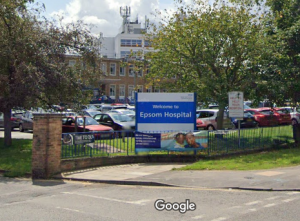
Epsom hospital

A spike in very unwell patients has put indescribable pressure on St George’s, Epsom, and St Helier’s emergency departments – and with Christmas and doctors’ strikes on the way, demand could snowball further this winter.

Senior clinicians are warning of severe disruption to NHS services over the coming weeks – and are calling on members of the public to help by going to NHS 111 online when their healthcare need is less urgent.

Some people may think that going to an emergency department – even when it is not an emergency – means they will be seen more quickly. This, however, is not the case.

In reality, because of the high number of severely unwell patients requiring urgent intervention, waiting times to be seen for less severely unwell patients will be significantly longer than usual. Other settings of care will be quicker and easier to access than the hospital ED.’

More than 560 people with winter-related illnesses, many of whom were very unwell, came to the hospital Group’s three emergency departments between 4 and 10 December – about 10% of all attendances. Hand-washing is one of the most effective ways to stop the spread of bugs like norovirus, and vaccines are good protection against flu and Covid.

Dr Rebecca Suckling, Site Chief Medical Officer at Epsom and St Helier University Hospitals NHS Trust, said: “Winter has arrived. Our hospitals are under extraordinary pressure, not just because of the numbers coming to our emergency departments, but the sheer volume of very sick people we are seeing.

“We are here for people when they genuinely need us. But on behalf of the nurses, doctors, and everyone else working so hard in our hospitals, I would urge people who are unwell over the Christmas period to consider whether our emergency departments are the best place to come.

Dr Luci Etheridge, Site Chief Medical Officer at St George’s Hospital, said: “With further strike action on the way, and Christmas just around the corner, we face a very challenging few weeks. And following a record-breaking summer, it barely feels like we’ve come up for air.

“The best Christmas present the public could give our hardworking staff this year is using NHS services wisely and going to NHS 111 online when their health need is less urgent – helping us to prioritise the very poorly people who are coming through our doors.”

Last month, 219 people going to St George’s, Epsom and St Helier emergency departments were redirected to other services more appropriate for their healthcare need, including GP surgeries, pharmacies, and urgent treatment centres.

When someone has an urgent healthcare need that isn’t an emergency,  NHS 111 online – a 24/7 service – should be the first port of call, as this can direct where to go. Pharmacists are highly skilled and can provide advice on minor health concerns from skin rashes to earaches and flu. Many local pharmacies stay open late, and no appointment is needed. Some will be open over Christmas.

During strikes, people should continue to attend GP appointments, unless contacted and told otherwise. When it’s an emergency or life-threatening, people should always ring 999 or go to an emergency department.

People can also take steps to stay safe and well this winter, including getting vaccinated for flu and Covid through their local NHS vaccination service and washing hands regularly with soap and water to stop the spread of illnesses.

With many people more vulnerable to colder weather – including those aged 65 and over, babies and young children, and those with long-term conditions – take the time to look in on vulnerable family, friends, and neighbours.

A lot of older and vulnerable people have been affected by winter illnesses – and as they often need to spend longer in hospital, additional demand has been placed on NHS services.

People who use medication should ensure they collect prescriptions well in advance of the bank holidays.

Junior doctors strikes take place from 7am on Wednesday 20 December to 7am on Friday 23 December, and from 7am on Wednesday 3 January to 7am on Tuesday 9 January.

St George’s University Hospitals NHS Foundation Trust


Magic Table for Adults with Dementia 

Magic table for dementia games

Residents and staff at Banstead Library celebrated the launch of the award-winning innovation from the Netherlands. The Tovertafel (Dutch for “magic table”), is a ceiling mounted projector that projects light games onto a standard table surface. These games are interactive, immersive games that can be played sitting down by a group of people, they encourage social contact, movement and are both relaxing and fun! 

Banstead library staff held an open day last week where members of the public got the chance to see the technology in action and try it for themselves. 

The Tovertafel supports people living with dementia as well as adults with learning disabilities. The games and activities respond to hand and arm movements and are designed to stimulate physical activity and social interaction, inspiring those living with dementia to be more active.  

Banstead library was chosen as the location for the Tovertafel as it is part of a working group to help make Banstead a dementia friendly village. The aim is to work with organisations such as Age Concern, care homes, the local Community Link Officer, and Community and Prevention Officer to bring together community workers and organisation who will support and help residents living with dementia, and their carers. 

Surrey County Council Deputy Leader and Cabinet Member for Customer and Communities Councillor Denise Turner-Stewart said:“We are delighted to introduce the Tovertafel at Banstead library and offer this vital immersive experience to local residents and their families – it’s a fantastic tool that will be not only be a source of joy and entertainment, but which will also make a valuable difference to the lives of residents with dementia in Surrey.  

“The installation of the Tovertafel demonstrates Surrey County Council’s commitment to creating a dementia friendly community where no one is left behind, and showcase our libraries are re-imagined spaces that provide so much more to residents than just books.” 

To find out more about The Tovertafel, or to register your interest, please contact Banstead Library via banstead.library@surreycc.gov.uk.   

Find out more about Dementia support in libraries: https://www.surreycc.gov.uk/libraries/health-and-wellbeing/dementia  


Doctor struck off where police found insufficient evidence

Medical Practitioners Tribunal Service (image Google)

A Surrey doctor who used his position to gain the trust of a woman before choking and sexually assaulting her has been struck off. Former Royal Surrey County Hospital doctor Adnan Sadiq texted the woman saying “I’m a doctor, I save lives”, “You can trust me”, “I’m a nice guy” and “you don’t have to worry” before meeting with the woman during lockdown and assaulting her.

The Medical Practitioners Tribunal Service found that he  placed both hands on the woman’s neck,  anonymised as Ms A, and applied pressure.  He also pushed Ms A’s head towards his exposed penis, before asking if he could ‘put it in’ or words to that effect during the November 2020 predatory attack.
When questioned Ms A told the tribunal: “I genuinely feared for my life and was glad to escape… it took me a while to realise that what had happened was not ok.”

Dr Sadiq initially denied choking was his  kink, but later accepted he liked it in a sexual context, according to the tribunal report. Allegations he sent explicit images over snapchat were not proven but overall his behaviour was so egregious that he was struck off as a doctor.

The report read: “Dr Sadiq’s actions would undermine public trust and confidence in him, as well as in the medical profession.” Dr Sadiq qualified in 2020 from University of Szeged, Hungary, and moved to Britain to take up his first medical post in October 2020. A month later he began texting the woman before going on to sexually assault her. During evidence he gave answers that were “too implausible to be truthful”.
He also contradicted himself in relation to his predilections and other topics. For example, when asked about kissing Ms A, he said: “‘We both kissed at the same time… because her face was coming towards me and I didn’t want her to feel awkward.’’

The report added: “The tribunal considered Dr Sadiq’s actions to amount to sexual assault, with an element of violence. The tribunal was concerned as to his apparent continued lack of insight into the seriousness of his actions and their consequences for (the woman)  and public confidence in doctors.
“Erasure is the only appropriate and proportionate sanction sufficient to maintain public confidence in the medical profession and to uphold standards of conduct for doctors.”

The tribunal determined that Dr Sadiq’s name should be erased from the medical register.

The General Medical Council suspended Dr Sadiq in September 2023 and he was immediately stopped from working at Royal Surrey. The full tribunal process concluded in November and he was erased from the medical register.

A spokesperson for the hospital trust said: “In May 2021 the General Medical Council informed the Royal Surrey County Hospital that an allegation had been made against Dr Sadiq regarding inappropriate sexual conduct outside of the trust. Since then we have followed clear and robust processes in a timely way, appropriately reflecting the investigations and decisions taken by the GMC and Surrey Police at each stage. While this incident occurred outside of our work place, we expect anyone employed by our trust to uphold the highest moral standards and would like to express sympathy for the distress caused to the complainant in this case.”

A spokesperson for Surrey Police said they received a sexual assault report in February 2021 and later arrested a 30-year-old man. The spokesperson said:  “Following our investigation, officers concluded there was not sufficient evidence to proceed with the case. The victim was kept informed throughout and supported by officers. The man arrested was a medical professional at Royal Surrey NHS Foundation Trust and Surrey Police provided information to the General Medical Council about the investigation.”

Medical Practitioners Tribunal Service (image Google)


Local HIV testing proves its worth

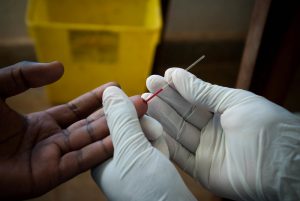
Someone being tested for HIV

Tens of thousands of patients going to St George’s, Epsom and St Helier’s emergency departments (EDs) have been tested for HIV in the past year, thanks to a pioneering scheme that helps people with the virus start treatment more quickly. 

All three hospitals offer the opt-out testing – and carried out nearly 130,000 checks between April 2022 and September 2023. As a result, 33 people were diagnosed with HIV and able to receive effective early treatment and reduce onward transmission, and a further 19 previously diagnosed patients were re-engaged in care.

It also means people were able to access other support they may need, such as appointments with health advisors or psychologists who can help them come to terms with the diagnosis.   

The figures have been released to mark World Aids Day, a global movement to unite people in the fight against HIV and AIDS, and comes as St George’s, Epsom and St Helier University Hospitals and Health Group sign up to become a founding organisation for the HIV Charter Mark. The charter has been established by the National Aids Trust to address HIV stigma and poor knowledge of HIV within healthcare settings. 

Dr Richard Jennings, Group Chief Medical Officer at St George’s, Epsom and St Helier University Hospitals and Health Group, said: “HIV is a long-term manageable condition and people living with HIV have full healthy lives, but the earlier someone with HIV is diagnosed the better. An early diagnosis means effective treatment can be started, and effective treatment means a person cannot transmit HIV to other people and can stay well themselves.  

“We have put a lot of work into routinely offering HIV testing to people who attend our emergency departments, and we are committed to increasing awareness, reducing stigma and training up our staff. It doesn’t stop there, however – we are on hand to deliver results to any patients who test positive and to talk through the developments in HIV care and the improved outcomes with treatment. We also offer free routine care and treatment to people who are living with HIV, and we offer psychological support.”  

St Helier Hospital has been offering testing since 2019, though it had to pause it at points during the pandemic. 

It has one of the highest testing uptakes in South London, with 90% of eligible patients having a blood test that can detect the virus – compared to just 11% in April 2022. In the six months alone between April and September 2023, 11,785 tests were carried out at the hospital. 

Dr Olubanke Davies, a GUM/HIV Consultant based at Sutton Health and Care’s Rosehill Clinic, which is based at St Helier Hospital, said: “The earlier someone with HIV is diagnosed, the better. An early diagnosis means that they can start treatment and reduce the risk of developing severe illness.  

“With the help of our colleagues in the emergency department, we’ve put a lot of work into routinely testing patients, increasing awareness and training up staff.” 

To find out more about HIV – including getting tested, the symptoms, and living with the virus – visit:
https://www.nhs.uk/conditions/hiv-and-aids/  

St George’s, Epsom and St Helier University Hospitals and Health Group

Image cc Unicef


East Surrey Hospital Inspection

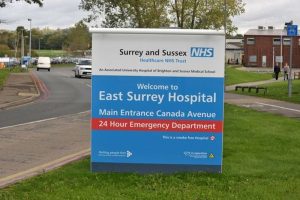
East Surrey Hospital

Maternity services at East Surrey Hospital have been downgraded after inspectors flagged six key areas for improvement. A report following an inspection of the unit raised concerns with infection control, checks on emergency equipment and medicine management.

These areas were listed as steps that must be taken in order for the service to improve along with actions relating to audits, completing documents and safeguarding training for junior doctors.

The Redhill hospital, run by Surrey and Sussex Healthcare NHS Trust, maintains its overall outstanding rating from the Care Quality Commission (CQC), but an inspection of its maternity service took place in September.

‘Safety of women, birthing people and babies put at risk’: In a report published on November 15, inspectors said they visited the hospital as part of the CQC’s national maternity inspection programme.
The service was downgraded to requires improvement with inspectors saying medicines were “not always managed well”, care records were not always completed and leaders did not always implement improvements in a timely way.

Inspectors said: “Staffing levels did not always match the planned numbers, which put the safety of women, birthing people and babies at risk. The service was not always visibly clean, and there were times when equipment checks were not completed.”

As well as this, “adverse incidents” may have been contributed to by out-of-date policies and guidelines.
How has the hospital responded?

Tina Hetherington, chief nurse of Surrey and Sussex Healthcare NHS Trust, said: “Delivering safe, quality care to our patients is our absolute priority. I want to apologise for where we haven’t got it right and the effect this may have on patient confidence in our maternity services. Rest assured that we are taking immediate action to address the issues raised by inspectors to ensure our patients receive the high-quality care they rightly expect.”

Inspectors said feedback from patients as part of the inspection showed there were “mixed views” about experiences of the service. The report said: “Feedback included about concerns about delays, poor communication, and support needing to improve. For example, being spoken to unkindly, short staffing, and not being listened to. Positive feedback commented on the reassurance and care given by staff, especially on delivery suite.”

Some areas ‘not always visibly free of dust, dirt, and bodily fluids’: Under the area of cleanliness, infection control and hygiene, inspectors said: “Staff did not always use equipment and control measures to protect women and birthing people, themselves, and others from infection. They did not  always keep equipment and the premises visibly clean, and we saw some staff were not in-line with uniform policy to minimise risk of infection. This included “several staff members” not routinely using gloves when they should,  creating an infection risk and bed spaces that were “not always visibly free of dust, dirt, and bodily fluids”.

Inspectors also said delays to discharge on the postnatal ward were negatively impacting on patient and staff experience, with delayed inductions and transfers to delivery suites in evidence.

The service had a rate “well below” the national rate of stillbirths, of between one and two stillbirths per 1,000 births, compares to 4 per 1000 births nationally.

Inspectors were also told by staff there were not enough midwives and managers to mitigate risks of short staffing, leading to “exhaustion and low morale”.

‘Robust improvement plan’ in place: Ms Hetherington said the trust recognised that the national shortfall across maternity had affected services. She said a recruitment drive had been launched this year and since the inspection 13 new midwives had started jobs, with a further five due to start in the coming weeks.

The chief nurse also said a “robust improvement plan” had been put in place since the inspection, which included tougher infection control measures, more frequent cleanliness checks, and more thorough daily safety checks of medicines and specialist emergency care equipment. She added: “We are clear there is more work to do, but our maternity team are passionate about patient care. While the CQC highlighted many examples of good practice such as timely access to services and quick action on any identified patient risks, this report will help us focus our efforts and engage with our patients through forums such as our maternity voices partnership, on making the immediate and long-term improvements that will deliver for our patients and their families year after year.”

Inspectors also raised examples of “outstanding practice” in the report, highlighting an inclusion midwife with a specific focus on promoting equality and diversity for staff and patients, and tackling health inequalities.

Leaders monitored incidents and outcomes for health inequalities and ethnicity to ensure no one was put at additional risk because of their ethnicity or personal circumstances, the report said.


Local NHS Trust slow to respond to complaint

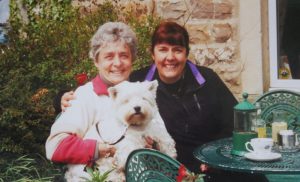
Doreen Pepper and Daughter Claire with dog Bonnie

A complaint lodged against Epsom and St Helier University Hospitals NHS Trust regarding the care provided to the late Doreen Pepper, a Parkinson’s patient, has raised concerns about medication management and now delayed complaint response times, leaving her family in distress.

Mrs. Pepper, a former Head Teacher at Merland Rise First School, Banstead, Surrey, lived an active, independent life despite battling Parkinson’s for approximately 16 years. However, her experience at St Helier Hospital took a distressing turn after a fall resulted in a broken hip and subsequent admission.

The family’s complaint, submitted on April 26, 2023, outlines a series of lapses in medication administration during Mrs. Pepper’s five-week stay. Despite the hospital’s policy allowing Parkinson’s patients to self-administer their medication, A & E staff allegedly denied Mrs. Pepper access to her medication upon admission.

The hospital reportedly lacked an accurate record of Mrs. Pepper’s medication until October 27, 2022, causing considerable concern for the family. Instances of incorrect medication administration persisted, despite interventions from senior staff members and the family’s visual aids.

The family created an A4 poster with medication times, but Mrs. Pepper was still given medication at inappropriate hours, impacting her ability to participate in crucial physiotherapy sessions for her recovery.

The hospital deemed Mrs. Pepper fit for discharge, intending to send her home with carer visits four times a day. The family questioned the adequacy of supervision between visits and the absence of overnight support, receiving little guidance from the hospital regarding future care options.

Furthermore, a delayed referral for physiotherapy post-discharge resulted in a significant setback to Mrs. Pepper’s mobility, exacerbating her condition.

In response to the family’s complaint, a spokesperson for Epsom and St Helier University Hospitals NHS Trust expressed regret over the extended response time. They assured a thorough investigation, led by senior clinical and management staff, and pledged to keep the family updated as they work towards a resolution.

The family, while acknowledging the strain on the NHS, urges hospitals to enhance complaint-handling processes to prevent prolonged distress for patients and their families awaiting answers on critical matters of care and accountability.