


Epsom and Ewell Times

Current Front Page

ISSN, LDRS and IMPRESS logos

Epsom Hospital bucks Brexit staff bottleneck

Hospital staff walking in corridor

Epsom and St Helier NHS Trust bucks the national trend in maintaining its level of recruitment of UK qualified medical staff between 2015 and 2021. Nationally the picture is different.

The share of homegrown doctors and nurses joining England’s NHS is at its lowest for seven years, BBC analysis of workforce data has found.

Some 58% of doctors joining the health service in 2021 came from the UK, with health bosses increasingly turning to international recruitment.

The British Medical Association told the BBC the NHS faced a “workforce crisis”. It “faced a challenge retaining staff from overseas, due to the “financial and bureaucratic barriers” they faced. Dr Amit Kochlar, its international committee deputy chair, said medical graduates were charged up to £2,400 to apply for indefinite leave to remain, with each of their dependents facing the same fee.

While overall numbers have been increasing, critics said declining domestic recruitment was unsustainable to keep pace with demand.

Patricia Marquis, Royal College of Nursing (RCN) Director for England, said ministers must do more to reduce the “disproportionate reliance” on international recruits. “We are seeing a sharp increase in people leaving nursing, with more of our members saying they are considering alternative careers,” she said.

Danny Mortimer, chief executive of NHS Employers, said it was “high time for the government to commit to a fully-funded, long-term workforce plan for the NHS” to tackle “chronic workforce shortages”. He said “relentless demand” was affecting staff due to vacancies which stood at around 110,000 – “gaps which cannot and should not be filled through international recruitment alone”.

 A recent report by the cross-party Commons health and social care select committee concluded the large number of unfilled NHS job vacancies was posing a serious risk to patient safety.

The BBC analysed workforce data provided by NHS Digital from 2015 to 2021, to investigate if trends it previously reported following the Brexit referendum in June 2016 continued. The share of UK doctors joining the health service had fallen from 69% in 2015 to 58% last year.  Over the same period, the share of new UK nurses fell from 74% to 61%. Recruitment of doctors from the Rest of the World rose from 18% to 34% over the same period, and that share of international nurses rose from 7% to 34%.
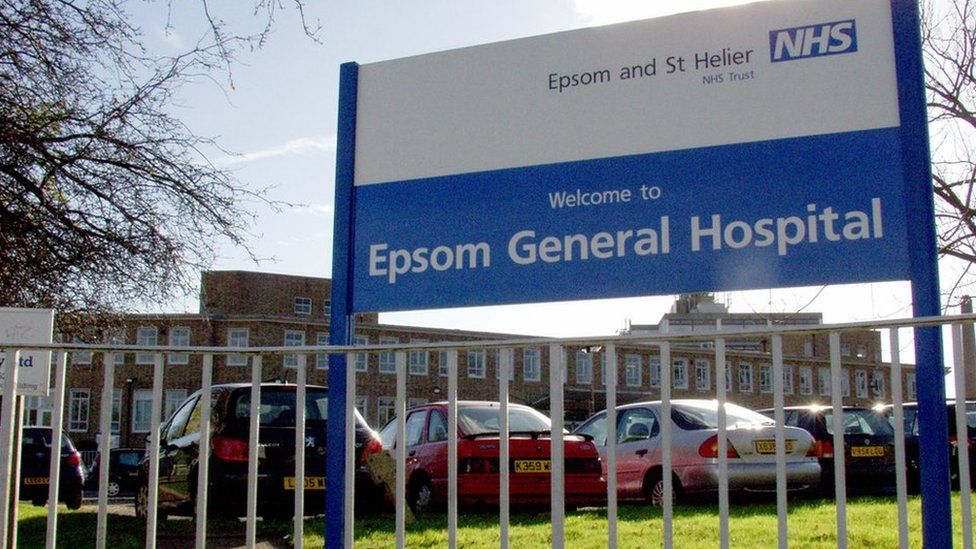
Epsom General Hospital frontage with sign

In the Epsom and St Helier Trust the level of UK recruitment remained even though there was a 13.7% reduction in EU recruitment and a corresponding 13.7% increase in worldwide recruitment during the period analyzed.

News and data provided by the Local Democracy Service of the BBC in which Epsom and Ewell Times is a partner. For the full in-depth report CLICK HERE

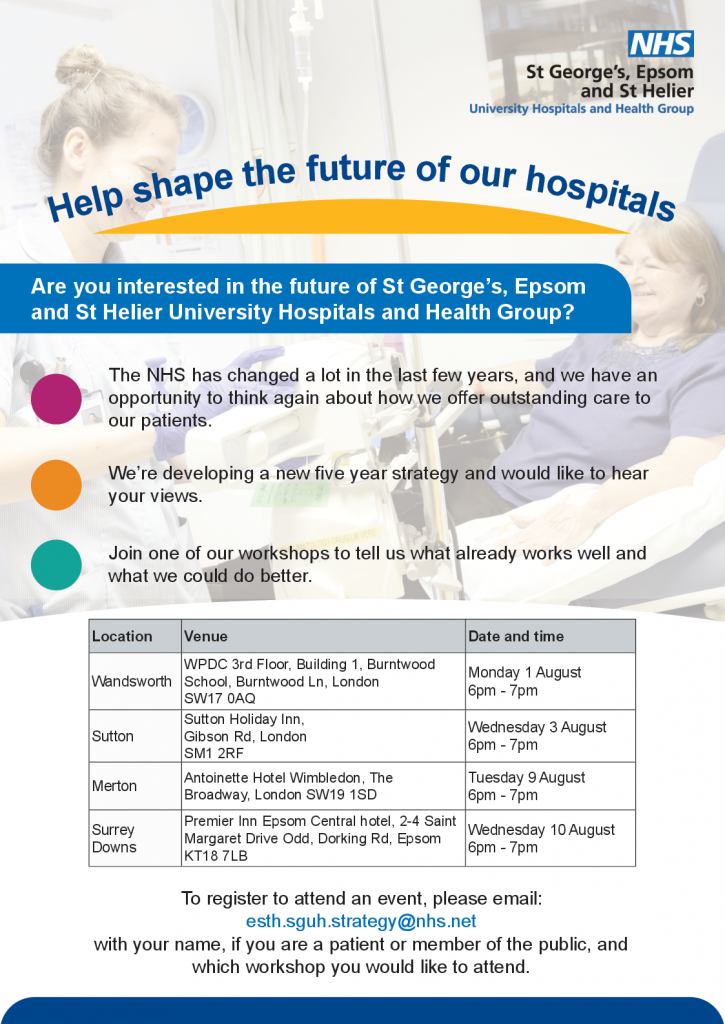
Another consultation during the holiday month….

 Epsom and St Helier and St George’s Hospital are holding a series of workshops starting this week and next for patients and the public to attend. The workshop will involve shaping the new joint strategy for St George’s and Epsom and St Helier Hospital. The workshops will be approximately 60-90mins long and facilitated by the hospital’s transformation and strategy team. Teas and coffees will be served on the night. A full break down of the events, dates and times can be found below. Epsom and Ewell’s will be held at the Premier Inn Dorking Road Epsom on Wednesday 10th August at 6.00pm RSVP via esth.sguh.strategy@nhs.net

NHS consultation timetable


New plan to transform dementia care in Surrey

Caring for dementia. Carer sits with elderly lady

A five-point plan sets out to improve the lives of Surrey residents with dementia and their families.

joint health and social care dementia strategy of Surrey County Council and Surrey Heartlands Health and Care Partnership, outlines an ambition for everyone with dementia and their carers to live in dementia-friendly communities and be able to live well at home for as long as possible.

Research suggests that approximately 17,700 people in Surrey are currently living with dementia. Between 2020 and 2030 it’s projected that this figure will rise by more than a quarter to 22,600.

The five-year plan, which includes direct input from people living with dementia and their carers, sets out how the county council and the wider Surrey Heartlands Health and Care Partnership, that includes the Surrey Downs Health and Care Partnership that covers Epsom and Ewell, will work with other organisations to support people with dementia, their families and carers so that those diagnosed can maintain their independence and enjoy a good quality of life.

The new joint health and social care dementia strategy will focus on:

  • Preventing well – raising awareness of dementia and preventative actions people can take
  • Diagnosing well – making sure people have equal access to dementia care by addressing inequalities and gaps
  • Living well – making sure everyone has the opportunity to live life to the full following diagnosis
  • Supporting well – engaging with communities and faith groups to ensure we reach out to people with dementia and their carers

The work will create dementia-friendly communities and help to deliver the county council’s ambition and tackle inequality to ensure no-one is left behind in Surrey.

The strategy has been created in partnership and collaboration with people with dementia and their carers and other organisations, including Alzheimer’s Society, Dementia UK, Healthwatch Surrey and district and borough councils.

Sinead Mooney, Surrey County Council’s Cabinet Member for Adult Social Care and Health, said: 

“Dementia is already an important health issue and the number of people living with dementia in Surrey is expected to increase significantly in the future. Our new dementia strategy is crucial in setting out how we will build on the good work we already do, and continue to improve outcomes for residents across Surrey.

“The new strategy has a much wider focus, encouraging organisations and services to become more dementia-friendly and therefore making a real difference to dementia care in Surrey.”

Dr Sophie Norris, GP and Dementia Clinical Lead for Guilford and Waverley, said:

“The strategy sets out the collective ambitions we want to achieve across Surrey to improve the dementia care pathway. In developing this strategy, we have worked with organisations that support people with dementia, their staff, the local voluntary sector and other partners. The strategy provides the chance to reaffirm Surrey’s commitment and determination to help people with dementia, and their unpaid carers to continue caring if they are willing and able, and to support their health and wellbeing by achieving outcomes they have identified matter most to them. The jointly held vision is for all people with dementia and their carers to live in dementia friendly communities. They will know where to go to seek information, advice and help. They will have access to the care and support that enables them to live well at home for as long as possible and to die with dignity in their place of choice.”

An easy read version of the joint health and social care dementia strategy is also available.

To find out more about support for dementia in Surrey visit the Surrey County Council website.