Students from University for the Creative Arts (UCA) in Epsom are set to return to Epsom Picturehouse later this month with another imaginative cinema takeover – this time built around the release of Marty Supreme.
The one-night event takes place on Tuesday 20th January, with activities beginning at 6.30pm, and forms part of UCA Epsom’s Experience Economy module. Rather than focusing on conventional event mana
The January screening will again see students working directly with the Picturehouse team to create an enhanced, interactive evening that goes beyond simply watching a film. While full details are being kept under wraps, organisers promise live elements and audience interaction designed to complement the themes and setting of the film.
The collaboration builds on last year’s well-received student takeover, which re-imagined Be Kind Rewind as a playful, hands-on cinema experience. That event featured live performances, green-screen activities and interactive installations that transformed the building into a temporary creative hub and demonstrated how cinema can function as a shared social space rather than a purely passive one.
This year’s focus is Marty Supreme, a new film set in 1950s New York and starring Timothée Chalamet as Marty Mauser, a driven outsider determined to become a champion table-tennis player and turn the sport into a nationwide phenomenon. The story’s emphasis on confidence, ambition and refusing to be overlooked has provided fertile ground for students developing ideas around performance, identity and audience participation.
Epsom Picturehouse, which opened in 2018, has become a central part of the town’s cultural life, combining six screens showing independent cinema and mainstream releases with a café-bar that is used for talks, community events and special screenings. The venue is part of the Picturehouse chain, known nationally for its focus on curated programming and local partnerships.
UCA’s Epsom campus, located at the former Epsom School of Art, specialises in creative business, marketing and performance-related courses, with an emphasis on practical collaboration with external organisations. Projects such as the Picturehouse takeover form part of the university’s wider approach to linking students with real-world audiences and venues.
Joe Stroud, Marketing Manager at Epsom Picturehouse, said the partnership reflects a shared commitment to creativity and community, adding that working with students brings fresh perspectives into the cinema and helps re-imagine how audiences experience film.
The Marty Supreme cinema takeover is a one-night-only event, with tickets available via the Picturehouse website.
Surrey Uni powering hydrogen and low carbon energy
16 January 2026
A new partnership between the University of Surrey and leading clean energy technology company Ceres aims to speed up the development of next-generation clean power systems and hydrogen production – supporting the UK’s net zero ambitions and helping address a growing skills gap in electrochemical energy technologies.
The collaboration brings together Ceres’ expertise in solid oxide fuel cells (SOFC) and solid oxide electrolysis (SOEC) with Surrey’s research strengths in electrochemical energy systems, digital and multiscale modelling, and advanced materials characterisation. Solid oxide electrolysis allows for highly efficient hydrogen production using electricity and heat, while solid oxide fuel cells can generate low carbon power for applications ranging from industrial processes to data centres.
Under the partnership, the teams will focus on improving the efficiency, durability and performance of these technologies, using advanced modelling and mechanistic insights to help translate fundamental research into real-world systems more quickly. Together, they will pursue joint research projects, collaborative funding bids and new training and placement opportunities for students.
Professor Qiong Cai, Professor in Sustainable Energy and Materials at the University of Surrey, and academic co-lead, said:
“Solid oxide electrolysis and fuel cells have huge potential to underpin the UK’s future energy systems, from large-scale hydrogen production to low-carbon power for industry. But real progress depends on improving efficiency, durability and performance so these systems can operate reliably in the real world. This partnership gives us the opportunity to tackle those challenges head-on, combining fundamental science with a clear route to application.”
Professor Jin Xuan, Associate Dean of Research and Innovation for the Faculty of Engineering and Physical Sciences, who is also a co-lead at Surrey, said:
“There is a growing skills gap in hydrogen and electrochemical energy technologies, at a time when demand for these capabilities is increasing rapidly. Working together with Ceres, we aim to help train the next generation of engineers and scientists in these fields through placements and hands-on research, ensuring the UK has the expertise it needs to support a net zero economy.”
The partnership is outlined by a three-year Heads of Terms agreement and will see the teams work together to develop a pipeline of joint research projects and funding bids.
A symbolic signing ceremony, which took place at the University of Surrey on 14 January 2026, formally marked the start of the collaboration and provided an opportunity for both parties to set out priorities for the work ahead.
Dr Subhasish Mukerjee is Chief Scientific Officer at Ceres and was recently appointed a Visiting Professor within Surrey’s School of Chemistry and Chemical Engineering. He said:
“We are delighted to expand our collaboration with the University of Surrey across fundamental electrochemistry research, modelling and digitalisation, and strategic testing to develop the next generation of clean energy technology. This collaboration strengthens our leadership in the solid oxide field and supports the UK’s drive toward achieving its net zero targets.”
A new photography exhibition by Active Prospects is shining a light on the power of nature, creativity, and personalised wellbeing support.
The stunning images on display were all taken by people who have taken part in the charity’s Green Escape wellness recovery programme, funded through the Mental Health Investment Fund (jointly funded by Surrey County Council and Surrey Heartlands ICB).
Over the past year, small groups of two or three people have enjoyed 8–10 nature trips to beautiful parts of Surrey, including places that are sometimes difficult to reach by public transport, such as RHS Wisley. Each trip gave participants the chance to explore new places, take photographs and build confidence at their own pace. Their work has now been brought together in a unique photo book and this special exhibition.
For many, these trips were life-changing. One participant had not left their home for 10 years. With gentle encouragement, practical support and small achievable steps, they were able to join the group, enjoy the outdoors and reach a personal goal they once thought impossible. Families are involved too, and wellbeing coaches from Active Prospects support each person throughout their journey. It’s a true team effort.
At the end of the wellness recovery programme, each participant leaves with a personalised action plan. By removing barriers, such as fear of using public transport or trying new activities, people gain the confidence to become more independent. Some have even taken their new skills into work or volunteering. One participant discovered a passion for paddleboarding and is now a qualified instructor.
Research shows that around half of autistic adults experience anxiety disorders. Every part of Active Prospects’ wellbeing coaching is designed to ease anxiety, build confidence and open up new opportunities for neurodivergent people over 18. Participants often tell the team they felt “invisible” before joining. Peer connection is central to the programme, and activities focus on what makes people smile, whether that’s creative writing, photography or paddleboarding. One member’s love of table tennis inspired Table Tennis Thursdays, which is now a much-loved weekly meet-up.
The programme is person-centred, with coaching tailored to each individual. Thanks to Mental Health Investment Fund support of £299,270 over 2 years, as well as the programme, Active Prospects also developed Emojo, a digital wellbeing app that helps people track how they’re feeling across eight areas of wellbeing such as ‘Environment’. Users can set goals, get ideas for new challenges, and create a monthly mood calendar that helps them notice progress and patterns over time.
The photography exhibition celebrates everything the programme stands for, confidence, creativity, connection, and the joy of discovering something new.
Councillor Mark Nuti, Surrey County Council Cabinet Member for Health and Wellbeing, and Public Health said: “The exhibition has showcased wonderful moments captured in nature, and it was inspiring to hear the stories behind each photograph. It’s clear to see the positive impact of the support provided by Active Prospects—helping people improve their mental health, build confidence, and enhance their overall wellbeing.”
Dr Charlotte Canniff, Joint Chief Medical Officer for NHS Surrey Heartlands, said: “This exhibition shows the real difference personalised wellbeing coaching can make. We’re proud that, through the Mental Health Investment Fund, Active Prospects has been able to create Inclusive Wellbeing Coaches to support adults with multiple challenges to grow in confidence and quality of life.”
Maria Mills CEO Active Prospects said: “Connecting to nature and the outdoors offers a real boost to wellbeing. Already participants have shared a documented 25% improvement in their wellbeing presentation, showing how investment in inclusive community support pays back public funding in multiples, but most importantly enables people to thrive.”
Leanne – Programme participant: “I wasn’t going out, was overwhelmed and my senses were overloaded. Since being part of the programme, I’m able to get out and about and I’m seeing things differently.”
Kieran – Programme participant and a member of the Active Prospects Wellbeing Team: “Being outside (in nature) after years in hospital gives you a feeling of freedom and space.”
Mental Health Investment Fund
The Mental Health Investment Fund (MHIF) is a Surrey wide, all age, resource to enable the delivery of the outcomes in Priority Two of the Health and Well-Being Strategy. This priority area is focused on prevention, removing barriers, and supporting people to become proactive in improving their emotional health and wellbeing.
Established in 2022, the MHIF is a joint fund with Surrey Heartlands Integrated Care Board (ICB) and is part of the county’s No One left Behind agenda. The additional investment in mental health provision was ring fenced within the 22/23 Council Tax with an additional contribution from Surrey Heartlands.
From the Cosmos to Commerce: University of Surrey Leads the Way
16 January 2026
The University of Surrey has been showcasing a remarkable breadth of achievement in recent weeks, with major advances announced across fundamental science, international collaboration, digital trade policy and lifetime academic excellence.
From unlocking the origins of the universe’s rarest elements, to shaping the future of UK trade infrastructure and celebrating world-leading research careers, the University’s latest announcements underline its growing national and international impact.
Unlocking the universe’s rarest elements
Surrey scientists are leading a new £215,100 international research project that aims to transform understanding of how chemical elements are formed during extreme cosmic events such as supernovae, neutron-star collisions and X-ray bursts.
Funded by the Royal Society’s International Science Partnership Fund, the three-year project brings together researchers from Surrey, Kyushu University and Japan’s world-leading RIKEN laboratory. The team will develop and deploy cutting-edge instruments capable of measuring some of the rarest and most unstable atomic nuclei ever studied.
These exotic isotopes do not exist naturally on Earth and can only be created briefly in advanced physics laboratories. By measuring their mass and decay rates for the first time, researchers hope to refine theoretical models of nuclear structure and gain new insight into how the heaviest elements in the universe are formed.
Experiments will take place at RIKEN’s Rare-Radioactive Isotope Ring, a unique facility that allows repeated observation of these short-lived nuclei. Surrey researchers will play a central role, leading the design and testing of advanced detector and data-acquisition systems in the UK ahead of the experimental programme in Japan.
The collaboration is also expected to strengthen scientific ties between the UK and Japan and reinforce the UK’s position at the forefront of nuclear physics research.
Warning over UK digital trade and border fragmentation
In a very different field, new research from Surrey Business School and the Centre for the Decentralised Digital Economy has issued a stark warning that the UK risks falling behind global competitors in digital trade unless urgent action is taken.
The study argues that the UK’s digital border initiatives are fragmented, with no single organisation responsible for coordinating legislation, technology platforms and end-to-end border processes. As a result, businesses face repeated data requests, delays and uncertainty, increasing costs rather than reducing friction.
Researchers examined UK trade and border policies since 2017, including the 2025 UK Border Strategy, recent digital trade legislation and multiple government pilot projects. Drawing on international case studies and academic research, the team proposes a collaborative governance framework to guide reform.
The report calls for the government to give one body a clear mandate to orchestrate policy, digital platforms and data standards across departments. It argues that, with the right leadership, the UK has a window of opportunity to create a new digital “silk road” for trade, enabling trusted data sharing that benefits smaller firms as well as multinationals.
Lifetime achievement recognised in materials science
Surrey’s excellence in research was further highlighted by the announcement that Professor Joseph Keddie, Professor of Soft Matter Physics, has been awarded the 2026 Sir Eric Rideal Award for lifetime achievement in colloid and interface science.
Jointly awarded by the Royal Society of Chemistry and the Society of Chemical Industry, the prestigious honour recognises sustained and distinguished contributions to the field. Professor Keddie is internationally known for pioneering work on polymer colloids, sustainable materials and so-called “living materials”, with applications ranging from coatings and adhesives to wastewater treatment and bioremediation.
Over a career spanning more than three decades, he has authored more than 150 academic publications, holds multiple patents and co-authored the influential book Fundamentals of Latex Film Formation. His work at Surrey has previously been recognised by major awards from both the Institute of Physics and the Royal Society of Chemistry.
Professor Keddie will deliver the Rideal Lecture, titled More than Watching Paint Dry, on 8 April 2026, presenting highlights from his research including self-layering coatings and carbon-storing “living paints”.
A university with global reach
Taken together, the announcements paint a picture of a university operating at the cutting edge across disciplines: advancing fundamental science on a global stage, influencing national policy debates, and nurturing research careers with lasting international impact.
For Surrey residents, the achievements reinforce the University of Surrey’s role not only as a local institution, but as a centre of innovation and expertise with reach far beyond Guildford.
Guildford’s MAN v FAT Football Club has been crowned Community Club of the Year 2025 at the nationwide MAN v FAT Football Awards, recognising its outstanding contribution to improving men’s health and wellbeing.
In Surrey, the MAN v FAT weight loss programme is commissioned by Surrey County Council through the free healthy lifestyle service One You Surrey. The FA-accredited scheme, which also runs in Woking, combines football with structured weight-loss support and is aimed at overweight and obese men with a BMI of 27.5 or above, helping participants lose weight, gain confidence and build friendships.
At each session, players weigh in before taking part in a 30-minute six-a-side football match. Teams receive extra goal bonuses based on their combined weight loss. A team’s match scores and weekly weight-loss totals then contribute to its standing in the club’s league table.
Mark Smithies from the Guildford club said joining had been transformative for him: he has lost weight, improved his fitness and made lasting friendships. He added that the positive, supportive environment has boosted his confidence and mindset, describing the club as “more than just football… a proper community”.
H5 How the programme supports players
Alongside weekly football sessions, MAN v FAT players receive additional support off the pitch, including healthy meal ideas, general fitness tips and access to a bespoke mental health platform through partners JAAQ.
Across the UK, MAN v FAT players have collectively lost more than 800,000 pounds in weight.
H5 Success in Guildford and Woking
The Guildford club meets on Friday evenings at Kings College – Community Sports Hub on Southway and currently has 68 members regularly achieving their weight-loss goals. Over the past twelve months, players at the club have shed more than 34 stone of excess weight, with progress continuing week on week.
The Woking club meets on Monday evenings at the Woking Sportsbox and has supported 40 players to lose a combined 365kg during 2025.
H5 Find out more
Funded places are available for Surrey residents at the Guildford and Woking clubs through Surrey County Council and One You Surrey.
To register, visit manvfat.com/football and search for Guildford or Woking to apply and begin your journey to a healthier 2026.
Hospitals serving Epsom and Ewell are facing one of their toughest starts to a year in recent memory, with dozens of beds taken up by flu patients and others closed because of infection control, as winter illnesses surge across the country.
As of Sunday, 45 beds across St George’s, Epsom and St Helier hospitals were occupied by patients with influenza, according to the St George’s, Epsom and St Helier University Hospitals and Health Group. At the same time, further beds have had to be taken out of use due to flu and norovirus outbreaks, reducing the system’s overall capacity just as demand is rising.
The combination of cold weather, widespread winter viruses and a growing number of patients needing specialist treatment has created what NHS leaders locally describe as a “bleak” start to the new year.
Elaine Clancy, Group Chief Nurse for St George’s, Epsom and St Helier, said hospitals across the group were seeing “some very sick patients” as winter illnesses and low temperatures take their toll. “Don’t make the mistake of thinking flu is just a bad cold,” she said. “These figures show the infection can make people seriously ill, and I’d urge people to take steps to ensure they and their loved ones don’t suffer.”
A national problem, not just local
The pressure on Epsom and St Helier reflects a wider national trend. NHS England has warned that socialising over Christmas and New Year is likely to have fuelled a rebound in flu, Covid-19 and other winter viruses, with senior figures cautioning that the worst of the season is “far from over”.
Across England, hospitals are again reporting high numbers of admissions for respiratory illness, alongside continued demand from people with complex medical needs who are more vulnerable in cold weather. The knock-on effect is felt most sharply in accident and emergency departments, where delays grow when wards are full and patients cannot be moved on.
Public health experts have long warned that flu remains a serious illness, particularly for older people, pregnant women and those with underlying conditions. In bad seasons, it contributes to thousands of excess deaths nationally, even though it is often dismissed as minor.
Norovirus, meanwhile, spreads rapidly in hospitals and care settings, forcing wards or bays to close for deep cleaning, further reducing available beds at precisely the moment they are most needed.
What people can do
Local NHS leaders are urging residents to take simple but effective steps to reduce the spread of infection and help protect the health service. These include getting vaccinated against flu if eligible, washing hands regularly, staying at home if unwell, and avoiding contact with vulnerable people when displaying symptoms. Keeping homes warm – ideally at 18°C or above in key rooms – and wrapping up when going outdoors also helps reduce the risk of illness.
People are also being asked to use health services appropriately, so that emergency departments remain available for those in urgent need. NHS 111, which is available online and by phone 24 hours a day, can direct people to the right service, while community pharmacists can advise on many minor illnesses and treatments.
Residents are encouraged to check on neighbours, friends and family who may be vulnerable, to make sure they have food, medication and adequate heating during the cold snap.
With flu and winter viruses still circulating widely, health leaders say the coming weeks will be critical — both for hospitals trying to manage demand, and for communities doing their part to keep themselves and others safe.
Call to join the merry Morris Men of St Mary’s Ewell
16 January 2026
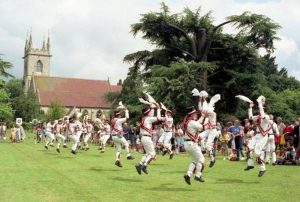
The friendly team of Ewell St Mary’s Morris Men are holding an open day for anyone who would like to try out a bit of Morris Dancing. No experience needed.
Morris Dancing is a very old British tradition going back more than 600 years and whilst some people enjoy the colour, the cheerful music, the fun and whole spectacle, they sometimes feel a bit nervous to actually try it, this open day is an ideal opportunity, no audience, just a lot of very friendly people. Give it a try, there’s nothing to lose, and it might just be that thing that ticks your box. It’s Free, it’s Open to all and there’s no commitment
There are many reasons to try out Morris Dancing and if you asked a hundred different Morris Dancers you would get a hundred different reasons, however these are some of the more common reasons.
It is a very old tradition and should be supported
It keeps people fit and trim It is fun The people are all friendly It beats boredom Any age can do it
2-4pm Saturday 17th January, Bourne Hall in Spring Street, Ewell Village KT17 1UF is on the 406, 293 bus routes and has plenty of Car Parking available. Ewell West, and Ewell East railway stations are also nearby.
Everyone welcome, from Epsom, Cheam, Ashtead, Sutton, Malden, in fact anywhere. Just come along. On Saturday 17th January.
Musicians wishing to try the music are also welcome, again, no experience required.
Epsom lamppost flags: symbol of pride — or cause of anxiety?
16 January 2026
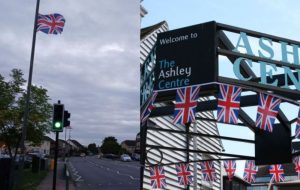
Across parts of Epsom and Ewell, the appearance of Union Jack flags tied to lampposts has prompted sharply differing reactions. For some residents, the flag remains a symbol of shared identity and national belonging. For others, the manner of their sudden arrival — often without permission and fixed to public infrastructure — has caused unease, sparking wider anxieties about division, ownership of public space, and the meaning of patriotism in modern Britain.
In September 2025 Surrey County Council restated its position on flags and attachments to street furniture, reminding residents that anything fixed to a lamppost or painted on a public highway requires formal consent. The council emphasised safety considerations for drivers, pedestrians and maintenance crews, and said unauthorised attachments may be removed during inspections. Residents wishing to display flags on public land are advised to apply in advance through established procedures. The council was clear, however, that anyone may fly a flag from their own property if they wish to do so.
The debate has not only been technical or regulatory. One local resident, writing to the Epsom and Ewell Times, described attempting to remove some of the flags in their neighbourhood and being confronted in the process. Their concern was less about flags as symbols, and more about how — and by whom — they were placed, and whether they were being used to signal exclusion rather than unity. The writer reflected on the way social and political polarisation in recent years has shaped how national imagery is read, and expressed frustration at what they saw as a lack of clarity over which authority is responsible for removing unauthorised items from street furniture.
Others in the borough have reacted very differently, seeing the flags as benign expressions of pride, or as gestures intended to lift spirits at a time of economic and social uncertainty. Some residents have argued that the Union Jack should not be regarded as belonging to any one political tradition, recalling moments when people across the country — including at national sporting events and during major civic occasions — have gathered beneath it without controversy.
That broader question — who “owns” the flag — has recurred throughout modern political history. When crowds waved the Union Jack outside Downing Street on the night of Labour’s 1997 election victory, commentators spoke of the centre-left “reclaiming” national symbolism from the political right, attempting to make it inclusive rather than exclusive. Others have suggested that opportunities were later missed to develop a more layered sense of identity, for example by flying the European Union flag alongside the Union Jack on public buildings, as was commonplace in many EU member states. For some, that dual display might have normalised a shared British and European identity; for others it would itself have been contentious. The difficulty of striking a balance illustrates how strongly flags can be read in different ways.
In Epsom and Ewell, the present concerns appear to rest less on the flag itself than on process, tone and consent. The sudden appearance of flags on lampposts — without clear identification of who has installed them and without permission from the asset-owning authority — has left some residents feeling unsettled or excluded, while leaving councils fielding questions about responsibility and enforcement. The practicalities are not trivial: removing items at height may require equipment, contractor time and public money.
One constructive suggestion arising from local discussions is that the right of individuals to fly a flag from their own homes could be matched by a more open and confident approach from civic bodies, schools, churches, voluntary groups and local businesses — flying the Union Jack from their own buildings in clearly identifiable and lawful ways, and on agreed occasions. In that model, the flag becomes visible as a symbol belonging to all, rather than as an anonymous street-level intervention that some interpret as a political statement.
Another proposal is for clearer published guidance from the relevant authorities — setting out who owns which assets, how permission can be sought, what safety standards apply, and how residents may raise concerns or objections. Transparency about due process may help reduce tension, even where views differ about meaning and symbolism.
What the current debate in Epsom and Ewell perhaps most clearly reveals is that flags still carry emotional weight — capable of reassuring some while unsettling others. Between those positions lies a space for thoughtful discussion about how shared symbols are used in public places, and how a sense of belonging can be fostered without causing anxiety to neighbours who may read them differently.
With the UK in the midst of a bitter cold snap, many of us are reaching for hot water bottles to help keep warm during the day and through the night.
While hot water bottles are an effective and affordable way to keep warm, in 2024 nearly 1,000 people were admitted to burn units in England and Wales following hot water bottle accidents.
Here, the team at Health and Safety training experts High Speed Training share some practical advice on how to use hot water bottles safely.
Dr Richard Anderson, Head of Learning and Development at High Speed Training, said: “Hot water bottles are a fantastic way to beat the chill, and with energy costs remaining a concern, they are more popular than ever. However, like any household item that uses high heat, they aren’t without risk.”
Check the age
It is recommended that hot water bottles are replaced every two years. The rubber used in their construction can deteriorate over time, making bottles more likely to split or leak.
You can check when a hot water bottle was made by looking for a flower-shaped symbol, known as a ‘daisy wheel’, embossed onto the neck or body of the bottle. The number in the centre shows the year of manufacture, while the twelve surrounding segments represent the months of the year. The number of segments with dots indicates the month the bottle was made.
For example, if the symbol has 25 in the middle and dots in the first six segments, the bottle was manufactured in June 2025. If a segment contains more than one dot, the number of dots in the final filled segment shows which week of the month the bottle was produced.
How to fill and use your hot water bottle safely
Dr Anderson added: “Before filling a hot water bottle, always check it for visible damage or signs of wear and tear. Avoid filling the bottle with boiling water, as this can weaken the internal seams. Allow the water to cool slightly before filling.
“It’s also advisable to only fill the bottle to around two-thirds full. Expel any remaining air before tightening the stopper securely.”
He also advised always using a cover on a hot water bottle to reduce the risk of contact burns, and never sitting or lying on one, as this increases the likelihood of the bottle failing. “When not in use, empty the bottle completely and store it with the stopper removed in a cool, dry place, such as a cupboard.”
Copy provided by High Speed Training
Warm places to go to in Epsom and Ewell
16 January 2026
Christ Church Ewell
Address: Cheam Road, Ewell, KT17 1AD
Opening Times: Wednesday from 10am to 1pm
Services offered: Hot drinks; meals; social activities
Accessibility: Ramps available for disabled access and disabled toilet
Epsom Methodist Church
Address: Ashley Road, Epsom, Surrey, KT18 5AQ
Opening Hours: Wednesday from 10am to 6pm
Services offered: Hot drinks; meals; craft activities and social activities;
Accessibility: Fully accessible
King’s Church, Epsom
Address: Off Gibraltar Crescent, Epsom, Surrey, KT19 9BU
Opening Hours: Friday from 6pm to 8pm
Services Offered: Hot drinks; Meals; Craft activities; Social activities;
Accessibility: Fully accessible.
Love Me Love My Mind
Address: St Barnabas Church, Temple Road, Epsom, KT19 8HA
Opening Times: Monday from 1pm to 7pm
Services Offered: Meals; Hot drinks; Craft activities; Physical activities; Social activities; Meals.
Address: 23 Lansdowne Road, West Ewell, Surrey, KT19 9QJ
Opening Times: Wednesday: 2pm to 5pm and Friday 10am to 12pm
Services Offered: Hot drinks ;Social activities; Light Meals;
Accessibility: Disabled access; accessible toilets; parking for 5 cars, plus on street parking.
Image: Epsom Methodist Church
Epsom snooker star on cue to help patients
16 January 2026
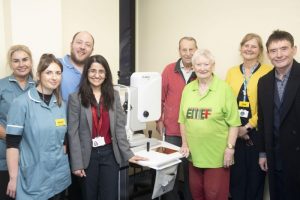
Epsom General Hospital is grateful for the laser-like focus of snooker legend Jimmy White. The 63-year-old star of the green baize took time out from his busy schedule recently to present a £62,000 camera to consultant ophthalmologist Akanksha Bagch at the Eye Unit, on behalf of Epsom Medical Equipment Fund (EMEF).
The Zeiss Clarus 50 is a valuable asset in diagnosis. “It’s a high-resolution, ultra-widefield fundus camera offering true colour images of the retina and optic discs among other excellent features,” says Mr Bagch, “giving a detailed view from the macula to the periphery of the retina allowing clinicians to diagnose and manage multiple eye diseases including glaucoma and retina conditions such as diabetic retinopathy.
“With the increasing prevalence of glaucoma, this camera will play an integral role in running a diagnostic hub allowing a greater throughput of patients per clinic and reducing the already prolonged waiting times in the NHS, thus allowing for safer delivery of eye services.”
EMEF founder and organiser Bess Harding says: “I am so grateful to Jimmy — who lives locally — for coming to make the presentation. We were delighted to be able to purchase the camera which will play an important role in preventing blindness. This would not have been possible without the support of the community for our fund-raising.”
Forty-six years on from its formation and with more than £4 million already handed over, the fund’s work carries on. Other equipment is always required. If you would like to help, donations can be made to EMEF at 32 Tealing Drive, Ewell, Surrey, KT19 0JS or to NatWest Account No. 66236924 Sort Code 60-08-01.
Epsom & Ewell Borough Council celebrates its first Young Legends graduates
16 January 2026
Epsom & Ewell Borough Council proudly marked the completion of its first Young Legends programme with a celebration event for participants and their families.
Over the last nine weeks, over 80 children aged 9-11 enjoyed a range of sports and creative activities as part of the council’s Health & Wellbeing Strategy, that aims to improve the mental and emotional wellbeing of all residents. The programme supports the strategy by helping children and young people be more active, learn new skills and build connections—key to improving mental and emotional wellbeing.
Children from across the borough took part in Arts & Crafts, Basketball, Girls Rugby, Judo, Musical Theatre and Yoga. The programme was delivered by trusted and skilled coaches from the Body & Brain, Cadgers Basketball Club, Creative Minds, Laines Theatre Arts, Sutton and Epsom Rugby Club, and Westcroft Judo Nork at no cost to the children or their families.
The graduation was a celebration of the programme and included a performance by children who took part in the programme’s Musical Theatre sessions, and an arts and crafts activity. The Council’s Chief Executive, Jackie King, Councillor Clive Woodbridge and Councillor Bernice Froud joined families and coaches at the event.
Hayley, parent of an Epsom & Ewell Young Legends participant said: “The Young Legends Musical Theatre course gave my son an opportunity to experience performance arts in a way he might not otherwise have had. He discovered a passion for performing and the support and encouragement he received gave him the confidence to overcome any initial fears and showcase an amazing talent we were unaware he had!”
Councillor Clive Woodbridge, Chair of the Community & Wellbeing Committee commented: “Our Epsom & Ewell Young Legends programme has been a fantastic experience! We focused on children aged 9–11 to support their transition to secondary school, which we know can be a particularly challenging time, and we’re delighted to have been able to give them the chance to take part in a variety of fun activities—helping to build their confidence as they navigate this key stage.
Parents have shared some wonderful feedback. One discovered their child has a real passion for singing, whilst another said yoga sessions have helped improve their child’s emotional wellbeing.
A huge thank you to everyone who made this programme possible: the coaches and practitioners who gave their time, and our dedicated council officers who worked hard to deliver a programme that supports children during this key stage.
We’re proud to have supported local children and hope they feel inspired to keep exploring any opportunity that comes their way —long after the programme ends.”
About the EEBC Health and Wellbeing Strategy 2025-2028
The strategy is designed to support all residents, with particular attention given to children and young people, older adults, individuals whose health is affected by broader social and economic factors and those whose personal circumstances may disproportionately increase their vulnerability to poor health and wellbeing. The strategy also includes specific references to those who are disproportionately impacted by isolation, disability, digital exclusion and people with long-term health conditions. (Public Pack) Agenda Document for Community and Wellbeing Committee, 08/07/2025 19:30
About Body & Brain, Epsom
Body & Brain Epsom Centre offers classes in deep physical, emotional and spiritual healing through meditative movement, deep stretching and shaking exercises. The practice originates from Korea where it has a rich 5,000 year old history of holistic healing and mind-body practices. Devoted to helping individuals better manage and utilize their brains, this beautiful discipline is suitable for people of all ages and levels, and it is the perfect way to increase your physical activity and gain a greater sense of peace. Body & Brain | EPSOM | Class Schedule
About Cadgers Basketball Club
Cagers Basketball Club is committed to fostering a love for the game and providing competitive basketball for players of all ages and abilities. Their core values include hard work, respect, discipline, and enjoyment. Through teaching correct fundamentals and improving basketball knowledge and skills, we prepare players for the next level, emphasising individual success within a team-oriented framework. Epsom and Ewell Families » Cagers Basketball Club
About Creative Minds
Founded in November 2012, Creative Minds has been delivering accessible and empowering art sessions for over a decade, earning a reputation as a highly trusted and respected service provider across the UK. Their Creative Minds (CM) Artists bring creativity, expression, and human connection to every session they deliver. We work with a wide variety of venues, including care homes, schools, learning disability services, day centres, and many more, ensuring art is accessible to people of all ages and abilities. About Us – Creative Minds – Accessible Art Sessions For Everyone!
About Laines Theatre Arts
Since its inception in 1962, Laine Theatre Arts has been dedicated to the fostering of creative talent. Among their alumni are some of the most highly regarded performers, teachers, choreographers, and director-choreographers in the world. The College’s outstanding reputation in the performing arts has been built on its unique identity as a training provider, exceptional employment records, and the company values instilled in its students which are noted, time and again by employers. Those familiar with Laine Theatre Arts agree unanimously that it is a unique environment. Who we are – Laine Theatre Arts
About Sutton and Epsom Rugby Club
Founded in 1881, Sutton & Epsom is one of the oldest active Rugby Clubs in England with a proud and magnificent history. We first played against Saracens as far back as 1883/84, as one of their very early opponents, and in 1901 beat Stade Francais on their home turf.
Today the Club is one of the largest amateur Rugby Clubs in the Country and from its main ground in Rugby Lane, Cheam, remains run by enthusiasts for enthusiasts. They have over 30 teams with 1,200 current and former playing members, plus 1,800 social members. suttonrugby.co.uk
About Westcroft Judo Nork
Their martial arts store offers an extensive selection of high-quality gear and apparel for practitioners of all levels. With products sourced from reputable brands, they ensure that both beginners and seasoned martial artists find the equipment they need to excel in their training. Westcroft Judo Nork