Epsom and Ewell Times
26th November 2026

ISSN, LDRS and IMPRESS logos

Male only asylum Surrey hotel “shock”

Outside of The Stanwell Hotel, Stanwell, Staines. (Credit: Google Street View)

A Surrey council leader has said she was “shocked” to learn of Home Office proposals to house exclusively male asylum seekers in a hotel in a village.

In a strongly worded letter to the Secretary of State for the Home Department, Spelthorne Borough Council (SBC) leader Joanne Sexton expressed “serious concerns” regarding changes to plans for The Stanwell Hotel on the villages Town Lane.

SBC said it had previously approved for families and single women to be accommodated at the venue but the new plans would mean relocating the current families and women and replacing them with men.

The Home Office said it wants to close all hotels by the end of Parliament and will “continue to work closely with community partners”.

Cllr Sexton said the existing group of families at the hotel were “integrating well and building community ties. This abrupt change risks undermining all of that”.

In her letter to the Home Office, the leader said the council is “determined to avoid circumstances that could lead to civil unrest”. Describing the potential upheaval as an “adult male intensification”, Cllr Sexton added she is “alarmed about the potential consequences of the proposed changes and the impact they will have”.

A council spokesperson added that, while Spelthorne had a history of supporting asylum seekers including both Afghan and Ukrainian refugees, it still expects to be properly consulted and involved in decisions that significantly impact the local area.

SBC is urging the government to listen to the concerns of the local authority and the community, and is calling on the Home Office to immediately reconsider and consult on the way forward.

A Home Office spokesperson said: “The government is reducing expensive hotel use as part of a complete overhaul of the asylum system.

“From over 400 asylum hotels open in summer 2023, costing almost £9m a day, there are now less than 210.

“We will continue to work closely with community partners across the country, and discuss any concerns they have, as we look to fix this broken system together. The security of the local communities within which hotels are located will always be our paramount concern.”

The Home Office has a legal obligation to support asylum seekers who would otherwise be destitute by providing appropriate support, which usually includes accommodation.

Outside of The Stanwell Hotel, Stanwell, Staines. (Credit: Google Street View)


Epsom charity backs Ukrainian wheelchair athletes in world championship

Ukraine wheelchair pickleball team

Surrey Stands with Ukraine, the Epsom-based humanitarian charity operating under Harrop HR Missions Ltd (Registered Charity No. 1117155), is proudly sponsoring the Ukrainian Pickleball Team at the prestigious English Open Pickleball Tournament in Telford this summer, taking place from 6–10 August 2025.

This powerful gesture of international solidarity comes with a particular emphasis on supporting Ukrainian wheelchair athletes—many of whom suffered life-changing injuries during the ongoing Russia-Ukraine war.

Founded in early 2022 by Ukrainian and British friends, Surrey Stands with Ukraine has grown to become one of the UK’s most active grassroots support groups for Ukraine. To date, the charity has delivered more than £4 million in humanitarian aid, including over 10,000 mobility aids, 40+ tonnes of medical supplies, and 140 aid vehicles to those in need across the country. It also funds Ukrainian NGOs and institutions, with a strong focus over the past 18 months on rehabilitation from physical and psychological trauma.

Now, that mission expands to the world of sport.

The Ukrainian Pickleball Team arriving in Telford includes several inspirational wheelchair athletes whose journey into sport has been shaped by wartime adversity. For many, pickleball has become a vital outlet for physical recovery, psychological strength, and renewed purpose. Their participation in this international tournament is seen as a powerful symbol of national resilience—and comes at a time when Ukraine’s sporting community continues to suffer, having lost 487 athletes since the full-scale Russian invasion began.

“We are honoured to sponsor the Ukrainian Pickleball Team and shine a light on these remarkable athletes,” said a spokesperson for Surrey Stands with Ukraine. “Their participation in the English Open is a testament to their courage and a reminder of the human toll of the war. They represent not only Ukraine, but also the enduring spirit of all those affected.”

As part of its sponsorship, Surrey Stands with Ukraine is covering travel and accessible accommodation costs to ensure that all team members, especially the wheelchair athletes, can compete on equal terms.

The English Open Pickleball Tournament, held annually in Telford, is one of Europe’s premier events in the sport. This year’s edition promises to be especially meaningful with the Ukrainian team’s presence on court.


Event Details

  • What: English Open Pickleball Tournament
  • When: 6–10 August 2025
  • Where: Telford, United Kingdom
  • Team: Ukrainian Pickleball Team, including wheelchair athletes, sponsored by Surrey Stands with Ukraine

About Surrey Stands with Ukraine
Operating under Harrop HR Missions Ltd, Surrey Stands with Ukraine is a registered UK charity supporting civilians, hospitals, and trauma centres across Ukraine. Founded in February 2022, it continues to deliver aid, funding, and solidarity from the UK to those most affected by the war.

Contact
Email: surreystandswithukraine@gmail.com
Website: surreystandswithukraine.org.uk
Phone: +44 7920 008048

Donate
Support the charity’s Trauma Rehabilitation Fundraiser at
https://www.crowdfunder.co.uk/p/trauma-rehabilitation-pack


Meet Two of the Athletes: Stories of Courage

Oleksandr, 30, from Mykolaiv, was serving as a frontline medic when a Russian shell strike in 2023 caused devastating injuries to both his legs. After undergoing multiple surgeries and losing mobility, Oleksandr found himself struggling with isolation and trauma. Introduced to pickleball during rehabilitation in Lviv, he quickly found strength in sport and camaraderie. “Pickleball gave me a reason to get out of bed again,” he says. Now a wheelchair athlete, he’s competing internationally for the first time in Telford.

Natalia, 27, from Dnipro, was wounded in a missile attack while volunteering at a humanitarian centre in early 2022. With long months of rehabilitation behind her, she turned to pickleball as a low-impact sport that helped her regain balance and confidence. As one of the few female wheelchair players on the Ukrainian team, she says the sport has become a symbol of her resilience. “We lost so much—but we didn’t lose our spirit,” she says.


Former Surrey teacher avoids ban from profession

Stock image of empty classroom. (Credit: kieurope/ Pixabay)

A former science teacher and head of year at a Surrey private school has avoided a ban from the profession despite sending ‘sexually explicit’ messages to three colleagues.

Leishan Silva, 44, was sacked from Downsend School in Leatherhead following an internal investigation into complaints by three female staff about inappropriate and persistent behaviour.

He later admitted to the allegations during a private misconduct hearing held by the Teaching Regulation Agency (TRA) on July 11.

Messages sent by Mr Silva were categorised as “sexually motivated” by the TRA. He sent one colleague messages like “f*** me, you look amazing”, “what’s wrong with c**, it’s natural?” and “your amazing boobs”. He also suggested he would like to see one of them wear a bikini on a school trip to a water park.

Between 2018-2023, Mr Silva pursued sexual conversations with three colleagues. The social media messages displayed what the TRA panel called “a pattern of behaviour over a sustained period”.

Despite finding Mr Silva’s actions amounted to “unacceptable professional conduct and conduct that may bring the profession into disrepute”, the panel stopped short of recommending he should be banned from teaching.

Instead, they opted to publish the findings as a warning on the government’s website.

Also noted by the panel was Mr Silva’s “unblemished” disciplinary record and successful teaching career prior to the allegations. The panel said there was no evidence these concerns were brought to Mr Silva’s attention at an earlier stage.

His attention was drawn to these concerns retrospectively, so his poor conduct could not have been addressed earlier.

When the allegations were made by the three staff members, Downsend School launched an internal investigation, leading to a disciplinary hearing which resulted in Mr Silva being sacked from the school.

In mitigation, the panel noted Mr Silva had expressed remorse and insight regarding the harm and embarrassment he has caused to his female colleagues. He had also written apology letters to each of the colleagues. Mr Silva had told the panel that difficult personal circumstances at the time may have affected his judgment.

In isolation, the interactions with a colleague could be categorised as a ‘low level concern’ according to the TRA panel. But taken together, the panel said the messages showed a pattern of behaviour over a sustained period of time.

The report said: “Therefore, the cumulative effect of this repeated behaviour led to the panel’s determination that Mr Silva’s case amounted to unacceptable professional conduct.”

Concluding, the secretary of state said: “The publication of the findings made would be sufficient to send an appropriate message to the teacher as to the standards of behaviour that were not acceptable and that the publication would meet the public interest requirement of declaring proper standards of the profession.”

Stock image of empty classroom. (Credit: kieurope/ Pixabay)


12,000 years of Surrey history to spring to life

Archealogical dig at Fetcham Springs 2009

Fetcham Springs, Surrey – One of Surrey’s most important archaeological sites has secured £250,000 in National Lottery Heritage Fund backing to launch a groundbreaking five-year community archaeology initiative.

The Communities at the River: The Fetcham Springs Archaeology Project, led by the Surrey County Archaeological Unit (SCAU), will uncover over 12,000 years of human history while offering local people opportunities to get involved through volunteering, open days, and educational events.

Thanks to National Lottery players, the funding will expand on discoveries made in 2009 at the site, which revealed evidence of a prehistoric hunting camp dating from the end of the last Ice Age and a high-status Roman building. The new phase of work will explore periods ranging from the Ice Age to the Saxon era.

Hands-on history for all

The project, developed by SCAU’s Community Archaeologist Hannah Potter, includes:

  • Volunteering on live archaeological digs
  • Public open days showcasing findings
  • Workshops including flintknapping and even gladiator training
  • Visits from Stone Age and Roman reenactors
  • Free school visits and loan boxes for educational use

Fetcham Springs, which also holds the Wildlife Trust’s Biodiversity Benchmark, is owned by SES Water, who are a key project partner and will help support landscape conservation alongside the archaeological work.

A legacy for the future

Findings will be shared through a pop-up museum, exhibitions, talks, and online resources, ensuring a lasting educational impact.

Cllr Denise Turner Stewart, Deputy Leader of Surrey County Council and Cabinet Member for Customer and Communities, said:

“Surrey has a rich and diverse history, and projects like Fetcham Springs help us preserve and share our heritage with future generations. This initiative will provide valuable educational and volunteering opportunities, allowing residents to actively engage with archaeology and deepen their understanding of our county’s past.”

Stuart McLeod, Director for England (London & South) at The National Lottery Heritage Fund, added:

“Projects like this inspire people of all ages to connect with their local heritage. We’re proud to support Fetcham Springs, thanks to National Lottery players.”

Grace Wood-Lofthouse, Sustainability Manager at SES Water, commented:

“Water at Fetcham Springs has supported life for millennia. This project will help us better understand how to protect our landscapes for the future.”

For further details, visit the Surrey County Archaeological Unit website.

Image: Archaeologists at work – Cleaning a Roman wall at Fetcham Springs in 2009


Epsom Charity Hears Students’ Plea: Cut the Cost of School Uniforms

Mother and child looking daunted at price of school uniforms in shop window.

As school doors close for the summer, an Epsom-based charity has shared powerful testimony from local students who say the cost of school uniform is putting their families under severe financial strain.

The Good Company, known for running the Epsom & Ewell Foodbank and wider anti-poverty initiatives, has been working with five secondary schools in the borough through its ‘Cost of the School Day’ project. Its aim: to listen directly to pupils on free school meals and help schools better understand the hidden costs that prevent some children from fully participating in school life.

“The most important takeaway for us has been listening to the voices of these students, and their personal journeys,” said one participating Deputy Headteacher. “It is so powerful to hear from the students themselves.”

A recurring theme across all schools was the financial pressure of uniforms — particularly the insistence on expensive, branded items.

“A problem I experienced when I was new to the school is the cost of uniform itself. It put my parents into the red,” said Mike, a Year 11 student.

The findings echo national research. According to the Children’s Society, the average cost of a secondary school uniform in the UK is £422 per year per child, while for primary pupils it is £287. A 2020 survey by the Department for Education found branded items account for a significant proportion of the cost, often required to be bought from a single supplier.

In response to these concerns, the UK Government introduced the Education (Guidance about Costs of School Uniforms) Act 2021, requiring schools to keep branded items “to a minimum” and ensure uniforms are affordable. But campaigners say implementation remains patchy.

Local Action, National Relevance

The Good Company’s report suggests that real change comes when schools engage with students directly and respond with practical steps. Among the suggestions from students and staff were:

  • Reducing the number of compulsory branded items
  • Expanding second-hand uniform schemes
  • Partnering with local charities to provide direct financial support
  • Promoting understanding among staff about the reasons students may not always comply with uniform rules

The charity is calling on more schools to engage with its free online resources and consider reviewing their own uniform policies.

“Let’s keep working together to make schools a place where all children feel they belong, no matter their financial background,” said Tom Sefton, Director of Participation and Prevention at The Good Company.

More Information

Schools or individuals interested in learning more or accessing free training resources can visit: goodcompany.org.uk/cost-of-the-school-day

To donate to the charity’s School Uniform Fundraiser, visit the same website and click on the pink donation button.


Coroner visits Surrey cricket hero’s mental decline

Graham Thorpe selfie from 2005

Coroner’s Inquest visits the loss of former England and Surrey batting great Graham Thorpe MBE, who died in August 2024 aged 55. Following an inquest held this week at Surrey Coroner’s Court, his life and tragic death have returned to the headlines, casting fresh light on his legacy and personal struggles.

Born in Farnham, Surrey on 1 August 1969, Graham Thorpe rose through the county’s cricketing ranks with prodigious talent and steely determination. He made his first-class debut for Surrey County Cricket Club in 1988 and quickly established himself as one of the most technically gifted left-handers of his generation.

Thorpe’s early promise blossomed into a formidable career with Surrey, for whom he scored over 21,000 runs across formats. His stylish strokeplay, calm temperament, and ability to perform under pressure made him a linchpin for the county during the 1990s and early 2000s.

Surrey’s return to success in the late 1990s—including their Sunday League title in 1996 and County Championship victories—bore Thorpe’s fingerprints, and his bond with the club remained strong well beyond retirement. He later served as Surrey’s batting coach, mentoring a new generation of cricketers at the Oval.

Thorpe made an instant impact on the international stage, scoring a century on his Test debut against Australia in 1993. Over a 12-year England career, he compiled 6,744 Test runs at an average of 44.66, with 16 centuries—cementing his place among the country’s most reliable middle-order batsmen.

He was central to key series wins in the subcontinent, notably England’s victories in Pakistan and Sri Lanka in 2000, and was named a Wisden Cricketer of the Year in 1998. His unbeaten 200 against New Zealand in 2002 was widely hailed as one of the finest innings of its era.

A naturally modest figure, Thorpe’s contribution to English cricket went beyond runs. He embodied a quiet resilience and professionalism that won the admiration of teammates and opponents alike.

After retiring from playing in 2005, Thorpe remained in the game as a respected batting coach, including roles with Surrey and later as a key figure in the England coaching setup. He was part of the ECB’s elite coaching team and served as a mentor to many of England’s current generation of batters.

However, his career in coaching came to a sudden end in 2022 following the fallout from a video showing players drinking after a heavy Ashes defeat in Australia. Though not the subject of disciplinary action, Thorpe lost his role as England’s batting coach soon after—an event that proved devastating.

This week’s inquest at Surrey Coroner’s Court revealed the full extent of Thorpe’s mental health battle, casting a sombre shadow over his final years.

Thorpe had reportedly suffered from anxiety and depression since at least 2018. After the loss of his ECB coaching job in 2022, his condition deteriorated significantly. He became socially withdrawn, suffered from insomnia, and described feelings of shame and worthlessness.

His wife, Amanda, told the inquest that he had even asked her to assist him in dying, expressing an intention to seek assisted suicide in Switzerland. In April 2022, he attempted suicide and spent weeks in intensive care. Though he made a partial physical recovery, the psychological toll persisted.

On 4 August 2024, Thorpe tragically died after being struck by a train at Esher railway station. The coroner concluded that he had taken his own life. His family chose to speak publicly in the hope of raising awareness and encouraging open conversation around mental health in sport.

Surrey County Cricket Club paid tribute to Thorpe, calling him “one of the finest cricketers the club has ever produced.” The club has honoured his legacy with a commemorative gallery at the Oval and moments of silence at matches.

Teammates and former England captains described Thorpe as a “warrior at the crease” and a “gentleman off it,” highlighting both his cricketing prowess and quiet dignity.

Thorpe’s story has also reignited national debate about the mental health pressures faced by elite athletes and the need for more robust support structures—both during and after their careers.

Graham Thorpe’s life was rich in achievement, marked by loyalty to Surrey, excellence for England, and a deep love for the game. But his death also reminds us of the vulnerabilities behind even the most accomplished public figures.

As his family bravely noted, “Graham’s legacy must be more than his cricket. Let it also be a call to look out for each other.”

Thorpe is survived by his wife Amanda and their children. He remains, to many in Surrey and beyond, a hero of the game—and a symbol of the need to treat mental health with the seriousness it deserves.


If you or someone you know is struggling with mental health, contact Samaritans at 116 123 or visit www.samaritans.org.

Image: Graham Thorpe selfie in 2005. Attribution: Jguk at English Wikipedia  Creative Commons Attribution-Share Alike 3.0 Unported


Surrey and Sussex NHS Boards to merge

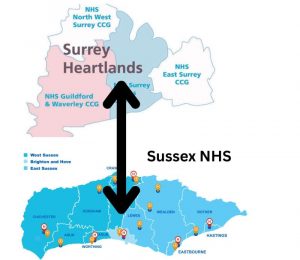
Surrey and Sussex NHS Trust area maps

Hundreds of jobs are at risk as two key NHS boards for Sussex and Surrey prepare to merge as part of a money-saving drive by the government. NHS Sussex and NHS Surrey Heartlands – two integrated care boards (ICBs) – are expected to have merged by next April, shedding many of the 1,350 staff who currently work at the two organisations. The changes are part of the latest round of NHS reforms which include the abolition of NHS England and the scrapping of independent patient voice watchdogs known as Healthwatch. Sussex ICB chair Stephen Lightfoot spoke about the forthcoming changes at Brighton and Hove City Council’s Health and Wellbeing Board at Hove Town Hall on Tuesday (22 July).

ICBs bring together NHS organisations, councils and others to plan and commission health services in their area, with the aim of improving health and reducing inequalities. Mr Lightfoot, who will stand down in September, said that ICBs were told in March to halve their running costs – from £39.83 to £18.76 per head of population – by December. Further bad news followed when an analysis of national funding allocations suggested that Sussex was overfunded by £186 million. Mr Lightfoot said that NHS Sussex had a £4.5 billion budget for NHS services in Sussex but the analysis indicated that it should be £4.3 billion and was 4 per cent overfunded. Mr Lightfoot said: “That doesn’t sound a lot on a percentage basis but £200 million is a significant sum of money. Over the next three years, when our demand continues to increase, we’re going to have to reduce our expenditure. We’re going to have to work very hard to make better use of the money that we have.”

He said that this would not affect the budget for delivering healthcare throughout the area – but, he said, combining Sussex and Surrey was the only safe and reliable way to deliver sustainable services. Mr Lightfoot spoke about “the massive scale of this task (and) the huge impact it’s having on our staff … 1,350 people are worried if they’ve got a job. And of course a significant number of them will not have a job in the coming year.” He added: “We’re not alone. The government also confirmed it’s going to rationalise all patient safety regulators. That involves Healthwatch organisations which are going to be closed, not immediately, but over the next 18 months to two years.”

It would be the first time since 1974 that patients would be without a statutory independent voice, the meeting was told.

Sarah Booker-Lewis LDRS


Doctors’ strike to hit Epsom Hospital

Epsom Hospital

Hospitals across South West London are bracing for disruption this week as resident doctors begin a five-day strike on Friday, 25 July. The week-long strike action by British Medical Association (BMA) members comes as the NHS faces one of its busiest summers in recent years, with a spike in emergency admissions driven by heatwaves and increasingly complex patient needs. Resident doctors – those who have completed their initial medical degree and are now in postgraduate training or gaining experience in non-training positions – were awarded an average 5.4% pay rise for this financial year, following a 22% increase over the previous two years. However, the BMA says wages are still around 20% lower in real terms than in 2008 and has committed to strike action in demand of “pay restoration.”

The walkout will affect hospitals across England, including St George’s, Epsom and St Helier University Hospitals and Health Group (GESH). GESH medical professionals are warning the public to expect delays and to take preventative steps to avoid overwhelming already stretched services. “While we’re doing everything we can to prepare, these strikes will cause huge disruption,” warned Dr Richard Jennings, Chief Medical Officer for GESH. “Patients coming to an emergency department when it’s not an emergency will be waiting longer, or even directed to another service,” he added. Common reasons for hospital admissions during the heatwave have included respiratory issues, chest pain, shortness of breath and falls. Over 800 more people have attended emergency departments this summer compared to the same period last year. Between 1 June and 14 July, emergency department attendances at GESH rose to 37,167 – up from 36,328 in 2024 and 35,460 in 2023.

To maintain emergency services, consultants and other staff will be redeployed from routine care to cover A&E, operating theatres and hospital wards, resulting in many planned procedures being cancelled or delayed. Patients and staff at St Helier have already faced significant disruption this year, partly due to the hospital’s ageing infrastructure. In January, a roof collapse in the phlebotomy unit forced the last-minute cancellation of several urgent blood tests. Despite the strike action, patients are urged to attend appointments unless contacted otherwise, and to continue seeking help in emergencies. The NHS is also asking the public to consider other services first, such as NHS 111 online, pharmacies or GPs, which are unaffected by the strike. “We have a difficult week coming up and we need members of the public to help us – whether that’s using the most appropriate service for their health need or taking steps to prevent becoming unwell,” Dr Jennings said.

Health Secretary Wes Streeting has criticised the strike, calling it “completely unjustified” and showing “complete disdain” for patients. However, BMA resident doctors committee co-chairs Dr Melissa Ryan and Dr Ross Nieuwoudt said they had tried to compromise with the government during talks, and that strike action was a last resort. They said: “We have always said that no doctor wants to strike, and all it would take to avoid it is a credible path to pay restoration offered by the government. We came to talks in good faith, keen to explore real solutions to the problems facing resident doctors today. Unfortunately, we did not receive an offer that would meet the scale of those challenges. While we were happy to discuss non-pay issues that affect doctors’ finances, we have always been upfront that this is at its core a pay dispute.”

The strike will run from 7am on Friday 25 July, until 7am on Wednesday 30 July.

Harrison Galliven – LDRS

Related reports:

Surrey braces for doctors’ strike

Local NHS Doctors and Consultants striking

Plea ahead of doctors’ strikes round 5


Nurse demands 24 hour rail tickets to avoid night-shift double costs

Alicia Arias in her hospital uniform. (Credit: Alicia Arias)

A specialist NHS nurse is calling for urgent train ticket reform after revealing she spends over £200 a month commuting to her job at Great Ormond Street Hospital. Alicia Arias, a paediatric cardiac intensive care nurse, has launched a campaign urging rail companies to introduce 24-hour train tickets. Her Change.org petition has already gained over 24,000 signatures. Alicia moved from London to Woking a year ago to save on rent and live in a house, said her monthly commuting costs regularly exceed £200 – despite using a discount Flexi Season ticket. She said: “Why am I living in Woking paying all of this money for trains that are always delayed?!”

Working 12-hour shifts, often overnight, Alicia said she is forced to buy two tickets for each shift: one to travel in and another to get home the next morning, as existing train tickets expire at 4:29am. “We go for a horrible night shift, we don’t have a break and then we have to pay for another ticket,” Alicia said. “It’s just not fair. It’s making it fair with 24hr tickets.” Working in paediatric intensive care, no day is the same. But every day can be gruelling. Alicia said: “I offer the treatment the last chance that kids have. It’s really hard but it’s really rewarding.” As a senior nurse, Alicia said her job ranges from teaching and supporting other nursing staff, sometimes taking over the patients, as well as looking after her own patients. “We are always short and we are always busy,” she said.

Although there are other hospitals in Surrey, Alicia said she never wants to leave her current job. “Working at Great Ormond Street Hospital is a great sense of acheivement,” Alicia said. “It’s the best thing I’ve ever done – I love it.” Originally from Spain, Alicia said she was shocked by how expensive and inflexible British transport is. Alicia said she moved to the UK 13 years ago, but the “cultural shock” of how expensive and inflexible British transport is has only really come in the last year of moving to Woking. She explained in Madrid you can get transport passes for bus, train and rail for £70 a month. When Alicia lived in central London, she would cycle to work. “I take my bicycle from Waterloo to Great Ormond Street which is really busy,” she said. “I’m pretty sure I’m going to die on the bike one day.”

“I have sometimes regretted [moving to Woking],” Alicia admitted, explaining how she is constantly juggling to find the cheapest way to buy train tickets. Alicia said the campaign is not only for nurses but everyone. “But not only me but the cleaners, the maintenance workers, people in the kitchen, people who have lower salaries than me who are struggling more,” she said. “We’re all NHS. Not only shift workers in Surrey but everywhere in the UK. Shift workers that pay for two tickets and they do it quietly. No, it’s not fair.” Another campaign which Alicia started at the same time is her petition for an NHS railcard which has also reached nearly 3,000 signatures on the House of Commons website.

A Department for Transport spokesperson said: “While we are not planning to introduce 24-hour return tickets, we are overhauling the complex fares system to make rail travel simpler and more flexible for passengers. We’ve already delivered ticketing innovations such as contactless pay as you go to additional stations in Surrey this year, giving passengers the best value ticket for their journey, with additional stations expected to get the technology soon.”

Petition link: https://www.change.org/p/make-train-day-tickets-last-24-hours-support-shift-workers
House of Commons petition link: https://petition.parliament.uk/petitions/729126


Surrey Uni expose the unwashed hospital toilet users

Man rushing out of hospital toilet unwashed

Nearly 45% of hospital toilet users fail to wash their hands, study finds 

Almost one in two people using a hospital toilet did not wash their hands afterwards, according to new research from the University of Surrey – raising serious concerns about hygiene compliance in high-risk environments. 

In a 19-week study conducted in partnership with Bispebjerg hospital in Denmark, sensors were installed on toilet and sink pipes to unobtrusively monitor handwashing behaviour. The results showed that 43.7% of users did not wash their hands after using the toilet, with non-compliance peaking at 61.8% on certain weeks. 

Despite the emphasis on hand hygiene during the pandemic, the findings suggest that regular handwashing is still not a consistent habit – even in places where cleanliness is vital for preventing infection spread. 

Dr Pablo Pereira-Doel, lead author of the study and Human Insight Lab co-lead at the University of Surrey’s Business School, said: 

“People may assume handwashing is second nature by now – especially in hospitals and post-Covid-19 – but our data paints a different picture. In medical settings, not washing hands can directly affect patient safety. We need well-timed reminders and campaigns to get people back on track.” 

The study used advanced Aguardio pipe sensors to measure temperature changes in pipes, detecting water flow from both toilets and sinks. If taps weren’t used within two minutes before or four minutes after a toilet flush, the event was recorded as a failure to wash hands. 

Out of 2,636 flushes monitored from two public hospital toilets, 1,153 were not followed by handwashing. Non-compliance was especially high at the start and end of the day, as well as during typical mealtimes, indicating potential windows for targeted interventions such as signage, prompts, or behavioural nudges. 

Professor Benjamin Gardner, co-author of the study and MSc Behaviour Change Programme Lead at the University of Surrey’s School of Psychology, said: 

“A key strength of this study is that it uses accurate data obtained using sink sensors, rather than relying on people being willing and able to report whether they wash their hands. Strategies that raise awareness at the crucial point in a bathroom visit and easily understood messaging about how to wash effectively – like singing Happy Birthday twice over – can help people form handwashing habits that last.” 

Professor Carrie Newlands, Lead for Clinical Skills at the University of Surrey’s School of Medicine, added: 

“These findings are worrying but not surprising. Even simple behaviours like handwashing can lapse without reinforcement. In hospitals, lapses like these can have serious consequences – for patients and for the wider healthcare system. It’s time we moved beyond posters and hand gel stations to more effective behavioural strategies.” 


Be positive about B negative blood donations

Blood donor

Residents across Surrey and the wider South East are being asked to step forward and donate B negative blood, as the NHS warns that stocks of this rare blood group have dropped to critically low levels.

Stocks of B Negative Blood Hit Concerning Lows

Recent figures from NHS Blood and Transplant indicate that only 2,482 B negative donors in the region are currently eligible to donate, with overall donor numbers in dangerous decline. There are now fewer than 20,000 active B negative donors across the country, following a drop of 1,000 since last year.

B negative is exceptionally rare, present in just two percent of the population. This scarcity has raised serious concerns, as the NHS reports that patients with this group can only safely receive B negative or O negative blood. When B negative stocks run low, pressure increases on emergency supplies of O negative, the universal blood type.

Local Appeal and Priority Access for Donors

Existing B negative donors are being contacted directly and urged to book donation appointments as soon as possible. Anyone who already knows they have B negative blood, or suspects they might, is strongly encouraged to register and donate. Family members of B negative donors, meanwhile, are 30 percent more likely to have the same rare type—and are being called upon to consider giving blood.

Priority appointment slots will be made available to B negative donors struggling to find suitable times, and the NHS has appealed for the local community to act now, especially with increased summertime demand looming.

Why Your Donation Matters

Hospitals in England require more than 5,000 blood donations every day to support patients undergoing surgery, cancer treatments, managing sickle cell disease, or recovering from serious injuries. Each donation, which takes just an hour, has the potential to save up to three lives.

Besides B negative, donors with O negative and the extremely rare Ro blood are also desperately needed, especially to help treat sickle cell and other critical conditions.

How to Register

Men can give blood every three months and women every four months. Booking an appointment is fast and straightforward. Donors can:

  • Visit the NHS Blood and Transplant website
  • Use the GiveBlood app
  • Call 0300 123 23 23

Donation sessions are held at permanent centres in nearby London locations, and through regular community sessions in town halls and other local venues across Surrey.

Local Voices

Gerry Gogarty, Director of Blood Supply at NHS Blood and Transplant, said:
“B negative donors are immensely important to our lifesaving work, but as one of the rarest blood types, it can be a challenge to always collect enough. Just a slight rise in hospital demand, or even one patient needing several units, can put supplies under severe strain. We urgently need B negative donors—regular and new—to come forward.”

The Bigger Picture

With the NHS needing up to 200,000 new blood donors nationally each year, the call is not just for today, but for a sustained community response to keep saving lives.

For more information, visit the NHS Blood and Transplant website or call 0300 123 23 23 to book your appointment. Every donation can make all the difference for someone, somewhere in need.


Surrey’s NHS backlogs high

Cartoon queue outside a Surrey hospital

Around 10 per cent of Surrey’s population is currently stuck in the NHS backlog, facing long waits for crucial operations and cancer treatments, according to local health leaders.

Despite efforts to address delays caused by the Covid-19 pandemic, thousands of residents across the county are still waiting well beyond the national target of 18 weeks.

At a recent Surrey County Council meeting, NHS bosses revealed that while progress is being made, more than 200,000 people are still awaiting care, with over 4,000 of them waiting more than a year across Surrey. New measures like harm reviews, waiting list checks, and the opening of Ashford Elective Centre are being implemented, but staff shortages, IT issues, and NHS strikes continue to pose significant hurdles.

NHS bosses reported the significant results to Surrey county councillors at an Adults and Health Select Committee meeting on July 11. Chairing the meeting, Cllr Trefor Hogg said: “Roughly 10 per cent of the entire population of Surrey is somewhere in that backlog.”

He explained that every person whose treatment is delayed suffers, their family suffers, the economy suffers and the NHS suffers as the patient’s condition worsens.

Frimley InTegrated Care Board, including Frimley Park and Wexham Park hospitals still has around 89,000 people waiting for treatment – and more than 4,000 of those have been waiting over a year.

Although a slight improvement from previous years, only 55 per cent of patients are being treated within the NHS national target of 18 weeks.

Meanwhile, Surrey Heartlands ICB, which covers hospitals like Ashford & St Peter’s, Royal Surrey and Epsom, is further ahead.

Its waiting list peaked in 2023 but has since come down significantly. Around 143,000 people are waiting for non-urgent but important elective care operations.

NHS bosses said the total waiting list across Surrey Heartlands’ three hospitals has decreased from a peak of approximately 162,000 in September 2023 to about 143,000 by March 2025. Still, nearly 61,500 patients are waiting more than 18 weeks for treatment, while over 2,000 people have been on waiting lists for over a year. These figures far exceed pre-pandemic levels, where waits beyond a year were rare.

NHS bosses said they still recognise that waiting over a year is a huge amount of time to wait but they are working on driving the delays down.

Surrey NHS bosses credited the success of bringing waiting lists down to a range of new systems. These included a new ‘harm review’ for assessing patients who have been waiting over a year for surgery, waiting list validation to check there are no duplicates on the operations waiting list, and virtual consultations to monitor the patient’s condition.

Surrey Heartlands has been fortunate enough to receive funding to open Ashford Elective Centre, focusing on trauma, orthopaedics and ophthalmology. So patients on a long waiting list at Royal Surrey Hospital, for example, can opt to come to Ashford elective centre for quicker treatment.

Both ICBs admitted there are still challenges including staff shortages, IT problems with new electronic health records, and the impact of ongoing NHS strikes such as the resident doctors.


Creative Futures: Year 10 Taster Days at Epsom’s UCA

The University for the Creative Arts (UCA), in collaboration with the Higher Education Outreach Network (HEON), is offering six exciting and inspiring Taster Days for current Year 10 students. These free events will focus on a range of creative disciplines including Fine Art, Graphic Design, Animation, Acting, Textiles, and Creative Business.

Taking place across UCA’s campuses, each Taster Day is designed to give students a hands-on introduction to life at a specialist creative university. Participants will have the opportunity to work closely with practising artists, experienced academics, and current UCA students. Through engaging workshops and interactive sessions, students will gain valuable insight into what it’s like to study and work in the creative industries.

These experiences allow students to explore the university’s professional facilities, including industry-standard studios, workshops, and software. Whether it’s using digital design tools, experimenting with materials, performing in rehearsal spaces, or developing their own summer music festival, these Taster Days are designed to develop creative confidence and key skills that can support students as they enter Year 11 and begin to think seriously about their future pathways.

UCA partners with HEON, a network of universities and colleges working together as part of the Office for Students’ Uni Connect programme. HEON’s mission is to raise awareness of higher education and help young people from North Hampshire and Surrey to make informed, confident choices about their next steps. By offering engaging and supportive activities, HEON aims to open doors to higher education for students who may not have previously considered it.

The Taster Days form part of this wider commitment to student outreach and aspiration-raising. They provide a first-hand experience of what it means to study creative subjects at a higher level, while also showcasing the range of career paths available in the creative industries, from visual arts and media to performance and entrepreneurship.

These Taster Days are not just about creativity – for many, it’s the first time they’ve stepped onto a university campus or imagined themselves pursuing a career in the arts. We encourage all eligible Year 10 students to consider attending one of these fantastic opportunities.

24th July, 10:00-14:30 – UCA Farnham – Fine Art, Graphic Design, Animation, Acting

25th July, 10:00-14:30 – UCA Epsom – Textiles and Creative Business

Successful applicants will also be entered into a prize draw to win an artist’s pack!

If you are a student, parent, or teacher interested in learning more, please don’t hesitate to get in touch at outreach@uca.ac.uk.


Epsom and Ewell will judge change at their leisure

Creative Commons CC0 1.0 Universal Public Domain Dedication

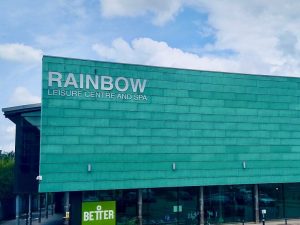
When Epsom & Ewell Borough Council announced that Better will hand over management of the Rainbow Leisure Centre to Places Leisure in October 2025, many locals who have experienced booking glitches, understaffed gyms, and declining poolside conditions breathed a silent sigh of relief. The question now: how quickly will the promised improvements materialize?

Why the Council Doesn’t Run Itself

The council does not manage leisure centres directly—instead, it contracts out operations. That’s why swathes of public facilities across the borough, including the Rainbow Centre, are run by third-party providers. The rationale? Private operators like Better specialise in facility management, class programming, and membership administration. But that also means the council steps back, paying providers rent and oversight rights in exchange for promised upkeep and performance.

Transparency and Value for Money—Still in Question

Although the council has described Places Leisure as a “social enterprise,” it has offered no specifics about terms: contract length, rent paid, baseline investment, or expected improvements remain undisclosed. Without that data, taxpayers and users have no firm guarantee of value—simply a brand change.

Councillors have stressed that this switch aims to bring greater “community focus” and better reinvestment of any surplus—hallmarks of the social enterprise model. Yet sceptics point out that social enterprises aren’t automatically transparent: some still report hefty executive pay packets. In particular, the CEO of Places for People the ultimate owners of Places Leisure reportedly earned £565,426 in 2023-2024 , raising eyebrows among voters who wonder.

A Closer Look at Places Leisure’s Reputation

The local press release paints Places Leisure as a community-minded organisation, but reviews from employees and users tell a different story. Feedback on sites like Indeed and Breakroom varies significantly. Some praise friendly culture and flexible working, while others warn of poor management:

“Management loved to bully young lifeguards… poor pay”
“Awful communication, awful leadership… spend too much time fixing their mistakes”

On Trustpilot, users have lodged complaints about broken equipment, overcrowded classes, and appalling changing-room hygiene—low-grade experiences raising legitimate concerns over upkeep standards as they transfer from Better to Places Leisure .

The Case of the ‘Midnight Lane-Booking’ Mystery

Among the most frequent user frustrations at Rainbow Centre is the so-called midnight lane-booking blackout—where lane reservations vanish at midnight, impairing swimmers’ schedules. While formal documentation is scarce, social media posts and member forums share similar experiences, consistent with online complaints directed at Better about buggy booking systems. Whether this was down to software limitations or internal policy remains unclear—but users will expect Places Leisure to fix this fundamental flaw.

A Moment for Accountability

This handover is more than a change of logo: it’s a test of the council’s commitment to local services. Users are invited to watch the roll-out carefully, demanding updates, realistic targets, and transparent accounting. Social enterprise status sounds progressive—but without openness, it can be nothing more than a sticker on the door.


The Bottom Line

Epsom & Ewell’s move away from Better reflects mounting pressure from dissatisfied users. But who wins—the community or the balance sheet—depends on what happens once the ink is dry. Will we get a truly improved Rainbow Centre, or just a rebranded disappointment?

Time—and transparency—will tell.

Image: Credit Mertbiol  Creative Commons CC0 1.0 Universal Public Domain Dedication


A New Place for Reflection and Remembrance Opens in Epsom’s Long Grove Park

A new natural sanctuary has been unveiled in Long Grove Park, offering a space for remembrance and quiet reflection. The ‘In Memory Woodland’, created by Age Concern Epsom & Ewell, was formally opened on Sunday 22nd June 2025 at a community event attended by local residents, families, and supporters.

Bathed in sunshine, the event marked the culmination of months of planning and planting, with contributions from the Epsom & Ewell Tree Advisory Board, who designed the woodland and oversaw the planting of elm and silver birch trees, alongside daffodils, bluebells, and other native flora. The tranquil glade is also home to a variety of wildlife, creating a peaceful retreat in the heart of the borough.

A ceremonial cherry tree planting and music from the Surrey Brass Quintet added to the occasion, while guests were offered complimentary tea and cake and invited to take part in remembrance activities. The speeches were led by Dorah May, Chief Officer of Age Concern Epsom & Ewell, and Howard Gregory from the Tree Advisory Board.

The woodland was made possible thanks to funding support from Surrey County Council’s Your Fund Surrey, with land provided by Epsom & Ewell Borough Council. The site has been carefully developed to offer a permanent place for people to honour the memories of loved ones or to simply pause and enjoy the restorative qualities of nature.

Age Concern Epsom & Ewell, a long-standing local charity supporting older people, sees the ‘In Memory Woodland’ as a lasting and meaningful addition to the community. The charity hopes residents will return time and again to sit, reflect, and enjoy the peaceful setting.

For more information, visit: https://ageconcernepsom.org.uk/in-memory-woodland