Epsom and Ewell Times

Current

ISSN, LDRS and IMPRESS logos

Appeal to twin Epsom with Bucha in Ukraine

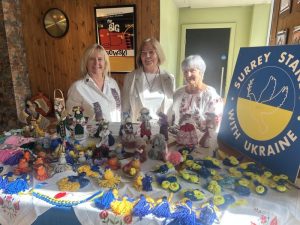
SSWU appeal for warmth funding.

Re: Motion to Support Twinning with Bucha, Ukraine – Full Council, 10 February 2026

Dear Councillors,

We write to you as a residents of Epsom and citizens of Ukraine resident in Epsom who believe we should stand shoulder to shoulder with Ukraine. Surrey Stands With Ukraine was founded in Epsom — a grassroots, volunteer-run charity formed at the outset of Russia’s full-scale invasion in 2022.

Since then, our community has come together in ways few could have imagined. Epsom and Ewell has sent over £5 million worth of humanitarian aid to Ukraine. Through initiatives by Surrey Stands With UkraineEpsom and Ewell Refugee Network, local schools, churches, and dozens of individual volunteers and host families, we have built bonds of solidarity, compassion, and friendship with Ukraine — and especially with the people of Bucha.

This is why we urge you to support the motion at Full Council on 10th February to endorse a twinning arrangement between Epsom and the town of Bucha.

Now is the time: 

This is a once-in-a-generation opportunity to do something meaningful — not just symbolic — that reflects the values our Borough has shown in abundance since 2022.

The hand of friendship has been extended to us by Bucha, a town now known around the world for both the suffering it endured and the resilience it has shown. Its Mayor, Anatolii Fedoruk, has held office for 28 years and has personally asked that Epsom become its first UK twin. That offer may not remain open forever. Delay may see it pass to another town.

This is not a political issue. Nor should it be subject to any “party line”. We appeal to you all to treat this matter as a free vote of conscience, guided by your role as civic leaders, not party representatives.

This twinning initiative has nothing to do with sending aid or diverting council resources. No funding or council officer time is required. As with our Town’s twinning with Chantilly, the operational side will be entirely run by a dedicated Bucha-Epsom Association — a volunteer-led, self-financing group which will invite councillors and community leaders on to its committee and work closely with the Chantilly association to avoid duplication.

What is needed from the Council is a symbolic yet vital endorsement of the principle of twinning — the first step to recognising what our community has already built, and what it can go on to achieve.

Twinning with Bucha now — during the war, not after — carries a deeper meaning. True friendship is shown in hard times as well as good. Kindness should always be forefront of our minds in all our actions. That is the kind of friendship Bucha seeks, and one we should be proud to offer.

Imagine the future educational and cultural benefits:

  • Our children participating in moderated online exchanges with students from Bucha.
  • English-learning Ukrainian youth paired with Epsom school pupils for real-life conversation.
  • Artists, musicians, sportspeople, and teachers collaborating across borders.
  • Civic resilience and peace building projects that our Borough could help shape.

At a time when war continues and local government reorganisation looms, it may feel tempting to delay. But we urge you not to let that be an excuse. If anything, the imminent changes make it more compelling that Epsom and Ewell makes this decision now, while it still exists as a borough council with a distinct identity. Let our legacy be something enduring, generous, and globally visible.

This proposal brings no burden, only benefit. It requires no budget, only goodwill. It demands no partisanship, only perspective.

We ask each of you, as elected representatives of our community, to do what Epsom and Ewell has done again and again since 2022: extend your hand, open your hearts, and lead with humanity.

With hope and determination,

Alan Avis

Tetyana Bilyk

Lionel Blackman

Roy Deadman

Galyna Donstova

Denise Faulkner

Vladimir Nakonechniyi

Lisa Stewart

Pierre-Michel Tarrant

Surrey Stands With Ukraine

Bucha-Epsom Association


A recipe for success – Dame Prue Leith visits Ewell’s Nescot

Prue with Julie and students in the Nescot professional kitchens. NESCOT

Dame Prue Leith DBE visited students at Nescot college in Epsom today, to share her experience, expertise and enthusiasm with students, including the next generation of culinary talent. 

Prue, a chef, author and founder of Leiths Education, as well as a broadcaster and former judge on ‘The Great British Bake Off’, met students and staff and toured Nescot’s award-winning catering and cookery facilities. She also watched students in action, chatting to them as they prepared some of her own recipes in the college’s professional kitchens.

During the visit, Prue spoke about her incredible life, during an ‘in conversation’ session attended by around 250 students from business, catering, art and design, healthcare and media courses. The session, facilitated by Nescot’s CEO and Principal, Julie Kapsalis, included questions about setting up her cookery school, her writing career, including her new book due out in February, and how she moved into broadcasting. Prue also shared personal anecdotes from her time on TV and highlighted the importance of healthy eating and nutrition, an area she has previously advised the government on.

Julie Kapsalis, CEO and Principal at Nescot said “Although many of our students know her from the Bake Off, Prue is a powerhouse business leader, an amazing chef, an author and an educator. Her career is an incredible demonstration of how with determination, resilience and hard work, one person can achieve across several fields. Our Professional Cookery students loved showing her their skills and I know they appreciated her advice, which no doubt they’ll refer to when they’re running kitchens of their own. Prue has shown our students that the sky’s the limit – we’re so grateful for her time.”

Prue Leith said “Nescot is amazing! Truly professional, caring teachers and enthusiastic students.”

As well as Professional Cooking qualifications, Nescot offers a wide range of courses for school leavers and adults, including Animal Care, Hair & Beauty, Computing and IT, Construction, Performing Arts, Childcare and Health & Social Care. To find out more about studying at Nescot call 020 8394 3038, visit www.nescot.ac.uk or email adviceteam@nescot.ac.uk

NESCOT

Prue with Julie Kapsalis CEO and students in the Nescot professional kitchens.


Royal visit to Surrey University

HRH The Duchess of Edinburgh looking at a picture of Her Late Majesty Queen Elizabeth II at the University of Surrey. Credit Surrey University

On 28 January, HRH The Duchess of Edinburgh and the University of Surrey’s Chancellor, HRH The Duke of Kent, visited Surrey to celebrate the University’s innovation, research and hands on learning. During their visit, they met students and staff from across campus, gaining insight into Surrey’s multidisciplinary approach to education.

Medical students at the first and only medical school in Surrey met The Duchess of Edinburgh to demonstrate the collaborative training that will shape their careers in the NHS. The Duchess returned to the University of Surrey’s Kate Granger Building six years after she opened it as the home of its School of Health Sciences. Her Royal Highness met some of the University’s first cohort of UK government-funded medical students who began their studies in September 2025.

The Duchess also met medical, nursing, midwifery and paramedic students learning together in the collaborative training wards before joining a virtual reality anatomy teaching session.

The University’s Chancellor, The Duke of Kent, joined her Royal Highness at the Surrey Space Centre, where they visited labs to see a student-designed satellite deploy pod which will push a payload from a rocket into space.

At the Space Centre, The Duchess visited the satellite clean room toured by Her Late Majesty Queen Elizabeth II in 1998. In the clean room, Her Royal Highness helped to fit a panel engraved with Their Royal Highnesses’ Royal Cyphers to Jovian-1, a satellite which Surrey students helped develop.

Schoolchildren who took part in the University’s widening participation summer schools returned to campus to show off the hands-on STEM projects they enjoyed last year, with The Duke and Duchess joining in. Students from the University’s Engineering Design Centre also had the opportunity to show His Royal Highness a range of projects, including rocket designs and Formula E racing cars.

Professor Stephen Jarvis, President and Vice-Chancellor of the University of Surrey, said:

“Training medical students alongside nursing, midwifery and paramedic students reflects how the NHS operates in practice. Our students graduate already equipped to work effectively in multidisciplinary teams, rather than having to learn this solely once they enter the workplace. The Duchess saw this first-hand in our training wards, where students from different disciplines learn together in realistic clinical settings.

“Her Royal Highness also saw our engineering students working on satellites they have designed and built themselves – hardware that will ultimately be launched into orbit. That combination of world-class research and practical, employer-ready skills lies at the heart of what we do. For our students, whether still studying or already well into their careers, having two members of the Royal Family witness this work first-hand is an experience they will long remember. It was a truly memorable day for our entire community.”

The visit marked a return to sites with strong royal connections. Queen Elizabeth II visited the University’s Guildford campus three times during her 70-year reign: in 1992, where she inaugurated the University’s Centre for Satellite Engineering Research; 1998, when she once again paid a visit to the Surrey Space Centre; and in 2015, when she opened Surrey’s School of Veterinary Medicine.

Patrick Degg, Vice-President, Global at the University of Surrey, said:

“We thank both The Duchess of Edinburgh and The Duke of Kent for their continued support for Surrey. The Duke has served as our Chancellor since June 1976. To have him return in this 50th year of his Chancellorship alongside The Duchess, and for them both to see the breadth of the research and teaching Surrey delivers has been a moment of collective pride.

“A programme that took in our pioneering space engineering, our new medical school and other aspects of our multidisciplinary research and teaching, spoke to the transformation The Duke has witnessed and championed throughout his tenure. His presence continues to inspire our community and affirm the values at the heart of this institution.”

About Surrey Space Centre

Since its founding in 1979, the Surrey Space Centre has been a leading space engineering hub and is widely seen as the birthplace of the small satellite revolution. Professor Sir Martin Sweeting spun out Surrey Satellite Technologies Limited from his work at the Centre, and its recent missions have included RemoveDEBRIS, which demonstrated ways to capture debris in orbit.

The University recently announced the creation of the Surrey Space Institute, which brings together expertise across engineering, law, biosciences and artificial intelligence to build skills, partnerships and future space missions – with a particular focus on protecting Earth’s resources and critical orbital infrastructure.

Surrey University

HRH The Duchess of Edinburgh looking at a picture of Her Late Majesty Queen Elizabeth II at the University of Surrey. Credit Surrey University


A surprise glimpse into 1883: Christ Church Epsom Common’s Parish Magazine

Christ Church from postcard 1900 and The front pages of the January and April 1883 editions Photographs by Roger Morgan © 2022

Out of the blue, Christ Church Epsom Common was recently approached by a Worcestershire-based bookseller and gratefully accepted her kind gift of a bound volume (about the size of a modern paperback) of parish magazines from 1883. The volume, too battered and niche for resale, nonetheless provides a fascinating glimpse into the life of the parish just seven years after the church’s consecration in 1876.

There were Christ Church parish magazines before this: the January 1883 edition refers to an item in the now-lost December 1882 magazine. As with many such publications, they were seen as ephemeral at the time. Although issued monthly, the next surviving edition in the Christ Church archive dates from 1900, with records then remaining patchy until the late 1940s, when systematic retention began.

Both the gold-stamped spine and the frontispiece give the contents simply as Parish Magazine 1883, with no mention of the parish name. The editor is listed as J Erskine Clarke MA, an Anglican clergyman who, in January 1859, launched what is regarded as the world’s first commercial parish magazine inset, prosaically titled Parish Magazine. Each monthly edition ran to around 24 pages and combined religious material with a surprisingly wide range of secular content.

Alongside sermons and Bible studies were items of fiction (often moralising), practical advice, articles on British wildlife, and descriptions of churches and places at home and abroad. The 1883 editions included pieces such as First Aid to the Sick, Making a Will, an account of a visit to Malta, an unexpectedly open-minded article on Islam and the Prophet Mohammed, and the intriguingly titled Worms and their Habits. Each issue carried at least two engraved illustrations, particularly to accompany the travel articles.

The inset was published by Wells Gardner, Darton & Company of Paternoster Buildings, London, specialists in ecclesiastical publishing, and printed by Strangeways & Sons. It was always intended to be surrounded by locally produced parish material. At Christ Church this usually amounted to a further eight pages, printed and bound with the inset by local firm L W Andrews & Son. In some months, when local material ran to only four pages, the usual plain cover was altered to make better use of the available space.

Parishioners paid 2d per issue – roughly £1 in today’s money.

Much of the local content was routine but revealing. Each issue set out the full schedule of services for the coming month, listing not only Sunday services but weekday Mattins and Evensong, along with the hymns to be sung. Lists of baptisms, marriages and funerals followed, together with a standard notice inviting women to offer Thanksgiving after Childbirth, “there being no fee, but it being usual for a Thank-offering to be made at the Altar”. Details of the previous month’s collections were also carefully recorded.

Christ Church did not acquire its own church hall until 1899, so meetings and events were held in a variety of venues. The January 1883 magazine lists the Vicarage, the Working Men’s Club, the Infant School and the Guild Room. The then-new Working Men’s Club, opened in 1881 and later renamed the Epsom Common Club, stood just across Stamford Green.

The Infant School, now lost, stood on West Hill (then known as Clay Hill). Founded through an 1844 endowment by Miss Elizabeth Trotter of Horton Manor, O’Kelly’s former racing stables were converted for the education of children from families on Epsom Common. The school closed in 1925 and was later demolished.

Another regular feature was the “Penny Bank”, encouraging thrift among parishioners. Deposits could be made weekly at the Vicarage, with interest paid at 2½ per cent – or 5 per cent for children attending Christ Church Sunday School.

The January issue opened with a letter from the Vicar, the Revd Archer Hunter, then barely a year into what would become a 30-year incumbency. After setting out his vision for the developing parish, he appealed for more Sunday School teachers and closed by wishing all a Happy New Year – though only, he cautioned, for those “determined to spend it in the constant Presence of their God and Saviour”.

Later editions offer vivid glimpses of parish life. February records a recitation of Dickens’ Christmas Carol in the Infant School room, delivered by Mr Mechelen Rogers before a large audience. While not all were amused, those “qualified to give an opinion” spoke in the highest terms of his performance, promising him an “enthusiastic and noiseless” reception should he return.

March saw the founding of a parish branch of the Church of England Temperance Society, with 37 parishioners unanimously adopting a strongly worded resolution identifying intemperance as a source of poverty, crime and irreligion. Members signed pledges ranging from total abstinence to more qualified commitments, and the movement quickly attracted both adult and juvenile members.

The same edition listed the parish’s current “Wants”, including Sunday School teachers, a parish bier, a bookcase and books for a parochial library, and a new organ stop. It is a pleasing historical coincidence that this very volume survives bearing a library label inside its front cover, suggesting it was once item number 436 in that collection and heavily used.

For parishes that bound their magazines into annual volumes, the national publishers supplied a frontispiece and index, with the binding undertaken locally. A small label inside the rear cover of this book shows it was bound by John Snashall of Epsom High Street. Though now in poor condition, the quality of the leather spine and gold-blocked title speak of careful craftsmanship.

More than a century on, this battered volume offers a remarkably intimate picture of parish life in Victorian Epsom Common – practical, moral, communal and often surprisingly vivid.

This article is reproduced with permission from the Epsom and Ewell History Explorer (www.eehe.org.uk). The original article, written by Roger Morgan, forms part of EEHE’s extensive and richly illustrated archive of local history. EET readers are warmly encouraged to explore the many other fascinating histories available on the site.

Image: Christ Church from postcard 1900 and the front pages of the January and April 1883 editions by Roger Morgan © 2022


Ex-Gendarme launches Epsom safety awareness programme for children

Xavier with a young group.

A new safety awareness programme for children has been launched in Epsom by former French armed police officer Xavier Vollin, who now works in the UK as a close protection officer for foreign diplomats and a behavioural detection instructor. Mr Vollin, who was awarded a Medal for Bravery during his police service, has more than 25 years’ frontline experience in law enforcement, personal protection and behavioural analysis. He also trains colleagues in recognising early warning signs and behavioural anomalies in everyday environments. The initiative, developed under his training company XavSafety, is currently being piloted with children aged 9 to 13, with plans to expand to older teenagers and adults.

Seeing what others miss

Mr Vollin said that much traditional safety advice focuses on what to do once a situation has already gone wrong, whereas his approach concentrates on what happens before that point, helping participants notice changes in behaviour, inconsistencies in surroundings and subtle cues that may signal emerging risk. The programme emphasises calm awareness, observation and environmental understanding rather than confrontation or fear-based thinking. It is described as helping children “see what others miss”, while remaining age-appropriate, engaging and accessible. Mr Vollin said the aim is not to turn children into “mini security officers”, but to help them become more present, confident and aware of how people and environments can change around them.

Pilot programme underway in Epsom

The initial six-week programme began in early January 2026 and has deliberately been kept small to allow the format to be refined and adapted before wider rollout. Sessions combine practical exercises with elements of behavioural observation and pattern recognition, presented in a way intended to remain playful rather than intimidating. Early feedback from parents and children has been positive, although images and evaluation material are currently limited while the pilot phase continues. Future developments are expected to include programmes for older teenagers and adults, exploring the same core skills in greater depth, and Mr Vollin intends to formalise the framework and pursue CPD accreditation.

Focus on awareness in a digital age

Mr Vollin said the wider purpose of the project is to help young people reconnect with their surroundings at a time when attention is increasingly absorbed by screens. He described the underlying idea as being less about strength or reaction, and more about presence, understanding people and recognising risk early, before reaction becomes the only option. The programme is currently launching locally in Epsom, with potential for expansion depending on demand and community interest. Further details about the initiative can be found on the XavSafety website.

Sam Jones – Reporter


Students Tuesday takeover of Epsom Picturehouse

Students in Picturehouse foyer

Students from University for the Creative Arts (UCA) in Epsom are set to return to Epsom Picturehouse later this month with another imaginative cinema takeover – this time built around the release of Marty Supreme.

The one-night event takes place on Tuesday 20th January, with activities beginning at 6.30pm, and forms part of UCA Epsom’s Experience Economy module. Rather than focusing on conventional event mana

The January screening will again see students working directly with the Picturehouse team to create an enhanced, interactive evening that goes beyond simply watching a film. While full details are being kept under wraps, organisers promise live elements and audience interaction designed to complement the themes and setting of the film.

The collaboration builds on last year’s well-received student takeover, which re-imagined Be Kind Rewind as a playful, hands-on cinema experience. That event featured live performances, green-screen activities and interactive installations that transformed the building into a temporary creative hub and demonstrated how cinema can function as a shared social space rather than a purely passive one.

This year’s focus is Marty Supreme, a new film set in 1950s New York and starring Timothée Chalamet as Marty Mauser, a driven outsider determined to become a champion table-tennis player and turn the sport into a nationwide phenomenon. The story’s emphasis on confidence, ambition and refusing to be overlooked has provided fertile ground for students developing ideas around performance, identity and audience participation.

Epsom Picturehouse, which opened in 2018, has become a central part of the town’s cultural life, combining six screens showing independent cinema and mainstream releases with a café-bar that is used for talks, community events and special screenings. The venue is part of the Picturehouse chain, known nationally for its focus on curated programming and local partnerships.

UCA’s Epsom campus, located at the former Epsom School of Art, specialises in creative business, marketing and performance-related courses, with an emphasis on practical collaboration with external organisations. Projects such as the Picturehouse takeover form part of the university’s wider approach to linking students with real-world audiences and venues.

Joe Stroud, Marketing Manager at Epsom Picturehouse, said the partnership reflects a shared commitment to creativity and community, adding that working with students brings fresh perspectives into the cinema and helps re-imagine how audiences experience film.

The Marty Supreme cinema takeover is a one-night-only event, with tickets available via the Picturehouse website.

Sam Jones – Reporter


Surrey Uni powering hydrogen and low carbon energy

Surrey University and Ceres people

A new partnership between the University of Surrey and leading clean energy technology company Ceres aims to speed up the development of next-generation clean power systems and hydrogen production – supporting the UK’s net zero ambitions and helping address a growing skills gap in electrochemical energy technologies. 

The collaboration brings together Ceres’ expertise in solid oxide fuel cells (SOFC) and solid oxide electrolysis (SOEC) with Surrey’s research strengths in electrochemical energy systems, digital and multiscale modelling, and advanced materials characterisation. Solid oxide electrolysis allows for highly efficient hydrogen production using electricity and heat, while solid oxide fuel cells can generate low carbon power for applications ranging from industrial processes to data centres. 

Under the partnership, the teams will focus on improving the efficiency, durability and performance of these technologies, using advanced modelling and mechanistic insights to help translate fundamental research into real-world systems more quickly. Together, they will pursue joint research projects, collaborative funding bids and new training and placement opportunities for students. 

Professor Qiong Cai, Professor in Sustainable Energy and Materials at the University of Surrey, and academic co-lead, said: 

“Solid oxide electrolysis and fuel cells have huge potential to underpin the UK’s future energy systems, from large-scale hydrogen production to low-carbon power for industry. But real progress depends on improving efficiency, durability and performance so these systems can operate reliably in the real world. This partnership gives us the opportunity to tackle those challenges head-on, combining fundamental science with a clear route to application.” 

Professor Jin Xuan, Associate Dean of Research and Innovation for the Faculty of Engineering and Physical Sciences, who is also a co-lead at Surrey, said: 

“There is a growing skills gap in hydrogen and electrochemical energy technologies, at a time when demand for these capabilities is increasing rapidly. Working together with Ceres, we aim to help train the next generation of engineers and scientists in these fields through placements and hands-on research, ensuring the UK has the expertise it needs to support a net zero economy.” 

The partnership is outlined by a three-year Heads of Terms agreement and will see the teams work together to develop a pipeline of joint research projects and funding bids.  

A symbolic signing ceremony, which took place at the University of Surrey on 14 January 2026, formally marked the start of the collaboration and provided an opportunity for both parties to set out priorities for the work ahead. 

Dr Subhasish Mukerjee is Chief Scientific Officer at Ceres and was recently appointed a Visiting Professor within Surrey’s School of Chemistry and Chemical Engineering. He said: 

“We are delighted to expand our collaboration with the University of Surrey across fundamental electrochemistry research, modelling and digitalisation, and strategic testing to develop the next generation of clean energy technology. This collaboration strengthens our leadership in the solid oxide field and supports the UK’s drive toward achieving its net zero targets.” 

.

.

.

.

.

Surrey University

.

.


Green escape to wellness for Surrey’s anxious

Participant Lucy

A new photography exhibition by Active Prospects is shining a light on the power of nature, creativity, and personalised wellbeing support.

The stunning images on display were all taken by people who have taken part in the charity’s Green Escape wellness recovery programme, funded through the Mental Health Investment Fund (jointly funded by Surrey County Council and Surrey Heartlands ICB).

Over the past year, small groups of two or three people have enjoyed 8–10 nature trips to beautiful parts of Surrey, including places that are sometimes difficult to reach by public transport, such as RHS Wisley. Each trip gave participants the chance to explore new places, take photographs and build confidence at their own pace. Their work has now been brought together in a unique photo book and this special exhibition.

For many, these trips were life-changing. One participant had not left their home for 10 years. With gentle encouragement, practical support and small achievable steps, they were able to join the group, enjoy the outdoors and reach a personal goal they once thought impossible. Families are involved too, and wellbeing coaches from Active Prospects support each person throughout their journey. It’s a true team effort.

At the end of the wellness recovery programme, each participant leaves with a personalised action plan. By removing barriers, such as fear of using public transport or trying new activities, people gain the confidence to become more independent. Some have even taken their new skills into work or volunteering. One participant discovered a passion for paddleboarding and is now a qualified instructor.

Research shows that around half of autistic adults experience anxiety disorders. Every part of Active Prospects’ wellbeing coaching is designed to ease anxiety, build confidence and open up new opportunities for neurodivergent people over 18. Participants often tell the team they felt “invisible” before joining. Peer connection is central to the programme, and activities focus on what makes people smile, whether that’s creative writing, photography or paddleboarding. One member’s love of table tennis inspired Table Tennis Thursdays, which is now a much-loved weekly meet-up.

The programme is person-centred, with coaching tailored to each individual. Thanks to Mental Health Investment Fund support of £299,270 over 2 years, as well as the programme, Active Prospects also developed Emojo, a digital wellbeing app that helps people track how they’re feeling across eight areas of wellbeing such as ‘Environment’. Users can set goals, get ideas for new challenges, and create a monthly mood calendar that helps them notice progress and patterns over time.

The photography exhibition celebrates everything the programme stands for, confidence, creativity, connection, and the joy of discovering something new.

Councillor Mark Nuti, Surrey County Council Cabinet Member for Health and Wellbeing, and Public Health said: “The exhibition has showcased wonderful moments captured in nature, and it was inspiring to hear the stories behind each photograph. It’s clear to see the positive impact of the support provided by Active Prospects—helping people improve their mental health, build confidence, and enhance their overall wellbeing.”

Dr Charlotte Canniff, Joint Chief Medical Officer for NHS Surrey Heartlands, said: “This exhibition shows the real difference personalised wellbeing coaching can make. We’re proud that, through the Mental Health Investment Fund, Active Prospects has been able to create Inclusive Wellbeing Coaches to support adults with multiple challenges to grow in confidence and quality of life.”

Maria Mills CEO Active Prospects said: “Connecting to nature and the outdoors offers a real boost to wellbeing. Already participants have shared a documented 25% improvement in their wellbeing presentation, showing how investment in inclusive community support pays back public funding in multiples, but most importantly enables people to thrive.”

Leanne – Programme participant: “I wasn’t going out, was overwhelmed and my senses were overloaded. Since being part of the programme, I’m able to get out and about and I’m seeing things differently.”

Kieran – Programme participant and a member of the Active Prospects Wellbeing Team: “Being outside (in nature) after years in hospital gives you a feeling of freedom and space.”

Mental Health Investment Fund

The Mental Health Investment Fund (MHIF) is a Surrey wide, all age, resource to enable the delivery of the outcomes in Priority Two of the Health and Well-Being Strategy. This priority area is focused on prevention, removing barriers, and supporting people to become proactive in improving their emotional health and wellbeing.

Established in 2022, the MHIF is a joint fund with Surrey Heartlands Integrated Care Board (ICB) and is part of the county’s No One left Behind agenda. The additional investment in mental health provision was ring fenced within the 22/23 Council Tax with an additional contribution from Surrey Heartlands.

.

.

Surrey County Council

.

.

.

Photo: Lucy a participant

.

.

.

.

.


From the Cosmos to Commerce: University of Surrey Leads the Way

Surrey University

The University of Surrey has been showcasing a remarkable breadth of achievement in recent weeks, with major advances announced across fundamental science, international collaboration, digital trade policy and lifetime academic excellence.

From unlocking the origins of the universe’s rarest elements, to shaping the future of UK trade infrastructure and celebrating world-leading research careers, the University’s latest announcements underline its growing national and international impact.

Unlocking the universe’s rarest elements

Surrey scientists are leading a new £215,100 international research project that aims to transform understanding of how chemical elements are formed during extreme cosmic events such as supernovae, neutron-star collisions and X-ray bursts.

Funded by the Royal Society’s International Science Partnership Fund, the three-year project brings together researchers from Surrey, Kyushu University and Japan’s world-leading RIKEN laboratory. The team will develop and deploy cutting-edge instruments capable of measuring some of the rarest and most unstable atomic nuclei ever studied.

These exotic isotopes do not exist naturally on Earth and can only be created briefly in advanced physics laboratories. By measuring their mass and decay rates for the first time, researchers hope to refine theoretical models of nuclear structure and gain new insight into how the heaviest elements in the universe are formed.

Experiments will take place at RIKEN’s Rare-Radioactive Isotope Ring, a unique facility that allows repeated observation of these short-lived nuclei. Surrey researchers will play a central role, leading the design and testing of advanced detector and data-acquisition systems in the UK ahead of the experimental programme in Japan.

The collaboration is also expected to strengthen scientific ties between the UK and Japan and reinforce the UK’s position at the forefront of nuclear physics research.

Warning over UK digital trade and border fragmentation

In a very different field, new research from Surrey Business School and the Centre for the Decentralised Digital Economy has issued a stark warning that the UK risks falling behind global competitors in digital trade unless urgent action is taken.

The study argues that the UK’s digital border initiatives are fragmented, with no single organisation responsible for coordinating legislation, technology platforms and end-to-end border processes. As a result, businesses face repeated data requests, delays and uncertainty, increasing costs rather than reducing friction.

Researchers examined UK trade and border policies since 2017, including the 2025 UK Border Strategy, recent digital trade legislation and multiple government pilot projects. Drawing on international case studies and academic research, the team proposes a collaborative governance framework to guide reform.

The report calls for the government to give one body a clear mandate to orchestrate policy, digital platforms and data standards across departments. It argues that, with the right leadership, the UK has a window of opportunity to create a new digital “silk road” for trade, enabling trusted data sharing that benefits smaller firms as well as multinationals.

Lifetime achievement recognised in materials science

Surrey’s excellence in research was further highlighted by the announcement that Professor Joseph Keddie, Professor of Soft Matter Physics, has been awarded the 2026 Sir Eric Rideal Award for lifetime achievement in colloid and interface science.

Jointly awarded by the Royal Society of Chemistry and the Society of Chemical Industry, the prestigious honour recognises sustained and distinguished contributions to the field. Professor Keddie is internationally known for pioneering work on polymer colloids, sustainable materials and so-called “living materials”, with applications ranging from coatings and adhesives to wastewater treatment and bioremediation.

Over a career spanning more than three decades, he has authored more than 150 academic publications, holds multiple patents and co-authored the influential book Fundamentals of Latex Film Formation. His work at Surrey has previously been recognised by major awards from both the Institute of Physics and the Royal Society of Chemistry.

Professor Keddie will deliver the Rideal Lecture, titled More than Watching Paint Dry, on 8 April 2026, presenting highlights from his research including self-layering coatings and carbon-storing “living paints”.

A university with global reach

Taken together, the announcements paint a picture of a university operating at the cutting edge across disciplines: advancing fundamental science on a global stage, influencing national policy debates, and nurturing research careers with lasting international impact.

For Surrey residents, the achievements reinforce the University of Surrey’s role not only as a local institution, but as a centre of innovation and expertise with reach far beyond Guildford.

Sam Jones – Reporter


Surrey tops Man v FAT contest

Man v Fat team SCC

Guildford’s MAN v FAT Football Club has been crowned Community Club of the Year 2025 at the nationwide MAN v FAT Football Awards, recognising its outstanding contribution to improving men’s health and wellbeing.

In Surrey, the MAN v FAT weight loss programme is commissioned by Surrey County Council through the free healthy lifestyle service One You Surrey. The FA-accredited scheme, which also runs in Woking, combines football with structured weight-loss support and is aimed at overweight and obese men with a BMI of 27.5 or above, helping participants lose weight, gain confidence and build friendships.

At each session, players weigh in before taking part in a 30-minute six-a-side football match. Teams receive extra goal bonuses based on their combined weight loss. A team’s match scores and weekly weight-loss totals then contribute to its standing in the club’s league table.

Mark Smithies from the Guildford club said joining had been transformative for him: he has lost weight, improved his fitness and made lasting friendships. He added that the positive, supportive environment has boosted his confidence and mindset, describing the club as “more than just football… a proper community”.

H5 How the programme supports players

Alongside weekly football sessions, MAN v FAT players receive additional support off the pitch, including healthy meal ideas, general fitness tips and access to a bespoke mental health platform through partners JAAQ.

Across the UK, MAN v FAT players have collectively lost more than 800,000 pounds in weight.

H5 Success in Guildford and Woking

The Guildford club meets on Friday evenings at Kings College – Community Sports Hub on Southway and currently has 68 members regularly achieving their weight-loss goals. Over the past twelve months, players at the club have shed more than 34 stone of excess weight, with progress continuing week on week.

The Woking club meets on Monday evenings at the Woking Sportsbox and has supported 40 players to lose a combined 365kg during 2025.

H5 Find out more

Funded places are available for Surrey residents at the Guildford and Woking clubs through Surrey County Council and One You Surrey.

To register, visit manvfat.com/football and search for Guildford or Woking to apply and begin your journey to a healthier 2026.

Surrey County Council

.

.

.

.

.


Epsom Hospital faces flu challenge

Epsom Hospital

Hospitals serving Epsom and Ewell are facing one of their toughest starts to a year in recent memory, with dozens of beds taken up by flu patients and others closed because of infection control, as winter illnesses surge across the country.

As of Sunday, 45 beds across St George’s, Epsom and St Helier hospitals were occupied by patients with influenza, according to the St George’s, Epsom and St Helier University Hospitals and Health Group. At the same time, further beds have had to be taken out of use due to flu and norovirus outbreaks, reducing the system’s overall capacity just as demand is rising.

The combination of cold weather, widespread winter viruses and a growing number of patients needing specialist treatment has created what NHS leaders locally describe as a “bleak” start to the new year.

Elaine Clancy, Group Chief Nurse for St George’s, Epsom and St Helier, said hospitals across the group were seeing “some very sick patients” as winter illnesses and low temperatures take their toll. “Don’t make the mistake of thinking flu is just a bad cold,” she said. “These figures show the infection can make people seriously ill, and I’d urge people to take steps to ensure they and their loved ones don’t suffer.”

A national problem, not just local

The pressure on Epsom and St Helier reflects a wider national trend. NHS England has warned that socialising over Christmas and New Year is likely to have fuelled a rebound in flu, Covid-19 and other winter viruses, with senior figures cautioning that the worst of the season is “far from over”.

Across England, hospitals are again reporting high numbers of admissions for respiratory illness, alongside continued demand from people with complex medical needs who are more vulnerable in cold weather. The knock-on effect is felt most sharply in accident and emergency departments, where delays grow when wards are full and patients cannot be moved on.

Public health experts have long warned that flu remains a serious illness, particularly for older people, pregnant women and those with underlying conditions. In bad seasons, it contributes to thousands of excess deaths nationally, even though it is often dismissed as minor.

Norovirus, meanwhile, spreads rapidly in hospitals and care settings, forcing wards or bays to close for deep cleaning, further reducing available beds at precisely the moment they are most needed.

What people can do

Local NHS leaders are urging residents to take simple but effective steps to reduce the spread of infection and help protect the health service. These include getting vaccinated against flu if eligible, washing hands regularly, staying at home if unwell, and avoiding contact with vulnerable people when displaying symptoms. Keeping homes warm – ideally at 18°C or above in key rooms – and wrapping up when going outdoors also helps reduce the risk of illness.

People are also being asked to use health services appropriately, so that emergency departments remain available for those in urgent need. NHS 111, which is available online and by phone 24 hours a day, can direct people to the right service, while community pharmacists can advise on many minor illnesses and treatments.

Residents are encouraged to check on neighbours, friends and family who may be vulnerable, to make sure they have food, medication and adequate heating during the cold snap.

With flu and winter viruses still circulating widely, health leaders say the coming weeks will be critical — both for hospitals trying to manage demand, and for communities doing their part to keep themselves and others safe.

Sam Jones – Reporter

Related report:

Epsom Hospital braces for flu spike


Call to join the merry Morris Men of St Mary’s Ewell

Ewell Morris dancers

The friendly team of Ewell St Mary’s Morris Men are holding an open day for anyone who would like to try out a bit of Morris Dancing. No experience needed.

Morris Dancing is a very old British tradition going back more than 600 years and whilst some people enjoy the colour, the cheerful music, the fun and whole spectacle, they sometimes feel a bit nervous to actually try it, this open day is an ideal opportunity, no audience, just a lot of very friendly people. Give it a try, there’s nothing to lose, and it might just be that thing that ticks your box.  It’s Free, it’s Open to all and there’s no commitment

There are many reasons to try out Morris Dancing and if you asked a hundred different Morris Dancers you would get a hundred different reasons, however these are some of the more common reasons.

It is a very old tradition and should be supported

It keeps people fit and trim It is fun The people are all friendly It beats boredom Any age can do it

2-4pm Saturday 17th January, Bourne Hall in Spring Street, Ewell Village KT17 1UF is on the 406, 293 bus routes and has plenty of Car Parking available. Ewell West, and Ewell East railway stations are also nearby.

Everyone welcome, from Epsom, Cheam, Ashtead, Sutton, Malden, in fact anywhere. Just come along. On Saturday 17th January.

Musicians wishing to try the music are also welcome, again, no experience required.

More information

Website – https://ewellmorris.co.uk
email – contact@ewellmorris.co.uk
Facebook – ewellstmarymorris

Alan Greenwood


Epsom lamppost flags: symbol of pride — or cause of anxiety?

Lamppost raised union flag in Ruxley Lane and union flags at Ashley Centre

Across parts of Epsom and Ewell, the appearance of Union Jack flags tied to lampposts has prompted sharply differing reactions. For some residents, the flag remains a symbol of shared identity and national belonging. For others, the manner of their sudden arrival — often without permission and fixed to public infrastructure — has caused unease, sparking wider anxieties about division, ownership of public space, and the meaning of patriotism in modern Britain.

In September 2025 Surrey County Council restated its position on flags and attachments to street furniture, reminding residents that anything fixed to a lamppost or painted on a public highway requires formal consent. The council emphasised safety considerations for drivers, pedestrians and maintenance crews, and said unauthorised attachments may be removed during inspections. Residents wishing to display flags on public land are advised to apply in advance through established procedures. The council was clear, however, that anyone may fly a flag from their own property if they wish to do so.

The debate has not only been technical or regulatory. One local resident, writing to the Epsom and Ewell Times, described attempting to remove some of the flags in their neighbourhood and being confronted in the process. Their concern was less about flags as symbols, and more about how — and by whom — they were placed, and whether they were being used to signal exclusion rather than unity. The writer reflected on the way social and political polarisation in recent years has shaped how national imagery is read, and expressed frustration at what they saw as a lack of clarity over which authority is responsible for removing unauthorised items from street furniture.

Others in the borough have reacted very differently, seeing the flags as benign expressions of pride, or as gestures intended to lift spirits at a time of economic and social uncertainty. Some residents have argued that the Union Jack should not be regarded as belonging to any one political tradition, recalling moments when people across the country — including at national sporting events and during major civic occasions — have gathered beneath it without controversy.

That broader question — who “owns” the flag — has recurred throughout modern political history. When crowds waved the Union Jack outside Downing Street on the night of Labour’s 1997 election victory, commentators spoke of the centre-left “reclaiming” national symbolism from the political right, attempting to make it inclusive rather than exclusive. Others have suggested that opportunities were later missed to develop a more layered sense of identity, for example by flying the European Union flag alongside the Union Jack on public buildings, as was commonplace in many EU member states. For some, that dual display might have normalised a shared British and European identity; for others it would itself have been contentious. The difficulty of striking a balance illustrates how strongly flags can be read in different ways.

In Epsom and Ewell, the present concerns appear to rest less on the flag itself than on process, tone and consent. The sudden appearance of flags on lampposts — without clear identification of who has installed them and without permission from the asset-owning authority — has left some residents feeling unsettled or excluded, while leaving councils fielding questions about responsibility and enforcement. The practicalities are not trivial: removing items at height may require equipment, contractor time and public money.

One constructive suggestion arising from local discussions is that the right of individuals to fly a flag from their own homes could be matched by a more open and confident approach from civic bodies, schools, churches, voluntary groups and local businesses — flying the Union Jack from their own buildings in clearly identifiable and lawful ways, and on agreed occasions. In that model, the flag becomes visible as a symbol belonging to all, rather than as an anonymous street-level intervention that some interpret as a political statement.

Another proposal is for clearer published guidance from the relevant authorities — setting out who owns which assets, how permission can be sought, what safety standards apply, and how residents may raise concerns or objections. Transparency about due process may help reduce tension, even where views differ about meaning and symbolism.

What the current debate in Epsom and Ewell perhaps most clearly reveals is that flags still carry emotional weight — capable of reassuring some while unsettling others. Between those positions lies a space for thoughtful discussion about how shared symbols are used in public places, and how a sense of belonging can be fostered without causing anxiety to neighbours who may read them differently.

Sam Jones – Reporter

If you have a considered view on this topic feel free to write to The Epsom and Ewell Times.

Related report:

Surrey County Council flags up the flag issue


Do you have the bottle for these cold nights?

Person holding a water bottle.

With the UK in the midst of a bitter cold snap, many of us are reaching for hot water bottles to help keep warm during the day and through the night.

While hot water bottles are an effective and affordable way to keep warm, in 2024 nearly 1,000 people were admitted to burn units in England and Wales following hot water bottle accidents.

Here, the team at Health and Safety training experts High Speed Training share some practical advice on how to use hot water bottles safely.

Dr Richard Anderson, Head of Learning and Development at High Speed Training, said: “Hot water bottles are a fantastic way to beat the chill, and with energy costs remaining a concern, they are more popular than ever. However, like any household item that uses high heat, they aren’t without risk.”

Check the age

It is recommended that hot water bottles are replaced every two years. The rubber used in their construction can deteriorate over time, making bottles more likely to split or leak.

You can check when a hot water bottle was made by looking for a flower-shaped symbol, known as a ‘daisy wheel’, embossed onto the neck or body of the bottle. The number in the centre shows the year of manufacture, while the twelve surrounding segments represent the months of the year. The number of segments with dots indicates the month the bottle was made.

For example, if the symbol has 25 in the middle and dots in the first six segments, the bottle was manufactured in June 2025. If a segment contains more than one dot, the number of dots in the final filled segment shows which week of the month the bottle was produced.

How to fill and use your hot water bottle safely

Dr Anderson added: “Before filling a hot water bottle, always check it for visible damage or signs of wear and tear. Avoid filling the bottle with boiling water, as this can weaken the internal seams. Allow the water to cool slightly before filling.

“It’s also advisable to only fill the bottle to around two-thirds full. Expel any remaining air before tightening the stopper securely.”

He also advised always using a cover on a hot water bottle to reduce the risk of contact burns, and never sitting or lying on one, as this increases the likelihood of the bottle failing. “When not in use, empty the bottle completely and store it with the stopper removed in a cool, dry place, such as a cupboard.”


Warm places to go to in Epsom and Ewell

Epsom Methodist Church

Christ Church Ewell

Address: Cheam Road, Ewell, KT17 1AD

Opening Times: Wednesday from 10am to 1pm

Services offered: Hot drinks; meals; social activities

Accessibility: Ramps available for disabled access and disabled toilet


Epsom Methodist Church

Address: Ashley Road, Epsom, Surrey, KT18 5AQ

Opening Hours: Wednesday from 10am to 6pm

Services offered: Hot drinks; meals; craft activities and social activities;

Accessibility: Fully accessible


King’s Church, Epsom

Address: Off Gibraltar Crescent, Epsom, Surrey, KT19 9BU

Opening Hours: Friday from 6pm to 8pm

Services Offered: Hot drinks; Meals; Craft activities; Social activities;

Accessibility: Fully accessible.


Love Me Love My Mind

Address: St Barnabas Church, Temple Road, Epsom, KT19 8HA

Opening Times: Monday from 1pm to 7pm

Services Offered: Meals; Hot drinks; Craft activities; Physical activities; Social activities; Meals.

Accessibility: Wheelchair accessible; Disabled Toilet


St Mary the Virgin, Ewell

Address: Ewell Village Hall, London Road, Ewell, KT17 2AY

Opening Times: Thursday from 12pm to 2pm

Services Offered: Hot drinks; Meals; Social activities; Food bank/ Food Club / Community Fridge.

Accessibility: Accessible toilet available.


Epsom Library

Address: 6 Epsom Square, Epsom, Surrey KT19 8AG

Opening Times:

  • Monday: 9.30am to 5.30pm
  • Tuesday : 9.30am to 7pm
  • Wednesday: 9.30am to 5.30pm
  • Thursday: 9.30am to 7pm
  • Friday: 9.30am to 5.30pm
  • Saturday: 9.30am to 5pm
  • Sunday: Closed

Services Offered: Warm space, hot and cold drinks, events and activities.

Accessibility: Full information can be found on the Epsom Library Webpage


Ewell Court Library

Address: Ewell Court Community Library, Ewell Court House, Lakehurst Road, Ewell, Surrey KT19 0EB

Opening Times:

  • Monday: Closed
  • Tuesday: 10am to 5pm
  • Wednesday: 10am to 5pm
  • Thursday: Closed
  • Friday: 10am to 5pm
  • Saturday: 10am to 4pm
  • Sunday: Closed

Services Offered: Warm space, hot and cold drinks, events and activities.

Accessibility: Full information can be found on the Ewell Court Community Library Webpage


Ewell Library

Address: Bourne Hall, Spring Street, Ewell, Epsom, Surrey KT17 1UF

Opening Times: Tuesday to Saturday from 9:30am to 5pm

Services Offered: Warm space, hot and cold drinks via a voucher scheme with the onsite cafe, events and activities.

Accessibility: Full information can be found on the Ewell Library Webpage


Stoneleigh Library

Address: 1 Stoneleigh Broadway, Stoneleigh, Epsom, Surrey, KT17 2JA

Opening Times:

  • Monday: 10am to 1pm and 2pm to 5pm
  • Tuesday: 10am to 1pm and 2pm to 5pm
  • Wednesday: Closed
  • Thursday: 10am to 1pm
  • Friday: 10am to 1pm and 2pm to 5pm
  • Saturday: 10am to 4pm;
  • Sunday: Closed

Services Offered: Warm space, hot and cold drinks, events and activities.

Accessibility: Full information can be found on the Stoneleigh Library Webpage


Tattenhams Library

Address: Tattenhams Community Library, Tattenham Crescent, Epsom Downs, Epsom, Surrey KT18 5NU

Opening Times:

  • Monday: 10am to 1pm
  • Tuesday: 10am to 1pm
  • Wednesday: 10am to 1pm
  • Thursday: 10am to 4pm
  • Friday: 10am to 5pm
  • Saturday: 10am to 4pm
  • Sunday: Closed

Services Offered: Warm space, hot and cold drinks, events and activities.

Accessibility: Full information can be found on the Tattenhams Library Webpage


Epsom Vineyard Church (Community Venue)

Address: 23 Lansdowne Road, West Ewell, Surrey, KT19 9QJ

Opening Times: Wednesday: 2pm to 5pm and Friday 10am to 12pm

Services Offered: Hot drinks ;Social activities; Light Meals;

Accessibility: Disabled access; accessible toilets; parking for 5 cars, plus on street parking.

Image: Epsom Methodist Church


Have your say on the future of local representation in Epsom and Ewell

Epsom and Ewell Borough Council town hall. (Credit: Emily Dalton/ LDRS)

Epsom & Ewell Borough Council is currently running the second stage of its Community Governance Review (CGR), asking residents whether two new parish-style bodies — Epsom Community Council and Ewell Community Council — should be created to operate beneath the new East Surrey Unitary Authority.

The Council’s consultation

The Borough Council consultation follows its Full Council decision in December to continue exploring the creation of two new parish-style councils. According to the council’s press release, the proposed bodies would:

• initially be responsible for allotments
• act as statutory consultees on planning matters
• be funded by a parish precept of around £43–£46 for a Band D property
• hold elections in May 2027 if created

The consultation also asks for views on warding arrangements and councillor numbers for the proposed new bodies.

The Epsom & Ewell Times encouraged residents to read the council’s consultation material in full and respond to it, whether in favour or opposed, so that the decision ultimately reflects as broad a range of resident opinion as possible.

The EEBC CGR Consultation officially closed on 31st January.

Why EET is running an additional poll

During the December council debate and in the public correspondence that followed, a number of councillors and residents raised questions about whether the consultation should also invite views on alternative forms of local representation, such as Surrey County Council’s pilot Neighbourhood Area Committees, under the new unitary structure. See the Epsom and Ewell Times guide to Neighbour Area Committees HERE

See letters to the Epsom and Ewell Times from a number of Epsom and Ewell Borough Councillors HERE.

The council’s consultation asks residents only whether they wish to establish parish-style community councils and, if so, how they should be constituted. It does not ask whether residents would prefer any alternative approach or different mechanisms for an additional local voice to the 10 Epsom and Ewell elected Councillors to the East Surrey Unitary Authority

The Epsom & Ewell Times believes that the wider discussion about local democracy after 2027 may benefit from hearing resident views on more than one potential model. Our independent survey therefore allows participants to express:

• support for or opposition to the creation of community councils
• support, if any, for the alternative form of additional local consultation of Neighbour Area Committees
• views on cost, value for money and accountability
• opinions on how civic traditions, such as the mayoralty, might continue

The results will not form part of the official consultation process, but may provide an additional picture of community sentiment to inform public debate and future reporting.

Click HERE to access the Epsom and Ewell Times reader survey

Two platforms, one community conversation

Residents are invited to complete both the council consultation and the Epsom & Ewell Times survey. The two exercises serve different purposes:

• the council consultation forms part of the statutory Community Governance Review
• the EET poll provides a space for residents to express views on a wider range of possibilities and priorities

Both, however, share a common aim — helping to ensure that local voices are heard at a time of significant change in how Epsom and Ewell will be governed in future.

The Epsom & Ewell Times will continue to report on developments in the Community Governance Review, the consultation outcomes and the wider debate about the future of local representation as the borough approaches the transition to the East Surrey Unitary Authority in 2027.

Sam Jones – Reporter

Related reports and articles:

Parish power, democratic ideals — and the Residents’ Association dilemma

Epsom and Ewell’s Local Democracy Debate: What’s at Stake as Consultation Enters Phase Two

Letters from local Councillors on Epsom and Ewell parishes

Epsom and Ewell Council leader message for 2026

Long serving Epsom Councillor blasts LGR and NACs

Neighbour Area Committees HERE