Epsom and Ewell Times
22nd October 2026

ISSN, LDRS and IMPRESS logos

Surrey’s 3 Unis and Council leaving no one behind

Surrey University

Surrey County Council, in partnership with Surrey’s three leading universities – Royal Holloway, University of London; University for the Creative Arts; and the University of Surrey – is proud to announce the launch of a new Civic Agreement for Surrey.  

This groundbreaking initiative defines a shared commitment for these organisations to work collaboratively in the interests of the wider Surrey community: ensuring that no one is left behind.  

By pooling resources and expertise, the partners believe they are better placed to address local needs, drive innovation, and create a more inclusive and resilient Surrey by 2030.  

The Civic Agreement will be formally signed at an event in Woking today (Friday September 20, 2024).  

It will serve as a public commitment to working together to bring about real and positive change to the people who live, learn and work in our communities across the county 

Details are set out in a 32-page formal document which defines shared priorities, objectives, programmes of work and future ambitions.  

All will be delivered against four shared priorities, which are:   

  • Growing a sustainable economy so everyone can benefit. 

  • Tackling health inequality. 

  • Enabling a greener future. 

  • Empowered & thriving communities. 

Tim Oliver OBE, Leader of the Council, Surrey County Council, said: “Surrey’s universities are engines for regional innovation, with a profound impact across all four strategic priorities. The partners are committed to ensuring our residents, communities and businesses can easily access and benefit from our range of innovation organisations, assets, and networks. These all play a part in addressing the four objectives of our agreement, and ensuring that no one is left behind.” 

Prof. Max Lu, President and Vice-Chancellor of University of Surrey, said:  “The University of Surrey has a proud track record of collaborating with local government and university partners to address issues that matter to Guildford and the wider Surrey community. One recent example is the Games and Innovation Nexus Project, partnering with University for the Creative Arts, Surrey County Council and Warwick University. Other examples include our Centre for Doctoral Training in AI for Digital Media Inclusion, in partnership with Royal Holloway University of London. We welcome the strengthening of these ties through the Civic Agreement for Surrey, ensuring the breadth and depth of our expertise from our Institutes for Sustainability and People-Centred AI, and all our schools, and companies on our Surrey Research Park continue to enable our community to grow and thrive.”  

Prof. Julie Sanders, Vice-Chancellor and Principal, Royal Holloway, University of London, said:  “As a University of Social Purpose, we want to take a proactive role in tackling societal changes, enabling sustainable social and economic growth, and improving skills and opportunities for those in our community. Our inclusive education and research has a focus on achieving positive benefits for and with our local community, and our collaboration with academic partners, community groups, schools and local government brings investment, jobs and opportunity to Surrey. As well as through the Centre for Doctoral Training with the University of Surrey and its emphasis on digital inclusion, this effort is integral to the CoSTAR project, which seeks to ensure the UK’s screen and performance industries have the infrastructure, research and innovation skills to compete globally. Declaring our public agenda through the Civic Agreement for Surrey will amplify the positive role the university can play in the region.”  

Prof. Jane Roscoe, President and Vice-Chancellor, University for the Creative Arts, said:  

“As a leading creative university, the University for the Creative Arts plays a pivotal role in driving innovation across the arts, technology and business. Through our partnerships with local government, businesses and fellow academic institutions, we are committed to ensuring that creativity remains at the heart of Surrey’s economic and social growth. Our involvement in initiatives like the Games and Innovation Nexus (GAIN) project, alongside Surrey County Council and our university partners, is just one example of how we can harness creative thinking to solve real-world challenges. The Civic Agreement for Surrey reflects our dedication to fostering a creative and inclusive environment that empowers individuals, enriches communities and drives regional innovation.” 

Today’s launch of the Civic Agreement for Surrey is very much the first step in a long-term collaboration that includes every part of Surrey.  

We welcome further engagement from community stakeholders, businesses, and residents who share an interest in advancing the shared priorities and objectives set out in our civic agreement. 

Details on how the community can get involved will be shared in the coming months. 

A video explaining the commitment is also available on each of the partners’ websites.  

For more information on the Civic Agreement for Surrey and how you can get involved, contact: civicagreement@surreycc.gov.uk   

Surrey Coroner calls for action over ambulance wait

A Surrey Ambulance

The death of a man who waited more than three hours for an ambulance has prompted calls from a coroner for quicker clinical assessments.

Philip Ross died at the Royal Surrey County Hospital on December 19 2023 after a fall in his home on December 3. 

Surrey’s assistant coroner Susan Ridge ruled that Mr Ross died of multiple organ failure after his accidental fall. Ms Ridge said she was concerned South East Coast Ambulance Service NHS Foundation Trust (SECAmb) has not shown evidence that its timeline for clinical validation is being met, as in this case.

Clinical validation is when a case is sent to a clinician to decide the best response for the patient at the right time.

Mr Ross’ wife called an ambulance at 11:25pm after her husband had a fall and was unable to move. Initially, Mr Ross’ case was labelled by SECAmb as Category 3, which would have a response time of 120 minutes, or two hours. Paramedics did not arrive until 2:30am, the Prevention of Future Death report stated.

During the wait, Mrs Ross made “a number of increasingly anxious calls to the ambulance service” about the urgency to help her deteriorating husband, according to the report. 

Ms Ridge said Category 3 cases had a response time of 120 minutes and SECAmb aimed to validate these calls with a clinician within 90 minutes. But the NHS Trust’s target was not met in this case.

“No clinical validation of the calls took place until well over 2 hours from the initial call,” Ms Ridge said. The court heard the delays came from a “surge” in the number of calls as well as a lack of available clinical staff or “clinical hours”.

Categories 3 and 4 are judged as less serious cases and so have longer required response times from ambulances. However, this can become extended even longer at times of high demand. 

The report stated: “Because of these potentially long response times, timely clinical validation is important to ensure correct categorisation and/or identify a deteriorating situation.”

The coroner said she is concerned that late or delayed assessment and sorting of these initially ‘less serious’ cases is “placing patients at risk of early death”. 

The ambulance service has 56 days from 16 September to respond to the coroner’s report. 

A SECAmb spokesperson said: “Our thoughts and condolences are with Mr Ross’s family. We are very sorry that we were not able to respond to him more quickly.

“We recognise that there are times when we are taking longer than we should to respond to some calls and are working hard to address this and improve performance across all categories of call. Having recently been written to by the coroner, we will respond in full to her within the requested timeframes.”

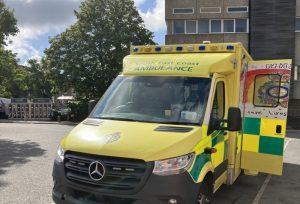
Image: South East Coast Ambulance vehicle example. (Credit: Emily Dalton/LDRS)


Would members of Epsom’s H band stump up?

Jacob-jordaens-a-rich-man-giving-alms-to-a-poor-family

People living in homes in the top council band will be asked to help the community  after plans to ask Band H homeowners to voluntarily pay into a council-run charity were approved. Waverley Borough Council’s executive committee launched the drive in the hope of encouraging people to support community projects.


Though a “voluntary tax” is a contradiction in terms, is it a good idea for Epsom and Ewell Borough Council? Plenty of H band properties in the Borough and plenty of urgent causes for the Council to support locally? Let us know your views. Epsom and Ewell Times.


The Voluntary Council Tax Initiative is based on a similar scheme running in Westminster Council which brings in an additional £300,000 each year to the London borough. Council’s have to provide certain services by law but community projects such as leisure centres, parks, mobility buses and homeless schemes are considered to fall outside that bracket and are under increased pressure from budget cutbacks.

Waverley Borough Council hopes the new voluntary scheme will help save deeply important resident services and will now ask Band H rate payers first, if they back the idea, and second, for input into which community groups to support. The money, the council made clear, is not for potholes or street lighting.

Councillor Tony Fairclough, deputy leader of the council, said that Westminster talked about support for the homeless and that any money Waverley raised would likely follow suit. He added: “The first and most important thing is that this will be a voluntary scheme and indeed that is one of the key points of the consultation.

“It will invite residents of Band H properties to make a voluntary contribution to local projects or the provision of local services. We will consult with the residents of those Band H properties to ascertain whether they are minded to support this scheme and assuming that they are, which type of projects or services should be supported by the revenues generated from it.

“This is a concept that has proved to be very successful in Westminster and in many ways, in my opinion, it actually addresses a slight flaw in government policy, namely that council tax bands are probably a bit too limited. Going out and speaking to Band H homeowners, this is an ideal opportunity for us to, on a voluntary basis, secure revenue for the sort of projects that this council is minded to do.”

The smallest homes, those in Band A, pay about £1,500 a year in council tax, while those in the very largest homes (Band H) pay between £4,500 to £4,900. The criteria was set in 1991 and has not been updated since, leading to some to criticise the system as being regressive in nature. Councillors during the meeting on Wednesday, September 3 suggested the voluntary contribution could help redress any imbalance.

Westminster has used the money to fund youth services, tackling rough sleeping and helping those who were lonely and isolated, Cllr Liz Townsend, portfolio holder for planning said. She added: “We’re all hearing about the black hole in Government, the £22billion black hole, so we are fairly pessimistic about the amount of money that local government perhaps will attract from central government. So we do have to be innovative in the ways we raise additional funds for discretionary services.”

Cllr Kika Mirylees said: “People must realise that if they are putting this money in, it’s not going to go to potholes and things like that. It will go to the benefit of the community. It’s not going to be there for your trees or hedges to be trimmed. It’s really there to benefit people who are in need of support and it’s much more to do with homelessness, because it would be nice for the people to have a home who don’t have one.”

Image: Jacob Jordaens – Rich man giving to the poor.


Walking the talk on Epsom Downs

Group walking n Epsom Downs

On 10th September, Epsom & Ewell Borough Council hosted a Walk & Talk event at Epsom Downs Racecourse to mark World Suicide Prevention Day. Over 65 people, including residents and representatives from voluntary and statutory organisations, joined this insightful, moving and inspirational event, developed and delivered as part of the council’s Suicide Prevention Action Plan, produced in January 2024.

Chris Waller, founder of We Power On, led the walk around Epsom Downs. Dale Millar MBE from the Samaritans opened the second part of the evening talking about skills used in conversation and the impactful nature that this can have. Joe Stroud from End Stigma Surrey talked about the negative impact that silence can have and how we, as a community, can stand together to break the chains of stigma around mental health. And finally, Chris shared his own experiences including the importance of being able to talk openly. Cllr Clive Woodbridge, the Chair of the Council’s Community and Wellbeing Committee, also joined him to discuss his journey from crisis to hope.

Local scribe, Annalees Lim, designed boards and captured key messages at the event. These boards will be shown at locations around the borough, starting at the Epsom Downs Racecourse and finishing at the Epsom Picturehouse around 10th October to coincide with Mental Health Awareness Day. More information to follow.

Councillor Clive Woodbridge, Chair of the Community and Wellbeing Committee said:“I’m proud that through our Suicide Prevention Action Plan, we’ve been able to provide a platform for residents and organisations to come together and have conversations about mental health and suicide, and also raise awareness of where support and resources can be found for those suffering from mental health issues or directly impacted by the loss of someone to suicide.

A huge thank you to We Power On, Epsom Downs Racecourse, End Stigma Surrey, the Samaritans and to the scribe who captured messages at the event. Thanks also to everyone who volunteered their time at the event. Without the support of all the volunteers and supporting organisations, this event would not have been possible. We look forward to continuing building on these relationships for the benefit of those who need our help the most.

As Chris himself said, “there is hope, and there is help out there”.

Funding was allocated by the council from the UK Shared Prosperity Fund to We Power On to help residents access support in the borough. Chris, founder of the organisation, led the walk for adults aged 18 and above.

For more information on some of the mental health support and resources available across Epsom & Ewell – https://www.epsom-ewell.gov.uk/resources-support.


Epsom residents score double-century

Evelyn (left) and Val (right) both enjoyed their birthday's.

Two residents at Linden House Care Home in Epsom have celebrated their 100th birthdays surrounded by fellow residents, relatives, and the dedicated staff at the Surrey-based home.

Edith Valerie Griffiths, known as Val, and Evelyn Houseman marked their milestones with a small but special get together with friends and family. Val and Evelyn, who have both lived rich and active lives, were delighted to share their landmark birthdays with those closest to them.

Val, who was born in Richmond, Surrey, experienced a childhood of frequent moves due to her father’s work. Despite the disruptions, Val developed a passion for sports, excelling in tennis, table tennis, ice skating, and skiing. During World War II, she was evacuated to Berkhamsted but returned to London after a year. Val married at the age of 33, becoming a mother to three boys, and is now also a grandmother of three.

Evelyn, a lifelong resident of Epsom, is renowned for her knitting and love of fashion. Having worked as a seamstress, she takes pride in the knitted jumpers she still wears today. Evelyn has always been passionate about music and dance, and she never misses a chance to be the first on the dance floor when Linden House hosts live entertainment.

Maintaining a healthy diet and drinking very little alcohol has helped Val live a long and happy life. Val’s family believes that moderation has been key throughout her life but also acknowledge that good genes have played a significant role in her longevity.

Josephine Gbadamosi, manager of Linden House said: “Celebrating Val and Evelyn’s 100th birthdays has been a wonderful experience for everyone at Linden House.

“These incredible women have lived rich, full lives, and their stories continue to inspire us all. It’s a privilege to have them as part of our community, and we look forward to creating many more happy memories together.”

Linden House, located in Epsom, Surrey, is rated ‘Good’ by the CQC, with an ‘Outstanding’ rating for its well-led category. Part of Wren Retirement Living, Linden House is managed by Healthcare Management Solutions, committed to providing high-quality care in a supportive and engaging environment.


Surrey scientists invite children to reach for the stars 

Child with space telescope

Children need to dream big and reach for the stars to become the country’s future space engineers and budding astronauts, say the organisers of Guildford’s World Space Week High Street Takeover. 

Scientists from the University of Surrey and the Institute of Physics are encouraging young people, who may one day want to build the rockets and technology that make their way to space, to join them at Guildford High Street and Tunsgate Quarter, all day on Saturday, 5 October. 

Event-goers will have the chance to get up close and personal with a miniature version of the Mars Rover and find out how it works on Mars; thanks to the Observatory Science Centre, there will be a state-of-the-art pop-up planetarium. Researchers from Surrey will be on hand to showcase the range of fascinating space-based work taking place at the University, and employers from the local space sector will be on hand to answer any questions that young people may have about working in the field. 

Professor Adam Amara, Head of the School of Mathematics and Physics at the University of Surrey, who is also an astrophysicist, said: 

“Our primary goal as educators is to inspire people – and that is why our University is delighted to once again host this event with our partners from the Institute of Physics. 

“The space sector in our region is a truly exciting, forward-thinking place and the goal of events like this is to ensure that the sector has a pipeline of skilled young people who dream big and reach for the stars.” 

For more information on other activities happening at the World Space Week High Street Takeover, visit our website.

Image: credit: Grant Pritchard / University of Surrey


UCA bring Austen character into 21st century

Lizzy-Bennet-avatar-final-camera-view-with-post-process-effects-Image-courtesy-of-UCA-and-StarPal

Fans of Jane Austen’s Pride and Prejudice will finally get the chance to have a conversation with their literary hero when speaking with the world-first Elizabeth Bennet avatar – Lizzy.

Created by StarPal in collaboration with University for the Creative Arts (UCA), the avatar has been developed to mirror the human qualities of Austen’s character as detailed in the novel, such as empathy and humour. Her conversations, which fans will have with her face-to-avatar, will evolve, giving each person who talks to Lizzy a unique experience.

How does Lizzy feel about being a world-first? She said: “It is quite an interesting notion indeed – I must say being Elizabeth Bennet in a world far removed from my own time is an unexpected but intriguing experience. It allows me to share the intricacies of our society and my life with new audiences.”

Following consultation and guidance from Jane Austen’s House in Hampshire, Lizzy’s knowledge bank has been curated from a selection of novels, manuscripts and period-accurate information.

Lizzy is set within a Regency-style background. Her dress and hair have been designed and created by students from the Games Arts and Digital Fashion courses at UCA, drawing on fashion templates from the period.

Sophy Smith, Director of Games and Creative Technology at UCA and the originator of the project, added: “It is so exciting to finally be able to lift Elizabeth Bennet off the page and to be able to have real-time conversations with her. To be able to cross time in this way is joyful – you get a real sense of speaking directly to someone from the 18th century. And she has such a strong personality! Imagine – you can now have Elizabeth Bennet as your friend, to chat with throughout the day and offer you advice.

“This technology has the potential to transform experiences within both the museum and heritage, as well the education sector. Visitors to Jane Austen’s House, will have the opportunity to not only experience the renowned author’s home but also engage directly with one of her most famous characters. And think about how it could transform learning – instead of only having text-based revision guides, students can now learn about literature by speaking directly to the characters.”

Director of Jane Austen’s House, Lizzie Dunford, said: “It has been fascinating to watch this project develop, and to witness the innovative staff and students at UCA developing these new technologies, and new ways of accessing literary and cultural heritage.”

Tanguy Dewavrin, the COO of StarPal, the company which built the avatar, commented Lizzy is continually surprising them: “It’s amazing how real she is – she’s just so impressive.”

Anya Haber, an MA Digital Fashion student who created the dress in 3D, added: “This project brought the ideation into the digital, but historical garments can be tricky to create accurately, so there was a mix of history and modernity. It was exciting bringing to life the cut of dress, accessories, and embroideries – all inspired by historical drawings and descriptions. It showed how useful technology can be in a historical setting, letting fans engage with fictional characters…and that’s just the beginning.”

Fans will have the chance to interact with Lizzy if they visit the Learning Centre at Jane Austen’s House between September and mid-December – included with House entry.


A uniform approach to Epsom’s schools

Girls in school uniforms

Epsom and Ewell’s new M.P., Helen Maguire, has called on local schools to address the growing concern over costly school uniforms, reaching out to 15 headteachers on 5th September. In her letter, Maguire urged schools to avoid placing unnecessary financial pressure on families by requiring expensive branded uniforms and PE kits, reflecting concerns raised by parents in her constituency.

Maguire highlighted the financial burden these branded items can create, stating, “It is important to consider if more costly branded kits are necessary.” She emphasised that schools should review their uniform policies, particularly in light of the current cost of living crisis.

Schools are already required to follow statutory guidelines on uniform policy, ensuring that the cost of uniforms does not become a barrier for parents when choosing schools. According to this guidance, schools must ensure uniforms are affordable, minimise the use of branded items, attempt to avoid restrictive single-supplier contracts, and offer second-hand uniforms at reduced prices.

In her communication with headteachers in the local area, Maguire pointed to this statutory guidance and suggested that generic, unbranded items from low-cost retailers should be allowed in school uniform policy. 

The available data on the average cost of school uniforms, however, remains up for debate. The Schoolwear Association claims the average cost of compulsory secondary school uniforms and sportswear is £101.19 per pupil. In contrast, research by The Children’s Society suggests that parents spend an average of £422 a year on secondary school uniforms.

An official branded school sports polo top will typically be in the price range of £10 and £15, whereas a pack of two unbranded sports polo shirts from a lower-cost retailer like ASDA can be purchased for around £4-6. In this case, Maguire’s suggestion to allow generic, unbranded clothing could offer struggling families much-needed relief amidst a cost of living crisis.

However, there are differing views on the role of uniforms in schools, and Maguire’s approach seems to forget the findings of some of the great minds of Sociology. For instance, Stanley Cohen made the argument that reducing visible differences in dress can help lower social tensions among young people. Renowned sociologist, Émile Durkheim believed that uniforms helped in fostering a sense of community and solidarity, while David Brunsma argued that consistent dress codes promote social equality and reduce status competition based on clothing.

While it’s entirely reasonable to want to relieve struggling families of unnecessary financial burdens, it’s also important to recognise the value of maintaining uniformity in school dress. The potential impact on children’s welfare in a school environment ought to be considered when considering such changes.

The Epsom & Ewell Times reached out to multiple schools in the local area for comments on Maguire’s stance on the cost of school uniforms. As of now there has been no comments, we await a response to these three questions: 

  1. How are you addressing concerns around the cost of school uniforms and PE kits for families?
  2. Are there any plans to introduce or expand the availability of unbranded or second-hand options for your pupils?
  3. What measures are in place to ensure that uniform costs do not become a barrier for students attending your school?

As the conversation continues, it remains to be seen whether local schools will adapt their uniform policies to ease the financial strain on families, while still maintaining the sense of unity, equality and school pride that branded uniforms are said to have.

Image: Kindermel under Creative Commons Attribution-Share Alike 4.0 International license.


Rosebery Park Public Party – Sat 21st Sept.

Rotary is a global Club of like-minded individuals, friends, leaders, and problem-solvers founded in 1905 in Chicago in the United States, working to give something back to the community they live in. Epsom Rotary Club is celebrating one hundred years of working with the Community in Epsom on 21st September in Rosebery Park. This will be a fun filled day for all the family with market stalls, rides for children, entertainment, and food stands. It promises to be a day of family fun and entertainment. [See event entry HERE]

Rotary began its association with the people of Epsom in June 1924 with an inaugural lunch held by local businessmen marking the start of the Rotary Club of Epsom. Early Community involvement provided a member representative on the Epsom Cottage Hospital Committee and supporting street collections for the hospital fund. Very quickly the club provided support for disabled service men at the Star and Garter home and the Club began providing Christmas hampers to local distressed elderly.

The Armed Forces service connection was restored recently in 2020 when Surrey County Council and Royal British Legion Surrey started a monthly hub for military veterans who were potentially isolated and lonely. This is organised by Epsom Rotary and RBL Epsom and Ewell in partnership, with two offshoot activity groups, archery and model making. Over thirty members of various ages, men and women have formed small friendship / support groups of their own and are offered coach outings such as to the D Day Museum Portsmouth. This year we have organised trips to the Poppy Factory in Richmond, and the Christmas lights in the West End.

Veterans’ Hub members and supporters

Into the late 1920s/30s Epsom Rotary worked locally as Rotary members played an active role in restarting the Epsom Chamber of Commerce and nationally providing cash and clothing for the hunger marches during the General Strike in 1926. The Club continued to expand its involvement locally during the second World War by supporting Armed Forces personnel at the anti-aircraft gun sites at Ashtead and Headley and the Canadian soldier’s military hospital at West Park.

Rotarian Elves welcome the arrival of Father Christmas to Epsom

In the Community the Club was instrumental in starting the Annual Careers exhibition in 1957 and soon after visits to Wisley Gardens were organised for the elderly in the community. In 1957 Epsom Rotary set up a Christmas tree by the clocktower in the town Centre which was an annual event for many years. During the 1970s Thomas the tank engine arrived as part of the Christmas Street collections. The train was constructed by apprentices at Epsom Coaches and remains the centre piece of Christmas collections to this day focussed on Epsom and Langley Vale, now renamed as Tilly the train. These are always joyous occasions with great excitement amongst both children and parents as the train approaches.

Recent years

In 2012 in conjunction with Epsom and Ewell Borough Council the Rotary clubs of Epsom and Ewell organised a Community Fun day at Hook Road arena with a fun fair, pitches for local artisans and charities. This proved highly successful and continued until 2019 until the pandemic.

The Centenary Party in the Park in Rosebery Park is a natural successor to this with the added element that it is a celebration of one hundred years of Epsom Rotary serving the Community. In recent years, the Club has developed more “service related” projects which involves members giving more of their time to work on Community projects. This approach has always been part of the Rotary ethos. Examples include supporting the Veterans Hub highlighted earlier, leasing an allotment from the local Council with a small group of resolute members growing an increasing volume of fruit and vegetables which are donated over the summer months to the Pantry, the Good Company/Food Bank shop in South Street in Epsom.

A current activity is providing support/volunteers to work on an Epsom BID led project called Family Fridays that provides family activities in the town centre for young families in the school summer holidays.
Epsom Rotary continues to prioritise support for young people with regional competitions for Young Musicians, Young Chef and French speaking competitions.

International

The first international visit undertaken by the Club was to the Rotary Club of Rheims in France in 1937 and the Club now has an association with the Rotary Club of Chantilly in France which started in the 1990s and there have been several visits in both directions. This ties in with the town twinning of Epsom and Chantilly and reinforces our shared involvement with the horse racing industry.

The Club has been involved in several international projects with the current focus being AMECA, a small charity in Malawi providing medical services to the local community in a rural setting. The charity has recently built a maternity unit in an area in great need of support for women and children. Secondly, we have supported the Zimbabwe Victims Support Fund for the last five years, which is a small charity supporting dispossessed families, mainly women and children in Zimbabwe.

The future

As we have seen Rotary continues to evolve whilst reacting to the needs in the local community. We face many challenges, particularly attracting new members from the diverse spread of residents locally the Club needs to continue to thrive. There is less emphasis on procedure and formality which potentially enables a wider cross-section of the local community to become involved.

Rotary is a unique organisation which like no other, gives opportunities to become involved in education, community support, training, international activities, visits to other countries, social welfare, and hands-on experience. The challenge is to ensure that our Club can adapt to whatever the future holds yet retain our
essential purpose of ‘service above self.’

Summary

Throughout the Clubs “100 years in Epsom”, it has actively looked for opportunities to take part in local charity projects. One of the threads which runs through the Club’s history is its contribution to the local community and its close relationship with the Borough Council. From the beginning its membership has included ex-mayors, councillors, and senior officers of the local authority. Over the past one hundred years it has participated in civic ceremonies, attended the annual Mayor’s reception and nowadays the incoming mayor is an honorary member of the Club.

Jim Munns – Joint President Epsom Rotary Club


If you wish to join Epsom Rotary you may apply HERE


Government Minister immerses herself in NESCOT

Baroness Jacqui Smith, the Department for Education’s Minister of State for Skills road-testing the vehicle simulator in Nescot’s new immersive learning space.

Staff and students were delighted to host Baroness Jacqui Smith, the Department for Education’s Minister of State for Skills, Apprenticeships and Higher Education on her visit to Nescot (North East Surrey College of Technology) in Ewell Epsom on Tuesday, 3 September.

Nescot Principal and CEO, Julie Kapsalis and Chris Muller, Chair of Governors, welcomed the Minister and were proud to showcase the college’s state-of-the-art facilities, courses, study programmes and skills provision. The Minister had a tour of the Skills Park that included meeting students, apprentices, staff and the college’s employer partners. 

Upon arrival, the Minister met Creative Media student, Charlie who won gold at WorldSkills UK 2023, the college’s new alpacas, Dolly and Florence (from the on-site farm) and Rhubarb, the assistance dog. 

The Minister was introduced to students studying on Nescot’s new courses in Construction Skills for Highway Maintenance delivered in partnership with leading highway maintenance contractor, Ringway. She observed demonstrations from students who were learning to lay concrete slabs and drive virtual diggers.

Supporting the Government’s ambition to grow apprenticeships, the Minister met apprentices from the construction industry, from Ridgeback, Premier Heating and Watkins Cole. She heard how Nescot has supported many of the students through progression pathways and finding employers. She was particularly interested to hear how Nescot is working to recruit more women into the construction trades through role models and working with employers including Wates.

The Minister was shown the college’s new state-of-the-art immersive learning spaces with virtual reality driving simulators and a variety of artificial intelligence tools offering students an innovative learning experience. The Minister also met Pepper, the humanoid and programmable robot from The Sussex and Surrey Institute of Technology (IoT) at Nescot. The IoT offers specialist courses and apprenticeships available in digital technologies to equip learners with the relevant skills in an increasingly tech reliant world. 

Julie Kapsalis, Principal and CEO along with Nescot’s senior leaders had the opportunity to speak to the Minister about some of the college’s challenges and successes. She said, “We are thrilled and honoured that the Minister chose to visit Nescot at the start of the academic year. The FE sector plays a critical role in not just the training and education of young people and adults, but it is at the forefront of enabling social mobility and meeting the local skills and employment needs.”

Essential to Nescot’s success are the college’s relationships with businesses and the community. Ringway, the Animal and Plant Health Agency (APHA), Epsom & Ewell Borough Council, Surrey Chambers and Wates had the opportunity to meet with the Minister to talk about their skills needs and work with the college. 

Lewis Bridgman, Service Director, Ringway said,”The collaboration between Ringway and Nescot is a shining example of how local partnerships can foster economic growth and community development in Surrey. By investing in the next generation of engineers, the community is setting a strong foundation for long-term prosperity within the delivery of the Surrey Highways service. This approach not only benefits current residents but also ensures that the future workforce is well-equipped to maintain and enhance the region’s infrastructure, contributing to a robust and sustainable economy.” 

Julie added, “On behalf of all our staff and students, I thank the Minister for taking the time out of her busy schedule to visit us. We hope our wonderful staff and students (and animals) have left a lasting impression. I would also like to thank our employer partners for their ongoing support and collaboration.” 

The visit concluded with plastering student CJ presenting the Minister with a sculpture of a dog made by her department. 

Image: Baroness Jacqui Smith, the Department for Education’s Minister of State for Skills road-testing the vehicle simulator in Nescot’s new immersive learning space.


Trust the public to check our rivers

Hogsmill

The Big River Watch is returning. From 6th to 12th September, the South East Rivers Trust is inviting people across the South East to join the only UK and Ireland-wide citizen science survey of river health, which has attracted more than 9,000 participants in its first year. 

Anyone can join the Big River Watch by downloading the free, easy-to-use app and spending 15 minutes by their local river, answering the simple survey questions. The results will be made available on an interactive dashboard and will help drive action to improve rivers both on-the-ground and via campaigns and political advocacy. 

We want to build a complete picture of river health, and topics covered include the plants and wildlife people can see, as well as visible signs of pollution or observations on flow levels. Some of the rivers and chalk streams across South East England provide habitats for rare species such as Beavers, Otters, Nightingales, Turtle Doves, Salmon and Brown Trout. It’s essential that we try and restore healthy ecosystems for these rare species and local communities by carefully monitoring the health of the waterways across the region.

The South East Rivers Trust is running a series of volunteer events across the South East throughout September, including river clean-ups, gravel seeding and planting, where local communities can get involved and help restore their river: www.southeastriverstrust.org/events

Bella Davies, CEO at The South East Rivers Trust, said: “People across the UK and Ireland are becoming more and more interested in the health of their rivers, using their voices – and their votes – to show they care. With the Big River Watch, anyone can get involved in monitoring signs of pollution, spotting wildlife, and sharing their connection with their local river. This isn’t just important for us gathering data but is also empowering for people who are demanding better for our rivers.” 

Tessa Wardley, Director of Communication & Advocacy at The Rivers Trust, said: “We know that no rivers in England are in good overall health, but we also know that environmental monitoring is currently very sparse. Having a large set of data from one weekend will help our experts to understand what’s going on in our rivers, and what needs to be done to make them cleaner, healthier, and part of a thriving wider environment. As well as learning where pollution and wildlife are spotted, we also want to know how spending time near rivers affects people’s wellbeing, so I’d encourage anyone and everyone to spend some time by their river and make their voice heard.” 

  • The survey includes questions on river wildlife, signs of pollution, and health and wellbeing 
  • Results will be updated in near-real time on the Big River Watch Data Dashboard 
  • More than 9,000 people have now taken part in the Big River Watch, 59% of those being new to citizen science

Related reports:

Chalking up a victory for the Hogsmill

Voles let loose on the Hogsmill

Ewell’s wetlands to be celebrated on an open day

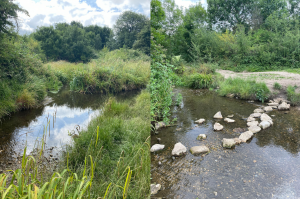
Image: Views of the Hogsmill River that runs through Epsom and Ewell


Phil Bradley of Ewell was a fair man

Philip Bradley seated in an Orton & Spooner 'Whale Car' at Butlins Ltd, Florence Park, Oxford, 28 Aug 1943 (Philip Bradley Collection, Surrey History Centre reference 6790/4/8).

World Fun Fair Month aims to unite Showmen from around the world to celebrate all aspects of fairgrounds, and the joy they bring to communities everywhere, find out more with the Future4Fairgrounds website. Don’t forget to check out our social media as we’ll have more posts running throughout September to celebrate World Fun Fair Month.

Fairs have been part of Surrey’s history for centuries and the origins of many can be traced back to charters and privileges granted in medieval times. Surrey History Centre holds a wealth of sources for fairground history including photographs, illustrations, and published works. Without a doubt, our key fairground collection is that of Fairground enthusiast, Philip Bradley of Ewell, who spent his life compiling a written and photographic record of every fair he visited from 1936 until his death in 1999. He amassed 30,000 photographs of fairs across the country and was highly regarded by showmen and fairground people. His collection provides an invaluable history of twentieth century fairgrounds (Surrey History Centre reference 6790). You can find out more about Philip Bradley and his archive on our Exploring Surrey’s Past website.

This Bradley photograph shows features the glamorous and daring ‘Wall of Death’ display riders Patsy Kelly, Bobbie Hall and Gene Dare, known as “The Bombshells”, on their motorbike at Guildford Fair, 6th May 1939, just a couple of months before the start of the Second World War (Philip Bradley Collection, Surrey History Centre reference 6790/4/2).

Fairs during Wartime

During wartime, fairs were affected by blackout restrictions and limited supplies of food, fuel and ‘swag’. Coconut shies became rare as coconuts took up valuable shipping space and rifle ranges were deprived of ammunition. Music was also muted in case it drowned out the air raid alert. Many showmen’s engines were used for demolition work clearing debris from blitzed cities and demolishing unstable buildings, especially in areas of severe bomb damage in Merseyside, Manchester and London. Find out more about fairs during wartime.

Surrey History Centre

Image: Philip Bradley seated in an Orton & Spooner ‘Whale Car’ at Butlins Ltd, Florence Park, Oxford, 28 Aug 1943 (Philip Bradley Collection, Surrey History Centre reference 6790/4/8).

Heritage open days in Surrey
Heritage open days take place between 6 to 15 September, and there’s over 200 events in Surrey to choose from. Why not visit The Grange Centre on 13 September, where Archaeologists from Surrey County Archaeological Unit will be opening a testpit in the grounds of the Centre.

09/10/2024 17:30 – 18:45      From Patient to Professor

Online Zoom Talk

Dan Jacobson was a teenage inpatient at Long Grove Psychiatric Hospital for four months in the years just before its closure in the 1990s. This talk will explore the geography and history of the Epsom Cluster of psychiatric hospitals, weaving together his personal and professional journey – from a patient to becoming a professor. What was it like on the wards of the hospital? Dan is going to discuss negotiation and treatment for mental illness. These experiences will be used to reflect on his ongoing research into the changes to the landscape within and surrounding the former hospital sites. 

Dan Jacobson, PhD, is an Associate Professor of Geography at the University of Calgary, Canada.

Cost: £6
96 spaces available – book this event