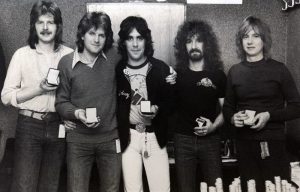
Epsom General Hospital is grateful for the laser-like focus of snooker legend Jimmy White. The 63-year-old star of the green baize took time out from his busy schedule recently to present a £62,000 camera to consultant ophthalmologist Akanksha Bagch at the Eye Unit, on behalf of Epsom Medical Equipment Fund (EMEF).
The Zeiss Clarus 50 is a valuable asset in diagnosis. “It’s a high-resolution, ultra-widefield fundus camera offering true colour images of the retina and optic discs among other excellent features,” says Mr Bagch, “giving a detailed view from the macula to the periphery of the retina allowing clinicians to diagnose and manage multiple eye diseases including glaucoma and retina conditions such as diabetic retinopathy.
“With the increasing prevalence of glaucoma, this camera will play an integral role in running a diagnostic hub allowing a greater throughput of patients per clinic and reducing the already prolonged waiting times in the NHS, thus allowing for safer delivery of eye services.”
EMEF founder and organiser Bess Harding says: “I am so grateful to Jimmy — who lives locally — for coming to make the presentation. We were delighted to be able to purchase the camera which will play an important role in preventing blindness. This would not have been possible without the support of the community for our fund-raising.”
Forty-six years on from its formation and with more than £4 million already handed over, the fund’s work carries on. Other equipment is always required. If you would like to help, donations can be made to EMEF at 32 Tealing Drive, Ewell, Surrey, KT19 0JS or to NatWest Account No. 66236924 Sort Code 60-08-01.
Epsom & Ewell Borough Council celebrates its first Young Legends graduates
4 January 2026
Epsom & Ewell Borough Council proudly marked the completion of its first Young Legends programme with a celebration event for participants and their families.
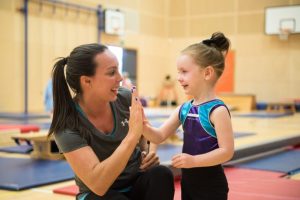
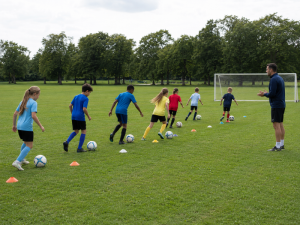
Over the last nine weeks, over 80 children aged 9-11 enjoyed a range of sports and creative activities as part of the council’s Health & Wellbeing Strategy, that aims to improve the mental and emotional wellbeing of all residents. The programme supports the strategy by helping children and young people be more active, learn new skills and build connections—key to improving mental and emotional wellbeing.
Children from across the borough took part in Arts & Crafts, Basketball, Girls Rugby, Judo, Musical Theatre and Yoga. The programme was delivered by trusted and skilled coaches from the Body & Brain, Cadgers Basketball Club, Creative Minds, Laines Theatre Arts, Sutton and Epsom Rugby Club, and Westcroft Judo Nork at no cost to the children or their families.
The graduation was a celebration of the programme and included a performance by children who took part in the programme’s Musical Theatre sessions, and an arts and crafts activity. The Council’s Chief Executive, Jackie King, Councillor Clive Woodbridge and Councillor Bernice Froud joined families and coaches at the event.
Hayley, parent of an Epsom & Ewell Young Legends participant said: “The Young Legends Musical Theatre course gave my son an opportunity to experience performance arts in a way he might not otherwise have had. He discovered a passion for performing and the support and encouragement he received gave him the confidence to overcome any initial fears and showcase an amazing talent we were unaware he had!”
Councillor Clive Woodbridge, Chair of the Community & Wellbeing Committee commented: “Our Epsom & Ewell Young Legends programme has been a fantastic experience! We focused on children aged 9–11 to support their transition to secondary school, which we know can be a particularly challenging time, and we’re delighted to have been able to give them the chance to take part in a variety of fun activities—helping to build their confidence as they navigate this key stage.
Parents have shared some wonderful feedback. One discovered their child has a real passion for singing, whilst another said yoga sessions have helped improve their child’s emotional wellbeing.
A huge thank you to everyone who made this programme possible: the coaches and practitioners who gave their time, and our dedicated council officers who worked hard to deliver a programme that supports children during this key stage.
We’re proud to have supported local children and hope they feel inspired to keep exploring any opportunity that comes their way —long after the programme ends.”
About the EEBC Health and Wellbeing Strategy 2025-2028
The strategy is designed to support all residents, with particular attention given to children and young people, older adults, individuals whose health is affected by broader social and economic factors and those whose personal circumstances may disproportionately increase their vulnerability to poor health and wellbeing. The strategy also includes specific references to those who are disproportionately impacted by isolation, disability, digital exclusion and people with long-term health conditions. (Public Pack) Agenda Document for Community and Wellbeing Committee, 08/07/2025 19:30
About Body & Brain, Epsom
Body & Brain Epsom Centre offers classes in deep physical, emotional and spiritual healing through meditative movement, deep stretching and shaking exercises. The practice originates from Korea where it has a rich 5,000 year old history of holistic healing and mind-body practices. Devoted to helping individuals better manage and utilize their brains, this beautiful discipline is suitable for people of all ages and levels, and it is the perfect way to increase your physical activity and gain a greater sense of peace. Body & Brain | EPSOM | Class Schedule
About Cadgers Basketball Club
Cagers Basketball Club is committed to fostering a love for the game and providing competitive basketball for players of all ages and abilities. Their core values include hard work, respect, discipline, and enjoyment. Through teaching correct fundamentals and improving basketball knowledge and skills, we prepare players for the next level, emphasising individual success within a team-oriented framework. Epsom and Ewell Families » Cagers Basketball Club
About Creative Minds
Founded in November 2012, Creative Minds has been delivering accessible and empowering art sessions for over a decade, earning a reputation as a highly trusted and respected service provider across the UK. Their Creative Minds (CM) Artists bring creativity, expression, and human connection to every session they deliver. We work with a wide variety of venues, including care homes, schools, learning disability services, day centres, and many more, ensuring art is accessible to people of all ages and abilities. About Us – Creative Minds – Accessible Art Sessions For Everyone!
About Laines Theatre Arts
Since its inception in 1962, Laine Theatre Arts has been dedicated to the fostering of creative talent. Among their alumni are some of the most highly regarded performers, teachers, choreographers, and director-choreographers in the world. The College’s outstanding reputation in the performing arts has been built on its unique identity as a training provider, exceptional employment records, and the company values instilled in its students which are noted, time and again by employers. Those familiar with Laine Theatre Arts agree unanimously that it is a unique environment. Who we are – Laine Theatre Arts
About Sutton and Epsom Rugby Club
Founded in 1881, Sutton & Epsom is one of the oldest active Rugby Clubs in England with a proud and magnificent history. We first played against Saracens as far back as 1883/84, as one of their very early opponents, and in 1901 beat Stade Francais on their home turf.
Today the Club is one of the largest amateur Rugby Clubs in the Country and from its main ground in Rugby Lane, Cheam, remains run by enthusiasts for enthusiasts. They have over 30 teams with 1,200 current and former playing members, plus 1,800 social members. suttonrugby.co.uk
About Westcroft Judo Nork
Their martial arts store offers an extensive selection of high-quality gear and apparel for practitioners of all levels. With products sourced from reputable brands, they ensure that both beginners and seasoned martial artists find the equipment they need to excel in their training. Westcroft Judo Nork
Epsom Christmas carols of two colleges and a council
4 January 2026
In the first and a unique festive venture for the Borough of Epsom Ewell a special carol service was held in the Chapel of St Luke, Epsom College this evening. Organised on the joint initiatives of Julie Kapsalis (CEO NESCOT), Jackie King (CEO Epsom and Ewell Borough Council) and Mark Lascelles (Head of Epsom College).
The event brought local choirs together including NESCOT’s own choir, singers from Epsom College and the local Ukrainian choir Renaissance.
Solos were sung by Evie Kingsley, Sienna-Leigh Campbell, Benedict Raper and Caleb Mangatal-Francis.
Julie Kapasalis read from the Gospel of St Matthew 2: 1-12 and Jackie King recited her own reading “The Heart of Christmas”, reprinted below.
The service was officiated with humour and aplomb by The Reverend Canon Andrew Haviland.
Epsom Racecourse supported the service.
And no less a figure than the Worshipful Mayor of Epsom and Ewell, Cllr Robert Leach (RA Nonsuch) accompanied the congregation on the magnificent Chapel organ and played the processional at the end J.S. Bach’s Prelude and Fugue in F from his book of 8 preludes and fugues.
The carol service was an uplifting beginning for many to the festive season and promises have been made to make it a regular feature in the Borough in future years.
There are so many ways to tell the story of Christmas. Some begin with angels, some with gifts, some with the hush of falling snow. But however the story starts, it always finds its way to one place- the warmth we share when we come together.
Christmas is found in the quiet moments: in the smell of something baking, the sound of wrapping paper being carefully – or not so carefully – torn, in the giggles of children who can’t quite sleep, and in the gentle nod of someone who’s seen many Christmases before.
It’s in the messages sent to far-off friends, the unexpected kindness from a neighbour, the extra chair pulled up to the table, and the thought that maybe – just maybe – there is more that connects us than divides us.
And in this season of gathering and giving. we also pause for a moment to hold in our hearts those who are not with us tonight- loved ones we remember with tenderness, and friends or family who are far away.
We think of Christmases past – of laughter spilling across the table, carols sung a little off-key, hands held during snowy walks, stories told beside the glow of the tree. Those moments, though now memories, are treasures we carry with us – poignant reminders of love shared, and joyful times that shaped who we are. Their voices may have quietened, but their light has not dimmed. It lives in our hearts, woven into every song, every smile, every candle we light.
Distance and time may keep us apart, and for some, separation comes through hardship or conflict. Tonight, we think of them too – those far from home, those seeking safety, those waiting for peace. May they feel the warmth of the world’s compassion and know that they are not forgotten.
For love is wonderfully stubborn; it travels in our thoughts, in our stories, and in the quiet spaces where we still feel their presence. Each memory, each name whispered with a smile, becomes part of the light that surrounds us now.
For some, Christmas means faith. For others, it means family, friendship, or the turning of the year. But for all of us, it can mean light- the light we share when we care, when we welcome, when we choose to hope.
So tonight, as the music rises and the candles glow, may we remember what truly makes this season shine: not the decorations or the presents, but the people- those beside us, those we miss, and those we have yet to meet.
Because the heart of Christmas is not found under a tree – it’s found in us, in every act of kindness, every hand extended, every loving thought that crosses the miles or the years.
For when we give, include, and love- we keep the heart of Christmas alive.
Jackie King
From Abramovich’s frozen wealth to Epsom’s Ashley Centre – support for Ukraine continues
4 January 2026
The Government has announced that £2.5 billion from the frozen proceeds of the sale of Chelsea Football Club by sanctioned Russian oligarch Roman Abramovich is to be directed towards humanitarian aid for Ukraine, following years of political and legal delay.
The money has been held in the UK since the forced sale of the football club in 2022, after Abramovich was sanctioned in the wake of Russia’s invasion of Ukraine. Ministers have now confirmed that the funds will be transferred to a foundation dedicated to humanitarian support for Ukraine, with legal action threatened if the process is not completed.
Helen Maguire, Liberal Democrat MP for Epsom and Ewell, welcomed the decision, describing it as “long-overdue action” and a step towards accountability. She said billions of pounds linked to sanctioned Russian oligarchs had remained frozen while Ukrainians continued to suffer the consequences of what she described as Putin’s illegal war, and that she would continue to press the Government to ensure the money reaches Ukraine swiftly.
While £2.5 billion is a significant sum, it represents only a small proportion of the overall cost of the war’s impact on Ukraine. According to the World Bank, the United Nations, the European Commission and the Ukrainian government, the estimated cost of recovery and reconstruction in Ukraine now stands at around $524 billion over the next decade. That figure includes widespread destruction of housing, hospitals, schools, energy infrastructure and transport networks, alongside the long-term costs of healthcare, rehabilitation, psychological trauma and landmine clearance.
Direct physical damage to infrastructure alone is estimated at more than $170 billion, while millions of civilians have been displaced and tens of thousands injured. The long-term health consequences of the war, including treatment for complex injuries and trauma, are expected to place a continuing burden on Ukraine’s public services for many years. Against that backdrop, the Abramovich funds amount to well under one per cent of the estimated total cost of rebuilding, though they could make a substantial difference to targeted humanitarian and medical programmes.
The announcement has renewed local focus on the role of Surrey Stands With Ukraine, a volunteer-run charity based in Epsom which has been providing humanitarian aid since the early weeks of the invasion. Operating under Harrop HR Missions Ltd, the group has sent more than 148 vanloads of aid to Ukraine and has supported both medical relief overseas and displaced Ukrainians in the UK. The charity has also been recognised in Parliament, with Helen Maguire MP praising its work in providing medical aid and rehabilitation support.
For nearly four years, Surrey Stands With Ukraine has maintained a highly visible permanent kiosk in the Ashley Centre near Waitrose, which volunteers describe as central to sustaining donations, public awareness and community engagement. The kiosk is due to close permanently on 1 January 2026 following a change in the Ashley Centre’s policy on charity fundraising.
Under the new arrangements, Surrey Stands With Ukraine has been selected as one of a small number of charities allowed to operate a branded market stall inside the centre for limited periods each month. From January 2026, the charity will operate a stall near the soon to open Primark on a restricted schedule, typically four days per month. Physical donations will continue to be accepted at the charity’s Ukraine Hub in Global House, accessed via the rear entrance to the Ashley Centre.
Surrey Stands With Ukraine will operate a fundraising and information stall inside the Ashley Centre on the following dates in 2026. The stall will be located near Primark.
January: Tuesday 6, Thursday 8, 15 and 22 February: Tuesday 3, Thursday 5, 19 and 26 March: Tuesday 3, Thursday 5, 19 and 26 April: Tuesday 7, Thursday 9, 16 and 30 May: Tuesday 5, Thursday 7, 14 and 21 June: Tuesday 2 and 16; Thursday 4 and 11 July: Tuesday 7, Thursday 9, 16 and 30 August: Tuesday 4, Thursday 6, 13 and 20 September: Tuesday 1, Thursday 3, 10 and 17 October: Tuesday 6, Thursday 8 and 15
Physical donations can also be made at the Surrey Stands With Ukraine Hub in Global House, accessed via the rear entrance of the Ashley Centre by pressing the “Ukraine Hub” buzzer.
The loss of a permanent stand is expected to reduce income by around £30,000 a year and significantly limit the collection of physical aid. A spokesperson for SSWU stated the daily presence allowed volunteers to build relationships with regular donors and served as a constant reminder of the ongoing humanitarian crisis in Ukraine.
The Ashley Centre provides Surrey Stands With Ukraine with a suite of rooms and storage space in Global House, Ashley Avenue. The premises also are home to the Epsom and Ewell Refugee Network and is known as the “Ukraine Hub”. Previously a retail unit facing the mall was used by SSWU until the unit was re-let commercially. The Ashley Centre has not responded to questions from the Epsom and Ewell Times about the decision to remove the permanent kiosk.
Surrey Stands With Ukraine thanks the Ashley Centre for its ongoing support and confirmed it will continue its work, stressing that the reduction in visibility makes public backing more important than ever. The charity says it is exploring alternative ways to maintain a visible presence in Epsom town centre and is encouraging residents to visit the new stall dates in the Ashley Centre and to continue donating through the Global House hub.
NATO Secretary General Jens Stoltenberg has repeatedly warned that Russia’s war against Ukraine is not an isolated conflict but a direct threat to the security of the whole of Europe, arguing that Moscow’s actions demonstrate a willingness to use military force to pursue imperial ambitions beyond its borders. Sustaining humanitarian support for Ukraine is essential in maintaining civilian morale, stressing that resilience among the Ukrainian population is a decisive factor in resisting aggression and deterring further expansionism by President Vladimir Putin.
The contrast between the scale of national and international funding announcements and the challenges faced by local charities has highlighted the continued reliance on community-level support to meet urgent humanitarian needs. While the release of frozen oligarch assets has been widely welcomed, organisations working on the ground say sustained public engagement remains essential as the war and its consequences continue.
Since the war began the 14th Ukraine Social and Music Evening will take place at the Epsom Methodist Church this Saturday 20th December. Helen Maguire MP will welcome guests and performers. See listing here for details.
Image: Abramovich – licensed HERE. Credit: IAN KINGTON / AFP / picturedesk.com. Ashley Centre entrance – Google Maps
A year in the life of Epsom’s Deputy Lieutenant Mary Zoeller
4 January 2026
From scout band concerts to royal visits, the past year has offered Epsom resident Mary Zoeller a front-row view of some of Surrey’s most inspiring community activity. Appointed a Deputy Lieutenant of Surrey in 2023,Mary Zoeller is now well into the rhythm of a role that quietly connects the Crown with everyday life across the county — celebrating voluntary service, youth achievement and civic endeavour.
Based in Epsom, where she has lived for 33 years, Mary Zoeller was asked to take on the role in part because of her long-standing involvement with the voluntary sector, particularly youth organisations. “I was honoured to be asked to support the Lord-Lieutenant as one of his Deputy Lieutenants,” she said. “My location of Epsom and my connections with the voluntary sector were some of the reasons I was approached.”
An ancient office with a modern purpose
The Lieutenancy is one of the oldest institutions in county life. The role of Lord-Lieutenant was created by King Henry VIII, originally to act as the Monarch’s personal representative and organise local defence. While the military function has long since disappeared, the modern Lieutenancy plays a vital civic role.
In Surrey, the Lord-Lieutenant — currently Michael More-Molyneux — represents the Sovereign at major events, supports Royal visits, promotes voluntary service and recognises achievement through honours and awards. He is supported by a team of Deputy Lieutenants (DLs), drawn from across the county to reflect Surrey’s diversity of place, background and experience.
Deputy Lieutenants deputise for the Lord-Lieutenant at engagements across Surrey and may be appointed for a fixed term, typically five years, or serve until the age of 75.
On the ground across Surrey
Over the past year, Mrs Zoeller has represented the Surrey Lieutenancy at a wide range of events, many focused on young people and volunteers.
Highlights have included attending the 1st Claygate Scout and Guide Band Concert, the Elmbridge Junior Citizen event, and a Chief Scout’s Gold Award presentation evening, where she met young people being recognised for exceptional commitment and leadership.
One particularly notable occasion saw her escort HRH The Duchess of Edinburgh during a visit to Brooklands Museum for an International Space Station live contact, linking local students with astronauts in orbit.
Reflecting on her experiences, Mary Zoeller said she has been repeatedly struck by the scale of voluntary effort across the county. “I have met volunteers who have astonished me with their commitment and passion for the organisations they represent,” she said.
Epsom connection
Although born in Bookham, Mary Zoeller has made Epsom her home for more than three decades and remains closely connected to the town’s community life. Her contribution has already been recognised locally, including being named one of Epsom & Ewell’s Coronation Champions in 2023.
Asked whether she wished to comment on questions of Surrey identity in the context of local government reorganisation, Mary Zoeller was clear that this would not be appropriate in her official capacity. “It would be my personal opinion and not that of the Surrey Lieutenancy,” she said.
As she enters another year as a Deputy Lieutenant, Mary Zoeller’s experience offers a glimpse into a role that is largely unseen but deeply woven into the county’s civic fabric — quietly celebrating service, commitment and community across Surrey.
A major new public art project celebrating neurodiversity is planned for Epsom, led by local autistic artist Marcele Silvina Rodrigues White, following support from the rail operator and council to create a large mural close to Epsom railway station.
The mural, expected to be painted in late spring or early summer next year, aims to raise awareness of neurodiversity while celebrating inclusive artistic expression. It will involve artists who are autistic, neurodivergent, and disabled, with the project designed to give visibility to artists who often face barriers within the mainstream art world.
Marcele, who has lived in Epsom for the past seven years, said the project is both personal and community-focused. After moving from London, she describes settling in Epsom as “coming home”, drawn by its green spaces, calm rhythm of life and supportive community. It was in Epsom, five years ago, that she began painting and started the artistic journey that has since taken her work across the UK and internationally.
An autistic artist and curator, Marcele has exhibited widely, including in London, Greece, New York and Rome. In 2024 her work was shown internationally, including at an exhibition organised by DaisY at The Lightbox in Woking and later at the Dantebus Art Gallery in Rome. She subsequently exhibited at Art Expo in New York and was invited to present her work in France at a special event organised by Fondazione Effeto Arte.
Alongside her own practice, Marcele has focused on creating platforms for other artists. In March 2025 she launched Evoking Connections, her own exhibition and arts initiative, at Horton in Epsom. The event brought together autistic, neurodivergent and disabled artists with the aim of raising awareness of neurodiversity and celebrating difference through creativity. Further editions followed at venues including Art & Grind in Guildford and Caballo Lounge in Epsom, with participating artists including those with multiple sclerosis, wheelchair users, autistic artists and neurotypical contributors.
More recently, Marcele was selected as one of the curators for the DaisY-Chain network, which supports artists in the spectrum and artists with different kinds of disabilities. She also shares her artwork and advocacy through her Instagram page, thoughts_art_poem.
The planned Epsom mural will reflect these values, with design approval forming part of the next stage of the project. The rail operator has expressed enthusiasm for the proposal and may also provide financial support, subject to confirmation. Images from Marcele’s previous work will be used to accompany coverage of the project, and a group photograph of Marcele with participating artists will form part of the public launch.
Marcele said she hopes the mural will not only brighten a prominent public space, but also help challenge perceptions around disability and neurodiversity. “I understand the transformative power that art can have in our lives,” she said. “I want others to experience that same sense of expression, connection and empowerment.”
Further details about the mural design and painting dates are expected to be confirmed in the coming months.
Neurodiversity good for business Surrey study shows
4 January 2026
Businesses and policymakers risk missing out on workforce potential by misunderstanding neurodiverse conditions and the biological differences that shape entrepreneurial strengths, according to new research led by the University of Surrey. Instead of considering ADHD, dyslexia and bipolar conditions only as static clinical challenges, researchers build on the existing entrepreneurship literature to argue that these conditions can equip people with unique abilities that drive entrepreneurial action, innovation, and business growth.
In a study, published in Neurodiversity in Entrepreneurship, researchers carried out a systematic review of scientific evidence published between 2011 and 2023, mapping 139 papers and 28 core studies across business and management. Importantly, they focused on using organisational neuroscience evidence, spanning from brain activations to genetic mechanisms linked to ADHD, dyslexia and bipolar conditions.
Researchers found evidence that entrepreneurs with ADHD often show high entrepreneurial alertness and strong performance in innovation and risk taking. Dyslexic entrepreneurs may instead compensate for reading and writing challenges by developing advanced delegation strategies to accelerate business growth. Meanwhile, traits linked to bipolar conditions correlate with creativity, idea generation and willingness to pursue bold ventures.
Dr Sebastiano Massaro, co-author of the study and Associate Professor (Reader) of Organisational Neuroscience at the University of Surrey, said:
“We often behave as if neurodiversity automatically means a deficit. The biological evidence shows something completely different. These conditions span a continuum and there is strong evidence that in entrepreneurial contexts they bring valuable strengths. Simply put, we need to stop treating them as problems to be fixed.”
The research advocate for a shift in how businesses support programmes and employers view neurodiversity. It argues for business environments that value difference rather than seeking to normalise it and calls for practical organisational strategies that actively harness neurodiverse strengths. The study also highlights policy implications, noting that entrepreneurial settings can provide pathways to work and equality for people who are often miscategorised as unemployable.
Dr Sebastiano Massaro continued:
“To the best of our knowledge, we are presenting the first grounded explanation of why neurodiversity matters in business by drawing a direct connection between neural mechanisms and entrepreneurial behaviour. If universities, industry and governments overlook how these biological foundations impact entrepreneurship, they might miss valuable capability hidden in plain sight.”
“Us and Them” visualises connections with former Epsom patients
4 January 2026
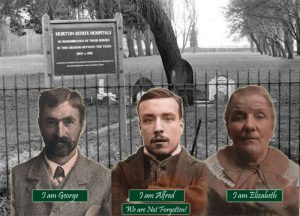
A ground-breaking heritage project exploring the lives of disabled people detained in Surrey’s former mental hospitals is turning fresh attention on Horton Cemetery in Epsom – the burial ground of some 9,000 men, women and children whose resting place remains locked, overgrown and inaccessible under the control of a property speculator who has neglected the site since the 1980s.
Freewheelers Theatre and Media, a creative company of disabled artists based in Leatherhead, is leading Us and Them, a National Lottery Heritage Fund-supported initiative using original medical portrait photographs and case records from Surrey’s long-closed asylums. Working with photographer Emma Brown, community history group On the Record and researchers at King’s College London, they are uncovering the stories of patients whose voices were seldom heard in their lifetimes. The project includes new wet-collodion portraits of Freewheelers members made using the same Victorian techniques once used in institutions such as The Manor Hospital and West Park. These contemporary portraits will be shown alongside the originals in a touring exhibition, with the first major display due to take place at The Horton, Epsom, in 2026.
For Epsom, the work resonates particularly with Horton Cemetery – the former burial ground for patients from the Epsom Cluster hospitals, including The Manor, Horton, Long Grove, West Park and St Ebba’s. Despite its national historic significance as the largest asylum cemetery in the UK, the cemetery has been left to decay for decades and remains closed to relatives, historians and the wider community. The Friends of Horton Cemetery continue to campaign for its return to public or charitable ownership so that the site can be restored, documented and respected as the resting place it once was.
The Freewheelers project highlights the human stories behind those buried there. One participant, Alice Scott, chose to pair herself with Rose Harris, a woman confined to The Manor Hospital in 1910 and buried in a pauper plot at Horton Cemetery in 1917. Another member, Pete Messer, recreated the photograph of workhouse survivor Frederick Tarrant, who spent 15 years in various institutions, part of the same system that funnelled thousands of patients to unmarked graves in Epsom.
Historians involved in Us and Them emphasise how the original photographs were created without consent for purposes of classification and diagnosis, often contributing to stigma. Today, the Freewheelers portraits aim to prompt public reflection on how disability is perceived and represented, and how society remembers – or forgets – those who lived and died within institutional care. The project’s December creative sessions coincide with a Christie’s auction of similar historical images, underlining renewed public interest in the stories of institutionalised people.
The Friends of Horton Cemetery say the renewed national attention generated by projects like Us and Them strengthens the argument that the burial ground must be brought back into community hands. Volunteers have long argued that the cemetery is a unique and irreplaceable heritage site, containing the life histories of people from across Britain and the world, many of whom have living descendants still searching for answers.
Recent BBC reporting has highlighted the scale of the neglect, the site’s condition and the growing calls for public ownership. For many families, the cemetery is the last physical link to relatives whose lives were shaped by the former Epsom institutions. Campaigners say that without intervention, the stories now being rediscovered risk remaining disconnected from the very place where so many of those patients were laid to rest.
More information about the Friends’ campaign and the history of the site and some 500 personal stories of the patients buried in the Epsom Hospital Cluster cemetery in Hook Road/Horton Lane, Epsom can be found at www.hortoncemetery.org
Young Surrey volunteers help shape new neuroinclusive travel app
4 January 2026
Young people in Surrey have helped test a new travel-planning app designed to make public transport less stressful for neurodivergent passengers. Members of ATLAS, Surrey Youth Voice’s participation group for young people with additional needs and disabilities, spent three days trialling Aubin, a free app that takes a different approach to journey planning.
Unlike standard apps that prioritise the quickest route, Aubin focuses on reducing anxiety and supporting users who may find travel overwhelming. The app allows travellers to tailor their journey according to personal needs, rather than simply finding the fastest option. ATLAS members used it to plan and carry out trips across North, East and West Surrey, assessing how effectively it helped with independence and confidence.
Aubin functions as both a route planner and a “travel companion”. Alongside directions, it offers practical tools to support users in moments of uncertainty. These include grounding exercises to help regulate emotions during difficult points in a journey; a type-to-speech feature for anyone who may struggle to speak when stressed; and an editable Autism Card that allows travellers to explain needs quickly and discreetly to staff or fellow passengers. Users can also set preferences that shape the route suggested, such as avoiding busy interchanges or long waits.
ATLAS has long advocated for more accessible, neuroinclusive transport options, arguing that navigating public transport is essential for young people to reach education, work and social opportunities. Members described the trial as a chance to influence a product that could help reduce isolation and build independence for others with similar needs.
At the end of the pilot, ATLAS met with Aubin’s co-founder and product manager, Corinna Smiles, to give detailed feedback. Suggestions included adding journey-sharing options so a trusted contact can follow someone’s progress, communication prompts for stressful situations, and a checklist to help users prepare before leaving home. Aubin welcomed the recommendations and said they would incorporate them into future updates.
Ms Smiles said the pilot was a valuable example of user-led design and thanked the group for helping shape the app. ATLAS members have since given Aubin their “seal of approval”, encouraging other neurodivergent young people to try it.
ATLAS member Emily said taking part “felt empowering” and that knowing the group’s input would help autistic travellers made the experience worthwhile: “I feel honoured to have been part of shaping this app, which I’m sure will give many people the tools to travel with confidence.”
Councillor Helyn Clack, Deputy Cabinet Member for Children, Families and Lifelong Learning, said the collaboration showed the importance of designing tools with “the voices of the community they serve”, and that the app has real potential to improve accessibility.
The Mayor of Epsom and Ewell meets local climate volunteers
4 January 2026
The Mayor of Epsom & Ewell, Cllr Robert Leach, met with members of the Epsom and Ewell Climate Action Network (EECAN) to hear about the community projects they are mobilising over the next six months, including the borough’s first Library of Things. EECAN, which was marking its first anniversary, was founded by residents concerned about the environmental and social impacts of climate change and has grown steadily into an active network of volunteers leading initiatives that encourage climate-friendly actions, build resilience and support sustainable choices across the borough.
The volunteers explained that the Library of Things will allow residents to borrow items such as DIY tools, gardening equipment, sewing machines, pressure washers and even party or camping gear. For many households, the cost of purchasing these items outright can be prohibitive, and for others it simply isn’t necessary when the item might only be used once or twice a year. EECAN believes the scheme could help cut waste, save families money and encourage the communal sharing of resources.
The project is currently in the planning stage, with the group sourcing donated items and recruiting volunteers ahead of a planned launch in April 2026. During the meeting, Cllr Leach expressed strong support for EECAN’s work, welcomed its potential benefits for local residents, and even signed up as an early supporter while taking an interest in how the project might expand once established.
Past and ongoing EECAN initiatives include November’s successful Bike Amnesty event, which collected around 70 bikes for the Surrey Bike Bank to refurbish and redistribute, and regular Climate Conversations held on the second and fourth Monday of each month. Both projects have attracted increasing interest from residents wanting to learn more about sustainable living and community-driven solutions.
EECAN founder and chair William Ward spoke about the group’s longer-term ambitions, which include expanding outreach, increasing visibility across the borough and eventually achieving official charity registration. Becoming a registered charity would help them access currently unavailable funding streams and deliver larger, more stable projects. In just 12 months the group has grown from seven to 50 volunteers and from two to eight trustees, who are now preparing their application to the Charity Commission.
The meeting concluded with cake-cutting and a discussion about strengthening links between EECAN and the council. The Mayor encouraged the group to continue raising awareness of their activities and said he would share their projects with fellow councillors when appropriate. Volunteers said they hoped the meeting would lead to deeper collaboration and stronger recognition of grassroots environmental initiatives within local decision-making.
A crumbling, pothole-ridden road that has been the source of countless insurance claims could be given a new lease of life. The North Leatherhead Access Road leading into the Surrey County Council recycling centre off Randalls Road has been slowly destroyed by years of heavy goods vehicles entering and leaving the site. Now, Mole Valley District Council has agreed to spend £60,000 to begin the process of repairing the heavily rutted road. The task is made more complicated as the road is co-owned by Surrey County Council and Thames Water, and it is hoped the initial work, from an overall £300,000 budget, will determine not just what needs to be done, but who pays for it.
Presenting the item to the November meeting of Mole Valley District’s cabinet was Councillor Keira Vyvyan-Robinson. She said: “Anybody who uses the recycling centre on a regular basis will be very familiar with the problems that road has. Obviously, it is heavily used by very heavy vehicles and over a period of time that heavy use has resulted in a lot of problems with the carriageway, with rutting in the verges and the channel blocks. That has resulted in increased insurance claims and also increased complaints. In February 2024, it was agreed that we would allocate just over £300,000 in order to improve that road. It is a complicated project because Mole Valley District Council owns about half of the road, the majority of the balance of it is the responsibility of Surrey County Council and Thames Water, so it’s necessary to liaise with them and reach agreements with them over the work that needs to be carried out. This budget is to start the full design and to get the proper costing, because at the moment it’s a provisional figure of about 300,000. The drawdown will enable us to finalise that, submit the planning application and reach the legal agreement with Thames Water and Surrey County Council over how much they will contribute towards the costs. For anybody who uses it, it’s quite plain that we can’t do nothing, as it’s such a detrimental situation at the moment and it will only get worse if we don’t.”
Cllr Gerry Sevenoaks, Independent member for Ashtead Park and chair of the council’s scrutiny committee, said: “As a user of that road I know it very well. It’s dangerous, especially if you are going down there and two refuse carts are coming the other way. I say ‘let’s get on with it’.”
Cllr Caroline Joseph (Liberal Democrat, Fetcham) added: “There is a huge strength of feeling locally. It’s such a small thing but it makes such a huge difference to people. If we can get this moving it will be a very positive thing to Leatherhead, Fetcham, Bookham, Ashtead, everyone locally.”
Image: North Leatherhead Access Road (image Google)
Nirvana comes to Epsom care home
4 January 2026
Sponsored article: Linden House Care Home in Epsom is proud to announce a new era under its new owners, Nirvana Care Group. Established in the 1980s, the home has long served the local community, and the new leadership has already made significant investments to further elevate care standards across Surrey.
Phase 1 of a resident-led refurbishment is now complete, shaped by meaningful input from those who live at the home. Linden House has also invested in modern technologies and strengthened service partnerships to enhance safety, comfort, and wellbeing.
The transition has been warmly received by staff, with six former team members returning to support the refreshed vision. The home is also delighted to welcome back former manager Reshma Tupsy, reflecting Linden House’s strong sense of community and continuity. With a dedicated multicultural team and an in-house chef, residents enjoy personalised menus tailored to cultural and faith requirements, along with fully customised activity programmes.
Following the renewed leadership, upgraded facilities, and a focus on truly personalised care a small number of vacancies remain for families seeking warm, modern, and compassionate care.
For enquiries or to arrange a visit, contact Reshma on 01372 721 447
Epsom celebrity visits his old college
4 January 2026
Joe Wicks MBE, widely known as The Body Coach, recently visited his former college, Nescot (North East Surrey College of Technology), the place where his journey into fitness and education began. His visit to Nescot was filled with inspiration, energy and memorable moments.
Joe was warmly welcomed by Nescot Principal and CEO, Julie Kapsalis, students and staff to the college. He toured the Nescot Fitness centre where Julie proudly presented him with a commemorative plaque, ‘Joe’s Gym’ in his honour. He also signed copies of his bestselling cookbooks for staff and the college’s Learning Resources Centre and was delighted to receive his original college lanyard and a thoughtful gift from the college.
Students from our Sport, Public Services and Foundation Learning courses joined Joe in the sports hall for an unforgettable workout session. Joe led the students in a fun and energetic routine, sharing his passion for fitness and wellbeing.
Sports students, Patrick and Nathan shared their thoughts on meeting Joe. Patrick said, “It’s been a huge honour meeting Joe who’s done so much for fitness, inspiring young kids at an early age and even raising money for charity. A good day for Nescot too.” Nathan added, “It’s incredible to meet Joe who’s a household name and who’s been to the same college as me!”
Joe’s visit continued in the college theatre, where he took part in a packed Q&A session hosted by Julie Kapsalis. Staff and students gathered to hear about Joe’s incredible journey and his time at Nescot.
Joe Wicks, who completed a National Diploma in Sport at Nescot in 2002, spoke warmly about his time at the college, “Nescot started me on my journey to education. The college helped me to grow and mature, and to be more independent as a learner.” Speaking candidly to the students, he encouraged them to persevere, “Always try your hardest and put your heart into what you do. It won’t always be easy, but never give up – give it your all.”
Nescot Principal and CEO, Julie Kapsalis, said, “It has been a privilege to welcome Joe Wicks, The Body Coach, back to his hold college. His visit was particularly meaningful as his journey began here at Nescot, and we are so proud that his time here laid the foundation for a thriving career in fitness, exercise and nutrition. A huge thank you to Joe for taking the time to inspire our community with his message to stay ‘Fitter, Happier and Healthier’. We look forward to welcoming him back again in the future.”
At the end of the Q&A session, Julie Kapsalis presented Joe Wicks with a Nescot Honorary Fellowship, the highest accolade that the college can bestow, in recognition of his outstanding contributions to fitness, wellbeing and nutrition education, and his mission to improve the nation’s health.
Nescot’s NVQ Catering and Hospitality students also presented Joe with a cheque for £300 in support of his charity, The Body Coach Foundation. They fundraised by preparing and selling meals inspired by his recipes. The visit concluded with excited students lining up for a group selfie and reflecting on how Joe’s message of resilience and ambition left a lasting impression.
To learn more about Joe Wicks’ journey and his time at Nescot, visit our alumni feature on our website
Surrey Uni study may show way to reverse vision loss
4 January 2026
New computer modelling could help scientists better understand how the retina regenerates, opening the door to new treatments for vision loss, according to a study from the University of Surrey.
The first-of-its-kind model is capable of detailing how the retina – the light-sensitive layer at the back of the eye – can build its complex structure from just one type of stem cell, deepening our understanding of how sight develops and how its development could inform studies of injury or disease.
Using advanced agent-based modelling, the research team have simulated key stages of retinogenesis – the process by which identical progenitor cells diversify into the six types of neurons that make up the retina.
The model shows how simple genetic rules and subtle randomness work together to form the retina’s precise layered architecture, a structure essential for how we see.
The paper was presented at IWWBIO 2025 and published in Lecture Notes in Computer Science (LNCS).
Cayla Harris, lead researcher from the University of Surrey’s Nature Inspired Computing and Engineering Group, said:
“The beauty of biology is that complex structures can emerge from simple rules. Our simulations show how genetically identical cells can, through intrinsic bias and chance, self-organise into the retina’s highly ordered layers – a pattern that underpins how we see the world.”
Using the BioDynaMo software platform, the team modelled virtual “cells” that grow, divide and make fate decisions based on internal gene-regulation logic, mimicking biological behaviour. They tested different network designs for how genes might interact when cells decide what kind of neuron to become.
Two particular designs – called the Reentry and Multidirectional models – reproduced real biological data most accurately, suggesting that retinal cells may make their fate decisions through overlapping and flexible genetic pathways, rather than a fixed sequence.
This approach could help researchers better understand not only healthy eye development but also what happens in retinal diseases and in regenerative research exploring how stem cells might rebuild tissue.
Dr Roman Bauer, senior author on the study from the University of Surrey, added:
“Computational modelling gives us a powerful way to explore biological processes we can’t easily observe in real time. By simulating every cell’s decision and interaction, we can test hypotheses about how tissues like the retina form – and how to restore them when damaged.”
This research is supported by the Engineering and Physical Sciences Research Council (EPSRC).
Cayla Harris added:
“We think that our research is a step forward in linking genetics, computation and developmental biology to understand one of the body’s most complex neural structures.”
Epsom’s Young Performers Light Up Picturehouse Showcase
4 January 2026
It was an unusually busy Sunday morning at Epsom’s Picturehouse, with the main cinema hall filled to the very last seat. It is rare to see it so full at that time of day. Jamie Bannerman, principal of PQA Epsom, moved around with calm efficiency, directing guests, helping young performers find their places and ensuring the event ran smoothly. The screening was completely sold out, and for good reason.
PQA – the Pauline Quirke Academy of Performing Arts – is a nationwide academy for children and teenagers aged 4 to 18. With more than 200 academies operating across the country on Fridays, Saturdays and Sundays, PQA offers young people a creative and supportive space to learn acting, singing, dancing, filmmaking and more. Around 200 students attend weekly classes in Epsom, developing not only performance skills but also confidence, imagination and teamwork.
The showcase at Picturehouse demonstrated just how transformative these experiences can be. The audience enjoyed an inspiring mix of short films, from musical tributes and Shakespeare recitations by remarkably young performers to socially aware pieces exploring video-game culture, comedy sketches and musical-inspired dance routines. Each film reflected the students’ creativity, commitment and growing self-belief.
The academy plans to stage a musical next season, so families whose children have ever shown an interest in performing may find this the perfect moment to get involved.
PQA’s motto, “Be Yourself, Be Amazing,” captured the atmosphere of the event. It is a safe and creative environment where every child is encouraged to shine at their own pace. As Jamie noted at the close of the showcase, the academy is not just about red carpets or a taste of fame, although students do have those opportunities. It is about belonging, making friends, gaining confidence and discovering one’s own voice through the arts.
The celebration concluded with medals and special achievement awards presented to students who had made notable progress in confidence, speaking, performing and directing. At PQA, every child can become a diamond; sometimes they simply need someone to believe in them.
When remote work is supported well, it can raise job satisfaction, reduce commuting stress and give people meaningful control over their work life balance. However, the recent drive by some organisations to bring staff back into offices risks reversing these gains and widening the gap between regions, according to a new study that University of Surrey researchers contributed to as part of the R-Map project.
A new study, published in Nature’s Scientific Data, details how access to reliable internet, local services, green space and community facilities can determine whether remote work improves quality of life or deepens inequalities. The research is based on a survey of more than 20,000 workers from across Europe and explores how remote work is influencing relocation patterns, wellbeing, job satisfaction, productivity, travel behaviour and the pull between urban and rural living.
The study gathered responses from people living and working remotely in Europe through a large, structured survey. Participants were asked about their preferences, experiences and the practical realities of working away from a traditional office. The survey was distributed across multiple languages and included workers in both rural and urban environments.
The study highlighted that remote work, either fully or partly i.e. hybrid work, is often associated with higher job satisfaction and a stronger sense of personal autonomy, particularly because people can choose where and when they work. This can support better work life balance, reduce commuting stress and create more space for family time or personal priorities.
However, where remote work is discouraged or unsupported workers may lose these benefits. Returning to a daily commute or living far from their workplace can limit choice, increase strain and reduce the positive local impact remote work can bring to smaller towns and rural communities.
Dr Nikolas Thomopoulos, Principal Investigator of the study from the University of Surrey, said:
“Remote work is changing how our towns and cities function and who gets access to good and rewarding jobs. When remote work is supported properly it can reconnect residents and tourists with their communities and boost local economies. When it is not, it risks deepening divides. We are hopeful that this research will provide policymakers with the clear evidence needed to shape a fairer and more sustainable future of work.”
Dr Tracy Xu, Co-Director of the Future of Work Research Centre at the University of Surrey, said:
“Our research shows that remote work can genuinely improve quality of life by giving people more choice in where and how they live. Without strong digital access and supportive environments, remote workers can feel isolated and overlooked. This study gives us the detail needed to understand where remote work thrives and where it needs to be improved.”
The R-Map findings suggest that remote work can revitalise some rural or suburban areas, especially when people are able to move away from expensive city centres in search of more space, affordability or proximity to nature.
However, the benefits are not shared equally. The study shows that access to everyday amenities such as green spaces, grocery shops, healthcare and public transport within a short walking distance plays a key role in whether remote work feels sustainable and supportive of wellbeing. Where these amenities are lacking, and where digital connectivity is weak, remote workers were more likely to report feelings of isolation and difficulty maintaining work life balance. In contrast, participants with reliable internet and access to local services reported greater satisfaction with remote work and stronger ties to their communities.