Epsom and Ewell Times
22nd October 2026

ISSN, LDRS and IMPRESS logos

Virtual care to rise under ambulance plan

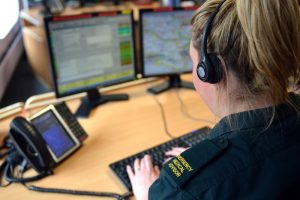
Call staff at South East Coast Ambulance NHS Foundation Trust. Credit SECAmb

Over a third of South East Coast Ambulance (SECAmb) service responses will be done remotely in a new five-year strategy. (Here “remotely” means by video call or telephone rather than sending out an ambulance.)

The NHS Trust said its care model is no longer “fit for purpose” as it prepares for a 15 per cent increase in patient demand over the next five years, at a board meeting last week (April 4). Increasing demands on the service included health care becoming more complex, the ageing population and changing areas of deprivation.

By 2029, the Trust aims that over a third of all its patients will be signposted to another service- leaving 65 per cent of patients with an ambulance response. The change will affect Surrey, Thames Valley, Kent and Medway as well as Sussex Integrated Care Systems (ICS).

Simon Weldon, CEO, reassured that SECAmb would still be there to protect and look after the sick who needed an ambulance. He added: “If patients don’t need an ambulance, we can help you get you to a place which can meet your healthcare needs.”

Urgent medical needs such as cardiac arrest, a stroke, heart attack, pneumonia, childbirth and newborn care would still be attended to by ambulances, the Trust said. 

Delivering this strategy, over the next three years, SECAmb expects it to meet emergency care needs within the national standards of 7 minutes for calls for immediate life-threatening and time-critical injuries and illnesses; and 18 minutes for emergency calls.

For non-emergency patients, virtual care will be provided via an assessment by a remote senior clinician. Meeting documents said this would enable patients to be “cared for directly or referred to the most appropriate care provider”.

Investing in a data and digital strategy was highlighted as a key part of the new direction. The board heard how new technology like AI would help the SECAmb make better decisions and lead virtual consultations. These could be used to respond to patient needs in a remote and professional setting rather than sending an ambulance. 

Meeting documents revealed that 88 per cent of patients received an ambulance response; but an SECAmb officer said the outcomes from the cases indicated only 30.5 per cent of patients needed clinical care. 

Only 12 per cent of patients are currently referred or signposted to another service rather than receiving ambulance care; but under the new strategy for 2029, this will increase to 35 per cent. 

Team Member for SEAmb, Matt Dechaine, said: “Sending a fully kitted ambulance is a very expensive way for the public purse to respond to patient needs, when other services may be able to address it in a cost-effective way.”

Covering five years, the new strategy will be carried out in three phases: designing new models of care, collaborating with partners and developing a digital strategy; implementing the change and finalising and improving the operational model. Digitalisation of the service will begin in phase 2, with electronic health records deployed by March 2025. 

SEAamb identified its model as “unsustainable when challenged” from an operational, workforce and financial perspective. The Trust found it would need to employ 600 more people over the next five years to respond to demand. 

Not all non-emergency patient consultations will be resolved solely over the telephone. Simon told the board that the strategy aims to “align patient needs with ambulance services”.

Over 2,000 staff, 400 volunteers and 350 members of the public have been consulted on the strategy, with the Trust saying it has been “clinically led”. System partners have also been invited to 20 sessions to share their views.

The full new SECAmb strategy is set to be published in May 2024.

Call staff at South East Coast Ambulance NHS Foundation Trust. Credit SECAmb


Psychiatric bed shortages in Surrey

HM Coroners Court Woking Surrey

A man tragically took his own life in Surrey after a mental health relapse, prompting a coroner to warn of a shortage of psychiatric beds in Surrey hospitals.

Jonathan Harris, 52, who suffered from paranoid schizophrenia, died by suicide  on June 27, 2022. 

If an inpatient psychiatric hospital bed had been available just days earlier, Jonathan would not have died, the coroner ruled. Coroner Anna Crawford judged that action should be taken to prevent future deaths. 

Bed shortages for mental health patients in Surrey, as well as nationwide, has been an ongoing issue for NHS Trusts. Many patients are forced to move up to 60 miles away from home to receive treatment because there are few beds in their area.  The court heard that this is in the context of a national shortage of suitably qualified psychiatrists.

Following a lengthy psychiatric inpatient stay in Camberley in November 2021, Jonathan was under the care of Surrey Heath Community Mental Health Recovery Service, which is part of Surrey and Borders Partnership NHS Foundation Trust.

Jonathan was prescribed anti-psychotic medication.  In February and May 2022, Jonathan requested for his medication to be reduced to fortnightly and then once every three weeks.

The reduction in medication in May 2022 was judged as “premature”  by the coroner. Jonathan had reportedly shown signs of appearing “suspicious” when he was seen by the Surrey Heath Mental Health Team (MHT) on May 4. However, these signs were not explored.

The mental health team were also aware Mr Harris was moving house, meaning and move to a new community mental health team, which may affect his wellbeing. 

Jonathan’s mental health continued to deteriorate and on June 24 it the MHT decided that he required an assessment under the Mental Health Act. 

No inpatient bed was available and therefore the assessment did not take place. If Jonathan had been assessed, he would have been detained under the Mental Health Act and admitted to hospital.

The coroner said: “Mr Harris would not have taken his own life had he remained well and the relapse of his paranoid schizophrenia materially contributed to his death.

“Mr Harris would not have died had an inpatient psychiatric hospital bed been available on either 24, 25 or 26 June 2022.

“The court also heard that there is an ongoing shortage of available inpatient psychiatric beds in Surrey and that this is in the context of a national shortage of inpatient psychiatric beds. The court is concerned that both of these matters present a risk of future deaths.”

The Prevention of Future Deaths report was issued to NHS England rather than to Surrey and Borders Partnership. NHS England was invited to comment; it said it is working to the coroner’s deadline of 56 days to respond with the action it will take or proposed to take, and such information is not yet available.

Related reports:

Coroner catalogues care failures in diabetic death

Better private – public health communications could prevent deaths


Cancer patient getting the right royal treatment

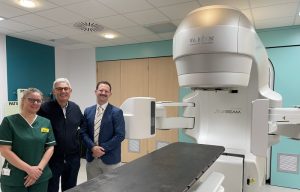
Radiotherapy Trial Pic caption L-R: Radiographer Kate Maltby, Michael Robson, Dr Philip Turner

The first cancer patient set to undergo a revolutionary new procedure that could cut treatment time to almost a quarter said it was a “ privilege” to be given the opportunity.

The Royal Surrey NHS Foundation Trust is taking part in a new clinical trial led by the Royal Marsden into prostate cancer. Currently, patients are treated with radiotherapy over a minimum of 20 treatments which lasts four weeks or more. Under this new process, that time could be reduced to one and a half weeks.

Michael Robson, 78, is the first patient to be part of the trial in Royal Surrey. He was diagnosed in December 2023. He said: “One of my friends was diagnosed with prostate cancer and he said I should get a test so I had a blood test and I was called by my GP and sent for an appointment at urology. I was fortunate enough to meet Dr Philip Turner who gave me the options and went through everything. Everything has been explained to me in a way that is easy to understand and made the journey so much easier to deal with. All of the staff I couldn’t complement them highly enough. They have been fantastic.”

Michael was given options for treatment and was asked if he was interested in taking part in the clinical trial and he agreed straight away. He added: “It’s been fantastic here. I feel very privileged to be the first patient. The service has been first class from everybody concerned.”

Patients with low and intermediate risk disease who took part in a trial called PACE-B demonstrated that the process would work in the tighter time frames. This new study is to determine whether those considered high-risk would get the same benefits. The trial, called PACE-NODES, was opened at The Royal Marsden and was designed jointly by investigators from Queen’s University Belfast and The Institute of Cancer Research, London.

Dr Philip Turner, consultant clinical oncologist and principal investigator for the trial, said: “We are delighted to be opening the PACE NODES trial in Royal Surrey. This is part of our drive to give Surrey patients access to the very best oncology clinical trials from across the UK and indeed from across the world.

“The benefits with regard to timing are enormous – the standard of care for these men is a minimum of four weeks of daily visits which is very disruptive to life. The rates of side effects are low. Crucially, the five fraction treatment appears just as safe as conventional 20 fraction treatments which we have been using for years very safely.”

Chief executive Louise Stead said: “Royal Surrey has a long and proud tradition of being a premier centre of UK oncology research and we are determined, with the support of our patients and other partners, to ensure as many patients as possible have access to ground-breaking research close to home. If successful, this could make a huge difference to patients receiving treatment for prostate cancer.”

L-R: Radiographer Kate Maltby, Michael Robson, Dr Philip Turner


Epsom squash team stand the squeeze

Rosebery school squash team warming up

When five girls from Rosebery School, Epsom formed the school’s first ever squash team just six months ago with a view to entering the England Squash National Schools Championships 2023/24, little did they know how far they would go in this tough and prestigious tournament.  Being a state school with no on-site squash facilities, they knew they would be competing against a lot of private schools around the country, many with their own squash courts and dedicated coaches. They were, however, all keen squash players and junior members of Ebbisham Sports Club in Epsom where they trained on a regular basis.

By dint of their considerable success in Stages 1 and 2 of the Championships, held respectively at Limpsfield Club in November 2023 and Epsom College in January 2024, the Rosebery School Girls Squash Team were delighted to learn that they had done enough to qualify for the Finals held in Birmingham on 14th March. One of the top eight teams from around the country to reach the Finals, the Rosebery Squash Team battled hard through three very tough matches during the course of a long day, with some excellent individual match wins and some very close losses. Whilst they came extremely close to beating one of the other schools, in the end the Rosebery team had to settle for final place, but did so with a smile on their faces and knowing they had given the Championships their all.

Gillian Mead


NESCOT marks 70 years with a tree

(Centre) The Mayor of Epsom & Ewell, Councillor Rob Geleit at the commemorative tree planting of a silver birch to mark Nescot’s 70th anniversary along with (left to right), Catering student Anna, Principal and CEO of Nescot, Julie Kapsalis, Access to Nursing student, Kirsty and Chair of Nescot Corporation, Chris Muller. Photo credit: Nescot

Nescot (North East Surrey College of Technology) in Ewell marked seven decades since its official opening with a commemorative tree planting in the college grounds today (22.03.24). The Mayor Epsom & Ewell, Councillor Rob Geleit (Labour Court Ward) planted a silver birch along with Julie Kapsalis, Principal and CEO of Nescot and Chris Muller, Chair of Nescot Corporation. They were joined by three students, Donna from our Supported Internship programme; Kirsty from Access to Nursing and Anna from Catering who have all had a successful term and made an impression.

Speaking at the tree planting, Julie Kapsalis, said: “It is wonderful to have students take part in this historic moment as without them and the many thousands who walked through these gates before them, we would not be here.

“As we reflect on 70 years of Nescot today, by planting this beautiful silver birch tree we are also looking to the future of education here, which we hope will be sustainable, ever-growing and long-lived. Maybe in 70 years’ time – 2094 – people here will be looking back on photos from today, admiring this tree in its full maturity, and be reflecting on education and what Nescot means to them.”

Marking the commemorative event with the tree planting, the Mayor of Epsom & Ewell, Cllr Rob Geleit, said: “It is an honour to be here today to plant this commemorative tree to mark Nescot’s 70th anniversary. I hope in 70 years’ time someone similar will be doing the same thing.”

Julie added, “When this site was formally opened on 22 March 1954, the world was very different and courses such as Home Economics, Flower Arrangement, Guest House Management and Typing were on the curriculum, along with a number of more scientific and technical subjects. Today, our curriculum includes learning opportunities in electric vehicles, artificial intelligence, robotics, gaming, sectors which could barely have been imagined in 1954.

“We can be proud of the role that Nescot plays, offering increased opportunities for people from all walks of life to gain the skills and qualifications they need for a successful career and continuing to provide learning for the local community in Epsom & Ewell and our surrounding region.”

Students and staff took part in a variety of events throughout the day and during the week organised by various curriculum areas that included activities, displays and even a 1950s lesson for some of our plumbing apprentices to mark Nescot’s 70 years.

Nescot began life as Ewell County Technical College, with the first students beginning courses in September 1953 and the establishment being formally opened the following March. Explore the college’s rich history, evolution of education and community engagement on our website here.

Related reports:

The fellowship of NESCOT

NESCOT Saturday academies for the young

Coursera & NESCOT to enhance further education

Epsom and Ewell’s Technology College 70 years young

Photo: (Centre) The Mayor of Epsom & Ewell, Councillor Rob Geleit at the commemorative tree planting of a silver birch to mark Nescot’s 70th anniversary along with (left to right), Catering student Anna, Principal and CEO of Nescot, Julie Kapsalis, Access to Nursing student, Kirsty and Chair of Nescot Corporation, Chris Muller. Credit: Nescot


Worcester Park school celebrates

Pupils and staff of Linden Bridge school, Worcester Park

Worcester Park‘s Linden Bridge School caters for 144 students with autism and complex social and communication needs from four to 19-years-old, including 20 in the sixth form and a residential facility which can accommodate 32 places, with pupils typically staying for two nights a week.

The school’s pupils are exceptionally well-prepared for future life, and they feel valued and secure as a result of strong relationships with staff, says a recent Ofsted report, which judges pupils’ personal development to be ‘outstanding’.

The school was inspected in January and graded ‘good’ overall, recognising the ongoing improvements made since joining The Howard Partnership Trust in 2021, at which time it was judged as ‘requires improvement.’

Principal, Mrs Claire Gungah said “We are absolutely delighted that the inspection report confirms that Linden Bridge School is a good school with an outstanding provision for the personal development of students.

“In highlighting the many strengths in our school, we are particularly pleased that the report recognises that we are delivering on our core mission, and acknowledges the hard work of staff, the Trust and support from our community in developing the school”.

Noting that the report celebrated students being a credit to the school, and demonstrated their strong relationships with staff, she added

“A huge thank you needs to go to the students who were at the heart of the process and as always, made us proud throughout the inspection showcasing their maturity, friendships, communication skills and pride in their achievements.”

The report says both the school and the Trust have ‘rightly prioritised’ improving the curriculum. Work had started at the last inspection, but it has ‘gone from strength-to-strength.’

“The school’s carefully designed curriculum is now well established in most subjects,” notes the inspector.

“Learning to read is given a high priority. A new phonics programme has been introduced since the last inspection and is now securely established. Comprehensive training has ensured that staff are confident about teaching phonics,” says the report.

“The school provides an extensive and ambitious range of events and activities. For instance, all pupils experience a sporting event and the oldest pupils are involved in organising events such as sports week.”


Surrey’s vulnerable without expert legal advice 

Surrey legal aid desert

Surrey has become a ‘legal aid desert’, marked by a critical shortage of support services, leaving vulnerable individuals without expert advice on key issues such as, community care, education, and immigration. 

The Access to Justice Report, by South West London Law Centres (SWLLC), was launched at the University of Surrey’s School of Law Access to Justice Clinic on Wednesday, 20 March, by His Honour Sir Robin Knowles CBE, Chair of the Commercial Bar Association of England & Wales. Sir Robin is a member of the Civil Justice Council and chairs its Standing Committee on access to justice for those without means.  

The report highlights the need for accessible legal aid and representation and raises awareness of the challenges faced by vulnerable people in Surrey. 

It catalogues the gaps in legal aid within Surrey; it highlights cases where people have had to rely on non-legal advice services instead of specialist legal services. The lack of specialist legal advice is particularly acute in employment, education and immigration. 

The report shows that most social welfare advice is provided by voluntary or not-for-profit agencies, with Citizens Advice taking the leading role; however, there is a lack of specialist legal services. 

People were left without expert legal advice on areas such as: 

  • School admissions and appeals 
  • School transport 
  • Special Education Needs 
  • Community care packages and complaints 
  • Immigration advice. 

Stacey Edgar, Deputy CEO, South West London Law Centres, said: 

“At the South West London Law Centres, we have directly observed the significant difficulties faced by individuals and families lacking proper guidance on matters such as immigration and education.  

“Our findings now confirm that Surrey has limited mechanisms for accessing justice, signalling the urgency of leveraging insights from this new research to implement a strategy that addresses community needs.  

 “We’re pushing to fill these gaps because access to justice shouldn’t depend on where you live or what you can afford.”  

The report proposes new initiatives to improve legal support, including a Family Law Court Help Desk, an Education Rights Advice Project, and Immigration and Asylum Caseworkers in Surrey.  

Currently, the research proposals are transforming into a project to create these mechanisms in Surrey, and SWLLC is welcoming donations, volunteers, and partners to be involved in expanding access to justice to meet the needs of impacted community members. 

Liz Williams, Associate Professor and Director of Clinical Legal Education at the University of Surrey, said:  

“The Access to Justice Clinic at the School of Law understands that social transformation and legal impact is only possible through a collaborative approach. The Clinic has been a flourishing initiative since its launch four years ago and plans to expand in partnership with South West London Law Centres, local charities and legal professionals on a broad range of collaborations to help solve the access to justice crisis in Surrey.” 

Professor Veronica Rodriguez-Blanco from the School of Law added: 

“The School of Law is committed to placing access to justice at the centre of legal education in developing social sensitivity among the future lawyers that we are educating.”


Surrey Uni taking lead on future network security

Surrey University 5G 6G centre

A national effort is needed to train the next generation of the United Kingdom’s workforce in intelligent and resilient telecom networks, says a world-leading 5G and 6G expert from the University of Surrey.  

The comment comes as the Engineering and Physical Sciences Research Council (EPSRC) announced that Surrey’s 5G/6G Innovation Centre will lead a new £8 million Centre for Doctoral Training in Future Open Secure Networks (FORT).  

Over the next eight years, FORT will train more than 50 post-graduate researchers, who will become leaders with unique expertise in wireless communications, cybersecurity, networking, and artificial intelligence (AI). Surrey’s future cohort will influence the roadmaps of future open networking and security technologies and their applications.  

In partnership with Queen’s University Belfast’s (QUB) Centre for Secure Information Technologies, FORT also enjoys support from more than 21 industry partners. These partners include: Amazon Web Services, Ampliphae, Angoka, AWTG, Catapult Satellite Applications, Codasip, Ericsson, Hewlett Packard Enterprises, HP, Intel, Interdigital, Keysight Technologies, Kyndryl, National Physical Laboratory, Nvidia, OpenWeb, Qualcomm, Rolls Royce, Virgin Media O2, and Viavi Solutions. 

Regius Professor Rahim Tafazolli, FREng, Director of the 5G/6G Innovation Centre at the University of Surrey and Principal Investigator of FORT, said:  

“I want to extend my heartfelt gratitude to EPSRC for backing the Future Open SecuRe NeTworks (FORT) initiative. I am equally thankful for the support of our 21 industry partners and look forward to working closely with colleagues from Queen’s University Belfast. This powerful team has a unique vision, expertise, and mission of making the UK a powerhouse for future telecommunications. 

“In a world evolving at breakneck speed, our programme is designed with this dynamic future in mind. We’re committed to nurturing future visionaries and leaders with in-depth knowledge of advanced space and terrestrial networks, environmental considerations, and AI technology. The UK’s focus must now shift towards upskilling individuals capable of addressing the cyber security challenges posed by AI and take advantage of opportunities presented by societal shifts, environmental concerns, and industrial advancements.” 

Along with providing a world-class education with access to industry, FORT will create an environment for students to research new and better ways to build communication networks that are safe, reliable, and ready for the future. FORT is committed to conducting responsible, ethical research in cybersecurity, AI technologies, and future networks, with a strong societal focus. This approach is designed to generate world-class academic contributions and establish a pipeline of talent for the future. 

Dr Jesus Martinez del Rincon, Co-Director of FORT and Research Director of Secure Intelligence at CSIT at QUB, said: 

“With the FORT programme, we aim to create a community of 50 PhDs who will become the future, industry-conscious thinkers and leaders on secure, trustworthy and autonomous future network communications.” 

Along with Professor Tafazolli and Dr Martinez del Rincon, FORT will be led by: Dr Tim Brown from Surrey, who will serve as Director of FORT, and Professor Máire O’Neill from QUB, who is Co-Investigator of FORT.


Should we be going to…..?

surrey youth games activity

The Specsavers Surrey Youth Games is back. Following on from the success of the games last year, a wide range of activities are available in Epsom & Ewell again, including tennis, judo, swimming and more. The Games are the largest multi-sport youth programme of their kind in the South East, offering free local training for 7-16 year olds across Surrey, leading to a final celebratory event for the whole family. 

The Games are ideal for beginners who may not get the opportunity to attend clubs or are put off by the thought of competing against others. Supportive coaches will help participants join in, have fun, learn new skills, and boost their confidence. 

Registration is now open for the free training sessions which start after Easter and are aimed at those who live or go to school in the borough. Following the training, teams can unite for a family-friendly event at the Surrey Sports Park in Guildford on Saturday 15 June.

Councillor Clive Woodbridge, (RA Ewell Village) Chair of the Community and Wellbeing Committee, said “I’m so pleased that we are running the Specsavers Surrey Youth Games in Epsom & Ewell again this year. The initiative provides a fantastic opportunity for young people who are still building their confidence in sport to access training free of charge.

“I hope that everyone in our borough will take a look at what’s on offer and even tell friends and family about the initiative, so that we can ensure that as many children as possible can access the training.”

You can find out what’s on offer in the Epsom & Ewell borough and register for a place by visiting www.epsom-ewell.gov.uk/syg


Better private – public health communications could prevent deaths

Telephone switchboard

A young woman tragically took her own life in Surrey prompting a warning from a coroner over communication barriers between hospitals. Meghan Chrismas, who suffered from anxiety disorder, depression, complex PTSD and ADHD, died by suicide on October 20, 2021 at a Premier Inn in Guildford.

Less than three weeks prior, Meghan had impulsively attempted suicide by overdose and was admitted to Royal Surrey Hospital on the following day. She was offered further psychiatric treatment through the NHS at this time, which she declined in favour of continuing with her private treatments at The Priory Hospital. Information about Meghan Chrismas’ attempted overdose was only sent to her GP and not her private psychiatrist.

Meghan took her own life the same day as her private psychiatrist said she was “progressing well”. Following Meghan’s inquest Coroner Darren Stewart OBE wrote in a Prevention of Future Deaths report to NHS England over the ‘concerning’ communication barriers between private and public healthcare services.

He wrote: “At a time where pressures on the NHS exist, particularly for mental health services, it is of concern that measures which could alleviate this pressure (where someone sources private care) do not exist. There is little or no policy, guidance or other effective arrangements to share important clinical information about patients between private and public healthcare sectors.”

“The passage of information between NHS and private healthcare providers is hindered due to the absence of an adequate structure to share important clinical information about patients in a timely and effective manner. Action should be taken to prevent future deaths .”

Meghan was prescribed antidepressants after a face-to-face appointment with her GP in February 2021. She started seeing a private psychiatrist around July, and received prescriptions both privately and from her GP.

The coroner also raised this as a key concern. They wrote: “This means Mrs. Chrismas had access to double prescriptions. Healthcare professionals treating Mrs. Chrismas placed significant reliance on the perception that she would be open and honest in her communication with them.”

The coroner also raised concerns around police forces communication between each other. It was at, 4.54pm that Meghan contacted Surrey Police to explain that she was fine. At 5.18pm, the call handler in the Hampshire Police control room communicated with Surrey Police only via email.

After receiving no response from Surrey Police, the handler in the Hampshire Police control room communicated with them via telephone Surrey Police then attended the location in Guildford and found Meghan’s room barricaded. Upon gaining access to the room, officers found that Meghan had sadly died.

Officers attempted to resuscitate Meghan and her heartbeat restarted. After resuscitation, Meghan was transported to Royal Surrey County Hospital where she died two days later on October 20, 2021 from a Hypoxic Brain Injury.

The coroner wrote: “The handling of the incident involving Mrs. Chrismas in Hampshire Constabulary’s Force Control Room which resulted in a hour delay in determining that an important communication (being a request for assistance) had not been received by a neighbouring force.” It was not concluded however that this shortcoming contributed to her death.

Hampshire Constabulary have since said they have made significant improvements to their process. These measures included: Revision of training provided and the introduction of additional training for supervisors and control room staff. Implementation of National Policy concerning Missing Persons, including documentation to assist in control room responses to similar circumstances. Revision of the recording of risk assessment measurements on the computer aided dispatch record (CAD) system.

It was further explained to the court that the measures should be seen in the context of wider cultural change management in the supervision and leadership being undertaken by Hampshire Constabulary in the operation of the Control Room.

A spokesperson for Surrey and Borders Partnership NHS Foundation Trust said: “Following Meghan’s death an amendment was made to our Psychiatric Liaison Service policy stating discharge letters will be sent not just to the GP, but also to any other relevant external professional – provided we have the explicit consent of the individual to do this. The measure was welcomed by the Coroner.”

SABP added it has developed new guidelines for both community and in-patient clinicians to ensure it routinely and actively seeks a person’s consent to contact and share information with or from their private practitioner.

The Priory Hospital did not make an additional comment. NHS England has been approached for comment.


Fire Assembly for Ukraine

Fire engine in Epsom's market square

Saturday 10th March a Bronto Fire Engine came to Epsom’s Market Square outside the Assembly Rooms. A crowd gathered to admire the magnificent machine and wish it well on its journey to a city near the front-line of the conflict between Russia and Ukraine.

Roy Deadman of the charity Surrey Stands With Ukraine explained: “Some population centres in Ukraine are so close to the Russian artillery that the missiles can strike before the sirens sound. This fire engine with its long-ladder can rescue lives trapped in apartment blocks.”

Another volunteer with the charity Nick Budd said “There has been a tremendous effort to raise the money to purchase this vehicle and the public have been very generous. Our partners in Ukraine are very grateful to be receiving this vital equipment.”

The Mayor of Epsom and Ewell Robert Geleit (Labour, Court Ward) was in attendance, confirming a moment of pride for Epsom and Ewell as the headquarters for the humanitarian efforts of SSWU.

Charity director Lionel Blackman said: “Post Brexit there remain various bureaucratic obstacles to the engine’s transportation across Europe to the Polish border, where our Ukrainian partners will collect and take through their country to where it is most needed; but we will overcome and we expect it to be in place in a few weeks from now.”


Varying opinions on local maternity services

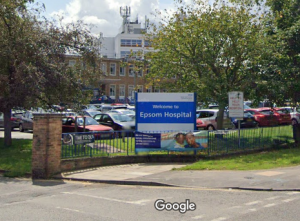
Epsom hospital

Epsom and St Helier Hospital NHS Trust claims it has a ‘strong’ maternity service despite failings in a recent CQC report. Safety in the maternity service was rated ‘inadequate’ in a report published by the  Care Quality Commission (CQC) in February. The service overall was downgraded from ‘good’ to ‘requires improvement’.

Managing Director of the Trust James Blythe said, at an Epsom and Ewell Health Liaison Panel on March 3, he was “disappointed” with the CQC report. He added: “The hospital has a really strong service and what the CQC identified are processes we need to get stronger at.”

However, the CQC’s report highlights practical issues  including qualifications and competence of staff, and an environment ‘not fit for purpose’. 

An update report by the Trust given to the Epsom and Ewell Health Liaison Panel said: “All of our maternity services meet 10 out of the 10 safety actions required nationally.” The 10 safety actions are specific to maternity services and range from submitting maternity data, workforce planning, training and action plans, to delivering best practice. 

However, the  CQC report found the leadership team ‘did not take timely action’ to make change where non-compliance with four safety actions was identified in the 2022/23 inspection.

A report in July 2022 identified a shortfall of midwives, yet this had still not been addressed in January 2023. The service was therefore unable to declare compliance with safety action 5 on midwifery workforce planning.

The CQC report said: “On inspection, there was a lack of clarity from managers and leaders about whether the service was on track to make improvements and declare compliance for 2023/24.”

Epsom and St Helier hospital Trust were asked about the discrepancy between the agenda stating they met all 10 safety actions and the CQC inspection report outlying non-compliance of safety actions. The Trust did not comment on the difference. 

The Trust is planning to invest more than £2m over two years to increase midwifery staffing in the unit by 8% so the Trust can declare full compliance with safety action 5. 

Visiting the hospital in August 2023, the CQC found the service “did not have enough midwifery and nursing staff in the right areas with the right qualifications, skills and training to care for women, birthing [partners] and babies”. 

Staff working in transitional care for babies who require extra support “did not have the qualifications and competence for the role they were undertaking.”

A spokesperson from Epsom and St Helier said: “Our priority is to ensure women and birthing people receive the best possible care, and we have already taken steps to improve and strengthen our maternity services – rated by mums in the CQC’s own survey as the best in London.”

Days before the inspection report was published, the Trust secured a strong result in a CQC patient experience survey of women and birthing partner’s experiences of maternity care in England. 

Maternity services at Epsom and St Helier received the best scores in London, with maternity care at St George’s joint second place.

The environment in some areas was ‘not fit for purpose’, and on the maternity ward this posed an ‘infection prevention and control risk’. Bereavement and recovery facilities did not meet national standards for privacy. 

The Trust is said it is ‘fast-tracking’ estates work with new doors and blinds fitted to improve privacy and dignity. 

The hospital’s environment was “not fit for purpose in all areas” and the facilities and equipment were found to “not always keep people safe”. 

An Epsom and St Helier spokesperson implied that patients deserve better than the current crumbling estate – but the hospital can still deliver and receive safe care.

Founded in 1938, approximately 90% of St Helier Hospital pre-dates the NHS itself. A further 98% of the St Helier estate is said to be either in very poor or bad condition and requires capital investment or replacement.

Millions are said to be invested every year to address the most urgent estate challenges, while also improving the buildings, facilities, equipment and environment for patients and staff.

A spokesperson for Epsom and St Helier University Hospitals NHS Trust said:  “This new rating is partly a reflection of our ageing estate, and – while the care they receive is safe – mums, babies and other patients deserve better, which is why we’re pleased the Government has promised us a new hospital and upgrades to our existing facilities by 2030.”