Epsom and Ewell Times

Current

ISSN, LDRS and IMPRESS logos

Surrey expansion of SEN places

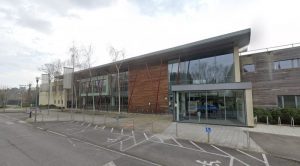
Outside Woodlands School, Leatherhead. (Credit: Google Street View)

An ‘Outstanding’ Surrey school could open a new satellite site at another primary- around eight miles away. 

Surrey County Council has revealed plans to expand a top-rated school for children with severe learning difficulties. Woodlands School, in Leatherhead, could have a second location at Cranmere Primary and Nursery school in Esher – a mere 25-30 minute drive away.

The move would create up to 28 extra places for children with severe learning difficulties and autism, all of whom have an Education, Health Care and Plans (EHCPs). 

Currently Woodlands only has room for 83 pupils – though it has been squeezing in an extra 16 thanks to temporary classrooms.

Meanwhile Cranmere Primary, which has been rated ‘Good’ by Ofsted, has been running under capacity for years because of falling birthrates, council documents state. The building can take 630 pupils, but numbers have dipped enough there’s now space to share. 

The part of the Cranmere site earmarked for the expansion will need adapting so it can properly meet the needs of Woodlands pupils, according to reports. The work is said to have been planned to take place over the summer holidays, ready for a gradual roll-out of places from October 2025.

Surrey County Council says the set-up makes sense both for families and the budget. Officers say having local specialist places means children do not have to travel far away to school. 

By providing places within the state system, the council’s education bill drops and saves money for the taxpayer. Should these pupils be required to attend an education provision in the independent sector, costs would equate to around £1.484m per year every year. This is compared to the average cost for state-maintained specialist places of £644k.

Staff at the new site will be employed directly by Woodlands School and numbers will grow slowly over time, depending on demand. 

The council says the move is part of its wider ambition to increase high-quality specialist school places across Surrey as the number of children with EHCPs continues to rise- with a 10 per cent increase expected over the next five years. 

The current stage of the consultation will close on Friday 5 September 2025

Outside Woodlands School, Leatherhead. (Credit: Google Street View)

Related reports:

£4.9 million not enough to solve Surrey’s SEND problems?

SENDing Pupils to Epsom’s Mainstream Schools?

Surrey sent on a U-turn on SEND by MPs?


Epsom’s Parish Church Marks 200 Years

St Matrins Nave

This September, Epsom pauses to celebrate the 200th anniversary of its parish church, the Church of St Martin of Tours. For two centuries the building has stood at the centre of town life — a place of worship, history, and identity for Epsom and Ewell.

The anniversary weekend will feature a range of special events. On Sunday 14 September at 3pm, historian Peter Ross will deliver a talk entitled Dining with James and Jane: Eating at Home with the Georgians. Drawing on the vivid diaries of Norfolk clergyman James Woodforde (1758–1802), who recorded every meal he ate, and the letters and novels of Jane Austen, Ross will reveal the food, manners, and household rhythms of Georgian England. His illustrated lecture will include images of paintings, prints, cookery books, and everyday domestic objects, offering a glimpse into the lives of our Georgian forebears. The afternoon will conclude with tea, followed by a service of Choral Evensong.

A stone laid in 1825

On 19 May 1825, the Rev. Joseph Darby, vicar of Epsom, laid the first stone of a new parish church. The medieval church that had stood for centuries was by then both too small and in disrepair. A meeting in 1823 resolved — after some debate — to rebuild. The sturdy medieval tower at the north-west corner was spared, along with the ancient font and wall memorials, but the remainder was swept away.

The contractors, William Blofield of London, working to plans by architect Mr Hatchard of Pimlico, expanded the footprint of the building. Side aisles were widened and lengthened, the west front was advanced, and new staircases and galleries provided for greater capacity. The rebuilt church could now seat around 1,120 parishioners.

At the stone-laying ceremony, Rev. Darby was presented with a handsome silver trowel, inscribed to mark the moment. Sadly, the trowel has since been lost, but the act it commemorated continues to shape the heart of Epsom today.

Victorian Epsom: railways and renewal

Within a generation, however, Epsom was changing again. The arrival of the railway in the 1840s transformed the town from a quiet settlement of around 3,300 people into a rapidly growing commuter hub. Two lines, one from London Bridge and another from Waterloo, brought new residents and prosperity. By the mid-nineteenth century, the population had more than doubled.

The parish church once again felt the strain. Inadequate for the growing congregation, its galleries deemed unsightly, and its facilities cramped, it became the subject of another ambitious rebuilding plan. The vicar at the time, Rev. Waldegrave Bainbridge-Bell, rallied support from influential local figures, including Lord Rosebery and Sir Thomas Bucknill MP.

There was even talk that Epsom Parish Church might become the cathedral of a proposed new Diocese of Guildford. With such aspirations in mind, the architects Nicholson and Corlette were commissioned to draw up a design of “cathedral proportions”.

The 1908 extension

In August 1907, the foundation stone for the grand new east end was laid. A year later, on St Martin’s Day (11 November 1908), the Bishop of Winchester consecrated the new extension. The project cost £13,000 — a significant sum at the time — and gave the church much of the form it has today.

Not all of the plans could be realised: financial pressures meant the most ambitious elements of the Nicholson and Corlette design were never completed. But the east end remains one of Surrey’s most impressive ecclesiastical interiors, a testimony both to the ambition of its builders and to Epsom’s growth in the early twentieth century.

What remains today

Today, three key layers of history meet in the building:

  • The medieval tower, the oldest surviving structure in Epsom.
  • The 1825 nave and west end, the fruit of the first great rebuilding.
  • The 1908 east end, marking the town’s Edwardian expansion.

Together, they tell a story not only of the parish church but of the town itself: medieval market village, Georgian spa settlement, Victorian commuter suburb, and Edwardian provincial centre.

Looking to the future

While this year’s anniversary recalls the laying of the 1825 foundation stone, there are further milestones ahead. In just three years’ time, the church will celebrate the 150th anniversary of its great east end. That event, too, will provide an opportunity for reflection and celebration.

For now, parishioners and townsfolk alike are invited to join in the September festivities — to mark 200 years since the church we know today began to rise from the foundations of its medieval predecessor.

As one of Epsom’s most enduring landmarks, St Martin’s stands not only as a house of worship but also as a witness to the town’s history. Its tower and walls have looked down on 200 years of change. In celebrating this anniversary, the community also honours the generations who built, rebuilt, and preserved Epsom’s parish church at the heart of civic life.


Two new Epsom and Ewell virtual day trips unveiled

Luna and Analees beside Emily Davison statue in Epsom

Epsom & Ewell Borough Council has launched two new inclusive tours, part of their Virtual Day Trips series, in partnership with Whistlestop Tours. These tours explore Epsom and Ewell, shining a spotlight on the history and cultural heritage of the borough.

The Virtual Day Trips can be watched online for free – from the comfort of home, a school classroom, or in shared community spaces. They include film and audio, with immersive resource packs and memory boxes also available to bring the tours to life.

The Epsom and Ewell Virtual Day Trips were funded by the Arts, Culture and Heritage UKSPF 2024/25 allocation. They sit alongside the Nonsuch Formal Gardens tour produced in 2024.

This project is part of the council’s strategy to widen access to local history, allowing people to engage in a way that is comfortable to them.

The tours last around 30 minutes. Highlights include:

  • Architectural elements from Nonsuch Palace near the Assembly Rooms in Epsom town centre
  • Meeting residents and hearing about their passions, from throwing pottery to playing the bandura, the national instrument of Ukraine
  • A rare peek inside the Watch House on Ewell High Street
  • Ghost stories from local residents
  • A behind-the-scenes tour with the Epsom Beekeepers Association

Councillor Clive Woodbridge, Chair of the Community and Wellbeing Committee, said:

“I have lived in the borough of Epsom & Ewell for many years, and I found these tours completely fascinating. I thoroughly recommend them, whether you are new to the borough, a long-time resident like me, or someone who is interested in the local area – they can be enjoyed by everyone.

These two new inclusive Virtual Day Trips show our commitment to increasing access to our borough’s rich history and cultural heritage. They will help people really get to know our fantastic local area.”


Virtual Day Trips

Explore here:
Epsom
Ewell

The first Virtual Day Trip produced was Nonsuch Park.

Digital tours are also available on Bloomberg Connects:


The Virtual Day Trips have been developed by Epsom & Ewell Borough Council in partnership with Whistlestop Arts, Bourne Hall Museum, Ewell Library, Epsom & Ewell Refugee Network, Epsom Beekeepers Association, Parkinson’s Choir, Walk & Talk 4 Men – Surrey, Epsom Pots, and local residents.

About Whistlestop Arts
Whistlestop Arts is run by two creatives:

  • Annalees Lim – a freelance artist with extensive community arts experience, particularly in disability arts and accessible projects. She is also an illustrator and children’s activity book author.
  • Luna Russell – a maker and arts facilitator passionate about the positive impact of the arts. She has managed projects for Chichester Festival Theatre, Chichester Cathedral, Surrey Arts and Horsham District Council, as well as leading community arts programmes.

Whistlestop Arts Virtual Day Trips
Virtual Day Trips are presented by Annalees and Luna, who meet local people and share their stories. Each trip includes films, podcasts and craft activities.

Full-length films are designed for use in group settings such as care homes and day centres, with built-in pause points for activities. Resource packs are available to enhance the experience.

For more information, visit: Whistlestop Arts – Virtual Day Trips

Luna Russell and Annalees Lim beside Emily Davison statue in Epsom. Credit Whistlestop Arts


Surrey care home concerns

Eastcroft Nursing Home in Banstead (Google)

The death of a 76-year-old man, who was found on the floor with fractured ribs, has led to concerns over safety of the remaining residents at a Surrey care home. Staff at Eastcroft Nursing Home in Woodmansterne Lane, Banstead, were notified that Stephen Lawrence had fallen on December 21, 2022, after his alarm was triggered. He had sustained multiple rib fractures but despite his complaints about abdominal pain and discomfort, was not admitted to St Helier hospital until Christmas Day. That was his only recorded incident at the home despite hospital scans later revealing older fractures, including to the spine, ribs and sternum.

Despite treatment, his condition did not improve and Stephen died on January 5, 2023. An inquest into his death was opened on February 16, 2023. It resumed on June 9, 2025, and concluded on June 13, 2025 with the court commenting on the delay between his fall and admission to hospital. It found the nursing home, which the Care Quality Commission judged as requiring improvement in 2023, was unable to explain how he had sustained the numerous old fractures which had all remained undiagnosed until his admission to hospital. It also found there to be deficient records on Mr Lawrence’s condition after his fall.

The court also expressed concerns that Eastcroft Nursing Home’s manager provided conflicting accounts over attempts to seek medical attention for Mr Lawrence after his fall – and for suggesting his rib fractures were sustained after he had been transferred to hospital. Coroner Anna Crawford said: “Mr Lawrence sustained significant unexplained injuries whilst he was a resident at Eastcroft Nursing Home. Nursing Home records were deficient in their recording of key events following his unwitnessed fall on December 21 2022. There was a delay in seeking medical advice following the unwitnessed fall on December 21 2022. The Nursing Home manager provided conflicting evidence about efforts to obtain medical advice and did not accept that the acute fractures leading to Mr Lawrence’s death occurred whilst he was at the nursing home. In view of all of the above, (I am) concerned that there is an ongoing risk to current residents.”

Eastcroft Nursing Home, which declined to comment at this stage, are under duty to respond to the prevention of future deaths report within 56 days. The coroner said: “Your response must contain details of action taken or proposed to be taken, setting out the timetable for such action. Otherwise you must explain why no action is proposed.”

Eastcroft Nursing Home in Banstead (Google)


RNIB blind to the interests of its Epsom residents?

Swail House aerial Google Maps.

The future of Swail House in Epsom, a landmark housing estate for visually impaired people, has become the subject of debate as residents and the Royal National Institute of Blind People (RNIB) present differing perspectives on redevelopment plans.

Swail House, opened in 1952 and named after Martha Swail, was one of the first estates in the UK designed specifically for blind people. With flats laid out to aid navigation, landscaped grounds, and facilities for social activities, it was hailed as a flagship initiative. Over time it has included social rooms, a restaurant, and a Chelsea Flower Show award-winning garden.

Residents’ Concerns

Some residents and supporters have voiced fears that redevelopment will diminish the estate’s original character and reduce the number of flats for visually impaired tenants. They argue that facilities such as communal spaces, gardens, and the on-site Epsom & Ewell Talking Newspaper (EETN) studio, which has operated from Swail House for over 40 years, are at risk.

Complaints have also been made about the consultation process, with claims that residents’ questions have gone unanswered and that accessible formats, such as tactile scale models of proposed buildings, have not been provided.

Russell Bailey, Chair of the Swail House Association for the Visually Impaired, told the Epsom and Ewell Times:

“We are very keen for the development to go through. We are not so keen about the way it’s being done – i.e. selling off land to pay for the new development – and we are certainly not keen with the fact that there’s going to be fewer flats for visually impaired people. If the RNIB were more financially secure, they could have lent money against the value of the property, kept the land, and built more flats.

I don’t think residents feel they have had the opportunity to input into how it’s going to develop. One real concern is that there will be no communal lounge and no facilities for recording the Epsom newspaper which has been going for many years.”

RNIB’s Position

The RNIB, however, says it has engaged with tenants and will continue to do so. Kathryn Sherratt, RNIB’s Chief Financial Officer, said:

“In March 2025, RNIB submitted an outline planning application to redevelop land at the back of Swail House to build 48 units, and we’re currently waiting for a decision on the planning proposal.

RNIB has consulted with tenants on the planning proposal and will continue to share information and consult as the proposals develop, subject to the outcome of the planning decision.”

Wider Concerns

Supporters of the estate point out that Swail House is more than just a residential complex. Its natural grounds provide quiet areas for guide dogs and for residents to experience sounds of nature in place of visual cues. Campaigners say this unique environment is at risk if large sections of the site are sold.

Local residents outside Swail House have also raised objections to the design and scale of the proposed development, citing environmental and aesthetic impacts.

Next Steps

The future of Swail House now rests with Epsom and Ewell Borough Council’s planning process. Whatever the outcome, the debate highlights tensions between the need to modernise housing stock and preserve the historic vision and facilities that made Swail House a pioneering model for visually impaired people more than 70 years ago.

Image: Swail House aerial – Google Maps.


Prostate cancer vaccine research launched in Surrey

Three men with ne holding an envelope with good news.

In September 2025, The Prostate Project, a Guildford-based volunteer-led charity, will launch a £250,000 campaign to raise funds for a prostate cancer research project widely anticipated to be ‘game-changing’.  

Work has begun to develop a vaccine to prevent the return of prostate cancer in men who have undergone a radical prostatectomy, the surgical removal of the prostate. Cancer vaccines have become an exciting area of research in recent years, and this new treatment could potentially save the lives of more than 1,500 men each year in the UK alone.

The Prostate Project, based at the Stokes Centre for Urology at Royal Surrey County Hospital, has a proven track record of funding research and treatment of prostate cancer, raising more than £11 million since its formation in 1998.

During this time the charity has provided funds for research at the University of Surrey, leading directly to breakthroughs in the diagnosis and treatment of prostate and other urological cancers. The university team is one of the leading groups for immunotherapy research in the UK, and is recognised around the world for its work.

This latest initiative is part of the charity’s longstanding and ongoing support for the work of Dr. Nicola Annels and Dr. Guy Simpson and their team based at the University of Surrey.

A patent has been applied for the vaccine and Dr. Simpson has already proven that it works in the similar treatment of bladder cancer. This new research is required to see if the vaccine works as effectively for prostate cancer patients.

Dr. Guy Simpson, Research Fellow Oncology at the University of Surrey explains:

‘The research will focus on a ‘prime-boost’ vaccine strategy. The new cancer-killing virus, known as HSV5-15 developed by our team at the University of Surrey will be used as an immune ‘priming’ vaccine along with a prostate specific mRNA vaccine to ‘boost’ and maintain this immune response against the prostate.

mRNA vaccines have already proven to be revolutionary in preventing COVID, and this technology is promising similarly effective results in treating cancer tumours.

The vaccine trains the body’s immune system to recognise cancer cells so any that return after surgery can be hunted down and killed, reducing the risk of the disease coming back.  Around 5,000 radical prostatectomies are performed each year in the UK, but between 20% and 50% of men who have their prostates removed will have their cancer return, resulting in them undergoing further radiotherapy and/or hormone therapy.

This treatment is costly, time-consuming and can have unpleasant side effects, and is not always completely successful.

Prostate Project Chairman, Martin Davies, expands on the fundraising initiative:

For over 25 years the Prostate Project has been proud to support a team that is quite rightly recognised by their peers for their work in immunology research, and this latest initiative is perhaps the most important yet. We are looking to raise £250,000, a target that we recognise as ambitious but completely achievable, especially given our past record, and the significance of the potential outcome.

A final word from Dr. Simpson on the timescales for delivery.

This funding will support the initial 18 month research period, but the more money that we raise will have a significant effect on timescales.

The Prostate Project website www.prostate-project.org.uk features a comprehensive FAQ page with answers to many of the questions about the vaccine and details of how to donate.


Epsom schools celebrate GCSE results

Rosebery girls celebrate. Credit: GLF Schools

Epsom schools have been celebrating another strong year of GCSE results, with both Glyn School and Rosebery School reporting exceptional performances from the Class of 2025.

At Glyn School, 86% of students achieved grade 4 or above in English and Maths, with 66% reaching grade 5 or above. Disadvantaged pupils also excelled, with 84% attaining grade 4 or better in the core subjects. Among the top performers were Joshua Ellis (eight grade 9s and three grade 8s), William Unsworth (eight grade 9s), and Frederick Browning (eight grade 9s). Twins Hamish and Oscar Donald also secured a string of solid passes, while Chelsea Football Club player Reggie Walsh managed to complete seven GCSEs alongside making his debut for the club’s first team.

Students reflected on the hard work behind their achievements, with Nicholas Cooper noting: “It was hard work but worth it,” and Joshua Ellis adding: “I’m really happy with my results, and I want to thank my teachers for helping me achieve them.”

Headteacher Jo Garrod praised the determination of staff and pupils, while James Nicholson, CEO of GLF Schools, described the outcomes across the trust as “a fantastic set of GCSE results.”

Meanwhile, at Rosebery School, the celebrations were equally jubilant. One in three exam entries was awarded a top grade 9 or 8, and half of all results fell between grades 9 and 7. Ninety-one per cent of students achieved grade 4 or higher in both English and Maths, and more than 80% reached grade 5 or above. In Maths and Science alone, Rosebery girls achieved 128 grade 9s.

Individual highlights included Iris Aryeetey and Eilidh McFarlane, who each achieved ten grade 9s, while twins Grace and Hannah Black amassed a remarkable 15 grade 9s and five grade 8s between them.

The school’s overall performance set new records, with an average grade of 6.4 and an Attainment 8 score of 64. Headteacher David Lach said the results placed the cohort among the top 5% of schools nationally and praised both staff and pupils for their resilience during what he described as a “tragic and difficult academic year.”

With both schools celebrating record results following last week’s strong A Level outcomes, Epsom students appear to be ending the summer term on a high.

Related reports:

Epsom’s boys’ and girls’ schools celebrate A level results

Photo: Rosebery girls celebrate. Credit: GLF Schools


Epsom commemorates VJ day

Barb Warwick at the St Martin's VJ day celebration

St Martin’s Church, Epsom, was filled on Friday 15th August as the borough came together to mark the 80th anniversary of VJ Day – the end of the Second World War in the Far East. The service, organised by the Royal British Legion’s Epsom and Ewell branch, brought together civic leaders, veterans, families, choirs and the wider community to commemorate those who served and those who never came home.

The service was led by Revd Nick Parish, who in his opening prayer set the tone:

“God, our Father, in the dying and rising of your Son, Jesus Christ, you have brought life and salvation out of cruelty and death. We mark VJ Day in gratitude for the courage of the allied forces who suffered for freedom in the Far East campaign, and in sorrow for all that hinders the coming of your kingdom of peace. Give us wisdom to learn from the bitter memories of war and hearts that long for the unity of all nations.”

A personal touch from local families

Among the most moving contributions came from Mrs Sheila Carlson-Berry, who read extracts from her late father Douglas Fletcher’s letters home from Burma. Fletcher, who had volunteered for the RAF at 19, wrote more than 250 letters to his sweetheart Sylvie during his service.

From October 1944 he wrote with cautious optimism:

“I suppose by the time you receive this European war will be just about finished. What a wonderful thought. It must make the people at home very happy… loved ones at home free from all danger. That, of course, is the main reason for our joy. The other is that now we can have the men and materials out here to put an end to this.”

In another letter, he reflected on the “forgotten” nature of the Burma campaign:

“Most people don’t realise there’s a war on out here. It’s only the people who have someone here that understand what is happening. The children have suffered most. It will take years to erase horrible memories from their minds. Man’s inhumanity to man – a terrible war, isn’t it?”

By August 1945, as the atomic bombs fell on Japan, Fletcher wrote with relief:

“So it’s all over. Hard to believe, isn’t it? It came so suddenly, but there it is. It will make things so much easier… Yes, the atomic bomb is a terrible weapon, but I think we have it to thank for the Jap surrender… I sincerely hope it will be the last war on this earth. War is too terrible a business. So many innocent people have to suffer.”

Sheila told the congregation: “As you probably guessed, Douglas is my dad. Sylvie, my mum. He never forgot his comrades. Each Remembrance Day, I went with him to Westminster, and he cried as he planted a cross in the garden for his friend and pilot, Godwin Scudamore, who didn’t make it home.”

The stories of Epsom’s fallen

Cllr Dr Graham Jones MBE and the Lord Lieutenant of Surrey, Michael Molyneux, read researched accounts of four Epsom men who lost their lives in the Far East campaign.

  • Sergeant Jack Cannon, Royal Artillery, died 28 February 1944 aged 30 at Imphal, India: “Jack married Nora Rush in 1940, and a year later their son Anthony was born. After just a year with his family, Jack was sent to India… He was killed in action during a Japanese attack and later interred at the Commonwealth War Graves cemetery in Imphal. His widow Nora requested the inscription: ‘To a beautiful life came a sudden end, and he died as he lived, everyone’s friend.’
  • Corporal Lionel William Murray, Dorset Regiment, killed at the Battle of Kohima, 4 May 1944, aged 28: “Before the war he lived with his mother in Langley Vale. He was evacuated from Dunkirk, then sent to India to train in jungle warfare. At Kohima he fought in bitter hand-to-hand combat and was killed in action. His gravestone reads: ‘In loving memory of a beloved son and brother. Rest in peace.’
  • Lance Bombardier Alfred William Cates, Royal Artillery, died of cholera 26 July 1943 aged 42: “Stationed in Singapore, he was taken prisoner in February 1942 and sent to work on the notorious Thailand–Burma Death Railway. His widow Emma chose the words: ‘So young, so calm, so bright, I bid you, my dearest one, goodnight.’
  • Noel Seymour, RAF wireless operator, died 14 October 1943 aged 21: “Taken prisoner in Singapore, he too was forced to work on the Burma Railway, where some 30 prisoners died every day. Noel was one of them. He lies in Kanchanaburi War Cemetery in Thailand, and his name is remembered on the war memorial in this very church.”

Tributes from today’s leaders

Helen Maguire MP for Epsom and Ewell, whose grandfather had served in Burma, spoke of both the past and her own military service: “Those who served in the Burma campaign were referred to as the Forgotten Army, and today we remember them and we honour them… My grandfather fought in the Battle of Kohima, a brutal and decisive turning point in the war. Like many who served there, he never spoke of his experiences, but it was clear the war stayed with him for the rest of his life. I remember him today with pride, gratitude and honour.”

Maguire linked her own military service in Bosnia and Iraq to the experiences of those remembered:

“War is cruel and it affects innocent people. It’s something civilians should never have to live through. Today, I remember my grandfather and those he served with. I remember those who didn’t come home, and I remember too the lasting impact of service on families, on lives and on future generations. We give thanks for peace and pray for an end to wars.”

Community effort

Barb Warwick, principal organiser with the Epsom RBL, later thanked the many contributors, from choirs and standard bearers to the volunteers who served over 100 cups of tea and cake in St Martin’s Hall. She acknowledged the “wonderful trumpeter Mr Dennis Sexton” for sounding the Last Post, and Tom Davey representing 135 Squadron.

Warwick reflected that this was “almost certainly the last service of its kind” and praised those who helped plan the event, especially John Rogers and Revd Nick Parish: “You did them proud.”

Remembering the Forgotten Army

The commemoration at St Martin’s – once known as the “Burma Star church” – brought together personal memory, civic duty, and community remembrance. The letters of Douglas Fletcher, the stories of Cannon, Murray, Cates and Seymour, and the testimonies of descendants and leaders ensured that those from Epsom who served in the Far East will not be forgotten.

As the exhortation reminded the packed congregation: “We will remember them.”

You can watch the full service on this video link: Epsom and Ewell VJ Day Commemoration

Image: Barb Warwick of Royal British Legion Epsom and Ewell the principal organiser of the event.


Local MP speaks out on Epsom Hospital’s bed-blocking

MP Helen Maguire speaks to staff at Epsom hospital

Epsom & Ewell’s MP, Helen Maguire, has called for urgent action on social care after visiting Epsom Hospital’s accident and emergency department this week.

The Liberal Democrat MP met hospital staff and health professionals to discuss the forthcoming NHS 10 Year Plan. She said her visit underlined the “unimaginable pressures” faced by staff and patients as a result of overcrowding and long waits.

According to figures from Epsom and St Helier University Hospitals NHS Trust, the average stay in A&E at Epsom during 2024/25 was 5 hours and 41 minutes. For patients admitted, the average length of stay rises to nearly 10 days. Some patients with mental health needs remain in the emergency department for extended periods due to difficulties securing appropriate care.

Maguire said she was concerned at the sight of patients being treated in corridor beds — something NHS staff acknowledged as a consequence of space shortages and wider pressures across the system.

Welcoming the government’s forthcoming NHS 10 Year Plan, Maguire argued that improvements in social care were essential to tackle the problem of so-called “bed-blocking” — where patients who are medically fit to be discharged remain in hospital because no suitable care arrangements are available.

“Hospitals like Epsom, in my constituency, face unimaginable pressures as a result of years of mismanagement under the previous Conservative government,” she said. “If this Labour government are serious about ending the bed-blocking crisis and improving patient outcomes, they should listen to the Liberal Democrats and put social care front and centre of the NHS 10 Year Plan. We cannot fix our NHS unless we fix the crisis in social care.”

She also praised the efforts of Epsom and St Helier staff: “I want to pay tribute to all of the wonderful staff at Epsom Hospital, and across the Trust, who work tirelessly to deliver the best possible outcomes for patients under incredibly testing circumstances.”

Local pressures in national context
Epsom and St Helier hospitals have faced longstanding challenges with ageing estates, high demand, and difficulties in discharging patients into community or residential care. The Trust has been working on plans to modernise services, including proposals for a new specialist emergency care hospital in Sutton, while maintaining district services in Epsom and St Helier.

Nationally, the issue of delayed discharges has been identified by successive governments as a major factor behind hospital overcrowding. NHS England data for 2024 showed that more than 12,000 hospital beds across the country were occupied each day by patients who no longer needed acute care, but who could not be discharged safely.

Health experts say shortages of social care staff, funding pressures on local councils, and a rising elderly population have combined to make the problem worse. The government has promised its NHS 10 Year Plan will set out reforms aimed at shifting more care into the community and improving integration between health and social care.


Let your A level winners be creative says Epsom’s Arts University

Student work by UCA BA Graphic ... sign student Ryon Pattison

Ahead of A-level results day and Clearing, University for the Creative Arts (UCA) has written an open letter to parents and carers asking them not to discourage their children from making the creative choice and ultimately pursuing their dreams this week.

UCA writes on behalf of the children that came before, those that didn’t choose games over geography, marketing over medicine or animation over accounting due to pressure from their parents and carers, of which there are many examples posted on the online community, The Student Room. “I’m honestly just doing linguistics for my parents. They expect me to get a ‘good’ degree, to get a secure job – they think working in the film industry won’t get me anywhere.”

The University, which for nearly 170 years has delivered creative education, acknowledges it’s only natural for parents and carers to feel uncertain when children say they want to pursue a creative subject. “We understand the hopes and concerns that come with guiding children’s higher education and subject choice. Parents and carers want the best for them – a secure future,” says UCA’s Vice-Chancellor, Professor Melanie Gray.

This is reinforced in UCAS’ Project Next Generation report, which states parents want to guide their children towards the pathways that have the best capacity for earning and stability. As a result, almost half (48%) of children in the report, agreed that they feel pressure from parents to make ‘good’ decisions about their education. 

UCA reassures in the letter that ‘a creative choice is a career choice,’ with the creative industries worth £124 billion a year to the UK economy and support more than 2.4 million jobs. Long-term, the sector is also part of the Government’s modern Industrial Strategy – a 10-year plan backing the UK’s strengths with ambitions for eight high-growth sectors, aiming to increase productivity and create jobs.    

Professor Gray, adds: “With this letter we’re not reprimanding parents and carers, we’re simply asking them to support their children and have confidence in them choosing what they love. We have seen time and time again, children not pursuing their creative dreams, which now more than ever, have a secure future.”

UCAS’ report acknowledgesparents and carers play a pivotal role in the crucial choices children make about their future. It also shows children’s higher education choices are inspired by their passions. Support and reassurance, not pressure, is needed to empower children in their decision making.

Support ahead of A-level results day and Clearing is available on UCA’s dedicated webpage, uca.ac.uk/clearing for parents and carers, as well as those wanting to make the creative choice. On Friday 15 and Saturday 16 August, the University also welcomes anyone to tour its campuses and ask staff and current students questions. For those not yet applied through Clearing, Staff will also make on-the-spot offers to those suitable.

Image: Student work by UCA BA Graphic Ryon Pattison


Silver musical lines under a cloudless Epsom sky

Epsom and Ewell Silver Band in Rosebery Park

On Sunday 10 August, under a radiant summer sky, the Epsom & Ewell Silver Band gave a free open-air concert in Rosebery Park. Families and friends gathered, bringing their own chairs or settling under marquees, enjoying ice creams, picnics, and the gentle warmth of the day. The relaxed, communal atmosphere felt quintessentially British—just the sort of setting the band seems to relish.

EESB competes in the First Section of the London & Southern Counties region, and is active within the Southern Counties Amateur Band Association (eesb.org.uk). Founded around 1910 as Banstead Silver Band, it has a rich heritage, including early rehearsal stories in barns and a legendary centenarian player, Tom Fiddimore, who helped sustain the band through decades. In July 2023, the experienced tenor-horn player and conductor Tariq Ahmed was appointed Musical Director. Originally from Lancashire, Tariq has an impressive background with championship bands and contest successes, including experience on BBC Radio 2, European tours, and national finals.

EESB’s presentation was a masterclass in subtle harmonies and gorgeous arrangements. The ensemble gently wove together familiar melodies with rich brass textures.

The first half opened with San Lorenzo, a lyrical piece whose fluid lines invoked a serene Italian sunrise. Swingtime Religion brought a sprightly, jazz-tinged rhythm to the park. The Wichita Lineman was delivered with poignant phrasing, capturing the emotional core of Jimmy Webb’s classic. In Concerto de Aranjuez, the Adagio’s romantic guitar theme, eloquently rendered by brass, floated beautifully amid the greenery. The Spirit Within, a more modern piece imbued with introspection and warmth. Bui Doi carried a haunting quality, resonating with depth, while St Louis Blues March blended bluesy soul with marching energy. Let’s Face the Music and Dance, the Irving Berlin standard, swung with effortless charm to close the half.

The second half began with Florentiner March, bright and ceremonial, restoring lively momentum. Ae Fond Kiss, Robert Burns’ tender farewell, was exquisitely phrased. Salute to Sinatra offered a glitzy, nostalgic trip back to the Rat Pack era. With One Look from the musical Sunset Boulevard was dramatic and expressive, the brass almost singing the lyrics. Pinball Wizard brought energy and edge, while Song of the Night Sky was dreamy and atmospheric, ideal for a summer evening. Pastime with Good Company nodded to Elizabethan merriment, and the finale, You Can’t Stop the Beat, soared energetically to bring the concert to a rousing close.

This concert showcased the band’s mastery of nuance, from classical depth to modern zest, with arrangements that highlighted every section in balanced harmony. On a sunny August afternoon, amid picnics and cheerful chatter, the Epsom & Ewell Silver Band underlined its role not just as a brass ensemble, but as a focal point of community culture and joyful musical experience.

Thanks to Cllr Steven McCormick (RA Surrey and Woodcote and Langley) for arranging and the photo.


Garage Gives Ewell a Heart-Start

Bess Harding of EMEG gives defibrillator to Stephen Hardie-East of Autotest

A busy garage in Ewell that supports a prominent local charity now offers a rather special – and potentially life-saving – service.

Autotest MOT in Ruxley Lane recently celebrated its new car-servicing facility with an open day hosted by directors Stephen Hardie-East and Shelley Hofman, inviting customers, friends and neighbours. Guests enjoyed music, refreshments and a raffle, including a light-hearted competition to guess how many balloons were packed into a car. The event raised funds for the Epsom Medical Equipment Fund, a charity that since its launch in 1979 by Bess Harding has raised over £6 million to buy equipment for Epsom General Hospital that would not normally be funded by the National Health Service. Purchases have ranged from small items to major diagnostic machines.

As Autotest approaches its thirty-fifth year of trading, the charity has returned the gesture of support. It has donated a ZOLL brand defibrillator worth £2,300 to the garage. A defibrillator is a device that can deliver an electric shock to restart a person’s heart in cardiac arrest. This model is designed for public use and gives clear spoken instructions, guiding an untrained person step-by-step through pad placement and giving real-time feedback on the quality of chest compressions. Bess Harding explained that it “verbally walks a rescuer through placing the pads and gives essential feedback on the quality of their compressions to give the best chance of surviving.”

Stephen and Shelley, with Shelley being a qualified first-aider, said they were delighted to have the device on site and thanked the Epsom Medical Equipment Fund for providing it. The charity has also just purchased twenty-nine defibrillators for Epsom General Hospital.

Public access to defibrillators is seen nationally as a key factor in saving lives from cardiac arrest outside hospital. There are around 30,000 such incidents in the United Kingdom each year and fewer than ten per cent of people survive. Medical experts say the chances of survival more than double if a defibrillator is used quickly, ideally within five minutes, together with cardiopulmonary resuscitation. Each minute of delay can cut survival chances by up to ten per cent. Despite this, studies show that even when a defibrillator is located within 500 metres, it is only used in about one in ten cases, often because bystanders do not know where to find one or are uncertain how to operate it.

The UK’s national database, known as The Circuit, maps the location of defibrillators so ambulance services can direct people to them during emergencies. There are now more than 70,000 devices registered, with a target of 100,000. Health charities estimate that if public awareness, training and willingness to use defibrillators were more widespread, an extra 1,000 lives could be saved in England each year.

In Epsom and Ewell, the borough council has worked with the Community Heartbeat Trust to install twelve public access defibrillators at locations including Ewell’s Market Place, Horton Pharmacy and Ruxley Lane. The new unit at Autotest adds another publicly accessible location, well-placed in a busy part of the borough, and comes with the reassurance of staff familiar with first aid.

More information about EMEF on its website: emef.org.uk 

Image: Bess Harding of EMEG gives defibrillator to Stephen Hardie-East of Autotest


Epsom Mother and Daughter join British Army together

Mother and daughter De Sadlers

A mother and daughter from Epsom have completed Army entry training within weeks of each other, marking the start of their respective military careers.

Sherene De Stadler, 40, will join the Army Reserve with the Grenadier Guards, while her daughter Chloe, 17, has graduated from the Army Foundation College in Harrogate.

Chloe was among 750 Junior Soldiers taking part in a parade at Harrogate to mark the end of months of basic training. The programme included military skills, fitness, education and a two-week battle camp and tactical exercise to prepare recruits for Army life.

Having completed phase one training, Chloe will now move on to trade training in her chosen specialism. She hopes to join the Army Air Corps as ground crew, aiming to work with Apache helicopters as part of the rear crew team.

She enlisted shortly after sitting her GCSEs at Epsom High School. “Joining the Army always interested me because of all it has to offer,” Chloe said. “I am grateful for the opportunities it will give my future career and the challenges I will need to overcome to get there.”

Over 5,000 family members attended the parade, including Sherene. “It felt amazing knowing my mum was in the audience, knowing what I’ve gone through to be on that parade square,” Chloe said. “It’s so nice to be able to talk to her about Army life because she understands and can relate to it. I hope my mum is as proud of me as I am of her.”

Sherene, who completed her own basic training weeks earlier, said: “There’s definitely been loads of tears from myself and her father today. Chloe has quit projects before when they’ve been hard, so I’m very proud of her for going through the challenges of Army training and enjoying it.”

Chloe fought to get time off to attend Sherene’s passing out parade earlier this year. “It’s very different from watching your daughter graduate from university,” Sherene said. “We’ve completed training so close together that we both have a unique mother-daughter bond that not many people get to have.”

Chloe’s advice to any young person considering the Army is: “Try your hardest and do not let other people get into your head.”

The Senior Inspecting Officer at the Harrogate parade was Chief of the General Staff, General Sir Roly Walker, with former England football manager Sir Gareth Southgate as guest of honour.

The Army Foundation College takes two cohorts of Junior Soldiers each year, offering either a 49-week course or a shorter 23-week course.

For more information, resources and how to join junior training at AFC Harrogate click here.


What has kept us well in Surrey through the ages?

The Centurions group was founded at a meeting of long-distance walking enthusiasts held on 11 May 1911 SCC

How have people in Surrey looked after their wellbeing through the centuries — and what can we learn from them today? That’s the question behind a new year-long heritage and wellbeing initiative backed by the National Lottery.

It’s Not Your Birthday But… (INYBB), a Surrey-based arts and social impact organisation, has been awarded £99,781 by The National Lottery Heritage Fund to deliver What Keeps Us Well, in partnership with the Surrey History Centre (SHC). The project runs from August 2025 to July 2026.

Drawing on six miles of historic records held at SHC — ranging from medieval manuscripts to community newsletters — the project will explore how people across Surrey have maintained wellbeing through food, exercise, creativity, connection, and community.

INYBB’s artistic team will collaborate with archivists and three local partner groups to deliver the programme:

  • The Halow Project, supporting neurodiverse young people in Guildford and Woking
  • Surrey Gypsy Traveller Communities Forum, promoting inclusion and cultural understanding
  • Surrey Youth Groups, including LGBTQ+ youth, carers and neurodiverse teens in Woking and Knaphill

Together, they will develop:

  • 36 creative workshops
  • Training and community events at the Surrey History Centre
  • A co-created exhibition showcasing historic sources and new creative responses
  • A short documentary film
  • A published anthology of written work
  • A digital wellness guide
  • An open call for artists and writers to create new work inspired by archive material

The project aims to reach over 46,500 people, with a strong emphasis on engaging communities currently underrepresented in heritage activities.

“At a time when mental health challenges are increasing across our communities, this project will highlight how stories from the past can inspire wellness today,” said an INYBB spokesperson.

How to Get Involved

  • Volunteers are invited to help with exhibitions, research and more
  • Venues (libraries, community centres, health hubs) are encouraged to host the free exhibition
  • Artists and writers will be invited to respond creatively to archive materials through an open call launching this autumn

To register interest or find out more, visit itsnotyourbirthdaybut.com or follow @itsnotyourbirthdaybut on social media.


About INYBB

It’s Not Your Birthday But… (INYBB) is a creative organisation working across Surrey and the South East to support wellbeing through arts and social connection. It runs participatory projects that explore identity, place, and belonging — often in partnership with community groups and public bodies. The name reflects the idea that celebration, support and attention shouldn’t be limited to birthdays alone — everyone deserves moments of care and connection, every day.

See HERE more news from the Surrey History Centre

Image: The Centurions group was founded at a meeting of long-distance walking enthusiasts held on 11 May 1911. Courtesy SCC


Epsom & Ewell Community Fund Seeks New Chair

The Epsom & Ewell Community Fund is a philanthropic fund that provides financial support to local charities and projects across the borough.

As Chair, your role is to lead a Fund Panel made up of individuals with experience in serving the local community. The Fund is an ‘area fund’ under the umbrella of the Community Foundation for Surrey.

The Epsom & Ewell Community Fund maintains and builds assets in two parts:

  1. Grants Fund – for immediate grant giving.
  2. Endowment Fund – an investment fund for future generations, with the investment income used for making grants.

Responsibilities of the Fund Panel:

  • Raising philanthropic donations from local high-net-worth individuals, businesses, and other sources.
  • Deciding which local charitable organisations or projects should receive grants.
  • Managing the strategic development and growth of the Fund.

Ideal candidates will bring:

  • Experience of leading a team of volunteers.
  • A passion to improve the lives of local people, especially those experiencing disadvantage.
  • An understanding and/or experience of the voluntary sector.
  • Experience in fundraising, philanthropic giving, or event organisation.
  • A strategic vision.
  • Strong networking skills across the local community.
  • Professional experience in areas such as marketing, communications, fundraising, events, or business networking.

There are currently eight members of the Fund Panel. Meetings are held approximately four times a year, either in person or online. A representative from the Community Foundation usually attends to provide advice and support.

While this is an unpaid, voluntary position, the opportunity to help improve the lives of individuals and communities across the borough is deeply rewarding.

You can find out more about the Epsom & Ewell Community Fund at:
Epsom and Ewell Community Fund — Community Foundation for Surrey

For more information, contact Chris Frost at
chrisfrost810@btinternet.com or 07516 024999

The deadline for applications is 5pm, Friday 19th September 2025.


Asylum hotel tension mounts in Surrey

Stanwell Hotel protest on July 31. (Credit: Sam Jennings/ Facebook) Permission for use.

The leader of Spelthorne Borough Council has again written to the Home Office, demanding the government to abandon controversial plans to use Stanwell Hotel exclusively for single male asylum seekers.

The Home Office announced on August 1 it was temporarily pausing the scheme. But it has not been abandoned.

In her second letter on the matter, this time addressed to the Minister of State for Border Security and Asylum, Cllr Joanne Sexton warned the Home Office there could be “further escalation within the community” if this “urgent and significant” issue is not seen to.

She wrote: “I am writing to you to register heightened community concern over the potential consequences of the proposed changes and the impact they will have on Stanwell Village.”

The renewed letter comes just days after hundreds of people protested outside the hotel near Heathrow Airport. Dozens of signs were held stating ‘Just say no’ and people were chanting outside the hotel.

So far two people have been arrested during the protests, one on suspicion of attempted arson and another on suspicion of “conspiracy to commit violent disorder and aggravated trespass”.

Councillors and Spelthorne MP Lincoln Jopp have also expressed disappointment at the situation, urging the Home Office to listen to the community.

The Home Office have since paused the plans but Cllr Sexton has urged for a meeting to be arranged with herself and the Labour Group Leader, Cllr Jon Button, in whose ward the hotel is located.

In her first letter on July 25, Cllr Sexton had warned the Home Office has caused “alarm” in the community and is completely inappropriate for the area.

She said the decision would undo months of successful integration and was made without any proper consultation with the council or residents.

A Home Office spokesperson said: “The government is reducing expensive hotel use as part of a complete overhaul of the asylum system.

“From over 400 asylum hotels open in summer 2023, costing almost £9m a day, there are now less than 210, and we want them all closed by the end of this Parliament.

“We will continue to work closely with community partners across the country, and discuss any concerns they have, as we look to fix this broken system together. The security of the local communities within which hotels are located will always be our paramount concern.”

Image: Stanwell Hotel protest on July 31. (Credit: Sam Jennings/ Facebook) Permission for use.