Epsom and Ewell Times
12th November 2026

ISSN, LDRS and IMPRESS logos

£4.9 million not enough to solve Surrey’s SEND problems?

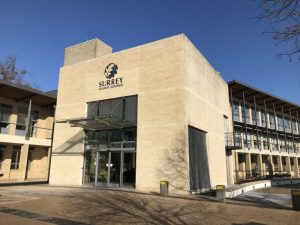
New Surrey County Council HQ, Woodhatch Place on Cockshot Hill, Reigate. Credit Surrey County Council
A £4.9m overhaul of special educational needs and disabilities (SEND) services in Surrey has been approved. But opposition members have claimed the investment won’t fix the system’s deep-rooted problems. The funding was signed off by ruling cabinet members for Surrey County Council at a meeting on July 22, as part of the council’s ongoing budget planning for next year (2026/27). But extra resources and staff “will not by themselves make the significant change the service needs”, according to opposing councillors.

Changes to the SEND service have been recommended as a result of the End-to-End review of the statutory service, council documents state. These include hiring 30 new permanent case officers, forming a new team dedicated to issuing Education, Health Care Plans (EHCPs), and reducing case load from over 200 to 150 per officer. Council documents detail there would also be two new operational groups formed – one focused on staffing, training and system development, while another group will focus solely on tribunals, mediations, dispute resolution, complaints and quality assurance.

But Cllr Fiona Davidson, the committee chair who oversees and scrutinises SEND services, flagged serious concerns to cabinet members. She said the committee “has already found that employing extra staff does not by itself result in the outcomes we so desperately need.” The member for Guildford Residents and Villages slammed the proposal and argued the funding does not describe specific, measurable outcomes or impacts: “How will we know we have made progress?” She said: “[The committee has] deep concerns that this additional funding will once again not deliver the services that the children with SEND, their parents and carers have a right to expect, and all Surrey residents should demand.”

Cllr Davidson said an injection of £15m into SEND services in July 2023 was promised to enable many process improvements in communications, IT changes and strengthen governance. “Was this £15m value for money?” she asked cabinet members. She said: “To make matters worse, many of the backlog EHCPs which the £15m funded turned out not to be fit for purpose. These backlog EHCPs have contributed to the rising number of appeals by parents to the SEND tribunal. The human cost of these poor EHCPs have been extremely depressing […] Children not in school for months and years, families wrung out by trying to get support, schools at the end of their ability to cope trying to get very specialist support for their students. So we wondered, was that £15m value for money?” Although she agreed the investment has delivered significant EHCP timeliness, she said it is not clear that it has achieved much else promised two years ago.

Tim Oliver, Leader of Surrey County Council, defended the new plans, insisting the focus would be on prevention, early intervention and supporting families more effectively. He said: “It’s absolutely wrong that families feel pushed down that route to find the solution that is right for their child. This cabinet is very focused on spending every pound or penny of public money effectively.”

Related reports:

SENDing Pupils to Epsom’s Mainstream Schools?

Surrey sent on a U-turn on SEND by MPs?

Surrey MPs unite against County on SEND silence

Surrey SEND parents owed money

Epsom SEND case highlights a national problem

Surrey sorry for SEND shortcomings

New Surrey County Council HQ, Woodhatch Place on Cockshot Hill, Reigate. Credit Surrey County Council



Victory for parent power after axed bus route is replaced

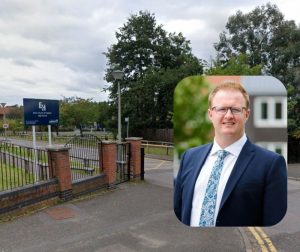
Esher CofE High School headteacher Andy King (Image Google and Esher High)

Campaigning parents whose children were told to bring torches and walk across unlit heathland by Surrey County Council have won a long-fought victory after it was announced that axed school buses would be replaced. Early this year Surrey County Council said it was saving money and cancelling the free bus service between Molesey and Esher High, advising children to instead walk through dark alleyways, unlit heathland and unguarded viaduct sluice gates. The council’s decision was made after bureaucrats decided the route was safe and that there would be no alternative provisions put on, to the horror of worried parents.

Now after months of campaigning, petitions and pressure from senior politicians to stop the ‘cruel and needless punishment of children’, the council has announced Falcon will trial an extra, paid for, 814 service from Molesey to Esher. Parents, though welcoming the news, are asking why the extra service could not have been announced at the same time, saving needless stress and worry, and why it took the community to fight back to make it happen?

Parent Kate Maxwell said: “This whole process has been so stressful on everyone involved, the parents, children, and schools, and for what? I’m thrilled they’ve seen sense but it could have been handled so much differently. They would have known it would cause a lot of problems for everyone, including the children already using paid buses. Surely, if they wanted, they could have put these arrangements in place when they axed the free buses instead of wasting everyone’s time. Why did it take the community fighting back to make this happen?”

In a letter to parents, Esher High School headteacher Andy King said they were pleased to share that an additional 814 bus would be running as a trial from September, following “strong and sustained advocacy from our school and parent community.” It added: “This outcome is the result of collective determination. When 81 of our students lost access to free coach transport, we were placed in a deeply challenging position – one we strongly opposed. But thanks to the powerful, united voice of our parents, carers, staff, governors and supporters, a positive step has now been taken. We want to thank everyone who spoke up, wrote in, and stood with us. Your efforts made the difference. While we regret that such a campaign was necessary, we are relieved that this decision has finally been confirmed. This will support our students getting to school safely, reliably, and ready to learn. At Esher C of E High School, we remain committed to doing what’s right for our students – and this is an example of what we can achieve together.”

MP for Esher and Walton, Monica Harding, has held meetings with the school and written to the council over the matter. She described it as a win for school children who were facing walks of up to three miles across unlit heathland with concerns about safety, after Surrey County Council decided to withdraw the Esher High School bus service. The MP added: “It’s a shame this decision took so long, causing so much uncertainty and stress for parents. Surrey must ensure that its policy making is joined up and reflects the lived experience of our children – I’m glad that this time local families have been heard. We now need to know that this much needed bus provision will be sustained over the longer term.”

Following Falcon’s decision to introduce an additional bus service to transport pupils to and from Esher High School, there will now be four buses on the 814 route. The extra service will initially run as a trial for the first half-term of the 2025/26 academic year with its use monitored before a decision is made on whether it is needed on a longer-term basis.

Matt Furniss, Cabinet Member for Highways, Transport and Economic Growth at Surrey County Council, said, “We’re very aware of the challenges raised by parents and carers and have worked with Falcon to address these. As with all bus services, we need to ensure they are used to make them viable, so I encourage parents and carers to take up this new provision. This additional bus is being provided by Falcon at no cost to Surrey County Council.”

Image: Esher CofE High School headteacher Andy King (Image Google and Esher High)


Epsom Library celebrates refurbishment this week

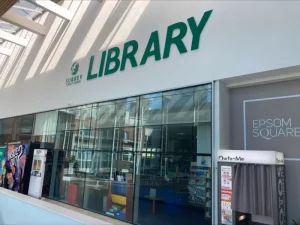
Epsom library

To celebrate its extensive refurbishment, Surrey Libraries is holding a Taster Week at Epsom Library from Monday 16 to Saturday 21 June. The newly transformed Library Hub in the heart of Epsom town centre will offer a vibrant programme of free and ticketed activities for all ages.

What’s On

Throughout the week, visitors can enjoy face painting, yoga, author talks, and the library’s regular sessions including Rhymetime, Storytime, digital support, and craft groups.

Councillor Denise Turner Stewart, Deputy Leader and Cabinet Member for Customer and Communities, said:

‘We know that our Library Hubs are in the heart of our thriving and bustling communities. Every effort has been made to ensure that this investment delivers essential services, event, work, study and socialising spaces that our local residents need and want, creating a lasting legacy to serve our communities now and for years to come.’

Two special exhibitions will be on display during the week:

  • ‘In the Margins’ – celebrating the voices of marginalised disabled artists.
  • Conquest Art Exhibition – showcasing work by individuals with disabilities or long-term health conditions.

Daily Activities Schedule

Monday 16 June

  • 10:00am–4:00pm: Digital Skills Support – NHS App help (Drop-in)
  • 10:30–11:00am: Rhymetime (Under 5s, free)
  • 3:00–4:00pm: Knit & Natter Group (Free)
  • 3:45–4:15pm: Craft: Medieval Flags (Ages 4+, £1 suggested donation)

Tuesday 17 June

  • 10:15–10:45am: Storytime (Ages 4–8, free)
  • 3:45–4:15pm: Craft: Helicopters (Ages 4+, £1 donation)
  • 4:00–5:00pm: Author Talk – S.J. Bennett (£6, book via Eventbrite)

Wednesday 18 June

  • 10:00am–12:00pm: Bourne Hall Museum
  • 12:00–2:00pm: Digital Buddy Session (Free, book in person)
  • 2:00–3:00pm: Talk by Surrey History Centre Archivist Julian Pooley (Free, book via Eventbrite)
  • 3:00–4:00pm: Exercise Class with Rainbow Centre (Free, book in person)
  • 3:45–4:15pm: Craft: Pirate Flags (Ages 4+, £1 donation)

Thursday 19 June

  • 10:30–11:00am: Rhymetime (Under 5s, free)
  • 3:45–4:15pm: Craft: Dinosaurs (Ages 4+, £1 donation)
  • 6:00–6:30pm: Choir Performance – Refugee Network Choir (Free, book in person)

Friday 20 June

  • 10:00am–4:00pm: Smoothie Bike – pedal for a fruity reward
  • 2:00–3:00pm: Yoga (All abilities, free, book in person)
  • 4:00–5:00pm: Craft: Butterflies (Ages 4+, £1 donation)

Saturday 21 June – Family Fun Day

  • 9:30–11:00am: Face Painting (Ages 4+, £1 donation)
  • 12:30–2:00pm: Balloon Modelling (Ages 4+, £1 donation)
  • 2:00–3:00pm: Children’s Author Workshop with Sam Stewart (Ages 8–14, £4, book via Eventbrite)
  • 3:45–4:15pm: Craft: Create Your Own Bookmarks (Ages 4+, £1 donation)

Explore the New Library Hub

Epsom Library now features:

  • Flexible event and performance space
  • Upgraded furniture and study areas
  • Two new meeting rooms
  • Super Access technology: extended access for members beyond staff hours (book an induction in person)

This refurbishment is part of the first phase of the Surrey Libraries Transformation Programme, supported by Surrey County Council’s Land and Property and Capital Projects teams.

The initiative aims to improve accessibility, modernise facilities, and offer more to Surrey’s communities.


Get Involved


Surrey schools shorter Summers?

Children leaving school

Summer holidays could be shortened in Surrey in favour of a longer October half-term break, after a county council decision. The change by Surrey County Council (SCC) means the October half term will now be two weeks long instead of the normal one week, with five days taken off the usual summer holiday period in July 2027 instead.

A public opinion survey carried out from December 2024 received 3,775 responses. Approximately 56 per cent of people agreed with having a two week autumn half term, while 36 per cent opposed the idea. Clare Curran, SCC Cabinet Member for Children, Families and Lifelong Learning, said the results from recent public consultations with schools and residents show “there is a clear appetite for change”. She said 60 per cent of schools that responded were in favour of a two week autumn half term, 30 per cent were against, and a further 10 per cent were undecided.

The two week autumn half-term break for community and voluntary controlled schools will begin in the 2026/27 academic year. Cllr Curran added: “This work is in response to the national conversation regarding school term times, and the feedback received by the council from schools, school staff, and families regarding the challenges of differing term dates. It is our intent to facilitate the council, schools and multi academy trusts working in partnership to set term dates that are consistent across the county.” The school year will still have 195 days, including five INSET days, the council said.

Related reports:

Surrey schools not out for so long in summer?


Surrey sent on a U-turn on SEND by MPs?

New Surrey County Council HQ, Woodhatch Place on Cockshot Hill, Reigate. Credit Surrey County Council
Surrey  County Council has made an apparent U-turn on MPs’ engagement with SEND cases. The leader of Surrey County Council has pleaded with MPs to not “talk down” children services but work constructively and the council denied it was closing down channels of communication.

Liberal Democrat and Conservative MPs wrote separate letters to Clare Curran, the councillor in charge of children’s services, after she sent an email saying the department would respond to fewer constituent SEND cases raised by members.

MPs had expressed their shock and concern in respective letters over Cllr Curran’s statement that the service “will no longer provide a response to individual cases where a more appropriate alternative route is available”.

But at a full council meeting on May 20, Cllr Curran said she is “not closing down any channels of communication”. The cabinet member said: “I set aside any impression that I may have given that I don’t want to hear from MPs or that any lines of communication are being cut back, closed or shut down which is absolutely not the case.”

Cllr Curran said she just wanted to reiterate and remind MPs that in some cases where a final decision has been taken, the appropriate route for the family to follow without delay, is to use a formal appeals panel.

Cllr Eber Kington, from the Residents’ Association and Independents group, raised the issue at the meeting. He argued it was important that councillors and MPs did not have “communication barriers put in place by children’s services” if their input was “not deemed appropriate or convenient”.

At the meeting, Woking’s MP Will Forster, who is also a county councillor, asked if Cllr Curran thinks the policy fits with the council’s “leave no one behind” approach. The Lib Dem MP said he had about 40 active SEND cases.

The leader of Surrey County Council, Tim Oliver, explained that Surrey has over 16,000 children with education, health and care plans (EHCPs), one of the highest in the country.

In a speech to full council, Cllr Oliver urged MPs to “not talk down” Surrey’s SEND service and “wilfully mislead the public”. He encouraged MPs to “use your position to speak up for Surrey in Parliament, not to talk down a service that needs urgent national reform and support this council and government to implement reforms that work for our children, their families, and for all councils across the country.”


Surrey MPs unite against County on SEND silence

Surrey County Council headquarters. Credit: Emily Coady-Stemp

Surrey MPs have slammed the council for apparently closing down discussions on constituent SEND cases. In a rare case of unity between parties, both the Liberal Democrats and the Conservatives have written separate letters to Surrey County Council criticising its decision.

The letter comes after MPs were advised last week that Surrey County Council “will no longer provide a response to individual cases where a more appropriate alternative route is available”. But a council spokesperson said the most suitable route for parents wanting to challenge a decision is by a formal appeal.

Posting on X, formerly Twitter, Zöe Franklin, Lib Dem MP for Guildford said: “This latest correspondence is further proof of the council’s contempt for children with SEND requirements across our county.” Lincoln Jopp, the Conservative MP for Spelthorne, wrote on Facebook: “It is deeply troubling that Cllr Curran has written to all Surrey MPs seeking to restrict the level of engagement Surrey County Council will have with us on SEND matters. This decision risks families not getting the real help they need.”

Surrey County Council has come under fire in recent years for having one of the highest SEND tribunal appeal rates in England. Around 198 SEND-related complaints have also been upheld against it by the Local Government Ombudsman since the start of 2022.

The county council’s most recent Ofsted SEND area inspection found that children with SEND had “inconsistent experiences and outcomes”. But the Surrey authority would say it is on an improvement programme and is significantly investing in supporting SEND children both inside school and out.

The Lib Dem MPs claim many parents come to them with their case “only after they have exhausted all routes or have been unable to receive a reply”. Liberal Democrat MPs Al Pinkerton, Chris Coghlan, Helen Maguire, Monica Harding, Will Forster and Zöe Franklin have written to Surrey County Council’s Cllr Clare Curran to express serious concerns over the council’s new policy on Special Educational Needs (SEND) casework.

The Lib Dem letter read: “The decision to sever communication between our offices and the Council contradicts the principles [of improving outcomes and processes] and ultimately harms the very people we are all here to serve: the residents of Surrey.”

The Lib Dem MPs claim the council did not contact the group in advance to discuss her concerns before making this decision which effectively closes a vital avenue through which desperate families have previously sought help. They urged Cllr Curran to change her mind and continue a constructive relationship.

Conservative MPs Dr Ben Spencer, Rebecca Paul, Lincoln Jopp, Greg Stafford, Jack Rankin, The Rt. Hon. Claire Coutinho and The Rt. Hon. Sir. Jeremy Hunt have also penned a letter to the cabinet member to voice their concerns. The Conservative politicians said that “limiting engagement with MPs who advocate for constituents in this way is likely to be concerning for the public”.

Similar to their Liberal counterparts, the Tories explained consistent complaints raised by their residents were based on communication in sharing updates, following legal time frames and chasing up consultation responses. Claire Coutinho MP said she spent “around a third of my constituency surgeries helping parents dealing with SEND and EHCP cases.”

The Tory MPs’ letter noted that Dame Kate Dethridge, the DfE’s regional director, saw MPs’ inboxes as a “useful weathervane” on whether the council’s system is working.

The MPs wrote: “Where these issues arise, and particularly there appears to be a pattern or repeated concerns being raised, we must be able to advocate and engage, both on individual cases and on policy and service delivery issues.” But, the Tories added that if the decision stands, they would like further clarity on the scope of future engagement with MPs.

Cllr Clare Curran, Cabinet Member for Children, Families and Lifelong Learning said: “We know and appreciate the important role MPs play for their constituents, and value strong relationships with our MPs, both about council services and policies, and their advocacy on behalf of Surrey to the national government. We have clear channels of communication between all Surrey MPs and the council.

“The recent communication sent to all MPs was to remind them that the correct process for families who are dissatisfied with a final council decision is to challenge it by way of a formal appeal. This is the appropriate and most effective route for families, and information on how to do this is always included when families are notified in writing of the council’s decision.”


Surrey Uni leads microbe recyling of lithium batteries

Cartoon microbes recycling lithium battery

A microbial electrochemical technology capable of recovering 90-95% of lithium from spent lithium-ion batteries has been developed by scientists at the University of Surrey.  

The breakthrough offers a more sustainable and cost-effective alternative to conventional recovery methods and could be expanded to reclaim other valuable battery metals, like cobalt. 

Funded by the Biotechnology and Biological Sciences Research Council (BBSRC), the BioElectrochemical LIthium rEcoVEry (BELIEVE) project set out to tackle one of the biggest challenges in lithium-ion battery recycling – reducing the environmental and economic costs. 

Professor Claudio Avignone Rossa, Professor of Systems Microbiology at the University of Surrey and principal investigator on the project, said: 

“Lithium-ion batteries power so much of our modern technology, from phones to electric vehicles, but current recycling processes remain energy-intensive, costly and inefficient. Our goal was to develop a bioelectrochemical system (BES) that uses microbial electrochemical technology to extract high-purity lithium from used batteries – which is currently very difficult to do.” 

Traditional methods recover small amounts of lithium, sometimes as little as 5%, while more advanced techniques achieve higher yields but rely on corrosive chemicals.  

Professor Jhuma Sadhukhan, Professor of Engineering and Sustainability at the University of Surrey and co-lead on the project said: 

“This project is timely due to stringent legislation for material security, particularly tech-metals like lithium. With this respect, extraction-precipitation, electrosynthesis and crystallisation have been tried to recover lithium from brines; however, the methods have posed specific challenges, including low recovery of lithium compounds.  

“Biotechnology-based biorefining is needed to close the LIB loop and thereby improve product grades and recovery rates, process robustness, social justice, economic returns, health, safety, environment and legislation. In this research, we optimised a biological system to recover high purity lithium from industrial black mass, a used lithium-ion battery material after thermal and mechanical processing, separating aluminium and iron.” 

Dr Siddharth Gadkari, Lecturer in Chemical Engineering at the University of Surrey and co-lead on the project, said: 

“By harnessing specially selected microorganisms to transfer electrons and extract lithium, we have developed a cleaner, more sustainable approach that dramatically reduces reliance on harmful chemicals.  

“Our next steps will focus on proposals to expand the technology to recover and separate all valuable metals from batteries, including high-value cobalt, nickel and manganese. While challenging, this is a crucial step toward establishing a truly circular battery economy.”

Developing a scalable process that efficiently recovers lithium, cobalt and other valuable metals will not only reduce waste but also lessen dependence on environmentally damaging mining practices. 

It also closely aligns with EU Green Deal 2020 regulations, which aim for a 65% recycling efficiency for lithium-ion batteries and a 70% material recovery rate for lithium by 2030. Similar regulations are anticipated in the UK, underscoring the significance of the BELIEVE project’s contributions to sustainable technology and resource management. 

The team now plans to put forward new proposes to explore how they can recover all metals from lithium-ion batteries. 


Darts mathematics lesson for Epsom college students

Julie Kapsalis and Andy Cowan from Nescot alongside Devon Petersen, Michael Van Gerwen and Paul Nicholson

Nescot (North East Surrey College of Technology) College in Epsom, Surrey welcomed a trio of darts legends and MC, Paul Starr to the college Wednesday to inspire students and encourage them to develop their mental maths skills.  Paul ‘The Asset’ Nicholson, Devon ‘The African Warrior’ Petersen and three-time darts World Champion Mighty Michael Van Gerwen visited the college for the ‘Nescot Loves Darts & Maths’ event promoting arithmetic and numeracy, launching a college darts league and sharing their stories of determination and success.

Nescot hosted a full day of darts events, aimed at students re-taking their maths GCSEs. Nicholson and Petersen played a 5-leg match, then the players and Paul Starr held a Q&A and participated in a darts related maths quiz with students. Smaller groups of students later met the players in workshops on self-belief and inclusion.

The players also formally opened the newly branded Nescot Department of Maths. Each classroom now has a darts board and is named after a darts legend. In addition, Nescot launched a darts club and league, the first college in the country to do so. The inaugural Kapsalis Cup was contested between Nescot and East Sussex College Group, with plans to roll out a wider college league. During the sessions, all three players plus the MC were awarded a Nescot Honorary Fellowship and the day concluded with a ‘meet and greet’ for students.

The event was masterminded by Julie Kapsalis, Principal and CEO at Nescot, and also a massive darts fan. Julie makes an annual pilgrimage to the Lakeside World Championships and loves watching the sport, live and on TV. Having previously worked in sports PR, she also has contacts in the world of darts and reached out to them with the seed of an idea.

Julie said “Exciting and engaging students retaking their maths GCSEs was the challenge that made this day take shape. We regularly invite leaders from business, sport and the community to share their stories and when looking for a maths enthusiast, my mind turned to my own sporting passion – darts.

“The response from the darts community was incredible, after one phone call we were gifted boards, surrounds and darts, then the representatives of top players suggested an entire day of events at the college. We created a mini arena, and it was so exciting to see darts legends step up to the oche at Nescot.  We’re so grateful to the players, their management and everyone involved for taking the time to promote maths and inspire our students. Highlighting role models from all kinds of backgrounds and making learning fun are key at Nescot. I can’t wait to see our students’ playing darts in the classrooms. Game on!”

Michael van Gerwen said “It’s great to see first-hand how Nescot are using darts to inspire their students. It’s a brilliant way to improve mental maths, as the two go hand in hand. I love the fact the college is going to have a dartboard in every maths class too. It will be a fantastic addition, and I’m sure the students will love it.”

Devon Petersen said”It was a pleasure to visit Nescot College, and it’s so good to see them following core values and using darts to enhance their arithmetic. I have seen darts and maths work together in the work that I do for Bullseye Maths with young children, and Nescot will definitely see the benefits of using darts to enhance their education.”

Paul Nicholson said “Seeing young people like the ones at Nescot College enjoying the sport of darts today is so good to see, and I have no doubt that including darts as part of the student’s maths learning journey will only be a good thing. Darts is a sport for all, and it can be educational as well as fun, as proved with what Nescot are doing. Schools and colleges can only benefit from adding darts to their learning program.”

Darts is a sociable, inclusive sport, which almost anyone can access. It can improve mental health by enhancing cognitive function, reducing stress and boosting confidence. It also improves motor skills, hand-eye coordination and problem solving. Importantly for the maths department, the mental maths involved in darts can improve maths skills generally, especially around multiplication and subtraction.

Maths skills and mental maths are important for many employers. Nescot welcomes students who would like to retake their maths GCSEs and improve their employment prospects before they step into the world of work.

As well as functional skills courses in maths and English, Nescot offers a wide range of college courses for school leavers and adults, including Animal Care, Business, Computing and IT, Construction, Performing Arts, Childcare, Health & Social Care and Beauty Therapy. The college has an open event on May 15th, from 4.30 – 7.30pm, where prospective students can learn more about the courses, campus and facilities. To find out more about studying at Nescot call 020 8394 3038, visit www.nescot.ac.uk or email adviceteam@nescot.ac.uk

Image: Julie Kapsalis and Andy Cowan from Nescot alongside Devon Petersen, Michael Van Gerwen and Paul Nicholson


Surrey school children road safety faces funding challenges

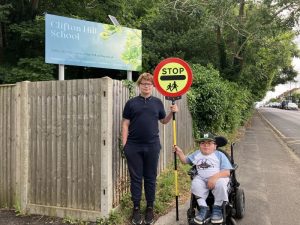
Students Mckenzi, 15, and Erctunc, 17, holding the school-bought lollipop sign. (Credit: Emily Dalton/LDRS)

Children at a special needs school could be left waiting years for a much needed crossing. Clifton Hill School, on Chaldon Road in Caterham, is a secondary school for 11-19 year olds with severe and complex learning difficulties and special needs.

Students at the school demanded action in May 2024 after telling councillors they felt scared going on the road outside their school because there is no safe crossing. Pupils are encouraged to use the cafe in the church opposite the school as part of their independent living skills, but they said people “driving like maniacs” or even honk at them if the students take too long crossing the road.

Surrey County Council said: “In the interim we are looking into rectifying shorter-term issues such as improving line painting and signage, and we will keep the school and parents updated on this as we progress. We’ll continue to do all we can to keep our roads safe.”

Short-term measures included lowering a school warning sign so drivers can see it at car-level, getting the greenery cut back so drivers can see the signs, and installing a dropped kerb for wheel-chair users.

“Another term is over and our children can’t cross the road safely,” said Rachael Forkan, mum and member of the Clifton Hill Parent Teacher Association (PTA). Ms Forkan said she and the head were “not thrilled” the signal crossing was part of a ‘long-term plan’ for improving the school’s road safety. Ms Forkan said: “It isn’t a bit helpful because that could be anything from two years to seven, and my son will leave there in five years’ time.”

Officers reported there were no dropped kerbs between the school and the church which made it “problematic to navigate” for wheelchair users trying to cross smoothly. Where the County Council would deliver road safety awareness training to students, for students with complex and multiple disabilities, like at Clifton Hill, officers said this type of training would “not be appropriate”.

“It’s definitely a priority for now,” said Councillor Jeremy Webster for Caterham Hill. “But the [County Council] is telling me there isn’t any money and that we have to wait a couple of years, but by then problems will be worse.”

The local councillor described Chaldon Road as “problematic” with existing highways issues such as increasing pressure from developments and an unstable embankment. Cllr Webster told the Local Democracy Reporting Service (LDRS)he would continue to urge the Surrey County and Caterham Parish council for their financial support.

Conservative MP for East Surrey, Claire Coutinho, who visited the school in summer 2024, said she recently met with Cllr Jeremy Webster at the school for an update on the crossing issue. Ms Coutinho said she asked him to maintain pressure on his colleagues at Surrey County Council to find a “funding solution” to get so a crossing installed as soon as possible.

A Surrey County Council spokesperson said: “At a site meeting completed in October 2024 we recommended a zebra or push button signalised crossing as the most appropriate road safety measure to be introduced. We appreciate that parents would like this to be implemented immediately, however this assessment forms part of a wider piece of work across the county which has seen us identify demands for road safety measures across another circa 50 sites, and we will have to prioritise which of these sites are then worked on with any available funding. At present, the council hasn’t set its budget for this area of work and as such no funding has yet been allocated.

“Which sites take priority will depend upon a number of factors including the level of road safety risk based on site observations and collision history, the number of people that would benefit from improved facilities, cost and the level support from the local community for any proposals. Once funding has been identified it typically takes a year to design, complete the legal consultations and then implement a zebra or signalised pedestrian crossing.”


Surrey: Free school buses withdrawn

Surrey County Council\'s recommended safe route to Esher High School (image Palamena Naydenova)

Free school buses are being axed after a cross-country route was judged safe by Surrey County Council. Parents say the letter outlining the new walkable route explicitly states that the “personal safety issues of children travelling alone” were not considered. About 81 children from Esher High School are said to be affected. Compounding the problem, the council has stated that further funding to increase capacity on regular bus services is not available.

The Local Democracy Reporting Service understands parents are appealing the decision and have been in touch with Surrey Police. This comes just weeks after parents in South Nutfield were told children could walk across open rail tracks and flood-prone cow fields as the county council looks to make further service cuts.

Children who live more than three miles from their nearest school are eligible for free buses. The new route across the heath reduces the distance to just under that mark, meaning the children no longer qualify for the service. The council says the move will save about £180,000 per year and create space on “stretched coach resources to provide travel assistance to those eligible.”

One of the affected parents, Plamena Naydenova, received a letter that included directions on how her children could get to school, with 30 separate steps to follow. Among the instructions were phrases like “take the alleyway,” “follow the footpaths through Molesey Heath Nature Reserve,” and “turn right through the squeeze stile.” Later, children are told to “cross the River Mole Viaduct Sluice.”

Mrs. Naydenova said: “How can you call an 83-minute walk through dark heaths and unlit river paths a safe route? It’s just honestly outrageous, the whole thing. It isn’t about one child, it’s a principle. It will affect many families, not just my two children. I walked it with my sister as I was afraid to walk it on my own. It goes through narrow alleyways, fields, mud along the embankment of the River Mole, with no fencing.”

She added: “The bit that annoys me the most is the word safe—or safe for an accompanied child. Parents must accompany them, but the council doesn’t see that other parents have other children to drop off or work commitments. I would need to leave the house at 7 a.m. to get to Esher. How would I get the other children to school, never mind my work commitments? It’s very, very shocking. We all know it’s about the money and cost-cutting. But be honest and transparent—say ‘we can’t afford to pay anymore,’ not that there’s a new safe route.”

Since the shock email, parents have banded together. They understand about 81 other students have been impacted. Very few are expected to take on the route and, if their appeal fails, will instead use the standard bus network—although these services, she said, are often full, leaving school children at stops.

Mrs. Naydenova said: “It will put a lot of pressure on the existing paid buses. We aren’t going to let them walk across the heath. We only have one car, so the only other option is cycling, but how safe is that?”

Travel assistance will run until the end of the school year, but from September 2025, children will need to find alternative routes unless there is a change.

Surrey County Council’s cabinet member for children, families, and lifelong learning, Councillor Clare Curran, said the route to Esher High School was established following “individual safe walking route assessments” applied in line with national guidelines. She explained: “It is important to note that the guidelines consider the relationship between pedestrians and traffic, and assessments are undertaken on the assumption that the child will be accompanied by an appropriate adult if necessary. The Department for Education‘s own school transport guidance also supports this position. It is suggested that suitable footwear and a torch are used where needed.”

She added: “The council provides contracted coaches to those eligible for travel assistance to Esher High School. By limiting the services only to those eligible in line with statutory guidance, the council expects a cost saving of approximately £180k per year, as well as the benefit of utilizing the stretched coach resources to provide travel assistance to those eligible. The national picture is of increased demand on transport services and therefore council budgets. We spent £64.9m in 2023/24 on home-to-school travel costs for around 10.7k children and young people.

“We take our responsibilities regarding home-to-school transport very seriously; however, we must balance this with our duty to ensure we are only using public funds for those who meet statutory guidelines for free transport or who are most in need of assistance. Amidst a set of challenging financial circumstances, the council is not in a position to continue to pay for transport for families where they are no longer eligible for assistance due to a safe route being established.”

Related report:

Surrey school kids’ country walk saving money

Image: Surrey County Council\’s recommended safe route to Esher High School (Palamena Naydenova)


Surrey schools not out for so long in summer?

Children leaving school

Surrey County Council is looking at possible changes to school holidays. 

A consultation has been launched on whether the county council should switch to a two-week half term break in the autumn – and is asking for families to give their feedback before making a decision.

About one in ten state-funded schools have already made the switch, including some in Surrey.

It has led some families facing added challenges when term times at different schools are not aligned.

If the switch to a two-week autumn half term break goes ahead, the added five days would be clawed back from the summer break, although the council said it would look to minimise this reduction “where there are opportunities to recover days through the natural positioning of bank holidays during the Christmas and Easter breaks”.

The consultation letter sent to parents read: “We are seeking to understand the views of all stakeholders in determining our future approach to term dates and if there is any appetite for change. 

“This will enable the council, schools and multi-academy trusts to work in partnership to set term dates with an aim for more consistency for schools, school staff, and families.

“We acknowledge that there may be strong views on either side of this question, but we feel it is right and responsible to seek those opinions at a time when we are seeing movement towards a longer October half term by some schools. 

“The combined responses from education settings, families and partners will help inform our approach to term dates for the 2026/27 academic year onwards.

“If it is determined that there is significant appetite for change, the council will adopt a two-week autumn half term break from the 2026/2027 academic year at the earliest.”

The survey runs until the end of the year, and closes at 5pm on Tuesday December 31 2024.

The school year would still be 195 days, including the five inset training days for staff.


Epsom SEND case highlights a national problem

Joshua Mayle

A shocking case of systemic failure by Surrey County Council (SCC) has brought renewed attention to the challenges faced by families of children with Special Educational Needs and Disabilities (SEND). After nearly two years of delays and inadequate support, the Mayle family from Epsom has finally secured a suitable school placement for their 7-year-old son, Joshua. However, the damage caused by SCC’s inaction is undeniable—and emblematic of a national crisis.

A National Struggle for SEND Support

Joshua’s case, while devastating, is far from unique. Across England, families are grappling with a SEND system under unprecedented strain. The number of children with EHCPs has surged by 77% since 2015, a rise that local authorities nationwide are struggling to accommodate. Against this backdrop, funding for SEND services has not kept pace, creating a perfect storm of unmet needs, prolonged delays, and rising parental frustration.

The Local Government Association (LGA) reported earlier this year that councils are grappling with a national SEND funding gap of over £1.9 billion. Without urgent intervention, local authorities warn that they will be unable to meet their statutory duties under the Children and Families Act 2014.

Surrey’s Struggles in Context

Surrey County Council has seen a sharp rise in demand, with the number of children requiring EHCPs rising from 10,000 in 2017 to around 15,000 today. In response, the council has committed £240 million to SEND provision, promising 6,000 new specialist school places and additional support within mainstream schools. Yet, progress has been slow, and communication failures continue to erode parental trust.

Helen Maguire, MP for Epsom and Ewell, who intervened in Joshua’s case, said:

“It is a sad day when a family in such dire straits has to approach their MP on an issue that should have been addressed much earlier by the local County Council. No family should have to escalate matters this far, especially when their child’s needs are at stake. The voice of parents MUST be listened to, and while I am relieved that Joshua has finally received the education and support he deserves, it is deeply troubling that it took this long for the Council to act.”

“This case highlights systemic failures within Surrey County Council’s SEND services. Urgent reform is needed to prevent other children from suffering in the same way.”

Surrey’s challenges are reflected across the country. In some areas, families report waiting months—sometimes years—for EHCPs to be approved, with many forced to take local authorities to tribunal to secure adequate support. Nationally, tribunals have increased by 80% since 2016, with parents overwhelmingly winning cases against councils, further highlighting systemic issues.

The Role of Central Government

Local authorities are not solely to blame. Reductions in central government funding have left councils stretched thin, with many struggling to recruit and retain qualified staff to meet rising demand. The LGA has called for an urgent review of SEND funding, warning that councils are increasingly using general education budgets to plug the gaps, putting additional strain on mainstream schools.

The Department for Education (DfE) recently announced a SEND and Alternative Provision Improvement Plan, promising £2.6 billion in capital funding to create new school places and improve existing facilities. However, critics argue that the funding is insufficient to address the scale of the problem.

Paul Whiteman, General Secretary of the National Association of Head Teachers, warned earlier this year:

“The government’s SEND review is a missed opportunity to address the systemic underfunding of support for children with additional needs. Families and schools need real solutions, not sticking plasters.”

The Human Cost of Delays

For families like the Mayles, the impact of these systemic failings is profound. Joshua, once a bright and independent child, has regressed significantly due to delays in accessing the support outlined in his EHCP. His father, Alex, said:

“Surrey County Council’s failure to meet its statutory obligations is shocking. All children are entitled to an education, and they are being failed by a broken system that is underfunded and under-resourced.”

The strain on families is echoed across the country, with parents often feeling forced to navigate a labyrinthine system to secure their children’s rights. A recent survey by the charity Contact found that 65% of families with disabled children believe the SEND system is “not fit for purpose,” and 48% say their child’s mental health has suffered due to delays in accessing support.

A Call for Urgent Reform

Joshua’s story underscores the urgent need for reform—not just in Surrey, but across England. While councils like SCC grapple with rising demand, the root cause lies in a system underfunded at every level. Families should not have to fight this hard for their children’s education and wellbeing.

As the government prepares to roll out its SEND improvement plan, experts warn that without significant investment and a more collaborative approach between councils, schools, and families, the crisis will only deepen. For Joshua and thousands like him, the question remains: how many more children will be failed before meaningful change is delivered?