
Epsom and Ewell Times

Current Front Page

ISSN, LDRS and IMPRESS logos

Planning a house extension in Epsom and Ewell? A hard lesson from Waverley

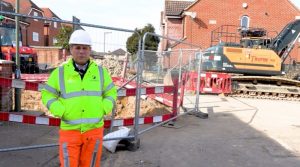
Steve Dally (right) and his wife Caroline. (Credit: Steve Dally)

A man who was charged £70,000 by a Surrey council said it was a “watershed moment” to be given recognition of his struggle and the right to appeal. A couple were slammed with a hefty fee for a home extension and given no opportunity to argue their case.

Community Infrastructure Levy (CIL) is a legal charge designed to get developers to financially contribute towards essential infrastructure. While self-builders and home extensions are exempt from CIL payments, in Waverley applicants must first complete the necessary paperwork for this.

But with residents being unaware they need to apply for an exemption, or due to paperwork errors, some people have unexpectedly had to face extortionate CIL charges and terrifying enforcement action.

Steve and Caroline Dally were granted planning consent to demolish and replace an existing home extension that was exempt from CIL. However, after seeking permission to make some minor amendments (for which consent was granted) they suddenly and unexpectedly faced a £70,000 CIL charge, with no appeal.

Unlike in criminal cases, the paperwork and administrative processes of CIL means people could accidentally face charges between £40,000- £235,000 and have no right for their case to be reconsidered.

They pursue you relentlessly to get the money out of you,” said Steve Dally, “There’s no compassion, there’s no understanding.” He explained the council told him he had 60 days to pay the £70k or his home in Godalming was at risk of being re-possessed and he would go to prison. As this was the start of the Covid lockdown in 2020, he feared the worst.

The 65-year-old has been forced to increase the mortgage on his home by £400 per month, pending full repayment when he turns 70. He may have no choice but to sell the home he has worked his entire life for, just to settle this debt. “It’s traumatic,” Mr Dally said. “You lose sleep and end up crying your eyes out- what can you do about it?”

Fighting the council since 2020, Mr Dally had approached councillors and the local MP and the ombudsman to change the CIL charge levied against him and his wife. But none of them could ultimately remove the fee.

On Tuesday, January 28, Waverley Borough Council agreed to ensure the public have the right to appeal the CIL charges. Mr Dally described it as a “watershed” moment as it was the “first time that someone was prepared to stand up and fight for you”.

Speaking out for the victims, Councillor Lauren Atkins said the “Life-changing unintentional impacts of CIL have resulted in debt, depression and years of feeling unheard and being unanswered.” She called for the council to collaborate and seize the “opportunity to see justice for those wronged”.

But now, householders previously subject to CIL liability can request a discretionary review by Waverley Borough Council within a window from 1 June 2025 to 31 May 2026. The council agreed to have a discretionary review of CIL payments for householder applications and will consider refunds of CIL previously collected.

Mr Dally said the change did not guarantee victims were going to get their money back. “It’s a long way to go yet,” he said, arguing it depends on how “compassionate” the reviewer will be of people’s cases. “There will be a lot of people in Surrey that will be impacted by the same and will not know which way to turn.” he said.

Speaking to the Local Democracy Reporting Service (LDRS), Mr Dally reeled off other people who had been found foul of the CIL charge on their residential properties. He said one man was charged £200k and a wife looking after her husband with dementia was fined £40k.

Councillor Jane Austin said: “We see the unintended consequence of this aspect of s legislation has caused great financial and emotional distress to people who have unwittingly broken rules they didn’t know existed.”

She acknowledged Waverley council is, going forward, trying to ensure householders are made aware of CIL and its exemption paperwork. Cllr Austin added: “But we need to right this wrong for those who have already had to make these huge payments.”

Leader of the council, Cllr Paul Follows, said work is already being done to investigate the CIL levy issues but welcomed the cross-party collaboration. The CIL levies will be reviewed as part of the council’s Local Plan process, according to Cllr Follows.

“I hope the poor folk who are being pestered by Waverley to pay these charges will be left alone until we have resolved this,” said Cllr Michael Goodridge. He raised concern that he has been told everyone has been looking at the issue for a while, but it could take a lot more time in the Local Plan.

The Liberal Democrat council leader also added the CIL regulations was something his party had inherited from the previous administration. Members also broadly agreed more education of the CIL process was needed, both for councillors and the public.

Emily Dalton

Steve Dally (right) and his wife Caroline. (Credit: Steve Dally)


Community Infrastructure Levy (CIL) in Epsom and Ewell Borough

The Community Infrastructure Levy (CIL) is a charge imposed by Epsom and Ewell Borough Council on certain types of new development. It helps fund local infrastructure, such as schools, healthcare facilities, and transport improvements.

Does CIL Apply to Single Residential Developments or Home Extensions?

When CIL is Payable

CIL applies if your project involves:

  • New dwellings – Any development that creates a new residential unit is liable for CIL, regardless of size.
  • Large extensions – If an extension or new build increases the gross internal floor area by 100 square meters or more, CIL applies.

When CIL is NOT Payable

You may not have to pay CIL if:

  • Your project adds less than 100 square meters of additional internal floor space (unless it creates a new dwelling).
  • You qualify for exemptions or reliefs (see below).

CIL Exemptions and Reliefs

Some developments may be exempt from CIL, including:

  • Self-build homes – If you’re constructing your own home, you can apply for a self-build exemption.
  • Residential annexes or extensions – If the work is for your own use and meets specific criteria, it may be exempt.
  • Affordable housing – Developments that meet affordable housing requirements are exempt.

Important: You must apply for exemptions before starting construction. Failure to do so may result in the full CIL charge becoming payable.

How is CIL Calculated?

CIL is based on the net increase in gross internal floor area (GIA) and is subject to annual indexation.

Current Residential CIL Rate (2025): £204.50 per square meter
(Source: Epsom & Ewell Borough Council)

CIL Process & Next Steps

If your project is subject to CIL, follow these steps:

  1. Submit a Planning Application – Include the required CIL forms when submitting your application.
  2. Complete an Assumption of Liability Form – Before starting work, submit this to the Council.
  3. Submit a Commencement Notice – Notify the Council before construction begins.
  4. Receive and Pay Your CIL Charge – Once the Council issues a Demand Notice, make the payment as required.

More Information & Guidance

For full details, access CIL forms, and check the latest updates, visit:
Epsom & Ewell Borough Council CIL Guidance

Sam Jones


Will Epsom and Ewell be bailing out Woking?

Woking Council

Debt-ridden Woking Borough Council has approved the sale of two more assets as it continues slashing its way to a balanced budget.

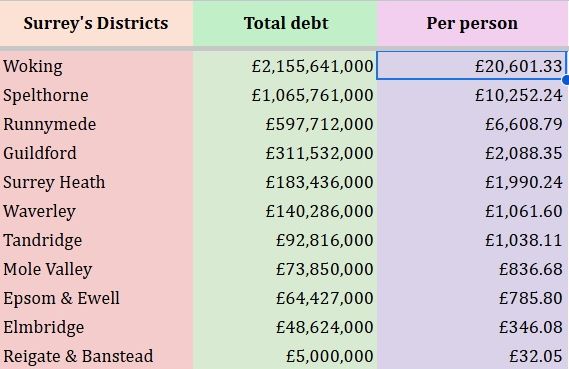
The bankrupt authority, with debts of more than £2billion, is undergoing a full review of the buildings it owns as it’s forced to sell them off to try to ease the burden on the taxpayer if and when a Government bailout happens.

The two most recent sell offs are the  Egley Road Barn Site and Sheerwater Nursery. They are  currently being used by the Woking Gymnastics Club and a charity. 

Woking Borough Council went effectively bankrupt in 2023 on the back of a failed investment strategy to regenerate parts of the borough and has since had to raise its share of tax by 10 per cent, close a raft of public services including toilets, lose about 60 staff members and stop funding to community groups.

Borough leader Councillor Anne-Marie Barker told the Thursday January 16 executive committee: “It’s part of our asset disposal program to help to reduce the debt at Woking Council.”  

The meeting heard that an earlier bid to sell Egley Road had fallen through but a second offer had since been accepted.

Councillor Dale Roberts said: “The purchaser progressed their offer in good faith but has ultimately withdrawn. The recommendation is to transact with the next highest bidder.

“The recommended purchaser, the new bidder, has submitted the highest financial offer on a conditional  basis subject to planning.”

Exact details of what this is, and the value of the bids, are still being kept private.

He added: “These decisions aren’t purely economic, it’s a key factor for this council of course as it’s engaged in an asset disposal and debt reduction programme but it’s not purely economic” and that the decision “also aligned with the Woking for all strategy”.

He said: “It will help deliver a thriving community through partnerships.”

Tenants Woking Gymnastics Club has been sent what the council calls a “letter of assurance” outlining what help the authority can provide going forward “in terms of balancing everyone’s interest”. 

Cllr Roberts said: “We are doing everything we can though with Woking Gymnastics Club to facilitate their extension at the new site at Kingfield.

He added: “The disposal will facilitate the regeneration of the site.

“It will complement the existing development of residential land on the adjacent land holding and it will increase the provision of homes within the borough.

“It will also of course generate a capital receipt.”

The Sheerwater site, in Blackmore Crescent, has been sold to a “special purchaser because advantages have been found for their ownership that would not be available to other buyers.”

The two-storey community building, together with parking and a garden, does not currently provide the council with any rental income. It is being  let to a charity that leases the entire site for free. The charity licences part of the building to a children’s nursery with the  income retained by the charity to support its operation.

The report into the sale read: “The authority recognises that this may require difficult decisions to be made as part of the wider transformation policy and an important priority for the council is to revise its approach to property ownership and to identify opportunities to raise both income and capital receipts from the disposal of surplus properties within the context of supporting current/future council expenditure/debt.


Will Epsom and Ewell be bailing out Guildford?

Guildford Council buidings

A Surrey council faces tough decisions in the future after receiving a “very difficult financial settlement from the government”. 

Guildford Borough Council has no extra funding to meet inflation and demand pressures, meaning it will have to cut costs and increase income to make ends meet. Cost pressures looming over the council stand at over £3m, with National Insurance increases and developments causing the most strain.

The local authority said it has been told the settlement it would receive from the government for the financial year 2025/26. However, the “significant change” for the next year is Guildford council will not have a cash increase  despite an assumed council tax rise of 2.99%. 

Even though residents and businesses may face increased council tax and business rates, without extra government funding, the authority’s overall “Core Spending Power” will remain the same,” the council’s report stated. 

No additional funding is coming to meet the cost of pay awards from the central government, inflation and demand pressures. Guildford Council is therefore reliant upon cost reduction and increasing income to meet these costs. Richard Bates, Guildford Council’s Chief Financial Officer, said: “In the light of a poor settlement, we’ve done the best we can.”

The projected budget gap is expected to grow from 0 in 2025 to potentially £5.9m in four years (2028/29) with a at least a £1.6m increase every year, Service costs from the council are projected to rise from £16.4m in 2025/26 to potentially £20.3m in 2028/29. 

Council officers said they will be looking to attack the gap with a series of measures, including budget reviews across the board, service reviews, and comparing charges (e.g. Car parking) with neighbouring councils.

Cost pressures facing the council currently stand at around £3.18m, with the biggest demands coming from firstly the rise in National Insurance and then capital spending on developments. 

National Insurance (NI) increases were announced in the Chancellor’s autumn statement and the combined cost of these changes adds up to around £1,000 per employee, according to council documents. Not only affecting public bodies, the rise in NI costs could impact contractors and suppliers to the council and push up costs further. 

The government is providing some support to public sector employees, but the actual amounts were not announced as part of the provisional settlement. The Ministry of Housing, Communities and Local Government said it plans to put £69bn into council budgets across England.

Paying for the council’s “ambitious” building programme is a significant part of the financial gap, with large amounts being borrowed for major schemes like the Weyside Urban Village development. However, the cost of borrowing has increased significantly since many of the major schemes in the capital programme were approved, in line with the council’s report. 

Although the 10-year-project will require significant borrowing, the council is managing the levels of debt by selling assets. Officers have warned that a borrowing strategy for the next few years will be “critical” to ensure interest costs are minimised and that long term deals are secured at competitive and affordable rates.

However, the Chief Finance Officer said in his report that the “on-going inflation pressure on land values leave a significant projected deficit on [the Weyside Urban Village] scheme”. He added that a “mitigation strategy needs to be agreed in Spring ’25”.

A decision on the council’s medium term budget (2025/2026- 2028/29) will be made at full council on February 5.

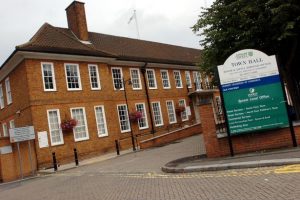
Outside Guildford Borough Council (Credit: Google Street View)


Will Epsom and Ewell be bailing out Spelthorne?

Spelthorne Borough Council offices in Knowle Green, Staines. Credit: Emily Coady-Stemp

“Significant weaknesses” in a council’s financial records have been laid bare in a new report. 

External auditors for Spelthorne Borough Council said they could not fully assess or complete the financial statements as there was inadequate record keeping. Many queries remained unanswered, said auditors, who reported they were unable to conclude on the 2023/2024 closing balances. 

“Without complete and accurate information, the Council cannot have full confidence in the financial decisions reached,” the report said. “The finance papers are detailed but, in our judgement, can be confusing to follow, contain contradictory information in the same paper and lack a clear narrative by way of explanation.”

Spelthorne Council has not fully addressed the funding gaps and risks within its financial plan, according to the report. The latest outline budget for 2025/26 reported in December 2024 shows the council closing its £0.3m funding gap in 2025/26 but it has larger gaps of £3.5m and £5.4m predicted for the following consecutive financial years 2026/27 and 2027/28. The report said the council does not have agreed plans to address the budget gaps which amount to around 15-20 per cent of net revenue expenditure.

Although the council has a significant amount of investment properties for which it receives commercial rents, auditors found recording keeping for monitoring the key leases was “inadequate”. The council had around £52m in commercial rents in 2023/24 but auditors could not be assured by the amount recognised and the cash received. 

The “uncomfortable” report made for “stark reading” by both councillors and officers. Councillor Karen Howkins told members Spelthorne “is a council in crisis” at an Audit Committee council meeting on January 28.

Auditors raised concerns that the minimum revenue position (MRP) – the amount of money the council must put aside in its budget each year to ensure it can repay debt incurred for capital expenditure- is likely to have been played down significantly. But auditors said they did not have enough evidence to conclude this was the case.

Spelthorne Council is currently facing over £1bn debt from investing in shops and offices, including Elmsleigh Retail Centre in Staines.  Paying this sum for the next 50 years, auditors stressed the council were not “effectively managing” the risk. 

Auditors also highlighted issues around Spelthorne’s accounts for purchasing three commercial properties including Carter Building, Thames Tower and Porter Building- worth £351m. The report reads that Spelthorne council only paid £297.9m for the properties and the total figure was ‘grossed up’  by £53.7m to include tax and added the debt to its balance sheet. 

The first audit the council has received since 2017/18, auditors noted auditing requirements and have changes and standards have increased. The report also highlighted issues with council staff not having capacity or capability to carry out or send through the work required for the audit.

Officers said a training session will be provided for council staff and, in future, staff will be separated between those working on the audit and those working on the council’s overall budget setting. 

Several issues and weaknesses were identified during the audit and 16 recommendations have been put forward. 

The report flagged “significant weaknesses” in governance arrangements and “extremely poor relationships” between some political groups is impacting the council’s financial management. Auditors recommended the council “urgently” address the issue of trust and apparent “toxic culture” between members and officers. 

An LGA Peer review in November 2022 concluded: “There is poor behaviour by some councillors towards each other and staff which is widely recognised as damaging the council’s reputation. It is also affecting staff morale and the organisation’s ability to retain and recruit staff.” As of January 2025 there have been 10 complaints outstanding with the monitoring officer regarding councillor behaviour. 

Image: Spelthorne Borough Council offices in Knowle Green, Staines. Credit: Emily Coady-Stemp


Surrey County tax increase vote

Tax table

A council tax hike could be hitting Surrey as members take the first look at the county’s budget. Residents could see a maximum increase of 4.99 per cent on council tax, meaning a rise of £1.69 a week for a Band D household. 

The proposed increase, which would come into force from April, was agreed by the cabinet on January 28 and will be voted on at Surrey Council’s budget meeting next week on 4 February. 

“I absolutely recognise the pressure that any increase in council tax will put on households,” said Tim Oliver OBE, Surrey County Council leader, at the cabinet meeting. But the leader added increasing council tax was important to “balance our budget and to ensure we can continue to deliver improved and increased services meeting the demand we know we will experience”.

Surrey county council said there is a significant pressure on this year’s budget due to the rising demand for services, like adult social care and children’s home to school transport, combined with inflation and added national insurance contributions- which has resulted in a higher cost of delivery. 

Council documents state that for the local authority to balance the books, it has to hike up council tax by the maximum 2.99 per cent, and increase the Adult Social Care Precept by 2 per cent.The final budget for 2025/26 proposes total funding of £1,264.1m, an increase of £55.7m from 2024/25. 

Currently a Band D property pays £1,758.60 a year in council tax, but following the maximum increase in tax, residents could see themselves forking out almost £88 extra. This would bring the total up to £1,846.35 a year. People living in Band H properties could have to cough up £3,692.70 a year for the county council.

This does not take into account other charges in a household’s council tax bill, such as parish precepts, or the police and crime commissioner’s precept. Surrey’s Police and Crime Commissioner (PCC), Lisa Townsend, has heavily indicated she wants the precept to increase by roughly 4.3 per cent. A decision on the PCC’s budget is also due on Monday February 3. 

Council reports state the local authority “continues to see exponential increases in demand for services” particularly adult and children’s social care as well as Home to School Travel Assistance. It adds that the demand for these services has resulted in a “need for further efficiencies”, or cuts, within the services and increasing council tax to balance the books. 

Draft proposals show the Adult social care budget has been increased by £18.7m and the Children, Families and Lifelong Learning budget (which includes home to school transport) has gone up by £19.2m. However, the county council is also making ‘efficiency savings’ or cuts to the departments, £33m and £12.6m respectively.

The increase in council tax comes after the new government announced a rise in both the National Living Wage and in Employer’s National Insurance Contributions. Not only will this increase the county council’s own wage bill, it may impact its suppliers and potentially lead to increased costs all round. Compensation funding for local councils was not confirmed in the provisional Local Government Financial Settlement, leaving Surrey with some uncertainty.

Speaking to the cabinet, Cllr Oliver said the council has seen “higher levels of inflation than predicted”, an increase in national insurance contributions and national living wage, as well as the cost of borrowing for capital investment has continued to rise as interest rates remain high. The council leader also pointed out the increased demand for services, particularly mental health, and pressures on the health system. 

“We have achieved financial stability and we are not in the same position as many other authorities across the country,” said Cllr Oliver. “We have not asked the government for extra financial support and we are not proposing to seek a referendum on increasing our council tax above the permitted 4.99 per cent.”


Epsom and Ewell car parking fees on new levels

Entrance to Ashley Centre car park

Epsom and Ewell Council Approves Changes to Car Parking Fees and Policies for 2025/26

In a meeting of the Environment Committee on 21 January 2025, councillors approved a series of changes to car parking fees and policies across the borough. The measures aim to address financial targets, enhance service provision, and offer new concessions for cultural activities. After detailed discussions, the committee voted to adopt the proposals, with amendments led by Councillor Julie Morris (LibDem, College).

Fee and Permit Adjustments

The committee voted (6 for, 1 against, 1 abstaining) to implement proposed changes to car park fees and permit prices for the 2025/26 financial year. Notable adjustments include:

  • A 10% increase in parking fees at the Ashley Centre for up to 3 hours, rising from £5.00 to £5.50.
  • Revisions to parking permits for residents and businesses.

Councillor Morris expressed concern about the annual increases in parking charges, stating, “We cannot be doing this year on year.” She urged the council to explore alternative ways to balance the budget without consistently raising costs for residents. In response, Councillor Liz Frost (RA, Woodcote and Langley), Chair of the Committee, emphasized that not all charges were increasing, highlighting the reduction in evening parking fees under the new flat rate structure.

Special Concessions for Performers and Shoppers

Councillor Morris successfully secured amendments to the proposed concessions for Epsom Playhouse performers, crew, and technical teams. The adopted recommendation ensures these concessions align with current practice and take effect immediately. She also pushed for a defined timeframe for the Christmas parking concessions, resulting in the committee’s agreement to offer discounted festive parking for the next two years.

The committee unanimously approved:

  1. Concessionary parking rates for Playhouse-affiliated individuals, effective immediately.
  2. The continuation of discounted Christmas parking offers for the next two years, aimed at boosting local shopping and economic activity during the festive period.

Simplified Evening Parking

The committee agreed to standardize evening parking charges across the borough. From Monday to Saturday, a flat rate will now apply:

  • £5.00 for major car parks like the Ashley Centre.
  • £2.50 for smaller facilities such as Dorset House and Stoneleigh Parade.

This change simplifies parking for residents and visitors, with some charges lower than before.

Implementation and Public Engagement

The Head of Housing & Community was authorized to implement the changes and address any public representations. Feedback from residents and businesses will be reviewed by the committee in March 2025.

Decision Breakdown

The resolutions were approved with varying levels of support:

  • The fee and permit adjustments passed with six votes in favor, one against, and one abstention.
  • Concessionary parking rates for Playhouse performers and Christmas offers were unanimously adopted.
  • The Head of Housing & Community’s authority to implement the changes was approved with five votes in favor, one against, and two abstentions.

Next Steps

The updated fees and concessions will take effect on 1 April 2025. Residents are encouraged to familiarize themselves with the changes and provide feedback to the council.

Councillors will continue to monitor the impact of the changes, balancing the need for sustainable revenue with affordability and accessibility for the community. The committee will revisit the parking policies in March 2025 to review public input and adjust as needed.


Epsom Playhouse £1.50 per ticket fee from 1st April

Epsom Playhouse

The Epsom Playhouse will now charge an additional £1.50 facility fee per ticket as of the 1st April 2025.

During its meeting on the 16th January 2025, the Community and Well-being Committee, chaired by Councillor Clive Woodbridge (RA Ewell Village), discussed proposals for the Epsom Playhouse for 2025/26, aspart of their fees and charges agenda. 

The proposal outlined the growing struggles the aging Playhouse currently faces, with the infrastructure remaining the same for 40 years.

A major concern highlighted by the report was the technical show lighting, with end-of-life issues potentially hindering future productions. For the Playhouse to provide ‘high-quality, diverse, and well-balanced entertainment to support the local community and enhance our reputation as a cultural destination’, it was deemed essential for the Playhouse to undergo maintenance work. 

The main focus of the Epsom Playhouse proposal was to source a way to finance this necessary maintenance. The report states that ‘to support the ongoing operational costs of running the venue, which have significantly increased, we propose the introduction of a facility fee of £1.50 to each ticket sold from 1 April 2025, the income raised annually will be ring fenced for the Playhouse upkeep.’ 

The Council’s senior accountant explained that this new facility fee could see around £80,000 in additional revenue, directly going towards the upkeep of the Playhouse annually. He assured Councillor Alison Kelly (LibDem Stamford) that the additional fee would be clearly indicated for those purchasing a ticket.

Councillor Rachel King (RA Town) highlighted that an additional £1.50 could tip the balance of tickets being affordable for some households wishing to attend the theatre. Other local theatres have adopted this scheme that in some instances is between the £2-£5 range. 

Councillor Clive Woodbridge added that there will be regular monitoring of ticket sales to determine whether the new fee damages the Playhouse’s box office sales. 

The committee was in agreement to go ahead with the recommended proposal of a new facility fee, which will be implemented as of the 1st April 2025. Any bookings made before this date will not incur the additional £1.50 fee.  


Epsom & Ewell Faces Tight Constraints in 25/26 Government settlement

11 Surrey boroughs table of HMG funding

Epsom & Ewell Borough Council has received its provisional financial settlement for 2025/26, and while the figures align with expectations, they highlight ongoing financial pressures on local services. The settlement forms part of the UK Government’s wider local authority funding announcement, which has delivered mixed outcomes across Surrey’s district and borough councils.

Epsom & Ewell’s Settlement Overview

According to the latest figures, Epsom & Ewell’s Core Spending Power for 2025/26 is projected at £10.23 million, equating to £307 per dwelling. This places Epsom & Ewell below several neighbouring boroughs, including Woking (£378 per dwelling) and Elmbridge (£367 per dwelling), but slightly above Waverley (£300 per dwelling).

The Settlement Funding Assessment (SFA), which includes central government grants and retained business rates, stands at £1.63 million. This figure underscores the limited financial flexibility available to the council, particularly given rising costs and increasing service demands.

The Funding Context

The settlement includes a modest contribution from the New Homes Bonus, with Epsom & Ewell receiving only £6,160. This pales in comparison to Runnymede (£774,587) and Guildford (£614,903), reflecting the borough’s slower rate of housing growth.

A Challenging Year Ahead

The provisional settlement aligns with broader trends across Surrey, where councils have been advised to continue delivering “high levels of efficiency” to maintain balanced budgets. Surrey County Council, facing similar pressures, acknowledged the settlement as expected but warned of the continued uncertainty surrounding medium-term funding.

Councillor David Lewis, Surrey County Council’s cabinet member for finance and resources, noted: “Councils across the country continue to face a very challenging financial future. Uncertainty on funding into the medium term, coupled with high prices and increased demand, means high levels of efficiencies continue to be required in order to balance budgets.”

Limited Relief from Government

While councils such as Mole Valley have benefitted from additional Government grants targeting homelessness and recycling services, Epsom & Ewell has not been as fortunate. With no significant uplift in funding and reliance on reserves to bridge financial gaps, the council faces tough decisions in the coming financial year.

Furthermore, the funding floor mechanism has provided limited relief, ensuring that Epsom & Ewell does not see a drastic year-on-year funding drop. However, without long-term certainty or multi-year settlements, financial planning remains a significant challenge.

Looking Forward

As the Government promises to ‘fix the foundations of local government’ from 2026-27 onwards, Epsom & Ewell will need to rely on prudent financial management and creative revenue generation strategies to maintain essential services.

Residents can expect continued fiscal caution from the council as it navigates rising costs, growing demand for services, and ongoing funding uncertainty. The final settlement figures are expected to be confirmed early in the new year, and until then, the council’s budget planners remain in a holding pattern.

Related reports:

Tiers to be shed if Epsom and Ewell loses its Borough Council?

Examination of a Surrey Borough’s 2nd highest UK debt

What cuts to Surrey County Council services are you prepared for?


Ideas for empty Council premises in Reigate and Redhill

Cllr Neha Boghani outside an empty retail unit in Redhill. (Credit: Green Party)

Calls to make use of empty town centre units could see charities and pop-up shops take over in Surrey towns as councillors ask for short-term leases to be made available on council owned buildings. Over £600k is spent every year on maintaining empty shops and offices in Reigate and Banstead borough, according to council data. 

Reigate and Banstead Borough Council (RBBC) own several wholly or partially empty commercial properties which they have to pay expensive business rates, utility bills and insurance for. Half of business rates are absorbed by the council, with the other half sent to the central government. 

Councillors found that £619k has been spent on the upkeep of vacant commercial units in the borough this year. Three quarters of this is spent on properties in Redhill, including the new Rise shopping centre and Wheatley Court on Cromwell Road.

Around £174k is spent every year on four completely empty properties, including Beech House in Reigate which has been vacant since 2021. The three-storey office block is now up for sale. 

While some prime retail commercial units are sitting empty in Redhill town centre, Cllr Neha Boghani (Green Party) has proposed a “common sense” motion to put the spaces to work. She has suggested using short-term ‘Meanwhile leases’ to save the council from paying extortionate business rates by making the space available to volunteer groups until full rental for these buildings is agreed. 

‘Meanwhile’ leases essentially allow for the temporary occupation of a retail unit in a town centre without the lengthy administrative and legal process. It means non-commercial occupiers, who would otherwise not be able to afford the rent, can take advantage of the site as soon as possible. 

She said: “Let’s open some of our empty spaces for Christmas on Meanwhile Leases. We could create space for community uses, for entertainment, to serve the most vulnerable and provide a decent size temporary venue until the Harlequin reopens. What’s not to like?” 

The Green Party has suggested the multiple empty spaces in The Light shopping centre, Redhill, could be used for Christmas charity appeals or community groups. They also referenced the Harlequin Theatre needing a new temporary venue, which the council could provide in one of the empty shops in the centre.

Although charities and voluntary organisations pay peppercorn rent on a prime location store, it is only for a short period of time while the landlord finds a permanent tenant. Charities are often faced with unpredictable funding streams which can make it difficult for them to operate, so having a short-term let could potentially add further uncertainty. 

“This arrangement can create something out of nothing,” the Green Party councillor said. “It could be put to good use to support the charities using the space for the short term.” 

The Reigate and Banstead Council executive will consider using temporary leases and its potential economic benefits at a future date.

Cllr Neha Boghani outside an empty retail unit in Redhill. (Credit: Green Party)


Examination of a Surrey Borough’s 2nd highest UK debt

Spelthorne Borough Council offices in Knowle Green, Staines. Credit: Emily Coady-Stemp

The review into Spelthorne Borough Council’s £1 billion debt and whether it is upholding its duty to provide best value to residents has been extended. In May, the government wrote to the heavily leveraged local authority, the second most indebted borough council in the country, over concerns surrounding its debt conditions and financial management arrangements. It has now written again to say it is extending its deadline until January 31, 2025, with the scope of the inspection remaining unchanged. The Government first began engaging with Spelthorne Borough Council in May 2022 over its capital risk, and the review covers concerns over how the council is governed, the strength of its audits, scrutiny and risk arrangements, and in particular its finances. Its debt is second only to bankrupt Woking among borough councils.

A Spelthorne Borough Council spokesperson said of the delay: “The snap general election earlier this year interrupted the appointment of the Best Value Inspection team. The delayed appointments have had a knock-on impact on the original timeline, which has resulted in this extension.” The council’s extremely high levels of debt and borrowing, as of March 2023, stood at £1.1 billion, which is 87.1 times the borough’s core spending power (CSE) and 52.4 times its total service expenditure. By comparison, the average CSE for councils such as Spelthorne is 5.6. Spelthorne has followed a similar path to other Surrey authorities such as Woking, Runnymede, and Surrey Heath, borrowing vast amounts to fund regeneration projects in the hope of creating long-term revenues. Many councils have used this to stave off real-term cuts to their spending power and maintain services residents value. The problem arises, as in Woking’s case, when local authorities can no longer afford to pay back their loans, or if income from the investments is too low. While Spelthorne Borough Council has not yet reached that stage, the Government is seeking assurances that its long-term position is secure.

Between December 2016 and August 2018, Spelthorne Borough Council bought eight investment properties for a cost of about £1 billion. It borrowed largely from the Public Works Loans Board to generate income that supports its revenue budget, enabling it to maintain a wide range of discretionary services. As of December 31, 2022, the council’s total borrowing stood at some £1.1 billion, with £1.08 billion from the Public Works Loans Board—the same body that lent to Woking Borough Council and numerous others. The council plans to borrow a further £332 million between 2023 and 2027, with most of this spread across the next two financial years, and has set its authorised borrowing limit at £1.45 billion for the next four years. The Government has also highlighted a KPMG Public Interest Report on the council’s 2017/18 accounts, published in November 2022, which raised concerns about Spelthorne’s investments and stated the auditor’s view that the authority acted unlawfully in borrowing to purchase three properties in 2017/18.

The vast majority of Spelthorne’s property portfolio, 95 percent, consists of office buildings, with just ten tenants accounting for 75 percent of its lettings income, and one tenant—BP—providing £18 million in rental income annually. About half of its leases end within 10 years and 94 percent within 15 years, creating pressure to retain key tenants. This reliance was highlighted when the loss of a previous tenant resulted in a £4 million loss, including £2.4 million linked to a Russian-owned tenant affected by Russia’s invasion of Ukraine. A July 2023 report noted: “Although Spelthorne Borough Council has effective mitigations in place, this cannot provide complete protection. The loss of a major tenant can impair commercial income.” The council is projected to face an income shortfall of £10 million over the next two years due to these challenges. Additionally, the devaluation of its assets adds to its risks. Spelthorne spent £952 million on eight major purchases that collectively were worth £882 million as of 2022, with only the Sunbury Business Park increasing in value, rising from £384 million to £387 million. However, this gain is overshadowed by losses, such as the Charter Building in Uxbridge, purchased for £135.98 million but valued at £99 million. These devaluations mean that if the council needs to sell assets, it could face a significant deficit.

Despite these challenges, the council insists that the rental income from its commercial property portfolio exceeds financing costs and contributes significantly to discretionary services. “Annually these contribute approximately £10 million net to the council’s revenue budget, enabling the council to continue delivering services that would otherwise have to be cut, including valued services such as Meals on Wheels or community centres,” stated a Chartered Institute of Public Finance and Accountancy report. The same report, titled the Spelthorne Borough Council Review of Debt/Investment Risk Profile July 2023, also warned of a significant budget deficit of £9.306 million projected over the next three financial years. Responding to the original best value review, a council spokesperson said: “We welcome the independent review and will work with the inspector and her team. This administration has taken many decisive and positive steps since the May 2023 election, including instigating a full external independent review of our commercial property portfolio. Additionally, we have reduced future borrowing requirements by nearly £200 million and are pursuing alternative ways to deliver more affordable housing. We will continue to work with (the government) in an open and transparent way and look forward to receiving the findings of the report. The rental income received from our commercial property portfolio more than covers the financing costs and provides a significant contribution to support council services, additionally, there is a reserve to cover possible income variation in future years.”

Related Reports:

Spelthorne in financial trouble

Spelthorne’s neediest lose out on housing

Spelthorne’s thorny property problems spelt out

Spelthorne Borough Council offices in Knowle Green, Staines. Credit: Emily Coady-Stemp