Epsom and Ewell Times

Current Front Page

ISSN, LDRS and IMPRESS logos

Local Plan lessons from a Surrey borough?

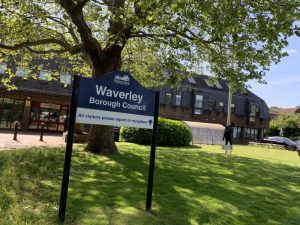
Waverley Borough Council (image Chris Caulfield)

Precious green belt sites could be at risk of speculative developments and Waverley Borough Council could be powerless to stop them after its biggest housing project was judged to be taking too long to build.

All planning authorities must demonstrate they can provide enough land to supply housing for five years.

If they don’t they can become vulnerable to speculative applications and can lose control over where new homes are built – and may have to approve applications they would normally refuse.

Waverley Borough Council has been hit by a double whammy of increased housing targets by the Government and the Planning Inspectorate’s decision to pull the 2600-home Dunsfold Park from its projections over its “development trajectory”.

This has left the council running out of earmarked land for new homes in just two and a half years.

The situation gets even worse when the new Government’s increased housing targets are added into the fold, bringing the figure down to just one and a half years.

The figures were published in a Waverley Borough Council position statement last November following the Planning Inspector’s Dunsfold Park ruling.

It read: “The site has been discounted from the council’s five year housing land supply by Planning Inspectors in recent appeals and for this reason, the council has decided to exclude the site from the five year supply until there is more certainty about the timescales for delivery of housing on the site.”

The plan has been to redevelop the aerodrome to form a new garden village on the brownfield site.

Planning permission for the first stage of the project was originally granted by the Secretary of State in March 2018. Its infrastructure is expected to support other developments in the borough.

So far “not one home” has been built.

Councillor Jane Austin, leader of the Conservative opposition group on Waverley Borough Council, criticised the borough for not publicising the change more widely saying residents deserved to know what was happening.

She said: “These housing supply figures are utterly dire and will mean more opportunistic development in inappropriate locations.”

“We may as well just hand over the keys to opportunistic developers for any of the borough’s green fields without some kind of national planning protection over them. I am extremely concerned about what this means for Alfold and edge of town sites across the borough.”

Surrey County Councillor for Waverley Eastern Villages Kevin Deanus added: “Since Dunsfold Park gained planning consent in 2018 not one home has been constructed.

“Meanwhile local villages like Alfold have doubled in size. Major planning permissions in the local area have been granted dependent on infrastructure upgrades delivered via the Dunsfold Park permission.

“We now have raw sewage coming out of the ground in Alfold and huge pressure on local roads and infrastructure. Local people are despairing.”

Councillor Liz Townsend, Waverley Borough Council portfolio holder for planning and economic development said they remained fully committed to delivering sustainable housing that meets the needs of the community while challenging unjustified and unrealistic targets imposed by the Government.

Dunsfold Park had originally been included in the 2018 Local Plan when the council was under Conservative control and was one of several sites identified to meet housing needs.

She said: “While the council sets the framework for development, it is important to clarify that we do not have the power to compel developers to build homes once planning permissions are granted. As of now, planning permission has been granted for around 5,000 homes across Waverley.

“However, this is no longer sufficient to meet our five-year housing land supply target, primarily due to significant increases in government-mandated targets.

“Originally set at 590 homes per year, this skyrocketed to 710 homes under the previous government, and now to an extraordinary 1,481 homes per year under current government policies.

“This cumulative target amounts to a staggering 29,000 homes over the next 20 years — effectively requiring the construction of an additional Farnham and Godalming within the borough, which is entirely unfeasible.

“Waverley Borough Council has made robust representations to the Government, including direct appeals to the Deputy Prime Minister, outlining why the housing need calculations are flawed. To date, these concerns have been ignored.

“We are actively working with the promoters of Dunsfold Park and other developers to accelerate delivery.

“However, Government Planning Inspectors have questioned the certainty of delivery on the Dunsfold site within the next five years.

|As a result, the council has been forced to remove this site from its short-term housing projections, although this position will be continuously reviewed.

“The council is working urgently to develop a new Local Plan that ensures sustainable housing, job creation, and critical infrastructure.

“This is the only mechanism available to justify a more realistic housing target. Claims that the council is not fulfilling its obligations or has alternative options are factually incorrect.

“We are committed to addressing the national housing crisis while balancing the need to protect our borough’s character and environment.However, it is the Government’s disproportionate and unrealistic housing targets—not a lack of action by the council—that are placing immense pressure on local authorities across the country.

“Waverley Borough Council will continue to advocate for realistic and sustainable solutions to meet housing needs while standing firm against policies that jeopardise the future of our communities.”

Image: Waverley Borough Council (Chris Caulfield)


Blot on Epsom Down’s west horizon to grow?

Woking from Epsom Downs

The “Croydonisation” of Woking will continue after a 26-storey town centre tower block on the former BHS site was approved. The plans for the 272-home 85-metre-tall building are nearly identical to those previously rejected in March 2024 but have been signed off following changes to Woking Borough Council’s housing targets and further clarifications from the developers. Donard Real Estate will demolish the former store to create the Crown Gardens project. The build-to-rent project will include 28 affordable homes as well as retail and commercial zones on the ground floor of the Commercial Way site. There would also be public space landscaping to improve the area around Christ Church.

Approving the plans – which were also under a separate appeal – would help the council meet its new, higher housing targets and help take pressure off green belt sites. The meeting was also assured the building would be predominantly made of brick, limiting the potential of weather damaging external cladding. The town centre had to be closed off after cladding fell from the Hilton Hotel building this year due to storms. Speaking on behalf of the developers was Mervyn McFarland. He said, “Crown Gardens will deliver 272 high-quality build-to-rent homes addressing the growing need for housing and helping Woking’s residents, particularly young people and families, to stay in Woking and contribute to the town’s vitality and growth. It will help alleviate pressure on traditional housing stock while also contributing to meeting housing targets. It will free up homes better suited to families and other demographics, contributing to a more balanced housing market in Woking. Crown Gardens will support Woking’s regeneration, bringing up to 700 new residents to the town centre. This is expected to bring in around £10m expenditure annually in local spending, boosting businesses.”

The limited parking at the site was no longer considered a valid reason to object to the plans given its proximity to Woking Railway Station and active travel options. The January 7 planning committee also noted that a similar high-rise application at Technology House was allowed on appeal, with the Planning Inspector saying parking options were sufficient. Councillor Rob Leach (Liberal Democrat, St Johns) said: “It’s clear that the development will help meet the housing needs that we have and the new government target building levels, to a significant extent, are helped by this. I’ve always been resistant to skyscrapers in Woking, what I’ve called the Croydonisation of Woking, in the past, but I think this has to be preferable to incursions on the green belt where that can be avoided.”

Related report:

Blot on Epsom Downs horizon to grow no more?


Surrey’s affordable homes left unclaimed

CGI visualisation from Thames Street or the Elmsleigh Road Scheme. (Credit: Spelthorne Borough Council Planning documents/ Fairview New Homes)

Millions of pounds worth of affordable Surrey homes remain unbuilt because nobody is willing to take on the project. It has left Spelthorne Borough Council scrambling around trying to find a housing partner with negotiations set to take place over a potential rent to buy scheme.

It leaves families dangling in limbo on waiting lists with nowhere to go as there are almost 2,500 people are currently on Spelthorne’s housing list.

It comes as the developers behind a massive Staines Tower block withdrew all affordable housing from the scheme and instead only offered the council money to put towards low-cost homes elsewhere in the borough.

The Elmsleigh Road scheme was given the green light on appeal in 2022, after Spelthorne Borough Council had refused the application the previous year. The site, at the Old Telephone Exchange, is still under construction by the developer, Fairview New Homes.

Developers, Fairview, asked the council to remove affordable homes from its plans for 206 new units in two towers in Staines, and agreed a £3.85m contribution to go towards off-site affordable housing, instead of the 70 homes that were originally planned.

However, the council opted to delay accepting the money and approached a rent-to-buy provider, Rent Plus, to potentially take the affordable housing off its hands. Cllr Lawrence Nichols (Liberal Democrat/ Halliford and Sunbury West) told a planning committee on January 8: “If we take the [developer’s] money, Rent Plus walk away.”

Rent Plus buys affordable homes from developers at a discount, and then leases them to low-income families on the waiting list with the long-term plan of buying them.

The council had previously rejected using Rent Plus because the company did not provide housing to “the most needy” in line with the council’s legal requirements, the Housing Officer told the committee. Cllr Nichols said Spelthorne council has a meeting with the provider, Rent Plus, scheduled for January 14, next week.

“No interest”

The developer told the committee it had approached numerous registered providers for affordable housing but there was “no interest from any to take the residential units”. There were four separate tender processes and during the most recent, 81 parties were approached. Only 21 responses were received and all declined the opportunity to purchase the homes.

Speaking at the meeting, Director of Affordable Housing for Fairview New Homes Jonathan Millership, said: “The responses highlighted several issues that were specific to this development; these include the high rise nature of the building and the inclusion of a single staircase, a lack of appetite for flats in tall buildings outside London and a general lack of appetite for developer-led section 106 schemes.”

But councillors were not impressed. Cllr Katherine Rutherford (Independent Spelthorne Group/ Ashford Common) said the company “should have done their research”.

Cllr Darren Clarke (Conservative/Laleham and Shepperton Green) said: “Built the wrong thing in the wrong place to the wrong standard, but people don’t want them.” He added: “We all want affordable housing [and] we’ve got a real housing crisis.”

The council had also considered accepting the £3.8m and putting in its s106 pot for building community infrastructure. Officers explained the council could then use this to buy homes in the borough and then rent them out as affordable housing, generating a profit.

Councillors eventually decided to defer the decision on whether to accept the developer’s contribution until the next planning meeting in February 2025.

Image: CGI visualisation from Thames Street or the Elmsleigh Road Scheme. (Credit: Spelthorne Borough Council Planning documents/ Fairview New Homes)


Epsom Green Belt Debate Intensifies

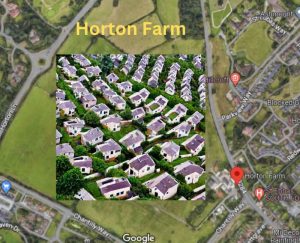
Horton Farm Epsom

The ongoing debate surrounding Epsom & Ewell Borough Council’s Proposed Submission Local Plan has escalated as the Epsom and Ewell Times publishes two sharply contrasting letters – one from the Epsom Green Belt Group (EGBG) and the other a formal response from the Council itself. At the heart of the dispute lies the proposed development of Green Belt land, the availability of affordable housing, and the transparency of the consultation process.

Epsom Green Belt Group: A Call for Change

The Epsom Green Belt Group’s letter criticises the Council for failing to heed public sentiment and expert advice during the Regulation 18 consultation earlier this year. Despite overwhelming opposition to the proposed release of over 175 hectares (around 12%) of the borough’s Green Belt, the Council has pressed ahead with plans that include development on high-performing sites such as Horton Farm and Hook Road Arena.

The EGBG highlights a key inconsistency: while the Council advised neighbouring Sutton Borough in September 2024 that they were under no obligation to review Green Belt boundaries, they have not followed this guidance themselves. Furthermore, the EGBG argues that prioritising brownfield and ‘grey belt’ land, as outlined in the updated National Planning Policy Framework (NPPF) of December 2024, has been neglected.

The group also casts doubt on the Council’s promises of ‘affordable housing,’ pointing out that discounts on market prices still place homes out of reach for many. Flats on brownfield sites, they argue, offer a more viable path to genuinely affordable housing.

A looming concern raised by the EGBG is the likelihood of the Local Plan being deemed unsound by the Planning Inspectorate. They warn that if the plan proceeds in its current form, it could pave the way for further Green Belt loss.

Read the full Epsom Green Belt Group letter here.

Council’s Response: Balancing Competing Priorities

In their formal response, Epsom & Ewell Borough Council defends the Proposed Submission Local Plan, arguing that it strikes a necessary balance between meeting housing needs and protecting the borough’s environment.

The Council acknowledges the high demand for affordable housing, with over 1,350 households on the housing register. They stress that their policies reflect both national guidelines and financial viability assessments.

Regarding the consultation process, the Council points out that Regulation 19 is a statutory stage primarily focused on assessing the plan’s legal compliance and soundness. They also address concerns over the timing of the consultation—spanning the Christmas and New Year period—explaining that it was essential to meet the submission deadline of 12 March 2025 under the current NPPF.

On the contentious Green Belt issue, the Council offers specific figures: 52.6 hectares of greenfield Green Belt land (3.36% of the total) and 85 hectares of previously developed Green Belt land (5.44%) are earmarked for development. They maintain that these changes are necessary to meet housing targets while acknowledging the flexibility offered by the NPPF.

The Council concludes by noting that while changes can still be proposed following the consultation, the Planning Inspectorate ultimately determines their validity.

Read the full Epsom & Ewell Borough Council letter here.

Diverging Priorities, Uncertain Outcomes

Both letters reveal deep divisions not only in policy direction but also in trust between the Council and sections of the local community. While the Council presents its plan as a pragmatic response to national housing targets and local affordability issues, the EGBG sees it as a short-sighted and flawed approach.

Key questions remain unanswered:

  • Why hasn’t brownfield land been prioritised more explicitly?
  • Will the Local Plan survive scrutiny by the Planning Inspectorate?
  • Are the proposed ‘affordable homes’ truly affordable for local residents?

The coming weeks will be crucial as the consultation progresses and residents have their final opportunity to submit their views. One thing is clear: the future of Epsom’s Green Belt hangs in the balance, and both sides are prepared to stand their ground.

Residents can participate in the consultation process until 5 February 2025 via the Council’s consultation portal.

Related reports:

Can the green light to Epsom’s Green Belt housing turn red?

Council minority vote Local Plan to next stage with Green Belt in

Conflict on Epsom’s Green Belt plans of another kind?

Epsom and Ewell Green Belt battle lines drawing near

and many more. Search “local plan” in search bar.


Epsom and Ewell’s new housing targets in Surrey perspective

New houses in Epsom

Housing targets in Surrey are set to skyrocket, with some areas expected to deliver double the number of homes under new Government plans. On December 12, the long-awaited update to the National Planning Policy Framework (NPPF) was published, setting out what councils and developers can and cannot do – leaving boroughs and districts “disappointed” and “deeply concerned.” Across Surrey, the number of new homes expected each year has risen by 4,635 to a total of 10,981, with some areas bearing a significantly heavier load than others.

Worst affected is Elmbridge Borough Council, where housing targets have more than doubled, from 653 to 1,562. This increase comes alongside the prospect of having no local plan, giving developers greater freedom over where and what to build. A spokesperson for Elmbridge Borough Council said they were “reviewing the new NPPF and its implications for Elmbridge’s Local Plan.” The council was told in November that its housing strategy must be withdrawn and restarted or risk being deemed “unsound.” A decision on next steps will be made in February 2025.

Other boroughs facing substantial increases include Waverley, where targets have risen from 710 to 1,481, and Reigate and Banstead, which sees an increase from 644 to 1,306. Woking, the only council to see its figure drop, still faces a significant rise from 436 to 794. These adjustments align largely with July consultation targets. However, Woking residents hoping for a break in town-center skyscraper developments and green belt preservation will be disappointed, as the reduction amounted to just one unit from the earlier proposal.

Housing targets for Surrey boroughs under the new NPPF are as follows:

Old housing target New NPPF target % increase
1 Elmbridge 653 1562 139
2 Surrey Heath 320 684 114
3 Waverley 710 1481 109
4 Reigate & Banstead 644 1306 103
5 Woking 436 794 82
6 Mole Valley 460 833 81
7 Guildford 743 1170 57
8 Epsom & Ewell 569 889 56
9 Tandridge 634 843 33
10 Spelthorne 631 793 26
11 Runnymede 546 626 15
SURREY 6346 10981 73

Reigate and Banstead Borough Council’s executive member for planning, Councillor Rich Michalowski, described the Government’s decision not to heed their feedback as “disappointing.” He said, “The borough’s housing target in the new NPPF of 1,306 homes per year is nearly three times higher than our current local plan target of 460 and more than double the previous NPPF target of 644 homes. These changes will have severe implications for Reigate and Banstead’s green belt and the character of our towns and villages. The standard methodology for calculating housing is flawed, as it doesn’t account for environmental and infrastructure constraints.” He emphasized the council’s commitment to exploring all urban development options but acknowledged that a Green Belt Review might be unavoidable.

Waverley Borough Council echoed these concerns, particularly regarding the methodology and its impact on green belt. Cllr Liz Townsend, Waverley’s portfolio holder for planning, called the more than two-fold increase “unrealistic and uncalled for.” She noted that the requirement for 1,481 new homes annually is two and a half times the current target and could increase the borough’s population by 50% over 20 years. “There is simply no evidence of this level of demand, nor that building this many homes would make them more affordable,” she said. Cllr Townsend highlighted the borough’s existing issues, including water supply disruptions, sewage overspills, a crumbling rural road network, overstretched health services, and power shortages stalling new developments.

All councils must now face the new reality as their starting points for planning new homes. Each borough will need to demonstrate to Independent Planning Inspectors that they have explored all possible avenues for delivering these targets. This challenge will require balancing housing needs with environmental, infrastructure, and community considerations.

Related reports:

Can Epsom and Ewell get more dense?

The Local Plan plot thickens after revised NPPF

Can the green light to Epsom’s Green Belt housing turn red?

Campaigners have set up a petition against the new targets:

https://www.change.org/p/excessive-targets-for-new-homes-in-surrey


The Local Plan plot thickens after revised NPPF

The Government’s revised National Planning Policy Framework (NPPF), published on 12 December, has set ambitious new housing targets, requiring local councils to accelerate their housebuilding efforts. This move coincides with Epsom & Ewell Borough Council (EEBC) updating its Local Development Scheme, which outlines the timetable for the borough’s Local Plan.

Under the updated scheme, EEBC’s Regulation 19 Consultation will take place from 20 December 2024 to 5 February 2025, before the Local Plan is submitted for examination in March 2025. The council aims to complete the public examination by July 2025. The Proposed Submission Local Plan (2022–2040), which Councillors approved on 10 December, is intended to shield the borough from ad hoc developments and ensure sustainable planning decisions.

Councillor Peter O’Donovan, Chair of the Licensing and Planning Policy Committee, emphasised the importance of meeting these deadlines:

“We are determined to meet the Government’s deadlines and will do everything within our power to achieve them. I strongly urge residents and businesses to read and follow the consultation guidance so that their feedback can be sent to the Planning Inspectorate.”

Government Targets: “Builders Not Blockers”

The Government has set a bold target of building 1.5 million homes by 2029, with councils expected to contribute to a new annual quota of 370,000 homes. Prime Minister Keir Starmer highlighted the urgent need for reform, stating:

“For far too long, working people graft hard but are denied the security of owning their own home… Our Plan for Change will overhaul the broken planning system and deliver the homes and growth this country desperately needs.”

Deputy Prime Minister Angela Rayner added:

“We must all do our bit to tackle the housing crisis. Local councils must adopt plans to meet housing needs, ensuring homes are built alongside the necessary public services and green spaces.”

Key measures in the updated NPPF include:

  • Mandatory housing targets for all councils, with increased expectations in high-growth areas.
  • A “brownfield-first” approach to prioritise development on previously used land, followed by “grey belt” areas of lower-quality greenbelt land.
  • Developers required to meet strict “golden rules” for infrastructure, including affordable housing, GP surgeries, and transport.

Boosting Council Resources

To support these changes, councils will receive an additional £100 million in funding and 300 more planning officers to expedite decisions. The Government is also exploring “brownfield passports” to fast-track urban developments and offering local authorities the option to increase planning fees.

Local Impact and Next Steps

The Regulation 19 Consultation represents the final chance for residents to provide input before the plan is examined by an independent inspector.

To participate in the consultation or register for updates, visit epsom-ewell.inconsult.uk.

With the new planning framework demanding rapid progress, councils across the country face the challenge of balancing ambitious housing targets with preserving the character of their communities. Epsom & Ewell’s ability to meet these demands will serve as a critical test of the Government’s commitment to delivering for “hardworking families” while addressing the nation’s housing crisis.

Related reports and letters:

Can the green light to Epsom’s Green Belt housing turn red?

Council minority vote Local Plan to next stage with Green Belt in

Epsom and Ewell’s Draft Local Plan goes to Full Council


Can the green light to Epsom’s Green Belt housing turn red?

Letter to editor

Letters to the Editor

From Tim Murphy of the Surrey Campaign to Protect Rural England

A Dark Day for Epsom and Ewell

Dear Editor,

I write with deep disappointment and dismay at the decision by Epsom & Ewell Borough Council (EEBC) to approve a draft Local Plan that sacrifices Green Belt land in our borough for housing development. This decision marks a dark day for Epsom & Ewell and represents a significant betrayal of the community’s trust and values.

On December 10, EEBC councillors voted by 16 to 8, with 7 abstentions, to approve the latest draft Local Plan, which proposes releasing large areas of our much-valued Green Belt. Planning officers claim councillors had no choice due to Government housing targets. However, this argument does not excuse the council’s willingness to surrender cherished green spaces. The community clearly recognizes the value of protecting our countryside, even if the council does not.

Public opposition to the loss of Green Belt land has been overwhelming. During last year’s consultation, more than 1,500 residents responded, with 87% opposing any Green Belt development. A petition against the loss of Green Belt land attracted an astonishing 11,000 signatures, and a subsequent petition was so strongly supported that councillors were forced to debate it at the December meeting. The message from residents is clear: we do not want our Green Belt sacrificed for development.

It is worth emphasizing that the council’s own Green Belt study concluded that the vast majority of the borough’s Green Belt is performing its intended function. This includes Horton Farm and Hook Road Arena—two areas now designated for housing—which were identified as “highly performing” under the Government’s own criteria. Why, then, is the council choosing to give up such valuable land?

Protecting our Green Belt is about more than preserving open spaces. It is essential for public health, biodiversity, climate change mitigation, and preventing urban sprawl. Epsom & Ewell has largely resisted London’s sprawl, maintaining its identity as Surrey’s smallest district. Its open spaces are limited to either municipal parks or the Green Belt, yet these are now at risk. Over the past 25 years, the borough has already absorbed significant population growth through large housing developments on former hospital sites.

The council’s reliance on private developers to address local housing needs is deeply flawed. Private housebuilders often fail to deliver affordable homes, using “viability assessments” to argue that profits would be insufficient if they included the required number of affordable units. For example, a recently approved development on Green Belt land in this borough includes no affordable housing at all.

If EEBC were serious about tackling local housing needs, it would prioritise socially rented housing by working with central government and housing associations to develop urban brownfield sites and town-centre locations. Instead, the council appears intimidated by unrealistic housing targets set by Whitehall and has chosen to offer up our Green Belt as an easy sacrifice. This raises serious questions about local democracy and accountability.

The council’s decision disregards the wishes of the community it is supposed to serve. It is vital that we continue to challenge this plan and advocate for a future where Epsom & Ewell’s Green Belt is valued and protected for generations to come.

Yours faithfully,

Tim Murphy, Trustee Surrey Campaign to Protect Rural England


From Katherine Alexander of The Epsom Green Belt Group

Dear Editor,

The ink is barely dry on Epsom & Ewell Borough Council’s signing off on the draft Local Plan when it has been rendered obsolete.

The Epsom Green Belt Group warned the council that failing to accelerate the Local Plan process would result in disaster for the borough, and that disaster has now arrived.

The Local Plan will now be caught by the revised National Planning Policy Framework issued today by the government.

Prior to today, the council had the option not to review Green Belt boundaries and not to argue for exceptional circumstances to build on the Green Belt. It chose not to do either, but instead to revise Green Belt boundaries to permit development. Seven and a half years of delays have led us to this point.

The government has focussed its headlines on building on the ‘greybelt’ to make their plans sound palatable. However, the ‘greybelt’ definition is a smokescreen for much broader development that they want to portray. This is for two reasons:

1. All Green Belt qualifies as ‘greybelt’ except:

  • Strips of land at the edge of a borough that separate it from built-up sections of neighbouring boroughs.
  • Land that ‘strongly contributes’ to ‘checking the unrestricted sprawl of large built-up areas.’

In Epsom & Ewell, 22 of the 53 parcels of Green Belt land in the council’s analysis fail to meet either of these criteria and would therefore be classed as greybelt under the new definition. No disused petrol stations to be seen anywhere.

One of the parcels that would remain Green Belt, not greybelt, under this definition is Horton Farm. However, the council has voluntarily included it in the plan.

2. The NPPF states that where there is insufficient greybelt land to meet the new housing target, councils must find enough Green Belt land to make up the difference (para 148).
The only hint of protection is if that Green Belt land need not be released if it ‘would fundamentally undermine the purposes (taken together) of the remaining Green Belt when considered across the area of the plan.’ There is no guidance available as to what that means in practice, but as Epsom Common and Horton Country Park will remain, this exception is unlikely to help either.

What then is the new housing target for Epsom?
889 dwellings per year. That is almost five times the historical house building rate in the borough (c.189 per year) and more than three times the rate in the proposed Local Plan (c.273 per year).

Every scrap of available land will need to be included in the plan, and even then it won’t be enough to get close to the target.

The council only has itself to blame. It has failed to protect the borough, and the government has made it so the price for that failure is astronomically high.

After over 7.5 years of delays, the council’s task now is to work quickly—hitherto anathema to them—to review the NPPF in detail and work out whether any of the Green Belt can be saved under the new rules. This may mean taking out land that it had already included, because there is an argument to protect it (such as Horton Farm) in order to mitigate and minimize the disastrous impacts for the borough.

The previous excuse for progressing with an unpopular plan was to protect the borough from speculative development. Because of their delays, there will be no land left for speculative development. Perhaps they’ve got their wish.

Yours faithfully,

Katherine Alexander


From Epsom and Ewell Borough Council

Epsom & Ewell Proposed Submission Local Plan (Regulation 19) Consultation to go ahead as soon as possible

10th December Councillors voted to approve the Epsom & Ewell Proposed Submission Local Plan (2022-2040) and that the Regulation 19 Consultation should take place at the earliest opportunity. The Regulation 19 Consultation is the final opportunity for residents to feedback on the plan before it is submitted for independent examination next summer.

At the meeting of Full Council, Councillors heard from a petitioner who requested that all green belt land should be removed from the Proposed Submission Local Plan except for previously developed land. This was debated by Councillors during the meeting, before the vote.

Commenting after the meeting, Councillor Peter O’Donovan, Chair of the Licensing and Planning Policy, said “The Proposed Submission Local Plan provides a vision for our borough that strikes a balance between providing much needed homes including affordable housing, infrastructure, and support for local businesses whilst ensuring enhanced protection for biodiversity and our borough’s green spaces, and protecting the valuable local heritage and character of our borough’s towns and villages.

“It is challenging to find a path that meets the many different needs of all our communities, and not everyone may agree with every aspect of this plan. However, having listened to all the feedback, and examined the comprehensive evidence base, we feel strongly that this plan ensures that everyone in our borough, both now and in the future, is given the chance to thrive in Epsom & Ewell.

The Regulation 19 Consultation will take place at the earliest opportunity. We will announce the dates on our website and on social media as soon as they are confirmed.”   

An up-to-date Local Plan protects the borough from ad hoc and inappropriate development and ensures responsibility for future planning decisions remains with the borough and its communities. It provides a framework for where in the borough new development should go and where should be protected.

Epsom & Ewell Borough Council consulted on the Draft Local Plan in February and March 2023. The comments received on the Draft Local Plan, along with the local evidence base, informed the Proposed Submission Local Plan. The Regulation 18 consultation feedback summary report, which shows how the council has taken account of the feedback received, can be found here: Consultation response statement

During the Regulation 19 Consultation residents, visitors and local businesses can comment on whether the plan is legally compliant and sound, in accordance with the National Planning Policy Framework. Guidance on how to respond will be published on the council’s website.

Responses collected as part of the consultation will be sent to the Planning Inspectorate with the Proposed Submission Local Plan and the evidence base documents.


Dear Editor

As someone involved in the Save Epsom Green Belt campaign I just cannot contain my disbelief and anger at the local Council.

Last week the majority of them went ahead with a policy to build on our wonderful and well used recreational green spaces doubtless under some ‘exceptional circumstances’ clause.

Obviously, as already said many times and with recent letters to you, it is nevertheless worth reminding all your readers of the true devastating significance of this decision.

It is a Residents’ Association Majority Council. They are supposed to represent the local residents: the clue is in the name! They have not and should be ashamed at letting us down despite the many efforts to stop this. I understand that Epsom is the smallest Surrey Borough yet the most populated for its size. As many of us know, the present infrastructure is overloaded: schools, the hospital, GP surgeries, roads viz. Ruxley Lane in rush hours!

This building programme will further exacerbate the problem and severely restrict the country wide environment and its diverse wildlife. No doubt developers are already rubbing their hands with due opportunism as, thanks to the Residents’ Association Group, the local Green Belt vanishes FOR EVER! YES, WITH NO COMING BACK.

Yours Faithfully,

Dr Ted Bailey

West Ewell


From Epsom and Ewell MP Helen Maguire

Dear Editor,

Housing in Epsom and Ewell: A Call for Community-Led Solutions

I write to express my deep concern over the Government’s recently announced planning framework, which enables developers to bypass locally elected councillors and pressures councils to review precious green belt land for development. For communities like ours in Epsom and Ewell, this approach represents yet another example of Whitehall ignoring the voices of local people who are best placed to decide what their area needs.

Housing is a pressing issue, but the solutions must be community-led. The homes we build here must be genuinely affordable and accompanied by the services that people rely on—GP surgeries, schools, and reliable public transport. It is equally important that we protect the green spaces that define our borough.

Vulnerable families in Epsom and Ewell need safe and warm homes, but this cannot be achieved by sidelining the community. When residents are engaged and empowered, we can deliver the homes required to support those living in temporary accommodation, help older residents access housing solutions tailored to their needs, and ensure the next generation has somewhere to call home.

Unfortunately, the Government’s announcement fails to address the root causes of Britain’s housing crisis. The biggest issue is a desperate lack of social housing. Too often, developers use legal loopholes to shirk their obligations to build affordable homes. Meanwhile, the very term “affordable” has become meaningless to many local families who are priced out of the market. We need clearer definitions and upfront solutions to ensure that affordability is not just a slogan but a reality.

The recent decision by Epsom and Ewell Borough Council to move forward with the Local Plan, including controversial Green Belt sites, highlights the challenge we face. While I welcome the council’s efforts to prepare a plan, I share the concerns of many local residents and Liberal Democrat councillors who feel that housing targets and the development of virgin Green Belt land, such as Horton Farm, are not the right path forward.

The ruling Residents Association has been slow to update the borough’s planning policies, leaving us vulnerable to inappropriate and opportunistic applications. It is time for all parties to work together to prioritise robust, community-supported plans that deliver for Epsom and Ewell.

Epsom and Ewell deserve housing solutions that respect our unique character, address the needs of vulnerable residents, and safeguard our green spaces for future generations. I will continue to stand with our community in advocating for planning policies that reflect these priorities.

Yours faithfully,

Helen Maguire MP
Member of Parliament for Epsom and Ewell


Council minority vote Local Plan to next stage with Green Belt in

Town Hall and Local Plan

On 10th December 2024, the Full Council of Epsom and Ewell Borough Council convened to debate the proposed Local Plan, a pivotal document that will shape the borough’s future planning, housing, and Green Belt policies until 2040 and beyond. Central to the debate were contentious issues regarding housing targets, the timetable for the Local Plan submission, and the potential release of Green Belt land for development. The controversial Local Plan, including some Green Belt development, was voted through by 16 votes from a Council that consists of 35 Councillors.


Presentation of the Petition

The meeting began with the presentation of a petition organized by Yvonne Grunwald, titled “Remove Green Belt from the Epsom and Ewell Borough Council Local Plan.” Mrs. Greenwald argued the case against developing on Green Belt land:

“Over the last few years, residents have repeatedly told the Council that they do not want building on the Green Belt. They have held rallies, protests, they have spoken at council meetings. This includes secondary school children. They’ve sent emails to councillors and their MP… The results showed that 87% of respondents were opposed to building on the Green Belt.”

She criticized the council’s perceived disregard for public opinion:

“Why consult with the residents if you are going to ignore the result and actively undermine them?”

Mrs. Greenwald also pointed to an alternative plan that relied solely on brownfield sites:

“In November, opposition parties and the Green Party, together with residents, submitted an alternative plan, which showed that enough houses can be built on brownfield sites already identified by the Council.”

Concluding her speech, she urged the Council to act quickly to amend the plan:

“You must make sure that the Local Plan doesn’t include Green Belt… This should happen as quickly as possible so that it can be submitted to examination before the new NPPF rules come into force.”


Council Debate

Councilor Peter O’Donovan, (RA Ewell Court) Chair of the Licensing and Planning Policy Committee, responded to the petition. He acknowledged the concerns raised but defended the inclusion of Green Belt land in the Local Plan as a necessary compromise:

“The proposed submission plan… aims to strike the right balance of meeting development needs, including much-needed affordable housing, against protecting the borough’s Green Belt and character of the urban area, both of which are important to our residents.”

He warned of the risks of removing Green Belt sites from the plan:

“Officers consider that removing sites from the Local Plan would significantly increase the risk of the plan being found unsound at the examination stage. If our Local Plan is found to be unsound, we will have to restart the process again, meaning we will be without an up-to-date Local Plan for longer.”

Councillor Julie Morris (Lib Dem College) expressed her sympathy for the petition’s intentions but highlighted the challenges of late-stage changes:

“The problem with this petition is that it’s quite late in the day. Whilst I have every sympathy with its intentions and what it says, it’s actually quite difficult to implement that right now. You know, 12 months, 18 months ago, it would have been a different scenario.”

Councilor Bernie Muir (Conservative Horton) strongly opposed the inclusion of Green Belt land in the Local Plan, emphasizing the importance of protecting such spaces:

“Releasing high-quality Green Belt should be avoided at any time… Without this housing, our homeless levels will grow, not reduce. Releasing high-quality Green Belt without achieving a very significant benefit by doing so would be contrary to the NPPF and totally unacceptable.”

Councilor Clive Woodbridge (RA Ewell Village) cautioned against removing Green Belt sites, citing the experience of Elmbridge Council:

“Elmbridge… submitted a Local Plan with no Green Belt and a multiplicity of smaller brownfield sites. They are now faced with the option of either withdrawing it or having it found unsound. The inspector argued that the brownfield-only approach adopted would fail to deliver anything near the level of need for the planned period.”


Final Debate on the Draft Local Plan

When the draft Local Plan was introduced, Councillor Neil Dallen (RA Town) summarized the difficult position faced by the Council:

“Nobody wants to build on Green Belt, but there is not enough brownfield land. The risk is that this won’t be accepted, and we’ll be in even bigger trouble.”

Councillor Jan Mason (RA Ruxley) criticized the concentration of development in certain areas:

“You’re talking about the most densely populated part of this borough. This isn’t well thought out… There will only be harm.”

Councillor Chris Ames, (Labour Court) condemned the lack of affordable housing:

“This plan… will only deliver just over 1,000 affordable homes… fewer than 400 social rented homes by 2040. This is not sound.”

Clive Woodbridge defended the plan as a balanced approach:

“It delivers badly needed homes while protecting most of the Green Belt and maintaining the character of our borough.”


Outcome of the Vote

The Council ultimately voted on the draft Local Plan without amendments. The majority supported the plan, although several councillors abstained or voted against it. Councillor Peter O’Donovan’s remarks highlighted the Council’s predicament:

“This is the plan we have in front of us, and this is what we need to vote on today.”

Those opposing the plan, like Councillor Jan Mason, stood firm in their dissent:

“I’m personally against this plan… This isn’t something that will suit Ruxley and West Ewell.”


Conclusion

The Full Council’s debate underscored deep divisions over the Local Plan. While the plan’s supporters argued it represented a necessary compromise to meet government targets and protect the borough’s future, its critics condemned the perceived sacrifice of Green Belt land and insufficient affordable housing. The council’s approval of the draft plan marked a critical step forward, but the contention surrounding it suggests continued challenges as the plan progresses to examination.

The Voting: 16 FOR, 8 Against and 7 Abstentions.

Councillors Who Voted FOR:

  • Arthur Abdulin, Residents’ Association, Town Ward
  • Steve Bridger, Residents’ Association, Stamford Ward
  • Neil Dallen, Residents’ Association, Town Ward
  • Liz Frost, Residents’ Association, Woodcote and Langley Vale Ward
  • Shanice Goldman, Residents’ Association, Nonsuch Ward
  • Rachel King, Residents’ Association, Town Ward
  • Robert Leach, Residents’ Association, Nonsuch Ward
  • Steven McCormick, Residents’ Association, Woodcote and Langley Vale Ward
  • Phil Neale, Residents’ Association, Cuddington Ward
  • Peter O’Donovan, Residents’ Association, Ewell Court Ward
  • Humphrey Reynolds, Residents’ Association, West Ewell Ward
  • Alan Williamson, Residents’ Association, West Ewell Ward
  • Clive Woodbridge, Residents’ Association, Ewell Village Ward
  • John Beckett, Residents’ Association, Auriol Ward
  • Hannah Dalton, Residents’ Association, Stoneleigh Ward
  • Chris Watson, Residents’ Association, Ewell Court Ward

Councillors Who Voted AGAINST:

  • Rob Geleit, Labour, Court Ward
  • Christine Howells, Residents’ Association, Nonsuch Ward
  • Alison Kelly, Liberal Democrat, Stamford Ward
  • James Lawrence, Liberal Democrat, College Ward
  • Bernie Muir, Conservative, Horton Ward
  • Kieran Persand, Conservative, Horton Ward
  • Julie Morris, Liberal Democrat, College Ward
  • Jan Mason, Residents Association, Ruxley Ward

Councillors Who ABSTAINED:

  • Chris Ames, Labour, Court Ward
  • Kate Chinn, Labour, Court Ward
  • Christine Cleveland, Residents’ Association, Ewell Village Ward
  • Bernice Froud, Residents’ Association, Woodcote and Langley Vale Ward
  • Tony Froud, Residents’ Association, Stoneleigh Ward
  • Darren Talbot, Residents’ Association, Auriol Ward
  • Graham Jones, Residents’ Association, Cuddington Ward

Procedural criticisms and more:

The Epsom Green Belt Group has raised significant concerns regarding the procedural handling of the Local Plan by the Residents Association-led council. They argue that the process lacked transparency and adequate opportunities for scrutiny.

In their press release, the Group stated:

“For almost two years, since the regulation 18 consultation in early 2023, the public has been waiting to see what would be included in the Local Plan, whilst lobbying for the protection of the Green Belt, submitting a 10,000-member petition, holding rallies and writing to councillors. Requests were made to discuss the Local Plan and the treatment of Green Belt in the fourth quarter of 2023, in July 2024, and in September 2024. Nothing was shared, and nothing debated until November 2024.”

This lack of earlier discussion and public involvement was also echoed during the Full Council meeting. Councillor James Lawrence (LibDem College) highlighted the limited opportunities for councillors to engage in substantive discussions:

“There have been cases where we could have been involved, such as after the briefings. There’s nothing wrong with having briefings, but those were never brought into the public domain until a few weeks ago.”

The Group also pointed to restrictions on questioning during the December 2024 Full Council meeting, which they argued severely limited proper scrutiny of the Local Plan. They noted that only five questions were permitted in total, with some councillors, such as Councillor Mason, restricted from raising further queries, and others, like Councillor Lawrence, unable to pose any additional questions. Councillor Mason’s frustration was evident:

“I had more to ask about the Green Belt allocations and the housing numbers, but I was told I had used up my chance. How is this adequate scrutiny for a plan that decides the future of this borough for 16 years?”

Additionally, the Group criticized the Residents Association for missing the opportunity to submit the Local Plan under the existing National Planning Policy Framework (NPPF) guidelines, which would have allowed for greater flexibility in protecting the Green Belt. They claim that the refusal to expedite the Local Plan’s preparation has exposed the borough to heightened housing targets under new rules.

Councillor Hannah Dalton (RA Stoneleigh) expressed the challenge of navigating a rapidly changing regulatory landscape but stopped short of endorsing the Group’s criticism of delays:

“We’ve got numbers that have changed. We’ve got new government ambitions. We want to build affordable and social housing. Whatever we do, it’s not going to satisfy everybody. That is the nature of Local Plans.”

The Group also accused the council of opening the floodgates for further Green Belt development by including high-quality Green Belt sites in the Local Plan. Councilor O’Donovan, however, defended the approach as a necessary trade-off:

“By including a small portion of Green Belt in the plan, we ensure protections for the rest. Without a Local Plan in place, developers will have greater freedom to target any Green Belt site.”


Local Plan lessons from our neighbour?

Cobham High Street

“Four more years?” is the resounding cry after a Surrey council has been moved back to square one with its plan for 8,000 new homes, potentially at a cost of £1m.

Local plans are a crucial framework for councils as they set out where and what type of development is allowed in the borough. Without one, developers effectively have a free-for-all to build where they wish and the council could struggle to defend it.

A planning inspector told Elmbridge Borough Council (EBC) in September to reconsider its local plan, especially to increase the number of affordable housing. Despite asking for a 12-15 month extension to straighten out its plan, after six years working on the proposals, the council was given a firm ‘no’ by the inspector.

Christa Masters, the independent planning inspector, judged that Elmbridge could not prove it had five years’ worth of housing for residents. The inspector has also labelled the borough – which includes Cobham, St George’s Hill and Weybridge – as one of the “least affordable in the country”.

The two choices in front of the council are to withdraw the plan and start again, or accept the inspector’s findings of the report being ‘unsound’ and leave the borough open to speculative development. A report will be presented to the council in February 2025 for the council to decide.

“It is clear to us that building new homes is not this government’s priority,” a statement read from three senior councillors. They said: “Instead, it seems intent on forcing Elmbridge Borough Council and our residents to restart the lengthy 3-4 year process of developing a new Local Plan, with the significant additional costs (potentially £1million) this will bring to the council.”

Council leader Mike Rollings, deputy leader Simon Waugh, and leader of Hinchley Wood Residents’ Association Janet Turner, who wrote the statement, said they have been left with no choice by the government than to start again.

A Ministry for Housing, Communities and Local Government spokesperson said the decision was up to an independent inspector who found the council’s plan ‘unsound’. They said:“We are in a housing crisis and all areas of the country need to play their part in building more and delivering the homes that communities need. We want to see every council have a local plan as soon as possible, but it is for an independent Inspector to examine a local plan to ensure it is sound and legally compliant.”

But not everyone has been so forgiving of the update on the Local Plan. Cllr John Cope, leader of the Conservative opposition on the council, said: “It’s now clear years of work and millions of pounds of local people’s money have gone down the drain – and an acute shortage of affordable housing allowed in Elmbridge.”

He added that the borough will “have to accept the Labour government’s 121% increase in top-down development targets meaning a huge loss of green belt and loss of local democratic control of planning – but with no new roads, GPs, or schools to support the development.”

Dr Ben Spencer MP (Runnymede and Weybridge) and Cllr Cope have also written a joint letter to Planning Minister Matthew Pennycook MP, urging him to review the situation. The pair ask him to grant the council an extension “so this can be resolved with minimal further financial drain on the council’s resources”.

In the letter, Dr Spencer and Cllr Cope also requested for Elmbridge residents to “not pay the consequences” of the failed Local Plan through “higher council tax and reduced local services”.

“As a Council, we have done everything right,” said Cllr Rollings, speaking to the Local Democracy Reporting Service (LDRS). He said the council has worked to prepare a Local Plan “that meets its responsibilities” but the government has “have constantly changed and shifted the goalposts”. He explained that mandatory housing targets have kept replacing each other and national planning policy is constantly being tweaked.

Cllr Rollings said: “As a Council leadership we will continue to work for the best outcomes for our residents. And we will do everything we can to protect the green spaces we all love.”


Is a Isa the answer to Epsom’s high house prices?

Middle class house

With the five-year anniversary of the Help to Buy ISA closure approaching, a fresh analysis has revealed how Epsom and Ewell compares to other Surrey boroughs in benefiting from this government initiative. Launched in 2015, the Help to Buy ISA offered first-time buyers a 25% bonus on their savings, helping them onto the property ladder before its closure to new applicants in November 2019.

According to research by UK conveyancing specialists Bird & Co, only 0.15% of property sales in Epsom and Ewell since 2015 involved the Help to Buy ISA. This ranks our borough 10th among Surrey’s local authorities. However, a significant spike occurred in late 2021, with ISA-backed property purchases rising to 0.73% of sales in Epsom and Ewell during the final quarter of the year.

Experts attribute this spike to several factors: delays caused by the COVID-19 pandemic, which pushed completions into 2021, a rush to secure mortgage rates amid fears of rising interest rates, and confusion over the scheme’s eligibility deadline. Across Surrey, such spikes were common, reflecting national trends.

Daniel Chard, a partner at Bird & Co, commented:
“The Help to Buy ISA has undoubtedly provided vital support for first-time buyers, particularly in areas with lower house prices or greater awareness of the scheme. Epsom and Ewell’s figures highlight the role of regional affordability and access to information in shaping how these schemes are utilised.”

How Does Epsom and Ewell Compare?
While our borough’s 0.15% average use of the scheme lags behind Surrey’s leader, Reigate and Banstead (0.47%), the data tells a broader story of affordability challenges. House prices in Epsom and Ewell may exceed the limits of the Help to Buy ISA, reducing its appeal for local buyers.

The borough also saw a notable drop in ISA usage following the 2019 deadline for new accounts, with property sales using the scheme falling from 0.19% before the cut-off to 0.12% after—a 0.07% decline. This trend is consistent with other Surrey boroughs, where the closure of the scheme saw reductions in usage.

What Are the Alternatives?
For first-time buyers who missed the Help to Buy ISA window, the Lifetime ISA offers similar support, with a 25% government bonus on savings and higher annual limits. However, it’s worth noting that eligibility criteria differ.

Bird & Co, who conducted the analysis, specialise in conveyancing law and offer guidance to buyers navigating government schemes. They highlight the value of understanding regional differences and tailoring advice to individual needs.

As Epsom continues to grow as a desirable place to live, schemes like these underline the importance of affordability in ensuring that first-time buyers can achieve their homeownership dreams.