Don’t Believe Everything You Read Online? EET Stands By ‘Gagging’ Report After Epsom MP’s Westminster Jibe
26 May 2026
A row over media access to newly elected Liberal Democrat councillors has escalated after Epsom & Ewell MP Helen Maguire publicly challenged an Epsom and Ewell Times report – only for subsequent correspondence to confirm that a restriction on councillors speaking to the media did in fact exist.
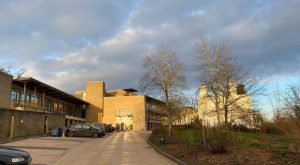
The dispute centres on events at the Count for the East Surrey Unitary Council elections at Bourne Hall on 8 May.
In an earlier report, Epsom and Ewell Times’ (EET) Lionel Blackman described being in a media interview room speaking with a soon-to-be-elected Liberal Democrat candidate when Helen Maguire’s communications officer entered and stated that Lib Dem candidates were not to talk to the press and that journalists should speak only to the MP.
The report described the instruction as neither “liberal” nor “democratic” and criticised what it characterised as a “gag” on successful candidates.
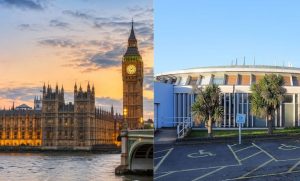
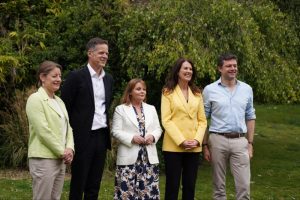
Ten days later, at a reception at the Palace of Westminster hosted by Ms Maguire and attended by a couple of hundred leading figures from Epsom and Ewell’s business and voluntary sectors, the MP appeared to reference the controversy directly.
Introducing newly elected councillors present at the event, she said: “There are a number of our new Councillors present today and contrary to what you may have read in the press they are free to speak and if there are any members of the press here you may talk to them. Do not believe everything you read online.”
The remark prompted EET to challenge the implication that its reporting had been inaccurate.
In a subsequent email exchange, Helen Maguire’s communications officer, Esther Holland, denied that the MP had imposed any “gag” on councillors but acknowledged that a restriction on media engagement had indeed been in place.
Ms Holland wrote: “Helen can confirm that while she knew the East Surrey campaign team had asked for a pause in media engagement during the election week, this was entirely the East Surrey campaign team’s decision. Helen played no part in directing this; she did not ‘gag’ her new councillors.”
She later provided a statement attributed to an East Surrey Liberal Democrats spokesperson saying: “The pause in media engagement was a decision made by the central campaign team for the Liberal Democrats in East Surrey — not Helen Maguire MP — based on the advice to make the incoming leadership contest as democratic and fair as possible.”
That explanation narrows, but does not extinguish, the dispute.
EET’s original report did not merely allege that Helen Maguire personally invented the policy. It reported that the instruction was delivered by her communications officer, directing journalists away from councillors and towards the MP.
Mr Blackman replied that, in the circumstances, it had been entirely reasonable to report the matter as “Helen’s gag”, noting that the instruction had been communicated by an employee acting under the MP’s banner and that the strategy would have been ineffective without at least some degree of cooperation from the MP’s operation.
The exchange then moved into more sensitive territory concerning the role of MP’s parliamentary staff in party political activity.
Responding to questions raised by EET, Ms Holland stated she had been acting “in my capacity as local party communications, not as an employee of Helen Maguire MP” when communicating the media strategy at the Count, adding that her role was “split between parliamentary and local party work.”
That explanation may itself invite wider questions about the sometimes blurred boundary between parliamentary communications roles and local party political operations.
No evidence has been produced that any parliamentary or IPSA (Independent Parliamentary Standards Authority) rules were breached. However, parliamentary staffing arrangements are ordinarily expected to distinguish between parliamentary duties funded through MPs’ allowances and party political campaigning or organisation.
The issue here is not merely semantic.
If, as the correspondence confirms, a restriction on councillors speaking freely to journalists existed, then the remaining questions become who owned it, who delivered it, and whether the MP’s Westminster remark – “Do not believe everything you read online” – fairly represented EET’s reporting or risked leaving a large public audience with the impression that the newspaper had reported something untrue.
EET stands by the factual accuracy of its original report.
Epsom & Ewell Borough Council is pleased to announce that Bourne Hall will host a free Summer Festival on Saturday, 20 June 2026, from 12pm until 5pm.
The free event promises fun for all the family, with live music, food, fairground activities, craft stalls and plenty to enjoy throughout the day.
The main stage will showcase a variety of live music performances, featuring talented local artists and bands. Artists supported by iPlay Collective, a local creative organisation that nurtures emerging performers and champions inclusive access to the arts, will perform across the day. Audiences can expect a lively and varied programme celebrating local talent and a wide range of musical styles, with a DJ host keeping the atmosphere buzzing between sets.
Festival‑goers can browse a wide selection of market stalls showcasing unique handcrafted items from local makers and artisan sellers. Visitors will find a diverse range of goods including seated acupressure therapy, hand‑turned wooden gifts and homeware, jewellery, laser‑engraved cheese and serving boards, handmade woodwork and textiles, locally produced Tropic organic skincare and make‑up, daily essentials and health supplements, alongside homemade gifts, keyrings, stickers, prints and cross‑stitch items. There will also be handmade natural soaps, stone and crystal candles, as well as stalls supporting good causes, including a dog rescue offering gifts and a tombola. The Rainbow Leisure Centre will also be present, promoting healthy lifestyles and community wellbeing.
In addition to the stalls, several local organisations and venues will be hosting activities throughout the day. These include the Home Improvement Agency, Epsom Playhouse, the Dementia Hub, Bourne Hall Museum and Ewell Library, ensuring there is plenty to explore and engage with for all ages.
For those looking for thrills, the fairground will feature trampolines and teacup rides. There will also be merchandise stalls selling balloon animals and bubbles, adding to the festive atmosphere.
A variety of outdoor food options will be available, including burgers, nachos, ice cream and candyfloss, alongside refreshments from the Flying Saucer Café, which will be open from 9am until 5pm serving hot and cold drinks and treats.
Speaking of the upcoming event, Councillor Clive Woodbridge, (RA Ewell Village) Chair of the Community & Wellbeing Committee said:
“The Bourne Hall Summer Festival is a wonderful opportunity for our community to come together and enjoy a full day of free, inclusive entertainment. We’re delighted to be showcasing talented local musicians, including artists supported by iPlay Collective, who play such an important role in nurturing emerging performers.
“Alongside the live music, visitors can explore a fantastic selection of artisan and craft stalls, offering unique handmade goods from local makers – the perfect chance to support independent businesses and discover something special. With great food, creative talent and activities for all ages, the festival really highlights the vibrant community spirit of our borough.”
Event timetable is subject to change.
The Bourne Hall Festival is an annual event with a different theme each year. Previous iterations have included Sustainability, The Herald of Spring and New Beginnings. This year’s festival will run from 12pm to 5pm.
Bourne Hall’s address is Spring Street, Ewell, Surrey, KT17 1UF.
Driving Directions: Bourne Hall is easily accessible from: Gatwick via M25 – A217 – A240 Heathrow via M25 – A3 London via A3 Please check your directions at www.theaa.com/route-planner/index.jsp
Parking: Local pay & display car parks: Bourne Hall, Spring street 24 hours Monday to Sunday High Street, Ewell 24 hours Monday to Sunday Dorset House, High street, Ewell 24 hours Monday to Sunday
Train: The nearest railway station is Ewell West (5 minutes’ walk) with regular direct rail routes between Guildford and Waterloo. Please plan your journey at www.nationalrail.co.uk
Bus Bus number 293, 406, 467, S2 and E16
Live Music: 12:00 – 17:00 Enjoy a diverse range of musical genres that will keep you entertained and dancing all day long with a DJ host.
Market Stalls: 12:00 – 17:00 Explore a vibrant array of market stalls showcasing local crafts, products, and more. It’s the perfect opportunity to support local businesses and find unique treasures.
Food Stalls: The Flying Saucer Café 09:00 – 17:00, Food stalls 12:00 – 17:00 A selection of food will be available, offering a range of tasty treats and refreshments.
Epsom councillors handed key roles on East Surrey’s new Shadow Council
26 May 2026
The newly elected East Surrey Shadow Authority met for the first time on Wednesday 20 May, taking another formal step towards the creation of the new East Surrey Council due to replace existing county, borough and district councils on 1 April 2027.
The meeting marked the transition from the former East Surrey Joint Committee arrangements to the newly elected “shadow authority”, following this month’s elections to the new unitary council covering Elmbridge, Epsom & Ewell, Mole Valley, Reigate & Banstead and Tandridge.
With the Liberal Democrats holding a working majority on the 72-member authority after the May elections, councillors confirmed leadership and cabinet appointments that will oversee the transition year.
Councillor Steve Wotton was confirmed as Leader of the East Surrey Shadow Authority, with Councillor Kirsty Hewens appointed Deputy Leader.
Of particular local interest, two councillors representing Epsom & Ewell secured places in the shadow cabinet.
Councillor David Buxton, a Liberal Democrat councillor from Epsom & Ewell, was appointed Cabinet Executive Member for Adult Social Care and Health — one of the most substantial service portfolios in local government, covering responsibilities that currently account for major areas of county council expenditure and public concern.
Councillor Julian Freeman, LibDem also from Epsom & Ewell, was appointed Cabinet Executive Member for Housing. The appointment places an Epsom representative at the centre of housing policy discussions as the new authority prepares to assume responsibilities from existing councils amid continuing pressures around affordability, development and future planning arrangements across East Surrey.
The full cabinet allocation agreed by the authority included:
Steve Wotton – Transformation, Digital and People
Kirsty Hewens – Economy and Regeneration
Andrew Burton – Finance and Resources
Ashley Tilling – Children’s Services and Education
David Buxton – Adult Social Care and Health
Andrew Matthews – Transport, Highways and Infrastructure
Bradley Nelson – Strategic Planning and Growth
Julian Freeman – Housing
Abhiram Magesh – Leisure, Culture and Communities
Claire Malcomson – Climate, Environment and Waste
The cabinet roles are presently shadow positions linked to the local government reorganisation programme and will operate in that form until the new authority formally assumes full powers in April 2027.
The meeting also approved governance arrangements for the shadow council, endorsed initial transition priorities, and designated interim statutory officers to steer the authority through its establishment phase.
Among the appointments, Adam Chalmers, currently Chief Executive of Elmbridge Borough Council, was designated Interim Head of Paid Service. Nikki O’Connor, Assistant Director of Finance (Corporate) at Surrey County Council, was appointed Interim Chief Finance Officer, while Daniel Bainbridge, Head of Legal and Governance (Monitoring Officer) at Elmbridge, became Interim Monitoring Officer.
Speaking after his appointment, Cllr Steve Wotton said: “This is a significant moment as we work to bring services together under a single organisation. Our priority is to ensure residents see the benefits of the new East Surrey Council – one that is responsive, well run and able to deliver high-quality services from April 2027.”
He added: “We recognise the scale of the task ahead, but also the opportunity for a fresh start to shape a council that reflects and serves our communities.”
The new East Surrey Council forms part of Surrey’s wider local government reorganisation, under which the county’s existing councils are to be abolished and replaced by two large unitary authorities – East Surrey and West Surrey.
Until April 2027, existing county, borough and district councils will continue running day-to-day services. The shadow authority’s role is to prepare the structures, governance and leadership arrangements for the incoming council.
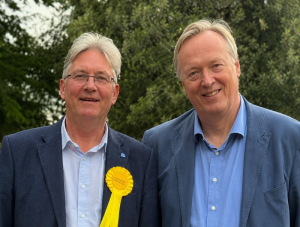
Photo right to left: Julian Freeman and David Buxton
Did Epsom and Ewell councillors approve more Green Belt release?
26 May 2026
Epsom and Ewell Borough Council’s special Licensing and Planning Policy Committee (“LPPC”) meeting on 19 May — convened after a motion by Cllrs Kieran Persand (Conservative – Horton), Rob Geleit (Labour – Court) and Julian Freeman (LibDem – College) — produced one clear answer to the question troubling many residents: LPPC did not itself vote to approve additional Green Belt land for development.
In summary the effect of the lengthy five-part motion was to ensure Council officers should not be sending revised Local Plan evidence and potentially significant Green Belt-related material to the Inspector without renewed political scrutiny and approval by LPPC / Full Council. All parts of the motion were defeated.
But the two-and-a-half-hour meeting revealed a deeper and increasingly bitter dispute over whether officers have already steered the Local Plan examination towards further Green Belt release without fresh political approval.
The meeting unfolded against the backdrop of continuing examination of EEBC’s Local Plan by the Planning Inspectorate and followed recent publication of officer work identifying additional sites “potentially suitable for allocation”, including five Green Belt sites, as part of the Inspector’s request for further work.
At the centre of the argument lay a constitutional question: once the Local Plan entered examination, did political control of substantive Green Belt decisions remain with councillors — or had delegated authority lawfully passed practical control to officers working under the Inspector’s direction?
The atmosphere in the chamber suggested members were debating much more than planning procedure.
Before debate even began, Cllr Shanice Goldman (Conservative Nonsuch) made an unusually direct statement from the public seating area challenging how the council had reached this stage. She said delegated authority granted in November 2024 had been understood to concern “small grammatical errors”, but had, in her view, later been exercised more broadly than members intended.
“These are not minor administrative matters,” she told the committee. “They are material decisions which properly fall within the remit of elected councillors who are accountable to the public.” She added: “This issue is bigger than one site or one submission. It goes to the heart of governance, transparency, constitutional process, and public confidence in decision making.”
Head of Planning Policy and Economic Development Ian Mawer then delivered a lengthy procedural update attempting to clarify what officers say has — and has not — happened.
Mawer stressed repeatedly that the Local Plan remains the version submitted in March 2025 and that no modifications have yet been made.
“I wish to emphasize that the Local Plan remains as submitted to the Planning Inspectorate in March 2025 as it stands — no changes have been made to it,” he said. “It is the Inspector alone that can make changes known as main modifications to address soundness issues.”
He explained that the Inspector had required additional work after October 2025 hearings, including revisiting part of the Green Belt Topic Paper and reassessing urban sites. That work, he said, eventually produced 17 sites considered “potentially suitable for allocation” — 12 urban and five Green Belt — but only as evidence to assist the examination.
He also cautioned against confusion over “Grey Belt”, noting EEBC’s plan is being examined under a pre-Grey-Belt version of national policy.
The procedural explanation did little to calm critics.
Persand opened by objecting that no legal officer was present, saying he had only been informed late in the day. “I feel that we should push this to another date, and then discuss it with a legal officer present,” he said. “This is about the delegation of power that was out of scope by officers in the submission of documents.”
His motion to defer was seconded by Freeman but failed.
From there the meeting descended into repeated procedural clashes.
When Persand attempted to play a recording from a previous meeting concerning how delegated authority had been described, Chair Peter O’Donovan (RA – Ewell Court) stopped him: “You can’t play recording… it’s not relevant to the motion.” Persand countered that recordings were permissible and argued earlier comments were directly relevant to understanding what members thought they had approved.
Freeman challenged the Chair’s ruling: “How is it not relevant? Comments that were made at a previous meeting of this committee… when you said something along the lines of… minor grammatical errors and omissions.” O’Donovan replied: “I said there were minor grammatical errors… it is not relevant to the motion in front of us.”
The core disagreement, however, concerned substance rather than theatre.
Persand argued that documents identifying additional Green Belt land had gone well beyond anything councillors believed officers were authorised to do.
“Submitting a document that has 40% extra Green Belt sites to be allocated, and you’re changing the evidence base, is not minor amendments,” he said. “That is major material changes. That is completely out of scope of this delegation of power.” He warned: “This will go to JR, this will go to Judicial Review.”
Freeman broadly backed that critique while distancing criticism from officers personally.
“With the greatest of respect to Mr Mawer, and I know he’s an officer doing his job… this plan is for councillors to review and approve, not for officers,” he said. “We are the councillors who have been elected to represent this community… and we should not be putting that on officers. I find that behaviour to be disgraceful and reprehensible.”
Mawer firmly rejected the suggestion that officers had independently redirected policy.
“We’ve prepared the documents… under the advice of the Inspector,” he said. “We’ve done the work that is necessary for the examination to proceed.” The documents, he stressed, are now published and subject to consultation. “It will be the Inspector ultimately who decides if any extra sites go into the Local Plan.”
Pressed by Persand on whether the Inspector had ever explicitly required more Green Belt allocations, Mawer drew a distinction between the Inspector’s concerns about unmet housing need and the work requested in response. The Inspector had asked for reassessment, he said; the resulting correspondence led to officers being asked to identify sites “potentially suitable for allocation”.
Vice-Chair Clive Woodbridge (RA – Ewell Village) attempted several times to steer discussion toward a pragmatic middle ground.
At one point he suggested the motion had been “overtaken by events” but that the committee might still usefully discuss the submitted material. “I don’t really see why this committee shouldn’t… have the chance to ask questions about the work they’ve done on the Green Belt.”
Later, seeking a compromise on future meetings, Woodbridge proposed softening one motion element so that further LPPC meetings would “update on the Local Plan examination” rather than purport to re-approve already-submitted documents. He acknowledged limits on councillors’ powers once the examination is underway but argued members should not face “a complete gap without the opportunity to ask questions.”
Labour councillor Rob Geleit was unconvinced by the dilution. “Surely that amendment really eviscerates the whole point, does it not?” he asked.
Substitute member Christine Howell (Independent Nonsuch) repeatedly returned the discussion to democratic legitimacy and Green Belt trust.
“If there is even the slightest doubt in anyone’s mind about the integrity of this process, it must be reviewed again thoroughly and transparently,” she argued, saying residents had expressed “serious concerns and lack of trust” regarding Green Belt inclusion.
In one of the evening’s more striking exchanges, Howell sought clarity about councillors’ practical role if the Inspector ultimately proposes extra sites.
“So… some [sites] have been identified, and at any set time the Inspector could put them all in… and then we don’t have any ability to question that?” she asked.
O’Donovan’s reply was blunt: “Yeah, basically, but you have ability to question it through the consultation.” He added that members would later be able to vote on the final modified plan. Howell observed that during consultation councillors would effectively be participating “just as a resident, as a neighbour, and not in any position of power or influence.” O’Donovan answered: “That’s right.”
In procedural terms, the committee rejected all five elements of the motion, including proposals to require LPPC review of documents before submission, tighten delegated authority wording, revisit earlier submissions and mandate additional scrutiny meetings.
So did LPPC approve more Green Belt release?
Not directly. The committee did not vote to allocate new Green Belt sites on 19 May. Officers maintained throughout that the Local Plan remains unchanged and that only the Inspector can propose “main modifications”. Critics, however, argue that by submitting revised evidence identifying additional “potentially suitable” Green Belt sites without renewed member approval, the council has already moved materially toward expanded Green Belt release during examination.
The public consultation on the new documents runs until 15 June, with a further Inspector’s hearing scheduled for 2 July.
For residents trying to understand the state of play, one point emerged clearly from an evening of procedural warfare: the argument is no longer simply about how much Green Belt land might be released, but about who, in practice, is making the decisions.
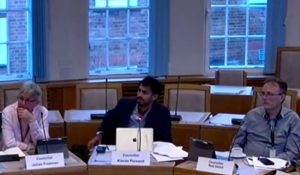
Image: Cllrs Freeman, Persand and Geleit at the LPPC meeting – EEBC YouTube channel.
Epsom Council Rainbow Centre secrecy row deepens over “pre-election silence” advice
26 May 2026
Epsom and Ewell Borough Council’s attempt to justify refusing answers to Epsom and Ewell Times before May’s elections has itself become the subject of a fresh transparency dispute.
The Council has now disclosed, following a Freedom of Information request, that the decision to rely on Section 2 of the Local Government Act 1986 (prohibition on Council promotion of political parties) involved the Council’s Chief Executive, Monitoring Officer, senior corporate and communications officers and Cllr Neil Dallen (RA Town), Chair of Strategy and Resources.
Yet the Council simultaneously claims it holds no legal advice, governance advice, briefing or equivalent guidance explaining why Section 2 supposedly prevented answers being given to press questions about the Rainbow Leisure Centre controversy.
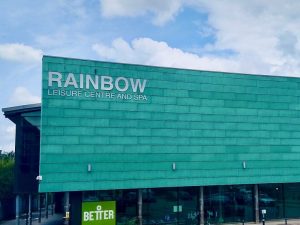
The issue concerns Cllr Neil Dallen’s (RA Town Ward) refusal before the election to answer questions relating to the Rainbow Leisure Centre, where a confidential urgent decision warned of dilapidations potentially costing “up to £500k”.
Guidance relied upon appears to undermine Council’s position
The Council disclosed a Surrey local government pre-election guidance document as the material relied upon. However, the guidance appears to say something rather different from the position adopted by Epsom and Ewell Borough Council.
The document emphasises political neutrality, impartiality and avoidance of electioneering by councils during election periods. But it also expressly states that councils may continue normal business and are allowed to “publish factual information to counteract misleading, controversial, or extreme information”.
It further stresses even-handed treatment of information requests and continuation of ordinary council business.
Epsom and Ewell Times’ questions to Cllr Dallen and others sought factual explanations of decisions already taken — not campaign material, political advocacy or commentary on electoral opponents.
“No advice held” raises further questions
The Council’s response identifies senior officers and a senior councillor as participants in the decision to invoke Section 2. However, when asked for legal advice, governance advice or internal briefing supporting the decision, the Council replied: “This information is not held by the Council.”
That response raises obvious questions. Was no legal or governance reasoning recorded despite involvement of the Monitoring Officer and senior management? Was advice given informally but not documented? Or has relevant information been withheld under another exemption?
The Council has separately relied on Section 36 of the Freedom of Information Act to refuse disclosure of internal communications concerning the decision-making process.
Neutrality — or protection from scrutiny?
The controversy touches on a sensitive constitutional question.
Pre-election restrictions exist to prevent councils using public resources to influence elections or support political parties. They are designed to preserve political neutrality.
But critics may ask whether refusing factual answers on controversial matters involving the ruling administration risks producing the opposite perception — namely that council machinery is being used to shield politically damaging issues from scrutiny immediately before voters go to the polls. That concern is sharpened by the context.
The Rainbow controversy involved questions about a confidential urgent decision, possible dilapidations of up to half a million pounds, the Council’s inspection responsibilities over a major public asset, and the role of the Chair of Strategy and Resources, Cllr Dallen, who was standing for election to the new East Surrey Council.
Whether the officers involved were properly protecting neutrality, or whether the interpretation adopted had the practical effect of protecting the ruling political group from uncomfortable questioning during an election campaign, is likely to remain contested.
Internal review sought
Epsom and Ewell Times has now requested an internal review by an officer independent of those involved in the original decision.
The review request challenges the Council’s use of Freedom of Information exemptions, the apparent absence of recorded legal reasoning, and the interpretation of the very guidance relied upon to justify pre-election silence.
The Epsom and Ewell Times has seen detailed exchanges of correspondence between Cllr Kieran Persand (Conservative – Horton) and Epsom and Ewell Borough Council concerning the torturous progress of the Local Plan.
The correspondence from Kieran Persand reveals a serious and highly technical dispute about governance, constitutional compliance and member oversight in the handling of the Epsom and Ewell Borough Council. The exchanges suggest a widening disagreement between some councillors and officers over who was authorised to make and submit significant Local Plan amendments during the examination process, and whether the council’s Licensing and Planning Policy Committee (“LPPC”) has effectively been bypassed.
The background is the troubled examination of EEBC’s draft Local Plan, particularly its Green Belt strategy and housing allocations. During the public examination hearings in October 2025, the Planning Inspector criticised Topic Paper TP02 dealing with Green Belt assessments. In the appendix circulated by Persand, the Inspector is quoted as saying that conclusions within the paper were inconsistent with the evidence, that errors existed in individual site assessments, and that the approach lacked consistency.
Persand’s central concern is that following those criticisms, officers produced revised documents — particularly COUD_020 and COUD_021 — and submitted them to the Inspector in January 2026 without prior scrutiny or approval by LPPC or Full Council. He argues this breached both the committee’s Terms of Reference and the council’s wider obligations as Local Planning Authority under section 20 of the Planning and Compulsory Purchase Act 2004.
The key constitutional dispute concerns delegated authority known as “P7”, granted in November 2024. Officers rely on this delegation to justify submitting amended Local Plan material directly to the Inspector. Persand argues the wording only permitted officers “to propose changes and corrections” and did not authorise officers actually to make substantive policy changes or submit revised documents independently.
He also says councillors originally understood the delegation to mean officers would propose changes back to LPPC for political scrutiny and approval, not directly to the Inspector. In his later emails he repeatedly presses officers to explain:
under whose authority the consultation was launched;
whether any councillor ever reviewed or approved the revised Green Belt conclusions;
whether the council’s constitutional obligations had effectively been suspended; and
whether the Inspector had in practice been allowed to influence policy direction indirectly through officer-led document revisions.
A particularly sensitive issue concerns Green Belt sites. Persand points out that the Inspector never explicitly instructed the council to release more Green Belt land. Rather, she criticised weaknesses in the council’s evidence base and requested further work. He argues that revised papers subsequently reached different conclusions about some sites — including areas in Horton Ward — without those new judgements ever being debated politically.
Persand therefore contends that:
officers may effectively have altered strategic planning policy without member authority;
LPPC’s statutory oversight role was bypassed;
and Full Council approval may also have been required before revised submission documents were sent to the Inspector.
The appendix attached to his email is effectively a constitutional and legal critique of the process. It proposes:
mandatory LPPC review of all future submission documents;
clarification and narrowing of delegation P7;
retrospective review of COUD_020 and COUD_021;
further LPPC meetings during purdah if necessary; and
possible revised submissions to the Inspector after member scrutiny.
The response from Ian Mawer, Head of Planning Policy and Economic Development, rejects much of Persand’s interpretation. Mawer argues that once the Local Plan was submitted in March 2025, the examination process became led by the Planning Inspectorate. He relies on national examination guidance stating that inspectors may request additional work and that modifications can be consulted upon during examination.
Mawer further states:
LPPC already fulfilled its constitutional role through Regulation 18 and Regulation 19 stages;
the additional work requested after October 2025 was carried out under delegated authority granted in November 2024;
only the Inspector can recommend “main modifications” required for soundness;
and the council remains formally committed to the submitted Local Plan unless and until the Inspector proposes modifications.
However, Persand’s subsequent emails demonstrate that he remains unconvinced by that explanation. He repeatedly distinguishes between:
the Inspector controlling the examination process; and
the council still retaining responsibility for the accuracy, content and strategic direction of its own documents.
His concern appears to be not merely procedural, but constitutional: whether councillors have in practice surrendered political control over crucial Green Belt decisions to officers during the examination stage.
The issue does not appear fully resolved in the correspondence provided. Instead:
officers maintain the process was lawful and properly delegated;
Persand maintains that substantive constitutional obligations remain unmet;
and he continued pressing for additional LPPC meetings and wider member scrutiny as recently as 18 May 2026.
The significance of the dispute is broader than procedural technicalities. It touches directly upon:
democratic oversight of Green Belt decisions;
transparency in Local Plan governance;
the balance of power between elected members and officers;
and whether major planning policy shifts can emerge during examination without fresh political approval.
A further politically sensitive dimension is timing. Persand repeatedly objected that consultation on revised documents commenced before LPPC had debated the issues, and during the post-election transition period leading into the new East Surrey Council arrangements.
There will be a special meeting of the LPPC tomorrow evening at The Town Hall.
No end to Epsom’s Rainbow Leisure Centre controversy
26 May 2026
Rainbow reply from Dallen leaves key questions unanswered.
Epsom and Ewell Borough Council’s Chair of Strategy and Resources, Cllr Neil Dallen (RA Town), has finally responded to questions from Epsom and Ewell Times about the Rainbow Leisure Centre dilapidations controversy — nearly two months after first declining to do so while citing “pre-election” restrictions under Section 2 of the Local Government Act 1986.
Readers will recall that the controversy arose after disclosure of a confidential “urgent decision” approved in December 2025 which stated: “The costs of the dilapidations are not yet fully known… However, an estimate is that this could cost up to £500k.”
The same document referred to issues affecting fire alarms, ventilation, damp, glazing, lifts and possible roof defects, with some matters said to raise health and safety concerns.
The issue quickly developed into wider questions about governance and transparency after Epsom and Ewell Times established that:
the former operator, Greenwich Leisure Limited (GLL), maintained the building had been handed back in satisfactory condition following survey and sign-off;
the Council possessed contractual inspection rights throughout GLL’s 22-year tenure;
the Council nevertheless stated in Freedom of Information responses that it held no historic inspection reports prior to 2025;
the Council refused to disclose the handover condition survey while simultaneously asserting legal privilege over it;
GLL confirmed the same survey had been provided by the Council to all tenderers during the procurement process;
and the Council relied on Section 2 of the Local Government Act 1986 to avoid answering further questions before the May elections.
The original questions sent to Cllr Dallen by Epsom and Ewell Times on 24th March stated:
“Dear Cllr Dallen,
Further to recent reporting and the Council’s FOI response (attached) concerning the Rainbow Leisure Centre, I am seeking your view on the underlying explanation for the position that has now emerged.
As you will be aware, there are a number of possible interpretations arising from the material in the public domain and the Council’s response. In short form, these appear to include:
That the former operator (GLL) is correct in its position that the building was handed back in the condition required following survey and sign-off;
That the Council did not, over a prolonged period, exercise its inspection and enforcement rights in a way that would have identified and addressed accumulating dilapidations;
That the incoming operator has identified defects not previously recorded and is now addressing these with the Council accepting a reduced management fee as part of the commercial resolution;
That the survey relied upon at handover is subject to differing interpretations as between the parties;
Or any other explanation you consider to be the correct one.
I would be grateful if you could indicate which of these (or any alternative) you consider most accurately reflects the situation.
I would also welcome any clarification you wish to provide regarding the basis on which the urgent decision was treated as confidential, and whether you consider that a public interest assessment was undertaken.
I will, of course, reflect your response fairly in any further reporting.
With thanks in advance,
Sam Jones – Reporter.”
At the time, the Council declined to answer, stating that pre-election restrictions prevented further comment.
Now, following the elections, Epsom and Ewell Times has finally received the following response from the Council, attributed to Cllr Dallen:
“Rainbow Leisure Centre transferred to a new operator, Places Leisure, on 1 October 2025. Since then, we’ve been pleased to see a number of improvements at the centre. This marks the beginning of an exciting new chapter for the leisure centre, and Places Leisure has ambitious plans, including significant investment to upgrade the gym, studios, swimming changing rooms and more, which are already underway, with a new gym already open.
The confidential negotiations have resulted not only in an improved facility but also an improved financial position for the Council and therefore residents. With any handover, it is normal practice for there to be negotiations around works to be carried out which form part of the contract finalisation. Details relating to terms and financial arrangements are commercially sensitive and therefore not in the public domain.
We look forward to seeing the plans for Rainbow Leisure Centre come to fruition, as it continues to serve communities in Epsom & Ewell and the surrounding areas, offering superb leisure facilities and innovative opportunities for residents of all ages to improve their health and wellbeing.”
The response notably does not directly answer any of the central questions posed.
No explanation is offered for how a potential £500,000 dilapidations liability apparently emerged so soon after handover. The response does not address whether the building was or was not handed over in satisfactory condition, whether inspections were carried out during the previous 22 years, why no historic inspection records are held, whether the handover survey identified the defects now being asserted, or why the survey itself remains undisclosed.
The statement instead emphasises future investment and commercial confidentiality while avoiding the underlying issue: how a building apparently considered acceptable at handover could within weeks become associated with extensive defects, some allegedly serious enough to threaten continued operation on health and safety grounds.
That leaves unresolved the same competing possibilities previously identified by Epsom and Ewell Times. Either the former operator’s account is substantially correct and the current concerns arise from differing assessments or commercial negotiations; or significant defects accumulated over many years without effective intervention; or the handover survey failed to identify the building’s true condition; or the scale of the dilapidations has itself been overstated or differently interpreted.
Whether Cllr Dallen’s response genuinely clarifies matters, or simply restates the Council’s preference for confidentiality while avoiding difficult questions, readers will judge for themselves.
Your criticisms of the silencing of the newly elected Liberal Democrats Councillors by our local MP (8th May) is well founded, and will concern residents who may well wonder whose interests those Councillors will represent. However, I wish to raise another issue in relation to the management of the Election Count that I found disappointing and concerning.
Following the announcement of the result for my Division I sought to make the customary speech of thanks to officers, and to the residents who voted for me, but I was told that the Returning Officer in Reigate had determined that there would be no speeches at any Election Count across Surrey. So, hundreds of years of, sometimes, raucous hustings, elections, and speeches of thanks to the election team and voters, all dismissed by officialdom.
It got worse. I sought to have a photograph taken in the room following the announcement of the result, but I was told that was not allowed either, as it might “compromise the secrecy of the vote.” As I watched the news on TV later in the day, with BBC cameras showing footage of a host of candidates in polling stations, and panning out across the counting room, I wondered what was so concerning that required the East Surrey election count to be sanitized and devoid of any of emotion, and the high and lows that come winning and, yes, with defeat.
So, because I could not do this on the day perhaps, through your on-line newspaper, I might be allowed to thank the teams at Epsom and Ewell Borough Council who undertook the work to ensure that on election day, and at the count, all went to plan. To Kerry Blundell, EEBC’s Electoral Services Manager, whose tireless work over many years ensured a smooth and successful election outcome. My thanks also to the Polling Station teams, many up at 5.30am and not home until after 11.00pm. It is a long day, yet they maintained their welcoming and efficient presence through to the end. And to those undertaking the count which, whilst being more complex by voters having two votes, was completed in good time.
Finally, my colleague Cllr Peter O’Donovan and I wish to thank all those residents in Ewell Court, Auriol and Cuddington who voted for us on 7th May. We will work hard to repay your trust in us by following through the promises we made, but also by being accessible and responding swiftly to your enquiries. We will also be working for all the residents in the Ward, and look forward to working with and for them over the next five years
Yours faithfully,
Cllr EberKington (Surrey County Council and East Surrey Unitary Council)
The Liberal Democrats who swept to power in the inaugural East Surrey Council elections have confirmed their leadership team for the new authority ahead of its first full council meeting on 20th May.
Cllr Steve Wotton has been elected Leader of the Liberal Democrat Group, with Cllr Kirsty Hewens chosen as Deputy Leader following the party’s commanding victory across the new council area, which stretches from Epsom and Reigate to Thames Ditton, Caterham and Horley.
As previously reported by Epsom and Ewell Times, the Liberal Democrats secured 40 of the 72 seats on the new authority — enough for a clear working majority — meaning attention will now turn to how the party intends to shape the politically and financially challenging transition to the new East Surrey unitary authority.
The new “shadow authority” will oversee preparations for the abolition of the existing borough and district councils as part of Surrey’s Local Government Reorganisation programme, with the new unitary council expected to assume full powers in 2027.
In a statement following his election, Cllr Wotton said residents had voted for “a fresh start”.
He said: “Our immediate responsibility is to build a strong, effective and financially sustainable new council that works for communities across East Surrey.
“There is a significant amount of work ahead as part of Local Government Reorganisation; as part of the transition we are committed to establishing a culture that puts residents first, is compassionate and fights your corner.”
The Liberal Democrats said the new authority faces major pressures from the outset, including roads, social care, housing and special educational needs provision, as well as what they describe as an “up to £35 million shortfall awaiting the first budget”.
The party also signalled that it intends to distance the new authority from the culture of the former Conservative-led Surrey County Council, which governed the county for decades before local government reorganisation reshaped Surrey politics.
The Lib Dem victory was particularly striking in areas with Liberal Democrat parliamentary representation. The party claimed that in constituencies represented by Lib Dem MPs it won more than 75 per cent of available seats.
Cllr Hewens, who represents Walton South on Elmbridge Borough Council, has lived in Walton for more than 25 years and currently serves as Cabinet Member for Local Economy, Car Parking, Enterprise and Community Safety. The party said she had campaigned to support local businesses through free parking initiatives and had helped establish Business Improvement Districts across Elmbridge. She is also a long-standing food bank volunteer and recently became a trustee of a local arts charity.
Cllr Wotton lives in Horley and has a professional background in banking and financial services in London and Hong Kong. First elected to Horley Town Council in 2023 before joining Reigate and Banstead Borough Council the following year, he has campaigned on environmental and infrastructure concerns affecting Horley, including sewage flooding issues linked to the Horley treatment works.
The first meeting of the new council on 20th May is expected to formally establish the authority’s political leadership and governance arrangements as East Surrey begins one of the largest reorganisations of local government in Surrey for decades.
Left to right: Helen Maguire (MP for Epsom and Ewell); Steve Wotton (Leader and Cllr for Horley West, Salfords and Sidlow); Kirsty Hewens (Deputy Leader and Cllr for Walton South and Oatlands); Monica Harding (MP for Esher and Walton); Chris Coghlan (MP for Dorking and Horley)
The Conservative opposition groups at the newly formed East and West Surrey Councils have announced their new leaders.
The party will be playing an unaccustomed role on the new councils having led Surrey since its inception – including holding the highest offices during the two spells it was under no overall control.
The Liberal Democrats, who won May’s local elections, have yet to announce who will lead the the two councils after big wins last week – however leaders will be decided after new authorities first meet over May 20 and 21.
In West Surrey the Lib Dems won 56 seats to the Conservatives’ 20, with Reform picking up nine, and independent and residents groups rounding out the council.
In East Surrey the Lib Dems took 40 seats to the Conservatives’ 10, with the Green Party coming in third on eight. Reform UK and independents fill the remaining seats.
What we now know though is that the opposition at West Surrey will be led by current Waverley Borough Councillor Jane Austin, while Runnymede and Surrey County Councillor Jonathan Hulley will serve as her deputy.
Over in East Surrey the Conservatives have selected David Lewis, the current portfolio holder for finance at Surrey County Council, as its next group leader, with Reigate and Banstead’s Cllr James King as deputy.
Cllr Austin was first elected on to the borough in 2023. At last week’s West Surrey election she comfortably won her Waverley Eastern Villages Ward seat with 3,359 votes.
Cllr Hulley was first elected on to Runnymede Borough Council in 2019 and has served one term at county hall.
Cllr Lewis has served at Surrey since 2021 and won his new seat of Cobham and Oxshott South on East Surrey with 2,855 votes.
Cllr Austin, who trained as a chartered surveyor before becoming involved in politics, has lived in Bramley for 13 years and has four children, said: “Collectively, we are an impressive and experienced team, united by a commitment to stand up for Surrey residents.
“We will work together to hold the decisions of the incoming administration to account, provide strong local leadership, champion our communities, and help shape the new West Surrey Council so it genuinely delivers for the people we serve.”
Cllr Lewis, who has 39 years’management experience in the oil industry and is the chair of Stoke d’Abernon Charities, said: “We will work together during this first transition year to ensure that the new East Surrey Council is established with strong foundations to enable it to deliver the services that our residents require.”
Photos: Cllrs Jane Austin and David Lewis will lead the Conservative groups at West and East Surrey Councils (image UGC
East Surrey Council in early formation
26 May 2026
The Liberal Democrats have secured a commanding working majority on the new East Surrey Council after winning 40 of the authority’s 72 seats in the first-ever election to the unitary authority.
With no other party coming close to challenging their dominance, all eyes will now turn to the Liberal Democrat group’s choice of leader — a decision which, given the party’s majority, is widely expected to determine who will become leader of the new council.
The full political make-up of East Surrey Council is:
40 Liberal Democrats 10 Conservatives 8 Greens 5 Reform UK 2 Ashtead Independents working with Ashtead Residents 2 Independents 2 Nork and Tattenhams Residents’ Associations 2 Residents Association of Epsom and Ewell 1 Molesey Residents’ Association
A total of 379 candidates contested the 72 seats across 36 wards covering the geographic areas of Elmbridge, Epsom & Ewell, Mole Valley, Reigate & Banstead and Tandridge.
Across East Surrey, 199,485 ballot papers were issued from an electorate of 406,177.
Votes for the new West Surrey Council were also counted at the same time.
Full ward-by-ward results, including total votes cast for every candidate, are available on the Future Surrey website.
East Surrey Council and West Surrey Council will formally come into existence on 1 April 2027. Until then, the newly elected councillors will serve as “shadow authorities”, preparing the ground for the biggest reorganisation of Surrey local government in decades.
The first meeting of the East Surrey Shadow Authority will take place in Reigate on Wednesday 20 May, with West Surrey’s first meeting following in Guildford on Thursday 21 May.
At those inaugural meetings, councillors will elect council leaders, who will then appoint deputy leaders and shadow executive members.
The new unitary councils will eventually replace Surrey County Council along with the county’s existing borough and district councils, bringing all local government services within each geographical area under a single authority.
During the shadow year, councillors will be responsible for designing the new councils’ structures and governance systems. This will include setting the first budgets and council tax levels for 2027/28, agreeing staffing arrangements, adopting codes of conduct and overseeing the transfer of powers and responsibilities from the existing councils.
Existing county, borough and district councils will continue operating normally until April 2027, and residents are being advised to continue contacting their current councils and councillors regarding day-to-day services during the transition period.
New Surrey County Council HQ, Woodhatch Place on Cockshot Hill, Reigate. Credit Surrey County Council. Home of the new East Surrey Unitary Council.
Next phase in the journey of the Epsom and Ewell Local Plan announced
26 May 2026
Epsom and Ewell Borough Council has opened a further public consultation on documents submitted during the examination of its draft Local Plan, as a Conservative councillor has questioned whether the process has bypassed the council committee responsible for planning policy.
The Local Plan, covering the period to 2040, is now at examination stage, described by the council as the final stage before the plan can be legally adopted. EEBC says the government-appointed Planning Inspector instructed the council to carry out additional work on potential further sites that could be allocated through main modifications to the plan. The consultation opened on Monday 11 May and closes at 11.59pm on Monday 15 June 2026.
The council says the consultation is limited to the additional documents submitted to the Inspector since October 2025, which identify potential additional sites that could increase housing delivery. It says all comments will be passed to the Inspector and published on the council’s website, with a further one-day hearing to follow after the consultation closes.
Council documents sent to residents state that the Local Plan was submitted to the Planning Inspectorate on 10 March 2025, with public hearings held in September and October 2025. Following those hearings, the Inspector required further work, resulting in the submission of additional documents identifying extra potential sites for allocation. Responses are being invited on those additional documents only.
Councillor Peter O’Donovan, (RA Ewell Court) chair of the Licensing and Planning Policy Committee, said the submitted Local Plan “provides less than 50% of the identified housing need within the borough”, which the council had considered to be a balance between meeting development needs and protecting green spaces, heritage and character. He said the additional work had been required to progress the plan towards adoption and urged residents to review the documents and respond.
However, Cllr Kieran Persand, Conservative councillor for Horton Ward, has written to senior councillors and officers raising what he describes as a “significant governance and constitutional concern”. In emails dated 9 and 11 May, he said the additional sites were “put forward by the Council itself” and were not requested or identified by the Inspector. He also said the documents had been submitted, and the consultation launched, without prior scrutiny or approval by the Licensing and Planning Policy Committee.
Cllr Persand cited the committee’s terms of reference, saying it is responsible for considering and approving Local Plan documents for public consultation. He asked why the consultation had started without the committee first considering it, what legal advice had been taken, and whether the chair and officers regarded the process as compliant with the council’s constitution. He also asked whether the consultation should be postponed until the committee meets on 19 May, not to stop the process, but to allow member oversight.
The issue now places two questions before residents: what they think of the additional potential development sites, and whether the route by which those documents reached consultation has followed the council’s own democratic procedures. For a Local Plan already politically sensitive because it falls well short of assessed housing need while seeking to protect parts of the borough from development, the latest consultation may prove as much about governance as about planning policy.
Comments can be submitted by email to localplan@epsom-ewell.gov.uk or by post to Planning Policy, Epsom & Ewell Borough Council, Town Hall, The Parade, Epsom, Surrey, KT18 5BY. The deadline is 15 June 2026.