Epsom and Ewell Times

ISSN, LDRS and IMPRESS logos

Tiers to be shed if Epsom and Ewell loses its Borough Council?

Surrey and Epsom Council buildings

Surrey could be split in two as part of sweeping changes to how services are run. Downing Street is looking to reshape local government and has set out a white paper outlining its vision. It wants to do away with two-tier systems of boroughs and counties and instead create single unitary councils. It argues this would not only be more cost-effective but also shift power away from Westminster. If devolution plans for the county go through, Surrey and its 11 boroughs and districts would be no more. The big question is: what replaces it? The most likely answer at the moment appears to be two councils with a directly elected mayor overseeing county-wide issues – these could include policing, fire and rescue, and transport.

The English Devolution White Paper says that new unitary councils “must be the right size to achieve efficiencies, improve capacity and withstand financial shocks. For most areas, this will mean creating councils with a population of 500,000 or more, but there may be exceptions to ensure new structures make sense for an area, including for devolution, and decisions will be on a case-by-case basis.” Surrey has a population of 1.2 million, and a single “mega-council” stretching from Farnham to Oxted, an area larger than Greater London, would simply be too vast, some have argued. This leaves the most likely option of merging the current boroughs of Tandridge, Mole Valley, Reigate & Banstead, and Epsom & Ewell into East Surrey Council, with Woking, Guildford, Spelthorne, Runnymede, Surrey Heath, Waverley, and Elmbridge forming West Surrey Council.

The white paper also argues: “Unitary councils can lead to better outcomes for residents, save significant money which can be reinvested in public services, and improve accountability with fewer politicians who are more able to focus on delivering for residents.” However, opponents argue devolution could push residents further from the decision-making process and only delay funding reforms for local government.

Will Forster, newly elected MP for Woking, expressed his concerns: “I don’t think that having a single mega council is a good idea. Camberley to Oxted is far too large, there are huge differences east to west. It’s too large and remote. A single council would be too vast. That’s not devolution, that’s not empowering people.” Even the idea of a West Surrey Council would create a single area stretching from Haslemere to Staines. He added: “It also ignores the elephant in the room, social care – this seems to be the Government’s way of ignoring that. They want authorities of 500,000 or more. You look at a map, you do the sums. That’s clearly an east and west split. They’ve never divided up a borough or district and you can’t do north or south.”

Other questions would need to be answered as well, such as how the directly elected mayors are held to account. At the county level, the council holds regular meetings to vote on decisions, with scrutiny committees playing a further role. How this would be replicated for a single mayor is yet to be made clear. Councils have been invited to submit proposals to the government in January.

Tim Oliver, leader of Surrey County Council, welcomed the devolution paper and its “bold ambition to empower local communities and councils.” He said: “The government has set out an agenda for change, including potential reorganisation of local government, particularly in two-tier county areas like Surrey. I believe there is general consensus that the current structure – here and elsewhere in the country – is not the most effective. Therefore, we welcome a real examination and review of how local government is organised to make it more efficient and more effective for residents. We intend to work alongside government, and other partners locally, and ensure any change ultimately benefits the people of Surrey.”

Announcing the paper’s publication, Deputy Prime Minister Angela Rayner stated: “Our manifesto pledged to give everyone access to devolved power. So I will legislate for a new power of ministerial directive – which will allow central government to knock heads together and create strategic authorities when local leaders cannot agree. If we are going to build an economy that works for everyone, we need nothing less than a completely new way of governing – a generational project of determined devolution. Because the Westminster system is part of the problem. Whitehall is full of layers of governance and bureaucracy, controlled and micromanaged from the centre. To truly get growth in every corner of the country and put more money into people’s pockets, we must rewire England and end the hoarding in Whitehall by devolving power and money from central government to those with skin in the game.”


Epsom and Ewell’s new housing targets in Surrey perspective

New houses in Epsom

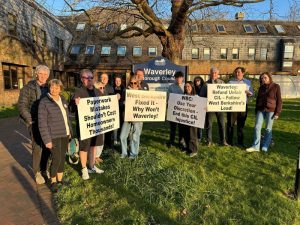
Housing targets in Surrey are set to skyrocket, with some areas expected to deliver double the number of homes under new Government plans. On December 12, the long-awaited update to the National Planning Policy Framework (NPPF) was published, setting out what councils and developers can and cannot do – leaving boroughs and districts “disappointed” and “deeply concerned.” Across Surrey, the number of new homes expected each year has risen by 4,635 to a total of 10,981, with some areas bearing a significantly heavier load than others.

Worst affected is Elmbridge Borough Council, where housing targets have more than doubled, from 653 to 1,562. This increase comes alongside the prospect of having no local plan, giving developers greater freedom over where and what to build. A spokesperson for Elmbridge Borough Council said they were “reviewing the new NPPF and its implications for Elmbridge’s Local Plan.” The council was told in November that its housing strategy must be withdrawn and restarted or risk being deemed “unsound.” A decision on next steps will be made in February 2025.

Other boroughs facing substantial increases include Waverley, where targets have risen from 710 to 1,481, and Reigate and Banstead, which sees an increase from 644 to 1,306. Woking, the only council to see its figure drop, still faces a significant rise from 436 to 794. These adjustments align largely with July consultation targets. However, Woking residents hoping for a break in town-center skyscraper developments and green belt preservation will be disappointed, as the reduction amounted to just one unit from the earlier proposal.

Housing targets for Surrey boroughs under the new NPPF are as follows:

Old housing target New NPPF target % increase
1 Elmbridge 653 1562 139
2 Surrey Heath 320 684 114
3 Waverley 710 1481 109
4 Reigate & Banstead 644 1306 103
5 Woking 436 794 82
6 Mole Valley 460 833 81
7 Guildford 743 1170 57
8 Epsom & Ewell 569 889 56
9 Tandridge 634 843 33
10 Spelthorne 631 793 26
11 Runnymede 546 626 15
SURREY 6346 10981 73

Reigate and Banstead Borough Council’s executive member for planning, Councillor Rich Michalowski, described the Government’s decision not to heed their feedback as “disappointing.” He said, “The borough’s housing target in the new NPPF of 1,306 homes per year is nearly three times higher than our current local plan target of 460 and more than double the previous NPPF target of 644 homes. These changes will have severe implications for Reigate and Banstead’s green belt and the character of our towns and villages. The standard methodology for calculating housing is flawed, as it doesn’t account for environmental and infrastructure constraints.” He emphasized the council’s commitment to exploring all urban development options but acknowledged that a Green Belt Review might be unavoidable.

Waverley Borough Council echoed these concerns, particularly regarding the methodology and its impact on green belt. Cllr Liz Townsend, Waverley’s portfolio holder for planning, called the more than two-fold increase “unrealistic and uncalled for.” She noted that the requirement for 1,481 new homes annually is two and a half times the current target and could increase the borough’s population by 50% over 20 years. “There is simply no evidence of this level of demand, nor that building this many homes would make them more affordable,” she said. Cllr Townsend highlighted the borough’s existing issues, including water supply disruptions, sewage overspills, a crumbling rural road network, overstretched health services, and power shortages stalling new developments.

All councils must now face the new reality as their starting points for planning new homes. Each borough will need to demonstrate to Independent Planning Inspectors that they have explored all possible avenues for delivering these targets. This challenge will require balancing housing needs with environmental, infrastructure, and community considerations.

Related reports:

Can Epsom and Ewell get more dense?

The Local Plan plot thickens after revised NPPF

Can the green light to Epsom’s Green Belt housing turn red?

Campaigners have set up a petition against the new targets:

https://www.change.org/p/excessive-targets-for-new-homes-in-surrey


The Local Plan plot thickens after revised NPPF

The Government’s revised National Planning Policy Framework (NPPF), published on 12 December, has set ambitious new housing targets, requiring local councils to accelerate their housebuilding efforts. This move coincides with Epsom & Ewell Borough Council (EEBC) updating its Local Development Scheme, which outlines the timetable for the borough’s Local Plan.

Under the updated scheme, EEBC’s Regulation 19 Consultation will take place from 20 December 2024 to 5 February 2025, before the Local Plan is submitted for examination in March 2025. The council aims to complete the public examination by July 2025. The Proposed Submission Local Plan (2022–2040), which Councillors approved on 10 December, is intended to shield the borough from ad hoc developments and ensure sustainable planning decisions.

Councillor Peter O’Donovan, Chair of the Licensing and Planning Policy Committee, emphasised the importance of meeting these deadlines:

“We are determined to meet the Government’s deadlines and will do everything within our power to achieve them. I strongly urge residents and businesses to read and follow the consultation guidance so that their feedback can be sent to the Planning Inspectorate.”

Government Targets: “Builders Not Blockers”

The Government has set a bold target of building 1.5 million homes by 2029, with councils expected to contribute to a new annual quota of 370,000 homes. Prime Minister Keir Starmer highlighted the urgent need for reform, stating:

“For far too long, working people graft hard but are denied the security of owning their own home… Our Plan for Change will overhaul the broken planning system and deliver the homes and growth this country desperately needs.”

Deputy Prime Minister Angela Rayner added:

“We must all do our bit to tackle the housing crisis. Local councils must adopt plans to meet housing needs, ensuring homes are built alongside the necessary public services and green spaces.”

Key measures in the updated NPPF include:

  • Mandatory housing targets for all councils, with increased expectations in high-growth areas.
  • A “brownfield-first” approach to prioritise development on previously used land, followed by “grey belt” areas of lower-quality greenbelt land.
  • Developers required to meet strict “golden rules” for infrastructure, including affordable housing, GP surgeries, and transport.

Boosting Council Resources

To support these changes, councils will receive an additional £100 million in funding and 300 more planning officers to expedite decisions. The Government is also exploring “brownfield passports” to fast-track urban developments and offering local authorities the option to increase planning fees.

Local Impact and Next Steps

The Regulation 19 Consultation represents the final chance for residents to provide input before the plan is examined by an independent inspector.

To participate in the consultation or register for updates, visit epsom-ewell.inconsult.uk.

With the new planning framework demanding rapid progress, councils across the country face the challenge of balancing ambitious housing targets with preserving the character of their communities. Epsom & Ewell’s ability to meet these demands will serve as a critical test of the Government’s commitment to delivering for “hardworking families” while addressing the nation’s housing crisis.

Related reports and letters:

Can the green light to Epsom’s Green Belt housing turn red?

Council minority vote Local Plan to next stage with Green Belt in

Epsom and Ewell’s Draft Local Plan goes to Full Council


Epsom and Ewell’s solar powered spaceship

Solar panels on Bourne Hall roof

Epsom & Ewell Borough Council has recently installed solar panels on the roof of Bourne Hall, and secured funding from the Public Sector Low Carbon Skills Fund to develop a heat decarbonisation plan for the Ewell Village community venue. These works are part of a planned programme of measures to decarbonise Bourne Hall.

This is part of the council’s Climate Change Action Plan which has set an ambitious target for the council to be carbon neutral by 2035.

Bourne Hall uses the most energy out of all the council’s buildings. The 52.2 kWp solar panel system will generate 45,000 kWh of electricity, covering 25% of Bourne Hall’s electricity usage, and saving more than 9 tonnes of carbon each year. The panels will save Bourne Hall around £15,000 annually in costs which can then be invested back into services for the community.

The Low Carbon Skills Fund is run by the Department for Energy Security and Net Zero and is delivered by Salix.

Funding for the heat decarbonisation plan will enable the council to develop a detailed understanding of the different ways in which energy efficiency of this building can be improved, including decarbonising the heating system.

Windows are also scheduled to be replaced with double glazing next year, part funded by the UK Shared Prosperity Fund.

Bourne Hall is a Grade II listed building, situated in the heart of the historic Ewell Village with Hogsmill River running nearby. Set in a picturesque setting, Bourne Hall has function rooms, facilities and services that the public and businesses can hire including an exhibition space. It also hosts Bourne Hall Museum, and Ewell Library which is run by Surrey County Council.

Councillor Liz Frost, Chair of the Environment Committee said: “We are passionate about our Climate Change Action Plan and take our responsibilities seriously. Changes and initiatives over the last four years has seen the council’s operational carbon footprint reduce by 14% since the council first began to measure it in 2019.

“Bourne Hall is an important hub for our community, and the installation of solar panels and the development of a robust heat decarbonisation plan is just part of a series of works that will make this picturesque and historical landmark more sustainable for future generations and help continue Epsom & Ewell Borough Council’s drive to be carbon neutral by 2035.”

Programme manager at Salix Christopher Masters said: “We are delighted to support Epsom & Ewell Borough Council in its net zero journey. Having a robust heat decarbonisation plan is a very important step in this process.

“We are looking forward to seeing what the plan will come up with and how the council will move forward as it continues to meet the ambitious net zero challenges.”

More information about Climate Change Action Plan progress can be found here – Climate Change | Epsom and Ewell Borough Council (epsom-ewell.gov.uk)


Can the green light to Epsom’s Green Belt housing turn red?

Letter to editor

Letters to the Editor

From Tim Murphy of the Surrey Campaign to Protect Rural England

A Dark Day for Epsom and Ewell

Dear Editor,

I write with deep disappointment and dismay at the decision by Epsom & Ewell Borough Council (EEBC) to approve a draft Local Plan that sacrifices Green Belt land in our borough for housing development. This decision marks a dark day for Epsom & Ewell and represents a significant betrayal of the community’s trust and values.

On December 10, EEBC councillors voted by 16 to 8, with 7 abstentions, to approve the latest draft Local Plan, which proposes releasing large areas of our much-valued Green Belt. Planning officers claim councillors had no choice due to Government housing targets. However, this argument does not excuse the council’s willingness to surrender cherished green spaces. The community clearly recognizes the value of protecting our countryside, even if the council does not.

Public opposition to the loss of Green Belt land has been overwhelming. During last year’s consultation, more than 1,500 residents responded, with 87% opposing any Green Belt development. A petition against the loss of Green Belt land attracted an astonishing 11,000 signatures, and a subsequent petition was so strongly supported that councillors were forced to debate it at the December meeting. The message from residents is clear: we do not want our Green Belt sacrificed for development.

It is worth emphasizing that the council’s own Green Belt study concluded that the vast majority of the borough’s Green Belt is performing its intended function. This includes Horton Farm and Hook Road Arena—two areas now designated for housing—which were identified as “highly performing” under the Government’s own criteria. Why, then, is the council choosing to give up such valuable land?

Protecting our Green Belt is about more than preserving open spaces. It is essential for public health, biodiversity, climate change mitigation, and preventing urban sprawl. Epsom & Ewell has largely resisted London’s sprawl, maintaining its identity as Surrey’s smallest district. Its open spaces are limited to either municipal parks or the Green Belt, yet these are now at risk. Over the past 25 years, the borough has already absorbed significant population growth through large housing developments on former hospital sites.

The council’s reliance on private developers to address local housing needs is deeply flawed. Private housebuilders often fail to deliver affordable homes, using “viability assessments” to argue that profits would be insufficient if they included the required number of affordable units. For example, a recently approved development on Green Belt land in this borough includes no affordable housing at all.

If EEBC were serious about tackling local housing needs, it would prioritise socially rented housing by working with central government and housing associations to develop urban brownfield sites and town-centre locations. Instead, the council appears intimidated by unrealistic housing targets set by Whitehall and has chosen to offer up our Green Belt as an easy sacrifice. This raises serious questions about local democracy and accountability.

The council’s decision disregards the wishes of the community it is supposed to serve. It is vital that we continue to challenge this plan and advocate for a future where Epsom & Ewell’s Green Belt is valued and protected for generations to come.

Yours faithfully,

Tim Murphy, Trustee Surrey Campaign to Protect Rural England


From Katherine Alexander of The Epsom Green Belt Group

Dear Editor,

The ink is barely dry on Epsom & Ewell Borough Council’s signing off on the draft Local Plan when it has been rendered obsolete.

The Epsom Green Belt Group warned the council that failing to accelerate the Local Plan process would result in disaster for the borough, and that disaster has now arrived.

The Local Plan will now be caught by the revised National Planning Policy Framework issued today by the government.

Prior to today, the council had the option not to review Green Belt boundaries and not to argue for exceptional circumstances to build on the Green Belt. It chose not to do either, but instead to revise Green Belt boundaries to permit development. Seven and a half years of delays have led us to this point.

The government has focussed its headlines on building on the ‘greybelt’ to make their plans sound palatable. However, the ‘greybelt’ definition is a smokescreen for much broader development that they want to portray. This is for two reasons:

1. All Green Belt qualifies as ‘greybelt’ except:

  • Strips of land at the edge of a borough that separate it from built-up sections of neighbouring boroughs.
  • Land that ‘strongly contributes’ to ‘checking the unrestricted sprawl of large built-up areas.’

In Epsom & Ewell, 22 of the 53 parcels of Green Belt land in the council’s analysis fail to meet either of these criteria and would therefore be classed as greybelt under the new definition. No disused petrol stations to be seen anywhere.

One of the parcels that would remain Green Belt, not greybelt, under this definition is Horton Farm. However, the council has voluntarily included it in the plan.

2. The NPPF states that where there is insufficient greybelt land to meet the new housing target, councils must find enough Green Belt land to make up the difference (para 148).
The only hint of protection is if that Green Belt land need not be released if it ‘would fundamentally undermine the purposes (taken together) of the remaining Green Belt when considered across the area of the plan.’ There is no guidance available as to what that means in practice, but as Epsom Common and Horton Country Park will remain, this exception is unlikely to help either.

What then is the new housing target for Epsom?
889 dwellings per year. That is almost five times the historical house building rate in the borough (c.189 per year) and more than three times the rate in the proposed Local Plan (c.273 per year).

Every scrap of available land will need to be included in the plan, and even then it won’t be enough to get close to the target.

The council only has itself to blame. It has failed to protect the borough, and the government has made it so the price for that failure is astronomically high.

After over 7.5 years of delays, the council’s task now is to work quickly—hitherto anathema to them—to review the NPPF in detail and work out whether any of the Green Belt can be saved under the new rules. This may mean taking out land that it had already included, because there is an argument to protect it (such as Horton Farm) in order to mitigate and minimize the disastrous impacts for the borough.

The previous excuse for progressing with an unpopular plan was to protect the borough from speculative development. Because of their delays, there will be no land left for speculative development. Perhaps they’ve got their wish.

Yours faithfully,

Katherine Alexander


From Epsom and Ewell Borough Council

Epsom & Ewell Proposed Submission Local Plan (Regulation 19) Consultation to go ahead as soon as possible

10th December Councillors voted to approve the Epsom & Ewell Proposed Submission Local Plan (2022-2040) and that the Regulation 19 Consultation should take place at the earliest opportunity. The Regulation 19 Consultation is the final opportunity for residents to feedback on the plan before it is submitted for independent examination next summer.

At the meeting of Full Council, Councillors heard from a petitioner who requested that all green belt land should be removed from the Proposed Submission Local Plan except for previously developed land. This was debated by Councillors during the meeting, before the vote.

Commenting after the meeting, Councillor Peter O’Donovan, Chair of the Licensing and Planning Policy, said “The Proposed Submission Local Plan provides a vision for our borough that strikes a balance between providing much needed homes including affordable housing, infrastructure, and support for local businesses whilst ensuring enhanced protection for biodiversity and our borough’s green spaces, and protecting the valuable local heritage and character of our borough’s towns and villages.

“It is challenging to find a path that meets the many different needs of all our communities, and not everyone may agree with every aspect of this plan. However, having listened to all the feedback, and examined the comprehensive evidence base, we feel strongly that this plan ensures that everyone in our borough, both now and in the future, is given the chance to thrive in Epsom & Ewell.

The Regulation 19 Consultation will take place at the earliest opportunity. We will announce the dates on our website and on social media as soon as they are confirmed.”   

An up-to-date Local Plan protects the borough from ad hoc and inappropriate development and ensures responsibility for future planning decisions remains with the borough and its communities. It provides a framework for where in the borough new development should go and where should be protected.

Epsom & Ewell Borough Council consulted on the Draft Local Plan in February and March 2023. The comments received on the Draft Local Plan, along with the local evidence base, informed the Proposed Submission Local Plan. The Regulation 18 consultation feedback summary report, which shows how the council has taken account of the feedback received, can be found here: Consultation response statement

During the Regulation 19 Consultation residents, visitors and local businesses can comment on whether the plan is legally compliant and sound, in accordance with the National Planning Policy Framework. Guidance on how to respond will be published on the council’s website.

Responses collected as part of the consultation will be sent to the Planning Inspectorate with the Proposed Submission Local Plan and the evidence base documents.


Dear Editor

As someone involved in the Save Epsom Green Belt campaign I just cannot contain my disbelief and anger at the local Council.

Last week the majority of them went ahead with a policy to build on our wonderful and well used recreational green spaces doubtless under some ‘exceptional circumstances’ clause.

Obviously, as already said many times and with recent letters to you, it is nevertheless worth reminding all your readers of the true devastating significance of this decision.

It is a Residents’ Association Majority Council. They are supposed to represent the local residents: the clue is in the name! They have not and should be ashamed at letting us down despite the many efforts to stop this. I understand that Epsom is the smallest Surrey Borough yet the most populated for its size. As many of us know, the present infrastructure is overloaded: schools, the hospital, GP surgeries, roads viz. Ruxley Lane in rush hours!

This building programme will further exacerbate the problem and severely restrict the country wide environment and its diverse wildlife. No doubt developers are already rubbing their hands with due opportunism as, thanks to the Residents’ Association Group, the local Green Belt vanishes FOR EVER! YES, WITH NO COMING BACK.

Yours Faithfully,

Dr Ted Bailey

West Ewell


From Epsom and Ewell MP Helen Maguire

Dear Editor,

Housing in Epsom and Ewell: A Call for Community-Led Solutions

I write to express my deep concern over the Government’s recently announced planning framework, which enables developers to bypass locally elected councillors and pressures councils to review precious green belt land for development. For communities like ours in Epsom and Ewell, this approach represents yet another example of Whitehall ignoring the voices of local people who are best placed to decide what their area needs.

Housing is a pressing issue, but the solutions must be community-led. The homes we build here must be genuinely affordable and accompanied by the services that people rely on—GP surgeries, schools, and reliable public transport. It is equally important that we protect the green spaces that define our borough.

Vulnerable families in Epsom and Ewell need safe and warm homes, but this cannot be achieved by sidelining the community. When residents are engaged and empowered, we can deliver the homes required to support those living in temporary accommodation, help older residents access housing solutions tailored to their needs, and ensure the next generation has somewhere to call home.

Unfortunately, the Government’s announcement fails to address the root causes of Britain’s housing crisis. The biggest issue is a desperate lack of social housing. Too often, developers use legal loopholes to shirk their obligations to build affordable homes. Meanwhile, the very term “affordable” has become meaningless to many local families who are priced out of the market. We need clearer definitions and upfront solutions to ensure that affordability is not just a slogan but a reality.

The recent decision by Epsom and Ewell Borough Council to move forward with the Local Plan, including controversial Green Belt sites, highlights the challenge we face. While I welcome the council’s efforts to prepare a plan, I share the concerns of many local residents and Liberal Democrat councillors who feel that housing targets and the development of virgin Green Belt land, such as Horton Farm, are not the right path forward.

The ruling Residents Association has been slow to update the borough’s planning policies, leaving us vulnerable to inappropriate and opportunistic applications. It is time for all parties to work together to prioritise robust, community-supported plans that deliver for Epsom and Ewell.

Epsom and Ewell deserve housing solutions that respect our unique character, address the needs of vulnerable residents, and safeguard our green spaces for future generations. I will continue to stand with our community in advocating for planning policies that reflect these priorities.

Yours faithfully,

Helen Maguire MP
Member of Parliament for Epsom and Ewell


Council minority vote Local Plan to next stage with Green Belt in

Town Hall and Local Plan

On 10th December 2024, the Full Council of Epsom and Ewell Borough Council convened to debate the proposed Local Plan, a pivotal document that will shape the borough’s future planning, housing, and Green Belt policies until 2040 and beyond. Central to the debate were contentious issues regarding housing targets, the timetable for the Local Plan submission, and the potential release of Green Belt land for development. The controversial Local Plan, including some Green Belt development, was voted through by 16 votes from a Council that consists of 35 Councillors.


Presentation of the Petition

The meeting began with the presentation of a petition organized by Yvonne Grunwald, titled “Remove Green Belt from the Epsom and Ewell Borough Council Local Plan.” Mrs. Greenwald argued the case against developing on Green Belt land:

“Over the last few years, residents have repeatedly told the Council that they do not want building on the Green Belt. They have held rallies, protests, they have spoken at council meetings. This includes secondary school children. They’ve sent emails to councillors and their MP… The results showed that 87% of respondents were opposed to building on the Green Belt.”

She criticized the council’s perceived disregard for public opinion:

“Why consult with the residents if you are going to ignore the result and actively undermine them?”

Mrs. Greenwald also pointed to an alternative plan that relied solely on brownfield sites:

“In November, opposition parties and the Green Party, together with residents, submitted an alternative plan, which showed that enough houses can be built on brownfield sites already identified by the Council.”

Concluding her speech, she urged the Council to act quickly to amend the plan:

“You must make sure that the Local Plan doesn’t include Green Belt… This should happen as quickly as possible so that it can be submitted to examination before the new NPPF rules come into force.”


Council Debate

Councilor Peter O’Donovan, (RA Ewell Court) Chair of the Licensing and Planning Policy Committee, responded to the petition. He acknowledged the concerns raised but defended the inclusion of Green Belt land in the Local Plan as a necessary compromise:

“The proposed submission plan… aims to strike the right balance of meeting development needs, including much-needed affordable housing, against protecting the borough’s Green Belt and character of the urban area, both of which are important to our residents.”

He warned of the risks of removing Green Belt sites from the plan:

“Officers consider that removing sites from the Local Plan would significantly increase the risk of the plan being found unsound at the examination stage. If our Local Plan is found to be unsound, we will have to restart the process again, meaning we will be without an up-to-date Local Plan for longer.”

Councillor Julie Morris (Lib Dem College) expressed her sympathy for the petition’s intentions but highlighted the challenges of late-stage changes:

“The problem with this petition is that it’s quite late in the day. Whilst I have every sympathy with its intentions and what it says, it’s actually quite difficult to implement that right now. You know, 12 months, 18 months ago, it would have been a different scenario.”

Councilor Bernie Muir (Conservative Horton) strongly opposed the inclusion of Green Belt land in the Local Plan, emphasizing the importance of protecting such spaces:

“Releasing high-quality Green Belt should be avoided at any time… Without this housing, our homeless levels will grow, not reduce. Releasing high-quality Green Belt without achieving a very significant benefit by doing so would be contrary to the NPPF and totally unacceptable.”

Councilor Clive Woodbridge (RA Ewell Village) cautioned against removing Green Belt sites, citing the experience of Elmbridge Council:

“Elmbridge… submitted a Local Plan with no Green Belt and a multiplicity of smaller brownfield sites. They are now faced with the option of either withdrawing it or having it found unsound. The inspector argued that the brownfield-only approach adopted would fail to deliver anything near the level of need for the planned period.”


Final Debate on the Draft Local Plan

When the draft Local Plan was introduced, Councillor Neil Dallen (RA Town) summarized the difficult position faced by the Council:

“Nobody wants to build on Green Belt, but there is not enough brownfield land. The risk is that this won’t be accepted, and we’ll be in even bigger trouble.”

Councillor Jan Mason (RA Ruxley) criticized the concentration of development in certain areas:

“You’re talking about the most densely populated part of this borough. This isn’t well thought out… There will only be harm.”

Councillor Chris Ames, (Labour Court) condemned the lack of affordable housing:

“This plan… will only deliver just over 1,000 affordable homes… fewer than 400 social rented homes by 2040. This is not sound.”

Clive Woodbridge defended the plan as a balanced approach:

“It delivers badly needed homes while protecting most of the Green Belt and maintaining the character of our borough.”


Outcome of the Vote

The Council ultimately voted on the draft Local Plan without amendments. The majority supported the plan, although several councillors abstained or voted against it. Councillor Peter O’Donovan’s remarks highlighted the Council’s predicament:

“This is the plan we have in front of us, and this is what we need to vote on today.”

Those opposing the plan, like Councillor Jan Mason, stood firm in their dissent:

“I’m personally against this plan… This isn’t something that will suit Ruxley and West Ewell.”


Conclusion

The Full Council’s debate underscored deep divisions over the Local Plan. While the plan’s supporters argued it represented a necessary compromise to meet government targets and protect the borough’s future, its critics condemned the perceived sacrifice of Green Belt land and insufficient affordable housing. The council’s approval of the draft plan marked a critical step forward, but the contention surrounding it suggests continued challenges as the plan progresses to examination.

The Voting: 16 FOR, 8 Against and 7 Abstentions.

Councillors Who Voted FOR:

  • Arthur Abdulin, Residents’ Association, Town Ward
  • Steve Bridger, Residents’ Association, Stamford Ward
  • Neil Dallen, Residents’ Association, Town Ward
  • Liz Frost, Residents’ Association, Woodcote and Langley Vale Ward
  • Shanice Goldman, Residents’ Association, Nonsuch Ward
  • Rachel King, Residents’ Association, Town Ward
  • Robert Leach, Residents’ Association, Nonsuch Ward
  • Steven McCormick, Residents’ Association, Woodcote and Langley Vale Ward
  • Phil Neale, Residents’ Association, Cuddington Ward
  • Peter O’Donovan, Residents’ Association, Ewell Court Ward
  • Humphrey Reynolds, Residents’ Association, West Ewell Ward
  • Alan Williamson, Residents’ Association, West Ewell Ward
  • Clive Woodbridge, Residents’ Association, Ewell Village Ward
  • John Beckett, Residents’ Association, Auriol Ward
  • Hannah Dalton, Residents’ Association, Stoneleigh Ward
  • Chris Watson, Residents’ Association, Ewell Court Ward

Councillors Who Voted AGAINST:

  • Rob Geleit, Labour, Court Ward
  • Christine Howells, Residents’ Association, Nonsuch Ward
  • Alison Kelly, Liberal Democrat, Stamford Ward
  • James Lawrence, Liberal Democrat, College Ward
  • Bernie Muir, Conservative, Horton Ward
  • Kieran Persand, Conservative, Horton Ward
  • Julie Morris, Liberal Democrat, College Ward
  • Jan Mason, Residents Association, Ruxley Ward

Councillors Who ABSTAINED:

  • Chris Ames, Labour, Court Ward
  • Kate Chinn, Labour, Court Ward
  • Christine Cleveland, Residents’ Association, Ewell Village Ward
  • Bernice Froud, Residents’ Association, Woodcote and Langley Vale Ward
  • Tony Froud, Residents’ Association, Stoneleigh Ward
  • Darren Talbot, Residents’ Association, Auriol Ward
  • Graham Jones, Residents’ Association, Cuddington Ward

Procedural criticisms and more:

The Epsom Green Belt Group has raised significant concerns regarding the procedural handling of the Local Plan by the Residents Association-led council. They argue that the process lacked transparency and adequate opportunities for scrutiny.

In their press release, the Group stated:

“For almost two years, since the regulation 18 consultation in early 2023, the public has been waiting to see what would be included in the Local Plan, whilst lobbying for the protection of the Green Belt, submitting a 10,000-member petition, holding rallies and writing to councillors. Requests were made to discuss the Local Plan and the treatment of Green Belt in the fourth quarter of 2023, in July 2024, and in September 2024. Nothing was shared, and nothing debated until November 2024.”

This lack of earlier discussion and public involvement was also echoed during the Full Council meeting. Councillor James Lawrence (LibDem College) highlighted the limited opportunities for councillors to engage in substantive discussions:

“There have been cases where we could have been involved, such as after the briefings. There’s nothing wrong with having briefings, but those were never brought into the public domain until a few weeks ago.”

The Group also pointed to restrictions on questioning during the December 2024 Full Council meeting, which they argued severely limited proper scrutiny of the Local Plan. They noted that only five questions were permitted in total, with some councillors, such as Councillor Mason, restricted from raising further queries, and others, like Councillor Lawrence, unable to pose any additional questions. Councillor Mason’s frustration was evident:

“I had more to ask about the Green Belt allocations and the housing numbers, but I was told I had used up my chance. How is this adequate scrutiny for a plan that decides the future of this borough for 16 years?”

Additionally, the Group criticized the Residents Association for missing the opportunity to submit the Local Plan under the existing National Planning Policy Framework (NPPF) guidelines, which would have allowed for greater flexibility in protecting the Green Belt. They claim that the refusal to expedite the Local Plan’s preparation has exposed the borough to heightened housing targets under new rules.

Councillor Hannah Dalton (RA Stoneleigh) expressed the challenge of navigating a rapidly changing regulatory landscape but stopped short of endorsing the Group’s criticism of delays:

“We’ve got numbers that have changed. We’ve got new government ambitions. We want to build affordable and social housing. Whatever we do, it’s not going to satisfy everybody. That is the nature of Local Plans.”

The Group also accused the council of opening the floodgates for further Green Belt development by including high-quality Green Belt sites in the Local Plan. Councilor O’Donovan, however, defended the approach as a necessary trade-off:

“By including a small portion of Green Belt in the plan, we ensure protections for the rest. Without a Local Plan in place, developers will have greater freedom to target any Green Belt site.”


Surrey: Free school buses withdrawn

Surrey County Council\'s recommended safe route to Esher High School (image Palamena Naydenova)

Free school buses are being axed after a cross-country route was judged safe by Surrey County Council. Parents say the letter outlining the new walkable route explicitly states that the “personal safety issues of children travelling alone” were not considered. About 81 children from Esher High School are said to be affected. Compounding the problem, the council has stated that further funding to increase capacity on regular bus services is not available.

The Local Democracy Reporting Service understands parents are appealing the decision and have been in touch with Surrey Police. This comes just weeks after parents in South Nutfield were told children could walk across open rail tracks and flood-prone cow fields as the county council looks to make further service cuts.

Children who live more than three miles from their nearest school are eligible for free buses. The new route across the heath reduces the distance to just under that mark, meaning the children no longer qualify for the service. The council says the move will save about £180,000 per year and create space on “stretched coach resources to provide travel assistance to those eligible.”

One of the affected parents, Plamena Naydenova, received a letter that included directions on how her children could get to school, with 30 separate steps to follow. Among the instructions were phrases like “take the alleyway,” “follow the footpaths through Molesey Heath Nature Reserve,” and “turn right through the squeeze stile.” Later, children are told to “cross the River Mole Viaduct Sluice.”

Mrs. Naydenova said: “How can you call an 83-minute walk through dark heaths and unlit river paths a safe route? It’s just honestly outrageous, the whole thing. It isn’t about one child, it’s a principle. It will affect many families, not just my two children. I walked it with my sister as I was afraid to walk it on my own. It goes through narrow alleyways, fields, mud along the embankment of the River Mole, with no fencing.”

She added: “The bit that annoys me the most is the word safe—or safe for an accompanied child. Parents must accompany them, but the council doesn’t see that other parents have other children to drop off or work commitments. I would need to leave the house at 7 a.m. to get to Esher. How would I get the other children to school, never mind my work commitments? It’s very, very shocking. We all know it’s about the money and cost-cutting. But be honest and transparent—say ‘we can’t afford to pay anymore,’ not that there’s a new safe route.”

Since the shock email, parents have banded together. They understand about 81 other students have been impacted. Very few are expected to take on the route and, if their appeal fails, will instead use the standard bus network—although these services, she said, are often full, leaving school children at stops.

Mrs. Naydenova said: “It will put a lot of pressure on the existing paid buses. We aren’t going to let them walk across the heath. We only have one car, so the only other option is cycling, but how safe is that?”

Travel assistance will run until the end of the school year, but from September 2025, children will need to find alternative routes unless there is a change.

Surrey County Council’s cabinet member for children, families, and lifelong learning, Councillor Clare Curran, said the route to Esher High School was established following “individual safe walking route assessments” applied in line with national guidelines. She explained: “It is important to note that the guidelines consider the relationship between pedestrians and traffic, and assessments are undertaken on the assumption that the child will be accompanied by an appropriate adult if necessary. The Department for Education‘s own school transport guidance also supports this position. It is suggested that suitable footwear and a torch are used where needed.”

She added: “The council provides contracted coaches to those eligible for travel assistance to Esher High School. By limiting the services only to those eligible in line with statutory guidance, the council expects a cost saving of approximately £180k per year, as well as the benefit of utilizing the stretched coach resources to provide travel assistance to those eligible. The national picture is of increased demand on transport services and therefore council budgets. We spent £64.9m in 2023/24 on home-to-school travel costs for around 10.7k children and young people.

“We take our responsibilities regarding home-to-school transport very seriously; however, we must balance this with our duty to ensure we are only using public funds for those who meet statutory guidelines for free transport or who are most in need of assistance. Amidst a set of challenging financial circumstances, the council is not in a position to continue to pay for transport for families where they are no longer eligible for assistance due to a safe route being established.”

Related report:

Surrey school kids’ country walk saving money

Image: Surrey County Council\’s recommended safe route to Esher High School (Palamena Naydenova)


Ideas for empty Council premises in Reigate and Redhill

Cllr Neha Boghani outside an empty retail unit in Redhill. (Credit: Green Party)

Calls to make use of empty town centre units could see charities and pop-up shops take over in Surrey towns as councillors ask for short-term leases to be made available on council owned buildings. Over £600k is spent every year on maintaining empty shops and offices in Reigate and Banstead borough, according to council data. 

Reigate and Banstead Borough Council (RBBC) own several wholly or partially empty commercial properties which they have to pay expensive business rates, utility bills and insurance for. Half of business rates are absorbed by the council, with the other half sent to the central government. 

Councillors found that £619k has been spent on the upkeep of vacant commercial units in the borough this year. Three quarters of this is spent on properties in Redhill, including the new Rise shopping centre and Wheatley Court on Cromwell Road.

Around £174k is spent every year on four completely empty properties, including Beech House in Reigate which has been vacant since 2021. The three-storey office block is now up for sale. 

While some prime retail commercial units are sitting empty in Redhill town centre, Cllr Neha Boghani (Green Party) has proposed a “common sense” motion to put the spaces to work. She has suggested using short-term ‘Meanwhile leases’ to save the council from paying extortionate business rates by making the space available to volunteer groups until full rental for these buildings is agreed. 

‘Meanwhile’ leases essentially allow for the temporary occupation of a retail unit in a town centre without the lengthy administrative and legal process. It means non-commercial occupiers, who would otherwise not be able to afford the rent, can take advantage of the site as soon as possible. 

She said: “Let’s open some of our empty spaces for Christmas on Meanwhile Leases. We could create space for community uses, for entertainment, to serve the most vulnerable and provide a decent size temporary venue until the Harlequin reopens. What’s not to like?” 

The Green Party has suggested the multiple empty spaces in The Light shopping centre, Redhill, could be used for Christmas charity appeals or community groups. They also referenced the Harlequin Theatre needing a new temporary venue, which the council could provide in one of the empty shops in the centre.

Although charities and voluntary organisations pay peppercorn rent on a prime location store, it is only for a short period of time while the landlord finds a permanent tenant. Charities are often faced with unpredictable funding streams which can make it difficult for them to operate, so having a short-term let could potentially add further uncertainty. 

“This arrangement can create something out of nothing,” the Green Party councillor said. “It could be put to good use to support the charities using the space for the short term.” 

The Reigate and Banstead Council executive will consider using temporary leases and its potential economic benefits at a future date.

Cllr Neha Boghani outside an empty retail unit in Redhill. (Credit: Green Party)


Examination of a Surrey Borough’s 2nd highest UK debt

Spelthorne Borough Council offices in Knowle Green, Staines. Credit: Emily Coady-Stemp

The review into Spelthorne Borough Council’s £1 billion debt and whether it is upholding its duty to provide best value to residents has been extended. In May, the government wrote to the heavily leveraged local authority, the second most indebted borough council in the country, over concerns surrounding its debt conditions and financial management arrangements. It has now written again to say it is extending its deadline until January 31, 2025, with the scope of the inspection remaining unchanged. The Government first began engaging with Spelthorne Borough Council in May 2022 over its capital risk, and the review covers concerns over how the council is governed, the strength of its audits, scrutiny and risk arrangements, and in particular its finances. Its debt is second only to bankrupt Woking among borough councils.

A Spelthorne Borough Council spokesperson said of the delay: “The snap general election earlier this year interrupted the appointment of the Best Value Inspection team. The delayed appointments have had a knock-on impact on the original timeline, which has resulted in this extension.” The council’s extremely high levels of debt and borrowing, as of March 2023, stood at £1.1 billion, which is 87.1 times the borough’s core spending power (CSE) and 52.4 times its total service expenditure. By comparison, the average CSE for councils such as Spelthorne is 5.6. Spelthorne has followed a similar path to other Surrey authorities such as Woking, Runnymede, and Surrey Heath, borrowing vast amounts to fund regeneration projects in the hope of creating long-term revenues. Many councils have used this to stave off real-term cuts to their spending power and maintain services residents value. The problem arises, as in Woking’s case, when local authorities can no longer afford to pay back their loans, or if income from the investments is too low. While Spelthorne Borough Council has not yet reached that stage, the Government is seeking assurances that its long-term position is secure.

Between December 2016 and August 2018, Spelthorne Borough Council bought eight investment properties for a cost of about £1 billion. It borrowed largely from the Public Works Loans Board to generate income that supports its revenue budget, enabling it to maintain a wide range of discretionary services. As of December 31, 2022, the council’s total borrowing stood at some £1.1 billion, with £1.08 billion from the Public Works Loans Board—the same body that lent to Woking Borough Council and numerous others. The council plans to borrow a further £332 million between 2023 and 2027, with most of this spread across the next two financial years, and has set its authorised borrowing limit at £1.45 billion for the next four years. The Government has also highlighted a KPMG Public Interest Report on the council’s 2017/18 accounts, published in November 2022, which raised concerns about Spelthorne’s investments and stated the auditor’s view that the authority acted unlawfully in borrowing to purchase three properties in 2017/18.

The vast majority of Spelthorne’s property portfolio, 95 percent, consists of office buildings, with just ten tenants accounting for 75 percent of its lettings income, and one tenant—BP—providing £18 million in rental income annually. About half of its leases end within 10 years and 94 percent within 15 years, creating pressure to retain key tenants. This reliance was highlighted when the loss of a previous tenant resulted in a £4 million loss, including £2.4 million linked to a Russian-owned tenant affected by Russia’s invasion of Ukraine. A July 2023 report noted: “Although Spelthorne Borough Council has effective mitigations in place, this cannot provide complete protection. The loss of a major tenant can impair commercial income.” The council is projected to face an income shortfall of £10 million over the next two years due to these challenges. Additionally, the devaluation of its assets adds to its risks. Spelthorne spent £952 million on eight major purchases that collectively were worth £882 million as of 2022, with only the Sunbury Business Park increasing in value, rising from £384 million to £387 million. However, this gain is overshadowed by losses, such as the Charter Building in Uxbridge, purchased for £135.98 million but valued at £99 million. These devaluations mean that if the council needs to sell assets, it could face a significant deficit.

Despite these challenges, the council insists that the rental income from its commercial property portfolio exceeds financing costs and contributes significantly to discretionary services. “Annually these contribute approximately £10 million net to the council’s revenue budget, enabling the council to continue delivering services that would otherwise have to be cut, including valued services such as Meals on Wheels or community centres,” stated a Chartered Institute of Public Finance and Accountancy report. The same report, titled the Spelthorne Borough Council Review of Debt/Investment Risk Profile July 2023, also warned of a significant budget deficit of £9.306 million projected over the next three financial years. Responding to the original best value review, a council spokesperson said: “We welcome the independent review and will work with the inspector and her team. This administration has taken many decisive and positive steps since the May 2023 election, including instigating a full external independent review of our commercial property portfolio. Additionally, we have reduced future borrowing requirements by nearly £200 million and are pursuing alternative ways to deliver more affordable housing. We will continue to work with (the government) in an open and transparent way and look forward to receiving the findings of the report. The rental income received from our commercial property portfolio more than covers the financing costs and provides a significant contribution to support council services, additionally, there is a reserve to cover possible income variation in future years.”

Related Reports:

Spelthorne in financial trouble

Spelthorne’s neediest lose out on housing

Spelthorne’s thorny property problems spelt out

Spelthorne Borough Council offices in Knowle Green, Staines. Credit: Emily Coady-Stemp


Epsom and Ewell low-income crisis support

Unhappy couple. Photo by Timur Weber: https://www.pexels.com/photo/discord-between-man-and-woman-8560374/

The Household Support Fund, provided by the Department for Work and Pensions, offers short-term financial support to households struggling to afford essentials. Distributed by CAEE on behalf of Epsom & Ewell Borough Council, this fund is available until 31st March 2025.

Who Can Apply?

You may be eligible if you:

  • Are on benefits
  • Live in a low-income household
  • Require crisis support that could otherwise lead to financial hardship

Who Can CAEE Help?

CAEE provides support to:

  • Families
  • Pensioners
  • Disabled people
  • Those in financial crisis

What Can the Funds Cover?

The Household Support Fund can help with:

  • Utilities
  • Food
  • Essential goods
  • Crisis support to avoid financial hardship

How to Access the Fund

  • Online: Complete an application via our website: www.caee.org.uk/household-support-fund/
  • Phone: Call us on 01372 300777
  • In Person: Attend a drop-in session:

    • Monday & Tuesday: 10 am – 1 pm
    • Thursday: 10 am – 3 pm

Message from Lisa Davis, CEO of CAEE

“We have been given more Household Support funds to distribute to those who are tipping into financial crisis. From June to September, we assisted 161 clients, including families, older people, and those with disabilities or long-term conditions. We provided essential help such as energy or supermarket vouchers and direct utility payments.

We saw first-hand the significant positive impact this support had on our community, alleviating financial pressure and anxiety.

Examples of crises we can help with include:

  • Repairing an essential family car to get to work
  • Providing support equipment to prevent a disabled person from falling into hardship
  • Covering costs for new school uniforms
  • Assisting with utility bills

Get in touch with us as soon as possible – we can help.

Unhappy couple. Photo by Timur Weber: https://www.pexels.com/photo/discord-between-man-and-woman-8560374/