
Epsom and Ewell Times
24th September 2026

ISSN, LDRS and IMPRESS logos

Another solar power story – Leatherhead

Leatherhead Leisure Centre (Image Google)

A four-year fight to install solar panels in a Leatherhead car park has left those behind the green project both “disappointed and very exited”.

Mole Valley District Council declared a climate emergency in 2019 and has been trying to decrease its carbon emissions ever since, with the goal of reaching net zero by 2030.

Now, a pilot scheme set to be approved could to be a step in the right direction – but has left some wishing for a “far more expansive” roll out, after funding was approved to cover just 20 bays in Leatherhead with the new tech, the size of about two tennis courts.

Bays in the centre’s car park will have new coverings with solar panelling installed on top. Electricity from the panels will be used to help power Leatherhead Leisure Centre although it will fall well short of delivering its full need.

It is anticipated that the electricity generated annually by the solar panels will be 37,498 kWh or about 2.7 per cent of what the centre uses – although it would still be enough to reduce the council’s carbon footprint by about 9.7 tonnes a year.

Hope is not lost for those wishing to see greater role out of the panels as the council has said that, should key milestones and performance targets be hit, “the intention is that further role out of solar carports across other Mole Valley District Council carparks including Pippbrook Offices and Reigate Road will be implemented”.

Cabinet Member Councillor Claire Malcomson said: “It’s taken four years to get this far.

“I’m disappointed and very excited about this because at long last we’re going to be doing it, I would love it to be far more expansive but it is only a pilot therefore hopefully it’s going to open some really good doors for us.”

The £175,000 project is expected to take about 16 years to cover its costs and the levels of energy produced too low to require battery storage units.

Regardless, the system will be plugged into the national grid with any spare capacity sold into the network – the most likely scenario here being on days the centre is closed.

She said: “It would take 16 years to pay itself back and I just hope we will consider it as its a very good step in the right direction because other councils are taking over but it was actually Mole Valley that initiated this in the first place.”

A similar project is already in place in the Elmbridge Civic Centre car park in Esher.

Cllr Andy Smith (Independent; Ashtead Lanes and Common) said: “This is a very good scheme indeed.

“I share the disappointment that its taken so long to get off the ground but I’m very keen that we seize the opportunities for this type of solar project rather than using up productive agricultural land with solar arrays.”

Final sign off on the plans are dependent on cabinet approval.

Leatherhead Leisure Centre (Image Google)


Surrey’s focus on independent lives is “good”.

Sinead Mooney, Surrey County Council’s Cabinet Member for Adult Social Care  (second from right), pictured with people who draw and care and support alongside staff from the provider Dramatize, which supports adults with learning disabilities after they leave education, offering a wide range of activities including day provisions and employment and life skills programmes. 

Surrey County Council’s adult social care services have been rated as ‘good’ by a health watchdog – despite some inconsistencies. In the local authority’s first ever overall rating, the Care Quality Commission found SCC ‘good’ at keeping people independent for longer in communities.

The new report, published November 20, comes from the CQC’s new responsibilities to assess how local authorities meet their duties under the Care Act. The watchdog assessed SCC in nine areas, including how the local authority works with people, safeguarding and leadership.

The CQC’s report found one of the county council’s strengths was that a “variety of measures were in place to prevent, reduce and delay people’s needs”. People could access information and advice where needed but improvements could be made to streamline this further.

CQC assessment teams reported 70 per cent of the service’s provision should be rated “good”. The report did highlight some areas that needed improvement, which the council said it would be working on.

Sinead Mooney, Surrey County Council’s Cabinet Member for Adult Social Care, said: “The dedication of our staff shines through the report and I’d like to thank them publicly for their hard work making a positive difference to the lives of thousands of people in communities across Surrey.

“Our ultimate goal is to deliver the best possible services for Surrey residents and this ‘good’ outcome will help instil confidence in the services and support we are providing and that we are on the right path to making further improvements.”

Partners with SCC gave positive feedback about how the authority worked with them to support people’s independence, according to the report. Data for Surrey showed 86% of people who have received short term support didn’t need ongoing longer-term support which is positive compared to the England and regional average of 78%.

Inspectors praised Surrey for their “ambitious” plans to increase supported living by at least 500 spaces to help encourage people’s independence, choice and control. The council is also working to keep people in their homes for longer and avoid unnecessary hospital admissions, reducing pressure on A&E departments.

Good, but inconsistent

However, the CQC found there was room for improvement. Although a lot of the feedback seemed positive in the report, inspectors noted experiences of receiving care and support in Surrey varied.

The report said: “One person was assessed and felt listened to, achieving the outcome they wanted, which was to return to live at home. Other people had similar good experiences with staff focusing on what people wanted plus their future wishes, people described staff as being empathic and showing them respect.”

Safeguarding was judged to be effective, slightly above the national average, but has some shortcomings. Staff and partners raised concerns about some new safeguarding processes that were not yet fully embedded with knowledge and understanding of some staff.

Staffing challenges were also flagged as an issue, leading to some reviews not carried out in a timely way and leading to a backlog. Partners working with SCC told inspectors the cost of living crisis had affected people on low incomes, and Surrey was an expensive place to live, making it hard to recruit and retain staff and then impact on care services, the report said.

But the report noted SCC has long-term plans to address recruitment challenges which had been created with staff. The local authority stated they were making improvements to manage risks until staffing levels had improved, by making better use of existing resources.

James Bullion, CQC’s chief inspector of adult social care and integrated care, said the county council “should be proud of this assessment and the foundation they’ve created on which to build improvements and further innovation”.

He added: “The local authority was very aware that although Surrey is an affluent county, there are pockets of deprivation where residents have high levels of need and disadvantage. The authority knew of these very differing needs of its population and were doing some creative work to meet those needs and help people keep their independence.”

Commenting on the report’s feedback for improvement, Mrs Mooney said: “As we celebrate this achievement, we also recognise that there are areas where we need to learn and develop and we are actively working to address all feedback from the CQC through comprehensive improvement plans. Our new director of adult social services recently started with us, so we’re well-placed to build on this result to further raise the bar for our residents.”

Photo: Sinead Mooney, Surrey County Council’s Cabinet Member for Adult Social Care  (second from right), pictured with people who draw and care and support alongside staff from the provider Dramatize, which supports adults with learning disabilities after they leave education, offering a wide range of activities including day provisions and employment and life skills programmes.  


A poll on polling – Epsom and Ewell consults

Old man with walking stick leaving polling station

Epsom & Ewell Borough Council will launch a six-week consultation into proposed changes to the polling district and polling places within the borough from 21 November 2024 to 2 January 2025.

In 2023, the Local Government Boundary Commission for England carried out a review of Surrey County Council’s electoral boundaries. The resulting Surrey (Electoral Changes) Order 2024 is anticipated to be passed by parliament and will make changes to the County Council’s electoral division boundaries.

This consultation will propose changes to Court and Horton wards in order to bring the areas in line with their new County Council electoral division and ensure ballots are placed in the correct ballot box.

There are no proposed changes for any other wards, as issues arising from the Police and Crime Commissioner elections in May were resolved for the Parliamentary elections in July.

Jackie King, Chief Executive of Epsom & Ewell Borough Council said,

“I would like to encourage all residents in the borough to have their say on the proposals in this consultation. It is important to review our polling district and places now to ensure the council is fully prepared for next year’s County Council election and the changes to the electoral divisions.”

The consultation can be accessed via the following link: https://www.epsom-ewell.gov.uk/council/elections-and-voting/electoral-boundaries


Conflict on Epsom’s Green Belt plans of another kind?

Tug of war over green belt land

On the eve of an important meeting of the Licensing, Planning and Policy Committee on the future of the Borough’s Local Plan, housing and Green Belt development, Epsom & Ewell Borough Council (EEBC) is under fire following allegations of inadequate handling of a perceived conflict of interest involving its planning consultant, Mr. Derek Stebbing, and his employer, Strutt & Parker (S&P). The controversy centres on Mr. Stebbings’ advice to permit housing development on Green Belt land in the borough while S&P maintains a business relationship with the Church Commissioners (CC), significant landowners of Green Belt land in the area.

EEBC has also been accused of silencing public concerns. Campaigner Sam Bentall was barred from addressing a key council meeting after being accused of making defamatory claims about the alleged conflict. Emails exchanged between Ms. Bentall and the council reveal a contentious and somewhat opaque process.

Ms. Bentall attempted to raise her concerns at a meeting of the council’s Licensing, Planning, and Policy Committee (LPPC). However, she was refused the opportunity to speak. The council justified its decision by claiming her assertions of a conflict of interest were defamatory. In an email exchange seen by the Epsom and Ewell Times, Ms. Bentall expressed frustration, stating, “I am being silenced for highlighting genuine concerns about transparency in the planning process.”

The crux of the controversy lies in Mr. Stebbing’s dual roles:

As a consultant to EEBC, Mr. Stebbing has advised on the Local Plan, including housing developments on Green Belt land such as Horton Farm. Strutt & Parker’s website states it “has appointed Derek Stebbing as planning policy consultant to advise its national development and planning team in assisting clients in navigating the planning process.”

S&P have the Church Commissioners, owners of Horton Farm, as one of its clients. During a telephone interview with Epsom and Ewell Times, Mr. Stebbings denied any direct advisory role to CC, stating: “I do not advise the Church Commissioners at all, whether in Epsom & Ewell or elsewhere.” He acknowledged, however, that CC is a major client of S&P and asserted that “Chinese walls” within the company prevented any conflict of interest.

One Councillor, who asked not to be named, confirmed that the consultant advised Councillors of the need to allow Horton Farm to be developed for housing. “I accept that he may not have known the owner of the land was a client of his employer but the perception of a risk of a conflict of interest cannot be ignored.”

The Council was invited to comment and replied it had no comment.

Some local groups have sharply criticized the council’s draft Local Plan, which includes proposals to develop nearly 60 hectares of Green Belt land. In a letter to the Epsom and Ewell Times, the Epsom Green Belt Group challenged the council’s justification for building on high-quality Green Belt areas like Horton Farm.

“The draft plan proposes the loss of almost 60 hectares of Green Belt land, of which 87% is ranked as High Quality. Horton Farm is one of the highest-ranked areas and unsuitable for development due to flooding risks, traffic impacts, and lack of infrastructure,” the group wrote. They argue that the plan unnecessarily sacrifices pristine Green Belt land when alternative solutions exist.

The council has faced widespread criticism for delays in finalizing the Local Plan, now eight years overdue. While the Epsom Civic Society has urged swift adoption to prevent speculative development, other voices, including the Green Belt Group, caution against rushing a flawed plan.

“Submitting a bad plan, unnecessarily and inappropriately destroying huge areas of Green Belt, would be unforgivable,” the Green Belt Group warned. They advocate revising the plan to remove high-quality Green Belt sites like Horton Farm before submission.

Related reports:

Epsom Civic Society say Local Plan should be agreed on Wednesday

Epsom and Ewell Green Belt battle lines drawing near

Call to Epsom and Ewell Council to speed plan denied

Epsom Local Plan controversy heats up

Time to press the gas on Epsom’s Local Plan?

Epsom and Ewell Brace for Government Housing Targets


Epsom Civic Society say Local Plan should be agreed on Wednesday

Town Hall and Local Plan

The Epsom Civic Society (ECS) (motto being “Shaping the future, safeguarding the past”) has urged councillors to support the borough’s draft Local Plan, warning of the risks associated with further delays. In a press release issued yesterday, ECS Chair Margaret Hollins emphasised the importance of progressing the Plan to protect Epsom from speculative and inappropriate development.

“For the past eight years, our newsletters have chronicled the ongoing saga of Epsom’s efforts to adopt a new Local Plan,” Ms Hollins stated. “Without an up-to-date Plan, the Borough remains vulnerable to developments that may not align with the character and needs of our community.”

The Society acknowledges the challenges posed by central government planning reforms, which have increased housing targets and tightened timescales for Local Plan updates. While the draft Plan falls short of fully meeting housing targets, ECS believes it represents the borough’s best chance of success in the face of these constraints.

In a letter to members of the council’s Licensing and Planning Policy Committee, ECS highlighted the consequences of rejecting the draft. “Having no meaningful Plan to take forward to the next stage is significantly more threatening,” the letter warns. “Without an up-to-date Plan, the Borough faces prolonged vulnerability to speculative development, which could lead to inappropriate urban projects and greater threats to the Green Belt.”

The letter acknowledges the difficult compromises required in the draft Plan, including limited encroachments on less strategically important Green Belt land. However, ECS views this as a necessary trade-off to protect higher-value areas and secure much-needed housing. The Society is urging councillors to act swiftly, particularly given anticipated changes to the National Planning Policy Framework (NPPF), which may increase housing pressures further in the new year.

“Some compromise now is the best way to defend the rest [of the Green Belt],” the press release concluded. ECS is advocating for the adoption of the Plan as recommended in the council’s report, emphasising the risks and costs of restarting the process.

The Licensing and Planning Policy Committee will meet tomorrow to consider the draft Local Plan. The decision could shape the future of development in Epsom for years to come.

Councillors now face the challenging task of balancing housing needs with the preservation of the borough’s character and natural assets, while navigating increasingly stringent national planning policies. All eyes are on Wednesday’s meeting to see how they respond to the Civic Society’s call for decisive action.

Related reports:

Numerous. Search “Local Plan”


Proposed Battery Energy Storage System Near Ashtead Common Faces Objections

BESS plan

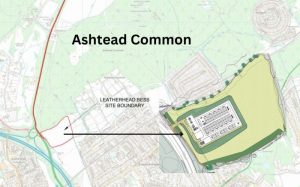
Plans to install a Battery Energy Storage System (BESS) near Ashtead Common have sparked significant opposition from local conservation groups and residents. The proposed facility, intended to support renewable energy integration and grid stability, has raised environmental and safety concerns, particularly given its proximity to a Site of Special Scientific Interest (SSSI) and Ashtead Common National Nature Reserve.

The Proposal

Bluestone Energy Ltd has submitted plans to Mole Valley District Council for the installation of a BESS facility near Barnett Wood Lane, Ashtead. The project includes underground cabling, access roads, security fencing, and biodiversity enhancements. Proponents argue that the facility is vital for managing energy supply fluctuations, particularly with the increasing reliance on renewable energy sources.

Benefits of BESS Technology

Battery Energy Storage Systems play a crucial role in modern energy infrastructure:

  • Renewable Energy Support: BESS allows for the storage of solar and wind energy for use during periods of low generation, helping to stabilise energy supply.
  • Grid Stability: These systems can manage fluctuations in electricity demand, reducing the strain on power grids.
  • Emergency Power: They provide backup electricity during outages, making them indispensable for critical infrastructure.
  • Environmental Gains: By reducing reliance on fossil fuel-powered plants, BESS supports the UK’s transition to a low-carbon energy system.

Potential Hazards

Despite their advantages, BESS technology carries significant risks:

  • Fire Hazards: Lithium-ion batteries, commonly used in these systems, are susceptible to thermal runaway, leading to fires that are difficult to extinguish and can reignite.
  • Environmental Impacts: Manufacturing and disposal of batteries contribute to pollution if not carefully managed. Additionally, construction can disrupt local ecosystems.
  • Noise and Light Pollution: Ongoing operations may disturb nearby wildlife and residents.
  • Land Use Concerns: Large-scale facilities can lead to habitat fragmentation and loss of natural landscapes.

Objections Raised

1. Environmental Concerns

The City of London Corporation, which manages Ashtead Common, highlights the potential harm to local wildlife, including bat species protected under national and international law. Their letter of objection emphasises the detrimental impact of light, noise, and habitat fragmentation on these species. Ashtead Common is home to ancient oak pollards and biodiversity of national significance, further underscoring the ecological risks​.

2. Fire Risks

Ashtead Common has a history of significant biodiversity loss due to wildfires. Objectors express concerns over the fire hazards posed by lithium-ion batteries, particularly given the facility’s location and prevailing winds. The proposed water tank is deemed insufficient to address thermal runaway events effectively.

3. Green Belt and Landscape Impact

Councillor Andy Smith notes the intrusion on Green Belt land, citing concerns about coalescence, encroachment, and loss of openness. He argues that such developments undermine the distinct landscape qualities of the countryside and suggests that the facility’s location does not align with local conservation goals​.

4. Questionable Site Selection

Critics question the necessity of placing the facility adjacent to Ashtead Common when closer alternatives to the Chessington substation could reduce environmental impact and energy loss. They argue that the benefits outlined by the developer are generic to any BESS project and fail to justify the chosen location​.

5. Opportunity Cost

The City of London Corporation suggests that the land, currently transitioning to a natural habitat, offers better long-term biodiversity potential if left undisturbed. They challenge the proposed biodiversity net gain enhancements, arguing that natural succession would achieve similar, if not superior, outcomes without artificial intervention​.

Public Sentiment

While there is broad acknowledgment of the need for renewable energy infrastructure, local stakeholders believe this project’s costs outweigh its benefits. “We need to modernise our energy systems, but not at the expense of our precious natural habitats,” commented one resident.

Next Steps

The planning application is under review by Mole Valley District Council. Public and expert feedback will weigh heavily on the decision, particularly given the sensitive location and environmental stakes.

Balancing Progress and Preservation

The debate over the proposed BESS facility near Ashtead Common encapsulates a broader challenge: balancing the urgent need for renewable energy infrastructure with the equally critical imperative to protect natural ecosystems. As local authorities deliberate, the outcome may set a precedent for future developments in similar areas.


Epsom Council Delivers Spinning Back Kick to Nam Yang Martial Arts Centre

Nam Yang Martial Arts Epsom figure

In a contentious meeting on 12th November, Epsom and Ewell Borough Council’s Strategy and Resources (S&R) Committee rejected a £161,250 funding bid for the Nam Yang Martial Arts Centre, reversing an earlier recommendation from the Licensing and Planning Policy Committee (LPPC). The decision has drawn sharp criticism, particularly as it highlights inconsistencies in the Council’s handling of Community Infrastructure Levy (CIL) allocations.

The Debate: A Promised Replacement Deferred

Nam Yang’s facility, once a vibrant community hub in Alexandra Recreation Ground, was demolished by the Council three years ago after being deemed unsafe. The Council had promised a replacement, yet rising costs and funding delays have left the organisation without a home.

Councillor Kate Chinn (Labour Court) spoke passionately at the meeting, sharing her personal connection to the project. “My son was a member of Nam Yang and thoroughly enjoyed it,” she stated. “It’s more than just a martial arts centre. It reduced antisocial behaviour in the park and made the area feel safer for the whole community.”

Chinn added, “That building has been down for a long time, leaving a gap in what the park offers. The absence is felt by the community.”

A Moral Obligation?

The debate underscored tensions between financial prudence and moral responsibility. Councillor Phil Neale (RA Cuddington), who had seconded the motion to support Nam Yang at the LPPC meeting, expressed his continued belief in the project’s value. “I felt a moral obligation for us to help,” he said. “The existing building was condemned and taken down with the promise that it would be rebuilt. I believed it was the right thing to do to bring it forward for consideration at S&R.”

However, Neale ultimately voted against the funding, explaining, “It’s a difficult position. While I supported its inclusion for debate, the project didn’t score high enough under the CIL spending protocol. I hope it will return for consideration in the next round.”

Criticism of the Process

Councillor Julie Morris, (LibDem College) who had originally proposed Nam Yang’s inclusion at the LPPC, has criticised the Council’s approach. “The procedures for bidding for and spending CIL monies are unclear,” she said. “The scoring process needs reviewing, as does the information required from applicants.”

Morris has highlighted systemic issues, such as the fact that no CIL funding was allocated last year due to a protocol rewrite. “One scoring question asked if applicants had received CIL funding last year. Given none was awarded, the question was pointless.”

A Divided Vote

Despite passionate arguments from some councillors, the vote to fund Nam Yang failed by a margin of 4 to 3. Chair Neil Dallen (RA Town) emphasised the importance of respecting the CIL Member Working Group’s recommendations, stating, “The group spent a long time assessing bids. We should honour their decision.”

Community Impact

The rejection leaves Nam Yang’s future uncertain, and many in the community feel let down. “This isn’t just about martial arts—it’s about providing a safe and inclusive space for children, people with special educational needs, and older residents,” said a local supporter.

Other strategic and community projects were approved as recommended previously. See Epsom and Ewell Times report below.

Related reports:

Epsom & Ewell Council Greenlights Local Projects


Pods off in bricks grant for Epsom homeless

Modular homes with a red cross

Epsom and Ewell Borough Council (EEBC) will receive £1,493,250 in one-off funding from the Ministry of Housing, Communities and Local Government to help tackle its spending on homeless families. The Council will use it to buy five properties and one to be used for helping Afghan families resettle.

The grant was initially hoped to be spent on Epsom and Ewell council’s recently approved temporary housing pods but it was refused by the government. Cllr Hannah Dalton told the committee on November 12: “They turned us down because they want us to invest in bricks and mortar.”

Council documents state the programme will reduce local housing pressures by providing better quality housing, reduce emergency accommodation costs and reduce the impact on those waiting for social housing. It adds that the initiative will also provide sustainable housing for Afghan citizens on the resettlement scheme so they can “build new lives in the UK, find employment and integrate into communities.”

Following the unanimous approval of the scheme, EEBC will receive the first payment in January 2025, with three instalments spread out over two years. 

EEBC is also contributing £75,000 from Section 106 contributions, contributions from developers, to pay for the scheme. Section 106 is put towards community and social infrastructure projects, this can include social housing.

The new scheme will still cost the taxpayer £35,000 a year for the maintenance of the properties. However, it is a smaller sum than the £115,000 the Council was spending on the equivalent accommodation costs. Saving an estimated £80,000 in total, it would take just over nine years for the council to be paid back from buying the properties. 

Around £2.34m was forked out on temporary accommodation by the council last year alone. EEBC said the new funding to purchase houses will help it reduce the annual cost of expensive nightly accommodation with permanent homes. 

The two-three bedroom houses would be owned by the council and located within the borough of Epsom and Ewell. Officers told the committee they had already identified a couple houses suitable for the scheme before they have been put on the market. Conditions set by the ministry mean that the properties have to be either freehold, or minimum leasehold of 125 years. 


Bourne Hall’s Christmas Supremacy

Bourne Hall Ewell

Visit Bourne Hall from 30 November – 21 December for a whole host of festivities this Christmas.

The celebrations kick off at 2pm on 30 November at the Christmas Lights Switch On, when Ewell Grove players will be hosting a special community panto ‘A-Lad-In Ewell’, raising money for Epsom & Ewell Foodbank. There will also be bookable wreath-making workshops from 2pm – 4pm and you can enjoy an array of market stalls with mulled wine, live music, carol singing from Heart & Soul Choir, and more from 4pm – 7pm.

The Mayor of Epsom & Ewell, Councillor Steve Bridger, will Switch the Bourne Hall Christmas Lights on at 4.30pm. Visitors can also meet Cinderella and Buttons from the upcoming Epsom Playhouse pantomime, and Father Christmas will even be flying in especially for the day to open the Christmas grotto, and will return every Saturday up until Christmas.

The Christmas Grotto is open Monday to Saturday every day until Christmas to post a letter to Father Christmas. Then why not pause for a moment to enjoy a hot drink and a delicious home-made cake chosen from the festive menu in the Flying Saucer Café?

A wreath-making workshop will be taking place on Saturday 7 December from 4pm – 6pm and you can enjoy live music from Andrew and Allan’s Electric 80s on Saturday 14 December, as well as a Christmas magic show on Saturday 21 December.

Councillor Clive Woodbridge, Chair of the Community & Wellbeing Committee, said:

“Bourne Hall is a fantastic meeting place and it’s great to see so many people in the local community working together to bring us these celebrations this year.

The community panto promises a smashing start to the festive season and Bourne Hall is so pleased to welcome back Andrew and Allen’s Electric 80s night which is great fun and the perfect opportunity to dance!

With a free Christmas Grotto and Christmas Lights Switch On, as well as the opportunity to buy tickets to the Electric 80s night and the Christmas Magic Show, there is something for everyone at Bourne Hall this Christmas.

Bourne Hall Christmas Lights Switch On.

Saturday 30 November, 4pm – 7pm. Free event.

  • A day of festive fun including the community panto, ‘A-Lad-In Ewell’ at 2pm and 5pm.
  • 4.30pm: The Mayor of Epsom & Ewell and Father Christmas switch on the Christmas lights at Bourne Hall.

To book ‘A-Lad-in-Ewell’ visit the links below:

2pm show: https://sessami.co/events/07573091-237e-4072-8e0f-404d979f3968
5pm show: https://sessami.co/events/6616b0e2-eaa2-4861-bc56-28356fb677d3

Wreath-making

Revel and Ribbon will be hosting a wreath-making workshop on Saturday 30 November from 2pm-4pm and Saturday 7 December 4pm–6pm. Tickets are priced at £45.

Book here: https://www.revelandribbon.com

Santa’s Grotto.

Saturday 7, 14 and 21 December, 10am – 4pm. Free event, no pre-booking required.

  • Father Christmas will be in the Christmas Grotto on Saturday 7, 14 and 21 December. On other days, visit the beautiful grotto at Bourne Hall and post him a letter in the Bourne Hall post box.

Live music from ‘Best of the 80s’.

Saturday 14 December, 7pm – 11pm. £10 a ticket.

If the 1980s was the fun decade, then there can only be one way to remember those great days and that’s with the fun and entertaining ’Electric 80s‘.

Andrew & Allan charge this show with AA power and will have everyone up and on their feet from the very first song!!! So, dust off those shoulder pads, get out your eyeliner and back-comb your hair to within an inch of its life and party with Andrew & Allan’s “Electric 80s”. Music includes greatest hits from 1980’s legends including Spandau Ballet, Dead Or Alive, Erasure, Human League, Wham, Tears For Fears, The Jam and many more.

Book here: https://sessami.co/events/1a8f93c2-c3df-4ca7-a967-9ba9762bd2ad?utm_mediu.

Christmas Magic Show starring Ritchie Rosson

Saturday 21 December, shows at 11am, 1pm and 3pm – each show is 45 minutes long.

Join us for a magical extravaganza with the one and only Ritchie Rosson. Ritchie will be doing 3 shows at Bourne Hall delivering 45 minutes of festive fun and amazement. Don’t miss the best magic show in town, promised to bring pure entertainment!

Tickets are £6 each and bookable via: https://sessami.co/events/ritchierossonschristmasmagicshow


Mole Valley Bankruptcy warning

Mole Valley District Council offices

Mole Valley District Council is facing bankruptcy and must make “very difficult decisions” over the future of its services.

The bleak warning came during the Tuesday, November 12 scrutiny committee when the grim outlook was laid bare to councillors.

Unless the council makes significant savings then “in all scenarios” reserves would fall significantly below minimum levels required in 2026/27 and be exhausted between 2027 and 2029, officers said.

Councils must balance their budgets and failure to do so can lead to section 114 bankruptcy notices being issued. When this happens all new spending must stop.

Anything other than drastic cuts would put Mole Valley “at such significant financial risk” that the council’s chief financial officer would  likely be legally bound to consider using statutory powers  – with commissioners brought in and the council losing day-to-day control of how it is run.

Mole Valley District Council’s executive head of service (finance and strategy) Claire Morris said: “Essentially every local authority is facing very challenging savings targets. 

“It is difficult. I think I need to be really honest and quite blunt with councillors, all the low hanging fruit, the easy wins, have been taken. We are now into making some very difficult decisions potentially. To achieve that savings target you will be asked to make some very difficult decisions.

“The alternative is equally less palatable. What we see by authorities that  got into trouble and issued notices… is that they get taken over by commissioners and you lose control of your council. “So I can not give you any confidence that we will definitely achieve those savings targets. “What I can say is that we will all, councillors included, work very very hard to achieve those savings and identify them.

“We should be honest with our staff and what this might impact on our services. “It’s the honesty we will now have to face up to.”

The most high profile example of a council going effectively bankrupt locally is Woking Borough Council with debts approaching £2billion, with other Surrey councils also facing their own issues.

Mole Valley District Council must find £1.8m savings this year but has only managed to achieve £493,000 so far and is expected to fall short by about £1.2million.

Future years look even more challenging with costs expected to increase, and revenues fall.

The council currently makes enough money from its commercial investments to cover the annual interest rates and debt repayment costs, the meeting heard, but “is facing increased tenancy risks and additional costs as commercial leases are approaching break points or end dates and tenants are vacating the properties”, council documents said.

The council also expects any new tenancy agreements to be at lower values than at present.

Additionally there is “the risk of the council needing to incur significant capital costs of refurbishing investment properties but without a commensurate increase in income”.

Short term cash flows have been hit by a double whammy of the council failing to sell assets, and the being unable to find anyone willing to rent office space in its civic centre.

Claire Morris, the council’s chief financial officer, said: “A key area was around the letting of vacant office space within this building 

“We have not yet found a tenant. We are still marketing the property, so that is ongoing, but we are continuing to market and hopeful that we will get a tenant.”

As it stands, the council then must find a further £760,000 of savings or income for the 2026/27 financial year. 

“It is also recommended that the council starts to develop plans to deliver at least £1.3million of further transformation savings for 2027/28 and 2028/29.”

During that time the council is forecasting its return on assets for decrease, while budgets had inflation forecasts at 2 per cent –  adding pressure. 

Councillor Gerry Sevenoaks, committee chair, added: “What is in front of us is undoubtedly some very high savings targets.”


Surrey showing true grit for winter roads

Surrey gritters

Surrey’s team of gritter drivers are now available 24/7 to help keep residents moving during the colder months.

Our 39 state-of-the art gritting vehicles are ready to grit the county’s busiest routes before and during severe weather, using the 10,000 tonnes of salt stored at our four Surrey depots.

Winter arrangements typically begin in October and run until the end of March although this period can be extended depending on weather conditions.

Matt Furniss, Cabinet Member for Highways, Transport and Economic Growth said, “We’re committed to keeping drivers safe here in Surrey and investing in our roads.

“When temperatures plummet, our highways teams across the county will be ready to work around the clock to keep traffic moving on our primary routes using our new, efficient gritters.

“Keeping our roads safe this winter is part of a series of highways improvements we’ll be making across our busy network.”


Epsom and Ewell Green Belt battle lines drawing near

Imagined housing etsate on Horton Farm Epsom

The latest draft of the Local Plan has just been revealed. The headline news is that the housing target has been significantly reduced by omitting the Ewell East Station Green Belt site but the Horton Farm and Hook Road Arena Green Belt sites have been retained.

Decision time is coming with the key Council committee meeting to deliberate on the Local Plan on 20th November and Full Council due to meet on 10th December.

The campaigning group Epsom Green Belt has sent to the Epsom and Ewell Times a detailed analysis criticising delays, costs, and lack of transparency in the ongoing development of Epsom and Ewell Borough Council’s Local Plan. The findings highlight that a six-month “pause” in 2023, frequently cited by the ruling Residents’ Association councillors as the reason for the current tight schedule, didn’t halt progress entirely. During this period, some work continued, including transport assessments, suggesting that time lost was minimal and that the pause alone doesn’t fully explain the prolonged delays in the Local Plan’s timeline.

The study notes that, after work resumed in December 2023, the Council extended the Local Plan timetable by 11 months, meaning there was effectively a five-month gain rather than a loss. Statements made by Councillors Peter O’Donovan (Chair of the Licensing Planning and Policy Committee) and Hannah Dalton (Leader of the RA Group) that the pause led to delays which prevent the Council from accelerating the current timetable to avoid higher housing targets are challenged.

The review shows that delays have, in fact, compounded over years: since 2017, the Local Plan timeline has stretched by an additional seven and a half years, while budget overruns now exceed £1.7 million. A portion of this funding, nearly £742,000, was reallocated from the New Homes Bonus Grant—intended to reflect community priorities—without consulting residents.

Meanwhile, Epsom and Ewell Borough Council has issued a press release reaffirming its commitment to a comprehensive and balanced Local Plan, which will be discussed at the Licensing and Planning Policy Committee (LPPC) meeting on 20 November. At this meeting, the LPPC will make its recommendation to Full Council, which is scheduled to vote in December. Councillor O’Donovan, Chair of the LPPC, described the Local Plan as a “vital and cross-cutting document” that will influence all areas of local development, from supporting the economy and creating affordable housing to protecting the environment and enhancing biodiversity.

Acknowledging that residents may have mixed reactions, Councillor O’Donovan stated, “There is now a full suite of Evidence Base reports to support the Proposed Submission Local Plan, including feedback from last year’s Regulation 18 consultation.” He encouraged residents to review these reports and attend the LPPC meeting, highlighting the council’s aim to create a Local Plan that secures a “thriving future” for the borough.

The Epsom Green Belt analysis further reveals that reporting on Local Plan progress largely ceased after 2019, raising questions about accountability. A 2018 agreement to regularly update councillors on the Local Plan’s status appears to have lapsed, leaving minimal scrutiny over the plan’s extended timeline and growing costs. The Group urges the council to enhance transparency and engage more actively with the public, particularly on spending decisions like the New Homes Bonus Grant, which it is contended was reallocated without community input.

With the next public consultation (Regulation 19) anticipated to open following Full Council’s approval, residents have another chance to voice their opinions. Councillor O’Donovan encourages those interested to register for updates on the Council’s website.

The coming weeks will be critical in determining the future development and preservation of Epsom and Ewell.

Related reports:

Call to Epsom and Ewell Council to speed plan denied

Epsom Local Plan controversy heats up

Time to press the gas on Epsom’s Local Plan?

Epsom and Ewell Brace for Government Housing Targets