
Epsom and Ewell Times
30th July 2026

ISSN, LDRS and IMPRESS logos

Mental Health and Justice in Special Epsom Film Screening

Contributor Mandy opens up about her early childhood trauma during the women’s circle. Six women who had been imprisoned in Holloway Prison took part in the women’s circle over 5 days, returning to the now-closed Holloway Prison to tell their stories.

A powerful evening of film and conversation is coming to Epsom Picturehouse on Monday 23 June, as local mental health charity Mary Frances Trust teams up with national organisation Women in Prison to present a special screening of the acclaimed documentary HOLLOWAY.

The event, beginning at 7.30pm, will include a live Q&A with guest speakers exploring the intersection of trauma, mental health, and the women’s prison system — themes at the heart of both the film and the work of Mary Frances Trust.

Directed by BAFTA Breakthrough Brit Daisy-May Hudson and Emmy-nominated filmmaker Sophie Compton, HOLLOWAY invites six women back to the now-closed Holloway Prison, where they form a women’s circle to share deeply personal stories of incarceration and survival. The result is a compelling portrait of systemic failure and personal transformation, as the women trace the roots of their journeys through trauma and into healing.

Created through a trauma-informed, co-creative process, the film features contributions from Aliyah Ali, Mandy Ogunmokun, Sarah Cassidy, Lady Unchained, Gerrah, and Tamar Mujanay. It won the Audience Award at the BFI London Film Festival and has prompted vital discussions wherever it has been shown.

Following the screening, audience members will hear from a panel of guest speakers:

  • Karryn Robinson, London Prison Services Manager at Women in Prison, who leads the Unsentenced Women project at Bronzefield Prison. Karryn has previously worked as a trauma specialist counsellor, Crisis Team Manager at MIND, and as a domestic abuse advocate within the Probation Service.
  • Megan Siarey, Delivery and Strategy Lead for Co-Production and Community Engagement at Mary Frances Trust.
  • Sophie Compton, Emmy, Grierson and BIFA-nominated director of HOLLOWAY and Another Body.

The evening promises to be a moving and enlightening experience for anyone interested in mental health, justice reform, and the power of community-led support.

Event details
Epsom Picturehouse
Monday 23 June, 7.30pm
Tickets available at: picturehouses.com

Watch the trailer and find more details via Mary Frances Trust:
https://www.maryfrancestrust.org.uk/mft-co-hosts-special-screening-qa-holloway-at-epsom-picturehouse/

Image: Contributor Mandy opens up about her early childhood trauma during the women’s circle. Six women who had been imprisoned in Holloway Prison took part in the women’s circle over 5 days, returning to the now-closed Holloway Prison to tell their stories.


Surrey jail addresses prison population crisis

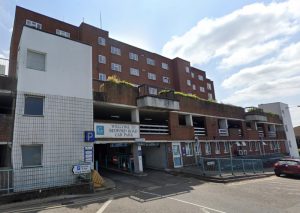
HMP Coldingley (image Google)

Sixty six temporary prisoner cells, built at HMP Coldingley during the Covid-19 pandemic, will be made permanent in an effort to “ease” the crisis facing the service. Nationally, the prison population has doubled in the past 30 years while only 500 new cells have been built in the past 14 years. It has left the service scrambling around looking for a series of short-term ways to increase capacity until four new prisons come online by 2031, creating 14,000 extra spaces.

The latest stop gap has been the approval of 66 cells in HMP Coldingley in Bisley by Surrey Heath Borough Council on Thursday, June 6. The cells were approved unanimously during a brief two-minute item with no questions or debate from members. Case officers addressing the meeting said: “No objections have been raised by any statutory consultees, while there is a national need for prisoner accommodation. The application is therefore recommended for approval.”

The plans were reported to committee due to its size – although details were scant on the advice of the Ministry of Justice, which said the application contained officially sensitive information, including the layout. The confidential information has not been shared in the public domain however the publicly available aspects of the report said the overall site comprises a variety of buildings of up to four storeys in height, predominantly concentrated towards the north-western flank and centre. Among them are a central accommodation block, an engineering workshop and a laundry building. Sports pitches and open spaces are at the south-west with the prison entrance at the north-eastern corner of the site. The entire perimeter of the category C site, that is male prisoners who cannot be trusted in open conditions, is secured by a 5.2-metre-high security fence.

The report read: “The proposed development supports a demonstrable national infrastructure need and aligns with national and local policy objectives.” It added: “The installation of the cells was considered necessary in the event of a national emergency to allow for safeguarding procedures to be implemented during COVID-19. There is also an on-going national shortfall of prison spaces, with the prison population having roughly doubled in the last 30 years with only 500 places added to the country’s stock of jail cells in the last 14 years. At national level four prisons are being built as part of the Plan for Change to create 14,000 extra spaces by 2031 to assist with the crisis. Until then, however, short term measures such the installation of Rapid Deployment Cells, and the retention of the temporary accommodation installed during the pandemic such as this site, help to ease the burden of rising demand.”

The application is supported by comment from the Department of Justice (see confidential paper). “There is a clear need for existing prison sites to support the increased demand and shortage of supply of prison places across the country. The proposed development therefore helps to support a demonstrable national need.”

Related reports:

Surrey prison failed IPP prisoner

HMP Coldingley (image Google)


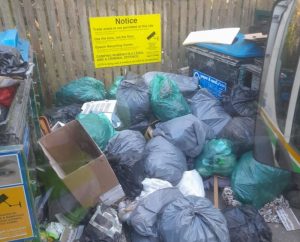
Illegal dumps dump a dumps in Surrey

Dumping at the dump Reigate

Persistent and ongoing fly-tippling problems have forced the permanent closure of a Surrey recycling centre, Reigate and Banstead Borough Council has said.

The Lower Kingswood site in Stubbs Lane has been plagued with illegal dumping despite being plastered with warning posters saying flytipping was a criminal offence – and that continued misuse would result in its closure.

The council has said it will continue to monitor the site after its Monday, May 19 axing in an effort to deter any further tips.

The flytipping, it added, was not only a nuisance but risked contaminating recycling turning it into useless landfill. 

Cllr Hannah Avery (Conservative, Horley Central and South), is the executive member for neighbourhood services.

She said: “We’re grateful to the many residents who do the right thing when recycling their waste. 

“Unfortunately, fly tipping at our recycling sites, which can contaminate this recycling, undermines the efforts of the responsible majority.

“I want it to be easy for residents to recycle as much as they can, so am really pleased that all households in the area local to Stubbs Lane can now use our full collection service and are able to recycle all the materials collected at Stubbs Lane, with the exception of textiles, from home.”

The council said its efforts to curb the illegal fly tipping, including fixed penalty notices, failed to prevent  large volumes of non-recyclable waste being dumped at the site.

Reigate and Banstead run an alternating waste collection service. Week one – which it calls blue week, collects food as well as paper and cardboard – with a fortnightly garden scheme for members.

The second week, dubbed green week, collects food, paper and cardboard – with a fortnightly mixed recycling and general refuse of anything that can not be recycled.

The council said it has reminded all its residents, businesses, and charities they must dispose waste responsibly and that failure could result in prosecution or a £400 fixed penalty notice.

Stubbs Lane flytipping (image RBBC)


Epsom and Ewell PSPO

Epsom racecourse

Anyone arrested for behaving badly on Epsom Derby day could be stuck with a £100 fine, a Surrey council says.

Epsom and Ewell Borough Council has green-lit a public space protection order (PSPO) ahead of this year’s Epsom Derby on June 7. Members voted through the new rules at a full council meeting, which could last up to three years, on Tuesday May 6.

The order applies to anyone harassing or threatening others, or continuing to drink alcohol after being ordered to stop by a police officer, community support officer or council officer. People wearing a piece of clothing with the intent to hide their identity to commit crime or behave anti-socially could also be at risk of large fines.

“There is an escalating amount of antisocial behaviour in the borough,” said Councillor Shanice Goldman, Chair of the Crime and Disorder Committee. She said: “The PSPO is a new tool specifically for the Epsom & Ewell area which will allow police and appropriate council staff to address antisocial behaviour effectively, without immediately resorting to arrests.”

Cllr Bernie Muir exclaimed: “Some residents are actually actively thinking of leaving the borough.” She said people have told her they do not like walking through an “intimidating” bunch of people to get into a restaurant or Epsom playhouse. Cllr Muir said: “Just having to put up with what is bad enough in itself the fear and uncertainty of antisocial behaviour but it’s going to impact economic life as well.”

Members spoke up in support of the order and hoped it would bring positive change to Epsom and Ewell. Cllr Goldman said: “I hope this order will ensure a more enjoyable experience for everyone on the day, as well as a safer environment in the borough going forward.”

Report: https://democracy.epsom-ewell.gov.uk/documents/s35629/Adoption%20of%20a%20Public%20Spaces%20Protection%20Order.pdf

Press release: https://www.epsom-ewell.gov.uk/news/epsom-ewell-borough-council-put-measures-place-combat-anti-social-%C2%A0behaviour-borough-ahead


QR Code Scams Surge in Surrey

QR code at a public car park.

A 667% Rise Since 2019 as Criminals Target Public Spaces.

QR code-related scams in Surrey have surged by more than sixfold since 2019, new figures reveal — mirroring a dramatic national increase that experts say is the work of organised crime groups exploiting new technology to defraud the public.

According to Action Fraud data analysed by the BBC Shared Data Unit, the number of scams linked to QR codes in the Surrey Police area rose from just three in 2019 to 23 in 2024. In total, 54 reports have been recorded over the five-year period.

The technique, known as quishing, typically involves fraudsters placing fake QR codes — often stickers — over legitimate ones on parking meters, menus, or public signage. Unsuspecting users are redirected to malicious websites where personal data and payment details can be harvested.

Nationally, nearly 3,000 QR scams were reported between 2019 and 2024, with 1,386 cases reported in 2024 alone — up from 100 in 2019. In Surrey, the jump from 3 cases in 2021 to 11 in 2022 and 23 in 2024 marks a particularly sharp local escalation.

“Life savings lost”

Katherine Hart of the Chartered Trading Standards Institute warned the problem is vastly underreported. “People might only lose £2.99 initially and not realise they’ve passed their data to a criminal organisation,” she said. “But days or weeks later, they receive a call from someone pretending to be their bank or the police. These criminals already have your personal details and use them to wipe out your bank account.”

Hart described quishing as a “huge challenge” for global enforcement, with many scams tied to serious and organised crime. “We’ve seen huge amounts of money lost this way. People have seen their life savings gone — and that money is going to finance criminals,” she added.

Surrey councils and police urged to act

Local councils across the UK — including nearby Guildford — have issued public warnings, and experts are urging Surrey authorities to follow suit, especially given the rising number of incidents. The National Cyber Security Centre (NCSC) warned that QR codes in open spaces, such as car parks and train stations, pose a particular risk.

A spokesperson for the NCSC said: “When directed to a website by a QR code, take care to ensure it is genuine, and be cautious if you’re asked to provide excessive personal information.”

Detective Superintendent Gary Miles, head of the National Fraud Intelligence Bureau, urged the public to “stop and check” before scanning QR codes. “If the QR code looks tampered with or takes you to a site that doesn’t feel right, don’t share personal or financial information. Leave the website immediately,” he said.

Victims speak out

Cases nationwide have involved parking scams, fake menus, and bogus delivery notices. In one instance, a woman in Thornaby lost £13,000 after scanning a code at a railway station. Other victims have lost hundreds of pounds at seafront car parks or fallen for codes found on leaflets and packaging.

National Car Parks (NCP) has responded by increasing daily checks of QR codes on its machines and is considering removing some payment-linked QR codes altogether to reduce risk.

What can you do?

  • Inspect QR codes before scanning. Look for stickers, tampering, or signs of damage.
  • Be sceptical of QR codes in public spaces or unfamiliar emails/texts.
  • Avoid entering financial details after scanning a QR code unless you are certain the site is legitimate.
  • Report suspicious activity to your bank and Action Fraud at actionfraud.police.uk or call 0300 123 2040.

Wayne Stevens, National Fraud Lead at Victim Support, reminded the public: “There is a lot of embarrassment and shame around cyber fraud, but it is vital victims don’t blame themselves. If you’ve been impacted, contact Victim Support for free, confidential help.”

As QR codes become a mainstay in everyday life, vigilance in Surrey and beyond is now essential. What was once a convenient shortcut can, in the wrong hands, become a costly trap.


Epsom and Ewell Council Approves Public Spaces Protection Order for Borough-Wide Expansion

Balaclava wearing youth in Epsom High St

The Epsom and Ewell Borough Council’s Crime and Disorder Committee has voted to recommend the adoption of a borough-wide Public Spaces Protection Order (PSPO) following a public consultation that showed overwhelming community support.

The new PSPO, which will now be referred to Full Council for final approval, aims to tackle anti-social behaviour (ASB) by prohibiting a range of activities, including harassment, intimidation, verbal abuse, and alcohol consumption in public spaces after a warning from an authorised officer. The order also bans wearing face coverings, such as balaclavas, with the intent to commit ASB or crime, a measure police say will help deter group-related intimidation.

At the meeting, Public Protection Manager Oliver Nelson introduced the officers’ report, highlighting the strong public backing for the PSPO. He noted that 92% of respondents supported extending the order for three years, and 83% backed its expansion across the entire borough. “The consultation has given us a clear steer from residents,” he said. “We’ve slightly refined the prohibitions based on feedback, ensuring the PSPO is proportionate and enforceable.”

Police representatives, including Acting Inspector Tommy Pearson and Chief Inspector Kelly Clifton-Sinclair, attended the meeting in support of the proposal. 

Lib Dem Councillor James Lawrence (College) expressed his support, citing the consultation results as key to his decision. “Over 200 people responded to the consultation, with 92% of respondents supporting an extension to the PSPO and 83% supporting it covering the entire borough. My fellow Lib Dem councillors and I are happy to uphold public opinion on this and support the PSPO as proposed,” he said.

However, some concerns were raised over the demographic spread of consultation responses. Councillor Christine Howells (RA Nonsuch) noted that only 2% of respondents were under the age of 24, questioning whether younger voices had been fully heard. In response, Committee Chair Councillor Shanice Goldman (RA Nonsuch) acknowledged the difficulty in securing wider engagement but highlighted outreach efforts to schools, faith groups, and youth charities, including Buddy Up, a mentoring programme for young people.

Councillor Tony Froud (RA Stoneleigh)sought clarification on the geographical scope of the PSPO, asking whether it applied to specific areas or the entire borough. Cllr Goldman confirmed that the order would be borough-wide, expanding upon previous PSPOs that only covered certain locations. “It’s about making sure enforcement is not limited to certain hotspots,” she explained.

The Committee also unanimously agreed to recommend a £100 fixed penalty for breaches (reduced to £80 if paid within 10 days). The PSPO will now go to Full Council for formal adoption, where it is expected to pass with broad support.

If approved, the borough-wide PSPO will be in place for three years, subject to review. Council officers have committed to a public awareness campaign, including new signage and social media outreach, to ensure residents are informed about the restrictions.

Sam Jones – Reporter

Image credits: Google and Tobias “ToMar” Maier Creative Commons Attribution-Share Alike 3.0


Guildford Students protest against PSPOs

Surrey students have come out against a council’s draft rules about public spaces, saying they could be “detrimental” to local students. Under the proposed new rules, students could be banned from being in a group of two or more people in the town centre which could “cause harassment, alarm or distress” to other people.

Guildford town centre has public space protection orders (PSPO) aimed at tackling persistent anti-social behaviour affecting others. Introduced in 2022, the rules are now up for review. Boundaries for the PSPO cover the town centre, Stoke Park and some neighbouring residential roads, the Mount (residential area and green open space), including Black Cat Alley. 

But students at the University of Surrey have attacked the draft regulations as “vague” and have said that they can be “misinterpreted” in a way that can be harmful to students in Guildford. 

Leading the cause, the Student Union’s President Liam White said in a statement: “We are concerned by the overly conditional phrasing of ‘acting in a manner that is likely to cause’ and the vague nature of ‘distress’. This feels like an extremely broad scope to enforce, given that members of the public may potentially be ‘distressed’ when encountering young adults socialising in public, even if it is not disorderly or anti-social.”

Under a PSPO, individuals deemed to be breaching the order can be asked to change their behaviour by police officers, PCSOs, or GBC compliance officers. Fines and written warnings can be given for repeated breaches.

He argued the PSPO is not phrased in a way which prevents groups acting disorderly but instead relies purely on a member of the public claiming to be distressed or alarmed. Mr White claimed this is “unreasonable” to potentially penalise members of the public, including students, in the town centre. 

A spokesperson for Guildford Borough Council said: “We appreciate everyone who has taken time to respond to the Town Centre Public Spaces Protection Order consultation. These were draft proposals and the purpose of the consultation was to encourage feedback.

“In response to our partners and consultees, including the Student Union, we have adapted the proposed restrictions. The revised draft restrictions will be presented to the Executive on 27 March 2025 for consideration.”

Other key concerns raised included how “rowdy and inconsiderate behaviour” could be defined by someone’s clothing. The draft proposals state: “Wearing a piece of clothing with the intent to obscure or hide his/her identity for the purposes of committing crime and/or anti-social behaviour”. 

The Student Union said this is particularly concerning for members of the community who wear clothing that covers their face or hair for religious purposes. “We question how appropriate it is to be enforcing restrictions on clothing, rather than other indicators of anti-social behaviour,” members said.

Students also criticised the proposed public space rules against the “anti-social” use of bicycles, skateboards and scooters in pedestrian areas. They said some of Guildford’s community is already “resistant” to the Beryl Bikes scheme and extending the PSPO will “disincentivise people from using sustainable travel”.

Emily Dalton


Criminal car park QR codes wrong on many levels

Scammers have targeted Guildford car parks (image Google)

Fake QR codes, used to scam motorists into giving away their bank and card details, have been found in Guildford car parks.

The scam codes have been placed on payment machines, signs or barriers  in an attempt to defraud people into thinking they are making genuine payments, Guildford Borough Council has warned.

Not only are the unsuspecting drivers handing over private details to the scammers but they are also putting themselves at risk of collecting a fine for not having a valid parking ticket.

The council has issued a warning  to help people from getting caught out and said it does not use any QR codes at its car parks – so if you see one it’s a scam.

Lead councillor for commercial services, Councillor Catherine Houston, said: “We are aware of the increase in QR code parking scams across the country and I want to reassure residents that our teams regularly inspect our car parks to keep them safe and free from fraudulent activities.

“Criminals are becoming increasingly sophisticated in their methods so if you do spot a QR code in one of our car parks, please don’t scan it; report it to the council instead.

“By raising awareness of such scams, we help to protect drivers from being misled so that residents and visitors can use our car parks in confidence.”

Once scanned, the codes take people to a fake website that asks for credit and debit card information, mimicking genuine payment providers.

The council has now placed signs within all its car parks explaining to only use the  RingGo app and to not use any QR codes found. 

It has also pledged to remove any codes found with its enforcement team carrying out daily checks.

Scammers have targeted Guildford car parks (image Google)


Online Fraud in Epsom & Ewell: Call for an Online Crime Agency

Old lady at home computer. Criminal at another computer.

Online fraud, particularly through fake retail websites, has become a significant issue both nationally and within our local community of Epsom & Ewell. Recent data underscores the pressing need for enhanced measures to protect consumers from these deceptive practices.

The Local Impact

In the 2023/24 financial year, Surrey reported 1,276 cases of online shopping fraud, resulting in losses totaling £848,000.his equates to an average loss of approximately £665 per victim. These figures highlight the substantial financial impact on residents and the pervasive nature of online fraud in our area.

National Perspective

Across the UK, online shopping scams are alarmingly prevalent.n the year leading up to October 2023, there were 71,894 reports of such scams, with total reported losses amounting to £106.8 million.he average loss per victim was £1,486, indicating that the financial repercussions can be devastating.

Current Policing Resources

The primary body for reporting fraud in the UK is Action Fraud, the national reporting center for fraud and cybercrime. Reports submitted to Action Fraud are analyzed by the National Fraud Intelligence Bureau (NFIB), which then disseminates information to relevant police forces for investigation. However, the increasing volume and sophistication of online fraud cases have strained existing resources, leading to calls for more specialized approaches.

The Proposal for an Online Crime Agency

Helen Maguire, Liberal Democrat MP for Epsom & Ewell, is advocating for the establishment of a dedicated Online Crime Agency. This agency would focus exclusively on combating online fraud and related cyber crimes. The proposed agency aims to:

  • Specialized Focus: oncentrate resources and expertise specifically on online fraud, ensuring more effective prevention and enforcement.
  • Enhanced Coordination: acilitate better collaboration between various law enforcement bodies, technology companies, and financial institutions to address the multifaceted nature of online scams.
  • Victim Support: rovide dedicated support to victims of online fraud, guiding them through reporting processes and helping them recover losses where possible. P Maguire emphasizes the urgency of this initiative, stating, “Victims in Surrey have been left short-changed and vulnerable to opportunistic fraudsters. We urgently need action. The previous Conservative government completely failed to act. They were asleep at the wheel when it came to online fraud.”

Maguire argues the establishment of a specialized Online Crime Agency could play a pivotal role in safeguarding consumers. By focusing dedicated resources and fostering collaboration across sectors, such an agency holds the promise of mitigating the impact of online fraud on our community.


Surrey prison failed IPP prisoner

Aerial HMP Coldingley. Google

Staff at a Surrey prison failed to get medical attention for a prisoner who was reportedly found “naked on all fours, and barking like a dog” before he took his own life. Haydar Jefferies, 51, died in hospital on March 5 2023, after trying to kill himself in his cell at HMP Coldingley, Woking, a few days earlier. 

An inquest jury found scores of failures contributed to Mr Jefferies’ death, amounting to neglect. Mr Jefferies’ mental health drastically deteriorated while he was waiting for parole and this was left untreated by staff responsible for his care, according to his family’s lawyers. The 51-year-old pub manager attempted suicide the day before his long-awaited parole hearing. 

After being found guilty of an assault offence in 2006, Mr Jefferies served seven years of an Imprisonment for Public Protection (IPP) sentence, given to people considered ‘dangerous’ but the offence did not merit a life sentence.

Nearly ten years after his crime, Mr Jefferies was then recalled and sent back to prison in January 2022 on his IPP sentence. The allegation against Mr Jefferies was reportedly not backed up and the police decided no further action would be taken, within three months after being sent back to prison. 

But due to the nature of the IPP sentence and the delays in the Parole Board decision-making, Mr Jefferies was forced to stay at the prison despite all charges being dropped nine months prior.

A Ministry of Justice spokesperson said: “Our thoughts remain with Haydar Jeffries’ friends and family. As with all deaths in custody, the Prison and Probation Ombudsman are investigating and we will respond to their report in due course.”

By the end of February 2023, Mr Jefferies was acutely psychotic, found by officers in his cell flushing his head down the toilet, naked on all fours, and barking like a dog. 

Despite custodial staff noting major concerns over his mental health, they allegedly failed to seek any medical attention or even notify health care providers, according to the family’s lawyers Hodge Jones & Allen. Custodial staff allegedly failed to place him on constant supervision and/or take him to an external place of safety. 

The jury duly found that Mr Jefferies’ IPP status and the delays in his parole hearing materially contributed to the development of his subsequent psychosis, Hodge Jones & Allen solicitors said.

Between his initial release and recall, Mr Jefferies had tried to rebuild his life, setting up his own pub and B&B with his husband, who sadly passed away in 2021.

Zhora Jefferies, Haydar’s mother, said: “After creating a wonderful life in the community, it is devastating to have witnessed how Haydar’s life was completely destroyed by the nature of his IPP sentence and the extensive delays he experienced when waiting to be released from prison.

“We had to watch our beloved son, brother and father succumb to the fear and paranoia that he was suffering with in the final weeks of his life. We, and Haydar himself, were all crying out for help and it was falling on deaf ears.

“Nothing can be done to bring Haydar back but our biggest hope is that lessons can be learned from his experience. Haydar brought so much love to our family and we will always be grateful for the time we had with him.”

A few months into Mr Jefferies’ recall to HMP Bullingdon, in early 2022, it was confirmed the allegations against him were no longer being pursued. But he remained in prison for another year, waiting for authorised release by the Parole Board. An application to determine his release on papers was declined, and various delays led to his parole hearing being rescheduled to March 2023. 

Mr Jefferies was then transferred to HMP Coldingley on 28 December 2022. By 12 February 2023, he asked to be segregated for his own safety. The jury reportedly heard evidence from a consultant psychiatrist that after being segregated, Mr Jefferies’ mental health steeply deteriorated. 

By around 18 February 2023, he was suffering from a severe psychotic illness which required timely psychiatric assessment, treatment and transfer to a prison with a healthcare wing. 

The jury heard that, during his subsequent 10 days in segregation, Haydar made multiple concerning comments to both prison officers and his family symptomatic of his deteriorating ill-health. This included his intensifying delusional beliefs that prison officers were colluding with prisoners to sexually abuse and kill him, and that they were pumping gas into his cell. 

Mr Jefferies’ family made numerous phone calls to the prison with serious concerns over his welfare. But none of the calls were appropriately documented in prison records or passed onto the Mental Health Team. 

The jury concluded there was a “systematic failure on behalf of the Ministry of Justice” that there was no policy for recording and sharing information from concerned family members, according to Hodge Jones & Partners. 

Cormac McDonough, a civil liberties solicitor at Hodge Jones & Allen, who represented the family at the inquest said: “It is extremely rare for a jury to reach a finding of neglect in this context, which demonstrates how fundamentally failed Haydar was while under the care of prison staff at HMP Coldingley.

“It was evident that Haydar was suffering due to the unjust circumstances of his IPP recall and that this contributed to his deteriorating mental state. Staff at the prison failed entirely to recognise his deterioration and to take appropriate steps to keep him safe. His family made repeated attempts to get Haydar the help he patently needed, after receiving multiple distressing phone calls, but no action was taken.”


Epsom led crime gang banged up

Harry and Frankie Mackay of Epsom

An organised crime group who carried out multiple burglaries, a vicious assault, and stole more than £215,000 worth of high-value cars have been jailed for a total of twenty seven and a half years.

In 2023, police identified a series of residential burglaries which could be linked via a distinctive Audi A8, which was one of just fifteen in the country. The Audi was then seen at a petrol station with a wonky number plate which didn’t match its genuine details.

Soon after, a second car suspected of being linked to the series was identified by a distinctive GB sticker on the back. However, the challenge remained to identify the people involved and a complex investigation began which used a variety of tactics to uncover the full extent of their crimes.

Between June and August 2023, members of the group burgled multiple homes and were also linked to other offences including keyless car theft, where vehicles were taken close to the owners’ house or from the front drive.  Areas targeted included Epsom and Walton-On-Thames in Surrey and Croydon, Chessington, New Malden, Raynes Park and Surbiton in the Metropolitan area.

They would scope out a target vehicle, and either commit a burglary to steal the keys or use illegal devices to gain keyless entry. They would then drive the vehicle away and park it elsewhere for a short time to see if any tracking devices had been activated.

In the meantime, they would identify similar vehicles which were insured, source illegal fake number plates, and fit them to the stolen vehicles to try and evade detection.  On some occasions the stolen cars would ultimately end up at ‘chop shops’, where they were broken up into parts and sold for profit.

During the burglaries at both residential properties and some shops, they caused thousands of pounds worth of damage and on one occasion, three of the men (Harry Mackay, Rico Persechino and Jason Connors) – assaulted the occupier of an address with weapons.

After gathering a body of evidence, on 29 August 2023 police proactively apprehended Rico Persechino and Harry Mackay outside a shop in East Grinstead. Mackay tried to escape by running inside and heading to the staff door but he was swiftly caught. Officers later found a keyless car theft device that he’d tried to discard inside the shop.

The police investigation used a variety of tactics including identifying cloned number plates, tracking vehicles through ANPR (automatic number plate recognition) and matching the suspects’ descriptions and clothing to CCTV footage. Often when committing a burglary at a shop, the group brought a large white carrier bag to carry the stolen goods and a comparison of CCTV footage enabled officers to tie offences to them due to the appearance of this same bag each time.

One victim of the group’s criminal activities said “The burglary was very distressing for both my partner and myself, and we felt a significant impact after the unwelcome intrusion from these criminals. I was very angry and upset and when I met with detectives the following day, I was close to tears and that’s not in my nature. The thought of strangers going through your personal possessions, and the damage they caused to gain access to my property was scary.  My partner lost family jewellery that had been passed down through generations. After the robbery I said I wanted to move, and I still might as this has had a long-term effect on me. I’m pleased to see the sentence this group were handed, and I was very impressed with the brilliant work of the police officers and detectives dealing with this case, they gave me faith throughout.”

Lead investigator, Detective Inspector Daniel Voller, shared: “This was a sophisticated and organised operation and exposing the full extent of their crimes was only possible thanks to the hard work and diligence of everyone involved, from detectives to intelligence teams.

These thieves had no regard for anyone but themselves and escalated their offending from stealing cars outside homes to breaking inside and committing a serious assault. We have worked relentlessly over many months to prepare a strong case against them and I’m pleased our efforts have resulted in getting them behind bars.”

Following a trial at Guildford Crown Court on Monday 9 December, brothers Harry, Frankie and Stevey MacKay appeared along with Jason Connors and Rico Persechino for sentencing.

  • Harry Mackay, 34 (DOB 27/04/1990), from Epsom pleaded guilty to Conspiracy to Steal Motor Vehicles, Conspiracy to Burgle and Conspiracy to Commit Robbery and was sentenced to 8 years.
  • Frankie Mackay, 35 (DOB 24/05/1989), from Epsom, pleaded guilty to Conspiracy to Steal Motor Vehicles and was sentenced to 39 months.
  • Stevey Mackay, 32 (DOB 08/02/1992), from Kingston-Upon-Thames pleaded guilty to Steal Motor Vehicles and was sentenced to 39 months
  • Jason Connors, 29 (DOB 25/08/1995) from Croydon pleaded guilty to Conspiracy to Commit Robbery and was sentenced to 5 years and 4 months
  • Rico Persechino, 35 (DOB 01/04/1989) from Kingston-Upon-Thames pleaded guilty to Conspiracy to Steal Motor Vehicles, Conspiracy to Burgle and Conspiracy to Commit Robbery and was sentenced to 7.5 years

Custody photos of Epsom brothers Harry and Frankie Mackay


Woking child murder lessons for Surrey’s agencies

Authorities must face serious questions about years of missed chances to prevent Sara Sharif’s death.

Sara was murdered aged 10 years old by her father Urfan Sharif and stepmother Beinash Batool. Her uncle Faisal Malik was convicted of causing or allowing her death.

Local authorities are legally responsible for looking after and safeguarding all children, they also have a statutory duty to investigate concerns about welfare. A local child safeguarding practice review will be carried out to examine the missed opportunities and if more could have been done to prevent Sara’s death.

Rachael Wardell, Executive Director for Children, Families and Lifelong Learning at Surrey County Council, said: “We are resolute in our commitment to protecting children, and we are determined to play a full and active part in the forthcoming review alongside partner agencies, to thoroughly understand the wider circumstances surrounding Sara’s tragic death.”

The safeguarding review will bring together the police, social carers, education and health services amongst others to consider the practice of all the agencies involved with the family to identify any learning. The safeguarding review, led by an independent author, will also look at all professionals who had contact with the family.

Unlike a trial or coroner hearing, the review will not hold individuals or organisations to account but looks at how general system change can prevent or reduce the risk of similar instances.

“The focus of the trial has been on the evidence needed to secure the convictions of those responsible for Sara’s death,” Ms Wardell said. “This means that until the independent safeguarding review concludes, a complete picture cannot be understood or commented upon.”

Her father had multiple and repeated contact with Surrey Police and social services before he was charged with murdering the 10-year-old girl last summer. Just a few months before, Sara’s school referred her to social services but the case was closed within days.

After the guilty verdicts, and opening the safeguarding review, the case will provoke difficult questions whether Sara’s tragic death could have been prevented.

Children’s Commissioner Dame Rachel de Souza said the case highlighted a “profound weaknesses in our child protection system”. She called for a raft of changes including “proper oversight” for children, like Sara, being home schooled.

Dame Rachel said: “There can be no doubt that Sara was failed in the starkest terms by the safety net of services around her. Even before she was born, she was known to social care – and yet she fell off their radar so entirely that by the time she died, she was invisible to them all.

“We can have no more reviews, no more strategies, no more debate. When we say ‘never again’, we have to mean it – let that be Sara’s legacy.”

As Sara started school, her abuse went largely undetected or unactioned. The court heard Sara turned up at school with bruises on her face in June 2022 and again in March 2023, despite attempts to cover them in a hijab.

Although Sara never confided in teacher what was going on, a referral was made to Surrey County Council’s social services after the second incident- only to be shut down within days, the court heard.

By April 2023, Sara was taken out of school and the violence against the 10-year-old girl escalated in the final weeks of her life. Sharif admitted to the court he repeatedly beat her with a cricket bat, metal pole and mobile phone, throttling her and even hit her in the stomach while she lay dying.

Responding to the verdict, Ms Wardell from Surrey County Council said: “Sara’s death is incredibly distressing and we share in the profound horror at the terrible details that have emerged during the trial. We cannot begin to comprehend the suffering that poor Sara endured at the hands of members of her family who should have loved, protected, and cared for her.”

“What is clear from the evidence we’ve heard in court is that the perpetrators went to extreme lengths to conceal the truth from everyone.”


Epsom landlord fined for neglect

Landlord to payout £32k after pleading guilty to 48 charges that left tenants at risk (image RBBC)

A bedsit landlord who repeatedly ignored warnings to fix flats dubbed “cold”, “damp”, “filthy”, and a “firetrap” has been hit with a court bill approaching £32,000.

Epsom Pars Limited, which runs a 21-room house in multiple occupation (HMO) near Epsom Downs was ordered to pay the fines and costs by Staines Magistrates’ Court after they pleaded guilty to 48 criminal charges.

The case was brought forward by Reigate and Banstead Borough Council after the landlord repeatedly ignored warnings to carry out improvement works to the property.

Councillor Rich Michalowski, executive member for place, planning and regulatory services said: “This case underscores the importance of landlords being held accountable to ensure tenants are living in safe, well-maintained homes. 

“Reigate and Banstead enforcement teams, armed with legal powers, will continue to take action against those who fail to meet the legal standards, ensuring that unsafe and unfit housing has no place in our borough.”

The company was ordered to pay fines, costs, and a victim surcharge totalling £31,840. The charges included various forms of disrepair and fire safety offences, the council said. 

The prosecution comes on the back of  months of exchanges between the landlord and the council.

During that time officers from the private sector housing team were said to have repeatedly warned the landlord against its continued non-compliance that left people living in  “cold”, “damp”, “filthy”  “firetrap” of a property.

During sentencing, magistrates spoke of the “repeated, unacceptable non-compliance” and noted that the  problems identified had put tenants at risk, according to a council statement.

Image RBBC