Epsom & Ewell Silver Band Delivers Strong Performance at 2026 Regional Championships
23 March 2026
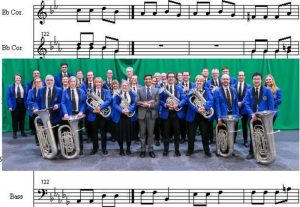
STEVENAGE, March 21, 2026 — The Epsom & Ewell Silver Band took to the stage today at the Gordon Craig Theatre for the London & Southern Counties Regional Brass Band Championships, competing in the highly competitive First Section.
Under the expert baton of Musical Director Tariq Ahmed, the band delivered a polished performance of this year’s set work, Variations on Was Lebet by Andrew Wainwright.
2026 First Section Results
The adjudicators, David Hirst and Steven Mead, faced a difficult task in a field of 14 high-quality bands. While Fulham Brass and the East of England Co-op Band secured the top two spots to qualify for the National Finals, Epsom & Ewell earned a respectable placing, further cementing their status in the section.
Looking Ahead
The result marks another year of solid progress for the band. Speaking after the results, members expressed pride in the performance, noting the significant step up in technical demands this year.
Fans won’t have to wait long to hear the band again; they are already preparing for their popular Summer Concert in the Walled Garden, scheduled for July 12th at the Old Moat Garden Centre.
An evening song preludes a Mass and a Requiem by Epsom Choral Society
23 March 2026
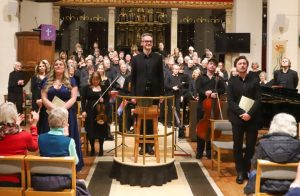
This concert at St Martin’s Church, Epsom, was another milestone in the life of one of the town’s cultural jewels, its Choral Society. The German Requiem by Johannes Brahms was coupled with two pieces by his contemporary and friend Josef Rheinberger – Abendlied and the Mass in E Flat – providing an effective and well-matched prelude to the main work.
Rheinberger’s Abendlied, composed when he was just fifteen (and later revised), brought a warm six-part choral texture well suited to the spacious acoustic of St Martin’s. The performance was well controlled, with clear communication between choir and conductor. His Mass for Double Choir (1878), rooted in Renaissance tradition but shaped by Romantic language, offered greater contrasts of dynamics and texture. These were generally well realised, though from some positions the antiphonal effect of the two choirs was less distinct. The Gloria made a strong impact with tight ensemble in the louder passages, while the restrained drama of the et sepultus est in the Credo was sensitively handled. The confident entries of the Sanctus contrasted effectively with the quieter close of the Benedictus, and the atmospheric Agnus Dei provided a fitting conclusion to a thoughtful performance of this substantial work.
Brahms’s German Requiem is not a liturgical setting but a deeply personal reflection on remembrance. Taking years to complete, it stands as a work of remarkable craftsmanship and cohesion. Here it was performed using Iain Farrington’s seven-part accompaniment for three strings, three wind and piano. This arrangement proved effective, avoiding the balance challenges of a full orchestra, though at times the upper strings felt slightly underpowered.
The choir was central to the performance and rose impressively to the challenge. From the opening movement, there was a strong sense of confidence, contrast and atmosphere. The ensemble supported the second movement effectively, with particularly dramatic forte and fortissimo passages, although the fugal writing was not always fully clear.
Baritone soloist Dominic Sedgewick delivered a confident and commanding account in the third movement, matched by accurate and responsive choral singing in demanding passages. While some contrapuntal textures lacked clarity, the movement concluded strongly. The well-known fourth movement was rendered with tenderness, its fugal sections particularly successful, alongside Brahms’s shifting rhythmic patterns.
Soprano Elizabeth Findon was equally impressive in the fifth movement, her clarity and projection standing out. Balance across the ensemble was generally good, though harder to assess from nearer seating positions. The sixth movement maintained a strong tempo and opened effectively, building to a final section of conviction and a powerful conclusion.
The final movement began with excellent balance, including a particularly effective passage pairing soprano/alto with tenor/bass lines. The closing pages sustained the expressive intensity that characterised the performance throughout. This was a demanding work, requiring stamina and commitment, both of which were clearly evident. Epsom Choral Society can be proud of a performance that amounted to a genuine triumph, with the enthusiasm of its members and an influx of new singers pointing to a strong future.
Peter Lutton
*Evening song
Epsom resident launches UK Choir of the Year
23 March 2026
A Worcester Park resident and former Epsom College music scholar is behind a new national competition celebrating Britain’s thriving amateur choral scene.
Lucy Mitchell, founder of UK Choir of the Year, is launching the initiative with a fundraising concert at Cadogan Hall in London on 18th May, ahead of the competition opening for entries later this year.
Mitchell, who lives in Worcester Park and is a member of the Adam Street Singers, said the project had been in development for more than a year and aims to highlight the strength and diversity of choirs across the country.
The new competition will open applications in June 2026 and culminate in a live final at Milton Court at the Guildhall School of Music & Drama in April 2027.
The launch concert will feature performances from the Adam Street Singers, Citi London Choir and the Lewisham & Greenwich NHS Choir – whose members famously topped the Christmas charts – alongside guest appearances by TV doctor Dr Ranj and The Choir with No Name.
Mitchell said the competition was designed to recognise the many high-quality choirs operating outside the fully professional music sector.
“So many choirs are doing extraordinary work but rarely get the chance to be heard nationally,” she said. “This competition exists to celebrate the standard, diversity, and community behind choral singing across the UK.”
UK Choir of the Year is being run as a not-for-profit initiative rooted in the belief that collective singing plays an important role in wellbeing and community identity.
Some of the proceeds from the competition will support The Choir with No Name, an organisation which runs choirs for people affected by homelessness.
The competition will be judged by leading figures from the UK choral world including composer Will Todd, conductor and vocal specialist Dan Ludford-Thomas and conductor and gospel specialist Karen Gibson MBE.
Funds raised at the Cadogan Hall concert will help develop the competition and create access bursaries to ensure choirs from across the UK are able to take part.
Mitchell said the initiative was intended to celebrate the “richness and diversity” of Britain’s choral tradition while creating a national platform for amateur ensembles of all styles and sizes.
Applications for UK Choir of the Year open at the end of June 2026, with the inaugural final scheduled for 10 April 2027.
Valentine’s Day brought screams instead of romance to Epsom Picturehouse as Craig Dowsett premiered his directional debut, Bigfoot: Primal Fear, on 14 February.
Dowsett began acting shortly after Covid and rose to prominence playing Winnie the Pooh in Winnie the Pooh: Blood and Honey, produced by Jagged Edge Productions. After the film’s success, he moved into writing and directing, seeking full creative control over his own projects.
Bigfoot: Primal Fear is the first independent Bigfoot horror film shot in the UK and features well known faces from the UK independent film scene. It also stars American Bigfoot expert Ryan “RPG” Golembeske from Expedition Bigfoot and DJ Brewster from Alaskan Killer Bigfoot.
The story follows a group of campers whose woodland getaway turns into a nightmare when they realise they are not alone and something is hunting them. Every step could be their last as they fight to survive. Click HERE for a trailer:
Made on a small, self-financed budget, the film relies on practical effects, fast pacing and plenty of twists.
Sitting in the audience, my eyes were glued to the screen. The film moved at such a pace it felt over in a flash, each scene building tension and keeping viewers fully engaged. I will now look at Epsom Common very differently. Who knows what might be living there?
“Having our very first red carpet event at Epsom Picturehouse is absolutely amazing,” said Dowsett. “Epsom is a fantastic place for red carpet premieres because it has the perfect balance of being intimate yet vibrant, bringing the local community together to celebrate independent cinema. Everyone had an amazing time and went away with magical moments. We will definitely be back later in the year for another premiere.”
The film will be released on streaming platforms later this year, with Dowsett encouraging audiences to support independent filmmaking in what he describes as a tough industry, adding that he hopes viewers enjoy the film as much as the team enjoyed creating it.
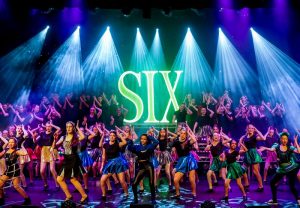
An Epsom school brought Broadway and the West End to Surrey last week with a successful run of the musical ‘Six: Teen Edition’.
The play, which is adapted from the international hit musical SIX by Toby Marlow and Lucy Moss, tells the story of the six wives of Henry VIII from their own perspective.
Pupils from Rosebery School, part of GLF Schools, performed at the Leatherhead Theatre from Wednesday 28 January to Friday 30 January 2026, this school-friendly 75-minute version brought history to life as a modern pop concert, filled with humour and bold storytelling.
The high-energy show saw the six Queens reclaim their narratives on stage, each sharing her unique perspective through dazzling numbers and dynamic choreography.
The production celebrated resilience, individuality, and sisterhood with tremendous attitude and empowerment, earning enthusiastic applause from audiences across the run.
This ambitious endeavour united more than 140 students from Rosebery School in roles spanning performance, music, technical production, costume design, and leadership.
Rehearsals began in early October, and the students demonstrated exceptional commitment, collaboration, and teamwork throughout the production.
The production featured a fully student-run backstage team handling stage management, wardrobe, makeup, and technical operations, as well as a talented student choreographer who shaped the Queens’ movement with creativity and confidence.
The Senior Prefect Team also took part, spearheading a fundraising campaign to support performing arts at Rosebery.
The production also showcased outstanding cross-curricular collaboration. Bespoke costumes were designed by A-Level fashion and textiles students, blending historical influences with contemporary flair. A-Level design and technology students engineered the show’s thrones, with music performed by members of the school band.
David Lach, headteacher at Rosebery School, praised the joint efforts of everyone involved in the production. He said:
“This is a truly homemade production, and a distinctively Rosebery production too. From the thrones crafted by our students, to the choreography to the outfits worn, our students have well and truly put their stamp on Six.
“The end result was a remarkable performance, blending education and history with contemporary flair and messages of resilience and independence. Huge congratulations to everyone who took part, and thank you to all our wider community who supported us.”
James Nicholson, interim CEO of GLF Schools, saw the production last week. He said: “I was hugely impressed with Rosebery’s production, which showed great talent, professionalism and imagination. Everyone who took part is a huge credit to the school, and the wider GLF family.”
Release on behalf of GLF schools
Photo: Credit: Simon Drake Photography
.
.
.
.
.
.
.
.
Epsom celebrates Ukrainian culture at Festival of Friendship
23 March 2026
The Festival of Friendship – Ukraine brought a vibrant celebration of Ukrainian culture to Epsom from 27 January to 1 February, uniting local organisations and residents in a week of art, music, film and hands-on creativity. Organised jointly by Epsom & Ewell Refugee Network, Epsom & Ewell Borough Council, Epsom Library and Epsom Picturehouse, the festival highlighted both the richness of Ukrainian traditions and the strong connection between the Ukrainian community and the community of Epsom and Ewell.
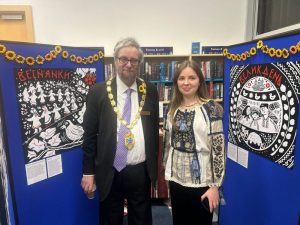
The festival was inspired by a cultural project created by Sofia Ziatyk for her final degree work at Chelsea College of Arts, for which she was awarded First Class Honours. Her project explored Ukrainian crafts, rituals and traditions through striking hand-drawn images, forming the heart of the exhibition that anchored the week’s programme.
The official launch event took place on 27 January at Epsom Library and was attended by senior figures from Surrey County Council, the Mayor of Epsom & Ewell, and around 100 members of the local community. The atmosphere was one of warmth and curiosity, as visitors gathered to view Sofia Ziatyk’s exhibition and to hear live performances by Ukrainians living in and around Epsom. Traditional music and poetry created a powerful sense of shared experience, giving audiences a glimpse into the traditions and artistic life of Ukraine.
Throughout the week, the library hosted two exhibitions: the display of Sofia Ziatyk’s drawings and Inna Kucherenko’s This Is Me: Recreating – a display of lost photographs and fragments of forgotten history recreated from memory using AI. A special treasure hunt for children invited them to search for pictures and symbols connected with Ukraine, helping younger residents engage with another culture in a fun and accessible way. This initiative proved popular with families and reinforced the festival’s emphasis on learning through participation.
Workshops formed a key part of the festival and were consistently well attended by the local community. Participants had the opportunity to try traditional embroidery and beading techniques, make wool dolls, explore paper cutting and experiment with block printing. These sessions offered more than creative activity; they provided space for conversation, storytelling and mutual understanding. Among those taking part was local MP Helen Maguire, whose presence underlined the importance of the festival as both a cultural and community-building event.
The festival also extended beyond the library into the world of cinema. Epsom Picturehouse, working in collaboration with TalentedU, screened three Ukrainian films: Rocky Road to Berlin, Sanatorium and Home for Ukraine. Audience demand exceeded expectations, with each screening so well attended that a second screen had to be opened. The films offered different perspectives on Ukrainian life and history, giving viewers insight into personal stories and national experiences rarely seen in mainstream cinema.
For many attendees, the festival provided an opportunity not only to discover Ukrainian traditions but also to meet Ukrainian neighbours and hear their voices directly through art and performance. The blend of visual exhibitions, live music and poetry, practical workshops and film created a programme appealing to a wide range of interests and ages, demonstrating how culture can act as a bridge between communities, fostering empathy and connection.
Speaking about the events, Councillor Clive Woodbridge, Chair of the Community and Wellbeing Committee, said: “The Festival of Friendship – Ukraine was a truly uplifting and inspiring occasion. It was incredibly moving to see Ukrainian guests of all ages demonstrate how much the creative basis of their culture means to them, whether that be through music, singing or poetry. It was particularly heart-warming to see the younger members of the Ukrainian community perform with such confidence and feeling.”
Organisers described the festival as a true partnership between local institutions and residents. By bringing together Epsom & Ewell Refugee Network, Epsom & Ewell Borough Council, Epsom Library and Epsom Picturehouse, the project showed what can be achieved through collaboration and shared purpose. The success of the events – from the packed workshops to the oversubscribed film screenings – reflected the enthusiasm of the Epsom community for meaningful cultural exchange.
Originating in the work of a young artist and carried forward by community organisations, the Festival of Friendship – Ukraine transformed everyday spaces into places of discovery and dialogue. For one week, Epsom became a window into Ukrainian culture, reminding all who attended that art and tradition can unite people across borders and experiences.
BBC LDRS reports: Up to £359,000 could be spent on rejuvenating Ewell’s Bourne Hall Museum under new plans but opposition councillors have stressed that key information on the decision has been made available too late.
An independent report into the museum has now been published, laying out both the problems and the potential at the popular local attraction. The document says the museum could have a strong future, but only if the council invests money, improves how it is run and does a much better job of attracting visitors and funding.
Councillors voted earlier in January to back plans to improve the museum instead of closing it or leaving it as it is. However, no money has actually been approved yet: the decision on whether to release up to £359,000 is expected in March.
Cllr Alex Coley (Independent Ruxley) says councillors should have seen the full report before they agreed to support the plans in principle. “Problems with Epsom & Ewell Borough Council’s secrecy and reluctant transparency are well documented,” he said. “Even the council’s auditors call it out in reports. Refusing to share an LGA report with committee members when they make a decision is another demonstration of the instinct to cover up bad news.”
Cllr Kate Chinn (Labour Court), Leader of the Labour Group, agreed, adding: “It doesn’t make sense for councillors to be asked to make decisions without access to all the available information.”
At the January meeting, committee chair Cllr Clive Woodbridge (RA Ewell Village) admitted that, “in hindsight”, the full report should have been included in the papers after opposition councillors challenged its absence.
What the report says about the museum
The independent review made clear the museum is not in crisis but it is struggling to move forward. One of the biggest issues is money. The report said it is hard for the museum to win grants or sponsorship because it does not have solid information about its visitors.
Funders want to know who comes through the door, how often, and how numbers might grow in future. But at the moment the data is limited.
The report also says that the way the council currently counts costs makes it hard to see the true price of running the museum. It recommends sorting this out so future funding bids are more realistic and transparent.
Visitors may also recognise some of the other issues raised. Displays are described as dated, marketing as uninspiring, and the museum’s overall “identity” as unclear. Reviewers said the space could be made more interactive and appealing, especially for families and younger people.
The report praised the museum for already attracting a strong mix of ages, especially families. Its location inside Bourne Hall which also houses the library and community spaces was also seen as a major advantage. With better use of the building and stronger promotion, it could become more of a destination.
Volunteers are another key part of the picture. The report says there are some highly committed people helping out, but not enough of them. It suggests recruiting more volunteers from a wider range of backgrounds to better reflect the local community.
A council spokesperson said: “The Community and Wellbeing Committee has initiated the first step in a process to invest in the future of Bourne Hall Museum by submitting their preferred option, which was to spend up to £250,000 over two years, to the Strategy and Resources Committee for their consideration in March.
“Before committee, Community & Wellbeing Committee members saw a summary of the Culture Peer Challenge in the committee report and were invited to attend a briefing session which also summarised the findings of the report. The LGA Culture Peer Challenge for Bourne Hall Museum has been made available to all EEBC councillors and is also available on our website: Culture Peer Challenge | Epsom and Ewell Borough Council.”
What happens next?
In short, the museum’s future now depends on whether councillors agree to invest. If funding is approved in March, work could begin on modernising the space and building a stronger long-term future. If not, things are likely to stay much as they are.
View of Bourne Hall and Museum, Spring Street, Ewell. (Credit: Google Street View)
Students Tuesday takeover of Epsom Picturehouse
23 March 2026
Students from University for the Creative Arts (UCA) in Epsom are set to return to Epsom Picturehouse later this month with another imaginative cinema takeover – this time built around the release of Marty Supreme.
The one-night event takes place on Tuesday 20th January, with activities beginning at 6.30pm, and forms part of UCA Epsom’s Experience Economy module. Rather than focusing on conventional event mana
The January screening will again see students working directly with the Picturehouse team to create an enhanced, interactive evening that goes beyond simply watching a film. While full details are being kept under wraps, organisers promise live elements and audience interaction designed to complement the themes and setting of the film.
The collaboration builds on last year’s well-received student takeover, which re-imagined Be Kind Rewind as a playful, hands-on cinema experience. That event featured live performances, green-screen activities and interactive installations that transformed the building into a temporary creative hub and demonstrated how cinema can function as a shared social space rather than a purely passive one.
This year’s focus is Marty Supreme, a new film set in 1950s New York and starring Timothée Chalamet as Marty Mauser, a driven outsider determined to become a champion table-tennis player and turn the sport into a nationwide phenomenon. The story’s emphasis on confidence, ambition and refusing to be overlooked has provided fertile ground for students developing ideas around performance, identity and audience participation.
Epsom Picturehouse, which opened in 2018, has become a central part of the town’s cultural life, combining six screens showing independent cinema and mainstream releases with a café-bar that is used for talks, community events and special screenings. The venue is part of the Picturehouse chain, known nationally for its focus on curated programming and local partnerships.
UCA’s Epsom campus, located at the former Epsom School of Art, specialises in creative business, marketing and performance-related courses, with an emphasis on practical collaboration with external organisations. Projects such as the Picturehouse takeover form part of the university’s wider approach to linking students with real-world audiences and venues.
Joe Stroud, Marketing Manager at Epsom Picturehouse, said the partnership reflects a shared commitment to creativity and community, adding that working with students brings fresh perspectives into the cinema and helps re-imagine how audiences experience film.
The Marty Supreme cinema takeover is a one-night-only event, with tickets available via the Picturehouse website.
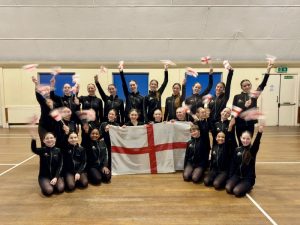
An Epsom-based dance competition team is preparing to take to the international stage after being selected to represent Team England at the Dance World Cup 2026 in Dublin next summer.
CMDC (Charmille Dance Collective) received the news just before Christmas that one of its groups and two solo dancers had been chosen for the prestigious world finals, following national qualifying rounds.
Founder Charlotte Liddle said: “We are thrilled that one of our groups and two solo dancers have been selected to represent Team England at the Dance World Cup in Dublin next year.”
The Dance World Cup is an annual, large-scale international competition focused on children and young adults, typically aged between five and 25. Dancers qualify through national competitions or video selection before reaching the world finals, making selection highly competitive.
The 2026 finals will take place at the Convention Centre Dublin from Wednesday 8 to Saturday 18 July 2026. Organisers expect more than 120,000 competitors from over 70 countries, competing across a wide range of styles including classical, contemporary, street, hip hop and theatrical dance. The event is widely regarded as one of the largest all-genre youth dance competitions in the world and a major milestone for young dancers.
Charmille Dance Collective was founded by sisters Charlotte and Millie Liddle, both graduates of the Laine Theatre of Arts. Despite being a relatively new team, CMDC has already built a strong competitive record, including a second-place finish at the All England finals in 2024.
Co-founder Millie Liddle said: “We are so proud of the girls and how far they have come in such a short time. Their dedication and hard work have been incredible, and they truly deserve this opportunity.”
Before heading to Dublin, the team will be balancing intensive training with fund-raising activities to help cover travel and competition costs, as they look to give themselves the best chance of building on Team England’s previous successes at the event.
Charmille Dance Collective is a community dance team based in Epsom. Founded by sisters Charlotte and Millie Liddle, former students atr Epsom’s Laine Theatre Arts, the group competes at regional and national dance competitions across the UK.
Charlotte and Millie welcome help to fund the trip:
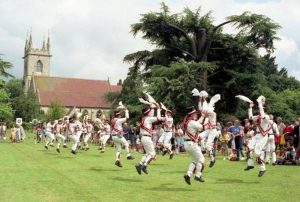
Call to join the merry Morris Men of St Mary’s Ewell
23 March 2026
The friendly team of Ewell St Mary’s Morris Men are holding an open day for anyone who would like to try out a bit of Morris Dancing. No experience needed.
Morris Dancing is a very old British tradition going back more than 600 years and whilst some people enjoy the colour, the cheerful music, the fun and whole spectacle, they sometimes feel a bit nervous to actually try it, this open day is an ideal opportunity, no audience, just a lot of very friendly people. Give it a try, there’s nothing to lose, and it might just be that thing that ticks your box. It’s Free, it’s Open to all and there’s no commitment
There are many reasons to try out Morris Dancing and if you asked a hundred different Morris Dancers you would get a hundred different reasons, however these are some of the more common reasons.
It is a very old tradition and should be supported
It keeps people fit and trim It is fun The people are all friendly It beats boredom Any age can do it
2-4pm Saturday 17th January, Bourne Hall in Spring Street, Ewell Village KT17 1UF is on the 406, 293 bus routes and has plenty of Car Parking available. Ewell West, and Ewell East railway stations are also nearby.
Everyone welcome, from Epsom, Cheam, Ashtead, Sutton, Malden, in fact anywhere. Just come along. On Saturday 17th January.
Musicians wishing to try the music are also welcome, again, no experience required.
From 27 January to 1 February, Epsom and Ewell Borough Council is proud to partner with Epsom and Ewell Refugee Network, Epsom Library, and Epsom Picturehouse to host a borough Festival of Friendship – Ukraine.
This week-long celebration will showcase traditional Ukrainian crafts, music, and cultural heritage, while highlighting the friendships formed between Ukrainian nationals who have settled in the borough and the local community that has welcomed them.
The festival offers a vibrant programme of exhibitions, workshops, films, and live performances, all designed to share Ukrainian culture and foster community connections.
Epsom & Ewell Borough Council has worked with partners to curate and run a week of workshops as part of the Festival of Friendship – Ukraine.
Key Highlights:
Free Workshops and Exhibitions at Epsom Library, including Ukrainian block printing, paper cutting art, wool crafts, and beading. Spaces are limited; please arrive early to secure your spot. All materials provided.
Film Screenings at Epsom Picturehouse, accompanied by live Ukrainian music performances. Tickets available via the Epsom Picturehouse website.
Children’s Activities, including a treasure hunt, face painting, and a special Paddington Bear appearance, at Epsom Library.
Speaking of the upcoming festival, Councillor Clive Woodbridge, (RA Ewell Village) Chair of the Community and Wellbeing Community said, “The Festival of Friendship – Ukraine is a heartwarming celebration of culture and community spirit, it brings together Ukrainian nationals and local residents through shared traditions, crafts, music and friendship. Events like this remind us that kindness and mutual understanding are at the heart of a thriving borough—thank you to everyone helping to make this festival possible.”
Jo Sherring, Lead from Epsom & Ewell Refugee Network added, “Epsom & Ewell Refugee Network are delighted to partner with Epsom & Ewell Borough Council, Epsom Library and Epsom Picturehouse to create this celebration of our friendship with Ukrainian nationals who live in our community. Since the start of the war in Ukraine in 2022, we have been working with Ukrainian nationals who fled to the UK, helping them access work, housing, schools and community. Their courage, resilience and determination have been an example to us. As we have helped them to navigate life in the UK, we have enjoyed building friendships and learning about their culture and traditions.
The Festival of Friendship is a chance for our Ukrainian friends to share their traditions and culture with the local community with activities happening during the week. We hope you will find time to join us during the week to be part of this celebration.”
Festival Timetable Highlights:
Tuesday 27 January: Opening Celebration at Epsom Library; Ukrainian craft workshops and exhibitions.
Thursday 29 January: Performance by Renaissance Choir and screening of Rocky Road to Berlin at Epsom Picturehouse.
Sunday 1 February: Music from Yuliia Komyshan (Ukrainian Bandura) followed by screenings of Sanatorium and Home for Ukraine at Epsom Picturehouse
Epsom Christmas Concert Triumphs After Last-Minute Conductor Crisis
23 March 2026
What could have been a genuine crisis for Epsom Choral Society’s Christmas Concert on Saturday became a remarkable story of teamwork, professionalism, and musical courage.
The day began with unwelcome news. Early in the morning, Musical Director, Julian Collings, phoned to say he had been struck down with flu and was unable to conduct that evening’s concert. This was to be no ordinary performance: it was completely sold out and featured two world premieres, making cancellation unthinkable.
From his sickbed, Julian immediately set about trying to find a replacement conductor for the evening. His first call was to Neil Ferris, conductor of the Leith Hill Music Festival. Unfortunately, Neil was unable to step in at such short notice, but he suggested a name: Victoria Ely. Crucially, ECS Chair, Helen Phillips, was able to recommend her with confidence, having seen Victoria in action when she took a rehearsal for Neil at one of the Leith Hill Music Festival rehearsals last Spring.
Victoria Ely, who had never met the choir before, bravely agreed to conduct the concert with just four hours’ notice.
Meanwhile, Julian faced another formidable task. From home, he painstakingly scanned all of his marked-up scores – 20 different pieces, the parts for the brass quintet, and his detailed annotations and introductory notes. These were sent at speed to the ECS’s Concert Management team, who rushed to print everything so it could be placed in Victoria’s hands as soon as she arrived and so the brass had something to play! It was a race against the clock, but by 1pm everything was in place.
That afternoon’s rehearsal was necessarily intense. Rather than imposing her own methods, Victoria immediately showed her musicianship and collaborative spirit by asking the choir to demonstrate how each piece had been rehearsed. She listened carefully, adapted quickly, and worked with the choir’s established approach, creating a sense of trust and calm despite the extraordinary circumstances.
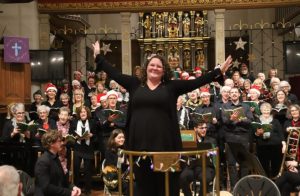
By the time the evening concert arrived, what might have felt like an emergency substitution instead felt like a confident partnership. Victoria conducted with assurance, clarity, and good humour, guiding the choir through a demanding and varied programme. Her warm presence and engaging manner extended to the audience, who responded with enthusiasm and obvious enjoyment.
Against all odds, the concert was not merely rescued, it was a resounding success. For Epsom Choral Society the evening became a powerful reminder of the strength of its musical community and the generosity of fellow professionals. Thanks to Julian’s determination, Helen’s quick thinking, the Concert Manager’s efficiency , and above all Victoria Ely’s courage and skill, a potential disaster was transformed into a memorable and uplifting Christmas celebration.