
Epsom and Ewell Times

5th February 2026 weekly

ISSN, LDRS and IMPRESS logos

Surrey University leading on alternative ADHD treatment

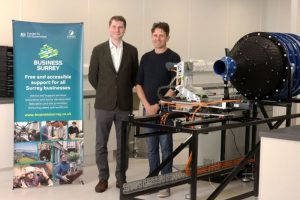
Roi Cohen Kadosh

A multisite clinical trial has launched in the United States to investigate whether non-pharmaceutical methods can be used to treat attention deficit hyperactivity disorder (ADHD) in children ages 7-12. This trial is currently recruiting new patients and seeking FDA clearance.  

The trial uses a wearable device – Novostim 2 – developed by Innosphere Engineering Ltd. The company anticipates FDA clearance by Q3 of 2025 and has already received approval for sales in Israel.  

The novel treatment builds upon years of research into non-invasive brain stimulation techniques led by the University of Surrey’s Professor Roi Cohen Kadosh. The research team carried out multiple studies in which children with ADHD were treated with transcranial Random Noise Stimulation (tRNS) coupled with cognitive training (CT).  

tRNS is a non-invasive technique that delivers a weak and painless electrical signal to the brain to enhance activity in regions associated with attention. In the studies, children who received tRNS and CT experienced significant improvements in their ADHD symptoms, working memory, and processing speed, along with changes in their brain activity, which could be linked to the improvement of their symptoms in the long-term. 

Two clinical trials have been completed using Novostim 2 at Hadassah Medical Center in children aged 7-12, which showed significant improvement in ADHD symptoms, including a 43% reduction in ADHD symptom severity and overall symptom alleviation. 

The trial, over a two-week period, involves 20-minute treatment sessions in which Novostim 2 is used to deliver tRNS over specific regions in the brain associated with ADHD and during which participants engage in attention-based digital games.  

For more information on the latest trial, visit ADHDtrial.com  

Professor Roi Cohen Kadosh, Head of the School of Psychology at the University of Surrey, said: 

“We were thrilled by the success of the previous clinical trials, which brought us one step closer to providing a safe and effective non-pharmaceutical option for children with ADHD. The device’s ability to modulate brain activity and enhance cognitive functions may hold the key to long-lasting benefits, potentially reshaping the landscape of ADHD treatment.  By harnessing the power of psychology, neuroscience, and technology, we can empower young patients to improve their focus, attention and overall wellbeing. The need continues to grow, and I hope to see this technology become available to many children and their families soon.” 

Rami Shacour, co-Founder and CEO of Innosphere, adds:  

“For decades, stimulant medications have been the cornerstone of ADHD treatment. At Innosphere, we’re parents first, driven by a mission to give families more personalized, effective options for their children. With Novostim 2, we’re redefining what’s possible in ADHD care. We’re thrilled to announce sales approval in Israel and eagerly anticipate FDA clearance this year. This is just the beginning, as we explore Novostim 2’s potential to complement existing therapies and transform lives.”

Image: Professor Roi Cohen Kadosh


New SWLP Laboratory Enhances Diagnostic Services for Epsom Hospital and Beyond

Rob Young, UK General Manager for Beckman Coulter Diagnostics; Matthew Kershaw, Chief Executive of Croydon Health Services NHS Trust; Simon Brewer, SWLP Managing Director

South West London Pathology (SWLP) has launched one of the most advanced diagnostic facilities in the UK, with new cutting-edge laboratories set to transform healthcare delivery for patients across its network, including Epsom Hospital. The upgraded laboratory at Croydon Hospital marks the first phase of a significant technological overhaul aimed at improving diagnostic speed and accuracy.

Serving over 3.5 million people through five hospital sites, including Epsom Hospital, and 450 GP practices, SWLP is integral to the region’s healthcare infrastructure. When fully operational, the SWLP network of laboratories will process over 30,000 tests daily, ensuring faster turnaround times and better outcomes for patients in Epsom and the surrounding areas.

The state-of-the-art facility will streamline clinical blood science services, including clinical chemistry, haematology, coagulation, and serology, using cutting-edge pre-analytical automation technology developed in partnership with Beckman Coulter, a global leader in diagnostics.

Simon Brewer, Managing Director of SWLP, said:
“The introduction of Beckman Coulter’s advanced analysers at Croydon Hospital marks a transformative step for our diagnostic services. With these technologies soon to be implemented across the entire network, including Epsom Hospital, we are setting new standards in diagnostic efficiency and patient care.”

Rob Young, UK General Manager at Beckman Coulter, added:
“By equipping SWLP laboratories with the latest diagnostic technologies, we’re enabling healthcare teams to deliver faster, higher-quality results. This advancement will significantly enhance the care provided to patients across the SWLP network, including those relying on Epsom Hospital for vital healthcare services.”

The upgraded laboratories will unify diagnostic services across all SWLP sites, enhancing efficiency and ensuring a consistent standard of care. For patients at Epsom Hospital, this means improved access to accurate and timely test results, contributing to better overall health outcomes in the local community.


About South West London Pathology (SWLP)

South West London Pathology (SWLP) is an NHS pathology partnership providing integrated diagnostic services to hospitals, GPs, and healthcare organizations across South West London and beyond. Serving over 3.5 million people, including those at Epsom Hospital, SWLP delivers a comprehensive range of tests using state-of-the-art technology to improve patient care.

Image: Rob Young, UK General Manager for Beckman Coulter Diagnostics; 

Matthew Kershaw, Chief Executive of Croydon Health Services NHS Trust; 

Simon Brewer, SWLP Managing Director


Check your Epsom and Ewell train journeys January weekends.

A SWT train.

Residents of Epsom and Ewell are advised to prepare for disruptions to South Western Railway (SWR) services due to essential engineering works in the Wimbledon area. Bus replacement services will operate on key routes over two consecutive weekends: January 18-19 and January 25-26.

While services on the London Waterloo line from Epsom will be affected, passengers can still reach Waterloo by using Southern Railway services via the Victoria line and changing at Clapham Junction. However, there will be no SWR services between Epsom and Guildford, and SWR trains to Dorking will also be unavailable.

The works will involve renewing 800 meters of track, ballast, and sleepers between Wimbledon and Earlsfield, alongside replacing points and installing 100 meters of conductor rail. These upgrades aim to improve track reliability and reduce faults, providing smoother journeys for passengers.

Key Impacts for Epsom and Ewell Residents

  • No SWR trains from Epsom to Guildford.
  • Southern Railway services to Dorking via the Victoria line remain available.
  • Rail replacement buses will operate between Clapham Junction and Worcester Park, affecting onward connections.

Additional Service Changes

  • SWR services between London Waterloo and Chessington South, Hampton Court, Dorking, and Woking (stopping services) will not run.
  • Longer-distance services to Portsmouth Harbour, Exeter St Davids, and Weymouth will be revised, taking up to 30 minutes longer.
  • Berrylands station will be closed during the works.

Plan Ahead

SWR advises passengers to check travel options in advance via the SWR website (southwesternrailway.com/plan-my-journey) or National Rail (nationalrail.co.uk) and to allow extra time for their journeys.

Apologies from Network Rail and SWR

Peter Williams, SWR’s Customer and Commercial Director, acknowledged the inconvenience:
“Customers should plan ahead if they intend to travel on these weekends, as engineers carry out vital maintenance at one of the busiest parts of our network. We’re grateful for our customers’ patience.”

Mark Goodall, Network Rail’s Wessex Route Director, added:
“We’re sorry for the disruption but completing these upgrades back-to-back is the most efficient option. We encourage passengers to check their journeys and plan ahead.”

Further closures in the Wimbledon area are also planned for Sunday, February 2, and Sunday, February 9. Updates will be available on the SWR website.

For Epsom and Ewell residents, alternative travel routes and extra planning will help navigate the disruptions while these essential upgrades take place.


Blot on Epsom Down’s west horizon to grow?

Woking from Epsom Downs

The “Croydonisation” of Woking will continue after a 26-storey town centre tower block on the former BHS site was approved. The plans for the 272-home 85-metre-tall building are nearly identical to those previously rejected in March 2024 but have been signed off following changes to Woking Borough Council’s housing targets and further clarifications from the developers. Donard Real Estate will demolish the former store to create the Crown Gardens project. The build-to-rent project will include 28 affordable homes as well as retail and commercial zones on the ground floor of the Commercial Way site. There would also be public space landscaping to improve the area around Christ Church.

Approving the plans – which were also under a separate appeal – would help the council meet its new, higher housing targets and help take pressure off green belt sites. The meeting was also assured the building would be predominantly made of brick, limiting the potential of weather damaging external cladding. The town centre had to be closed off after cladding fell from the Hilton Hotel building this year due to storms. Speaking on behalf of the developers was Mervyn McFarland. He said, “Crown Gardens will deliver 272 high-quality build-to-rent homes addressing the growing need for housing and helping Woking’s residents, particularly young people and families, to stay in Woking and contribute to the town’s vitality and growth. It will help alleviate pressure on traditional housing stock while also contributing to meeting housing targets. It will free up homes better suited to families and other demographics, contributing to a more balanced housing market in Woking. Crown Gardens will support Woking’s regeneration, bringing up to 700 new residents to the town centre. This is expected to bring in around £10m expenditure annually in local spending, boosting businesses.”

The limited parking at the site was no longer considered a valid reason to object to the plans given its proximity to Woking Railway Station and active travel options. The January 7 planning committee also noted that a similar high-rise application at Technology House was allowed on appeal, with the Planning Inspector saying parking options were sufficient. Councillor Rob Leach (Liberal Democrat, St Johns) said: “It’s clear that the development will help meet the housing needs that we have and the new government target building levels, to a significant extent, are helped by this. I’ve always been resistant to skyscrapers in Woking, what I’ve called the Croydonisation of Woking, in the past, but I think this has to be preferable to incursions on the green belt where that can be avoided.”

Related report:

Blot on Epsom Downs horizon to grow no more?


Surrey County elections must go ahead clamour

Old man with walking stick leaving polling station

The May 2025 Surrey county elections must not be postponed, the 11 boroughs and district councils have said. That call has been amplified with the Surrey Liberal Democrat MPs writing to Government lending their support to the call – while a petition arguing the same has been signed by more than 3,000 people. The decision to call off this year’s poll will be down to Government ministers who said they would consider delaying local elections in areas going through the devolution process. Surrey has put itself at the front of that queue – which would get rid of existing councils and replace them with a new structure. What that would look like is anyone’s guess at the moment, but could range from a single mega council, or potentially two or three slightly smaller bodies. Any new system would have an overarching strategic mayor.

The county leadership argues that postponing the elections would give officers time to get on with the once in a lifetime reorganisation – which needs to have interim proposals submitted by March ahead of a more ironclad May deadline. They also question the value of holding elections, which would cost an estimated £2.48m, for a council that was effectively doomed to die within two years – the new devolved authority is expected to be up and running in 2027 with shadow elections held the year before.

The leaders of the 11 Surrey District and Borough Councils met with their Surrey County Council counterpart on January 7 to discuss the English Devolution White Paper and what this would mean for the residents of Surrey. There was acknowledgement that the central Government was determined to introduce sweeping changes through devolution with district and county councils merged into new unitary authorities. A statement released after the meeting read: “All the Leaders of the Surrey District and Borough Councils expressed their concerns around the pace of change being imposed by central government and that such widespread and significant change needs wider consultation with the residents, stakeholders, and businesses across the county. In addition there was concern that the change, as proposed, will decrease local representation for residents of Surrey. While the Leaders concluded that there needs to be a dialogue with Surrey County Council on the proposed changes, there was wide agreement that the county council’s plan to write to the Secretary of State, Jim McMahon MP on Friday January 10, requesting to postpone the county elections scheduled to take place on May 1 2025 was not supported by the District and Borough Leaders and would be opposed if submitted.”

Surrey Heath Borough Council leader Shaun Macdonald added that allowing the elections to go ahead would ensure that all those involved “in shaping the future of our communities” had the democratic mandate to represent residents. The six Liberal Democrat MPs for Surrey also co-signed a letter to Government calling on it to not pass legislation postponing this year’s elections, describing it as an affront to democracy. They also expressed concerns over the speed of devolution and local government reorganisation. They said: “A proposal of this scale requires careful consideration and broad support. Yet, just three weeks after the government’s announcement, no credible plan exists. There has been insufficient engagement with district and borough councils or MPs to justify this unprecedented step.”

Elections, they said, must go ahead to give those voted in the mandate for how to deliver those changes. They added: “This is a once-in-a-generation opportunity to reshape local government in Surrey, and it must not be derailed by unnecessary delays or a lack of transparency.”

Related reports:

Are Epsom and Ewell’s Interests Served by Postponing Democracy?

Surrey’s Conservative leader wants to postpone May’s poll reckoning

Local government reorganisation: What will it mean for Epsom and Ewell?

All change! Epsom and Ewell Borough Council approaching its final stop?


MP spies pollution in Mole

Broken Manhole Chris Coghlan Dorking and Horley MP

Raw sewage has spewed out of a broken manhole cover and into the River Mole. Video taken by the Dorking and Horley MP, Chris Coghlan, shows the waste pumping out of the ground, just yards from the River Thames tributary in Brockham. He had been alerted by residents who said they were fed up after repeatedly trying to get Thames Water to fix the problem. The utility firm has apologised to those affected and said they would also clean up the surrounding areas.

Posting a video to social media, Mr Coghlan said: “So it’s happy new year, happy new sewage spill from Thames Water. I’m here outside a broken manhole cover here in Brockham and you can see it’s literally busting sewage out of it, spraying it everywhere. And behind me you can see loo paper, what looks like condoms.

“I’ve been speaking to some of my constituents here, this has been going on for years. They have been reporting it to Thames Water and they’ve done nothing and if you look behind me down here, this is the River Mole. It’s going straight into the River Mole. We’re a little upstream from the stepping stones where many people would love to bring their kids to paddle but they just can’t because this sewage is being dumped into the river and dumping E Coli everywhere.

“So I am very upset about this, I will be writing to Thames Water and the Environment Agency. It is a completely illegal sewage dump and I want it fixed.”

Thames Water publishes an up-to-date map showing near real storm discharge activity, as indicated by its monitors. At the time of publication there were active discharges in Chertsey feeding into the River Bourne meaning “there could be sewage in that section of the watercourse,” as well as at Leatherhead into the River Mole, at Holmwood into Holmwood Stream, at Cranleigh into Cranleigh Waters, and at Ockley Road feeding into Cobbler’s Brook.

In London, Thames Water has issued an update after E. Coli was found in an area of South East London with people in Brockley advised to boil their water before using it. A Thames Water spokesperson said of the Brockham leak: “We responded to reports of external sewer flooding near Hillside Close in Brockham on Monday January 6. When our engineers attended the water had receded, however we will carry out further investigations to understand why the flooding occurred. During this time we will also clean up the surrounding areas and we are sorry to those who have been impacted.”

Related reports:

Trust the public to check our rivers

River “Bogsmill” blights Borough

Image: Broken Manhole Chris Coghlan Dorking and Horley MP


Local government reorganisation: What will it mean for Epsom and Ewell?

Surrey and Epsom Council buildings

The leader of “doomed” Surrey County Council will write to the Government asking for the May 2025 elections to be postponed and Woking’s debt cancelled as part of devolution measures to merge the county’s councils. The moves are said to allow the council the time to draft proposals for how the county and its 11 boroughs and districts will be dissolved and reborn as potentially a single authority with a directly elected mayor. Other plans could see the county split in two or three smaller unitary authorities in one of the biggest shake-ups in a generation.

In December, the Government placed councils on short notice over devolution plans, giving those who want to get on board until March to submit interim merger proposals. Those who do not will have their devolution plans dictated to them by Downing Street. To give councils time to reorganise, the Government also said it would consider passing legislation postponing the May 2025 elections until next year. On Wednesday, January 8, Surrey County Council confirmed it would pursue the Government’s offer, with conditions.

The move to push back elections, however, was disputed in the chamber with councillors calling it undemocratic, while the leaders of the 11 boroughs and districts have also called for the May polls to go ahead. Councillor Paul Follows, leader of the opposition, told the meeting the boroughs and districts made it very clear local government reform was necessary – but that it could be done alongside the democratic process. He said: “We accept and broadly agree that some unitary council combination would make sense for a variety of reasons but we believe that the pace, the haste, and the lack of plans should not just be folly but a clear threat to services our residents need, and we do not accept that elections must be cancelled.

“The Government aren’t asking us or making us cancel elections. The deputy prime minister confirmed in an interview [on Wednesday morning] that councils are not being asked this way.” He added: “The timetable is going to remain as is and the work is going to happen and we can do everything that the leader is proposing to do while holding the scheduled elections. The leader has argued that leaping in here brings benefits but nobody has outlined what they are and honestly whatever they are, unless they include defined government interventions on debt and adult social care, nothing is worth taking that leap because then any successor authority will be immediately in serious troubles.”

He would also raise concerns that without clear guidelines and financial support, scenarios where playing fields in Godalming could be sold off to pay debts in Woking could emerge. The ruling Conservative group, however, dismissed demands to keep the election saying it would not only cost millions – estimated at about £2.48m – but also elect a “zombie” body that would be dissolved in just a year’s time.

Councillor John O’Reilly (Conservative; Surrey) said: “This council is doomed. This council will not survive and the 11 boroughs and districts will also not survive. So we are talking about a new structure and framework and for those saying the election to go ahead, it is quite clear, the minister’s letter has said that those authorities where elections do go ahead, they have still got to provide submissions by autumn, leaving only a few months. So what is going to happen if we have elections? It will essentially be a zombie council in the twilight, lurching through its own oblivion maybe only a year or so later when elections will take place for the new authorities.”

Councils have until March to submit interim devolution proposals with final drafts delivered by either May or the Autumn. The council has said it will work with “all stakeholders” over the next eight weeks in drawing up plans, including residents, as well as taking feedback from police, fire and rescue, and health services. The Government states it wants new councils to have a minimum of 500,000 residents meaning it is most likely Surrey would become either a single mega authority or split in two – with a directly elected mayor.

Some councillors raised a preference to create three bodies. Councillor Tim Oliver did not rule out expanding beyond the Surrey border to create a regional authority but hoped that all parties could come to an agreement. He said: “We propose to make it clear that the Government will be asked to deal with the debt partially, Woking that is publicly known and crystallised, but there are other levels of significant debt across the county.” He said it was better to get in early to create some leverage over the debt position rather than be handed down a Government dictate.

He said: “Work will start on Friday – officers are putting together the working groups needed. This will be exceptionally time consuming. Not only will it need collaboration between the boroughs and districts, but this council will need to have an input into the proposals. We may go with more than one proposal, one from this council and one from the boroughs and districts.”

The county council leader will now write to the Government setting out that Surrey wishes to be part of the accelerated devolution program and that it would support any new legislation postponing the May 2025 elections until next year.

Related reports:

All change! Epsom and Ewell Borough Council approaching its final stop?

Surrey’s Conservative leader wants to postpone May’s poll reckoning

Tiers to be shed if Epsom and Ewell loses its Borough Council?


Walton Golf Club’s dismissal of one-in-hole unfair

Walton Heath golf club

A greenkeeper who had worked at a Surrey golf course for almost 40 years has won a case for “unreasonable” dismissal after he was sacked when his digger fell into a hole. An employment tribunal found the disciplinary action taken against the 58-year-old had “snowballed” before alternative options were considered. 

Michael Hayne’s digger had to be hauled from a ditch at Walton Heath Golf Club, in Tadworth, after the machine had tumbled into a hole, cab-side down while the driver was not warring a seatbelt. The deputy course manager initially dismissed the accident as minor because no harm was done, and so did not formally report it in an accident log book.

But his bosses at the golf club viewed it as a significant incident and Mr Haynes was later dismissed for gross misconduct. The managers argued it was a “serious breach” of health and safety rules that the accident was not reported, and could cause more incidents. 

Mr Haynes argued that he was sure he told Mr Mann about the accident at the time and considered he did not need to write up the event in the health and safety book. 

The report, published December 23, 2024, detailed that the golf course had two diggers weighing 7.5 tons and 2.5 tons. Mr Haynes had been externally trained on how to use the diggers since around 2005, and his certification was updated every five years- although his current renewal had been overdue.

During a staff training session in November 2021, the instructor reportedly told course manager at the time, Michael Mann, that Mr Haynes was “very lucky with his accident that he hadn’t been seriously hurt or worse”. But Mr Mann said he did not know about the digger incident. 

After some initial investigation, the Surrey club launched a disciplinary hearing against Mr Haynes, accusing him of “gross misconduct” for failing to comply with health and safety standards. 

In a letter before the disciplinary hearing in November 2021, Mr Haynes wrote: “I have been a faithful employee of this Club for nearly 40 years. I love this Club and have spent my life in its service. I have a clean disciplinary record. 

“If I were to be dismissed, not only would I lose my livelihood but also my wife and I would lose our home. I can assure this meeting that I have learned a lesson and will never fail to report any incident again. I would welcome any additional training that is felt necessary.”

Mr Haynes was dismissed without notice, and escorted off the site. The Chief Executive, Mr Woodward, had decided his explanation was “unacceptable” and the “trust and confidence placed” in him had been “completely undermined”. He added further dangerous incidents could have been avoided if Mr Haynes had reported the initial accident. 

In desperation, Mr Haynes appealed the dismissal twice and provided photographic and video evidence of incidents not reported by other members of staff. However, this appeal was rejected both times. 

However, the employment tribunal has now found Mr Haynes’ dismissal was “procedurally unfair”. It said there was no real evidence that any of the decision-makers weighed up the possibility of an alternative sanction for the Claimant.

The report stated there were “flaws” with the golf club’s investigation process such as “exaggerating and maximising the seriousness of the incident”. For instance, inconsistencies in describing the final position of the digger as “tipping over” and “almost horizontal”. 

The tribunal still found Mr Haynes “culpable” for failing to report the digger incident in the accident book as he was involved. Employment Judge Leith said: “His failure to [report it] was rendered considerably starker because of his [senior] role […] he should have known better.”

Concluding the case, the tribunal ruled that Mr Haynes’ compensation will be reduced by 50 per cent because of his failure to log the accident. The report did not disclose the amount. 

Walton Heath Golf Club has been contacted for comment.


Prime Minister and Health Secretary Visit Epsom Hospital to Unveil NHS Recovery Blueprint

Epsom Hospital

Epsom Hospital played host to Prime Minister Sir Keir Starmer and Health Secretary Wes Streeting today as they unveiled a significant national plan aimed at tackling the extensive backlog of NHS tests, checks, and treatments. The visit highlighted the government’s strategy to expand healthcare capacity, streamline services, and reduce waiting times for millions of patients across the UK.

The blueprint includes a major partnership between the NHS and the private healthcare sector, intended to make additional hospital facilities, equipment, and staffing resources available. Prime Minister Starmer emphasized that healthcare reform must be “totally unburdened by dogma” and that prioritising patient outcomes over ideological constraints was essential.

The government announced plans for an extra 450,000 appointments for diagnostic tests and health checks, with local diagnostic centres operating 12 hours a day, seven days a week. GPs will have increased power to make direct referrals to these centres, reducing delays caused by administrative hurdles. Furthermore, 14 new surgical hubs will be established to handle less complex procedures, easing the strain on general hospital facilities.

Health Secretary Wes Streeting highlighted the urgency of these measures, pointing out that the current NHS backlog stands at 7.6 million patients awaiting elective treatments. He stressed that these reforms aim to address not only the backlog but also improve efficiency and convenience for patients.

Amanda Pritchard, Chief Executive of NHS England, expressed confidence in the proposed measures, stating that they would enable the NHS to deliver millions more tests, checks, and treatments annually, while also empowering patients and local healthcare providers.

While the national focus was clear, local concerns were also raised. Liberal Democrat MP for Epsom & Ewell, Helen Maguire, issued a statement welcoming the measures but stressing the ongoing need for infrastructure improvements at Epsom and St Helier Hospitals. She reiterated her campaign for the long-awaited Specialist Emergency Care Hospital in Sutton to be prioritised.

Cllr Kate Chinn, (Court Ward) Labour group leader on Epsom and Ewell Borough Council said: “It was great to see Keir in Epsom today, highlighting the great work done at SWLEOC and setting out Labour’s plans to cut NHS waiting lists. People in Epsom and Ewell know how the NHS is struggling after 14 years of Tory neglect and false promises of a badly-needed new hospital by 2030. Labour, which created the NHS, is determined to rebuild it, but it will not be an easy job.”

As the government pushes forward with its ambitious NHS recovery plan, the people of Epsom will be watching closely to see how these national promises translate into real-world improvements at their local hospital.

Related reports:

Planning buses not missing them says Epsom’s MP

Epsom and St Helier Hospitals in Desperate Need of Repairs

Public meeting about Epsom Hospital future


Surrey’s Conservative leader wants to postpone May’s poll reckoning

Tim Oliver Surrey County Council leader - Surrey Live

The leader of Surrey County Council is set to write to the Government calling for the 2025 elections to be postponed in order to allow authorities to focus on merging under devolution plans. In December last year the Government announced its vision to merge councils in Surrey and get rid of its 11 boroughs and districts. There would also be a directly elected mayor.

Councillor Tim Oliver plans to formally ask the government to postpone county elections until May 2026 to give the councils time to “put together proposals for local government reform necessary to unlock further devolution for Surrey.”

Not everyone has welcomed the delay with Surrey Heath Borough Council set to discuss a motion rejecting the county council leader’s proposals and allow the May 2025 poll to go ahead “in the interest of democracy and hearing the resident’s voice.”

Devolution plans are part of sweeping changes to how services are run as Downing Street looks to reshape local government.

Surrey currently operates under a two tier system with the county council overseeing things such as education, transport and fire with the boroughs and districts focused local planning matters, refuse collection and housing.

Devolution would do away with this system and instead create single unitary authorities, arguing it is more cost-effective.

In a draft letter set to be approved at an extraordinary meeting next week, Cllr Oliver writes that he shares the ambitions for boosting the country’s economic prospects and reforms to strengthen the efficiency and effectiveness of public services.

He said it was clear that reforming local government would unlock the full benefits of further devolution for the county.

The letter reads: “The current two-tier structure of local government in Surrey, comprising 12 sovereign local authorities, is fragmented and in a number of areas inefficient which inevitably diverts resources away from delivering the services that residents rightly expect.

“I believe reorganisation would provide more streamlined and cost-effective services for Surrey, enabling us to achieve further efficiencies and deliver better outcomes for our residents and communities.

“Local government reorganisation is a crucial stepping stone to further devolution for Surrey, to enable our communities to take more control of their own destinies.”

Cllr Oliver said the county already delivered more than £50 billion in gross value added every year, but further and deeper devolution could lead to even better returns.

It adds: “I am therefore writing to ask you to exercise your ministerial powers to lay the necessary legislation to postpone the county council elections in Surrey, which are due to take place in May 2025.

This will give us the time to work with the leaders of Surrey’s district and borough councils to put together proposals for local government reform that are necessary to unlock further devolution for Surrey.”

New unitary elections could then take place in 2026, and a mayoral election in 2027.

He argues that the delay would also allow time to determine how to deal with the “significant financial risk of the level of debt currently held across the Surrey local government footprint.”

Woking Borough Council is currently bankrupt with deficit of more than £1billion and debts of about £2billion, while Surrey County Council and Spelthorne Borough Council both have debts of more than £1billion.

Any proposals, Cllr Oliver adds, will need to adequately consider how to ensure the sustainable operation of any authority in the absence of exceptional financial support from the Government or a level of write-off.

Timetable for Devolution 

10 January 2025 Letter submitted to Minister of State requesting election postponement 
Before March 2025  Minister’s response to letter received 
March 2025  Interim Local Government Reorganisation (LGR) proposal submitted to government 
May 2025  Full LGR proposal submitted to government 
May – June 2025  Government evaluates proposal(s) received for LGR and makes a decision on whether to proceed on  single proposal, or to consult further on one or more proposals
July 2025  Government consultation with affected bodies on LGR proposal(s) 
Autumn 2025  Government decision on LGR anticipated, which begins statutory process to establish new council(s) 
January 2026  Parliamentary process begins to lay Statutory Instruments 
May 2026  Elections to shadow unitary authority/ies 
Spring 2027 New unitary/ies ‘go live’ 
Spring 2027 or 2028 Mayoral elections and mayoral strategic authority ‘go live’, with the preparations for the establishment of the Mayoral Strategic Authority (MSA) taking place throughout 2026/27, or Surrey joins MSA with neighbours

Related reports:

Tiers to be shed if Epsom and Ewell loses its Borough Council?

Image: Tim Oliver – Leader of Surrey County Council, Woodhatch Place, Cockshot Hill, Reigate. GL


Epsom business contact with the King warranted

Cirrus team

Epsom based since 2013 Cirrus, the leading provider of contact centre software, is proud to announce it has been granted a Royal Warrant of Appointment by His Majesty King Charles III. The grants were made to 386 companies previously holding a Royal Warrant of Appointment from Queen Elizabeth II, as well as 7 companies with an established and ongoing trading relationship with HM Queen Camilla.

This prestigious recognition marks a reappointment for Cirrus, building on the acknowledgement previously granted by Her late Majesty The Queen for its outstanding service to the Royal Household.

Cirrus has built a strong reputation for providing innovative, cloud-based contact centre solutions that help organisations improve customer engagement and service delivery. This Royal Warrant recognises the company’s continued excellence in supporting the Royal Collection Trust.

Jason Roos, Founder and CEO of Cirrus, shared: “It’s an immense honour for Cirrus to receive this recognition with a Royal Warrant. This achievement reflects the hard work and dedication of our team. We’ve always focused on delivering solutions that make a real impact, and this recognition from His Majesty’s Household validates that effort in the most meaningful way.”

The Royal Warrant of Appointment is awarded to businesses that have supplied goods or services to the Royal Household for at least five years. This announcement also highlights Cirrus’ ongoing commitment to supporting local communities, while maintaining the highest environmental standards. Cirrus joins the ranks of household names such as BT and Samsung.

“Looking back, it’s incredible to see how far we’ve come. And looking ahead, we’re more motivated than ever to keep pushing the boundaries of what we can achieve. This Royal Warrant is a recognition of our daily efforts, and we’re excited to continue collaborating with fantastic partners and clients,” Roos added.

In the past year, Cirrus has continued to thrive, securing new clients across sectors such as public services, healthcare, and retail. The company’s solutions are trusted by organisations including Nisbets, Premium Credit, and Northern Ireland Water.


Surrey prison failed IPP prisoner

Aerial HMP Coldingley. Google

Staff at a Surrey prison failed to get medical attention for a prisoner who was reportedly found “naked on all fours, and barking like a dog” before he took his own life. Haydar Jefferies, 51, died in hospital on March 5 2023, after trying to kill himself in his cell at HMP Coldingley, Woking, a few days earlier. 

An inquest jury found scores of failures contributed to Mr Jefferies’ death, amounting to neglect. Mr Jefferies’ mental health drastically deteriorated while he was waiting for parole and this was left untreated by staff responsible for his care, according to his family’s lawyers. The 51-year-old pub manager attempted suicide the day before his long-awaited parole hearing. 

After being found guilty of an assault offence in 2006, Mr Jefferies served seven years of an Imprisonment for Public Protection (IPP) sentence, given to people considered ‘dangerous’ but the offence did not merit a life sentence.

Nearly ten years after his crime, Mr Jefferies was then recalled and sent back to prison in January 2022 on his IPP sentence. The allegation against Mr Jefferies was reportedly not backed up and the police decided no further action would be taken, within three months after being sent back to prison. 

But due to the nature of the IPP sentence and the delays in the Parole Board decision-making, Mr Jefferies was forced to stay at the prison despite all charges being dropped nine months prior.

A Ministry of Justice spokesperson said: “Our thoughts remain with Haydar Jeffries’ friends and family. As with all deaths in custody, the Prison and Probation Ombudsman are investigating and we will respond to their report in due course.”

By the end of February 2023, Mr Jefferies was acutely psychotic, found by officers in his cell flushing his head down the toilet, naked on all fours, and barking like a dog. 

Despite custodial staff noting major concerns over his mental health, they allegedly failed to seek any medical attention or even notify health care providers, according to the family’s lawyers Hodge Jones & Allen. Custodial staff allegedly failed to place him on constant supervision and/or take him to an external place of safety. 

The jury duly found that Mr Jefferies’ IPP status and the delays in his parole hearing materially contributed to the development of his subsequent psychosis, Hodge Jones & Allen solicitors said.

Between his initial release and recall, Mr Jefferies had tried to rebuild his life, setting up his own pub and B&B with his husband, who sadly passed away in 2021.

Zhora Jefferies, Haydar’s mother, said: “After creating a wonderful life in the community, it is devastating to have witnessed how Haydar’s life was completely destroyed by the nature of his IPP sentence and the extensive delays he experienced when waiting to be released from prison.

“We had to watch our beloved son, brother and father succumb to the fear and paranoia that he was suffering with in the final weeks of his life. We, and Haydar himself, were all crying out for help and it was falling on deaf ears.

“Nothing can be done to bring Haydar back but our biggest hope is that lessons can be learned from his experience. Haydar brought so much love to our family and we will always be grateful for the time we had with him.”

A few months into Mr Jefferies’ recall to HMP Bullingdon, in early 2022, it was confirmed the allegations against him were no longer being pursued. But he remained in prison for another year, waiting for authorised release by the Parole Board. An application to determine his release on papers was declined, and various delays led to his parole hearing being rescheduled to March 2023. 

Mr Jefferies was then transferred to HMP Coldingley on 28 December 2022. By 12 February 2023, he asked to be segregated for his own safety. The jury reportedly heard evidence from a consultant psychiatrist that after being segregated, Mr Jefferies’ mental health steeply deteriorated. 

By around 18 February 2023, he was suffering from a severe psychotic illness which required timely psychiatric assessment, treatment and transfer to a prison with a healthcare wing. 

The jury heard that, during his subsequent 10 days in segregation, Haydar made multiple concerning comments to both prison officers and his family symptomatic of his deteriorating ill-health. This included his intensifying delusional beliefs that prison officers were colluding with prisoners to sexually abuse and kill him, and that they were pumping gas into his cell. 

Mr Jefferies’ family made numerous phone calls to the prison with serious concerns over his welfare. But none of the calls were appropriately documented in prison records or passed onto the Mental Health Team. 

The jury concluded there was a “systematic failure on behalf of the Ministry of Justice” that there was no policy for recording and sharing information from concerned family members, according to Hodge Jones & Partners. 

Cormac McDonough, a civil liberties solicitor at Hodge Jones & Allen, who represented the family at the inquest said: “It is extremely rare for a jury to reach a finding of neglect in this context, which demonstrates how fundamentally failed Haydar was while under the care of prison staff at HMP Coldingley.

“It was evident that Haydar was suffering due to the unjust circumstances of his IPP recall and that this contributed to his deteriorating mental state. Staff at the prison failed entirely to recognise his deterioration and to take appropriate steps to keep him safe. His family made repeated attempts to get Haydar the help he patently needed, after receiving multiple distressing phone calls, but no action was taken.”


Surrey Uni Doing the maths on virus transmission

Christmas tree with mathematical baubles

How prepared are we for another pandemic? Mathematical insights pinpoint lessons on airborne viral transmission  

Half a decade on from the start of the COVID-19 pandemic, a study by the University of Surrey highlights the significant impact of combined public health measures in reducing airborne viral transmission. High-quality face masks were shown to reduce transmission risk by ninefold, while doubling indoor air ventilation cut the risk by nearly a third, providing valuable insights to support future prevention strategies for respiratory diseases. 

In 2020, the world came to a near standstill as rising COVID-19 cases prompted unprecedented lockdowns, travel restrictions and widespread public health measures. The World Health Organization estimates that more than three million deaths were directly attributed to the virus during the first year of the outbreak, underscoring the devastating toll of the pandemic on global health and economies. 

To better understand the dynamics of airborne transmission and inform future preparations, Dr Richard Sear, Associate Professor at Surrey’s School of Mathematics and Physics, explored how the virus spreads during contact and the role of protective measures in reducing risk. 

Dr Sear said: 

“I’ve tried to measure how effective strategies, such as mask-wearing, are for the transmission of airborne viruses. This is both for any future pandemic, and for seasonal flu. I combined modelling with data from the UK’s NHS COVID-19 app. While these estimates are highly approximate, they provide guidance on the value of measures such as face masks, social distancing and improved indoor air quality, which could be tested in the future.” 

Factors such as viral load, ventilation and individual susceptibility are likely to influence a significant variability in COVID-19 transmission rates, with some contacts posing a much higher risk than others. These findings highlight the importance of addressing environmental and behavioural factors in public health strategies. 

In terms of personal protective equipment (PPE), high-quality face masks, such as N95/FFP2, were found to be particularly effective in reducing transmission risk, decreasing the effective reproduction number for COVID-19 transmission by a factor of approximately nine when worn by the entire UK population. Even individual use of N95 masks can lower transmission risk by threefold, no matter the duration of contact, whereas surgical and cloth masks are much less effective.  

Ventilation also plays a critical role in controlling airborne transmission, as viral particles linger in poorly ventilated spaces, compounded by individual behaviours, such as close-contact interactions, speaking or coughing. By doubling the air turnover rate indoors, whether that’s through open windows and doors or increasing speed on air conditioning systems, transmission can be reduced by as much as 30%. Complementing good ventilation with physical distancing further minimises the risk. 

Dr Sear added: 

“The COVID-19 pandemic was terrible for many of us, which is why it’s important that we learn from our experiences. It also demonstrated how quickly we can develop and roll out vaccines when faced with a global health crisis. Moving forward, both we as individuals and our leaders have an opportunity to apply these lessons to better control respiratory diseases – not only to head off any future pandemics, but to also manage seasonal diseases such as flu and RSV.” 

The study has been published in Physical Review E.  


Going South from Epsom for Xmas? Check your trains

SWR train

Epsom residents are being urged to check before travelling as South Western Railway (SWR) services to Guildford face significant disruption due to emergency engineering works. The works will take place from Saturday 21 December to Tuesday 24 December, affecting trains running via Cobham & Stoke D’Abernon and Epsom.

The disruption comes as Network Rail works to stabilise an embankment near Clandon following the detection of ground movement. Trains in the area have been operating at reduced speeds, and urgent repairs are required to ensure passenger safety.

Impact on Services

During the works, limited train services will operate between London Waterloo and Effingham Junction via both Cobham & Stoke D’Abernon and Epsom. To help passengers, replacement buses will run on the following routes:

  • Surbiton to Guildford, every 30 to 60 minutes depending on the day.
  • Effingham Junction to Guildford, every 30 minutes, with some extending to Epsom.

Passengers travelling between Epsom and Guildford will be served by either a train or replacement bus. Normal services are expected to resume from Friday 27 December, but journey planners will be updated daily, and travellers are advised to check before setting out.

A Safety Priority

Explaining the need for the emergency works, Tom McNamee, Network Rail’s Wessex Route Infrastructure Director, said:
“We detected ground movement at an embankment in the Clandon area, which has made it necessary to operate trains at slower speeds. Stabilising the embankment is critical to ensure the safety of passengers and staff. While we recognise this will be disruptive, it’s essential to carry out these repairs to prevent further movement and restore full services as quickly as possible.”

Passenger Advice

SWR is apologising to passengers for the inconvenience. Steve Tyler, Planning and Performance Director at SWR, added:
“We are sorry for the disruption and are working hard to provide as many train services as possible during the works. Buses will operate to ensure passengers can still reach their destinations, and we encourage everyone to check journey planners before travelling. We appreciate your patience as these essential repairs are completed.”

Key Information

  • Trains will not stop at Horsley, Clandon, or London Road Guildford stations during the works. These will instead be served by replacement buses.
  • No SWR services will operate on Christmas Day or Boxing Day, and an amended timetable will be in place from Friday 27 December.

For the latest updates, visit southwesternrailway.com or use journey planners to confirm service availability. Passengers are encouraged to allow extra time for their journeys during this period.


Plant-based meat alternatives might be depressing

Jar of soy based meat alternative

There is mounting evidence suggesting that ultra-processed foods (UPF) are bad for our health, but if you stick to a vegetarian diet, is that still the case? Plant-based meat alternatives (PBMA) are considered to be ultra-processed foods and may be associated with similar harms. 

In the first study of its kind, published in Food Frontiers, researchers from the University of Surrey found that vegetarians who consumed PBMAs had a 42% increased risk of depression compared to vegetarians who refrained from PBMAs. 

The study analysed data from the UK Biobank and found no notable differences in intake of sodium, free sugar, total sugar, or saturated fatty acids between those vegetarians who ate PBMA and those who did not.

The researchers did find, however, that those who eat PBMAs had higher blood pressure and C-reactive protein (CRP) levels, a marker of inflammation, and lower levels of apolipoprotein A, a protein associated with HDL, a “good” cholesterol; PBMA consumption was, however, also linked to a reduced risk of irritable bowel syndrome (IBS) by 40%. 

Professor Nophar Geifman, from the School of Health Sciences at the University of Surrey and senior author of the study, said:  

“The overall findings are reassuring, suggesting that plant-based meat alternatives may be a safe option when they are part of an overall balanced diet. However, the potential link between these types of food, inflammation and depression warrants further investigation.” 

The study presented some limitations due to the data collected, which was predominantly from a white population in the UK, and dietary information only being gathered at the beginning of the study, not accounting for potential changes over time. 

Professor Anthony Whetton, co-author of the study from the School of Veterinary Medicine at the University of Surrey, said: 

“Ultra-processed plant-based meat alternatives can be a useful way for people to transition to a vegetarian diet effectively, and that helps with sustainable agricultural practices.  Further research, including longitudinal studies and trials with more diverse populations, is necessary to confirm these findings and the relationship between vegetarian foods and mood.” 


Epsom led crime gang banged up

Harry and Frankie Mackay of Epsom

An organised crime group who carried out multiple burglaries, a vicious assault, and stole more than £215,000 worth of high-value cars have been jailed for a total of twenty seven and a half years.

In 2023, police identified a series of residential burglaries which could be linked via a distinctive Audi A8, which was one of just fifteen in the country. The Audi was then seen at a petrol station with a wonky number plate which didn’t match its genuine details.

Soon after, a second car suspected of being linked to the series was identified by a distinctive GB sticker on the back. However, the challenge remained to identify the people involved and a complex investigation began which used a variety of tactics to uncover the full extent of their crimes.

Between June and August 2023, members of the group burgled multiple homes and were also linked to other offences including keyless car theft, where vehicles were taken close to the owners’ house or from the front drive.  Areas targeted included Epsom and Walton-On-Thames in Surrey and Croydon, Chessington, New Malden, Raynes Park and Surbiton in the Metropolitan area.

They would scope out a target vehicle, and either commit a burglary to steal the keys or use illegal devices to gain keyless entry. They would then drive the vehicle away and park it elsewhere for a short time to see if any tracking devices had been activated.

In the meantime, they would identify similar vehicles which were insured, source illegal fake number plates, and fit them to the stolen vehicles to try and evade detection.  On some occasions the stolen cars would ultimately end up at ‘chop shops’, where they were broken up into parts and sold for profit.

During the burglaries at both residential properties and some shops, they caused thousands of pounds worth of damage and on one occasion, three of the men (Harry Mackay, Rico Persechino and Jason Connors) – assaulted the occupier of an address with weapons.

After gathering a body of evidence, on 29 August 2023 police proactively apprehended Rico Persechino and Harry Mackay outside a shop in East Grinstead. Mackay tried to escape by running inside and heading to the staff door but he was swiftly caught. Officers later found a keyless car theft device that he’d tried to discard inside the shop.

The police investigation used a variety of tactics including identifying cloned number plates, tracking vehicles through ANPR (automatic number plate recognition) and matching the suspects’ descriptions and clothing to CCTV footage. Often when committing a burglary at a shop, the group brought a large white carrier bag to carry the stolen goods and a comparison of CCTV footage enabled officers to tie offences to them due to the appearance of this same bag each time.

One victim of the group’s criminal activities said “The burglary was very distressing for both my partner and myself, and we felt a significant impact after the unwelcome intrusion from these criminals. I was very angry and upset and when I met with detectives the following day, I was close to tears and that’s not in my nature. The thought of strangers going through your personal possessions, and the damage they caused to gain access to my property was scary.  My partner lost family jewellery that had been passed down through generations. After the robbery I said I wanted to move, and I still might as this has had a long-term effect on me. I’m pleased to see the sentence this group were handed, and I was very impressed with the brilliant work of the police officers and detectives dealing with this case, they gave me faith throughout.”

Lead investigator, Detective Inspector Daniel Voller, shared: “This was a sophisticated and organised operation and exposing the full extent of their crimes was only possible thanks to the hard work and diligence of everyone involved, from detectives to intelligence teams.

These thieves had no regard for anyone but themselves and escalated their offending from stealing cars outside homes to breaking inside and committing a serious assault. We have worked relentlessly over many months to prepare a strong case against them and I’m pleased our efforts have resulted in getting them behind bars.”

Following a trial at Guildford Crown Court on Monday 9 December, brothers Harry, Frankie and Stevey MacKay appeared along with Jason Connors and Rico Persechino for sentencing.

  • Harry Mackay, 34 (DOB 27/04/1990), from Epsom pleaded guilty to Conspiracy to Steal Motor Vehicles, Conspiracy to Burgle and Conspiracy to Commit Robbery and was sentenced to 8 years.
  • Frankie Mackay, 35 (DOB 24/05/1989), from Epsom, pleaded guilty to Conspiracy to Steal Motor Vehicles and was sentenced to 39 months.
  • Stevey Mackay, 32 (DOB 08/02/1992), from Kingston-Upon-Thames pleaded guilty to Steal Motor Vehicles and was sentenced to 39 months
  • Jason Connors, 29 (DOB 25/08/1995) from Croydon pleaded guilty to Conspiracy to Commit Robbery and was sentenced to 5 years and 4 months
  • Rico Persechino, 35 (DOB 01/04/1989) from Kingston-Upon-Thames pleaded guilty to Conspiracy to Steal Motor Vehicles, Conspiracy to Burgle and Conspiracy to Commit Robbery and was sentenced to 7.5 years

Custody photos of Epsom brothers Harry and Frankie Mackay