Epsom and Ewell Times

5th February 2026 weekly

ISSN, LDRS and IMPRESS logos

Epsom and Ewell’s MP leads debate on support for Explosive Ordnance Disposers

EOD suit

Helen Maguire, Epsom and Ewell’s MP and former British Army Military Police Officer, led a Westminster Hall debate 11th December on government support for the Explosive Ordnance Disposal (EOD) community. Drawing on her military experience and recent meetings with EOD specialists, Ms Maguire highlighted the critical importance of supporting this sector, both domestically and globally.

The motion read: “That this House believes that the United Kingdom’s capacity in explosive weapons disposal and victim assistance requires utmost government support, particularly at a time of extreme geopolitical unrest.”

Ms Maguire emphasised the UK’s “enviable global reputation” for expertise in EOD, victim assistance, and the production of demining equipment. She also underscored the extensive humanitarian work supported by the UK, citing the Foreign, Commonwealth and Development Office’s (FCDO) Global Mine Action Programme, which has a budget of £14.8 million for 2023-24. This programme tackles landmines, cluster munitions, and explosive remnants of war in countries such as Ukraine, Angola, and Cambodia.

Ms Maguire remarked, “Explosive weapons are being used in modern conflicts to an extent we haven’t seen for generations. The number of civilian casualties has increased by 70% in three years, with Ukraine and the Middle East being major contributors.” She also noted the challenges faced in Ukraine, where over 150,000 square kilometres of land is contaminated with unexploded ordnance, requiring decades of work to make safe.

Domestic Challenges and Veterans’ Welfare

Highlighting domestic issues, Ms Maguire praised the UK’s EOD teams, who handle around 2,300 incidents annually, ranging from unexploded World War II bombs to improvised explosive devices. She also paid tribute to the bravery of EOD personnel, describing their work as a testament to “courage as a decision.”

The debate touched on the impact of explosive weapons on civilians and veterans alike. Ms Maguire called for sustained government support for injured veterans, including those with prosthetic limbs. Referring to pioneering research at institutions like Imperial College London, she advocated for better resources and protective equipment, particularly for female deminers.

She stated, “For those of us who have served, many of us will know people who were killed or injured by explosive ordnance. Supporting veterans and civilians is not just a duty; it is a moral imperative.”

The Global Context

Ms Maguire provided an alarming overview of global challenges, noting that “aggressors throughout history have never let the rules of war or international prohibition interrupt a good night’s sleep.” She stressed the UK’s unique position to lead in international donor coordination and post-conflict reconstruction.

Ms Maguire also underscored the economic benefits of mine clearance, which unlocks agricultural land and restores livelihoods. She cited Lebanon as an example, where demining has enabled safer farming and improved access to water.

The MP called for innovation in demining technologies, such as drone-mounted ground-penetrating radar and chemical signature analysis. She also highlighted the need for better coordination in Ukraine, where demining equipment often sits unused due to licensing and training gaps.

Building Awareness and Collaboration

Ms Maguire announced plans to form an All-Party Parliamentary Group (APPG) on explosive weapons, aiming to enhance support for EOD and victim assistance. She extended an invitation to colleagues and stakeholders to join the initiative. Referencing the TV series Trigger Point, she suggested its star, Vicky McClure, could help raise awareness about the vital work of EOD teams.

Government Minister’s response:

The Minister expressed gratitude to the EOD community, stating: “Our EOD operators are highly trained, and they’re world-renowned, equipped to deal with a full range of explosive threats… They deserve our absolute appreciation and thanks from the government, from Parliament, and indeed, the entire country.”

The Minister highlighted the scale of the UK’s EOD operations, mentioning that: “700 service personnel from the Army, Royal Navy, and RAF deal with 2,300 EOD incidents across the UK annually.”

The economic and diplomatic significance of EOD was underlined: “EOD capabilities also have an important economic legacy. They feed our scientific and industrial base, sustain cutting-edge design in robotics and detection technologies, and contribute to international diplomacy and reconstruction.”

The Minister emphasised evolving threats, such as drone-deployed munitions and advanced IEDs, and committed to ensuring the UK remains prepared: “We must invest in EOD capabilities to ensure we stay ahead of emerging threats and technologies.”

He noted that the UK is aiding Ukraine by training personnel and sharing lessons learned. Regarding mine contamination in Ukraine, he stated: “This is not a problem that will go away today; it will last a generation.”

The Minister reaffirmed the government’s commitment to veterans: “You have my word that I will support veterans, both legally and with welfare support, particularly those from Northern Ireland.”

Related report (Westminster Debate)

Grayling’s fishy business

Image  Creative Commons Attribution 2.0 Generic license. Bundeswehr-Fotos


Woking child murder lessons for Surrey’s agencies

Authorities must face serious questions about years of missed chances to prevent Sara Sharif’s death.

Sara was murdered aged 10 years old by her father Urfan Sharif and stepmother Beinash Batool. Her uncle Faisal Malik was convicted of causing or allowing her death.

Local authorities are legally responsible for looking after and safeguarding all children, they also have a statutory duty to investigate concerns about welfare. A local child safeguarding practice review will be carried out to examine the missed opportunities and if more could have been done to prevent Sara’s death.

Rachael Wardell, Executive Director for Children, Families and Lifelong Learning at Surrey County Council, said: “We are resolute in our commitment to protecting children, and we are determined to play a full and active part in the forthcoming review alongside partner agencies, to thoroughly understand the wider circumstances surrounding Sara’s tragic death.”

The safeguarding review will bring together the police, social carers, education and health services amongst others to consider the practice of all the agencies involved with the family to identify any learning. The safeguarding review, led by an independent author, will also look at all professionals who had contact with the family.

Unlike a trial or coroner hearing, the review will not hold individuals or organisations to account but looks at how general system change can prevent or reduce the risk of similar instances.

“The focus of the trial has been on the evidence needed to secure the convictions of those responsible for Sara’s death,” Ms Wardell said. “This means that until the independent safeguarding review concludes, a complete picture cannot be understood or commented upon.”

Her father had multiple and repeated contact with Surrey Police and social services before he was charged with murdering the 10-year-old girl last summer. Just a few months before, Sara’s school referred her to social services but the case was closed within days.

After the guilty verdicts, and opening the safeguarding review, the case will provoke difficult questions whether Sara’s tragic death could have been prevented.

Children’s Commissioner Dame Rachel de Souza said the case highlighted a “profound weaknesses in our child protection system”. She called for a raft of changes including “proper oversight” for children, like Sara, being home schooled.

Dame Rachel said: “There can be no doubt that Sara was failed in the starkest terms by the safety net of services around her. Even before she was born, she was known to social care – and yet she fell off their radar so entirely that by the time she died, she was invisible to them all.

“We can have no more reviews, no more strategies, no more debate. When we say ‘never again’, we have to mean it – let that be Sara’s legacy.”

As Sara started school, her abuse went largely undetected or unactioned. The court heard Sara turned up at school with bruises on her face in June 2022 and again in March 2023, despite attempts to cover them in a hijab.

Although Sara never confided in teacher what was going on, a referral was made to Surrey County Council’s social services after the second incident- only to be shut down within days, the court heard.

By April 2023, Sara was taken out of school and the violence against the 10-year-old girl escalated in the final weeks of her life. Sharif admitted to the court he repeatedly beat her with a cricket bat, metal pole and mobile phone, throttling her and even hit her in the stomach while she lay dying.

Responding to the verdict, Ms Wardell from Surrey County Council said: “Sara’s death is incredibly distressing and we share in the profound horror at the terrible details that have emerged during the trial. We cannot begin to comprehend the suffering that poor Sara endured at the hands of members of her family who should have loved, protected, and cared for her.”

“What is clear from the evidence we’ve heard in court is that the perpetrators went to extreme lengths to conceal the truth from everyone.”


A dog’s dinner of a licensing scheme?

Four dogs in Banstead wood, ahead of the licensing scheme to be introduced. (Credit: Dog walker Emma)

Professional dog walkers have rallied against a new dog licensing scheme in Surrey, claiming the managers have overstepped their mark. 

Dog walkers may have to pay £360 a year to roam over the Surrey Hills from April 1, 2O25. Banstead Common Conservators (BCC), which manage the four sites, said its main reason for setting up the scheme was for safety. The sites include Banstead Heath, Banstead Downs, Park Downs and Burgh Heath.

But those who rely on the open spaces are less convinced. Dog walkers have accused the BCC of “intimidating” and “abusive” behaviour on the heath. Members of the group have claimed the BCC management team have taken pictures of dog walkers without asking them, and told them to put dogs on the lead when the staff do not have authority to. 

Emma, who has been a professional dog walker for seven years, said she now feels “anxiety stricken” going to the heath. She said: “Everytime we get out of the van there is fear that they will be waiting for you in the woods, following you.” 

The Local Democracy Reporting Service (LDRS) understands that a handful of dog walkers were “walked off” the Heath last year by the management team for having more than four dogs. Reigate and Banstead Borough Council (RBBC) introduced a scheme to limit dog walkers to only four in August 2024. The walkers say the BCC team acted outside their remit as this was during the grace period, before the rule came into effect, and not done by council enforcement officers.

Now, the dog walkers say the atmosphere on Banstead Heath is “horrible” and “really uncomfortable”. One person said they feel that even though they are insured, professional and sticking to the rules, they are waiting for someone to make a remark. 

A spokesperson for BCC said: “All of our engagement with any user of Banstead Commons is done with respect and in accordance with our statutory duties.” The Conservators claim that regulating any commercial activity, like dog walking, is part of its legal duty under the Metropolitan Commons (Banstead) Supplemental Act of 1893. 

They added that BCC has received no complaints relating to the behaviour of our staff from professional dog walkers and noted BCC staff will be issued with body worn cameras for their safety in future.

However, a council spokesperson said they have received some complaints about the management of Banstead Commons Conservators in the last 12 months, which are being reviewed.”

Issues relating to controlling dogs have been on the agenda since 2022, with the BCC noting the significant increase in dog owners and commercial walkers. Given the frequency of people walking dogs (commercially or for leisure) over the years, issues of dogs scaring horses, attacking wildlife or littering poo bags have often appeared in the BCC agenda. The Conservators have often noted when a dog has attacked a horse or bitten a person, or tragically killed a woman. 

Commercial dog walkers say they have been “kept in the dark” around the licensing scheme which impacts their livelihoods. They say the meeting minutes do not go into detail about what is being discussed, or, on one occasion, is moved to part 2. Although many of the paid dog walkers say they welcome a licensing scheme, they want it run by the council which owns the land. 

According to the minutes of a meeting in November, the BCC can regulate for the “prevention of nuisances” on the Common which would include the ability to licence and ban certain activities. 

Emma said: “Local dog walkers are simply not prepared to engage in this scheme based on the clandestine approach of how it manifested and the clear lack of respect and utter disdain they have for the profession.”

The BCC has now published the agreement for the scheme which conditions license holders to “not to cause an annoyance or nuisance or interfere” with other people using the commons. The BCC states they are able to take licences away “with immediate effect” with a written notice if the person breaches the agreement, or does not remedy it in 21 days. 

Professional dog walkers must walk with identification, issued by the BCC, on them at all times, according to the rules. Commercial walkers must allow any BCC staff member to read a dog’s chip to establish a dog owner’s details.

Emma said the fee is “extortionate” for just four sites, and not the whole of the borough. One of the dog walkers said they did not like the “piecemeal” approach. 

Similar schemes are also being trialled in Surrey. Nonsuch Park, in Epsom, is running a pilot commercial dog licensing fee at £200 a year with a limit of six dogs walking at any one time. The licence will be managed by Epsom and Ewell Borough Council as well as the London Borough of Sutton Council.

A joint-statement by the Conservators read: “With the increasing volume of professional dog walkers, including displacement from other areas that have already implemented restrictions, it has become necessary to take the responsible step of licensing this activity.

“This scheme will help regulate the numbers of dogs being walked commercially on our sites and ensure that companies are operating safely and treating Banstead Commons, its users and wildlife with respect and consideration.

The BCC said “safety” was one of the “main drivers” for the dog licensing scheme. The group said the scheme will give professional dog walkers “visibility and confidence to operate safely” when using the sites, as well as reassuring other visitors. 

The council announced last week that it is reviewing the dog walking limit after a petition calling out the “heavy-handed” nature of the approach. An RBBC spokesperson said: “Only the Council’s enforcement team can enforce our PSPOs. Our enforcement does not extend to the BCC’s own licensing scheme.  We will be requesting further information from BCC regarding the operation of their licensing scheme.”

Four dogs in Banstead wood, ahead of the licensing scheme to be introduced. (Credit: Dog walker Emma)

Related reports:

Case for dog-walker regulation after death-mauling

Should Nonsuch Park go to the dogs?

Licensed to walk


Small Business is my business says Epsom’s MP

All Things Nice in Ewell Village

Helen Maguire, MP for Epsom and Ewell, has announced a new survey for local businesses and will spend time working alongside staff at three local establishments in the lead-up to Small Business Saturday on 7th December.

Small Business Saturday is an annual campaign aimed at encouraging the public to support local businesses and raise awareness of their contributions to the community and the economy.

Ms Maguire is set to visit Fatima’s Hair Boutique in Epsom, All Things Nice Café in Ewell, and Lavender Flowers in Ashtead, where she plans to engage directly with staff and customers. According to her office, these visits are intended to provide her with a better understanding of the challenges faced by small businesses in the constituency.

The MP, who has previously run a charity fundraising consultancy and a fitness business, has highlighted her personal experience as a former small business owner. She says this gives her an insight into the pressures and demands local entrepreneurs encounter.

Ms Maguire’s survey, available on her website, invites business owners to share their experiences and concerns. She says the results will help her advocate for better support for small businesses in Parliament.

Speaking about her initiative, Ms Maguire said:

“Local businesses like All Things Nice and Lavender Flowers are integral to our community, providing not just services but also fostering a sense of connection and vibrancy. I look forward to working alongside them and learning more about how I can help.”

The MP also criticised the government’s proposed National Insurance hike, stating:

“Small businesses here in Epsom and Ewell have faced rising costs and reduced support in recent years. The planned National Insurance increase will place even more strain on them, and I’ll continue to press for this to be reconsidered.”

The Liberal Democrats have stated that they oppose the National Insurance rise, which they claim will adversely affect small businesses nationwide.

Ms Maguire’s visits will take place tomorrow and Friday.


What is Small Business Saturday?

Small Business Saturday, now a well-established event in the UK, promotes awareness and support for independent businesses. In 2022, shoppers were estimated to have spent £1 billion at small businesses on the day. The campaign encourages consumers to shop locally and highlights the broader contributions of small enterprises to communities and economies.

Small Business Saturday is an independent initiative that runs across the UK, with more details available on its official website.

Helen Maguire’s Small Business Survey can be accessed here.


Surrey academic to lead plastic pollution fight

Plastic pollution on beach

Tackling the plastic pollution crisis: Legislation must evolve to address challenges for our climate, ecosystems and human health 

Urgent legislative action is needed to stop the imminent threats of environmental harms caused by plastics. To help find solutions, Dr Noreen O’Meara from the University of Surrey has been awarded a prestigious Mid-Career Fellowship by the British Academy to lead vital research that seeks to reshape how we govern the lifecycle of plastics through effective legislation and policy. 

Dr O’Meara’s project aims to support national, European, and global efforts to combat plastics pollution at a time when negotiations for a Global Plastics Treaty are intensifying. This treaty represents the first international legally binding framework aimed at addressing the plastics crisis, and Dr O’Meara’s research will play a crucial role in informing its development and implementation. 

Dr Noreen O’Meara, Associate Professor (Reader) in Human Rights, European and 
Environmental Law at the University of Surrey said: 

“Plastics pollution is a toxic contributor to the triple planetary crisis of climate change, ecosystem degradation, and environmental pollution. Plastics production accounts for a rising proportion of the global carbon budget, which undermines states’ net-zero goals and action under the Paris Agreement to achieve a safer climate. The plastics lifecycle creates serious risks to human rights and human health which must be mitigated in governance efforts to tackle plastics pollution. 

“We must mitigate the serious risks to human rights and health that arise from the plastics lifecycle in our governance efforts. This fellowship gives us the opportunity to advocate for a rights-oriented model that not only addresses pollution but also respects human dignity.” 

With a strong background in EU and European Human Rights Law, Dr O’Meara’s research delves into pressing challenges in climate law and environmental justice. She has been actively involved in the Intergovernmental Negotiating Committee (INC), which is working towards finalising the Global Plastics Treaty by mid-2025. As United Nations negotiations resume, her insights will be invaluable as states navigate the complexities of this treaty.

Image: Muntaka Chasant  Creative Commons Attribution-Share Alike 4.0 International licence. 


Epsom and Ewell to be served by publicly owned trains

SWR train

The government has announced that South Western Railway (SWR), which serves commuters from Epsom, Ewell West, Stoneleigh and Worcester Park to London Waterloo, will be the first train operator to transition back into public ownership. The move comes following the passage of the Passenger Railway Services (Public Ownership) Act 2024, signalling a historic shift for Britain’s railways.

Starting next year, SWR services, including the Epsom to London routes, will come under the direct management of DfT Operator Limited, a publicly owned body. This change aims to address long-standing issues of delays, cancellations, and high costs that have plagued privatized rail services for decades.

What This Means for Epsom Commuters

Epsom’s SWR services connect thousands of local residents daily to key destinations such as London Waterloo, Wimbledon, and Clapham Junction and south to Dorking and Guildford. These routes are lifelines for commuters and leisure travellers alike, and reliability issues have often sparked frustration among passengers. Under public ownership, improvements in punctuality, affordability, and customer satisfaction are hoped for.

Local resident and commuter Sarah James commented: “I’ve been using the Epsom to Waterloo service for over ten years, and while it’s convenient, the delays and rising ticket prices have been hard to justify. If public ownership can bring real improvements, it’ll be a welcome change.”

Government’s Vision for the Railways

Transport Secretary Heidi Alexander said: “We’re putting passengers back at the heart of our railways. For too long, privatization has failed to deliver for the British public. South Western Railway is the first step in our plan to rebuild a rail system that works for everyone.”

The move forms part of a broader government commitment to overhaul the rail network, with c2c and Greater Anglia services also set to follow suit by 2025. The goal is to save up to £150 million annually by eliminating franchise fees, redirecting those funds into service improvements instead of shareholder profits.

How Will the Transition Work?

The Department for Transport (DfT) is prioritizing a seamless handover, ensuring minimal disruption for passengers. Ticketing systems and staffing will remain unchanged during the transition period, with SWR’s current workforce continuing to support commuters.

Publicly managed services will eventually integrate into Great British Railways (GBR), the government’s new overseeing body for track and train operations. GBR promises a more unified and efficient approach to rail management, focusing on reliability, accessibility, and value for money.

Local Impacts Beyond the Commute

Epsom is known for its vibrant community and attractions like Epsom Downs Racecourse and Epsom shopping centre, which rely on reliable rail links to draw visitors. Public ownership of SWR could boost local tourism by ensuring smoother travel to and from Epsom.

Additionally, the promise of greater transparency and accountability could restore faith in public transport, encouraging more residents to opt for trains over cars, which aligns with Surrey County Council’s environmental goals.

What’s Next?

The first publicly run trains will start operating in 2025, and residents can expect regular updates on planned improvements, including timetable adjustments and station enhancements. The Epsom and Ewell Times will continue to monitor the situation closely, bringing you the latest developments as they happen.

For now, commuters and local businesses will be watching closely to see if public ownership delivers the transformative results promised by the government.

Image: CA850 (with cropping and exposure alterations by XAM2175) – CC BY-SA 2.0


Broad Gauges New Train Set to Serve Epsom

Stuart Broad and new SWR train to serve Epsom

Residents of Epsom will soon benefit from South Western Railway’s (SWR) latest investment in modern rail travel as the new Arterio trains, officially launched this week, are set to roll onto local lines in March 2025. The £1 billion fleet of state-of-the-art trains promises greater capacity, enhanced comfort, and cutting-edge features for commuters and leisure travellers alike.

The launch event at London Waterloo was marked by cricketing great Stuart Broad CBE naming one of the trains the Nighthawk, in a nod to his storied cricket career. Speaking at the ceremony, Broad reflected on the role trains play in bringing communities together:

“Trains are a lifeline for fans travelling to iconic venues. It’s exciting to think of the Nighthawk connecting people across London and the South East, including my beloved Oval cricket ground.”

The Arterio fleet is a major upgrade for SWR’s suburban network. By June 2025, these sleek trains will serve routes to Dorking, Epsom, Guildford, Hampton Court, and Reading, with some of the first services to Epsom and Guildford scheduled for March.

What’s New for Epsom Commuters?

Local residents can look forward to a host of improvements:

  • More Space: Each 10-car Arterio train offers over 50% more capacity than the outgoing Class 455 models.
  • Modern Comforts: Passengers will enjoy Wi-Fi, charging points at every seat, air conditioning, and accessible toilets.
  • Real-Time Information: Advanced technology will provide live updates, helping commuters stay informed.

These upgrades are set to make travel smoother for Epsom residents, whether commuting to London or exploring nearby destinations like Guildford and Hampton Court.

A Train Network Honouring Sporting Heritage

SWR’s nod to sporting excellence was evident at the event, where trains were also named the Jockey, Red Rose, Ace, and Thames Racer, celebrating key destinations such as Ascot, Twickenham, Wimbledon, and the Boat Race course. The Nighthawk is expected to carry cricket fans heading to the Oval via nearby stations, including Vauxhall.

Stuart Meek, Interim Managing Director of SWR, highlighted the significance of the new fleet:
“The Arterio trains are more than just a means of travel – they symbolise connection and community. Epsom passengers, among others, will soon benefit from the extra capacity, reliability, and comfort these trains bring.”

A Boost for Epsom and the Local Area

The introduction of these trains is part of a broader commitment to enhancing rail services across Surrey. With more than 80 peak services planned each weekday, residents can expect reliable, comfortable journeys into London and beyond.

As Epsom prepares to welcome the Arterio trains, the town’s position as a well-connected suburban hub is set to be further cemented, offering improved travel options for work, leisure, and everything in between.

For further updates on Arterio services to Epsom, keep an eye on the Epsom and Ewell Times.


Epsom SEND case highlights a national problem

Joshua Mayle

A shocking case of systemic failure by Surrey County Council (SCC) has brought renewed attention to the challenges faced by families of children with Special Educational Needs and Disabilities (SEND). After nearly two years of delays and inadequate support, the Mayle family from Epsom has finally secured a suitable school placement for their 7-year-old son, Joshua. However, the damage caused by SCC’s inaction is undeniable—and emblematic of a national crisis.

A National Struggle for SEND Support

Joshua’s case, while devastating, is far from unique. Across England, families are grappling with a SEND system under unprecedented strain. The number of children with EHCPs has surged by 77% since 2015, a rise that local authorities nationwide are struggling to accommodate. Against this backdrop, funding for SEND services has not kept pace, creating a perfect storm of unmet needs, prolonged delays, and rising parental frustration.

The Local Government Association (LGA) reported earlier this year that councils are grappling with a national SEND funding gap of over £1.9 billion. Without urgent intervention, local authorities warn that they will be unable to meet their statutory duties under the Children and Families Act 2014.

Surrey’s Struggles in Context

Surrey County Council has seen a sharp rise in demand, with the number of children requiring EHCPs rising from 10,000 in 2017 to around 15,000 today. In response, the council has committed £240 million to SEND provision, promising 6,000 new specialist school places and additional support within mainstream schools. Yet, progress has been slow, and communication failures continue to erode parental trust.

Helen Maguire, MP for Epsom and Ewell, who intervened in Joshua’s case, said:

“It is a sad day when a family in such dire straits has to approach their MP on an issue that should have been addressed much earlier by the local County Council. No family should have to escalate matters this far, especially when their child’s needs are at stake. The voice of parents MUST be listened to, and while I am relieved that Joshua has finally received the education and support he deserves, it is deeply troubling that it took this long for the Council to act.”

“This case highlights systemic failures within Surrey County Council’s SEND services. Urgent reform is needed to prevent other children from suffering in the same way.”

Surrey’s challenges are reflected across the country. In some areas, families report waiting months—sometimes years—for EHCPs to be approved, with many forced to take local authorities to tribunal to secure adequate support. Nationally, tribunals have increased by 80% since 2016, with parents overwhelmingly winning cases against councils, further highlighting systemic issues.

The Role of Central Government

Local authorities are not solely to blame. Reductions in central government funding have left councils stretched thin, with many struggling to recruit and retain qualified staff to meet rising demand. The LGA has called for an urgent review of SEND funding, warning that councils are increasingly using general education budgets to plug the gaps, putting additional strain on mainstream schools.

The Department for Education (DfE) recently announced a SEND and Alternative Provision Improvement Plan, promising £2.6 billion in capital funding to create new school places and improve existing facilities. However, critics argue that the funding is insufficient to address the scale of the problem.

Paul Whiteman, General Secretary of the National Association of Head Teachers, warned earlier this year:

“The government’s SEND review is a missed opportunity to address the systemic underfunding of support for children with additional needs. Families and schools need real solutions, not sticking plasters.”

The Human Cost of Delays

For families like the Mayles, the impact of these systemic failings is profound. Joshua, once a bright and independent child, has regressed significantly due to delays in accessing the support outlined in his EHCP. His father, Alex, said:

“Surrey County Council’s failure to meet its statutory obligations is shocking. All children are entitled to an education, and they are being failed by a broken system that is underfunded and under-resourced.”

The strain on families is echoed across the country, with parents often feeling forced to navigate a labyrinthine system to secure their children’s rights. A recent survey by the charity Contact found that 65% of families with disabled children believe the SEND system is “not fit for purpose,” and 48% say their child’s mental health has suffered due to delays in accessing support.

A Call for Urgent Reform

Joshua’s story underscores the urgent need for reform—not just in Surrey, but across England. While councils like SCC grapple with rising demand, the root cause lies in a system underfunded at every level. Families should not have to fight this hard for their children’s education and wellbeing.

As the government prepares to roll out its SEND improvement plan, experts warn that without significant investment and a more collaborative approach between councils, schools, and families, the crisis will only deepen. For Joshua and thousands like him, the question remains: how many more children will be failed before meaningful change is delivered?


Is a Isa the answer to Epsom’s high house prices?

Middle class house

With the five-year anniversary of the Help to Buy ISA closure approaching, a fresh analysis has revealed how Epsom and Ewell compares to other Surrey boroughs in benefiting from this government initiative. Launched in 2015, the Help to Buy ISA offered first-time buyers a 25% bonus on their savings, helping them onto the property ladder before its closure to new applicants in November 2019.

According to research by UK conveyancing specialists Bird & Co, only 0.15% of property sales in Epsom and Ewell since 2015 involved the Help to Buy ISA. This ranks our borough 10th among Surrey’s local authorities. However, a significant spike occurred in late 2021, with ISA-backed property purchases rising to 0.73% of sales in Epsom and Ewell during the final quarter of the year.

Experts attribute this spike to several factors: delays caused by the COVID-19 pandemic, which pushed completions into 2021, a rush to secure mortgage rates amid fears of rising interest rates, and confusion over the scheme’s eligibility deadline. Across Surrey, such spikes were common, reflecting national trends.

Daniel Chard, a partner at Bird & Co, commented:
“The Help to Buy ISA has undoubtedly provided vital support for first-time buyers, particularly in areas with lower house prices or greater awareness of the scheme. Epsom and Ewell’s figures highlight the role of regional affordability and access to information in shaping how these schemes are utilised.”

How Does Epsom and Ewell Compare?
While our borough’s 0.15% average use of the scheme lags behind Surrey’s leader, Reigate and Banstead (0.47%), the data tells a broader story of affordability challenges. House prices in Epsom and Ewell may exceed the limits of the Help to Buy ISA, reducing its appeal for local buyers.

The borough also saw a notable drop in ISA usage following the 2019 deadline for new accounts, with property sales using the scheme falling from 0.19% before the cut-off to 0.12% after—a 0.07% decline. This trend is consistent with other Surrey boroughs, where the closure of the scheme saw reductions in usage.

What Are the Alternatives?
For first-time buyers who missed the Help to Buy ISA window, the Lifetime ISA offers similar support, with a 25% government bonus on savings and higher annual limits. However, it’s worth noting that eligibility criteria differ.

Bird & Co, who conducted the analysis, specialise in conveyancing law and offer guidance to buyers navigating government schemes. They highlight the value of understanding regional differences and tailoring advice to individual needs.

As Epsom continues to grow as a desirable place to live, schemes like these underline the importance of affordability in ensuring that first-time buyers can achieve their homeownership dreams.


Epsom & Ewell’s local history museum to be born again?

Kids running into Bourne Hall Ewell

Bourne Hall Museum in Ewell, a cherished repository of local history, faces an uncertain future as its esteemed curator, Jeremy Harte, prepares for retirement in March 2025 after 35 years of dedicated service. Harte’s tenure has been marked by significant contributions, including the curation of approximately 17,000 artefacts and 45,000 photographs that represent the lives of tens of thousands of people who’ve lived in the area since the Ice Age.

Concerns have arisen within the heritage community regarding the museum’s continuity post-Harte’s departure. Jon Cotton, President of the Epsom and Ewell History and Archaeology Society, expressed apprehension over the Council’s succession planning, stating, “We fear that no such planning has been put in hand, and there is a growing belief that the Council intends to wind down its commitment to the Museum, its staff, premises and collections.”

Epsom and Ewell Times asked the Council: “Does EEBC intend to keep the museum open after Jeremy Harte’s retirement and is the Council actively recruiting a new curator?”

In response, Councillor Clive Woodbridge, Chair of the Community and Wellbeing Committee (RA Ewell Village), affirmed the council’s commitment to the museum’s future, stating, “We are putting plans in place to determine how we will continue to run the museum into the future. There are currently no plans to close Bourne Hall Museum.”

Bourne Hall Museum has been instrumental in community engagement, recently participating in the national Kids in Museums ‘Takeover Day’ by collaborating with Ewell Grove Primary and Nursery School. This initiative, part of the council’s Arts, Culture and Heritage Strategy, aims to inspire local youth by providing hands-on museum experience.

As the museum approaches this transitional period, many remain hopeful that Bourne Hall Museum will continue to serve as a vital educational and cultural resource for future generations.

Related reports:

Bourne Hall’s Christmas Supremacy

Kids takeover Ewell’s Bourne Hall

Ewell History Day returns to Bourne Hall


Surrey Taxpayers Face Policing Squeeze Amid Funding ‘Postcode Lottery’

Lisa Townsend

The “post-code lottery” of police funding could force residents to shoulder more of the burden, according to Surrey Police and Crime Commissioner (PCC) Lisa Townsend. The PCC said she fears it will be inevitable taxpayers will have to contribute more to policing. 

Home Secretary Yvette Cooper announced she will end the “postcode lottery in policing”, in a speech to local PCCs and police chiefs on November 19. She confirmed that central government funding for police will go up next year by around £500m, with a detailed breakdown of funding allocations for each force will be published mid-December. Until then, many police forces are left in uncertainty about what the changes might be. 

But Surrey’s Commissioner said she fears money will be distributed unfairly in Surrey, from the government’s “not fit for purpose” police funding formula. Ms Townsend said if there is a postcode lottery of policing it is financial. She said: “There’s an idea that Surrey is wealthy, but Surrey Police isn’t.” 

The way money is divided up for police forces means that some areas receive a significantly larger share than others. For instance, money allocated to Surrey covers just 45% of the total budget whereas other areas such as Northumbria get 80%.

Surrey Police have to save, or cut, £23.4m over the next four years to maintain its current service, according to the LDRS. Inflation, government-agreed pay increases have also contributed to the force’s position. 

The Conservative PCC wrote to the Home Secretary on November 13, urging her to review the police funding.  She asked the Home Secretary to not use the police funding formula when granting additional money to combat the increase in employers’ National Insurance (NI) as this would “penalise” some counties and benefit others. 

Earlier this year, the government provided an additional grant to cover the police pay increase of over 2.5 per cent. Because this money was distributed by the funding formula, Surrey Police had to make up for a shortfall of around £1m, according to the PCC. 

In the letter, Commissioner Townsend said she is “prepared to ask local taxpayers to shoulder more of the burden of the cost of policing”. But she added it “cannot be fair” that residents have to pay for an “imposed” increase. 

The letter read: “Here in Surrey, 80% of our costs relate to people and so we have calculated that the proposed increase in NI would add approximately £4.5m to our costs. To put this into context, this would be equivalent to an additional £9 on Band D Council Tax or around 100 Police officers.”

Ms Townsend said she did not want to alter Surrey Police’s service to make residents suffer. “What we’re not clear on is what else the government wants us to cut,” she said. 

The PCC said she is “not optimistic” about Surrey achieving more money from the new government, despite the county getting an additional £17.3m last year.  “We’ve got nobody making the case for us,” Ms Townsend told the LDRS, “we’ve got no Labour MPs or Labour councils.” 

A Home Office spokesperson said: “The Government will fully compensate police forces for the impact of the changes to National Insurance Employer contributions.” They added: “Details on the allocation of this funding will be confirmed at the provisional police settlement in mid-December.”

Photo: Police and Crime Commissioner for Surrey Lisa Townsend. Credit: Surrey Live photographer Darren Pepe.


Epsom and Ewell Talking Newspaper talks about 50 years

Mayor of Epsom with EETN crowd.

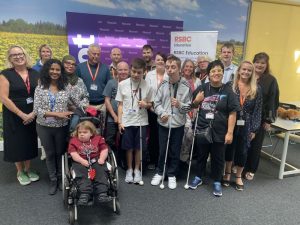
“I feel we are here today to pay homage to those good people who 50 years ago, established this splendid Charity and all those who have contributed ever since. On behalf of all the visually impaired Listeners over the past fifty years, I send a huge thank you to the Founders of Epsom & Ewell Talking Newspaper – EETN – and the multitude of Volunteers who have kept the free service operational for over half a century.’’ With these words, Judy Sarssam the present Chairwoman of EETN, welcomed the Worshipful Mayor of Epsom and Ewell (Charity’s President) Councillor Steve Bridger along with forty Volunteers and guests, to celebrate its Golden Anniversary on Thursday 21st November.

‘Our Volunteers are the shining stars,’ Judy continued, ‘because without them there would not be an Epsom & Ewell Talking Newspaper, whose function today is as valid as it was fifty years ago.’ Judy, herself visually impaired, went on to explain the importance of keeping visually impaired people feeling part of their community, as those with sight loss can so easily become isolated. Although technology has advanced in leaps and bounds since the early recordings, Judy was keen to emphasize that in a world now dominated by technology, isolation becomes more of an issue for those who are not technically adept.

During the celebration, messages of congratulations were read out, including from Mike Wood, President of The Talking News Federation, who acknowledged that 50 years of providing this regular, interesting and friendly service, recording more than 2390 editions, showed commitment by Volunteers and Listeners alike. Lionel Blackman, Director of Epsom & Ewell Times, said he was proud to be associated with EETN and was inspired by the dedication of its Volunteers. Councillor Clive Woodbridge, Chair of the Community and Wellbeing Committee for Epsom & Ewell said when he visited EETN as Mayor and presented long service awards to 15 Volunteers, he was impressed by the passion and hard work that goes into creating each edition.

Many of the Volunteers have been with the EETN for more than 10 years. Penny Dearing and Gwyneth Smith have been associated with EETN almost from its inception. Gwyneth joined as a Reader and her distinctive voice was well loved and remains melodic though Gwyneth is past her 90th birthday. She moved to Wales when COVID struck to join her family. A talented poet, she had planned to come to the celebration and read her 50th Anniversary poem. Sadly she was snow-bound in Wales, but emailed her wonderful poem which was read by MC of the day, James Dubois.

Following the messages from the many well-wishers, Penny Dearing, a former News Editor, Trustee/Committee member and Reader, told us her pleasure at working with those early pioneers. The EETN travelled from being recorded in Volunteers’ homes to a room in the Age Concern offices to a corridor at Swail House and eventually into a designated Studio at Swail House, which was the first site in the UK, designed specifically for visually impaired residents. During Covid full circle was reached as once more the EETN was temporarily recorded and produced in Volunteers’ homes until it was possible to return to the Studio once more.

A montage of Volunteers past and present caught everyone’s eye, as they enjoyed the delicious anniversary cake which the Mayor Councillor Steve Bridger ceremonially cut after making a generous speech in praise of the free EETN service. The celebration provided a wonderful opportunity for Volunteers to share their pleasure in continuing to offer access to local news, entertainment and information for the visually impaired people of Epsom and Ewell. Judy closed the event praising once more the special, hard-working team of 2024.


EETN Golden Jubilee – Poem by Gwyneth Smith

For over thirty years it was my privilege and pleasure
To be one of the READERS and the memories I treasure.
When Covid lockdown was announced my son rushed down to Surrey
To take me back with him to Wales to save us all from worry.

Continuing injections for my macular condition
I’ve now become a LISTENER and welcome each edition.
When it arrives in yellow pouch, protected from the weather,
I’m grateful to the Post Office, and how much more to Heather.

Epsom born I did not leave until my ninetieth year
So Epsom news and local views I’m very pleased to hear.
The MAGAZINE has always been the choice of those who EDIT
The wide variety produced is greatly to their credit.

It gives the READERS much more scope for their interpretation
Verse old and new and humour too can be a revelation.
So well done all who have a share in making each RECORDING
I hope you find the jobs you do are suitably rewarding.

With SECRETARY, TREASURER and Judy in the CHAIR,
We’re led by a COMMITTEE and we thank them for their care.
So happy Golden Birthday TALKING NEWSPAPER we say.
Let’s give three cheers for fifty years and longer may you stay!

Gwyneth Smith, 2024

Photography by Steven McCormick.


Surrey strategist secures stardom in Space Science

Professor Amara with planets

Renowned astrophysicist Professor Adam Amara, Director of Space Strategy and Head of the School of Mathematics and Physics at the University of Surrey, has been appointed as the UK Space Agency’s (UKSA) new Chief Scientist. 

While remaining at Surrey, Professor Amara will split his time between his space strategy role at the University and his new role at the UKSA, in which he’ll offer independent expert advice and strategic guidance on all scientific areas within the Agency’s remit. 

Professor Amara said of his appointment:  

“I am honoured to be appointed as the UK Space Agency’s Chief Scientist during such an ambitious and exciting time for the UK’s space industry and its contributions to the UK economy. My role is to work with the space community across academia, government, and industry to ensure the UK seizes the opportunities ahead.” 

Professor Amara will now oversee a broad range of disciplines, including astronomy, astrophysics, planetary science, solar physics, space weather, lunar and Mars exploration, International Space Station experiments, and Earth and climate science. In addition to building relationships across the UK space community, Professor Amara will also be working closely with global agencies, including the European Space Agency (ESA) and NASA, to promote the UK’s space priorities.  

Professor Tim Dunne, Provost and Senior Vice-President at the University of Surrey, said:  

“I want to congratulate Adam on this exciting opportunity to lead the UK Space Agency’s scientific work. His appointment highlights the University of Surrey’s lasting strength and rich heritage in space sciences, centred on the discoveries, innovation and industrial impact of the Surrey Space Centre.” 

The Surrey Space Centre, founded in 1979 by Professor Sir Martin Sweeting, pioneered small satellite technology, which is credited with changing the economics of space and laid the foundations for much of today’s space industry. The Surrey Space Centre led to the creation of the hugely successful spin-out company Surrey Satellite Technology Ltd (SSTL) in 1985.  

As we look to the future, Surrey has ambitious plans for Professor Amara and his outstanding team of researchers and educators, to once again propel the institution to the frontier of space science.   


Planning buses not missing them says Epsom’s MP

Dear Editor,

Thank you to Stuart Gosling for his contribution and for highlighting the important issue of transport links in relation to the new hospital development.

Has Epsom’s new MP missed the bus to a new hospital?

I completely agree that good transport connectivity is essential for the success of this project, and I want to reassure residents that we have already considered this as part of the planning process.

New transport links will be introduced once the hospital is built, and discussions around the best way to serve the site with appropriate public transport will take place as we progress along the development timeline. It’s important to note that transport infrastructure often needs to be developed alongside the new services and demands that arise from it.

I’ll be at the forefront of ensuring that the new hospital is well-served by transport, and I’m committed to ensuring that Epsom and Ewell’s needs are fully met. The process may take time, but I’m confident the results will be worth the wait.

Yours faithfully,

Helen Maguire MP


The real world visits the virtual world at Ewell’s NESCOT

NESCOTs virtual reality lab.

Principals and teachers from across the world visited Nescot (North East Surrey College of Technology) College in Ewell, Surrey last week, to try out its brand-new virtual reality (VR) immersive classroom. Delegates from Brazil to Bulgaria and South Africa to Singapore joined a visit arranged by global education network ORT for a masterclass on artificial intelligence (AI), chatbots, and the use of immersive technology in education.

The Nescot immersive classroom is packed with state-of-the-art technology, including an Igloo (a pod with a 360-degree projection system), immersive room, vehicle simulators, and VR headsets. The international delegates were able to try these out and found themselves virtually transported to different spaces, driving diggers on a construction site, and exploring hazards in a health and safety simulation. Students from across the curriculum at the college use the room to gain skills and experiences they couldn’t easily access elsewhere.

The visit to Nescot was part of ORT’s Hatter technology seminar programme, where professional educators from around the world explore the latest developments in science, technology, engineering, and maths teaching and learning.

Somayyeh Clifton, Head of Quality Improvement & Innovation at Nescot, who led the masterclass, said: “It’s been so fantastic to welcome delegates from across the globe to Nescot to share ideas, experience, and knowledge on AI. It’s also been brilliant to give them a demo of our incredible equipment, which makes learning exciting, interactive, and fun. Working with other education professionals like this is so valuable, with different perspectives helping to inspire our work going forward. We’re all working to give students the best education, which will lead to fulfilling careers in the modern world. Our excellent facilities at Nescot have been a game changer.”

Leor Harel, World ORT Learning Development Manager, said: “Nescot’s VR classrooms are a groundbreaking approach to education and immersive technology. This visit was a perfect opportunity for our group of global education experts to see first-hand a world-leading provision. We are delighted that our teachers will go back to their schools and apply the principles and learnings from their time at Nescot.”

Nescot is a hub of innovation, with the Sussex and Surrey Institute of Technology hosting robotics, AI, and cyber security facilities. The college is part of the AI in Education initiative, with Principal and CEO Julie Kapsalis sitting on the Strategic Board. AI in Education aims to support and advise schools and colleges so they can maximise the benefits of AI and minimise the risks.

The funding to create the immersive space was provided from the Government’s Local Skills Improvement Fund, a project which aims to support local people into work. As well as being beneficial for education professionals and Nescot students, the college is encouraging local businesses to get involved by using the technology to train staff. Partnerships with business and enterprise are invaluable for both parties, as organisations get to access cutting-edge training and learning resources, plus a pool of talented, experienced students who can enter the workforce via apprenticeships, work placements, and post-college recruitment.

Nescot offers college courses for school leavers and adults, with a wide range of career-focused vocational courses including Animal Care, Business, Computing and IT, Construction, Performing Arts, Childcare, Health & Social Care, and Beauty Therapy.

To find out more, call 020 8394 3038, visit www.nescot.ac.uk or email adviceteam@nescot.ac.uk.

Local businesses interested in using the immersive classroom for training, or working with the college on apprenticeships, work placements, or recruitment should contact businesscentre@nescot.ac.uk or call 020 8394 8593.


Epsom and Ewell Times annual neutrality audit

Members of Epsom and Ewell Times Neutrality Council

Epsom and Ewell Times Neutrality Council Annual Report.

The unedited and full responses from members of the Neutrality Council together with our response can be read HERE

Introduction: The Epsom and Ewell Times (EET) established the Neutrality Council to provide an independent assessment of its political neutrality. The council consists of representatives from the main political affiliations. The following sections summarise the contributions of each member.


Contribution from Robert Leach – Residents Association

  1. Overall neutrality rating: 10/10.
  2. Fair representation of political viewpoints: Yes.
  3. Instances of bias: None noted.
  4. Fair representation of Residents’ Associations: Yes.
  5. Handling of controversial issues: “Well.”
  6. Reporting quality: Moderate, with a noted lack of council item coverage and human interest stories.
  7. Separation of opinion and news: Yes.
  8. Coverage of local community issues: Fair, with potential for increased diversity.
  9. Suggestions: Expand reporting to include information from other organizations and businesses.

Response from EET: We thank Robert for his detailed feedback and positive remarks regarding neutrality and representation. We aim to address the need for more council coverage, human interest stories, and broader engagement with local organizations.


Contribution from Alison Kelly – Liberal Democrats

  1. Neutrality rating: 9/10.
  2. Fair representation of political viewpoints: Yes, with occasional gaps due to lack of comments from opposition.
  3. Bias instances: None significant but noted balance could improve in regional coverage.
  4. Handling of controversial issues: Factual and balanced.
  5. Reporting quality: High, with engaging content like “Opinion Polls” and “The Strange Maths.”
  6. Community engagement: Effective, with suggestions to include faith groups and increase coverage in the North Borough.
  7. Suggestions: Extend coverage to faith organizations like the Hook Road Islamic Centre.

Response from EET: We appreciate Alison’s thoughtful analysis and actionable suggestions, particularly regarding faith groups and geographic coverage. These insights are invaluable as we expand our community engagement efforts.


Contribution from Mark Todd – Labour

  1. Neutrality rating: 9/10.
  2. Fair representation: Yes, with balanced representation of political viewpoints.
  3. Instances of bias: None observed.
  4. Coverage of controversial issues: Well-handled.
  5. Reporting quality: Exceptional, especially on elections and green belt issues.
  6. Community engagement: Effective and inclusive.
  7. Suggestions: None; praised as an “amazing community newspaper.”

Response from EET: Mark’s praise for our coverage of elections and green belt issues is encouraging. We remain committed to delivering high-quality reporting on critical community matters.


Contribution from Emma Ware – Conservative

Emma expressed dissatisfaction with the perceived bias toward the Liberal Democrats and anti-green belt campaigners. She cited specific articles as examples of bias:

  1. “Belted up on Green Belt” (15 January 2024): Allegedly one-sided with minimal counterarguments.
  2. “Democracy at Work or Strange Mathematics” (July 2024): Criticized for unsupported assertions.
  3. “Surrey Lib Dems Majority Tale on Thames Water” (July 2023): Lacked context, appeared biased.
  4. “Local MP Comes to Our Defence” (September 2024): Claimed biased language.
  5. “Epsom Pensioners Gather Less Winter Fuel Pay” (30 September 2024): Inappropriate imagery and unsubstantiated quotes.
  6. “Surrey Schools Kids Country Walk” (November 2024): Pejorative language. [Ed: This was a BBC report.]
  7. “Epsom Town as a Safe Place to Live”: Exaggerated comparisons and unsupported assertions.

Response from EET: We regret Emma’s dissatisfaction and take her concerns seriously. While our intention is always to provide balanced reporting, we acknowledge where improvements can be made, such as ensuring better context and avoiding inappropriate imagery. We remain open to constructive input and encourage diverse contributions from all community members.


Conclusion: The Neutrality Council has provided a diverse range of insights into the performance of the Epsom and Ewell Times over the past year. While the majority view reflects favourably on our efforts, we recognise that there is always room for growth. We thank each member for their time, dedication, and honest assessments.

As always, we welcome further feedback from our readers and the wider community. Transparency and accountability remain at the heart of everything we do.

The unedited and full responses from members of the Neutrality Council can be read HERE