
Epsom and Ewell Times

Current
ISSN 2753-2771

Surrey schools not swamped by private VAT escapees

Figures released by Surrey County Council suggest that state secondary schools admissions have not been overrun with private school pupils after VAT was added to fees by the Labour government.

While critics including Jeremy Hunt MP for Godalming and Ash had predicted up to 90,000 children could swarm the state sector if 20 per cent VAT was thrust on school fees, so far Surrey County Council said it has not impacted applications to join state secondary schools this year.

From January 2025, independent school fees have been slapped with 20 per cent VAT from the Labour government. The controversial policy, aimed at generating £1.5 billion to improve state education, drew up harsh criticisms from local residents. They accused the government of “punishing” hard-working families wanting to invest in their children’s education.

As state school admission results came out last week, it marks the first indicator whether priced-out private school children have spilled over into the state sector. But Clare Curran, county council’s cabinet leader for children, families and lifelong learning, said: “Surrey has not seen a significant rise in the number of applications for a Year 7 state school place for children currently in the independent sector compared to last year.

“For September 2025, 664 on time applications were received from Surrey residents with children in the independent sector, compared to 608 for September 2024, a rise of 56.”

Not a mass exodus of children to the state sector, the policy appears to have not squeezed private schools out of business just yet. Panic over secondary school place shortages has also not materialised in these new figures. Admissions data shows that for Year 7 places there is a mild buffer on the number of families getting their first preference in school places this year.

Cllr Curran said: “While the percentage of applicants offered their first preference school has decreased for September 2025 (80.6%) compared to 2024 (83.1%), the 2025 figure is not dissimilar to the 2023 figure of 81.3%.

“The percentage of applicants offered one of their six preferences for September 2025 was 95.3%, which is comparable with last year’s figure of 95.9%.”

However, it is still early days for the new policy and the ripple effects of the change could have wider implications. The Institute for Fiscal Studies (IFS) said there might not be an immediate effect but the long-term effects could be more significant. The IFS estimated a 3-7 per cent reduction in private school attendance which could require additional £100-£300 million in state funding to manage the overflow within the state school sector.

MPs and educators have raised the alarm that private schools serving students with special educational needs and disabilities should be left out of the VAT tax raid. Sometimes children with an EHCP cannot have their needs met in a regular state school so private school with 1-2-1 support is necessary for their education.

Surrey has around 140 private schools: including primary, secondary and special schools. Fees vary between schools, but the cost of independent education in Surrey is above the national average.

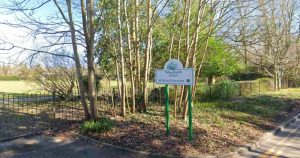
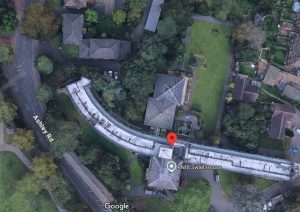
Image: Rosebery School Epsom – Google


Epsom Ranks Among Surrey’s Best for Train Punctuality

Epsom railway station has emerged as one of Surrey’s most reliable stations for punctuality and service, faring significantly better than many other locations across the county. Despite serving three major London terminals—Victoria, Waterloo, and London Bridge—Epsom’s train services remain relatively efficient, avoiding the severe delays and cancellations plaguing other areas.

Government Push for Greater Transparency

The government has announced plans to improve transparency in railway punctuality by introducing live data screens at major stations across the country, including in Surrey. These digital screens will display real-time statistics on train cancellations and punctuality, offering commuters a clearer picture of service reliability. Data will also be made available online.

The latest figures highlight significant differences in performance across Surrey’s rail network. While some stations suffer from frequent delays and cancellations, Epsom continues to provide a more dependable service for its passengers.

Surrey’s Worst-Offending Stations for Delays and Cancellations

Several stations in Surrey have been identified as the worst performers for punctuality and cancellations, frustrating thousands of daily commuters. At the bottom of the list is Woking, where only 72.2% of non-cancelled trains arrive ‘on time’—defined as arriving within three minutes of schedule. Just above it, Guildford fares only slightly better at 74.2%.

Other stations in the lowest 10 for punctuality include:

  • Guildford – 74.2%
  • Horley – 74.8%
  • Gomshall – 74.8%
  • Haslemere – 75.2%
  • Reigate – 75.6%
  • Dorking (Deepdene) – 76.4%
  • Byfleet and New Haw – 76.6%
  • Earlswood – 76.7%
  • Redhill – 77%

Some of these stations also struggle with cancellations, with Earlswood topping the list, where 11.7% of all scheduled trains simply do not arrive. This is followed by Salfords (11.7%) and Horley (8.4%). The full list of worst stations for cancellations is as follows:

  • Earlswood – 11.7%
  • Salfords – 11.7%
  • Horley – 8.4%
  • Kempton Park Racecourse – 7.4%
  • Sunbury – 7.3%
  • Upper Halliford – 7.3%
  • Chilworth – 6.8%
  • Redhill – 6.6%
  • Shepperton – 6.6%
  • Gomshall – 6.5%

Epsom’s Strong Performance

If Epsom were included in these rankings, it would rank significantly higher in reliability. The latest figures show that 87.7% of its non-cancelled trains arrive on time or within three minutes, a notably strong performance compared to its Surrey counterparts. Additionally, the station has a low cancellation rate of just 1.6%, offering passengers greater confidence in their daily commutes.

Natasha Grice, Director at Transport Focus, welcomed the initiative to improve the transparency of service reliability, stating: “Passengers tell us they want a reliable, on-time train service and will welcome improvements to information about the punctuality of their service and cancellations being shared more transparently. It’s important that the industry uses this information to drive up performance.”

Meanwhile, Woking MP Will Forster has launched a new cross-party group aimed at holding South Western Railway accountable for poor performance. “I’m disappointed but sadly not surprised Woking suffers from more delays than any other station in Surrey,” he said. “My constituents in Woking, and passengers right across the South Western Railway network, deserve a fair deal as they travel by train. We should expect cheaper and more reliable services.”

A Positive Outlook for Epsom Commuters

While many Surrey stations struggle with delays and cancellations, Epsom’s strong performance provides a welcome relief for local commuters. The government’s move to display live data at stations will allow passengers to make more informed travel choices and hold operators accountable. As the debate around rail service reliability continues, Epsom’s efficiency stands out as a positive example in an otherwise challenging landscape for rail users across Surrey.


Epsom and Ewell Council Approves Public Spaces Protection Order for Borough-Wide Expansion

The Epsom and Ewell Borough Council’s Crime and Disorder Committee has voted to recommend the adoption of a borough-wide Public Spaces Protection Order (PSPO) following a public consultation that showed overwhelming community support.

The new PSPO, which will now be referred to Full Council for final approval, aims to tackle anti-social behaviour (ASB) by prohibiting a range of activities, including harassment, intimidation, verbal abuse, and alcohol consumption in public spaces after a warning from an authorised officer. The order also bans wearing face coverings, such as balaclavas, with the intent to commit ASB or crime, a measure police say will help deter group-related intimidation.

At the meeting, Public Protection Manager Oliver Nelson introduced the officers’ report, highlighting the strong public backing for the PSPO. He noted that 92% of respondents supported extending the order for three years, and 83% backed its expansion across the entire borough. “The consultation has given us a clear steer from residents,” he said. “We’ve slightly refined the prohibitions based on feedback, ensuring the PSPO is proportionate and enforceable.”

Police representatives, including Acting Inspector Tommy Pearson and Chief Inspector Kelly Clifton-Sinclair, attended the meeting in support of the proposal. 

Lib Dem Councillor James Lawrence (College) expressed his support, citing the consultation results as key to his decision. “Over 200 people responded to the consultation, with 92% of respondents supporting an extension to the PSPO and 83% supporting it covering the entire borough. My fellow Lib Dem councillors and I are happy to uphold public opinion on this and support the PSPO as proposed,” he said.

However, some concerns were raised over the demographic spread of consultation responses. Councillor Christine Howells (RA Nonsuch) noted that only 2% of respondents were under the age of 24, questioning whether younger voices had been fully heard. In response, Committee Chair Councillor Shanice Goldman (RA Nonsuch) acknowledged the difficulty in securing wider engagement but highlighted outreach efforts to schools, faith groups, and youth charities, including Buddy Up, a mentoring programme for young people.

Councillor Tony Froud (RA Stoneleigh)sought clarification on the geographical scope of the PSPO, asking whether it applied to specific areas or the entire borough. Cllr Goldman confirmed that the order would be borough-wide, expanding upon previous PSPOs that only covered certain locations. “It’s about making sure enforcement is not limited to certain hotspots,” she explained.

The Committee also unanimously agreed to recommend a £100 fixed penalty for breaches (reduced to £80 if paid within 10 days). The PSPO will now go to Full Council for formal adoption, where it is expected to pass with broad support.

If approved, the borough-wide PSPO will be in place for three years, subject to review. Council officers have committed to a public awareness campaign, including new signage and social media outreach, to ensure residents are informed about the restrictions.

Sam Jones – Reporter

Image credits: Google and Tobias “ToMar” Maier Creative Commons Attribution-Share Alike 3.0


Guildford Students protest against PSPOs

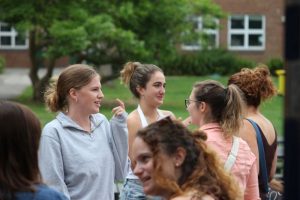
Surrey students have come out against a council’s draft rules about public spaces, saying they could be “detrimental” to local students. Under the proposed new rules, students could be banned from being in a group of two or more people in the town centre which could “cause harassment, alarm or distress” to other people.

Guildford town centre has public space protection orders (PSPO) aimed at tackling persistent anti-social behaviour affecting others. Introduced in 2022, the rules are now up for review. Boundaries for the PSPO cover the town centre, Stoke Park and some neighbouring residential roads, the Mount (residential area and green open space), including Black Cat Alley. 

But students at the University of Surrey have attacked the draft regulations as “vague” and have said that they can be “misinterpreted” in a way that can be harmful to students in Guildford. 

Leading the cause, the Student Union’s President Liam White said in a statement: “We are concerned by the overly conditional phrasing of ‘acting in a manner that is likely to cause’ and the vague nature of ‘distress’. This feels like an extremely broad scope to enforce, given that members of the public may potentially be ‘distressed’ when encountering young adults socialising in public, even if it is not disorderly or anti-social.”

Under a PSPO, individuals deemed to be breaching the order can be asked to change their behaviour by police officers, PCSOs, or GBC compliance officers. Fines and written warnings can be given for repeated breaches.

He argued the PSPO is not phrased in a way which prevents groups acting disorderly but instead relies purely on a member of the public claiming to be distressed or alarmed. Mr White claimed this is “unreasonable” to potentially penalise members of the public, including students, in the town centre. 

A spokesperson for Guildford Borough Council said: “We appreciate everyone who has taken time to respond to the Town Centre Public Spaces Protection Order consultation. These were draft proposals and the purpose of the consultation was to encourage feedback.

“In response to our partners and consultees, including the Student Union, we have adapted the proposed restrictions. The revised draft restrictions will be presented to the Executive on 27 March 2025 for consideration.”

Other key concerns raised included how “rowdy and inconsiderate behaviour” could be defined by someone’s clothing. The draft proposals state: “Wearing a piece of clothing with the intent to obscure or hide his/her identity for the purposes of committing crime and/or anti-social behaviour”. 

The Student Union said this is particularly concerning for members of the community who wear clothing that covers their face or hair for religious purposes. “We question how appropriate it is to be enforcing restrictions on clothing, rather than other indicators of anti-social behaviour,” members said.

Students also criticised the proposed public space rules against the “anti-social” use of bicycles, skateboards and scooters in pedestrian areas. They said some of Guildford’s community is already “resistant” to the Beryl Bikes scheme and extending the PSPO will “disincentivise people from using sustainable travel”.

Emily Dalton


Darts mathematics lesson for Epsom college students

Nescot (North East Surrey College of Technology) College in Epsom, Surrey welcomed a trio of darts legends and MC, Paul Starr to the college Wednesday to inspire students and encourage them to develop their mental maths skills.  Paul ‘The Asset’ Nicholson, Devon ‘The African Warrior’ Petersen and three-time darts World Champion Mighty Michael Van Gerwen visited the college for the ‘Nescot Loves Darts & Maths’ event promoting arithmetic and numeracy, launching a college darts league and sharing their stories of determination and success.

Nescot hosted a full day of darts events, aimed at students re-taking their maths GCSEs. Nicholson and Petersen played a 5-leg match, then the players and Paul Starr held a Q&A and participated in a darts related maths quiz with students. Smaller groups of students later met the players in workshops on self-belief and inclusion.

The players also formally opened the newly branded Nescot Department of Maths. Each classroom now has a darts board and is named after a darts legend. In addition, Nescot launched a darts club and league, the first college in the country to do so. The inaugural Kapsalis Cup was contested between Nescot and East Sussex College Group, with plans to roll out a wider college league. During the sessions, all three players plus the MC were awarded a Nescot Honorary Fellowship and the day concluded with a ‘meet and greet’ for students.

The event was masterminded by Julie Kapsalis, Principal and CEO at Nescot, and also a massive darts fan. Julie makes an annual pilgrimage to the Lakeside World Championships and loves watching the sport, live and on TV. Having previously worked in sports PR, she also has contacts in the world of darts and reached out to them with the seed of an idea.

Julie said “Exciting and engaging students retaking their maths GCSEs was the challenge that made this day take shape. We regularly invite leaders from business, sport and the community to share their stories and when looking for a maths enthusiast, my mind turned to my own sporting passion – darts.

“The response from the darts community was incredible, after one phone call we were gifted boards, surrounds and darts, then the representatives of top players suggested an entire day of events at the college. We created a mini arena, and it was so exciting to see darts legends step up to the oche at Nescot.  We’re so grateful to the players, their management and everyone involved for taking the time to promote maths and inspire our students. Highlighting role models from all kinds of backgrounds and making learning fun are key at Nescot. I can’t wait to see our students’ playing darts in the classrooms. Game on!”

Michael van Gerwen said “It’s great to see first-hand how Nescot are using darts to inspire their students. It’s a brilliant way to improve mental maths, as the two go hand in hand. I love the fact the college is going to have a dartboard in every maths class too. It will be a fantastic addition, and I’m sure the students will love it.”

Devon Petersen said”It was a pleasure to visit Nescot College, and it’s so good to see them following core values and using darts to enhance their arithmetic. I have seen darts and maths work together in the work that I do for Bullseye Maths with young children, and Nescot will definitely see the benefits of using darts to enhance their education.”

Paul Nicholson said “Seeing young people like the ones at Nescot College enjoying the sport of darts today is so good to see, and I have no doubt that including darts as part of the student’s maths learning journey will only be a good thing. Darts is a sport for all, and it can be educational as well as fun, as proved with what Nescot are doing. Schools and colleges can only benefit from adding darts to their learning program.”

Darts is a sociable, inclusive sport, which almost anyone can access. It can improve mental health by enhancing cognitive function, reducing stress and boosting confidence. It also improves motor skills, hand-eye coordination and problem solving. Importantly for the maths department, the mental maths involved in darts can improve maths skills generally, especially around multiplication and subtraction.

Maths skills and mental maths are important for many employers. Nescot welcomes students who would like to retake their maths GCSEs and improve their employment prospects before they step into the world of work.

As well as functional skills courses in maths and English, Nescot offers a wide range of college courses for school leavers and adults, including Animal Care, Business, Computing and IT, Construction, Performing Arts, Childcare, Health & Social Care and Beauty Therapy. The college has an open event on May 15th, from 4.30 – 7.30pm, where prospective students can learn more about the courses, campus and facilities. To find out more about studying at Nescot call 020 8394 3038, visit www.nescot.ac.uk or email adviceteam@nescot.ac.uk

Image: Julie Kapsalis and Andy Cowan from Nescot alongside Devon Petersen, Michael Van Gerwen and Paul Nicholson


Concerns over secretive policing include Surrey

Surrey Police has been affected by a nationwide push by the National Police Chiefs’ Council (NPCC) to influence responses to Freedom of Information (FOI) requests, raising concerns about transparency in local policing.

Newly obtained data from the BBC reveals that Surrey Police referred a total of 39 FOI and Environmental Information Regulation (EIR) requests to the NPCC’s Central Referral Unit (CRU) between January and March 2024. This accounts for around 9.6% of all FOI and EIR requests received by the force in January, 8% in February, and 3.5% in March.

Of the 39 requests referred, six were classified as “mandatory referrals,” a controversial category requiring police forces to consult with the CRU before disclosing certain types of information. Topics covered under these mandatory referrals include covert policing operations, counter-terrorism, and the use of controversial surveillance technology. Critics argue this process enables the NPCC to centralise control over information disclosure, effectively limiting the public’s right to know.

Nationally, the CRU advised local police forces on 1,706 FOI requests in the first three months of 2024, a practice campaigners have labelled as “authoritarian censorship.” In some cases, police forces that had initially disclosed information were later advised to retract their responses, with the CRU citing concerns about national security and reputational risks.

Surrey Police received 523 FOI and EIR requests over the three-month period, meaning one in 13 requests was referred for CRU advice. Transparency advocates argue that these figures highlight an increasing trend of policing secrecy, particularly in sensitive areas such as police surveillance, drug-related crime, and misconduct investigations.

Jake Hurfurt, head of research at Big Brother Watch, condemned the NPCC’s role, stating: “Pressuring police forces to retract data disclosed in response to journalists’ Freedom of Information requests, and instead trying to refuse to confirm or deny they hold the data, is the practice of an authoritarian censor, not an accountable public body.”

While the NPCC insists it only provides guidance and does not dictate disclosure decisions, critics believe the process lacks accountability. The Information Commissioner’s Office (ICO) has previously taken action against multiple police forces for poor FOI performance, though Surrey Police has not been subject to specific regulatory action.

This revelation raises questions about whether Surrey residents are receiving the full picture when requesting information from their local police force. As scrutiny intensifies over the role of the NPCC in transparency matters, campaigners are calling for greater oversight to ensure that FOI laws serve the public interest rather than institutional secrecy.


Jekyll’s Ashtead garden plan can no longer hide

Recently unearthed plans of an Ashtead garden, designed by the renowned Gertrude Jekyll, have been donated to the Surrey History Centre.

Gertrude Jekyll (1843-1932) of Munstead Wood, Godalming, is celebrated as one of the greatest English garden designers. Though she described herself as an ‘artist-gardener,’ Jekyll was also a painter, embroiderer, interior designer, author, and photographer. As an early exponent of the Arts and Crafts Movement in Surrey, her legacy includes significant garden plans, watercolours, photographs, and publications, all held at the Surrey History Centre.

The newly unearthed plans, detailing the garden at Warren Hurst in Ashtead, were thought to be lost but were discovered inside a copy of Richard Bisgrove’s book, The Gardens of Gertrude Jekyll (1992). They were returned to a former property owner, who brought them to the attention of the Surrey Gardens Trust. The plans have been donated to the Surrey History Centre to enhance its extensive Jekyll collections.

The discovery of these two plans is important. While other plans of Warren Hurst exist in the Gertrude Jekyll Collection at the University of California, Berkeley, and can be accessed through the Surrey Gardens Trust website, these newly found plans offer more detailed evidence of Jekyll’s work.

One plan is a tracing made by the house architect, Percy Leeds, to communicate with Jekyll. He wrote notes on it, asking her questions about planting and plant sourcing, and she responded with her own instructions. The other plan is a rough pencil copy of one of Jekyll’s detailed herbaceous border designs, given to the architect for reference.

Together, these plans show that the garden project was active in July 1914, just before the First World War began. They capture the creative exchange between Jekyll and the architect as they brought her designs to life. These documents offer a fascinating insight into Jekyll’s methods and types of plants and shrubs, confirming that the garden was fully planted.

The Surrey History Centre’s Conservator, with funding from the Surrey Gardens Trust, has meticulously conserved the garden plans. The conservation process included surface cleaning, light humidification and flattening to remove creases, and repairing torn or fragile areas using wheat starch paste and Japanese paper. Once conserved, the plans will be mounted on sturdy boards and protected in archival polyester sleeves. The plans will be featured in an exhibition of archive treasures at the Surrey History Centre’s Open Day on Saturday 8th March.

Councillor Denise Turner Stewart, Deputy Leader and Cabinet Member for Customer and Communities, said:

“The donation of these plans is a remarkable addition to our collection. Gertrude Jekyll’s work continues to inspire and educate, and we are thrilled to preserve and share these historical documents with the public.

The upcoming Open Day on 8th March is a fantastic opportunity for residents and visitors to explore these plans and other fascinating collections. With our friendly and helpful staff, we would like to see as many residents as possible using the Surrey History Centre for research and discovering the fascinating history of the county of Surrey.

Whether you’re a history buff or simply curious about our work, the day will offer something for everyone, so do come along and explore our diverse collections.”

Sarah Dickinson, Chair of Surrey Gardens Trust, added:

“It is a rare moment when lost Gertrude Jekyll plans come to light. These are working drawings, the tools of her trade. They enhance our understanding of Jekyll’s garden design practice. They narrate a moment in history, the Summer of 1914, when a Jekyll design and its planting is being implemented.

We are transported to Jekyll’s desk and witness her tenacity as she responds to questions from the architect who is overseeing the planting of this garden. Surrey Gardens Trust is equally thrilled to be part of this revelation and to support the preservation and presentation of these unique documents.”

For more information on the Open Day and to book a place on a behind-the-scenes tour, please visit the Surrey History Centre website.

Discover more about Gertrude Jekyll sources at the Surrey History Centre.

Explore Gertrude Jekyll’s Surrey Archive on the Surrey Gardens Trust’s website for additional insights.


Epsom Schools Lead the Way in Pioneering Mobile Phone Pilot

Glyn School and Rosebery School in Epsom are at the forefront of a groundbreaking initiative aimed at tackling smartphone distractions in the classroom. The schools, both part of the GLF multi-academy trust, are participating in a pilot scheme that restricts social media and messaging apps during school hours.

The initiative, which also includes Meridian High School in Croydon and Merstham Park School in Surrey, will see all students in Years 7-9—around 2,300 pupils—install an app called Blackout. This app blocks access to non-essential apps such as social media, games, cameras, and web browsers while still allowing calls, SMS, maps, and calendars. The restriction will only apply during school hours and term time.

Glyn and Rosebery schools, both well-respected within the Epsom community, have been chosen to help test whether this technology can improve student wellbeing and classroom focus. The rise in smartphone usage has been linked to increased anxiety and reduced concentration, and educators are keen to explore solutions that promote healthier digital habits.

A parent at Rosebery School voiced strong support for the initiative, saying: “Well done to Rosebery and GLF Schools for trialling the Blackout technology. Teachers are on the front line every day, dealing with the disruption caused by smartphones. If this helps students focus and reduces distractions, I’m all for it.”

The pilot will continue after the February half-term, with students required to install the app if they bring a phone to school. Glyn and Rosebery’s existing phone policies will remain in place, with additional checks to ensure compliance.

Julian Drinkall, CEO of GLF Schools, emphasised the trust’s commitment to exploring new approaches to mobile phone use in education: “We understand why some schools have introduced outright mobile phone bans, but we believe technology can be part of the solution rather than just a problem. Blackout offers a way to encourage positive digital habits while still allowing essential communication between students and parents.”

Amy Anderson, Headteacher at Meridian High School, echoed this view: “This pilot allows us to take a more refined approach to phone management. Instead of just confiscating devices, we can use technology to help students engage more fully in their learning environment.”

The effectiveness of the trial will be assessed through student, parent, and staff feedback, with key metrics including improved concentration, reduced classroom disruptions, and enhanced student wellbeing. If successful, the initiative could be expanded to more schools in the GLF network and beyond.

Privacy concerns have been addressed, with Blackout confirming that the app does not access personal data such as messages, browser history, or location tracking. It simply blocks non-essential apps during school hours.

Glyn and Rosebery’s participation in this pilot reinforces their reputation as forward-thinking schools, willing to embrace innovative solutions to enhance student learning and wellbeing. As local pupils and parents adjust to the new system, the Epsom community will be watching closely to see if this pioneering approach proves to be the key to a more focused and productive school day.


Surrey University boldy go to the next galaxy

A collaboration of more than 30 international institutions, including the University of Surrey, has observed vast differences in the dynamic ecosystem of smaller satellite galaxies orbiting our neighbour galaxy, Andromeda. Surveyed using images from over 1,000 Hubble Space Telescope orbits, the findings have given scientists new insights into the evolution of galactic systems. 

The study, published in The Astrophysical Journal, found that Andromeda’s satellite system is notably different from our own Milky Way, 2.5 million lightyears apart. While both galaxies are surrounded by a flotilla of smaller dwarf galaxies, Andromeda likely hosts three times as many – offering a rare glimpse into their unique history and formation. 

Dr Michelle Collins, Associate Professor at the University of Surrey’s School of Mathematics and Physics and co-author of the study, said: 

“What we’ve discovered is that these tiny systems have evolved quite differently from those around the Milky Way. Whether this divergence stems from a massive merger – a slow, gradual collision in Andromeda a few billion years ago – or whether it reflects the natural diversity of the smallest galaxies remains a mystery we’re working to unravel.” 

One of the study’s key themes is how Andromeda’s dwarf galaxies have formed and sustained stars in unexpected ways compared to those around the Milky Way. Researchers had long assumed low-mass galaxies would follow similar patterns, but the Andromeda system tells a different story. These satellite galaxies appear to have experienced a more complex evolutionary history, with some continuing to form stars far longer than anticipated. 

Lead author of the study, Dr Alessandro Savino, from the University of California, Berkeley, said: 

“Star formation really continued to much later times, which is not at all what you would expect for these dwarf galaxies. This doesn’t appear in computer simulations. No one knows what to make of that so far.” 

To explore these differences more closely, researchers at the University of Surrey are working to understand the forces driving these unexpected evolutionary patterns. A follow-up study will investigate the mass profiles and dark matter distribution of Andromeda’s satellite galaxies, integrating data from this paper with new observational measurements. 

Dr Collins, who will lead the research, said: 

“We’ve established that there are clear differences, but what I’m really interested in now is why these differences exist. What factors have shaped Andromeda’s satellites in ways we don’t see in the Milky Way?” 

Combining the latest Hubble data with ongoing studies at Surrey, the team plans to gain a deeper understanding of the mechanisms shaping galaxies across the universe. Additionally, Hubble is providing the first set of imaging that allows astronomers to measure the motions of Andromeda’s dwarf galaxies – offering a rare opportunity to track their movements and reconstruct their past interactions. 

To find out more, visit the Space Telescope Science Institute’s news page.

Image credit: NASA, ESA, Alessandro Savino (UC Berkeley), Joseph DePasquale (STScI), Akira Fujii DSS2


THE STATION, IN STONELEIGH, REOPENS FOLLOWING MAJOR SIX-FIGURE INVESTMENT

SPONSORED ARTICLE:

Popular Stoneleigh pub, The Station, on The Broadway, has reopened to the public following an exciting six-figure renovation designed to revitalise the existing site and give it a brand-new look and feel.

The Station closed its doors in January and is now reopening following completion of major works both inside and out, reaffirming the popular pub as a central community space.

The inside of the pub has received a complete makeover to create a modern, welcoming atmosphere with new refreshed décor and an open plan layout divided into zones for various occasions, including a cocktail area, a TV-free restaurant/dining area, and a sports bar, with plentiful TVs including ones situated in the new outdoor pergola.

Customers will find comfort and convenience at the pub with the new layout, including bookable booths and a champagne table, providing a cosy and private space to enjoy time with friends and family. The pub can cater to gatherings of varying sizes in its revamped function room and the refurbished toilets offer improved facilities for all.

Anna Carrier, General Manager of The Station said: “Our brilliant team at The Station, are excited to showcase our new and improved pub to the local community. We’re looking forward to welcoming both new and old customers!

“The renovation has given the pub a new lease of life, and we’re confident that customers will love our improved facilities, whether they’re looking for a drink with friends, a meal with the family, are booking a party, or enjoying a sporting event, there really is something for everyone!”

The stunning gardens have undergone a huge transformation too and now offer a variety of comfortable seating from booths, high seats to normal tables, along with mood lighting and heating. The outdoor areas now offer even more space for relaxation or to dine and drink with friends whilst watching the sport on new outdoor TVs.

The pub offers Sky and TNT Sports, showing all major matches throughout the year, so sports fans need never miss a second of the action. The venue is also registered on the Greene King Sport App for countless deals.

Alongside seasonal events, The Station will host a regular programme of activities, including bingo every Tuesday, Thursday quiz nights, and live entertainment every Friday.

The Station reopens with a delicious menu, with many deals including irresistible small plates, perfect for sharing, priced at three for £15, or five for £22.50. Plus, there is a dedicated kids’ menu, a Lunch Club menu, and a fabulous weekly Steak Thursday ensuring there’s plenty of variety for everyone to enjoy. A Sunday menu is also available serving traditional roasts for all the family.

The investment has provided multiple job opportunities to the local community and the pub team has grown, offering around 10 new jobs for locals.  

The Station reopened on the 21 February and is located on The Broadway, Stoneleigh, Epsom, KT17 2JA. For more information visit: https://www.greeneking.co.uk/pubs/surrey/station


Epsom and Ewell Leads South East in Small Business Growth

Epsom and Ewell has emerged as the fastest-growing local authority in the South East of England for small businesses, according to new data from the Office for National Statistics (ONS) analysed by BusinessFinancing.co.uk. The borough gained 100 new small businesses in 2024, representing a 2.88% increase—the highest growth rate in the region.

This growth is particularly significant given that the South East as a whole experienced a slight decline in the number of small businesses, with a recorded drop of -0.09%. Epsom and Ewell’s performance stands in contrast to this regional trend, highlighting the borough’s resilience and business-friendly environment.

The latest analysis was conducted by BusinessFinancing.co.uk, which examined data from the ONS to determine small business growth rates across local authorities in the UK. Their study identifies the areas where entrepreneurial activity is thriving, despite the economic challenges of recent years, including Brexit-related trading difficulties and the lingering impact of the Covid-19 pandemic.

The strong performance of Epsom and Ewell may be attributed to its strategic location, well-connected transport links, and the continued support for local enterprise initiatives. Business owners in the borough have also benefited from improved access to credit, as financial institutions report an increase in successful loan applications for small firms.

Local business leaders have welcomed the findings, seeing them as an encouraging sign that Epsom and Ewell remains an attractive destination for entrepreneurs. “It’s fantastic to see our borough leading the South East in small business growth,” said Richard Excell of Epsom based Excell Design & Marketing and the Epsom Business Club, “This reflects the hard work and resilience of our local entrepreneurs who continue to drive innovation and employment in our community.”

BusinessFinancing.co.uk has also created a nationwide map showcasing their findings across the UK, which illustrates the varying rates of small business growth. Their analysis highlights Aberdeen as the UK’s leading city for small business expansion, with a 1.95% increase.

With Epsom and Ewell bucking the regional trend and proving to be a hub for entrepreneurial activity, the future looks promising for small businesses in the borough. Continued investment in local infrastructure and support networks will be key to sustaining this momentum and ensuring long-term prosperity for the area’s business community.

Page 1
© 2021-2025. No content may be copied without the permission of Epsom and Ewell Times Ltd.
Registered office: Upper Chambers, 7 Waterloo Road, Epsom KT19 8AY