Epsom and Ewell Times

Current

ISSN, LDRS and IMPRESS logos

Big employment hub coming to Leatherhead

Leatherhead Business Park (Image Mole Valley Planning Portal)

The future of a possibly major employment hub in Leatherhead has been given a huge “vote of confidence”.

Four new buildings and 13 industrial warehouse units will be built in the north of the town after decision-makers backed plans to modernise part of the Cleeve Road  Business Park Research Area.

Three “rather tired” buildings, Alpha, Beta, and Cetec, will be torn down to make way for modern facilities that meet the “expectations of employers and businesses today”.

The decision, backed unanimously at the Wednesday, April 3 meeting of Mole Valley’s Development Committee, had widespread support within the room given the area was already earmarked as a business park by the borough’s planners.

Councillor Keira Vyvyan-Robinson (LD, Leatherhead North) said: “I am broadly in favour of this. 

“I think it is a sort of vote of confidence in the industrial unit there, and the site, and the future of it, which is a really good thing.

“I’m pleased to see investment being put into that area.”

Cllr Chris Hunt (Ind, Ashtead Lanes & Common) said: “I really think this application is good. 

“I love the mix in the size of the units, I think that appeals to firms throughout.”

He said the noise, lighting and access were all positive and added: “ It’s the right site at the right time.”

Among the comments received during the planning process were concerns over the loss of existing pedestrian and cycle access.

Councillors did urge the developers Stefania Chancerygate (Leatherhead No. 1) Limited, to keep these throughways, particularly for those who work at the site as they would benefit from easy routes into town  – but were told it was not a planning matter.

The meeting heard the site had good access to the M25 and that “strategically” this was where the council would direct this type of development “as it would boost employment and promote growth”.

The new plans include 112 parking bays, of which at least 50 per cent must have fast-charge sockets before any of the units are allowed to open for trading.

Cllr Phil Hammond (LD,  Fetcham): “The employment land strategically for the district is really important and this is a big area but it’s got rather tired and it’s not really meeting the expectations of employers and businesses today.

“It needs upgrading, it’s important employment, we need that in north Leatherhead and we need that in the north of the district.”

Image: Leatherhead Business Park (Mole Valley Planning Portal)


Taking a ride on Epsom’s new S2 bus

Harrison Galliven on the S2

More than most in the capital, South Londoners notice when the bus timetables change. Whether this stems from a love of the iconic red fleet or an over-reliance on the service due to a lack of London Underground coverage is besides the point.

Therefore, news of Transport for London’s (TfL) latest bus rejig last month did not go unnoticed. The changes affecting the capital’s most southerly boroughs have seen routes withdrawn and re-drawn.

Perhaps the most exciting changes have come in the form of the entirely new 439 and S2 routes, that would take South Londoners across Sutton, Merton, and Croydon in a fleet of brand-new EV buses.

Last month I took a long and winding ride on the 439, which was comfortable but eerily quiet. Now I decided to jump on South London’s other newcomer, the S2. The S2, introduced on March 2, has replaced sections of the old 470 and S4 route that took passengers between Epsom town centre and St Helier station. The route is operated by Go Ahead.

Getting a measure of what a bus service is actually like is hard, as there are so many variables that can influence the length and enjoyment of the journey. That said, I thought it best to take a ride mid-afternoon to get a taste of the post-lunch slump and rush hour mania.

While waiting outside my local Ewell East bus stop on an overcast Monday afternoon, I felt a pang of nostalgia for the former 470 service. While slow and clunky, the old route served me well during my school days.

However, this nostalgia quickly evaporated as the souped-up S2 came into view. The bright LED numbering and hum that come with all-electric vehicles suggested TfL was taking bus travel seriously in South London.

Once onboard you are met with a range of features designed to keep passengers occupied during their journey. The charging points (currently working) and display telling you how far you are from your destination are mod cons we will soon come to expect from all buses in London.

As with all new services, teething problems are common. Despite some press and handy diagrams displaying the new changes, some passengers remained confused by the change. Elderly passenger Sharon, on her ‘potter round the shops’ in Sutton, told me: “It’s the first time I’ve been on it. They’ve messed it all up, I don’t know where it goes now.”

I saw this confusion unfold later on in my journey as several passengers stood by the doors of the bus, waiting for what they thought was their stop only to find out the new stop was a further 200m up the road. One disgruntled passenger mumbled: “I’ve got to go all the way back on myself now.”

However, she admitted that she had seen news of the changes online. Moreover, she welcomed the increased frequency of the new service. She said: “They’re more frequent than the 470 though, which is good. If you missed it you thought, ‘oh god I have to wait half an hour’.”

Fellow passenger David agreed, saying: “I’ve seen these new buses fly past much more often than the ones before. It makes a change.” The route is largely residential, choosing to link up Sutton and North East Surrey’s stations via a network of sleepy treeline avenues rather than on the more hectic dual carriageways.

The salubrious route, plus the relative quiet of the electric engine, can make for a pleasant journey. Whilst gliding through Cheam’s affluent Sandy Lane, Sharon turns and says: “I like this bit, nice houses round here.”

However, as the service passes through Sutton town centre it becomes apparent that this is not the service for those in a hurry. While temporary traffic lights and the mid-journey driver change did their best to obstruct the service, the S2 route is far from direct.

The bus slows to a snail’s pace as it passes the decaying white edifice of the St Helier Hospital. Being a popular stop for visitors and medical professionals, most passengers alight at this point.

The one remaining passenger then begins to loudly cite the entire phonetic alphabet during a phone call to what sounded like a party planner. While this did provide some entertainment, the stuttered progress of the S2 meant I started to tire of her recital by the time she got to echo.

The next stage in the journey provided no relief as the bus passed through a location feared by learner drivers across Sutton and Merton. The dreaded four-lane Rose Hill roundabout.

After nearly an hour on the S2, the bus rolls up St Helier station ending the first leg of my journey. By this time the bus is empty save for me and the driver, which seems apt for the equally deserted St Helier.

Before starting on the return leg to Epsom, I ask the bus driver for his thoughts on the new service. He said the service is based out of the Sutton bus garage and is pretty easy-going compared to other routes.

He added: “It’s not been busy in general, to be honest. The buses are nice and smooth.”

During the journey back towards Epsom, you realise the journey’s most odious section comes when you pass through The Wrythe and its network of hilly residential roads. Things get a bit more straightforward once the bus passes through Cheam.

After leaving the bus on Epsom High Street, you are immediately struck by how busy Epsom’s main thoroughfare can be during rush hour. Its main road is teeming with school children hanging outside vape shops and weary late-afternoon shoppers trying to get in before closing time.

While the S2 is a pretty comprehensive route, taking in useful stations and popular shopping locations, it seems amiss to not extend the route that little bit further up to Epsom Hospital.

Surely a route joining Epsom Hospital with St Helier, which are joint in an NHS trust, would make sense for staff and visitors. While other services serve Epsom Hospital, it wouldn’t take much effort to extend the route.

Despite this, the S2 delivers on the whole. It gets you from A to B in comfort, and the increased frequency benefits those who relied on the previous service. Just don’t be fooled by its spruced-up appearance, it’s not taking you anywhere fast.

Related reports:

New Bus Route for S2 through the Borough

Image : Harrison Galliven on the S2. Credit the author.


Psychiatric bed shortages in Surrey

HM Coroners Court Woking Surrey

A man tragically took his own life in Surrey after a mental health relapse, prompting a coroner to warn of a shortage of psychiatric beds in Surrey hospitals.

Jonathan Harris, 52, who suffered from paranoid schizophrenia, died by suicide  on June 27, 2022. 

If an inpatient psychiatric hospital bed had been available just days earlier, Jonathan would not have died, the coroner ruled. Coroner Anna Crawford judged that action should be taken to prevent future deaths. 

Bed shortages for mental health patients in Surrey, as well as nationwide, has been an ongoing issue for NHS Trusts. Many patients are forced to move up to 60 miles away from home to receive treatment because there are few beds in their area.  The court heard that this is in the context of a national shortage of suitably qualified psychiatrists.

Following a lengthy psychiatric inpatient stay in Camberley in November 2021, Jonathan was under the care of Surrey Heath Community Mental Health Recovery Service, which is part of Surrey and Borders Partnership NHS Foundation Trust.

Jonathan was prescribed anti-psychotic medication.  In February and May 2022, Jonathan requested for his medication to be reduced to fortnightly and then once every three weeks.

The reduction in medication in May 2022 was judged as “premature”  by the coroner. Jonathan had reportedly shown signs of appearing “suspicious” when he was seen by the Surrey Heath Mental Health Team (MHT) on May 4. However, these signs were not explored.

The mental health team were also aware Mr Harris was moving house, meaning and move to a new community mental health team, which may affect his wellbeing. 

Jonathan’s mental health continued to deteriorate and on June 24 it the MHT decided that he required an assessment under the Mental Health Act. 

No inpatient bed was available and therefore the assessment did not take place. If Jonathan had been assessed, he would have been detained under the Mental Health Act and admitted to hospital.

The coroner said: “Mr Harris would not have taken his own life had he remained well and the relapse of his paranoid schizophrenia materially contributed to his death.

“Mr Harris would not have died had an inpatient psychiatric hospital bed been available on either 24, 25 or 26 June 2022.

“The court also heard that there is an ongoing shortage of available inpatient psychiatric beds in Surrey and that this is in the context of a national shortage of inpatient psychiatric beds. The court is concerned that both of these matters present a risk of future deaths.”

The Prevention of Future Deaths report was issued to NHS England rather than to Surrey and Borders Partnership. NHS England was invited to comment; it said it is working to the coroner’s deadline of 56 days to respond with the action it will take or proposed to take, and such information is not yet available.

Related reports:

Coroner catalogues care failures in diabetic death

Better private – public health communications could prevent deaths


New Chief Executive for County

Terence Herbert new CEO for SCC

Surrey County Council has appointed Terence Herbert as its new Chief Executive.

Terence, currently Chief Executive at Wiltshire Council, was chosen after a robust recruitment process to find a replacement for Joanna Killian.

Subject to formal ratification at an extraordinary Full Council meeting on 9 April 2024, Terence is expected to take over as Chief Executive in the summer.

Leader of Surrey County Council Tim Oliver said:“Terence is an outstanding leader bringing over 25 years of local government experience to the role, and it is excellent news that he will be joining us.

“Under his leadership, Wiltshire is regarded as a strong local authority – one of the largest unitary authorities in the country – with sound finances and a high-performing workforce. 

“I am certain that he will be a tremendous asset to Surrey and is the right person to lead us as we face the challenges ahead.”

Terence said:“I am delighted to have been appointed as the Chief Executive of Surrey County Council. I’m looking forward to working with the leader, Members, staff and our partners to build on Surrey’s significant track record and lead the organisation through the next stage of its transformation in what continues to be a challenging time for local government.  

“Having spent much of my earlier career in children’s services and mental health, I am passionate about delivering quality services for the most vulnerable residents across our communities. I know the importance of retaining a motivated and ambitious workforce with a focus on celebrating the success of our staff, so this is an area that will be a key priority for me.”

Terence joined Wiltshire Council in 2011, where he was appointed Chief Executive in June 2020. Prior to this he held a number of senior leadership roles including Head of Service for Safeguarding, Associate Director for Children’s Services, Executive Director for Children & Families, Leisure & Communities, Corporate Services and HR & Organisational Development, and Chief Executive Officer for People.

Terence began his career as a Registered Mental Nurse (RMN) and then qualified as a social worker, taking up posts in children’s services at the London Borough of Lewisham, Royal Borough of Kensington and Chelsea, and North Somerset Council.

Related reports:

Surrey chief moves on after 6 years

County CEO’s pay rise triggering strikes?


Cancer patient getting the right royal treatment

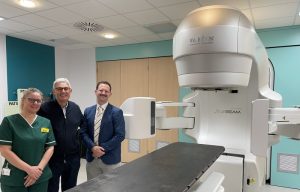
Radiotherapy Trial Pic caption L-R: Radiographer Kate Maltby, Michael Robson, Dr Philip Turner

The first cancer patient set to undergo a revolutionary new procedure that could cut treatment time to almost a quarter said it was a “ privilege” to be given the opportunity.

The Royal Surrey NHS Foundation Trust is taking part in a new clinical trial led by the Royal Marsden into prostate cancer. Currently, patients are treated with radiotherapy over a minimum of 20 treatments which lasts four weeks or more. Under this new process, that time could be reduced to one and a half weeks.

Michael Robson, 78, is the first patient to be part of the trial in Royal Surrey. He was diagnosed in December 2023. He said: “One of my friends was diagnosed with prostate cancer and he said I should get a test so I had a blood test and I was called by my GP and sent for an appointment at urology. I was fortunate enough to meet Dr Philip Turner who gave me the options and went through everything. Everything has been explained to me in a way that is easy to understand and made the journey so much easier to deal with. All of the staff I couldn’t complement them highly enough. They have been fantastic.”

Michael was given options for treatment and was asked if he was interested in taking part in the clinical trial and he agreed straight away. He added: “It’s been fantastic here. I feel very privileged to be the first patient. The service has been first class from everybody concerned.”

Patients with low and intermediate risk disease who took part in a trial called PACE-B demonstrated that the process would work in the tighter time frames. This new study is to determine whether those considered high-risk would get the same benefits. The trial, called PACE-NODES, was opened at The Royal Marsden and was designed jointly by investigators from Queen’s University Belfast and The Institute of Cancer Research, London.

Dr Philip Turner, consultant clinical oncologist and principal investigator for the trial, said: “We are delighted to be opening the PACE NODES trial in Royal Surrey. This is part of our drive to give Surrey patients access to the very best oncology clinical trials from across the UK and indeed from across the world.

“The benefits with regard to timing are enormous – the standard of care for these men is a minimum of four weeks of daily visits which is very disruptive to life. The rates of side effects are low. Crucially, the five fraction treatment appears just as safe as conventional 20 fraction treatments which we have been using for years very safely.”

Chief executive Louise Stead said: “Royal Surrey has a long and proud tradition of being a premier centre of UK oncology research and we are determined, with the support of our patients and other partners, to ensure as many patients as possible have access to ground-breaking research close to home. If successful, this could make a huge difference to patients receiving treatment for prostate cancer.”

L-R: Radiographer Kate Maltby, Michael Robson, Dr Philip Turner


Crime rising on Surrey farms

Fly tipping on farm

Surrey farmers have called for police to take rural crime ‘seriously’ as it pledges to crackdown on rising incidents. The National Farmers’ Union (NFU) have welcomed Surrey Police’s commitment to tackle rural crime, but said the farming communities need to see results. 

Harriet Henrick, NFU County Adviser for Surrey, said farmers need “better protection” from police. She said: “Our members need reassurance that when crimes are reported they will be taken seriously and investigated.”

Attacks on sheep, thefts, suspected arson on barns and fly-tipping are some of the many serious incidents Surrey farmers have been victim to in recent months. 

Farmers say rural crimes are taking an expensive toll, costing individual businesses thousands of pounds, causing severe animal suffering, and impacting on their ability to feed the nation.

The cost of rural crime in the South East was estimated at £9.3m in 2022, an increase by nearly a quarter from 2021, the NFU said. The South East made up around 18.7 per cent of the total cost of rural crime in the UK in 2022, at  £49.5m. 

Members of the union want to see clear targets, priorities and objectives in preventing rural crime- with both long-term and short-term solutions. 

Superintendent Michael Hodder of Surrey Police admitted rural crime is an area where “even more work can be done” to support farming communities. Key initiatives for cracking down on rural crime focus on collaborating and engaging with farmers and landowners to understand the challenges they are facing and how the force can support them in policing.

Meetings between the NFU and Surrey Police have taken place with the aim of giving farmers greater protection; Surrey Police have also promised to visit every NFU member in the county as part of its efforts to tackle rural crime. Superintendent Hodder added: “We will investigate every report of rural crime, and will work closely with victims so they know what they can expect from us, what we need from them, and how we can work together to reduce rural crime across the county.

“We want everyone to feel safe in Surrey, and so my main ask would be that anyone who is the victim of rural crime reports it to us, so that we can continue to build an accurate picture of this crime across the county.”

Photo: Credit: National Farmers’ Union


Worcester Park school celebrates

Pupils and staff of Linden Bridge school, Worcester Park

Worcester Park‘s Linden Bridge School caters for 144 students with autism and complex social and communication needs from four to 19-years-old, including 20 in the sixth form and a residential facility which can accommodate 32 places, with pupils typically staying for two nights a week.

The school’s pupils are exceptionally well-prepared for future life, and they feel valued and secure as a result of strong relationships with staff, says a recent Ofsted report, which judges pupils’ personal development to be ‘outstanding’.

The school was inspected in January and graded ‘good’ overall, recognising the ongoing improvements made since joining The Howard Partnership Trust in 2021, at which time it was judged as ‘requires improvement.’

Principal, Mrs Claire Gungah said “We are absolutely delighted that the inspection report confirms that Linden Bridge School is a good school with an outstanding provision for the personal development of students.

“In highlighting the many strengths in our school, we are particularly pleased that the report recognises that we are delivering on our core mission, and acknowledges the hard work of staff, the Trust and support from our community in developing the school”.

Noting that the report celebrated students being a credit to the school, and demonstrated their strong relationships with staff, she added

“A huge thank you needs to go to the students who were at the heart of the process and as always, made us proud throughout the inspection showcasing their maturity, friendships, communication skills and pride in their achievements.”

The report says both the school and the Trust have ‘rightly prioritised’ improving the curriculum. Work had started at the last inspection, but it has ‘gone from strength-to-strength.’

“The school’s carefully designed curriculum is now well established in most subjects,” notes the inspector.

“Learning to read is given a high priority. A new phonics programme has been introduced since the last inspection and is now securely established. Comprehensive training has ensured that staff are confident about teaching phonics,” says the report.

“The school provides an extensive and ambitious range of events and activities. For instance, all pupils experience a sporting event and the oldest pupils are involved in organising events such as sports week.”


Better private – public health communications could prevent deaths

Telephone switchboard

A young woman tragically took her own life in Surrey prompting a warning from a coroner over communication barriers between hospitals. Meghan Chrismas, who suffered from anxiety disorder, depression, complex PTSD and ADHD, died by suicide on October 20, 2021 at a Premier Inn in Guildford.

Less than three weeks prior, Meghan had impulsively attempted suicide by overdose and was admitted to Royal Surrey Hospital on the following day. She was offered further psychiatric treatment through the NHS at this time, which she declined in favour of continuing with her private treatments at The Priory Hospital. Information about Meghan Chrismas’ attempted overdose was only sent to her GP and not her private psychiatrist.

Meghan took her own life the same day as her private psychiatrist said she was “progressing well”. Following Meghan’s inquest Coroner Darren Stewart OBE wrote in a Prevention of Future Deaths report to NHS England over the ‘concerning’ communication barriers between private and public healthcare services.

He wrote: “At a time where pressures on the NHS exist, particularly for mental health services, it is of concern that measures which could alleviate this pressure (where someone sources private care) do not exist. There is little or no policy, guidance or other effective arrangements to share important clinical information about patients between private and public healthcare sectors.”

“The passage of information between NHS and private healthcare providers is hindered due to the absence of an adequate structure to share important clinical information about patients in a timely and effective manner. Action should be taken to prevent future deaths .”

Meghan was prescribed antidepressants after a face-to-face appointment with her GP in February 2021. She started seeing a private psychiatrist around July, and received prescriptions both privately and from her GP.

The coroner also raised this as a key concern. They wrote: “This means Mrs. Chrismas had access to double prescriptions. Healthcare professionals treating Mrs. Chrismas placed significant reliance on the perception that she would be open and honest in her communication with them.”

The coroner also raised concerns around police forces communication between each other. It was at, 4.54pm that Meghan contacted Surrey Police to explain that she was fine. At 5.18pm, the call handler in the Hampshire Police control room communicated with Surrey Police only via email.

After receiving no response from Surrey Police, the handler in the Hampshire Police control room communicated with them via telephone Surrey Police then attended the location in Guildford and found Meghan’s room barricaded. Upon gaining access to the room, officers found that Meghan had sadly died.

Officers attempted to resuscitate Meghan and her heartbeat restarted. After resuscitation, Meghan was transported to Royal Surrey County Hospital where she died two days later on October 20, 2021 from a Hypoxic Brain Injury.

The coroner wrote: “The handling of the incident involving Mrs. Chrismas in Hampshire Constabulary’s Force Control Room which resulted in a hour delay in determining that an important communication (being a request for assistance) had not been received by a neighbouring force.” It was not concluded however that this shortcoming contributed to her death.

Hampshire Constabulary have since said they have made significant improvements to their process. These measures included: Revision of training provided and the introduction of additional training for supervisors and control room staff. Implementation of National Policy concerning Missing Persons, including documentation to assist in control room responses to similar circumstances. Revision of the recording of risk assessment measurements on the computer aided dispatch record (CAD) system.

It was further explained to the court that the measures should be seen in the context of wider cultural change management in the supervision and leadership being undertaken by Hampshire Constabulary in the operation of the Control Room.

A spokesperson for Surrey and Borders Partnership NHS Foundation Trust said: “Following Meghan’s death an amendment was made to our Psychiatric Liaison Service policy stating discharge letters will be sent not just to the GP, but also to any other relevant external professional – provided we have the explicit consent of the individual to do this. The measure was welcomed by the Coroner.”

SABP added it has developed new guidelines for both community and in-patient clinicians to ensure it routinely and actively seeks a person’s consent to contact and share information with or from their private practitioner.

The Priory Hospital did not make an additional comment. NHS England has been approached for comment.


Fire Assembly for Ukraine

Fire engine in Epsom's market square

Saturday 10th March a Bronto Fire Engine came to Epsom’s Market Square outside the Assembly Rooms. A crowd gathered to admire the magnificent machine and wish it well on its journey to a city near the front-line of the conflict between Russia and Ukraine.

Roy Deadman of the charity Surrey Stands With Ukraine explained: “Some population centres in Ukraine are so close to the Russian artillery that the missiles can strike before the sirens sound. This fire engine with its long-ladder can rescue lives trapped in apartment blocks.”

Another volunteer with the charity Nick Budd said “There has been a tremendous effort to raise the money to purchase this vehicle and the public have been very generous. Our partners in Ukraine are very grateful to be receiving this vital equipment.”

The Mayor of Epsom and Ewell Robert Geleit (Labour, Court Ward) was in attendance, confirming a moment of pride for Epsom and Ewell as the headquarters for the humanitarian efforts of SSWU.

Charity director Lionel Blackman said: “Post Brexit there remain various bureaucratic obstacles to the engine’s transportation across Europe to the Polish border, where our Ukrainian partners will collect and take through their country to where it is most needed; but we will overcome and we expect it to be in place in a few weeks from now.”


It’s not a fair cop? Cllr. Coley on police funding

Did you know that Surrey is the only police area in the country where local residents pay more towards policing than central government? The share of the burden is 55% Council Tax precept, versus 45% government funding.

The average Council Tax precept contribution in England and Wales is 34% and is growing faster than any other funding area. Government capital funding and funding for national priorities like serious violence is decreasing. From March 2016 to March 2024 the Council Tax precept nationally has increased by a total percentage of 71%. While government funding from March 2016 to March 2024 has only increased by 29%.

We are approaching a point where other police areas will join Surrey and cross the line where the Council Tax precept provides the majority of funding. Within three years a third of police areas may cross that point, in five years it could be half. Not only are residents being taxed twice for policing, many will soon face being directly taxed for the majority of police funding contributions where they live, just like in Surrey.

A quiet and gradual funding shift by stealth. We may find ourselves experiencing American style policing, where your local police are exclusively bought as a service paid for with a property tax. You only have to look at what happened in some US towns and cities when wealthy people moved out and funding collapsed. Criminal gangs move in sensing weakness and create a cycle of deprivation and self-reinforcing criminality driven by ever decreasing budgets that deter investment and prosperity. I am determined we don’t end up like that and the government provides fairer funding.

At a meeting of the Surrey Police & Crime Panel we were asked to vote on the Police & Crime Commissioner’s maximum increase to the precept. I asked her to consider other funding sources because of the impact of yet another maximum increase on residents suffering from the cost-of-living crisis after years of austerity. She had her staff answer for her: “What do you want us to do, pass a hat around?”

The Police & Crime Commissioner has £43m in treasury management, she underspent by £8.7m last year and is forecast to underspend again this year. Your Council tax is going into her reserves, while police officers are taken off the streets to cover desk jobs for staff vacancies. Little wonder that the recent inspection report assessed Surrey Police as ‘Inadequate’ at responding to the public.

I am petitioning parliament to change the police funding allocation formula so council taxpayers don’t contribute more to their police force than government.

Please sign the petition here: alexcoley.uk/petition


Surrey County Council workers to strike?

Map of Surrey

Staff at Surrey County Council could walk out after a “record number” of people backed strike action –  unless the authority makes a significantly improved pay offer, unions have said.

For the last two years the workers at the council have been offered less than the National Joint Council (NJC)  pay award and less than most other neighbouring councils, according to Unison.

Those working in local government and schools have their pay and other conditions are negotiated by the NJC. The Local Democracy Reporting Service understands that those offers were rejected.

Last year, turnout for a full-strike ballot fell 40 votes short of the threshold required for legal industrial action, and the pay settlement imposed without agreement.

This year, a consultative ballot of members, covering core Surrey County Council workers and support staff in Surrey maintained schools, concluded on Friday, March 1, and achieved enough votes with a 53 per cent turnout – with 87 per cent of members rejecting the 4 per cent average pay offer, and 91 per cent of those voting for strike action,  record in Surrey.

Union representatives are due to meet next week and have said that unless staff receive a “significantly improved offer” they will “be recommending a vote for a full legal industrial action ballot over the next few weeks”.

Paul Couchman, branch secretary of Surrey Unison, said: “Our members are more frustrated and more angry than they have ever been. Voting over 90 per cent for potential strike action is unprecedented in Surrey. We hope the council will see the strength of feeling of their staff and reconsider their offer. 

“If there is no significantly improved offer from the council in the next few days we will have no choice other than to go to a formal ballot for strike action, where we are confident our members will once again respond positively to a call for action.”

It comes as the county council’s new £30 million payroll system was reported to have left staff “wiping tears of frustration and helplessness” over missed payments.

The council brought in a new Enterprise Resource Planning system last June and said it had “experienced some issues relating to payroll” and that it had been working to improve the system but given its complexity, needed an ongoing programme of software upgrades and fixes to address issues that have arisen.

Mr Couchman added: “No doubt the anger and frustration over the payroll issues has added to the general cost of living crisis, making Surrey County Council employees vote in unprecedentedly high numbers for strike action.”

A spokesperson for Surrey said: “We are still in talks with the Trade Unions regarding the 2024/25 pay offer therefore it would be inappropriate to comment while these discussions are still ongoing.”

Related reports:

Computer lets down County Council workers


Varying opinions on local maternity services

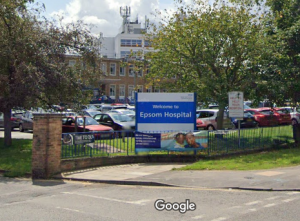
Epsom hospital

Epsom and St Helier Hospital NHS Trust claims it has a ‘strong’ maternity service despite failings in a recent CQC report. Safety in the maternity service was rated ‘inadequate’ in a report published by the  Care Quality Commission (CQC) in February. The service overall was downgraded from ‘good’ to ‘requires improvement’.

Managing Director of the Trust James Blythe said, at an Epsom and Ewell Health Liaison Panel on March 3, he was “disappointed” with the CQC report. He added: “The hospital has a really strong service and what the CQC identified are processes we need to get stronger at.”

However, the CQC’s report highlights practical issues  including qualifications and competence of staff, and an environment ‘not fit for purpose’. 

An update report by the Trust given to the Epsom and Ewell Health Liaison Panel said: “All of our maternity services meet 10 out of the 10 safety actions required nationally.” The 10 safety actions are specific to maternity services and range from submitting maternity data, workforce planning, training and action plans, to delivering best practice. 

However, the  CQC report found the leadership team ‘did not take timely action’ to make change where non-compliance with four safety actions was identified in the 2022/23 inspection.

A report in July 2022 identified a shortfall of midwives, yet this had still not been addressed in January 2023. The service was therefore unable to declare compliance with safety action 5 on midwifery workforce planning.

The CQC report said: “On inspection, there was a lack of clarity from managers and leaders about whether the service was on track to make improvements and declare compliance for 2023/24.”

Epsom and St Helier hospital Trust were asked about the discrepancy between the agenda stating they met all 10 safety actions and the CQC inspection report outlying non-compliance of safety actions. The Trust did not comment on the difference. 

The Trust is planning to invest more than £2m over two years to increase midwifery staffing in the unit by 8% so the Trust can declare full compliance with safety action 5. 

Visiting the hospital in August 2023, the CQC found the service “did not have enough midwifery and nursing staff in the right areas with the right qualifications, skills and training to care for women, birthing [partners] and babies”. 

Staff working in transitional care for babies who require extra support “did not have the qualifications and competence for the role they were undertaking.”

A spokesperson from Epsom and St Helier said: “Our priority is to ensure women and birthing people receive the best possible care, and we have already taken steps to improve and strengthen our maternity services – rated by mums in the CQC’s own survey as the best in London.”

Days before the inspection report was published, the Trust secured a strong result in a CQC patient experience survey of women and birthing partner’s experiences of maternity care in England. 

Maternity services at Epsom and St Helier received the best scores in London, with maternity care at St George’s joint second place.

The environment in some areas was ‘not fit for purpose’, and on the maternity ward this posed an ‘infection prevention and control risk’. Bereavement and recovery facilities did not meet national standards for privacy. 

The Trust is said it is ‘fast-tracking’ estates work with new doors and blinds fitted to improve privacy and dignity. 

The hospital’s environment was “not fit for purpose in all areas” and the facilities and equipment were found to “not always keep people safe”. 

An Epsom and St Helier spokesperson implied that patients deserve better than the current crumbling estate – but the hospital can still deliver and receive safe care.

Founded in 1938, approximately 90% of St Helier Hospital pre-dates the NHS itself. A further 98% of the St Helier estate is said to be either in very poor or bad condition and requires capital investment or replacement.

Millions are said to be invested every year to address the most urgent estate challenges, while also improving the buildings, facilities, equipment and environment for patients and staff.

A spokesperson for Epsom and St Helier University Hospitals NHS Trust said:  “This new rating is partly a reflection of our ageing estate, and – while the care they receive is safe – mums, babies and other patients deserve better, which is why we’re pleased the Government has promised us a new hospital and upgrades to our existing facilities by 2030.”


New Bus Route for S2 through the Borough

Bus S2

The transport landscape in East Ewell has seen a significant improvement with the inauguration of Bus Route S2. Commencing operations on 2nd March 2024, the S2 service now runs seven days a week, including Sundays, providing a crucial link between Epsom and St Helier Station. The new route serves several key areas, including Ewell East, Cheam, and Sutton, enhancing connectivity for residents in these regions.

The introduction of Route S2 marks a strategic change in the local bus network, as it replaces the 470 service from Colliers Wood to Epsom, which now terminates at Sutton. This adjustment was made following consultation by Transport for London (TFL) on bus routes in the Sutton and Croydon areas.

Route S2 operates via a series of primary locations, including St Helier Station, Sutton Station, Cheam Station, Ewell High Street, and Epsom Clock Tower, offering a convenient and efficient mode of transport for commuters in the region. The route is operated by London General from their Sutton (A) garage, utilizing brand new Enviro200 MMC EV bodied BYD D8URs, with temporary use of an existing vehicle of the same type.

The introduction of Route S2 represents a positive step towards improving public transport accessibility and connectivity in East Ewell, benefitting residents and commuters alike.


Surrey “relay” car thieves sent down

Relay car theft illustrated

Four members of an organised crime group (OCG) responsible for the theft of 53 high value vehicles in Surrey and the South-East have been sentenced to a total of 12.5 years behind bars at Guildford Crown Court on Friday 8th March.

All four men pleaded guilty to conspiracy to steal and conspiracy to acquire criminal property and were sentenced to;

  • Perry Lovejoy, 29, born 01/11/1994, of Reigate Road in Horley, was sentenced to 3 years in prison
  • Luke Jackson, 28, born 25/07/1995, of Shoreham Close in Croydon, was sentenced to 3.5 years in prison
  • Billy Harrison, 30, born 29/10/1993, of Tollers Lane in Coulsdon, was sentenced to 3 years behind bars
  • Harry Sales, 28, born 20/09/1995, of Cornwall Road in Croydon, was sentenced to 3 years in prison

The conviction of the four men was the result of a thorough and complex investigation by the Serious and Organised Crime Unit into the thefts of the 53 vehicles, with a combined value of over £3.7 million pounds.

Jackson also had additional offences taken into consideration when sentenced after admitting his guilt in stealing a further 42 cars, with a combined value of 2.1 million pounds.

The thefts took place over 12 months and across Surrey and the South-East of England. Officers arrested the suspects on the 26 April 2023, after successfully building a clear picture of their illegal activities through intelligence, forensics, ANPR, call data, witness testimony and CCTV enquiries.

During the investigation, officers discovered how the gang used the ‘relay attack’ technique to target keyless vehicles including Rolls Royce, Bentley, Land Rover, Range Rover and Alfa Romeo. This method involves using a master device to copy the signal of the vehicle key and transmit it to a second smaller device, which replicates the key and unlocks the car.

Tellingly a manual for a relay device was also found saved on a mobile phone seized from Lovejoy’s possession.

Jackson was also sentenced for two offences of burglary committed whilst stealing two of the cars after pleading guilty. He received 18 months in prison to be served concurrently.

Lovejoy was also sentenced to being concerned in the supply of class b drugs (cannabis) after pleading guilty to this offence when officers found messages on his phone showing supply activity. He received 9 months in prison to be served consecutively.

Investigating Officer DC Matt Earl, said; “This was a large-scale investigation that was made possible by the hard-work and dedication of the Serious and Organised Crime Unit, as well as the support and collaboration of other neighbouring police forces.

In Court lawyers for the four said they were the “foot soldiers” in the operation and the maximum sentence for theft being 7 years, the sentences for the defendants should be less than the masterminds “at the top of the chain”, should they ever face justice.

His Honour Judge Banarjee said the conspiracy was sophisticated and involved extensive planning. He took into account the guilty pleas of the defendants and the conditions they had endured in HMP Wandsworth since their arrests in April 2023.

Image credit: Which.co.uk


False schizo claim rapist gets 8 years

Head with Crown Court in background

Following a three week trial an Epsom man who claimed schizophrenia goes down 8 years for rapes. Joseph Head, 25, of Chase Road, Epsom, was found guilty of three counts of rape and one count of sexual assault by penetration. Head received an eight-year prison sentence at Winchester Crown Court on Tuesday, February 27.

During the three-week trial, the prosecution unveiled a troubling sequence of events characterized by manipulation and coercion. Head, in an attempt to evade accountability, feigned dissociative identity disorder, alleging that one of his personas, ‘J’, posed a violent threat, thereby pressuring his victim into compliance.

The survivor, displaying remarkable courage, shared her ordeal spanning three months, marked by fear and intimidation at the hands of Head. His peculiar fixation on the film ‘Split’, featuring a character with dissociative identity disorder, only served to underscore the calculated nature of his deception.

However, Head’s elaborate facade unraveled under scrutiny. Expert testimony debunked his false claims, revealing the stark reality behind his manipulative tactics. A meticulous investigation, incorporating victim testimony, forensic analysis, and digital scrutiny, exposed the truth.

Investigating officer Andy Price of Surrey Police characterized Head as a “dangerous predator” who exploited and instilled fear in his victim. He added: ““The unique circumstances of this case posed a challenge to the team but with the unwavering support from the survivor, a thorough investigation and dedication by the team to bring Head to justice, a conviction was secured.

“I would like to acknowledge the bravery of the survivor was in coming forward to us, supporting the investigation and helping keep other women safe. Although the trauma of what happened cannot be erased, I hope this outcome can give at least some measure of closure.”

If you have been sexually assaulted and need further help and advice, please click here https://www.surrey.police.uk/ro/report/rsa/alpha-v1/advice/rape-sexual-assault-and-other-sexual-offences/


IoT Launch: Nescot Welcomes Industry Leaders

A guest trying some of the VR (Virtual Reality) kit in the VR room at the IoT.

The Sussex and Surrey Institute of Technology (IoT) at North East Surrey College of Technology (Nescot) in Ewell welcomed over 60 guests at its opening event on Wednesday 28 February. Visitors had the opportunity to explore the state-of-the-art facilities, participate in hands-on activities and discover the wide range of resources and training opportunities available at the newly opened IoT.

The IoT at Nescot is the first new space to open as part of the Sussex and Surrey IoT and specialises in digital technologies with courses and apprenticeships from software development, cyber security, AI (Artificial Intelligence) and networking to cloud computing, data handling, ‘internet of things’ and IT support.

Visitors included partners and employers from varied industry sectors who were able to find out the many ways in which they can support the future of skills development in the IT sector. Anchor employers including NatWest, Roche Diagnostics, Southern Water, Pearson and Gatwick Airport pledged their ongoing support to work with the Sussex and Surrey IoT in various ways, from recruiting apprentices and upskilling existing staff to working with curriculum experts to help shape study programmes and providing mentoring.

Nescot staff and students also had the chance to explore the newly opened IoT. Computing staff, and students on our computing courses were on hand to showcase the specialist technology facilities and share their excitement with visitors about the courses available.

Julie Kapsalis, Principal and CEO at Nescot said, “We were delighted to welcome our first guests to the IoT at Nescot which was buzzing with activity the whole day. It’s been wonderful to showcase our specialist digital technology facilities, resources and training. We are looking forward to working with businesses and partners to address current skills gaps and prepare for future skills needs.”

Demonstrating some of the technology, Joseph, a student on our Level 3 Computing course said, “The focus on specialist digital technologies is a great opportunity to enhance my knowledge. Nescot is the perfect choice for the Institute of Technology with great access and networking opportunities.”

Another student, Jeremy added, “I’m really excited about the Institute of Technology which is a great addition to Nescot. The technology and devices being installed here are amazing!”

Peter Goodenough, Computing tutor at Nescot, said, “With the Institute of Technology we can offer progress. Computers are in every walk of life and every industry. The IoT at Nescot is offering courses to enhance future skills and aid long term sustainability. You can choose from a wide range of courses on offer, from learning how to design, create and program smart devices, industrial and home robotics to making you mindful of your digital footprint.”

For more information on the IoT at Nescot please visit their website  

Sussex and Surrey IoT

The Sussex and Surrey IoT includes Nescot, Chichester College Group (CCG) and the Universities of Sussex and Brighton. The IoT will enhance higher level skills training, with a new state-of-the-art hub and specialist satellites for delivery at locations across the region. The investment will create new cutting-edge facilities for higher level technical training with a focus on digital, sustainable technologies, engineering and construction.

Find out more about the Sussex and Surrey IoT here

Image: A guest trying some of the VR (Virtual Reality) kit in the VR room at the IoT. Credit NESCOT