Lib Dems sweep up in East Surrey Unitary Council election for Epsom and Ewell
8 May 2026
The results are in.
Of the 10 seats in Epsom and Ewell the Liberal Democrats dominate with the election of 8 of their candidates. The Residents Association took 2. None of the other parties gained any seats. See full results below.
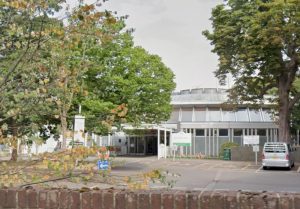
Announced from the count by deputy returning officer and EEBC CEO Jackie King at Bourne Hall in Ewell on Friday 8th May.
You may need to refresh your browser during the results period for the updating to appear.
The top two in each division are elected.
Epsom Town & Downs
Epsom West
Ewell Court, Auriol & Cuddington
Ewell Village, Stoneleigh & Nonsuch
West Ewell
According to the Council the full results for the East Surrey Council will be published on the Future Surrey website.
View of Bourne Hall and Museum, Spring Street, Ewell. (Credit: Google Street View)
Arrests from Epsom’s April disorder
8 May 2026
Surrey Police have confirmed that 10 people have now been arrested as part of an ongoing investigation into violent disorder in Epsom town centre earlier this month.
The arrests relate to incidents on Wednesday 15 April and Monday 20 April, when protests escalated into disorder in the town centre.
In a detailed update published on 5 May by Surrey Police, officers set out the ages and home areas of those arrested, showing a mix of local individuals and others from outside the immediate area.
The arrests were carried out over several days:
On 17 April, an 18-year-old man from Banstead was arrested on suspicion of public order offences.
On 20 April, a 23-year-old man from Richmond-upon-Thames was arrested on suspicion of public order offences and was further arrested on suspicion of criminal damage.
On 21 April: • a 21-year-old man from Epsom was arrested on suspicion of public order offences • a 20-year-old man of no fixed address was arrested on suspicion of public order offences • a 15-year-old boy from Purley was arrested on suspicion of public order offences and further arrested on suspicion of criminal damage
On 23 April: • a 12-year-old boy from Epsom was arrested on suspicion of public order offences • a 12-year-old girl from Epsom was arrested on suspicion of public order offences • an 11-year-old boy from Epsom was arrested on suspicion of public order offences
On 24 April, a 16-year-old boy from Leatherhead was arrested on suspicion of public order offences.
On 27 April, a 20-year-old man from Epsom was arrested on suspicion of public order offences.
Police confirmed that all 10 individuals have been released on bail with conditions, and that enquiries are continuing.
The latest update follows an earlier statement on 23 April in which five arrests were initially confirmed. At that stage, those detained were identified as a 15-year-old boy from Purley, an 18-year-old man from Banstead, a 20-year-old man of no fixed address, a 21-year-old man from Epsom, and a 23-year-old man from Richmond-upon-Thames.
Detective Chief Superintendent Jon Groenen said: “Whilst we support the right to lawful protest, we will investigate those suspected of committing criminal offences and causing damage, disruption, and disorder.
“We continue to review footage to identify those responsible and will take appropriate action against them.”
The investigation remains ongoing, with officers continuing to examine CCTV, social media and body-worn video footage.
Classroom to Cruise: Epsom Student Wins Luxury Family Trip
8 May 2026
A Nescot student has won a luxury seven-night family cruise after taking part in an innovative work experience programme that swaps the classroom for life at sea.
Travel and Tourism students from North East Surrey College of Technology (Nescot) in Epsom joined peers from Itchen College, Southampton, on a five-day river cruise through Germany and the Netherlands as part of the Cruise Career Springboard initiative. The programme brings together education and the cruise industry, giving students hands-on experience while promoting careers in the sector.
During the trip aboard the VIVA Enjoy, students were tasked with creating social media content, planning excursions, and developing marketing ideas aimed at attracting younger travellers. The experience combined practical learning with the realities of working in a fast-moving hospitality and tourism environment.
Among the group was 17-year-old Jordyn Leyland McKenzie, whose work stood out and ultimately secured her the programme’s top prize — an all-inclusive seven-night cruise for her family on the Rhine or Danube.
Jordyn said she had little idea what to expect when she first joined the programme.
“When I first joined the Cruise Career Springboard programme as part of our Travel and Tourism course, I had no idea I’d actually get the opportunity to go on a cruise. We found out later that a small group of us would get that chance by producing a presentation which impressed our tutors. I was over the moon when I found out I was one of the lucky ones.”
Reflecting on the trip itself, she described it as far more immersive than she had imagined.
“We went on a four-day cruise on the VIVA Enjoy. On the first day, we had to post snapshots of the cruise on our social media stories. We also made a small video showing the rooms and the excursions, which I ended up using in my final presentation. My personal highlights were definitely the beautiful three-course meals, the hot tub on the top deck, and going on a bike ride in Amsterdam using the bikes VIVA kept on the boat. We saw so much, it felt like we were there for ages — it was just amazing.”
After returning to the UK, students were invited to compete for the top prize through a second presentation. Jordyn took a creative approach, producing a TikTok-style promotional video aimed at younger audiences, alongside a quiz and a mock brand partnership idea.
“I adored the first experience so much, I was 100% up for the challenge,” she said. “I did a TikTok video in an ‘influencer style’ to show how they could promote the cruise to younger people. I also created a quiz and an example of a brand partnership that might work for the company.”
The result was announced during an online meeting at Nescot, with students gathered in a classroom and judges joining via video call.
“We had to wait a month to find out the results. We were all dressed smartly at college and the judges were on a Zoom call. When they eventually said my name, I didn’t even hear it at first until I saw everyone looking at me. I was lost for words. After the call, they filmed me ringing my mum who was so excited. I can’t even believe it’s real.”
She said the experience had a lasting impact on her confidence and ambitions.
“The Cruise Career Springboard experience has pushed me out of my comfort zone and really boosted my confidence. It’s been incredible, and now I get to treat my family to a seven-night, all-inclusive trip. I’m just so grateful for the opportunity.”
Julie Kapsalis MBE, Principal and CEO of Nescot, said the programme demonstrates the value of giving students real-world opportunities beyond the classroom.
“We always work to give our students real-world experiences and swapping the classroom for a cruise must be one of the most exciting we’ve ever offered,” she said. “The programme develops confidence, self-belief and communication skills, while also giving the industry insight into how to attract a younger generation of customers.”
Industry representatives involved in judging also praised the quality of the students’ work. Michelle Daniels of VIVA Cruises said she took away ideas for her marketing team, while mentor Graham Sadler highlighted the transformation in students’ confidence and engagement over the course of the programme.
The Cruise Career Springboard initiative, founded by Matthew and Edwina Lonsdale, brings together education providers and cruise industry professionals, with nearly 100 individuals contributing their time to support young people considering careers at sea.
Teacher banned after fake war-zone stories to Epsom and Ewell pupils
8 May 2026
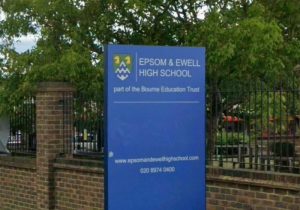
A former Epsom and Ewell High School maths teacher has been banned from teaching after a professional conduct panel found she fabricated stories to pupils about being in the army, going to war zones and suffering serious combat injuries.
The Teaching Regulation Agency report, published by GOV.UK, says Alexandra Slay began work as a maths teacher at Epsom and Ewell High School in December 2016 and became Head of Year on 26 May 2023. Concerns were raised in August 2023 about her communications with a pupil, leading to referrals to the Local Authority Designated Officer and police. The police informed the school on 18 September 2023 that they would not be continuing their investigation. Miss Slay resigned on 9 November 2023 and was referred to the TRA in December 2023.
The panel found proved that, between 2019 and 2023, Miss Slay gave her personal mobile number or personal email address to one or more pupils, sent inappropriate or over-familiar messages, shared details of her personal life, and fabricated stories about “being in a conflict and/or war zone and/or sustaining injuries”.
The official report says Miss Slay “appeared to have fabricated a narrative to pupils which involved her having a role in the army, where she would often take trips to war zones, undertake training and/or be involved in conflict.” In her disciplinary interview, when asked about the messages, she said they were “all fabricated” and added: “I made up the lie to feel that I belong, was a part of the world.”
The Times reported that Miss Slay had falsely claimed to have served in the Australian army and had sent one pupil more than 2,500 emails and other messages. It also reported that messages from an invented “Lieutenant Danny Blackburn” described her supposed combat injuries.
The TRA decision records that messages said to be from “Lt. Danny Blackburn” included claims that “Cpt Slay’s body is at a weak stage” and that she was being put on oxygen. Other messages referred to gunshot wounds, “severe amounts of blood”, cardiac arrest and having “flatlined”. The panel found the fabricated injury messages had the potential to cause stress and alarm to pupils.
The panel also found Miss Slay had failed to maintain appropriate teacher-pupil relationships and had instead developed relationships “more akin to friendships”. It found she had breached the Teachers’ Standards, including the requirements to observe proper professional boundaries and safeguard pupils’ wellbeing.
In deciding sanction, the panel said prohibition was “both proportionate and appropriate”, noting that Miss Slay had developed inappropriate relationships with a number of children through “highly inappropriate and unprofessional communications” and had failed to report multiple safeguarding concerns. The Secretary of State’s decision-maker imposed a prohibition order.
The order prevents Miss Slay from teaching indefinitely in any school, sixth-form college, relevant youth accommodation or children’s home in England. She may apply for it to be set aside, but not until 21 April 2028.
A “beautiful” and “fantastic” high-end luxury hotel, spa and fine dining restaurant set in the Surrey countryside has been approved.
Gatton Manor and Country Club will be transformed as part of a £41 million project to demolish the closed hotel and failing golf course and replace them with 81 guest rooms, two restaurants, and a spa featuring indoor and wild swimming pools, a gym, and treatment and relaxation areas.
The 22-hectare site near Ockley is expected to generate around 290 construction jobs during the two-year build, followed by 145 permanent roles once the development is operational.
Planning officers told Mole Valley District Council’s April development committee that the proposal would create a destination venue in the borough and bring significant investment into the rural economy. They added: “It is such a beautiful site, it is such a large site, it has got woodland, open areas, it is really a lovely, lovely, rural area and because of its size and the amount of landscape it is more than capable of absorbing this amount of development.”
In addition to the hotel, new facilities will be open to the public, including a fine dining restaurant and gym. The scheme also includes two tennis courts and three padel courts, with up to 100 gym memberships offered at preferential rates to residents living within 3km of the site.
Access to the hotel and spa will be via Standon Lane, linking the A29 Stane Street with Horsham Road. The existing hotel closed in 2022, and its adjoining 18-hole golf course had already been earmarked for closure regardless of the planning outcome.
Officers noted the development would also support businesses further along the supply chain. However, some residents objected, raising concerns about the impact on the openness of the countryside and increased pressure on local roads.
Developers acknowledged the loss of the golf course was regrettable but said it had been operating at a loss for several years and was no longer viable.
Councillor Roger Adams (Liberal Democrat, Bookham West) said: “With global warming and rising temperatures I suspect a lot of people seeking a holiday will no longer be heading to the Mediterranean but may well seek to have staycations, and where better to stay for a holiday than Surrey. We’ve got beautiful country here and we do need developments such as this. It will provide employment and enhance the visitor offer.”
Councillor Monica Weller (Liberal Democrat, Bookham West) added: “It really is quite fantastic as far as I’m concerned. A business like this has got to bring something really quite fantastic to our area and that is really to be welcomed.”
Plans for new hotel and spa in Ockley (MVDC)
Saturday 9 May is Surrey Day – and this year, we’re digging deeper
8 May 2026
Now in its eighth year, Surrey Day is about bringing communities together to celebrate everything that makes this county so special. In 2026, the theme is Going Underground, and it’s an invitation to see Surrey as you’ve never seen it before. Forget what you think you know about this beautiful county. Beneath the rolling hills and the familiar high streets of its market towns lies a world of hidden treasures just waiting to be unearthed.
Whether you fancy venturing into the literal underground or uncovering something altogether more unexpected, Surrey Day 2026 has something to spark the curiosity of all the family. Enjoy hands-on activities, torchlit tours, guided walks, unseen histories, a disco in a tunnel and stories in caves, re-enactments in shelters, castles to explore, fossils galore – and so much more!
While there will be events and activities countywide, this year, Epsom is taking centre stage as a key host town for the very first time. BBC Radio Surrey will be broadcasting live from Epsom from 12-3pm so keep your ears open – or better still, get down there and join in! The headline act is the extraordinary Ashley Road Deep Level Air Raid Shelter – a grid of brick-lined tunnels constructed 50 feet underground to shelter 1,500 people from the Blitz. Now hidden in woodland on the edge of town, there will be torchlit guided tours, but book early as these will sell out.
Many Surrey museums will also have Going Underground events such as Bourne Hall Museum in Ewell with an exciting full day of discovery, including an archaeological walk-and-talk, coin identification drop-ins and the remarkable story of the Epsom Aurochs which was a 3,500-year-old giant prehistoric animal unearthed locally in 2023. Or nearby in Dorking, there are castle and cave tours, guided history walks, and a chance to get hands-on with fascinating old inventions at Dorking Museum & Heritage Centre. A particular highlight is an impressively large-scale reconstruction of the very first Baronyx fossil discovery. On the other side of the county, Guildford Museum has fun hands-on fossil handling sessions, while Surrey History Centre presents a day of talks celebrating some of Surrey’s lesser-known artists. At Brookwood, you can be taken on a guided tour of the American Military Cemetery or if you head out further towards Tilford, you can get involved in 2 thrilling days of re-enactments at the open-air Rural Life Living Museum, finding out what daily life was like amid rationing and air-raids. If you’ve never visited, this is an experience you won’t forget in a hurry!
Find out more and plan your Surrey Day at visitsurrey.com/surrey-day and if you like a podcast, the BBC Secret Surrey series is a great companion to the day’s events.
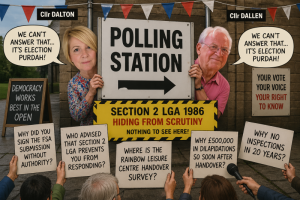
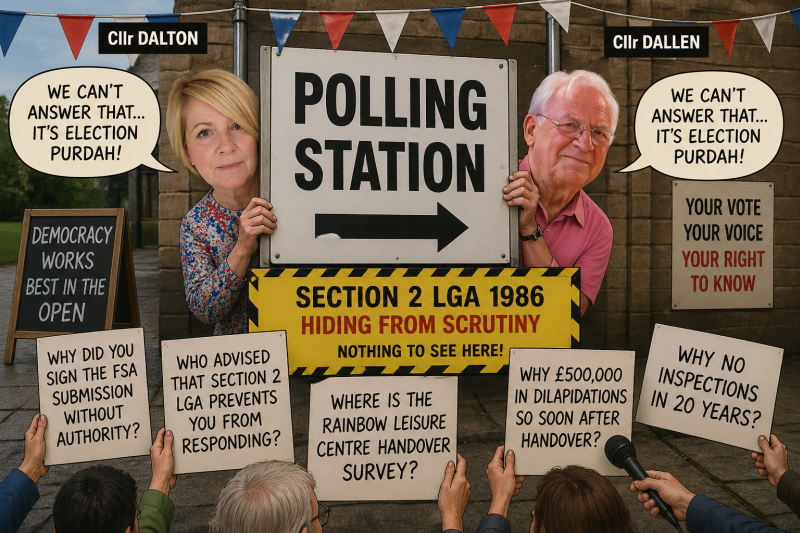
Two senior Residents Association Epsom and Ewell Borough Council figures have refused to answer questions from Epsom and Ewell Times, both claiming pre-election restrictions under the Local Government Act 1986 — prompting fresh concerns over transparency and accountability at a time when public scrutiny is arguably most important.
Cllr Neil Dallen (RA Town Ward) is standing with his daughter Lucie McIntyre for election to the East Surrey Unitary Council in the West Ewell Division and Cllr Hannah Dalton (RA Stoneleigh) is standing in the same 7th May election in the Ewell Village, Stoneleigh and Nonsuch Division.
In both cases, Section 2 of the Act — which prohibits councils from publishing material designed to influence support for a political party — has been relied upon to justify a refusal to respond. However, expert advice provided to Epsom and Ewell Times indicates that the provision is directed at political publicity, not factual explanations of decisions already taken, and does not require councils or councillors to remain silent when asked legitimate questions about the use of public powers and resources.
Rainbow Leisure Centre: £500,000 repairs and unanswered questions – the case concerning Cllr Neil Dallen
The first case concerns the Council’s handling of the Rainbow Leisure Centre following a change of operator in October 2025.
A confidential urgent decision taken in December stated: “The costs of the dilapidations are not yet fully known… However, an estimate is that this could cost up to £500k.”
The same document recorded a wide range of issues affecting the building, including fire alarms, lifts, ventilation, damp and possible roof defects, with some matters raising health and safety concerns requiring immediate action.
Such costs are not unusual over the lifetime of a large public building. But they are typically managed through regular inspection and timely maintenance. When issues are identified early, they can be addressed incrementally and at lower cost. When they are not, problems can accumulate — and costs can escalate sharply.
The central question therefore remains: how did a building that had just been handed over from one operator to another without closure come to present a potential £500,000 repair liability within weeks?
Conflicting accounts of the building’s condition
The former operator, Greenwich Leisure Limited (GLL), has maintained that the building was handed back in the condition required under its contract. It stated that the Council commissioned a full survey prior to handover, that all identified works were completed, and that these were signed off on the Council’s behalf.
GLL has further confirmed that the Council provided a condition survey to all tenderers as part of the tender process.
In contrast, the incoming operator, Places Leisure, identified extensive defects shortly after taking over, including issues said to affect the safe operation of the building.
Either the building was handed over in an acceptable condition following survey and sign-off, or significant defects existed which were not addressed and may have been present for some time.
No inspection records despite long-standing rights
In response to Freedom of Information requests, the Council confirmed that it held contractual rights to inspect the building throughout GLL’s 22-year tenure.
However, it also stated that it holds no inspection or survey reports prior to 2025.
If accurate, that absence of records raises further questions about how any accumulating defects — if they existed — were monitored, recorded or addressed over such a prolonged period.
The missing survey and disputed confidentiality
At the centre of the dispute lies the condition survey said to have been carried out prior to handover.
The Council has refused to disclose that survey, citing legal professional privilege and the possibility of litigation. Yet the same document was provided to tenderers, including GLL, during the procurement process.
GLL has indicated that it has access to the survey but has declined to provide it to Epsom and Ewell Times.
This leaves a situation in which a document said to be too sensitive for public disclosure appears to have been shared among commercial parties — raising questions as to whether the exemption is being applied too broadly.
If the survey identified the defects now being asserted, questions arise as to why the incoming operator proceeded with the contract before those issues were resolved. If it did not, questions arise as to whether the survey was incomplete or inaccurate, and who was responsible for its preparation.
Competing explanations
A number of explanations remain possible.
It may be that the former operator’s account is correct and the current dispute reflects differing interpretations of the building’s condition.
It may be that defects accumulated over time and were not identified or addressed due to a failure to exercise inspection rights effectively.
It may be that the survey itself failed to identify the true condition of the building.
Or it may be that the scale of dilapidations has been overstated or differently assessed by the new operator, which is carrying out repairs in return for a reduced management fee shortly after securing the contract through a competitive tender process.
At present, none of these explanations has been confirmed, and key documents remain undisclosed.
Refusal to answer questions
Epsom and Ewell Times put a series of questions to the Council and to Cllr Neil Dallen, Chair of the Strategy and Resources Committee, who supported the urgent decision and its initial classification as confidential.
The response received stated: “We cannot provide any further response as we are within the pre-election period and must follow restrictions governed by Section 2 of the Local Government Act 1986.”
Epsom and Ewell Times submitted a Freedom of Information request seeking to establish who advised that Section 2 applied in these circumstances. At the time of publication, no response had been received within the statutory timeframe.
Second case: Dalton and the FSA submission
A similar position has been taken by Cllr Dalton in relation to a separate matter concerning the signing of a submission connected to proposals for a new tier of local governance, referred to as an FSA (Foundation Strategic Authority).
Questions were put to Cllr Dalton as to the basis on which the submission was signed by her as leader of the ruling Residents Association group and whether it had received the necessary Council authority. Those questions have not been answered, with reliance again placed on alleged pre-election restrictions.
Expert advice
Expert advice provided to Epsom and Ewell Times by Nathan Elvery, former Chief Executive Officer of Croydon Council and now Director of Imagine Public Services Ltd, states: “The questions posed… are factual in character… A factual response explaining what occurred and why would not constitute political publicity within the meaning of the Act… The Council is not being asked to promote a political position; it is being asked to account for its stewardship of public funds.”
He added that reliance on Section 2 in such circumstances risks appearing as “a mechanism to avoid scrutiny during a period when accountability arguably matters most.”
The same advice notes that Section 2 applies to councils as corporate bodies and does not impose a personal duty of silence on councillors responding to press enquiries about decisions they have supported.
Transparency or silence?
The common thread in both cases is the use of Section 2 of the Local Government Act 1986 to justify a refusal to engage with questions about decisions already taken.
The law requires councils to avoid political publicity. It does not require them to avoid explaining themselves.
At a time when significant public decisions are under scrutiny — including those involving large sums of public money — the question for residents is whether the current approach reflects appropriate caution, or an avoidance of accountability.
Police confirm a female’s report of Epsom gang-rape was false
8 May 2026
In a statement issued by Surrey Police the report by a female of being the victim of rape by several men in Epsom on Saturday 11th April near the Methodist Church, was without foundation. This is the Surrey Police statement in full:
“This is an update in relation to a report of a rape in Epsom which we received in the early hours on Saturday, 11 April.
A thorough investigation, including an extensive examination of CCTV footage of the woman’s movements, house to house enquiries, interviewing witnesses and forensic tests, has been carried out. Through this examination of all evidence, we can conclude that no sexual offence occurred on this occasion, and we are closing the investigation.
What has become clear is that a woman in her 20s during a night out in Epsom, sustained an accidental head injury prior to making a confused report.
The woman involved has given us permission to share this information with you and she continues to be supported by relevant services.
To be clear, we take every report of sexual offending seriously, and any such report is treated with sensitivity. To do this, it is imperative that the appropriate time is allowed to complete a thorough investigation and support is given to the complainant to progress enquiries at their own pace. This limits what information we are able to release publicly.
At the early stages of this investigation, we issued an appeal for any witnesses or information that could help us progress our enquiries and identify any potential suspects. There was a lack of information in our initial appeal particularly regarding potential persons of interest. This was because the descriptions given were vague and limited. We recognise this caused concern amongst the community. We are now confident that there was no offence, and there were no suspects.
Our local officers will maintain a visible presence in Epsom over the coming days so please speak to them if you have any concerns or questions.”
Surrey environmental group gets global recognition
8 May 2026
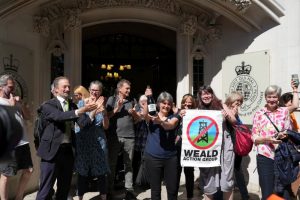
A Surrey-based grassroots campaign that reshaped national climate law has received one of the world’s most prestigious environmental honours, in a development that will resonate locally given the long-running controversy over oil drilling at Horse Hill.
Climate campaigner Sarah Finch, who led the legal challenge on behalf of the Weald Action Group, has been named one of six global winners of the Goldman Environmental Prize for 2026. The annual award recognises grassroots activists from each continent who have made significant contributions to environmental protection.
The recognition follows Finch’s landmark victory in the Supreme Court of the United Kingdom in June 2024, in a case brought against Surrey County Council over oil drilling at Horse Hill. As previously reported by Epsom and Ewell Times, the case became a focal point for national debate on fossil fuel extraction and planning law.
The court’s ruling—now widely referred to as the “Finch judgment”—established that planning authorities must take into account the downstream climate impact of burning extracted fossil fuels when considering applications. This marked a significant shift in legal interpretation, extending environmental assessment beyond the immediate site of extraction.
Campaigners say the implications have already been far-reaching. The judgment has influenced decisions affecting fossil fuel projects across the UK, including developments in Cumbria and the North Sea, and has been cited in wider planning and legal contexts such as aviation and intensive farming. Courts in other jurisdictions, including Norway, Guyana and Australia, have also drawn on similar reasoning.
Finch said she was “honoured” to accept the award on behalf of the Weald Action Group and communities campaigning against fossil fuel expansion. She described the ruling as evidence that “ordinary people organising together can win big victories,” adding that the scientific consensus leaves “no room for any more extraction and burning of coal, oil or gas” if climate targets are to be met.
The legal challenge was supported by Friends of the Earth, whose senior lawyer Katie de Kauwe described the ruling as “one of the most significant legal breakthroughs this century” in addressing the climate crisis. She said it had “fundamentally changed the rule book” by requiring developers to account for the full climate consequences of their projects.
Local campaigners involved in the Horse Hill dispute also welcomed the recognition. Lorraine Inglis of the Weald Action Group said the award reflected years of sustained community effort in Surrey and highlighted the role of grassroots activism in shaping national policy.
The Goldman Environmental Prize, established in 1989, has honoured 239 winners from 98 countries. This year’s cohort is notable as the first made up entirely of women, with other winners including climate activists from Colombia and South Korea who have led successful campaigns against fracking and for legally binding emissions targets.
For Surrey residents, the award brings renewed attention to a campaign that has already left a lasting imprint on the local landscape and on national law. As Epsom and Ewell Times has previously reported, the Horse Hill case demonstrated how a dispute rooted in a single planning decision can evolve into a defining legal precedent with international consequences.
Surrey Police update on alleged sexual assault in Epsom
8 May 2026
Surrey Police have issued a further update following last weekend’s reported incident in Epsom, stating that officers have not found evidence to support the offence as initially described, while confirming that enquiries remain ongoing.
In a statement published on the Surrey Police website, Assistant Chief Constable for Local Policing Sarah Grahame said:
“Over the past week, there has been widespread speculation and commentary regarding this report. We are aware of the strength of feeling this has created, and of the frustration caused by our limited public comment on the matter.
During this time, we have been investigating in depth to establish the sequence of events and to clarify the circumstances surrounding the reported incident. We have reviewed an extensive amount of CCTV footage from the area. We have also been interviewing potential witnesses, carrying out forensics investigations and conducting house-to-house enquiries.
To date, we have not found any evidence of the offence as reported but the investigation is ongoing.
There has been much speculation about the non-release of a description of any suspects, especially regarding the ethnicity. No descriptions have been released as the information about the incident and potential suspects is so limited. To address the specific commentary, there is no evidence that asylum seekers or immigrants were involved.
If you have any information or any CCTV, dashcam, or helmet camera footage, please contact us online, or via 101 quoting PR/45260041426.
We appreciate that you want information. We will continue to tell you as much as we can, to engage with you, to reassure you and to address concerns. We ask for space and time to work through the investigation.
There will be an increased police presence in Epsom over the weekend.” (Surrey Police)
The update follows a week of heightened concern in the town and significant public reaction. National media have also reported the same position from Surrey Police, including the finding that there is currently no evidence of the offence as reported, alongside confirmation that the investigation continues. (The Times)
Police are continuing to appeal for information from anyone who may have been in the area or who holds relevant footage.
It’s a sunny Wednesday afternoon in Epsom, and it feels as though spring has finally arrived. People have gathered on the streets, perhaps 1,200 or more, women and men, brothers and sisters, mothers and fathers, friends, young and old, from all walks of life.
They are here because of what happened last Saturday. By now, everyone knows: a woman in her 20s was followed after leaving Labyrinth nightclub and attacked outside Epsom Methodist Church in the early hours of the morning. The story has reached national headlines, BBC, The Telegraph, The Guardian: Woman in Her 20s Gang-Raped in Front of a Church with CCTV Cameras.
I ask one of the people in the crowd what’s going on: “We are here today because a young girl was raped on Saturday night, and the police are not telling us who was responsible. There is a perception that it could be immigrants, but the police need to tell us who has done it. Without that, speculation grows, and it could be one of our own. I don’t want to protest against people who haven’t done anything wrong, but we have to come together as a community because nobody is telling us what is going on. That’s why we are here.”
I speak to a mother and her daughter, I want to know what they feel about the assault: “Our feeling is that the police need to be transparent about who is responsible, so that women and girls can feel safer, so that we know who we are dealing with. We haven’t been told. We need descriptions. The police say that information available is limited. No arrests have been made. It is reported that four men attacked a young woman for two hours. If cameras are everywhere, why have there been no arrests? Why is there said to be no information, when people believe suspects may still be walking freely in Epsom?”
Some believe the police have accused the gathering of disorder in a public space. Many here ask: “What about the victim? Isn’t rape a disorder?”
More police officers arrive. Eggs are thrown. Emotions are high. People care. Voices rise: “Who raped her?” The crowd chants in support of the victim, while the young police woman responds to my questions with a single phrase: “no comment.”
Meanwhile a voice of authority repeats familiar words: “My heart goes out to the young woman at the centre of this deeply distressing incident.” It is a statement many here feel they have heard too many times to truly believe.
The Methodist Church will hold a service today, April 16th at 12.30pm. All are welcome. Epsom and Ewell Times will be there.
Epsom and Ewell Times is also launching a weekly series, Epsom Safety Brief. If you would like to be involved and share your concerns, please get in touch at: romana.epsomandewelltimes@gmail.com.
To the young woman at the centre of this: the whole town stands with you. You are not alone. Stay strong.
Coming soon:
Epsom Safety Brief is a community-driven series committed to clear, balanced reporting on crime, safety, and accountability. It seeks to highlight what is happening, ask necessary questions, and assess whether meaningful action is being taken to protect residents.
Police have launched a major investigation following reports that a young woman was raped by multiple men in Epsom in the early hours of Saturday morning.
The incident is said to have taken place near Epsom Methodist Church on Ashley Road, close to the town centre, between approximately 2am and 4am. The woman, believed to be in her twenties, had reportedly left a nearby nightclub shortly before the attack and is understood to have been followed.
Surrey Police confirmed that the assault involved several suspects and that enquiries are ongoing to establish their identities. At this stage, no full descriptions have been released, and officers are appealing for information from the public.
A senior investigating officer described the incident as extremely distressing and confirmed that the victim is being supported by specially trained officers. Detectives are carrying out extensive enquiries in the area, including reviewing CCTV footage and conducting house-to-house inquiries.
Police are urging anyone who was in the Ashley Road area during the early hours of Saturday morning, or who may have seen anything suspicious, to come forward. Drivers with dashcam footage are also asked to check recordings that may assist the inquiry.
Anyone with information is asked to contact Surrey Police quoting reference PR/45260041426, either via the force’s online reporting form or by contacting them directly. Information can also be provided anonymously via Crimestoppers on 0800 555 111 or through its website.
Support services are available for anyone affected by sexual violence, including Rape Crisis England & Wales, which operates a 24-hour helpline on 0808 500 2222.
The seriousness of the allegation, coupled with its location close to the centre of Epsom, has led to heightened concern locally and significant national media attention. Officers have maintained a visible presence in the area while investigations continue.