
Epsom and Ewell Times

Current
ISSN 2753-2771

Surrey leading the shout: “Keep the noise down will you!”

An interdisciplinary network of engineers, policymakers, industry stakeholders and social scientists, led by the University of Surrey, will take on one of the UK’s most overlooked environmental challenges: noise pollution.

From the constant hum of road traffic to the thousands of flights in and out of UK airports, noise awareness in our modern world often fades into the background – but it carries significant consequences for both human health and wildlife. Noise Network Plus will focus on promoting conscious design processes to create quieter products, buildings and transportation systems – with the aim of reducing noise pollution and building a healthier environment over the next 10-15 years.

Professor Mark Plumbley, project lead and Professor of Signal Processing at the University of Surrey’s Centre for Vision, Speech and Signal Processing (CVSSP), said:

“Noise is a frequently neglected pollutant, but it has a big impact on health, society and the environment. For example, road noise can lead to sleep disturbance and heart disease, costing £7-10 billion each year in England alone. Once noise is out there, it is really hard to remove. We need to re-think how we design noise from the start.”

Awarded more than £1.8 million in funding, Noise Network Plus is one of six research projects to receive a share of £10 million from the Engineering and Physical Sciences Research Council (EPSRC). Together they form part of its wider community engagement initiative to address ‘Tomorrow’s Engineering Research Challenges’ (TERC), launched today (11th February), which focuses on tackling the most pressing issues facing the engineering sector.

Professor Abigail Bristow from the University of Surrey, said:

“We’re at a pivotal moment in time where our environment is under threat, but we have the technology and expertise to make meaningful changes. Our mission-oriented research and innovation network will look to adopt a systems-thinking approach, addressing the root causes of noise and understanding its far-reaching impacts.”

A collaboration between the University of Surrey, City St George’s University of London, the University of Bath, and the University of Salford, Noise Network Plus aims to build unprecedented research capabilities to tackle the complex challenge of reducing noise and its impacts on people, the environment and the economy. Bringing together diverse teams and stakeholders, the initiative will promote inclusive dialogue and co-design innovative solutions.

Alan Hunter, Professor in Autonomous Systems based in the University of Bath’s Department of Mechanical Engineering, will lead the network’s efforts on underwater noise and artificial intelligence. This will include research into the effects of noise created by human activities at sea and improving the resilience of uncrewed underwater vehicles to noise. Professor Hunter said:

“The ocean is a noisy place, and a lot of the tools and technologies we rely on to deliver services either increase noise levels or are affected by noise. Taking oceanographic measurements, measuring marine wildlife populations, or inspecting underwater infrastructure, are all examples of activities affected by noise and of which we need to build a better understanding.”

Professor Antonio Torija Martinez and Dr Simone Graetzer are co-leads on the project at the University of Salford’s Acoustic Research Centre. Professor Martinez said:

“As the UK moves toward Net Zero, the adoption of sustainable energy and emerging technologies – such as wind turbines and drones – will introduce new sources of noise, fundamentally reshaping our soundscapes. This offers us a unique opportunity for a fresh start and through our initiative, we aim to transform the way noise is managed, embedding innovative solutions into engineering design and policy.”

Professor Charlotte Clark, Professor of Environmental Epidemiology in the Population Health Research Institute at City St George’s, University of London, said:

“This is a rare and timely opportunity to form multidisciplinary and interdisciplinary teams to develop engineering solutions addressing the problem of noise effects on health. We know that noise affects health, but we know little about how to mitigate the problem. The missions developed in the Noise Network Plus have the potential to step up mitigation efforts that will translate into major, long-term public health gains.”

The launch of Noise Network Plus will take place on 18th March at Prince Philip House, the home of the Royal Academy of Engineering, in London. The event will bring together a cross-section of people from engineering and other disciplines including researchers, industry, professional institutions, policymakers, charities, and other stakeholders, to identify the challenges that need to be addressed, and plan how the Network can work to address these challenges.

Professor Adrian Hilton, Director of the Surrey Insititute for People-Centred AI and CVSSP, added:

“Noise Network Plus represents a significant step towards addressing an often-overlooked pollutant and its detrimental impact on people. This interdisciplinary people-centred approach aims to tackle the complex challenges of noise in our modern world and develop innovative solutions for quieter and healthier communities.”


Young Artists Brighten Up Tattenham Corner Station

Passengers at Tattenham Corner station will soon be welcomed by a brand-new display of artwork, thanks to a creative collaboration between local students and The Arts Society Epsom.

Led by Carol Skelton, Arts Coordinator, Year 6 students from Epsom Downs Community School have explored block printing and etching on polystyrene sheets to create Greek vase designs inspired by renowned printmaker Patrick Caulfield’s Pottery 1969.

The project has been supported by The Arts Society Epsom, with Angie Child, Head of Young Arts Volunteering, overseeing the initiative. It follows the launch of a permanent art display at Epsom Station in October 2024, created by students from Nescot College of Technology.

Part of the national Art@TheStation initiative, the project is backed by The Arts Society’s head office in London and funded by Southern Railway. The goal is to showcase local primary school artwork, bringing creativity into public spaces and enriching the experience of travelers passing through the station.

Next time you’re at Tattenham Corner station, take a moment to admire the talent and creativity of these young artists!


“Blocks away” from airport expansions

So called “blockers” to major transport projects will be cleared in a move that looks set to curb challenges to Heathrow and Gatwick Airport expansions, the Government has announced.

The Prime Minister wants to curtail legal challenges to major decisions in what the Government describes as “unarguable cases” they say can cause “years of delay and hundreds of millions of cost to projects that have been approved by democratically elected ministers.”

Instead, the legal system will be overhauled with campaigners given just one attempt at a legal challenge for “cynical cases lodged purely to cause delay rather than three”. It comes after reports the chancellor Rachel Reeves said she was prepared to face down critics of plans to expand Heathrow Airport and Gatwick –  arguing economic growth outweighed other concerns.

The Government has said this would balance the need for ongoing access to justice against what it describes as a “challenge culture” where small pressure groups obstruct decisions taken in the national interest. Prime Minister Keir Starmer said: “For too long, blockers have had the upper hand in legal challenges – using our court processes to frustrate growth. We’re putting an end to this challenge culture by taking on the NIMBYs and a broken system that has slowed down our progress as a nation. This is the government’s Plan for Change in action – taking the brakes off Britain by reforming the planning system so it is pro-growth and pro-infrastructure. The current first attempt, known as the paper permission stage,  will be scrapped. 

“Primary legislation will be changed so that where a judge in an oral hearing at the High Court deems the case Totally Without Merit, it will not be possible to ask the Court of Appeal to reconsider. To ensure ongoing access to justice, a request to appeal second attempt will be allowed for other cases.”

What the airports say

Heathrow has said it would wait until formal plans before commenting but that it strongly believed in its “vital role for the UK economy” and its long-held  belief that expanding capacity at the UK’s hub airport was critical for economic growth.

A Heathrow spokesperson said: “Heathrow is the best-connected airport in the world. That competitive advantage for UK plc already enables over £200bn of British trade annually. But growing the economy means adding capacity at the UK’s hub airport which is full. That’s why we’re planning to unlock capacity by improving and upgrading our existing infrastructure, while also looking at potential options to deliver a third runway at Heathrow in line with strict tests on carbon, noise and air quality.”

Stewart Wingate, CEO of London Gatwick said: “We can be a major part of the Government’s drive for growth. We are already contributing over £5.5billion to the UK economy and supporting over 76,000 jobs, but unless we can access greater airport capacity the UK will miss out on opportunities to enhance global connectivity and unlock further opportunities for trade, tourism and job creation. Bringing our Northern Runway into routine use, through a £2.2 billion privately financed, shovel-ready investment will create 14,000 jobs and generate £1 billion a year in economic benefits. 

“The project, which is due for government approval early next year, could be operational by the end of the decade. We have put forward a strong and compelling case focused around making best use of our existing infrastructure, minimising noise and environmental impacts and meeting the four ‘tests’ for airport expansion set by Labour.”

The average legal challenge takes about 18 months to resolve and more than half of of all major infrastructure decisions were taken to court.

Campainers will not rest

Paul Beckford, the chairperson of the HACAN clearskies campaign group challenges the notion that expanding the airport would bring the craved-for growth.

He says that at best it could bring in £3.3bn over 60 years and that 75 per cent of passengers using a third runway would likely be transfer passengers “who contribute nothing to the economy”. He also said that Heathrow expansion would not be in a vacuum and instead “suck growth” from the regions.

Government’s own figures show that a third runway  at Heathrow would suck growth from the regions, citing Department for Transport Aviation Forecasts that suggested “expansion at Heathrow would see 170,000 fewer flights per year from regional airports than if expansion does not take place”.

Mr Beckford said: “Local communities around Heathrow represent nearly a third of all people across Europe exposed to levels of aircraft noise that harms their health. If Heathrow were to expand the Government would expose over two million people to increases in noise pollution in spite of a deepening evidence base of the negative health impacts, particularly at night. Such expansion would increase the emissions of the country’s single largest source of carbon by around 9million tonnes per annum, which is incompatible with the UK’s climate targets. 

“It would be a failure of duty for any Government to put the health of their citizens at risk in the forlorn hope of generating growth when we know that the business case is marginal at best and 75 per cent of passengers using any third runway would contribute nothing to the UK economy.” 

Sally Pavey, who chair the CAGNE group that opposes expansion of Gatwick airport call the government’s decision a disgrace that ignored public opinion in order to build a new runway by stealth. She said: “If this story is true it opens the door to us communities concerned about the decline in our wellbeing to benefit the shareholders of Gatwick Airport. Any airport expansion shows a lack of understanding and priority placed by this government towards global warming and yet we see the signs constantly on the news of flooding, fires and rising temperatures.  

“Aviation is one of the biggest polluters this planet suffers and yet a new runway would add extra carbon a year plus greenhouse gases, and there are no true decarbonising factors that will reduce this as with more planes comes more CO2 and noise.  CAGNE has been at the forefront of opposing this new runway due to the lack of infrastructure, lack of workers, decline in air quality and unbelievable increase in noise as Gatwick would be as big as Heathrow today.  

“Gatwick already has serious issues with noise and yet we were not allowed to include the modernisation of airspace that Gatwick is reliant upon to reach its economic growth goals with two runway operation. This is just one of the reasons we will be legally challenging a decision to allow a new runway at Gatwick. We have already started to fundraise to legally challenge a decision to allow two runway operations  as there were so many flaws in the evidence provided by Gatwick at the DCO hearings, this news story, if factual, is just another reason to challenge a new runway decision.”


Surrey village to suffer a lot more Heathrow flights

Residents could suffer “an unacceptable amount of noise” from an airport as flight directions change, meaning the number of landing planes could increase from 36 to over 300 a day in a Surrey village.

Heathrow Airport is proposing to change its flight patterns to share noise more equally to communities around the site. This involves alternating between the southern and northern runways when the airport operates flights eastwards.

Most of the time (70 per cent) the airport runs on westerly operation, meaning planes take off and land towards the west as the wind favours the west direction at Heathrow. From 7am-3pm, planes land on the northern runway and depart on the southern runway. Halfway through the airport’s day, at 3pm, Heathrow switches runways to give neighbouring residents a break.

This is because of the Cranford Agreement in 1952 which restricted departures over Cranford. But the government ripped up the Cranford agreement in 2009 to bring more equal noise distribution in the residential areas around Heathrow.

As planes are now allowed to take off over Cranford (to the north-east of the airport) Heathrow is proposing to make changes to the airfield to allow for easterly operations of planes taking off and landing from the east. These include: building a noise barrier, up to seven foot high, near Longford, as well as changing the taxiways where planes turn on the runway to reduce ground noise.

The applicant states the redistribution of noise around Heathrow Airport will result in lower noise effects in some locations and higher noise effects in others, but it will enable noise from aircraft operations to be more fairly distributed around the airport than it is currently.

Despite the overall aim meant to have a more even spread of noise, Spelthorne council’s noise officer has objected to the changes as it will adversely impact Spelthorne and especially Stanwell Moor.

Currently only 36 planes arrive over Stanwell Moor on an easterly operation but if plans go ahead it could skyrocket to 328 landing a day, according to council documents. Councillor Joanne Sexton (Independent Spelthorne Group/ Ashford East), leader of Spelthorne council, said it was “quite a shock” to see the dramatic increase.

Heathrow submitted a planning proposal to Hillingdon Borough in October 2024, which is now in the consultation stage. Councillors wholeheartedly voted to object to the scheme, citing unacceptable noise impacts on the borough, at an environment and sustainability council meeting on January 14. These comments will be passed on to Spelthorne’s planning committee.

Only Cllr Paul Woodward (Conservative/ Ashford Town) approved Heathrow’s proposal, arguing: “Landing is the quietest part of the operation until you put the airbrakes halfway down the runway.”

Stanwell Moor runs directly parallel to Heathrow’s southern runway which leaves residents with a “constant stream of aircraft noise” for half the day, according to council documents. But if the airport uses full easterly alternation, the noise officer said this would “significantly increase the noise and frequency of overflights and significantly affect [Stanwell Moor] residents”.

Although Cllr Sexton raised concerns of Ashford becoming increasingly louder with plane noises, the noise officer said the changes would not harmfully impact Ashford or Sunbury.

Applauding the council for objecting to the project, Cllr Sue Doran (Labour/ Stanwell North) said: “It doesn’t matter which way [the planes] fly, the noise is terrible all the time.” Cllr Doran said she had lived in Stanwell for 15 years and said there is noise “virtually 24 hours a day”.

Heathrow Airport is aiming to introduce easterly runway alternation by 2028. Currently there is no proposed increase in the number of flights taking off or landing from the airport, just changes in the direction.

A Heathrow spokesperson said: “We know that noise is an important issue for local communities which is why we have published clear reduction targets in our Noise Action Plan. Our noise footprint has reduced by 41 per cent since 2006 and we expect to see further reductions. Easterly alternation is aimed at delivering predictable noise respite to more communities and is coupled with our ongoing work to install noise insulation for our nearest neighbours.”

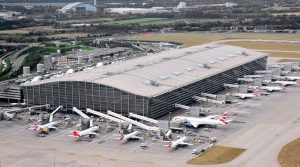
Heathrow Airport. Credit Heathrow Airports Limited.


Will Surrey potholes outwit AI?

Surrey County Council will now use AI to detect potholes to help speed up road repairs across the county.

Computer vision cameras fitted to dashboards inside highways vehicles will spot and photograph potholes which will then be automatically recorded for repair. Future enhancements will see other defects such as missing signs and foliage overgrowth also programmed for repair.

Highways Inspectors will no longer need to step onto the road to manually carry out inspections which will make the process safer and more efficient. Potholes that don’t need immediate attention will also be regularly tracked to ensure they are dealt with when needed.

Matt Furniss, Cabinet Member for Highways, Transport and Economic Growth, said, We have some of the country’s busiest roads and we’re working incredibly hard to improve them, with nearly £300m allocated to repairing and improving Surrey’s roads and pavements over the next five years (2023 – 2028).

Adopting this technology will mean we can proactively log and fix potholes, helping to ensure we have well-maintained roads across the county for our residents.

We’re also resurfacing more roads and pavements than ever with 100 miles of roads and 30 miles of pavements resurfaced by our highways teams from April – December 2024 alone. This will make our highway network more resilient which will reduce the number of potholes that develop on our roads in the first place.

I’m also pleased that we are pioneering AI technology to detect potholes as championed by the government just this week.”

Connell McLaughlin, CEO of Route Reports said, “We’re thrilled to formalise this long-term partnership with Surrey County Council, who were among our earliest supporters and collaborators in developing Route Reports’ AI road maintenance platform.

Their feedback and hands-on involvement played a key role in refining our defect detection technology to ensure it meets the real-world needs of the community. This partnership exemplifies how innovative solutions and local expertise can come together to make roads safer, more efficient, and more sustainable.”

Surrey County Council is the first local authority in the UK to move away from manual inspections and solely use video and AI technology to log and programme pothole repairs. The council has worked with provider, Route Reports, to trial and develop the software.

Residents can also report and track road and pavement issues on Surrey County Council’s website.

Image: Pothole in Woodcote Road Epsom


Surrey school children road safety faces funding challenges

Children at a special needs school could be left waiting years for a much needed crossing. Clifton Hill School, on Chaldon Road in Caterham, is a secondary school for 11-19 year olds with severe and complex learning difficulties and special needs.

Students at the school demanded action in May 2024 after telling councillors they felt scared going on the road outside their school because there is no safe crossing. Pupils are encouraged to use the cafe in the church opposite the school as part of their independent living skills, but they said people “driving like maniacs” or even honk at them if the students take too long crossing the road.

Surrey County Council said: “In the interim we are looking into rectifying shorter-term issues such as improving line painting and signage, and we will keep the school and parents updated on this as we progress. We’ll continue to do all we can to keep our roads safe.”

Short-term measures included lowering a school warning sign so drivers can see it at car-level, getting the greenery cut back so drivers can see the signs, and installing a dropped kerb for wheel-chair users.

“Another term is over and our children can’t cross the road safely,” said Rachael Forkan, mum and member of the Clifton Hill Parent Teacher Association (PTA). Ms Forkan said she and the head were “not thrilled” the signal crossing was part of a ‘long-term plan’ for improving the school’s road safety. Ms Forkan said: “It isn’t a bit helpful because that could be anything from two years to seven, and my son will leave there in five years’ time.”

Officers reported there were no dropped kerbs between the school and the church which made it “problematic to navigate” for wheelchair users trying to cross smoothly. Where the County Council would deliver road safety awareness training to students, for students with complex and multiple disabilities, like at Clifton Hill, officers said this type of training would “not be appropriate”.

“It’s definitely a priority for now,” said Councillor Jeremy Webster for Caterham Hill. “But the [County Council] is telling me there isn’t any money and that we have to wait a couple of years, but by then problems will be worse.”

The local councillor described Chaldon Road as “problematic” with existing highways issues such as increasing pressure from developments and an unstable embankment. Cllr Webster told the Local Democracy Reporting Service (LDRS)he would continue to urge the Surrey County and Caterham Parish council for their financial support.

Conservative MP for East Surrey, Claire Coutinho, who visited the school in summer 2024, said she recently met with Cllr Jeremy Webster at the school for an update on the crossing issue. Ms Coutinho said she asked him to maintain pressure on his colleagues at Surrey County Council to find a “funding solution” to get so a crossing installed as soon as possible.

A Surrey County Council spokesperson said: “At a site meeting completed in October 2024 we recommended a zebra or push button signalised crossing as the most appropriate road safety measure to be introduced. We appreciate that parents would like this to be implemented immediately, however this assessment forms part of a wider piece of work across the county which has seen us identify demands for road safety measures across another circa 50 sites, and we will have to prioritise which of these sites are then worked on with any available funding. At present, the council hasn’t set its budget for this area of work and as such no funding has yet been allocated.

“Which sites take priority will depend upon a number of factors including the level of road safety risk based on site observations and collision history, the number of people that would benefit from improved facilities, cost and the level support from the local community for any proposals. Once funding has been identified it typically takes a year to design, complete the legal consultations and then implement a zebra or signalised pedestrian crossing.”


Broad Gauges New Train Set to Serve Epsom

Residents of Epsom will soon benefit from South Western Railway’s (SWR) latest investment in modern rail travel as the new Arterio trains, officially launched this week, are set to roll onto local lines in March 2025. The £1 billion fleet of state-of-the-art trains promises greater capacity, enhanced comfort, and cutting-edge features for commuters and leisure travellers alike.

The launch event at London Waterloo was marked by cricketing great Stuart Broad CBE naming one of the trains the Nighthawk, in a nod to his storied cricket career. Speaking at the ceremony, Broad reflected on the role trains play in bringing communities together:

“Trains are a lifeline for fans travelling to iconic venues. It’s exciting to think of the Nighthawk connecting people across London and the South East, including my beloved Oval cricket ground.”

The Arterio fleet is a major upgrade for SWR’s suburban network. By June 2025, these sleek trains will serve routes to Dorking, Epsom, Guildford, Hampton Court, and Reading, with some of the first services to Epsom and Guildford scheduled for March.

What’s New for Epsom Commuters?

Local residents can look forward to a host of improvements:

  • More Space: Each 10-car Arterio train offers over 50% more capacity than the outgoing Class 455 models.
  • Modern Comforts: Passengers will enjoy Wi-Fi, charging points at every seat, air conditioning, and accessible toilets.
  • Real-Time Information: Advanced technology will provide live updates, helping commuters stay informed.

These upgrades are set to make travel smoother for Epsom residents, whether commuting to London or exploring nearby destinations like Guildford and Hampton Court.

A Train Network Honouring Sporting Heritage

SWR’s nod to sporting excellence was evident at the event, where trains were also named the Jockey, Red Rose, Ace, and Thames Racer, celebrating key destinations such as Ascot, Twickenham, Wimbledon, and the Boat Race course. The Nighthawk is expected to carry cricket fans heading to the Oval via nearby stations, including Vauxhall.

Stuart Meek, Interim Managing Director of SWR, highlighted the significance of the new fleet:
“The Arterio trains are more than just a means of travel – they symbolise connection and community. Epsom passengers, among others, will soon benefit from the extra capacity, reliability, and comfort these trains bring.”

A Boost for Epsom and the Local Area

The introduction of these trains is part of a broader commitment to enhancing rail services across Surrey. With more than 80 peak services planned each weekday, residents can expect reliable, comfortable journeys into London and beyond.

As Epsom prepares to welcome the Arterio trains, the town’s position as a well-connected suburban hub is set to be further cemented, offering improved travel options for work, leisure, and everything in between.

For further updates on Arterio services to Epsom, keep an eye on the Epsom and Ewell Times.


£12 million bus boost for Surrey

Surrey County Council has been allocated £12,074,800 from the Department for Transport, to further improve and protect local buses.  

The council will work with bus operators to allocate the funding, which is likely to generate more frequent buses on popular routes, protect services in rural areas and improve punctuality.

The investment will also be used to help Surrey bus services grow their passenger numbers and to support people who rely on them to make essential journeys.

Matt Furniss, Cabinet Member for Transport, Infrastructure and Growth at Surrey County Council said, “I’m delighted that Surrey will benefit from this essential funding which will help us to build upon our own significant investment and encourage more people to take the bus.

We’ve recently added 54 new zero emission buses to our fleet, invested £6.3m in more ultra-low and zero emission community transport minibuses, £9m in bus priority measures to ensure Surrey buses turn up on time, and £1.4m in improving information for passengers at bus stops.

Our Surrey LINK card gives young people half-price bus travel and we’ve expanded our on-demand Surrey Connect bus services to cover areas where there are limited fixed bus routes, giving more options to travel by bus for all residents right across Surrey, particularly supporting our rural areas.”

26 million journeys were made by bus in Surrey during 2023.


Epsom and Ewell Council answers parking complaint immediately

Charles Moseley of Hurstpierpoint complained in a letter dated 8th October to the Epsom and Ewell Times about the running out of Epsom Playhouse beer and the Ashley Centre Car Park during his visit to the Counterfeit Stones performance. Just five hours later (by coincidence) Epsom and Ewell Borough Council wrote to us with a new plan to improve the parking experience. They could not be expected to fix an unexpected peak in the demand for beer at the Borough’s showpiece theatre venue. Here are the communications in full.


8th October 2024 10:28 hrs

Dear Sirs,

I am writing to say how much we enjoyed a gig by The Counterfeit Stones, who were really good.  However we arrived fairly early and decided to have a drink in the theatre bar and were served by a very nice bar lady who proceeded to pour two pints of London Pride.  But she only managed one and a half before running out!  She was very apologetic in saying that she had no more bitter of any description, only lager, cider and spirits.  Apparently this was due to the audience of the previous night’s show supping all the bitter. What are about 400 mainly middle or above aged Rolling Stones fans supposed to do with no beer?  We had to plunge the depths of Epsom’s society pubs and eventually found, at the third attempt, something resembling beer in Wetherspoons.  As for the car park, well that was something else with two queues out and at least one in each line that had not paid or lost their little yellow disc! It was chaos! And £5.00 for the privilege! So it’s full marks for the band and bar lady, as for Epsom Council?  Give me strength!

Charles Moseley

Hurstpierpoint


Epsom & Ewell Borough Council are installing a new Auto Number Plate Recognition (ANPR) parking system at the Ashley Centre car park in Epsom town centre this month. Work will begin from 14 October and is expected to take three weeks to complete.

The ANPR system will mean that car users can drive up to the barrier and enter the car park with their registration being used for identification and payment upon exit.

The new system will remove the need for tokens and the associated charges that are incurred when they are lost. Cash and card payment options will be available on all floors, as well as the ability to pay remotely.

Councillor Liz Frost, Chair of the Environment Committee, said:

“The works taking place at the Ashley Centre car park are a welcome upgrade to a more modern and convenient system. We know the tokens have been a cause of frustration to many drivers as they are small, difficult to find and easily lost (leading to penalties being issued).

“We appreciate that the necessary work may cause some inconvenience for drivers during the installation of the new ANPR System, and we apologise for this. However, we feel the upgrades will be a great improvement and make it easier and quicker for people visiting Epsom Town Centre to park.

“With Christmas just around the corner, we believe the upgrades to the car park support the ongoing work we are undertaking to boost the local economy by making Epsom Town centre a more hassle-free and therefore more attractive place to visit.”

Epsom and Ewell Brough Council 8th October 2024 16:00hrs


Paving the way to better regulation?

The Epsom and Ewell Borough Council has voted to dispense its current pavement licence policy, rather than it being updated to copy the .GOV guidance. This change comes as part of a broader review conducted during an Environment Committee Meeting held on July 16th. Instead, Officers of the council will continue to determine applications under delegated authority, with the Council’s website linking to the .GOV guidance. 

[This post corrects an earlier post that incorrectly inferred that applications would no longer be processed by EEBC.]

The original pavement licence policy, introduced under the Government’s Business and Planning Act of 2020, was a temporary measure designed to assist the hospitality sector amid the economic turmoil caused by the Covid-19 pandemic. It allowed cafes and similar businesses to place removable tables and chairs on adjacent council-owned highways for a capped fee of £100, a significant reduction compared to the more cumbersome procedures under the 1980’s Highways Act.

As part of the 2024 Levelling Up agenda, this temporary policy was transformed into a permanent measure. However, the cost cap was raised, allowing councils to charge up to £500 for new licences and £350 for renewals. This shift aimed to provide local authorities with greater financial flexibility.  

The decision has sparked a range of reactions. Some view the licence fee as an additional financial burden on small, independent cafes striving to thrive in a challenging economic environment. However, proponents argue that the policy plays a crucial role in ensuring pedestrian safety and accessibility, preventing removable furniture from obstructing pathways and ensuring compliance with accessibility standards.

During the committee meeting, concerns over the cost of the licence fees were voiced. Councillor Robert Leach criticised the high fees, particularly the notion of paying £555 to process a form and issue a licence, suggesting it seemed “ridiculous” and speculating that the figure was derived using a “different unit of currency.” However, it was clarified that the actual cost of processing a new application exceeded the fees charged, necessitating the higher rate to break even, though this remains capped by the government.

However, doubts were also raised regarding the renewal fee of £350, with some committee members questioning the justification for this amount, given that most of the necessary work is completed during the initial application process

Image: Cafe tables outside Zig Zag Epsom High Street – Google

Page 1
© 2021-2025. No content may be copied without the permission of Epsom and Ewell Times Ltd.
Registered office: Upper Chambers, 7 Waterloo Road, Epsom KT19 8AY