


A row over media access to newly elected Liberal Democrat councillors has escalated after Epsom & Ewell MP Helen Maguire publicly challenged an Epsom and Ewell Times report – only for subsequent correspondence to confirm that a restriction on councillors speaking to the media did in fact exist.
The dispute centres on events at the Count for the East Surrey Unitary Council elections at Bourne Hall on 8 May.
In an earlier report, Epsom and Ewell Times’ (EET) Lionel Blackman described being in a media interview room speaking with a soon-to-be-elected Liberal Democrat candidate when Helen Maguire’s communications officer entered and stated that Lib Dem candidates were not to talk to the press and that journalists should speak only to the MP.
The report described the instruction as neither “liberal” nor “democratic” and criticised what it characterised as a “gag” on successful candidates.
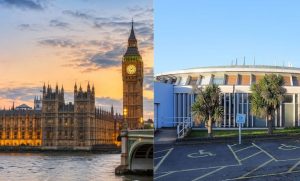
Ten days later, at a reception at the Palace of Westminster hosted by Ms Maguire and attended by a couple of hundred leading figures from Epsom and Ewell’s business and voluntary sectors, the MP appeared to reference the controversy directly.
Introducing newly elected councillors present at the event, she said: “There are a number of our new Councillors present today and contrary to what you may have read in the press they are free to speak and if there are any members of the press here you may talk to them. Do not believe everything you read online.”
The remark prompted EET to challenge the implication that its reporting had been inaccurate.
In a subsequent email exchange, Helen Maguire’s communications officer, Esther Holland, denied that the MP had imposed any “gag” on councillors but acknowledged that a restriction on media engagement had indeed been in place.
Ms Holland wrote: “Helen can confirm that while she knew the East Surrey campaign team had asked for a pause in media engagement during the election week, this was entirely the East Surrey campaign team’s decision. Helen played no part in directing this; she did not ‘gag’ her new councillors.”
She later provided a statement attributed to an East Surrey Liberal Democrats spokesperson saying: “The pause in media engagement was a decision made by the central campaign team for the Liberal Democrats in East Surrey — not Helen Maguire MP — based on the advice to make the incoming leadership contest as democratic and fair as possible.”
That explanation narrows, but does not extinguish, the dispute.
EET’s original report did not merely allege that Helen Maguire personally invented the policy. It reported that the instruction was delivered by her communications officer, directing journalists away from councillors and towards the MP.
Mr Blackman replied that, in the circumstances, it had been entirely reasonable to report the matter as “Helen’s gag”, noting that the instruction had been communicated by an employee acting under the MP’s banner and that the strategy would have been ineffective without at least some degree of cooperation from the MP’s operation.
The exchange then moved into more sensitive territory concerning the role of MP’s parliamentary staff in party political activity.
Responding to questions raised by EET, Ms Holland stated she had been acting “in my capacity as local party communications, not as an employee of Helen Maguire MP” when communicating the media strategy at the Count, adding that her role was “split between parliamentary and local party work.”
That explanation may itself invite wider questions about the sometimes blurred boundary between parliamentary communications roles and local party political operations.
No evidence has been produced that any parliamentary or IPSA (Independent Parliamentary Standards Authority) rules were breached. However, parliamentary staffing arrangements are ordinarily expected to distinguish between parliamentary duties funded through MPs’ allowances and party political campaigning or organisation.
The issue here is not merely semantic.
If, as the correspondence confirms, a restriction on councillors speaking freely to journalists existed, then the remaining questions become who owned it, who delivered it, and whether the MP’s Westminster remark – “Do not believe everything you read online” – fairly represented EET’s reporting or risked leaving a large public audience with the impression that the newspaper had reported something untrue.
EET stands by the factual accuracy of its original report.

Related report:
Epsom’s LibDem MP gags her Party’s new councillors in their moment of triumph