


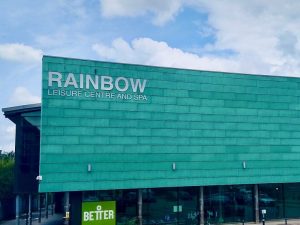
Epsom and Ewell Borough Council’s Audit and Scrutiny Committee has formally concluded that the process used for the confidential £500K Rainbow Leisure Centre urgent decision did not follow the Council’s stated procedure and was not justified by the information presented to councillors.
The finding came at the end of a lengthy and at times heated debate on Thursday 16 July over Urgent Decision 158, which was signed off by Cllr Neil Dallen (RA Town) as chair of the Strategy and Resources Committee, in December 2025 without first obtaining the approval of his Committee.
Councillor Chris Ames (Labour Court) proposed that the committee record:
“The process followed for Urgent Decision 158 did not follow the correct stated procedure and was not justified according to the information put before this committee.”
The proposal was carried.
The committee separately backed a recommendation from Councillor Alex Coley (Independent Ruxley) that, where a matter of significance is known about in advance — such as proposed expenditure exceeding £50,000 or a change to the Council’s constitution — the first action should be to schedule a committee meeting.
As Audit and Scrutiny cannot itself alter the constitution, the proposal is expected to go to the Standards and Constitution Committee.
Months of warning or sudden urgency?
The Council’s report stated that a decision was needed by 17 December to progress negotiations with the new Rainbow Leisure Centre operator. The next scheduled Strategy and Resources Committee meeting was not until 27 January 2026.
Officers said that failure to resolve the matter could have caused the contract to collapse, leading to the loss of management fees, a need to retender, the Council having to maintain the centre without an operator and uncertainty for staff.
However, the Council’s constitutional test is not simply whether a decision is required before the next scheduled committee meeting. An urgent decision may be used only where delay would seriously prejudice the Council or public interest and it is not practicable to convene a quorate meeting in time.
Cllr Ames said the same problem could be seen in the explanations given for several other urgent decisions.
“The next scheduled meeting is irrelevant,” he said. “What matters is: could a quorate meeting of the relevant decision-making body be brought forward to take this decision?”
Assistant Director of Corporate Services Andrew Bircher acknowledged that some of the explanations in the annual report did not fully reflect the constitutional test.
“It would be better on this report had we been able to identify that,” he said, adding that future reports would set out the position more clearly.
Cllr Coley said the Rainbow difficulties had been apparent months before UD158 was signed and that there had been ample opportunity to arrange a special committee meeting.
He described what had happened instead as “sofa-style governance”, with discussions taking place among senior officers, lead councillors and the Residents’ Association group before opposition councillors were informed.
“The process here is a committee meeting should have been organised,” he said. “Instead, what happened was a lot of talking behind closed doors.”
He said RA councillors had been shown the issue in early December, approximately four weeks before opposition councillors were given access to it.
Cllr Ames said the timetable appeared to have been “artificially managed” to create urgency and avoid a committee decision.
Chair Cllr Steve Bridger (RA Stamford) repeatedly attempted to restrict discussion to the decision-making process rather than the underlying Rainbow dispute. He also said the officers needed to answer many of the questions were not present and asked members to submit further questions in writing.
Cllr Ames sought a commitment that the answers would be published, arguing that otherwise residents might conclude that the Council was trying to avoid explaining what had happened to public money.
Who decided the document was exempt?
A second dispute concerned who decided that UD158 and its contents should be withheld from the public.
The committee report stated that Chief Executive Jackie King, acting as the Council’s “proper officer”, had made the exemption decision after considering its commercial sensitivity.
Cllr Ames repeatedly asked whether there was any contemporaneous written record of that decision or of the required balancing of the public interest in secrecy against disclosure.
Mr Bircher said the Chief Executive had confirmed by email that she authorised the exempt treatment and that the matter had been discussed at meetings of the Strategic Leadership Team.
He acknowledged that there was no separate record in the leadership team’s meeting notes, but said the Chief Executive had agreed that future exemption decisions would be evidenced on the relevant committee report or urgent decision form.
The Council’s legal adviser, Deborah Davis, said the exemption decision did not necessarily have to be recorded in writing. Someone did, however, need to have made the decision after considering both the relevant legal exemption and the public-interest test. Recording the decision and naming the proper officer would be good practice, she said.
Cllr Coley told the committee that, at a group leaders’ meeting in early January, the Chief Executive had said she had been on leave and that Deputy Chief Executive Vicky Potts had prepared and signed the urgent decision.
He questioned when the Chief Executive had subsequently decided that the document should be exempt and whether an exemption could properly be applied retrospectively.
Mr Bircher responded that the Chief Executive had been aware of the circumstances through leadership team discussions and was satisfied that the matter should be treated as commercially sensitive.
Ms Davis advised that leaked information does not automatically cease to be exempt. The Council could continue to treat it as confidential until an authorised decision was made that disclosure was now in the public interest.
£500,000 Rainbow background
Epsom and Ewell Times has previously reported that the confidential urgent decision approved by Cllr Neil Dallen (RA Town) authorised access to Council reserves of up to £500,000 in connection with disputed dilapidations discovered during the change of leisure centre operator.
Former operator GLL has said it was unaware of any legal claim and handed the building back in the condition required by its agreement. The Council has acknowledged that it holds no record of routine landlord inspections over the operator’s lengthy tenure.
UD158 has therefore become central not only to the financial dispute but also to questions over how the Council monitored one of its largest public assets and why councillors and residents were given so little contemporaneous information.
A written public statement read at the start of Thursday’s meeting accused the Council of six months of “procedural silence” and urged the committee to demand answers over whether defects had been concealed, missed by consultants or allowed to develop through a failure of landlord oversight.
Despite the Audit and Scrutiny committee’s investigation and debate on the Urgent Decision on the Rainbow Leisure Centre the public are still in the dark about how the dilapidations estimate (if accurate) arose in the first place.
Wider transparency failures
The Rainbow discussion was not the meeting’s only dispute over withheld information.
At the beginning of proceedings, Cllr Ames challenged an exempt internal-audit appendix because the agenda did not state that the public-interest test had been applied.
Ms Davis agreed that such a statement should have appeared. Mr Bircher apologised for the omission, and the restricted appendix was withdrawn because neither the Chief Executive nor Monitoring Officer was present to confirm the exemption decision.
Cllr Ames noted that he had raised exactly the same problem four months earlier.
The committee later amended the Council’s Annual Governance Statement to recognise the “urgent need” to deliver a previous Full Council resolution establishing a process for publishing urgent decisions.
Cllr Coley said the Council had reduced its use of urgent decisions from 22 in the previous reporting year to six, but that uploading six decision forms should not present an insurmountable resource problem.
“We have agreed it is going to be delivered,” he said. “The decision is to do it, not to investigate it.”

.
Related reports
Epsom & Ewell Council blocks release of Rainbow Leisure Centre condition papers
Epsom Council Rainbow Centre secrecy row deepens over “pre-election silence” advice
No end to Epsom’s Rainbow Leisure Centre controversy
Dalton and Dallen double-down disclosure denial
Epsom and Ewell Council transparency row erupts as Council backs publication of urgent decisions
“It’s my meeting”: Cllr Dallen stops questions about his role in alleged Rainbow “cover-up”
Cllr Dallen accused of £1/2m Epsom and Ewell Council “cover-up”