

Surrey County Council has issued a flurry of announcements covering school environmental projects, a major Government-backed reform of special educational needs provision and the future of Council Tax support when Surrey’s new unitary authorities take over next April.
For Epsom and Ewell residents, the most immediately relevant development may be a consultation on how Council Tax Reduction will operate under the new East Surrey Council from 1 April 2027.
Council Tax support under the new East Surrey Council
Residents are being invited to comment on proposals for the Council Tax Reduction scheme which will apply when Epsom and Ewell Borough Council and the other existing councils in eastern Surrey disappear next year.
At present Surrey’s 11 district and borough councils each operate their own Council Tax Reduction scheme. Eligibility and the amount of help available can therefore vary depending on where somebody lives.
From 1 April 2027 those councils, together with Surrey County Council, will be replaced by East Surrey Council and West Surrey Council. Each of the two new authorities will consequently require a single Council Tax Reduction scheme for its entire area.
Council Tax Reduction is intended to help people on low incomes or receiving certain benefits by reducing the amount of Council Tax they have to pay.
Draft schemes for both new authorities have now gone out to consultation. Surrey County Council says no final decisions have been made and existing support will continue while consultation takes place.
The East Surrey consultation runs from 7 October until 3 December 2026, with current recipients of Council Tax Reduction and organisations supporting them particularly encouraged to respond.
East Surrey Shadow Councillor Andy Burton, portfolio holder for finance and resources, said residents’ responses would help decision-makers assess the effects of the proposals before a final scheme is agreed.
The exercise is one of the many pieces of administrative plumbing required before Surrey County Council and the borough and district councils cease to exist next April. Services which are currently administered differently across council boundaries will have to be combined into common systems for each of Surrey’s two new authorities.
Government approves Surrey SEND reform plan
Meanwhile, the Department for Education has approved Surrey’s three-year Special Educational Needs and Disabilities (SEND) Reform Plan.
The Government told Surrey that its plan had met the required threshold and provided a basis for moving into implementation.
Of substantial financial significance is the Council’s eligibility for an indicative £205.2 million High Needs Stability Grant. SCC says this represents 90 per cent of the Dedicated Schools Grant deficit accumulated up to the end of the 2025/26 financial year.
The scale of the problem is considerable. Surrey County Council’s more recent budget monitoring has referred to a cumulative Dedicated Schools Grant deficit of around £238 million, against which approximately £205 million of Government stability funding was anticipated.
The reform programme is intended to place greater emphasis on earlier intervention and supporting more children with additional needs within mainstream education.
One element, called “Experts at Hand”, is intended to bring specialists including educational psychologists, speech and language therapists, occupational therapists and specialist teachers closer to mainstream schools and colleges. Surrey’s Cabinet was told in July that £8.3 million would be available in 2026/27 for this part of the programme.
The wider plan includes increasing the SEND workforce, expanding provision, improving governance and seeking better transitions for young people entering adulthood.
Government approval was not, however, an unqualified endorsement. The Department for Education said further work was required on delivery capacity, partnership working and governance, together with clearer measures of success, post-16 pathways, co-production with families and assessment of future early-years and specialist provision requirements.
SCC Cabinet Member for Children, Families and Lifelong Learning Cllr Helyn Clack said the Council would now move from planning into delivery.
The success of that delivery will matter more to families than approval of the plan itself, particularly against a longstanding background of pressure on specialist places, Education Health and Care Plans and Surrey’s high-needs education budget.
Surrey tops Eco-Schools table
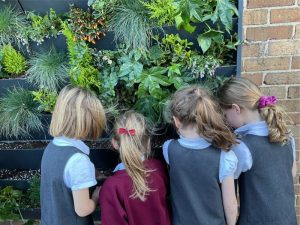
On a rather different educational front, Surrey says it has retained the highest number of Eco-Schools Green Flag awards of any English local authority area for the fourth year running.
More than 200 Surrey schools are taking part in the Eco-Schools programme, with 105 achieving Green Flag status, its highest accreditation.
SCC says about 55,500 pupils are involved, including around 1,900 pupil eco-leaders. Projects range from wildlife-friendly areas and plastic-free lunches to sustainable food, monitoring energy use and encouraging active travel.
According to figures supplied by the Council, participating schools over the past year diverted 362,452kg of waste from landfill and saved 61,107kWh of electricity and 152,223kWh of gas.
The County Council has supported the Eco-Schools programme for 13 years and says it has also provided more than £120,000 in grants during the past 12 months to help schools become more resilient to the effects of climate change.
Marisa Heath, SCC Cabinet Member for Environment and Planning, described the Green Flag results as evidence of the work being undertaken by Surrey school communities, while Cllr Clack said environmental projects also allowed children to develop knowledge and skills which could benefit their schools and wider communities.
Taken together, the three announcements illustrate the unusually broad range of responsibilities still resting with Surrey County Council during its final months – from children with complex educational needs and environmental education to preparations for the entirely new local government structure that will replace it on 1 April 2027.

.
Image credit SCC