Epsom and Ewell Times

12th February 2026 weekly

ISSN, LDRS and IMPRESS logos

CCTV appeal following assault in Epsom

Surrey Police are appealing for assistance in identifying two people who may be able to help them with an assault investigation in Epsom. Officers were called at around 4 am on Sunday, 3 October 2021 following reports that three men had been assaulted on Waterloo Road between Nando’s and Epsom Grill. The injuries the victims sustained included bruising, grazes on their face and body, a black eye and an injured knee. Officers have been investigating the assault since it occurred in October, their enquires have recently led them to identify the two witnesses pictured above.

PC Tom Brock said: “Through the course of our investigation we’ve identified two people who we believe may have witnessed the assault. We’re keen to speak with them both to understand more about what happened. We know the quality of the images is poor but we wanted to release them in the hope someone may recognise themselves or a friend.”

The first person is described as a white male with short brown hair and facial hair. He was wearing glasses, blue jeans, a black padded jacket and black trainers. The second person is described as wearing a long black padded coat with a fur hood pulled over their head.

If you recognise the people in the images or have any information which may help, please get in touch with Surrey Police quoting PR/45210104209 via:

If you do not wish to leave your name, please call the independent charity Crimestoppers on 0800 555 111.


Rates demand puts temporary brake on Ukraine charity

Town Hall Epsom

UPDATE – Monday 11th April – EEBC: “Having reviewed the documentation and made the necessary checks, [the charity] qualif[ies] for the additional rate relief.” Good news for Ukraine.

Monday 4th April Ashley Centre based Surrey Stands With Ukraine received from Epsom and Ewell Borough Council, a demand for business rates of £1229 per month. Immediately the charity applied for discretionary relief as they have had to halt purchases of medical supplies. Local MP Chris Grayling has supported the waiver applied for. Thursday 7th a Council spokesman answered the Times: “There is a formal process we have to follow for charitable rate relief, I can confirm this process is underway. There will be no request for payment while we process this. I cannot give a specific date for completion but I can confirm this is being treated as a priority.” Nataliya Irvine of SSWU responded: “We understand a computer probably generated the demand but it needs an urgent human intervention to reach a decision. We appreciate and thank the Council for processing an application we made for a street collection licence very quickly, so we know they can.”

Want more from us? Read more Council News here.


Match Report: Epsom & Ewell 4-0 Selsey, Southern Combination League – Division One

Report Source: www.eefconline.co.uk
Reporter: Richard Lambert, Photos by Gemma Jarman

Epsom & Ewell: Sheikh Ceesay, Louis Chin, Jerry Antwi, Brad Peters (c), Tommy Smith, Mo Cisse, Luke Miller, Tre Towers, Kofi Quartey, Mike Hill, Athan Smith-Joseph

Subs: Josh Uzun for Cisse (HT), Tyreke Leslie for Smith-Joseph (52), Archie De Bono for Towers (67)

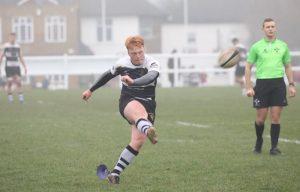
A few days ago we drew 0-0 with leaders Roffey, replicating the score from earlier in the season and on Saturday we did it again, only this time it was a 4-0 win that was repeated, as a dispirited and short handed Selsey side held their own for twenty minutes before being swept aside by a blue tide for the remainder of the match. It’s also worth noting that this was our third clean sheet in a row, which is the first time we have achieved this all season. This was an extremely dominant performance, and the only criticism that could be levelled at our team was our failure to be more clinical in front of goal, as we could and probably should have scored many more. Indeed, visiting keeper Sid Davies admitted to me at the end that we could have had ten. The win moves us back up into second place for now and was achieved without some players who had featured against Roffey four days previously; Gideon Acheampong was out with a knee injury, while Steve Springett was also unsurprisingly out after limping off near the end of that previous match as was Ricardo Fernandes.

However, Mike Hill was ready to go in midfield and with Athan Smith-Joseph and Luke Miller on the wings again feeding Kofi Quartey, we were always going to create chances. At the back Louis Chin came in for Acheampong, while Sheikh Ceesay retained his place between the posts as Kane Charles continued to rehabilitate with his ankle injury. Selsey named four substitutes on the name board at the ground, but actually only had eleven players present throughout and they weren’t the only ones who had trouble getting to the match as one of the Assistants was late arriving, so Chairman Mel Tough’s son Jack, a qualified official, ran the line for the opening eighteen minutes!

The match started very quietly. In fact the only item in my notebook was the change of official before we started to gain the upper hand just before the twenty minute mark. A left wing Smith-Joseph cross just grazed the head of a full stretch Quartey before Luke Miller jumped like a salmon against his much taller defender to head a Hill cross just wide. We were ahead in the 25th minute and it was a goal of real simplicity as Miller received a pass on the right and sent in a pinpoint cross for Smith-Joseph to meet with a side footed volley that gave Davies no chance from six yards out. We nearly had a second after a great run down the left from Mo Cisse whose low ball in was just cleared behind by a defender, missing his own posts by a couple of feet. However, we extended our lead in the 32nd minute when Hill sent the ball into the box where Miller flicked it on to Quartey who then struck the ball down into the ground and across Davies into the far corner of the goal from about ten yards away. This was also our 100th goal of the season and we weren’t finished yet. We were well on top now and the attacks kept coming. Hill’s shot was deflected just over the bar after good work from Tre Towers and Quartey before Hill’s corner was met by Brad Peters, who sent his header up but somehow was also the first to reach it as it fell, although his shot was just wide of the post. Hill was directing traffic now, despite playing ninety minutes in trainers, and we had a third goal on the stroke of half time when Miller tried to find Cisse out on the left, only for the ball to deflect and fall kindly into Quartey’s path and he showed real composure to wait until Davies had come out before easing the ball over the exposed keeper and into the net from the edge of the six yard box.

At half time this game was over and certainly some supporters thoughts were turning towards whether we could really boost our already impressive goal difference. We made a substitution at the break when Josh Uzun replaced Cisse and went after more goals. Smith-Joseph produced one of his trademark mazy runs but then sliced his shot from the edge of the penalty area, before Hill’s free kick delivery fell perfectly for Uzun who somehow managed to steer the ball wide from only six yards out. Then Tyreke Leslie who had just replaced Smith-Joseph got through on goal, but overrun the ball which ended up in the keeper’s arms. Not so for Miller though. He received the ball out on the right from Hill in the 56th minute and drilled the ball powerfully back across Davies into the bottom corner from about twelve yards out to make it 4-0. Now if someone had told me we wouldn’t score again at that point, I would have been very surprised, yet there were to be no further goals in this match. It wasn’t for lack of trying, and Hill’s deflected free kick led to a corner that Leslie headed wide at the far post, although a free kick had been awarded against us for an earlier infringement. Then Miller sent a teasing low ball in to the far post, but Leslie chose to hit it right footed and was inches wide from just a few yards out. Finally, our third substitute Archie De Bono made a great run from the right back slot and found Quartey at the near post who set up Leslie, but the shot was straight at Davies this time. Miller sent another shot just over the bar in the closing moments before we nearly had a lucky fifth goal in injury time after Uzun’s free kick took a heavy deflection, but the wrong-footed Davies was just able to recover in time to reach the ball before it crossed the line.

This was a tricky banana skin match. Selsey had been in good form coming into this contest, and whilst they were clearly not at full strength, this was still a good performance. I believe that three wins from our remaining three League games will prove to be good enough for second place, but if not, it would at least guarantee third and a home play off on Saturday 30th April. That has to be our target now.


Match Report: Epsom & Ewell 0-0 Roffey, Southern Combination League – Division One

Report Source: eefconline.co.uk

Reporter: Richard Lambert, Photos by Gemma Jarman

Epsom & Ewell: Sheikh Ceesay, Gideon Acheampong, Steve Springett, Brad Peters (c), Tommy Smith, Mo Cisse, Luke Miller, Ricardo Fernandes, Kofi Quartey, Mike Hill, Athan Smith-Joseph

Subs: Josh Uzun for Hill (71), Jerry Antwi for Springett (85)

For a few weeks now we have been relying on other teams to drop points if we were to catch the top two. However, these permutations also required us to beat both of those clubs when they visited, and whilst we defeated Midhurst and Eastbourne ten days previously, we also needed a win against the leaders Roffey and we were unable to achieve this at Fetcham Grove on Tuesday night; being held to a goalless draw, which now ends anything but bizarre mathematical outcomes in our race for the title. It is ironic that we have had just two goalless draws this season and that both have come against Roffey. Both matches followed a similar pattern with our boys starting brightly, but tailing off and by the end, as with the first match, the visitors could argue that they were the stronger side.

It was a rather strange occasion really. Despite hardly any other matches being on in the area, a rather small audience were present to witness this match between two of the best sides in the league and it even appeared as though the opponents had an extra man. No, hold on, somewhere in amongst the visitors’ all black kit was the referee, who I’m sure was quite happy on the field watching two teams battle it out as he knew that he wasn’t one of the players, but for spectators it made for a confusing spectacle and when players gathered together it became almost impossible from the side-lines to see where he was! I suppose they say that the best referee is one you don’t notice, but we couldn’t even see him!

Regrettably leading scorer Jamie Byatt remained off the field with his injury and it might have been so different had he played as we had two chances in the early stages that you just know he’d have taken. In just the sixth minute a deep Mike Hill corner was sent back into the danger area by Tommy Smith, only for Brad Peters to get a strike on goal from 12 yards, but the contact wasn’t the greatest and the Roffey keeper Hughes was able to get down and claim the ball before it crossed the line. Then three minutes later another ball in from Hill reached Peters again who found Athan Smith-Joseph some four yards out, but Hughes was out quickly to block the shot superbly.

The tempo was extremely high from both teams in these early stages and the visitors fired towards the top corner from a free kick, but Sheikh Ceesay was there in time to keep the ball out. Then Ricardo Fernandes had a try against his former club from a narrow angle but found the side netting, and although a corner was awarded we were unable to get a shot on target.This was a highly competitive encounter though and Roffey’s Ross Swaine received a lecture from the referee, before our own Gideon Acheampong and Smith-Joseph were also given the third degree as the referee tried to keep the match card free. Smith-Joseph was particularly fortunate to escape further punishment and there were howls of protest from the opposition when Harry Law then picked up the first yellow card of the match five minutes from the break.

Another yellow card followed early in the second half after a visiting striker went down in the penalty area after Ceesay had come out, but our keeper made no contact and the referee deemed the fall quite rightly to be simulation. However, our attacks were becoming less frequent and when Hill broke through before sending a tame shot straight at Hughes, you began to wonder where we were likely to score from. Kofi Quartey was causing issues for their defenders but was rarely given even a half opportunity to shoot and both Smith-Joseph and Luke Miller were unable to get around their back line from where they usually do so much damage. We then had a scare in the 63rd minute when a low ball across from the left was met at the far post by Callum Jardim only to see his shot headed away off the line by the alert Steve Springett, running across to cover his lines. Two minutes later Josh Neathey made a good run to collect a ball over the top of our defence, but blazed his shot high and wide of the advancing Ceesay. Fernandes struck on target in the 68th minute and although Hughes was a little slow going down he palmed the ball away, but the game was becoming a little more attrition-al and a niggly scuffle broke out a few minutes later which resulted in another yellow card for the visitors; this time to Tiago Andrade, while shortly afterwards I think it was Peters that picked up our first card for kicking the ball out of the ground just after a free kick had been given against us.

The match ended with Springett being helped away gingerly with an Achilles injury and as he limped off, being replaced by Jerry Antwi, one of our other substitutes Josh Uzun received the ball from a misdirected Hughes clearance and sent it back with interest, but the effort was a yard wide of the far post and in fairness Hughes appeared to have done enough to get back to cover his goal. The match ended soon after and I think a point was a fair result. I would imagine that the visitors were the happier of the two teams with that point as they emerge from what looked like their toughest remaining match on their schedule unbeaten and still clear at the top, while for us, seven points behind and with only four matches left, we just have to aim to finish as high as we can.

The match ended with Springett being helped away gingerly with an Achilles injury and as he limped off, being replaced by Jerry Antwi, one of our other substitutes Josh Uzun received the ball from a misdirected Hughes clearance and sent it back with interest, but the effort was a yard wide of the far post and in fairness Hughes appeared to have done enough to get back to cover his goal. The match ended soon after and I think a point was a fair result. I would imagine that the visitors were the happier of the two teams with that point as they emerge from what looked like their toughest remaining match on their schedule unbeaten and still clear at the top, while for us, seven points behind and with only four matches left, we just have to aim to finish as high as we can. A second place finish would be our best achievement since 1984, although of course even this wouldn’t guarantee us promotion due to the invention of the playoffs. This is frustrating because last year four went up, while the promoted numbers were at least the top two and usually three in prior seasons, but we knew the rules at the start of the season and if we can keep our players fit and healthy, we will have every chance of success. However, the injury list is mounting, and we could really do with some more players back soon to give our Player/Manager a few more options, not least the one where he is able to pick himself again!

Overall though, and despite the draw keeping us down in fourth place, I think it was a point gained. One of our players commented that we had played well defensively, and that the visitors hardly had a shot on target. This is true, but at the same time we also created little and whenever our wingers got the ball there appeared to be a sea of Roffey players waiting to block their paths to goal. They were quite possibly the fittest team we have played, and despite the score line not suiting us, I was a little relieved to hear the final whistle at the end as they looked the more likely to break the deadlock. Are Roffey the best team we have played this season? I don’t think they were, and personally would have Seaford Town in front of them, but at the same time our league leading scoring attack has failed to score against Roffey in 180 minutes, so they must be doing something right! For our part, second place is still achievable, but with four league matches left, I think we will need to win all of our remaining four matches to reach that position. Failing that, we will be making a playoff trip to deepest Sussex instead of hosting someone at Fetcham Grove; a more difficult, but not insurmountable path.


Horton Light Railway – A Potted History

Having been closed down and dismantled just four years before my birth, the Horton Light Railway always held a certain fascination, for me when growing up in the area, and I often wondered what it would have been like to see the old steam engines going back and forth.

Hollymoor

Up to its demise, there had been five engines running on the line, Hollymoor (1905-1908), Engine No 947 (1905-1909), Crossness (1913-1935), Hendon (1935-1947) and Sherwood (1947-1950). Parts of the latter, Sherwood, were still scattered around the area known as ‘Central Station’ (now David Lloyd Sports Centre), and the ‘Powerhouse’ where the Epsom Cluster hospitals generated their own electricity (before the National Grid) and steam for heating and hot water for the hospitals. Hollymoor, of course, lives on, in name at least, in the road Hollymoor Lane.

The railway was originally built to supply the materials needed for the building of what became the ‘Epsom Cluster’ of five mental health institutions in the early 1900s. It made sense for the railway to remain in use post-construction to deliver supplies to the Cluster.

I grew up close to the shunting yard by Ewell West Station where the area was once shared with an orchard. This became the County Highways Depot, and later Highway House, which eventually gave way to a housing development.

Following the line

The original track bed, shunting branch, ran alongside the existing railway line away from the station, nearly reaching the stile at the end of West Street, replaced by the footbridge which remains today in the early 1960s. From there it swept round to follow a parallel course with Chessington Road, almost immediately finding its first obstacle, a feeder stream for the River Hogsmill, where a concrete bridge was built to accommodate. The bridge was removed in more recent years, though I could never understand why.

Once over the stream, the route followed between what is now, Hollymoor Lane, named after one of the locomotives used on the line, and a few houses built on Chessington Road and then reaching Baker’s Field running along its outer, sewage farm, edge and through a short avenue of mature elm trees, sadly long gone.

From there it crossed into what is now Hook Road Arena, passing the ends of Oakdale Road and then Richards Field, where a footbridge on the original route of the ‘Bridle Path’ crossed over the line, and then carried on behind the shops and what is now West Ewell Social Club, still running parallel with Chessington Road until it met its next obstacle, Hook Road (known as Kingston Lane at that time), where a tunnel was formed as, the road by then was becoming a busy thoroughfare.

Crossing bridges

The original bridge is still there and intact, left in position after Hook Road was re-routed. Though filled in, done when the track was removed, it can be viewed in the Horton Golf Club car park.

From Hook Road, the line carried on, into what is now Horton Country Park, unhindered and into Butcher’s Wood, where a branch line took it right into Long Grove Hospital. Then onto Four Acre Wood where, another branch took the line off to feed what was called ‘Central Station’, before it finally went on to West Park Hospital.

As the railway passed through Horton Country Park there were three footbridges, originally level crossings but, due to an accident in its infancy, a local woman Mary Tobin was killed owing to, what was deemed, neglect. The first between Butcher’s Wood and Four Acre Wood, one on the branch to Central Station and the last just before the line entered West Park. They had been erected on Rights of Way footpaths cutting through farmland that was attached to the hospitals. Here they were able to access fresh dairy, vegetables, and fruit from the orchards when in season.

There can be few people remaining in the borough that can remember seeing the railway and its engines in all their working glory, but if any readers have any memories or indeed pictures, we would love to hear from you.

Tony Collis, March 2022


Menuhin Hall Concert raises money for Ukraine

Pictured above:  celebrated violinist Boris Kucharsky

Wednesday 30th March 2022 15 year old Ukrainian violin virtuoso Vadym Perig led the concert, accompanied by Ukrainian pianist Svitlana Kosenko, in renditions of Ukrainian composer Myroslav Skoryk’s “Melody” – (that stirs the heart of every Ukrainian) and his Spanish Dance.

They were followed by Ukrainian pianist Dinara Klinton playing Rachmaninov’s Elegie.

Sublime performances all the more remarkable to be accomplished considering the emotional turmoil being felt by the players from the violence being inflicted on their homeland.
The programme continued to a near capacity audience in the superb Menuhin Hall in Stoke D’Abernon with a Mozart duet for violin and viola and a student and school alumni ensemble, including the School’s Director of Music Ashley Wass at the piano and soprano Mary Bevan, in Faure’s magical La Bonne Chanson.

Yehudi Menuhin, the hall’s namesake, widely celebrated violinist and conductor

After an interval during which some of the Ukrainian ticket holders had the comfort of meeting Dinara Klinton, celebrated violinist Boris Kucharsky and student ensemble stretched their arm muscles to the limits in a performance of Brahm’s very energetic String Sextet No 2 in G major.

Programme sales and collections raised money for the Disaster Emergency Committee’s funds for humanitarian relief for Ukraine.
The Menuhin Hall is a somewhat hidden gem only 20 minutes drive from Epsom and Ewell. You can see its programme of concerts at https://themenuhinhall.co.uk/


Epsom Choral Society opens its centenary celebration 2022

From Epsom Choral Society

This year Epsom Choral Society celebrates its Centenary and is doing so in style!

Our first concert was on Saturday 19th March 2022 at St Martin’s Church, Epsom attended by The Mayor, Peter Donovan and his wife. For this concert, the audience was treated to Vivaldi’s Gloria, one of the most popular pieces from the Italian Baroque era, as well as three works which were all written for Epsom Choral Society – Cecilia McDowall’s I Know That My Redeemer Liveth, Jonathan Willcocks’ O Joyful Soul and Adrian Payne’s I Hid My Love.

The soloists were Lisa Swayne, soprano, Helen Semple, soprano and Carolyn Holt, alto, all top-class young professionals and the concert was conducted by Epsom Choral Society’s Musical Director Julian Collings.

Epsom Choral Society with Mayor Peter Donovan and his wife

Our other concerts in this Centenary year include Songs from the Shows in St Andrews Church, Cheam on 25th June 2022, Messiah at the Epsom Playhouse on Saturday 3rd December 2022 and our ever-popular Christmas Concert on Saturday 17th December.

Epsom Choral Society is Epsom’s longest established choir and has continued to sing throughout the pandemic. At first via Zoom, then rehearsing outside in a garden and even, thanks to the kindness of the Epsom & Ewell Borough Council, live-streaming a concert in a car park which was heard by over 5,000 local residents thanks to What’s On In My Town.

Continued …

Briefing notes:

  1. Epsom Choral Society has been singing for 100 years and has around 90 singers. It usually puts on at least four concerts each year which attract a loyal following. Epsom Choral Society is a friendly choir – they do not require auditions but do aim for high performance standards. Rehearsals are on Wednesday evenings under the baton of their Musical Director, Julian Collings. www.epsomchoral.org.uk
  1. Cecilia McDowall composed I Know That My Redeemer Liveth in 2009 for Epsom Choral Society as a tribute to Handel on the 250th anniversary of his death, with words taken from Messiah. It was first performed by Epsom Choral Society on 21st March 2009 at St Martin’s Church, Epsom.
  1. Jonathan Willcocks’ O Joyful Soul was premiered by Epsom Choral Society on 30th June 2018. It was commissioned in memory of Cecil Wiltshire who had sung with the choir for 67 years, funded from the generous legacy that he left the choir. The piece’s five movements were selected from religious and secular texts that encapsulated both his interests and his gentle and generous nature.
  1. Adrian Payne’s I Hid My Love received its world premiere by Epsom Choral Society on 15th June 2013 at St Martin’s Church, Epsom. It was performed again the following year at the European Choral Festival in Überlingen in Germany and the choir has sung it on tour in France and The Netherlands. Adrian has sung with the choir for 25 years.

Contact:     Nina Kaye: publicity@epsomchoral.org.uk, 07778 406834

Epsom Choral Society rehearsing in the 60s
Epsom Choral Society rehearsing in 2022

Banstead fires deaths tragedies

Surrey Fire Service service would like to reiterate its sincere condolences to the family and friends of a Banstead resident who was victim of a tragic incident.

The Fire Investigation Team have concluded that the cause of the fatal fire in Banstead that occurred in the early hours of Friday 19 March was most likely due to unattended cooking.

During the first of the six 999 calls to our Joint Fire Control, a neighbour described the fire as being “well developed”.

The Fire Service want to make sure these incidents don’t happen at all and want to help people to be safe in their own homes, but if they do happen then they want to ensure residents are alerted to the danger and have an escape plan to make their way outside of the building before we arrive.

Surrey Fire and Rescue Service offers free Safe and Well Visits, where fire and rescue personnel visit homes with the aim of making them safe from a fire. They’ll fit fire safety equipment, provide fire safety advice about how to live safer as well as refer onto other services/partners if needed too.

If you’re worried about someone, whether your profession has led you to their home (carer, engineer, meter reader etc), a neighbour, or loved one – you can refer anyone to Surrey Fire Service for a free Safe and Well Visit at surreycc.gov.uk/fire..

Sunday 21 March

SFRS and Surrey Police are continuing to investigate a serious residential fire which tragically claimed the life of one resident. 

Firefighters were called to a fire on Holly Lane West in Banstead at 2.41am yesterday (Friday 19 March 2021). Six fire engines, including an aerial ladder platform, were involved in the response to this incident.  

Very sadly, a person who was in the property when the fire broke out was pronounced dead yesterday. Both services send thoughts and condolences to the family and friends of the resident.  

Emergency service personnel remain on scene. Holly Lane West remains closed with Holly Lane open as normal.


Epsom and Ewell gears up for Ukrainian refugees

Tuesday 29th March over 160 local citizens converged on St Joseph’s Church Hall for an information evening about hosting Ukrainian refugees. Half the hands in the room went up when asked who is willing to host refugees fleeing the war. There was overwhelming enthusiasm for the aid the community can bring to the urgent need for hosting Ukrainian refugees.

Joanna Sherring of the Epsom Refugee Network chaired the event and introduced local refugee supporters with experience of hosting and teaching English. Nina Kaye spoke about her experiences of opening her home to no less than 30 Syrian refugees since 2015. It is a big but rewarding commitment and friends for life are made. The important point was made that most refugees want to return home. Making them welcome here is a small way to meet the trauma of forced displacement.

The Government rules about hosting were explained including a requirement that hosts undergo a “Disclosure and Barring Check” (DBS). Basically this means a check about any criminal record. Apparently these rules are welcomed by Ukrainians especially as men are required to remain in Ukraine and the majority of guests will be women and children.

You can find out more information and guidance on the Epsom Refugee Network website here.


“Local Pride”: an evening with Epsom Chess Club

The Epsom Chess Club was launched in 2018 by Marcus Gosling and Ravi Sharma, the successor to the original Epsom Chess Club, founded in 1929. Meeting in MccAfferty’s Irish pub’s function room on Monday evenings, a large group of players sit in quiet concentration in a warm room adorned with 1940s-era metal whiskey adverts, flags and old newspaper front pages, juxtaposing the battlegrounds of white and black spread through the room. 

Marcus, President of Epsom Chess Club, tells me that restarting the club was, “a Matter of local pride, really”, having lived in Epsom all his life (apart from 2 years in Russia) Marcus wanted a community based and, more importantly, community ran Chess Club the town could be proud of, “I wanted to build something from nothing.”, and he certainly has. With nearly 50 members available for games, the club is large and bursting with talent, having won their division in 2020 just before lockdown came into effect, like all of us, the club was hit just hard by COVID. 

Chess is for everyone, big, small, young, not so young, plebeian or patrician, and in the Epsom Chess Club, these groups are represented well. I spoke with one member, who at 15 was the youngest present. He was in a position most kids his age dreamt of, let into a pub with no ID and no parental supervision, but instead of drinking as many pints as he could get away with, he was beating people twice his age at the world’s most sophisticated game. Matches can last minutes, hours and even seconds. In one match I counted 30 minutes before the first capture, between the cautious shifting of pawns and knights, you could almost hear the gears turning in the heads of the players. Chess can be tense, relaxed, fun and frustrating all in the space of 5 minutes, denoting how it can be so widely enjoyed by so many different people across the world. 

What makes Epsom Chess Club special? Why do people keep coming back? “It’s for the love of the game”, Club Secretary David Flewellen tells me while they’re setting up their session, “It’s satisfying to come here every week and end up playing a better game”. What makes the club special is that it’s a place where you can relax with a drink and let chess consume you for a few hours, an escape from the problems of everyday life. When you’re in there, all that matters is the board, the pieces and the person sitting opposite you, with their hand placed thoughtfully under their chin, plotting your metaphorical demise. Ego’s are muted, friendly advice is given over drinks post-game and players observe each other’s games stoically, before respectfully congratulating/commiserating the winner/loser. There’s no gloating, no under or over estimation, just pure chess. In a place meant for drinking, revelry and out-of-tune sing-a-longs; a company of like minded men and women meet week-in week-out on a monochrome 8×8 square battlefield, if that isn’t enough to show that Epsom Chess Club is special, then I don’t know what is.  

The atmosphere of the club is fun, friendly and familiar, with the same faces (and a couple of new ones) showing up week in week out at MccAfferty’s pub. Whether they’re playing a Blitz (speed chess) tournament or playing ranked games against each other, the love of the game is clear, as is the fact that we should all be very proud of our local chess club. 

Due to unforeseen circumstances, the Epsom Chess Club are no longer able to hold their sessions in MccAfferty’s pub, and are looking for a new permanent home. The Epsom Chess Club is a fun, talented and welcoming community based club, if you or anyone you know is aware of a new venue that can host the ECC, please contact Marcus Gosling via email at marcus94gosling@gmail.com or David Flewellen at davidflewellen@gmail.com


Epsom Author Spotlight: Roger Cox

The Hanford Trilogy

Profile

I am a British writer living in the UK who recently completed his first novel, Shadow on the Sun’. There was a follow-up, Deep Earth (published in 2015), with a third, much longer book set to be completed in 2019. The aim is for the three books to complete a trilogy and in its arc, the trilogy is aimed at telling a further story necessary to complete the saga. Since moving to London 40 years ago as a journo and PR consultant I have become a ‘novel writer’. Years of writing on various non-fiction matters such as North Sea Oil and industrial heating systems led me into novel writing. One has to bear in mind during this time I had to earn a earning so as to support two ex-wives and our various daughters.

The Manhattan Project

Picture: Manhattan Project members – March 1940 meeting at Berkeley, California: Ernest O. Lawrence, Arthur H. Compton, Vannevar Bush, James B. Conant, Karl T. Compton, and Alfred Loomis / By U.S. government – Public Domain

Much of Shadow takes place in the United States, for two reasons. The first is I had travelled extensively in this country. The second is I had always been fascinated by the American ‘Manhattan Project’, the Second World War project, named after the Manhattan Engineering District its founding location, aimed at beating the Germans’ attempts to build an atomic bomb.

That the US was successful is evidenced by the abrupt ending of the war. But in the process a terrible legacy was created. Not only with the nigh on 200,000 Japanese people killed almost immediately with the atomic bomb droppings, but in the radioactive detritus that followed on for nearly seventy years affecting much of US, as well as obviously, Japanese land.

Part of the US legacy has been the awesome nuclear pollution affecting both the Columbia river, American’s third largest and the plight of the Downwinders, and the land surrounding them. The Downwinders are the people who lived “downwind” of nuclear blasts, breathing the pollution it created, often dying early, and who spent years claiming compensation.

Picture: The Mutually Assured Destruction doctrine graphically illustrated / Schoolhistory.org.uk

But perhaps an even worse is legacy is the 60,000 US Cold War atomic weapons the US built as part of the mistaken belief of forcing the Soviets to abandon either the MAD doctrine – Mutually Assured Destruction – if ever the Soviets attempted to reach nuclear stalemate with the US.

The worst polluted place in the US has been- and still is – the Hanford Indian Reservation in Washington State. It is 600 square miles of now badly polluted desert. This stems from Hanford eventually being the site of the eight nuclear reactors necessary for producing the bombmaking plutonium the Atomic Energy Commission (AEC) believed it needed to meet US Government nuclear goals.

But making plutonium is no easy business. The clean-up bill to shutter eight nuclear reactors and the mess they have left behind was estimated at £130 billion in 2000. Since then figures of anywhere between $700 billion and $8 trillion have regularly been bandied about. The only accurate fact about these “costs” is every estimate far exceeds the preceding figures.

Becoming a Novelist

As a former journalist (amongst the many other hats I’ve worn) a combination of fact mixed with fiction seemed to me to be something I could try as a writer.

There was certainly plenty of material about Hanford. However, taking such a tack could be dangerous for it could mean any book would become out of date as events changed. But the issue at Hanford seemed likely to continue for several decades, more than enough to see me out! I like America and I like American writers, the latter covering the usual suspects. I like their style, the telling it like it is and not wasting words. How amazing it must have been in Hemingway’s day to have been around during his time in Paris in the early nineteen twenties. To get a flavour of it like Woody Alan’s loving movie pastiche, ‘Midnight in Paris’.

Picture: Paris in style: Ernest Hemingway and Martha Gellhorn, his third wife / frenchly.us

Although there is much in today’s age to keep writers occupied I hope I have found one subject for me and something’ appeals to a wider audience. Not just for Californians who are pretty clued up about the environment they live in making them wary of people washing up on their shoreline with the aim of messing it all up. The debacle of the San Onofore nuclear power station just south of President Nixon’s old home at San Clemente is but one giant sized example. So as we speak I’m plodding away on my next book in a small town close to London. How long is it going to take me? I reckon another year before it’s all done. The world of books moves exceeding slowly so it will probably take longer. Have you all the patience to wait?

N.B. This profile is taken from R Julian Cox’s Amazon profile and was written some years ago before Brightstar was completed.

Environmental Backdrop

Picture: The Hanford Nuclear Reservation in Washington state. / PHOTO: ASSOCIATED PRESS

A key backdrop to the stories in these books is the aftermath of The Manhattan Project, the United States’ race to develop and wield the power of nuclear weaponry towards the end of World War Two before the Germans could. Victory in this nuclear arms race and the expansion of nuclear testing and weaponry during the Cold War with the USSR led to major environmental pollution in multiple sites across the United States.

The books focus on one of largest of these polluted sites, Hanford Indian Reservation, Washington in the north west continental United States. From the end of nuclear activity in the 60s to the 80s several Federal agencies attempted to clean up the environmental damage, countering pollution of the surrounding land and nearby Columbia river. The river feeds into the Pacific North West where Seattle, a city of 7 million inhabitants, known for being the HQ of major global companies, Amazon, Microsoft and Boeing.

An additional ticking time bomb is the prospect of a more powerful series of eruptions from the volcanos underneath nearby Mount St Helens that last erupted in the 80s.

The Hub’s Conversation with R Julian Cox Spring, 2021

All That Jass

https://www.youtube.com/embed/M95UzNPfjhE?autoplay=0&mute=0&controls=1&origin=https%3A%2F%2Fwww.thehubcast.co.uk&playsinline=1&showinfo=0&rel=0&iv_load_policy=3&modestbranding=1&enablejsapi=1&widgetid=17

YouTube video: Oscar Peterson Trio 1965

R Julian Cox’s first foray into writing was penning an article, ‘All That Jass’, in 1965 for The Yorkshire Evening Press to drum up membership for The York Jazz Club. The club met at the York City Rowing Club and would occasionally host big bands on tour in the north of England. Founder member Cox mis-spelt Jass in the title as a nod to its use as ‘sex’ in American street slang. He was fond of jazz greats like Oscar Peterson and lesser knowns, like coronet player Joe Harriott.

Fleet Street

Picture: The Bee Gees on the cover of a Sony Music Japan International CD / www.discogs.com

Shortly after, Cox secured a role as an editorial assistant on the paper and progressed to writing articles. He soon left his native York, without regret, for Fleet Street in the Swinging 60s and 70s with a business journos’ job on The Daily Telegraph. His big business story was covering British Steel reporting the then largest loss in UK business history. Cox recalls attending the press conference and being invited with other journalists by chairman Sir Monty Finneston for a liquid lunch somewhere in Covent Garden. “Those days were a lot of fun!”

He moved along Fleet Street to work on The Sunday Observer. Characteristically, he readily admits his career moves were: “All about the money!” He was buying a “very nice” flat in Kew at the time and needed all the money he could get!

Cox’s highlight at The Observer was interviewing The Bee Gees at the height of their 70s fame. CDs were the new thing and Sony lacked CD-Rom recording artists so signed big acts like The Bee Gees and Paul McCartney. Cox says he remembers “the boys” as straightforward and easy to deal with.

Public Relations

Picture: Maggie, Maggie, Maggie! – Margaret Thatcher at the Conservative Party conference in 1979. / Photograph: PA

Money too drew him from journalism to PR. Cox joined an agency called Good Relations as “the writer” . His Fleet Street baptism-by-fire years, where he was expected to churn out important copy to tight daily deadlines, meant he now felt able to write on anything.

He did well in PR, marching into No. 10 in 1979 to assist the newly-elected Margaret Thatcher with copy. She was: “Pretty good, straight and easy to get on with.” He was less impressed with some of her underlings. Successive defence secretaries Tom King and John Knox were less impressive, in his estimation.

The Hub asked if, in these high-octane London years, he ever stopped to wonder how far the boy from York had come. “No, I was not star struck, I just did the job. It never crossed my mind to think about it. Maybe that makes me the Dumbo!”

He left to be the day-to-day PR lead for Barrett PR, a new agency founded and fronted by BBC journalist Michael Barrett, well-known for presenting ratings-favourite Nationwide. True to the culture of the day Barrett would regularly invite Cox to the pub around 12 and soon sink a couple of double whiskeys.

Picture: Nationwide presenting team in 1974: Michael Barratt (left), Susan Stranks and Bob Wellings (right) / Getty Images

Big accounts included 20th Century Fox and Allied Medical Group, who were running a hospital in Saudi Arabia. Cox spent two months in Saudi where the working routine was “a little different” to the West End. The heat meant starting early, stopping mid-day and finishing off after sun-down.

Falling Out & Starting Again

Picture: Labour MP Reg Prentice during a left-wing campaign to deselect him as MP for Newham North East constituency in July 1975 / www.redpepper.org.uk

After two years the company was going well, but in a repeat theme in his later PR years, Cox left because he and Barrett fell out. “Barrett had a big ego. When I arrived all the calls were for him, but after a while they were all for me. He didn’t like that.”

This time Cox set up The Grayling Company on his own, with a partner. The company was successful, but Cox was caught in a classic husband and wife squeeze. He shared a 38.5% split with his partner, but says the business relationship failed because her husband was determined to push Cox out. “Not a nice experience!”

So, he set up PR agency Catalyst with two industry friends and it took off “like a rocket!” Labour MP Reg Prentice was a member of the board and his daughter also worked at the firm. But four years later Cox fell out with his partners and finally left the PR industry.

Company Fashion

Picture: Richard Branson and Virgin Airlines staff in an early corporate uniform / Virgin Atlantic

Three years later Cox moved on to snap up a company publishing a dry-cleaning business magazine. “There was no money in dry cleaning, so I switched to a focus on companies, like banks, who wanted their staff to wear new corporate clothing.” Cox admits he was lucky to catch the corporate clothing wave just as Richard Branson highlighted the value of jazzy corporate gear for Virgin Airline. He sold the business “for a tidy sum” three years later.

Computer Chips

Picture: Steve Jobs in classic black polo pose / Medium.com – Marcus Svensson

Cox was executive chairman of computer company, Callhaven, at the time. So, he went full time and had “a lot of fun!” The company quickly grew to be the second largest Apple distributer in the UK, selling £25-30m annually. He got to know the Apple people well and met Steve Jobs who was, “Not a very warm person“.

People’s Capital

Cox’s last hurrah in business was to make money from “picking up a lot of knowledge” from raising money for his various companies. People’s Capital raised sub-£1 million for relatively small companies, typically £200k-300k, for company growth.

It was the late 90s/early 2000s and too often the company execs would use the money “to have a good time”. Cox made a good living from the business until 2006 when he says cryptically: “I got out because it became increasingly difficult to raise money without going to jail!”

Retiring to Write Those Books

Picture: Beginning / Middle / End: Actors Peter Falk and William Shatner, of Star Trek fame, in a classic scene from Colombo, the long-running ordinary detective outfoxing rich criminal TV series / streamondemandathome.com

Having made his nest egg, Cox retired and returned to writing, his first love. But he admits he found the transition from writing short copy to tight daily deadlines to the lengthier, less tangible discipline of novel writing challenging at first.

He says: “It takes a long time to write a book, to think of the idea, then get it down.” He declined to start with a structured plot. He just started writing, not knowing what he wanted to write. His editor at the time pulled him up and gave him the advice he needed.

She said: “A book needs a beginning, a middle and an end.” That made sense to him and made him realise why court room dramas are so enduringly popular, because they formulaically follow this structure.

The Hanford Trilogy

1. SHADOW OF THE SUN – published 2012

The Bright Star Defence System promises to offer mankind freedom from nuclear aggression. But we are in an uncertain time continuum as a plane crash in the 6th century attests.

2. DEEP EARTH – published 2015

This second book focuses on a new group of people uninterested in the past events covered in book one. For them, the BRIGHTSTAR system offers a chance to rebalance a military conflict that has previously pitted them as the weaker party.

3. BRIGHTSTAR – published in 2019

The three stories overlap in this final wrap-up book, inevitably with a final twist.

R Julian Cox’s The Hanford Trilogy is available via Amazon.


Poets Corner, Vol.1: Audrey Arden-Jones

By local poets, for local poets and everyone

In collaboration with Epsom Hospital Radio we present poets’ corner.

We are indebted to celebrated Epsom poet Audrey Ardern-Jones who has agreed to moderate this feature of our service.

You are invited to submit your poems for Audrey to read and publish those she selects. Every year we will have a readers’ poems competition. The website will also carry audio files of the poems read by Audrey or the poet. If you wish to submit a poem please see our “Pitch an article” form under the “contact” tab.

Tattenham Corner
(For Emily Wilding Davison)

We may cross over a well turned track
turn back more than a hundred years
on Derby Day 

spot a young woman in her prime
who was imprisoned, force fed 
who spoke out, broke out
shouted out

who on that day, slipped under the railings
into an incoming storm 
of horses 
galloping round the curve
into the long final straightness

a moment of history
she braved it 
stood like a beacon –  there for you
there for me

with her iconic message
Votes for Women
her last
to a King who should have listened
then she stumbled 
under his horse

she never spoke again
never smiled again
never again smelt the freshness of rain
nor heard the June birdsong
outside her window at the Cottage Hospital

a much maligned heroine of her time
a heroine of our time
a voice that lives on

a voice not just for women 

by Audrey Ardern-Jones

About Audrey

Audrey Ardern-Jones is a lifelong promoter and lover of poetry. She’s lived in Epsom for fifty years and in 1984 founded The Poetry & Music Ensemble – a group of international musicians and herself a performer of poetry.

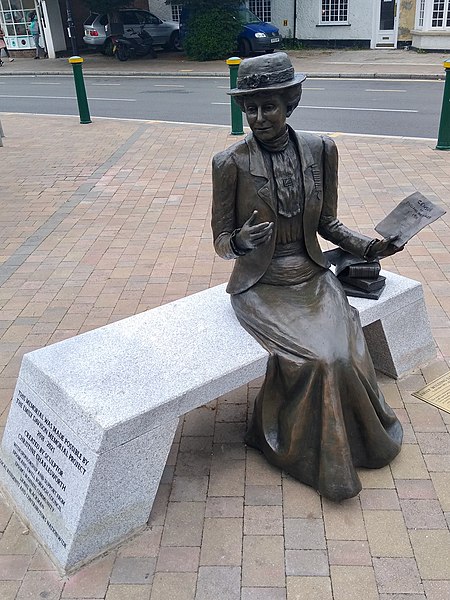
Audrey’s poetry is widely published in anthologies and journals. Last year in June Audrey read her poem ‘Tattenham Corner’ at the special event unveiling the statue of Emily Wilding Davison in the Epsom Market Square. In October 2021 she read poetry and ran an art/poetry workshop for Epsom’s ‘Love me, Love my Mind’ week. Audrey runs a regular ‘Poets Corner’ for the Hub – an online organisation linked with Epsom Hospital’s radio – here she reads her favourite poets by famous poets.


A Matter of Faith: St. Barnabas Church

The world’s largest religion, Christianity, is based on the life and teachings of Jesus. The origins of Christianity dates back to AD 30-33 in Jerusalem. The belief that God is one eternal and supreme being led billions of people to follow this religion. 53% of England’s population in 2018 were identified as followers of Christianity. There are thousands of churches around England that follow different principles with some of them being, Baptists, Methodists, Catholics, Church of England and the list goes on.

Epsom and Ewell alone accommodates 29 churches that observe worshippers on a regular basis. The diverse followers practice their religion wholeheartedly. St Barnabas Church in Epsom believes in one true God who lives eternally in three persons—the Father, the Son and the Holy Spirit. 

The hundred-year-old building welcomes people from any age, race, gender and religion for worship and in their innovative sessions such as Alpha and Barneys. Alpha course is more focused on young people with curious minds who want to explore the big questions of life, faith and meanings. This free session is open for all and helps people understand the Christian faith in a friendly, open, and relaxed environment. Barney’s session targets babies, toddlers and their parents and carers. The session involves lots of toys, songs, bible stories and refreshments for all which is an innovative way to connect little ones with church and God. 

According to Christians, Jesus Christ came in human form to teach people to love God and love their neighbour. Churches aim to spread this teaching through their Sunday prayers. Associating itself with Epsom primary schools, St Barnabas Church takes informal lessons either in schools or church itself where they educate young ones about the Christian faith and belief. Harry Lamaison, deacon of the church, says: “We’re currently exploring the ways we can engage with the local community and its evolving process. We have links with charity organisations such as Love Me Love My Mind and Sunny Bank Trust which helps people with their mental health issues and offer solutions for the same.” The church has linked itself to offer help and support from people who are dealing with mental health issues, breakdown of a relationship or a shock from death in a family. 

St Barnabas follows one of the greatest messages of Jesus Christ “Don’t forget to do good and to share what you have because God is pleased with these kinds of sacrifices.” Church extends its hands to people in the community who are going through financial hardships by providing advice on how they can plan their expenditure and savings. Advice is offered by a financial adviser and is often done by setting up a private meeting with the person. St Paul’s Howell Hill and St Barnabas are working in partnership towards making the local community better by offering support to families in need. The local community is encouraged to take part in church activities that help in bringing the neighbourhood closer and stronger.

To support each other is what God has taught us all. How do we support each other is the big question. The church helps anyone in need and is looking forward to collaborating with local artists who are often unnoticed. Combining prayers with artists is a great way to promote local talent and to draw the attention of locals towards the church. With musicians, dancers and other artists, prayers can be more fun for youngsters as well. Moreover, the church also gives out space for weddings, birth or death. A nominal fee is charged for decorations and upkeep of the church. Artists can also take part in these functions as per people’s choice. 

Sunday prayers are the heart of any church, where worshippers gather and worship for the betterment of their lives. Any religious establishment is incomplete without people and followers. Growing westernisation has kept many apart from the creator of the world. Remembering that god even once a day gives no harm and helping others is an act of God. Every culture or religion tells us how humans should live in harmony and respect each other’s decisions. Be it Jesus Christ, Allah or Bhagwan, all of them are with us, teaching the way of life and how to achieve peace in life.


Editorial 25/04/22

In February 2019 the Cairncross Review “A Sustainable Future For Journalism” was published. The Report stated the decline in public interest journalism was most acute at the local level. The Epsom and Ewell History Explorer website tracks the loss of our Borough’s last dedicated local newspapers in the first decade of the 21st Century.

The Independent Community News Network states “Independent community and hyperlocal news outlets are fulfilling the traditional role of the fourth estate in local civic society, complementing the diverse range of news provision available.”

In establishing the review former PM Theresa May said  “Good quality journalism provides us with the information and analysis we need to inform our viewpoints and conduct a genuine discussion”

ICNN has 122 members from Armagh to Eastbourne.  Most of these local news services are run as the Epsom and Ewell Times is: “For the community, by the community”, though their organisation varies from one to another.

The Epsom and Ewell Times is politically neutral. As our values provide, we seek to promote community cohesion and celebrate the positive activities, businesses, lives and events in the Borough while being fearless in reporting matters of controversy, ensuring opposing points of view are represented in a balanced and fair manner.

Our news service is not run for profit and depends on local citizen journalists giving their time voluntarily. If you wish to join the team please contact us at admin@epsomandewelltimes.com

We hope you enjoy The Epsom and Ewell Times and will support us in the months and years to come. We rely on you and each other.


Borough History: Elizabeth Whitrod

Courtesy of the Friends of Horton Cemetery we republish researched stories of the 9000 patients of the cluster of psychiatric hospitals formerly located in the Borough who were buried in the neglected Horton Cemetery off Hook Road. The charity seeks to persuade Epsom and Ewell Borough Council to reclaim the five acre site from a property speculator to whom it was miss-sold by the NHS in 1983. This is the story of Elizabeth Whitrod.

Elizabeth was born in the March quarter of 1857 to William and Mary Vaughan (née Bratton/Brattan, in Wrotham, Kent. (Malling registration district).

William and Mary had married on 24th February 1846, at the Parish Church of St Marylebone. William’s father was John, a Gardener and Mary’s Father was George a labourer. On their marriage certificate, William was recorded as a servant.

By the 1861 Census, the family was living in Wrotham. William was a groom. Mary, his wife, was entered as a groom’s wife. They had seven children, Elizabeth being the fifth child of the seven and is listed as a scholar. Her eldest brother Edgar is 14 years old and working as a gardener.

By the time of the 1871 Census, Mary Ann, Elizabeth’s mother had died (in February 1870). A search on the GRO reveals the following sad story; Elizabeth’s brother Edward had died on the 31st of January from a malignant sore throat of 6 days duration. Next, her mother Mary died on the 5th of February from typhus fever. Then, the youngest brother to Elizabeth, Ernest, died on the 20th March, aged 14 months from thrush and diarrhoea. Mary Ann, Elizabeth’s older sister died on 29th March in the Union Workhouse at West Malling from typhoid. Finally, her younger brother, Albert aged 5, died on 7th April from diphtheria. It is hard to contemplate the family coping with such losses within the space of three months and one wonders what effect those deaths had on the remaining family.

The census of 1871, shows Elizabeth is acting as housekeeper for her father and her younger siblings Bertha, Clara and Frank, who were still at school. William, her father died in 1872 and on the 1881 census, Elizabeth is 27 years old, working as a housemaid to Hancilia E. Ionides, an Annuitant. On the 1891 Census, there is an Elizabeth Vaughan with a given age of 30, living as a housemaid / domestic servant. The head of the household is absent. The address is 2, High Street, West Malling. With her, is a Kate Vaughan some five years her junior and born in Malling, whilst Elizabeth is recorded as being born in Stratford upon Avon. I wonder if that was the birthplace of the absent head of the house. Perhaps Kate is what Clara, born in 1860, was known as.

In 1893, Elizabeth marries William John Whitrod, a 32-year-old labourer. His father, Roper, was a bootmaker but was deceased by the time of the marriage. William John Whitrod was born in 1861, in the Guiltcross registration district of Norfolk, the fourth of nine children. His parents, according to a family tree on Ancestry, were said to be married in 1852, but I can find no proof of this. The children were all born between 1855 and 1873. On the 1901 Census, William and Elizabeth are living at 7 Lansdowne Crescent, Kensington. William’s occupation is that of a scavenger and Elizabeth is a caretaker. A scavenger would be what today we call a dustman, a refuse collector or street cleaner. There is no indication of Elizabeth’s epilepsy.

Elizabeth was first admitted to Horton on 10th July 1906 and she stayed there for five years. On October 23rd 1911, she moved to the Epsom Colony. She was there for a further seven years or more and died on 12th January 1918. Elizabeth’s death certificate shows that she suffered from epilepsy for many years. She is not described as a widow. I cannot locate her husband, William. A search in the GRO index shows the death of William John Whitrod, aged 45, in the March quarter of the Chelsea registration district. Could this be him? It is hoped that Elizabeth’s medical notes will have survived and more information will become available.


A Visit to Stoneleigh’s Hindu Temple

Scintillating festivals and folk songs that are sung in Hindu culture bring nothing but life to Surrey. With the houses adorned like a bride, and temples flocked by those who follow the religion, Hinduism is a way of life. Our country is a multicultural state, where people from different beliefs, cultures and backgrounds have settled. Spreading its idea amongst people, Hindu belief is now popular all over the world because of its festivals and traditions. To be more precise, there is no month without a festival. 

Hindu belief has no specific founder, however, 95% of Hindus around the globe are known to live in India. Hinduism primarily has two symbols, one of which is OM and the other one is Swastika. Many recognise swastika used by the Nazis, however, in Hindu culture, it’s a symbol of divinity and spirituality in varied religions such as Hinduism, Buddhism and Jainism.

Established in 1994, the Sri Raja Rajeswari Amman temple lies in the heart of Stoneleigh, Epsom. The presiding goddess of the temple is Sri Raja Rajeswary Amman who is known as the mother of love and grace and showers her blessings upon all and develops the goodness within humans. The temple is hailed as an eternal place of devotion, purity and peace. Timeless statues of Hindu deities such as Sri Ganapathy, Sri Murgun, Sri Venktaeshwarar, Sri Pathmavati adorned with jewels and embroidered clothes are kept inside the temple. 

The architecture of the temple comprises two rooms one of which is the area where devotees pray and perform pooja and the other one is for functions such as marriages, festivals and childbirth. Vibrant and beautiful carvings are echoed in its art and architecture. The mandir (Temple) is a lively and peaceful place for worshippers who often come in for their evening prayers. The usual opening hours for the public are from 8:30 AM- 1:PM and 5:30 PM-10:30 PM. With just two Hindu temples in Surrey, this temple attracts devotees from across the county on Tuesdays and Fridays.

The temple witnesses thousands of devotees every day forming long queues outside the temple right from the early hours. “It’s very good to see people follow their culture even after coming abroad. Festivals are celebrated with full enthusiasm and exuberance. Many worshippers even offer donations to the temple for better functioning ” says the temple priest, Visvnathan Sarma, who has been working at the temple for 25 years now. He added, “I enjoy working for the god, it’s always peaceful and soothing for me to spend my time here at the temple and I wish to devote my rest of the time here only”. 

Worship is considered an important part of daily life. The majority of Hindu families have their own shrines where offerings are made and prayers are said to the deities. Worshipping involves all five senses:  touch, taste, smell, sight and hearing. Washing hands, bathing before the prayer, removing shoes before entering the shrine or temple are a few of common rules which must be followed. During the prayer, some offerings such as sweets, flowers and money are made to gods and goddesses. It is important for some men to wear a sacred thread over their left shoulder and hang it to the right hip. This thread is known as Janeu which means shouldering the burdens of life with patience.

There are various cultures in Hindu tradition and rules, marriage rituals, separation rituals might differ from each other. North Indian marriage rituals differ from what South Indian or Sri Lankan weddings perform. But you can expect that marriages traditionally involve a great number of guests, are bright, and colourful. A Hindu wedding is usually a week-long festival consisting of different functions every day which has deep philosophical and spiritual significance. During the wedding, the groom and bride take seven rounds around the fire (Agni) which binds both the couple to the seven promises of their married lives. Sindoor (Vermilion Powder) on their forehead and Mangalsutra worn by Hindu brides symbolises a woman’s marital status. 

The caste system is one of the main reasons which divides Hindus according to their karma (work) and Dharma (duty). It is believed by many scholars that this system dates back more than 3000 years. The four main castes in Hindu belief are Brahmin(the intellectual leaders), Kshatriya(the protectors of the public), Vaishyas (the skilful producers) and Shudras (the unskilled labourers).The system forces individuals to follow the rule and only marry within a specific caste. Even though there are mandatory laws that protect so-called low caste people from violation and discrimination, there are only a few who treat everyone as equal.

Hinduism is enriched with wonders and shocks, it is widely followed and practised by people around the globe. The beauty of festivals, the joy of celebration, the taste of sweets and the bitterness of ancient customs are what constitutes Hinduism. Every belief comes with its rules and traditions, what matters is how it is passed on from generation to generation.