£125,000 for Surrey schools to tackle the impact of climate change
18 June 2026
Surrey County Council is investing a further £125,000 to help schools across the county adapt to the growing impacts of climate change.
Schools can apply for grants of between £5,000 to £10,000 to install climate resilient measures such as green walls, Sustainable Drainage Systems (SuDS) planters, shading structures and tree planting, supported by expert guidance from the council to ensure value for money.
Last year, £120,000 was awarded to 21 schools, in addition to Guildford Grove Primary School and Town Farm Primary School each receiving around £17,000 to deliver more comprehensive interventions and share best practice.
Surrey continues to lead nationally on environmental education, with more Eco‑Schools Green Flag awards than any other county in England for the third year running. All participating schools will be encouraged to work towards this accreditation and embed sustainability across their curriculum.
Marisa Heath, Surrey County Council Cabinet Member for Environment and Planning said: “We know that our climate is changing and seasons are becoming more extreme, this is something we all witnessed during the recent heatwave. It’s important we support schools to adapt to these changes and make sure children are able to learn and thrive at school. By offering further grant funding to schools, not only are we helping schools be more climate resilient but we are inspiring the next generation of environmental leaders.”
Rona Mackie, Headteacher at Guildford Grove Primary School said: “We needed to respond to the fact the climate is changing and we’ve been really lucky as a school to benefit from working with Surrey County Council. They have worked with us to think about areas around our school that we could develop and it will have such an impact on our school, the current pupils and future generations.”
Helyn Clack, Cabinet Member for Children, Families and Lifelong Learning said: “It’s fantastic that we are offering Surrey schools the opportunity again to apply for this funding to enable them to make adaptations and improvements in light of the impacts of climate change. I’d encourage schools to apply and look at the improvements Guildford Grove Primary School and Town Farm Primary School implemented earlier this year to see the benefits they offer.”
The deadline for applications is 31 July 2026. Schools can find out more and apply on the Together for Surrey website.
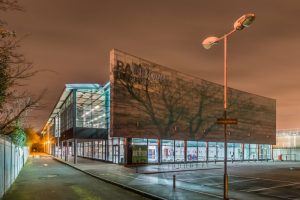
Epsom & Ewell Council blocks release of Rainbow Leisure Centre condition papers
18 June 2026
Epsom and Ewell Times to appeal to Information Commissioner after EEBC withholds inspection and dilapidation records linked to reported £500,000 repair exposure.
Epsom and Ewell Borough Council has upheld its refusal to disclose key papers concerning the condition of the Rainbow Leisure Centre, despite continuing questions over how the public facility came to face a reported repair and dilapidations bill of up to £500,000.
The Council has confirmed that it is withholding the 2025 inspection report and related information about backlog maintenance, dilapidations and financial exposure. It says the material is covered by legal professional privilege because litigation is now a live issue and the Council is already consulting lawyers.
The decision follows a Freedom of Information request by Epsom and Ewell Times seeking documents about the Council’s landlord inspection rights, use of inspection powers, condition surveys, backlog repairs, financial exposure and committee consideration of the Rainbow Leisure Centre.
The Rainbow Leisure Centre, one of the borough’s major public leisure assets, changed operator in October 2025. The issue later became controversial after it emerged that urgent works and dilapidation issues had been identified, with a confidential urgent decision reportedly warning that the final cost was not yet known but could be up to £500,000.
Epsom and Ewell Times asked the Council to disclose what it knew, when it knew it, and what inspection or condition records had been kept over the life of the previous contractual arrangements.
The Council did provide some contractual clauses showing that the operator was required to allow the Council’s representative to inspect assets, equipment or materials used in the provision of leisure services. But it refused to release the 2025 inspection report, any related backlog or dilapidation assessments, and financial liability estimates.
In its original refusal, the Council said the withheld information fell under section 42 of the Freedom of Information Act, which protects information covered by legal professional privilege. The Council argued that releasing the material could undermine its legal position and affect recovery of public funds from the former operator.
Epsom and Ewell Times sought an internal review, arguing that the exemption had been applied too broadly. The review request pointed out that routine inspection records, condition surveys and factual reports do not automatically become privileged merely because litigation is later contemplated. It also asked the Council to consider partial disclosure, with any genuinely privileged legal advice or litigation strategy redacted.
The Council has now upheld its refusal.
In its internal review response, the Council stated: “We take the point that the survey reports would not normally be withheld, but that was a long time ago and under different circumstances. It is not the case that litigation is possibly contemplated, we are already talking to our lawyers about progressing this, so it is a live issue.”
The Council also said it believed the public interest arguments in its original response were sufficient.
That leaves residents with limited public information about a central question: whether the Rainbow Leisure Centre’s condition arose from recent events, historic under-maintenance, inadequate inspection, failures by the previous operator, failures by the Council as landlord, or some combination of those possibilities.
The refusal also raises a further issue. The Council has stated that inspection and survey reports prior to 2025 are not held. If correct, that may prompt questions about how the Council monitored the condition of a major public asset over more than two decades of external operation.
The Council has also stated that it does not hold the dates on which councillors, committee chairs or Cabinet/Committee members were first informed that the Rainbow Leisure Centre required significant remedial or dilapidation works, or that the cost might be material to Council finances.
The Freedom of Information Act does allow public authorities to withhold legally privileged material. However, the exemption is not absolute. Authorities must show that the material is genuinely privileged and, where the exemption is qualified, must weigh the public interest in maintaining the exemption against the public interest in disclosure.
The paradox being that if there were to be litigation then under the rules these documents would be disclosable to all parties involved. “The truth will out”.
Epsom and Ewell Times is now preparing a complaint to the Information Commissioner’s Office. The appeal will argue that the Council has not shown, document by document, that all the withheld information is privileged; that it has not properly considered partial disclosure; and that the public interest in understanding the management of a major public facility and potential exposure of public funds is substantial.
The newspaper will also ask the Information Commissioner to consider whether the request should have been dealt with, at least in part, under the Environmental Information Regulations, because the withheld material concerns the condition of a public building, plant, fabric and remedial works.
The dispute is not simply about one report. It goes to the wider question of how the borough’s public assets are monitored, how risks are reported to councillors, and how much residents are entitled to know when public money may be at stake.
Epsom and Ewell Times will report the outcome of the appeal when the Information Commissioner has considered the complaint.
Epsom town centre licensing clampdown rejected — for now
18 June 2026
Epsom and Ewell councillors have decided not to begin work on a tougher licensing policy for Epsom town centre, after a debate over whether late-night crime and anti-social behaviour justify stronger controls on new pubs, bars and late-night venues.
The Licensing and Planning Policy Committee met on 16 June to consider a request from Cllr Alex Coley to explore the work needed for a Cumulative Impact Policy, often shortened to CIP, for licensed premises in Epsom town centre.
A CIP is a licensing tool used where a council has evidence that the number or concentration of licensed premises in an area is contributing to problems such as crime, disorder, public nuisance or risks to public safety. Before adopting one, the council must first carry out a Cumulative Impact Assessment, or CIA, gathering evidence from sources such as police data, complaints, residents, businesses, health bodies and other responsible authorities.
If adopted, a CIP does not automatically ban new licences. But where objections are made to a new licence or a variation, it creates a presumption that the application will normally be refused unless the applicant can show that the proposal will not add to the existing problems.
That is stronger than the “Special Stress Area” policy already proposed for Epsom town centre. Under that approach, the town centre is recognised as an area of concern, particularly for night-time crime and disorder, and applicants are expected to address those concerns in their operating plans. But there is no presumption of refusal.
Principal Licensing Officer Paul Holliday told councillors that a CIP would require “a detailed evidence gathering process to demonstrate that the cumulative impact of licensed premises is undermining the licensing objectives”. He said adopting such a policy would introduce “a presumption of refusal for new licence applications and variations within a defined area”, unless applicants could show they would not add to the impact.
However, officers recommended that no assessment should be started at this stage. They said existing licensing powers, together with the proposed Special Stress Area, gave the council a proportionate framework for dealing with problem premises. Mr Holliday said the proposed approach would allow the council to focus on “problem behaviour rather than imposing broad restrictions”.
He warned that a CIP would need “robust and up-to-date” evidence and that without it the council could face appeals, legal challenge and financial costs. He added that a CIP could also have unintended economic effects by “discouraging investment from new operators” and limiting business diversity.
The officer report said no Surrey district or borough currently has a CIA in place, with Croydon and Merton cited as nearby examples outside Surrey. It also noted that an external estimate obtained in December 2023 put the likely cost of a CIA at £21,300, with no budget currently allocated.
Cllr Alex Coley (Independent Ruxley) argued that the proposed Special Stress Area may not be enough. He told the committee: “I learned about the special stress area when I was a member of this committee. I sat on a licensing panel hearing where it was my impression that it wasn’t going to make a great deal of difference. It is about mitigation and conditions.”
He questioned the impression that Epsom town centre had no significant licensing-related problems, saying: “There’s no complaints, no reviews, no nuisance, no noise, no problems. There’s nothing to see here. We all know that’s not true.”
Cllr Coley added: “I think my concern is that the town centre has gotten out of control more and more. We do have more trouble at night. I’ve talked to some of the local residents, I talked to the business, to the manager of the BID, Business Improvement District, it’s pretty clear there are problems.”
He stressed, however, that he was not insisting the council immediately spend more than £20,000 on a formal assessment. He said: “I’m not saying that we must have this… I’d like to see it explored and reviewed.”
Other councillors took a different view. Cllr Julian Freeman (LibDem College) said he had direct experience of Epsom at night through volunteering as a street pastor. “I probably have a very different perception than Councillor Coley,” he said. “When I go out on a Friday night with my colleagues, what I do notice very much is the professionalism of the door staff outside most of the nightclubs and bars, which is really quite impressive.”
He added: “I don’t see it as the den of iniquity and licentiousness that is perhaps being portrayed. When I wander around there, normally between sort of 10 o’clock to about three in the morning, I find it increasingly quiet.”
Cllr Steve Bridger (RA Stamford) opposed spending money on a CIA, saying: “This to me will be a total and utter waste of money.”
Cllr Phil Neale (RA Cuddington) said he was “puzzled” by the request, given that officers considered the council’s present and proposed policies adequate. “We don’t have any reports back from the police that this is required,” he said.
Cllr Neil Dallen (RA Town), the committee’s vice-chair, declared at the start of the meeting that he was “a member of the Business Improvement District, which looks after the town centre”, but said he came to the meeting “with an open mind and not influenced in any way by that”.
During the debate, Cllr Dallen said: “I do occasionally go into the town centre late at night because I live there, and it is now a lot better than it used to be. The further back you go, the better it is. It has steadily got better over the last 15, 20 years.”
That declaration may nevertheless raise questions for some observers, because Business Improvement Districts are funded by levies from eligible businesses within the BID area, which includes the Town centre’s licensed premises. A CIP would apply primarily to new licence applications and variations rather than existing licences, but the evidence-gathering exercise behind it could still involve scrutiny of the current night-time economy and the operation of existing venues.
Cllr Kieran Persand (Conservative Horton) sounded a note of caution. Referring to recent events in Epsom, he said: “I don’t think we should take this concern too lightly,” adding that £25,000 was “a lot of money for a council like us to spend right now”, but that he wanted to understand whether there was a “middle ground”.
When he asked whether there was data to support Cllr Dallen’s view that Epsom was getting safer, Mr Holliday replied that earlier work on the licensing policy had found “elevated levels of ASB and violent crime in Epsom town centre”. He added that, as an urban town centre, some higher levels would be expected, but that the data and councillor discussions had led to the proposed Special Stress Area.
Published Police.uk data for Epsom & Ewell Central shows that in April 2026 the area recorded 198 crimes. The most commonly reported categories were violence and sexual offences, with 47 reports, anti-social behaviour with 36, shoplifting with 27, and criminal damage and arson with 23. The monthly total rose from 151 in January to 198 in April, although monthly figures fluctuate.
Compared with other Surrey town policing areas for April 2026, Epsom & Ewell Central recorded fewer crimes than Guildford Town, which had 315 crimes, including 72 violence and sexual offences and 41 anti-social behaviour reports. But it recorded more than Woking Town, which had 102 crimes, including 29 violence and sexual offences and 28 anti-social behaviour reports; Staines Town, where the top categories included 25 violence and sexual offences and 24 anti-social behaviour reports; and Farnham Town Centre, which recorded 14 anti-social behaviour reports and 14 violence and sexual offences.
Those comparisons suggest Epsom town centre is not unique among Surrey towns in facing crime and disorder pressures. But the figures also support the officer’s acknowledgement that Epsom town centre has elevated levels of anti-social behaviour and violent crime when compared with quieter local areas. What the published statistics do not prove, on their own, is whether those offences are caused by the cumulative impact of licensed premises — the key evidential step needed for a legally robust CIP.
The committee ultimately endorsed the officer recommendation that no action should be taken to initiate a CIA at this time. There were two abstentions.
The issue may return. The council’s proposed licensing policy says the need for a cumulative impact policy and the Special Stress Area will be kept under review, and officers suggested that the new East Surrey authority may revisit the matter after local government reorganisation.
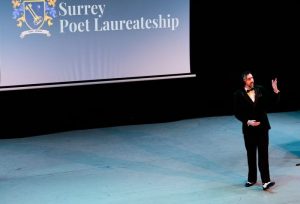
Surrey’s Big Poetry Weekend launches in Egham this summer
18 June 2026
A major new poetry festival is coming to Surrey this summer, as the Surrey Poet Laureateship launches its first annual poetry festival.
Surrey’s Big Poetry Weekend ’26 will take place on Saturday 1 and Sunday 2 August 2026 at the Egham Literary Institute.
The festival has been created by the Surrey Poet Laureateship CIC, a self-funded, volunteer-led organisation founded in 2024. In its first two years, the Laureateship says it has delivered eight free Poetry Hubs across the county, created more than 5,000 engagements with poetry, established more than 20 partnerships and welcomed more than 200 open mic performers to the stage.
Organisers say the new weekend festival will celebrate Surrey’s poets while also bringing nationally recognised contemporary UK poets to the county.
Adam Gary, President of the Surrey Poet Laureateship, said: “When we launched the Surrey Poet Laureateship, people told us poetry was struggling. What we’ve found is the opposite. People are hungry for connection, creativity, and spaces where they can express themselves and be heard.
“Everything we’ve built has been powered by volunteers, belief, and an extraordinary community. Surrey’s Big Poetry Weekend is our biggest leap yet.
“We’re bringing together nationally recognised poets, celebrated Surrey voices, and complete newcomers under one roof because we believe poetry should belong to everyone. We want people to leave inspired, connected, and excited about what poetry can do.”
The weekend programme will include headline performances, talks, panel discussions, workshops and community meet-ups.
Poets appearing at the festival include Len Pennie, Bradley Taylor and Dakota Warren, alongside Surrey poets and emerging voices.
Talks will explore poetry, creativity and literary life, with speakers including Adam Gary, Nia Broomhall and Katie Griffiths. Panel discussions will bring together poets, performers, educators and creatives to consider poetry’s place in modern life.
Topics include Finding Your Voice: Poetry, Wellbeing and Empowerment, looking at how poetry can support wellbeing, self-expression, confidence and resilience.
Another panel, Poetry Without Borders: How Different Voices Shape the Art, will consider how poetry can bridge communities, preserve heritage and create understanding across different backgrounds and lived experiences.
The programme will also include Poetry in the Digital Age: Social Media and the Modern Poet. Guest panellists are expected to include Len Pennie, Bradley Taylor, Adam Gary, Shaniqua Benjamin and others.
Workshops will cover writing, performance, creativity and spoken word. These include a performance workshop led by Bradley Taylor and a poetry for beginners workshop led by Surrey Poet Laureate Adam Gary.
A key feature of Surrey’s Big Poetry Weekend will be its Community Meet-Ups initiative, allowing festivalgoers to help shape the festival experience themselves.
Organisers are inviting attendees to arrange their own gatherings across the weekend, whether focused on Victorian poetry, spoken word, performance technique, niche poetry movements or simply meeting other creative people.
Tori Monks, Vice President of the Surrey Poet Laureateship, said: “One of the things that makes the Laureateship so special is that it welcomes everyone, regardless of their experience with poetry.
“As someone who is new to the poetry world myself, I know how important that sense of openness can be. Our inaugural programme is packed with an incredible line-up of events, performances and voices, offering something to inspire, entertain and engage adults of all ages and backgrounds. We can’t wait to welcome everyone and celebrate poetry together.”
The Surrey Poet Laureateship says the festival is the next stage in two years of community-building, volunteer effort and work to make poetry more accessible.
Despite operating without regular funding, the organisation says it has created free creative opportunities for thousands of people across the county through workshops, outreach projects, open mics, competitions and community partnerships.
Organisers hope Surrey’s Big Poetry Weekend will become an annual fixture in the county’s cultural calendar, attracting nationally recognised poets while continuing to nurture local voices and emerging talent.
Early Bird weekend passes have already sold out. General release day passes are now available.
The Surrey Poet Laureateship is based at The Literary Institute, 51 High Street, Egham, Surrey, TW20 9EW.
.
.
.
.
Epsom counselling service aims to make therapy more accessible
18 June 2026
Mental health challenges can affect anyone, at any stage of life. Yet many people still struggle to access the support they need because of long waiting lists, financial pressures or uncertainty about where to turn.
One local counselling service, The Wellbeing Therapy Hut, is working to help address those barriers.
Founded by Epsom-based therapist and director Jess Farazmand, The Wellbeing Therapy Hut was created with a simple mission: to make talking therapy affordable, accessible and available to those who need it.
Since opening, the service has supported children, young people, adults, couples and families across Epsom, Ewell and the surrounding areas, offering both in-person and online counselling.
The organisation places particular emphasis on affordable options, with the aim of ensuring that financial circumstances do not prevent people from accessing support.
Jess said: “Mental health support shouldn’t be something that people only access when they reach crisis point. We believe that early intervention can make a significant difference, helping people build resilience, improve relationships and maintain positive wellbeing before difficulties become overwhelming.”
The team’s work has been recognised through several awards, including the Commitment to Community Award at the Epsom & Ewell Business Awards, along with other regional business and mental health industry accolades.
For Jess and her team, however, the greatest achievement is seeing the positive effect that counselling can have on people’s lives.
The Wellbeing Therapy Hut also works with other local wellbeing professionals and organisations, believing that strong community partnerships help create a wider network of support for residents.
By collaborating with local businesses, charities, schools and community groups, the organisation hopes to continue raising awareness of mental health and encouraging people to seek support when they need it.
Jess added: “Mental health affects every family at some point. The more we talk about it, the easier it becomes for people to reach out and access support. We are proud to be part of a community that cares about the wellbeing of its residents.”
Epsom & Ewell Silver Band brings sunshine and brass to Kensington Gardens
18 June 2026
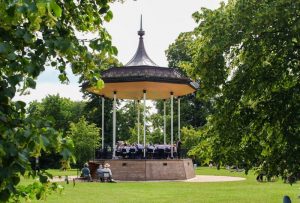
Visitors to Kensington Gardens were treated to an afternoon of brass music on Sunday 14 June, as the Epsom & Ewell Silver Band performed at the historic Kensington Gardens Bandstand.
The concert, which began at 2.30pm under bright June skies, was part of the Hyde Park and Kensington Gardens Bandstand Concerts, co-organised by The Royal Parks and its Friends groups.
For two hours, the bandstand, a short stroll from Kensington Palace and the Round Pond, became the musical heart of the park. Passers-by, tourists and brass band enthusiasts paused their Sunday afternoon walks to set up deckchairs or gather on the grass, forming an appreciative crowd.
Under the direction of Musical Director Tariq Ahmed, the band delivered a varied programme. The performance reflected the standard that earned the Surrey-based group a strong result at the London and Southern Counties First Section Regional Championships earlier this spring.
The programme included traditional brass band marches, contemporary arrangements of film themes and show tunes, and melodic pieces that showed the band’s balance, precision and warm tone.
The afternoon captured the charm of a British summer in one of London’s best-known green spaces. By the time the final notes sounded at 4.30pm, the band was met with warm applause from an audience reluctant for the music to end.
“Hearing a top-tier silver band like Epsom & Ewell playing in the heart of the Royal Parks is exactly what summer in London is about,” said one local attendee. “The acoustic warmth of the brass floating across the gardens was just spectacular.”
Those who missed the Kensington Gardens performance will have further opportunities to hear the band closer to home this summer.
The band’s annual Summer Concert takes place on Sunday 12 July, from 5pm to 7pm, in the Walled Garden at the Old Moat Garden Centre & Café, Horton Lane, Epsom.
It will also perform at a free community Band in the Park event at Rosebery Park, Epsom, on Sunday 9 August, from 2pm to 4pm.
The Kensington Gardens concert was another reminder of the continuing contribution made by the Epsom & Ewell Silver Band to the local arts scene, whether competing regionally or performing for wider audiences.
For ticket bookings for the Walled Garden concert, or for information about joining the band, visit www.eesb.org.uk.
Steven McCormick
A brand-new pregnancy scanning clinic has opened in Epsom & Ewell
18 June 2026
With pregnancy being one of the most special times in an expectant parent’s life, many choose to make the journey even more memorable by having additional scans outside the NHS in a private setting.
When carried out safely, at a reputable Care Quality Commission (CQC) regulated clinic and by an experienced team, private pregnancy scans can be a magical experience for parents-to-be.
As technology advances, 4D ultrasound scans are becoming increasingly popular, offering parents images of what their unborn baby looks like.
A new clinic, Hey Baby 4D in Ewell, has opened to bring greater convenience and accessibility to the local community. It offers expectant parents reassurance, bonding and experience-led pregnancy scans, including gender and 4D scans.
The service aims to help bridge the gap between routine NHS appointments, providing additional reassurance and memorable bonding opportunities during pregnancy, particularly during the waiting periods between standard scans.
Alongside pregnancy scanning services, the clinic will also offer access to specialist testing, including Non-Invasive Prenatal Testing (NIPT), early gender blood tests and women’s health blood testing, giving local families easier access to additional pregnancy and wellbeing support in one convenient location.
Owner Chelsey, who also runs Hey Baby 4D Clapham and Hey Baby 4D Sutton, has a strong passion for providing an excellent customer experience. She has now opened a brand-new pregnancy scanning clinic on Cheam Road, Ewell, after successfully establishing the Sutton and Clapham clinics.
Chelsey said she wanted to bring her experience to the Epsom and Ewell area so that more parents-to-be could enjoy the bonding experience of private pregnancy scans.
The clinic, which opened its doors this June, offers reassurance scans from six weeks, sex confirmation, wellbeing scans, NIPT blood tests and immersive 4D scans.
With gender reveal parties on the rise, the scanning room also includes “Gender Reveal Lighting”, which turns the room pink if the baby is a girl and blue if the baby is a boy.
The clinic says it offers a safe and professional service, coupled with a fun experience for families to enjoy. It also has a referral system in place for continuity of care with the NHS, if needed.
Surrey research: independent directors help rein in bossy bosses
18 June 2026
Surrey research: independent directors help rein in risky CEO pay
New research from the University of Surrey suggests that independent company directors may be more effective at scrutinising executive pay than critics often assume.
The study found that companies with a higher proportion of independent board members were quicker to correct CEO pay arrangements that could expose shareholders to unnecessary risk.
The research, published in European Financial Management, focused on “inside debt” — a term used to describe executive rewards such as pensions and deferred compensation. Unlike bonuses or shares, these forms of pay can encourage chief executives to take a more cautious approach, because part of their personal wealth is tied to the company’s longer-term financial health.
Researchers examined 6,357 firm-year observations across 942 US companies between 2006 and 2019. They looked at executive pay, company accounts and governance data to assess how quickly firms adjusted CEO compensation towards what the researchers calculated to be a healthier balance.
The study found that companies with more independent directors adjusted CEO pay structures more quickly. This effect was particularly strong in high-growth companies, financially secure firms and businesses led by overconfident chief executives, where poor incentives may create greater risks for shareholders.
The findings challenge the view that company boards simply approve executive pay packages shaped by powerful CEOs. Instead, the research suggests that independent directors do intervene when pay structures move too far away from what may be financially appropriate for the business.
The study also found that boards did not simply cut or increase compensation automatically. Where the risks linked to CEO inside debt were lower, independent boards moved more slowly, suggesting that directors weigh the costs and benefits before changing pay structures.
Bonnie Buchanan, co-author of the study and Associate Dean International for the Faculty of Arts, Business and Social Sciences at the University of Surrey, said: “There is a common perception that boards are often powerless when it comes to executive pay, particularly when dealing with influential CEOs. What we found is much more nuanced. Independent directors appear willing to step in and adjust compensation structures when they believe shareholders could be exposed to unnecessary risk.”
Shuhui Wang, co-author of the study and Senior Lecturer in Finance at the University of Surrey, said: “Executive compensation has become incredibly complex over the last two decades. Our findings suggest independent directors are not simply approving pay packages without scrutiny. They are making detailed decisions about when faster intervention is needed and when a slower approach makes more sense.”
The researchers argue that inside debt receives far less public attention than share-based rewards, even though it can have a significant influence on corporate decision-making. Used carefully, it may help boards balance risk-taking with long-term stability.
The study also suggests that board independence mattered more than pressure from institutional investors or major shareholders when it came to adjusting executive compensation structures.
Professor Buchanan added: “This matters because executive pay shapes how companies behave. If boards get those incentives wrong, it can affect investment decisions, growth and ultimately shareholder value. Strong independent oversight appears to play an important role in keeping those incentives balanced.”
The study was written by Bonnie Buchanan and Shuhui Wang of the University of Surrey, in collaboration with Tina Yang, Associate Professor of Finance at the Kate Tiedemann School of Business and Finance, University of South Florida.
Surrey County Council’s outgoing leader says he will not seek to become the county’s mayor if and when the role is created.
Councillor Tim Oliver, who has led the county council since 2018, is serving a final stint in office ahead of the area’s move to two new unitary councils in East and West Surrey – which will take full effect next April.
It comes as part of a wider restructuring of local government, in which many areas with separate county and district councils are seeing them merged into single, unitary authorities.
While this transition is going ahead in Surrey, central government has not yet signed off on a subsequent phase that would see the county get a directly elected mayor.
However, Councillor Oliver has told the Local Democracy Reporting Service (LDRS) he will not stand for the mayoralty when the office is formally established.
He said: “We’re entering a different world, and at some point perhaps I would have gone for the mayoralty, but I decided a couple of years ago that I would sort of see through this restructuring, and then dip out.”
“One of the things I’m hoping that will happen is these two new unitaries will create their own new culture,” he added.
West and East Surrey’s first elections were held last month, which saw the Liberal Democrats gain majorities in both “shadow authorities”.
These authorities will now be tasked with getting the new councils up and running in time for April 2027, when they will formally take the reins from Surrey County Council and the various district councils.
Unitary authorities exist to manage all local government functions in their area, while the previous model of county and district councils saw these responsibilities split between the two.
District councils would manage services such as council tax and bin collections, while the county council oversaw social care, education and highways.
Councillor Oliver said the new unitary system had the potential to be “a much simpler, more streamlined, more resident-focused system”.
Reflecting on his time as leader, Councillor Oliver said getting the county council onto a “strong financial footing” was among his proudest achievements, saying: “I think we can hold our head up high, certainly compared with many other councils.”
Moving the county council back into the county was also high on his list of top accomplishments over the past eight years.
“That meant that we then got on and got ourselves properly set up for agile working just before Covid hit – and had we not done that, there would have been real difficulties.”
He added: “I think ultimately I would like to think we have changed the culture from a kind of ‘the answer’s no, now what’s the question’ to a ‘can-do’ authority.”
Councillor Oliver said his “expectation” is that Surrey could be ready for the 2028 wave of mayoral elections – alongside new authorities Greater Essex, Norfolk & Suffolk, Hampshire & the Solent, and Sussex & Brighton – if the green light is received from central government.
“We’ve got a conversation with the other Surrey leaders about going forward with a foundation strategic authority, which is the next stepping stone before you can get the mayoral strategic authority,” he said.
“And the government is saying push on with the creation of a foundation strategic authority by the first of April 2027 and if we do that it’s not an expensive next step.”
The Ministry of Housing, Communities and Local Government was contacted for comment.
The department previously told Surrey Live that a decision on whether Surrey will get a mayor “has not been confirmed” and that they are simply “committed to working with partners to establish a strategic authority for the area”.
Cllr Tim Oliver, Surrey County Council leader, making his final address to full council as the outgoing leader. (Credit: Surrey County Council livestream)
Surrey praises Libraries of Things as Ewell scheme offers test borrowing
18 June 2026
Surrey County Council has hailed its growing network of “Libraries of Things” as a smarter and greener way for residents to borrow useful household items rather than buying them — even as the proposed full service at Ewell remains affected by unresolved questions over storage and lease arrangements.
In a release issued during Great Big Green Week, SCC said Libraries of Things were now operating in eight libraries and community spaces across the county, including Cranleigh, Dorking, Epsom and Ewell, Godalming, Guildford, Haslemere, Redhill and Woking.
The schemes allow residents to borrow items such as DIY tools, gardening equipment, kitchen items, leisure equipment and other household essentials. SCC said the service helps people save money, reduce waste and support local climate action.
Councillor Mark Nuti, Surrey County Council Cabinet Member for Health and Communities, said:
“Libraries of Things are a brilliant example of how we can help residents save money while also doing the right thing for the environment. They also show the power of working with local charities and community organisations to deliver practical services that really make a difference to people’s everyday lives.
“By sharing resources locally, we’re reducing waste, supporting our communities and making sustainable choices more accessible to everyone across Surrey.”
The Epsom and Ewell Library of Things website now states: “FULL SERVICE OPENING LATER IN THE YEAR”. It says test borrows are available by email appointment, with pick-up and drop-off on Thursday mornings at 10.30am from a temporary store.
The website describes the scheme as “just like a book library, except for things” and says Epsom and Ewell residents can borrow useful items such as carpet cleaners, DIY tools, gardening equipment and party gear “FREE OF CHARGE” rather than buying them new.
The borrowing process set out online invites users to become a member, browse the inventory, reserve an item, select dates and then collect it from the Bourne Hall Library issue desk with a reservation number and identification. Users must be at least 18 years old, and although the service is free, they may be required to provide valid debit or credit card details to cover loss, damage or non-return. Late return fees may also apply.
The website says the Library of Things is run by volunteers from Epsom and Ewell Climate Action Network, known as eeCAN, in partnership with Ewell Library and supported by Epsom and Ewell Borough Council and Epsom Repair Café.
However, the website also confirms that the issue of larger-item storage is not yet resolved. It states: “Large items are currently stored off site. We are in the process of organising storage for large items with access to Bourne Hall car park.” A further note says one week’s notice is required for items listed as large items and kept off-site.
That matches correspondence copied to the Epsom and Ewell Times, which shows that although a limited test system is available, the wider service remains dependent on agreement over storage at Bourne Hall.
As previously reported by Epsom and Ewell Times, the project has been delayed by disagreement over the respective roles of Surrey County Council and Epsom and Ewell Borough Council. SCC operates the library service at Bourne Hall, but the land and building are owned by EEBC. That has left the volunteers seeking clarity on who must approve, lease or authorise the external storage needed for larger items.
The latest correspondence suggests the matter will now go before EEBC’s Environment Committee on 23 June.
Cllr Liz Frost, an RA councillor for Woodcote and Langley Vale, wrote to William Ward of eeCAN on 10 June saying the lease would need to be considered by the committee. She said that, in preparing the report, officers had to take account of the council’s responsibilities “as both landowner as well as wider operational and site-related matters”.
She warned that the lease proposal would need to include conditions which were “likely to differ” from what the group had previously envisaged and “may have implications for the scheme as currently approved by planning”.
In particular, she said it was expected that any agreed arrangement would require “a smaller and more secure form of storage”, similar to more compact examples put forward as part of the Community Infrastructure Levy application.
Cllr Frost added that no works should be undertaken on site until a formal decision had been made and communicated by the council.
In reply, William Ward, chair and co-founder of eeCAN, asked for an urgent meeting before the committee date so that councillors could be made aware of “all facts and options” before reaching a decision.
He said eeCAN had first asked for a meeting about the lease in December 2025 and had repeatedly sought discussions since March. He argued that “a two way conversation” earlier in the process might have avoided the present difficulty.
Mr Ward said volunteers had been working on the basis that the service would open to the public on Earth Day, 22 April, using a temporary store, with construction of the permanent store by volunteers planned for May. The website now indicates that the project has instead moved to test borrowing by appointment, with the full service still to come.
Mr Ward also said eeCAN had already spent more than £2,000 of an SCC grant on wood for the store to comply with a planning requirement for a green roof.
The group says it has local residents already signed up as members who are asking when they can borrow donated items.
Mr Ward said the approved store was intended not only for current large items but also to allow the service to expand as demand increases. He also referred to an SCC-supported “Borrow a Bike” scheme, saying the larger store had been designed to allow space for occasional-use items and bicycles.
He argued that because the service needs to be “fit for future use”, the decision should now involve the newly elected councillors for the future South East Surrey unitary authority area.
The correspondence also raises a financial concern for eeCAN. Mr Ward said the group’s Community Infrastructure Levy bid had been submitted before it knew that planning permission or a lease might be needed. If the current planning permission were now to prove unusable, he said the group would seek a refund of the £83 planning application fee.
The position remains that both councils say they support the Library of Things in principle. In the earlier joint response to Epsom and Ewell Times, Surrey County Council and Epsom and Ewell Borough Council said SCC Libraries enables external providers to operate Library of Things services across the county, while providers are responsible for organising off-site storage for larger items where necessary.
They said Ewell Library is located at Bourne Hall, which SCC leases from EEBC, and that EEBC, as both planning authority and freeholder, is responsible for approving external storage within the grounds.
The councils also said that eeCAN had been advised at an early stage that planning permission and landowner agreement would be required for an external store to house larger items. Planning permission was granted earlier this year and the proposal is expected to be presented to EEBC’s Environment Committee on 23 June.
The dispute therefore appears to have shifted from whether the scheme is wanted to what size and type of storage EEBC is prepared to approve, and on what lease terms. In the meantime, the Ewell website shows a partial service is available to residents prepared to book by email and collect by appointment.
For residents keen to borrow rather than buy, the county council’s Great Big Green Week message is clear: Libraries of Things are now part of Surrey’s environmental offer. For Ewell, the question is whether a test borrowing service can soon become the full service volunteers had hoped to launch earlier in the year.
“Are Epsom and Ewell Borough Councillors adults?” Bourne Hall row continues
18 June 2026
Epsom and Ewell councillors have backed a proposal to invest £250,000 over two years in Bourne Hall Museum, but only after another bruising debate over transparency, councillors’ access to information and the continuing fallout from the withheld museum service review.
At a special meeting of Epsom and Ewell Borough Council’s Community and Wellbeing Committee on 9 June, members voted by six votes to none, with one abstention, to support “Option 2” — investment in improvement of the museum. A funding request and business case will now go to the Strategy and Resources Committee in July.
The alternatives before councillors were to continue with business as usual, with no additional funding, or to close the museum.
In a media release supplied after the meeting, the council described the decision as “a significant step forward” and said the investment would help the museum remain “relevant and sustainable”. Committee chair Cllr Clive Woodbridge (RA Ewell Village) said Bourne Hall Museum was “a much-valued cultural asset” and that, with Local Government Reorganisation approaching, “ensuring a lasting legacy is more important than ever”.
Yet the meeting showed that the question of Bourne Hall Museum’s future has become inseparable from a wider dispute over how much information councillors and the public should be allowed to see before decisions are made.
The report before the committee referred to two 2025 reviews: the Bourne Hall Museum Service Review and the Local Government Association Cultural Peer Challenge. It stated that the reviews were relevant to all three options, including maintaining, developing or closing the service. However, the full Service Review was still not included in the public committee papers.
The report said the council’s Proper Officer had been invited to reconsider attaching the redacted service review, but had concluded that it would “not be appropriate” in order to “ensure the impartiality of information presented to members as the decision-making body”.
That explanation was fiercely challenged.
Cllr Chris Ames (Labour Court), who is not a member of the committee but addressed the meeting with the chair’s permission, argued that councillors had a right under section 100F of the Local Government Act 1972 to inspect documents containing material relating to business before a committee unless they disclosed exempt information.
He told the meeting that “impartiality” was not a lawful exemption. He said councillors were “elected adults capable of weighing evidence” and accused the council of operating in an “Alice in Wonderland world” in which selected councillors were given a report but, he said, were being required to act as though they had not seen it.
Cllr Ames also raised the question of public access, saying that section 100B of the same Act required relevant background papers to be published unless a legal exemption applied. He said no such exemption had been claimed and warned that the decision could be vulnerable to call-in or legal challenge.
Cllr Woodbridge said members had “all had a chance to read the report” and tried to steer the discussion back to the future of the museum. But the disclosure issue repeatedly resurfaced.
Cllr Bernie Muir (Conservative Horton) said that, having now seen the information, she could not understand why it had not been provided in the first place. She described the situation as “appalling” and said councillors should be trusted unless they had demonstrated otherwise.
She then turned to the substance of the review, saying that if the document seen by councillors was the full consultant’s report, “they’ve completely wasted their money”, because much of it amounted to basic organisational advice.
Cllr Kate Chinn (Labour Court) also expressed concern about what councillors were or were not allowed to say about the service review. She said she had left a pre-meeting briefing “more confused” about what she could quote or refer to. When she asked whether “bias” was a lawful reason for withholding material, she said she had been told it was “not about the law” but about the Proper Officer’s decision-making.
The chair said he was sure legal advice had been taken, but that the decision was one for the Proper Officer, made on her own judgment.
Epsom and Ewell Times has seen a confidential email sent by Chief Executive Jackie King to members of the committee before the meeting. In it she said it was “not about confidentiality, sensitivity or lack of transparency” but about “impartiality of information presented to members as the decision making body”.
The Chief Executive wrote that the Service Review was “not unbiased” and would not be suitable in its “raw” form for inclusion in a committee report comparing options, because it “repeatedly emphasises the need for continued investment in the existing museum” and could steer readers towards a preferred conclusion. She said she was willing to share the operational report with committee members, with sensitive data such as names redacted, but maintained that it was not suitable to append it to the public options appraisal.
The council’s public agenda for the special meeting stated that no matters were scheduled which would appear to disclose confidential or exempt information under Schedule 12A of the Local Government Act 1972.
Financial questions also dominated the meeting.
The committee papers put the museum’s current annual budget at around £232,168. Of that, £65,785 related to employee costs for 1.5 full-time equivalent staff, while £123,840 was listed as “accommodation” — described in the papers as a central recharge for use of the space. Central services charges were £32,110, insurance recharges £2,292, other costs £12,180, and income from museum activities £4,039.
The “recharge” point was important because it raised doubts about what the museum really costs and what closure would actually save.
In simple terms, a recharge is an internal accounting allocation. The council incurs general costs for buildings, management, support services and overheads. It then spreads those costs across different services, so that each service appears in the accounts as bearing a share of the council’s wider running costs. That does not necessarily mean the museum is paying rent to an outside landlord, or that closing the museum would save the whole sum shown against it.
Cllr Woodbridge described these as “accountancy charges rather than real charges” and said that if the museum closed the council would not necessarily save that cost, because it was not a cost generated only by the museum.
That distinction matters. On the face of the papers, the museum appears to cost the council £232,168 a year. But more than half of that figure is the £123,840 accommodation recharge, and another £32,110 is central services charges. If those sums are mainly internal allocations of overheads which would remain elsewhere in the council’s budget, the direct cash saving from closing the museum could be far lower than the headline budget suggests.
Cllr Muir queried why such a large accommodation cost was charged to a free public museum located in a council-owned building. She asked why the museum had been put in that position when it was a public service occupying space within Bourne Hall. Ian Dyer, Head of Operational Services, accepted that the charge was historic and “would need to be challenged”.
Cllr Alex Coley (Independent Ruxley) said the recharge model could also make it “extremely unlikely” that the museum would succeed in major external funding applications, because funders would not want their money effectively being used to support internal council recharges. He said the LGA Cultural Peer Challenge had identified this issue.
Cllr Coley also questioned whether councillors were being asked to approve a meaningful investment or simply a process. He said some of the proposed actions — such as replacing long-form text in displays, creating strategies, branding work and social media planning — sounded like business as usual rather than a major transformation. He called for “concrete, tangible” outcomes rather than more paperwork.
Mr Dyer said some short and medium-term recommendations had already been completed by museum staff and that the next stage would be to bring back a business plan setting out what changes would be made with the proposed £125,000 per year.
Cllr Chinn, who proposed supporting Option 2, said any report to Strategy and Resources would need much more detail, including timescales, costs and the implications of Local Government Reorganisation. Cllr Woodbridge agreed that the committee was being asked to decide the principle, not the full business case.
There was little appetite in the room for closing the museum. Before the vote, Cllr Woodbridge said he sensed members appreciated the value of the museum and noted that Option 3 — closure — had not been pursued in the debate.
The committee’s decision does not itself release the £250,000. That decision now passes to Strategy and Resources, where councillors will have to decide whether the business case is strong enough, whether the museum’s accounting model is sustainable, and whether the long-running argument over the service review has been resolved or merely postponed.
For now, Bourne Hall Museum has survived another political test. But the controversy over who gets to see the evidence, and when, remains very much alive.
Epsom Derby Day drew its biggest crowd since 2022 as The King and Queen joined more than 28,000 racegoers at Epsom Downs on Saturday 6th June.
The Jockey Club confirmed that 28,557 people attended Betfred Derby Day, a marked improvement on last year’s modern low and part of a two-day Derby Festival attendance of 48,261.
That total was 10,662 higher than last year, an increase of 28%, and will be seen by Epsom Downs Racecourse as evidence that the first year of its five-year revival plan has made a positive start.
However, the Derby Day figure remained below the 40,000-plus crowd that had been hoped for in some pre-meeting reporting and well below the historic crowds once associated with Britain’s most famous Flat race.
The 2025 Derby Day crowd had fallen to just 22,312 in the paid enclosures, described by the Racing Post as the lowest number in modern history. This year’s figure therefore represents a recovery of more than 6,000 on Derby Day, but not yet a return to the scale of attendance seen in earlier decades.
The Jockey Club said there had been a sold-out Queen Elizabeth II Stand and Grandstand Enclosure, with thousands more across the racecourse, DerbyFest and The Hill.
The presence of Their Majesties gave the day added national profile. The King and Queen arrived after attending the wedding of Peter Phillips and Harriet Sperling in the Cotswolds, and their attendance was widely reported by national racing and news outlets.
The weather was less helpful. Rain fell overnight and for much of Saturday, with the ground officially changing from good-to-soft to soft before the Derby. The Guardian’s live coverage described the event as rain-soaked, and images from the day showed racegoers sheltering under umbrellas.
On the track, Christmas Day won the 247th running of the Derby, ridden by Ronan Whelan and trained by Aidan O’Brien. The victory gave O’Brien a record-extending 12th Derby win and his 50th British Classic success.
The race was not without controversy. Favourite Benvenuto Cellini, also trained by O’Brien, finished the race but was later declared a non-runner after a stewards’ inquiry found that he had been denied a fair start when his hind leg became caught in the stalls.
For Epsom, however, the wider question was whether the meeting itself could begin to recover its place as one of the great public sporting occasions of the year.
The Jockey Club has embarked on a £6 million, five-year plan to revive the Derby Festival. This year’s changes included increased prize money, free admission for under-18s, free parking, the new DerbyFest area on The Hill, entertainment partnerships and efforts to reconnect the event with the local community.
Ahead of the meeting, Epsom Downs general manager Jim Allen said more than 22,000 people had registered for DerbyFest over the two days, and that the racecourse was expecting more than 60,000 people across the Festival.
The final total of 48,261 fell below that aspiration, but still marked a substantial improvement on 2025. The Jockey Club’s own post-event assessment was upbeat.
Jim Allen said initial feedback on the changes to the customer experience had been “extremely positive”. He said selling out the standside enclosures in advance was testament to the continuing appeal of the race and to the work of the Epsom and wider teams.
He added: “Clearly the weather did not get the memo, but ultimately when you run an outdoor event in this country, you are always slightly in the lap of the gods.”
Mr Allen described 2026 as “year one of a five-year journey” and said the racecourse would be guided by customer feedback before making decisions for future years.
The Jockey Club’s use of open-top buses and community-facing measures formed part of the attempt to restore the Derby’s traditional local character. At present, however, no published figures appear to isolate the effect of those buses or say how many additional attendees came specifically through local community group involvement.
The fairest conclusion is therefore that the 2026 Derby was neither a full return to former glories nor another year of decline. It was a measurable recovery: helped by royal attendance, a stronger entertainment offer and sold-out principal stands, but held back by rain and still some distance from the crowds Epsom once took for granted.
For a racecourse seeking to rebuild the Derby as both a world-class sporting occasion and a people’s festival on the Downs, Saturday was a step forward. The test will be whether that recovery can be sustained — and expanded — in 2027 and whether a change of day in the week should be tested.