Epsom and Ewell Times
18th June 2026

ISSN, LDRS and IMPRESS logos

The process of appointing the new local government chiefs begins

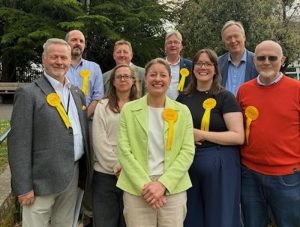
Councillors for the East Surrey Voluntary Joint Committee. (Credit: Surrey County Council)

Councillors from across Surrey met this week for the very first time as part of two new committees set up to manage the county’s biggest council shake-up in decades.

The East Surrey Voluntary Joint Committee met yesterday (Thursday, January 15) at Woodhatch Place in Reigate, while the West Surrey Voluntary Joint Committee met today (Friday, January 16) at Woking Borough Council.

It marks a major milestone in plans to scrap Surrey’s current council system and replace it with two brand-new authorities: West Surrey Council and East Surrey Council.

What is changing?

Last year, the Government announced that Surrey County Council and the county’s 11 district and borough councils will be merged into just two big councils.

In May, residents will vote for councillors who will sit on these new authorities. At first, they’ll act as ‘shadow councils’ which means they will be basically planning everything behind the scenes. From April 2027, the new councils will officially take over all local services. Until then, the current councils will keep running things as normal.

Why these meetings matter

Since there is a lot of work to do and not much time to merge all the responsibilities of the local authorities and split them in half, councillors have volunteered to get started early.

The two new joint committees are made up of existing councillors from county, district and borough councils. Their job is to start laying the groundwork for the big transition.

At their first meetings, both committees agreed to:

  • Create a single implementation plan to manage the change safely and legally
  • Set up an implementation team made up of senior council officers
  • Decide how key interim leadership roles will be filled

This includes recommending temporary appointments for three crucial posts:

  • Head of Paid Service (the council’s top boss)
  • Chief Finance Officer (in charge of the council’s financial health)
  • Monitoring Officer (who keeps everything legal)

These roles are required by law and will support the new shadow councils until permanent staff are recruited.

‘An important milestone’

Terence Herbert, Chief Executive of Surrey County Council and senior officer in charge of the reorganisation, said: “This is an important milestone and I’m grateful that councillors have agreed to come together on a voluntary basis to get this vital work underway.

“At the heart of this is making sure residents continue to get the services they expect – both now and under the new councils.”

He added that councils are “well prepared for change” and committed to making the transition as smooth as possible for residents and staff.

What happens next?

Both committees will now meet monthly, rotating locations around their areas. They will keep meeting this way until the shadow councils are formally created after the May elections.

Each committee will have 10 members: five from Surrey County Council and five from district and borough councils. Their work programmes will be published online so residents can see what is being discussed.

Bigger plans for Surrey

The Government has also said simplifying councils will help pave the way for more devolution, meaning more powers could be handed down to Surrey in future.

Talks are already under way about setting up a new strategic authority, like a metro mayor, for the county. For now, councillors say the focus is on getting the basics right which means making sure the new councils are ready to hit the ground running in 2027.

Emily Dalton LDRS

Councillors for the East Surrey Voluntary Joint Committee. (Credit: Surrey County Council). Epsom and Ewell Borough Coucil leader Cllr Hannah Dalton (RA Stoneleigh far left)


Goldman sacks the Epsom and Ewell Residents Association

Cllr Janice Goldman

A councillor representing Nonsuch ward has become the latest member of Epsom and Ewell Borough Council to change political alignment mid-term, with Shanice Goldman joining the Conservative group.

Cllr Goldman, first elected in May 2023, said her decision was based on where she believed she could be “most effective” in achieving practical outcomes for residents, rather than on ideology or internal party politics. She cited concerns about governance, the Local Plan and the council’s approach to parish councils as key factors influencing her move.

Her defection comes amid a period of visible political flux at Epsom and Ewell Borough Council, which is currently controlled by the Residents’ Associations (RAs). In recent months, College ward councillor Julie Morris left the Liberal Democrats to sit as an Independent, while Alex Coley departed the RA group, also choosing to continue as an Independent councillor.

In a statement explaining her decision, Cllr Goldman said she had found it increasingly difficult to support an administration she felt was not sufficiently focused on delivery or long-term outcomes. She said her priorities were better aligned with the Conservatives’ approach to accountability, governance and service delivery, adding that any local government reform should be “resident-focused, evidence-led, and driven by improved service delivery rather than structural change for its own sake”.

She also pointed to Conservative positions on safety, the Green Belt and scrutiny of council decision-making as factors in her decision, while stressing that her core priorities for residents had not changed.

The move was welcomed by local Conservative officers, who used the announcement to criticise the Residents’ Association-led administration’s record on council management, the Local Plan and parish council proposals. They said Cllr Goldman’s arrival strengthened their group’s capacity to challenge the council on behalf of residents.

Cllr Goldman said she would continue to focus on improving safety, quality of life and transparency in decision-making for residents of Nonsuch ward.

Her change of affiliation does not alter the overall control of the council, but it adds to a growing pattern of councillors stepping away from their original party groupings during the current term, raising wider questions about cohesion, governance and political direction at the borough council.

Though Conservative controlled Reigate and Banstead Borough Council has the lowest per capita debt of the 11 Surrey districts councils the three super-league mass indebted Councils were or are run by Conservatives at the relevant period of debt accumulation. See today’s Epsom and Ewell Times editorial: Process matters — but so does the balance sheet.

Sam Jones – Reporter


Process matters — but so does the balance sheet

Epsom & Ewell Times has recently published a run of stories raising concerns about process, openness and transparency at Epsom & Ewell Borough Council (EEBC). Those issues matter. A council can deliver services and still fall short on how it explains itself, records decisions, shares information, and responds to scrutiny.

But if we are going to judge the borough fairly, we should also place EEBC in a wider Surrey context — particularly on the question that has become existential for parts of local government: financial resilience. In this respect we are all lucky not to be living in one of a number of other Surrey boroughs which carry massive debt.

A Surrey league table no council wants to top

Using each district and borough council’s reported borrowing position and dividing by population, the county picture is stark. A small number of councils sit in an entirely different universe of debt-per-resident — Woking and Spelthorne above all, with Runnymede also far ahead of the pack.

At the other end, councils such as Reigate & Banstead report minimal borrowing compared to the Surrey outliers.

EEBC, on the same simple “borrowing per head” measure, is firmly in the low-debt group — nowhere near the high-risk profile that has dominated headlines elsewhere.

What this means for EEBC’s story

It would be a mistake to pretend that “good finances” cancels out “poor process”. It doesn’t. Residents are entitled to proper explanations, accessible records, timely disclosure, and a culture that treats scrutiny as a civic asset rather than a nuisance.

But it would also be a mistake to ignore that, in Surrey terms, EEBC’s financial position looks comparatively restrained — particularly when set against the scale of borrowing reported by the county’s worst-affected councils.

That relative prudence matters because Surrey is heading toward local government reorganisation. When structures change, it is the underlying financial inheritance — and the habits that created it — that shape what services survive, what investments stall, and what risks get handed on.

The Residents’ Association question

EEBC is unusual in one respect: it is dominated by Residents’ Associations rather than the national parties. Some voters might reasonably assume that an administration not driven by national political goals would be best-in-class on the basics of local stewardship — especially finance.

Yet “not being party political” is not, by itself, a guarantee of excellence. A locally rooted administration can still fall into bad habits: weak challenge, insularity, a defensive attitude to information, or an over-reliance on officer-led process that leaves elected members appearing remote from key decisions.

If EEBC wants to claim the mantle of the “competent local alternative”, then the test is simple: keep the financial discipline — and raise the bar on transparency to match it.

Cllr Shanice Goldman’s defection to the Conservative Party and her reasons contain some irony in this context. The super-debt league leaders of Surrey Districts’ table of financial infamy are or were Conservative led during their plunges into debt despair.

A constructive conclusion

EEBC’s comparatively modest borrowing position gives it something precious: room to manoeuvre. The council should use that room not to relax, but to improve how it governs: publish clearer narratives, make decision trails easier to follow, treat FOI and public questions as part of democratic health, and build trust through routine openness rather than reactive disclosure.

In other words: Surrey shows us what happens when the balance sheet breaks. EEBC should ensure that, locally, the democratic culture doesn’t.

Related reports:

Another Epsom and Ewell Borough Council cover-up of criticism?

A Decision Not Fully Bourne Out?

Epsom Councillor claims he is being silenced for his transparency concerns

Cllr Dallen accused of £1/2 m Epsom & Ewell Council cover-up

Goldman sacks the Epsom and Ewell Residents Association


Surrey districts “debt per head” league table

(£ per resident; higher = more debt per head)

  1. Woking – ~£21,145 per head (total borrowing ~£2.180bn at 31 Mar 2025).
  2. Spelthorne – ~£10,299 per head (long-term borrowing ~£1.042bn at 31 Mar 2025).
  3. Runnymede – ~£6,553 per head (long-term borrowing ~£587.1m at 31 Mar 2025).
  4. Surrey Heath – ~£2,029 per head (borrowing ~£183.4m at year end).
  5. Guildford – ~£1,842 per head (borrowing shown as £74.040m short-term + £201.508m long-term at 31 Mar 2025).
  6. Mole Valley – ~£1,192 per head (see caveat) (snippet-reported “external borrowing” ~£103m, referenced to its audited 2022/23 position).
  7. Tandridge – ~£1,088 per head (see caveat) (figure inferred from the draft accounts extract available in search results; I was not able to open the full PDF again to verify the precise borrowing line-item).
  8. Epsom & Ewell – ~£796 per head (borrowing ~£64.427m at 31 Mar 2025).
  9. Elmbridge – ~£353 per head (see caveat) (accounts page was blocked to me; borrowing figure comes from the published accounts snippet indicating borrowing outstanding at 31 Mar 2025).
  10. Reigate & Banstead – ~£33 per head (balance sheet shows £5.0m short-term borrowing and no long-term borrowing at 31 Mar 2025).

Caveat

Councils report “deficit” in several non-equivalent ways (e.g., accounting deficit on provision of services, general fund outturn variance, in-year overspend funded by reserves). EET had difficulty sourcing the figures for Waverley.


Epsom and Ewell’s MP in the running for …. running

Women runners and arrow pointing where MP might be

A hardy team of Epsom & Ewell Harriers women braved freezing conditions for the third fixture of the Surrey Cross Country League season at Oxshott Woods on 10th January, hosted by Elmbridge Road Runners. The demanding woodland course, featuring slippery roots, undulating ground and the infamous hill, tested runners throughout.

Epsom & Ewell fielded two full women’s teams and enjoyed an outstanding day in Division Two. The A team produced a commanding performance to take first place, finishing 35 points clear of Reigate Priory, while the B team secured an excellent second place, just behind Wimbledon Windmilers.

Individually, Sophie Glencross (U20) led the Harriers home with a superb third-place finish overall, drawing on her recent Varsity Cross Country experience to handle the tough conditions with confidence. Close behind, Sophie Lomas continued her strong winter form by finishing fourth, following her eighth-place result at the Surrey Cross Country Championships the previous weekend.

Completing the A team scoring positions were Annie Snowball (U20) in 19th, Nicky Stevenson (V45) in 21st and Lily Brown (U20) in 28th. Stevenson also recorded a notable age-group performance, finishing fifth in the V45–54 category with a time of 34:40.

Further strong runs came from Lauren Johnson in 32nd, Amber Brough-Nuesink in 43rd and Helen Maguire in 44th place — the Liberal Democrat MP for Epsom and Ewell — competing alongside her local club on a challenging winter course. Also finishing were Sandra Newbury in 86th and Julie Houghton in 98th.

After three of the four league fixtures, Epsom & Ewell sit third in Division Two, with Annie Snowball currently leading the U20 individual standings. With Reigate Priory and Vets AC contesting the top positions and E&E holding a narrow advantage over both Clapham Pioneers and Wimbledon Windmilers for the final promotion place, the concluding fixture at Lloyd Park promises to be keenly fought.

Selected results:
3rd – Sophie Glencross 30:01
4th – Sophie Lomas 30:43
19th – Annie Snowball 34:11
21st – Nicky Stevenson 34:40
28th – Lily Brown 35:22
32nd – Lauren Johnson 35:49
43rd – Amber Brough-Nuesink 36:37
44th – Helen Maguire 36:43
86th – Sandra Newbury 40:14
98th – Julie Houghton 42:18

Sam Jones – Reporter

Photo: Courtesy Epsom and Ewell Harriers


Another Epsom and Ewell Borough Council cover-up of criticism?

Bourne Hall Ewell Surrey inside

Following closely behind the storm over the secrecy around the apparent failure of Epsom and Ewell Borough Council to maintain over 20 years an adequate landlord’s oversight of The Rainbow Leisure Centre [see Epsom and Ewell Times and the BBC’s LDRS report: Cllr Dallen accused of £1/2 m Epsom & Ewell Council cover-up], Independent Councillor for Ruxley Ward (former RA representative) Mr. Alex Coley has written to the Epsom and Ewell Times about the non-disclosure of a report concerning another Council asset: Bourne Hall in Ewell Village.

His letter is published here: A Decision Not Fully Bourne Out?

In view of the technicalities and jargon involved Epsom and Ewell Times provides this explainer:

When Epsom & Ewell Borough Council’s Community & Wellbeing Committee met on 13th January, it voted unanimously for greater investment (“Option 2”) for the future of Bourne Hall Museum. On the surface, this appeared to be a clear decision to invest in the museum rather than let it drift or close it. See Epsom and Ewell Times report here: Ewell’s “UFO” shaped Bourne Hall to take off anew

However, Cllr Coley explains in his letter to the Epsom & Ewell Times, the decision sits on top of a missing report, an unresolved funding question, and wider concerns about transparency in the decision-making process.

The three options – in plain English

The committee report presented councillors with three choices for the museum.

Option 1 was to do nothing. This would mean keeping the museum running as it is, within existing budgets, with no major changes or new investment. Officers warned that this approach would slowly reduce visitor numbers, weaken the wider Bourne Hall business plan, and leave the museum vulnerable as local government is reorganised.

Option 2, which the committee chose, was to invest in improvement. This would involve spending money in the short term to modernise displays, improve accessibility, strengthen community engagement, collect better visitor data, and develop a long-term plan. The report presents this option as a stepping stone towards a future where the museum could eventually move to a trust or community-based model.

Option 3 was to close the museum. This would involve shutting it to the public and beginning the lengthy and costly process of disposing of or transferring the collection, a process expected to take many years and carry significant reputational risk.

What “Option 2” actually commits the council to

This is where the language becomes technical, and where misunderstanding can easily arise.

By choosing Option 2, the committee did not approve spending the money. Instead, it agreed that officers should submit a funding request to the Strategy & Resources Committee in March 2026.

The report estimates that Option 2 would cost around £359,000 per year in the first two years, compared with around £236,000 for simply carrying on as now. The difference reflects a proposed investment phase intended to “turn the museum around”.

Crucially, the committee resolution includes a fallback position. If Strategy & Resources does not approve the funding, the council will revert to doing nothing and carry on with business as usual.

In other words, the January vote was not the final decision. The key financial decision still lies ahead.

Why Cllr Coley says the process matters

Cllr Coley’s concern is not about whether the museum should improve, but about how the decision was framed and what information councillors and the public were not shown.

He refers to an LGA Cultural Peer Challenge carried out in August 2025. This is a standard Local Government Association review process intended to provide independent scrutiny and learning, and such reports are normally published in full.

In this case, the full peer challenge report was not included in the committee papers. Instead, only a high-level executive summary was incorporated into the options report.

Cllr Coley says he repeatedly asked when the full report would be published and was told it would appear with the January committee papers. It did not. After the committee vote, he was informed that a decision had been taken to rely on a summary instead.

At the meeting itself, the committee chair accepted that, in hindsight, the full report should have been included after this was challenged by opposition councillors. As of now, it has still not been published.

What the missing report is said to contain

Cllr Coley states that, internally, the peer challenge report is understood to contain findings that are critical of the council’s handling of the museum. These are said to include confusion and mixed messaging about the museum’s closure, the exclusion of stewardship and governance questions from scope, failure to act on recommendations made in a 2023 review, recharge costs that may not reflect the true cost of running the museum, difficulty accessing detailed financial information, and fragmented staffing structures affecting communication and opportunity.

These issues matter because Option 2 is explicitly justified as being based on the service review and peer challenge findings. Without access to the full peer challenge report, councillors and the public cannot independently assess whether the proposed investment properly addresses those criticisms.

Why this matters before March

The Strategy & Resources Committee will be asked in March to approve, or refuse, the additional funding required for Option 2.

Cllr Coley’s central question is whether councillors should be asked to commit hundreds of thousands of pounds without having seen the full independent review that underpins the case for spending it. That is why he has submitted a Freedom of Information request and is pressing for the report’s publication before the funding decision is taken.

In short

The January vote did not approve spending. It authorised a future funding request. A key independent report cited as evidence has not been published. One councillor argues this undermines informed decision-making. The decisive moment will come in March, when councillors decide whether to fund the plan, potentially without seeing the full peer challenge findings unless they are released.

Sam Jones – Reporter

Related reports:

Cllr Dallen accused of £1/2 m Epsom & Ewell Council cover-up

A Decision Not Fully Bourne Out?

Ewell’s “UFO” shaped Bourne Hall to take off anew


A Decision Not Fully Bourne Out?

Letter to the Editor

From Councillor Alex Coley.

Dear Editor,

I read Emily Dalton’s article Ewell’s “UFO” shaped Bourne Hall to take off anew in the Epsom & Ewell Times with great interest, for a number of reasons.

I took part in the LGA Cultural Peer Challenge which looked at options for the future of Bourne Hall Museum in August last year. At that time, I was the lead Independent councillor in England for sector-led improvement, which is the local government policy area under which LGA peer challenges take place.

The peer challenge was notable for two things: firstly, the short notice and brevity of information provided; and secondly, the non-attendance of all but one Residents’ Association councillor (a former employee of Bourne Hall) at the group session where we met with the peer team. Seven RA councillors were invited, including the Leader of the Council. All four leaders of the opposition political groups were in attendance.

In October, I wrote to the Council’s Chief Executive asking when the report would be published, as is expected in all LGA peer challenges. I was told it would form part of the Community & Wellbeing Committee papers on 13 January 2026. When I noticed that the report was not included in the committee papers, I wrote again to the Chief Executive asking why not, and was told this would be sorted out, with the admission that she had thought it would be included. Yet it was never published or shown to members at the committee.

The day after members voted on the decision, I received a further email from the Chief Executive explaining that it had been decided to incorporate a high-level executive summary of the peer challenge report instead, as this was felt to better fit with the focus of the committee report. I was told this decision was taken in conjunction with the committee chair, Cllr Clive Woodbridge. The peer challenge report has still not been made public and, as such, I have submitted a Freedom of Information request to obtain it.

Internally, I understand that the report contains findings by the LGA peer team which are not favourable to Epsom & Ewell Borough Council. These reportedly include:

  • General confusion and mixed messages about the museum’s closure
  • A decision to exclude stewardship and governance questions from the scope of the museum’s future
  • Failure to complete work recommended in a 2023 review of Bourne Hall
  • Disproportionate recharge costs which do not reflect the true running costs of the museum
  • Frustration on the part of the peer team at being unable to access more detailed income and expenditure information relating to Bourne Hall
  • Fragmented staffing structures which may be contributing to gaps in communication, information-sharing and missed opportunities

Should I infer that the reason the report has not been made public is embarrassment to the Council, rather than a genuine desire for a high-level summary to better fit the focus of the committee report?

Cllr Clive Woodbridge, Chair of the Community & Wellbeing Committee, accepted that, “in hindsight”, the LGA report should have been included in the committee papers, after being challenged by Cllr Bernie Muir and Cllr Rob Geleit during the meeting. And yet, at the time of writing, it has still not been shared with the public.

Will it be made public before the Strategy & Resources Committee considers the £359,000 requested spending?

Yours faithfully,

Cllr Alex Coley

Independent – Ruxley

.

.

.

.

Related reports:

Ewell’s “UFO” shaped Bourne Hall to take off anew

Another Epsom and Ewell Borough Council cover-up of criticism?


Epsom Councillor claims he is being silenced for his transparency concerns

Cllr Ames at meeting. EEBC YouTube channel

A meeting of Epsom and Ewell Borough Council’s Standards and Constitution Committee on 15th January exposed sharp tensions over councillors’ scrutiny rights and the handling of Code of Conduct complaints, following an unusually fraught exchange between a senior councillor and the committee chair.


Councillor declares interest — and raises alarm

Early in the meeting, Councillor Chris Ames (Labour Court) declared a personal interest in the final agenda item reviewing Code of Conduct complaints, confirming he was the subject of two live complaints and would withdraw when the item was reached.

In an extended statement, Councillor Ames told the committee that he had chosen to be transparent because the complaints were already referenced in the report and likely to give rise to “public speculation”.

He said: “Both complaints are effectively that I raised concerns about transparency failings at the council… I don’t believe it’s appropriate to use a code of conduct complaint to censor councillors’ concerns”.

Councillor Ames also argued that there appeared to be no clear written procedure for councillors who are the subject of complaints, beyond guidance aimed at complainants. He said this lack of clarity was itself a governance issue the committee should be concerned about.

The Chair, Councillor John Beckett (RA Auriol) intervened to halt the statement, telling him: “This is not really the time and place to discuss the actual complaints against you.”

Councillor Ames responded that being required to recuse himself before any complaint was resolved was already preventing him from fulfilling his role: “On the basis of a complaint, this essentially has the effect of censoring me as a councillor.”

Constitution update prompts wider scrutiny debate

The committee later considered an update to the Council’s Constitution, including changes to the Scheme of Delegation that governs what decisions officers can take without councillor approval.

Officers introduced a late addendum, explaining that an internal audit had identified an error in the Constitution. A requirement for an annual report to Audit and Scrutiny on “significant delegated decisions” was being corrected to refer instead to “urgent decisions”, a defined category already used in practice.

The Monitoring Officer stressed the change was technical: “We’re literally just recognising a defined term of decisions that don’t exist for one that does. There will be no changes to the process.”

However, Councillor Ames used the discussion to raise broader concerns about scrutiny being weakened in practice. He argued that councillors’ existing rights to request scrutiny of delegated decisions were routinely ignored. Referring to the Constitution, he said: “There is a right for a councillor here to request that decisions taken by officers under delegated powers are scrutinised… but it doesn’t appear to express a right for that scrutiny then to take place.” He also mentioned: “Councillor Chinn (Labour Court) and I have been warned to be circumspect about what we can and can’t say in public about the scheme of delegation. It’s been declared to be an exempt issue.”

He proposed amending the wording to make clear that such requests must be heard by the Audit and Scrutiny Committee, warning that without this, councillors’ rights existed “for no effect”. Councillor Ames went further, accusing the administration of blocking scrutiny: “All of the attempts at calling in are being blocked… The main object of the administration seems to be to stop the public finding out quite how bad they are by preventing things being aired in public.”

Proposal deferred, constitution changes approved

Officers advised that the proposal should be referred to the Constitution Working Group, made up of political group leaders, rather than debated fully on the night. Councillor Ames’s amendment failed to attract a seconder but was formally referred to the working group at his request.

The committee then unanimously agreed to recommend the constitutional updates — including the late correction — to Full Council.

Code of Conduct complaints: eight cases, two ongoing

After Councillor Ames left the meeting, the committee considered the report on Code of Conduct complaints.

Officers confirmed that eight complaints were assessed as valid between December 2023 and December 2025. Six had been resolved, with two still ongoing. No councillors were named, with officers citing the need for fairness and natural justice.

The report was noted without debate.


Why this matters

While much of the meeting dealt with technical governance changes, the exchanges revealed deep unease about transparency, scrutiny and the use of conduct complaints, particularly as the Council approaches local government reorganisation.

Whether Councillor Ames’s concerns lead to stronger scrutiny powers — or remain unresolved — now rests with the Constitution Working Group.

Sam Jones – Reporter

Cllr Ames at the meeting: EEBC YouTube channel


Ashtead Tennis Club gets set to expand

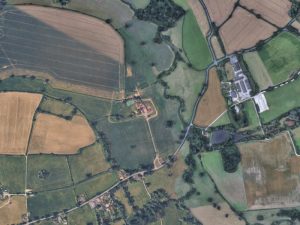
Aerial view Ashtead Tennis Club - google

Sport in Mole Valley is set to get a boost after plans for a new clubhouse, that will allow Ashtead Tennis Club to offer more to the community, was approved. The new larger facility will replace the existing block and will include  accessible toilets, changing facilities and a larger social area.

The club plans to build its new Ashtead Recreation Ground headquarters with matching materials as its current block.

Officers at Mole Valley District Council’s January 7 development committee said it would not harm the or overly impact the neighbourhood. The plans were widely praised as being good for Ashtead with the only real objections being three windows that faced a neighbouring property. The committee, however, heard these would be masked by fencing and trees

Councillor Chris Hunt: (Independent: Ashtead Lanes & Common ) said: “ The tennis club have obviously put an awful lot of work into this application. This is positive.” He added: “Use of this new proposed clubhouse is an improvement to their current structure and most people will be looking towards the tennis courts rather than to the fence.

Cllr Phil Hammond (Liberal Democrat: Fetcham) said “Ashtead is a lovely place…so I’m sure the neighbours can resolve their issues. We give a lot of support to football, bowls, cricket and tennis clubs. We do a lot through our neighbourhood CIL. Updating their facilities is a challenge, getting accessible toilets and changing. 

“The demographic of sports, the involvement of young people, women’s sport; It’s always changing and evolving and I think it’s good that this council can support that. It’s a good place, it’s a busy place and I’ve seen what they do in terms of developing the sport but they also extend the sport with things like pickleball or easier forms of tennis. It’s the sort of thing we need in our community.”

Chris Caulfield LDRS

Ashtead Tennis Club (image Googe)


Puppy School has arrived in Epsom!

Puppy school logo and a puppy

▪ Owning the perfect puppy has never been easier now that “Puppy School” has arrived in Stoneleigh, Epsom! 

▪ “Puppy School” is a UK-wide network of professional dog trainers and Angelika received her own tutor training from renowned author, dog trainer and canine behaviourist Gwen Bailey. 

Six weekly lessons held in St John’s Church Hall, Stoneleigh run by Angelika, are based on kind, gentle and effective methods. Angelika teaches owners how to improve their dogs’ obedience and ensure their puppies become good-mannered, well-balanced pets − friendly with adults, children and other dogs, and responsive to basic commands. Based on behavioural research and a better understanding of how animals learn, Angelika will teach owners to train their pets using kind, reward-based techniques, rooted in science. This helps produce obedient, well-mannered dogs who are not timid or fearful. 

Angelika attends regular courses in the latest animal behaviour and training techniques and keeps up to date with information that may be useful to pet dog owners. 

Angelika says, “My classes are designed to make training simple, and to be fun for both owners and puppies. They are ideal for dogs aged up to the age of 20 weeks and I teach owners and their puppies how to enjoy a healthy and happy life together.” She continues. “I am passionate about what I do, I feel that I am a friendly, approachable trainer and I shall always be on hand to give all the advice owners need to turn their puppies into well behaved adult dogs and beloved family pets.” 

Classes held at St John’s Church Hall, Station Approach, Stoneleigh, Epsom KT19 0QZ

▪ Studies show that it’s never too early to begin training and socialising pups. The earlier the better (and the easier it is) Socialisation and Habituation are key! 

▪ Puppy School was formed in 2002, and professionally trained tutors are running classes UK-wide. 

▪ Puppy School founder Gwen Bailey worked for the Blue Cross animal welfare charity, from 1988 to 2002 and pioneered the use of dog behaviour knowledge in the rehoming of unwanted animals. She was the first person to be appointed by a national animal welfare charity as a full-time animal behaviourist, eventually heading a team of behaviourists. Gwen has successfully solved behaviour problems in thousands of rehomed dogs, helping to prevent dogs with behavioural problems being passed from home to home and improving the rehoming success rate

For further information or to make a booking please contact Angelika on email:

Angelika@Puppyschool.co.uk alternatively, please visit: www.puppyschoolepsom.co.uk

Sponsored article.


More erudition on local government reorganisation in Epsom and Ewell

Letter to the Editor

Dear Editor,

In his letter of 13 January Trevor Burt makes a number of good points, including rightly calling out the determination of the ruling Residents Association (RA) clique to impose parish councils on the residents they claim to represent without giving them the opportunity to express support for an alternative “community governance” model.

He is also correct that Epsom and Ewell residents will have proportionately more influence in the smaller council of East Surrey than in the bigger pond of Surrey County Council.

But the RA’s determination to force through the creation of parish councils that have little support in the borough is explained by a simpler mathematical calculation. Even in the unlikely event that the political party that claims not to be a political party were to win all the seats available in our current borough, it would still be in a minority on the new council.

As I and others have said, parish councils are about preserving the relevance of a clique that is used to seeing Epsom and Ewell as its fiefdom.

In the meantime, the RA will continue to mismanage the council, as the latest fiasco over the Rainbow Leisure Centre shows, as it wastes the valuable time of council tax payer-funded officers on the pursuit of the RA councillors’ vanity project.

The Rainbow Centre fiasco also shows how determined the RA are to keep the truth of their incompetence from residents. It may interest your readers to know that I have written to the administration to seek confirmation that the decision to keep the huge repairs bill secret included an assessment of what the public interest required.

Yours faithfully,

Cllr Chris Ames (Labour – Court Ward)


Dear Editor,

Sadly, in his support and criticism of my stance on both SCC’s Neighbourhood Councils and the Town Council alternative, Trevor Burt (Letters to the Editor 13/01/26) seems to miss my point.

As I state in my penultimate paragraph, the engagement of residents in determining the outcomes of policies and spending in their area does not necessarily require replacement frameworks, large expenditure and more elections.  It can be undertaken by devolving funds to Unitary Authority Councillors individually or jointly to spend on local priorities, more local consultations, the co-designing of local services with residents, regular pulse surveys, as well as transferring local assets to communities. These opportunities provide for real localism and for all residents, if they choose, to have their say.

Yours faithfully,

Eber Kington

Residents Association County Councillor

Ewell Court, Auriol and Cuddington

.

.

.

Related letters:

Is Epsom and Ewell getting “proportional representation” under Council shake-up?

Long serving Epsom Councillor blasts LGR and NACs


Ewell’s “UFO” shaped Bourne Hall to take off anew

View of Bourne Hall and Museum, Spring Street, Ewell. (Credit: Google Street View)

A Surrey museum is set to get a long-awaited boost to make the tired building come to life again. Epsom and Ewell Borough council unanimously backed plans to invest in improving the Bourne Hall Museum rather than close it down or let it stay as it is. 

The decision means the museum will get more funding and support it needs to become more engaging, relevant and sustainable for the local community. If the funding is not approved by the council’s Strategy & Resources Committee in March, the museum will continue as it is for now, costing the council around £236k a year. Up to £396k could be thrown at regenerating the museum. But it could be cheaper to run in the long-term, according to the report. 

Councillors at agreed the museum needs a fresh identity and a clear vision for the future at a Community and Wellbeing Committee meeting on January 13. Cllr Clive Woodbridge said the museum “needs to reflect and be relevant to local communities now and the future” . He said the council needs to be more forward-thinking in this area. 

Plans for the investment include:

  • Updating displays to make them shorter and easier to read
  • Creating interactive exhibits and themed trails connecting the museum with the library and other parts of Bourne Hall. 
  • Reaching out to local schools, community groups and universities with workshops, tours and loan boxes. 
  • Launching a modern marketing push, including social media, better signage to raise awareness of what the museum has to offer. 

The investment is also seen as a chance to future-proof the museum ahead of local government changes in 2027, ensuring it can continue to serve the community under whichever new governance model comes into place. 

Councillors highlighted the museum’s untapped potential, from local history and famous residents to unique collections that could inspire events and projects for all ages. 

The council emphasised that closing the museum would be costly (approximately £280k), slow, and damaging to the community, while doing nothing would let the museum slowly lose its relevance. Instead, the investment approach is designed to make the museum vibrant, interactive, and a real community hub.

Emily Dalton LDRS

View of Bourne Hall and Museum, Spring Street, Ewell. (Credit: Google Street View)

Related reports:

Surrey company wins award for solar installation at Ewell’s Bourne Hall

Bourne Hall’s Christmas Supremacy

Ewell History Day returns to Bourne Hall


Students Tuesday takeover of Epsom Picturehouse

Students in Picturehouse foyer

Students from University for the Creative Arts (UCA) in Epsom are set to return to Epsom Picturehouse later this month with another imaginative cinema takeover – this time built around the release of Marty Supreme.

The one-night event takes place on Tuesday 20th January, with activities beginning at 6.30pm, and forms part of UCA Epsom’s Experience Economy module. Rather than focusing on conventional event mana

The January screening will again see students working directly with the Picturehouse team to create an enhanced, interactive evening that goes beyond simply watching a film. While full details are being kept under wraps, organisers promise live elements and audience interaction designed to complement the themes and setting of the film.

The collaboration builds on last year’s well-received student takeover, which re-imagined Be Kind Rewind as a playful, hands-on cinema experience. That event featured live performances, green-screen activities and interactive installations that transformed the building into a temporary creative hub and demonstrated how cinema can function as a shared social space rather than a purely passive one.

This year’s focus is Marty Supreme, a new film set in 1950s New York and starring Timothée Chalamet as Marty Mauser, a driven outsider determined to become a champion table-tennis player and turn the sport into a nationwide phenomenon. The story’s emphasis on confidence, ambition and refusing to be overlooked has provided fertile ground for students developing ideas around performance, identity and audience participation.

Epsom Picturehouse, which opened in 2018, has become a central part of the town’s cultural life, combining six screens showing independent cinema and mainstream releases with a café-bar that is used for talks, community events and special screenings. The venue is part of the Picturehouse chain, known nationally for its focus on curated programming and local partnerships.

UCA’s Epsom campus, located at the former Epsom School of Art, specialises in creative business, marketing and performance-related courses, with an emphasis on practical collaboration with external organisations. Projects such as the Picturehouse takeover form part of the university’s wider approach to linking students with real-world audiences and venues.

Joe Stroud, Marketing Manager at Epsom Picturehouse, said the partnership reflects a shared commitment to creativity and community, adding that working with students brings fresh perspectives into the cinema and helps re-imagine how audiences experience film.

The Marty Supreme cinema takeover is a one-night-only event, with tickets available via the Picturehouse website.

Sam Jones – Reporter