
Epsom and Ewell Times

Current Front Page

ISSN, LDRS and IMPRESS logos

Young Artists Brighten Up Tattenham Corner Station

Art work

Passengers at Tattenham Corner station will soon be welcomed by a brand-new display of artwork, thanks to a creative collaboration between local students and The Arts Society Epsom.

Led by Carol Skelton, Arts Coordinator, Year 6 students from Epsom Downs Community School have explored block printing and etching on polystyrene sheets to create Greek vase designs inspired by renowned printmaker Patrick Caulfield’s Pottery 1969.

The project has been supported by The Arts Society Epsom, with Angie Child, Head of Young Arts Volunteering, overseeing the initiative. It follows the launch of a permanent art display at Epsom Station in October 2024, created by students from Nescot College of Technology.

Part of the national Art@TheStation initiative, the project is backed by The Arts Society’s head office in London and funded by Southern Railway. The goal is to showcase local primary school artwork, bringing creativity into public spaces and enriching the experience of travelers passing through the station.

Next time you’re at Tattenham Corner station, take a moment to admire the talent and creativity of these young artists!


Criminal car park QR codes wrong on many levels

Scammers have targeted Guildford car parks (image Google)

Fake QR codes, used to scam motorists into giving away their bank and card details, have been found in Guildford car parks.

The scam codes have been placed on payment machines, signs or barriers  in an attempt to defraud people into thinking they are making genuine payments, Guildford Borough Council has warned.

Not only are the unsuspecting drivers handing over private details to the scammers but they are also putting themselves at risk of collecting a fine for not having a valid parking ticket.

The council has issued a warning  to help people from getting caught out and said it does not use any QR codes at its car parks – so if you see one it’s a scam.

Lead councillor for commercial services, Councillor Catherine Houston, said: “We are aware of the increase in QR code parking scams across the country and I want to reassure residents that our teams regularly inspect our car parks to keep them safe and free from fraudulent activities.

“Criminals are becoming increasingly sophisticated in their methods so if you do spot a QR code in one of our car parks, please don’t scan it; report it to the council instead.

“By raising awareness of such scams, we help to protect drivers from being misled so that residents and visitors can use our car parks in confidence.”

Once scanned, the codes take people to a fake website that asks for credit and debit card information, mimicking genuine payment providers.

The council has now placed signs within all its car parks explaining to only use the  RingGo app and to not use any QR codes found. 

It has also pledged to remove any codes found with its enforcement team carrying out daily checks.

Scammers have targeted Guildford car parks (image Google)


Planning a house extension in Epsom and Ewell? A hard lesson from Waverley

Steve Dally (right) and his wife Caroline. (Credit: Steve Dally)

A man who was charged £70,000 by a Surrey council said it was a “watershed moment” to be given recognition of his struggle and the right to appeal. A couple were slammed with a hefty fee for a home extension and given no opportunity to argue their case.

Community Infrastructure Levy (CIL) is a legal charge designed to get developers to financially contribute towards essential infrastructure. While self-builders and home extensions are exempt from CIL payments, in Waverley applicants must first complete the necessary paperwork for this.

But with residents being unaware they need to apply for an exemption, or due to paperwork errors, some people have unexpectedly had to face extortionate CIL charges and terrifying enforcement action.

Steve and Caroline Dally were granted planning consent to demolish and replace an existing home extension that was exempt from CIL. However, after seeking permission to make some minor amendments (for which consent was granted) they suddenly and unexpectedly faced a £70,000 CIL charge, with no appeal.

Unlike in criminal cases, the paperwork and administrative processes of CIL means people could accidentally face charges between £40,000- £235,000 and have no right for their case to be reconsidered.

They pursue you relentlessly to get the money out of you,” said Steve Dally, “There’s no compassion, there’s no understanding.” He explained the council told him he had 60 days to pay the £70k or his home in Godalming was at risk of being re-possessed and he would go to prison. As this was the start of the Covid lockdown in 2020, he feared the worst.

The 65-year-old has been forced to increase the mortgage on his home by £400 per month, pending full repayment when he turns 70. He may have no choice but to sell the home he has worked his entire life for, just to settle this debt. “It’s traumatic,” Mr Dally said. “You lose sleep and end up crying your eyes out- what can you do about it?”

Fighting the council since 2020, Mr Dally had approached councillors and the local MP and the ombudsman to change the CIL charge levied against him and his wife. But none of them could ultimately remove the fee.

On Tuesday, January 28, Waverley Borough Council agreed to ensure the public have the right to appeal the CIL charges. Mr Dally described it as a “watershed” moment as it was the “first time that someone was prepared to stand up and fight for you”.

Speaking out for the victims, Councillor Lauren Atkins said the “Life-changing unintentional impacts of CIL have resulted in debt, depression and years of feeling unheard and being unanswered.” She called for the council to collaborate and seize the “opportunity to see justice for those wronged”.

But now, householders previously subject to CIL liability can request a discretionary review by Waverley Borough Council within a window from 1 June 2025 to 31 May 2026. The council agreed to have a discretionary review of CIL payments for householder applications and will consider refunds of CIL previously collected.

Mr Dally said the change did not guarantee victims were going to get their money back. “It’s a long way to go yet,” he said, arguing it depends on how “compassionate” the reviewer will be of people’s cases. “There will be a lot of people in Surrey that will be impacted by the same and will not know which way to turn.” he said.

Speaking to the Local Democracy Reporting Service (LDRS), Mr Dally reeled off other people who had been found foul of the CIL charge on their residential properties. He said one man was charged £200k and a wife looking after her husband with dementia was fined £40k.

Councillor Jane Austin said: “We see the unintended consequence of this aspect of s legislation has caused great financial and emotional distress to people who have unwittingly broken rules they didn’t know existed.”

She acknowledged Waverley council is, going forward, trying to ensure householders are made aware of CIL and its exemption paperwork. Cllr Austin added: “But we need to right this wrong for those who have already had to make these huge payments.”

Leader of the council, Cllr Paul Follows, said work is already being done to investigate the CIL levy issues but welcomed the cross-party collaboration. The CIL levies will be reviewed as part of the council’s Local Plan process, according to Cllr Follows.

“I hope the poor folk who are being pestered by Waverley to pay these charges will be left alone until we have resolved this,” said Cllr Michael Goodridge. He raised concern that he has been told everyone has been looking at the issue for a while, but it could take a lot more time in the Local Plan.

The Liberal Democrat council leader also added the CIL regulations was something his party had inherited from the previous administration. Members also broadly agreed more education of the CIL process was needed, both for councillors and the public.

Emily Dalton

Steve Dally (right) and his wife Caroline. (Credit: Steve Dally)


Community Infrastructure Levy (CIL) in Epsom and Ewell Borough

The Community Infrastructure Levy (CIL) is a charge imposed by Epsom and Ewell Borough Council on certain types of new development. It helps fund local infrastructure, such as schools, healthcare facilities, and transport improvements.

Does CIL Apply to Single Residential Developments or Home Extensions?

When CIL is Payable

CIL applies if your project involves:

  • New dwellings – Any development that creates a new residential unit is liable for CIL, regardless of size.
  • Large extensions – If an extension or new build increases the gross internal floor area by 100 square meters or more, CIL applies.

When CIL is NOT Payable

You may not have to pay CIL if:

  • Your project adds less than 100 square meters of additional internal floor space (unless it creates a new dwelling).
  • You qualify for exemptions or reliefs (see below).

CIL Exemptions and Reliefs

Some developments may be exempt from CIL, including:

  • Self-build homes – If you’re constructing your own home, you can apply for a self-build exemption.
  • Residential annexes or extensions – If the work is for your own use and meets specific criteria, it may be exempt.
  • Affordable housing – Developments that meet affordable housing requirements are exempt.

Important: You must apply for exemptions before starting construction. Failure to do so may result in the full CIL charge becoming payable.

How is CIL Calculated?

CIL is based on the net increase in gross internal floor area (GIA) and is subject to annual indexation.

Current Residential CIL Rate (2025): £204.50 per square meter
(Source: Epsom & Ewell Borough Council)

CIL Process & Next Steps

If your project is subject to CIL, follow these steps:

  1. Submit a Planning Application – Include the required CIL forms when submitting your application.
  2. Complete an Assumption of Liability Form – Before starting work, submit this to the Council.
  3. Submit a Commencement Notice – Notify the Council before construction begins.
  4. Receive and Pay Your CIL Charge – Once the Council issues a Demand Notice, make the payment as required.

More Information & Guidance

For full details, access CIL forms, and check the latest updates, visit:
Epsom & Ewell Borough Council CIL Guidance

Sam Jones


Epic comeback against Sutton & Epsom RFC a fitting end

Medway 32 Sutton & Epsom RFC 31. Saturday 1st February.

It was an emotional Saturday at Priestfields as the hosts had suffered the tragic passing of their cherished groundsman Mel Collins. The archetypal club stalwart, former player, club sponsor and Vice President passed away whilst marking out the pitch for a midweek Army fixture. Grassroots rugby is far more than promotion and relegation; it is about tradition, camaraderie and lifelong friendships, and it seemed entirely appropriate that Medway won this thrilling and highly entertaining encounter 32-31.

Sutton and Epsom were much changed following their Sidcup success as they endured that modern scourge of club rugby – the overseas stag weekend. Resources were stretched but Jack Butt on the bench was the only new face to the campaign. Following a minute’s silence, Medway kicked off, but it was the Black & Whites who had the perfect start, scoring from the opening scrum. Number 10 Tom Lennard’s intelligent switch to the blindside created an instant overlap, and winger Matt Symonds finished with ease. The conversion from the flank drifted harmlessly by as Sutton led 5-0.

The Kent team pressed hard for an immediate response, but the S&E defence stood firm through multiple phases. However, this effort came at a cost as prop Callum Gibson’s thunderous tackle left him prostrate with a shoulder injury that saw Richard Madadangoma enter the fray rather earlier than he had wished. This setback did not upset the visitors’ equilibrium. The Sutton defence again withstood a further assault until the referee awarded the hosts a penalty. The three points were surprisingly squandered. Moments later, Medway had a second chance and this time opted for the kick to the corner and the attacking lineout. Plan B was stymied by conceding a penalty.

Tom Lennard turned defence into attack with a massive clearance that left the Priestfield men deep in their 22. The Black & Whites again opted to give it swiftly to their backs. Adam Bibby made the break, and his sublime pass to his centre partner Josh Rea saw him score near the uprights. Tom Lennard added the extras for 12-0 at the end of the first quarter.

From the restart, Tom Lennard again illustrated his prowess with the boot as he sent the home defence scurrying back to their 22. From a scrum, Sutton faked the blindside attack and went open but were thwarted in the corner, needing an excellent tackle from Adam Bibby to stop a promising counter.

On the half-hour mark, it was Medway who again looked to be in the ascendancy as their pack relentlessly carried and their excellent backs kept the ball alive as they probed for weaknesses in the Rugby Lane men’s defence. The situation was transformed by a superb turnover from Jac Davies. Steve Munford’s awareness led to a kick over the top, and the chase was on. The bounce initially favoured Medway as the ball went backwards and evaded the first attacker, but it nestled obligingly in Tom Lennard’s hands. The fly-half set off on a magical jinking run that took him to within a yard. The quality of his pass was diabolical in comparison to his footwork, as the supporting 6-foot-7-inch Ewan McTaggart was offered the ball six inches off the turf. Credit to the lock who gathered the ball and scored. Tom Lennard converted, and Sutton led 19-0.

The crowd hardly had time to digest the score before the Black & Whites added a fourth bonus point try. From the restart, another telling territorial kick put the visitors on the front foot. Flanker Dan Jones made a surging break, and Sutton attacked the left-hand corner. An inspired Tom Lennard summoned his inner Antoine Dupont and lofted an inch-perfect cross-field kick that just cleared the defender and landed in the hands of a grateful Finlay Scott, who touched down. The Sutton 10, who was enjoying his finest display of the season, added the touchline conversion.

The 26-0 score was hardly a fair reflection on the balance of play in the first half, but Sutton had been brilliant in attack. With the clock running down, Medway went in search of a morale-boosting score before the break. On this occasion, S&E failed to cope with the restart, and the Priestfields crowd were rewarded with the first try from their men. Once again, the home forwards carried with passion and precision against the stubborn defence, but this time the hosts would not be denied. Hooker Jack Nickalls was on hand to score out wide. Jamie Ford’s kick from the flank unluckily came back off the upright, and the hosts trailed 5-26.

Inspired by opening their account, they stormed back into the Sutton 22 looking to reduce the deficit further, but they were thwarted by another superb Jac Davies turnover. A wonderful first half ended with Sutton & Epsom 26-5 ahead.

From the outset of the second period, Medway ratcheted up the pressure by several notches. Within five minutes, Anthony Clement’s blistering break looked certain to create a try, but he was trumped by a Steve Munford cover tackle in the corner. But the hosts were not to be denied, and John Sipawa forced his way over. Jamie Ford did the necessary, and the home team trailed by 12-26.

Soon the fullback was adding three more points to his tally, and the Sutton lead was 26-15. The sizeable Priestfields crowd sensed the game had turned in their favour and urged their team ever onwards. They were rewarded when scrum-half Noah Hyde ended a most profitable third quarter with his side’s third try after John Sipawa was hauled down just short of glory. With the extras banked, the deficit was down to four points at 22-26.

With 22 unanswered points, the last thing the visitors needed was another injury, and to make matters worse, it was prop Dan Johnson who departed with a deep cut on his forehead. There was no easing up from the hosts, and their back play got better with every passing moment as players coming from deep with pace were put into gaps with precisely timed passes.

S&E defended valiantly, with Adam Bibby tackling himself to a standstill in midfield. Medway were awarded a kickable penalty but opted for the scrummage. Under severe pressure, the Sutton set-piece was creaking, and the home team had a free ball. Jamie Ford timed his entry into the line to perfection and glided in for the try. Though the 15 hooked his conversion attempt, the comeback was complete as Medway led 27-26.

A few minutes later, a now rampant Medway had their fifth try, and it was the forwards’ turn to demonstrate their handling skills as flanker Dan Jackson triumphantly crossed the whitewash. With under ten minutes to go, the hosts led 32-26 and looked to be favourites to stretch their lead.

The Kent team had monopolised possession in the second half to such an extent that many Sutton players might have forgotten what the ball looked like, let alone felt like. The travelling supporters were probably looking at damage limitation and holding on to the losing bonus point. Then the game offered another twist as Gareth O’Brien set off on one of his familiar sidestepping runs. Winger Finlay Scott, who had been starved of possession, devoured the ball and squeezed home in the corner for his second try. The challenging conversion was missed, and Sutton trailed 31-32.

Medway were not to be denied their epic comeback on this most special afternoon. The hosts returned to the offensive, and following another penalty, they were once more on the S&E line. Courageous defence denied the hosts, who were held up over the line. Sutton and Epsom had the drop-out behind their line and had the length of the pitch to cover if they wanted the win. On this occasion, there was to be no last-play drama, and Medway held on for a 32-31 win.

Sutton & Epsom Team:
O’Brien, Symonds, Rea, Bibby, Scott, Lennard, Munford ©, Johnson, Lennie, Gibson, Tame, McTaggart, Jones, Davies & Hegarty. Replacements: Hilton, Gibson & Howes.

Medway Team:
Ford, Chalmers, Bullock, Revell, Sipawa, Clement, Hyde N, Oyesola, Nickalls, Campbell, Cole, Stubbington, Jackson, Hyde J & Ajuzie. Replacements: Perry, Mason & Price.


Online Fraud in Epsom & Ewell: Call for an Online Crime Agency

Old lady at home computer. Criminal at another computer.

Online fraud, particularly through fake retail websites, has become a significant issue both nationally and within our local community of Epsom & Ewell. Recent data underscores the pressing need for enhanced measures to protect consumers from these deceptive practices.

The Local Impact

In the 2023/24 financial year, Surrey reported 1,276 cases of online shopping fraud, resulting in losses totaling £848,000.his equates to an average loss of approximately £665 per victim. These figures highlight the substantial financial impact on residents and the pervasive nature of online fraud in our area.

National Perspective

Across the UK, online shopping scams are alarmingly prevalent.n the year leading up to October 2023, there were 71,894 reports of such scams, with total reported losses amounting to £106.8 million.he average loss per victim was £1,486, indicating that the financial repercussions can be devastating.

Current Policing Resources

The primary body for reporting fraud in the UK is Action Fraud, the national reporting center for fraud and cybercrime. Reports submitted to Action Fraud are analyzed by the National Fraud Intelligence Bureau (NFIB), which then disseminates information to relevant police forces for investigation. However, the increasing volume and sophistication of online fraud cases have strained existing resources, leading to calls for more specialized approaches.

The Proposal for an Online Crime Agency

Helen Maguire, Liberal Democrat MP for Epsom & Ewell, is advocating for the establishment of a dedicated Online Crime Agency. This agency would focus exclusively on combating online fraud and related cyber crimes. The proposed agency aims to:

  • Specialized Focus: oncentrate resources and expertise specifically on online fraud, ensuring more effective prevention and enforcement.
  • Enhanced Coordination: acilitate better collaboration between various law enforcement bodies, technology companies, and financial institutions to address the multifaceted nature of online scams.
  • Victim Support: rovide dedicated support to victims of online fraud, guiding them through reporting processes and helping them recover losses where possible. P Maguire emphasizes the urgency of this initiative, stating, “Victims in Surrey have been left short-changed and vulnerable to opportunistic fraudsters. We urgently need action. The previous Conservative government completely failed to act. They were asleep at the wheel when it came to online fraud.”

Maguire argues the establishment of a specialized Online Crime Agency could play a pivotal role in safeguarding consumers. By focusing dedicated resources and fostering collaboration across sectors, such an agency holds the promise of mitigating the impact of online fraud on our community.


Epsom & Ewell households drowning as water bills rise?

House being drowned in water with pound signs

Epsom & Ewell Residents Face Sharp Water Bill Hike as Regional Disparities Emerge

From April 2025, households in Epsom & Ewell will see a substantial increase in water bills, with Thames Water implementing a 31% rise. This means an additional £151 annually per household, increasing the average bill from £488 to £639. The rise places Thames Water among the highest increases across England, sparking significant concern among local residents and political representatives. Thames Water provides water and waste water services.

Local MP Slams Government’s Inaction

Helen Maguire, the Liberal Democrat MP for Epsom & Ewell, has criticised the government’s failure to regulate water companies more effectively. In a statement, she said:

“This is an outrageous bill rise. Instead of tackling Thames Water or taking them to task, the Government has given them free reign – and residents in Epsom & Ewell are paying the price. It’s a disgrace that water companies have been able to hike our bills – a third of which goes on servicing debt – while they fail to fix leaks and pollute our rivers and streams like the River Mole and the Hogsmill.”

Maguire and the Liberal Democrats have urged the government to introduce a single social tariff to support vulnerable customers struggling to meet rising water costs.

Neighbouring Areas See Water Bill Decrease

In stark contrast, Sutton and East Surrey Water (SES Water), which serves areas including east Surrey, West Sussex, west Kent, and parts of south London, will reduce water bills by 2%, bringing the average bill down from £254 to £249. The decrease raises questions about why some suppliers are able to manage costs effectively while others, like Thames Water, continue to impose steep increases.

SES Water has not provided a detailed explanation for the reduction, but such adjustments typically stem from operational efficiencies, regulatory decisions, or improved cost management. SES provides water only services.

Where Thames Water Stands in the Rankings

According to a national comparison of 22 water companies, Thames Water ranks 5th in terms of the highest increase, making it one of the worst affected companies for bill hikes. The highest increase recorded is from Southern Water, while Sutton and East Surrey Water sits at the bottom of the list with the only decrease.

Continued Concerns Over Water Pollution

The significant bill increase for Thames Water customers comes amid growing concerns about water pollution in the region. In 2024, the River Mole suffered over 2,000 additional hours of pollution compared to 2023, worsening environmental and public health risks. Critics argue that rather than prioritising investment in infrastructure improvements, Thames Water’s rising bills are being used to manage corporate debt and executive pay.

Thames Water on the Brink of Collapse

The sharp rise in Thames Water bills comes as the company teeters on the edge of financial collapse. The UK’s largest water supplier, responsible for 15 million customers, has been struggling under a £15 billion debt burden and recently warned it could run out of money by May 2025. In an attempt to stabilise its finances, Thames Water had sought approval from the regulator, Ofwat, to impose a 59% bill increase over the next five years, far exceeding the 31% increase ultimately permitted this coming year. Meanwhile, the government has ruled out a public takeover of the company, despite growing concerns that a full-scale collapse could lead to severe service disruptions. The situation has reignited calls for tighter regulation of the water industry, with critics arguing that customers should not be forced to foot the bill for corporate mismanagement

What Can Residents Do?

With these price hikes looming, residents are encouraged to explore available financial assistance options. Social tariffs, designed for low-income households, may offer some relief, though the inconsistency in eligibility criteria across different water providers remains a pressing issue.

Social tariffs are discounted water rates designed to assist low-income households in managing their water bills. Thames Water offers a social tariff program called WaterHelp. This scheme provides up to a 50% discount on annual water bills for eligible customers. Eligibility is determined by comparing the customer’s water bill to their net household income and considering the number of occupants in the property. If the water bill exceeds 5% of the household’s net income, the customer may qualify for the discount.

Additionally, Thames Water participates in the WaterSure programme, which caps bills for metered customers who meet specific criteria. To qualify, customers must receive means-tested benefits and either have a medical condition requiring increased water use or have three or more children under 19 living at home. For the 2024/25 period, the bill is capped at £471, ensuring that eligible customers do not pay more than this amount, regardless of actual water consumption.

These programmes aim to make water services more affordable for vulnerable customers, especially in light of rising water bills. Residents are encouraged to contact Thames Water directly or visit their website to assess eligibility and apply for these support schemes.

Local campaigners continue to push for greater accountability from water companies and regulatory bodies. The debate over water affordability, pollution control, and corporate responsibility is likely to remain a key issue for Epsom & Ewell residents as the April 2025 changes approach.

Related reports:

Surrey’s LibDem MP majority take on Thames Water

Thames Water’s reputation going down the drain

Thames Water left human waste to fester

Thames Water rebate


Epsom and Ewell FC strike back for draw

Sheerwater 2-2 Epsom and Ewell. Combined Counties League – Premier Division South. Saturday 1st February.

Two second half goals enabled us to earn a 2-2 draw and break a five game losing sequence to Sheerwater. For those who love a stat, it also ensured that we remained unbeaten away from home on this day since 1969! A poor first thirty minutes had allowed our opponents to build a deserved two goal lead at the Eastwood Leisure Centre, but we kept plugging away and a change in formation helped us fight back in a match where all four goals were in the same net!

Defensively we remained unchanged from our attritional 1-0 win over Spelthorne Sports eleven days previously, although we made three changes further forward with Craig Dundas coming in for Conrad Essilfie-Conduah. Further forward, Carl Oblitey came in for Will Kendall and Ali Fofahan returned at the expense of Ethan Nelson-Roberts, although the both on the bench and would come on to good effect later in the match.

We would have been pleased to see that the match was on the artificial surface at Sheerwater after encountering that bumpy surface at the KGF, but found ourselves a goal down in just the seventh minute when a foul in midfield resulted in the ball being delivered into our danger area from where we didn’t clear the danger and Elliott York saw his first shot blocked back to him, before guiding the ball around Kevin Kardel and into the far corner from around 15 yards out. Kardel made an excellent block from Byron Mitchell to keep the score down to 1-0 soon after this, but we conceded another in the 16th minute when a low delivery from the left was forced in at the second attempt by Kareem Foster. It almost got worse and we required a brave headed intervention from Anthony Nazareth just as it looked we might concede a third goal. I was already beginning to think of what my report headline might be at this stage, certain that it would be including the word “limp” within it! It truly was an awful start against a team that we had a terrible recent record against.

We were looking unable to find our front men, while our hosts looked like they could score at any time, but around the half hour mark the balance of play began to change and chances began to be created. Nathan Best sliced one shot horribly wide, while Oblitey made a good run, only to see his shot blocked. Still it looked like we were going to struggle to actually find the net and this was summed up by a free kick from over thirty yards from Fofahan, that could best be described as ambitious and resulted in an easy catch for their keeper Fabio Suarez, although he did need to make a couple of good punches to clear some dangerous balls into his six yard area just moments before the break.

“Two-nil is a funny scoreline” Suarez said to us at the break, and I always wonder about comments like that, almost as if they are subconsciously thinking that they were going to be less adventurous and try to stick with what they had. Indeed Suarez had already produced a couple of “Pickford flops” towards the end of the opening forty-five minutes. This is always a dangerous tactic at this level as I think it actually inspires the opposition and the second half would be largely in our favour as the fightback started.

We also made a substitution at the break with Nicolas Bostan coming off and being replaced by Callum Wilson. It’s not clear whether this was injury related or tactical, but we also changed our shape at the break and went with three at the back, giving us the opportunity to put more players forward; definitely a gamble worth trying after that opening period. Sheerwater appeared to struggle with this and we nearly got a goal back in the 49th minute when Nazareth’s ball into the channel looked like it was going through to Suarez, but as the keeper came out to collect the ball, a defender stuck out a leg and diverted the ball to Luke Miller, only to see his ball across goal just evade the incoming Fofahan with Suarez stranded in no man’s land.

Best then sent in a good delivery, but Oblitey couldn’t get the header on target. It would be Best’s final contribution as he was replaced by Nelson-Roberts. Within two minutes and with the clock ticking on to the hour mark we pulled a goal back. It was a strange one really as Fofahan’s corner floated over Suarez and although a defender cleared the ball away with a smart volley, the Assistant was absolutely certain that the ball had crossed the line. I’ll be honest, I wasn’t convinced, but despite being just two yards from the ball, my angle obviously wasn’t as good (or as important!) as the man in black and the goal was awarded. Having now seen the video, it looks like I may have been the one who was correct here! The home side were understandably annoyed about this, with some seeming to claim the ball hadn’t crossed the line, while others were claiming that Suarez was fouled. There was certainly some contact on him, but I think the officials got it right and we were back in it. In fact, you could argue that this was the turning point in the match.

However, it was the least we deserved. We had been doing the bulk of the work for a while now and kept pushing for an equaliser against a by now subdued looking Sheerwater team. Miller sent in a good ball from the right wing that was just ahead of Oblitey and Nelson-Roberts sent his header over the bar from a very wide angle, so it would be hard on our substitute to class this as a good opportunity. Our opponents sent a volley from a long throw into our side netting but their threat was becoming less and we sent Kendall on for Fofahan in the 76th minute as we tried to salvage something from this match. And four minutes later it came when Miller’s deep corner was headed back across goal by the recently introduced Kendall, where Wilson headed the ball goalwards and Dundas applied the finishing touch from less than a yard to get it over the line. This was a crucial intervention from our experienced midfielder as Wilson’s header on its own would have been cleared by the defenders on the line, so you could class this as a typical poacher’s finish.

Strangely enough, after being extremely quiet for the bulk of the second half, Sheerwater suddenly woke up. Kardel made a flying save for a corner and Wilson needed to head a shot away from the goal line. We still made chances of our own though, and at the other end Miller volleyed the ball at goal; while Suarez just reached it, he was a little slow getting down to it and only managed to palm the ball up into the air where Oblitey was just able to climb high enough to nod the ball over the line, but the celebrations were short lived as the flag was immediately raised for offside. Then in the closing minutes a Miller corner was sent wide by an unmarked Oblitey who will have been disappointed to miss the target by so much from the position he was in, but if you had told me after half an hour that we’d get anything from this game, I’d have laughed, as we were very much second best at that stage. This was an excellent point at the end of the day.

The draw also pushed us up a spot to sixteenth, while Sheerwater dropped a place to thirteenth, but the point did neither of us any harm in the grand scheme of things as we pulled further away from the bottom two. We now have a cup match in midweek before the final landlord v tenant derby against Corinthian-Casuals coming up on Saturday.

Epsom & Ewell: Kevin Kardel, Niall Stillwell, Kionte Gillfillian-Waul, Adam Green (c), Nicolas Bostan, Anthony Nazareth, Luke Miller, Craig Dundas, Carl Oblitey, Ali Fofahan, Nathan Best

Subs: Callum Wilson for Bostan (HT), Ethan Nelson-Roberts for Best (58), Will Kendall for Fofahan (76)

Report Source: www.eefconline.co.uk


What might local government reorganisation mean for Epsom and Ewell?

As Surrey faces a significant overhaul of its local government structure, residents of Epsom and Ewell are rightfully concerned about the potential financial repercussions. The proposed reorganisation may lead to two unitary authorities that merge the county’s 11 borough and district councils, a move intended to streamline services and reduce administrative costs. However, this consolidation raises pressing questions about fiscal responsibility and the equitable distribution of debt, particularly for boroughs like Epsom and Ewell that have historically maintained prudent financial practices.

The Financial Landscape of Surrey’s Boroughs

The Epsom and Ewell Times has just published three reports detailing the financial woes of three councils within Surrey that are grappling with substantial debts resulting from ambitious investment strategies.

  • Woking Borough Council declared effective bankruptcy in 2023, burdened by debts exceeding £2 billion due to failed investments in large-scale projects. The council has since been compelled to implement severe austerity measures, including significant tax increases, service closures, and asset sales.
  • Spelthorne Borough Council faces over £1 billion in debt from investments in commercial properties. A recent audit revealed “significant weaknesses” in financial record-keeping, inadequate plans to address looming budget gaps, and concerns over governance and internal culture.
  • Guildford Borough Council is confronting a challenging financial future, with projected budget gaps escalating to £5.9 million by 2028/29. The council has acknowledged the need for cost reductions and increased income to manage these pressures.

Epsom and Ewell’s Prudent Financial Management

In contrast, Epsom and Ewell Borough Council has consistently balanced its budgets or been able to use reserves to meet its obligations, demonstrating fiscal discipline and effective financial stewardship. This prudent management has enabled the council to maintain most services and infrastructure without accruing unsustainable debt levels.

The Justice of Debt Redistribution

The proposed reorganisation raises a critical question: Is it just for residents of financially prudent boroughs like Epsom and Ewell to assume responsibility for the substantial debts incurred by other councils? Merging councils into larger unitary authorities could lead to a pooling of assets and liabilities, potentially obliging Epsom and Ewell’s residents to contribute to servicing debts they had no part in accumulating.

This scenario not only challenges principles of fiscal fairness but also risks penalising councils that have exercised sound financial management. It is imperative to consider whether it is equitable for residents to bear the financial burdens resulting from the mismanagement of neighbouring authorities.

Calls for Government Intervention

Recognising the potential injustice, Surrey County Council’s leader, Councillor Tim Oliver, has advocated for central government to write off the significant debts of councils like Woking before proceeding with devolution plans. This approach aims to mitigate the financial risks associated with high debt levels and prevent the unfair distribution of financial burdens across the county. How likely is it that a Labour Government will write off a debt accumulated by Woking under its previous Conservative led Council?

The Path Forward

As discussions about local government reorganisation progress, it is crucial to ensure that any new structures are underpinned by principles of fiscal responsibility and equity. Potential solutions include:

  • Debt Segregation: Isolating the debts of heavily indebted councils to prevent them from being transferred to newly formed unitary authorities.
  • Government Debt Relief: Advocating for central government intervention to alleviate or write off unsustainable debts, ensuring that the financial missteps of certain councils do not adversely impact the entire county.
  • Transparent Financial Assessments: Conducting comprehensive financial evaluations of all councils involved in the reorganisation to inform fair and equitable decision-making.

The proposed reorganisation of Surrey’s local government presents an opportunity to enhance efficiency and service delivery at the cost of Borough based democracy. However, it also necessitates careful consideration of the financial implications for all residents. Epsom and Ewell’s community, having benefited from prudent financial management, should not be unduly burdened by the debts of other councils. It is incumbent upon policymakers to design a reorganisation framework that upholds fiscal justice, ensuring that the residents of Epsom and Ewell are not unfairly disadvantaged in the pursuit of broader administrative reforms.

Related reports:

All change! Epsom and Ewell Borough Council approaching its final stop?

Surrey’s Conservative leader wants to postpone May’s poll reckoning

Tiers to be shed if Epsom and Ewell loses its Borough Council?


Will Epsom and Ewell be bailing out Woking?

Woking Council

Debt-ridden Woking Borough Council has approved the sale of two more assets as it continues slashing its way to a balanced budget.

The bankrupt authority, with debts of more than £2billion, is undergoing a full review of the buildings it owns as it’s forced to sell them off to try to ease the burden on the taxpayer if and when a Government bailout happens.

The two most recent sell offs are the  Egley Road Barn Site and Sheerwater Nursery. They are  currently being used by the Woking Gymnastics Club and a charity. 

Woking Borough Council went effectively bankrupt in 2023 on the back of a failed investment strategy to regenerate parts of the borough and has since had to raise its share of tax by 10 per cent, close a raft of public services including toilets, lose about 60 staff members and stop funding to community groups.

Borough leader Councillor Anne-Marie Barker told the Thursday January 16 executive committee: “It’s part of our asset disposal program to help to reduce the debt at Woking Council.”  

The meeting heard that an earlier bid to sell Egley Road had fallen through but a second offer had since been accepted.

Councillor Dale Roberts said: “The purchaser progressed their offer in good faith but has ultimately withdrawn. The recommendation is to transact with the next highest bidder.

“The recommended purchaser, the new bidder, has submitted the highest financial offer on a conditional  basis subject to planning.”

Exact details of what this is, and the value of the bids, are still being kept private.

He added: “These decisions aren’t purely economic, it’s a key factor for this council of course as it’s engaged in an asset disposal and debt reduction programme but it’s not purely economic” and that the decision “also aligned with the Woking for all strategy”.

He said: “It will help deliver a thriving community through partnerships.”

Tenants Woking Gymnastics Club has been sent what the council calls a “letter of assurance” outlining what help the authority can provide going forward “in terms of balancing everyone’s interest”. 

Cllr Roberts said: “We are doing everything we can though with Woking Gymnastics Club to facilitate their extension at the new site at Kingfield.

He added: “The disposal will facilitate the regeneration of the site.

“It will complement the existing development of residential land on the adjacent land holding and it will increase the provision of homes within the borough.

“It will also of course generate a capital receipt.”

The Sheerwater site, in Blackmore Crescent, has been sold to a “special purchaser because advantages have been found for their ownership that would not be available to other buyers.”

The two-storey community building, together with parking and a garden, does not currently provide the council with any rental income. It is being  let to a charity that leases the entire site for free. The charity licences part of the building to a children’s nursery with the  income retained by the charity to support its operation.

The report into the sale read: “The authority recognises that this may require difficult decisions to be made as part of the wider transformation policy and an important priority for the council is to revise its approach to property ownership and to identify opportunities to raise both income and capital receipts from the disposal of surplus properties within the context of supporting current/future council expenditure/debt.


Will Epsom and Ewell be bailing out Guildford?

Guildford Council buidings

A Surrey council faces tough decisions in the future after receiving a “very difficult financial settlement from the government”. 

Guildford Borough Council has no extra funding to meet inflation and demand pressures, meaning it will have to cut costs and increase income to make ends meet. Cost pressures looming over the council stand at over £3m, with National Insurance increases and developments causing the most strain.

The local authority said it has been told the settlement it would receive from the government for the financial year 2025/26. However, the “significant change” for the next year is Guildford council will not have a cash increase  despite an assumed council tax rise of 2.99%. 

Even though residents and businesses may face increased council tax and business rates, without extra government funding, the authority’s overall “Core Spending Power” will remain the same,” the council’s report stated. 

No additional funding is coming to meet the cost of pay awards from the central government, inflation and demand pressures. Guildford Council is therefore reliant upon cost reduction and increasing income to meet these costs. Richard Bates, Guildford Council’s Chief Financial Officer, said: “In the light of a poor settlement, we’ve done the best we can.”

The projected budget gap is expected to grow from 0 in 2025 to potentially £5.9m in four years (2028/29) with a at least a £1.6m increase every year, Service costs from the council are projected to rise from £16.4m in 2025/26 to potentially £20.3m in 2028/29. 

Council officers said they will be looking to attack the gap with a series of measures, including budget reviews across the board, service reviews, and comparing charges (e.g. Car parking) with neighbouring councils.

Cost pressures facing the council currently stand at around £3.18m, with the biggest demands coming from firstly the rise in National Insurance and then capital spending on developments. 

National Insurance (NI) increases were announced in the Chancellor’s autumn statement and the combined cost of these changes adds up to around £1,000 per employee, according to council documents. Not only affecting public bodies, the rise in NI costs could impact contractors and suppliers to the council and push up costs further. 

The government is providing some support to public sector employees, but the actual amounts were not announced as part of the provisional settlement. The Ministry of Housing, Communities and Local Government said it plans to put £69bn into council budgets across England.

Paying for the council’s “ambitious” building programme is a significant part of the financial gap, with large amounts being borrowed for major schemes like the Weyside Urban Village development. However, the cost of borrowing has increased significantly since many of the major schemes in the capital programme were approved, in line with the council’s report. 

Although the 10-year-project will require significant borrowing, the council is managing the levels of debt by selling assets. Officers have warned that a borrowing strategy for the next few years will be “critical” to ensure interest costs are minimised and that long term deals are secured at competitive and affordable rates.

However, the Chief Finance Officer said in his report that the “on-going inflation pressure on land values leave a significant projected deficit on [the Weyside Urban Village] scheme”. He added that a “mitigation strategy needs to be agreed in Spring ’25”.

A decision on the council’s medium term budget (2025/2026- 2028/29) will be made at full council on February 5.

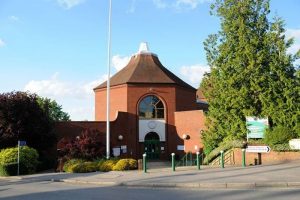
Outside Guildford Borough Council (Credit: Google Street View)