Epsom and Ewell Times
19th November 2026

ISSN, LDRS and IMPRESS logos

 Mega Surrey council ruled out as leader says it would ‘lack accountability’

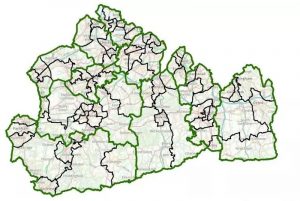
Proposed Surrey County boundaries (Credit contains Ordnance Survey data Crown copyright and database rights 2024)

Council leaders across Surrey have ruled out making the county a single mega authority. The agreement was reached during a meeting on February 7, attended by leaders from all eleven district and borough councils. 

The government confirmed last week that Surrey is among the first areas to take part in devolution to simplify and streamline local government. Elections have also been postponed until at least 2026 as part of the process. 

Catherine Sayer, Leader of Tandridge District Council, said: “I am delighted we have been able to rule out proposing a single unitary which I believe would have been too large and so lack accountability to residents.”

Two-tier systems of borough and county councils could be thrown away with single unitary authorities created instead. The government argues this would not only be more cost effective but also shift power away from Westminster and towards local people. 

Tim Oliver, Leader of Surrey County Council, who was unable to attend last week’s meeting, said: “The government’s White Paper sets out their ambition to create strategic combined authorities under mayoral devolution, and within Surrey’s geography a single unitary wouldn’t meet that criteria.”

A statement from the Surrey Leaders LGR Steering Group said it “remain[s] committed to working together towards submitting one bid for the County”.

Options still on the table include Surrey being made up of two or three smaller council regions, with possibly an elected mayor overseeing the whole county. Last week Spelthorne councillors voted on their preferred make-up of councils depending on whether Surrey would be split into two or three. 

But leaders across the political divide have warned shrewd councils should not be flattened by neighbouring council’s crushing debts. Leader of Reigate and Banstead Borough Council, Richard Biggs, and Leader of Elmbridge Borough Council, Mike Rollings, as well as Cllr Sayer (Tandridge) have raised alarm at being forced to pick up the tab of other councils. 

Council leaders are aiming to meet weekly to develop an interim proposal, in line with government criteria, to be submitted by 21 March with a full proposal to follow by 9 May.


Surrey leading the shout: “Keep the noise down will you!”

Scientists studying noisy traffic

An interdisciplinary network of engineers, policymakers, industry stakeholders and social scientists, led by the University of Surrey, will take on one of the UK’s most overlooked environmental challenges: noise pollution.

From the constant hum of road traffic to the thousands of flights in and out of UK airports, noise awareness in our modern world often fades into the background – but it carries significant consequences for both human health and wildlife. Noise Network Plus will focus on promoting conscious design processes to create quieter products, buildings and transportation systems – with the aim of reducing noise pollution and building a healthier environment over the next 10-15 years.

Professor Mark Plumbley, project lead and Professor of Signal Processing at the University of Surrey’s Centre for Vision, Speech and Signal Processing (CVSSP), said:

“Noise is a frequently neglected pollutant, but it has a big impact on health, society and the environment. For example, road noise can lead to sleep disturbance and heart disease, costing £7-10 billion each year in England alone. Once noise is out there, it is really hard to remove. We need to re-think how we design noise from the start.”

Awarded more than £1.8 million in funding, Noise Network Plus is one of six research projects to receive a share of £10 million from the Engineering and Physical Sciences Research Council (EPSRC). Together they form part of its wider community engagement initiative to address ‘Tomorrow’s Engineering Research Challenges’ (TERC), launched today (11th February), which focuses on tackling the most pressing issues facing the engineering sector.

Professor Abigail Bristow from the University of Surrey, said:

“We’re at a pivotal moment in time where our environment is under threat, but we have the technology and expertise to make meaningful changes. Our mission-oriented research and innovation network will look to adopt a systems-thinking approach, addressing the root causes of noise and understanding its far-reaching impacts.”

A collaboration between the University of Surrey, City St George’s University of London, the University of Bath, and the University of Salford, Noise Network Plus aims to build unprecedented research capabilities to tackle the complex challenge of reducing noise and its impacts on people, the environment and the economy. Bringing together diverse teams and stakeholders, the initiative will promote inclusive dialogue and co-design innovative solutions.

Alan Hunter, Professor in Autonomous Systems based in the University of Bath’s Department of Mechanical Engineering, will lead the network’s efforts on underwater noise and artificial intelligence. This will include research into the effects of noise created by human activities at sea and improving the resilience of uncrewed underwater vehicles to noise. Professor Hunter said:

“The ocean is a noisy place, and a lot of the tools and technologies we rely on to deliver services either increase noise levels or are affected by noise. Taking oceanographic measurements, measuring marine wildlife populations, or inspecting underwater infrastructure, are all examples of activities affected by noise and of which we need to build a better understanding.”

Professor Antonio Torija Martinez and Dr Simone Graetzer are co-leads on the project at the University of Salford’s Acoustic Research Centre. Professor Martinez said:

“As the UK moves toward Net Zero, the adoption of sustainable energy and emerging technologies – such as wind turbines and drones – will introduce new sources of noise, fundamentally reshaping our soundscapes. This offers us a unique opportunity for a fresh start and through our initiative, we aim to transform the way noise is managed, embedding innovative solutions into engineering design and policy.”

Professor Charlotte Clark, Professor of Environmental Epidemiology in the Population Health Research Institute at City St George’s, University of London, said:

“This is a rare and timely opportunity to form multidisciplinary and interdisciplinary teams to develop engineering solutions addressing the problem of noise effects on health. We know that noise affects health, but we know little about how to mitigate the problem. The missions developed in the Noise Network Plus have the potential to step up mitigation efforts that will translate into major, long-term public health gains.”

The launch of Noise Network Plus will take place on 18th March at Prince Philip House, the home of the Royal Academy of Engineering, in London. The event will bring together a cross-section of people from engineering and other disciplines including researchers, industry, professional institutions, policymakers, charities, and other stakeholders, to identify the challenges that need to be addressed, and plan how the Network can work to address these challenges.

Professor Adrian Hilton, Director of the Surrey Insititute for People-Centred AI and CVSSP, added:

“Noise Network Plus represents a significant step towards addressing an often-overlooked pollutant and its detrimental impact on people. This interdisciplinary people-centred approach aims to tackle the complex challenges of noise in our modern world and develop innovative solutions for quieter and healthier communities.”


Epsom & Ewell Council not much in the red but too much in the pink!

Epsom Town Hall in a pink hue

Governance Failing Exposed by External Audit Findings

The Audit and Scrutiny Committee of Epsom and Ewell Borough Council convened on 6th February 2025, where the External Audit Report by Grant Thornton ignited a heated debate over transparency, governance, and the Council’s use of confidential “pink papers”. Against the background of relative positive news on the accounts and budgets the meeting focussed on the culture of secrecy over decision-making.

The external auditors highlighted a culture of secrecy, citing too many decisions being taken in private and a lack of openness in decision-making. Opposition Councillors Kate Chinn, Chris Ames and James Lawrence strongly criticised the Council’s handling of transparency, while the Council’s leadership attempted to downplay the concerns, insisting that governance processes were robust.


The External Audit Report: A Damning Verdict on Transparency

The Grant Thornton audit report drew heavily on a Local Government Association (LGA) Peer Review, which criticised the Council’s decision-making culture. The report highlighted that:

  • “Too many decisions are being made under part two as a media management strategy.”
  • There is a “lack of transparency” in governance structures.
  • The Council needed to demonstrate clearer and more open decision-making.

These findings were met with stark reactions from opposition councillors, who argued that the Council was withholding information from elected members and the public.


Councillor Kate Chinn: “Stop the Navel-Gazing”

Before the committee formally discussed Item 4: External Audit, Councillor Kate Chinn (Labour, Court Ward) made a strong opening statement, focusing on the governance failures exposed by the auditors. She highlighted:

“Throughout their report, Grant Thornton noted the LGA report stating a culture of secrecy, noting a lack of transparency, stating a culture of secrecy described by members and that too many decisions are being held behind closed doors.”

Chinn criticised the ruling administration for focusing on internal restructuring, particularly the proposal to separate audit and scrutiny functions, rather than addressing substantive transparency issues. She stated:

“The ruling group has chosen to focus as a priority on the LGA recommendation to decouple audit and scrutiny. This is a decision that was already planted in council by the political leadership as a direction of travel, and I’m quite sure this is not a priority for the residents of Epsom and Ewell facing so many cost-of-living challenges.”

She urged the Council to move beyond constitutional tinkering and focus on supporting frontline services:

“In view of the move to a unitary authority, the Council should stop spending so much time on internal matters—no more tweaking the constitution or fiddling about with the functions of a soon-to-be different committee. It’s just become navel-gazing.”


Councillor Chris Ames Challenges “Pink Paper” Secrecy

The overuse of confidential “pink papers” (private reports) became a central point of contention, with Councillor Chris Ames (Labour Court) raising concerns over the council’s reliance on closed-door discussions.

He directly challenged the administration on whether they were deliberately using “part two” rules to restrict public access:

“Are you using part two to be a euphemism for going into a closed session? Because that’s not my understanding of what part two means….. There is a withheld report here. It’s Appendix Two. It’s quite clear. It says on both the public pack and in item 13.”

Chair Steve McCormick Chair of the Committee (RA Woodcote and Langley) defended the Council’s approach, arguing that some reports contained sensitive financial details:

“If you start to ask questions on that, then we will have to go into part two. We will have to basically stop the feed. And once we go into part two, we can’t come out.”

However, Ames remained sceptical, pressing for clear definitions of what was truly confidential and what was being unnecessarily withheld. He questioned whether decisions should be debated in secret unless absolutely necessary: “My question is, are we using the word Part Two consistently and accurately? Because it says item 13 and it says it’s on the public pack.”

Adding to this transparency row, Councillor Alex Coley (RA Ruxley) reported that he was unable to access the part two documents on the Council’s internal system, ModGov:

“I’m not actually able to access the part two items in ModGov. So that’s perhaps why there’s been some confusion. I can’t get to them.”


Councillor James Lawrence: “A Transparency Crisis”

In one of the most scathing criticisms of the evening, Councillor James Lawrence (LibDem  College Ward) said that his own experiences confirmed that the Council had a serious transparency problem. He declared:

“Quite frankly, my own experience of transparency at the Council is not great.”

He pointed to several key examples where he felt information was deliberately restricted:

  1. The Local Plan Process:  “I’ve struggled to be involved at all in the local plan process. The entire time I’ve been elected as a councillor, it has not come to a public committee until right before it went to full council……..If I’m struggling as a councillor, my goodness, what do we think residents are struggling to see?”
  2. The Town Hall Move (£7m Project):  “Still don’t really know why that was in part two……Then of course we had the well-prepared, very slick PR statement to go out after, to give the impression to residents that there were no problems, that it’s all clean sailing.”
  3. The Hook Road Arena Plan:  “I remember I saw that appear in the Local Plan documents, and I emailed in questions about that. Nothing. Nothing back.”
  4. Access to Audit Reports: “Having my own struggles to get hold of an audit report as a member of audit and scrutiny—it’s not a very good sign……Of all the people to be struggling to get hold of an audit report, it shouldn’t be someone on the Audit and Scrutiny Committee.”

Council’s Response: A Dismissive Attitude?

The Council’s official response to the audit findings did not acknowledge any fundamental governance failures. Instead, the Senior Leadership Team (SLT) issued a brief statement, saying: “SLT believes the Council is transparent in its reporting and through Committees.”

Lawrence ridiculed the response, stating: “My impression of the management response is essentially: Don’t care. It’s already transparent enough.”

A pragmatic attitude from Councillor Alan Williamson

Cllr Alan Williamson (RA West Ewell) struck a pragmatic tone, questioning whether the Council should devote energy to internal reforms when local government reorganisation was imminent. He remarked:

“Obviously, the one area where there is an element of concern from the external auditors is governance and transparency. Now, this is, in my mind, an issue of culture rather than performance…….. The whole focus of this Council is going to be the impending local government reorganisation, and to expect it to change its culture in the next year or two is somewhat implausible.”

He suggested that the Council’s priorities should shift towards ensuring stability during the transition rather than engaging in lengthy internal governance debates.


A Governance Crisis?

The Audit and Scrutiny Committee meeting exposed deep divisions within the Council. While external auditors and opposition councillors raised legitimate concerns about secrecy and accountability, the administration remained largely dismissive of these criticisms.

As Councillor Lawrence bluntly put it: “If I’m struggling as a councillor to access this information, what hope do our residents have?”

With local government reorganisation looming, the Council faces mounting pressure to reform its decision-making processes—but the meeting made clear that no immediate action is planned.

Whether transparency will improve or whether secrecy will remain embedded in the Council’s culture remains to be seen.

Related reports:

Seeing through transparency in Council Chamber

“Audit and Scrutiny” under scrutiny

Annual audit of Epsom and Ewell Borough Council


Surrey’s new rail link to Heathrow?

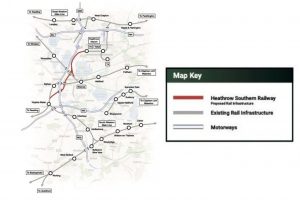
Hsr Proposed Route (Image Heathrow Southern Rail)

Plans for a new railway connecting Surrey to Heathrow and beyond have resurfaced as the track’s backers welcomed government support for a third runway at the airport. The line, called the Heathrow Southern Railway (HSR), is a privately financed proposal to link towns in Surrey to one of the world’s busiest airports.

If built, it would operate between Heathrow and London Waterloo via Staines. There would also be direct trains from the airport to Woking and Guildford, before carrying on to the south coast. Heathrow Southern Railway said it also would provide for an extension of the Elizabeth Line to Staines.

Baroness Jo Valentine, the group’s chairperson, said: “The UK Government has set a bold agenda for growth with its support for a third runway at Heathrow Airport. Our railway enhances that growth by increasing connectivity and reducing surface emissions. These benefits accrue with a two runway airport but will be enhanced with an additional runway. We look forward to working with all partners to make this a reality.”

Mark Livock, chief executive, added: “The new Government has expressed interest in finding ways to harness private sector finance in making the delivery of major infrastructure schemes more affordable. Heathrow Southern Railway has a depth of experience in creating opportunities for private investment that could deliver tangible benefits to the UK, and southern rail access to Heathrow would positively transform public transport connectivity to Europe’s busiest airport.”

The group estimates that the new route would cut about millions of road journeys – with many of those from the M25. They added: “Our construction plans minimise the impact on neighbouring communities by providing a route mainly in tunnel and using only electric trains. Unlike the previous “Airtrack” proposals, HSR avoids level crossings in the Egham area.”

An HSR spokesperson said: “Our proposed route starts at Heathrow’s Terminal 5 station and is intended to run mainly in tunnel and be electrified to minimise environmental impact. It rises to the surface to connect to the existing railway near Staines and Virginia Water.”

Related reports:

Heathrow expansion reaction

“Blocks away” from airport expansions

Hsr Proposed Route (Image Heathrow Southern Rail)


Guildford Borough Council keeps its lights on

Outside Guildford Borough Council\'s HQ, Millmead House. (Credit: Guildford Borough Council)

A Surrey council may have “kept the lights on” and balanced the budget this year but trouble could be looming. The pessimistic warning came during the budget meeting as councillors were told they will have to make tough decisions in the future. 

Members of Guildford Borough Council signed off a balanced 2025/26 budget this week despite an ‘unkind’ settlement from the government leaving levels of funding largely unchanged from the previous year. Councillors from all parties praised officers and finance bosses for turning Guildford’s accounts around in the last two years. The Surrey borough was nearing bankruptcy in 2023 with the strain from rising historical debts.

But all is not as rosy as it seems. Each year Guildford Borough Council must find £2m worth of savings just to keep afloat and cover borrowing costs for its “ambitious” capital programme. The projected budget gap is expected to grow from 0 in 2025 to potentially £5.9 million in four years (2028/29) with at least an £1.6 million increase every year. Service costs from the council are projected to rise from £16.4 million in 2025/26 to potentially £20.3m in 2028/29.

Over the next five years, Cllr Richard Lucas (Lead for Finance and Property) explained the requirement for Guildford to pay back its escalating debt represents a “major financial challenge”. He said: “Each year we will have to find another £2m worth of savings just to stay still and cover our borrowing costs increasing.”

However, the council’s plan for paying back debts for building projects does not include the Weyside Urban Village scheme. A hugely ambitious undertaking, the Weyside Urban Village project is the council’s regeneration scheme aiming to build 1,500 homes. The borrowing costs, or interest, for the project are due after 2029 and so are not incorporated into the medium term financial plan. 

Despite work being underway, the council still has not quite figured out how it’s going to foot the bill. Although it may seem a ‘future problem’, councillors will decide how they are going to finance the project in March.  

“If anything is going to put the council back in the financial mire it is that,” said Cllr Patrick Oven. He said although he was very “committed” to the scheme, he “wondered whether we can afford it”. 

Cllr Richard Lucas told the council the budget was balanced by “finding some savings within the services, increasing some fees and charges”. The Lead Councillor for Finance and Property added the main source of potential savings going forwards is from opportunities of collaboration with Waverley. The councils had recently claimed £600k has been saved in the local authority partnership between Guildford and Waverley. 

National insurance increases took the biggest chunk of the council’s finances, hitting Guildford with around £1,000 per full time employee. Wage rises and inflation is also squeezing the council’s budget, demanding the increase in council tax by the maximum 2.99 per cent. Charges for council services are projected to increase by at least 3.75 per cent. 

Non-ringfenced reserves for a rainy day sit at around £17.7m, well above the minimum 5% of general fund expenditure recommended. 

Cllr Patrick Oven described the accounts as “an austerity budget”. Expenditure is reduced in 2025/26 but for the next four years spending “effectively falls off a cliff” with money dropping to about a third of the £111k promised this year. “But we can’t spend money we haven’t got,” he added. 

Opponents still criticised the Liberal Democrat administration for a “lack of ambition” with the budget as no ‘rabbit out of the hat’ or exciting projects were revealed. Cllr Joss Bigmore said: “It’s really sad that we’re at this stage now where we’re going budget to budget trying to keep the lights on and that leaves so little discretion for any political ambition or choices.”

Guildford council has also agreed to undergo a ‘zero budgeting basis’ by looking at everything it does, covering its statutory duties and long-term priorities. Cllr Lucas said: “It inevitably means we will stop doing some things. There will be pain involved but we have £2m a year, each year, to find extra savings.”

Outside Guildford Borough Council\’s HQ, Millmead House. (Credit: Guildford Borough Council)


Surrey’s flood defences and energy efficiency funding

View from Little Misley, one of the fields set to have solar panels. (Credit: Guildford Borough Council planning documents)

Funding for Surrey’s climate change programme has been reinstated after the county council received £1.5m more in government grants than it was expecting. 

Surrey’s Greener Future’s programme is a climate change strategy that aims to reduce carbon emissions and make the county net-zero by 2050. Budget details had initially proposed to slash £0.5m from the Greener Future’s spreadsheet, as part of Surrey County Council’s identified £66.4m cuts it needs to make in 2025/26. 

But the cuts will now be reversed after an amendment put forward by the Residents’ Association/Independents and the Green Party. Members unanimously agreed to the proposed changes to the budget at a full council meeting on February 4. 

Cllr Catherine Powell said in the meeting: “Younger residents want a long-term focus which I don’t believe this budget fully supports.” The Independent member for Farnham Residents said the funds will safeguard the “vital work on developing and embedding climate adaptation”.

Money reinvested back into the Greener Futures team can be used to develop and integrate climate adaptation policies such as flood defences, heat avoidance, and programmes to improve household energy efficiency. It also includes developing finance opportunities like natural capital and organising health initiatives.

Cllr Jonathan Essex (Green Party/ Redhill East), who initiated the amendment, said: “Now is the time to strengthen and extend, not water down, climate action across Surrey, so I am delighted that we have taken this step to continue tackling the climate emergency. 

“Leadership by local councils, including here in Surrey, is vital to ensure that the health of the economy is defined by community well-being and sustainable living, not by growth at all costs.”

Cllr Powell added: “I firmly believe that climate change is not only real, but impacting Surrey and our residents and our businesses today.” She cited the multiple instances of flooding across Surrey last year which the Environmental Agency said would only happen once every 30 years in normal condition. 

The agreed change was just one of five amendments the Green Party put forward to change the council’s budget, the rest were rejected. The others included creating a voluntary contribution fund for early intervention children services, closing the Your Fund Surrey programme, putting a transport scheme on hold and committing to a cross-party working group for SEND needs. 

View from Little Misley, one of the fields set to have solar panels. (Credit: Guildford Borough Council planning documents)


Mole Valley setting a green belt development trend?

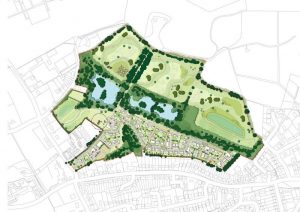
Plans for 200 homes in Little Bookham (image Thakeham)

Up to 200 new homes will be built on former green belt land despite fears they could overwhelm the already strained sewage system. Mole Valley District Council’s planning committee approved developer Thakeham’s vision for the 27-hectare site off Little Bookham Street on Wednesday, February 5. As well as the 200 homes, the plans will feature a community building, Gypsy and Traveller pitches, and public open space that the developers said would also open access to nearby ponds. Forty per cent of the homes would be affordable.

The site has been identified for development by the council’s local plan, but the application had drawn more than 300 objections. Residents speaking at the meeting raised concerns about raw sewage, as well as the impact on local children being pushed out of their school’s catchment area. Thames Water, however, raised no objections. Christine Milstead said: “Our green belt is definitely not Angela Rayner’s gray belt. We think this development will cause harm to the green belt and protected habitats. All residents have objected to surface water flooding, and there are springs all over this site. For years, residents have been pumping water off their patios to prevent their houses from flooding. When you get a lot of rain, water does not drain through permeable surfaces. Will the proposed infrastructure capture water from the rear of new properties, or will it just run down to Little Bookham Street?”

Speaking on behalf of the plans, Tristan Robinson, Thakeham’s director of external affairs, said Mole Valley was the fourth least affordable place to live in the country. He highlighted young couples struggling to afford housing and the 680 households on the waiting list. Despite the plans being voted through—by eight in favour, three against, and one abstention—Councillor Joanna Slater (Conservative; Leatherhead South) cautioned against setting a precedent for developing beyond what was laid out in the council’s local plan for green belt. Cllr Paul Kennedy (Liberal Democrats: Bookham East and Eastwick Park) also urged the committee to heed residents and environmental groups calling for the protection of the “precious unspoiled countryside.”

The new homes will be net carbon zero and feature a mix of one to four-bedroom properties. The developers aim to create 45 acres of open space and a new country park accessible to the wider community. Mr Robinson said: “After undertaking a comprehensive public consultation process for Land North West of Preston Farm, we are pleased to receive backing from Mole Valley District Council. The scheme includes 40 per cent affordable housing—something urgently needed locally—and significant new public open spaces for everyone to enjoy.”

Plans for 200 homes in Little Bookham (image Thakeham)


Surrey Uni leads research to replace plastic with paper for liquids

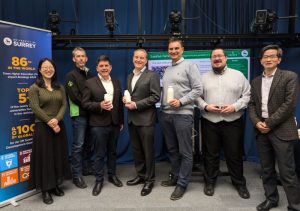
From left to right: Dr Hui Luo and Professor Robert Dorey (University of Surrey's School of Engineering); Professor Joseph Keddie (University of Surrey's School of Mathematics and Physics); Scott Winston, CEO at Pulpex; Barrie Harvey, COO at Pulpex; Dr Simon Hadfield (University of Surrey's Centre for Vision, Speech and Signal Processing); Professor Charley Wu (University of Surrey's School of Chemistry and Chemical Engineering).

A multimillion-pound research project, called SustaPack, aims to overcome manufacturing challenges for the next generation of sustainable, paper-based packaging for liquids. Backed by a £1 million grant from the Engineering and Physical Sciences Research Council (EPSRC) as part of UKRI’s co-investing programme, packaging technology company Pulpex Ltd has joined forces with the University of Surrey to refine its manufacturing processes to provide a viable solution to plastic pollution. 

Contributing matching support towards the project, Pulpex has already made significant strides in the development of its patented technology, which produces degradable bottles made from natural wood fibres. The packaging offers a sustainable alternative to traditional plastic materials and can be recycled in existing paper waste streams.  

However, designing the next generation of production technology and materials requires novel and fundamental research to address current limitations, including new analytical techniques to improve product quality, optimising performance and reducing in-process imperfections. 

Scott Winston, CEO at Pulpex, said: 

“We’re excited to strengthen our existing collaboration with the University of Surrey to enhance our technologies and processes. Our SustaPack partnership will help us advance safe, sustainable packaging solutions, enabling brand owners to meet Net-Zero targets. It gives consumers sustainable choices, delivers answers for brand owners, and enables supply chains and retailers to deliver their carbon footprint reduction goals – a priority for all.” 

A key feature of the packaging is its multi-layered barrier coating, which prevents contained liquid from leaking, as well as inward oxygen permeation, maintaining high-quality products for consumers. To create a step-change in the energy usage in methods used to apply these coatings, the researchers plan to develop innovative processes that consume less energy and water while increasing the shelf life of packaged goods. 

Professor Joseph Keddie, from the University of Surrey’s School of Mathematics and Physics, and Fellow of the Institute for Sustainability, said: 

“Over the past couple of years, I have forged a close relationship with Pulpex as a Royal Society Industry Fellow, and I am enthusiastic about strengthening our ties through our SustaPack Partnership.   

“Our aim here is to combine novel coating processes, mechanistic modelling, computer vision and artificial intelligence (AI) to establish a ‘dry’ spray coating process that deposits food-safe, degradable coatings. This technology, which isn’t yet commercially available, will not only drive the next generation of packaging technology but will also contribute to a significant reduction in plastic pollution and lower carbon emissions from manufacturing.” 

A multi-disciplinary team of researchers will explore the feasibility of using thermal imaging to detect defects in wet coatings as they occur, enabling immediate corrections using AI. Multi-scale mechanistic models of the coating process will be employed to identify the sources of imperfections and non-uniformities and then eliminate them to ensure optimal packaging performance.  

By applying innovative computer vision techniques powered by AI, the project aims to identify production defects in real-time, optimise materials and processes, and achieve 100% reliability in the manufactured products. 

The outcomes of the project could set new standards for environmentally friendly packaging, helping brand owners reduce their environmental impact amidst ever-increasing environmental regulations – while offering consumers eco-friendly options to help fight against plastic pollution. 

From left to right: Dr Hui Luo and Professor Robert Dorey (University of Surrey’s School of Engineering); Professor Joseph Keddie (University of Surrey’s School of Mathematics and Physics); Scott Winston, CEO at Pulpex; Barrie Harvey, COO at Pulpex; Dr Simon Hadfield (University of Surrey’s Centre for Vision, Speech and Signal Processing); Professor Charley Wu (University of Surrey’s School of Chemistry and Chemical Engineering). 


Elections Delayed as Surrey Faces Uncertain Future of Local Government Shake-Up

Surrey and Epsom Councils

Surrey residents will have to wait an extra year to vote in the county elections following the government’s decision to postpone the polls from May 2025 to May 2026. The delay comes as part of a sweeping local government reorganisation that will see the biggest structural shake-up in fifty years. However, concerns are mounting over the rushed timetable, the fate of council debts, and the financial burden that could fall on responsible local authorities.

Reorganisation at Speed

The government’s drive for local government reform is progressing at an accelerated pace, with councils required to submit interim proposals by 21 March 2025 and finalised plans by 9 May 2025. The reform aims to replace Surrey’s current two-tier system – where Surrey County Council oversees borough and district councils – with unitary authorities that will consolidate power at a higher level.

Under plans being considered, a directly elected mayor could manage strategic services such as policing, fire and rescue, health, and education. However, uncertainty remains over whether the new unitary system will feature a single authority covering all of Surrey’s 1.2 million residents or two to three smaller councils.

Who Pays the Price?

A key source of controversy is the issue of existing council debts, particularly in boroughs such as Woking, Spelthorne, and Runnymede, which have amassed a combined debt exceeding £3 billion. Woking has already declared effective bankruptcy, with Spelthorne and Runnymede under government scrutiny.

Local leaders across Surrey are voicing their objections to any attempt to spread the financial burden of these debts across councils that have maintained responsible fiscal management.

Councillor Richard Biggs, leader of Reigate and Banstead Borough Council, said: “Our view remains that plans should not support any restructuring of local government boundaries based on ‘redistributing’ the debt of other authorities.” His council, along with others, has worked to maintain financial stability while continuing to provide additional services beyond statutory requirements.

The Residents’ Association and Independents Group at Surrey County Council has strongly criticised the government’s approach, arguing that it is forcing through change with “zero funding” while suggesting that costs could be covered by selling off council-owned assets. Group leader Councillor Catherine Powell raised concerns that the government expects local authorities to fund reorganisation through “capital receipts,” which could mean selling buildings currently used to deliver essential services.

Opposition to Election Postponement

The Surrey Leaders Group, a forum representing the county’s borough and district councils, has already voiced opposition to the decision to delay elections. Chair of the group, Councillor Hannah Dalton, (RA Epsom and Ewell for Stoneleigh ward), warned that the proposed reorganisation could remove decision-making from local communities and lacks clarity on how existing debts will be handled.

“There is a real risk that new authorities will be set up to fail,” said Cllr Dalton, highlighting the potential for new unitary councils to inherit substantial financial liabilities without sufficient funding or support from the government.

A Distracted Local Government

Critics argue that the rapid timeline for reorganisation is an unwelcome distraction at a time when councils are struggling with increased demand for statutory services, including social care and housing. Concerns have also been raised about the practicalities of implementing a new financial IT system for the newly formed authorities, given that Surrey County Council’s recent system overhaul has been plagued with problems.

With just weeks to prepare draft proposals and a final deadline in early May, councils across Surrey are left scrambling to determine the best way forward. The government’s insistence on a rapid restructuring without clear funding commitments has left many questioning whether the changes will deliver better services—or simply create further financial and administrative chaos.

For now, Surrey residents must wait for further clarity on how their local government will be reshaped, and more crucially, who will bear the cost of these sweeping changes.

Related reports:

Political furies over Surrey election postponement

Surrey County Council election delay stirring up a storm

What might local government reorganisation mean for Epsom and Ewell?

All change! Epsom and Ewell Borough Council approaching its final stop?

Surrey’s Conservative leader wants to postpone May’s poll reckoning

Tiers to be shed if Epsom and Ewell loses its Borough Council?


Surrey mansion tax debated at County Council

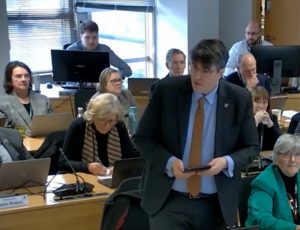
Paul Follows speaking at full council meeting 4/02. (Credit: Surrey County Council live stream)

Plans for ‘those with the broadest shoulders’ to voluntarily pay more council tax to help those in need have been labelled ‘morally corrupt’ in a heated debate. The idea is based on a scheme introduced by Westminster Council in 2018, dubbed a “mansion tax”.

Council Tax is based on the property value of a house if it was sold in April 1991 in England. For instance, Band H is for properties valued at over £320,000. But with the average house price in Surrey today at just over £600k, according to Rightmove, councillors agreed the council tax system needs reform.

Paul Follows, Liberal Democrat group leader, put forward an idea to ask residents in Band H if they would be willing to pay more money to support essential services and those in need. He asked the county council to “explore the creation of a voluntary contribution scheme” for those in the highest bracket of council tax.

But the Lib Dem’s amendment to the budget was lambasted by councillors at a full council meeting on February 4. Members voted against proposal 43 against, 25 in favour and six abstentions.

Brandishing the proposal as “morally corrupt”, Cllr Ernest Mallett MBE (Residents’ Association and Independents/ West Molesey) argued many people, like himself, support charities which try to combat poverty. He said that for Cllr Follows to suggest a council with a £2bn turnover should attempt to “levy funds from residents” is “totally immoral” and “unjustified”.

The suggestion was tabled as an amendment to Surrey’s budget for 2025/26 at a full council meeting on February 4. Residents living in a Band H property will be facing a council tax bill of over £3,690 this year as the council’s budget was approved.

Not a concrete plan, Cllr Follows proposed a cross-party working group would be created to flesh out the scheme’s scope and structure. Then the designs would be brought back to council for consideration for the next financial year. He said: “It does not cost us a lot of money to try, and we may help a lot of people if we do.”

Cllr Mark Nuti (Conservative/ Chertsey) said it was “an affront” to the people of Surrey who are generous with their time and money in the voluntary sector and philanthropic investors in the community.

Council leader Tim Oliver agreed and said Surrey “already has one of the highest council tax bills in the country”. Cllr Oliver said members should focus more on local government reform rather than getting residents to pay extra.

Worried about the “unintended consequences” of the scheme, Cllr Denise Turner Steward (Conservative/ Staines South and Ashford West) said putting “moral pressure” on residents to pay more council tax to help others could “divert” funds away from much-needed charities in Surrey.

But not everyone shared the same view. “There is nothing iniquitous of asking those with more to consider voluntarily giving a little extra,” said Cllr George Potter (Lib Dem/Burpham). “If that bastion of socialism in Westminster can manage it, then surely middle of the road Surrey can certainly manage it.”

Other members took a more hard-line approach. “If you can afford a £3m or £4m house, you ain’t poor,” said Cllr Jan Mason (Residents’ Association/ West Ewell). “They know they are buying housing in an affluent area, they are able to pay.” She told the council many of the residents in her ward and it would be an “insult to my residents who are on really low income” if bigger council tax bands were not brought in.

Cllr Lance Spencer (Goldsworth East and Horsell Village), seconding the motion, said he understood not everyone in a Band H property would be able to contribute. However, the voluntary contribution could provide “an opportunity to make a significant impact to the county’s future” with the “further degradation of services realistically inevitable”.

Waverley Borough Council, where Cllr Follows is leader, has also sent a letter to residents asking for their thoughts on a proposal to introduce voluntary tax contributions to support projects and vulnerable residents across the borough.

Paul Follows speaking at full council meeting 4/02. (Credit: Surrey County Council live stream)


Citizens Advice Epsom & Ewell Delivers Crucial Support Amid Rising Cost-of-Living Pressures

Montage CAB office and an advice session and banner

Citizens Advice Epsom & Ewell (CAEE) has revealed the scale of its impact over the past year, with thousands of local residents receiving support on a range of pressing financial and social issues. From benefits and debt advice to housing support, the charity continues to be a lifeline for many struggling to make ends meet.

A Year of Helping the Community

Figures released by CAEE highlight just how vital their work has been. In 2024 alone, the organisation:

  • Assisted 3,394 people with 10,233 issues
  • Made 12,406 client and third-party contacts
  • Secured £1,022,934 in additional income for clients

For January 2025, the demand for support has surged even further:

  • 560 people received help in just one month
  • 1,036 issues were handled
  • £159,670 in extra income was secured for struggling households

The most common concerns among residents remain benefits, tax credits, housing, and debt, reflecting the ongoing financial pressures facing families in Epsom & Ewell.

Expanding Outreach in 2025

With the rising cost of living continuing to bite, CAEE is set to expand its energy outreach programme to better reach underrepresented communities. The initiative aims to provide guidance on energy bills, debt support, benefit checks, and energy-saving advice, ensuring that vulnerable individuals can access the help they need.

The charity is also distributing funds from the Household Support Fund until March 2025, offering financial aid to those on low incomes. Residents struggling with essential costs are urged to get in touch before the deadline.

Making a Real Difference

Beyond statistics, the impact of Citizens Advice is best illustrated through the experiences of those they have helped. One such case involved a vulnerable client living in unsuitable accommodation, battling rent arrears and struggling with multiple health concerns.

With extensive support from CAEE, she was able to:

  • Repay her rent arrears
  • Secure a move to a more suitable ground-floor flat
  • Receive medical and financial assistance
  • Successfully challenge a dispute through the Energy Ombudsman

This intervention not only improved her living conditions but also stabilised her finances, demonstrating the charity’s commitment to holistic, long-term support.

Financial and Social Impact

CAEE’s work delivers significant savings to public services, including:

  • £186,802 in NHS savings by reducing demand on mental health and GP services
  • £550,131 in savings for the Department for Work and Pensions by helping people stay in work
  • £326,078 saved for housing providers by preventing evictions

In total, their advice and interventions generated a staggering £3.85 million in value for the local economy.

Looking Ahead: Advocacy and Research in 2025

Beyond direct support, CAEE also plays a key role in influencing policy and addressing systemic issues. In 2025, they will continue to campaign on critical concerns such as:

  • The cost-of-living crisis
  • Housing shortages and homelessness prevention
  • Debt, including rising council tax arrears
  • Access to health and disability benefits

A key event on the horizon is Citizens Advice Data Insights, taking place on 25th February 2025, where experts will discuss how accumulated debt is preventing people from rebuilding their lives.

Support Your Local Citizens Advice

With demand for services higher than ever, Citizens Advice Epsom & Ewell is calling for public support. Running the service costs over £100 per client per year, and donations play a crucial role in ensuring free advice remains available.

Residents can contribute by donating as little as £10 a month, helping to sustain a vital service that continues to transform lives across the borough.

For free, confidential advice, visit CAEE at The Old Town Hall, The Parade, Epsom, or call 0808 278 7963.


Political furies over Surrey election postponement

Tim Oliver Surrey County Council leader - Surrey Live

Rival political parties are furious over the cancellation of Surrey’s 2025 county council elections, with groups claiming the ruling Conservatives are “running scared”. 

The government announced on Wednesday (February 5) that it has accepted Surrey’s request to postpone the county council elections for May 2025 to the following year. The county is now set to be part of the government’s ‘first wave’ of simplifying and streamlining local authorities. 

Specifics of how Surrey will be governed are still yet to be carved out but it could involve either a single mega authority with an elected mayor, or two to three smaller regions.

The news comes much to the despair of some political parties. Liberal Democrats and the Green Party saw a surging level of support in Surrey district and borough council elections last year and they were hoping to repeat the same success at a county-level. 

Surrey MPs have reacted to the cancellation, with newly-elected Liberal Democrats claiming the “Conservative-led Surrey Council has denied local residents their voice”.

A joint statement from the Lib Dem MPs in Surrey and the group leader read: “It is clear that the Conservatives are running scared and have succeeded in stopping these elections from happening in May, in a desperate attempt to cover up their own abysmal record.

“Meanwhile, the Labour Government has stood by and done nothing, knowing they can’t win in Surrey. 

“Voters are rightly fed up with this Conservative council and years of financial mismanagement. From endless potholes, to cutting local frontline services, to letting down thousands of children with special educational needs and much more, its record speaks for itself.”

Tim Oliver, Leader of Surrey County Council, welcomed the decision to postpone the elections to allow for “detailed work for reorganisation” to begin while supporting residents. The Conservative member asserted that devolution is in the “best interest” of residents and businesses.

Meanwhile, the Green Party reacted with anger to the news. Cllr Jonathan Essex (Redhill East) said: “Our fragile democracy can’t afford to ignore the people’s right to vote.” He said: “The local Conservatives have forfeited their right to represent the county as we face an uncertain future for local decision-making.”

The Greens said it would have stood more candidates than ever before at the Surrey County Council elections as the party has been growing in popularity. Cllr Essex said: “People should have a real choice between the failed Tory and Labour parties […] The real aim of so-called ‘devolution’ is quite the opposite: to move decision-making upwards to more unaccountable bodies.”

But Surrey’s two Labour county councillors said the delay was “good news for the people of Surrey”. The pair said the change will hand power from Westminster to local people with new powers and a better deal.

“Surrey County Council was formed in 1889 so the world is very different now,” Cllr Robert Evans (Spelthorne). The population of Surrey has more than doubled since Victorian times and much of what was Surrey then is now in London. The boroughs and districts were formed more than fifty years ago and don’t serve the same purpose as they might have done then.’

Cllr Robert King (Runnymede) added: “In Surrey we have a two tier system which means service delivery can be confusing. Add to that we have 12 headquarters, 12 chief executives, dozens of deputies and more than a thousand councillors. A top-heavy system of local government does not serve our communities as well as it should.”

Out of 16 local authorities which wrote to the government asking to postpone the May 2025 elections, only nine of the requests were accepted by Angela Raynor, Secretary of State for Housing, Communities and Local Government. Other councils that sought a delay included Warwickshire, Devon, Leicestershire, Gloucestershire, Kent and Worcestershire, and Oxfordshire.

“Any party calling for these elections to go ahead must explain how this waste would be justifiable,” Ms Raynor said in her announcement to the House of Commons. She added: “We’re not in the business of holding elections to bodies that won’t exist and where we don’t know what will replace them. This would be an expensive and irresponsible waste of taxpayer’s money.”

Describing the need for creating a sustainable unitary local government for Surrey as “urgent”, the Ministry for Housing, Communities and Local Government said postponing the elections will help “speed up” reorganising local government and its benefits.

Tim Oliver Surrey County Council leader – Surrey Live

Related reports:

Surrey County Council election delay stirring up a storm

What might local government reorganisation mean for Epsom and Ewell?

All change! Epsom and Ewell Borough Council approaching its final stop?
Surrey’s Conservative leader wants to postpone May’s poll reckoning

Tiers to be shed if Epsom and Ewell loses its Borough Council?


Surrey County Council election delay stirring up a storm

Cars driving under election delay sign

Surrey County Council Elections Postponed Until 2026 Amid Local Government Reforms

In a significant move reflecting the evolving landscape of local governance in England, the British government has decided to postpone the Surrey County Council elections, originally scheduled for May 2025, until May 2026. This decision aligns with the government’s broader devolution agenda, which seeks to streamline local government structures by transitioning from a two-tier system to single-tier unitary authorities.

The government’s devolution white paper, Power and Partnership: Foundations for Growth, published in December 2024, outlines an ambitious plan to decentralize power from Westminster to local regions. A key component of this strategy is the reorganization of existing two-tier local government areas into unitary authorities, each serving populations of at least 500,000 residents. The white paper states:

“Local government reorganisation: We will work with individual areas, inviting proposals from all remaining two-tier areas and those unitary councils where there is evidence of failure or their size or boundaries may be hindering their ability to deliver sustainable and high-quality services to their residents.”

This restructuring aims to enhance efficiency, improve service delivery, and provide clearer accountability by consolidating responsibilities previously divided between county and district councils. The government asserts that such a model will lead to: “Better outcomes for residents, save significant money which can be reinvested in public services, and improve accountability with fewer politicians who are more able to focus on delivering for residents.”

Surrey’s Inclusion in the Devolution Priority Programme: Surrey has been selected to participate in the first wave of the government’s Devolution Priority Programme. This inclusion necessitates a comprehensive review and potential reorganization of the county’s local government structure.

Tim Oliver, (Conservative) Leader of Surrey County Council, expressed his support for the initiative, stating: “Now we’ve received confirmation that Surrey is in the first wave of local government reorganisation and devolution priority programme, we will develop a business case for reorganisation and submit a draft to government in March.”

To facilitate this process, the government has decided to postpone the local elections scheduled for May 2025. This postponement allows the council to focus its resources on developing and implementing the reorganization plan without the immediate pressures of an electoral cycle. Oliver emphasized the practical benefits of this delay: “The resource and time that would have been spent on elections for a soon-to-be-abolished council can now be directed to working on the best possible outcome of reorganisation for Surrey.”

The decision to delay the elections has elicited mixed reactions across the political spectrum. Helen Maguire, Liberal Democrat MP for Epsom & Ewell, criticized the move: “The decision to allow this Conservative-led council to postpone the election and silence the voice of our community is scandalous.” She further contended that the postponement serves political interests. Maguire also highlighted concerns about the council’s performance, citing issues such as “endless potholes,” cuts to local frontline services, and shortcomings in supporting children with special educational needs. She concluded: “Democracy delayed is democracy denied, and the people of Epsom, Ewell, Ashtead and Leatherhead must be allowed to decide who they think is best to lead Surrey County Council through this time of significant change.”

The Labour Group of councillors in Epsom and Ewell, however, welcomed the postponement of the elections. Cllr Kate Chinn (Court Ward) stated: “Those who are calling for the elections to go ahead need to explain why we should vote again for an authority with just a year to go. It would be a costly and unnecessary exercise.”

Surrey County Labour Party also expressed support for the devolution plans. Cllr Robert Evans commented: “This is good news for the people of Surrey as it will open the doors for more local decision-making as the government has agreed to devolve additional powers to new unitary authorities and regional mayors.” Evans emphasized the need for modernisation: “Surrey County Council was formed in 1889 so the world is very different now. The population of Surrey has more than doubled since Victorian times and much of what was Surrey then is now in London. The boroughs and districts were formed more than fifty years ago and don’t serve the same purpose as they might have done then.”

Cllr Robert King added: “In Surrey, we have a two-tier system which means service delivery can be confusing. Add to that we have 12 headquarters, 12 chief executives, dozens of deputies and more than a thousand councillors. A top-heavy system of local government does not serve our communities as well as it should.”

Jonathan Carr-West, Chief Executive of the Local Government Information Unit (LGIU), acknowledged the mixed reception of the announcement within the sector: “Councils were given 16 working days to put their applications together… Countless hours were spent by council staff and elected members who worked incredibly hard over the Christmas period to meet this deadline.” Carr-West emphasized the need for transparency in the decision-making process: “It is essential that we understand more about the decision making process around this as there will undoubtedly be some places that feel they have been marched up the hill and then marched down again having spent considerable amounts of time and political capital getting to this point.”

Financial Implications and Debt Concerns: A significant aspect of the reorganization involves addressing the financial disparities among Surrey’s councils. Several boroughs, such as Woking and Spelthorne, are grappling with substantial debts due to ambitious investment strategies.

Woking Borough Council declared effective bankruptcy in 2023, burdened by debts exceeding £2 billion from failed large-scale projects. Spelthorne Borough Council faces over £1 billion in debt from investments in commercial properties. In contrast, Epsom and Ewell Borough Council has maintained prudent financial practices, consistently balancing its budgets and avoiding unsustainable debt levels. This disparity raises concerns about the equitable distribution of debt in the proposed unitary authority. Residents of fiscally responsible boroughs like Epsom and Ewell question the fairness of assuming responsibility for the substantial debts incurred by other councils.
Councillor Tim Oliver has advocated for central government intervention to address these financial challenges: “The Labour Government has set up their agenda in the white paper and that is to create Mayoral Strategic Authority (MSA) across England… If you don’t reach an agreement locally, then they will legislate. It’s going to happen. It’s better that we try to control or have some influence over what happens rather than have it imposed on us down the line.”

Future Steps and Considerations:

The postponement of the Surrey County Council elections provides a window for detailed planning and consultation regarding the proposed reorganization. The council is expected to submit a draft business case for reorganization to the government in March, with a full proposal to follow in May. The government will then evaluate these proposals, conduct consultations with affected bodies, and make decisions on the future structure of local government in Surrey.

Throughout this process, maintaining transparency and engaging with residents will be crucial. Tim Oliver sought to give assurances: “I can be absolutely clear that, throughout this process, our vital work supporting residents will continue—services will be delivered and we will still be here for those who need us most—until whatever new council is fully established to take on that delivery.”

The debate over the postponement underscores broader concerns about governance, fiscal responsibility, and democratic accountability. As the reorganization progresses, the challenge will be to ensure that reforms deliver tangible benefits for Surrey’s residents while preserving democratic integrity and local representation.

Related reports:

What might local government reorganisation mean for Epsom and Ewell?

All change! Epsom and Ewell Borough Council approaching its final stop?

Surrey’s Conservative leader wants to postpone May’s poll reckoning

Tiers to be shed if Epsom and Ewell loses its Borough Council?


Surrey Police hikes its Council tax share

Lisa Townsend, Surrey Police and Crime Commissioner. (Credit: Surrey County Council live stream)

Surrey Police’s share of council tax bills will leap over £335 a year for the average Band D households. Lisa Townsend, Surrey Police and Crime Commissioner (PCC) said the 4.3 per cent increase was needed to “maintain the level of service”. 

Ms Townsend told the Surrey Police and Crime panel the government “absolutely expects” PCCs to raise council tax precepts  by the maximum £14 to cover the police officer wage increase (set nationally) and inflation.  

The annual charge will increase from £323.57 in 2024/25 for a Band D property to £337.57 in 2025/26. 

The commissioner told the panel even with the precept increase and the use of some reserves, the Force will still need to find £3.6m of savings this year and over £15m for the three years after that.

Although the commissioner said Surrey Police is one of the fastest-improving forces in the country, she stressed the increase in funds was needed to “keep us where we are”. Surrey Police has more than doubled its charge rate, with an additional 3,500 offences being prosecuted, according to the PCC. Ms Townsend told the panel the increase is “against a backdrop of a massive increase year on year which our financial resources can’t keep up with”. 

Reports state the cost to operate the Force has increased by £23.2m compared to 2024/25, meaning Surrey Police have to make a saving of £3.6m this year. Ms Townsend argued if the precept was not increased, police services would have to be cut and “achievements would be at risk”. 

The news comes as 59 per cent of people said they would pay more to support Surrey police in the PCC’s online survey. Over 3,200 people voted in the online consultation which asked them if they would be willing to pay an extra £1.16 a month to support policing teams, based on the average Band D property. 

But members of the Surrey Police and Crime Panel voted against the proposed increase in a meeting on February 3. Four councillors opposed the tax hike, four were in favour and one person abstained- leaving the chair of the meeting to cast the deciding vote which was found to be against. 

“There is no doubt that all members want to support the police,” said Cllr John Robini, chair of the meeting. “However, we hear time and time again how our community is struggling with finances.” Yet, there were not enough votes to veto the proposal and the panel accepted the Commissioner’s precept of 4.3 per cent to come into effect.


“I’ve got people in my ward who can’t afford to pay their bills and feed their kids,” Cllr Richard Wilson said. “This squeeze above inflation is going to take more of their pay…and make it more difficult to support their families.” 

Raising the council tax above inflation levels (currently around 2.5 per cent), councillors questioned whether this was an acceptable strain on residents. Kelvin Menon, Chief Financial Officer for the PCC, said: “We have a lot of historic inflation we have to cope with and cover.”

The PCC’s report details recruiting officers can be a challenge with high living costs in Surrey, contributing to over 11 per cent of posts vacant. Increased use of technology by criminals has also led to a growing demand for technological forensic services, with almost all crimes having a digital element to them, according to the report.


Young Artists Brighten Up Tattenham Corner Station

Art work

Passengers at Tattenham Corner station will soon be welcomed by a brand-new display of artwork, thanks to a creative collaboration between local students and The Arts Society Epsom.

Led by Carol Skelton, Arts Coordinator, Year 6 students from Epsom Downs Community School have explored block printing and etching on polystyrene sheets to create Greek vase designs inspired by renowned printmaker Patrick Caulfield’s Pottery 1969.

The project has been supported by The Arts Society Epsom, with Angie Child, Head of Young Arts Volunteering, overseeing the initiative. It follows the launch of a permanent art display at Epsom Station in October 2024, created by students from Nescot College of Technology.

Part of the national Art@TheStation initiative, the project is backed by The Arts Society’s head office in London and funded by Southern Railway. The goal is to showcase local primary school artwork, bringing creativity into public spaces and enriching the experience of travelers passing through the station.

Next time you’re at Tattenham Corner station, take a moment to admire the talent and creativity of these young artists!


Criminal car park QR codes wrong on many levels

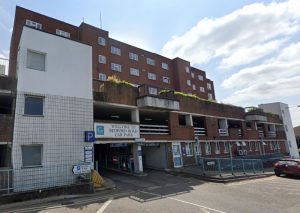
Scammers have targeted Guildford car parks (image Google)

Fake QR codes, used to scam motorists into giving away their bank and card details, have been found in Guildford car parks.

The scam codes have been placed on payment machines, signs or barriers  in an attempt to defraud people into thinking they are making genuine payments, Guildford Borough Council has warned.

Not only are the unsuspecting drivers handing over private details to the scammers but they are also putting themselves at risk of collecting a fine for not having a valid parking ticket.

The council has issued a warning  to help people from getting caught out and said it does not use any QR codes at its car parks – so if you see one it’s a scam.

Lead councillor for commercial services, Councillor Catherine Houston, said: “We are aware of the increase in QR code parking scams across the country and I want to reassure residents that our teams regularly inspect our car parks to keep them safe and free from fraudulent activities.

“Criminals are becoming increasingly sophisticated in their methods so if you do spot a QR code in one of our car parks, please don’t scan it; report it to the council instead.

“By raising awareness of such scams, we help to protect drivers from being misled so that residents and visitors can use our car parks in confidence.”

Once scanned, the codes take people to a fake website that asks for credit and debit card information, mimicking genuine payment providers.

The council has now placed signs within all its car parks explaining to only use the  RingGo app and to not use any QR codes found. 

It has also pledged to remove any codes found with its enforcement team carrying out daily checks.

Scammers have targeted Guildford car parks (image Google)


Planning a house extension in Epsom and Ewell? A hard lesson from Waverley

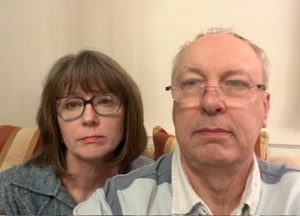
Steve Dally (right) and his wife Caroline. (Credit: Steve Dally)

A man who was charged £70,000 by a Surrey council said it was a “watershed moment” to be given recognition of his struggle and the right to appeal. A couple were slammed with a hefty fee for a home extension and given no opportunity to argue their case.

Community Infrastructure Levy (CIL) is a legal charge designed to get developers to financially contribute towards essential infrastructure. While self-builders and home extensions are exempt from CIL payments, in Waverley applicants must first complete the necessary paperwork for this.

But with residents being unaware they need to apply for an exemption, or due to paperwork errors, some people have unexpectedly had to face extortionate CIL charges and terrifying enforcement action.

Steve and Caroline Dally were granted planning consent to demolish and replace an existing home extension that was exempt from CIL. However, after seeking permission to make some minor amendments (for which consent was granted) they suddenly and unexpectedly faced a £70,000 CIL charge, with no appeal.

Unlike in criminal cases, the paperwork and administrative processes of CIL means people could accidentally face charges between £40,000- £235,000 and have no right for their case to be reconsidered.

They pursue you relentlessly to get the money out of you,” said Steve Dally, “There’s no compassion, there’s no understanding.” He explained the council told him he had 60 days to pay the £70k or his home in Godalming was at risk of being re-possessed and he would go to prison. As this was the start of the Covid lockdown in 2020, he feared the worst.

The 65-year-old has been forced to increase the mortgage on his home by £400 per month, pending full repayment when he turns 70. He may have no choice but to sell the home he has worked his entire life for, just to settle this debt. “It’s traumatic,” Mr Dally said. “You lose sleep and end up crying your eyes out- what can you do about it?”

Fighting the council since 2020, Mr Dally had approached councillors and the local MP and the ombudsman to change the CIL charge levied against him and his wife. But none of them could ultimately remove the fee.

On Tuesday, January 28, Waverley Borough Council agreed to ensure the public have the right to appeal the CIL charges. Mr Dally described it as a “watershed” moment as it was the “first time that someone was prepared to stand up and fight for you”.

Speaking out for the victims, Councillor Lauren Atkins said the “Life-changing unintentional impacts of CIL have resulted in debt, depression and years of feeling unheard and being unanswered.” She called for the council to collaborate and seize the “opportunity to see justice for those wronged”.

But now, householders previously subject to CIL liability can request a discretionary review by Waverley Borough Council within a window from 1 June 2025 to 31 May 2026. The council agreed to have a discretionary review of CIL payments for householder applications and will consider refunds of CIL previously collected.

Mr Dally said the change did not guarantee victims were going to get their money back. “It’s a long way to go yet,” he said, arguing it depends on how “compassionate” the reviewer will be of people’s cases. “There will be a lot of people in Surrey that will be impacted by the same and will not know which way to turn.” he said.

Speaking to the Local Democracy Reporting Service (LDRS), Mr Dally reeled off other people who had been found foul of the CIL charge on their residential properties. He said one man was charged £200k and a wife looking after her husband with dementia was fined £40k.

Councillor Jane Austin said: “We see the unintended consequence of this aspect of s legislation has caused great financial and emotional distress to people who have unwittingly broken rules they didn’t know existed.”

She acknowledged Waverley council is, going forward, trying to ensure householders are made aware of CIL and its exemption paperwork. Cllr Austin added: “But we need to right this wrong for those who have already had to make these huge payments.”

Leader of the council, Cllr Paul Follows, said work is already being done to investigate the CIL levy issues but welcomed the cross-party collaboration. The CIL levies will be reviewed as part of the council’s Local Plan process, according to Cllr Follows.

“I hope the poor folk who are being pestered by Waverley to pay these charges will be left alone until we have resolved this,” said Cllr Michael Goodridge. He raised concern that he has been told everyone has been looking at the issue for a while, but it could take a lot more time in the Local Plan.

The Liberal Democrat council leader also added the CIL regulations was something his party had inherited from the previous administration. Members also broadly agreed more education of the CIL process was needed, both for councillors and the public.

Emily Dalton

Steve Dally (right) and his wife Caroline. (Credit: Steve Dally)


Community Infrastructure Levy (CIL) in Epsom and Ewell Borough

The Community Infrastructure Levy (CIL) is a charge imposed by Epsom and Ewell Borough Council on certain types of new development. It helps fund local infrastructure, such as schools, healthcare facilities, and transport improvements.
Does CIL Apply to Single Residential Developments or Home Extensions?

When CIL is Payable

CIL applies if your project involves:

  • New dwellings – Any development that creates a new residential unit is liable for CIL, regardless of size.
  • Large extensions – If an extension or new build increases the gross internal floor area by 100 square meters or more, CIL applies.

When CIL is NOT Payable

You may not have to pay CIL if:

  • Your project adds less than 100 square meters of additional internal floor space (unless it creates a new dwelling).
  • You qualify for exemptions or reliefs (see below).

CIL Exemptions and Reliefs

Some developments may be exempt from CIL, including:

  • Self-build homes – If you’re constructing your own home, you can apply for a self-build exemption.
  • Residential annexes or extensions – If the work is for your own use and meets specific criteria, it may be exempt.
  • Affordable housing – Developments that meet affordable housing requirements are exempt.

Important: You must apply for exemptions before starting construction. Failure to do so may result in the full CIL charge becoming payable.

How is CIL Calculated?

CIL is based on the net increase in gross internal floor area (GIA) and is subject to annual indexation.

Current Residential CIL Rate (2025): £204.50 per square meter
(Source: Epsom & Ewell Borough Council)

CIL Process & Next Steps

If your project is subject to CIL, follow these steps:

  1. Submit a Planning Application – Include the required CIL forms when submitting your application.
  2. Complete an Assumption of Liability Form – Before starting work, submit this to the Council.
  3. Submit a Commencement Notice – Notify the Council before construction begins.
  4. Receive and Pay Your CIL Charge – Once the Council issues a Demand Notice, make the payment as required.

More Information & Guidance

For full details, access CIL forms, and check the latest updates, visit:
Epsom & Ewell Borough Council CIL Guidance
Sam Jones