Epsom and Ewell Times
19th November 2026

ISSN, LDRS and IMPRESS logos

X-Ray vision wins Surrey Uni “spin-off” a prize

the Silveray team with the IoP award can be found

Silveray, the digital X-ray film company and Surrey spinout, wins coveted Institute of Physics award with a new approach to X-ray imaging 

Innovation in X-ray technology could be key to detecting cancer more accurately than ever before, says the CEO of a startup that has won this year’s Institute for Physics Business Startup Award.  

Silveray, a spinout from the University of Surrey, has invented a flexible, reusable, and cost-effective Digital X-ray Film (DXF) that is transforming industrial radiography for weld inspection. In the long term, the ground-breaking technology offers the promise of more accurate diagnostic X-ray imaging at lower radiation doses for earlier and more accurate tumour detection, leading to better patient outcomes. 

Silveray’s nanoparticle-based material for X-ray imaging is made of a semiconductor ink that is coated on to a flexible electronic backplane with pixels that captures the X-ray image. Unlike the current X-ray market status quo, Silveray’s technology enables enhancements in image quality on a physically flexible medium at a cost-effective price point. 

Dan Cathie, CEO and Co-Founder of Silveray, said: 

“The X-ray imaging sector has seen relatively few revolutionary innovations since the advent of digital imaging. Our vision at Silveray is to develop technology that disrupts this way of thinking by creating financially sustainable, reusable, physically flexible Digital X-ray Film (DXF). 

“We know there is more to be done but this award from the Institute of Physics is a recognition of the valuable potential of our technology for the industrial non-destructive test (NDT) market. Furthermore, our vision is to become game changers for mammography and other areas of X-ray imaging with our high-sensitivity, high-resolution, Digital X-ray Film invention. 

“This award comes as fantastic recognition for the team at Silveray following the close of our recent funding round, led by Northern Gritstone.” 

Silveray was founded in 2018 by Professor Ravi Silva, Director of the Advanced Technology Institute (ATI) at the University of Surrey. Since then, Silveray and the ATI have painstakingly worked on the technology that incorporates high-Z elements (heavy atoms known for their ability to absorb X-rays) into semiconductor polymer materials, creating flexible X-ray detectors that are both sensitive and adaptable to curved surfaces.  

Professor Silva said: 

“Traditional indirect conversion X-ray detectors are stiff, costly, and inherently force a trade-off between image quality, speed, and dose, but our innovation at Silveray changes that. 

“Our direct conversion technology is flexible, reusable, and closely mimics human tissue, making it perfect for medical uses like accurate diagnosis for early tumour detection. Because it doesn’t require complicated processing, this could make a real difference in improving medical X-ray imaging and radiotherapy.” 

Image: the Silveray team with the IoP award.


Epsom SEND case highlights a national problem

Joshua Mayle

A shocking case of systemic failure by Surrey County Council (SCC) has brought renewed attention to the challenges faced by families of children with Special Educational Needs and Disabilities (SEND). After nearly two years of delays and inadequate support, the Mayle family from Epsom has finally secured a suitable school placement for their 7-year-old son, Joshua. However, the damage caused by SCC’s inaction is undeniable—and emblematic of a national crisis.

A National Struggle for SEND Support

Joshua’s case, while devastating, is far from unique. Across England, families are grappling with a SEND system under unprecedented strain. The number of children with EHCPs has surged by 77% since 2015, a rise that local authorities nationwide are struggling to accommodate. Against this backdrop, funding for SEND services has not kept pace, creating a perfect storm of unmet needs, prolonged delays, and rising parental frustration.

The Local Government Association (LGA) reported earlier this year that councils are grappling with a national SEND funding gap of over £1.9 billion. Without urgent intervention, local authorities warn that they will be unable to meet their statutory duties under the Children and Families Act 2014.

Surrey’s Struggles in Context

Surrey County Council has seen a sharp rise in demand, with the number of children requiring EHCPs rising from 10,000 in 2017 to around 15,000 today. In response, the council has committed £240 million to SEND provision, promising 6,000 new specialist school places and additional support within mainstream schools. Yet, progress has been slow, and communication failures continue to erode parental trust.

Helen Maguire, MP for Epsom and Ewell, who intervened in Joshua’s case, said:

“It is a sad day when a family in such dire straits has to approach their MP on an issue that should have been addressed much earlier by the local County Council. No family should have to escalate matters this far, especially when their child’s needs are at stake. The voice of parents MUST be listened to, and while I am relieved that Joshua has finally received the education and support he deserves, it is deeply troubling that it took this long for the Council to act.”

“This case highlights systemic failures within Surrey County Council’s SEND services. Urgent reform is needed to prevent other children from suffering in the same way.”

Surrey’s challenges are reflected across the country. In some areas, families report waiting months—sometimes years—for EHCPs to be approved, with many forced to take local authorities to tribunal to secure adequate support. Nationally, tribunals have increased by 80% since 2016, with parents overwhelmingly winning cases against councils, further highlighting systemic issues.

The Role of Central Government

Local authorities are not solely to blame. Reductions in central government funding have left councils stretched thin, with many struggling to recruit and retain qualified staff to meet rising demand. The LGA has called for an urgent review of SEND funding, warning that councils are increasingly using general education budgets to plug the gaps, putting additional strain on mainstream schools.

The Department for Education (DfE) recently announced a SEND and Alternative Provision Improvement Plan, promising £2.6 billion in capital funding to create new school places and improve existing facilities. However, critics argue that the funding is insufficient to address the scale of the problem.

Paul Whiteman, General Secretary of the National Association of Head Teachers, warned earlier this year:

“The government’s SEND review is a missed opportunity to address the systemic underfunding of support for children with additional needs. Families and schools need real solutions, not sticking plasters.”

The Human Cost of Delays

For families like the Mayles, the impact of these systemic failings is profound. Joshua, once a bright and independent child, has regressed significantly due to delays in accessing the support outlined in his EHCP. His father, Alex, said:

“Surrey County Council’s failure to meet its statutory obligations is shocking. All children are entitled to an education, and they are being failed by a broken system that is underfunded and under-resourced.”

The strain on families is echoed across the country, with parents often feeling forced to navigate a labyrinthine system to secure their children’s rights. A recent survey by the charity Contact found that 65% of families with disabled children believe the SEND system is “not fit for purpose,” and 48% say their child’s mental health has suffered due to delays in accessing support.

A Call for Urgent Reform

Joshua’s story underscores the urgent need for reform—not just in Surrey, but across England. While councils like SCC grapple with rising demand, the root cause lies in a system underfunded at every level. Families should not have to fight this hard for their children’s education and wellbeing.

As the government prepares to roll out its SEND improvement plan, experts warn that without significant investment and a more collaborative approach between councils, schools, and families, the crisis will only deepen. For Joshua and thousands like him, the question remains: how many more children will be failed before meaningful change is delivered?


Is a Isa the answer to Epsom’s high house prices?

Middle class house

With the five-year anniversary of the Help to Buy ISA closure approaching, a fresh analysis has revealed how Epsom and Ewell compares to other Surrey boroughs in benefiting from this government initiative. Launched in 2015, the Help to Buy ISA offered first-time buyers a 25% bonus on their savings, helping them onto the property ladder before its closure to new applicants in November 2019.

According to research by UK conveyancing specialists Bird & Co, only 0.15% of property sales in Epsom and Ewell since 2015 involved the Help to Buy ISA. This ranks our borough 10th among Surrey’s local authorities. However, a significant spike occurred in late 2021, with ISA-backed property purchases rising to 0.73% of sales in Epsom and Ewell during the final quarter of the year.

Experts attribute this spike to several factors: delays caused by the COVID-19 pandemic, which pushed completions into 2021, a rush to secure mortgage rates amid fears of rising interest rates, and confusion over the scheme’s eligibility deadline. Across Surrey, such spikes were common, reflecting national trends.

Daniel Chard, a partner at Bird & Co, commented:
“The Help to Buy ISA has undoubtedly provided vital support for first-time buyers, particularly in areas with lower house prices or greater awareness of the scheme. Epsom and Ewell’s figures highlight the role of regional affordability and access to information in shaping how these schemes are utilised.”

How Does Epsom and Ewell Compare?
While our borough’s 0.15% average use of the scheme lags behind Surrey’s leader, Reigate and Banstead (0.47%), the data tells a broader story of affordability challenges. House prices in Epsom and Ewell may exceed the limits of the Help to Buy ISA, reducing its appeal for local buyers.

The borough also saw a notable drop in ISA usage following the 2019 deadline for new accounts, with property sales using the scheme falling from 0.19% before the cut-off to 0.12% after—a 0.07% decline. This trend is consistent with other Surrey boroughs, where the closure of the scheme saw reductions in usage.

What Are the Alternatives?
For first-time buyers who missed the Help to Buy ISA window, the Lifetime ISA offers similar support, with a 25% government bonus on savings and higher annual limits. However, it’s worth noting that eligibility criteria differ.

Bird & Co, who conducted the analysis, specialise in conveyancing law and offer guidance to buyers navigating government schemes. They highlight the value of understanding regional differences and tailoring advice to individual needs.

As Epsom continues to grow as a desirable place to live, schemes like these underline the importance of affordability in ensuring that first-time buyers can achieve their homeownership dreams.


Fly-tipping bags and BB gun shots close Bagshot recycle centre

Bagshot Recycling Centre (Image Surrey CC)

Bagshot community recycling centre will close in an effort to protect  staff from being threatened with violence, Surrey County Council has said.

The depot has been plagued with issues for years with people “dodging bb bullets”, catapults fired,  angle grinders used in break ins, and staff put in danger by those dumping hazardous waste, senior councillors said.

The closure would not save the authority money, they said, as alternate sites will have to their hours extended to deal with the knock on.

Waste contractors Suez has recorded 801 instances of fly tipping across all Surrey recycling sites between January 2019 and August 2024. Of these, 531 (66 per cent) were at Bagshot.

A nuisance report listed examples of flytipping at the site as well as details of break ins such as when an “angle grinder was taken to the office shutter” and “oil thrown around site”.

Other times vandals broke in and left fluorescent tubes “smashed over the site”.

Some of the break ins forced the recycling centre to close, while on June 17 “Someone fired a bb gun towards members of the public” which was later reported to the police.

Campaigners had argued that the centre was valued by the community and rather than give up on Bagshot, money should be spent on modernising and making it safer.

They argued that closing the Bagshot centre would make it harder, longer, and more expensive for many people to recycle their waste.

Councillor Natalie Bramhall, cabinet member for property, waste and infrastructure, told the Tuesday, November 26.  meeting at Surrey County Council: “ Suez keeps the site safe, but it has inherent problems which are not present at other community recycling centres. 

“For many many years the site has suffered from overnight vandalism and unlawful ingress.

“Containers, particularly those used for electricals, are regularly forced open and plundered and the site office has been vandalised.

“The perimeter fence has been driven into and fly tipping left outside the gates and tipped over the fences.

“Prevention measures, whatever we do, things get broken, they use catapults to knock out all the lights, they used angle grinders to get the fence and into the office and vandalise.

“Suez staff receive threats and have to deal with materials delivered to the site that are hazardous and not allowed on the site but they have to turn a blind eye to this because they are threatened with violence.”

The report described the Swift Lane site as small, unmodernised and not fit for purpose. 

It serves around 7,000 people in the Bagshot area who will be redirected to Camberley. Those who came from further afield, such as Windsor and Maidenhead, will be directed to the recycling centre in Lyne, Runnymede.

Subject to Surrey Heath Borough Council approval, it is anticipated that Bagshot tip will close immediately prior to the new tenant moving onto the site. This is likely to take place in December 2024.

Photo: Bagshot Recycling Centre (Image Surrey CC)


Epsom & Ewell’s local history museum to be born again?

Kids running into Bourne Hall Ewell

Bourne Hall Museum in Ewell, a cherished repository of local history, faces an uncertain future as its esteemed curator, Jeremy Harte, prepares for retirement in March 2025 after 35 years of dedicated service. Harte’s tenure has been marked by significant contributions, including the curation of approximately 17,000 artefacts and 45,000 photographs that represent the lives of tens of thousands of people who’ve lived in the area since the Ice Age.

Concerns have arisen within the heritage community regarding the museum’s continuity post-Harte’s departure. Jon Cotton, President of the Epsom and Ewell History and Archaeology Society, expressed apprehension over the Council’s succession planning, stating, “We fear that no such planning has been put in hand, and there is a growing belief that the Council intends to wind down its commitment to the Museum, its staff, premises and collections.”

Epsom and Ewell Times asked the Council: “Does EEBC intend to keep the museum open after Jeremy Harte’s retirement and is the Council actively recruiting a new curator?”

In response, Councillor Clive Woodbridge, Chair of the Community and Wellbeing Committee (RA Ewell Village), affirmed the council’s commitment to the museum’s future, stating, “We are putting plans in place to determine how we will continue to run the museum into the future. There are currently no plans to close Bourne Hall Museum.”

Bourne Hall Museum has been instrumental in community engagement, recently participating in the national Kids in Museums ‘Takeover Day’ by collaborating with Ewell Grove Primary and Nursery School. This initiative, part of the council’s Arts, Culture and Heritage Strategy, aims to inspire local youth by providing hands-on museum experience.

As the museum approaches this transitional period, many remain hopeful that Bourne Hall Museum will continue to serve as a vital educational and cultural resource for future generations.

Related reports:

Bourne Hall’s Christmas Supremacy

Kids takeover Ewell’s Bourne Hall

Ewell History Day returns to Bourne Hall


Epsom Choral Society’s Verdi Requiem reviewed

Epsom Choral Society singers

I will never forget the first time I heard Verdi’s Requiem.  That crashing wall of sound that was the Dies Irae filled me with fear and awe.  It seemed as if the mouth of hell had been opened and nothing could stop the all-consuming fire.  And here on offer from Epsom Choral Society is this mighty work, accompanied by only five instruments.  Would it work?  I couldn’t wait to find out.

The choir started off solemnly setting the scene.  Their warm-hearted singing incorporated a range of colours – from a luminous ‘et lux perpetua’ to a firmness of purpose in ‘te decet hymnus’.  The four soloists also made an impressive appearance with their fugal ‘Kyrie’.

Then came the ‘Dies Irae’.  Such was the spirit of the choir as they hurled their phrases at us that it was hard to believe there were not twice the number of singers on stage. This was fearless and exciting singing.  With alternating timpani and bass drum replicating the original scoring, we were wholly immersed in fire and brimstone. 

In addition to the high octane ‘Dies Irae’, the choir is given other saner but even more challenging fare, such as the fugue for 2 choirs in ‘Sanctus’.  Here, ECS was nimble and assured, keeping the texture light, transparent and a joy to listen to.  The concluding movement ‘Libera me’ is a balancing companion to the ‘Sanctus’, demanding equally tight control to prevent any section from charging off the rails.  Such hair raising moments showed the true mettle of ECS in their ability to conquer details, keep a clear head and ride the storm.

What a fabulous quartet of fine young soloists. All performed magnificently and immeasurably added to the enjoyment of the evening.  There were simply too many superlative moments, the following being a cruelly curtailed list.

Soprano Elisabeth Findon‘s impassioned singing during the concluding ‘Libera me’ was a highlight of the evening.  Her high Bb near the end – a true pianississimo (pppp) – floated above a muted chorus;  it was translucent and sublime and a moment to remember.   ‘Quid sum miser’ was exquisitely sung by mezzo Judy Louie Brown.  It was accompanied by the marimba – an unexpectedly successful substitute for solo bassoon in the original score, and especially notable this evening for both percussionists duetting on the one instrument!

John Findon is a commanding tenor. He was majestic in the opening of the ‘Kyrie’, and tenderly sensuous in ‘Qui Mariam’.  Mark Nathan‘s cantabile bass solo ‘Voca me’ showed off Verdi’s song-writing skill at its most natural and beautiful.  And whenever the four of them joined forces to sing as an ensemble, at times a cappella, they always added colour, sparkle and emotion to the drama.  I came out from the concert knowing that the haunting ‘Lacrymosa’ will be my Ohrwurm for weeks to come.

Verdi’s Requiem is universally adored.  That this wonderful work can be accessible to local choirs with smaller forces at their disposal is thanks to Berlin musician, Michael Betzner-Brandt, who has miraculously reduced the massed orchestral requirements to an ingenious chamber ensemble of piano, horn, double bass, marimba (plus big bass drum) and timpani.  Yes, there are moments that are hard to replicate, such as the antiphonal trumpets in the ‘Tuba mirum’, but they are a very small price to pay for what has been gained.

Lynda Chang

Related reporr:

Epsom born baritone to bring requiem to life


Surrey Taxpayers Face Policing Squeeze Amid Funding ‘Postcode Lottery’

Lisa Townsend

The “post-code lottery” of police funding could force residents to shoulder more of the burden, according to Surrey Police and Crime Commissioner (PCC) Lisa Townsend. The PCC said she fears it will be inevitable taxpayers will have to contribute more to policing. 

Home Secretary Yvette Cooper announced she will end the “postcode lottery in policing”, in a speech to local PCCs and police chiefs on November 19. She confirmed that central government funding for police will go up next year by around £500m, with a detailed breakdown of funding allocations for each force will be published mid-December. Until then, many police forces are left in uncertainty about what the changes might be. 

But Surrey’s Commissioner said she fears money will be distributed unfairly in Surrey, from the government’s “not fit for purpose” police funding formula. Ms Townsend said if there is a postcode lottery of policing it is financial. She said: “There’s an idea that Surrey is wealthy, but Surrey Police isn’t.” 

The way money is divided up for police forces means that some areas receive a significantly larger share than others. For instance, money allocated to Surrey covers just 45% of the total budget whereas other areas such as Northumbria get 80%.

Surrey Police have to save, or cut, £23.4m over the next four years to maintain its current service, according to the LDRS. Inflation, government-agreed pay increases have also contributed to the force’s position. 

The Conservative PCC wrote to the Home Secretary on November 13, urging her to review the police funding.  She asked the Home Secretary to not use the police funding formula when granting additional money to combat the increase in employers’ National Insurance (NI) as this would “penalise” some counties and benefit others. 

Earlier this year, the government provided an additional grant to cover the police pay increase of over 2.5 per cent. Because this money was distributed by the funding formula, Surrey Police had to make up for a shortfall of around £1m, according to the PCC. 

In the letter, Commissioner Townsend said she is “prepared to ask local taxpayers to shoulder more of the burden of the cost of policing”. But she added it “cannot be fair” that residents have to pay for an “imposed” increase. 

The letter read: “Here in Surrey, 80% of our costs relate to people and so we have calculated that the proposed increase in NI would add approximately £4.5m to our costs. To put this into context, this would be equivalent to an additional £9 on Band D Council Tax or around 100 Police officers.”

Ms Townsend said she did not want to alter Surrey Police’s service to make residents suffer. “What we’re not clear on is what else the government wants us to cut,” she said. 

The PCC said she is “not optimistic” about Surrey achieving more money from the new government, despite the county getting an additional £17.3m last year.  “We’ve got nobody making the case for us,” Ms Townsend told the LDRS, “we’ve got no Labour MPs or Labour councils.” 

A Home Office spokesperson said: “The Government will fully compensate police forces for the impact of the changes to National Insurance Employer contributions.” They added: “Details on the allocation of this funding will be confirmed at the provisional police settlement in mid-December.”

Photo: Police and Crime Commissioner for Surrey Lisa Townsend. Credit: Surrey Live photographer Darren Pepe.


Epsom and Ewell Talking Newspaper talks about 50 years

Mayor of Epsom with EETN crowd.

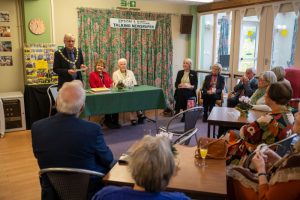
“I feel we are here today to pay homage to those good people who 50 years ago, established this splendid Charity and all those who have contributed ever since. On behalf of all the visually impaired Listeners over the past fifty years, I send a huge thank you to the Founders of Epsom & Ewell Talking Newspaper – EETN – and the multitude of Volunteers who have kept the free service operational for over half a century.’’ With these words, Judy Sarssam the present Chairwoman of EETN, welcomed the Worshipful Mayor of Epsom and Ewell (Charity’s President) Councillor Steve Bridger along with forty Volunteers and guests, to celebrate its Golden Anniversary on Thursday 21st November.

‘Our Volunteers are the shining stars,’ Judy continued, ‘because without them there would not be an Epsom & Ewell Talking Newspaper, whose function today is as valid as it was fifty years ago.’ Judy, herself visually impaired, went on to explain the importance of keeping visually impaired people feeling part of their community, as those with sight loss can so easily become isolated. Although technology has advanced in leaps and bounds since the early recordings, Judy was keen to emphasize that in a world now dominated by technology, isolation becomes more of an issue for those who are not technically adept.

During the celebration, messages of congratulations were read out, including from Mike Wood, President of The Talking News Federation, who acknowledged that 50 years of providing this regular, interesting and friendly service, recording more than 2390 editions, showed commitment by Volunteers and Listeners alike. Lionel Blackman, Director of Epsom & Ewell Times, said he was proud to be associated with EETN and was inspired by the dedication of its Volunteers. Councillor Clive Woodbridge, Chair of the Community and Wellbeing Committee for Epsom & Ewell said when he visited EETN as Mayor and presented long service awards to 15 Volunteers, he was impressed by the passion and hard work that goes into creating each edition.

Many of the Volunteers have been with the EETN for more than 10 years. Penny Dearing and Gwyneth Smith have been associated with EETN almost from its inception. Gwyneth joined as a Reader and her distinctive voice was well loved and remains melodic though Gwyneth is past her 90th birthday. She moved to Wales when COVID struck to join her family. A talented poet, she had planned to come to the celebration and read her 50th Anniversary poem. Sadly she was snow-bound in Wales, but emailed her wonderful poem which was read by MC of the day, James Dubois.

Following the messages from the many well-wishers, Penny Dearing, a former News Editor, Trustee/Committee member and Reader, told us her pleasure at working with those early pioneers. The EETN travelled from being recorded in Volunteers’ homes to a room in the Age Concern offices to a corridor at Swail House and eventually into a designated Studio at Swail House, which was the first site in the UK, designed specifically for visually impaired residents. During Covid full circle was reached as once more the EETN was temporarily recorded and produced in Volunteers’ homes until it was possible to return to the Studio once more.

A montage of Volunteers past and present caught everyone’s eye, as they enjoyed the delicious anniversary cake which the Mayor Councillor Steve Bridger ceremonially cut after making a generous speech in praise of the free EETN service. The celebration provided a wonderful opportunity for Volunteers to share their pleasure in continuing to offer access to local news, entertainment and information for the visually impaired people of Epsom and Ewell. Judy closed the event praising once more the special, hard-working team of 2024.


EETN Golden Jubilee – Poem by Gwyneth Smith

For over thirty years it was my privilege and pleasure
To be one of the READERS and the memories I treasure.
When Covid lockdown was announced my son rushed down to Surrey
To take me back with him to Wales to save us all from worry.

Continuing injections for my macular condition
I’ve now become a LISTENER and welcome each edition.
When it arrives in yellow pouch, protected from the weather,
I’m grateful to the Post Office, and how much more to Heather.

Epsom born I did not leave until my ninetieth year
So Epsom news and local views I’m very pleased to hear.
The MAGAZINE has always been the choice of those who EDIT
The wide variety produced is greatly to their credit.

It gives the READERS much more scope for their interpretation
Verse old and new and humour too can be a revelation.
So well done all who have a share in making each RECORDING
I hope you find the jobs you do are suitably rewarding.

With SECRETARY, TREASURER and Judy in the CHAIR,
We’re led by a COMMITTEE and we thank them for their care.
So happy Golden Birthday TALKING NEWSPAPER we say.
Let’s give three cheers for fifty years and longer may you stay!

Gwyneth Smith, 2024

Photography by Steven McCormick.


Epsom historian and the Frenchman who trained the British armies that defeated Napoleon

Royal Military Academy Sandhurst, Book cover and author.

The Royal Military Academy Sandhurst has seen a lot of famous faces over the years. Several members of the Royal Family have attended the Academy. Sir Winston Churchill graduated in 1894, Field Marshal Montgomery in 1908. The Academy is so respected that many countries send their military personnel there for training, making it one of the top military schools in the world.

But, how much do we really know about the origins of Sandhurst?

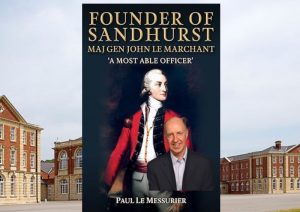
Local author and historian Paul Le Messurier has been a resident of Epsom for several years now. His latest book, Founder of Sandhurst, Maj-Gen John Le Marchant, tells the remarkable story of the British cavalry officer who started what has now become one of this country’s great institutions.

John Gaspard Le Marchant (1766-1812) was a French-born British cavalry officer who rose to prominence despite starting from humble beginnings. The son of a Guernsey father and a French mother, he joined the British Army at just 16. Through sheer skill and determination, he rose to become one of the most distinguished cavalry officers of his generation.

Le Marchant’s first taste of active service came during the French Revolutionary Wars, where he served as a captain in a cavalry unit during the ill-fated Flanders campaign. A skilled swordsman, it was here that he noticed that the British Army’s sword training was seriously lacking. Determined to make a difference, he designed a new cavalry sabre, wrote manuals on swordsmanship, and took it upon himself to train cavalrymen across the country.

Even then, he was still not satisfied and set his sights on an even grander and more ambitious attempt at reform: improving the overall standard and education of army officers.

Le Marchant’s idea for a military academy to professionally train army officers met with some initial resistance, but he eventually won royal and political backing. In 1801, Parliament approved his plans and allocated a budget of £30,000. The Royal Military College was established by Royal Warrant, initially based in High Wycombe and Marlow, with Le Marchant serving as its first Lieutenant-Governor. The college would later move to its prestigious location at Sandhurst.

In 1811, Le Marchant joined the Duke of Wellington’s army in the Peninsular War against Napoleon’s forces, taking command of a Heavy Cavalry brigade. He distinguished himself at the Battle of Salamanca, where he led one of the most successful cavalry charges of the campaign. Sadly, Le Marchant was killed in action during the battle at the age of 46. A memorial was erected in his honour at St. Paul’s Cathedral.

The Royal Military Academy’s motto today is ‘Serve to Lead,’ and that is exactly what Le Marchant did – both with the ground-breaking reforms he introduced and his bold leadership on the battlefield. Despite his many achievements, Le Marchant remains relatively unknown today. Paul Le Messurier’s engaging book seeks to change that, shedding light on the powerful and lasting impact Le Marchant had on the British Army.

Royal Military Academy photo: Antony McCallum – https://www.wyrdlight.com


Dorking Halls to reopen after upgrade

Dorking Halls (image Google)

The official reopening date for Dorking Halls is days away and a special ceremony has been announced to mark the occasion.

Mole Valley District Council was forced to close its veritable old venue in June so it could undergo a £11million facelift, to take place over two phases, to replace the 1930s plaster ceiling in the grand hall together with much needed mechanical and electrical work to its stage and internal workings.

Now, the first stage of that work, which has so far cost £4m, is done and Dorking Halls will reopen its doors on Monday, December 9 with screenings of Paddington in Peru, Wicked and Gladiator 2.

Then, from December 20 the big winter panto Sleeping Beauty takes to the stage, complete with 3D laser projections.

Ahead of the big day the council is also hosting a special reopening celebration the Friday before to show off the upgraded site, which will also feature newly enlarged toilet provision, and a draft lobby.

Speaking about the soon to be reopened Dorking Halls, leader of the council, Councillor Stephen Cooksey said: “I wanted to update you of an ‘early Christmas present’. 

“The work to replace the Grand Hall ceiling at Dorking Halls has gone brilliantly well and our entertainment venue will be re-opening as planned on Monday December 9, with the panto, ‘Sleeping Beauty’ beginning not long after on the 20 December and running until the end of the month.

“Whilst Dorking Halls has been closed, the opportunity has been taken to upgrade our film projectors meaning that they will not only present even better-quality visuals, but also run in a greener, more energy efficient, manner. 

“So, be prepared for an invigorated cinema experience when the Halls reopens with a comprehensive events screening and film listing.”

The second phase of the project’s £11m refurbishment will take place in 2025 and will focus on replacing “critical mechanical and electrical systems” – said to be its heating and cooling plant – that are near the end of their useful lives.

Related reports:

Dorking refurb: “it’s behind you”!

Dorking Halls to get refit


Surrey strategist secures stardom in Space Science

Professor Amara with planets

Renowned astrophysicist Professor Adam Amara, Director of Space Strategy and Head of the School of Mathematics and Physics at the University of Surrey, has been appointed as the UK Space Agency’s (UKSA) new Chief Scientist. 

While remaining at Surrey, Professor Amara will split his time between his space strategy role at the University and his new role at the UKSA, in which he’ll offer independent expert advice and strategic guidance on all scientific areas within the Agency’s remit. 

Professor Amara said of his appointment:  

“I am honoured to be appointed as the UK Space Agency’s Chief Scientist during such an ambitious and exciting time for the UK’s space industry and its contributions to the UK economy. My role is to work with the space community across academia, government, and industry to ensure the UK seizes the opportunities ahead.” 

Professor Amara will now oversee a broad range of disciplines, including astronomy, astrophysics, planetary science, solar physics, space weather, lunar and Mars exploration, International Space Station experiments, and Earth and climate science. In addition to building relationships across the UK space community, Professor Amara will also be working closely with global agencies, including the European Space Agency (ESA) and NASA, to promote the UK’s space priorities.  

Professor Tim Dunne, Provost and Senior Vice-President at the University of Surrey, said:  

“I want to congratulate Adam on this exciting opportunity to lead the UK Space Agency’s scientific work. His appointment highlights the University of Surrey’s lasting strength and rich heritage in space sciences, centred on the discoveries, innovation and industrial impact of the Surrey Space Centre.” 

The Surrey Space Centre, founded in 1979 by Professor Sir Martin Sweeting, pioneered small satellite technology, which is credited with changing the economics of space and laid the foundations for much of today’s space industry. The Surrey Space Centre led to the creation of the hugely successful spin-out company Surrey Satellite Technology Ltd (SSTL) in 1985.  

As we look to the future, Surrey has ambitious plans for Professor Amara and his outstanding team of researchers and educators, to once again propel the institution to the frontier of space science.   


Worcester Park’s path to a healthier and safer life

Hapkido fans including Ed Davy MP and Kingston Mayor

Hapkido: Master Sung’s Dojang in Worcester Park and New Malden – More Than Martial Arts, It’s a Path to a Healthier, Safer Life.

The quest for personal safety has become more pressing in an era of rising crime rates and uncertainty, especially around South London, including Epsom. That’s what led me, in my forties, to take up Hapkido at Master Sung’s dojang in Worcester Park—a decision that has since transformed my life. Though initially driven by self-defence concerns, I quickly discovered that Hapkido is much more than a means to protect oneself. With the recent opening of Master Sung’s new dojang in New Malden, even more people can benefit from this remarkable martial art.

Starting Hapkido at my age wasn’t without its challenges. Learning new physical skills in your forties has its hurdles, and progress can feel painstakingly slow. But in Master Sung’s dojang, the sense of community runs deep. Here, we celebrate every achievement—whether it’s a beginner mastering their first stance or a long-time student advancing in rank. Each step forward is shared with classmates who cheer each other on, making the journey one of friendship and mutual encouragement rather than solitary struggle.

Hapkido combines martial arts’ physicality with a philosophy emphasising calmness, discipline, and respect. In my classes with Master Sung, we focus as much on learning techniques for self-defence as we do on building resilience and mental strength. This is invaluable for adults and children, women, and anyone wanting to gain confidence and self-control.

Originating in Korea, Hapkido blends various elements: striking, joint locks, throws, and weapons training. But its focus on defensive tactics makes it particularly effective—and safe. Practitioners learn to redirect an opponent’s energy rather than relying on sheer strength. This makes it ideal for everyone, regardless of size, age, or physical condition.

Master Sung’s classes emphasise practical, real-world applications, making Hapkido especially appealing to women and parents of young children. While the latest crime rates have driven many adults like me to seek some form of self-defence, parents are increasingly looking for ways to teach their children the skills and confidence needed to navigate life safely.

Hapkido is not just about learning to defend yourself; it’s a complete lifestyle that brings countless physical and mental benefits. Since joining Master Sung’s class, I’ve felt more agile, fit, and mentally balanced. The physical routines in Hapkido work the entire body, improving cardiovascular health, flexibility, and strength. These are intense sessions, but each movement also demands focus and discipline—qualities that seep into everyday life.

And beyond the physical, Hapkido has been a boon to my mental well-being. Master Sung incorporates meditation and breathing exercises that help reduce stress, making each class feel like a journey toward inner peace. 

One of the most unexpected rewards of my Hapkido journey has been becoming part of a community united by shared goals and mutual respect. Master Sung has built an inclusive environment where people of all ages and skill levels come together. His teaching style is patient and personalised, ensuring that everyone feels comfortable while still being pushed to their limits. With the new location in New Malden, this sense of community is only growing, reaching more people and making Hapkido accessible to even more Londoners.

Joining Hapkido has been a profound experience that has armed me with skills for self-protection and taught me the deeper values of discipline and balance. This art may be rooted in ancient Korean tradition, but its relevance and benefits are as essential today as ever.

If you’re considering taking up martial arts, or even if you’re just looking for a positive way to challenge yourself, Master Sung’s dojang in Worcester Park or New Malden is the perfect place to start. After all, the journey of a thousand miles—or perhaps just the journey toward personal growth—can begin with a single step onto the mat.

Find out more about Hapkido: https://self-defence-classes.online/master-sung/
Live Classes for new students: SKMA Hapkido & Kummooyeh New Malden, 16 Malden Rd, New Malden KT3 6DD, Tel: 07771 886319


Planning buses not missing them says Epsom’s MP

Dear Editor,

Thank you to Stuart Gosling for his contribution and for highlighting the important issue of transport links in relation to the new hospital development.

Has Epsom’s new MP missed the bus to a new hospital?

I completely agree that good transport connectivity is essential for the success of this project, and I want to reassure residents that we have already considered this as part of the planning process.

New transport links will be introduced once the hospital is built, and discussions around the best way to serve the site with appropriate public transport will take place as we progress along the development timeline. It’s important to note that transport infrastructure often needs to be developed alongside the new services and demands that arise from it.

I’ll be at the forefront of ensuring that the new hospital is well-served by transport, and I’m committed to ensuring that Epsom and Ewell’s needs are fully met. The process may take time, but I’m confident the results will be worth the wait.

Yours faithfully,

Helen Maguire MP


Ashtead school opens hearts to child refugees

Children refugee and buddies at City of Londn Feeman School

Christmas cheer filled the halls of City of London Freeman’s School (CLFS) as over 90 guests, pupils, staff, and friends from the Refugee Buddy Club gathered for a heartwarming Seasonal Celebration dinner. The event, held in partnership with the Epsom & Ewell Refugee Network, celebrated friendship and marked the spirit of the festive season.

This joyful evening also highlighted the success of the Refugee Buddy Club, which has been running at CLFS for two years. The club provides an invaluable space for refugee children and their families, offering not only practical support but also vital friendship and connection. Students at CLFS are paired with refugee children as “buddies,” helping them with homework, fostering confidence, and most importantly, creating genuine bonds.

“Many refugee children face challenges making friends at school and often experience isolation and bullying,” said Jo Sherring of Epsom & Ewell Refugee Network. “The Buddy Club is a safe and welcoming environment where these young people can form meaningful relationships with peers who are eager to support them. The impact is profound.”

The Refugee Buddy Club also runs English classes for parents, making it a family-centered initiative. Transportation is provided to ensure all families can attend, reflecting the school’s deep commitment to inclusivity. The programme supports families from Afghanistan, Ukraine, Syria, and other conflict-affected countries.

The Seasonal Celebration dinner was a true testament to the power of community, showcasing how collective efforts can transform lives. The Epsom & Ewell Refugee Network expressed their gratitude to CLFS for their unwavering dedication to fostering hope and friendship among refugee families.


Epsom and Ewell’s Draft Local Plan goes to Full Council

Town Hall and Local Plan

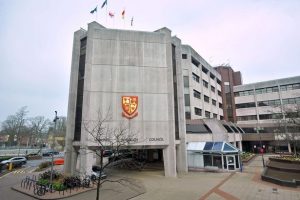
The Licensing and Planning Policy Committee (LPPC) of Epsom and Ewell Borough Council met on 20th November 2024 to consider the draft Regulation 19 Local Plan amid a storm of public opposition and internal division. The meeting, attended by residents and a significant complement of councillors, highlighted the deep tensions over the inclusion of Green Belt sites for development.

After nearly seven years of delays, the draft Local Plan was endorsed by the LPPC, sending it to the Full Council for final approval in December. However, the debate exposed significant disagreement among councillors about the cost of achieving housing targets and the risk of sacrificing valued green spaces.


Public Pleas to Save the Green Belt

Three public speakers opened the meeting, delivering impassioned critiques of the draft Local Plan. Janice Baker accused councillors of abdicating their responsibility by deferring to officers’ recommendations. Quoting directly from the meeting papers, she said, “Paragraph 3.46 states that removing Green Belt sites would significantly increase the risk of the plan being found unsound. In other words, you’re being told not to think about changes. But I ask: where is democracy in this process? Stand up for residents, stand up for your duties.”

Tim Murphy, a member of the Council for the Protection of Rural England, highlighted Horton Farm’s ecological and strategic importance, labelling it “one of the highest-performing Green Belt sites in the borough.” He challenged the committee directly: “The decision lies with you, not officers, not inspectors. You will be held responsible by residents for either protecting or destroying our Green Belt.”

Finally, Yvonne Grunwald reminded councillors of the 11,000-signature petition submitted during the Regulation 18 consultation. “Eighty-seven percent of residents opposed building on the Green Belt,” she said. “What happened to their voices? This plan will forever change the borough’s character.”


Councillor Perspectives: Frustration, Reluctance, and Division

The councillors’ deliberations revealed starkly contrasting views, with many expressing unease about the Local Plan but accepting its necessity. Chair Cllr Peter O’Donovan (RA Ewell Court) opened by praising the officers’ efforts, describing the plan as a delicate balance. “Our task,” he said, “is to tread carefully between safeguarding the borough’s unique character and ensuring future generations can thrive.”

However, dissenting voices were prominent. Cllr Christine Howells (RA Nonsuch) passionately opposed the inclusion of Horton Farm and Hook Road Arena. “This is our Green Belt,” she argued. “Once it’s lost, there’s no going back. Horton Farm is a critical environmental buffer and a floodplain. Its removal would set a precedent for the destruction of every other Green Belt site.”

Cllr Robert Leach (RA Nonsuch) expressed broader discontent with the central government’s housing targets. “Epsom has a population density five times the national average,” he said. “Why must all the burden fall on us? We’re being treated as a branch office for Westminster, not as an independent council.”

In contrast, Cllr Clive Woodbridge (RA Ewell Village) reluctantly supported the plan, acknowledging the compromises it entailed. “I wrestled with this decision,” he admitted. “Horton Farm is high-performing Green Belt, but without it, the plan will almost certainly be found unsound. If we exclude it, speculative developments could wreak havoc across the borough.”


Motions and Proposals: Protecting the Green Belt

Cllr Neil Dallen (RA Town) questioned the land allocated for Gypsy and Traveller sites, suggesting higher densities to reduce the footprint. “If we increase the density from 16.5 to 25 or 30 per hectare, could we not meet the full need on a smaller site?” he asked. Planning Policy Manager Ian Mawer responded, explaining that the lower density reflects cultural and practical requirements for Gypsy and Traveller communities, including space for caravans, vehicles, and utility blocks.

Cllr Julie Morris (LibDem College) called for stronger environmental commitments, particularly around climate change and biodiversity. “Why are climate and biodiversity issues always buried at the end?” she asked. “These should be front and centre of the plan.”

Meanwhile, Cllr Kieran Persand (Conservative Horton) vehemently opposed the inclusion of Horton Farm. “This is not a balanced plan,” he declared. “Including Horton Farm doesn’t protect other Green Belt sites—it puts them at greater risk. The planning inspector will see this as justification to include more Green Belt land.”

Despite these objections, motions to remove Horton Farm and other Green Belt sites were defeated, with officers warning that such changes would undermine the plan’s soundness. “Without Horton Farm, we simply cannot meet housing needs or provide Gypsy and Traveller pitches, which are legal requirements,” said Ian Mawer.


Difficult Decisions: Reluctant Support for the Plan

As the debate continued, councillors wrestled with the plan’s broader implications. Cllr Phil Neale (RA Cuddington), reflecting the prevailing mood, said, “None of us like this plan, but what’s the alternative? Without an up-to-date Local Plan, we’re at the mercy of speculative developments. We cannot afford to start from scratch.”

Cllr Woodbridge echoed this sentiment, emphasizing the risks of delay. “This plan is far from perfect, but it’s the best chance we have to protect the majority of our Green Belt while meeting our obligations. If we fail, the consequences could be far worse.”

However, not all councillors were resigned to compromise. Cllr Persand insisted that rejecting the plan would force the council to find alternative solutions. “We don’t have to accept this bad plan,” he argued. “There is still time to come up with something better.”


Press Release and Public Reaction

Following the vote, EEBC issued a press release reiterating the importance of adopting the Local Plan. “The Proposed Submission Local Plan strikes the optimal balance between development and preservation,” said Cllr O’Donovan. “It will deliver affordable housing, protect biodiversity, and secure infrastructure improvements while safeguarding the majority of the borough’s Green Belt.”

The press release also emphasized the risks of not adopting a plan, including unplanned and speculative developments. Residents were encouraged to participate in the upcoming Regulation 19 consultation, set to begin in early 2025.

Public reaction, however, remains overwhelmingly critical. Campaigners accused the council of ignoring residents’ views and bowing to government pressure. “This is not a balanced plan,” said Janice Baker. “It’s a capitulation.”


Looking Ahead: Full Council Debate

The draft Local Plan now moves to the Full Council for debate on 10th December 2024. With opposition among councillors and residents showing no signs of abating, the future of Epsom’s Green Belt hangs in the balance.

While some see the plan as a necessary compromise, others view it as a betrayal of the borough’s character and environmental heritage. The upcoming Full Council meeting promises to be as contentious as the LPPC debate, as Epsom grapples with the challenge of balancing growth and preservation.



The real world visits the virtual world at Ewell’s NESCOT

NESCOTs virtual reality lab.

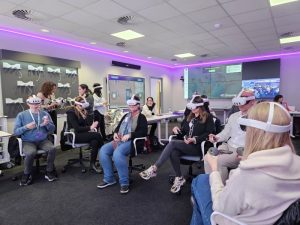
Principals and teachers from across the world visited Nescot (North East Surrey College of Technology) College in Ewell, Surrey last week, to try out its brand-new virtual reality (VR) immersive classroom. Delegates from Brazil to Bulgaria and South Africa to Singapore joined a visit arranged by global education network ORT for a masterclass on artificial intelligence (AI), chatbots, and the use of immersive technology in education.

The Nescot immersive classroom is packed with state-of-the-art technology, including an Igloo (a pod with a 360-degree projection system), immersive room, vehicle simulators, and VR headsets. The international delegates were able to try these out and found themselves virtually transported to different spaces, driving diggers on a construction site, and exploring hazards in a health and safety simulation. Students from across the curriculum at the college use the room to gain skills and experiences they couldn’t easily access elsewhere.

The visit to Nescot was part of ORT’s Hatter technology seminar programme, where professional educators from around the world explore the latest developments in science, technology, engineering, and maths teaching and learning.

Somayyeh Clifton, Head of Quality Improvement & Innovation at Nescot, who led the masterclass, said: “It’s been so fantastic to welcome delegates from across the globe to Nescot to share ideas, experience, and knowledge on AI. It’s also been brilliant to give them a demo of our incredible equipment, which makes learning exciting, interactive, and fun. Working with other education professionals like this is so valuable, with different perspectives helping to inspire our work going forward. We’re all working to give students the best education, which will lead to fulfilling careers in the modern world. Our excellent facilities at Nescot have been a game changer.”

Leor Harel, World ORT Learning Development Manager, said: “Nescot’s VR classrooms are a groundbreaking approach to education and immersive technology. This visit was a perfect opportunity for our group of global education experts to see first-hand a world-leading provision. We are delighted that our teachers will go back to their schools and apply the principles and learnings from their time at Nescot.”

Nescot is a hub of innovation, with the Sussex and Surrey Institute of Technology hosting robotics, AI, and cyber security facilities. The college is part of the AI in Education initiative, with Principal and CEO Julie Kapsalis sitting on the Strategic Board. AI in Education aims to support and advise schools and colleges so they can maximise the benefits of AI and minimise the risks.

The funding to create the immersive space was provided from the Government’s Local Skills Improvement Fund, a project which aims to support local people into work. As well as being beneficial for education professionals and Nescot students, the college is encouraging local businesses to get involved by using the technology to train staff. Partnerships with business and enterprise are invaluable for both parties, as organisations get to access cutting-edge training and learning resources, plus a pool of talented, experienced students who can enter the workforce via apprenticeships, work placements, and post-college recruitment.

Nescot offers college courses for school leavers and adults, with a wide range of career-focused vocational courses including Animal Care, Business, Computing and IT, Construction, Performing Arts, Childcare, Health & Social Care, and Beauty Therapy.

To find out more, call 020 8394 3038, visit www.nescot.ac.uk or email adviceteam@nescot.ac.uk.

Local businesses interested in using the immersive classroom for training, or working with the college on apprenticeships, work placements, or recruitment should contact businesscentre@nescot.ac.uk or call 020 8394 8593.


Sorry Surrey Borough for “shameful” past

Woking Council

Woking Borough Council has apologised for the “shameful” behaviour of its past.

The bankrupt council met last night to hear from the authors of the long-awaited review into how the authority went bust.

The council saddled itself with debts of about £2billion – borrowed to fund failed investments and regeneration that has left residents facing years of huge tax hikes and cuts to services.

The Grant Thornton Report found ‘potentially unlawful’ lending, failures of leadership, borrowing to lend to third parties, a £3m “opportunities fund” overseen by the former chief executive Ray Morgan, potential scope for conflicts of interest, and poor decision making such as borrowing £700m to buy an asset now worth approximately £205m.

The council held the extraordinary meeting to consider the report’s findings where, as expected, it accepted the findings and recommendations in full.

Surrey Police has been contacted by the borough’s chief executive to make clear that any evidence of criminality or misfeasance in public office will be referred to them for investigation.

Although it is unclear, given the state of record keeping during the period in question, what the outcomes of this may be, the meeting heard.

A separate legal challenge pursued through the courts could be explored, but would require new instructions from the council.

Not on the original papers, but added during the debate, was the formal apology.

Cllr Leslie Rice (Liberal Democrats; Heathlands) said: “Humility does not belong to the political class generally.

A humble politician is an oxymoron or a paradox I’m not sure which. But I think in this situation…we should be showing collective humility this evening as Woking Borough Council.

“While we are different members of the council, the council itself is responsible for these legacy problems, these historical problems.

“We should apologise to the people of Woking. The situation we have is shameful.

“It’s shameful (too) on our government, our historic governments going way back, that we completely lack proper regulation and oversight of the local government sector.

“We should apologise to the people of Woking.”

The two and a half hour meeting began with leader of the opposition Cllr Amanda Boote (Independent; Byfleet and West Byfleet) paying tribute to former member John Bond, a long-standing critic of the council’s financial handling, but who died earlier this year.

Her words were echoed by many of those who spoke.

Addressing the council, she called the report cathartic, shocking and sad “especially for all of the residents of Woking who we have collectively let down.

She said: “Residents will continue to feel the impact of this for many many years to come.

“I think the most important thing is we have to learn lessons now, hard lessons so that history can never repeat itself.”

She added: “I want to pay tribute to my predecessor and founder of our independent group the late councillor John Bond.

“Since first becoming a councillor in 2014 and until he retired in 2021 Cllr Bond fought constantly to highlight the wrongdoings of the previous corporate management group and of the previous administration.

“Highlighting the wholly inadequate governance, poor investment decisions, poor accounting lack of transparency.

“And it’s sad that he was belittled and laughed at. He even resorted to writing many newspaper articles to try to get his voice heard.

“This is not about political point scoring but I couldn’t let tonight go by without paying tribute to Councillor Bond and all of his hard work and scrutiny in trying to stop this disaster from ever happening.”

In a statement released after the meeting, Cllr Ann-Marie Barker, leader of Woking Borough Council, said that the Grant Thornton public interest report confirmed what many residents already felt; that their council had let them down.

She said: “Years of mismanagement, poor governance and a disregard for the risks have left our community burdened with unsustainable debt. These systemic failings betrayed the trust residents placed in the council and have had far-reaching consequences.

“On behalf of Woking Borough Council I want to apologise for these unacceptable failings of the past.

She added: “By implementing the auditor’s recommendations, we are taking decisive action to secure a better future for Woking and the residents we serve.”