Surrey’s two new unitary councils are considering a “tourism tax” to help buoy their finances amid major changes to local government in the area.
This tax on overnight stays, which regional mayors will be allowed to charge under government plans, could come to Surrey as part of a major overhaul of the county’s councils.
East and West Surrey councils are set to take over power from Surrey County Council and the 11 district councils next April, after which they plan to pool resources on certain services.
It would be achieved through a framework called a foundation strategic authority (FSA), and the two new councils are currently consulting with the government on setting one up. The FSA could then act as a stepping stone towards Surrey having its own overarching elected mayor.
East Surrey shadow authority’s cabinet, which is tasked with setting up the new council, will next week discuss its joint response with West Surrey to the government’s consultation on an FSA for Surrey.
But in their proposed response, the two councils asked for more information about “new fiscal levers” they might be given by the government to help bolster their finances.
This included the possible introduction of an “overnight visitor levy”, more commonly known as a tourism tax, that would allow regional mayors to impose a small levy on paid visitor accommodation in their areas.
The document reads: “As further details are developed, we would welcome clarity on the proposed charging framework, implementation timetable, any exemptions or thresholds, the categories of accommodation that would be in scope, and the extent of local flexibility in how the levy may be applied.
“We would also welcome further information on how funding raised through the levy may be spent.”
Tourism taxes, which often involve a small fee levied on visitor accommodation, are commonplace in many other countries. A 2025 report by the Centre for Cities think tank described England as an “international outlier” in not imposing such a tax.
Ahead of the 2025 budget, the government announced plans to bring in the overnight visitor levy, which is designed to allow regional mayors to invest more in local infrastructure.
Local leaders would be able to decide whether or not to implement the tax, which would apply to overnight stays in paid accommodation such as hotels, bed and breakfasts and guesthouses.
A cabinet statement from July 2026 says the government will give “all strategic authorities the ability to introduce an Overnight Visitor Levy, with local leaders able to set out plans for how revenues will be invested by March 2028.”
In 2019, a study by the Institute for Fiscal Studies estimated that a £1 tourist tax could raise £420 million per year across England.
A government spokesperson said: “The levy will help ensure local people and economies keep more of the rewards and invest in what matters most to their communities, including reinvesting back into tourism.
“Similar levies in other countries typically add only a small amount per night and evidence suggests that they can have a limited impact on visitor numbers and jobs.
“Local leaders will need to consult with their areas before introducing a levy, and we’re listening to businesses to make sure money raised is invested effectively.”
Surrey is now just months away from “vesting day” – the moment from which West and East Surrey councils will formally take over management of all local government services in the county.
The shadow authorities’ consultation response also highlights the more broadly fraught financial situation facing local government in England.
“We request early engagement with government on a funding package that appropriately reflects the scale of the functions being transferred, together with certainty on Surrey’s future pathway towards mayoral devolution,” it reads.
“A firm commitment on both funding and Surrey’s future pathway towards mayoral devolution would provide confidence that Surrey can establish the strong foundations required to realise the full benefits of devolution.”
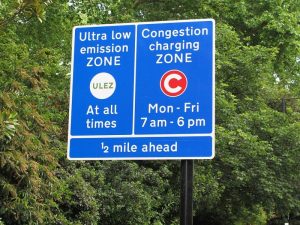
Surrey’s Conservative shadow authority opposition leaders have thrown their weight behind a London mayoral candidate’s pledge to review the Ultra Low Emission Zone (ULEZ).
Braintree MP Sir James Cleverly resigned from the Tory shadow cabinet at the end of August to stand for Mayor of London in 2028 – aiming to be the first Conservative to hold the office since Boris Johnson.
He told The Telegraph that he would conduct a full review of the London ULEZ if elected, vowing to end what he called Labour’s “war on motorists”.
The ULEZ requires drivers of high polluting vehicles to pay a daily fee of £12.50 to travel within its boundaries. It initially only covered London’s inner boroughs, but was expanded to include the outer London suburbs in summer 2023.
But this expansion was met with fierce opposition in Surrey and the other Home Counties, where many commuters regularly drive into London and are forced to pay ULEZ charges.
Following Sir James’ announcement, the Conservative opposition leaders on Surrey’s two shadow councils told the Local Democracy Reporting Service (LDRS) they fully support a review of the scheme.
West Surrey’s opposition leader Councillor Jane Austin (Conservative: Waverley Eastern Villages) said: “ULEZ does not stop at the London boundary in terms of its impact.
“Surrey residents travel into London every day for work, to run businesses, visit family and access services.”
Advocates of the ULEZ argue the scheme is a vital programme to improve air quality in the capital, and have pointed to studies showing vast drops in pollution following its implementation.
However, critics argue it places punitive charges on owners of older cars, many of whom may not be able to afford greener alternatives. A scrappage scheme to replace older vehicles ran until September 2024, but this was only available to London residents.
Councillor Austin added: “At a time when households and businesses are already under considerable financial pressure, I think it is entirely reasonable to review the impact of the expanded scheme – including whether the claimed environmental benefits justify the financial burden being placed on residents and businesses outside London.”
Surrey County Council opposed the 2023 expansion of ULEZ, and refused to allow Transport for London to install signage and cameras in the county related to the scheme.
East Surrey opposition leader Councillor David Lewis (Conservative: Cobham & Oxshott South) told the LDRS: “Surrey County Council opposed the ULEZ expansion from the outset because of the lack of support and the impact it would have on Surrey residents.
“We therefore welcome James Cleverly’s commitment to look again at the scheme and properly examine its economic and environmental consequences.”
Councillor Lewis also called on the West and East Surrey administrations, which will take responsibility for Surrey’s highways next April, not to implement “blanket anti-motorist policies” in the county.
He said: “Whether it is blanket 20mph limits, Low Traffic Neighbourhoods or other restrictions, changes need to be evidence-led and take proper account of the needs of residents and local businesses.”
East and West Surrey Shadow Authorities were contacted for comment. The Mayor of London’s office also did not respond to requests for comment.
Progress at Banstead’s High Down prison – but drugs and poor conditions remain
7 September 2026
A prison near Epsom and Ewell has made encouraging progress in safety and the time prisoners spend out of their cells – but illicit drugs, poor living conditions and delays in rehabilitation remain serious concerns.
HM Chief Inspector of Prisons visited HMP High Down, at Banstead, during an unannounced inspection from 1st to 11th June. The Category C training and resettlement prison held 1,085 men, close to its operational capacity of 1,113.
Safety was upgraded from “not sufficiently good” at the previous full inspection in 2023 to “reasonably good”. Purposeful activity improved from “poor” to “not sufficiently good”.
Respect remained “reasonably good”, while preparation for release was again judged “not sufficiently good”.
Drugs remain biggest threat
The prison had developed a more robust response to illicit drugs, including improved gate security, more extensive testing and a comprehensive programme for prisoners seeking to overcome addiction.
Positive results from random drug tests fell from 31 per cent before the previous inspection to 19 per cent. Although an improvement – and better than at many other prisons – inspectors said the figure remained too high.
Criminal gangs were regularly using drones to deliver drugs and other prohibited items. Window cages had reduced the risk, but some were damaged and weaknesses in windows, grilles and netting continued to provide access.
Inspectors concluded that the illicit economy remained the greatest threat to High Down’s stability, contributing to debt, bullying, fear and violence.
Reported violence had nevertheless fallen by 14 per cent and was broadly in line with other Category C prisons. Self-harm was 22 per cent lower than at the last inspection and there had been no self-inflicted death at the prison since then.
Despite these improvements, 56 per cent of prisoners questioned said they had felt unsafe at High Down, while 31 per cent said they felt unsafe at the time of the survey – both higher proportions than at comparable prisons.
Stark difference in time outside cells
Prisoners in full-time work or on the enhanced regime could spend as much as 10.5 hours a day outside their cells.
For unemployed prisoners, who represented about 10 per cent of the population, the average was only around three-and-a-half hours.
Roll checks found almost a quarter of prisoners locked in their cells during the working day. Inconsistent operation of the regime meant that some were locked up as early as 4.30pm and, in a small number of cases, were not released until 11am the following morning.
There were some popular employment-focused programmes, including railway courses and XO Bikes, which trains prisoners to refurbish bicycles. Construction courses taught bricklaying, plastering, painting and decorating, while other prisoners could qualify as baristas and learn to repair coffee machines.
Most prisoners completing courses achieved their qualifications and inspectors found that teaching standards had improved.
However, attendance at education, training and work remained too low. Some prisoners were not unlocked for scheduled classes, while staff did not always challenge those who refused to attend. Ofsted judged every aspect of the prison’s education and skills provision as “requires improvement”.
Dirty cells and damaged showers
Conditions varied considerably across the prison.
Communal areas were generally clean and some specialist units were well cared for, with gardens, plants and other improvements. Inspectors also welcomed a reduction in the number of prisoners sharing cells.
Elsewhere, cells were dirty and toilets and sinks were described as particularly unhygienic. Few cells had curtains, forcing prisoners to use sheets or towels to block the light, and some reported shortages of basic supplies such as toilet paper.
Many showers were grimy, damaged or lacked screens providing sufficient privacy. At the time of the inspection, 183 cells intended for one person were being shared by two.
The prison library was also too small for the population, with inadequate materials, limited seating and some broken furniture.
Rehabilitation delays
High Down became a Category C training and resettlement prison in 2022, with an emphasis on preparing men for release. Inspectors found that it was still not achieving its full potential in that role.
The offender management unit was understaffed and officers carried high caseloads. Contact was often concentrated on prisoners approaching an important sentence milestone, leaving many others without meaningful help.
This delayed risk assessments, transfers to open prisons and access to offending behaviour courses. There was a particular bottleneck for the Building Choices programme, with insufficient places and what inspectors described as at times chaotic allocation arrangements.
Of the approximately 800 prisoners released during the preceding year whose outcomes were known, around 30 per cent went into sustainable accommodation. About eight per cent were released homeless – still too many, inspectors said, although a lower proportion than at most London prisons.
Only 41 former prisoners were known to be in employment six weeks after release, rising to 58 after six months.
There were positives in resettlement support, including well-coordinated housing advice, help with benefits and debt, and efficient arrangements on the day of release. Family support delivered by the charity Pact and parenting programmes run with Sutton Council were singled out as examples of good practice.
Health-record concerns
Inspectors also identified shortcomings in health services. Records did not always contain complete details of appointment requests, triage decisions or “do not attempt resuscitation” instructions.
For at least three years, nurses had routinely poured and labelled individual doses of methadone before transporting them to prison wings, a practice which inspectors said was not consistent with professional nursing standards.
The Care Quality Commission requested action plans from the prison’s health providers over record-keeping, complaints handling, clinical governance and the monitoring of risks.
Concluding the report, Chief Inspector Charlie Taylor said further improvement depended partly on the Prison Service providing resources for building refurbishment and security upgrades.
He added that High Down also required renewed attention to offender management staffing and prisoners’ attendance at education.
Seven of the report’s 15 principal concerns were classified as priorities requiring immediate attention.
Crushing debt set to be inherited by hundreds of thousands of West Surrey residents will have a big chunk taken out of it after the Government officially began the process paying down £500,000,000 of Woking Borough Council’s financial failings.
The new council will take over in April 2027 following the dissolution of Surrey County Council and its 11 boroughs and districts.
West Surrey was forecast to start life with a £4billion black hole as a legacy of failed investment strategies, the largest being Woking Borough Council £2billion shortfall.
This will now be significantly reduced after the government started paying Woking Borough Council’s historic debt, built on the back of a failed investment strategy that bankrupted the borough in 2023.
The first repayment was completed on September 1 with the settlement of an £8 million loan – with a further £492 million of loans expected to be repaid by the end of March 2027.
In effect the Government is paying itself as the money owed was from its own Public Works Loans Board but its decision to begin the financial relief has been described by Woking Borough Council as a significant milestone its recovery.
Cllr Ann-Marie Barker, leader of Woking Borough Council, said: “The start of this financial support marks a significant step towards addressing the council’s historic debt burden and reducing the costs associated with it.
“While this marks important progress, we recognise that Woking’s debt is an ongoing concern for residents across Surrey, and that there is still much work to do.
“Our priority remains clear.
“With the continued support of government, commissioners and our future partners in West Surrey, we remain focused on delivering our Improvement and Recovery Plan to enter the new unitary council in the strongest financial position possible.”
The money was first pledged to the council last year when the government said it would provide £500m in financial support 2026/27 to help reduce Woking’s debt burden and borrowing costs – where the interest alone was pushing towards the £100m a year mark.
The council has been under commissioner control since collapsing, with all decisions having to be signed off by government appointed staff.
It says this money is a reflection of the ongoing commitment to reduce debt, which has seen it selling off a host of high-profile buildings in the town centre to help claw back what it can. These include the Victoria Square and its energy companies.
Cyber security threats to local government remain a “significant strategic risk”, according to a report, with the creation of two new unitary councils posing “further complexity” to IT security.
Guildford Borough Council’s audit and risk committee will next week review an update to its corporate risk register, which outlines and grades operational challenges.
These risks range from financial stability to climate change – as well as the ongoing local government reorganisation that will see two new unitary councils created next spring.
But the report also highlighted the dangers of cyber security threats to councils across the country, which the document says are “increasingly vulnerable” to such attacks.
These threats can take many different forms, including ransomware attacks, data breaches or Distributed Denial of Service (DDosS) incidents.
The report reads: “Cyber security remains a significant strategic risk given the increasing volume and sophistication of cyber threats facing local authorities, together with the potential operational, financial and reputational consequences of a successful attack.”
It adds that the ongoing local government reorganisation, which will see Surrey County Council and the 11 district councils scrapped next year to make way for the new East and West Surrey Councils, makes the situation more complex.
“The ongoing transition associated with Local Government Reorganisation adds further complexity to the Council’s technology and information environment and reinforces the need for continued vigilance,” the report says.
The council will continue to invest in preventative measures to mitigate the likelihood and potential impact of cyber attacks, the document adds.
“The risk remains above appetite due to the external threat landscape and the potentially significant impact of a successful cyber attack,” it says. “Given the nature of the risk, the majority of threat activity remains outside the council’s direct control.”
A Guildford Borough Council spokesperson told the Local Democracy Reporting Service (LDRS): “We take our IT security and governance responsibilities very seriously.
“As part of this commitment, we provide councillors with a high-level summary of the cyber security measures we have in place. We do not publicly share specific details about security controls.
“We’re currently working with IT professionals from across county, district, and borough councils to ensure our IT systems remain secure when we come together on 1 April 2027.”
The summer months brought a mixture of serious incidents, court outcomes, crime-prevention work and neighbourhood policing activity across Epsom and Ewell.
The Epsom and Ewell Times does not normally report every individual crime. This periodic round-up draws together incidents of wider public interest, police appeals and developments affecting community safety.
Eleven arrests during the Derby
Surrey Police mounted its largest annual pre-planned policing operation for the Epsom Derby Festival on 5 and 6 June.
Officers, staff and volunteers from Surrey and Sussex Police worked with the Jockey Club, supported by drones, intelligence teams, public-order specialists and local policing officers. The presence of King Charles III and Queen Camilla added to the security requirements.
Police reported that 11 arrests were made in and around the racecourse during the two days. Additional patrols were also deployed in Epsom town centre to respond to crime and anti-social behaviour.
Chief Superintendent Graham Barnett thanked residents for their patience during an operation which inevitably caused some disruption.
Morning assault near Rosebery Park
Police appealed for witnesses following an assault on the footpath between Avenue Road and Rosebery Park between 7.30am and 7.50am on Wednesday 10 June.
An altercation reportedly took place between two people, during which a man was kicked and punched in the face. Officers particularly wished to speak to the driver of a bronze-coloured BMW who may have witnessed the incident.
On 30 June Surrey Police announced the outcome of the trial arising from the fatal stabbing of 23-year-old Alfonso “Alfie” Sibley in Kingston Road, Ewell, on 9 December 2025.
Three teenage boys had faced charges following Alfie’s death. After a four-week trial at Kingston Crown Court, a 15-year-old boy was found not guilty of murder, manslaughter and conspiracy to commit robbery. A second 15-year-old and a 17-year-old were also found not guilty of conspiracy to commit robbery.
None of the defendants could be named because of their ages. The Major Crime Team said Alfie’s family had thanked the members of the public who tried to help him and the witnesses who assisted the investigation. Surrey Police published the full court update.
Town-centre licensing restrictions rejected
Community safety featured prominently in a June debate over whether Epsom town centre should be designated as a Special Stress Area, sometimes called a cumulative impact area.
Such a designation can make it more difficult to secure new or extended alcohol licences where there is evidence that the concentration of licensed premises is contributing to crime, disorder or public nuisance.
Epsom and Ewell borough councillors decided not to begin the process of introducing the policy at this stage. The issue is to remain under review, with councillors divided over whether the available evidence justified additional restrictions.
Attempted motorcycle robbery on Ewell Bypass
At approximately 11.30pm on Sunday 19 July, a motorcyclist was approached by two people in a vehicle on the Ewell Bypass near its junction with London Road.
The two reportedly tried to take the motorcycle and attempted to assault the rider by punching and pushing them.
A man in his thirties was arrested on suspicion of robbery and subsequently released on conditional bail while enquiries continued. Police sought witnesses and dashcam footage recorded between 11.15pm and 11.45pm, under reference PR/45260087038. Surrey Police issued a public appeal on 23 July.
Vehicle theft charge figures
Figures published during July showed that Surrey Police recorded 1,551 thefts or unauthorised takings of motor vehicles during 2025. Charges or summonses were recorded in 34 cases.
Local officers continued to warn that motorcycles and mopeds can be stolen within seconds. Owners were encouraged to use several layers of security, including a disc lock, a separate chain attached to an immovable object and, where possible, a cover and tracking device.
Police also used their local social-media channels in July to provide advice to tradespeople about thefts from vans. Owners were encouraged to remove valuable tools overnight, use secure internal storage, mark equipment and keep photographs and serial numbers.
Fatal collision on Christ Church Road
The most serious local road incident of the summer occurred shortly before 11.40pm on Wednesday 5 August.
A black Smart car collided with a stationary street-cleaning vehicle on Christ Church Road, Epsom. A woman in her twenties who was travelling as a passenger in the Smart car died at the scene.
The driver, also a man in his twenties, was arrested on suspicion of causing death by dangerous driving, driving while over the prescribed alcohol limit, failing to provide a specimen for analysis and causing death by driving while uninsured. He was taken to hospital for treatment.
Christ Church Road remained closed for several hours while collision investigators examined the scene. Police asked for witnesses and footage showing the Smart car between 11.35pm and 11.40pm, particularly evidence of the manner in which it was being driven. The appeal was issued by Surrey Police on 6 August.
Retail crime remains a policing priority
In August, the Epsom Safer Neighbourhood Team reaffirmed what it described as a zero-tolerance approach towards retail crime.
The measures include the prompt investigation of known offenders, cooperation with retailers and remote CCTV providers, visible and covert patrols and jointly funded private security in Epsom town centre.
Stores are also being encouraged to use the DISC information-sharing system. Police said this allows retailers to exchange information about offenders and enables a person caught stealing from one participating business to be excluded from others.
The team said its approach had resulted in a significant reduction in offending by known local shoplifters, although no supporting figures were published. Anti-social behaviour powers may also be used to prevent persistent offenders returning to shopping areas. Retail crime is listed among the neighbourhood team’s policing priorities.
Callers impersonating police officers
On 18 August Surrey Police warned residents about fraudulent telephone calls in which criminals pretended to be police officers.
The callers may claim that a bank account has been compromised, that someone has been arrested using the resident’s bank card or that money must be transferred for safekeeping. Criminals can use “number spoofing” to make a call appear to originate from a genuine police or bank telephone number.
Police will never ask someone to disclose a PIN, hand over a bank card or transfer money to a supposedly safe account. Anyone receiving such a call should hang up and contact the organisation independently, preferably from another telephone. Surrey Police published further advice about the impersonation scam.
What the recorded figures show
Published Police.uk data currently extend only to July, so August cannot yet be included in a like-for-like comparison.
Across the three Epsom and Ewell neighbourhood policing areas, 335 offences were recorded in June: 152 in Central, 106 in West and 77 in East. The combined total fell to 319 in July: 154 in Central, 90 in West and 75 in East. That represents a reduction of just under five per cent between the two months.
In Epsom and Ewell Central, the largest recorded category in July was violence and sexual offences, with 53 reports. There were also 33 reports of anti-social behaviour, 14 public-order offences and 14 shoplifting offences.
These categories record allegations reported to police and should not be read as numbers of convictions. A single incident may also generate more than one recorded offence. Neighbourhood statistics can be examined through Police.uk.
Police engagement through the summer
Local officers continued to hold “Meet the Beat” sessions at locations including Bourne Hall, Long Grove Park, Epsom High Street, the Horton Estate and Epsom Hospital.
A particularly concentrated programme took place during August, with opportunities for residents to meet neighbourhood officers in the town centre, local parks and hospital reception area.
Residents should call 999 where a crime is in progress or somebody is in immediate danger. Non-emergency matters can be reported to Surrey Police online or by calling 101. Information can be provided anonymously to Crimestoppers on 0800 555 111.
Friendly finding puts Epsom and Ewell in England’s top fifth
7 September 2026
Epsom and Ewell has been ranked among the friendliest and most connected places in England in a new national index examining the strength of community life.
That puts Epsom and Ewell comfortably inside England’s top fifth and fourth highest among Surrey’s 11 boroughs and districts. Waverley was ranked 13th nationally, Mole Valley 21st and Elmbridge 23rd.
The results attracted national attention after The Guardian reported that the Isles of Scilly had been named England’s friendliest place. The islands were followed by South Hams, West Devon, Derbyshire Dales and the nearby London Borough of Richmond upon Thames.
However, the description of the findings as a vote for England’s “friendliest” places needs some qualification. Residents were not simply asked to rate the friendliness of their towns and neighbours.
Instead, the barometer combines eight measures taken from the Government’s Community Life Survey 2024/25. Each council area was ranked against the other 295 areas on every measure, with those rankings averaged to produce a score out of 100.
The Epsom and Ewell figures were:
4.6% said they felt lonely often or always;
65.7% felt strongly that they belonged to their immediate neighbourhood;
48.4% believed many people in their neighbourhood could be trusted;
85.6% agreed that people from different backgrounds got on well together;
70.1% were proud to live in their local area;
69.1% chatted to their neighbours at least once a month;
20.1% undertook formal volunteering at least once a month; and
37.5% had participated in civic activities during the previous 12 months.
The borough performed particularly strongly on civic participation, volunteering, local pride and relations between people from different backgrounds. Its relatively low reported level of frequent loneliness also contributed positively to the overall score.
The findings provide statistical support for the familiar picture of Epsom and Ewell as a borough sustained by residents’ associations, charities, sports clubs, faith groups, heritage organisations and other voluntary bodies.
There are nevertheless reasons for treating precise league-table positions cautiously. The Government survey estimates come with margins of error, meaning small differences between neighbouring positions may not be statistically significant.
The barometer itself describes its score as a “rough guide, not a final measure”. Its eight indicators are given equal weight and cannot capture every aspect of living in a particular community. The survey also covers the whole borough, so it does not reveal whether experiences differ between individual neighbourhoods.
The Community Life Survey questioned adults aged 16 and over between October 2024 and March 2025. A larger sample in 2023/24 and 2024/25 allowed the Government to publish meaningful estimates for individual local authority areas.
The index was produced by the secretariat of the Independent Commission on Community and Cohesion to support the wider National Conversation, a UK-wide exercise examining what connects and divides people.
The Commission is co-chaired by former Conservative Home Secretary Sir Sajid Javid and former Labour MP Jon Cruddas. It has brought together representatives from politics, academia, business, faith and civil society to consider growing concerns about social isolation, division and the weakening of community institutions.
The National Conversation explained that official statistics provide only part of the picture and that the index was intended to prompt discussion about whether the figures reflect people’s lived experiences.
Its public survey closed on 31st August. The findings are expected to contribute to a report by the Independent Commission on Community and Cohesion later in 2026.
At the opposite end of the barometer, Barking and Dagenham ranked 296th, below Stoke-on-Trent, Ashfield, Mansfield and Ipswich.
For Epsom and Ewell, 56th place is not quite a claim to being England’s single friendliest community. It does, however, provide encouraging evidence that neighbourliness, civic involvement and local pride remain notable strengths of the borough.
More than 700 Scouts and volunteers from Surrey, including Scouts from 3rd Epsom & 8th/14th Epsom (Air Scouts), have returned from an unforgettable international adventure in Switzerland as part of KIX 2026 (Kandersteg International eXpedition).
The expedition marked a significant milestone, celebrating 25 years of Surrey Scouts’ modern-era expeditions to Kandersteg International Scout Centre (KISC), one of the world’s premier Scout destinations. The 2026 contingent was the largest group of Scouts to leave the UK this year.
The first Surrey expedition to Kandersteg took place in 2001 under the name SWaK (Scouts with Altitude – Kandersteg). Since then, Surrey Scouts have returned through a series of major international expeditions, including Expand 2004, K9 in 2009, and KIX events in 2014, 2018, 2023 and now 2026.
During their week in the Swiss Alps, Scouts from 3rd Epsom & 8th/14th Epsom (Air Scouts), joined fellow participants from across Surrey to experience a programme packed with adventure, challenge and international friendship. While at Kandersteg, they met Scouts from Canada, Portugal, Spain, Australia, Ireland, Switzerland, Germany and other parts of the United Kingdom, demonstrating the truly global nature of Scouting.
Participants travelled to Switzerland aboard twelve coaches provided by Baker Dolphin, departing from Cobham Services.
The expedition offered a wide range of activities, including hiking in the mountains led by trained and KISC-qualified mountain walkers, rafting on the river Aare from Thun to Bern, and high ropes adventures in Interlaken. Scouts also had opportunities to explore local towns and communities, gaining first-hand experience of Swiss culture and life.
Each troop selected a special activity day tailored to their interests. Activities included visiting the Schilthorn, famous for its appearance in a James Bond film; exploring the Jungfrau region; travelling to the Rothorn by steamship and mountain railway; relaxing in the thermal pools at Brigerbad; tobogganing at Lake Oeschinensee; visiting the St Beatus Caves; and climbing in Winteregg.
In addition, the Young Leader (YL) Squad helped KIX in helping to protect local biodiversity through a partnership with the Forestry Commission. KIX has partnered with Flora from the local Forestry team to contribute to the protection and preservation of biodiversity in the Kandertal area.
The Kandertal is one of the regions in the Canton of Bern with the highest concentration of reptiles. Eight of Switzerland’s sixteen native reptile species can be found there, including the sand lizard, grass snake, and the rare smooth snake. Many of these species are under threat, and some are critically endangered, largely due to the loss of important habitats. These habitats include sun-exposed features such as rock piles, dry stone walls, wood piles, and brush piles, as well as natural riverbanks, forest edges, and rocky areas. As part of the Kandertal Reptile Conservation Project, valuable habitats have been surveyed and documented to support their long-term preservation. Working alongside Flora and Luke, the YL Squad helped to maintain and enhance these habitats by clearing brush, creating piles of branches and stones, and improving existing habitat structures. These practical conservation activities make an important contribution to protecting local biodiversity and supporting the survival of the area’s native reptile species.
Mel Wedlock, Young Leader Development Team Lead for Surrey Scouts, said: “Supporting projects like this is a fantastic opportunity for the Surrey Young Leader Squad as part of their service project with KIX. The Squad are taking part in the expedition as members of the wider staff team, giving them valuable experience of supporting and delivering a large-scale international event for young people. Alongside developing their leadership skills, they have been able to make a meaningful contribution to an important local conservation project. It has been great to work with KIX, supporting the local community and helping to protect the natural environment in the Kandertal region.”
A particularly memorable moment came thanks to local shop owner Patrick Straubinger, who gifted every Scout and volunteer a commemorative Swiss pin badge in recognition of Surrey Scouts’ 25-year connection with Kandersteg. Patrick has welcomed generations of Surrey Scouts, alongside visitors from Scout groups across the world, throughout that time.
The expedition also attracted local media attention, with Surrey Scouts appearing on the front page of the Frutigländer, Kandersteg’s local newspaper, as well as featuring in a detailed report inside.
Supporting an event of this scale required an enormous effort from volunteers. Over the course of the week, the catering team provided enough evening meals to feed one person for more than 13 years. The contingent consumed more than 1,322kg of fruit and vegetables, 3,500 wraps, 195kg of cheese, 21,456 slices of salami, 489kg of meat, 1,548 schnitzels, and 255kg of breakfast cereal.
Meanwhile, the high walks team supported participants in covering more than 19,000 kilometres of mountain trails and climbing a combined elevation gain of nearly 650 kilometres. The activities team also coordinated more than 500 cable car journeys and 400 swimming pool visits during the expedition.
As the Scouts returned home, they brought with them new friendships, increased confidence, valuable #skillsforlife and memories that will last a lifetime. Showing Scouting has a #placetobelong.
Ian MacQueen Expedition leader said “KIX 2026 took two years to plan with and aim to give 700 Scouts and leaders the opportunity to try new activities, make new friends and learn skills for life. I think it is safe to say we achieved our aim and more. My thanks to the staff and leaders who made the event a success. We will now start to plan KIX 2029”
Scouts were asked “What were you expecting from the trip before you came?”
A Scout from 3rd Epsom said “I was expecting to be tired from hikes and I was looking forward to the activities, thought it was always cold and there would be lots of always hiking. I also thought it was going to be like a school trip and was expecting to be fun but wet.”
A Scout from 8th/14th Epsom said “I was expecting adventures, and to meet other Scouts from other countries.”
Scouts were then asked “What’s been the highlight of the week?”
A Scout from 3rd Epsom said “I enjoyed the rafting and going to Brigerbad and it was nothing like a school trip it was much more fun (different to expectations), I got to know lots of Scouts and doing all the different activities including, high ropes. It was a really nice place in general and I want to come again as everything was really fun.”
A Scout from 8th/14th Epsom said “I liked swimming in the pool in the park in Bern after rafting and also the rafting from Thun to Bern.”
We then asked the Adult Volunteers “Why did you want to bring your Scouts on this trip?”
An adult volunteer from 3rd Epsom said “We have been many times before and they get a lot out of the trip and gain great experiences. It is also great to see true scouting in operation but there are long challenging days but full of fun and excitement.”
An adult volunteer from 8th/14th Epsom said “There is a program for our scouts which is organised by the County team with support & food provision.”
We finally asked the Adult volunteer, “What was there highlight of the week?”
An adult volunteer from 3rd Epsom said “The friendliness, organisation and true Scouting spirit is second to none. Activities are organised very well with tasks as necessary. The Scouts found the walks challenging but all survived and surprised they could walk so far and so high. The food was also very good.”
An adult volunteer from 8th/14th Epsom said “The location, amazing scenery, swimming in Spiez, getting to know other adult volunteers better and hiking way beyond what I would normally do.”
Neil Wibberley
Secret Surrey leaders’ talks challenged by Epsom councillor
7 September 2026
An Epsom and Ewell councillor has launched a sustained Freedom of Information campaign to uncover what Surrey’s council leaders have discussed and agreed behind closed doors.
Councillor Alex Coley (Independent, Ruxley) is seeking the agendas, minutes and decisions of the Surrey Leaders’ Group, a forum bringing together the leaders of Surrey County Council and the county’s 11 borough and district councils.
The Group is currently chaired by Epsom and Ewell Borough Council Leader Councillor Hannah Dalton (RA, Stoneleigh).
Cllr Coley’s efforts began in March, when he requested records covering the civic years 2022/23 to 2025/26. Establishing which authority was responsible for answering proved to be the first hurdle.
Surrey County Council said that it did not hold the information. A response sent through a WhatDoTheyKnow account bearing the name “Surrey Leaders’ Group” came from Guildford Borough Council, which also said it did not hold the records because it did not provide the Group’s secretariat.
Guildford directed Cllr Coley to Reigate and Banstead Borough Council, which eventually confirmed that it held at least some of the material.
However, Reigate and Banstead initially refused the four-year request on cost grounds. It said more than 200 documents were spread across different authorities, including records kept by a previous secretariat. Locating, retrieving and reviewing them would exceed the Freedom of Information Act limit of £450, calculated as 18 hours of staff time at £25 an hour.
Cllr Coley expressed surprise that the basic records of a body composed of senior elected representatives should be so difficult to retrieve.
He argued that the failure to maintain a readily accessible publication scheme had itself helped create the situation in which answering an FOI request was said to be too expensive.
He subsequently narrowed his request to 2024/25 and 2025/26 and asked which council held the records for the two earlier years.
After extending its response deadline to consider the public interest, Reigate and Banstead released the Group’s constitution and collections of agendas. It has, however, refused to disclose the minutes.
The Council relied upon section 36 of the Freedom of Information Act, which can protect information where disclosure would be likely to inhibit the free and frank provision of advice or exchange of views.
It said the Group provided a “safe space” in which senior councillors could test ideas, challenge assumptions and discuss politically sensitive or developing issues before proposals entered the formal decision-making processes of their respective councils.
Disclosure, it argued, could have a “chilling effect”, making participants less candid and ultimately weakening the quality of subsequent council decisions.
The Council also maintained that the Surrey Leaders’ Group is not itself a formal decision-making body. It said any binding decision would still have to be taken through the constitutional and democratic procedures of the council concerned.
Among the Group’s stated objectives is taking decisions about joint activities across Surrey. It may make representations, determine certain nominations to outside bodies, levy subscriptions upon its member councils and maintain a fund that can be used to employ consultants or commission research.
Although it cannot bind constituent councils without referring an issue back to them, the constitution states that the decision-making powers of the former Surrey Delivery Board are to be exercised by the Leaders’ Group, subject to council ratification where required.
It also provides for voting, with each council leader having one vote, although the stated aim is to reach decisions by consensus.
The agendas demonstrate that the Group has considered matters extending far beyond informal networking. Subjects have included local government reorganisation, the allocation of reorganisation costs, strategic planning, health services, policing, economic growth, staff retention and the future governance of Surrey.
One agenda expressly recorded that a “decision” was required from leaders on proposals for funding the implementation of local government reorganisation. Leaders were asked to agree the proposals and take steps to set aside money from their councils’ budgets or reserves.
Another item asked leaders to provide a “steer” on proposed voluntary financial controls associated with the restructuring.
“No transparency”
Cllr Coley has now requested an internal review of the refusal to release the minutes.
He disputes the claim that publication would provide only limited additional transparency. He says the Group does not routinely publish its agendas, minutes, decision notices or even its constitution.
He also claims that at least one Surrey chief executive has acknowledged in writing that decisions were made at the Group rather than by its constituent councils. He says the current chair Cllr Dalton has told councillors that a particular course had to be followed because it had already been agreed by Surrey Leaders.
“The Surrey Leaders Group should not be a secret forum to circumvent public scrutiny,” he wrote in his request for a review.
Cllr Coley contrasted its private proceedings with the new East and West Surrey joint committees, whose agendas, minutes and decisions have been published and whose meetings have been open to the public and available to watch online.
That distinction is particularly important during the reorganisation of Surrey’s councils. Decisions and informal agreements made now could influence the structures, finances and services inherited by the two new unitary authorities.
Cllr Coley also argued that any need for continuing secrecy should be reduced by the impending abolition of the Group’s constituent councils. He told the Epsom and Ewell Times ” Your readers might chuckle at the idea of a “deep state” in Surrey, but what else should we call these arrangements where the most far reaching decisions are made in private with no scrutiny or public record and the mere existence of the Surrey Leaders Group is shrouded in mystery?”
Reigate and Banstead Borough Council acknowledged the internal review request on 2nd September. It aims to provide its decision by 30th September.
Nearly one in three working-age Surrey residents is not adequately health literate, a council committee report has warned.
The report, which is due to be considered at a joint meeting of Surrey’s Health and Wellbeing Board and Integrated Care Partnership next week, states that low levels of understanding of health information are a “significant barrier” to improving healthcare outcomes in the county.
It defines health literacy as “a person’s ability to access, understand, evaluate, and use health information to make informed decisions about their health and wellbeing”.
But the document noted around 30 per cent of adults aged 16 to 65 in Surrey fall below the threshold for health literacy, rising to 37 per cent in the worst-performing borough, Spelthorne.
The countywide number rises to 49 per cent in areas where numeracy is required.
“This means many adults in Surrey are reading at, or below, the level of an average nine-year-old,” the report reads, “This is a significant concern and highlights the need for continued focus and action to address health literacy across Surrey.”
People with poor health literacy will struggle to read or understand health-related information and know what action to take based on it, the document says.
“Low health literacy is also closely linked to educational disadvantage, deprivation, disability and poorer health outcomes,” it reads, “Improving the accessibility of health information and services is therefore an important lever for reducing health inequalities.”
People with bad health literacy are also more likely to go to hospital more and have depression, the report adds.
A health-literacy pilot programme called Clearer Care aims to combat this trend and help make health information and services clearer for Surrey residents.
It aims to achieve this through a mix of expert guidance and small grants to help Voluntary Community and Social Enterprise (VCSE) organisations deliver their own health literacy pilots.
The report says: “This is a small-scale pilot programme aimed at introducing and embedding health literacy across Surrey. While limited funding and a VCSE-led delivery model may constrain its immediate impact on wider system change, the programme provides an important opportunity to test approaches, generate learning and demonstrate impact.
“Findings will help inform future development, potential scaling and opportunities to embed health literacy more systematically across the system.”
Surrey campaigners seek independent appeal rights over new flight paths
7 September 2026
Surrey countryside campaigners have joined a national call for residents to be given an independent right of appeal when changes are proposed to flight paths over their homes.
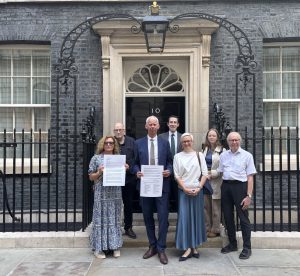
CPRE Surrey is among 22 community and environmental organisations that have signed a letter delivered to 10 Downing Street warning that the Government’s aviation reforms could leave the Civil Aviation Authority as both the regulator making decisions on airspace changes and the body answering complaints about those decisions.
The letter, addressed to Prime Minister Andy Burnham, calls for the Civil Aviation (Consumer Protection and Regulatory Reform) Bill to be amended to establish an independent airspace ombudsman.
Campaigners say this would give residents somewhere outside the CAA to seek a review of decisions capable of concentrating aircraft noise over homes, schools and previously quieter areas.
The proposed legislation arrives as the Government begins the most extensive redesign of British airspace for decades. Although the Bill does not itself draw new flight paths or change airport operating hours, it would strengthen the machinery through which approved airspace changes can be implemented.
Its significance for Surrey arises particularly from the planned redesign of the highly congested airspace over London and the South East, involving Heathrow, Gatwick and other airports.
It completed its stages in the House of Lords on 20th July and received its formal first reading in the House of Commons on 1st September. A date for its Commons second reading has yet to be announced.
Under existing legislation, the Transport Secretary can direct an airport, air navigation provider or another organisation involved in airspace change to prepare and progress a proposal. Clause 4 of the new Bill would extend that power so a direction could also require an airspace change already approved by the CAA to be implemented.
The Government’s explanatory notes say this would make the direction-making power available at every stage of the process, including putting an approved design into operation and implementing alterations identified by a subsequent review.
The Government argues that Britain’s underlying airspace design has changed little since the 1950s and is increasingly unsuitable for modern aircraft and present-day traffic levels. It says redesigning routes could permit more direct journeys and improved climb and descent profiles, cutting delays, fuel use and emissions.
The Bill would also allow the CAA to make detailed rules covering aviation safety and operations. However, these general rule-making provisions are distinct from the CAA’s function of deciding individual airspace change proposals. The measure does not expressly abolish consultation on individual proposals or create new flight paths by itself.
A new “guiding mind” for UK airspace
The broader reform centres on the new UK Airspace Design Service, known as UKADS. It is being provided by NATS En Route Ltd, the monopoly provider of en-route air traffic control services.
In its June 2025 announcement, the Government described UKADS as a single “guiding mind” capable of producing a coordinated design instead of relying upon airports to develop overlapping proposals separately.
The Government said UK airspace handled around 200,000 flights annually in the 1950s, compared with 2.47 million in 2024. Without modernisation, it estimated that one flight in five could experience disruption or delay by 2040.
The first priority for UKADS is the London airspace “cluster”. This includes the routes serving Gatwick and Heathrow and would also encompass airspace alterations needed for a third runway at Heathrow.
For Surrey residents, modernisation could therefore determine not merely how many aircraft use the region’s airports but where arriving and departing aircraft fly, at what heights and how noise is distributed.
Modern satellite navigation allows aircraft to follow routes much more accurately. That can reduce the total population affected by noise but may also concentrate flights over a narrower corridor, leaving households directly beneath it exposed more frequently.
How the public is consulted
Individual permanent flight-path changes must normally follow the CAA’s CAP 1616 airspace change process. A proposal is generally sponsored by an airport or air navigation service provider, although UKADS will now take a coordinating role in the London region.
Depending on the scale and likely effects of a proposal, the process includes development of design options, environmental assessment, engagement and public consultation. Consultation responses and other documents are published through the CAA’s Airspace Change Portal.
The portal allows residents to search by postcode or place name for proposals near them. The CAA says CAP 1616 is intended to provide a transparent, impartial and evidence-based assessment taking account of everyone affected.
When making a decision, the CAA must give priority to safety and then consider matters including efficient use of airspace, the needs of aircraft operators, environmental guidance and the interests of people on the ground.
The Government’s revised 2026 air-navigation guidance also sets expectations for engagement and consultation with affected communities and for the assessment of noise and other environmental consequences.
Consultation, however, is not the same as a right of appeal. It allows people to comment before a decision is made but does not necessarily provide an independent tribunal to reconsider the eventual decision.
Existing routes of challenge are limited
Anyone may ask the Transport Secretary to “call in” an airspace proposal and decide it in place of the CAA. But the request must normally be made during a four-week window and satisfy restricted criteria.
According to the CAA’s call-in guidance, a proposal must be of strategic national importance, have a potentially significant effect on UK economic growth, or meet a specified test involving both aircraft noise and its effects on health and quality of life.
The noise test requires a net increase of at least 10,000 people exposed to 54 decibels or more during the relevant 16-hour daytime period. Even if a proposal qualifies, the Secretary of State is not obliged to take it over.
Otherwise, a dissatisfied community may be left to pursue a complaint about whether the proper process was followed or consider judicial review. Judicial review is generally concerned with the lawfulness of a decision, rather than providing a complete reconsideration of whether a different route would have been fairer or less damaging. It can also be costly and procedurally demanding.
The Bill preserves an appeal against a ministerial direction for the person or organisation directed to carry out an airspace change. That is not an equivalent appeal for residents affected on the ground.
It is this gap that CPRE Surrey and the other signatories want an ombudsman to fill.
“Decisions made over their heads”
CPRE Surrey Chair Jennet Eyre said: “This Bill risks giving communities the worst of both worlds: more decisions made over their heads, with no independent way to review them.
“Residents deserve a process that is transparent, accountable and genuinely fair. If there can be independent oversight for passengers, consumers and proposed for the Clean Water Bill then there must also be independent oversight for the communities living under flight paths.”
The campaigners say they are not opposed to airspace modernisation or aviation but believe the interests of the industry should not override the health, sleep and quality of life of affected communities.
Ms Eyre added: “Families on the ground should not be left to live with increased noise, sleep disruption, health impacts or loss of amenity from concentrated flight paths without a clear, independent way to challenge how those decisions are made.”
The Government maintains that modernisation can produce “quicker, quieter and cleaner” flights and says future airspace designs will remain subject to environmental assessment and community engagement.
The central dispute is consequently not whether the public will be consulted at all. It is what residents can do after consultation if they believe their evidence has been disregarded, the effects have been underestimated or the burden of aircraft noise has been distributed unfairly.
CPRE Surrey is now urging MPs to amend the Bill during its Commons stages to provide an independent review mechanism outside the CAA. Whether ministers accept that argument may determine how much confidence communities place in the consultations that accompany the coming redesign of the skies above Surrey.
Epsom & Ewell 2–3 Tooting & Mitcham United. 31st August 2026 – Chalky Lane, Chessington – Combined Counties Premier League South. Attendance: 206.
Epsom & Ewell twice led and appeared on course for a deserved victory before two stoppage-time goals turned the match on its head.
The Salts began brightly, moving the ball well and immediately putting Tooting under pressure. There was an early moment of controversy when an apparent elbow inside the penalty area went unseen by the officials.
Tooting adopted a physical approach and Epsom became increasingly frustrated as several challenges went unpunished. Jason Bloor was booked for kicking the ball away following another disputed decision, while three Tooting players received yellow cards for heavy challenges.
Despite the disruption, the Salts maintained their composure and took a deserved lead in the 41st minute. Blessing Hombessa found the bottom corner with a calm, low finish to send Epsom into the interval 1–0 ahead.
Tooting drew level four minutes after the restart through Michael Onovwigun, but the Salts responded superbly.
In the 55th minute, Hombessa broke free, brought the ball under control and fired past the goalkeeper to restore Epsom’s advantage with his second fine finish of the afternoon.
The Salts continued to play the better football, while Tooting increasingly relied on long balls forward. Ayran Kugathas was shown a yellow card in the 74th minute.
As the players tired, however, the contest became increasingly stretched. Epsom opted not to use any of their five available substitutes and paid a heavy price during a dramatic period of added time.
Antonio Simeone equalised for Tooting in the 92nd minute. Three minutes later, William Efambro struck the visitors’ winner to complete a remarkable turnaround and leave the Salts empty-handed.
Having controlled long periods of the match and twice held the lead, Epsom will regard this as a particularly painful defeat.
The Salts return to action on Saturday 12th September, when they host Bearsted in the FA Vase.